Belgian label Music Man Records presents Boccaccio Life 1987-1993, a new compilation offering a fresh perspective on the legacy of the iconic Belgian club Boccaccio - often associated with the short-lived New Beat movement. The 40-track compilation highlights the raw and futuristic early house and techno sounds that were heard in the pioneering club.
Located in rural Destelbergen (Belgium), just a stone's throw from Ghent, Boccaccio has secured its place among legendary venues like Paradise Garage in New York and The Haçienda in Manchester. Its bold fusion of emerging electronic genres such as New Beat, Acid, House, and Techno was way ahead of its time, drawing music lovers and clubbers from across Belgium and beyond. Sundays at Boccaccio were unlike anywhere else-offering sounds you couldn't hear anywhere else.
Boccaccio Life 1987-1993 is carefully curated by resident DJ Olivier Pieters and club regular Stefaan Vandenberghe, standing as the ultimate testament to a club that was more than just a venue. For those who experienced it, it was a community - a way of life. Hence the club's full name: Boccaccio Life.
This compilation stands as a testament to an innovative time in electronic music, capturing the raw, futuristic sounds of early house and techno. It sheds light on another side of Boccaccio, one that goes far beyond the short-lived New Beat scene. A carefully curated selection of 40 tracks, resonating with those who were there by offering familiar classics, while also reaching a new generation-those who never experienced it firsthand.
With tracks from Blake Baxter, Virgo, Frankie Knuckles, Tyree, and A GuyCalled Gerald, the unmistakable influence of black American pioneers is clear-the originators of the first analog house and techno sounds. On the other hand, UK sound innovators such as The Orb and LFO bring both sharp textures and rough breakbeats to the table.
Club staple tracks include dreamy excursions from Roger Sanchez under his Egotrip moniker, the relentless basement house of Circus Bells by Robert Armani on Dance Mania, an uplifting take on a hip-house cut from The D.O.C. (Portrait of A Masterpiece in the CJ Ed-Did-It Mix), a timeless remix of UK Formation's Age of Chance from 1994, and an alternate take on The Tape by Boccaccio club regular and Belgian producer Frank De Wulf, taken from his B-Sides project.
While not always the obvious hits, these tracks have gracefully withstood the test of time, and were exclusive to Sundays at Boccaccio. Now, they are finally available to experience together in one collection,offering a timeless snapshot of a unique era.
Suche:chan
- A1: Say Ahhh
- A2: Mind Melt
- A3: Buttersweet Loving
- A4: River Of Freedom
- B1: Somebody
- B2: When You Told Me You Loved Me
- B3: Stay In Bed, Forget The Rest
- B4: Call Me
- C1: Music Selector In The Soul Reflector
- C2: Sampladelic
- C3: Bring Me Your Love
- C4: Picnic In The Summertime
- D1: Apple Juice Kissing
- D2: Party Happening People
- D3: Dmt (Dance Music Trance)
- D4: What Is This Music?
When one makes mention of Deee-Lite, the 90's house-funk trio of Lady Miss Kier, and DJs Dmitry and Towa Tei, invariably their Billboard smash single “Groove Is In The Heart” will come up, and for good reason. With its Herbie Hancock-sampling bassline, some classic rhymes from Q-Tip, and guest vocals by Parliament-Funkadelic legend Bootsy Collins, the song became an indelible classic of 90s music, a massive commercial hit for Deee-lite and is widely considered one of the greatest dance songs of all time. Although a massive success for the group, “Groove Is In The Heart” led to some pigeonholing from critics and reviewers, who had specific expectations for future records. Rather than deliver more of the same free-wheeling, breezy dance music of World Clique, Deee-lite took a more politically-minded approach with their second album, spurred largely by front-woman Lady Miss Kier, who had a lengthy history of political activism prior to forming the group. 1992's Infinity Within rendered several Dance-chart hit singles, but was not as commercially or critically lauded as its forebear. Deee-lite were undaunted by their change in commercial fortune, regrouping with the addition of junglist DJ Ani, replacing the absent Towa Tei to record their third record. 1994's Dewdrops In The Garden was the result of their efforts, which struck a remarkable balance between the celebratory grooves of World Clique, and the social justice-driven Infinity Within. Lady Miss Kier had done a lot of world-traveling in the time between albums, and the material in Dewdrops was a reflection of her experiences, applying a spirit of global togetherness to their house-funk grooves. Regrettably, Dewdrops In The Garden was not a commercial success, yet it still managed to render its share of #1 Dance Chart singles; the atmospheric techno bounciness of “Bring Me Your Love”, and the spacious funk-house track “Call Me.” Though Deee-lite would disband soon after Dewdrops In The Garden's release, the record remains an unheralded favorite among dance music devotees for its coupling infectiously bright, and soulful melodies, with banging dance-floor grooves, and unshakably optimistic vibes.
- A1: Gilberto Gil - Miserere Nobis
- A2: Caetano Veloso - Coracao Materno
- A3: Os Mutantes - Panis Et Circenses
- A4: Nara Leao - Lindoneia
- A5: Gilberto Gil, Caetano Veloso, Gal Costa, Os Mutantes - Parque Industrial
- A6: Gilberto Gil - Geleia Geral
- B1: Gal Costa, Gilberto Gil - Baby
- B2: Caetano Veloso, Gilberto Gil - Tres Caravelas (Las Tres Carabelas)
- B3: Caetano Veloso - Enquanto Seu Lobo Nao Vem
- B4: Gal Costa - Mamae, Coragem
- B5: Gilberto Gil - Batmacumba
- B6: Caetano Veloso, Gilberto Gil, Gal Costa, Os Mutantes - Hino Ao Senhor Do Bofim Da
Give bread and circuses to Brazilians in 1968, and they"ll turn it into an anthem. Under the yoke of a monstrous dictatorship, this foundational album of the tropicalist movement forever changed the way music was thought of and made. Looking for bossa nova and bolero? Fine, but they added Batman, macumba, yé-yé, and psychedelic rock. With an album cover inspired by Sgt. Pepper"s, Caetano Veloso, Gilberto Gil, Gal Costa, Tom Zé, Nara Leao, Torquato Neto, Capinam, Os Mutantes, and their brilliant arranger Rogério Duprat etched their names into history.
José James just can’t leave the ’70s alone. Or maybe it’s the other way around. The singer, songwriter, bandleader, and producer was born in 1978, after all, but over his past 17 years of fundamentally forward-looking, blessedly mercurial music, he keeps getting pulled back in. His 2013 Blue Note breakthrough No Beginning No End revisited the hooky, funky, jazz-streaked songcraft of the time through a modern crate-digger’s ears. On 2020’s No Beginning No End 2 — James’ debut on his own Rainbow Blonde Records — he went back through the portal with a small army of fellow celebrated eclecticists. Just last year, there was the album 1978, a richly layered love letter to said year that felt deep, luxe, and cool. It’s as if — vested with the restless fluidity of jazz, the tuned-in sensitivity of soul, and the revisionist grit of hip-hop — he is trying to play his way into the exact moment when, culturally speaking, everything was about to change.
“I'm still so fascinated by the tension in that era of all these seemingly clashing things happening at once,” says James. “The loft scene, the jazz scene, Elton and Billy, Bob Marley, the Isleys, Funkadelic, disco being this behemoth in a way I don't think we even understand today… And then there’s where everybody went from there — into hip-hop, into punk rock, exploding jazz. It's like a summation of the ’70s, and it's about to transform. It's the peak of the rollercoaster.”
Literally breaking into history is impossible, of course, but James’ new LP, 1978: Revenge of the Dragon, does feel like breaking through or bursting out. In loving contrast to its predecessor, the fresh set plays hot, like a Friday night out at the Mudd Club in its prime. Though he’s dreamt up albums with collaborator counts approaching the dozens, James gathered a tight crew for this one. Himself and Taali on vocals. BIGYUKI on keys and analog synth. Jharis Yokley on drums. Bass split between David Ginyard (Blood Orange, Terence Blanchard) and Kyle Miles (Michelle Ndgeocello, Nick Hakim). And an all-star brass lineup: Takuya Kuroda on trumpet, young lion Ebban Dorsey on alto sax, and genre-spanning ronin Ben Wendel on tenor sax. They set up in Dreamland Studios near Woodstock, a restored 19th century church, and recorded live to tape, two tracks, drums pushed to the max — “a small homage to the rise of punk,” says James.
In that place out of time, the band laid down a handful of choice covers and some wild originals, like the single “They Sleep, We Grind (for Badu),” a decades-collapsing cut powered by an ugly groove. Steeped in dub, funk, and sampledelia, James chants an artists’ mantra (“They sleep, we grind / Man, f--- your nine to five”), makes lyrical callouts to Marley and Nas, and channels everything from George Clinton to J Dilla, not to mention the earthy mysticism of Erykah Badu. In 2023, James released and toured his Badu covers LP, On & On. “Living in her musical house for a year was transformative,” he says. “This is my summary of everything I learned through her, tying it to this idea that artists move differently. We are in society but we are outside, too, looking out and in at the same time. Our hours are different, our schedules are different.”
To that point, James and co. actually began each day in the woods, filming the album’s visual companion piece, Revenge of the Dragon, an honest-to-God kung-fu short complete with bad overdubs, training montages, camera tricks, and plot twists. The film pays tribute not only to the genre’s greatest year (1978, of course), but also its cinematic exchange with Blaxploitation, plus James’ own recent Shaolin training and admiration for Bruce Lee as a culture-bridging force (the LP’s cover recreates an iconic shot of Lee). On top of that, says James, “We had this immediacy in the studio. Live, one take, no overdubbing. I feel like that's where the martial arts piece comes in, where it's about being relaxed but also aware, and there's immediacy in your movements.”
Across the project, tribute takes that refracted, multifaceted form. From his personal late-’70s playlist, James chose four covers reflecting the era’s disco-fied churn: the MJ-meets-Quincy dancefloor masterpiece “Rock With You”; Herbie Hancock’s prescient vocoder fever dream, “I Thought It Was You”; and a pair of Black-radio hits from two bands whose fans typically wouldn’t have been caught dead in the same stadium: “Miss You” by the Rolling Stones and the Bee Gees’ “Inside and Out.” All of it gets filtered through a contemporary Black (and beyond) lens, coming out loud, free, funky, and buzzing — dynamic, yes, but also of a joyous piece.
1978: Revenge of the Dragon transports you to a crowded room where all this is playing out in real time. That feeling is helped out by opener “Tokyo Daydream,” a bass-driven swan dive into a neverending night of boutique bar-hopping and neon revelry. Later, “Rise of the Tiger” finds James bringing rare braggadocio to a propulsive track with growling synth lines and a hunger for whatever comes next. And then there’s the closer, “Last Call at the Mudd Club,” which with its upbeat energy and string of Stevie-inspired pickup lines, evokes the sort of unabashedly elated track the DJ throws on at 3:56 a.m. before everyone is kicked out. “I wanted to leave the album on that note,” says James. “If this was a night out in New York, this would be the last thing you hear before you get in that taxi and go back to your apartment.” Or, perhaps, back to 2025.
Released in 2005, At This Time is a bold and politically charged album by legendary composer Burt Bacharach. Known for his timeless pop melodies, Bacharach took a different approach on this album, blending orchestral arrangements with contemporary beats and electronic elements. Featuring collaborations with artists like Elvis Costello, Rufus Wainwright, and Dr. Dre, At This Time explores themes of war, social change, and personal reflection. Tracks like Who Are These People? and Please Explain showcase Bacharach’s lyrical depth and emotional intensity, marking a departure from his classic romantic songwriting. The album won the Grammy Award for Best Pop Instrumental Album in 2006, further cementing Bacharach’s legacy as an innovator. With its unique fusion of jazz, pop, and electronic influences, At This Time stands as one of Bacharach’s most experimental and thought-provoking works. At This Time is available as a limited edition of 1000 individually numbered copies on crystal clear vinyl.
- A1: New Flower! (Feat. Leon Thomas)
- A2: Feels So Good
- A3: Sage Time
- A4: I Think It’s You
- B1: Cool About It (Feat. Lido)
- B2: History (Feat. Waxahatchee)
- B3: Vacay
- B4: Familiar
- C1: Doing The Best I Can
- C2: Temptations
- C3: Be Easier On Yourself (Feat. Yebba)
- C4: Raspberry Kisses
- D1: 13Mos
- D2: Changer (Feat. Chlothegod)
- D3: Arc De Triomphe
- D4: Images (Feat. 454 & Toro Y Moi)
Purple[29,83 €]
“13 Months of Sunshine” is more than just a slogan for Aminé. Ethiopia’s marketing campaigns of the 60s and 70s used the phrase to entice Western visitors to the country, but for the Portland-born rapper raised by an Eritrean father and an Ethiopian mother, it holds deeper meaning. “13 Months of Sunshine,” a phrase adorned on posters in homes of his aunts and uncles, cousins, and family friends, became something more, a declaration of shifting perspectives and a reinvigorating jolt to one of rap’s most celebrated discographies. He's returned with a new offering, featuring artists as varied as 454, Toro y Moi, and Waxahatchee, that will go down as one of the most exiting rap releases of 2025.
- A1: Kavinsky & Lovefoxxx – Nightcall
- A2: Desire – Under Your Spell
- A3: College Feat Electric Youth – A Real Hero
- A4: Riz Ortolani Feat Katyna Ranieri – Oh My Love
- B1: Chromatics – Tick Of The Clock
- B2: Cliff Martinez – Rubber Head
- B3: Cliff Martinez – I Drive
- B4: Cliff Martinez – He Had A Good Time
- B5: Cliff Martinez – They Broke His Pelvis
- B6: Cliff Martinez – Kick Your Teeth
- C1: Cliff Martinez – Where’s The Deluxe Version?
- C2: Cliff Martinez – See You In Four
- C3: Cliff Martinez – After The Chase
- C4: Cliff Martinez – Hammer
- D1: Cliff Martinez – Wrong Floo
- D2: Cliff Martinez – Skull Crushing
- D3: Cliff Martinez – My Name On The Car
- D4: Cliff Martinez – On The Beach
- D5: Cliff Martinez – Bride Of Deluxe
The words ‘hit’ and ‘soundtrack’ seldom appear in the same sentence, but the soundtrack to Nicolas Winding Refn’s cult classic film “Drive” (starring Ryan Gosling and Carey Mulligan) was truly a smash hit upon release.
Charting at #4 on the iTunes album chart and peaking at #35 on the Billboard Top 200, the accolades came rolling in.
Spin Magazine lists it as one of the “Top 40 Movie Soundtracks The Changed Alternative Music.
The soundtrack features the legendary synth score by Cliff Martinez along with tracks by artists such as College and The Chromatics.
This special limited edition 10th anniversary picture disc variant from Invada Records features 4 sides of beautiful imagery from the artwork, which has been completely re-designed for this one-off pressing.
The stunning packaging explores the film’s noir element through use of black and white imagery and the deluxe gatefold sleeve comes complete with printed inners.
- Same Ol’ Situation (S.o.s.)
- T.n.t (Terror ’N Tinseltown)
- Dr. Feelgood
- Sticky Sweet
- She Goes Down
- Slice Of Your Pie
- Rattlesnake Shake
- Don’t Go Away Mad (Just Go Away)
- Time For Change Kickstart My Heart
- Without You
35. Jubiläumsfeier von MÖTLEY CRÜEs Nr. 1 in den Billboard Top 200 und 6-fach Platin-Album. Enthält die Hit-Singles „Kickstart My Heart“, „Dr. Feelgood“, „Don’t Go Away Mad (Just Go Away)“, „Without You“ und „Same Ol’ Situation (S.O.S.).
Mit fünf riesigen Hit-Singles, die die Wunsch-Hotlines von Radio und MTV überlasteten, war MÖTLEY CRÜE auf der Dr. Feelgood World Tour über 2 Jahre lang mit ihrem eigenen Privatjet unterwegs und in der Luft. Die erste Single „Dr. Feelgood“ mit ihrem sofort einprägsamen Anfang, dem eingängigen Refrain und dem düsteren Musikvideo gab den Ton an und erreichte die Top 10 der US Hot 100 Single-Charts. „Kickstart My Heart“ war bei seiner Veröffentlichung ursprünglich ein Top-30-Hit und entwickelte sich zu MÖTLEY CRÜEs beliebtestem Meilenstein. Von der Kreissägen-Einleitung über den Cheating-Death-Text bis hin zum Musikvideo, das bei einer seltenen Rückkehr zu einer Clubshow im weltberühmten Whisky-ago-go in Hollywood gedreht wurde, hat es mittlerweile weit über 1,5 Milliarden Streams verzeichnet und ist fast täglich in Filmen, Werbespots, Videospielen und Sportveranstaltungen auf der ganzen Welt zu hören!
- A1: Prelude To A Heartbreak; Written-By – Phil Perry (2)
- A2: Do I Stand A Chance; Written-By – Phil Perry (2)
- A3: Dreaming's Out Of Season; Written-By – Phil Perry (2)
- B1: Beggin' Is Hard To Do; Written-By – Phil Perry (2)
- B2: Just Can't Get Away; Written-By – Sanlin*, Perry*
- B3: Unwanted Love; Written-By – Sanlin*, Perry*
- B4: Grand Finale; Written-By – Phil Perry (2)
Originally released in 2001 on the Muller offshoot Lifetime Music and has been under the radar ever since, we are happy to offer the last remnants right now. Three perfectly executed Deep and Dub Techno influenced tracks by Pink Freud that stood the test of time if you ask us. This is your chance to get some copies at an affordable rate again! In memory of the beloved and recently deceased Brazilian artist Renato Garga.
- A1: Homosapien
- A2: Yesterday's Not Here
- A3: I Generate A Feeling
- A4: Keat's Song
- A5: Qu'est-Ce Que C'est Que Ça
- B1: I Don't Know What It Is
- B2: Guess I Must Have Been In Love With Myself
- B3: Pusher Man
- B4: Just One Of Those Affairs
- B5: It's Hard Enough Knowing
- C1: In Love With Somebody Else
- C2: Witness The Change
- C3: Maxine
- C4: Love In Vain
- D1: Homosapien (Elongated Dancepartydubmix)
- D2: Witness The Change/I Don't Know What It Is (Dub)
Domino hat heute die Wiederveröffentlichung von Pete Shelleys ersten beiden Soloalben "Homosapien" und "XL-1" für den 6. Juni 2025 angekündigt. Beide Alben erscheinen in einem Gatefold-Cover mit dem restaurierten Original-Artwork, einer zusätzlichen Disc mit B-Seiten, Dubs und erweiterten Mixes sowie neuem Bildmaterial und Sleeve Notes vom renommierten Autor Clinton Heylin. Beide Alben werden erstmals seit 2006 wieder auf CD veröffentlicht.
Die Alben markieren einen entscheidenden Wendepunkt in Shelleys Karriere, als er sich nach den Buzzcocks musikalisch neu erfand. Mit Produzent Martin Rushent entwickelte er einen elektronisch geprägten Sound, der sich radikal von seinen Punk-Wurzeln unterschied. "Homosapien" wurde 1982 veröffentlicht und sorgte für Kontroversen: Die BBC verbannte den Titelsong aus homophoben Gründen, doch in den Gay-Clubs wurde er zur Hymne. 1983 erschien "XL-1", auf dem Shelley noch weiter in elektronische und experimentelle Klangwelten vordrang. Er blieb zeitlebens ein Künstler, der musikalische Grenzen auslotete. Seine Soloalben zeugen von einem unermüdlichen Innovationsgeist, der weit über die Punk-Bewegung hinausging.
- There's A Record Playin' (All Night Long)
- Juicy July
- Adrenochrome
- A Thousand Fumes
- Pools Of Blood
- My Leatherjacket Smells Like A Gun
- Straightjacket Calypso
- Reckless Memories
- Starfish
- Got It (2024 Version)
- One More Chance (2024 Version)
The Sexy Drugs bezeichnen ihre Musik augenzwinkernd als "Hard Nipple Power Pop". Damit wollen sie unterstreichen, dass sie ihren punkigen Rock gerne mit Popmelodien würzen. Ihre bewegte Geschichte begann bereits Anfang 2001 im Fillmore in Kaiserslautern. Nach einigen Besetzungswechseln und drei Studioalben unterschrieb die Band Ende 2024 bei Barhill Records. Dort erscheint "Reckless Memories", das erste The Sexy Drugs-Album, das als Quartett entstanden ist. Mit diesem konnten sie auch erstmals ihre Live-Energie einfangen und auf ein Album bannen. "Reckless Memories" ist ein Album über verpasste Chancen, alte Gefühle und neue Schwierigkeiten und Probleme. Es handelt von all diesen Hochs und Tiefs in unserem Leben. Es ging den vier Musikern darum, als Band zu wachsen, obwohl zeitgleich die Welt zu kollabieren scheint. Eskapismus als letzte Chance. Oder anders gesagt: Rock'n'roll ist die Antwort. Zumindest teilweise. Und Liebe sowieso. Mehr Liebe, weniger Hass.
- One Track Mind
- Body Heat
- Soul Saga (Song Of The Buffalo Soldier)
- Just A Man
- Along Came Betty
- Everything Must Change
- Boogie Joe The Grinder
- If I Ever Lose This Heaven
- Everything Must Change
Zum 92. Geburtstag der kürzlich verstorbenen Musiklegende erscheinen vier seiner Kultalben als limitierte audiophile 180g-LPs in Deluxe-Sleeves.
Die Alben „Walking In Space” (1969), “Smackwater Jack” (1971), „You’ve Got It Bad Girl” (1973) und “Body Heat“ (1974) zeigen Quincy Jones als Künstler zwischen Jazz und Black Music und gelten längst als Meisterwerke ihrer Ära.
Die Deluxe-LPs wurden in 180g bei Vantiva (USA) gepresst und stecken in gefütterten weißen Innenhüllen. Alle Alben bis auf „You’ve Got It Bad Girl” stecken in Gatefold-Sleeves. „Smackwater Jack“ wird durch einen Prägedruck auf dem Cover veredelt, „Walking In Space“, „You’ve Got It Bad Girl“ und „Body Heat“ durch einen Foliendruck.
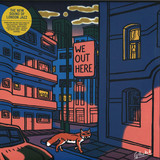
Repress of 2018’s classic compilation from Brownswood.
A primer on London’s bright-burning young jazz scene, this new compilation brings together a collection of some of its sharpest talents. A set of nine newly-recorded tracks, We Out Here captures a moment where genre markers matter less than raw, focused energy. Looking at the album’s running order, it could easily serve as a name-checking exercise for some of London’s most-tipped and hardworking bands of the past couple of years. Recorded across three long, fruitful days in a North West London studio, the crossover between each of the groups speaks to the close-knit circles which make up the scene.
Surveying the way that London’s jazz-influenced music had spread outside of its usual spaces in recent years, this album bottles up some of the vital ideas emanating from that burgeoning movement. Giving a platform to a scene where mutual cooperation and a DIY spirit are second-nature, it’s a window into the wide-eyed future of London’s musical underground.
Ubiquitous, much-lauded saxophonist Shabaka Hutchings is the project’s musical director. His own recent projects span from South Africa-connected, spiritually-minded jazz players Shabaka and the Ancestors to Sons of Kemet, who match diasporically-connected compositions with viscerally-direct live shows. His entry on the album, ‘Black Skin, Black Masks’, is typically difficult-to-define: with an off-kilter, shifting rhythmic backbone, repeated phrases – mirrored between clarinet and bass clarinet – shape the track with an alluring hue. His input ties together a deft, genre-agnostic sensibility that’s shared through all the players on the record.
Theon Cross – who’s also part of Sons of Kemet with Hutchings – starts his track, ‘Brockley’, with the solo, distinctive low rumble of his tuba. Winding and mesmeric, it sees tuba and sax lines winding together in rhythmic and melodic parallels. Ezra Collective – whose drummer and bandleader Femi Koleoso has toured with Pharaohe Monch – run a tight, Afrobeat-tipped rhythm on ‘Pure Shade’, with the final third changing gear into a melodic, momentous closing stretch.
Joe Armon-Jones, whose ludicrous chops on the piano have seen him touring with the likes of Ata Kak, showcases earworm-like, insistent motifs on ‘Go See’, balanced with a playful, improvisatory approach with room for ad-libbing and solos a-plenty. Taking a softer tact than many of the other entries, Kokoroko – whose guitarist Oscar Jerome has been making waves with his solo material – spin a lyrical, steady-paced meditation on ‘Abusey Junction’, matching chanted vocals with gently-played guitar.
Nodding to spiritual jazz influences, Maisha’s ‘Inside The Acorn’ is a wandering, explorative rumination, balancing delicate washes of piano and percussion with sharp interplay between flute and bass clarinet. In contrast, Nubya Garcia’s ‘Once’ is taut and carefully-poised, her tenor sax guiding a carefully-built energy to an explosive conclusion. And finally, Triforce’s ‘Walls’ is a performance in two parts: starting with Mansur Brown’s languorous, lyrical guitar, the second half switches up to a low-slung, g-funk-tipped groove.
After the release of 2017's Chroma, Buzz Kull (real name Marc Dwyer), has returned with his sophomore album. Traversing EBM, darkwave and goth sounds with ease, New Kind Of Cross traverses much darker waters than Dwyer’s last effort, speaking to the rapid change and tension at play in Dwyer’s own life.Marc spends a good portion of each year in a new city every night - and when settled in Sydney, is constantly between jobs. It makes perfect sense that New Kind Of Cross deals explicitly with themes of isolation, introversion and sometimes anger. The music on this record is heavy and unforgiving. Throughout the past, Dwyer has refined his sound to a knife's edge, proving his capabilities within the realm of darker music time and time again.
- Like Clay
- Night Window (Part One)
- Night Window (Part Two)
- Keep Pulling Me In
- Jack Hare
- Clouds
- Our Relativity
- Desert Window
WHITE VINYL[26,68 €]
On her debut album, Lucy Gooch stays true to her electronic foundations, while incorporating more acoustic instrumentation and digging deeper into her folk roots through songwriting. But at the heart of Lucy's music is her rapturous vocal, with which she has experimented more than ever over the course of her first full-length. Many of the pieces on 'Desert Window' started out as vocal improvisations from which she pulled a narrative. Taking cues from the incantatory chanting found in middle English poetry such as 'The Names of the Hare', as well as the prescient imagery in contemporary works like 'The Hearing Trumpet' by Leonora Carrington (1974). "To a larger extent, this became an experiment in placing my voice in a more narrative way, while remaining oblique," Gooch explains. While her previous work could be compared to drawn-out landscapes punctuated with moments of romance and radiance, this album feels grounded in materiality and the everyday. Gooch's voice is at times strident, while elsewhere restrained and broken. "I lost connection to my voice and then had to rediscover it, which was exhilarating. There were these bursts of energy where I'd be messing around and occasionally stumble upon something". There are hushed melodies and exhausted squalls, creating dissonance and space. The result is an atmospheric balance between Kate Bush and Cocteau Twins harmonies, Vangelis major chords, and a juxtaposition of folk ambience reminiscent of the offset madrigals of The Third Ear Band and Italian cult film composers Goblin. It is a complex and elegant album, an all-consuming series of songs that reach into jazz, electronica and classical song construction.
- A1: Pluto
- A2: Lucky
- A3: Rise
- A4: Every Color
- B1: Baby Mama
- B2: Junebug (Feat. Jpegmafia)
- B3: Lose My Focus
- B4: We Should Move Somewhere Beautiful (Feat. Arima Ederra)
- B5: Kid
- C1: 16 Candles (Feat. Ganavya)
- C2: Smile For Me
- C3: Afternoon Tea With The Auroras (Interlude)
- C4: Little Bird
- C5: Water
- D1: Sun Don't Leave Me
- D2: Lose My Focus (Feat. Umi)
- D3: You're So Good To Me
Where the Butterflies Go in the Rain is the third studio album from the enchanting songstress, Raveena. Blending powerful storytelling with early 2000s pop, Where the Butterflies Go in the Rain sees music continuing to play the central role as both a catalyst and medium in her personal and creative growth. With newfound clarity, Raveena delves into themes of new love, maturity, comfort, and domesticity that reflect the peace of mind she currently inhabits. Speaking on this evolution and how it informed the album’s creative, she shares, “Butterflies are so delicate that they have to hide in leaves and flowers until the rain passes so that their wings don’t get crushed in the rain. I felt like that was kind of a metaphor for where I was in my life. I needed to go back to comfort—to deep rest—and stop weathering storms.” On the most instinctual level it’s an album that should conjure simple pleasures like the joy of a summer road trip with loved ones.
Embracing the sounds of classic artists like Fleetwood Mac, Brandy, Bob Marley, Joni Mitchell, and Marvin Gaye, to name a few, Where the Butterflies Go in the Rain draws inspiration from people who, “are really good at capturing the beauty and loss of life in the same breath,” she describes. In her signature style, Raveena seamlessly unites that expansive songwriting with traditional Indian instruments and feel-good early 2000s pop hits —putting forth a work that’s more unabashedly herself than any that’s come before.
Raveena reflects on her forthcoming album, “I don't think I've ever understood a record so well before—It wasn’t like the process I used to have with past albums where I was more anxious about being at my best. This time, it was all intuition, and I knew the album was right when I finally had the feeling of rest.”
The deluxe release sees the addition of 3 tracks. Sun Don't Leave Me - contemplating the feeling of wanting to hold onto one more beautiful sunset, one more passionate embrace, before things change again and hard times strike again - and a reimagined version of Lose My Focus with UMI, bringing fresh energy to an album that’s more unapologetically Raveena than ever.