Critics have described Czech pianist Kristina Barta as "fiery, expressive, eloquent, and stubborn." This new album, "Endless Questions and Answers," features nine original compositions created for her new quartet, in collaboration with the world-renowned tenor saxophonist Jure Pukl. It signifies a fresh chapter in Barta's musical evolution.
Cerca:changed
DJ Support: Danny Howard, Annie Mac, Mistajam, Pete Tong, Charlie Hedges, Kraak & Smaak, Maxinne, Todd Terry, Alex Preston, Full Intention, GW Harrison, DJ Rae, Rudimental, Alaia & Gallo, Illyus & Barrientos, Johan S, David Penn, Sam Divine, Riva Starr, Claptone, Nice7, Dario D’Attis, Mousse T, S-Man, Huxley, KC Lights, Friend Within, Dombresky, Gorgon City, Chris Lake, Format:B, Pirupa, TCTS, Alan Fitzpatrick, Low Steppa, Mat.Joe, Raumakustik, Eskuche
Kicking things off on our next 4-track vinyl sampler series is Toolroom's very own Martin Ikin who returns to the label with ‘Make U Sweat’! He was the Best-selling Tech House artist on Beatport in 2020 and 2021 and has over 1m monthly listeners across streaming platforms. Recent studio collabs have included Noizu and Joshwa and tours have seen him travel far and wide to the US, Brazil, Bali, Ibiza, Italy, Croatia and of course, his hometown of London. This new record is the follow up to 'Oscill8' that dropped in March 2023 and sits in a similar lane, in that it's pure, unadulterated club weaponry! Next up is Italian house legend Flashmob with the frenetic, high-energy club vibe of new cut ‘My Body’. Flashmob's sound, production and go-for-broke DJ sets have changed with the game, embracing the vitality of new house music rather than hankering after sentimental sunsets. His ethic and aesthetic move relentlessly forward, using the old and new to craft unique sonic alchemy from big festivals like Tomorrowland to the intimacy of small clubs on the international circuit. ‘My Body’ is typical of Flashmob's current sound, combining solid drums and some insane synths and fx, alongside an earworm vocal sample that results in yet another memorable club cut from an established master. Canadian Tech House maestro Nathan Barato debuts on Toolroom kicking off the B-side to the vinyl alongside studio partner, Matheo Velez with 'Weapon'. A record that has already caught the attention of the underground elite with Michael Bibi premiering the track at his first appearance back at DC-10 in Ibiza last Summer. Both artists are enjoying great success across key labels such as Viva, Circus, Snatch and RAWthentic. This is an addictive, bumpy club track
that packs a huge punch on the dance floor and actually features Nathan's very own 'Move me… Rock me' vocals! Rounding things off is UK DJ/producer duo, Jenn Getz & Alfie who are residents at Dubai's #1 nightlife destination, Soho Garden, where they warm up for legends such as Sonny Fodera, MK, Claptone, Solardo & Fisher on a weekly basis. In their relatively short 3 year career they have already released on Solotoko, Abode and Toolroom Trax and now debut on Toolroom with 'Vibration'. Both girls are incredibly passionate about house music and are also big advocates for a life centered around well-being and meditation, and the idea of this record was to combine their 2 passions in life, so they proceeded to co-write these original lyrics to accompany the track, which in itself is very inspiring! This is a super cool club record that will excite fans and DJ's alike, welcome to the Toolroom Family, Jenn Getz & Alfie!
Countless radio plays on Radio 1 from Danny Howard, Sarah Storie, Pete Tong Other notable radio plays – Kiss FM, Toolroom Radio, Sirius XM, Data Transmission Radio, Radio 1 Dance Anthems, Radio 1 Party Anthems, Rinse FM, Select Radio, Tomorrowland Radio
- A1: Fuck The System
- A2: Fucking Liar
- A3: Holiday In The Sun
- A4: You're A Fucking Bastard
- B1: Lie To Me
- B2: There Is No Point
- B3: Never Sell Out
- B4: Noize Annoys
- B5: I Never Changed
- C1: Why Are You Doing This To Me
- C2: Chaos Is My Life
- C3: Violent Society
- C4: Was It Me
- D1: Adding To Their Fears
- D2: Death Before Dishonour
- D3: Drive Me Insane
- D4: Pulling Us Down
January 2023, Dorset. Snow is piled at the door, icy roads are closed, and Emily Cross is in a coffin. Not a setting typical for a rebirth. But for Loma, this is where they bring their band back from the brink. "It's like a demon enters the room, whenever we get together", writer, singer and instrumentalist Cross says of the struggle to bring new Loma music into the world. Following the release of their 2020 second album Don't Shy Away, Loma's three members were cast around the globe and the band-not for the first time-entered a deep sleep. Multi-instrumentalist and recording engineer Dan Duszynski remained in his studio in Don't Shy Away's central Texas heart, but Cross, a UK citizen, moved to Dorset, and writer and instrumentalist Jonathan Meiburg left the US for Germany to research a book. In the pandemic years, even being in the same room was impossible, and attempts to start a new record faltered. The following winter, in an attempt to salvage the record and the band, Cross suggested they regroup in the UK, in the tiny stone house-once a coffin-maker's workshop-where she works as an end-of-life doula. With minimal recording gear and few instruments, Loma turned two whitewashed rooms into a makeshift studio, using a padded coffin as a vocal booth. It was a turning point. They scrapped much of what they'd made, letting a new place set a new course. The one-lane roads, hedgerows and dark skies of Dorset gave the new songs an ineffable but unmistakable Englishness. The band used the ruin of a 12th-century chapel as a reverb chamber-surprising hillwalkers who peeked in to find them singing to no one-and the sounds of Cross's chilly workshop wormed their way into the recording: a leaky pipe, a drummer's brushes on a metal lampshade, the voices left on an ancient answering machine. What emerged was How Will I Live Without A Body?: a gorgeous, unique, and oddly comforting album about partnership, loss, regeneration, and fighting the feeling that we're all in this alone. Many of its songs have a feeling of restless motion; faceless characters drift through meetings and partings, tangling together and slipping away. "I Swallowed A Stone" is like a nightmare with a happy ending; "How It Starts" and "Broken Doorbell" reflect on the challenge (and necessity) of wrestling with agoraphobia. Though the record nods to the trio's separate lives- a German percussion ensemble, a pair of Texan owls, and the surf at Chesil Beach make guest appearances-the core of Loma's sound remains intact: earthy, organic and deeply human, anchored by Cross's cool, clear voice. Loma's previous album, Don't Shy Away, was galvanized by the unexpected encouragement and contributions of Brian Eno. This time, they found inspiration in another hero, Laurie Anderson, who offered a chance to work with an AI trained on her entire body of work. Meiburg sent her a photo from his book-in-progress about the once and future life of Antarctica; Anderson's AI responded with two haunting poems. "We used parts of them in a few songs," he says. "And then Dan noticed that one of its lines, 'How will I live without a body?' would be a perfect name for the album, since we nearly lost sight of each other in the recording process." In the end, Loma's efforts to reconnect with one another are the album's central focus: what do you owe a shared past, when everyone and everything has changed? "Making this record tested us all," says Duszynski. "I think that feeling was alchemized through the music." Alchemized, because How Will I Live Without A Body? is by no means a stressed-out record: an undercurrent of deep calm runs through it. But maybe 'relaxed' isn't the right word. It's more like a feeling of relief, of making it through a tough journey together.
Scoring the lives of small-time players, pimps, junkies, and prostitutes lurking around his simultaneously blessed and cursed existence, Wee mastermind Norman Whiteside lived in an entirely different Columbus than Capsoul's Bill Moss or Prix's Clem Price. Alternating between Stevie Wonder's dreamy soul and Sly Stone's druggy groove, You Can Fly On My Aeroplane bypasses Whiteside's everyday gritty street life reality, focusing instead on the airy sounds of fantasy and masquerade. Smooth, sexy, and synthy, You Can Fly On My Aeroplane is a peerless and sprawling psychedelic soul concept album and a sure'fire panty soaker to boot.
Soul Direction are pleased to announce a new member of the Family “Contempo Soul” series. This label will showcase more contemporary sounding soul from independent artists. Our first offering in conjunction with Kevin Edwards III, and with the help of Dave Thorley. The Keved Project (Feat. Delbert Nelson) – “Life Has Been a Thief” / “Spread Love” – SDCO-1001. Edwards was born in Hamtramck, Michigan in 1959. As a young boy listening to Jimi Hendrix play guitar on Band of Gypsies, he knew he wanted to be a guitar player. By 16 Edwards, was playing in a high school band and at local cabarets. In 1979 Edwards played with Sons, a local jazz band. The group played Top 40s in local venues and eventually opened for the nationally renowned group, Brainstorm, which recorded on the CBS label. Sons and Brainstorm merged in 1980. When Brainstorm broke up in the early '80s Edwards freelanced with several local groups. His career took a turn in 1984 when he began writing and recording his own music. Edwards drew from his experiences and the R & B and jazz classics he'd grown up listening to as his inspiration for writing. Two years later in 1986, Edwards expanded his skills even further when he started producing young local talent. He and a partner produced Rhapsody, a rap group that released several singles on the Giant Record Label. The year 1998 saw the beginning of a new era for Edwards when he and long-time friends Darryl Lee and Greg Nance formed Ground Level. Ground Level enjoyed tremendous success, opening for the Isley Brothers, LL Cool J, Roy Ayers, Ronnie Laws and the funk group Slave. The band received accolades and grew in popularity. In 2003 the band changed its name to Level Rizon, signifying its new status and the fact that they are no longer at "ground level." Level Rizon took a year off of performing to produce That Vibe. With That Vibe Edwards feels he has started a whole new genre of music he calls "NuUrban Soul." He describes NuUrban Soul as a unique blend of jazz-fusion and R & B that has not failed to delight audiences of all walks of life. Kevin has performed with the late Michael Henderson (R/B recording artist known for You are my Starship, Sending a Valentine, Wide Receiver) in 2014. Kevin has also has a certificate in Audio Engineering from the Recording Institute of Detroit, Associates of Science in Electrical Engineering Technology from Lawrence Technological University, and Bachelor of Science degree in Electrical Engineering Technology from ITT Tech. Kevin built, and operates his own recording studio, and is continuously writing and recording new music..
- A1: Dennis Coffey And The Detroit Guitar Band - Scorpio
- A2: The Jimmy Castor Bunch - It's Just Begun
- A3: B T. Express - Energy Level
- A4: James Brown - Get On The Good Foot
- A5: Afrika Bambaataa & The Soul Sonic Force - Planet Rock
- B1: Manu Dibango - Soul Makossa
- B2: Esther Williams - Last Night Changed It All
- B3: The Mohawks - The Champ
- B4: Herman Kelly & Life - Dance To The Drummer’s Beat
- B5: Spanky Wilson - Sunshine Of Your Love
- C1: James Brown - Give It Up Or Turnit A Loose
- C2: Candido - Soulwanco
- C3: Arthur Baker - Breaker's Revenge
- C4: Manu Dibango - The Panther
- D1: Abaco Dream - Life And Death In G & A
- D2: The Jackson 5 - Dancing Machine
- D3: Mongo Santamaria - Cloud Nine
- D4: Edwin Starr - I Just Wanna Do My Thing
- D5: Badder Than Evil - Hot Wheels
Compiled by legendary producer Arthur Baker, ‘Breakers Revenge’ is a near-definitive collection of original Funk, Soul, Latin, Disco and Electro classic tracks from 1970-1984. These tracks, a combination of classics and obscurities, have all since become legendary to Breakdancers everywhere.
First played at South Bronx block parties, community halls and park jams in the 1970s and 80s, spun endlessly by the first three major hip-hop DJs – Kool Herc, Grandmaster Flash and Afrika Bambaataa – and found in the record crates of any DJ of note ever since. Seminal funk and soul tracks such as Dennis Coffey’s ‘Scorpio’, The Jimmy Castor Bunch’s ‘It’s Just Begun’, James Brown’s ‘Get on the Good Foot’, The Mohawks’ ‘Champ’ sit side-by-side here with the ground-breaking, classic electro of Afrika Bambaataa’s ‘Planet Rock’, and Arthur Baker’s own definitive ‘Breaker’s Revenge.’ Breakdancing has come a long way from its New York roots to its respected position as an art form today where, for the first time ever, it is to be featured in the Olympics held in Paris this August 2024.
The ‘breakbeat’ remains at the very heart of hip-hop, the mercurial funk, soul and disco tracks, always 100% guaranteed to get B-Boys, B-Girls and Breakdancers moving at any block party, with the percussive breakdown of each track the pinnacle soundtrack to any dance/battle between Breakdancers of any note. Similarly these tracks have been sampled many 1000s of times over by every hip-hop artist and producer of note. KRS-ONE, Marley Marl, Kanye West, Jay-Z, Public Enemy, Eric B, The Fugees, Outkast, Mos Def, Main Source, Jungle Brothers, LL Cool J, De La Soul and, well, everyone!
Compiler Arthur Baker played a pivotal role in hip-hop history when in 1982 he produced Afrika Bambaataa’s seminal ‘Planet Rock’ (as featured here), introducing electronic instruments into hip-hop for the first time ever and in the process created electro. After ‘Planet Rock’, Arthur Baker went on to remix or produce every major artist of note – from New Order to the Rolling Stones, Al Green to the Pet Shop Boys
- A1: Echo Of My Shadow (3 56)
- A2: To Be Alright (4 06)
- A3: Your Blood (4 07)
- A4: The Conflict Of The Mind (4 11)
- B1: Some Type Of Skin (3 08)
- B2: The Essence (3 09)
- B3: Earthly Delights (3 21)
- B4: The Dark Dresses Lightly (3 33)
- C1: A Soul With No King (4 22)
- C2: Dreams (4 16)
- C3: My Name (Feat Ane Brun) (3 17)
- C4: Do You Feel? (3 02)
- D1: Starvation (3 28)
- D2: The Blade (4 33)
- D3: My Body Is Not Mine (4 01)
- D4: Invisible Wounds (4 55)
In April 2022, Aurora read a letter that changed her life. The letter was co-authored by indigenous activists entitled "WE ARE THE EARTH" and called for a revolution as a collective response to global warming - to "heal the land". They described a connection to the land "through our hearts" and the earth as "the heart that beats within us". The letter prompted Aurora to ask herself: what happened to the heart? She then began to study books on human anatomy to understand when and why Western culture lost sight of the deeper purpose of our most vital organ.
"WHAT HAPPENED TO THE HEART?" is a journey from weakness to strength, from self-destruction to self-healing. It is a touching and introspective musical journey that explores the loss of spiritual connection in modern society, the healing power of vulnerability and the call for change through reuniting the heart with politics and personal growth.
Compassion combines ethereal pop with ‘80s synth textures, and slacker-rock charm. It's got a bit of Matthew E. White, chilled out BC Camplight and Conor Oberst.
The inviting and perceptive songs on Rui Gabriel’s debut LP Compassion all tackle growing up. It’s about how the older you get, your priorities shift, friendships evolve, and responsibilities become inescapable. For Gabriel, the Indiana-based, Venezuela-born artist and co-founder of the acclaimed band Lawn, the changes in his own life inspired him to write a solo full-length that sounds like nothing the indie rock journeyman has done before. Across 10 vibrant tracks that combine ethereal pop with slacker-rock and piano-driven dance music, it’s a galvanizing showcase of personal growth and the grace you give yourself to push forward.
Work on Compassion started in 2018 when Gabriel was living in New Orleans. “I was living a pretty teenage life in many ways,” says Gabriel. “I worked at a pizza restaurant and would just go to shows or parties. I wasn’t doing anything other than music. I didn't have many responsibilities.” The songs he was working on at the time—tracks that didn’t fit Lawn but Gabriel still liked—initially went unfinished. But as Gabriel’s life changed, so did his songwriting and his desire to see his ideas through. “When I was writing lyrics, I was settling down with my partner and about to become a dad,” says Gabriel. “I was making choices about my life that contradicted the existence I had before. I had a different set of priorities.”
The songs on Compassion deal with youthful carelessness ("Dreamy Boys") and coming face-to-face with newfound responsibilities ("Change Your Mind"). It's consistently a biting, observant look at getting older thanks to Gabriel's unique perspective as a South American immigrant who's lived across the United States for the past 13 years. “When you are Hispanic, English isn't your first language, and you're in a music scene with a bunch of white people, you're going to stand out a little bit,” he says. On “Church of Nashville,” “Hey, Leonard Cohen is singing poems by the gentrified alley” he humorously aims at scene pretension and industry gatekeepers.
Compared to Gabriel’s work with Lawn, where he writes frenetic post-punk songs and yells, for Compassion he explores more straightforward pop sensibilities and showcases his singing voice. “I wanted to do a solo record to prove to myself that I could sing,” says Gabriel. Take the meditative, piano-based lead single “Target,” which is inspired by Dido and finds Gabriel gorgeously harmonizing with singer Kate Teague. He reaches similar infectiousness on the sunny rocker “Summertime Tiger,” which guests Stef Chura. Co-produced by Gabriel and Nicholas Corson (The Convenience, Video Age), Compassion is consistently warm, generous, colorful, and adventurous.
“Compassion is a record about change,” says Gabriel. “It's a coming-of-age record but for somebody who's coming of age into their thirties.”
- Break In (Main Titles From The Motion Picture Bride Of Chucky)
- Hello Dolly
- Incantation
- Damien Putz
- Captive
- That's Our Chucky
- Re-United
- He Hasn't Changed
- A Doll To Play With/You're Dead
- Chuckus March/Chucky Attacks/She's Alive
- Voodoo For Dummies
- Warren Lurking Satan's Little Helper/Fitup
- Airbags Can Be Dangerous
- Harassment
- The Master At Work
- Getaway/Warren's Back/The Honeymoon
- Death By Mirror
- Plastic Love
- Housemaid
- Dolls Take Charge
- Exhumation/Domestic Bliss
- What Would Martha Stewart Say
- Tiffany Gets Baked/Escaping The Wreck
- The Amulet/Hostage Exchange
- Child's Play 5
- End Credits (From The Motion Picture Bride Of Chucky)
- Tiffany Kills Chucky
- Doll Fight/Jase Kills Chucky
Enjoy The Ride Records in conjunction with Back Lot Music proudly present a limited-edition vinyl pressing of Graeme Revell's Bride of Chucky Original Motion Picture Score. Composed and Conducted by Graeme Revell and Performed by The Hollywood Studio Symphony, Bride of Chucky is the fourth film in the Child's Play franchise, and where we begin to see a bit of a shift - Andy is out, and Tiffany (portrayed by Jennifer Tilly) is in, along with comedic elements added to the horror film.
A decade after releasing their debut EP through Planet Mu's Timesig imprint, Speed Dealer Moms—a collaborative electronic music project with a fluid line-up commonly made up of Aaron Funk, John Frusciante and Chris McDonald—are set to make their long-awaited return this summer with a new offering entitled SDM-LA8-441-114-211. The 3-track EP, arriving June 11 through Evar Records, offers a glimpse into the treasure trove of Speed Dealer Moms' unreleased material, with each song title alluding to the date in which it was recorded and in how many takes.
Over the years, Speed Dealer Moms have considered various ideas on how to release more of their unorthodox recordings in unconventional ways, with their latest to arrive in the format of a limited edition vinyl pressing. Although a lot has changed since first sharing their intricate creations with the world in 2010, Speed Dealer Moms have routinely gotten together whenever schedules and circumstances allowed, picking up wherever they last left off creatively and adding to their growing archive of recordings. While there are plenty of reminders that time is both irrelevant and an illusion—especially in the fickle music business where trends are fleeting—the chemistry these collaborators exhibit in the studio has no expiration date, offering a purity in approach that reflects the cherished importance of creating in the moment and subsequently celebrating timeless music.
During the writing process, which includes in-depth discussions and days of programming, Speed Dealer Moms record live to stereo with no overdubs or edits, improvising arrangements that often feel composed. In the same spirit of prodigal IDM acts such as Autechre and Luke Vibert, each Speed Dealer Moms session pushes the limits of what an arsenal of modular synthesizers and other machines are capable of, creating tracks that are driven by mathematics, mechanical understanding and musical spontaneity alike. As exemplified by their forthcoming Evar release, each recorded session captures an undeniable magic that is both distinctive and hard to describe, creating a listening experience that transcends genre lines and sonic boundaries.
Limited Anniversary Edition: 180g vinyl, hand numbered, 1000 copies available!
In 1974, Cluster entered the sugar era. This doesn"t mean that they had finally arrived in their promised land, but they had simply moved from Berlin to the country, to a small place called Forst on the river Weser. Many a thing had changed for band members Moebius and Roedelius since Cluster II: They had moved from boisterous Berlin to this calm rural village, they had founded the band Harmonia, had set up their own studio and had bought new equipment. As a result of this and many other things, new impulses were noticeably spurring the evolution of their music. The album Zuckerzeit ("sugar era") launched a revolution for Cluster.
Die japanische Postrock-Band MONO meldet sich mit "OATH" zurück, ihrem zwölften Album, diesmal mit genreübergreifender klassischer Orchestrierung und den typischen transzendentalen Gitarren-Klängen einer Karriere, die sich seit vier Jahrzehnte erstreckt. "Was tun wir hier?" Das Jahr 2020 hat das, was einst die Quintessenz des nächtlichen Kiffer-Existenzialismus war, zu einem täglichen Mantra für fast alle Menschen auf diesem Planeten gemacht. Was machen wir mit unserer begrenzten Zeit in diesem Leben? Was ist unser Ziel? Was sollten wir tun? In den letzten 25 Jahren haben MONO Themen wie die Beziehung zwischen Dunkelheit und Licht, Hoffnung im Angesicht der Katastrophe und die Dualität von Geburt und Tod erforscht. Auf ihrem 12. Album, OATH, denken sie über die Zeit nach, die das Leben ausmacht, und darüber, wie man das Beste aus dieser Zeit macht. Aufgenommen und abgemischt mit ihrem langjährigen Freund und Produzenten Steve Albini, beginnt OATH wie ein Sonnenaufgang mit einem langsam aufsteigenden Orchester und Bläsern, wobei sich die gesamte Band Zeit nimmt, die Atmosphäre zu genießen, bevor sie sich dem Glanz anschließt. Während der gesamten 71-minütigen Laufzeit des Albums meditiert MONO auf vielfältige Weise über das Thema Zeit und Leben. Die gemächliche Entwicklung eines Songs, die ein Markenzeichen von MONOs Katalog ist, ist von einer Eleganz durchdrungen, die OATH zu neuen Höhen erhebt. MONO haben sich selbst mit einer universell nachvollziehbaren existenziellen Untersuchung herausgefordert und mit OATH geantwortet, einem Album, das eher wohlwollende Reflexion als flüchtige Erholung bietet. "We live with a vow that hasn't changed since we were children. Hear the wind sing. We are part of the universe. We already know what we should do and what the most important thing in life is." - Takaakira `Taka' Goto, MONO
One can hardly imagine the genre-busting, culture-crossing musical magic of Outkast, Prince, Erykah Badu, Rick James, The Roots, or even the early Red Hot Chili Peppers without the influence of R&B pioneer Betty Davis. Her style of raw and revelatory punk-funk defies any notions that women can’t be visionaries in the worlds of rock and pop. In recent years, rappers from Ice Cube to Talib Kweli to Ludacris have rhymed over her intensely strong but sensual music.
There is one testimonial about Betty Davis that is universal: she was a woman ahead of her time. In our contemporary moment, this may not be as self-evident as it was thirty years ago – we live in an age that’s been profoundly changed by flamboyant flaunting of female sexuality: from Parlet to Madonna, Lil Kim to Kelis. Yet, back in 1973 when Betty Davis first showed up in her silver go-go boots, dazzling smile and towering Afro, who could you possibly have compared her to? Marva Whitney had the voice but not the independence. Labelle wouldn’t get sexy with their “Lady Marmalade” for another year while Millie Jackson wasn’t Feelin’ Bitchy until 1977. Even Tina Turner, the most obvious predecessor to Betty’s fierce style wasn’t completely out of Ike’s shadow until later in the decade.
Ms. Davis’s unique story, still sadly mostly unknown, is unlike any other in popular music. Betty wrote the song “Uptown” for the Chambers Brothers before marrying Miles Davis in the late ’60s, influencing him with psychedelic rock, and introducing him to Jimi Hendrix — personally inspiring the classic album Bitches Brew.
But her songwriting ability was way ahead of its time as well. Betty not only wrote every song she ever recorded and produced every album after her first, but the young woman penned the tunes that got The Commodores signed to Motown. The Detroit label soon came calling, pitching a Motown songwriting deal, which Betty turned down. Motown wanted to own everything. Heading to the UK, Marc Bolan of T. Rex urged the creative dynamo to start writing for herself. A common thread throughout Betty’s career would be her unbending Do-It-Yourself ethic, which made her quickly turn down anyone who didn’t fit with the vision. She would eventually say no to Eric Clapton as her album producer, seeing him as too banal.
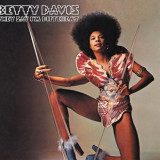
Her 1974 sophomore album They Say I’m Different features a worthy-of-framing futuristic cover challenging David Bowie’s science fiction funk with real rocking soul-fire, kicked off with the savagely sexual “Shoo-B-Doop and Cop Him” (later sampled by Ice Cube). Her follow up is full of classic cuts like “Don’t Call Her No Tramp” and the hilarious, hard, deep funk of “He Was A Big Freak.”
Originally released in 1987, Life Time is the full-length debut by Rollins Band. This reissue—released on ROLLINS’ 2.13.61 label—has been remastered for vinyl by TJ LIPPLE and includes updated artwork by JASON FARRELL. Henry Rollins on Life Time: “Life Time is the first studio record by the Rollins Band. We did our first practice on 04-07-87 and went out on a long tour of America and Europe. On the road we wrote songs and put them into the set. By late October we finished the shows in London, UK. We went up to Leeds where Chris had a place to live and booked studio time at the same place that he and I did the Hot Animal Machine recordings a year before. I had no producer for this record and feared that since everyone in the band had strong opinions on how it all should be done that if we tried to do it ourselves we would do more harm than good. I called Ian MacKaye and asked for help. He got on a plane and came right out. That's Ian. We got straight to work as we had little time or money. All twelve songs were cut and mixed in a few days. We would do a take and Ian would tell us that it was good and we were moving on. When someone would say that they wanted to do it over again, he listened patiently and then asked again which song we wanted to do next. We got it all done and dragged it back to America for about 3,200 dollars. My, how things have changed. The album cover was drawn on the back of a diner place mat by Stephen Myers as a gift for my then roommate, Laura. Only the offset reproduction of the piece remains as the original went with her when she gave up her room. She shot herself a few years ago. Special thanks to Ian for coming to the rescue on such short notice. Thanks to you for checking this out.” Download code for full album plus live tracks. Also comes with lyric insert.
A band with many chapters and an everchanging sound, Shudder To Think’s story began in 1986 in Glover Park, Washington DC. Bass player Stuart Hill and drummer Mike Russell had just recruited Chris Matthews to play guitar in their fledgling hardcore band Stüge (1984-86) when they suddenly found themselves in need of a new singer as well. Matthews suggested his friend Craig Wedren for the role. At the audition, Wedren’s style clashed with the style of the band’s previous singer, but the group all sensed that they might have stumbled into a “chocolate-inmy-peanut-butter” situation with intriguing potential. The group changed their name and headed into new territory. Side A of this LP is comprised of five songs from one of their first recording sessions together. The tracks chosen are songs that were only released on demo tapes, never to be re-recorded for future proper releases (this version of “Too Little, Too Late” did appear on the local punk compilation FR-5 in 1987). Side B consists of four tracks that were originally released as their first 7-inch release, the It Was Arson EP, a split release by Sammich/Dischord Records. Included at the end of side B is a version of “Take The Child” from this session (later re-recorded for their first album in 1988).
Over the course of a couple of years in the mid-1970s, several musicians from the St. Louis, Missouri area gave notice to club and festival crowds that they were there to rock the house down. Their cover and original songs were accentuated by a bedrock rhythm section, heavy guitar riffs and tasty solos, topped off with powerful vocals. Rockers that witnessed them agree—Back Jack created solid songs and high-energy performances. Beginning in 1971 as Trellis, the band members changed their name to Back Jack when they saw the bumper sticker that Kim McKinney’s dad, Jack McKinney, distributed during his election bid for the Mayor of Pacific, Missouri, home of the core three-piece band: Kim McKinney, Mike Collier, and Hans Myers (RIP). The 1974 version of Back Jack was active from very early 1974 to late-fall of 1974. The core three-piece band, Collier, McKinney, and Myers, recorded several tracks during their tenure and four of those tracks are included on this release. Temporary band members not on the recordings were Gary Reed (piano, RIP), Greg Witt (guitar, keyboards), Paul Cockrum (guitar), and Bill Niehoff (drums). The four-piece, 1975 version of Back Jack was a merging of members of Back Jack 1974 (Mike Collier and Kim McKinney) and another local band, Osage Lute (Jeff Ballew and Mike Lusher). They were active from late-fall of 1974 to late-summer of 1975. Four of the tracks on the Back Jack LP were recorded by these four musicians.
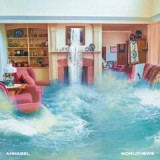
"On “We Are Where We Are,” a glimmering mid-tempo highlight from Annabel’s new album, Ben Hendricks sings of “a modern way to fill the empty space.” Worldviews, the band’s fourth LP and first in nine years finds the band reconciling with the ways the world has changed in the decade since they’ve been away. His protagonists are trying to determine the boundaries between what’s real and imagined, navigating their worldviews and the dominant ones around them, fighting for an escape or at least a distraction, wondering where the time goes, “going through the motions, running in a circle.” That could’ve been Annabel’s fate, too. But the core of the Ohio band is brothers Ben and Andy Hendricks, and as long as they’ve got each other, we’ve still got Annabel. In a world that feels so uncertain and so disconnected, where else is there to turn but back to Annabel? Think of Worldviews less like a comeback and more as the product of years spent gestating.
Hendricks spends the chorus of “All Time” promising to “make up for all the lost time,” and Annabel makes good on that promise for the next half hour. Worldviews is the most locked in the band has ever sounded, perfecting and building on their indie-emo sound. The title track and “Dog” are classic Annabel, sprightly and jangly midwestern rock songs, while “Defense Mechanism” is a rougher-edged update; when they go in the opposite direction, it results in some of their best work: “Every Home Needs a Ghost” is spartan and spectral, worthy of its title, and the beautiful “Small Victories” dabbles in downtempo electronics. They don’t sound like a band returning after nearly a decade; they sound at the same time hungry and lively like scrappy upstarts and wizened and seasoned like they never left."
Luther Vandross was more than just a great singer. An elegant and warmhearted New Yorker who became one of popular music's most beloved performers, from his solo breakthrough in the early '80s to his untimely death in 2005, Vandross was a vocalist whose understanding of singing as an art form was so profound, he changed notions of what it could be. On March 23, 1977, Vandross's album 'This Close to You', with his group Luther, enchanted listeners with soulful tunes and deep lyrics, further cementing his status in the music industry. This is a x12 trk, standard Black LP vinyl & CD. Marketing activity.