KEY Vinyls 47th release dives into a silver-plated, machine driven world crafted by Eduardo De La Calle: Kapila. Across four chapters, De La Calles veteran touch shaped by over 25 years of sonic innovation brings to the label a sleek yet abrasive metallic landscape.
The A side opens with Kardama, unfolding a funky yet metallic interplay with sharp bells and stinging rides slicing through a round, acidic bassline. The track proposes a wide spatial range of sounds, a continuous exchange and interplay of elements.
Khatvanga follows, soft yet needle-sharp a lullaby evoking complexity through simplicity. Deceptively minimalistic, its delicate construction disguises its robust power, marking a signature De La Calle moment: feeling held by a soft energy which is equally pungent. With Kankas, the tempo intensifies.
Rugged surfaces and strong high frequencies merge with a type of construction that leans heavily on rhythm, channeling the pulse of a machine in its element. And lastly, Kala mutates into a sci-fi fever dream.
Tense atmospheres build, the machines world grows fuller, and shimmering synths take on a life of their own. The result is a dense, captivating finale that mirrors the increasingly blurred line between man and
machine.

quête:channel u
Folamour represents the present and future sounds of the disco/house hybrid, staying true to the Glitterbox sonic philosophy. His tracks share the same production values as the timeless records from classic disco imprints in the late 70s; melodies are super-tightly harmonised, instrumentation is lively and the rhythms are designed purely for dance. 'The Power and The Blessing of Unity' is almost a mini album, exploring all the facets of Folamour's sophisticated house and disco tendencies. The title track sparkles with brass stabs and a textbook swinging disco beat, 'Island Of Recent Father' breaks things down into synthy house goodness, 'Let's Grab Some Smokes' channels a more contemporary low-fi sound and bringing it home with 'Home Beyond The Clouds', Folamour closes with uplifting house hooks and percussion. It's a real trip.
DJ Normal 4 lands on Fantastic Planet with his highly anticipated solo release, Spore Clouds EP. This sonic journey channels the raw, hypnotic energy of ’90s underground Goa trance while weaving in fresh, modern textures.
More than just music, this release carries a purpose: proceeds will be donated to support the Georgian resistance movement in their fight against an emerging far-right authoritarian regime.
Join us. Experience the music. Support the cause.
La Sonora Mazuren is the latest addition to the already rich indie-tropical scene out of Bogotá, Colombia. Deeply rooted in the popular sounds and rhythms of South America, the group draws from cumbia, chicha, guaracha, champeta and other styles mostly from Ecuador, Colombia and Peru.
Far from being folklorists or revivalists, La Sonora Mazuren combines synthesizers and electric guitars with accordion and percussion to create a futuristic style indebted to early pioneers such as Polibio Mayorga or Bogota’s own Eblis Alvarez, of Meridian Brothers fame, who also produced their debut album.
The result is a psychedelic feast reminiscent of the golden years of Tropicalia.
Their first album, Bailando con Extraños, got them many accolades in Europe, in France in particular where the band toured in the fall of 23 and again in the summer of 24.
Their follow up album, Magnetismo Animal, was mostly tracked in rural Normandy, during one of their European tours, and completed in Bogotá. Barbès Records (Roots of Chicha, Chicha Libre, Chico Trujillo) will be releasing it in the fall.
Franz Mesmer and his theory of animal magnetism provide the running theme for their new album. A collection of songs linked by the idea of a shared trance-inducing energy, channeled through rhythms and sound experiments. Musical inspiration for the album come from Colombian gaita, vallenato and cumbia, Peruvian huayno and chicha, Ecuadorian Sanjuanitos - a panoply of Afro-Andean traditions filtered through a futuristic vision of dance music that melds percussion-heavy polyrhythms and psychedelic sounds.
Band members are all active on the new tropical Bogotá scene. Keyboardist and accordionist Ivan Medellin and bassist Nicolas Eckardt are members of cult band Romperayo. Percussionists and singers Giovanna Mogollón and Diana
Sanmiguel are also 2/3 of popular trio LA PERLA.
- A1: Cangilón
- A2: Piedras
- A3: Aquí
- A4: Agua Pa Fantasmas
- B1: Rio De Las Tumbas
- B2: Viento
- B3: Mi Viejita
- B4: No Hope
- C1: Radio Chomio (Con Eli Wewentxu)
- C2: Rio Radio Correspondencia Anfibia
- C3: 3Eee
- C4: F Collect
- C5: Even Heaven Is Uneven
- C6: El Azar
- D1: I, You
- D2: Heterodina
- D3: Sin Conexión
- D4: Sss1
- D5: Sss2
- D6: Sss3
he initial seed for this project was planted in 2020 when Nicolás Jaar wrote the song “Piedras” for a concert at the Museum of Memory & Human Rights in Santiago, Chile, which commemorates the victims of human rights violations during the military dictatorship led by Augusto Pinochet between 1973 and 1990. Between 2022-2023 it took on a new form as a radio play entitled 'Archivos de Radio Piedras', which was shared on a dedicated Telegram channel. In 2024, the play was converted into a 24 channel installation at the University Museum of Mexico City (MUAC), where it was exhibited for 5 months.
Piedras 1 and 2 is a collection of the tracks featured within the play, all new music by Jaar, but partly presented within the play as the music of Salinas Hasbún (the name a composite homage to Jaar's grandmothers, Graciela Salinas and Miriam Hasbún).
The play follows two friends mourning the disappearance of Salinas Hasbún, a musician and writer who vanished in the early 2020s. Although they live in a future where technology is advanced, they
resort to DIY radio methods because the anonymous group “Las 0cho” has launched a worldwide attack on undersea internet cables, causing a global internet blackout.
The play's central theme revolves around the idea that truths, memories and identities speak from the cracks (“rasgaduras”), or the "in-between" spaces ("en el entre"). This concept is supported by the
way much of the narration unfolds - in the liminal spaces between radio frequencies. The instability and transitory nature of a constantly shifting radio dial becomes not just a metaphor but the structure of the play itself. It’s in these moments of noise, static and interference that the deeper revelations of the story emerge. This disjointed, ever-changing medium mirrors the way memory and trauma operate within the play - non-linear, slipping through the gaps, found in fragments or ordinary moments, rather than direct transmissions of “official” historical accounts.
This notion reaches its climax at the end of the narrative, when a text is discovered in which Salinas speaks of finding a new number in a small pond in a cave mentioned in the first episodes of the radio play. This pond, inside the “cochlea of the world”, is seen as a way to introduce real-life randomness to computation. Embodied in the salt lakes of northern Chile, home to the world’s oldest bacteria, this randomness disrupts the rigid order of binary code, paving the way for a transformation of digital life.
First solo release by Nicolás Jaar since 2020’s Telas and Cenizas.
- A1: A L’ombra D’una Olivera (U I Dos), Ft. Noelia Llorens “Titana”
- A2: Jota De La Fira De Tots Sants
- A3: Ens Devem A La Faena (Cant De Batre), Ft. Noelia Llorens “Titana”
- A4: Tant Com L’enyor De La Terra (Cant De Batre), Ft. Carles Dénia
- A5: Al-Azraq
- B1: Malaguenya Del Carrer Calvari, Ft. Noelia Llorens “Titana”
- B2: Quan Caiga La Nit
- B3: Esta Casa Sí Que És Casa (Cant De Batre), Ft. Josep Aparicio “Apa”
- B4: Cv-500
‘FAIXA’ is the eponymous debut LP from rural Valencian group FAIXA, emerging from a desire to fuse their curiosity for electronic sounds with experiences of living immersed in the folklore that resonates through the Valencian regions of l’Alcoià and el Comtat.
This atmospheric album speaks to a sound not often heard in the wider Spanish electronic music scene, but reminiscent of other modern revivals of traditional music fused with electronic sounds across Spain right now.
The sound of the album is a constant dialogue between the roots and the future of Valencian generations; traditional vocalists play an essential role in connecting oral traditions such as the “cant de batre” and marches of the “moros i cristians” with leftfield electronic, influenced by sounds typical of dubstep, jungle, or footwork. This historical quality resonates profoundly through songs where vocalists Noelia Llorens “Titana”, Carles Dénia, and Josep Aparicio “Apa” act as channels to a new sonic dimension of traditional music, where the classical and the modern intertwine.
Receiving great feedback across the country in a short period of time, FAIXA’s unique approach to electronic music has gained them mentions and interviews on national and local radio & TV.
Born out of a summer (and time) most sadly lost forever - this new release on Souvenirs From Imaginary Cities will break your skull open most tenderly, so it's fine particles of audio-dust can mingle with the last rays of sunshine and the bitter storm of this autumn. Track after track, this LP draws you in with a natural flow and a deep-felt pulse - reminiscent of classic slices of raw and sample- based ambient like Susumu Yakota's 'Sakura' and 'Everyone Alive Wants Answers' by Colleen. These tunes are heartfelt and channelling tons of real emotions and other melancholia.
It's a very personal and unique blend of almost nineties chill out zoning with a dubby undertone, rich textured loops, mixing a whole range of crazy acoustic and electronic flavours - stuff that shouldn't work together but are dancing all the way to heaven anyways - with slow burning dusty slabs of melody and yes those deep choral pads ( some Rachmaninov vesper magic in the air ), everything rough around the edges and low slung but so damn precise. A subtle mélange between abstract and more concrete sonic territories, but delivered in an upfront, improvised manner with great intuition and a quite ruff but poetic touch.
Name of this piece of swampy, chopped up but most nicely selected ambient work is La Ho, by Purpurny Dyadya aka Purple Uncle aka Sergey Demitriev, originally residing in St-Petersburg but living now for obvious reasons in Armenia. Sergey has been busy on labels like Echotourist, Hair Del, Nazlo and most recently with fellow traveler Nikita Chepurnoi as Amkarahoi on Patience/Impatience. Using a bunch of old tapes from his childhood times, filled with all kinds of sonic memories and Russian underground hip-hop as sample ground, he loaded up his MPC with magic dust and jammed out the basis of this LP during a summer fest near St-Petersburg before current hell broke loose.
It's the kind of a record that needs some time to really let loose his inherent power, give it some air, let it hop along a bit and those sounds will bloom wide open.
re:lax HQ finishes off a stellar year with their third record of 2024 - WONDA. Following re:ni's head spinning debut, Laksa comes with more arsenal for the club. Sampling iconic grime hype escalation, that energy is channeled into 3 UK soundsystem techno cuts. Razor synths, drum workouts, visceral bass-weight with vocal psychedelia, this is sonic exploration and experimentation with a FWD spirit.
The record also sees Laksa delve into his first vocal collaboration, working with Nyege Nyege affiliated Phelimuncasi - all the way from South Africa. Club and Dubwise versions - take ur pick
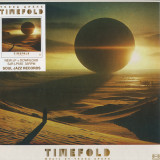
Trees Speak are releasing their new album TimeFold worldwide on 15 Nov 24 on Soul Jazz Records.
Trees Speak return with TimeFold, their sixth release on Soul Jazz Records, further expanding their ever-evolving sonic universe. This new album builds on their signature blend of hypnotic krautrock rhythms, post-punk angularity, and experimental soundscapes while venturing into new terrain by blending influences from avant-garde electronics to ceremonial sound forms.
On TimeFold, Trees Speak (comprised of the Tucson-based duo Damian Diaz and Daniel Martin Diaz) push their musical boundaries from expansive, intergalactic landscapes to eerie, imagined 1970s Italian and French sci-fi horror film scores. The album seamlessly weaves John Carpenter-esque synthesizer motifs with ambient sound sculptures, conjuring immersive worlds that are both cinematic and otherworldly.
The album also incorporates the duo’s deep-rooted influences, which span across electronic pioneers like Jean-Michel Jarre (Oxygene), Tangerine Dream, and Karlheinz Stockhausen. Drawing on the revolutionary techniques of Musique Concrète, TimeFold features experimental track splicing, looping, and collage work that harkens back to the golden age of avant-garde music. At times, the album channels the ceremonial tones and hypnotic rhythms reminiscent of early 1970s krautrock, fusing these sounds with organic instrumentation like dulcimers, adding an earthy, drone-like ritual quality to the experimental electronic framework.
A new element in this release is the inclusion of spoken word by Ashley Christine Edwards, which lends the album a haunting, apocalyptic edge. Her contributions evoke a tone reminiscent of the 1970s avant-garde scene, recalling literary and conceptual artists like Ruth White. The spoken words create a sensory experience akin to ceremonial chants, adding to the atmospheric intensity of the album. These vocal elements tie into the overall theme of TimeFold, which continues Trees Speak’s exploration of futuristic technologies and the communication of nature, with the evocative concept of trees and plants acting as organic hard drives storing data and knowledge.
Drawing further influence from Italian and French horror cinema, Trees Speak explore cinematic tension throughout TimeFold, creating a layered listening experience. The record transports the listener from the haunting, desolate beauty of Southwestern desert vast landscapes to an auditory space that melds early electronic experimentation with the contemporary urgency of conceptual art.
Since their debut Ohms in 2020, Trees Speak’s prolific output on Soul Jazz Records has continually redefined genre boundaries. TimeFold solidifies their position as visionaries in experimental music, offering an album that is as much a meditation on future technologies as it is a tribute to the avant-garde traditions that have come before.
Fantastic Planet returns with its sixth release, "Survival Mode," a statement dedicated to the ongoing struggle for freedom in Georgia. This electrifying compilation brings together a diverse lineup of visionary artists, each channeling their own unique sound to amplify the message of resilience and resistance. Survival Mode - is a mindset, a relentless fight for existence when all other options have been stripped away. It's about the raw, primal instinct to keep moving forward, even when every door seems closed, and there's no way back. In this mode, every moment is a battle, a test of endurance and resilience. For the people fighting for freedom in Georgia, survival mode represents their unwavering determination to push through oppressive forces, refusing to be silenced or broken. It's the point where compromise is no longer an option, where you either rise or fall-but surrender is not part of the equation. This struggle is about more than just survival-it's about carving out a future, no matter the cost. Design Giorgi grdzelishvili
- A1: Bleu Nuit - Spanish Harlem
- A2: Sepia - Stress
- A3: Bleu Nuit - En Bas De Chez Toi (Live)
- A4: Les Espions - Casse-Tête Jungle
- A5: Avel Nevez - Naufrage (Partie 1)
- B1: Claude Robert Hit Orchestra - Dance The Disco Sound
- B2: Marie-Ange Cousin - Molle Ouate
- B3: Quai 21 - Music Man
- B4: Maderson - Tourne La Page
This compilation features tracks released between 1978 and 1988 in Western France.
Through this compilation, we strove to highlight a little-known regional scene, characteristic of the diverse and sometimes opposing music movements of the 80s. Through this musical journey across the Brittany, Normandy, and Pays-de-la-Loire regions, we sought to showcase a resolutely indie aesthetic, sometimes conceived in some of France’s most unusual studios, such as a bunker and a caravan.
We’ve found it difficult to make attribute an established, well-defined genre to some of the tracks featured on this compilation. They draw, each in their own way, from the rock scene that dominated the 80s in France, from countercultures, from American stars who shone on the country’s radio stations and in its record stores, and even from local folk music.
While one could hear an harmony across the tracks featured on Le Grand Ouest, channeling this manifold energy onto a record required extensive research through the Brittany, Normandy, and Pays de la Loire regions’ discographies. Over the three years since the release of Le Grand Sud-Est, we have meticulously researched the references of artists, musicians, studios, labels, and publishers from each region. We sought to trace each artist to identify and listen to all their works from that period, and, when possible, collect unreleased recordings, left as demo cassettes on the artists' dusty shelves.
The synthesis of this research, presented here under the title Le Grand Ouest, hopes to remind us of the timelessness of the indie scene in our country, through the lens of the 80s Western France’s scene. Whereas Le Grand Sud-Est exhibited the funkiest sides of the Provençale and Rhône-Alpes scene, Le Grand Ouest leans towards a more mellow, introverted music, an expression of groups of friends united by the joy of playing together.
The first 500 copies of the record come with an extensive booklet with unpublished photos, press clippings, and texts for each track.
“Raggamuffin Soldier” was recorded at Channel One Recording Studio in 1983 with Soldgie as engineer and a rhythm track played by Jolly Stewart and Daniel “Axeman” Thompson. Growing up in the Waterhouse neighborhood of Kingston, Jolly Stewart obviously developed this singing style and gave us a killer early digital dancehall missile with pure conscious lyrics “Raggamuffin soldier, big ina your area...me no deal with badness, me nah deal inna war, me is a raggamuffin soldier...mi raggamuffin ina foreign, raggamuffin sit down pon di riddim...how you know the raggamuffin? Me no wear no gold chain, me no wear no gold ring...”. “Raggamuffin Soldier” was produced by Fitzroy Peterkin who also produced the digital lover tune "Angie".
The Waterhouse style is a particular style of singing that emerged in the late seventies and early eighties within the Jamaican reggae scene. The Waterhouse style is commonly described as a plaintive, groaning and fluctuating vocal style, often nasal and strident, characteristics that will give it a sound that is distinct from the rest of the reggae singers. The commonly recognized founders of the Waterhouse style are the singers Michael "Mykal" Rose, Junior Reid and Don Carlos. The name derives from the famous neighborhood of the same name in Kingston, the capital of Jamaica, the place where the three pioneers were born and emerged. The Waterhouse style influenced many dancehall reggae artists of the eightiesvsuch as Tenor Saw, Half Pint, Nitty Gritty, Anthony Red Rose, King Kong, Yami Bolo, Andrew Bees...
Vincent Stewart aka “Jolly Man” is a reggae singer from Kingston 11, born december 16 1960 at Hunts Bay Lane, 4 Miles, Jamaica. Jolly started singing at age 13, he was placed in an approve School for 3 years and at the age of 16 he was released.
He started his musical career in the late 70's with Ossie Thomas, Phllip Morgan and Tristan Palmer from Black Solidarity label. Jolly Stewart recorded his first song entitled "Money Pyaka" on the classic "Pretty Looks" riddim which was recorded for Oswald Thomas on Ganja Farm label and released in 1979. Tristan Palmer who has another tune "Disappointed Lover" on the same riddim backed by The Soul Syndicate made the link with Jolly Stewart because he liked his style of song writting.
Jolly Stewart wrote three songs for Black Solidarity label: "Collie Man", "Bad Minded" and "Symbol Of Justice". All three tracks were covered by Triston Palmer. As a song writter, Jolly Stewart is behind Yami Bolo's hit on Stalag riddim “When A Man Is In Love” released on Winston Riley's label Techniques.
Jolly Stewart then decided to move on with his singjay career. He ventured to Tuff Gong studio where he met two producers. One was Prince Jazzbo from Ujama label, and the other was John John who owned the Bun Fi Bun label. He recorded "Praise jah" for Ujama and "Poverty Rush" for Bun Fi Bun. Still not satisfied with how his career was heading, he moved on to Lannaman's Preparatory School. There he learned to play guitar from a man named Fred McMurray aka Faf and Donald Jackson. Later he learned to play the keyboards by watching other musicians.
In the late 80's and early 90's, Jolly Stewart recorded many songs for various labels such as “Do Me Like So” for Bunny Gemini's label “Bun Gem Records” in 1987, “Late Last Night” and “War” for producer Zelma Rust and his label Myotta Ruff.
He also recorded for Augustus Pablo on his label Rockers International just before he died in the late 90's but we never heard about this release so probably Addis Pablo have it on old master tapes in the Rockers International archives....only Jah knows!
- A1: Yves Deruyter – Back To Earth (Dimitri Vegas Remix)
- A2: Dj Furax – Big Orgus (Junkie Kid Remix)
- A3: Dimitri Vegas & Like Mike X Maddix X Da Hool – Meet Her At The Love Parade (Ft Kiki Solvej)
- A4: Dimitri Vegas & Like Mike, Armin Van Buuren, Vini Vici, Push – Universal Nation
- A5: Cherrymoon Trax – The House Of House (Yves Deruyter & Byørn Remix)
- B1: The Darkman – Illegale (Dimitri Vegas Remix)
- B2: Byorn – Adagio For Strings (Vip Remix)
- B3: Dimitri Vegas & Like Mike, Marc Acardipane, Bassjackers – Stereo Murder
- B4: Dimitri Vegas & Like Mike, Vini Vici, Mattn – Cafe Del Mar (Mondello’g Remix)
- B5: Cherrymoon Trax, Dj Ghost – Needle Destruction (Dimitri Vegas & Per Pleks Remix)
- C1: Tranceball – Calyptus ( Dimitri Vegas Remix)
- C2: Dimitri Vegas & Like Mike – Heroine
- C3: Cherrymoon Trax – Acid Dream (Dimitri Vegas & Like Mike Remix)
- C4: Dimitri Vegas & Like Mike, The Moon, Robert Armani, Dj Ghost – Blow Up The Speaker Vs. Hard One
- C5: Warp Brothers – Phat Bass (Luca Agnelli Remix)
- C6: Bountyhunter – Woops (Dimitri Vegas & Junkie Kid Remix)
- D1: Systematic Parts, Marco Joosten – Violin De La Nuit (Dimitri Vegas & Like Mike Remix)
- D2: Age Of Love – The Age Of Love (Dimitri Vegas Remix)
- D3: Thunderball – Bonzai Channel One (Creeds Remix)
- D4: Ben Nicky, Distorted Dreams – We Come 1 (Per Pleks Remix)
- D5: Dimitri Vegas & Like Mike X Loic D X Ronald-V – Melody Of The World
(2LP gatefold vinyl, 21 unmixed tracks) Dimitri Vegas, half of the world-renowned DJ duo & brother pair Dimitri Vegas & Like Mike, went “solo” at Tomorrowland last summer. He played an exceptional 'vinyl only' set there. It was greatly enjoyed, which is why Mostiko and Smash The House have teamed up and immortalized this historic set.
Crackazat seamlessly blends contemporary electronica with dancefloor euphoria on his new record “In the sky”
Crackazat has had quite the run of amazing releases on Heist since his first outing back in 2021. Alfa, 2022 follow up Demucha and his mini album ‘Senses’ released last year have shown that Heist is the perfect label for him to show off his keyboard wizardry and broad musical influences. Whether he’s doing his ‘Monday Jams’ from his home for his dedicated Bandcamp followers, or he’s on the road to South Africa where he has a huge following, Crackazat always brings something special with his music. ‘In the sky’ hits you right in the feels and sees the talented musician navigate from synth-happy dancefloor cuts to electronic & jazzy deep house.
What might stand out most on his new record is how Crackazat feels totally at ease with all these different styles and how he blends his voice seamlessly in the tracks to add depth, meaning, and energy. This might be most apparent on the title track, which is built around a syncopated ‘Alfa-esque’ key loop (Crackazat fans will know what we’re talking about here). There’s gorgeous vocal chops and warm arpeggiated synths in the background that give the track lots of texture, while the percussion shuffles along in perfect swing with the song’s energy. Add some lovely strings, leads, and a moody breakdown, and you’ve got yourself a fine piece of dancefloor magic.
On “Burnin’”, Crackazat channels his inner raver with 90s inspired percussion, a honky
piano loop, and some very catchy & quirky vocal chops. He freely sprinkles claps and snares around like it’s Christmas and the big breakdown has the kind of madness-inducing energy that gets every clubber going!
EP closer ‘Dark’ is Crackazat in his most contemplative mode; a vibe he always loves to explore on his Heist outings. The bass is deep, the kick heavy, and the synth licks are mellow but powerful. His voice and effects give this track a beautiful extra dimension that would even make Fred Again jealous. The stripped-back percussion has clear influences from contemporary African dance music, which adds yet another layer to Crackazat’s broad sonic landscape. All in all, Dark is a track that makes you want to close your eyes and just sway into oblivion.
Crackazat once again manages to take us on a deep trip into his sonic world and showcases a level of craftsmanship that most of us can only dream of. ‘In the sky’ is a lovely end to our 2024 releases and we hope you enjoy the music.
As always, play it loud and dance, dance, dance!
Maarten & Lars
Ed Rain is somewhat of a “new” name on the label’s roster.
His fresh debut LP, titled ‘Met Him on a Wednesday’, explores various channels of artistic expressions and ideas, compiled together into a cohesive and entertaining album.
It is an immersive venture into post-genre sonic landscapes, providing glimpses into both the artist’s serious and playful sides, offering listeners a fun and captivating auditory experience.
Stellar Systems, the latest imprint from the Rings of Neptune crew, readies its first release, "Archived Dreams" — a four-track EP signed by Berlin-based techno luminary Michael Melchner. Drawing influences between electro-charged techno and IDM-tinged minimalism, "Archived Dreams" explores cosmic, genre-blending themes through high-octane machine funk and tons of atmosphere. Crafted with pure analog equipment, the four tracks of the EP capture Melchner’s dedication to pushing sonic boundaries while channelling the raw energy of 90s electronic music.
The EP opens with 'Archived Dreams' (A1), a powerfully hypnotic track of pulsating drums and mesmerizing melodies, layered modular sequences and subtle percussion, setting an entrancing tone. Decollage (A2) dives into breakbeat territory, balancing intricate, syncopated rhythms with deep basslines and shimmering synths. On the B-side, Berlin Phenomena(B1) delivers a groove-laden, robotic vibe—a testament to Melchner’s knack for crafting infectious, funk-inspired rhythms. Closing out the EP, 'OE Underground' (B2) ramps up the intensity, blending raw, mechanical beats with intricate melodic threads to create an entrancing, slightly euphoric finale.
Stellar Systems emerges as an exciting extension of the Rings of Neptune collective dedicated to explore electronic music's rich sonic landscape. From deep, leftfield groovers to dynamic dancefloor stompers, Stellar Systems aims to capture a galactic range of sounds and styles. Michael Melchner, with his body of work — spanning solo projects and collaborations like Omega Men — and his esteemed reputation in the underground techno scene, aligns perfectly with the label's ethos.
Detroit's Julion De'Angelo returns with his second release for Maybee Hill Music, the Consciousness EP.
"Ramble of a Revol" channels raw emotion in a 12-minute acid jack journey, a defiant cry against oppression, past, present, and future.
The title track, "Consciousness," takes on a more atmospheric tone, with airy keys that drift over a pensive bassline, reminiscent of Larry Heard, and metronomic percussion throughout.
Consciousness EP aims to reimagine the dance floor experience, it’s emphasis on minimalism inspiring kinetic flow and spiritual elevation.
Following a fallow 2023, a rejuvenated Growing Bin return to your turntable with this sublime collaborative LP from Gosha Martynov & Natasha Sinyakova. On their first foray into the physical, the duo expand the spectral ambience and medicated breaks of their earlier work with lithe touches of organic jazz and Cafe Del Mar cool, creating a complex assemblage of dreamy downbeat and emotive electronica that's entirely easy on the ears.
Opener "Pozhaluysta" seduces with smart syncopation and beguiling melody, its flute and fretwork finding ample space to slip around Natasha's voice, equal parts Cocteau operatics and jazz-club coquette, in an expression of a want beyond words. The mood shifting "Osvobodi Menia" sees the solemn, snaking sound of a sampled duduk drift into an optimism of airy pads and escapist mantra, suspended in reverb until the end of time. "Ya Tebia Zhdala" began life as a break-led experiment, gradually evolving into a romantic and naive sketch rich with splashes of piano and dynamic chorus pads. Naturalist hymn "O Dereve" weaves a dark and intimate tale from the point of view of a veteran tree as its buzzsaw guitar loops blossom into multilayered vocals full of emotion.
Awash with sonar sweeps, sumptuous pads and rolling subs, the titular "Imena Rek" channels post-rave bliss into the hypnagogic anthem the contemporary IDM-ographic have been searching for. Infectious hooks and spaced out pads ride the breakbeat rhythm for a dreamy experimental pop banger from another planet. The sombre sway of "Rany", filtered through the fog of a broken cassette recorder, trance djembe and unpredictable bass tones rivals the finest Motion Ward or In:dex releases for crepuscular charm, while "Smeshno" sees serrated drones sink into a slinking rhythm, playing counterpoint to the tender chords and yearning vocals.
"Iskra" closes out the chiasmus with a return to the organic experience of the opener, the flute and acoustic guitar augmented with nuanced hand percussion and a music box refrain. Listening to this album is like a midnight walk through an ancient forest - an experience which both scares and tempts you at the same time. From touching damp moss to feeling the thick fog with your body and watching mushrooms glow in the dark, 'Imena Rek' guides you through the terrain.
Flawlessly arranged and executed, this LP alludes to a long lineage of innovative downbeat, feels absolutely essential in the present and pushes the trip hop revivalists towards a fascinating future - Gosha Martynov & Natasha Sinyakova have created a timeless piece of music,
but what else do you expect from the Bin?
Elektorni, based in Oulu, Northern Finland, lands with their second release, this time with three original cuts from the singular Finnish legend Mesak (Klakson, Orson) and a mesmerising remix from Århus-based Picture (Help Recordings, Kalahari Oyster Cult), who you might know from many different aliases as well.
The a-side opens with Mutella, a slapping electro track dripping with gothic emotion and powered by a growling bassline. Next up is Ei Damagea, a smooth slice of electrohypnotism calling to you from an otherworldly dimension inhabited by floaty rhythms and quirky synth stabs. Flip the record, and Mesak flexes his versatility with the 155bpm piece Musantropia, cruising top down and top speed somewhere between IDM, d&b and electro. Fresh! The journey ends with Picture’s remix taking Musantropia deep into an eight-minute techno meditation reminiscent of Basic Channel material, but with an Århusian take on the sound.
A bass heavy record with intricate detail, this is a release as ready for the club as it is for your home hi-fi system.