
pre-order now08.11.2024
expected to be published on 08.11.2024
25,63 €
expected to be published on 08.11.2024
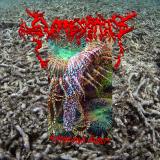
Extinction Burst! is the new invocation in album-form by Guttersnipe, Leeds’ premier and pre-eminent XFCER (XFCER: Xenofeminist crisis-energy rock)* duo. Slamming at full speed to multi-dimensional oblivion, Extinction Burst! is the most full, hidefinition lurid dream-mare yet spewed out by Uroceras Gigas & Tipula Confusa. Engineered and mixed by Ross Halden at Hohm Studio in Bradford and mastered by Rashad Becker, Extinction Burst! follows 2018’s My Mother The Vent, which garnered universal critical adoration. Nevertheless, this long-awaited follow up is more extreme: it is wildness beyond reason, splitting new tears in the reality gauze, ultimate hallucination through sound ecstasy. 2026’s Guttersnipe are evolved, mutated by 8 years of touring together and with the labyrinthine network of groups both Guttersnipe members are involved with - Tristwch Y Fenywod, Nape Neck, Petronn Sphene, Yexxen to name a few. On Extinction Burst!, as with previous material, the duo are heavily augmented with technology. Tipula Confusa's drum kit triggers chasm-causing synth pulses with thumping low end attack.. Strafing from all over the stereo field the constant shatter of the cymbals and toms feel like Sunny Murray or Rashied Ali in full flight during a John Coltrane session in 1967. Uroceras Gigas’s guitar + synth storm is by-now similarly an instantly recognised tool kit in underground music. Switching from screeching guitar atonality to intricate riffs from the black metal/Voivod hinterland to ultra-distorted synth meltdown, it’s an utterly overwhelming, essential and vital pouring-out of the full emotional spectrum. Both artists vocalise, ecstatic and primal, drawn out or yelped in pain or pleasure or panic. Alive On Tuesday begins with some of the only space on Extinction Burst! Digital crackles and tight-delays blow out into a fullthrottled death-dive into sweet opaqueness, offset by the duo’s vocals. There’s a popular believe that Guttersnipe is chaos, but over 9 mins here the group are clinical in their control of the simulated entropy. Mincing while the Maelstrom Churns’s guitar is modulated into jagged atonal atonement, duetting with the virtuoso drum patterns before it thuds into gear at quadruple the speed. Threads Of Radical Unaliveness veers close to the extreme Metal influences with blast beats and guttural vocalisations until the track exhausts itself into unaliveness. Keep Honking summons a demonic digital panic, with the duo reincarnating in real time as haunted versions of themselves, almost translating the lurid, ultra vivid, simultaneous hell+heaven of being alive in this dimension. Primordial Invagination harnesses No Wave’s dissension of normality before the structured collapse of Skra¨ckblandad Fo¨rtjusning, in which Tipula Confusa’s accelerating drums simulate a bouncing barrel of brimstone descending into a primordial gunky ooze, a respite in the middle before the record splutters to a stuttering finale, both members’ vocals out there in the neon realness, alive with crisis energy. There is nothing on this cursed earth like Guttersnipe. For over 10 years they have whirled in a wiggliness both woebegone and wonderstruck on a mission of radical mutant exaltation using rock music weaponry loaded with a queer hysterical ammunition to rupture the fabric of the known Rock universe and unleash a tendril-soft hallucinatory violence; thrumming with the bracing vividness of insect bodies, crazed with alien synaesthetic emotions, harnessing jagged excoriating illogic as a face meltingly snazzy affront to redundant macho mediocrity with the hope to break minds, squeeze hearts, explode pelvises and maybe even reset the parameters of reality. Addendum: xenofeminist : proposing and creating a world defined not only by sexual/gender equality, queer empowerment and the toppling of the racist heteropatriarchal hegemony and it’s tyranny of phallogocentric signifiers, but a philosophy of radical queerness that explodes the basic notion of embodied existence itself beyond even the human, where we see bacteria, invertebrates, reptiles, marine life, animalia in general, inanimate objects, quantum phenomena and as yet inarticulated bodies and minds as social and political equals that may inspire and inform our concepts of self, feeling and meaning as we labour to build a collective reality that doesn’t completely suck!! crisis energy : a term borrowed from the weird fiction author china mieville to describe a type of extreme concentration of power which emerges when a system or organism is pushed to it’s absolute limit; the point of rupture, chaos, entropic overload, just before it all breaks apart. rock : Rock ’n’ Roll, rock music, the devil’s music, sex, guitar, drums, voice, rhythm, riffs!
On Stock and ready to ship
The Rituals series rises again, a fresh strike carved deep into black wax. RITUAL12 summons an international assembly of techno insurgents from the OMEN roster, each delivering their own sonic rite. Across two sides, the intent is absolute: raw, unfiltered power pulled from the shadows and unleashed on the dance floor.
RITUAL12 is not a compilation, it’s a convocation. Forged in analogue heat, drenched in distortion, and aimed directly at the heart of the floor, this record demands full surrender. Step in. There is no turning back.
SIDE A
Swarm Intelligence – Inexorable
Berlin’s Swarm Intelligence ignites the record with precision-tooled percussion and fractured basslines. Polyrhythmic tension winds tighter with every measure, industrial grit locking into a cybernetic march toward total hypnosis.
B.A.R.K – Shikijitsu
A bone-rattling invocation of distorted low-end and ceremonial drums. B.A.R.K drives forward like ancient machinery grinding to life, a Japanese primal energy sharpened to a deadly edge.
Axkan + Duellist – Resilence
Mexico meets Scotland for a brutalist assault: hammering kicks, serrated synth textures, and walls of analogue saturation. No safe passage here, only forward momentum into the heart of chaos.
SIDE B
EAS – Honored One
From Los Angeles, EAS delivers a tense, ritualistic construction where a subterranean EBM bassline pulses through metallic drones. Hypnotic, uneasy, and charged with controlled dissonance.
Ha†elove + Ogmah – Hanged Bodies
A dark ceremonial groove, heavy with ritual percussion and spectral synth chants. The layers rise to a fever pitch, blurring the line between transcendence and collapse.
Crystal Geometry + Axkan – Kratom
France’s Crystal Geometry joins Axkan for a militaristic strike of modular chaos and pummeling drums. EBM infused basslines drive beneath razor-sharp synth fire, rallying the midnight faithful to the front lines.
On Stock and ready to ship

expected to be published on 06.06.2025

"This is the time that we, who have benefitted from the Last Poets shouldbe able to say, 'it's the Last Poets. It's them we should be honouring, because we did not honour them for so many years_"
KRS One wasn't just addressing the hip hop fraternity when he uttered
those words by way of introducing the video for Invocation - a poem
written thirty years ago, around the time of the Last Poets' last significant comeback. He was speaking to everyone who's been affected by the word, sound and power issuing from the most revolutionary poetry ever witnessed, and that the Last Poets had introduced to the world outside of Harlem at the dawn of the seventies.
In 2018 the two remaining Last Poets, Abiodun Oyewole and Umar Bin
Hassan, embarked on another memorable return with an album -
Understand What Black Is - that earned favourable comparison with theirseminal works of the past, whilst showcasing their undimmed passion andlyrical brilliance in an entirely new setting - that of reggae music. Trackslike Rain Of Terror ("America is a terrorist") and How Many Bullets demonstrated that they'd lost none of their fire or anger, and their essential raison d'etre remained the same.
"The Last Poets' mission was to pull the people out of the rubble o f their lives," wrote their biographer Kim Green. "They knew, deep down that poetry could save the people - that if black people could see and hear themselves and their struggles through the spoken word, they would be moved to change."
Several years later and the follow-up is now with us. The project started when Tony Allen, the Nigerian master drummer whose unique polyrhythms had driven much of Fela Kuti's best work, dropped by Prince Fatty's Brighton studio and laid down a selection of drum patterns to die for. That was back in 2019, but then the pandemic struck. Once it had passed, the label booked a studio in Brooklyn, where the two Poets voiced four tracks apiece and breathed fresh energy, fire and outrage into some of the most enduring landmarks of their career. Abiodun, who was one of the original Last Poets who'd gathered in East Harlem's Mount Morris Park to celebrate Malcolm X's birthday in May 1968, chose four poems that first appeared on the group's 1970 debut album, called simply The Last Poets. He'd written When The Revolution Comes aged twenty, whilst living in Jamaica, Queens. "We were getting ready for a revolution," he told Green. "There wasn't any question about whether there was going to be one or not. The truth was many of us still saw ourselves as "niggers" and slaves. This was a mindset that had to change if there was ever to be Black Power." He and writer Amiri Baraka were deep in conversation one day when Baraka became distracted by a pretty girl walking by. "You're a gash man," Abiodun told him. The poem inspired by that incident, Gash Man, is revisited on the new album, and exposes the heartless nature of sexual acts shorn of intimacy or affection. "Instead of the vagina being the entrance to heaven," he says, "it too often becomes a gash, an injury, a wound_" Two Little Boys meanwhile, was inspired after seeing two young boys aged around 11 or 12 "stuffing chicken and cornbread down their tasteless mouths, trying to revive shrinking lungs and a wasted mind." They'd walked into Sylvia's soul food restaurant in Harlem, ordered big meals, then bolted them down and run out the door. No one chased after them, knowing that they probably hadn't eaten in days. Fifty years later and children are still going hungry in major cities across America and elsewhere. Abiodun's poem hasn't lost any relevance at all, and neither has New York, New York, The Big Apple. "Although this was written in 1968, New York hasn't changed a bit," he admits, except "today, people just mistake her sickness for fashion." Umar is originally from Akron, Ohio, but had arrived in Harlem in early 1969 after seeing Abiodun and the other Last Poets at a Black Arts Festival in Cleveland. That's where he first witnessed what Amiri Baraka once called "the rhythmic animation of word, poem, image as word- music" - a creative force that redefined the concept of performance poetry and stripped it bare until it became a howl of rage, hurt and anger, saved from destruction by mockery and love for humanity. When Umar's father, who was a musician, was jailed for armed robbery he took to the streets from an early age where he shined shoes and raised whatever money he could to help feed his eight brothers and sisters. By the time he saw the Last Poets he'd joined the Black United Front and was ready to join the struggle. Once in Harlem, Abiodun asked him what he'd learnt in the few weeks since he'd got there. "Niggers are scared of revolution," Umar replied. "Write it down" urged Abiodun. That poem still gives off searing heat more than fifty years later. In Umar's own words, "it became a prayer, a call to arms, a spiritual pond to bathe and cleanse in because niggers are not just vile and disgusting and shiftless. Niggers are human beings lost in someone else's system of values and morals." And there you have it. It's not just race or religion that hold us back, but an economic system that keeps millions in poverty and living in fear - a system born from political choice and that's now become so entrenched, so bloated on its own success that it's put mankind in mortal danger. It was many black people's acceptance of the status quo that inspired Just Because, which like Niggers Are Scared Of Revolution, was included on that seminal first album. Along with their revolutionary rhetoric, it was the Last Poets' use of the "n word" that proved so shocking, but it would be wrong to suggest that they reclaimed it, since it never belonged to black people in the first place. There's never any hiding place when it comes to the Last Poets. They use words like weapons, and that force all who listen to decide who they are and where they stand. Umar's two remaining tracks find him revisiting poems first unleashed on the Poets' second album This Is Madness! Abiodun had left for North Carolina by then where he became more deeply enmeshed in revolutionary activities and spent almost four years in jail for armed robbery after attempting to seize funds related to the Klu Klux Klan. Meanwhile, the 21 year old Umar was squatting in Brooklyn and had developed close ties with the Dar-ul Islam Movement. A longing for purity and time-honoured spiritual values underpins Related to What, whilst This Is Madness is a call for freedom "by any means necessary," and that paints a feverish landscape peopled by prominent black leaders but that quickly descends into chaos. "All my dreams have been turned into psychedelic nightmares," he wails, over a groove now powered by Tony Allen's ferocious drumming. Those sessions lasted just two days, and we can only imagine the atmosphere in that room as the hip hop godfathers exchanged the conga drums of Harlem for the explosive sounds of authentic Afrobeat. Once they'd finished, the recordings and momentum returned to Prince Fatty's studio, since relocated from Brighton to SE London. This was stage three of the project, and who better to fill out the rhythm tracks than two key musicians from Seun Anikulapo Kuti's band Egypt 80? Enter guitarist Akinola Adio Oyebola and bassist Kunle Justice, who upon hearing Allen's trademark grooves exclaimed, "oh, the Father_ we are home!" Such joy and enthusiasm resulted in the perfect fusion of Nigerian Afrobeat and revolutionary poetry, but the vision for the album wasn't yet complete. He wanted to create a new kind of soundscape - one that reunited the Poets with the progressive jazz movement they'd once shared with musicians like Sun Ra and Pharoah Sanders. It was at that point they recruited exciting jazz talents based in the UK like Joe Armon Jones from Mercury Prize winners Ezra Collective, also widely acclaimed producer/remixer and keyboard player Kaidi Tatham, who's been likened to Herbie Hancock, and British jazz legend Courtney Pine, whose genius on the saxophone and influence on the UK's now vibrant jazz scene is beyond question. The instrumental tracks on Africanism are in many ways as revelatory and exciting as the Last Poets' own. It's important to remember that the kaleidoscope of styles and influences we're presented with here aren't the result of sampling but were played "live" by musicians responding to sounds made by other musicians. That's where the magic comes from, aided by Prince Fatty's peerless mixing which allows us to hear everything with such clarity. Music fans today have grown accustomed to listening to all kinds of different genres. Their tastes have never been so broad or all- encompassing, and so the music on this new Last Poets' album is as groundbreaking as their lyrics, and perfectly suited to the era that we're now living in. John Masouri
expected to be published on 06.12.2024

His partnership with the label has already resulted in a collaboration with Modern Heads, as well as one of the first entries in the Monad series, and now a fascinating new EP that showcases his talent for testing the limits of perception.
Alistair Wells is a producer whose current work is synonymous with a kind of benevolent intensity: he excels at sculpting tonally rich and percussively complex tracks that seem to both enlighten and confront. Under his most well-known alias as Perc, he has established a deep roster on his Perc Trax label to carry out a similar-minded program, and has built up a formidable arsenal of EPs and singles in the wake of enigmatic LPs like 2011's Wicker & Steel. His 'eclectic-yet disciplined' methodology practically guaranteed he would eventually come into the orbit of Stroboscopic Artefacts. His partnership with the label has already resulted in a collaboration with Modern Heads, as well as one of the first entries in the Monad series, and now a fascinating new EP that showcases his talent for testing the limits of perception.
The ominously titled opener "Death of Rebirth" - a title hinting at some form of hellish repetition - starts things off with a sense of dark premonition. Yet, in signature Perc style, that aura of uneasiness beckons listeners to explore further rather than to flee from it: in this context, the reliable 4/4 kick drum throb is the only means of orienting oneself or angling through a glassy and metallic labyrinth where foreign objects conspire to make previously unimagined percussive noises. "Negative Space" is a variation upon this theme of trying to maintain focus within a foreign environment bristling with strange enticements and potential dangers: with the kick pattern from the previous pice still acting as a trusty guide, new sound forms arise at every turn: a novel sort of hybridized piano / gamelan tone, a shuddering assembly line, and snaking delay feedbacks. Like dub music meant to be listened to in a hall of mirrors, "Negative Space" induces a heady feeling of multiplying realities.
The closing "Ma", if translated into Japanese, can mean "space / pause" and thus acts as a nice complement to "Negative Space." However, this massive, side-long audio force field dispenses with the previous tracks' steady pulse, and suggests a rigorous act of ritual contemplation taking place in the midst of phenomenal chaos and challenging blows to the body. "Ma" succeeds in modernizing the industrial-era rhythmic invocations of artists like Z'ev, achieving an almost classical solemnity without sacrificing Perc's usual love for cleverly maniuplated electricity. Altogeher, 'Ma' is an eye-opening, ear-infliltrating statement that will warp your understandings of time and space in a most exquisite way.
Order now and we will order the item for you at our supplier.

Tyyni is the third album by Finnish-born sound artist and musician Cucina Povera aka Maria Rossi. The second album recorded using a more studio-based scenario – as opposed to last year’s Zoom, a collection of in-situ, spontaneous recordings – Tyyni feels like a slowly unfurling mediation on the clash between nature and mechanical living, a rumination on the complexities of modern life that begin to unveil more about the inner landscape of the artist as it progresses. A Finnish word referring to still, serene weather, the title belies a new note of turmoil in Cucina Povera’s soundworld. Tyyni represents a more detailed focus on the sculpting of sounds that curl around Rossi’s hymnal vocal performances. It’s a more adventurous work than Rossi’s previous output that goes further into noise elements and vocal abstraction while maintaining the balance and ecclesiastical ecstasy of her debut Hilja.
While tension at the core of Cucina Povera is always prevalent, previously it was organic sounds that were used to counterpoint Rossi’s singing but on Tyyni these are often replaced with aggressive synths and distortion, profane clashes with the seemingly sacred hymns. Whether close mic’d and intoning in a loop or in full flight, Maria Rossi’s voice remains in the foreground, set here against a more synthetic backdrop. This development builds new worlds for Cucina Povera, a digital environment which brings in a sense of the alien for Rossi’s vocal to duel. The effect is often dazzling. On Salvia Salvatrix, an ode to the medicinal plant used to ward off evil spirits, Rossi’s invocation is encircled by a distorted synth sound tearing at the fabric of the composition. It’s an inspired juxtaposition, leaving the listener to appreciate both sounds as separate and as a duet. Anarkian kuvajainen embraces a sense of chaos, an accidental transmitting mobile phone’s pulse is swept up gently with looped synth swells as Rossi’s prayer-like vocal rhythmically teases the composition into loops that embrace and then drift apart. Teerenpeli flirts with a minimal beat rendered by sampler and processed, layered field recordings of capercaillies, while Side A ends with one of Rossi’s most beautiful, simple tracks yet recorded. Varjokuvatanssi is an a cappela recording built on top of a wordless glossolalia, a shadowy interplay which foregrounds the solo vocal.
Pölytön nurkka is the most melodic song yet recorded by Cucina Povera. While it still maintains an off-the-cuff performance style, the synthesized chimes and 4/4 beat are smothered by a distorted synthesizer which almost replicates the bravado of an electric guitar feedbacking into the night. Rossi’s subject matter talks of trying to start anew, getting rid of extraneous material, perhaps still feeling powerless to affect positive change. On Haaksirikkoutunut, the protagonist vocal is lost, a vessel rudderless on the ocean, buffeted by waves metaphorical or real, digital, atonal chords gurgling and splashing against the bow, a storm forever brewing on the horizon. Saniaiset recalls Coil in its eldritch, nocturnal tone and digital-bell like synth, Rossi’s half-spoken/half-sung voice attaining a creepy tone before flipping into flight. Album closer Jolkottelureitti uses an escalating, sequenced synth that splinters into both abrasive tones and harmonising chords creating a kosmische effect, reminding the listener of Kluster or synth-era Popol Vuh, all the while elevated by Rossi’s searching vocalising.
For an artist with such a singularly unique musical language, Cucina Povera is continually teasing new strands and emotive tones from an evolving palette. Most importantly, Tyyni appears to be pulling back the veil to uncover an artist finding a synergy between her own emotional inner world and practice. As such, on her third album, Maria Rossi has found a third way between abstraction and extraneous emotion, personal experience turned inside out to reveal more about the listener.
Order now and we will order the item for you at our supplier.
