Suche:char

Styles
Alle
TIN MACHINE - TIN MACHINE II

Tin Machine

TIN MACHINE II

12inchMOVLP2715T
Music On Vinyl
11.04.2022

Originally released by Victory Music in 1991, Tin Machine II is the second and final studio album by Tin Machine. After this album and the supporting tour, frontman David Bowie resumed his solo career.

Tin Machine II’s reputation has only increased over the years. Uncut magazine placed the album on their list of 50 Great Lost Albums (their list of great albums not currently available for purchase), calling the album “extraordinary”.

As with all Bowie albums, there are plenty of strong tracks here to make this a must have. Opening track “Baby Universal” is pure Bowie. He re-recorded this track in 1996 for his 1997 album Earthling, but the track was not released on the album. It was eventually released in 2020 on the Bowie EP Is it Any Wonder?. The first single “You Belong in Rock n’ Roll” was released ahead of the album and peaked at No. 33 in the UK. The second single “Baby Universal” achieved success on the Modern Rock chart in the USA, where it reached No. 21, and the third and last single “One Shot” became an even bigger hit, reaching No. 3.


RELEASE: 17-7-2020


• 180 GRAM AUDIOPHILE VINYL
• INSERT
• SPECIAL SPOT VARNISHED SLEEVE
• SECOND AND FINAL STUDIO ALBUM BY THE SUPERGROUP TIN MACHINE, ORIGINALLY
RELEASED IN 1991
• TIN MACHINE = DAVID BOWIE, REEVES GABRELS, TONY SALES & HUNT SALES
• LIMITED EDITION OF 5000 INDIVIDUALLY
NUMBERED COPIES ON SILVER COLOURED VINYL

SIDE A
1. Baby Universal
2. One Shot
3. You Belong In Rock N’ Roll
4. If There Is Something
5. Amlapura
6. Betty Wrong

The album’s cover (which was censored for its original USA release!) was created by Edward Bell, who had previously worked with Bowie in making artwork for Scary Monsters. The MOV cover features a spot varnish finish.

Music On Vinyl gives Tin Machine II its first vinyl re-release since the 1991 original, and it’s pressed on coloured vinyl for the very first time. The initial pressing is a limited edition of 5000 individually numbered copies on silver coloured vinyl.

vorbestellen11.04.2022

erscheint voraussichtlich am 11.04.2022

30,88
DORIS DAY - My Heart

Doris Day

My Heart

12inchRLGM13551PMI
REAL GONE MUSIC
10.04.2022

By far the most unexpected hit record of 2011 was the 29th and final studio album from an 89 year-old Doris Day. My Heart hit the charts in the U.S. and went all the way up to #9 in the U.K., triumphantly capping a legendary singing and acting career. But this record and its chart success was, if you’ll excuse the pun, no mere sentimental journey. The heart of My Heart is a series of songs recorded by Doris in the mid-‘80s as background for scenes featuring her with various animals on the Doris Day’s Best Friends television show, many of
them written by her son, Terry Melcher, whose production credits, of course, include The Byrds and Beach Boys. Melcher also lends a bravura vocal turn to “Happy Endings” and is the subject of a heartfelt preamble by Doris on “My Buddy.” And without question Terry’s influence lay behind her superb, jaunty cover of the Lovin’ Spoonful’s “Daydream.” In short, My Heart was a touching, tuneful love letter from Doris to her deceased son; and now, in honor of her centennial, we’re bringing it to LP for the first time, remastered for vinyl by Mike
MIlchner at Sonic Vision, and pressed in green vinyl complete with an insert featuring liner notes. A beautiful record from a beautiful lady.

vorbestellen10.04.2022

erscheint voraussichtlich am 10.04.2022

34,41
VALENTINA GONCHAROVA - RECORDINGS 1987-1991, VOL. 1

Historically informed violin player, prize-winning street musician, new age experimentalist, chamber ensemble performer and conservatoire deviant. The career of Valentina Goncharova (b. Kyiv 1953) shares parallels with those associated with the broader new music movement of the 20th century and the dissemination of home recording technologies.

Valentina’s was a youth spent immersed in the world of classical music study under soviet rule, first in Kyiv- later in Leningrad & now St. Petersburg, from the age of 16. With the supervision of professors M. Vayman and B. Gutnikov she learned concert violin and developed alternate playing styles alongside skilled pianists. A student of the Leningrad conservatoire during the years 1969 - 1983, her repertoire included music for violin and later expanded to contemporary music composition.

The improvisatory nature of free jazz and then-budding experimental rock circles also intrigued Valentina during this period in Leningrad. Departing from the rules of the conservatoire, she briefly performed in underground rock clubs alongside future members of the industrial group Pop- Mechanika (Popular Mechanics). This perpetual state of flux is central to the variety found within ‘Recordings Vol. 1’, though as opposed to any degree of uncertainty Valentina’s practice is one
in flux by way of earnest curiosity.

Pushing further into an exploration of solo electro-acoustic sounds, she took to home taping on a modified Olimp reel to reel recorder. Intrigued by the manipulability of dubbing and the fresh sounds of DIY effects chains, Goncharova developed pickups alongside her husband Igor Zubkov. Her infatuation with the music of Stockhausen, Xenakis, Ganelin Trio and Pierre Boulez channels through considerations of space and erratic sound design, the 3 movements of ‘Metamorphoses’ embodying this textural approach to musique concrete.

The compositional skills developed in Leningrad unfold in the romantic gestures of ‘Higher Frequencies’, whilst manipulated cello combines with synthesise keys across ‘Passageway To Eternity’.
The slow, pulsating drone soundscapes recall the likes of Robert Rutman’s US Steel Cello Ensemble or even deep listening pioneer Pauline Oliveros.

The juxtaposition of written notation and improvisatory flare is central to Goncharova’s sound world. This period of home recording documents a confluence of minimalism, free form and flirtations
with new age tropes (inc. bell chimes and cavernous vocal mantras).

Experimenting with unusual performance techniques, such as shouting into amplified cello strings, Valentina’s home studio functioned as a place to foster full artistic and creative freedom
away from any academic strictures.

Relocating to Estonia in 1984, and in parallel to the deeply personal music of ‘Recordings Vol. 1’, Valentina performed at jazz festivals and gave classical concerts across Eastern Europe. In a sense, the recordings on these discs offer only a glimpse into her lifelong body of work. Over the past few decades she has taught at Tallinn Music College, expanded and updated post- Soviet popular music repertoire, collaborated with the Russian Philharmonic Society of Estonia and given concerts and charity events alongside the Catholic Church.

Hers is a life dedicated to the exploration of sound, a career forged through careful study and ceaseless intrigue. In a time where technological interconnectedness has allowed for music of the pas
to be continually mined and evaluated through new lenses, Shukai present an artist whose tendency for private home-taping had allowed recordings to go unheard for thirty years.

nicht am Lager

Bestelle jetzt und wir bestellen den Artikel für dich beim Lieferanten.

23,74

Last In: vor 4 Jahren
NICK LOWE - DIG MY MOOD (REMASTERED)

Nick Lowe

DIG MY MOOD (REMASTERED)

12inchLPYEP2635R
Yep Roc
08.04.2022

Three decades on, Nick Lowe has evolved from British pub-rock pioneer
(with Brinsley Schwarz) to new wave godfather (producing Elvis Costello,
among others) to postrock crooner.
It’s a surprising but convincing transformation, begun with the country-inflected minimalism of 1994’s superb The Impossible Bird and pared to an even
leaner chamber pop on this subdued charmer. Bird found Lowe damping his
jokester’s instincts to dig deeply and soberly into romantic despair and a gnawing, midlife confrontation of self.
While the tracks on Dig My Mood suggest that some of the wounds have
healed, there’s still an elegiac air to songs like “Faithless Lover,” “What Lack of
Love Has Done,” and “Failed Christian” that qualifies these as songs of experience. Lowe’s baritone has deepened and acquired a deft finesse with redeeming glimmers of wit and no loss of intelligence.
The 2021 reissue of Dig My Mood is remastered from the original tapes.

vorbestellen08.04.2022

erscheint voraussichtlich am 08.04.2022

31,47
Tame Impala - The Slow Rush 5x12"

Tame Impala

The Slow Rush 5x12"

2x12inch3853987
Modular
08.04.2022

”The Slow Rush”, das vierte Album von Kevin Parker als Tame Impala, wurde im Februar 2020 mit großem Erfolg veröffentlicht. Parker erreichte seine zweite Nr. 1 in Australien und sein bisher höchstes Chart-Album sowohl in den USA als auch in Großbritannien sowie 14 Top-10-Chartplatzierungen weltweit.

Die neue Farbversion von ”The Slow Rush” in limitierter Auflage, die zum ersten Mal seit der Erstveröffentlichung neu aufgelegt wurde, erscheint auf 180 Gramm cremeweißem Vinyl.

Mit ”Lost In Yesterday”, ”Borderline”, ”It Might Be Time”, ”Breathe Deeper” und ”Is It True” taucht Parker auf ”The Slow Rush” in die Tiefen des Ozeans der Zeit und beschwört das Gefühl eines Lebens in
einem Blitzmoment herauf, über wichtige Meilensteinen, die vorbeisausen, während man auf sein Handy schaut, ist es ein Loblied auf Schöpfung und Zerstörung und den unendlichen Kreislauf des Lebens.

vorbestellen08.04.2022

erscheint voraussichtlich am 08.04.2022

109,03
Caleb Dailey - Warm Evenings, Pale Mornings: Beside You Then

Growing up in the Californian sprawl and the vast suburbs of Phoenix, Arizona, Caleb Dailey largely dismissed the country and western music that surrounded him. Instead, he was drawn to independent rock, experimental zones, and other genre-defying forms, which led him to create skewed rock music with Bear State and establish the “minimal art label” Moone Records with his brother Micah Dailey in 2013. But in the early half of the 2010s, Dailey began to hear things differently. Drawn into the left-of-center works of artists like Gram Parsons and Blaze Foley, a more idiosyncratic take on country, folk, and roots music began to swirl in his imagination.

Wandering into the form’s cowboy chords and lonesome scenes, Dailey found himself wondering what his own country album might sound like. The result is his debut solo album, a collection of covers called Warm Evenings, Pale Mornings; Beside You Then. Produced by John Dieterich of Deerhoof, Keiko Beers, and Dailey himself, it’s a melancholy charmer, rooted in traditional ideas but free roaming in its scope. Laced with synths, pedal steel, acoustic guitars, and commanded by Dailey’s full and woozy voice, it owes as much to the busted waltzes of Lambchop and the homespun lo-fi folk of Little Wings (whose Kyle Field appears on the album via a spoken intermission) as it does to the songwriters and performers who provide its source material, which include Parsons, Foley, Elvis Presley associate Chips Moman, steel guitarist Buddy Emmons, and others.

“The subversive nature of country music isn’t as much at the surface as some other genres,” Dailey says. “But the deeper down the ‘country hole’ I went, the more I wanted to be part of it. It is truly a strange world.”

The hands of Dailey and his collaborators, which includes a wide roster of DIY experimentalists like James Fella of art punks Soft Shoulder, Jay Hufman (Gene Tripp), Lonna Kelley of Giant Sand, Japanese DIY hero’s Koji Shibuya and Tori Kudo, Nicholas Krgovich, Markus Acher of The Notwist, and more, that strangeness is accentuated. Dailey doesn't aspire to retro Nashville fetishism or sanctioned notions of “realness” so much as a genuine outsider authenticity. Take his version of Gordon Lightfoot’s “If You Could Read My Mind” for example: a highlight of the record, it pairs familiar genre signifiers like pedal steel and guitar strums with warbled synths. Then there’s his read of “Dreaming My Dreams,” originally made famous by Waylon Jennings (who also did time in the Arizona desert), which morphs from a mournful ballad into a wash of far-off sonic noise.

The attention here is on the songcraft itself, with Dailey inhabiting these songs and turning them inside out to reveal unexpected tenderness and playfulness.

Recorded at home with an acoustic guitar and 4-track, Dailey began open correspondences with his collaborators, who fleshed out ideas and added touches, often working with skeletal frames before Dieterich and Dailey shaped it into a cohesive whole. “John is the reason this album exists,” Dailey says. “He sculpted all these parts together in such an otherworldly way. He is truly a magician.” Deeply allergic to insincerity, Dailey avoids any trace of irony. He’s created a cohesive gem out of disparate parts, uniting Americana songcraft with experimental disassemblage. From this bric-à-brac, he’s made something touching and beautifully strange.

vorbestellen08.04.2022

erscheint voraussichtlich am 08.04.2022

25,67
The Vampires of Dartmoore - Dracula's Music Cabinet EP

Finders Keepers present this uber-rare soundtrack to a
film that never existed, performed by an imaginary pop
group. Incredible Polanski-inspired German hip-hop
psychsploitation beats from 1969.

This is the movie soundtrack to a film that never existed.
This is the movie soundtrack by the band that was never
requested. These were the sound library musicians who
had to invent their own clients and imaginary cast, crew
and plot to get their music heard, by a niche audience,
before floating deep into the depths of the rare record
reservoir gasping for breath.

To take a cinematic cue the record in question is the
Eurotrash pop equivalent of Jean Renoir’s
tragic/triumphant Boudu character who as a homeless,
confused and desolate down-and-out plunged to the
depths to be unwillingly rescued, resuscitated then after
gradually winning the hearts of an entire family becomes
respected and revered as royalty. Over twenty years after
the mad scientists, Dr. Horst and Ackermann, first
breathed life into this short-lived beast, brave and intrepid
vinyl explorers have sporadically returned to the doors of
Dracula’s Music Cabinet to resurrect the sonic spooks and
mutated melodies to share with nerds, mods, rockers, hiphoppers, psych nuts and Krautsiders alike. The lifeless
corpses of The Vampires Of Dartmoore that lay six feet
beneath the belly of the Eins Deutschmark bins has since
crept through the record collections of the aforementioned
social circles devouring continental currencies and
demanding random ransoms of €250 plus, not to mention
sweat, tears (of laughter) and a lot of blood.

Revamped, remastered, and re-presented! Available once
again since the initial Finders Keepers’ limited edition 2009
pressing.

nicht am Lager

Bestelle jetzt und wir bestellen den Artikel für dich beim Lieferanten.

23,40

Last In: vor 4 Jahren
Kalme - Neue Sprache

Kalme

Neue Sprache

12inchAVM073LP
Altin Village & Mine
08.04.2022

The artistic oeuvre of Berlin-based Sonja Deffner is as extensive and diverse as its contexts are high-profile: If the classically trained musician could in recent years be heard as a member of the groups Jason & Theodor, Die Heiterkeit, Globus and PTTRNS, as part of Christiane Rösinger's touring band, or as a recording musician on Andreas Spechtl's (Ja, Panik) albums, she has at the same time produced an acclaimed graphic work, video works and made her theater debut. Under the name Kalme, Deffner now presents her solo debut »Neue Sprache«, which feels like a culmination: Deffner doesn't need much space to present an artistic position of spectacular incisiveness and maturity.

The formal language of Kalme's debut evolves with reference to experimental pop and R&B, but equally informed by ambient electronics or dub techno. Analog and digital sound synthesis meet Deffner's characteristic use of field recordings, acoustic instrumentation (clarinet, percussion) meets musical post-production, sampling meets expressive synthesizer playing. At the center of the album, however, are Deffner's remarkable lyrics, written in German for the first time. Deffner creates a language of stark, emotional poignancy that is as conspiratorial as it is precise. The themes of the tracks develop between the poles of movement and stagnation, understood as motifs of biographical as well as musical ways of being or relating. In this forcefield, personal and political considerations coincide again and again, for example when Deffner reflects on her experiences with the social conditioning of femininity and motherhood.

The album title »Neue Sprache« (»New Language«), then, describes a search for forms of articulation of solidarization: language as a tool of a new relationship to the world that allows testimony to individual experience without reproducing categories of repression. In this way, Kalme's debut simultaneously achieves a radical intimacy, just as, on the other hand, the confrontation of language and sound repeatedly opens up fissures that deny any semblance of comfort. »Neue Sprache« does not stop at this modernist gesture, however, but unquestionably takes a stand. That's what Kalme's »Neue Sprache« ultimately is: the taking of a position. A statement.

vorbestellen08.04.2022

erscheint voraussichtlich am 08.04.2022

22,98
PAUWEL - DEAR LP

Pauwel

DEAR LP

12inchUNDAY143LP
UNDAY RECORDS
08.04.2022

Dear is Pauwel's big step forward. His debut album on Unday (due April 2020) is a mature collection of songs about loss in all its different facets. Pauwel openly confronts his demons, without ever losing sight of the essence: rock-solid and captivating folk songs between hope and despair, comforting and disquieting at the same time. Dear turns out a record to cherish and completely disappear into.

Shortly after Pauwel finished his previous EP, his mother passed away. A few weeks later, Europe went into lockdown for a second time. Pauwel wanted to cope with this turbulent episode on his debut on Unday Records, but the isolation during the pandemic only cast more doubts. During the darkest winter months, the 31-year-old songwriter realized that loss comes in many guises: lovers come to leave, suddenly leave or turn out to have become strangers. "Dear" is the account of this dark period in Pauwel's life. A reckoning with all the bad that happened to him and his peers. It is also a bridge to whatever comes next, a hopeful glance at the future.

On 'Dear', Pauwel expands his musical universe considerably, without losing his characteristic melancholy and distinctive voice. With the help of musicians Sander Smeets, Koen De Gendt and David Broeders - his new backing band - the rough folk diamonds were polished into mature songs. The stunning voice of Catherine Smet (aka Bluai) serves as a comforting echo on a handful of songs.
"Dear" was recorded at three different locations by producer Bert Vliegen (Whispering Sons, Sophia). The opening track "Murderer" and the haunting "Bones" were created in a hut in Walcourt. The bulk of the record was recorded during an intense week at the GAM Studio in Waimes. While the TV news showed apocalyptic images of the floods in the province of Liège around the clock, Pauwel and his band finished the songs. Rich, spacy arrangements ("Lazy"), rambling country-rockers ("Deer" & "Sister") or a tearful one-taker on Fender Rhodes ("Mother"): during this session "Dear" finally came together.

vorbestellen08.04.2022

erscheint voraussichtlich am 08.04.2022

22,65
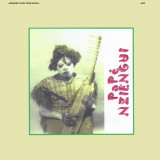
Papé Nziengui et son Groupe - Kadi Yombo LP 2x12"

Kadi Yombo, published in 1989, is the most successful album in the quest for a fusion between tradition and modernity in Bwiti harp music of the Tsogho people of Gabon. Combining beating rattles with a layer of synthesizers, Papé Nziengui blends in a contrapuntal dialogue characteristic of harp playing: male song in appeal and female choir in response, male voice of the musical arc and rhythms of female worship. But above all it’s Tsogho ritual music and modern studio orchestration. The result is an initiatory itinerary of 10 musical pieces which are all milestones likely to be simultaneously listened to, danced, meditated on, and soon acclaimed. In the years since, Nziengui has traveled he world from Lagos to Paris, from Tokyo to Cordoba, from Brussels to Mexico City to become a true icon, the emblem of Gabonese music.

Like Bob Dylan, "electrifying" folk and Bob Marley mixing rock with reggae, some purists have criticized Nziengui for having distorted the music of harp by imposing a cross with modern instruments. They even went so far as to claim that Nziengui was just an average harpist covering his shortcomings with stunts that were only good for impressing neophytes; like playing a harp placed upside down behind his back or playing two or three harps simultaneously. Sincere convictions or venomous defamations, in any case, Nziengui never gave in to such attacks, imposing himself on the contrary to pay homage to the elders (Yves Mouenga, Jean Honoré Miabé, Vickoss Ekondo) while instructing the maximum of young people. He is thus the promoter of many young talents, the most prominent of which is certainly his nephew Jean Pierre Mingongué. In a conservative society where the sacred is confused with secrecy, exposing the mysteries of Bwiti in broad daylight can be punished by exclusion or even execution.

Papé Nziengui has always claimed that he faces such risks because he never felt enslaved to a community that governs his life, that regulates his conduct, that has a right of censorship over his activities. Like Ravi Shankar, the famous sitarist, Papé Nziengui is a man of rupture but also of openness, a transmitter of culture. As proof, he has established himself in Libreville, Gabo’s capital, as the main harpist for sessions and concerts, accompanying the greatest national artists (Akendengué, Rompavè, Annie-Flore Batchiellilys, Les Champs sur la Lowé, etc.) as well as foreign artists (Papa Wemba, Manu Dibango, Kassav', Toups Bebey, etc.). In 1988, he was the first harpist to release an album in the form of a cassette produced by the French Cultural Center (Papé Nziengui, Chants et Musiques Tsogho). At the same time, he created his own group (Bovenga), combining traditional music instruments (musical bow, drums, various percussion instruments, etc.) in the framework of a true national orchestra, which gave the first concert and the first tours of a traditional music that was both modern and dynamic, thus "democratizing" the harp, to the dismay of certain purists.

On the other hand, in modern music, dominated by the logic of profit or even commercialism, artistic creation must often be adjusted for a specific audience based on reason rather than heart. But instead of allowing himself to be distorted, Papé Nziengui has always tried to produce music that is not a caricature, worthy in its expression as in its content, of the sacredness and transcendence of the music of the Origins. This is what makes Nziengui not only the musician, but the man someone whose age hasn’t altered any of his freshness or authenticity

vorbestellen08.04.2022

erscheint voraussichtlich am 08.04.2022

32,73
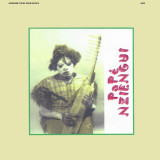
Papé Nziengui et son Groupe - Kadi Yombo LP

Kadi Yombo, published in 1989, is the most successful album in the quest for a fusion between tradition and modernity in Bwiti harp music of the Tsogho people of Gabon. Combining beating rattles with a layer of synthesizers, Papé Nziengui blends in a contrapuntal dialogue characteristic of harp playing: male song in appeal and female choir in response, male voice of the musical arc and rhythms of female worship. But above all it’s Tsogho ritual music and modern studio orchestration. The result is an initiatory itinerary of 10 musical pieces which are all milestones likely to be simultaneously listened to, danced, meditated on, and soon acclaimed. In the years since, Nziengui has traveled he world from Lagos to Paris, from Tokyo to Cordoba, from Brussels to Mexico City to become a true icon, the emblem of Gabonese music.

Like Bob Dylan, "electrifying" folk and Bob Marley mixing rock with reggae, some purists have criticized Nziengui for having distorted the music of harp by imposing a cross with modern instruments. They even went so far as to claim that Nziengui was just an average harpist covering his shortcomings with stunts that were only good for impressing neophytes; like playing a harp placed upside down behind his back or playing two or three harps simultaneously. Sincere convictions or venomous defamations, in any case, Nziengui never gave in to such attacks, imposing himself on the contrary to pay homage to the elders (Yves Mouenga, Jean Honoré Miabé, Vickoss Ekondo) while instructing the maximum of young people. He is thus the promoter of many young talents, the most prominent of which is certainly his nephew Jean Pierre Mingongué. In a conservative society where the sacred is confused with secrecy, exposing the mysteries of Bwiti in broad daylight can be punished by exclusion or even execution.

Papé Nziengui has always claimed that he faces such risks because he never felt enslaved to a community that governs his life, that regulates his conduct, that has a right of censorship over his activities. Like Ravi Shankar, the famous sitarist, Papé Nziengui is a man of rupture but also of openness, a transmitter of culture. As proof, he has established himself in Libreville, Gabo’s capital, as the main harpist for sessions and concerts, accompanying the greatest national artists (Akendengué, Rompavè, Annie-Flore Batchiellilys, Les Champs sur la Lowé, etc.) as well as foreign artists (Papa Wemba, Manu Dibango, Kassav', Toups Bebey, etc.). In 1988, he was the first harpist to release an album in the form of a cassette produced by the French Cultural Center (Papé Nziengui, Chants et Musiques Tsogho). At the same time, he created his own group (Bovenga), combining traditional music instruments (musical bow, drums, various percussion instruments, etc.) in the framework of a true national orchestra, which gave the first concert and the first tours of a traditional music that was both modern and dynamic, thus "democratizing" the harp, to the dismay of certain purists.

On the other hand, in modern music, dominated by the logic of profit or even commercialism, artistic creation must often be adjusted for a specific audience based on reason rather than heart. But instead of allowing himself to be distorted, Papé Nziengui has always tried to produce music that is not a caricature, worthy in its expression as in its content, of the sacredness and transcendence of the music of the Origins. This is what makes Nziengui not only the musician, but the man someone whose age hasn’t altered any of his freshness or authenticity

vorbestellen08.04.2022

erscheint voraussichtlich am 08.04.2022

10,29
MORGAN WADE - RECKLESS

Morgan Wade

RECKLESS

2x12inch19439976951
Sony UK
08.04.2022

Deluxe 16 track vinyl format of the debut album that was released on CD on January 28th. Single 'Wilder Days' peaked Top 5 in the national airplay chart in early January 2022. Having made her UK debut as part of the C2C Festival in March 2022 Morgan has just announced a headline UK tour for June this year. Marketing.

vorbestellen08.04.2022

erscheint voraussichtlich am 08.04.2022

32,06
Jason Kolàr - Liquid Rhythm

Jason Kolàr

Liquid Rhythm

12inchDAUWLP18
Dauw
08.04.2022

Three years after Stroom TV released his debut album Modified Perspectives, Kolàr released, Loops & Pieces, a documentation of sounds he has been working on in the period 2017-2020. According to Kolàr, this tape, also his first release for Dauw, was full of vaporous drafts transforming into solid forms with the help of time and distance. Compared to his previous work, the music on Loops & Pieces is much more stripped down and minimal, yet the dreamy character remained.

On Liquid Rhythm, we see Kolàr combining approaches of both albums. Using synths and acoustic instruments, he created 10 songs reflecting his typical playful yet melancholic aesthetics.

vorbestellen08.04.2022

erscheint voraussichtlich am 08.04.2022

22,48
The Vanguards - Good Times Bad Times / Man Without Knowledge

The Vanguards led by James Davis were Lamp Records only top 100 Billboard Charting group and gave the band plenty of touring and concert appearances in the 1970s. “Good Time Bad Times” along with the flip “Man Without Knowledge” is arguably their rarest and most sought after outing for the label and so with the help of Now & Again with the Blessing of Herb Miller Soul Direction bring you these tracks fully licensed and ready for your turntables

nicht am Lager

Bestelle jetzt und wir bestellen den Artikel für dich beim Lieferanten.

18,19

Last In: vor 3 Jahren
Oyvind Holm - The Unreliable Narrator

In literature an unreliable narrator is a narrator that can't be fully trusted, a
character whose credibility for some reason or another has been
compromised
When I chose to use the expression as the title for my new album, I did so
because I felt it resonated with me on a number of different levels.First of all, it
serves as an accurate way of describing my own lyrical universe, which has
always been a mash- up of real- life events and fiction. No one can tell for sure
what is real and what is made up. At times, even I find there can be a fluid
transition between the two poetic worlds. When I look back on my work, it is often
hard to tell where reality and fiction overlap.
Another factor that undoubtably and unavoidably bled into my writing this time,
was that I finished most of the new lyrics in the weeks and days leading up to the
2020 US Presidential election.
More than any time before, we witnessed a toxic political campaign that
consciously sought to mislead people. And any attempt at raising critical
questions and points of view were brutally brushed off and dismissed as fake
news. Several political narratives played out at the same time, all claiming they
exclusively owned THE TRUTH. A game of smoke and mirrors that for a lot of
people made it hard to decide who to believe. Who was the truthful and who was
the unreliable narrator of the political game?

vorbestellen08.04.2022

erscheint voraussichtlich am 08.04.2022

46,09
Envy Of None - Envy Of None

Envy Of None

Envy Of None

12inchKSCOPE1144
KSCOPE
08.04.2022

ENVY OF NONE IS THE NEW BAND & DEBUT ALBUM FROM ALEX
LIFESON (RUSH), ANDY CURRAN (CONEY HATCH), ALFIO ANNIBALINI &
SINGER MAIAH WYNNE
The ambient, cinematic darkness that the collective creates evokes a
powerful atmosphere that will excite superfans & new audiences alike
Lifeson & Curran's long-time friendship was the catalyst for the band's inception -
but Envy Of None is not defined by its members resumes - they aren't Rush or
Coney Hatch & far more than the sum of its collective parts.
Above the beautiful cacophony of guitars, synths, bass & drums sits the fragile
melodies of 24- year old vocalist Maiah Wynne - the newest name in Envy Of
None's impressive personnel. Hearing Mariah's voice intertwined with the music
will bring back memories of when you heard Shirley Manson of Garbage or Amy
Lee of Evanescence for the first time. Wynne brings charm & beauty to these
recordings in spades - with floating hooks & emotive lyrics transcending the
oftentimes textural aesthetic.
The Storm Thorgerson- esque visuals that grace the cover may remind fans of
Lifeson's earlier work - Andy Curran explains: "the Hypnosis style artwork of
albums like Pink Floyd & Led Zeppelin & others were so eye catching, surreal &
attention grabbing & we wanted to scratch that itch. We were instantly drawn to
Lebanese photographer Eli Rezkallah at Plastik's photography & design work. We
fell in love with a bunch of his work - we had a hard time choosing something
because he had so many great images". However, the 70s prog/ Rush
comparisons may end with the artwork - the music that this ensemble creates
treads new ground with each track throughout their 42- minute debut, from
industrial/electronic influences to post-progressive soundscapes. Envy Of None
create a sound that will haunt, comfort & ignite.
"If you can picture maybe Massive Attack with a little bit of some electronic stuff
with Nine Inch Nails influences, with this beautiful, fragile, sweet voice & some
very, very dark heavy sounds" - Andy Curran (Envy Of None)

vorbestellen08.04.2022

erscheint voraussichtlich am 08.04.2022

31,47
Papé Nziengui et son Groupe - Kadi Yombo LP

Kadi Yombo, published in 1989, is the most successful album in the quest for a fusion between tradition and modernity in Bwiti harp music of the Tsogho people of Gabon. Combining beating rattles with a layer of synthesizers, Papé Nziengui blends in a contrapuntal dialogue characteristic of harp playing: male song in appeal and female choir in response, male voice of the musical arc and rhythms of female worship. But above all it’s Tsogho ritual music and modern studio orchestration. The result is an initiatory itinerary of 10 musical pieces which are all milestones likely to be simultaneously listened to, danced, meditated on, and soon acclaimed. In the years since, Nziengui has traveled he world from Lagos to Paris, from Tokyo to Cordoba, from Brussels to Mexico City to become a true icon, the emblem of Gabonese music.

Like Bob Dylan, "electrifying" folk and Bob Marley mixing rock with reggae, some purists have criticized Nziengui for having distorted the music of harp by imposing a cross with modern instruments. They even went so far as to claim that Nziengui was just an average harpist covering his shortcomings with stunts that were only good for impressing neophytes; like playing a harp placed upside down behind his back or playing two or three harps simultaneously. Sincere convictions or venomous defamations, in any case, Nziengui never gave in to such attacks, imposing himself on the contrary to pay homage to the elders (Yves Mouenga, Jean Honoré Miabé, Vickoss Ekondo) while instructing the maximum of young people. He is thus the promoter of many young talents, the most prominent of which is certainly his nephew Jean Pierre Mingongué. In a conservative society where the sacred is confused with secrecy, exposing the mysteries of Bwiti in broad daylight can be punished by exclusion or even execution.

Papé Nziengui has always claimed that he faces such risks because he never felt enslaved to a community that governs his life, that regulates his conduct, that has a right of censorship over his activities. Like Ravi Shankar, the famous sitarist, Papé Nziengui is a man of rupture but also of openness, a transmitter of culture. As proof, he has established himself in Libreville, Gabo’s capital, as the main harpist for sessions and concerts, accompanying the greatest national artists (Akendengué, Rompavè, Annie-Flore Batchiellilys, Les Champs sur la Lowé, etc.) as well as foreign artists (Papa Wemba, Manu Dibango, Kassav', Toups Bebey, etc.). In 1988, he was the first harpist to release an album in the form of a cassette produced by the French Cultural Center (Papé Nziengui, Chants et Musiques Tsogho). At the same time, he created his own group (Bovenga), combining traditional music instruments (musical bow, drums, various percussion instruments, etc.) in the framework of a true national orchestra, which gave the first concert and the first tours of a traditional music that was both modern and dynamic, thus "democratizing" the harp, to the dismay of certain purists.

On the other hand, in modern music, dominated by the logic of profit or even commercialism, artistic creation must often be adjusted for a specific audience based on reason rather than heart. But instead of allowing himself to be distorted, Papé Nziengui has always tried to produce music that is not a caricature, worthy in its expression as in its content, of the sacredness and transcendence of the music of the Origins. This is what makes Nziengui not only the musician, but the man someone whose age hasn’t altered any of his freshness or authenticity

vorbestellen08.04.2022

erscheint voraussichtlich am 08.04.2022

32,73
Artikel pro Seite:
N/ABPM
Vinyl