It seems that every major jazz artist has a one-off sort of record in their discography, be it with strings, voices, spoken word or - as in this case - a foray into the funkier side of jazz. Charlie Rouse (going here as Charles Rouse) gets his chance on Two Is One, a funky soul jazz excursion on Strata-East, the artist-run label where creativity and pushing boundaries was at the forefront. Playing mostly with a group of session musicians, Rouse put together an album that may stray a bit from his hard bop roots, but is nonetheless an enjoyable and at times inventive record. The style of music played here - sophisticated soul jazz with some post bop and spiritual jazz thrown in for good measure - is very much a product of it's time. 1974 saw a whole slew of artists stretching the boundaries of what jazz music could be, combining elements from the past two decades into electric jazz adventures. The piano-less group that Rouse put together is a funky one, with lots of rhythmic playing behind either the searching solos of Rouse on the tenor or some inventive electric guitar work from either George Davis or Paul Metzke who appear together on all but a couple of tracks. Cal Scott gets plenty of time to shine throughout on what sounds like an electrified cello, an unusual instrument for modern jazz to be sure, but one that manages to fit in just fine here.
The first side of the album is all slow burning soul jazz, highlighted by the opening track "Bitchin'" where Rouse shows off that he is more than capable of setting down soulful lines over a funky backbeat. The second side is where the group gets a whole lot more inventive, particularly on the title track where they mix some post bop madness with the soul jazz sound. "Two Is One" features different tempos throughout: in the "first section" the bass plays in 9/8 time, the drums in 6/8 time and the cello and tenor are in 3/4 time. For the "second section" the rhythm section switches to 7/8 time while cello and tenor move to 4/4 time. Stanley Clarke is on bass here and his deep and twisty electric bass line is placed prominently up front.
"Two Is One" is certainly the highlight of the album from a pure jazz standpoint, and it lives up to it's title, which according to Gene Lewis' liner notes is taken from a Thelonious Monk phrase meaning two people so in tune with one another that they become one. The album finishes off with "In His Presence Searching," a spiritually informed jazz number that is reminiscent of the work being done during this period by the likes of Pharoah Sanders and Gary Bartz, (while not being quite as out there as their best work). The tune is all rhythmic glory, with Rouse and Scott playing introspective and penetrating solos throughout. It's a nice album closer, and a good reminder that while Two Is One may be best known for it's funkier excursions, Rouse had a few tricks up his sleeve and the album, when taken as a whole, is a complete statement from a legendary jazz musician.
Cerca:charles rouse
- 1
Drummer and Composer David Lee Jr.’s stunning and rare album Evolution (1974) blends the deep experimentalism of John Coltrane and Sun Ra with the pulsating second-line and parade rhythms of New Orleans to create a stunning sonic and rhythmical tour de force. In a lineage of incredible New Orleans drummers that includes James Black, Idris Muhammed, Zigaboo Modeliste of The Meters, and stretching back to Earl Palmer and Baby Dodds, David Lee Jr. stands out for his fire, experimentalism and an out-there-ness like no other. 'Evolution' is a super deep, ‘lost classic’ radical and groundbreaking deep spiritual jazz album. Originally released in New York in 1974 (400 copies only ever pressed!), ‘Evolution’ is an extraordinary one-off solo album, pressed on the artist’s own Supernal Records, a record company whose slogan ‘seeking creative progress’ and dedication ‘to peace and freedom’ clearly displayed artistic intent over any commercial or market-led forces. David Lee Jr was born in New Orleans and the deep experimental drum-compositions featured on ‘Evolution’ are as rooted in this southern city rhythmically as they are in the spiritual and metaphysical musical ideas of Afro-Futurist pioneers like Coltrane, Sun Ra and others. In the early 1970s Lee Jr. headed off to New York, playing in Roy Ayers’ Ubiquity and later immersing himself in the thriving loft deep jazz scene playing with Leon Thomas, Lonnie Liston Smith, Harold Alexander, Charles Rouse, and recording for a host of seminal deep jazz labels including Strata-East, India Navigation and Flying Dutchman. Today 'Evolution' remains one of the rarest and heaviest of all deep and spiritual jazz albums ever made. One-off super-limited edition magenta colour vinyl, newly digitally remastered, complete with new reproduction artwork, sleevenotes and download code.
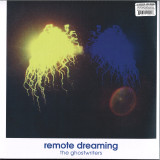
"A landmark in 80s experimental ambient music - previously tape-only, here released for the first time on vinyl, spread across a double LP with five additional tracks, four of which were previously unreleased. Remote Dreaming has been freshly remastered and includes an insert with photos and liner notes.
Dark Entries summons Philadelphia synthesizer scribes The Ghostwriters to rouse their ambient masterwork Remote Dreaming. The late Buchla maestro Charles Cohen and multi-instrumentalist Jeff Cain joined up in 1971 to craft electroacoustic chaos as Anomali, later renaming themselves The Ghostwriters.
Their collaborations with choreographers and visual media artists led to their singular style, straddling improvisation and composition, the oneiric and the immediate. Following their debut album, Objects in Mirrors Are Closer Than They Appear, they were approached by ambient outlet Mu-Pysch. Remote Dreaming would take shape in various studios over nine months. Jeff Cain's instruments on this project included electric and acoustic pianos, the Juno 106 synthesizer, and a Mirage sampler, while Charles Cohen used his signature Buchla 200 Series Electronic Musical Instrument. A stark departure from the tightly wound first LP, Remote Dreaming shows the duo unfurling with soothing pianos and psychoacoustic textures, its somnambulant drones just skirting the edges of the uncanny. Although ignored in its time, Remote Dreaming is now heralded as a landmark in 80s experimental ambient music.
Proceeds will be donated to SOSA (Safe from Online Sex Abuse), a nonprofit that combats online child sex abuse and trafficking"
"Live in Paris" - Nathan Davis, (sax); Georges Arvanitas (p, org); Jack Diéval (p); Jacky Samson, Jacques Hess (b); Franco Manzecchi, Charles Saudrais (dr)
Style is not a given. Not many musicians reach the level of artistic personality where you can unmistakably recognize them. It takes character, roots, honesty, soulfulness. Nathan Davis had style.
His tone on tenor was unique. So was his soprano sound and his distinctive approach to flute. His musical world was equally original and knew no boundaries.
This concert in Paris is audible proof that as a performer, his fluid phrasing, distinct articulation, booming bottom register, growls and shrieks were fuelled by tremendous drive and furious invention - the man was on fire!
These live sessions demonstrate the limitless invention of Nathan’s solos. Holding no punches, weaving signature phrases, shouts and riffs into his solos, he was a fierce and fervid performer. With a sort of hollow resonance at the heart of his reedy and warm sound, Nathan Davis was a highly original artist, from an era when having a distinct sound on your instrument was the grail of jazz artistry. Harold Land, Jimmy Heath, John Gilmore, Paul Gonsalves, Charlie Rouse, George Coleman, Booker Ervin, Clifford Jordan ... Jazz is made of such giants and Nathan Davis was one of them.
- A1: Elvis Presley - Jailhouse Rock
- A2: Ray Charles - Unchain My Heart
- A3: Little Richard - Slippin' & Slidin' (Peepin' & Hidin') (Peepin' & Hidin')
- A4: Bill Doggett - Honky Tonk (Part 1)
- A5: Del Shannon - Runaway
- A6: Johnny Ace - Pledging My Love
- A7: Ben E King - Stand By Me
- B1: The Seeds - Pushin' Too Hard
- B2: The Gone All Stars - 7-11
- B3: Fats Domino - Ain't That A Shame
- B4: Chris Kenner - I Like It Like That
- B5: Little Richard - Lucille
- B6: Duane Eddy - Rebel Rouser
- B7: Radiohead - Everything In Its Right Place
- C1: The Kinks - All Day & All Of The Night
- C2: Jerry Lee Lewis - Great Balls Of Fire
- C3: Maurice Williams & The Zodiacs - Stay
- C4: Procol Harum - A Whiter Shade Of Pale
- C5: Screamin' Jay Hawkins - I Put A Spell On You
- C6: Radiohead - Talk Show Host
- C7: The Durutti Column - Jacqueline
- D1: Gene Vincent & His Blue Caps - Be-Bop-A-Lula
- D2: Dion & The Belmonts - I Wonder Why
- D3: Johnny Cash - I Walk The Line
- D6: Sam Cooke - Bring It On Home To Me
- D7: The Coasters - Down In Mexico
- D8: Dick Dale & His Del-Tones - Misirlou
- D4: Big Mama Thornton - Hound Dog
- D5: Solomon Burke - Cry To Me
re-release Find the Greatest Movie Scores selected by CINEZIK in an new Wagram Vinyl Collection!
"Live in Paris" - Nathan Davis, (sax); Georges Arvanitas (p, org); Jack Diéval (p); Jacky Samson, Jacques Hess (b); Franco Manzecchi, Charles Saudrais (dr)
Style is not a given. Not many musicians reach the level of artistic personality where you can unmistakably recognize them. It takes character, roots, honesty, soulfulness. Nathan Davis had style.
His tone on tenor was unique. So was his soprano sound and his distinctive approach to flute. His musical world was equally original and knew no boundaries.
This concert in Paris is audible proof that as a performer, his fluid phrasing, distinct articulation, booming bottom register, growls and shrieks were fuelled by tremendous drive and furious invention - the man was on fire!
These live sessions demonstrate the limitless invention of Nathan’s solos. Holding no punches, weaving signature phrases, shouts and riffs into his solos, he was a fierce and fervid performer. With a sort of hollow resonance at the heart of his reedy and warm sound, Nathan Davis was a highly original artist, from an era when having a distinct sound on your instrument was the grail of jazz artistry. Harold Land, Jimmy Heath, John Gilmore, Paul Gonsalves, Charlie Rouse, George Coleman, Booker Ervin, Clifford Jordan ... Jazz is made of such giants and Nathan Davis was one of them.
- 1