Natasha Pirard returns with her most personal project yet, dedicated to her mother and late grandmother, whose care shaped her life. Fernande, Cecile is a photobook of songs, weaving voice, field recordings, synthesizer, and violin into an ode to her matrilineal line. Pirard lost her grandmother at seven, yet Fernande’s warmth stayed with her as a touchstone. Her mother, Cecile, has been a constant presence, guiding her through difficult years.
Alzheimer’s—her grandmother’s illness—and the fragility of memory permeate the work. A conversation with her mother sparked the album: over coffee, Cecile placed a hand on her heart and said, “If I ever develop this disease, don’t forget I’m still here (inside).” That moment became central to the compositions, which translate Pirard’s gratitude and love into music as tender as possible.
The music moves in fragments—notes, chords, loops—evoking gardens, sunlight, and childhood afternoons. Rhythms shift like life itself, carrying echoes of loss and the persistence of memory. Ambient textures brush against her voice and instruments, sometimes punctuated by her grandmother’s favorite bird.
The album unfolds in two parts: Fernande, capturing her grandmother’s warmth and fading recollections, and Cecile, honoring her mother’s care and resilience. Track titles trace memories while the music drifts through longing and gratitude, articulating what words cannot.
The album was written and recorded by Natasha Pirard, produced and mixed by David & Stephen Dewaele of Soulwax/2manydjs at DEEWEE.
Buscar:childhood 87
- 1
Bringing together the elder statesman of the Zulu guitar Madala Kunene and internationally acclaimed Sibusile Xaba, kwaNTU pulls two generations of South African guitar mastery into a single point of focus. Under-represented on recordings outside of South Africa, Madala Kunene (b. 1951), the ‘King of the Zulu Guitar’, is revered as the greatest living master of the Zulu guitar tradition. Sibusile Xaba, whose collaboration with Mushroom Hour Half Hour reaches back to his first recording in 2017 (Open Letter To Adoniah/Unlearning), has garnered international acclaim for his unique voice and virtuoso guitar stylings, which bring together multiple South African guitar lineages in an original, spiritualised fusion. Collaborating with Mushroom Hour and New Soil for kwaNTU, the two players come together to weave a filigree sonic fabric which reaches down to the heartwood of Zulu guitar music but moves resolutely outward, building on the past to create a deeply rooted statement about present conditions and future travels. kwaNTU – which can be roughly translated ‘the place of the life-spirit’ – is also conclave of teacher and student, as Xaba has been taught by Kunene for the last decade. Meditative, rich and sonically sui generis, kwaNTU finds these two musicians linking up within the inimitable space of sound and spirit that they share through Kunene’s teaching.
The great masters of South African music have not all had equal exposure. For many years the generation of musicians who were exiled during apartheid took centre stage, as the regime made it very difficult for those at home to be heard. More recently, a new cohort of important voices, especially in jazz, has broken through to international consciousness. But for the generation of musicians in between – those who shone like beacons in the most difficult final years of apartheid and immediately afterward – international recognition has been slow in coming.
Madala Kunene, ‘the King of the Zulu Guitar’, is among this number. A revered figure for current generations of South African musicians, Kunene began his recording career in 1990, at the bitter end of apartheid, with a now classic self-titled LP for David Marks’ storied Third Ear imprint. Born in 1951 in Cato Manor, near Durban, he had determined to be a musician from early childhood, and by the time he first entered a recording studio he had already had a long career as a popular performer. His virtuoso absorption and transformation of the venerable Zulu maskanda guitar tradition and his richly spiritualised approach to music immediately marked him out as someone special, and in the years that followed, Kunene cemented his position as one of South Africa’s musical elders. He is without doubt the grand master of the Zulu guitar tradition, but his sound and sensibility ranges far beyond it into varied sonic terrain, and he has collaborated with a wide range of musicians both at home and abroad. Now in his mid-seventies, he remains a shining light for those that are making music in contemporary South Africa.
‘He is really an amazing person,’ says the guitarist Sibusile Xaba, who has been mentored by Kunene for over a decade, and now invites a collaboration with him on kwaNTU. ‘As a mentor, he's really powerful in showing us the way. For us to have this opportunity to make music together and have a project together is really a blessing to me.’
Xaba himself grew up in Newcastle, KwaZulu-Natal, where his mother had been in a band and his father sang in a church choir, and from early childhood Xaba played homemade tin guitars. He only later realised that music was his calling. ‘I just loved music. I was fortunate. My parents loved music. And when it was time for me to leave home and go to study outside Newcastle, I knew that music was what I wanted to do. There was no second option. It was just music.’ Moving to Pretoria to study music formally, Xaba committed himself to his craft, developing a unique style that draws on both US jazz masters such as Wes Montgomery and Jim Hall, and the rich and varied heritage of the South African guitar, from inspirational jazz players such as Allen Kwela and Enoch Mthalane, to the music of the Malombo groups and Dr. Philip Tabane (Xaba has previously collaborated with Dr. Tabane’s late son, Thabang), and the Zulu guitar tradition embodied by Kunene.
‘I was really in love with the jazz guitar, I really admired it, and I was digging a lot in that direction,’ says Xaba, recalling his first encounter with Kunene’s music, over a decade ago. ‘And then one day on my timeline, Kunene popped up, and I was like – “What's this sound?” I was so connected to it. It really touched me deep. I started checking out his records, and then I found out he's from the same region as I am, which is Zululand.’ After Kunene played a show at the Afrikan Freedom Station in Johannesburg, Xaba make contact with him, and visited him at home in Durban. They struck up a friendship, and Xaba became the elder’s student, as Kunene began to pass on his knowledge and his inimitable way of playing.
kwaNTU is a tribute to this relationship and the deep learning that has defined it. The album was recorded in Zululand in the town of Utrecht, at a cultural centre called Kwantu Village, which gives its name to the album. ‘It's such a broad word,’ Xaba says, ‘but the elders teach us that Ntu is basically an energy, almost chi, an energy, a force that all living beings have within them. It's a living energy, so kwaNTU is like, almost the place of this energy.’ The two men sequestered themselves for five days of jamming, improvising and planning, and then the session was recorded in one take over a single night, with Gontse Makhene joining on percussion and backing vocals and Fakazile on vocals. Other voices and overdubs were later added in the studio in Johannesburg.
The result is a rich and meditative recording that finds two generations in a deeply engaged dialogue. Teaching and passing on his knowledge, the elder Kunene has brought Xaba into a space of sound and knowledge that they now share; Xaba’s own practice of deep communion with nature and his dedication to his musical craft make him the perfect interlocutor for Kunene. The result is an album that foregrounds the two musicians engaged at the highest levels of responsive listening, sympathetic unity, and collaborative concentration. Bringing an elder statesman of South African music to an international listening audience for the first time in decades by pairing him with one of South Africa’s most important new voices, kwaNTU is a meeting of generations and a powerful demonstration of musical lineage and continuity.
‘Before music, there is sound,’ Xaba observes, speaking of Kunene’s unique approach to music. ‘And sound is like a common compartment…it's not restricted to particular people or particular geographic places, you know what I mean? It's sound. Everybody can hear it. So when he constructs that sound into music, I think everybody resonates with the energy behind his construction of sound into song. Here at home, we really love him for preserving our history through the guitar, through his stories as well the music, the songs that he writes. We really, really admire him.’
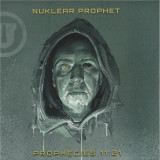
Hailing from downtown Los Angeles, Nuklear Prophet, aka Erik Villalpando, is heavily influenced by West Coast Hip Hop and Electro. Winning multiple DJ awards, including 3x World Records DJ Competition under his DJ Dope-E alias, Villalpando cites his inspiration as coming from some of the most influential Los Angeles DJs of his childhood, including Tony G, DJ Joe Cooley, Julio G, and DJ Aladdin.
With releases on Urban Connections, Abseits Recordings, Diffuse Reality and Bass Agenda Recordings as Nuklear Prophet, the LA-based DJ/producer readies his full-length album 'Prophecies 11:21' for Utrecht-based U-Trax. Formed of an eclectic and energetic collection of gems mined from his overwhelming archive, the album takes in genres such as Electro, Hip Hop, Footwork, Juke, and beyond.
Leading the release is the 808 luminary Egyptian Lover's remix of 'L.A. Rockz', featured on the recently released 'L.A. Rockz' EP, kicking off the LP with his trademark 808-infused sound. A nod to Detroit-flavoured Electro is presented via the dark and brooding tracks 'Nuklear Prophet' and 'Compton', with the lighter atmospherics of the genre covered on 'Solar Winds'. The pounding electro killer '808 Plague' sounds like it came straight from the sewers of The Hague.
'Everlastin' Bass', 'Back Up Off My Tip', and 'The Train Ride To Coconino' offer Footwork inspired bangers, with the latter previously featured on the Legowelt curated U-Trax compilation 'U R Here!' earlier this year.
Moving across a spectrum of tempos, styles, and moods across the album, exemplified on the sluggish trip-hop of 'The Mars Goblin', Nuklear Prophet expertly touches on a range of bass-driven genres, displaying his widespread influences and knack for hard-hitting production throughout.
a 01: L.A. Rockz (Egyptian Lover Remix) feat. Krazy Dee & Nasim
"Ben Harper has unveiled his new album Winter Is For Lovers, and in many ways his entire musical life has culminated in this moment. The solo recording, which features just Harper and his Monteleone lap steel guitar, is a 15-song work of original instrumental compositions imagined as a symphony. Harper has pushed musical boundaries since his 1994 debut and his lap steel guitar has played a tremendous role in his distinct sound throughout his career. But he"s never made an album that so purely distills his reverence for the instrument, and his mastery of it. Meditative and affecting, the music featured on Winter Is For Lovers is deeply ingrained in Harper"s DNA and leads directly back to The Folk Music Store, the influential California instrument shop his grandparents opened in the 1950s. The store hosted luminaries of all stripes, including Sonny Terry, Brownie McGhee, the Rev. Gary Davis, Doc Watson and John Fahey. While Harper worked in the shop throughout his childhood, he met and even strung guitars for iconic players like Ry Cooder, Leonard Cohen, Taj Mahal, David Lindley and Jackson Browne.
Foxwarren, the Canadian indie collective fronted by Andy Shauf, returns with their sophomore album "2." Joined by his fellow Canadian childhood friends and close collaborators Dallas Bryson (guitar), Darryl Kissick (bass), Avery Kissick (drums), and Colin Nealis (multi-instrumentalist), the eclectic sound of "2" - weaving genres ranging from folk to psych rock to downtempo - coincides with Shauf"s curiosity and desire to incorporate a Native Instruments Maschine MSK3 sampler into his process. There is something uncanny about the feeling of these songs, the way bits recorded in different rooms amplify your attention, listening for how these layers lock. But their true connective tissue is the generous and gentle ways Shauf and the rest of Foxwarren move with melody.
- Prologue
- We Don't Wanna Grow Up
- Banning Back Home
- Granny Wendy
- Hook-Napped
- The Arrival Of Tink And The Flight To Neverland
- Presenting The Hook
- From Mermaids To Lost Boys
- The Lost Boy Chase
- Smee's Plan
- The Banquet
- The Never-Feast
- Remembering Childhood
- You Are The Pan
- When You're Alone
- The Ultimate War
- Farewell Neverland
"Hook is a 1991 fantasy adventure film directed by Steven Spielberg, starring Robin Williams, Dustin Hoffman, Julia Roberts, Maggie Smith and Bob Hoskins. The soundtrack was composed and conducted by legendary film composer John Williams. The narrative follows a grown-up Peter Pan who has to return to Neverland after his children are abducted by his old nemesis, Captain Hook. Hook performed very well and eventually became nominated for five Academy Awards. Amongst these nominations was the Academy Award for 'Best Original Song', for the song ""When You're Alone"". Hook is available as a limited edition of 2000 individually numbered copies on translucent red coloured vinyl. The 2LP comes in a deluxe sleeve with leather laminate finish."
- American River
- Methatonin
- Vixen
- B.f.f
- Nerve
- Piedmont
- Crybaby
- Gold Medal
- Duck Eat Duck
DESTROY BOYS" catalog vinyl is back in stock!
2024 has been a big year for the band with the release of their new album, Funeral Soundtrack #4 (available on Hopeless Records) and Epitaph Records are harking back to these two seminal vinyl releases from the band"s early days, just in time for Black Friday! "Sorry Mom" (2017) ( on vinyl for the first time!) and "Make Room" (2018)- both albums will be available on black vinyl. DESTROY BOYS formed in 2015, when founding members Violet Mayugba and Alexia Roditis were just 15 years old, and each release has marked a period of growth and change. "Looking back, our first three albums marked the deaths of things," says guitarist Violet Mayugba. "They were soundtracks to our funerals, whether they were for our ages, our mental states. We"ve gone through a lot of changes as a band and as people." "The first one (Sorry, Mom) was our high school album," Mayugba explains. "On the second record (Make Room), we went to college and were saying goodbye to our childhood. On the third one, we"d just gone through COVID and, speaking for myself, I lost my entire sense of self and gained a new one." Now, at 24, Mayugba and Roditis are standing firmly on solid ground with more resolute and confident than ever in their place as musicians.
- K Street Walker
- Duck Eat Duck World
- Junk
- Widow
- I Threw Glass At My Friend's Eyes And Now I'm On Probat
- No Respect
- Goldilocks Spot
- Cattywampus
- Word Salad
DESTROY BOYS" catalog vinyl is back in stock!
2024 has been a big year for the band with the release of their new album, Funeral Soundtrack #4 (available on Hopeless Records) and Epitaph Records are harking back to these two seminal vinyl releases from the band"s early days, just in time for Black Friday!
"Sorry Mom" (2017) ( on vinyl for the first time!) and "Make Room" (2018)- both albums will be available on black vinyl. DESTROY BOYS formed in 2015, when founding members Violet Mayugba and Alexia Roditis were just 15 years old, and each release has marked a period of growth and change. "Looking back, our first three albums marked the deaths of things," says guitarist Violet Mayugba. "They were soundtracks to our funerals, whether they were for our ages, our mental states. We"ve gone through a lot of changes as a band and as people." "The first one (Sorry, Mom) was our high school album," Mayugba explains. "On the second record (Make Room), we went to college and were saying goodbye to our childhood. On the third one, we"d just gone through COVID and, speaking for myself, I lost my entire sense of self and gained a new one." Now, at 24, Mayugba and Roditis are standing firmly on solid ground with more resolute and confident than ever in their place as musicians.
Black Vinyl[21,22 €]
Take a trip to Paradise Pop. 10 with beloved singer-songwriter and producer, Christian Lee Hutson. Following his 2022 release Quitters - produced by longtime collaborators Phoebe Bridgers and Conor Oberst - he enlisted the help of Bridgers once again to produce. The album title is based on a real-life small town where Hutson spent a portion of his childhood. He takes listeners on a journey of autobiographical fiction with his signature wit and sharp storytelling. There are retable themes of love and the limbo of life in his narration across an elevated indie rock sound. In addition to Bridgers assist, Hutson"s partner Maya Hawke contributed vocals and co-wrote several songs.
BLUEBERRY COLOURED EDITION Vinyl[23,49 €]
Take a trip to Paradise Pop. 10 with beloved singer-songwriter and producer, Christian Lee Hutson. Following his 2022 release Quitters - produced by longtime collaborators Phoebe Bridgers and Conor Oberst - he enlisted the help of Bridgers once again to produce. The album title is based on a real-life small town where Hutson spent a portion of his childhood. He takes listeners on a journey of autobiographical fiction with his signature wit and sharp storytelling. There are retable themes of love and the limbo of life in his narration across an elevated indie rock sound. In addition to Bridgers assist, Hutson"s partner Maya Hawke contributed vocals and co-wrote several songs.
Île Flottante is Mr. Beatnick´s 5th album, following 2023’s Joy In Variation (including the notorious cover of Love on a Real Train) and his well-received off-beat collaboration with London-based avant-garde agitator Richard Greenan – Coasty – this is his first contribution to the International Feel trademark. Probably best known for some big deep house revivalist tunes circa 2013 on the now dormant Don’t Be Afraid record label, Beatnick now converts that aural quality and dimensionality into the Balearic system.
Île Flottante takes its name from the tastiest French pudding of Mr. Beatnick’s childhood holidays. The name, also a jeux de mots - floating island - hinting at the album’s inspirations and sense of identity, as a danceable soundtrack to a fictional island. Explored with high intensity and over a yearlong process, the sounds of the well-worn, but never failing Balearic universes were a mind expanding influence. Think of genre staples like Software, Manuel Goettsching, Mark Barrott, Len Leise, Don Carlos, Gaussian Curve, Joan Bibiloni or Yasuaki Shimuzu.
„I spent a year listening to a lot of synthesized island music, and marveling at the many twinkling wonders of the Balearic musical universe. Struck by a sense of belonging that had often eluded me on my musical journey thus far, as the weirdo at the back of the club who had orbited many scenes for 20 years, but never felt like I fitted in, I found music that made me feel like I had come home. The songs that came out of this process are presented in the order that they were written - an open book of ocean hymns, honest and spoken from the heart.“
Île Flottante tries its very hardest to avoid being any one thing in particular. At one point, it is a gentle beach walk accompanied by polyrhythmic drum plod and flourishes of Guzheng. At another, the infamous James Yancey septuplet swing is repurposed against a marimba melody that wouldn’t be out of place in one of Link’s forest adventures.
Elsewhere, there are the bellows of distant whales, touches of Italian dream house and a splash of vintage madchester, all working to create a space that feels both familiar and loaded with well worn tropes, but with its own quirky sense of personality, facets which are often attributed to Mr. Beatnick’s holistic b-boy approach. This is his understanding of a Balearic (b-boy) stance. Just with a float instead of a freeze.
Rose Spearman will release her long-awaited album King of Air. Followed by a tour that starts with four shows in the Netherlands. The title refers to her father, the Afro-American jazz saxophonist Glenn Spearman, to whom the album is dedicated.
As the daughter of Afro-American jazz saxophonist Glenn Spearman and a Dutch mother, the singer has felt trapped between two continents since her early childhood. Half European, half American, and always looking for a home.
Rose Spearman’s professional credits include the prestigious European Border Breakers Award, international solo albums on United and Sony Music, performances at Lowlands, North Sea Jazz, Montreux Jazz, Glastonbury, Exit, Sziget, Joshua Tree Festival, and the Love Box Festival. For several years, Rose was the lead singer of Kraak & Smaak. She collaborated with producers and DJs like King Britt, Kerri Chandler, Boris Dlugosch, and Roger Sanchez and was invited on stage with Solomon Burke, Jools Holland, and KT Tunstall. Rose was also one of the few Dutch guest artists to appear on the American syndicated television show, Jimmy Kimmel.
Prisoners Of Love And Hate' is an offering to community, to desires that imprison and liberate, to people in all their divinity and ugliness. Apostille - aka Night School Records’ captain Michael Kasparis - presents is third album with a bang, a bursting ball of NRG, empathy and bristling living.
Like its predecessor 'Choose Life', 'Prisoners…' was recorded at Full Ashram Celestial Garden in Glasgow with Lewis Cook (Free Love) through 2022. A nine song treatise on pop music, trauma, ecstasy and the mundanities between the extremes, Kasparis takes on classic 80s synth pop, 90s house music, 00s trance, wistful balladry, 70s power pop. The thread that runs through the album is a boundless energy, an openness to the moment, to living
the pains and joys equally, open armed.
This is a place of no judgement, of possibility, challenge and comfort. The nine songs on 'Prisoners…' can be read as separate ruminations on the feelings and desires that imprison our experience. Through it all the narrator struggles against them, transported and fooled by love and longing, peering through the bars of anguish, flailing in a cell of emotions. 'Saturday Night, Still Breathing' breaks the album open with an invigorating scream and pounds into the night with a nod to Whigfield, Kasparis’ punk roots and house music. Over a thumping 909 kick and bassline, Kasparis pens a love letter to being with people, the collective energy of hearts in a room, thrumming together, making it through together. Written as private ritual magic, manifesting community during a time of isolation, it’s as if the party is the most important thing in the world. 'Rely On Me' imagines 80s Mute synth pop, Erasure fronted by Bruce Springsteen, romance doomed and forever perfect in the mind. 'Spit Pit' completes the opening triptych of fast paced rollercoasters, an ode to childhood forged out of change and discomfort told with a bold, epic production by Lewis Cook, AFX breakbeats, 160BPM kicks and a commanding vocal performance.
On 'People Make This City', Kasparis eases off the gas, lets the mist blowing in from the Clyde River blow over his version of Glasgow. A wistful ballad about small town gossip and coming through anger to leaving it all behind, it provides some shadow to the bright light of the vibrancy of the album. 'Natural Angel' owes much to 70s and 80s power pop, guitar melodrama, Thin Lizzy and Rick Springfield through the prism of co-dependence in relationships. It’s a theme that’s picked up in slow burner 'Nothing But Perfect', a hazy synth soul-inflected song about building your own mythology, constructing a dream to hide in, to hold on to. The most surprising track of the album, 'Summer of ’03' re-imagines the trance music of early noughties Europe into a lament for an eternal summer or as a fan once put it, “Meat Loaf with a donk on it.” A recognition that all ecstasy has tragedy laced within it, it’s a theme that is sewn throughout the LP and continued on the final song 'Feel Good (You Can Make Me)'. Referencing Shalamar’s 1982 mega hit by way of N-Trance’s piano riffs, the epic closer is riddled with heartbreak, vulnerability and power. It’s a testament to the new confidence in Kasparis’s songwriting, sure, but also to the enduring power of people to come together in mutual dependence and love. If ecstasy is always laced with tragedy, then 'Prisoners of Love and Hate' can always reach out between the bars to meet in the middle, the eternal now.
On his latest album as The Drums, New York-based indie pop artist Jonny
Pierce plunges into the work of healing from childhood trauma and the
long shadow it casts over adulthood
The sparkling, eponymous Jonny unfurls a love letter to a galaxy of younger
selves, all hungry to be nourished, all rejoicing now that they finally get to belong.
Playful, heartbreaking, raucous, and serene all in turn, Jonny embraces the mess
of life in all its facets. It renders the magic that happens when you fall in love with
yourself down to the marrow.
Soaring to alt- pop prestige on arrival, The Drums have released studio albums
that deftly walk the line of aching melancholy and irresistible pop sensibilities,
presented through a kaleidoscope of pastel guitars, reverb, modular synthesizers
and drum machines. It's a sound that's wholly unique, and unmistakably The
Drums.
The Drums' music remains timeless, as evidenced by the recent explosion of their
RIAA Gold- certified song Money, which first appeared on their breakout
sophomore album Portamento, reaching #1 on the Alternative Global Shazam
Chart and #2 on the TikTok Global Hashtag Chart
On his latest album as The Drums, New York-based indie pop artist Jonny Pierce plunges into the work of healing from childhood trauma and the long shadow it casts over adulthood. The sparkling, eponymous Jonny unfurls a love letter to a galaxy of younger selves, all hungry to be nourished, all rejoicing now that they finally get to belong. Playful, heartbreaking, raucous, and serene all in turn, Jonny embraces the mess of life in all its facets. It renders the magic that happens when you fall in love with yourself down to the marrow. Soaring to alt-pop prestige on arrival, The Drums have released studio albums that deftly walk the line of aching melancholy and irresistible pop sensibilities, presented through a kaleidoscope of pastel guitars, reverb, modular synthesizers and drum machines. It"s a sound that"s wholly unique, and unmistakably The Drums. The Drums" music remains timeless, as evidenced by the recent explosion of their RIAA Gold-certified song Money, which first appeared on their breakout sophomore album Portamento, reaching #1 on the Alternative Global Shazam Chart and #2 on the TikTok Global Hashtag Chart.
- A1: I Wanna Dance With Somebody (Who Loves Me) (Who Loves Me)
- A2: Just The Lonely Talking Again
- A3: Love Will Save The Day
- A4: Didn't We Almost Have It All
- A5: So Emotional
- B1: Where You Are
- B2: Love Is A Contact Sport
- B3: You're Still My Man
- B4: For The Love Of You
- B5: Where Do Broken Hearts Go
- B6: I Know Him So Well
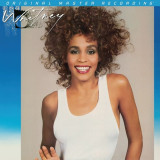
Whitney did more than turn Whitney Houston into a pioneering sensation known around the world by her first name. Originally released in June 1987, the singer's blockbuster sophomore record became the first album by a female artist to debut at No. 1 on the Billboard 200 chart — a position it claimed for a total of 11 weeks en route to selling more than 10 million copies in the U.S. The Diamond platinum effort also contains four No. 1 Hot 100 hits that, when combined with the three chart toppers from her 1985 debut, gave her seven consecutive No. 1 singles — an accomplishment that no other artist has accomplished. Commercially and creatively, Whitney stands on hallowed ground — especially now that the record plays with a sound that puts into perspective just how extraordinary, engaging, and vital Houston's music remains.
Mastered from the original master tapes and pressed on MoFi SuperVinyl at RTI, Mobile Fidelity's 180g 33RPM SuperVinyl LP of Whitney invites listeners to experience the Rock & Roll Hall of Fame inductee's pivotal album in audiophile quality for the very first time. Free of the dynamic limitations and tonal flatness prevalent on prior vinyl and CD pressings, it lets the music breathe and reveals the copious detail, nuance, and texture within the immaculately produced songs. MoFi's SuperVinyl profile offers further advantages in the forms of a nearly inaudible noise floor, dead-quiet surfaces, and superb groove definition.
In addition to featuring extreme clarity and immediacy, this numbered-edition reissue does wonders for the attribute that inspired more than 20 million people around the globe to add Whitney to their record collections: that inimitable voice. Houston's trademark mezzo-soprano — an acrobatic instrument equally capable of taking off on fantastic flights and unwinding for hushed meditations — benefits from the fantastic airiness and transparency afforded by this meticulously restored edition. Whitney has never sounded or looked better. The crossover landmark deserves nothing less.
Issued just two years after Houston's breakthrough debut, Whitney immediately signalled the genre-defying singer's intent to continue to push ahead and expand her palette. Shot by photographer Richard Avedon, the album cover depicts an iconic image of Houston — captured with a gleaming smile, bright eyes, teased-out afro, toned arms, and a right hand that appears to wave a friendly hello — whose active, athletic profile stands in contrast to the extremely formal sit-down shot of her that graces her '85 record. The change is telling: Whitney overflows with unfettered joy, rhythmic vibes, and deep-seated emotions that forever endeared her to the hearts and minds of countless listeners — and which set the standard for the wave after wave of divas that followed in her footsteps.
It's no coincidence that the first track on Whitney is the declarative "I Wanna Dance with Somebody (Who Loves Me)." Like Michael Jackson's "Billie Jean" and Madonna's "Material Girl," the feel-good smash is one of the quintessential '80s gems — a lithe, melodic, celebratory release of pent-up energy and loneliness that glides across club floors, shouts to the rooftops, and shrugs off any concerns about vulnerability or embarrassment. Houston's swooping voice moves in sync with the sleek beats and dipping-and-diving synths. She practically takes her fellow musicians by their hand and leads them in a blissful dance that nobody would dare sidestep. Focusing on Houston's singing — a task made challenging only because of the impossible-to-ignore hooks and grooves — showcases the virtuosic facets of not only her register but her control, discipline, smoothness, and warmth.
That she replicates those feats for the entirety of the nearly 53-minute-long album makes Whitney that much more special. Houston reaches back and channels her childhood gospel training on the R&B-flared "So Emotional"; effortlessly slips into Quiet Storm mode on the duet with her mother, gospel great Cissy Houston, on "I Know Him So Well"; flirts with smooth jazz and collaborates with tenor saxophonist Kenny G on the lush "Just the Lonely Talking Again"; conjures dreamscapes and shadow-boxes with supple funk on a romantic cover of the Isley Brothers' "For the Love of You"; and, for the majestic power ballad "Didn't We Almost Have It All," displays the sky-scraping reach of her vocals amid a grand arrangement made even bigger by Houston's sweeping performance and triumphant finish.
Houston's once-in-a-generation talents weren't lost on the adoring public, radio deejays, or industry experts. In addition to harbouring four No. 1 hits and receiving nominations for four Grammy Awards, Whitney generated another Top 10 success in the guise of the Afro-Cuban-leaning "Love Will Save the Day." The album also netted Houston four American Music Awards; two Billboard Music Awards; back-to-back People's Choice Awards; a Soul Train Award; and various other accolades. It all makes the crux of the Washington Post's July '87 review of the album appear prophetic: "Her voice sounds stronger still and the songs are varied but so consistent she could garner 10 Top 10s out of a field of 11."
That claim still holds true. A brilliant fusion of pop, R&B, smooth jazz, and soul, Whitney is a showstopper – and one of the key reasons Houston is the most-awarded female artist of all time.
For Oleg Azelitskiy, known as DJ Slon, the nineties and the first half of the aughts were an era of "firsts". First squat parties on the banks of the Obvodny Canal and more legitimate ones at Tunnel, first proper techno club in Russia. First DJ sets, first vinyl records in his collection, first radio shows at Port FM. He is a true veteran of the Russian techno movement, who carried his love for the genre through three decades and inspired more than one generation of musicians. Album Nr. 1 is the first edition of his music on vinyl. It comprises the music that Azelitskiy made during 1995 - 2005, except for the track My 40th Vesna, produced in 2010.
Azelitskiy's love for techno was born out of contradictions. Thanks to the Soviet synth band Zodiac and the French pioneer Jean-Michel Jarre, he had loved electronic music since his childhood. When he grew up, he got into the dark, introspective pieces by Einsturzende Neubauten and Bauhaus. Not only does the wide-ranging palette on Album Nr. 1 reflect its creator's taste, it echoes the changing times of the Russian nineties. It was the time when confrontations with criminals were inseparable from the parties and get-togethers bustling with local artists.
His affection for various genres led to many monikers and projects, all represented here on Album Nr. 1. He recorded most of his music as DJ Slon. Then there was a project Zhutkiy Lazer (Scary Laser), where Azelitskiy made music that was more experimental but still techno-oriented, with the occasional help of his friend Aleksey Gaponenko (Lazer became a proper solo project of DJ Slon in 1999). There are also tracks under the aliases Mass Fatality, which combined techno and synth-pop, and Razrushiteli Mozgovych Uliev (Brain Hive' Destroyers), with its more direct tight techno tracks.
The music of DJ Slon sounds fresher and more alive on Album Nr. 1 than ever before.
Noticeably, this record, first and foremost, is dance music. As a voice on one of the album tracks boldly states, we came to dance.
88 Elmira St. is the fifth album by American guitarist Danny Gatton, released in 1991. This instrumental album covers various genres including jazz, country, rockabilly and blues. It was the first album by Gatton that was released on a major record label: Elektra Records. 88 Elmira St. was named after Gatton’s childhood home, and it includes a cover version of the Danny Elfman-composed theme song to The Simpsons. Gatton, who died in 1994 at only 49 years old, would go on to leave a lasting legacy and was admired by renowned guitarists like Slash, Joe Bonamassa, Steve Vai and many more.
RELEASE: 9-7-2021
88 Elmira St. is available as a limited edition of 1000 individually numbered copies on translucent coloured vinyl and includes an insert.
JP Harris has a secret: his name is actually “Squash.” Long before Harris
became a well regarded honky-tonker, he used his childhood nickname
while playing archaic “old-time” American tunes at underground fiddlers’
gatherings, engrossed in this punkish folk music world.
‘Don’t You Marry No Railroad Man’, his debut recording of traditional music
under the moniker JP Harris’ Dreadful Wind and Rain, features ten tracks spanning the breadth of American old-time repertoire. Harris wades between ancient ballads that traveled from the British Isles to Appalachia like “Barbry Ellen,” to droning banjo ditties such as Hobart Smith’s entrancing “Last Chance,”
here played on one of Harris’ coveted homemade banjos. Harris also works as a
serious carpenter which adds a unique authenticity to his versions of the classic
“House Carpenter” and lesser known “The Little Carpenter.”
Alongside Harris’ haunting vocals, the album prominently features the lowtuned fiddle and harmony singing of his longtime friend and Old Crow Medicine Show member Chance McCoy, who produced the record at his West Virginia studio in an old barn. On this sparse and arresting recording, Harris isn’t
mining his roots as a marketing pitch, he has the chops to back it up. In fact,
this collection of songs made him who he is today. Welcome home “Squash.”
- A1: Enola Holmes (Wild Child)
- A2: Gifts From Mother
- A3: Mycroft & Sherlock Holmes
- A4: Cracking The Chrysanthemums Cypher
- A5: The Game Is Afoot
- A6: Train Escape
- A7: Nincompoop
- A8: Marquis
- B1: Fields Of London
- B2: London Arrival
- B3: Dressing Up Box
- B4: Messages For Mother
- B5: The Limehouse Puzzle
- B6: Limehouse Lane
- B7: Fight Combat
- B8: Edge Of A Cliff
- C1: Basilwether Hall
- C2: Forest Clues
- C3: Tewkesbury’s Trail
- C4: Escaping Lestrade
- C5: Making A Lady
- C6: School Escape
- C7: Tick Tock
- D1: For England
- D2: Ha!
- D3: Enola & Tewkesbury Farewell
- D4: An Old Friend
- D5: Mother
- D6: Enola Holmes (The Future Is Up To Us)
England, 1884 - a world on the brink of change. On the morning of her 16th birthday, Enola Holmes (Millie Bobby Brown) wakes to find that her mother (Helena Bonham Carter) has disappeared, leaving behind an odd assortment of gifts but no apparent clue as to where she’s gone or why. After a free-spirited childhood, Enola suddenly finds herself under the care of her brothers Sherlock (Henry Cavill) and Mycroft (Sam Claflin), both set on sending her away to a finishing school for “proper” young ladies. Refusing to follow their wishes, Enola escapes to search for her mother in London. But when her journey finds her entangled in a mystery surrounding a young runaway Lord (Louis Partridge), Enola becomes a super-sleuth in her own right, outwitting her famous brother as she unravels a conspiracy that threatens to set back the course of history.
Enola Holmes was released on September 23, 2020. The film received positive reviews from critics, who praised Brown’s performance. Daniel Pemberton composed the film’s score. Pemberton described it as “unashamedly melodic and emotional orchestral music” with some “messy quirky oddness thrown in as well”.
RELEASE: 4-6-2021
• 180 GRAM AUDIOPHILE VINYL
• PVC PROTECTIVE SLEEVE
• CRITICALLY ACCLAIMED 2020 MOVIE ABOUT THE TEENAGE SISTER OF THE ALREADY-FAMOUS SHERLOCK HOLMES
• STARRING MILLIE BOBBY BROWN (STRANGER THINGS “ELEVEN”), HENRY CAVILL, SAM CLAFLIN & HELENA BONHAM CARTER
• MUSIC BY DANIEL PEMBERTON
• INCLUDES INSERT WITH PICTURES AND LINER NOTES BY DIRECTOR HARRY BRADBEER (KILLING EVE)
• LIMITED EDITION OF 500 INDIVIDUALLY NUMBERED COPIES ON SOLID TURQUOISE VINYL
This is a limited edition contains of 500 individually numbered copies on solid turquoise vinyl. The package includes an insert with pictures and liner notes by director Harry Bradbeer (Killing Eve).
300: Rise of an Empire is a 2014 American epic action film written and produced by Zack Snyder and directed by Noam Murro. It is a sequel to the 2007 film 300, taking place before, during, and after the main events of that film, and is loosely based on the Battle of Artemisium and the Battle of Salamis.
Its score was created by Dutch DJ and composer Junkie XL. This was made possible because in 2013, Hans Zimmer became responsible for the creation of the score to Snyder’s Man of Steel, for which he asked Junkie XL to collaborate with him and Snyder loved the end result. The score to 300: Rise of an Empire was performed by the Hollywood Studio Symphony, led by Nick-Glennie Smith. The vocals were provided by Hilda Örvarsdóttir and MC Rai. Junkie XL himself added the guitar, bass, drums, piano and synthesizer parts and mixed the full soundtrack at the Computer Hell Cabin studio.
- 1