Buscar:chill out

Estilos
Todo
Thorns - Thorns LP

Thorns

Thorns LP

12inchVILELP964
Peaceville
25.11.2022

Originally formed in 1989 by mastermind Snorre Ruch, Marius Vold, & B
Yard Faust (Emperor), Norwegian band Thorns' has inspired a great
number of acts such as Satyricon, Mayhem, Dissection, & Emperor,
mainly due to Snorre's highly influential style of playing & creating riffs on
the early Thorns' demo tapes
So impressed was Euronymous of Mayhem, that Snorre became second guitarist
in the band for a while & his riffs were used in classic Mayhem tracks. Thorns'
was the band's debut (& only, thus far) full-length studio album. It was released in
2001 & is a cult slice of highly individual Norwegian black metal, including
experimental & sometimes industrial influences along with synth passages to
create a chilling yet clinical slice of extremity. The album was notable for
featuring Satyr of Satyricon on vocals, a duty shared between songs with the
vocal talent of Aldrahn (ex-D dheimsgard) & the recording line-up also featured
Hellhammer of Mayhem on drums. The outcome was a unique & original album
which is today considered a cult classic release by critics.This edition of 'Thorns'
is presented on single black vinyl, including printed inner sleeve with lyrics.

Reservar25.11.2022

debe ser publicado en 25.11.2022

28,15
Varios - Enjoy Your Self EP 2

Especial Specials and Chillmountain Recordings present the 2nd EP in the Enjoy Your Self EP, diving deeper into the Osaka based labels music to showcase their roster in detail.

The EP starts with label head, Ground's mesmerising Beatdown meets Trance inducing Utau Narukoyuri. A slow burning, late night trip out for deep parties or 'afters'.

Next, Especial 'favourite' Akio Nagase appears for the first time in the series with the heavy, tribal percussives of Arauma (Kobato Dub). The original link between the Chillmountain and Especial, Akio's name is on the rise and here the heavyweight dub basslines and ethereal, new age flute is perfect for late night dark room, psychedelic adventures.

The label's collaborative approach shines as Equador duo Josefina Gandara and Juan Diego Illescas are welcomed. Members of electronic cumbia project, Categal, his backgrounds in film and sound composition, sound design and visual media, highlights Illescas' mastery of the conscious sounds of the pueblos, working with Ground's dub minimalism, all elevated with the awe and lanquitidy of Gandara's natural vocals.

To end Akira Arasawa returns, here with Kun and Franky-Ch, and a meandering Balearic journey of hazy beats, guitar, Hoomii (Mongolian) throat singing, found sound, bird song and folkloric strings, beautifully together for the perfect come down.

No en stock

Haga su pedido ahora y le encargaremos el artículo en nuestro proveedor.

13,66

Ültimo hace: 16 Meses
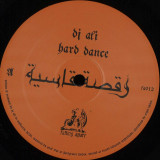
DJ ALI - Hard Dance

Dj Ali

Hard Dance

12inchFA012RP
Falling Apart
11.11.2022

2022 Repress

Falling Apart Record comes after a lo-fi chill out record with a brutal answer from DJ ALI. The Melbourne based artist who origins from the beautiful Lebanon comes from the hard techno scene and his thing is to play live, record live and just using some machine and synths for the perfect workflow. Just how we like it! All tracks on this 12 inches are recorded live in 1 clip. "1 shot. 1 opportunity." - Em.

No en stock

Haga su pedido ahora y le encargaremos el artículo en nuestro proveedor.

10,29

Ültimo hace: 15 Meses
Hans Pucket - No Drama

Hans Pucket

No Drama

12inchCAK165LP
Carpark Records
04.11.2022

Wellington, New Zealand four-piece Hans Pucket writes nervy but effortlessly danceable rock songs about feeling bad. Their second full-length album, No Drama, which is out November 4th via Carpark Records, gleefully captures the all-too-common twenty-something anxieties of talking too much and then being unable to find the right words to say. When frontman Oliver Devlin sings, “I’m surfing a constant wave of alarm” on the title track, it’s a compass for the other nine tracks. This is inviting and relatable music for people who, despite their best efforts, feel uncomfortable about themselves, the state of the world, and their place in it.

Both lyrically and sonically, No Drama is a departure for Hans Pucket from their 2018 debut Eczema. “I realized I didn’t want to write any more real heartbreak songs,” says Oliver Devlin. “We were and still are a live band. We're still trying to make music that’s catchy and people can dance to, but also really interesting to us: songs about growing up and finding how you exist in the world.” Songs like “My Brain Is a Vacant Space” with its blistering guitars and ebullient hooks hone in on the feeling that you have nothing to offer while “Bankrupt,” a fuzzed-out punk track, boasts lines like “I don’t know if I’ll always feel like / I don’t know what I’m doing wrong.”

Recorded with the band’s good friend and former tour mate Jonathan Pearce of The Beths at his Auckland studio, No Drama is full of big leaps, immaculate arrangements, and a ton of immediate grooves. “We were very ambitious when we first started recording this,” says bassist Callum Devlin. “Intentionally we left heaps of space in the track so we could add strings and horns. Because we were very measured and quite deliberate with the parts we had. It was a really fun process filling in the gaps.”

No Drama came together over several years and during its creation, the band added multi-instrumentalist Callum Passels, who provided all the horn arrangements on the LP. With Pearce producing, his other Beths bandmates like Benjamin Sinclair added string arrangements while singer Elizabeth Stokes provided backing vocals.

Overall it’s a remarkably eclectic record where the smooth pop of a track like “Kiss the Moon” can coexist perfectly with the Abbey Road freakout of “Some Good News.” “We didn’t want to be afraid of our 15-year-old self's influences,” says Oliver Devlin.” We really wanted to make an album that teenage us would just be amazed by.”

The result is Hans Pucket’s most sparkling and confident collection yet. While it’s danceable and fun, it’s also a thoughtful exploration of anxiety, a call for empathy in a turbulent time, and a relatable reminder that it’s hard to figure things out.

Reservar04.11.2022

debe ser publicado en 04.11.2022

20,13
Hans Pucket - No Drama

Hans Pucket

No Drama

CassetteCAK165CASS
Carpark Records
04.11.2022

Tape

Wellington, New Zealand four-piece Hans Pucket writes nervy but effortlessly danceable rock songs about feeling bad. Their second full-length album, No Drama, which is out November 4th via Carpark Records, gleefully captures the all-too-common twenty-something anxieties of talking too much and then being unable to find the right words to say. When frontman Oliver Devlin sings, “I’m surfing a constant wave of alarm” on the title track, it’s a compass for the other nine tracks. This is inviting and relatable music for people who, despite their best efforts, feel uncomfortable about themselves, the state of the world, and their place in it.

Both lyrically and sonically, No Drama is a departure for Hans Pucket from their 2018 debut Eczema. “I realized I didn’t want to write any more real heartbreak songs,” says Oliver Devlin. “We were and still are a live band. We're still trying to make music that’s catchy and people can dance to, but also really interesting to us: songs about growing up and finding how you exist in the world.” Songs like “My Brain Is a Vacant Space” with its blistering guitars and ebullient hooks hone in on the feeling that you have nothing to offer while “Bankrupt,” a fuzzed-out punk track, boasts lines like “I don’t know if I’ll always feel like / I don’t know what I’m doing wrong.”

Recorded with the band’s good friend and former tour mate Jonathan Pearce of The Beths at his Auckland studio, No Drama is full of big leaps, immaculate arrangements, and a ton of immediate grooves. “We were very ambitious when we first started recording this,” says bassist Callum Devlin. “Intentionally we left heaps of space in the track so we could add strings and horns. Because we were very measured and quite deliberate with the parts we had. It was a really fun process filling in the gaps.”

No Drama came together over several years and during its creation, the band added multi-instrumentalist Callum Passels, who provided all the horn arrangements on the LP. With Pearce producing, his other Beths bandmates like Benjamin Sinclair added string arrangements while singer Elizabeth Stokes provided backing vocals.

Overall it’s a remarkably eclectic record where the smooth pop of a track like “Kiss the Moon” can coexist perfectly with the Abbey Road freakout of “Some Good News.” “We didn’t want to be afraid of our 15-year-old self's influences,” says Oliver Devlin.” We really wanted to make an album that teenage us would just be amazed by.”

The result is Hans Pucket’s most sparkling and confident collection yet. While it’s danceable and fun, it’s also a thoughtful exploration of anxiety, a call for empathy in a turbulent time, and a relatable reminder that it’s hard to figure things out.

Reservar04.11.2022

debe ser publicado en 04.11.2022

9,71
By The Sea - Heaven Knows Magnolia LP

500 copies on limited purple vinyl

By The Sea come from the lineage of firework pop, bursts of colour and squeeze-your-hand intense love aligned with grey skies & work things.
Recall the first time you heard The Chills’ ‘Pink Frost’ or Television Personalities’ How I Learned To Live The Bomb’?
That’s the encounter.

Liam Power formed By The Sea in 2011, the band’s debut single Waltz Away coming out on The Great Pop Supplement label that year. In November 2012 the band released their self-titled album through Dell’Orso and GPS. The NME noted how there was “a beautifully bruised element to this Wirral act’s debut from the subdued, morbid production to Liam Power’s heroically battle-weary vocals”.

They have also often been tagged for their kitchen-sink dramas though they’re more akin to something like ‘Wish You Were Here’, both funny and dark without being maudlin. There’s an end of pier melancholy to By The Sea records though, something more than a scribble of sentiment on a souvenir postcard.

For their second LP ‘Endless Days, Crystal Skies the band turned over production duties to their friend Bill Ryder-Jones (formerly of The Coral) and released that bounty of melodic pop in 2014. It’s a partnership they have retained for the new third album ‘Heaven Knows Magnolia’ released on limited purple vinyl, CD and digital formats on October 21st. The song

Reservar04.11.2022

debe ser publicado en 04.11.2022

18,69
The Leaf Library - Library Music Volume One LP 2x12"

Library Music: Volume One is a sixteen track double LP collecting the North London drone pop band’s 7” singles, one-offs and compilation tracks spanning the first 14 years of the group’s existence. It includes synth pop, indie fuzz and moody motorik workouts, alongside pastoral folk sketches, dubby electronics and the occasional drone experiment. More immediate than their stretched out and slow-burning recent album tracks, the music here is taken from limited vinyl releases, album bonus tracks and music for compilations on labels as diverse as Bezirk Tapes, Second Language, Modern Aviation, and Concrete Tapes as well as the band’s current home, Where It’s At Is Where You Are. The compilation is a happily cohesive document of an inventive band that rarely stand still for long. The band says, “We wanted to gather all our early, scattered work before we move on to our next album, to remind ourselves (and others) of some of the poppier and less characteristic things we’ve done. We’ve always felt a lot more relaxed and freer making one off things for people – it’s a chance to try things that might otherwise be daunting on a full record”. Always a prolific group this is by no means an exhaustive collection, the title giving a clue to how much more they have left to share. “We have been introduced to loads of bands that we love initially through non-album compilations – Broadcast, The Chills, Stereolab, Piano Magic, Flying Saucer Attack amongst others – we wanted to add our own to that (admittedly slightly daunting) lineage.” The Leaf Library are formed around the core group of singer Kate Gibson, former Saloon and Singing Adams guitarist Matt Ashton, guitarist SJ Nelson, drummer Lewis Young and bass player Gareth Jones. They have released three studio albums (Daylight Versions, About Minerals and The World Is A Bell) as well a number of electronic and experimental albums and EPs, remix compilations and long form tracks. They have also released five Monument CDRs; an on-going series of experimental solo and side projects on their Objects Forever imprint. The band have collaborated with musicians as diverse as Alasdair MacLean of The Clientele, singer Ed Dowie, noise group Far Rainbow and string collective Iskra Strings, and have provided music for a number of exhibitions, films and performances. A collaborative album with Japanese artist Teruyuki Kurihara is due in late 2022 on the Mille Plateaux label. Tracklisting: 01 Agnes In The Square 02 Goodbye Four Walls 03 City In Reverse 04 Walking Backwards 05 Soundings 06 Diagram Loop 07 The Greater Good 08 Losing Places (ISAN Remix) 09 A Stone In Water 10 Architect Of The Moon 11 Tired Ghost 12 The Still Point 13 Wave Of Translation 14 Badminton House 15 Tranquility Bass 16 A Gap In The Trees

Reservar31.10.2022

debe ser publicado en 31.10.2022

31,51
The Gloom In The Corner - Trinity LP 2x12"

As three souls plunge down from the heavens, death and destruction can be felt hanging in the air like a foul stench. Red clouds swirl around a black sun that never sets and an erratic clock ticks off-tempo, moving faster and slower before rewinding and starting anew.

“Let me paint you a picture…” vocalist Mikey Arthur sings, welcoming listeners with a dramatic opening scene. It takes a skillful guide to navigate the darkest depths of hell. And, as The Gloom In The Corner depict in their second full-length album Trinity, death is merely the beginning of the series of chilling adventures

Purposefully aligning their song count with unlucky number thirteen – a reoccurring symbol in the ever-unfolding Gloom Cinematic Universe or GCU – it comes as little surprise to longtime fans that each of the Australian quartet’s enticing tracks intertwine to form an interlocking tale; this time centered around the appropriately labeled unholy trinity.

Comprised of previously deceased characters Rachel Barker, Ethan Hardy, and Clara Carne, the group’s bloody battle is woven throughout the album as the anti-heroes determinedly claw their way back to Earth from the Rabbit Hole dimension, slashing, shooting, and extinguishing anyone who dares to oppose their quest. Yet, for the Girl of Glass, Ronin, and Queen of Misanthropy, there is clearly more to the story than what can be contained within a single package.

Projecting a wide and complex web of lore, plot twists, and tongue and cheek humor, frontman Mikey Arthur, guitarist Matt Stevens, bassist Paul Musolino, and drummer Nic Haberle, have been producing highly detailed concept releases since their formation. And, consistently filling in more missing pieces of the puzzle with every body of work, the band equate each new record to a fresh season of The Umbrella Academy dropping on the streaming service of your choice. Because, just as a great TV series captivates viewers with its music and storytelling, the quartet’s work provides a complete experience designed to allow fans to check in with their favorite characters, all the while enjoying a cinematic new soundtrack.

For those just joining the GCU, as well as those looking for a quick refresh, 2016 debut album Fear Me introduced listeners to main protagonists Julian “Jay” Hardy, a Section 13 agent consumed by anger over his girlfriend Rachel’s death, and Jay’s gloom (later known as Sherlock Adaliah Bones), a demonic entity who at times takes over Jay’s body as a host vessel. 2017 EP Homecoming tells the tale of Jay’s brother Ethan, a war veteran suffering from PTSD, who upon discovering his brother’s struggle, kills himself as part of a Dante-style rescue mission to bring Rachel back to life. In 2019 EP Flesh and Bones, we’re introduced to Clara Carne, a past witness to one of Jay and Sherlock’s crimes, who instead of taking revenge, began a twisted love story with Sherlock, only to be murdered by his forced hand. And 2020’s Ultima Pluvia EP where we finally learn of Sherlock’s past as an ancient warlord under the tyrannical King Baphicho, and see Sherlock and Jay’s deaths ushered in by Section 13 opponent and New Order leader Elias DeGraver and his gloom Atticus Encey.

After 2016’s Fear Me, the band admit that their original intention was to jump straight into the events of Trinity before pivoting to create Homecoming, Flesh and Bones, and Ultima Pluvia. However, upon reflection, primary storywriter Mikey Arthur believes that pushing the timeline back actually provided greater opportunity for the group to properly flesh out the songs and plotlines for their sophomore studio record.

Indeed, while Trinity re-introduces the three central “heroes” of this new arc, it’s important to understand that while familiar, the characters are not carbon copies of who they were earlier in the story. And neither is the band who brought them to life.

Fully embracing the weird and whacky has never been a struggle for The Gloom In The Corner. Rather, it’s together with this attitude that the group come away with special moments such as the fascinating old and new dynamic between neighboring tracks “Red Clouds” – a song whose initial version predates the formation of The Gloom In The Corner as an official band – and “Gravity” in which a demo intended for future material was adjusted to fit the sonic drop.

Mirroring this evolution in the band’s musical approach, a sense of growth can also be seen projected in the characters and story that the quartet chronicle across the thirteen tracks.

Classifying their individual sound as an intricate form of “cinema or theater-core” due to the depth and breadth of their musical approach, features, samples, symphonic elements, and conceptual nature, The Gloom In The Corner continue to prove that they’re more than just a simple concept band.

In fact, similar to character theme music in movies and video games, the group seamlessly play off their diverse sonic story in a variety of ways. Continuing to breathe new life into older staples from their catalog, the quartet reworked their infamous “Oxymøron” breakdown from Fear Me into an impactful moment in Trinity’s “Nor Hell A Fury” and sprinkled audio easter eggs of this sort all throughout their new music for fans to discover.

Listeners are also brought further into the world of the GCU with the help of what The Gloom In The Corner call their “casting process.” Like picking actors for a musical, the band meticulously selected eleven different vocal features and several additional voice actors to bring the album and characters to life. Described as a 50/50 split between notable talents such as Ryo Kinoshita (Crystal Lake), Joe Badolato (Fit For An Autopsy), and Lauren Babic (Red Handed Denial), as well as talented friends and family like Elijah Witt (Cane Hill) and Mikey’s sister Amelia Duffield, each featured artist brought their own touch and realistic spark to the characters they portrayed.

For in the end, as much as Trinity and it’s cast live within the confines of their own supernatural worlds, themes such as falling out of love (Gatekeeper), battling depression (Obliteration Imminent), and standing behind women’s empowerment (Nor Hell A Fury), are ones that many can relate to or understand. And, while most individuals may avoid drowning their woes by way of transforming into full-on egotistical murderers like the Queen and King of Misanthropy and the gang, The Gloom In The Corner have illustrated that time and time again, life’s a little more fun when you can crack a smile. Taking a page from the trinity’s playbook: try to avoid the end of the world. But if you can’t…at least spend it with a killer soundtrack.

Reservar28.10.2022

debe ser publicado en 28.10.2022

53,36
Tone Scientist - Basic Moves 16 2x12"

Far over on the west coast of the USA we find a room full of drum
machines, samplers and keyboards. Hard at work is Israel ‘Iz’ Gravning aka Tone Scientist, who’s been using this Seattle studio to produce genre-defying future music for more than 25 years.
An avid student of jazz fusion, hip hop, house, techno and others, he
was galvanised to build his own studio after hearing jungle and drum & bass on a trip to London in 1995. His musical course thus intersected with the collectives then pushing new dancefloor sonics rooted in the rich tradition of Black music – like Nuyorican Soul over on the east coast, and the new broken beats of IG Culture, Dego and Bugz In The Attic in London. Then, in the early 2000s, Iz put out a handful of EPs under different aliases, including ‘Lion Dub’ on the Guidance sublabel Subtitled, but soon stepped back from the public stage. That’s not to say he stopped making or playing music, though. Far from it. Fast forward two decades and our very own Walrus, chilly but happy in the depths of a Toronto winter, happened across ‘Lion Dub’ in the legendary Play The Record store. Intrigued, he tracked Iz down and discovered he had been active all this time. A short email exchange later and this 2xLP of archive material was born.

These six tracks explain fully why Iz calls his studio the ‘Time Machine’: vintage equipment and instruments converse with up-to-date software; classic sounds and textures twist into fresh configurations; and Iz’s own creativity and musicality sings to us from a location beyond the trappings of time or genre.

All music written, produced and mixed by Israel Gravning aka Tone
Scientist in Seattle/Washington between 2005 - 2008 except for “Things

No en stock

Haga su pedido ahora y le encargaremos el artículo en nuestro proveedor.

20,04

Ültimo hace: 3 Años
Various - Greasy Mike's Halloween Monsters LP

A new series from Jazzman featuring the lowest of the lowball schlock n' roll 45s never known to exist!

After many years in hiding, notoriously shady Super Spiv of the record world Greasy Mike has finally opened up his vinyl dungeon, and we were first to raid it!

We have left no box untouched, no crate unrummaged, no pile unpilfered! Just the greasiest and grimiest, the most shocking and sordid 45s have made it onto our selections. Watch out for more!!!

But first - and just in time for your Halloween Horror Shock Hop - Greasy Mike unearths his alltime all-hallowed Halloween Monsters: The Zombie Walk, Night Sweats, the Chiller, Prowler and Screaming Vampire! Putrid pieces of raucous rot n' roll records direct from Greasy Mike's manky mitts! Oww-ooooh!!!

No en stock

Haga su pedido ahora y le encargaremos el artículo en nuestro proveedor.

20,13

Ültimo hace: 3 Años
Lee Tracy & Isaac Manning - Is it What You Want

As the sun sets on a quaint East Nashville house, a young man bares a piece of his soul. Facing the camera, sporting a silky suit jacket/shirt/slacks/fingerless gloves ensemble that announces "singer" before he's even opened his mouth, Lee Tracy Johnson settles onto his stage, the front yard. He sways to the dirge-like drum machine pulse of a synth-soaked slow jam, extends his arms as if gaining his balance, and croons in affecting, fragile earnest, "I need your love… oh baby…"

Dogs in the yard next door begin barking. A mysterious cardboard robot figure, beamed in from galaxies unknown and affixed to a tree, is less vocal. Lee doesn't acknowledge either's presence. He's busy feeling it, arms and hands gesticulating. His voice rises in falsetto over the now-quiet dogs, over the ambient noise from the street that seeps into the handheld camcorder's microphone, over the recording of his own voice played back from a boombox off-camera. After six minutes the single, continuous shot ends. In this intimate creative universe there are no re-takes. There are many more music videos to shoot, and as Lee later puts it, "The first time you do it is actually the best. Because you can never get that again. You expressing yourself from within."

"I Need Your Love" dates from a lost heyday. From some time in the '80s or early '90s, when Lee Tracy (as he was known in performance) and his music partner/producer/manager Isaac Manning committed hours upon hours of their sonic and visual ideas to tape. Embracing drum machines and synthesizers – electronics that made their personal futurism palpable – they recorded exclusively at home, live in a room into a simple cassette deck. Soul, funk, electro and new wave informed their songs, yet Lee and Isaac eschewed the confinement of conventional categories and genres, preferring to let experimentation guide them.

"Anytime somebody put out a new record they had the same instruments or the same sound," explains Isaac. "So I basically wanted to find something that's really gonna stand out away from all of the rest of 'em." Their ethos meant that every idea they came up with was at least worth trying: echoed out half-rapped exhortations over frantic techno-style beats, gospel synth soul, modal electro-funk, oddball pop reinterpretations, emo AOR balladry, nods to Prince and the Fat Boys, or arrangements that might collapse mid-song into a mess of arcade game-ish blips before rallying to reach the finish line. All of it conjoined by consistent tape hiss, and most vitally, Lee's chameleonic voice, which managed to wildly shape shift and still evoke something sincere – whether toggling between falsetto and tenor exalting Jesus's return, or punctuating a melismatic romantic adlib with a succinct, "We all know how it feels to be alone."

"People think we went to a studio," says Isaac derisively. "We never went to no studio. We didn't have the money to go to no studio! We did this stuff at home. I shot videos in my front yard with whatever we could to get things together." Sometimes Isaac would just put on an instrumental record, be it "Planet Rock" or "Don't Cry For Me Argentina" (from Evita), press "record," and let Lee improvise over it, yielding peculiar love songs, would-be patriotic anthems, or Elvis Presley or Marilyn Monroe tributes. Technical limitations and a lack of professional polish never dissuaded them. They believed they were onto something.

"That struggle," Isaac says, "made that sound sound good to me."

In the parlance of modern music criticism Lee and Isaac's dizzying DIY efforts would inevitably be described as "outsider." But "outsider" carries the burden of untold additional layers of meaning if you're Black and from the South, creating on a budget, and trying to get someone, anyone within the country music capital of the world to take your vision seriously. "What category should we put it in?" Isaac asks rhetorically. "I don't know. All I know is feeling. I ain't gonna name it nothing. It's music. If it grabs your soul and touch your heart that's what it basically is supposed to do."

=

Born in 1963, the baby boy of nine siblings, Lee Tracy spent his earliest years living amidst the shotgun houses on Nashville's south side. "We was poor, man!" he says, recalling the outhouse his family used for a bathroom and the blocks of ice they kept in the kitchen to chill perishables. "But I actually don't think I really realized I was in poverty until I got grown and started thinking about it." Lee's mom worked at the Holiday Inn; his dad did whatever he had to do, from selling fruit from a horse drawn cart to bootlegging. "We didn't have much," Lee continues, "but my mother and my father got us the things we needed, the clothes on our back." By the end of the decade with the city's urban renewal programs razing entire neighborhoods to accommodate construction of the Interstate, the family moved to Edgehill Projects. Lee remembers music and art as a constant source of inspiration for he and his brothers and sisters – especially after seeing the Jackson 5 perform on Ed Sullivan. "As a small child I just knew that was what I wanted to do."

His older brother Don began musically mentoring him, introducing Lee to a variety of instruments and sounds. "He would never play one particular type of music, like R&B," says Lee. "I was surrounded by jazz, hard rock and roll, easy listening, gospel, reggae, country music; I mean I was a sponge absorbing all of that." Lee taught himself to play drums by beating on cardboard boxes, gaining a rep around the way for his timekeeping, and his singing voice. Emulating his favorites, Earth Wind & Fire and Cameo, he formed groups with other kids with era-evocative band names like Concept and TNT Connection, and emerged as the leader of disciplined rehearsals. "I made them practice," says Lee. "We practiced and practiced and practiced. Because I wanted that perfection." By high school the most accomplished of these bands would take top prize in a prominent local talent show. It was a big moment for Lee, and he felt ready to take things to the next level. But his band-mates had other ideas.

"I don't know what happened," he says, still miffed at the memory. "It must have blew they mind after we won and people started showing notice, because it's like everybody quit! I was like, where the hell did everybody go?" Lee had always made a point of interrogating prospective musicians about their intentions before joining his groups: were they really serious or just looking for a way to pick up girls? Now he understood even more the importance of finding a collaborator just as committed to the music as he was.

=

Isaac Manning had spent much of his life immersed in music and the arts – singing in the church choir with his family on Nashville's north side, writing, painting, dancing, and working various gigs within the entertainment industry. After serving in the armed forces, in the early '70s he ran The Teenage Place, a music and performance venue that catered to the local youth. But he was forced out of town when word of one of his recreational routines created a stir beyond the safe haven of his bohemian circles.

"I was growing marijuana," Isaac explains. "It wasn't no business, I was smoking it myself… I would put marijuana in scrambled eggs, cornbread and stuff." His weed use originated as a form of self-medication to combat severe tooth pain. But when he began sharing it with some of the other young people he hung out with, some of who just so happened to be the kids of Nashville politicians, the cops came calling. "When I got busted," he remembers, "they were talking about how they were gonna get rid of me because they didn't want me saying nothing about they children because of the politics and stuff. So I got my family, took two raggedy cars, and left Nashville and went to Vegas."

Out in the desert, Isaac happened to meet Chubby Checker of "The Twist" fame while the singer was gigging at The Flamingo. Impressed by Isaac's zeal, Checker invited him to go on the road with him as his tour manager/roadie/valet. The experience gave Isaac a window into a part of the entertainment world he'd never encountered – a glimpse of what a true pop act's audience looked like. "Chubby Checker, none of his shows were played for Black folks," he remembers. "All his gigs were done at high-class white people areas." Returning home after a few years with Chubby, Isaac was properly motivated to make it in Music City. He began writing songs and scouting around Nashville for local talent anywhere he could find it with an expressed goal: "Find someone who can deliver your songs the way you want 'em delivered and make people feel what you want them to feel."

One day while walking through Edgehill Projects Isaac heard someone playing the drums in a way that made him stop and take notice. "The music was so tight, just the drums made me feel like, oh I'm-a find this person," he recalls. "So I circled through the projects until I found who it was.

"That's how I met him – Lee Tracy. When I found him and he started singing and stuff, I said, ohhh, this is somebody different."

=

Theirs was a true complementary partnership: young Lee possessed the raw talent, the older Isaac the belief. "He's really the only one besides my brother and my family that really seen the potential in me," says Lee. "He made me see that I could do it."

Isaac long being a night owl, his house also made for a fertile collaborative environment – a space where there always seemed to be a new piece of his visual art on display: paintings, illustrations, and dolls and figures (including an enigmatic cardboard robot). Lee and Issac would hang out together and talk, listen to music, conjure ideas, and smoke the herb Isaac had resumed growing in his yard. "It got to where I could trust him, he could trust me," Isaac says of their bond. They also worked together for hours on drawings, spreading larges rolls of paper on the walls and sketching faces with abstract patterns and imagery: alien-like beings, tri-horned horse heads, inverted Janus-like characters where one visage blurred into the other.

Soon it became apparent that they didn't need other collaborators; self-sufficiency was the natural way forward. At Isaac's behest Lee, already fed up with dealing with band musicians, began playing around with a poly-sonic Yamaha keyboard at the local music store. "It had everything on it – trumpet, bass, drums, organ," remembers Lee. "And that's when I started recording my own stuff."

The technology afforded Lee the flexibility and independence he craved, setting him on a path other bedroom musicians and producers around the world were simultaneously following through the '80s into the early '90s. Saving up money from day jobs, he eventually supplemented the Yamaha Isaac had gotten him with Roland and Casio drum machines and a Moog. Lee was living in an apartment in Hillside at that point caring for his dad, who'd been partially paralyzed since early in life. In the evenings up in his second floor room, the music put him in a zone where he could tune out everything and lose himself in his ideas.

"Oh I loved it," he recalls. "I would really experiment with the instruments and use a lot of different sound effects. I was looking for something nobody else had. I wanted something totally different. And once I found the sound I was looking for, I would just smoke me a good joint and just let it go, hit the record button." More potent a creative stimulant than even Isaac's weed was the holistic flow and spontaneity of recording. Between sessions at Isaac's place and Lee's apartment, their volume of output quickly ballooned.

"We was always recording," says Lee. "That's why we have so much music. Even when I went to Isaac's and we start creating, I get home, my mind is racing, I gotta start creating, creating, creating. I remember there were times when I took a 90-minute tape from front to back and just filled it up."

"We never practiced," says Isaac. "See, that was just so odd about the whole thing. I could relate to him, and tell him about the songs I had ideas for and everything and stuff. And then he would bring it back or whatever, and we'd get together and put it down." Once the taskmaster hell bent on rehearsing, Lee had flipped a full 180. Perfection was no longer an aspiration, but the enemy of inspiration.

"I seen where practicing and practicing got me," says Lee. "A lot of musicians you get to playing and they gotta stop, they have to analyze the music. But while you analyzing you losing a lot of the greatness of what you creating. Stop analyzing what you play, just play! And it'll all take shape."

=

"I hope you understood the beginning of the record because this was invented from a dream I had today… (You tell me, I'll tell you, we'll figure it out together)" – Lee Tracy and Isaac Manning, "Hope You Understand"

Lee lets loose a maniacal cackle when he acknowledges that the material that he and Isaac recorded was by anyone's estimation pretty out there. It's the same laugh that commences "Hope You Understand" – a chaotic transmission that encapsulates the duality at the heart of their music: a stated desire to reach people and a compulsion to go as leftfield as they saw fit.

"We just did it," says Lee. "We cut the music on and cut loose. I don't sit around and write. I do it by listening, get a feeling, play the music, and the lyrics and stuff just come out of me."

The approach proved adaptable to interpreting other artists' material. While recording a cover of Whitney Houston's pop ballad "Saving All My Love For You," Lee played Whitney's version in his headphones as he laid down his own vocals – partially following the lyrics, partially using them as a departure point. The end result is barely recognizable compared with the original, Lee and Isaac having switched up the time signature and reinvented the melody along the way towards morphing a slick mainstream radio standard into something that sounds solely their own.

"I really used that song to get me started," says Lee. "Then I said, well I need something else, something is missing. Something just came over me. That's when I came up with 'Is It What You Want.'"

The song would become the centerpiece of Lee and Isaac's repertoire. Pushed along by a percolating metronomic Rhythm King style beat somewhere between a military march and a samba, "Is It What You Want" finds Lee pleading the sincerity of his commitment to a potential love interest embellished by vocal tics and hiccups subtlely reminiscent of his childhood hero MJ. Absent chord changes, only synth riffs gliding in and out like apparitions, the song achieves a lingering lo-fi power that leaves you feeling like it's still playing, somewhere, even after the fade out.

"I don't know, it's like a real spiritual song," Lee reflects. "But it's not just spiritual. To me the more I listen to it it's like about everything that you do in your everyday life, period. Is it what you want? Do you want a car or you don't want a car? Do you want Jesus or do you want the Devil? It's basically asking you the question. Can't nobody answer the question but you yourself."

In 1989 Lee won a lawsuit stemming from injuries sustained from a fight he'd gotten into. He took part of the settlement money and with Isaac pressed up "Saving All My Love For You" b/w "Is It What You Want" as a 45 single. Isaac christened the label One Chance Records. "Because that's all we wanted," he says with a laugh, "one chance."

Isaac sent the record out to radio stations and major labels, hoping for it to make enough noise to get picked up nationally. But the response he and Lee were hoping for never materialized. According to Isaac the closest the single got to getting played on the radio is when a disk jock from a local station made a highly unusual announcement on air: "The dude said on the radio, 107.5 – 'We are not gonna play 'Is It What You Want.' We cracked up! Wow, that's deep.

"It was a whole racist thing that was going on," he reflects. "So we just looked over and kept on going. That was it. That was about the way it goes… If you were Black and you were living in Nashville and stuff, that's the way you got treated." Isaac already knew as much from all the times he'd brought he and Lee's tapes (even their cache of country music tunes) over to Music Row to try to drum up interest to no avail.

"Isaac, he really worked his ass off," says Lee. "He probably been to every record place down on Music Row." Nashville's famed recording and music business corridor wasn't but a few blocks from where Lee grew up. Close enough, he remembers, for him to ride his bike along its back alleys and stumble upon the occasional random treasure, like a discarded box of harmonicas. Getting in through the front door, however, still felt a world away.

"I just don't think at the time our music fell into a category for them," he concedes. "It was before its time."

=

Lee stopped making music some time in the latter part of the '90s, around the time his mom passed away and life became increasingly tough to manage. "When my mother died I had a nervous breakdown," he says, "So I shut down for a long time. I was in such a sadness frame of mind. That's why nobody seen me. I had just disappeared off the map." He fell out of touch with Isaac, and in an indication of just how bad things had gotten for him, lost track of all the recordings they'd made together. Music became a distant memory.

Fortunately, Isaac kept the faith. In a self-published collection of his poetry – paeans to some of his favorite entertainment and public figures entitled Friends and Dick Clark – he'd written that he believed "music has a life of its own." But his prescience and presence of mind were truly manifested in the fact that he kept an archive of he and Lee's work. As perfectly imperfect as "Is It What You Want" now sounds in a post-Personal Space world, Lee and Isaac's lone official release was in fact just a taste. The bulk of the Is It What You Want album is culled from the pair's essentially unheard home recordings – complete songs, half-realized experiments, Isaac's blue monologues and pronouncements et al – compiled, mixed and programmed in the loose and impulsive creative spirit of their regular get-togethers from decades ago. The rest of us, it seems, may have finally caught up to them.

On the prospect of at long last reaching a wider audience, Isaac says simply, "I been trying for a long time, it feels good." Ever the survivor, he adds, "The only way I know how to make it to the top is to keep climbing. If one leg break on the ladder, hey, you gotta fix it and keep on going… That's where I be at. I'll kill death to make it out there."

For Lee it all feels akin to a personal resurrection: "It's like I was in a tomb and the tomb was opened and I'm back… Man, it feels so great. I feel like I'm gonna jump out of my skin." Success at this stage of his life, he realizes, probably means something different than what it did back when he was singing and dancing in Isaac's front yard. "What I really mean by 'making it,'" he explains isn't just the music being heard but, "the story being told."

Occasionally Lee will pull up "Is It What You Want" on YouTube on his phone, put on his headphones, and listen. He remembers the first time he heard his recorded voice. How surreal it was, how he thought to himself, "Is that really me?" What would he say to that younger version of himself now?

"I would probably tell myself, hang in there, don't give up. Keep striving for the goal. And everything will work out."

Despite what's printed on the record label, sometimes you do get more than one chance.

No en stock

Haga su pedido ahora y le encargaremos el artículo en nuestro proveedor.

11,72

Ültimo hace: 3 Años
Various - Pure Wicked Tune: Rare Groove Blues Dances & House Parties, 1985-1992

Pure Wicked Tune is a mixtape-style collection of extracts & cut-ups, taken from DIY cassette recordings featuring rare groove and "soul blues" soundsystems playing at early morning house parties and blues dances - mostly in South & East London - between the mid 1980s & early 90s.

Sounds like Funkadelic, Touch of Class, Latest Edition, JB Crew, Manhattan, 5th Avenue (and the many more featured on this tape) originally began to form in the mid-1980s. With lovers rock dwindling, and the reggae scene becoming dominated by harder digital-style dancehall, these sounds provided a tight but loyal crowd with a potent alternative - playing a mixture of killer rare soul, funk and boogie records in an inimitably reggae soundsystem style, complete with toasting, sirens and effects aplenty.

They were most well-known for playing at house parties and blues dances, typically in small flats or warehouses, with timing of such events generally running from the early morning hours until late the next afternoon. Though the popularity of the sounds faded following the dance music explosion of the early 1990s, there has been continued demand for revival sessions ever since. Whilst the influence of key British reggae & dancehall soundsystems on subsequent UK sounds like hardcore & jungle is relatively well documented, a similar line can just as easily be drawn from these sounds and the aforementioned styles' tendency toward sampling popular rare groove cuts, particularly well evidenced in the work of Tom & Jerry, 4hero, Reinforced & LTJ Bukem among others.

This represents the first outing in a series of collections exploring the sounds of UK soundsystem culture, via extracts from archival DIY cassette recordings of blues parties, dances & clashes made between the late 70s and early 90s. Often duplicated and shared widely, these ruff and ready "sound tapes" provided keen ears with music that wasn't otherwise readily available on the airwaves or in the record shops, and would go on to leave a deeply-rooted but too often overlooked influence on the UK's musical landscape.

No en stock

Haga su pedido ahora y le encargaremos el artículo en nuestro proveedor.

14,92

Ültimo hace: 7 Meses
Goatwhore - Angels Hung from the Arches of Heaven

Rampaging into their 25th year as purveyors of the most ruthless extreme metal, Goatwhore return with perhaps the strongest album of their storied career. Angels Hung From The Arches Of Heaven is 47 minutes of their trademark blend of death, black, thrash and sludge metal delivered with breathless intensity and an unrepentant bloodlust, making for one of the most thrilling records to come out of 2022. Featuring beasts such as the savage “Born Of Satan’s Flesh” that thrashes along relentlessly and drips with evil, the old school crossover flavored “Death From Above” with its guttural chorus, and the epic, chilling title track that is as haunting as it is heavy they cover a lot of sonic territory, everything having that signature Goatwhore feel while constantly doing something a little different. The title of the record - like all Goatwhore releases - is both deep and direct - “It is a basis of human despondency, the arc of life and its relationship with the personal abyss of overwhelming emotion and thought. A mixture of esoteric ideas and biblical scripts and the journey to the places some people care not to venture on mental paths. The rise and fall of the self and how the abyss can be a turning point for some and a passageway to oblivion for others. It is blunt and to the point, just like countless aspects of life.”

Reservar07.10.2022

debe ser publicado en 07.10.2022

26,47
EARL VALLIE - GHOST APPROACHES

Perpetual Doom proudly presents the new album from Earl Vallie: Ghost Approaches. Brandishing a new moniker and a reenergized spirit, Vallie teams up with producer and drummer Greg Saunier of Deerhoof to deliver a collection of boldly weird and defiantly life-affirming songs. Earl Vallie cordially invites you on a journey into the depths of the working-class artist, the neon-sludge pit where workaday drudgery mixes with outsized desires and jumbotron dreams. Ghost Approaches is a cry of resilience, what opener “Ready to Die” calls a “blood-curdled promise to set things right.” That song kicks off the record with a Springsteen-esque howl, with charging guitars and an echoing wail. It’s an appropriate sentiment for a record that begun with Vallie’s move from Joshua Tree to LA and the pandemic-borne worry that music might be behind him. But just like the burst of synths that lifts the dancefloor love affair of “Hollow Skies,” Ghost Approaches ascends with a new, bolder sound. Together with Saunier, whose drumming gives the album a gritty pulse, Vallie adds new heft to his desert-lean tunes until even the album’s darkest moments (“Reap the Seeds of Love”) exhibit a bioluminescent glow. But behind it all is Vallie’s unmistakable voice. Ghost Approaches features a remarkable range of musical contributions, from the chilling sax at the end of “My Babys Broomstick” to background vocals of Val Glenn on “Hollow Skies” and Heidi Alexander on the doo-wop inflected “Prom.” “My only goal,” Earl says, “is to uplift people with sounds and melodies that are undeniably relatable and healing for all.” It may be a ghost approaching—but it’s a good one.

Reservar07.10.2022

debe ser publicado en 07.10.2022

27,69
Emapea - Dreaming Zone LP

Emapea

Dreaming Zone LP

12inchHD09
Hip Dozer
04.10.2022

Emapea made his way into the world of beat-making after several releases and a first album in 2016.


The producer comes back with a second full-length record ‘Dreaming Zone’ to be released on the 18th of March 2022. Emapea didn’t lose his spark and brings a long player that reminds his connection to an old-school Hip-Hop style, yet always pushing towards freshness brought by the typical use of groovy piano leads and the addition of smooth vocals.

Between breakbeat and jazz, the thirteen tracks succeed each other in a delicate soundscape that favours dreaminess. ‘Dreaming Zone’ achieves a certain airiness yet thoughtfulness that will carry your spirits up in another auditive dimension.

No en stock

Haga su pedido ahora y le encargaremos el artículo en nuestro proveedor.

16,77

Ültimo hace: 2 Años
Klaus Weiss - Open Space Motion (Underscores)

They say: "Contemporary synthesizer sounds illustrating wide open space activities, environment and research."

We say: Panoramic proto-techno underwater-electro library dynamite.

One of the hardest pulls on the seminal Coloursound, Open Space Motion (Underscores) isn't just regarded as one of the best releases from library-funk overlord Klaus Weiss. It's one of the very best library records ever.

As cult as it gets when it comes to library music, the Klaus Weiss sound was built on top of sometimes funky, sometimes frenetic, but always hard-hitting drums. AND YET! Open Space Motion departs from his drum-heavy approach by being completely...BEATLESS! That's right, the virtuoso beat smith, Mr "drumcrazy of Deutschland", a man known for snapping necks at will, crafted one of the most horizontally sumptuous, elegantly sweeping electronic masterpieces, sans-drums, a good decade before chill-out rooms became a thing. It features organic instruments married to pulsing synth bass atop brilliantly subdued yet irresistibly funky percussion. Possessing a very special vibe, that's at once futuristic yet cinematic, it overflows with atmosphere.

The highlights - unsurprisingly - are many. The very first track - the unstoppable "Wide Open Space Motion" - is a sinister, string-fried electro bomb that rides an unrelenting bass loop. "Incessant Efforts" is more reflective, with pastoral yet probing flutes atop strutting synth chords and head-nod percussion that really swings. The heavenly, uber-kosmiche "Pink Sails" hovers over swirling neon-synthy-strings and yet more unobtrusive percussion. The beautiful "Transiency" is a dramatic piano-led underscore, its creeping unease created by patient strings, unhurried percussion and some wonderfully strident keys. "Driving Sequences" is perhaps the key tune here, and if the Detroit crew weren't listening to this staggering piece then, well, imagine if they *were*.

The bubbling rhythms of "Southern Mentality", at first ominous, give way to a more optimistic vibe as the movement progresses. The lush, gorgeous "Bows" is deep-sea slow-motion magic whilst the bright-eyed "Outset" feels as fresh as the dawn, and no less beautiful. How these tracks haven't been gobbled up by sample-driven producers is beyond us. Equally calming is the sweeping majesty of "Constellation", again conjuring images of being at one with and fully beguiled by the wonders of nature, of space, of underwater worlds. "Changing Directions" is another fidgety, propulsive non-Detroit beatless bomb.

As with all our library music re-issues, the audio for Open Space Motion comes from the original analogue tapes and has been remastered for vinyl by Be With regular Simon Francis. Richard Robinson has brought the original Coloursound sleeve back to life in all its metallic silver glory.

No en stock

Haga su pedido ahora y le encargaremos el artículo en nuestro proveedor.

23,32

Ültimo hace: 3 Años
Maston - Panorama

Maston

Panorama

12inchBEWITH110LP
Be With Records
30.09.2022

With Panorama, Frank Maston pays homage to the classic era of library records and Italian soundtracks of the 70s. A blissed-out, grooving collection of filmic cues, it continues the unique brilliance of Tulips and Darkland. Elegant and easy, subtle and stylish, breezy and beautiful; this is his Maston-piece. Commissioned by legendary label KPM, Panorama cements Maston as a master of modern classics and the most mesmeric of contemporary composers.

In early 2020, Be With suggested to Frank that he should make a KPM record. He wasn't aware that they were still putting out new library records - but he was super keen: "It was completely surreal and it still hasn't fully sank in that I have a record in that catalog, sitting alongside those incredible albums that were so influential to me."

Frank was visiting family in his hometown of LA in March 2020 when the world ground to a halt so the KPM project arrived at a fortuitous moment. Having fantasised about committing to a record with no distractions, with a proper budget, access to his gear and space to work in - to really dig in and try to write and arrange the best work he could possibly make - it was a real "be careful what you wish for" moment. But, as Frank explained, "it completely saved my year and sanity to have something to focus on and get excited about. It was my lifeline." He spent seven months on it, working almost every day.

Maston had already been making library-influenced music so when KPM outlined the criteria for the tracks it was exactly what he had been doing all along. He thought the best approach would be to make a follow-up to Tulips that had a parallel life as a KPM record. Enjoying complete creative freedom, “gave me the drive to power through and dig in deep. I'm not sure if I could have kept myself on such a rigorous recording schedule under my own steam, and I think the momentum I had writing and recording it is part of the strength of this record."

Maston’s sleek retro-groove instrumentals emulate the classic KPM “Greensleeve” reel-to-reel recordings that provided mood-setting music for mid-century cinema, television, and radio programs. Apparently in close conversation with the John Cameron-Keith Mansfield KPM pastoral masterclass Voices In Harmony, Maston's Panorama could be heard as that record's funky follow-up. Yes, it's *that good*. Another reference point from the hallowed library would be Francis Coppieter's wonderful Piano Viberations.

Opener "First Class" is a blissed-out groove, featuring the soothing vocals of Molly Lewis and a glistening harp over drums, a two-note bass motif (from Eli Ghersinu of L'Eclair) and an assemblage of guitars, synths, French horn and glowing vibraphone. Acid Lounge, anyone? The irresistibly funky "Easy Money" is a gorgeous cut led by more of Molly's vocals, pastoral flute and Rhodes, underpinned by drums and percussion, grooving bass, chilled guitars and synth strings. Kicking the tempo up, the percussive "Storm" is a vibin' filmic-fusion jam where psychedelic guitars (courtesy of Pedrum of Allah Las/Paint) organ, jazzy flute, Rhodes and vibes all compete for a place in the sun, over drums and walking bassline.

The heavenly "You Shouldn't Have" is a delicate, melancholic wonder; a dreamy instrumental where the melody is shared by a whistle, harpsichord and celeste, over a cyclical piano chord sequence and bass, synths, guitars, organ and distant French horn. The tempo rises again with the passionate, sticky "Fling", a summery, nostalgic groove with skipping drums and percussion, warm bass and electric guitar, yearning flute and synth strings. The brilliantly titled "Fool Moon" has that Voices In Harmony sound down pat. A romantic slow-mo dreamscape of Rhodes and harpsichord, piano, light drums and softly strummed acoustic guitar.

Side B opens with "Medusa", a hopeful, mellowed-out track with shuffling drums, feel-good flute, muted horns, glowing Rhodes and synth strings. The soft and gentle "Morning Paper" is an elegant way to start the day; a beatless blend of flute, guitar, percussion, ambient synths and vibes. The upbeat head-nod jam "Scenic" has that widescreen car-chase feel, uptempo drums and percussion, grooving bass, piano, synths and ambient electric guitar. "Adieu" is a smooth summer vibe, relaxing with brushed drums, Rhodes, flutes and horns. Molly Lewis's gorgeous vocals steal the show, alongside vibes, jamming organ and synth strings.

"Hydra" is another laid-back 70s-sounding retro cinema cue with light drums and percussion, walking bass, spacey synths, clavinet, glowing vibraphone, vintage organ and electric guitar. Closer "Jet Lag" is a laconic bow out; bass-driven drum machine soul, featuring hand percussion, Rhodes, vibes, synths and organ.

Multi-instrumentalist Frank played a bit of everything across Panorama. Yet, humble as ever, he believes the time, energy, and enthusiasm of all of the musicians invited to the sessions helped him realise his vision: "There were two Italian flautists who really understood what I was going for. Two french horn players, cor anglais, a vibraphonist and a flügel horn player. I've never involved this many people in my projects before, and yet the result is the most "me" record I've ever made."

Musically, a strong Italian theme runs through the record. Frank is fascinated by ancient Rome and both his parents are Italian (Maston was originally Mastrantonio before anglicisation). So, it felt natural to fully embrace these strands and tie everything together with the striking artwork. The Romans were influenced by Greek culture, emulating their art and architecture, which, in turn, influenced Renaissance era artists. Frank acknowledged this tradition when reflecting on his place in the lineage of library and soundtrack composers. He then asked his friend Mattea Perrotta, a painter and sculptor, for some sketches. What he received was exactly what he had in mind: "Especially the theater mask, which really captures the range of moods on the album". Frank arranged them as per the cover and it soon felt right: "I wanted to make a cover that was reminiscent of the classic KPM albums without making it too pastiche - so it has its own identity and looks at home alongside other library records, while still fitting in nicely in the KPM catalogue." The last step was for us to introduce Frank to Be With-KPM’s Rich Robinson, who helped put together the back and centre labels and align it all within the KPM standard.

Panorama is a perfect title for the album. With no opportunity to travel for tours or recording projects, Frank arranged postcards from his collection on his desk with beautiful views of the mediterranean coast, the Roman Colosseum and Cinque Terre. These also served as visual prompts: "That was part of the sonic concept - imagining myself driving down the mediterranean coast with this music on, with the top down." Additionally, the range of moods and vibes - "I tried to make each song very different from the previous one in terms of tempo and arrangement and feeling" - speaks to the idea of a Panorama of music and sounds and emotions. The last track was originally called Panorama, but KPM already had that title in their catalogue so it was changed to "Jet Lag", which, as Frank notes, "is perhaps even more fitting, since the trip is over".

No en stock

Haga su pedido ahora y le encargaremos el artículo en nuestro proveedor.

23,32

Ültimo hace: 3 Años
Taro Nohara - Poly-Time Soundscapes / Forest Of The Shrine LP

WRWTFWW Records is so happy to announce Poly-Time Soundscapes / Forest Of The Shrine, a brand new release by Japanese producer Taro Nohara (Yakenohara). 8 tracks of pure environmental ambient bliss available on LP housed in a heavy 350gsm sleeve with an artwork from the artist himself.

Based in Tokyo, Taro Nohara is a producer, beatmaker, DJ, and music activist who made a mark with his electronic / ambient unit Unknown Me ( (of Not Not Fun Records fame). His new solo project, Poly-Time Soundscapes / Forest Of The Shrine, is a unique and modern take on Japanese environmental music, a free floating re-interpretation of the sub-genre made famous by Midori Takada, Hiroshi Yoshimura, or Satoshi Ashikawa (and more!) fused with subtle nuances of various origins: downtempo, hip hop, sound design, chill-out, experimental.

Conceived as a two-part adventure of contemplative peace, Taro Nohara’s organic soundscape takes you on a mind-soothing walk through time (or memories) and the beautiful mysteries of luscious forests - don’t resist, let yourself go, explore!

No en stock

Haga su pedido ahora y le encargaremos el artículo en nuestro proveedor.

21,22

Ültimo hace: 3 Años
THE VACANT LOTS - CLOSURE LP
  • 1: Thank You
  • 2: Consolation Prize
  • 3: Eyes Closed
  • 4: Disintegration
  • 5: Obsession
  • 6: Chase
  • 7: Red Desert
  • 8: Burning Bridges

LP on 180g white vinyl, standard sleeve, printed inner sleeve. 8 minimal is maximal salvos in 23 minutes that coalesce into a stun-blast soundtrack for today's shattered society. New York City's artistic skyline may have changed immeasurably since the last century, yet the minimalist post-punk/synth-pop duo vividly gouge into the city's immortal outsider spirit and underground cultural tropes, set against a pulsating backdrop of modern apocalypse. Laced with evocatively concise and lacerating lyrics delivered detached and deadpan, 'Closure's spine-chilling onslaught of towering guitar shrapnel, ethereal metallic synth melodies and cold electronic turbulence comes infused with shades of New Order and Jesus And Mary Chain; the kind of modern disco and post-punk grooves that pillaged New York clubs in the 80s. Inevitably, the penetrating spirit of New York electronic trailblazers Suicide haunts the new record with its subterranean gravitational pull, having previously manifested physically when the two-piece befriended the late Alan Vega - leading to collaborations, support spots and Artaud now co-curating the 'Vega Vault' of unreleased material and co-producing and mixing the 2021 lost 'Mutator'

Reservar30.09.2022

debe ser publicado en 30.09.2022

26,43
Yiannis Iliakis - Mountainmouth

Clear Vinyl + DL Code

Yiannis Iliakis is a multi instrumentalist and composer from Athens. He is mainly known as a drummer. As such he is a member of the free jazz band Outward Bound as well as a member of the successful Greek progressive rock band Ciccada. However, that's only one side of Iliakis' creative efforts. In April 2021, he released his first full length electronic album entitled Vertical Horizon on the Submersion Records, which mostly is an ambient work. Now, with Mountainmouth he opens another chapter for his musical talents.

The EP is one of the most thrilling and adventurous takes on what the IDM term usually would suggest. The key song might be the title track "Mountainmouth" - an extremely energetic composition which won't leave you unaffected. As per most of Iliakis' songs it is based on originally recorded drums that were heavily edited. In the next step, these were combined with chords, melodies, bass and harmonies on top. The musical result is simply breathtaking - one might even call this track electronica for prog-rock heads. Surely a perfect opener for the release.

The next song is Carbonated Soap on which Iliakis is going straight forward. The catchy melody and a fresh uptempo beat are offering something that could even fit well into a club-friendly DJ set. Next up, comes "Infected Walkman". According to Iliakis, it was the first one he made for this project when he participated in an art exhibition. This track, as well as the following "Sad Plants", are both down tempo and chilled, yet keeping an experimental vibe without loosing a soulful and human touch. Coming closer to the end, "Exodus Denied" is a brilliant experimental ambient piece, more similar to the works on the Vertical Horizon LP. Finally, the EP ends with a short edit of "Carbonated Soap" that jumps right to the more energetic parts after the first break.

Mountainmouth may not be an easy listen at start - but we are sure the music has the power to be another classic release from our catalogue. The EP will be released in July 2022 on a very limited 12" vinyl as well as digitally. The cover artwork was done by Iliakis himself. We are very excited to present a new artist to you on Equinox with so many different talents.

Reservar30.09.2022

debe ser publicado en 30.09.2022

15,67
Artículos por página
N/ABPM
Vinyl