"This is a melancholy, broody, moody and fun project to get lost in” – CLASH
★★★★★ “Few bands are brave enough to try something this ambitious, even fewer have the talent to pull it off” - UPSET
Accompanied by an awe-inspiring film that immerses viewers in 180 degrees of virtual reality, the brand new album finds the band reinvigorated once again, delivering a serene salvo of songs that defy the heavy weight of adulthood, faith and self-redemption through sounds unlike anything they have made before. Following their previous 2021 LP, The Million Masks of God - an acclaimed collection that cried for help as it explored a man’s encounter with the angel of death - The Valley of Vision puts forth a collective, cathartic expression of gratitude that is brought to life in both the songwriting of frontman Andy Hull, and the cinematic story directed by Isaac Deitz.
Writing for the record began with a chance occurrence in the summer of 2021. Hull was looking through his suitcase for his lyric notebook, but instead found a 1975 book of Puritan prayers called The Valley of Vision, which his mom had gifted to him the previous Christmas. The title became a mantra that helped inspire the idyllic yet otherworldly energy that permeates throughout the album and film. An evolution from its predominantly guitar-driven past, the band almost completely abandons the instruments it is used to, and instead plays with primitive yet powerful piano leads and shimmering atmospheres, backed by sub-synth frequencies of bassist Andy Prince and shapeshifting sounds of drummer Tim Very.
"
Suche:chris qu
The "Punctual Problems" EP is the first solo release of Paul Prier, who has already accompanied artists such as Charlotte Gainsbourg, Christine & The Queen or Woodkid on stage or in the studio.
The record is in perpetual balance between a learned music, inspired harmonies and an impeccable production and the desire to propose a pop record accessible to all.
Ex-member of the electro-pop duo Toys and decisive stage man on the keyboard for Charlotte Gainsbourg, Christine & The Queens and Woodkid, Paul Prier is the brand new signature of the Research and Development house (Jacques, Miel de Montagne, PPJ). With his first EP "Punctual Problems", the Parisian finally presents himself alone, with the audacity to turn his phobias into strengths and the elegance to make them light.
We can better appreciate what Punctal Problems means - and what drives its engine. All the technique (his classical and jazz training), the hard work (an obsession with detail that is the lot of arrangers), the erudition (always ready to talk about harmonies with Stevie Wonder or choruses with Thundercat), are here only to serve the beauty of simple and limpid melodies, that we will hum everywhere. Inner dialogues, self-critical and tender at the same time, disguised as love songs so that everyone can project themselves into them. "It's harder to make a really good, sophisticated pop song that speaks to everyone than an ultra-codified jazz song reserved for a niche. In pop, anything goes, so it's all a matter of dosage. That's why Paul Prier can do a hundred versions of a song before he finds the right one... and too bad if it's the first.
- A1: Jj's Powerhouse ? Running For The Line
- A2: Storm Queen ? Raising The Roof
- A3: Jameson Raid ? It?S A Crime
- A4: A.r.c. ? Homemade Wine
- A5: Metropolis ? The Raven
- B1: Prowler ? Temporary Insanity
- B2: Christian Steel ? Need Your Love
- B3: Black Rose ? Sidewinder
- B4: Dark Age ? Star Trippin?
- B5: Sorcery - Whales
If you were smart enough to get your grubby paws on the first Scrap Metal compilation, you probably have a pretty good idea of what you’re in for with our second installment. Featuring long-lost gems from ultra-rare 45s and private press singles—plus one previously unreleased banger—Scrap Metal 2 maintains a steady NWOBHM course. Packed with infectious outliers and supremely talented one-and-done metal warriors from the crucial British movement of the late ’70s and early ’80s (and some killer American obscurities inspired by them), this collection delivers all the fist-pumping, riff-mongering and flashy solos of heavy metal’s golden age. As always, every track has been officially licensed and every artist gets paid. As a late entry into the NWOBHM sweepstakes, JJ’s Powerhouse was formed in Merseyside, England, by guitarist Jon “J.J.” Cox with members of his previous band, Quad. Much like the opener to the original Scrap Metal comp, you can hear early Metallica coursing through this legendary ripper. Coincidentally, this ultra-rare 45 was released in ’83, the same year as Kill ’Em All. Taking their name from a 1978 sci-fi novel by Marion Zimmer Bradley, Welsh super troopers Storm Queen reveled in animal-print clothing and flying Vs. The Motörhead-meets-Priest anthem “Raising the Roof” is the flipside to their only single, which the band self-released in 1982. Led by guitarist Dave Morse, Storm Queen’s earliest lineup included bassist Bryn Merrick (RIP), who would go on to join The Damned. Roaring out of Birmingham, England, in 1975, Jameson Raid palled around with fellow Brummies Black Sabbath and named themselves after a failed 19th century attack that helped kick off South Africa’s Second Boer War. Their three-song 1979 debut featured the infectious “It’s a Crime,” which comes across like a deadly hard-glam version of Budgie. Still fronted by vocalist Terry Dark, they’re going strong as of 2022. A.R.C., a punky proto-metal group from the UK, released the boozy single “Home Made Wine” b/w “The Chase” in 1979 and—as far as we know—were never heard from again. They’re not to be confused with a gang of Tolkien enthusiasts also called A.R.C., who released two NWOBHM singles in the early ’80s and actually were heard from again. Nonetheless, the A.R.C. we have here was led by a thirsty lad named Klaus Brunnenkant, who liked to rock n’ roll all night and party every day. Both sides of Metropolis’ sole single bear the legend, “Unauthorized duplication shall result in getting your ass beat.” This San Jose metal squad released their only single in 1986 and dedicated it to Metallica bassist Cliff Burton, who had recently been killed in a bus accident. “The Raven” is the serpentine NWOBHM- and Edgar Allan Poe-influenced flipside to “Time Heals Everything,” and yeah, you can hear the guitars going out of tune on the solo, but that’s part of the charm. Of the two dozen or so metal bands that have called themselves Prowler over the years, we’re pretty sure this particular Prowler is the only one from San Diego. These dudes take a thrashier approach than most of the bands here on Scrap Metal 2: “Temporary Insanity” strikes a deft balance between early Anthrax and early Testament, with just enough hard rock swing to keep it from getting overly staccato. Self-released in ’86 as the band’s only single, the song is the flip to “I Love It.” Not much is known about Christian Steel beyond this: They put out their only single in 1983, which boasted “Need Your Love” as the flip to “I Don’t Want To.” The former, included here, sounds kinda like a dizzy, more metallic version of ’70s Jersey rockers Starz, who famously influenced the likes of Mötley Crüe, Poison and Twisted Sister. Ohio guitarist/vocalist Marty Soski’s career dates back to at least 1969 with the Inside Experience track “Be On My Way,” which we unearthed for our own Brown Acid: The Third Trip. This time, we’ve got a monster Soski cut that he recorded under the name Black Rose. Released in 1982, the absolutely smokin’ “Sidewinder” was the A-side on the band’s sole single. The main riff isn’t far off from Y&T’s major-label banger “Mean Streak,” which was released the following year. When Dark Age titled their 1987 album The Youngest Metal Band in the World, they weren’t even sort of kidding. Legend has it that “Star Trippin’,” which was released as a single a year earlier, was written by guitarist CJ Rininger when he was just 12 years old. His brother Dave, the vocalist, was two years younger. Old photos of the band—complete with pineapple haircuts—seem to bear this story out. Either way, the song is pure flash metal, conjuring Sunset Strip sleaze all the way from Ohio. By now, all you heads know Los Angeles magic men Sorcery from their storied appearance in—and soundtrack for—the death-defying Ozploitation flick Stunt Rock. What we have here in “Whales” is a previously unreleased track from the same 1978 recording sessions. It’s a little bit Zeppelin, a little bit prog, and a whole lotta thundering riffage. Why this languished in the vaults for so long is anyone’s guess. Better late than never!
- A1: Jj's Powerhouse ? Running For The Line
- A2: Storm Queen ? Raising The Roof
- A3: Jameson Raid ? It?S A Crime
- A4: A.r.c. ? Homemade Wine
- A5: Metropolis ? The Raven
- B1: Prowler ? Temporary Insanity
- B2: Christian Steel ? Need Your Love
- B3: Black Rose ? Sidewinder
- B4: Dark Age ? Star Trippin?
- B5: Sorcery - Whales
If you were smart enough to get your grubby paws on the first Scrap Metal compilation, you probably have a pretty good idea of what you’re in for with our second installment. Featuring long-lost gems from ultra-rare 45s and private press singles—plus one previously unreleased banger—Scrap Metal 2 maintains a steady NWOBHM course. Packed with infectious outliers and supremely talented one-and-done metal warriors from the crucial British movement of the late ’70s and early ’80s (and some killer American obscurities inspired by them), this collection delivers all the fist-pumping, riff-mongering and flashy solos of heavy metal’s golden age. As always, every track has been officially licensed and every artist gets paid. As a late entry into the NWOBHM sweepstakes, JJ’s Powerhouse was formed in Merseyside, England, by guitarist Jon “J.J.” Cox with members of his previous band, Quad. Much like the opener to the original Scrap Metal comp, you can hear early Metallica coursing through this legendary ripper. Coincidentally, this ultra-rare 45 was released in ’83, the same year as Kill ’Em All. Taking their name from a 1978 sci-fi novel by Marion Zimmer Bradley, Welsh super troopers Storm Queen reveled in animal-print clothing and flying Vs. The Motörhead-meets-Priest anthem “Raising the Roof” is the flipside to their only single, which the band self-released in 1982. Led by guitarist Dave Morse, Storm Queen’s earliest lineup included bassist Bryn Merrick (RIP), who would go on to join The Damned. Roaring out of Birmingham, England, in 1975, Jameson Raid palled around with fellow Brummies Black Sabbath and named themselves after a failed 19th century attack that helped kick off South Africa’s Second Boer War. Their three-song 1979 debut featured the infectious “It’s a Crime,” which comes across like a deadly hard-glam version of Budgie. Still fronted by vocalist Terry Dark, they’re going strong as of 2022. A.R.C., a punky proto-metal group from the UK, released the boozy single “Home Made Wine” b/w “The Chase” in 1979 and—as far as we know—were never heard from again. They’re not to be confused with a gang of Tolkien enthusiasts also called A.R.C., who released two NWOBHM singles in the early ’80s and actually were heard from again. Nonetheless, the A.R.C. we have here was led by a thirsty lad named Klaus Brunnenkant, who liked to rock n’ roll all night and party every day. Both sides of Metropolis’ sole single bear the legend, “Unauthorized duplication shall result in getting your ass beat.” This San Jose metal squad released their only single in 1986 and dedicated it to Metallica bassist Cliff Burton, who had recently been killed in a bus accident. “The Raven” is the serpentine NWOBHM- and Edgar Allan Poe-influenced flipside to “Time Heals Everything,” and yeah, you can hear the guitars going out of tune on the solo, but that’s part of the charm. Of the two dozen or so metal bands that have called themselves Prowler over the years, we’re pretty sure this particular Prowler is the only one from San Diego. These dudes take a thrashier approach than most of the bands here on Scrap Metal 2: “Temporary Insanity” strikes a deft balance between early Anthrax and early Testament, with just enough hard rock swing to keep it from getting overly staccato. Self-released in ’86 as the band’s only single, the song is the flip to “I Love It.” Not much is known about Christian Steel beyond this: They put out their only single in 1983, which boasted “Need Your Love” as the flip to “I Don’t Want To.” The former, included here, sounds kinda like a dizzy, more metallic version of ’70s Jersey rockers Starz, who famously influenced the likes of Mötley Crüe, Poison and Twisted Sister. Ohio guitarist/vocalist Marty Soski’s career dates back to at least 1969 with the Inside Experience track “Be On My Way,” which we unearthed for our own Brown Acid: The Third Trip. This time, we’ve got a monster Soski cut that he recorded under the name Black Rose. Released in 1982, the absolutely smokin’ “Sidewinder” was the A-side on the band’s sole single. The main riff isn’t far off from Y&T’s major-label banger “Mean Streak,” which was released the following year. When Dark Age titled their 1987 album The Youngest Metal Band in the World, they weren’t even sort of kidding. Legend has it that “Star Trippin’,” which was released as a single a year earlier, was written by guitarist CJ Rininger when he was just 12 years old. His brother Dave, the vocalist, was two years younger. Old photos of the band—complete with pineapple haircuts—seem to bear this story out. Either way, the song is pure flash metal, conjuring Sunset Strip sleaze all the way from Ohio. By now, all you heads know Los Angeles magic men Sorcery from their storied appearance in—and soundtrack for—the death-defying Ozploitation flick Stunt Rock. What we have here in “Whales” is a previously unreleased track from the same 1978 recording sessions. It’s a little bit Zeppelin, a little bit prog, and a whole lotta thundering riffage. Why this languished in the vaults for so long is anyone’s guess. Better late than never!
A beautiful combination of piano, strings, electronics and Ondes Martenot" Hannah Peel, BBC Radio3 "Fusing modern classical and ambient electronic, Missing Island is the highlight of the year in its class. Never predictable, never mundane - a special album."
Louder than War "What is the Missing Island? Snowdrops dances around the title, touching on multiple themes: the elements, the unconscious, the search for meaning and revelation. In the end, the missing island is open to interpretation: the piece that could complete us, if only we could find it." A Closer Listen. France chamber collective Snowdrops return to Injazero Records for their third album Missing Island, a musical fresco in seven pieces, a naturalist painting that exists between contemporary classical, post-folk and electro-acoustic music. Missing Island is the sequel to the highly acclaimed Volutes (2020), and again sees multi-instrumentalists Christine Ott and Mathieu Gabry joined by violist Anne-Irène Kempf on most tracks. This new chapter in the natural history of Snowdrops is lent an earthier texture by the hand-pumped organ, performed by Christine Ott.
Red Vinyl[30,21 €]
Fans von Porcupine Tree, Haken, Green Carnation und Muse werden sich beim Sound von Empyre zu Hause fühlen, denn die Band setzt auf Kontraste und Tiefe. Das Quartett verbindet seine gewaltigen Riffs mit sehr persönlichen Texten, die vom leidenschaftlichen Gesang von Frontmann Henrik Steenholdt geprägt werden.
Eine Welt der dunklen Introspektion und Perspektive, die einen nach innen gerichteten und gefühlsbetonten Standpunkt feiert. Gemischt von Chris Clancy (Massive Wagons/Those Damn Crows).
— Als CD oder schwarzes Vinyl erhältlich
— Das zweite Album der angesagten britischen Rockband,
und das erste für Kscope
— „Empyres Musik klingt kolossal“ (Planet Rock)
— „Atmosphärischer, aber druckvoller moderner Rock“
(Classic Rock UK)
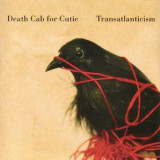
Death Cab For Cutie haben es geschafft mit ihrer dritten Platte einen Klassiker des "Quiet Rock" zu veröffentlichen. "Transatlanticism" ist all das, was wir zur Zeit an Rockmusik lieben. Seitdem das Klavier bei Rockmusik wieder mitmachen darf. Große Melodiebögen, die erst nach dem dritten Mal ihre Schönheit offenbaren, leuchtende Ernsthaftigkeit. Eine herrliche Platte. "Transatlanticism" beginnt mit dem Satz : "So this is the new year!" Jedes Mal wenn man diese Platte auflegt ist Neujahr, 4 Minuten nach 00:00 Uhr. Die Band hat die Option, uns durch das ganze Jahr zu begleiten. Mit ihrer Schönheit, Melodie, Vielschichtigkeit... Death Cab for Cutie haben sich 1997 in Bellingham/Washington gegründet. Der Sänger Benjamin Gibbard, dessen Stimme vielen durch sein Wirken bei der Sub Pop-Band Postal Service bekannt sein dürfte, wird von seiner Band - Christopher Walla (Gitarre), Nicholas Harmer ( Bass) und Michael Schorr (Schlagzeug) - durch dieses Album getragen. Wenn Sie schon mal ein wenig verliebt waren, dann hören Sie auf das Titelstück. Das epische 7:55 min lange "Transatlanticism". Und er singt:" I need you so much closer! So come on!"
Black Vinyl[27,52 €]
Fans von Porcupine Tree, Haken, Green Carnation und Muse werden sich beim Sound von Empyre zu Hause fühlen, denn die Band setzt auf Kontraste und Tiefe. Das Quartett verbindet seine gewaltigen Riffs mit sehr persönlichen Texten, die vom leidenschaftlichen Gesang von Frontmann Henrik Steenholdt geprägt werden.
Eine Welt der dunklen Introspektion und Perspektive, die einen nach innen gerichteten und gefühlsbetonten Standpunkt feiert. Gemischt von Chris Clancy (Massive Wagons/Those Damn Crows).
MONO have long drawn equal inspiration from the light and dark of life, spawning more than two decades of musical turbulence and melodic transcendence. Heaven Vol. 1 marks the beginning of a new annual tradition from MONO: A new EP released on Christmas Day each year, leaning into the light at precisely the time when we need it the most - surrounded by loved ones and hopeful for what the turn of the calendar may bring us. Recorded by Takaakira `Taka' Goto at his home studio in Japan (with drums recorded by Amak Golden at Golden Hive Studio in Prague) - and mixed by Rafael Anton Irisarri and Jeremy deVine at Black Knoll Studio in New York - Heaven Vol. 1 finds MONO at their most hopeful and cinematic. Of each of Heaven Vol. 1's three tracks, MONO offers these words: Lucia: "This song was written when our beloved longtime partner Jeremy (the owner of our American label Temporary Residence Ltd.) welcomed his second child. The song is constructed with two parts; the first part celebrates the birth of a new life and the second part heads towards dreams and hope. We wrote this song with the feeling of Santa Claus riding a sleigh through the snowstorm, smiling, jumping into the swirl of pure white light and carrying many dreams." Smile: "We drew upon the snowy scenery of Christmas that we experienced when we were young. Your exhaled breath is white. Your heart is dancing in the endless silvery white world, and when you are about to grab the snow with your hands and turn around, your parents look back at you with a smile. We wrote this song whilst remembering moments like this." Silent Embrace: "Time passed and we became adults. Life is like climbing and descending many steep mountains, but the reason we're still able to continue walking is because of our loved ones, colleagues, friends and family who quietly stand by us and giving us courage and strength. We wanted to express our gratitude with this song." Limited (220 copies ww) Single Colour (Purple Vinyl) Edition!
Third Pressing of Gilroy Mere's Adlestrop on blue vinyl with a blue cover.
Adlestrop is inspired by the remains of the rural railway stations, that were closed in the wake of the 1963 Beeching Report.
“This record started with Edward Thomas’s poem Adlestrop and a chance visit to the village that it takes its title from. I wanted to see the station, but found it was no longer there, all that remains is the old platform sign Adlestrop, now part of a local bus shelter. However as I walked around the village I was struck that; “all the birds of Oxfordshire and Gloucestershire” were still singing away - like ghosts from Thomas’ verse.
Visiting Adlestrop spurred me to get hold of a copy of the Beeching Report which, in Appendix 2, lists all the services and stations recommended for closure in the 1960s. The names read like an epic British poem, from halts to branch-line stops and stations and singular terminals for public schools, mines, ferries and even an asylum. There’s Ravenscar where a resort was planned but got no further in its construction than the station, and a hotel - the grid marked out for the roads never laid. Bethesda, a short branch line from Bangor up towards Snowdonia, was used for slate and passengers and is now just a quiet green valley, Christ’s Hospital on the old Cranleigh Line, opened with seven platforms to cope with the daily flood of pupils attending the famous school nearby which never came as it was a boarding school. Many of the stations have vanished, with just fields and car parks left in their place, some are repurposed as houses, or shops, or abandoned as artefacts of a lone-gone industrial past.
Armed with a digital recorder, and with a copy of Beechings Report as my guidebook I made notes and recordings on my travels around the country, and used them as the starting point for a set of pieces that try to capture the fading layers of history, in the areas where the stations had once stood making sure each track retains something of the real place within them. Back in my studio I reacted, improvised, and crafted musical responses to each station, trying to capture the ghosts and former lives of the stations and their imprint on the present.”
Gilroy Mere is Oliver Cherer who trading as Dollboy, Rhododendron, and Australian Testing Labs as well as his own name has meandered his way through the backwaters of left of centre English folk, ambient and electronic music, issuing numerous albums of original music to much critical acclaim via highly regarded boutique labels such as Static Caravan, Second Language, Deep Distance, Polytechnic Youth, and Awkward Formats.
Sometimes, a change of view can transform a person’s world. On ‘Don’t Come Down’, the artist formerly known as Matt Pond PA can be found with his “shoulder on the concrete” of a pavement, scoping out the world anew. This granular realignment of perspective serves as an open door to the debut album from The Natural Lines. At once clearly Pond’s work yet a huge leap forward in its measured songcraft, melodic immediacy, collaborative detail and wryly questioning lyrics, the result is a gorgeous album of intimate reflections from a relocated, renamed, revivified talent.
Recorded with close collaborators and friends over a period that saw Pond make vital adjustments to his life, its stealth emergence reflects his desire to set a fresh pace for himself and come from somewhere new, somewhere more open.
Now based in Kingston, New York, with his partner and wild dog Willa, Matt explains the album’s gestation thus. “It was something different from the start. I wanted to write as purely as I could. Instead of getting stuck in the ‘tour, write an album, release an album, tour’ cycle, which is not a natural way of writing or living, I wanted to write an album and when it was done I wanted to make sure it was done. I didn’t want this feeling of, ‘Oh, we didn’t have time’, or, ‘I don’t know whether I believe in the songs but it’s coming out anyway.’ I used to be always racing to the finish line, but I’m not anymore.”
For Matt, the call to ring the changes came with the recognition of “a certain nihilism or narcissism” involved in making music. “In some ways, you have to get in your own head and I think I went too far with that, with drinking and shutting people out. In something that I believe is collaborative, it’s not helpful.”
“I quit lying,” he adds. “I checked my harsher tones. I cut my drinking down. I went to therapy and figured out how to stop shouting at cars.”
Car troubles inspire ‘No More Tragedies’, the album’s standout second track, where he wryly details his desire to dampen his twinned impulses to take pictures of license plates blocking his parking space or take bricks to said car windshields. Warming melodies and harmonies soothe his rage, a balance maintained elsewhere on the album.
A need for connection underpins the lilting ‘Alex Bell’, where Matt’s lyrics playfully reference the inventor of the telephone over a plaintive cello and bubbling keyboards – evidence of the album’s carefully nurtured arrangements. With nimble sequencing, ‘My Answer’ follows with a question: do artists really need to get messed-up to create? Matt may not have the answer, he admits, but he articulates the question beautifully, channelling the influence of Blue Öyster Cult’s ‘Don’t Fear The Reaper’ into a song of fleet, melodic electric-folk drive.
Featuring 17-year-old MJ Murphy on misty backing vocals, the softly insistent ‘Don’t Come Down’ is an album centrepiece, detailing a need to see things anew. Like The Flaming Lips writing a classicist piano ballad, the twinkling ‘Artificial Moonlight’ finds Matt writing late at night, illuminated by the lights from streetlamps. Finally, ‘Mahwah’ closes the album on a note of arrival. While Matt Pond PA’s albums emerged from the disconnection of touring and living in vans, Pond is now happily – cruel winters aside – ensconced in Kingston. “I have found a place I love. Mercury Rev lives near here. It is a cool place to be, an artistic, mountainous, wild place to live. So – maybe this is it.”
In the case of The Natural Lines, a sense of arrival suggests itself. For Matt, the album follows two decades’ worth of Matt Pond PA records and soundtrack works. In a career he once described as “a series of benign mistakes,” Matt travelled far, moving from his band’s starting point in Philadelphia to Florida, Oakland and beyond while releasing 14 well-received albums. In 2017, he declared his intent to retire the Matt Pond PA name, though it lived on briefly in the reissue of The State Of Gold and EPs such as Free Fall, a tribute to Philadelphia.
Now, the name change honours his collaborators. Among a revolving cast, one constant presence in his work has been Chris Hansen, who plays guitar, bass, keys, saxophone and vocals on The Natural Lines’ debut. Matt’s partner, Anya Marina, contributes vocals. Other band members number Hilary James (cello/vocals), Kyle Kelly-Yahner (drums), Louie Lino (keys), Sarah Hansen (horns), Sean Hansen (drums/bass), Kat Murphy (vocals) and, also on vocals, MJ Murphy, for whom Matt brims with praise: “She can do anything she wants to musically.”
A heartening rebirth for Pond and his friends, the result also pays warming, witty, reflective and infectious testimony to the value of reconfiguring one’s outlook. “Once I took control of my mind, I could see what I wanted to say more clearly,” says Matt. “Instead of random floods of mania and panic, I felt like I was composed and composing. It has become as simple as reading the words of a sentence in the right order. As small as the pause before I hit ‘send’.” A development, you might say, conducted along the most natural of lines.
For a quarter of an hour, Zürich was the navel of the world. Let's look back: at New York's CBGB's, pre-punks were shredding away, Malcolm McLaren, as a man with a fine-tuned taste for the hip, imported the sound to London, where his sweetheart Vivienne Westwood dressed the test-tube band The Sex Pistols. A few pop magazines later (we are in an analog world!) punk bands sprouted everywhere, like shiny pimples on poorly fed teenagers. Contrary to legend, even back then, it was often those with a musical background who were the most successful. One such example, Henrich "Wüste" Zwahlen, who had learned the violin, attended a jazz school and went into prog-rock before joining the Nasal Boys, one of the first punk bands in Zürich. The scene included the female band Kleenex (cover: Fischli of art heroes Fischli/Weiss), whose minimalism was praised by the London music press, while the world's most important rock theorist, Greil Marcus, wrote an ode highlighting Zürich's role as the birthplace of Dadaism. A fertile ground for the militant youth movement that exploded in 1980 and stirred up the city of banks, protestantism and boredom with raw wit and expressive violence. Gathering at concerts of local bands and fueled by endogenous and artificial substances - they paid homage to exuberance and self-indulgence.
The mantra of "everything-is-possible" was driven forward on the musical front by progress in terms of means of production: analog electronic instruments were no longer reserved for hippie nerds, who sat in front of large plug-in boards like autistic-psychedelic switchboard operators connecting cables for their sound carpets. Now snazzy stage personnel elicited fast-paced sounds from handy devices often made in Japan. Kraftwerk was fashionable, the Zurich duo Yello experimented with new synthetic sounds, and the groundbreaking album "Alles Ist Gut" by the Düsseldorf based duo D.A.F. (Deutsch Amerikanische Freundschaft) was released, which chanted its program of provocation times danceability with lines such as "Tanz den Jesus Christus, tanz the Mussolini, tanz the Adolf Hitler." In England meanwhile, electronically backed New Romantic bands were replacing New Wave. The Human League, Heaven 17, Duran Duran, OMD, Depeche Mode or Visage stormed the charts.
In Zürich's underground, the duo Aboriginal Voices caused a stir at that time. A couple, good-looking, styled, looking cool into the cold neon light, with a danceable beat and sequenced electro sounds, to which Micheline gave a very unique touch when she sang in French and English. Micheline had a classical piano education, had left home early, worked as a lighting technician in a strip joint and at Booster, the hottest boutique in town (one of the relicts that still exists). Voilà: a musician who was as stylish as she was tough. She was already playing with Wüste in the band "Doobie Doos", a band where everyone played an instrument they didn't master. In 1980 the Aboriginal Voices were formed, initially with vocalist Magda Vogel (of later UnknownmiX fame), who was trained as a classical singer.
Frustrated by organizational friction and constant hassles with band lineups, Wüste and Misch decided to do everything as a twosome: self-mixed, self-styled, self-produced. With the top-of-the-line Linn drum machine clocking the beat, Wüste's guitar and Micheline on the Yamaha synthesizer created a unique sound of danceable electronic music. Whereby the Aboriginal Voices acted as a kind of proto-influencer, receiving the latest equipment to try out, especially since they made it a point not to work with tapes, but to design everything for live shows. They had an interface built for the legendary Roland MC-4B, who sequenced the modular Roland System 100M but where one output controlled a light show synchronized with the sound. A pioneering act that fit well into the DIY spirit of punk, with its self-distributed tapes and fuck-you attitude towards the cretins of the music industry. Consequently only two cassettes and an EP were released. There was something futuristic about the sound, the vestiary style and the electronics, while the attitude remained rebellious. Of course something so deeped in the Zeitgeist wasn't meant to last. Wüste moved to New York, Micheline stayed in Zurich, both still active in the music scene to this day.
Sven Regener, head of the band Element of Crime and one of Germany's most successful pop writer said a few years ago when asked if he knew of any Swiss music: "Of course! In 1983, a Swiss band called Aboriginal Voices played with us at a festival in Zurich. Great, avant-garde electro-pop. That was my first encounter."
If you ever saw them live, you never forgot them, and so over the years you belonged to a teeny-tiny circle of insiders, happy to be joined after all these years by new aficionados who appreciate the sound of that quarter-hour, when Zurich was ravishing, creative and exciting.
- Thomas Haemmerli
- A1: Willkommen
- A2: Empire Of Light
- A3: Illuminate (Schiller & Ro Nova X Tricia Mcteague)
- A4: Exotica
- B1: Stardust
- B2: El Color De La Luz (Schiller & Guenter Haas)
- B3: Paradigm Of Peace (Schiller & Tricia Mcteague)
- C1: Quiet Love (Schiller & Tricia Mcteague)
- C2: Endlos Iii
- C3: Der Himmel Über Der Wüste
- C4: Lykke (Schiller & Typewriter)
- D1: Midsommar (Schiller & Thorsten Quaeschning)
Seit 25 Jahren gilt SCHILLER als wegweisend und stilbildend in der elektronischen Musik. Was 1998 mit dem Clubhit "Das Glockenspiel" begann, hat sich über ein Vierteljahrhundert zu einem facettenreichen Klangkosmos entwickelt. Zehn Top-10-Alben, darunter acht Nummer-1-Platzierungen und zahllose Gold- und Platinauszeichnungen sowie weltweite Tourneen sind für Christopher von Deylen aka SCHILLER kein Grund, sich zurückzulehnen. Sein Blick ist stets auf Neues gerichtet.Mit ILLUMINATE erscheint im März nun das neue, hochkarätig besetzte Album des Soundvisionärs Christopher von Deylen. Es besticht durch seine reichhaltige Klangfülle und seine opulent ausgestatteten Editionen.Neben der limitierten PREMIUM DELUXE mit 3 CDs und 1 Blu-Ray erscheint das Album als limitierte SUPER DELUXE (2 CDs⁄1 Blu-Ray), als DELUXE (2CD), als Doppel-Longplay in blauem Vinyl und als Download mit über 160 Minuten neuer Musik von SCHILLER.Ähnlich gilt dies für das Marketing: Neben der bundesweiten Plakatkampagne in 13 Großstädten, gibt es eine TV-Kampagne, sowie ein außerordentlich große Online- & Social Media-Kampagne, viele TV-Auftritte des Künstlers sowie im Mai die bundesweite Tour durch Deutschlands größte Arenen!WILLKOMMEN in der neuen Welt von SCHILLER
- A1: Amapola
- A2: Besame Mucho
- A3: Les Feuilles Mortes (Autumn Leaves) (Autumn Leaves)
- A4: Mi Manchi (Feat Kenny)
- B1: Somos Novios (It's Impossible) (It's Impossible)
- B2: Canzoni Stonate (Feat Stevie Wonder)
- B3: Solamente Una Vez
- C1: Jurame (Feat Mario Reyes On Flamenco Guitar)
- C2: Pero Te Extrano
- C3: Momentos
- C4: L'appuntamento (Sentado A 'Beira Do Caminho) (Sentado A 'Beira Do Caminho)
- D1: Cuando Me Enamoro (Quando M' Innamoro) (Quando M' Innamoro)
- D2: Estate (Feat Chris Botti)
- D3: Can't Help Falling In Love (Live At Lake Las Vegas)
- D4: Because We Believe
- A1: Sinfonia (Orchestra)
- A2: Ite Sul Colle...dell'aura Tua Profetica (Oroveso / Coro)
- A3: Svanir Le Voci! (Pollione / Flavio)
- A4: Meco All'altar Di Venere (Pollione)
- A5: Odi?...I Suoi Riti A Compiere (Flavio / Coro / Pollione)
- B1: Me Protegge, Me Difende (Pollione)
- B2: Norma Viene (Coro)
- B3: Sediziose Voci
- B4: Casta Diva
- B5: Fine Al Rito, E Il Sacro Bosco
- B6: Ah! Bello A Me Ritorna (Norma / Oroveso / Coro)
- C1: Sgombra E La Sacra Selva (Adalgisa)
- C2: Eccola - Va, Mi Lascia
- C3: Va, Crudele
- C4: Vieni In Roma (Pollione / Adalgisa)
- D1: Vanne, E Li Cela Entrambi (Norma / Clotilde)
- D2: Adalgisa!...Alma, Costanza
- D3: Oh, Rimembranza!
- D4: Ah Si, Fa Core, Abbracciami (Norma / Adalgisa)
- D5: Ma Di'...l'amato Giovine
- E1: Oh, Di Qual Sei Tu Vittima
- E2: Perfido!...Or Basti! (Norma / Adalgisa / Pollione)
- E3: Vanne, Sl, Mi Lascia, Indegno (Norma / Pollione / Adalgisa / Coro)
- E4: Introduzione (Orchestra)
- E5: Dormono Entrambi! (Norma)
- E6: Ola! Clotilde! (Norma / Clotilde)
- E7: Mi Chiami, O Norma?
- F1: Deh! Con Te, Con Te Li Prendi
- F2: Mira, O Norma
- F3: Cedi...deh Cedi!
- F4: Si, Fino All'ore Estreme (Adalgisa / Norma)
- F5: Non Partl? (Coro)
- F6: Guerrieri! A Voi Venirne
- F7: Ah! Del Tebro Al Giogo Indegno (Oroveso / Coro)
- G1: Ei Tornera. Si! (Norma / Clotilde)
- G2: Squilla Il Bronzo Del Dio! (Coro / Oroveso / Norma)
- G3: Guerra! Guerra! (Coro)
- G4: Ne Compi Il Rito, O Norma? (Oroveso / Norma / Clotilde / Coro / Poll
- G5: In Mia Man Alfin Tu Sei
- H1: Gia Mi Pasco Ne' Tuoi Sguardi (Norma / Pollione)
- H2: Dammi Quel Ferro!
- H3: Qual Cor Tradisti
- H4: Norma! Deh! Norma, Scolpati!
- H5: Deh! Non Volerli Vittime (Coro / Norma / Pollione / Oroveso)
Bellini: Norma
Opera in two acts · Libretto: Felice Romani
Norma - MARIA CALLAS
Pollione - FRANCO CORELLI
Adalgisa - CHRISTA LUDWIG
Oroveso - NICOLA ZACCARIA
Flavio - PIERO DE PALMA
Clotilde - EDDA VINCENZI
Coro e Orchestra del Teatro alla Scala di Milano
Chorus master: Norberto Mola
Tullio Serafin
Recorded: 5-12.IX.1960, Teatro alla Scala, Milan
- A1: Shake It, Shake It, Shake It
- A2: Surrounded
- A3: Good, Good Man
- A4: If You Go
- A5: Miranda Blue
- A6: Money Ain't Everything
- A7: Enemies
- A8: Star Angel
- B1: Mister President
- B2: I Don't Roll With Snakes
- B3: I'm A Grown Man
- B4: It Ain't Easy
- B5: If I Could Walk On Water
- B6: Lover Oh Lover
- B7: Hard Work
- B8: Bridges You Burn
Three years after the release of his critically acclaimed album "Salone",
Bai Kamara Jr returns with "Traveling Medicine Man", a 13-track
collection of blues songs portrayed in Bai's unique style
In a descriptive, provocative and sometimes suggestive way, the tales of love, life,
relationships, politics and innuendo are meticulously explored by the
raconteur.''Traveling Medicine Man is the continuation of my introspective journey
through my roots and my perpetual quest to make my two homes, Africa and
Europe, coexist within me. The title was inspired by my maternal grandfather
Tinka Tanner Kargbo, born in 1901 in the Northern Province of Sierra Leone. He
was educated by the Wesleyan Missionaries and later traveled with them across
the country to help provide medical care to villagers and townspeople. I was
fortunate enough to have spent some time with my grandfather when I was still a
child, and one of the things that fascinated me the most about him was his ability
to reconcile his Christian beliefs with his traditional African beliefs and
customs.'' (Bai Kamara Jr)For the making of this album Bai brought his touring
band, The Voodoo Sniffers, into the studio; these exceptional musicians
contributed to Bai's unique and evolving sound. With a percussive nature at the
heart of the arrangements this rootsy blues is spiced up with an afro vibe, making
you want to get up and dance more often than not. May your listening experience
be soothing and pleasurable with a healing effect
Eyelids' new album, A Colossal Waste of Light, does an excellent job of
framing the quintet as one of today's most compelling purveyors of
lopsided guitar pop workouts and earworm-laden vocal melodies
It also proves that great guitar pop can still evoke favorites from a glorious past -
the penetrating moodiness of XTC's Black Sea, or R.E.M.'s Fables of the
Reconstruction, comes to mind - while refusing to waste time on idle nostalgia.
On their 4th full-length album (but 17th vinyl offering if you include previous EPs)
the Portland, OR band also rediscover the beauty of firsts. A Colossal Waste of
Light marks the first time the band wrote songs remotely (it ended up being fun &
weird to send out a very simple version of a song and see who came back first
with another part for it,John Moen looks back), their first reunion at the
Destination: Universe studio post-isolation, and their first batch of melodious new
tunes since The Accidental Falls, the band's 2020 project with poet, lyricist and
Tim Buckley collaborator Larry Beckett (an extra- ordinary pairing that allowed
Eyelids' two frontmen/ tunesmiths, Chris Slusarenko and John Moen, to find a
new, multilayered appreciation for the art of songcraft)
Die Versuchung ist groß, hoid als Sibylle Kefers "opus magnum" zu bezeichnen. Diese Sammlung von 13 Liedern ist ein eindrucksvolles, stimmiges und zugleich vielfältiges künstlerisches Statement der in Wien lebenden und arbeitenden Musikerin, eine Kulmination ihres ständigen Wachsens als Künstlerin. Die reichen Facetten von Kefers Zugang zu Musik, die Qualitäten und das ganze Spektrum dessen, was sie als Komponistin, Texterin und Instrumentalistin - Singer/Songwriterin oder Liedermacherin dafür als Beschreibung zu ungenau, zu eng - macht und zum Ausdruck bringt, macht diese Lieder aus ...hoid als seit 2020 entstandenes, geschriebenes und aufgenommenes Album ist eine Brücke, eine Klammer, für vermeintlich widersprüchliche Erfahrungen und künstlerische Reaktionen darauf. Unser aller spezieller Lebenssituationen durch die Corona-Pandemie, den unmenschlichen Krieg in der Ukraine und den drohenden ökologischen Kollaps sind sein so verunsicherndes größeres wie dynamisches Setting. Mit dem Sibylle Kefer in ihren Liedern nicht zuletzt Rücksprache hält, Fragen dazu stellt und Widerworte oder Anschlüsse sucht. Das Musikmachen, das Liederschreiben schon für sich ein Stück Normalität und Positionierung zugleich. So sehr Sibylle Kefer sich in diesen Liedern mit Ungleichbehandlung, Ungerechtigkeiten und Grenzüberschreitungen befasst, so sehr klingt dabei immer ihre prinzipiell positive, hoffnungsvolle Grundhaltung durch, baut sie immer bewusst "Hoffnungsanstöße" in ihre Lieder ein: "Damit man weiß, wogegen, woran, womit man arbeitet, es zu tun hat."Die Lieder des Albums hat Kefer dabei zunächst im home-recording aufgenommen und zu produzieren begonnen, sich dabei über das Schreiben der Texte und Musik hinaus ein zusätzliches Skill-Set erarbeitet. Da ein Wesen der Musik, des Musikmachens von Sibylle Kefer immer Zusammenarbeit und Austausch bleiben, fanden sich auch in der Immer-Wieder-Isolation der Pandemie Möglichkeiten, mit vielen befreundeten und geschätzten Musiker_innen zu arbeiten. Nicht zuletzt formierte Sibylle Kefer, selbst bei Ernst Molden & das Frauenorchester nicht wegzudenken, während der Arbeit an hoid ihr eigenes Trio, ihre Band. Mit E-Bassistin Sarah Brait und Schlagzeuger Chris Pruckner wird sie zukünftig (nicht nur) die Songs von hoid auf die Konzert-Bühnen bringen. Ganz zentral für die Fertigstellung des Albums die Arbeit mit Martin Siewert, gemeinsam mit dem Musiker und Komponisten wurden die Lieder schließlich in ihre endgültige Form gebracht, in der sie nun auf hoid zu hören sind und darauf warten ihrem Publikum zu begegnen.
Christine and the Queens return with new album PARANOÏA, ANGELS, TRUE LOVE, released on 9 June via Because Music on 3xLP, 3xCD, single LP and single CD.
The record’s first single, ‘To be honest’ is an ethereal, synth-driven first glimpse into the French phenomenon’s most personal and ambitious album to date. PARANOÏA, ANGELS, TRUE LOVE is written, performed and produced by Christine and the Queens, with co-production by Mike Dean (Lana Del Rey, Beyonce) and guest appearances from 070 Shake and Madonna.
With her hypnotizing voice and vivid lyricism, Jackie Mendoza makes fantastical, intimate electro-pop propelled by ukulele-based dance grooves. Having grown up between her birthplace of Chula Vista, California and Tijuana, Mexico, the 29-year-old singer-songwriter and multi-instrumentalist bridges these two worlds with dynamic soundscapes that pull from Latin pop, electronic music, and indie pop. She creates a musical universe that exists beyond strict borders of genre and geography, giving her the space to traverse the vast expanse of her interiority. Mendoza first started performing in 2014 as the vocalist for Brooklyn dream pop bands Gingerlys and Lunarette. She then broke out as a solo artist with her 2016 pop hits "Islands" and "La Luz," which showcased her imagery-packed, yet deeply introspective lyrics. On LuvHz, her 2019 adventurous debut EP that was initially inspired by a painful breakup, she turned her personal experiences into songs that observe greater truths about the world around her. As a result, the project became a broader reflection on varying forms of love, in relationships with your partner, your culture, and the natural environment. Mendoza expands this approach on her debut album, Galaxia de Emociones (Galaxy of Emotions), which sees her exploring a great range of feelings, from depression, celebration, outrage, numbness, hopelessness, and thrilling love. She uses each emotion as a portal to convey the intricacies of her experience as a queer, first-generation Mexican American woman, who actively defies and criticizes machismo and the Christian culture she was surrounded by. Brought up in the suburban border town of Chula Vista, she recalls being told by her parents to not mix English with Spanish, but speaking "spanglish" quickly became inevitable. It wasn't until high school, that learning to play ukulele and singing in school musicals allowed her to authentically express herself. "This album is about finding the courage to not only face my emotions, but also sharing them by singing them out loud." Mendoza says. The project was co-written and co-produced by Mendoza and Rusty Santos (Animal Collective, Panda Bear), with a contribution from Grammy winning producer and accordionist Ulises Lozano. As Galaxia de Emociones cruises from shimmering indie pop to accordion-laced electronic norteño, Mendoza proves there is both power and tenderness in embracing the fullness of your being and not doubting your instincts that might have been discouraged by society. She says it all in the opening song, "Natural," which blooms with spacey synths and twinkling ukulele plucks. "There is no use in controlling what comes natural to you," she sings in Spanish in a spellbinding loop. With her new album, she hopes that listeners can connect with her words and look within to explore their own galaxy of emotions.