Jazzrausch Bigband has more or less invented a new art form,
techno jazz, and has become well-known for performances of it. But
the band also has another, different story to tell. It has invented its
own tradition of hitting the road and touring at the end of each year
with a programme consisting of Christmas music, and has been doing
this ever since the band first emerged eight years ago. Bandleader
and founder Roman Sladek explains: “Whereas our regular projects -
the most recent album, ‘Emergenz’, is a good example - are all about
working through a specific theme and finding new ways to reinvent
ourselves, our Christmas thing is something we do for one reason
alone: to have fun. It was our very first programme, we still love it, and
we’re still nurturing, developing and growing it. Being able to devote
one month a year entirely to the big band tradition is something we’re
all really passionate about.”
Some bands might have been tempted just to throw together an
album of Christmas chestnuts any old how, but the Jazzrausch way of
doing things is not like that at all. Unlike any other album by the band,
for the first time we hear purely instrumental music. Furthermore,
Kuhn has taken ten classic Christmas songs - each one of them
rarely heard in jazz, and tunes which can often come across as a bit
staid in their original settings - from ‘Tochter Zion, freue dich# to
‘Adeste fideles’ or ‘Ihr Kinderlein, kommet’. The title track, ‘Alle Jahre
wieder!’ (based on the 1830s carol to music by Silcher which is very
familiar to children and adults in the German-speaking world) appears
here in completely new orchestral garb.
Sometimes the listener will recognise the kind of swing typical of
Glenn Miller. At other moments it is the incomparable big band
elegance of, say, Artie Shaw. ‘Es wird scho glei dumpa’ (an Austrian
carol) is given the full extra high pressure Tijuana brass treatment.
‘Maria durch ein’ Dornwald ging’ gets the touch of the Thad Jones /
Mel Lewis Orchestra after a Henry Mancini-like intro, and ‘Ich steh’ an
deiner Krippe hier’ recalls more of the great swing heritage.
Once again Jazzrausch Bigband has succeeded in a way that only
very few in the jazz field can, notwithstanding the openness of the
genre: they have brought young and old together, tradition and
revolution, the familiar and the new. Which is why it feels so
completely natural and right that they should continue to do this
‘again every year’, as the album title tells them: ‘Alle Jahre wieder’.
Search:chris su
- A1: The Edwin Hawkins Singers - "Oh Happy Day
- A2: Elvis Presley - "Take My Hands Precious Lord
- A3: The Staple Singers - Silent Night
- A4: The Harmonizing Four - "Motherless Child
- A5: The Argo Singers - "Stand Up For Jesus
- A6: The Golden Gate Quartet - "White Christmas
- A7: Evelyn Freeman & The Exciting Voices Chorus - "Didn't It Rain
- B1: Aretha Franklin - "God Bless The Child
- B2: Louis Armstrong - "When The Saints Go Marching In
- B3: Nat King Cole - "O Little Town Of Bethlehem
- B4: Louis Prima & Keely Smith - "Shadrack" (Feat Sam Butera & The Witnesses)
- B5: Johnny Mathis With Percy Faith & His Orchestra - "What Child Is This?
- B6: Little Richard - "Just A Closer Walk With Thee
- B7: Johnny Cash - "My God Is Real
- B8: Mahalia Jackson - "Joshua Fit The Battle Of Jericho
re-release Typische Weihnachtslieder wie "Stille Nacht" haben die Meisten wahrscheinlich schon so oft gehört, dass sie zu beiden Ohren raushängen. Deswegen muss man in der Adventszeit trotzdem nicht auf die bewährten Weihnachtsklassiker verzichten. Denn mit "Noël Gospel" bringt das französische Label Wagram eine Kompilation heraus, die 15 ergreifende Gospelversionen bekannter, und auch einiger weniger bekannter Weihnachtstitel versammelt, zum Beispiel "Oh Happy Day", "Silent Night" oder "White Christmas". So ist für besinnliche Stimmung und ein aufregend neues Hörerlebnis gesorgt. Mit auf der LP vertreten sind die Superstars des Gospels wie Aretha Franklin, Mahalia Jackson, The Edwin Hawkins Singers, Elvis Presley, The Staple Singers, Johnny Cash und The Golden Gate Quartet. Hinzu kommen mit Louis Armstrong, Nat "King" Cole und Little Richard stimmgewaltige Sänger, die man auch unterm Tannenbaum immer wieder gerne hören mag.
If you've been in the club scene for many years like David Dorad, you will one day face the big, essential, serious questions that each of us will ask ourselves sooner or later:
Are marmots pack animals?
Can marmots sign language?
Do marmots plan their lives according to European or Chinese zodiac signs?
Do marmots need a special passport, after all they don't have a thumb to turn the pages?
What happens when a marmot eats Coke and Mentos at the same time?
And with all those questions whistling, hissing and muttering in his head, David grabbed piano, baton and BioBassline to crochet his new EP.
This is called "Marble" and offers 6 different approaches to solve these big questions.
As a source of ideas, he has competent partners at his side in Roman Flügel, Mira, Christopher Schwarzwälder, Canson and Sascha Cawa.
A1 -
Murmeli - original
The marmot tribe awakens. Get up to brush your teeth. Gets your toes tapping. Makes you snap your fingers. Dare to roll your hips. Later rhythmically to turn. To look elegant at the same time. Eyes closed - eyes open.
Murmeli, the regular leader, sits at the piano.
Everyone is dancing, toothpaste in the corners of their mouths and a smile that takes the toothpaste by the hand.
A normal morning in marmot houses.
B1 -
Murmeli - Mira & Christoph Schwarzwald RMX
Mira and Christoph Schwarzwalder take over from Murmeli. They vary, combine and subtract. The first marmots raise their thumbless fists in the air - showing their passports, ready to take off.
B2 -
Murmeli - Canson RMX
Canson also sits next to Murmeli. Caress the theme, tickle the groove.
Murmeli has the best ideas early on: "Boy, let's try Mentos with Cola, we'll definitely take off."
Canon is in!
C1 -
Murmelot - Original
The sun goes down in Murmelhausen too. Then Murmelot is ready. Gives his advanced Pilates class, which the whole tribe takes. The village wants to remain mobile.
Murmelot's motto is "Why not stretch while walking?"
And so shall it be. He sets the rhythm on his wooden Fairtrade 303 and our furry friends shave shaky and obscene messages down each other's backs while impatiently hopping for the drop.
D1 -
Murmelot - Roman Flügel Remix
Roman Flügel and Murmelot are old buddies. Struck while carving the 303.
Roman happily takes over the Pilates class, the dancing crowd. Enchanted until the razor's batteries are empty and only dancing remains, only dancing is important.
D2 -
Murmelot - Sascha Cawa RMX
Sascha Cawa takes his trunk by the hand, wants to motivate her again shortly before the second sunset of the day. Whispers little obscene Pilates positions in their ears. That motivates. Murmelot switched from piano to percussion.
The marmots' sweat feeds the golden orchids in the clearing for the next six months.
Comprehensive box of 6 LPs / EPs and the band's first rare 7inch.
Aroma Di Amore is/was Belgian’s premier cult band. Since the early eighties ADA innovatively combined electronics with rock. With a mix of razor-sharp Flemish lyrics and unconventional song structures the group earned a cult status in Belgium and abroad. 40 years later they conclude their career with a few last concerts and a vinyl box set spanning the years 1983-1987.
At the notorious Rock Rally of 1982 Aroma Di Amore stands out with their wonderful handling of the Flemish language, a deep bass, typical cold new wave drums, biting guitar riffs with the occasional flavor of absolute madness. Frontman Jos Verlooy adopts the stage name Elvis Peeters. The explanation for this remarkable pseudonym choice: in 1977 – the period of the singer's musical awakening – one of the two famous rocking Elvises (not Costello, but Presley) succumbs to his pill addiction. So, dixit Verlooy, there is an Elvis vacant. A banal surname belongs next to that exotic first name. A combination that breathes rock 'n' roll, according to the singer.
His companion Gerry Vergult – who very much determines the sound with his metallic riffs, somewhat indebted to Jean-Marie Aerts – adopts the stage name Fred Angst. Completely in line with the depressing zeitgeist of the 1980s. Gerry eats and breathes music. Besides composing most of ADA’s songs, he records & self-produces a few fantastic dark en loner solo minimal wave tracks as Fred Angst. He is still musically active, more towards the electronic leftfield nowadays under the moniker Zool.
It is clear from an early age that companion Elvis Peeters possesses the gift of the word. As an adolescent he published the punkzine “Dus”. The punk spirit stimulates Peeters. He begins to transform the poetry that he has been entrusting to paper for some time into song lyrics. It is on a whim and without any stage experience that punk friends Peeters and Angst register for the Rock Rally as Aroma di Amore. On a bed of post-punk and cold wave (Joy Division, Wire and Sisters of Mercy are the main influences), they initially let out playful, minimalist and nonsensical slogans such as "Doe De Mafia" (1982) and "Gorilla Dans De Samba" (1983). Later on, the tone becomes more serious, although Peeters' choice of words continues to show a penchant for absurdism and sarcasm. No one in Dutch songwriting imitates this verbal elasticity, certainly at that time.
The numerous songs about war are downright horrifying. In the 1980s, an arms race is underway. When the Belgian government decides to install nuclear missiles in 1981, Aroma di Amore asks for one minute of silence in the hall during performances. In "Lauwe Oorlog" (1983), Peeters exposes the core of his unrest: “paraat voor de parade / de vrede wordt begraven / met militaire eer”. To this day, the frontman of AdA still proudly wears his at least 30 year old 'atomic energy, no thanks!' button.
In 1984 Aroma releases Koude Oorlog on the new and independent Brussels label Play It Again Sam. The traditional press and radio ignore the record, but in the alternative circuits the mini-album does not go unnoticed, and the group starts to build a solid fan base, resulting in more and more offers for gigs. There's also interest in the Netherlands, and due to the international contacts of PIAS, the record also ends up in France, Switzerland, Spain and Canada.
Encouraged by this modest success, the group returns to the studio for a 12" single. With new group member Frits De Cauter on sax, they record "Voor De Dood". To this day, Voor De Dood remains the most popular AdA song, as evidenced by the countless compilations on which the song has appeared.
AdA goes to the Netherlands to record their next album “De Sfeer Van Grote Dagen”. The people from Nasmak have built a new studio in Eindhoven and one of the members, Theo Van Eenbergen (later Henry Rollins), will be the producer. “De Sfeer Van Grote Dagen” is the group's most adventurous album, and the reviews are again unanimously favorable. However, sales are disappointing and PIAS proposes to recruit Chris Reed of Red Lorry Yellow Lorry and record a new single with him. "Zonder Omzien" is recorded at the prestigious Pyramid Studio. However, PIAS is waiting to release the album and in the meantime AdA is recording a number of extra tracks with producer Ludo Camberlin, including "Koekoek In De Stad". Towards the end of the year, Lo and Elvis travel to Africa for a few months and as a result the group comes to a standstill. In this period, Zonder Omzien is released.
At the beginning of 1986, Peeters and Meulen return, and Andrea Smits leaves the group. Luc Pillards is hired as a replacement, and when Ludo Camberlin presents himself as a new label boss and producer (Anything But Records), they start recording their first full album for the label. “Harde Feiten" kicks in immediately, and the group is back up to cruising speed. In the first week of release, the record even appears in the bestseller list of the record stores.
At the beginning of 1987 the recordings for the second album start, this time in a production by Peeters and Angst themselves. Shortly after the shooting, AdA goes to Switzerland for a short but successful tour, with Men 2nd and Cas & Organized Crime as support act. "Koudvuur" is published in the autumn and considered to be their strongest record so far by the group, the reactions are rather low. Both the reviews in the press and the sales are disappointing and put a damper on the joy. Nevertheless, the group is invited to perform in Valencia, Spain, where they have an unexpected success.
MUTANT SOUNDS BLOG
Aroma Di Amore have always been outsiders, even within the confinement of the alternative rock circuit. Their peculiar blend of raw guitars, electronics, Dutch lyrics and unconventional song structures was too hybrid for many. Those howewer who, without prejudice, would lend an ear to the band's music, discovered an energetic, authentic and uncompromising collective that stood above all trends. While so many Belgian "connaisseurs" had their doubts about the possibilities of international recognition for a band singing in Dutch, Aroma Di Amore toured France, Switzerland and Spain; their records figured in alternative charts from Poland to Canada.
From beginning to end the nucleus of Aroma Di Amore consisted of Elvis PEETERS, who in a inimitable, possessed way delivered his highly original lyrics, and Fred ANGST, guitarist mastering the heaviest riffs as well as refined tapestries of sound. Furthermore, the line-up varied throughout the band's carreer with:- H.K. (Guitarist from 1982 until 1983)- Andrea SMITS (Organ from 1982 until 1985)- Luc PILLARDS (Synthsizer in 1986)- Jan WANDELAAR (Guitar and synthesizer in 1986)- Pulcherie (Saxophone in 1983)- Wout DOCKX (Bass from 1987 until 1988)and especially- Lo MEULEN (Bass from 1983 until 1987)and the late Frits DE CAUTER (Saxophone from 1984 until 1986) contributing to the music.
Box Set includes: Gorilla Dans De Samba 7" (1983), Voor De Dood 12" (1984), Koude Oorlog LP (1984), De Sfeer Van Grote Dagen 12" (1985), Zonder Omzien 12" (1986), Harde Feiten LP (1986), Koudvuur LP (1987)
First-time reissue of Aroma Di Amore's debut album, originally released in 1984.
Aroma Di Amore is/was Belgian’s premier cult band. Since the early eighties ADA innovatively combined electronics with rock. With a mix of razor-sharp Flemish lyrics and unconventional song structures the group earned a cult status in Belgium and abroad. 40 years later they conclude their career with a few last concerts and a vinyl box set spanning the years 1983-1987.
At the notorious Rock Rally of 1982 Aroma Di Amore stands out with their wonderful handling of the Flemish language, a deep bass, typical cold new wave drums, biting guitar riffs with the occasional flavor of absolute madness. Frontman Jos Verlooy adopts the stage name Elvis Peeters. The explanation for this remarkable pseudonym choice: in 1977 – the period of the singer's musical awakening – one of the two famous rocking Elvises (not Costello, but Presley) succumbs to his pill addiction. So, dixit Verlooy, there is an Elvis vacant. A banal surname belongs next to that exotic first name. A combination that breathes rock 'n' roll, according to the singer.
His companion Gerry Vergult – who very much determines the sound with his metallic riffs, somewhat indebted to Jean-Marie Aerts – adopts the stage name Fred Angst. Completely in line with the depressing zeitgeist of the 1980s. Gerry eats and breathes music. Besides composing most of ADA’s songs, he records & self-produces a few fantastic dark en loner solo minimal wave tracks as Fred Angst. He is still musically active, more towards the electronic leftfield nowadays under the moniker Zool.
It is clear from an early age that companion Elvis Peeters possesses the gift of the word. As an adolescent he published the punkzine “Dus”. The punk spirit stimulates Peeters. He begins to transform the poetry that he has been entrusting to paper for some time into song lyrics. It is on a whim and without any stage experience that punk friends Peeters and Angst register for the Rock Rally as Aroma di Amore. On a bed of post-punk and cold wave (Joy Division, Wire and Sisters of Mercy are the main influences), they initially let out playful, minimalist and nonsensical slogans such as "Doe De Mafia" (1982) and "Gorilla Dans De Samba" (1983). Later on, the tone becomes more serious, although Peeters' choice of words continues to show a penchant for absurdism and sarcasm. No one in Dutch songwriting imitates this verbal elasticity, certainly at that time.
The numerous songs about war are downright horrifying. In the 1980s, an arms race is underway. When the Belgian government decides to install nuclear missiles in 1981, Aroma di Amore asks for one minute of silence in the hall during performances. In "Lauwe Oorlog" (1983), Peeters exposes the core of his unrest: “paraat voor de parade / de vrede wordt begraven / met militaire eer”. To this day, the frontman of AdA still proudly wears his at least 30 year old 'atomic energy, no thanks!' button.
In 1984 Aroma releases Koude Oorlog on the new and independent Brussels label Play It Again Sam. The traditional press and radio ignore the record, but in the alternative circuits the mini-album does not go unnoticed, and the group starts to build a solid fan base, resulting in more and more offers for gigs. There's also interest in the Netherlands, and due to the international contacts of PIAS, the record also ends up in France, Switzerland, Spain and Canada.
Encouraged by this modest success, the group returns to the studio for a 12" single. With new group member Frits De Cauter on sax, they record "Voor De Dood". To this day, Voor De Dood remains the most popular AdA song, as evidenced by the countless compilations on which the song has appeared.
AdA goes to the Netherlands to record their next album “De Sfeer Van Grote Dagen”. The people from Nasmak have built a new studio in Eindhoven and one of the members, Theo Van Eenbergen (later Henry Rollins), will be the producer. “De Sfeer Van Grote Dagen” is the group's most adventurous album, and the reviews are again unanimously favorable. However, sales are disappointing and PIAS proposes to recruit Chris Reed of Red Lorry Yellow Lorry and record a new single with him. "Zonder Omzien" is recorded at the prestigious Pyramid Studio. However, PIAS is waiting to release the album and in the meantime AdA is recording a number of extra tracks with producer Ludo Camberlin, including "Koekoek In De Stad". Towards the end of the year, Lo and Elvis travel to Africa for a few months and as a result the group comes to a standstill. In this period, Zonder Omzien is released.
At the beginning of 1986, Peeters and Meulen return, and Andrea Smits leaves the group. Luc Pillards is hired as a replacement, and when Ludo Camberlin presents himself as a new label boss and producer (Anything But Records), they start recording their first full album for the label. “Harde Feiten" kicks in immediately, and the group is back up to cruising speed. In the first week of release, the record even appears in the bestseller list of the record stores.
At the beginning of 1987 the recordings for the second album start, this time in a production by Peeters and Angst themselves. Shortly after the shooting, AdA goes to Switzerland for a short but successful tour, with Men 2nd and Cas & Organized Crime as support act. "Koudvuur" is published in the autumn and considered to be their strongest record so far by the group, the reactions are rather low. Both the reviews in the press and the sales are disappointing and put a damper on the joy. Nevertheless, the group is invited to perform in Valencia, Spain, where they have an unexpected success.
MUTANT SOUNDS BLOG
Aroma Di Amore have always been outsiders, even within the confinement of the alternative rock circuit. Their peculiar blend of raw guitars, electronics, Dutch lyrics and unconventional song structures was too hybrid for many. Those howewer who, without prejudice, would lend an ear to the band's music, discovered an energetic, authentic and uncompromising collective that stood above all trends. While so many Belgian "connaisseurs" had their doubts about the possibilities of international recognition for a band singing in Dutch, Aroma Di Amore toured France, Switzerland and Spain; their records figured in alternative charts from Poland to Canada.
From beginning to end the nucleus of Aroma Di Amore consisted of Elvis PEETERS, who in a inimitable, possessed way delivered his highly original lyrics, and Fred ANGST, guitarist mastering the heaviest riffs as well as refined tapestries of sound. Furthermore, the line-up varied throughout the band's carreer with:- H.K. (Guitarist from 1982 until 1983)- Andrea SMITS (Organ from 1982 until 1985)- Luc PILLARDS (Synthsizer in 1986)- Jan WANDELAAR (Guitar and synthesizer in 1986)- Pulcherie (Saxophone in 1983)- Wout DOCKX (Bass from 1987 until 1988)and especially- Lo MEULEN (Bass from 1983 until 1987)and the late Frits DE CAUTER (Saxophone from 1984 until 1986)contributing to the music.
First-time reissue of Aroma Di Amore's 2nd album, originally released in 1986.
Aroma Di Amore is/was Belgian’s premier cult band. Since the early eighties ADA innovatively combined electronics with rock. With a mix of razor-sharp Flemish lyrics and unconventional song structures the group earned a cult status in Belgium and abroad. 40 years later they conclude their career with a few last concerts and a vinyl box set spanning the years 1983-1987.
At the notorious Rock Rally of 1982 Aroma Di Amore stands out with their wonderful handling of the Flemish language, a deep bass, typical cold new wave drums, biting guitar riffs with the occasional flavor of absolute madness. Frontman Jos Verlooy adopts the stage name Elvis Peeters. The explanation for this remarkable pseudonym choice: in 1977 – the period of the singer's musical awakening – one of the two famous rocking Elvises (not Costello, but Presley) succumbs to his pill addiction. So, dixit Verlooy, there is an Elvis vacant. A banal surname belongs next to that exotic first name. A combination that breathes rock 'n' roll, according to the singer.
His companion Gerry Vergult – who very much determines the sound with his metallic riffs, somewhat indebted to Jean-Marie Aerts – adopts the stage name Fred Angst. Completely in line with the depressing zeitgeist of the 1980s. Gerry eats and breathes music. Besides composing most of ADA’s songs, he records & self-produces a few fantastic dark en loner solo minimal wave tracks as Fred Angst. He is still musically active, more towards the electronic leftfield nowadays under the moniker Zool.
It is clear from an early age that companion Elvis Peeters possesses the gift of the word. As an adolescent he published the punkzine “Dus”. The punk spirit stimulates Peeters. He begins to transform the poetry that he has been entrusting to paper for some time into song lyrics. It is on a whim and without any stage experience that punk friends Peeters and Angst register for the Rock Rally as Aroma di Amore. On a bed of post-punk and cold wave (Joy Division, Wire and Sisters of Mercy are the main influences), they initially let out playful, minimalist and nonsensical slogans such as "Doe De Mafia" (1982) and "Gorilla Dans De Samba" (1983). Later on, the tone becomes more serious, although Peeters' choice of words continues to show a penchant for absurdism and sarcasm. No one in Dutch songwriting imitates this verbal elasticity, certainly at that time.
The numerous songs about war are downright horrifying. In the 1980s, an arms race is underway. When the Belgian government decides to install nuclear missiles in 1981, Aroma di Amore asks for one minute of silence in the hall during performances. In "Lauwe Oorlog" (1983), Peeters exposes the core of his unrest: “paraat voor de parade / de vrede wordt begraven / met militaire eer”. To this day, the frontman of AdA still proudly wears his at least 30 year old 'atomic energy, no thanks!' button.
In 1984 Aroma releases Koude Oorlog on the new and independent Brussels label Play It Again Sam. The traditional press and radio ignore the record, but in the alternative circuits the mini-album does not go unnoticed, and the group starts to build a solid fan base, resulting in more and more offers for gigs. There's also interest in the Netherlands, and due to the international contacts of PIAS, the record also ends up in France, Switzerland, Spain and Canada.
Encouraged by this modest success, the group returns to the studio for a 12" single. With new group member Frits De Cauter on sax, they record "Voor De Dood". To this day, Voor De Dood remains the most popular AdA song, as evidenced by the countless compilations on which the song has appeared.
AdA goes to the Netherlands to record their next album “De Sfeer Van Grote Dagen”. The people from Nasmak have built a new studio in Eindhoven and one of the members, Theo Van Eenbergen (later Henry Rollins), will be the producer. “De Sfeer Van Grote Dagen” is the group's most adventurous album, and the reviews are again unanimously favorable. However, sales are disappointing and PIAS proposes to recruit Chris Reed of Red Lorry Yellow Lorry and record a new single with him. "Zonder Omzien" is recorded at the prestigious Pyramid Studio. However, PIAS is waiting to release the album and in the meantime AdA is recording a number of extra tracks with producer Ludo Camberlin, including "Koekoek In De Stad". Towards the end of the year, Lo and Elvis travel to Africa for a few months and as a result the group comes to a standstill. In this period, Zonder Omzien is released.
At the beginning of 1986, Peeters and Meulen return, and Andrea Smits leaves the group. Luc Pillards is hired as a replacement, and when Ludo Camberlin presents himself as a new label boss and producer (Anything But Records), they start recording their first full album for the label. “Harde Feiten" kicks in immediately, and the group is back up to cruising speed. In the first week of release, the record even appears in the bestseller list of the record stores.
At the beginning of 1987 the recordings for the second album start, this time in a production by Peeters and Angst themselves. Shortly after the shooting, AdA goes to Switzerland for a short but successful tour, with Men 2nd and Cas & Organized Crime as support act. "Koudvuur" is published in the autumn and considered to be their strongest record so far by the group, the reactions are rather low. Both the reviews in the press and the sales are disappointing and put a damper on the joy. Nevertheless, the group is invited to perform in Valencia, Spain, where they have an unexpected success.
MUTANT SOUNDS BLOG
Aroma Di Amore have always been outsiders, even within the confinement of the alternative rock circuit. Their peculiar blend of raw guitars, electronics, Dutch lyrics and unconventional song structures was too hybrid for many. Those howewer who, without prejudice, would lend an ear to the band's music, discovered an energetic, authentic and uncompromising collective that stood above all trends. While so many Belgian "connaisseurs" had their doubts about the possibilities of international recognition for a band singing in Dutch, Aroma Di Amore toured France, Switzerland and Spain; their records figured in alternative charts from Poland to Canada.
From beginning to end the nucleus of Aroma Di Amore consisted of Elvis PEETERS, who in a inimitable, possessed way delivered his highly original lyrics, and Fred ANGST, guitarist mastering the heaviest riffs as well as refined tapestries of sound. Furthermore, the line-up varied throughout the band's carreer with:- H.K. (Guitarist from 1982 until 1983)- Andrea SMITS (Organ from 1982 until 1985)- Luc PILLARDS (Synthsizer in 1986)- Jan WANDELAAR (Guitar and synthesizer in 1986)- Pulcherie (Saxophone in 1983)- Wout DOCKX (Bass from 1987 until 1988)and especially- Lo MEULEN (Bass from 1983 until 1987)and the late Frits DE CAUTER (Saxophone from 1984 until 1986)contributing to the music.
First-time reissue of Aroma Di Amore's 3rd album, originally released in 1987.
Aroma Di Amore is/was Belgian’s premier cult band. Since the early eighties ADA innovatively combined electronics with rock. With a mix of razor-sharp Flemish lyrics and unconventional song structures the group earned a cult status in Belgium and abroad. 40 years later they conclude their career with a few last concerts and a vinyl box set spanning the years 1983-1987.
At the notorious Rock Rally of 1982 Aroma Di Amore stands out with their wonderful handling of the Flemish language, a deep bass, typical cold new wave drums, biting guitar riffs with the occasional flavor of absolute madness. Frontman Jos Verlooy adopts the stage name Elvis Peeters. The explanation for this remarkable pseudonym choice: in 1977 – the period of the singer's musical awakening – one of the two famous rocking Elvises (not Costello, but Presley) succumbs to his pill addiction. So, dixit Verlooy, there is an Elvis vacant. A banal surname belongs next to that exotic first name. A combination that breathes rock 'n' roll, according to the singer.
His companion Gerry Vergult – who very much determines the sound with his metallic riffs, somewhat indebted to Jean-Marie Aerts – adopts the stage name Fred Angst. Completely in line with the depressing zeitgeist of the 1980s. Gerry eats and breathes music. Besides composing most of ADA’s songs, he records & self-produces a few fantastic dark en loner solo minimal wave tracks as Fred Angst. He is still musically active, more towards the electronic leftfield nowadays under the moniker Zool.
It is clear from an early age that companion Elvis Peeters possesses the gift of the word. As an adolescent he published the punkzine “Dus”. The punk spirit stimulates Peeters. He begins to transform the poetry that he has been entrusting to paper for some time into song lyrics. It is on a whim and without any stage experience that punk friends Peeters and Angst register for the Rock Rally as Aroma di Amore. On a bed of post-punk and cold wave (Joy Division, Wire and Sisters of Mercy are the main influences), they initially let out playful, minimalist and nonsensical slogans such as "Doe De Mafia" (1982) and "Gorilla Dans De Samba" (1983). Later on, the tone becomes more serious, although Peeters' choice of words continues to show a penchant for absurdism and sarcasm. No one in Dutch songwriting imitates this verbal elasticity, certainly at that time.
The numerous songs about war are downright horrifying. In the 1980s, an arms race is underway. When the Belgian government decides to install nuclear missiles in 1981, Aroma di Amore asks for one minute of silence in the hall during performances. In "Lauwe Oorlog" (1983), Peeters exposes the core of his unrest: “paraat voor de parade / de vrede wordt begraven / met militaire eer”. To this day, the frontman of AdA still proudly wears his at least 30 year old 'atomic energy, no thanks!' button.
In 1984 Aroma releases Koude Oorlog on the new and independent Brussels label Play It Again Sam. The traditional press and radio ignore the record, but in the alternative circuits the mini-album does not go unnoticed, and the group starts to build a solid fan base, resulting in more and more offers for gigs. There's also interest in the Netherlands, and due to the international contacts of PIAS, the record also ends up in France, Switzerland, Spain and Canada.
Encouraged by this modest success, the group returns to the studio for a 12" single. With new group member Frits De Cauter on sax, they record "Voor De Dood". To this day, Voor De Dood remains the most popular AdA song, as evidenced by the countless compilations on which the song has appeared.
AdA goes to the Netherlands to record their next album “De Sfeer Van Grote Dagen”. The people from Nasmak have built a new studio in Eindhoven and one of the members, Theo Van Eenbergen (later Henry Rollins), will be the producer. “De Sfeer Van Grote Dagen” is the group's most adventurous album, and the reviews are again unanimously favorable. However, sales are disappointing and PIAS proposes to recruit Chris Reed of Red Lorry Yellow Lorry and record a new single with him. "Zonder Omzien" is recorded at the prestigious Pyramid Studio. However, PIAS is waiting to release the album and in the meantime AdA is recording a number of extra tracks with producer Ludo Camberlin, including "Koekoek In De Stad". Towards the end of the year, Lo and Elvis travel to Africa for a few months and as a result the group comes to a standstill. In this period, Zonder Omzien is released.
At the beginning of 1986, Peeters and Meulen return, and Andrea Smits leaves the group. Luc Pillards is hired as a replacement, and when Ludo Camberlin presents himself as a new label boss and producer (Anything But Records), they start recording their first full album for the label. “Harde Feiten" kicks in immediately, and the group is back up to cruising speed. In the first week of release, the record even appears in the bestseller list of the record stores.
At the beginning of 1987 the recordings for the second album start, this time in a production by Peeters and Angst themselves. Shortly after the shooting, AdA goes to Switzerland for a short but successful tour, with Men 2nd and Cas & Organized Crime as support act. "Koudvuur" is published in the autumn and considered to be their strongest record so far by the group, the reactions are rather low. Both the reviews in the press and the sales are disappointing and put a damper on the joy. Nevertheless, the group is invited to perform in Valencia, Spain, where they have an unexpected success.
MUTANT SOUNDS BLOG
Aroma Di Amore have always been outsiders, even within the confinement of the alternative rock circuit. Their peculiar blend of raw guitars, electronics, Dutch lyrics and unconventional song structures was too hybrid for many. Those howewer who, without prejudice, would lend an ear to the band's music, discovered an energetic, authentic and uncompromising collective that stood above all trends. While so many Belgian "connaisseurs" had their doubts about the possibilities of international recognition for a band singing in Dutch, Aroma Di Amore toured France, Switzerland and Spain; their records figured in alternative charts from Poland to Canada.
From beginning to end the nucleus of Aroma Di Amore consisted of Elvis PEETERS, who in a inimitable, possessed way delivered his highly original lyrics, and Fred ANGST, guitarist mastering the heaviest riffs as well as refined tapestries of sound. Furthermore, the line-up varied throughout the band's carreer with:- H.K. (Guitarist from 1982 until 1983)- Andrea SMITS (Organ from 1982 until 1985)- Luc PILLARDS (Synthsizer in 1986)- Jan WANDELAAR (Guitar and synthesizer in 1986)- Pulcherie (Saxophone in 1983)- Wout DOCKX (Bass from 1987 until 1988)and especially- Lo MEULEN (Bass from 1983 until 1987)and the late Frits DE CAUTER (Saxophone from 1984 until 1986)contributing to the music.
First-time reissue of Aroma Di Amore's 3rd EP, originally released in 1985.
Aroma Di Amore is/was Belgian’s premier cult band. Since the early eighties ADA innovatively combined electronics with rock. With a mix of razor-sharp Flemish lyrics and unconventional song structures the group earned a cult status in Belgium and abroad. 40 years later they conclude their career with a few last concerts and a vinyl box set spanning the years 1983-1987.
At the notorious Rock Rally of 1982 Aroma Di Amore stands out with their wonderful handling of the Flemish language, a deep bass, typical cold new wave drums, biting guitar riffs with the occasional flavor of absolute madness. Frontman Jos Verlooy adopts the stage name Elvis Peeters. The explanation for this remarkable pseudonym choice: in 1977 – the period of the singer's musical awakening – one of the two famous rocking Elvises (not Costello, but Presley) succumbs to his pill addiction. So, dixit Verlooy, there is an Elvis vacant. A banal surname belongs next to that exotic first name. A combination that breathes rock 'n' roll, according to the singer.
His companion Gerry Vergult – who very much determines the sound with his metallic riffs, somewhat indebted to Jean-Marie Aerts – adopts the stage name Fred Angst. Completely in line with the depressing zeitgeist of the 1980s. Gerry eats and breathes music. Besides composing most of ADA’s songs, he records & self-produces a few fantastic dark en loner solo minimal wave tracks as Fred Angst. He is still musically active, more towards the electronic leftfield nowadays under the moniker Zool.
It is clear from an early age that companion Elvis Peeters possesses the gift of the word. As an adolescent he published the punkzine “Dus”. The punk spirit stimulates Peeters. He begins to transform the poetry that he has been entrusting to paper for some time into song lyrics. It is on a whim and without any stage experience that punk friends Peeters and Angst register for the Rock Rally as Aroma di Amore. On a bed of post-punk and cold wave (Joy Division, Wire and Sisters of Mercy are the main influences), they initially let out playful, minimalist and nonsensical slogans such as "Doe De Mafia" (1982) and "Gorilla Dans De Samba" (1983). Later on, the tone becomes more serious, although Peeters' choice of words continues to show a penchant for absurdism and sarcasm. No one in Dutch songwriting imitates this verbal elasticity, certainly at that time.
The numerous songs about war are downright horrifying. In the 1980s, an arms race is underway. When the Belgian government decides to install nuclear missiles in 1981, Aroma di Amore asks for one minute of silence in the hall during performances. In "Lauwe Oorlog" (1983), Peeters exposes the core of his unrest: “paraat voor de parade / de vrede wordt begraven / met militaire eer”. To this day, the frontman of AdA still proudly wears his at least 30 year old 'atomic energy, no thanks!' button.
In 1984 Aroma releases Koude Oorlog on the new and independent Brussels label Play It Again Sam. The traditional press and radio ignore the record, but in the alternative circuits the mini-album does not go unnoticed, and the group starts to build a solid fan base, resulting in more and more offers for gigs. There's also interest in the Netherlands, and due to the international contacts of PIAS, the record also ends up in France, Switzerland, Spain and Canada.
Encouraged by this modest success, the group returns to the studio for a 12" single. With new group member Frits De Cauter on sax, they record "Voor De Dood". To this day, Voor De Dood remains the most popular AdA song, as evidenced by the countless compilations on which the song has appeared.
AdA goes to the Netherlands to record their next album “De Sfeer Van Grote Dagen”. The people from Nasmak have built a new studio in Eindhoven and one of the members, Theo Van Eenbergen (later Henry Rollins), will be the producer. “De Sfeer Van Grote Dagen” is the group's most adventurous album, and the reviews are again unanimously favorable. However, sales are disappointing and PIAS proposes to recruit Chris Reed of Red Lorry Yellow Lorry and record a new single with him. "Zonder Omzien" is recorded at the prestigious Pyramid Studio. However, PIAS is waiting to release the album and in the meantime AdA is recording a number of extra tracks with producer Ludo Camberlin, including "Koekoek In De Stad". Towards the end of the year, Lo and Elvis travel to Africa for a few months and as a result the group comes to a standstill. In this period, Zonder Omzien is released.
At the beginning of 1986, Peeters and Meulen return, and Andrea Smits leaves the group. Luc Pillards is hired as a replacement, and when Ludo Camberlin presents himself as a new label boss and producer (Anything But Records), they start recording their first full album for the label. “Harde Feiten" kicks in immediately, and the group is back up to cruising speed. In the first week of release, the record even appears in the bestseller list of the record stores.
At the beginning of 1987 the recordings for the second album start, this time in a production by Peeters and Angst themselves. Shortly after the shooting, AdA goes to Switzerland for a short but successful tour, with Men 2nd and Cas & Organized Crime as support act. "Koudvuur" is published in the autumn and considered to be their strongest record so far by the group, the reactions are rather low. Both the reviews in the press and the sales are disappointing and put a damper on the joy. Nevertheless, the group is invited to perform in Valencia, Spain, where they have an unexpected success.
MUTANT SOUNDS BLOG
Aroma Di Amore have always been outsiders, even within the confinement of the alternative rock circuit. Their peculiar blend of raw guitars, electronics, Dutch lyrics and unconventional song structures was too hybrid for many. Those howewer who, without prejudice, would lend an ear to the band's music, discovered an energetic, authentic and uncompromising collective that stood above all trends. While so many Belgian "connaisseurs" had their doubts about the possibilities of international recognition for a band singing in Dutch, Aroma Di Amore toured France, Switzerland and Spain; their records figured in alternative charts from Poland to Canada.
From beginning to end the nucleus of Aroma Di Amore consisted of Elvis PEETERS, who in a inimitable, possessed way delivered his highly original lyrics, and Fred ANGST, guitarist mastering the heaviest riffs as well as refined tapestries of sound. Furthermore, the line-up varied throughout the band's carreer with:- H.K. (Guitarist from 1982 until 1983)- Andrea SMITS (Organ from 1982 until 1985)- Luc PILLARDS (Synthsizer in 1986)- Jan WANDELAAR (Guitar and synthesizer in 1986)- Pulcherie (Saxophone in 1983)- Wout DOCKX (Bass from 1987 until 1988)and especially- Lo MEULEN (Bass from 1983 until 1987)and the late Frits DE CAUTER (Saxophone from 1984 until 1986)contributing to the music
First-time reissue of Aroma Di Amore's 4th EP, originally released in 1986.
Aroma Di Amore is/was Belgian’s premier cult band. Since the early eighties ADA innovatively combined electronics with rock. With a mix of razor-sharp Flemish lyrics and unconventional song structures the group earned a cult status in Belgium and abroad. 40 years later they conclude their career with a few last concerts and a vinyl box set spanning the years 1983-1987.
At the notorious Rock Rally of 1982 Aroma Di Amore stands out with their wonderful handling of the Flemish language, a deep bass, typical cold new wave drums, biting guitar riffs with the occasional flavor of absolute madness. Frontman Jos Verlooy adopts the stage name Elvis Peeters. The explanation for this remarkable pseudonym choice: in 1977 – the period of the singer's musical awakening – one of the two famous rocking Elvises (not Costello, but Presley) succumbs to his pill addiction. So, dixit Verlooy, there is an Elvis vacant. A banal surname belongs next to that exotic first name. A combination that breathes rock 'n' roll, according to the singer.
His companion Gerry Vergult – who very much determines the sound with his metallic riffs, somewhat indebted to Jean-Marie Aerts – adopts the stage name Fred Angst. Completely in line with the depressing zeitgeist of the 1980s. Gerry eats and breathes music. Besides composing most of ADA’s songs, he records & self-produces a few fantastic dark en loner solo minimal wave tracks as Fred Angst. He is still musically active, more towards the electronic leftfield nowadays under the moniker Zool.
It is clear from an early age that companion Elvis Peeters possesses the gift of the word. As an adolescent he published the punkzine “Dus”. The punk spirit stimulates Peeters. He begins to transform the poetry that he has been entrusting to paper for some time into song lyrics. It is on a whim and without any stage experience that punk friends Peeters and Angst register for the Rock Rally as Aroma di Amore. On a bed of post-punk and cold wave (Joy Division, Wire and Sisters of Mercy are the main influences), they initially let out playful, minimalist and nonsensical slogans such as "Doe De Mafia" (1982) and "Gorilla Dans De Samba" (1983). Later on, the tone becomes more serious, although Peeters' choice of words continues to show a penchant for absurdism and sarcasm. No one in Dutch songwriting imitates this verbal elasticity, certainly at that time.
The numerous songs about war are downright horrifying. In the 1980s, an arms race is underway. When the Belgian government decides to install nuclear missiles in 1981, Aroma di Amore asks for one minute of silence in the hall during performances. In "Lauwe Oorlog" (1983), Peeters exposes the core of his unrest: “paraat voor de parade / de vrede wordt begraven / met militaire eer”. To this day, the frontman of AdA still proudly wears his at least 30 year old 'atomic energy, no thanks!' button.
In 1984 Aroma releases Koude Oorlog on the new and independent Brussels label Play It Again Sam. The traditional press and radio ignore the record, but in the alternative circuits the mini-album does not go unnoticed, and the group starts to build a solid fan base, resulting in more and more offers for gigs. There's also interest in the Netherlands, and due to the international contacts of PIAS, the record also ends up in France, Switzerland, Spain and Canada.
Encouraged by this modest success, the group returns to the studio for a 12" single. With new group member Frits De Cauter on sax, they record "Voor De Dood". To this day, Voor De Dood remains the most popular AdA song, as evidenced by the countless compilations on which the song has appeared.
AdA goes to the Netherlands to record their next album “De Sfeer Van Grote Dagen”. The people from Nasmak have built a new studio in Eindhoven and one of the members, Theo Van Eenbergen (later Henry Rollins), will be the producer. “De Sfeer Van Grote Dagen” is the group's most adventurous album, and the reviews are again unanimously favorable. However, sales are disappointing and PIAS proposes to recruit Chris Reed of Red Lorry Yellow Lorry and record a new single with him. "Zonder Omzien" is recorded at the prestigious Pyramid Studio. However, PIAS is waiting to release the album and in the meantime AdA is recording a number of extra tracks with producer Ludo Camberlin, including "Koekoek In De Stad". Towards the end of the year, Lo and Elvis travel to Africa for a few months and as a result the group comes to a standstill. In this period, Zonder Omzien is released.
At the beginning of 1986, Peeters and Meulen return, and Andrea Smits leaves the group. Luc Pillards is hired as a replacement, and when Ludo Camberlin presents himself as a new label boss and producer (Anything But Records), they start recording their first full album for the label. “Harde Feiten" kicks in immediately, and the group is back up to cruising speed. In the first week of release, the record even appears in the bestseller list of the record stores.
At the beginning of 1987 the recordings for the second album start, this time in a production by Peeters and Angst themselves. Shortly after the shooting, AdA goes to Switzerland for a short but successful tour, with Men 2nd and Cas & Organized Crime as support act. "Koudvuur" is published in the autumn and considered to be their strongest record so far by the group, the reactions are rather low. Both the reviews in the press and the sales are disappointing and put a damper on the joy. Nevertheless, the group is invited to perform in Valencia, Spain, where they have an unexpected success.
MUTANT SOUNDS BLOG
Aroma Di Amore have always been outsiders, even within the confinement of the alternative rock circuit. Their peculiar blend of raw guitars, electronics, Dutch lyrics and unconventional song structures was too hybrid for many. Those howewer who, without prejudice, would lend an ear to the band's music, discovered an energetic, authentic and uncompromising collective that stood above all trends. While so many Belgian "connaisseurs" had their doubts about the possibilities of international recognition for a band singing in Dutch, Aroma Di Amore toured France, Switzerland and Spain; their records figured in alternative charts from Poland to Canada.
From beginning to end the nucleus of Aroma Di Amore consisted of Elvis PEETERS, who in a inimitable, possessed way delivered his highly original lyrics, and Fred ANGST, guitarist mastering the heaviest riffs as well as refined tapestries of sound. Furthermore, the line-up varied throughout the band's carreer with:- H.K. (Guitarist from 1982 until 1983)- Andrea SMITS (Organ from 1982 until 1985)- Luc PILLARDS (Synthsizer in 1986)- Jan WANDELAAR (Guitar and synthesizer in 1986)- Pulcherie (Saxophone in 1983)- Wout DOCKX (Bass from 1987 until 1988)and especially- Lo MEULEN (Bass from 1983 until 1987)and the late Frits DE CAUTER (Saxophone from 1984 until 1986)contributing to the music.
WRWTFWW Records is proud to announce the worldwide reissue of Midori Takada’s solo album from 1999, Tree of Life, available on vinyl for the first time ever in a new audiophile mix by the Japanese percussionist herself, and in full half-speed-mastered glory. The 180g LP comes in a heavy sleeve with a beautiful design by Kohei Sugiura. Tree of Life is also available in CD (digipack) and digital formats.
Originally recorded in September 1998 at legendary Ginza (Tokyo) studio Onkio Haus (founded in 1974 and where Ryuichi Sakamoto’s "Merry Christmas Mr. Lawrence" and many more were recorded) and released on CD only for the Japan market in 1999, Tree of Life is Midori Takada’s best kept secret, a lost gem of minimalism and percussive ambient. The album is separated in two parts, the first one finds Takada exploring her trademark environmental soundscapes with precise mastery of marimba, drums, and bells, notably on the magnificent fan-favorite "Love Song Of Urfa". The second half is a collaboration with Chinese virtuoso Erhu player Jiang Jian Hua, allowing Midori Takada to unveil new layers of her artistic mind with a slightly more theatrical approach and a beautiful crystallization of complex simplicity.
The entire album was given a fresh new audiophile mix by Midori Takada herself and was mastered at Emil Berliner Studios, with half speed cutting for the vinyl version, to ensure an audio presentation aligned with the Japanese pioneer’s vision.
This Tree of Life reissue follows two newly recorded Midori Takada albums, Cutting Branches For A Temporary Shelter and You Who Are Leaving To Nirvana, both available on WRWTFWW Records, along with her 1983 masterpiece, Through The Looking Glass.
- 1: Walker (Ryuichi Sakamoto) - Lim Giong
- 2: Grains (Sweet Paulownia Wood) (Ryuichi Sakamoto) - David Sylvian
- 3: Thousand Knives (Ryuichi Sakamoto) - Thundercat
- 4: Merry Christmas Mr. Lawrence (Ryuichi Sakamoto) - Electric Youth
- 5: Thatness And Thereness (Ryuichi Sakamoto) - Cornelius
- 6: World Citizen I Won't Be Disappointed (Ryuichi Sakamoto) - Hildur Gudnad¢Ttir
- 7: The Sheltering Sky (Ryuichi Sakamoto) - Alva Noto
- 8: Amore (Ryuichi Sakamoto) - Fennesz
- 9: Choral No. 1 (Feat. Emily Schubert) (Ryuichi Sakamoto) - Devonté Hynes
- 10: Dna (Ryuichi Sakamoto) - The Cinematic Orchestra
- 11: With Snow And Moonlight - Snow, Silence, Partially Sunny (Ryuichi Sakamoto) - Otomo Yoshihide
- 12: Forbidden Colors (Ryuichi Sakamoto) - Gabrial Wek
- 13: The Revenant Main Theme (Ryuichi Sakamoto) - 404.Zero
From contemporary admirers of Sakamoto's work like Thundercat, Devonté Hynes, and Hildur Gudnadóttir to longtime collaborators and friends like David Sylvian, Alva Noto, Cornelius, and Fennesz, plus some of Sakamoto's personal favourites like Lim Giong, Gabrial Wek, and 404. zero, the included artists reflect the breadth of Sakamoto's influence on contemporary music. Given full access to the musician's extensive catalogue of solo releases and film scores, each artist personally selected their contribution and put their unique spin on Sakamoto's originals.
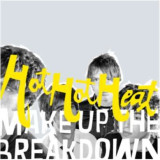
Hot Hot Heat’s classic debut album, ‘Make Up The
Breakdown’, filled with smart, energetic, dancepunk hits, returns to vinyl with this fully remastered
LP edition.
AllMusic called the album “an addictive, densely
packed pop gem that ranks among 2002’s best
albums,” and Pitchfork agreed, including it on their
list of The Best Albums Of 2002.
Following closely on the heels of their critically
acclaimed ‘Knock Knock Knock’ EP, ‘Make Up the
Breakdown’ is Hot Hot Heat's first full length,
recorded with Jack Endino at Vancouver, BC’s
Mushroom Studios (with engineering help from
Chris Walla of Death Cab for Cutie).
SPIN Magazine had this to say about ‘Knock
Knock Knock’: “Some retro new wavers hang
themselves on their own skinny ties. While their
peers lip-synch to Cure 45s, these Canucks take
subtler cues from early ‘80s synth disco. It’s not
new-wave worship, it’s the sound of punk teaching
itself to dance.”
‘Make Up The Breakdown’ delivered on the
promise hinted at on the EP. ‘Hot Hot Heat’ (along
with peers like Radio 4 and The Rapture) blended
angular post-punk twitch with danceable pop,
effectively (and finally) persuading white dopes on
punk to get on the good foot in the early 2000s.
Opaque yellow vinyl.
His debut was recorded in the winter of 2003 with assistance from Texas
chamber pop collective The Earlies, followed by three albums of original material
and one all-covers album. In 2011, a near-fatal car crash paralyzed his arms for
months. He spent his recovery time listening to some demos he'd made before
the crash. The material eventually culminated in the darkest and most intensely
personal collection of songs from him thus far and garnered widespread critical
acclaim. (Micah P. Hinson & The Nothing). Since then, each record is a final
confrontation with himself, each song shakes with danger. I Lie To You, the new
Micah P. Hinson album, comes from five days and five nights of recording in
Irpinia, South Italy, with production by Alessandro Asso Stefana (PJ Harvey, Mike
Patton, Vinicio Capossela). Accompanying Micah and Asso are Raffaele Tiseo's
celestial strings, Zeno De Rossi metaphysic drumming and the double bass
gentleman Greg Cohen. On this new album he sings, with his weathered, husky,
prophet-like voice, eleven tales of love, loss and regret, which once again reveal
his heart as an artist laid bare.
»Follower« is Abrahams’ 6th album for Room 40 and showcases his continuing interest in the ambiguous spaces between music and noise; tonality and atonality; rhythm and texture. All four tracks have piano as a key factor: in one instance, high-pitched and atonal; in another, emotive yet distant as if projected on to a screen. Follower presents the listener with a sound world of colourful juxtapositions, rich orchestration and organically open forms.
On the opening track, bass piano meanders through a wilderness of de-tuned bells and organ swells; a strange sort of festival. Low frequency sighs evenly punctuate, like a pump or a heartbeat. It’s a procession that takes it time as it wanders the terrain, brought to a close with transcendent distortion. On track 2, muscular modal piano surfs among waves of percussion and analogue synthesisers. A buffeting travel.
Tape
By its very nature, intuition is something of which we easily lose sight. Music however, as both bridge and secret technology, connects the natural, artificial, and the earned. It can act as both a reminder of cultures and people gone, while materialising and alchemising from thin air elements not to be found on any periodic tables, and visions no human can see.
»Pin down the dust« is the first meeting of Nighte - Christina Carter (Charalambides) and Mari Maurice (more eaze) - and it feels both automatic and natural. The collaboration stems from a spontaneous decision by the duo to start playing together weekly. “That's how this music was made,” explains Carter, “with gut feeling as the guiding principle. Mari understands the music I've made on such a deep level that playing with her feels so natural.”
The result of this meeting is inarguably some of the most beautiful music to ever emerge from either Carter or Maurice. The structures are spacious, generous, and gentle, with scraped violin strings and seemingly ancient moans strewn sparingly like falling leaves on a picnic blanket. Having begun life as freeform interplays between the duo recorded live at Maurice’s house, overdubs were later added and the material mixed by Maurice alone into finalised pieces.
Maurice’s varied instrumentation litters the background with distant and oneiric miscellanies, from groaned saxophone phrases and heavenly organ drones to glissandi guitars. Carter’s voice sits in the centre, embodying and channelling (mostly) wordless human ecstasy - and at times unease - amidst the allotment of blossoming sounds. Maurice & Carter’s clairvoyant connection notwithstanding, music always offers a portal back to our buried intuitions. “Pin Down The Dust” is both a tribute and a guide to this spontaneity and instinct, putting aside thought in favour of feeling.
Christmas comes early this year as the Backstreet Boys, one of the best-selling bands of all time, announce their highly anticipated Christmas album ‘A Very Backstreet Christmas’ (BMG) will be released on October 14th, 2022.
“We’ve been wanting to do a Christmas album for nearly 30 years now and we’re beyond excited that it’s finally happening,” Howie Dorough shares, “We had such a fun experience putting our BSB twist on some of our favorite Christmas classics and can’t wait to be part of our fans’ holiday season.”
‘A Very Backstreet Christmas’ is the Backstreet Boys’ first ever Christmas album and will feature timeless holiday classics such as “White Christmas”, “Silent Night”, and “Have Yourself A Merry Little Christmas” plus three all new original holiday songs “Christmas In New York,” “Together,” and “Happy Days.” See below for full tracklisting.
The news of the Christmas album comes as the Backstreet Boys are currently on the North American leg of their DNA World Tour. The tour kicked off with four shows at The Colosseum at Caesars Palace in Las Vegas in April and last month, they performed to a sold out crowd at the iconic Hollywood Bowl in Los Angeles. The band has been putting on electrifying performances, playing a high-energy set of over 30 of their greatest hits and best dance moves, giving fans the live experience of a lifetime. See below for remaining tour dates.
Christmas comes early this year as the Backstreet Boys, one of the best-selling bands of all time, announce their highly anticipated Christmas album ‘A Very Backstreet Christmas’ (BMG) will be released on October 14th, 2022.
“We’ve been wanting to do a Christmas album for nearly 30 years now and we’re beyond excited that it’s finally happening,” Howie Dorough shares, “We had such a fun experience putting our BSB twist on some of our favorite Christmas classics and can’t wait to be part of our fans’ holiday season.”
‘A Very Backstreet Christmas’ is the Backstreet Boys’ first ever Christmas album and will feature timeless holiday classics such as “White Christmas”, “Silent Night”, and “Have Yourself A Merry Little Christmas” plus three all new original holiday songs “Christmas In New York,” “Together,” and “Happy Days.” See below for full tracklisting.
The news of the Christmas album comes as the Backstreet Boys are currently on the North American leg of their DNA World Tour. The tour kicked off with four shows at The Colosseum at Caesars Palace in Las Vegas in April and last month, they performed to a sold out crowd at the iconic Hollywood Bowl in Los Angeles. The band has been putting on electrifying performances, playing a high-energy set of over 30 of their greatest hits and best dance moves, giving fans the live experience of a lifetime. See below for remaining tour dates.
- A1: It’s The Most Wonderful Time Of The Year
- A2: Have Yourself A Merry Little Christmas
- A3: Christmas In New York
- A4: I’ll Be Home For Christmas Featuring Jonathan Groff
- A5: Do You Want To Build A Snowman?
- A6: Rockin’ Around The Christmas Tree
- B1: Silent Night
- B2: White Christmas Featuring Darren Criss
- B3: Silver Bells
- B4: Angels We Have Heard On High Featuring Cynthia Erivo
- B5: O Holy Nigh
Ever spent Christmas in New
York City? It’s pure magic…the
department store decorations,
the nip in the air putting color in
the cheeks of eager shoppers, the
general spirit of bonhomie that
pervades the street and subway,
and—if you’re lucky—the silent
beauty of a fresh snowfall reflecting
in the streetlights. Having grown
up in New York, Lea Michele knows
well just how spectacular New York
can be during the holiday season;
and on this, her Top 40 2019
album, the Glee star (currently
playing Fanny Brice in Funny Girl on Broadway)
captured a sleigh-full of that Yuletide joy. The centerpiece of the
record is “Christmas in New York,” an original that, in her words,
“paints this beautiful picture of New York, but it also is really about
what it means to be with your family and friends and engaged in that
holiday spirit.” The rest of the record, which is produced by Glee
producers Alex and Adam Anders, is equally transcendent, featuring
duets with fellow Glee stars Jonathan Groff (the voice of Kristoff
in Frozen) and Darren Criss, plus a showstopping vocal display on
“Angels We Have Heard on High” with Cynthia Erivo. For its vinyl
debut, Christmas in the City comes to you in a gatefold album jacket
containing a printed inner sleeve featuring beautiful shots of Lea
spreading some Christmas cheer. A snow white vinyl pressing limited
to 1500 copies…Merry Christmas!