repressed !
Miraculously rare and seriously obscure killer dubs..., one of the very few hard core seventies dub albums mixed by Errol Brown.
A selection of solid dubs originally recorded by BB Seaton at Duke Reid's legendary Treasure Isle studio and mixed in-house by the Duke's nephew Errol Brown. A radical departure for all concerned this bold dub album was never officially released although a few clandestine copies reputedly did the New York rounds at the time
Suche:clandestine
This is certainly both a mysterious one and an elusive one! Who were Grupo Natureza (Nature Group), and why is this release such a rarity? ‘Pode Acreditar’ was pressed on Som Livre Records in 1981 and it is believed very few copies were released into the commercial market. Those familiar with the productions of Lincoln Olivetti and Robson Jorge will no doubt recognise their hallmark sound here and that this single is ‘probably’ the work of the pair or one member at least. They were a regular in-house production team at Som Livre at the time, and there is a definite resemblance to Adriana’s song ‘Sei la Amor’ from 1978 which Lincoln Olivetti was involved in. Very little information is available about this release. A tantalising comment by Brazilian collector ‘bargainvinyl1’ on the original release’s Discogs page suggests ‘Pode Acreditar’ was a reaction to the Baby Consuelo and Pepeu Gomes pro-marijuana song ‘O Mal o Que Sai da Boca do Homem’, which caused controversy with Brazil’s governing military dictatorship at the time. Though condemning marijuana’s use, the word “baseado” (joint) is mentioned in the song, and this could be the reason behind the release being pulled by the heads of Som Livre and consequently it becoming one of the rarest releases on the label. Whilst its backstory is not crystal clear, it is an undeniable sun drenched, laidback boogie groove with AOR touches by the clandestine group. Pure 80s Riovibes, super-catchy and an earworm that sticks with you throughout the day.
- Next installment in BRAZIL45 Series.
- One of the rarest releases on the Som Livre label.
- Pure 80s laid back boogie grooves.
- A1: Echoes Of A Billion Sun's
- A2: Messages From The Andromeda Galaxy
- A3: Stardust Memories (Among The Stars Dreams And Memories)
- A4: Trailblazer Of The Cosmos (Comet Rider A Leap Of Faith Into The Unknown)
- B1: Seeds Of Light (Hope For Growth And New Beginnings)
- B2: Fragile Eden (Threads Of Emerald Green)
- B3: The Cold Embrace Of Infinity
- B4: The Star Charts We Shared (A Maurizio Requiem)
After a 30-year interstellar silence, the enigmatic producer Alien Signal—pioneering alias of Italian electronic composer Alex Silvi—reemerges with Whispers from Distant Suns, a transcendent odyssey that bridges retro-futurism and modern electronica. Hailed as a magnum opus, this album transcends genre boundaries, captivating ambient purists, downtempo aficionados, and even experimental listeners with its hypnotic fusion of analog warmth and digital precision.
Cosmic Tapestry of Sound
Drawing comparisons to Vangelis’ Antarctica and Alpha—but reimagined through a 21stcentury lens—Whispers from Distant Suns marries nostalgic synth textures with cuttingedge production. Silvi’s mastery of melody shines through in tracks like “Stardust
Memories” and “Fragile Eden” where shimmering arpeggios and celestial pads drift over robotic, glitch-infused drum patterns and sparse, meditative percussion. The result is a paradox: a retro-futuristic soundscape that feels simultaneously ancient and alien, familiar yet unexplored.
Listener Testimonials
Fans and critics have flooded forums with praise:
“An auditory revelation! It’s like Vangelis met Jon Hopkins in a nebula—vintage soul with a futuristic heartbeat.”
“The textures are gorgeously cinematic. Closing your eyes, you’re adrift in a Tarkovsky film scored for the Andromeda galaxy.”
The Vinyl Experience
Pressed on heavyweight vinyl, the album’s physical release amplifies its immersive qualities. The gatefold sleeve, adorned with surrealist astrophotography and metallic
foiling, mirrors the music’s cosmic ethos. Side A leans into Balearic serenity, with sundappled grooves and aquatic synth ripples, while Side B delves into darker, more
experimental terrain—think Aphex Twin’s Selected Ambient Works colliding with the organic rhythms of Jon Hopkins.
Maturity in Motion
This album is a testament to Silvi’s evolution. Tracks like “Seeds Of Light” and “Message from Andromeda Galaxy” showcase his refined ear for dynamics, balancing silence and sound with surgical precision. Vintage drum machines spar with glitches, while field recordings of crashing waves and interstellar static blur the line between Earth and cosmos. The closing track, “The Star Charts We Shared” crescendos into a 6-minute ambient requiem, leaving listeners suspended in a state of weightless awe.
Final Transmission
Whispers from Distant Suns is more than an album—it’s a transcendent odyssey. Spanning time, space, and the artist’s own creative evolution, this immersive work invites listeners to lose themselves in its ebb and flow. Designed for moments both intimate and expansive, its balearic-tinged atmospheres resonate equally through dawnlit Mediterranean terraces or the solitary glow of headphones in darkness. These are compositions that pulse, morph, and haunt the air long after the final note fades. A living soundscape meant to accompany life’s quiet revelations and clandestine joys—a soundtrack to your most personal moments, crafted as what the artist calls ‘private dance music.’
Tailored for the Discerning Listener
Whispers from Distant Suns is designed with the true connoisseur in mind. This album is a must-have for:
Vinyl Collectors & Audiophiles: Those who value the warmth and tactile experience of heavyweight, limited edition pressings
Electronic Ambient and Downtempo Fans: Listeners who appreciate immersive soundscapes that merge retro analog charm with modern digital innovation.
Retro-Futurism Enthusiasts: Fans of pioneering artists like Vangelis, Boards of Canada, and early Warp Records who seek music that bridges nostalgic synth textures with futuristic experimentation.
Experimental Music Explorers: Individuals drawn to sonic narratives that invite deep, contemplative listening—perfect for both introspective moments and immersive listening sessions.
This release is not just an album; it’s a curated experience for those who desire music as a multidimensional art form, merging the vintage allure of analog sound with a contemporary, cosmic vision.
For fans of: Vangelis, Biosphere, Jon Hopkins, early Warp Records.
- A1: A Grave Fall (January)
- A2: Saddle Up
- A3: Was He Good - The Bunny Business
- A4: Bingo Bingo Bingo
- A5: They Say To The Mountain
- A6: Belly Up
- A7: Une Planete
- B1: Twist
- B2: Galveston Beach Pink Dust (April)
- B3: Hell Applaud This Turn!
- B4: A Greater Name Is You
- B5: Run It
- B6: Grab Her Neck And Tell Her I Love Her
On their most explicit venture into music for moving image, Miles Whittaker & Sean Canty rudely fracture piano and vocal recordings by US filmmaker-musician Kristen Pilon in a short-circuiting of style and pattern.
Shredding up definitions of electro-acoustic opera, spectralist chamber musique and concrète rave, Demdike hit square between the eyes/ears of film music vernaculars on a startlingly strong addition to their unique oeuvre, now in its 16th year of elusive psychoacoustic strafes and jump-cuts across putative borders. The 13-part, hour-long album dislodges source material made for the experimental film ‘To Cut and Shoot’, by Kristen Pilon, an NYC-based musician and filmmaker, to farther refract the film’s themes of serendipity and the nature of ghosts and dreams with a flickering flux of sound-imagery and aleatoric weirdness appropriate to her original meditations, but also freely messing with their forms.
Situated just a few miles north of Houston, Cut and Shoot is a relatively insignificant Texas town with an unforgettably bizarre name. Pilon grew up not far from Cut and Shoot, and it's there where she ran into 65-year-old machinist and motorcyclist Robert Lewis Stevenson, better known as Bobbo, who's pictured on the album's cover. The meeting occurred a few months after Pilon recorded her improvisations on piano, strings and voice in the basement cellar of the Halle in Manchester, with Bobbo providing the necessary narrative heft the trio needed to inspire an experimental film and its accompanying soundtrack.
Responding to Kristen’s initial piano and operatic vocal recordings, Demdike return a volley of discrete parts tilting from typically cantankerous mayhem to quieter, more clandestine buzzes sliced with crazed interstices of the imagination, all marbled with the plasmic contrails of the paranormal which have long been peculiar to their work. With a poetic flair reflecting Pilon’s own phrasing and melding of mediums, Demdike unfold and expand her melodic fragments into temporal mazes, variously resembling the most messed-up ends of The Caretaker in ‘A Grave Fall (January)’, but also liable to skew into buckshot club turbulence, as with ‘Belly Up’, or the bittersweet bruk contortions of ‘Twist’.
The storyline wickedly frays and loops into itself with a non-linearity that recalls the mid-to-latter stages of Lynch’s ‘Mulholland Drive’ or waking from a sweaty fever dream only to pitch back into its thorny bush of ghosts, often within the space of one track. It’s testament to the ever-tighter binds of Demdike’s symbiotic vision that the results nevertheless hold a thread of logic that weaves in everything from their Jon Collin jams to reams of mixes and Gruppo edits with an unresolved, open-ended quality that still keeps us on our toes, perhaps more so than ever here.
- A1: 200.000.000 Lire
- A2: Pickled Lotus Root (Feat. Rlx & Daniel Son)
- A3: You See My Face?
- A4: Listen (Feat. Crimeapple)
- A5: Pistola Giocattolo
- A6: What Could I Say? (Feat. Primo Profit)
- A7: Stovetop
- A8: Pillow Talk (Feat. Elcamino)
- B1: La Giovane Vedova
- B2: L'amour (Feat. Clovis Ochin)
- B3: Taking Off The Mask
- B4: After The Gold
- B5: Fxck You (Feat. Lph Crack & Lph Stat)
- B6: Step To Him
- B7: Career Criminal (Feat. Shaykh Hanif)
- B8: Con I Soldi In Testa
Enter the clandestine world of "No Face, No Case", the latest opus from Boston hip-hop producer MichaelAngelo, out this in Friday March 22nd on all digital platforms!
This project draws inspiration from the underworld and its enigmatic vibe, infusing every track with an irresistible aura of mystery and grit. Even though Michaelangelo production take cen-ter stage, he enlists a lineup of top-tier lyricists to tell a story of its own, including CRIMEAPPLE, Primo Profit, RLX, Daniel Son, Shaykh Hanif, Elcamino, Clovis Ochin, LPH Crack and LPH Stat. "No Face, No Case" isn't just an album – it's an experience and a visceral journey into the heart of the underworld crafted by one of the most interesting pro-ducers around these days!
In the eternal city of Rome, where the whispers of cryptic ecclesiastical hierarchies still linger, FELDSPAR emerges as a musical enigma, delving into the shadows to unravel, with a certain dose of irony and creativity, the clandestine threads of power. Named after a mineral purportedly worn by a covert Roman clergy, this entity consists of six eclectic souls working tirelessly to expose the elusive puppeteers who have shaped the lives of millions of people since the beginning of time. Formed in late 2023 and based just a stone's throw from the Vatican, the Godless folk two blocks from the Pope, FELDSPAR's journey begins with the legendary Andrew Mecoli, founder of the iconic Growing Concern, Mecoli's guitar riffs echo the peculiar spirit of Italian hardcore. Joining him is Stefano Casanica, a prolific songwriter and producer, whose musical odyssey spans decades with undertakings in Undertakers, Craiving, Crude, and collaborations that transcend genres. Casanica's production magic is immortalized in Noyz Narcos cult classic 'Non dormire', a cornerstone of Italian hardcore rap with millions of streamings so far. Old City, New Ruins," the debut album of Feldspar, takes its title from Rome, the city where the band is based. It depicts the contemporary ruins of the capital, yet it's merely a pretext to expose the complexities of everyday life common to Western societies and their major cities, foremost among them.
Ltd edition of 50 hand numbered cassettes from the magnetic north, containing Scopeotaku’s next incarnation of DIY tape manoeuvres.
Sounds for the mythology of a dystopian society that is tired of being spoon fed the common denominator, where police states and clandestine government activities are the norm.
This, the fourth, album from scopeotaku bridges the gap between 4040 and They Came From The Sea. Modern electronics with a experimental dub mentality.
2024 repress
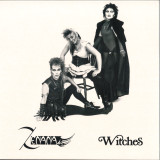
Rush Hour’s RSS series excels in unearthing buried treasure, offering a second chance for artists and releases that have long been overlooked. That’s certainly the case with ‘Witches’, the superb sole single by British 1980s wave trio Zenana.
Originally released on seven-inch by the tiny PRM label in 1986, ‘Witches’ was the product of a sister-brother songwriting team whose music was mostly recorded in the front room of a terraced house in Nanpean, a small industrial village in Cornwall, England’s most south-westerly county. While the single was infectious, impeccably produced and dancefloor-ready, it sold in limited quantities at the time.
Zenana’s story can be traced back to the early 1980s, when singer-songwriter Anita Tedder founded the all-female trio as a vehicle for her musical ambitions. To bring her songs to life, she joined voices with her brother Mike, an early adopter of electronic music who had built a studio – nicknamed MFR, short for ‘Mike’s Front Room’ – in his Cornish home.
Countless Zenana tracks were recorded at ‘MFR’ between 1984 and ’86, with the resultant demo cassette securing the band a management contract, a slew of live bookings, a video shoot and even a television appearance. Buoyed by this underground success, they headed to the remote Sawmills Studio in Cornwall – famously only accessible by boat – to re-record ‘Witches’, a song inspired by local folk tales of witches gathering near Mike’s home.
While this version of ‘Witches’ failed to make an impact at the time, it has become something of a cult classic following its’ rediscovery by crate digger Kiernan Abbott – and subsequent championing by other dusty-fingered DJs including Antal, Skyrager, Trevor Jackson and Luke Una – in early 2023. The buzz inspired Zenana to perform live again for the first time in decades, with the story of their surprise comeback being covered by British media outlets including the BBC and (more surprisingly) the Daily Mail.
Now presented in re-mastered form, ‘Witches’ is a genuinely slept-on gem. Propelled forwards by punchy drum machine beats, a killer synth bassline and fizzing keyboard sounds, the song benefits greatly from strong vocals and an extra-percussive middle eight layered with vocalisations, cosmic spoken word sections and swirling noises.
It comes backed by a brand-new extended ‘spell of love’ courtesy of Bristol duo Bedmo Disco, AKA music journalist Matt Anniss (author of Join The Future: Bleep Techno and the Birth of British Bass Music) and DJ/production partner Gareth Morgan. Anniss is a long-time friend of Mike and Anita Tedder who has fond memories of visiting Mike’s home studio with his family around the time that ‘Witches’ was recorded.
Working from Zenana’s original MFR eight-track recording (tapes of the single version were lost years ago), Anniss and Morgan have turned in the extended ‘dance mix’ the track never had first time around. More atmospheric, clandestine and dancefloor-focused, it offers authentic nods to New York proto-house, mid-80s Shep Pettibone dubs, and the pioneering synth-pop productions and dub mixes of Factory Records regular Martin Rushent.
- A1: Aktenzeichen Xy... Ungelöst - Zdf Studio-Big-Band
- A2: Colluding Crooks - Ernst-August Quelle
- A3: Recent Thieveries - Ernst-August Quelle
- A4: Previously Convicted - Ernst-August Quelle
- A5: Eavesdropping - Ernst-August Quelle
- A6: A Bold Venture - Ernst-August Quelle
- B1: Chief Superintendent - Ernst-August Quelle
- B2: Operating In The Shadows - Ernst-August Quelle
- B3: Daylight Robbery - Ernst-August Quelle
- B4: Clandestine Dealings - Ernst-August Quelle
- B5: Wait And What - Ernst-August Quelle
- B6: Downward Spiral - Ernst-August Quelle
- B7: Observing The Observer - Ernst-August Quelle
"Den Bildschirm zur Verbrechensbekämpfung einzusetzen, das, meine Damen und Herren, ist der Sinn unserer neuen Sendereihe Aktenzeichen XY Ungelöst, die ich Ihnen heute vorstellen möchte." Mit diesen Worten begrüßte Eduard Zimmermann am 20. Oktober 1967 die Zuschauer des Zweiten Deutschen Fernsehens. Es war die erste Ausgabe eines neuen Sendeformats das, so weiß man heute, (Fernseh-)Geschichte schreiben sollte.
Die Idee zu diesem Projekt kam der Tramp Mannschaft, wie so oft, eher zufällig in den Sinn. Es war Ende der 1980er Jahre, als wir zum ersten Mal Eduard Zimmermann am Bildschirm bestaunten. Damals war offensichtlich nicht die Musik ausschlaggebend, sondern das Gesamtpaket XY. Zum einen der sachliche Moderationsstil des Protagonisten, zum anderen die spannenden, jedoch immer behutsam produzierten Filmbeiträge von Kurt Grimm. Die XY Fan-Gemeinde ist sich einig, dass durch seine außergewöhnliche Regiearbeit der filmischen Rekonstruktion der Fälle maßgeblich zum Erfolg von XY beigetragen hat. Des Weiteren waren es die Sprecher der Filmbeiträge, allen voran Wolfgang Grönebaum, der zwischen 1967-1989 mit seiner markanten Stimme des öfteren für Gänsehautmomente bei den Zuschauern sorgte. All das würde aber ohne die passende Begleitmusik nicht funktionieren. Und so ist das letzte Puzzlestück welches XY den Kultstatus einbrachte die Kompositionen die für die Filmbeiträge benutzt wurden.
Nun fndet sich auf dieser (Bio*-)Schallplatte aber keineswegs Musik von XY aus den 1980er Jahren. Wie ihr wisst schlägt das Tramp Herz, bis auf wenige Ausnahmen, für die Musik der '60er und '70er. Als wir vor einigen Jahren auf XY-Folgen der Anfangszeit stießen war schnell klar: da muss eine Schallplatte her! Und genau diese kann man nun als Resultat unserer Leidenschaft in den Händen halten. Längst überfällig möchte man meinen. Ein besonderer Dank geht hierbei an den Komponisten Ernst-August Quelle aus dessen Hand alle Titel auf diesem Album stammen.
Eduard Zimmermann hat mit Aktenzeichen XY... Ungelöst Fernsehgeschichte geschrieben. Wir, die Tramp Crew, ist mehr als stolz ihm und seinen Fans mit dieser Schallplatte ein Denkmal gesetzt zu haben. Gern geschehen.
*Die LP stellt die erstmalige Veröffentlichung aller Titel auf Tonträger dar und erscheint in einer limitierten, handnummerierten Auflage von 500 Stück, gepresst auf BIO-VINYL (Ersatz von Erdöl in S-PVC durch Recycling von u.a. Altspeiseöl =>100% CO2-Einsparung), mit einem Text von Peter Hohl, der zwischen 1967 und 1979 engster Mitarbeiter Eduard Zimmermanns war.
UVB-76 Music presents Mesmerism a new 2 x 12'' LP produced by Lucid Dreams aka Overlook This release will transport listeners into a realm of hypnotic beats andatmospheric soundscapes, showcasing an experimental take on Overlook's signature style.
"Let's dream of underground raves or enigmatic gatherings of the clandestine, where your mind shall wage ethereal battles against soulless algorithms amidst the nocturnal dance, traversing a labyrinth of dystopian dreams. Dance the night away, dance the night away."
Strange times are here.
Germany’s progressive death metal masters OBSCURA complete their long-running, four-album conceptual circle with the release of Diluvium (defined as a great oceanic flood), their most evocative, diverse and vibrant release to date. Recorded with longtime producer V. Santura (Triptykon, Pestilence) at Woodshed Studios in Landshut, Germany, Diluvium is a stunning achievement for the illustrious quartet and a landmark release for progressive metal as a whole. Complete with all the band's signature elements plus groundbreaking polyrhythms, dramatic songwriting, and jaw-dropping virtuosity, OBSCURA raise the bar once again with an album that will go down in the annals of metal history as one of the most astonishing performances the genre has to offer.
- 1: Main Theme (Feat. Raphaêl Minfray, Martin Drozd & Franck Boutin-Albrand)
- 2: Istanbul Station (Feat. Franck Boutin-Albrand)
- 3: Cabin Secrets
- 4: Midnight Intrigue
- 5: Twisted Alibis (Feat. Franck Boutin-Albrand)
- 6: Departure
- 7: Jazz Quartet (Feat. Nora Kamm)
- 8: Hidden Truth (Feat. Franck Boutin-Albrand)
- 9: The Detective’s Dilemma (Feat. Nora Kamm)
- 10: Clandestine Meetings (Feat. Martin Drozd)
A crime is committed on board the Orient-Express. During the journey, Hercule Poirot finds himself surrounded by a group of singular characters, all suspects, each with their own secrets and motivations, as he attempts to solve the murder that has just taken place. The soundtrack was composed by Jean-Luc Briançon (Abigoba, Kurtz Mindfields), assisted by Roman Perreton and featuring a host of guests from Nuage7 Studio. This soundtrack is coloured with mystery, suspense and cinematic atmospheres to take you irresistibly on board this Orient Express to the end of the journey ...
Incredible jazz / prog / folk score to groundbreaking tattoo film by maverick filmmaker. Unreleased until now, so don’t go saying it’s a reissue because it isn’t, but I’m sure some people will because they always do.
John Samson (1946 - 2004) was a truly great documentary maker. He must be as I’ve been obsessed with his work for many years. Educated first at Glasgow School Of Art (circa 1963) and then finally in the art of film making at The National Film And Television School in Beaconsfield - he headed there in its opening year of 1971 having made a short film that got him a scholarship.
It was at the NFTS that Samson met Mike Wallington, who was to become his right hand man and eventual producer; together as a quite brilliant team they made a handful of inspiring, entertaining and hugely prescient films about important, overlooked, unseen and marginal fringes in society. Tattoo (1975) Exploring the rather clandestine world of tattooing in the UK. Dressing For Pleasure (1977) Exploring the rather clandestine world of festish in the UK. Brittania (1979) A film about railway enthusiasts and a steam train restoration.
Arrows (1979) The life of dart player Eric Bristow. Drag Ball (1981) An unreleased film about the annual Porchester Hall Drag Ball. The Skin Horse (1983) BAFTA winning film about The Outsiders Club, a dating agency for disabled people. The subject matter in all films was always unusual for the time, and Samson managed to navigate his way with compassion, interest and subtlety, immersing himself in the chosen scene and producing moving, fascinating and sometimes darkly amusing situations. His documentaries also do not rely on traditional voiceovers, with stories, facts and narrative threads being dictated by the subjects.
I’ve tried for a long time to find the music for a couple of his early films (there was actually an original 7” for Arrows) - so far this is the only unreleased soundtrack I have found. This one was written by Steve Jolliffe, who met Samson at the NFTS. Joliffe was the resident composer and had a room at the college complex where he could work on scores for the fledgling film makers. Jolliffe was and still is a multi-instrumentalist and prolific composer who had met Edgar Froese at the Berlin Konservatorium in the late 1960s and played in an early incarnation of Tangerine Dream. He toured with blues rock outfit Steamhammer, before hanging out at the NFTS, making this recording (and many others) and eventually rejoining Tangerine Dream in the late 1970s. Jolliffe still writes, records and releases today and once i had made contact with him we traced the original Tattoo master tape to a box at his brother’s house. Musically it’s charming, slightly folky, a touch baroque, there’s a whiff of prog too, and it perfectly suited this early documentary about the art and desire of tattoos. I only wish it was longer. But the film is only 16 minutes long. Seek it out if you can. Try and find all the Samson films, they really are a joy.
As well as featuring intimate footage of tattooed people, the film also includes a rare and very early interview with Alan Oversby (better known as Mr Sebastian), a seminal character in the development of tattoos and body modifications worldwide - it was he who eventually was to tattoo and pierce Genesis P-Orridge.
The images for this vinyl release were all found in Mike Wallington’s Tattoo documentary research folder from 1974, and were photos sent in to Mike and John by people who wanted to feature in the film. Most answered an advert in Time Out, and others included people from my home town of Aldershot where tattooist Bill Skuse and his wife, Rusty (the most tattooed woman in Britain at the time, and featured in the film) were based. His parlour was situated at the back of the arcade where we all used to lose all our pocket money in the slot machines.
The Musicians:
Steve Jolliffe - keyboards, flute, sax Geoff Jolliffe - bass guitar Julian Furniss - guitar Mick Kirby - drums
Back in 2018, two mysterious twelve-inch singles appeared in underground record sthops. Credited to Blotter Trax, a previously unknown outfit who cherished “faceless” anonymity, the pleasingly twisted and mind-altering music on show was a mutant form of electronic psychedelia. The included tracks were variously informed by analogue techno, acid, electro and minimal, but inhabited their own clandestine sonic space. These tracks were, we later discovered, lightly edited “straight to tape” jams, crafted on the fly by their creators in one of Berlin’s most admired studios.
By the time Blotter Trax delivered their follow-up on Clone offshoot Frustrated Funk a year later, the secret was out: the project was in fact a collaboration between two storied artists, techno titan Magda – a DJ/producer who should need little introduction – and serial underground aggravator (and man of many aliases) Jay Ahern, sometime Hauntologists member and acid techno royalty thanks to years spent releasing similarly shadowy EPs as T.B Arthur.
In the years that followed, and before the COVID-19 pandemic grounded them in Berlin, the pair took their incendiary, modular-driven live show to esteemed clubland institutions (Fabric included), on an acclaimed tour of Japan, and onto the stages of festivals across Europe.
Four years on from that appearance on Frustrated Funk, Blotter Trax are back in updated and expanded form. Now a trio thanks to the addition of bassist Hannes Strobl, the band is set to release their far-sighted, funk-fuelled debut album, Super Conductor – a pulsating, thrill-in-minute ride includes contributions from a swathe of notable guests (Nina Hynes, Ilhem Khodja and David Moss provided vocals, Shigeru Tanabu played guitar, Matthew Styles mixed the set and old friend John Tejada mastered it).
While rooted in electro and acid, the album is impressively low-slung, stylish and funky, with nods towards Blotter Trax’s mutual love of Arthur Russell, early ‘80s NYC downtown disco, leftfield new-wave pop and flash-fried punk-funk. Released by JD Twitch’s Optimo Music imprint, it charts the ongoing dancefloor evolution of a band whose days of mystery and mischief are now a distant memory.
Taken from Skinshape’s ‘Nostalgia’ album. For fans of Khruangbin, El Michels Affair, Tame Impala and Bonobo.
‘Turn Away’ is a song in two parts” explains Skinshape aka Will Dorey. “The front section is intended to be classic songwriter style, with a focus on the chord progression and lyrics. The second half perhaps represents a curious epiphany, a realisation of something profound”. As the plot develops, Dorey’s clandestine charisma creates an alchemic, and most gentlemanly, cleansing of the soul. From his director’s chair, Dorey expands that “following the theme of film music, ‘Dreams of Panama’ could be an exotic scene in the movie, featuring a slight Latin twist and an epic introduction with full choir”. The track also makes the most of an opportunity to use a solo female vocal as the main melody.
'Malombo music is an indigenous kind of music. If you listen to it, you can feel that it can heal you, if you’ve got something wrong. It’s healing music.'
Lucky Ranku
"Lucas ‘Lucky’ Madumetja Ranku (1941-2016) was one of the greatest African guitarists of his generation. He first made his name with the Malombo Jazz Makers – the successor group to the legendary Malombo Jazzmen, formed in Mamelodi township by guitarist Philip Tabane, drummer Julian Bahula and flautist Abbey Cindi. When Tabane left the Jazzmen in 1965, Bahula and Cindi called on Lucky to replace him, and the Malombo Jazz Makers were born. Building on the popularity and success of the original Malombo Jazzmen, the Malombo Jazz Makers become immensely popular, touring widely, winning numerous jazz competitions, and recording two successful albums for the Gallo label.
The deep and hypnotic Down Lucky’s Way was their third album. Recorded in 1969, it was the first Malombo Jazz Makers album to feature additional instruments, and the first to feature Abbey Cindi on soprano saxophone as well as flute. But more than anything else, Down Lucky’s Way is a transfixing showcase for Lucky Ranku’s sui generis guitar virtuosity. Quite different from their previous recordings, the album shifted the Jazz Makers’ sound toward hypnotic, extended compositions, layered by organ bass and guitar overdubs. Of all the Malombo Jazz Makers recordings, Down Lucky’s Way is the deepest of mood, and the richest of vision.
However, through one of the erasures that are ubiquitous in South African musical history under apartheid, it seems that the record may not ever have been properly issued. Original copies are outrageously rare – only a few are known among collectors. When we asked Lucky about the album, he was unaware it had ever been released, and had never seen a copy. Perhaps it was pulled; perhaps it was pulped; perhaps Gallo simply took their eye off the ball. Nobody knows, but it is not impossible that the apartheid authorities were involved, for by 1969, the Malombo Jazz Makers were well known to them.
Julian Bahula’s introduction of malopo drums to the music of the original Malombo Jazzmen was a moment of crucial political and cultural radicalism for South African jazz. Traditionally used by BaPedi people for healing, the malopo drums of Malombo music re-centered jazz
around indigenous sounds and culture, and over the next decade, the Malombo Jazz Makers became deeply involved in political opposition to apartheid. Their recovery of indigenous sounds made them the musical standard bearer for the Black Consciousness movement, and they toured South Africa clandestinely with the writer and anti-apartheid activist Steve Biko. They also broke apartheid laws by playing with the white rock group Freedom’s Children, sometimes appearing on stage in masks or made up with UV paint to avoid detection by the authorities; they appeared regularly at the rule-bending Free People’s Concerts organized by David Marks, where Marks’ clever exploitation of a loophole – mixed audiences were prohibited from attending ticketed concerts where anyone was being paid, but the law said nothing about private functions played by artists for free – meant people could come together in defiance of apartheid laws. The notorious Special Branch would raid their concerts; Lucky remembered police storming an auditorium, throwing smoke bombs.
Eventually the political situation became too dangerous, and the band were being actively sought by the police. Though Abbey Cindi remained in South Africa, both Julian Bahula and Lucky Ranku went into political exile in the UK, where Bahula founded the group Jabula with Lucky and former members of Cymande, Steve Scipio and Michael ‘Bami’ Rose. With Jabula, Julian and Lucky worked tirelessly for the anti-apartheid movement, raising funds and awareness all over Europe and in the US. They played with Dudu Pukwana’s Spear in the joint formation Jabula-Spear, and worked together in Bahula’s Jazz Afrika formation, and Bahula organized the first Concert for Mandela in 1984 (it was Jabula that supplied the chorus for The Special A.K.A.’s hit single ‘Nelson Mandela’). Lucky also played and recorded with Chris McGregor’s South African Exiles Thunderbolt group. After the fall of apartheid, they both remained living and working in the UK. In 2012 the South African government awarded Julian Bahula the Gold Order of Ikhamanga for his cultural work during the struggle against apartheid.
Until his death in 2016, Lucky continued to play with countless groups and musicians. putting together the band Township Express with Pinise Saul, and leading his own African Jazz Allstars. The influence of his playing on the international perception of South African township music was immense, and he was held in the highest regard by his peers – ‘Lucky was a guitarist who could bring any house down’, said Michael ‘Bami’ Rose.
But despite his continuous presence on the UK live circuit over four decades, Lucky Ranku never recorded an album as leader. And so as well as restoring an important lost piece of South African musical heritage, Down Lucky’s Way is a precious opportunity to hear one of Africa’s foremost guitarists stretching out, in focus and in his element."
First issue since 1969 of the Malombo Jazz Maker’s unknown third album.
Liner notes featuring interviews with Julian Bahula and Lucky Ranku.
Fully licensed from Julian Bahula.
- A1: Mindfield Saturnalia 4
- A2: Apostolis Clock Croc (House Quickly Mix)
- B1: F U.s.e. F.u.2 (Re-Edit)
- B2: Peyote Alcatraz
- B3: Psyche The Saint Became A Lush
- C1: Man With No Name From Within
- C2: Zen Solar Data (Extended Tribal Mix)
- C3: Francesco Farfa & Joy Kitikonti Beat Control (Siena Mix I)
- D1: Public Relation Eighty Eight (Instrumental)
- D2: Ghostdance Ghostbeat (New Beat Mix)
- D3: Chris & Cosey Exotika (12” Mix)
Part 2[29,87 €]
Sound Metaphors and Transmigration explore the early underground Goa party scene with a 2x12” compilation.
A collection of Techno, Italian-House, New Beat and Post Punk all heard on the same dancefloors amongst Goa's tropical beaches during the late 80's and early 90's. What is now understood as Goa Trance was once preceded by an amalgamation of many different genres smuggled to Goa in tape format by true music devotees that filtered through all that was being produced in the West shaping a unique dancefloor sound that could only pertain to the “Special Goa Music” genre. Sound Metaphors teams up with Transmigration and journalist, DJ and first hand witness of the scene at hand - Ray Castle – to present a meticulous body of research into the sound signature of that unique scene. 11 highly sought after tracks presented in a double LP gatefold format with an A1 poster insert and insightful liner notes by Ray Castle. A tracklist so lush, your discogs wantlists will forever be grateful – buy on sight.
“Everything about the Goa counterculture was illicit. The music from vinyl was bought with black market money and bootlegged onto cassettes and backpacked to India. Collectors and DJs would swap, dub and edit it, for free parties. The music was disseminated tape-to-tape by a clandestine traveller clique of ragtag party makers. This highly coveted ‘Special Goa Music’ contained a vibe—a brain-infesting vibe—capable of triggering apotheosis-like states for dosed up dancefloors, only possible for sunrise Goa parties in nature, in India.” - Ray Castle
BODYXVIII delivers his debut release on Southern Lights in the form of the “Fields” EP, straddling the fringes of ambient, experimental and linear techno. The A-side features the pulsating waves of “An Ocean of Signals” and the hypnotic and undulating atmosphere of “Swiss Army Knife in The Wet Grass”. The B-side features “Umbra”, carrying an understated energy and tension and closing with the menacing ambience of “Clearing (Clandestine I)”.
Puckered with ruggedly pointillist swagger and evoking discrete worlds hidden in plain sight, »Traditional Music of South London« is a riveting masterwork by experimental music’s distinctive and cherished modernist, Dale Cornish. It is a concrète grimoire of recent and ancient folklore that binds Dale’s music, lyrics, and background into a strikingly personal synecdoche of South London.
Since emerging as part of London’s shouty electroclash movement in the mid ‘00s, and assuming the role of deconstructed rave pioneer and poet in 2011, Dale Cornish has been (lo)key to new movements in electronic music’s underbelly for the best part of this century. His 12th LP, proper, »Traditional Music of South London« is Dale’s definitive record; a confident testament to artistic maturity that comes with doing your thing against the grain over decades, and a potent expansion on ideas chiselled during his run of releases with the inspirational (now sadly defunct) label, Entr’acte, who helped foster Dale’s explorations of concrète rave and industrial pop tropes during the ‘10s.
On one level the album reads as a deep topography or psychosexual-geography of London’s lost gay club haunts, with the meat-motoring deep house of ‘Great Storm’ recalling DJ Sprinkles taking Loefah to the darkroom in its concrète carved and flesh trembling 8:08 perfection; or more literally in »Foxhole«, with Dale’s deliciously Croydon-toned accent describing urban gay mythologies with pungent lyrics about rotten fox cadavers synced to drily ricocheting hand claps, while the tight swinge of his “requiem for all the dead gay venues” in the gut-level bass of »Hoist Crash Fort«, and the playful evocation of “internecine conflict within the gays - live!” on »Palace Intrigue« just utterly slap like nothing else.
Yet it’s in the LP’s slower, bloozier and folky vocal bits that Dale’s dare- to-differ character comes into its own. The clandestine skulk of ‘My Geography’ portrays him like a modern Jandek traversing London’s brutalist- meets-semi rural meridian, and at its gooier core flashes of folk-classical brilliance such as the groggy ‘Norman Lewis’ give way to the writhing foley orgy of »Crowd Scene«, while the naked, one-take end of szn paean of »SCY BFR HNH« and slurred, Tricky-esque confessional »Shout Outs« consolidate and temper the conflicting aspects of his persona with a deep burning pathos in the LP’s fading phosphorescence.
In an era of overproduction and imitation-not-innovation, Dale’s strikingly original, sensually brutalist industro-folk-dance-pop critically cocks a snook at conventional, careerist music while embracing its heartical truths. An extremely personal record certain to resonate with those who believe art in music still matters.