The long-awaited reissue of Toba makes it clear, once and for all, to fans and industry insiders that disco music produced in Italy between the late 70s and early 80s had no chance of success. What was disparagingly called "spaghetti disco", considered a poor imitation of real American disco music, only good for Japanese cartoons. This was the main reason that prompted Italians to record their songs abroad, as Fratelli La Bionda with their pseudonym D.D.Sound in Munich. Luigi Figini, with "Supercool" and "Percussion Sundance" by Edo Martin and Pino Santapaga (the same as "Step By Step" by Koxo), claimed that Kash was a one-off Swedish disco project, a lie that came to light when an Italian test pressing from the previous year, made by GDB, was posted !!! Amin-Peck followed the trend of passing off their songs as foreign music on the intuition of their Roman producers. So ''Love Disgrace'' was released on 7'' by a label called Connection, which never really existed, created for the purpose by Giancarlo Meo, confident that this would bring success to the Bolognese duo who were already creating 'proto Italo-Disco tracks' with a new-wave trend. To make the whole operation seem real, the London agency Ellie Jay Ltd. was involved, contacting Andy Fernbach of Jacobs Studios Ltd. The vinyl was also produced in the UK, otherwise the deception would have been discovered, then imported to Italy by Best Record. Italo-Disco was officially born after this, in 1982, not before! Everything makes sense now ! Real events that actually happened and purely invented names and anecdotes. Just think, even the image of Tony Balch used for the cover of Toba was taken from Grand Theft's 1978 album "Have You Seen This Band?" and reproduced on the new redesigned cover, as were the heads of the other musicians. The idea of a real band called Toba had finally come to fruition and would lead to a second sensational success the following year. Now it all makes sense! Facts and anecdotes that really happened and names and circumstances that are purely fictional. Finally, everything adds up! Real things and invented names of musicians and collaborators. It's important to clarify what we've said above, but we haven't talked about "Make Your Mind Up" and "Don't Take It" and the two masterful remixes performed by Dave Mathmos. In short: with the original versions we'll make Italo-Disco purists happy, with the remix versions we'll please new younger followers with more modern sounds and versions more in line with today's tastes and trends.
Search:clear
- A1: Let It Hurt – 2:24
- A2: Dub, It Hurt – 0:54
- A3: My Moon – 3:05
- A4: Hang On Feat. Benji. – 3:32
- A5: Call Me Back Feat. Sadboi And Kabusa Oriental Choir – 2:56
- A6: Let Go – 3:02
- A7: Interlude 1 – 0:28
- B1: I Am What I Am What I Am – 2:39
- B2: I Dream, I Rush – 2:21
- B3: Interlude 2 – 0:53
- B4: Room333 Feat. Zacari – 3:01
- B5: Sodom And Gomorrah Feat. 36Birds – 3:34
* Edition of 500 colored vinyl (transparent purple)
* Artwork developed in collaboration with Paris-based visual artist Caroline Ventura
* Including download code
i got a song, it’s gonna make us millions is the highly anticipated new album by Sirens Of Lesbos, led by sisters Jasmina and Nabyla Serag. The dynamic release is a vibrant showcase of the group's expansive musical range, blending R’n’B/Soul, Afrobeats, electronic music, and lo-fi indie pop into a rich, genre-defying experience. With its eclectic sound and captivating melodies, the album solidifies Sirens Of Lesbos as a standout force in modern music.
Featuring on the album are the singles “Room 333” feat. Kendrick-Lamar-collaborator Zacari, a futuristic R’n’B song with progressive club beats; the epic “Call Me Back” (feat. Drake-co-signed rapper SadBoi and the Kabusa Oriental Choir); and dub-infused reggae song “Let It Hurt”, plus new song “My Moon”, which draws inspiration from artists like Bruce Hornsby, Justin Vernon, and Jai Paul. Sirens Of Lesbos have earned widespread acclaim from outlets like CLASH, COLORS, Dork, Tsugi and Earmilk, with BBC 1Xtra’s CassKidd calling the collective “magical.”
As Black women living in the diaspora, Jasmina and Nabyla navigate the intersection of their parents’ collectivist North-East African culture and the Western emphasis on individuality. Questions of identity have always been central to their journey. While society often demands clear-cut definitions, the sisters have come to embrace their multifaceted identities: “We have always been many things.”
Both artists are deeply rooted in the technical and philosophical dimensions of sound. Jasmina recently completed her Sound Arts degree, and Nabyla is now finishing hers. Their academic pursuits have included creating abstract sound installations in exhibition spaces. However, their focus for the foreseeable future is on elevating the Sirens Of Lesbos project, writing and producing standout indie pop tracks, performing live, and delivering unforgettable experiences for their audiences.
—
The vinyl version of i got a song, it’s gonna make us millions is published by Präsens Editionen, a Switzerland-based publishing house and music label. Founded in 2011 in the process of launching zweikommasieben Magazin, Präsens Editionen has since released music on vinyl, cassette, CD, and digital formats—alongside magazines, books, and other printed matter. Recent audio releases include works by Martina Lussi, spalarnia, Magda Drozd, Anom Vitruv, Belia Winnewisser, and Red On, among others.
- 1: Gerrymander
- 2: The Rope
- 3: Scapegoat
- 4: Foreign Bodies
- 5: (La Guerra) Inhumane
- 6: Killing For Company
- 7: Icons Of Hypcrisy
- 8: Promise Of Remembrance
- 9: Disciples Anonymous
Pariah’s cult debut re-issued! “The Kindred” brings you pure old school Thrash Metal fury! Satan changed their name to Pariah in 1988-1989. Satan’s evolution for the time being came to an end here with this band, Pariah, in 1988. What Satan were going for with “Suspended Sentence”, could definitely be seen as a hint to the direction they would take as Pariah. That raspy, ill-tempered, aggressive Michael Jackson (indeed) is still here on vocals and these guys really wanted to tear things apart with this album. The main lineup here is entirely the same from Satan and Blind Fury (vocalists aside).
Simply put, one could easily say they took “Suspended Sentence”’s interesting idea of “NWOBHM meets Thrash Metal” and basically focused on being even more aggressive this time. We might be throwing out the obvious here again, but if you are new to Pariah or perhaps Satan, familiarize yourself with the fact that guitarists Russ Tippins and Steve Ramsey are truly an insane duo. For the most part with “The Kindred” their guitar work is pretty thrashy and extremely melodic. Then out of nowhere those classic NWOBHM solo’s, dual harmonies, and majestic melodies come into play all over the place and they manage to make it work incredibly well in between the thrashy antics. The production and mix seems to be an improvement over “Suspended Sentence” and here the guitars tend to have more of a sharper edge, Jackson’s vocals are constantly in the clear and never overpowered by anything else, and overall there is a tougher vibe surrounding this.
Everything here is pretty damn heavy. While Tippins and Ramsey are really out there in a realm of their own, there’s great performances again by Graeme English on bass and Sean Taylor on drums. Overall you’ve got a whole package of virtuous musicians here that really mastered the beauty of balance. All in all “The Kindred” goes all the way with every track being fast and aggressive. Satan and Pariah are all typically made up of the same core members and definitely created some timeless and unique Heavy Metal.
Refined, trippy, and beautifully hypnotic. PIRAT005 marks a deep and elegant statement from Pirat Records and delivers exactly the kind of timeless, hypnotic minimalism that turns heads on first listen and stays in the bag for years. A record built on restraint, texture, and atmosphere: rolling, seductive, and deeply functional for long sets and late hours. With a clear nod to that unmistakable Perlon-inspired aesthetic, Venedig moves with precision, subtle tension, and groove-driven detail, stripped back, but full of character. The collaboration spirit on this release gives it a special depth, while the overall sound remains focused, classy, and unmistakably underground.
2025 Reissue.
Münchenbuchsee, a suburb of Bern, Switzerland. Stephan Eicher is the youngest of three children. His father, a radio and TV repairman, is also a jazz violinist and a sound tinkerer in his spare time. In the family home's converted fallout shelter turned studio, Mr. Eicher experiments with homemade sequencers, tortures handcrafted drum machines, and abuses reel-to-reel tape recorders—all under the fascinated gaze of young Stephan.
The boy quickly develops a musical curiosity, exploring sound through various experiments and wanderings. Alongside his younger brother Martin, Stephan crafts audio plays on a homemade multi-track recorder (essentially several cassette decks hooked together!), which they write, record, add sound effects to, and perform for family and friends. Just a couple of nice kids, really...
Then comes 1972, and Lou Reed's Transformer album changes everything for the Eicher kids. For 13-year-old Stephan, it's a revelation—especially "Vicious", the opening track, which he plays on repeat for months. He convinces his father to buy him an electric guitar. Not stopping there, his father also builds him a tube amp using an old radio.
Then comes adolescence. A rough one. Stephan leaves home at 16 and moves to Zurich. With obvious artistic talent, he persuades his art teacher to help him get into F+F, a radical, alternative art school—despite his young age. Accepted, he starts learning video techniques, determined to become a filmmaker.
At F+F, Stephan organizes Dada-style happenings and concerts with a group of friends known as the Noise Boys. Among them: one of his teachers on bass, Veit Stauffer on drums (who would later found ReR/Recommended Records), his girlfriend Sacha on vocals, and Stephan on guitar. In one of their early performances, they release a remote-controlled mouse covered in dull razor blades into the audience to create panic and chaos. Keeping with this aggressive, confrontational spirit, they once played a concert while wearing headphones blasting Tristan and Isolde, trying to perform their own songs simultaneously—to maximize the cacophony. The goal was always the same: clear the room.
Their “songs,” if you can call them that, followed suit. Take "Hungeriges Afrika", for instance—performed entirely with power drills and some drum feedback.
To make ends meet, Stephan returns to Bern on weekends to work as a waiter at the Spex Club, the city’s main punk venue. On September 16, 1980, during a show by proto-electro group Starter, the police raid the club and arrest everyone. Stephan, who manages to avoid arrest, seizes the opportunity to “borrow” Starter’s gear left behind. He suddenly finds himself in possession of a Roland Promars synth, a Korg MS20, and a gorgeous CR78 drum machine, which he runs through a Big Muff distortion pedal to get that perfect gritty sound.
He then sets out to reinterpret some Noise Boys tracks, reworking them during impromptu sessions recorded on a dictaphone (yes, a dictaphone—now the lo-fi sound makes more sense, doesn’t it?). He ironically titles the resulting cassette "Stephan Eicher spielt Noise Boys" ("Stephan Eicher plays Noise Boys"). This gem features seven tracks, which are the ones reissued here.
Back in Zurich, he visits his friends Andrew Moore and Robert Vogel, who have a DIY cassette duplication setup. They make 25 copies of Stephan Eicher spielt Noise Boys for Stephan and his friends. Robert encourages him to visit Urs Steiger of Off Course Records and play him the tape.
Without much hope, Stephan shows up at Urs’s office. But Urs is instantly hooked and suggests releasing a 7” single. Due to space constraints, they reluctantly drop two of the seven tracks ("Hungeriges Afrika" and "One Second"). As for the musical score featured on the cover—it was randomly chosen and remains a mystery to this day. Calling all music theory nerds!
The 7-inch is pressed in 750 copies and released in the first week of December 1980—a date Stephan remembers well, as it’s the same week John Lennon was killed. Smartly, Urs sends a promo copy to François Murner, Switzerland’s answer to John Peel, who hosts a show on alternative station Sounds. Murner falls in love with the record and starts giving it airtime. To Stephan’s surprise, sales follow—and people actually seem interested in his music.
Even this modest underground success scares Stephan a bit. He stops making music for a year and moves to Bologna, where he works as a programmer at Radio Città, a feminist radio station.
Meanwhile, Stephan’s younger brother Martin, who’s also involved in the punk scene, joins the band Glueams as a singer and guitarist. Glueams, named after the fanzine run by two of its members (drummer Marco Repetto and bassist GT), eventually rebrands as Grauzone. Stephan is invited to their shows to project hacked Super 8 visuals live on stage.
Urs Steiger, now working on a compilation titled Swiss Wave – The Album, asks Grauzone to contribute alongside bands like Liliput, Jack and the Rippers, The Sick, and Ladyshave (Fall 1980).
For the album, Martin tasks Stephan with producing their recording sessions. Under Stephan's artistic direction, two tracks emerge: "Raum" and "Eisbär". During "Eisbär", Martin plays a minimalist bass line borrowed from post-punk band The Feelies (just an open string). Drummer Marco Repetto struggles to keep time. Later that evening, unhappy with the takes, Stephan builds a four-bar drum loop from a ¼-inch tape and uses it instead of the flawed original. He then adds bleepy synths and wind sounds to complete the track’s icy vibe before handing it over to Urs.
The Swiss Wave – The Album compilation is released quietly at first, but things snowball thanks to "Eisbär", which eventually becomes a smash hit—selling over 600,000 singles.
Meanwhile, Stephan plays in a rockabilly band called SMUV (named after Switzerland’s social security agency) and begins producing artists, including the debut album of Starter (1981), which includes a more pop-oriented version of "Minijupe".
By early 1982, Stephan starts spending time with the post-punk girl band Liliput (formerly Kleenex). They’re older than him, and he happily drives them around in his Renault Major, acting as their roadie.
By 1983, Grauzone—signed to the major label EMI, which turned out to be a misstep—is falling apart. Stephan begins to pivot toward a more mainstream pop sound with his debut solo album Les Chansons Bleues.
But that... is already another story.
- A1: Live From Mumbai
- A2: No Other Than
- A3: Powerman & Iron Fist (Fighting Without Fighting Version)
- A4: The Sure Shot!
- B1: Fresh Like Dougie
- B2: How To Cut & Paste (Lesson 1)
- B3: Audobahn
- C1: All Out War
- C2: Break Down
- C3: Golden Crown (Feat. Oxygen)
- D1: Fashion Plate
- D2: Sister Of Phyllis Diller
- D3: Heroes Of The East (Feat. Paten Locke)
- D4: The Pack Up (Part 3)
Cassette Box Set[38,87 €]
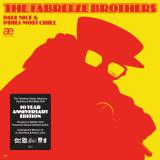
AE Productions in association with Sure Shot Recordings and In Effect Recordings are pleased to announce a 10 Year Anniversary Edition of the critically acclaimed Phill Most Chill and Paul Nice album as the Fabreeze Brothers.
The hugely successful first edition which was pressed on colour vinyl and supplied in double fold out sleeve sold out in only 2 weeks from release date and then the 2nd pressing black vinyl edition sold out a little while later but has for years been out of print but is increasingly requested by shops, via email, social media, AE Productions website back in stock requests, etc…
As it has been 10 years since original release back in 2015 at the time of proceeding with manufacturing, it was the perfect opportunity to do a 3rd pressing to mark the anniversary but we had to pull out all the stops for a 3rd run of this incredible album and also make it subtly different again in packaging design from the 1st and 2nd pressings so that each has it’s own particular feel and quality.
With help from the original designer and all-round vinyl artwork supremo Mr Krum we have found some nice adjustments for the gatefold sleeve where the detail from the insert sheet found in the original issues is incorporated into the inside panels of the sleeve. We have also tweaked the hype sticker to mark the 10th Anniversary Edition and updated the vinyl labels so as to work better with the new Splatter vinyl which follows the original red and yellow vinyl but each splattered with the opposite colour.
For something a little extra we have compiled a Limited Expanded Edition Double Cassette Box Set that includes the original album and also a ‘Bonus Tape’ which features all of the remixes, alternate versions, Original Versions of album cuts and bonus tracks found on B-sides of the array of singles and we included for good measure 2 tracks that only appeared on the promotional only LP sampler that ended up being different on the final release. This is limited to cassette just for the non-vinyl heads as all of these tracks already appear on vinyl. The outer box is A5 card in black with gold foil Fabreeze Brothers logo and comes with discography booklet.
‘The Bonus Tape’ from the box set is also available as a standalone cassette release with alternate j-card art work so that it has it’s own flavour and so that anyone that purchased one of the original run of cassettes that sold out before we could even ship any copies, did not need to purchase the main album again unnecessarily and to make it noticeable from the Expanded Edition Box Set version.
This version also has an alternate shell design in keeping with the clear shell with dark liner that was commonplace back in the 90’s and the cassette geeks may note the red text on the spine as was also a common design back then – giving this a pseudonym of ‘the 90’s tape’ during the design process.
We couldn’t stop there so we also have an extremely low quantity Limited Edition Mini Disc version which is the main album plus 8 of the bonus tracks from The Bonus Tape – only missing the 2 least significant alternate versions but clocking in at just a few seconds under 80 minutes – the absolute maximum for the format! Mini Disc???!!! You’re probably asking – yes!
While looking into the cassette duplication options we realised that the duplicator also offers Mini Disc production so we thought that it may be worth doing a very small run just because not only are professionally manufactured Mini Disc’s rare in Hip Hop, they are rare within the entire music industry as they never really took off as a medium to purchase music but ended up as the choice for home recorded Walkman and car use. Indeed, AE boss Mr Fantastic still has his main machine, portable and old discs. Amazingly also, the sleeve artwork transferred brilliantly to the Mini Disc template. They are manufactured using high quality Sony discs using ATRAC 4.5 codec.
All releases are supplied with unique free download codes on cards that are included inside the packaging but also with the Expanded Edition cassette and Mini Disc having 2 cards – 1 for the main album and a 2nd card for ‘The Bonus Tape’. The free downloads are supplied direct from Phill Most Chill’s Bandcamp page keeping it independent.
Chinaski opens 2026 with SOULMEEX record label exactly where he thrives best: suspended between nostalgia and futurism, melody and motion. Known for his synth-forward language and cinematic instincts, the Berlin-based producer delivers a release that feels both playful and sharply intentional, channeling emotion without sacrificing precision.
Across the EP, Chinaski revisits the spirit of Italo through a contemporary lens, shaping glistening arpeggios, buoyant basslines, elastic grooves and joyful synth stabs into five tracks that move effortlessly between the dancefloor and the imagination. There’s an unmistakable sense of lightness here-music that doesn’t overthink itself, yet is clearly crafted by someone who understands form, tension and release.
Rather than leaning on retro tropes, Chinaski treats dance music as a living, breathing language. The melodies feel familiar but never predictable; the rhythms pulse with warmth and confidence. An unforced sense of freedom runs through the release, inviting repeated listens and late-night moments alike.
With this EP, SOULMEEX sets the tone for 2026 with clarity and purpose, and Chinaski delivers the spell-subtle, melodic, and quietly irresistible.
- A1: The Beau Brummels – Turn Around 3:01
- A2: Quicksilver Messenger Service – Joseph’s Coat 4:53
- A3: Moby Grape-Rose Coloured Eyes 4:00
- A4: Skip Spence – Grey / Afro 9:36
- B1: Ron Nagle – 61 Clay 2:37
- B2: Creedence Clearwater Revival – Ramble Tamble 7:12
- B3: Steve Miller Band – Motherless Children 6:02
- B4: Paul Kantner & Grace Slick -When I Was A Boy I Watched The Wolves 4:58
- C1: The Great Society -Free Advice 2:12
- C2: Sopwith Camel – Frantic Desolation 2:17
- C3: Big Brother & The Holding Company – All Is Loneliness 2:19
- C4: Country Joe & The Fish- Section 43 6:45
- C5: Santana -Eternal Caravan Of Reincarnation 4:28
- C6: Sly & The Family Stone – Everyday People 2:23
- D1: Doobie Brothers -Beehive State 2:42
- D2: The Charlatans -Alabama Bound 7:03
- D3: Kak - Lemonade Kid 5:56
- D4: The Grateful Dead -Mountains Of The Moon 4:09
New Jon Savage Compilation release alert! Jon Savage's SF Sike 1966-72 (Double Vinyl) Limited Edition. Heavyweight Luxury Gauge Sleeve-Stock & Inners.
The real sound of San Francisco 1966-72." It was the new gold rush, but with drugs, music and freedom the goal. " (Jon Savage -The Guardian August 2012)
A limited edition double vinyl 18 track album celebrating the great pop music and idealism of that time & featuring Moby Grape, Skip Spence, Ron Nagle, Country Joe & The Fish & much more
Full contextual & track-by-track sleeve notes by Jon Savage. Ephemera & archive material from the period.
- A1: Rock You Gently
- A2: Somewhere, Somebody
- A3: Big Noise New York
- A4: True Emotion
- A5: Pretending To Care
- B1: The Whole Of The Moon
- B2: Lights Of Lousianne
- B3: Way Down Deep
- B4: The Hunter
- B5: I Can’t Hide
Celebrating the 30th Anniversary of Jennifer Warnes' Pop Classic on Crystal Clear Green Vinyl!
All-Tube Mastering by Chris Bellman at Bernie Grundman Mastering from the Original Master Analog Tapes on 180 Gram Vinyl!
One-Time Pressing of 3,000 Individually Numbered Copies!
New Inner Sleeve and LP Labels!
Pressed at RTI!
Impex Records is celebrating the 30th Anniversary of The Hunter with a one-time, individually-numbered pressing of 3,000 in crystal clear green vinyl! Jennifer Warnes’ acclaimed follow-up to Famous Blue Raincoat features a Grammy-nominated recording by Elliot Scheiner and all-tube mastering by Chris Bellman at Bernie Grundman Mastering using Jennifer’s personal original analogue master tapes.
‘The Hunter’ was released five years after her breakthrough with ‘Famous Blue Raincoat’. A TOP 100 LP when first released in 1992, The Hunter’s audiophile credibility is best summed up by Elliot Scheiner’s Grammy-nominated recording and mix. It contains the charting single “Rock You Gently,” a sonically dense yet expansive cover of The Waterboy’s classic “The Whole of the Moon,” a soulful Jennifer Warnes/Leonard Cohen composition “Way Down Deep,” Todd Rundgren’s “Pretending to Care” and even a Donald Fagen tune (“Big Noise, New York”). She owns every tune here, backed by a-list session players who ground the songs with solid and unobtrusive authority, letting Jennifer’s peerless interpretive skills bring the soul of every lyric to the forefront. Ms. Warnes uses her voice to serve the lyrics, allowing the song to return the favour.
“The follow-up to Warnes’ FBR offers crisp percussion cues, solid bass throughout – but especially during “Way Down Deep” – and a surprise chamber quartet on the title track” – Neil Gader, TAS Guide to Audiophile Demo Disc
Arista (now Sony/BMG) never released The Hunter on vinyl in the U.S. A regular-weight LP floated around Europe for a while but is not noted for exceptional sound or quiet vinyl.
“Remastered by Chris Bellman at Bernie Grundman Mastering, the sonics are luscious. Warnes has always had an audiophile’s ear and was hands-on with this effort–one of the last from now-defunct Cisco Records. It soars effortlessly, restoring warmth and delicacy and easily besting the earth-bound but otherwise excellent CD. It’s an example of both an artist in full charge of her powers, and analogue art its very best.” – Greg Cahill, The Absolute Sound
- A4: Funny How Love Is 3:29
- B2: Don't Look Back 3:47
- A1: Johnny Come Home 3:35
- A2: Blue 3:31
- A3: Suspicious Minds 3:56
- A5: Ever Fallen In Love 3:54
- A6: She Drives Me Crazy 3:35
- B1: Good Thing 3:24
- B3: I'm Not The Man I Used To Be 4:21
- B4: I'm Not Satisfied 3:50
- B5: It's Ok (It's Alright) 3:32
- B6: The Flame 3:52
Black Vinyl[31,47 €]
VINYL - 1LP CRYSTAL CLEAR : 12 songs
" 12 songs. taking in the band's biggest global hits across a decade : 5 UK Top 10 Hits / 9 UK Top 40 hits / 2 US Billboard # 1 singles
" All versions are single versions where relevant
" From their first single 'Jonny Come Home' (1985) up to 'The Flame' (1996)
" New artwork, new liner notes, fully remastered
d A4. Funny How Love Is 3:29 rerecorded version
h B2. Don't Look Back 3:47 [7" remix]
[d] A4. Funny How Love Is 3:29 [rerecorded version]
[h] B2. Don't Look Back 3:47 [7" remix]
[d] A4. Funny How Love Is 3:29 [rerecorded version]
[h] B2. Don't Look Back 3:47 [7" remix]
- 1: Neo-Paperopolis Jump Suite
- 2: Upworld Groove (Tv Version)
- 3: You Wouldn't Understand It's Swamp Thing
- 4: The Neverending Skylines Of Taipei
- 5: E.b.e. Bridge-Jump
- 6: A View From The Otherside Of The Rollercoaster
- 7: Central Jungle, Paperopolis
A conjuration between our favourite dreamweaver Spencer Clark and Italian psychic traveller Mondo Riviera, Lorenzo's Oil present an oracle of aural travelogues between seen and unseen worlds on 'Paperopolis'.
Two likeminded individuals on their distinct but complementary quest for the netherworld, Clark and Riviera's meeting of the minds projects sonic artefacts assembled from lucid dreaming keyboard pads, narcotic late night TV rhythms, spiralling sequences and mangled voices.
The 10+ minutes 'Neo-Paperopolis Jump Suite' makes these intentions quite clear right from the start, veering from no frills keyboard runs to a mid tempo bounce and on towards the house of mirrors synth stabs and driving rarefied percussion that close the suite and open the pathway to such "places" as 'Central Jungle, Paperopolis' and "visions" as 'The Neverending Skylines of Taipei'. Ride on.
Somewhere close to Manchester’s ever changing city centre, as the sun fades and peeks through the newest glass facade, you’ll find Shaking Hand. One part in shadow, the other basking in prisms of light as they sketch out their own sonic landscapes in the dusty redbrick mill they call home. One that is just about clinging on from the encroaching developments that surround them.
Against this back-drop where buildings are constantly torn down & built back again, the three piece craft away. Pulling from early post-rock, and 90s US alternative rock, crafting their own brand of Northwest-emo. Assembling something new, yet nostalgic. Looking ahead towards the transforming horizon. Shaking Hand’s music is built on tension and release – quiets that stretch, louds that overwhelm. Repetition that feels both hypnotic and destabilising.
The band’s musical DNA runs through experimental guitar outfits like Women, Slint, Sonic Youth, Pavement, and Ulrika Spacek, balanced with the melodic sensibility of Big Thief and the dynamic intimacy of Yo La Tengo. Their compositions push against structure: sudden jolts of tempo, polyrhythms that almost fall apart, and riffs that unravel into something fragile or ecstatic. Yet, as Ellis notes, there’s an underlying warmth too: “Like walking through an empty city late at night but catching flickers of life in the buildings you pass.”
Early ideas like ‘Night Owl’ and ‘Sundance’ grew out of George’s lockdown “bedroom years,” where new tunings (open E, drop D, and stranger Pavement-inspired set-ups) opened up uncharted textures. Later, in grim rehearsal rooms, the murky epic ‘Cable Ties’ and the hypnotic ‘Mantras’ absorbed the gloom and grit of the band’s surroundings.
The album was recorded with producer David Pye (Wild Beasts, Teenage Fanclub) at Nave Studios in Leeds, housed in a converted church. “The live room was huge and perfect for capturing our sound,” says George. Determined to bottle their onstage energy, the band tracked the foundations live, layering vocals and guitars later. Soviet-era microphones, odd mic placements, and even phone-recorded demos fed into the mix. “You’ve got to watch out for David though,” Freddie laughs. “He made me play four tambourines in one hand, really hurt, man.”
Lyrically, the record drifts between abstraction and lived moments. George’s words often spill out instinctively, words falling into place before their meaning becomes clear. “A lot of the lyrics look like they’re buried in abstraction,” he says, “but when I look back I can see what they were about — whether that’s an emotional response at the time or just an observation of what was happening around me”. There’s contrast at the heart of it all – optimism vs. doubt, the lightness of youth vs. the monotony of work, a city in constant redevelopment vs. the people drifting through it.
The album artwork is taken from unused plans for the 1970s redevelopment of Los Angeles by architect Ray Kappe, entitled ‘People Movers’. Hypothetical buildings for real people, it feels a complement to the band’s own constructions. One thing’s for sure, Shaking Hand’s debut is built to last.
- 01: Glass Mask On
- 02: Celebrity Culture Simp Farm
- 03: Please Just Make It Stop
- 04: No Laughter Left In Me
- 05: Weaponizing My Failures
- 06: Unthinking My Every Thought
- 07: Insignificant Other
- 08: It Keeps On Stinging
- 09: I Took A Pill In Vilvoorde
- 10: Suffering In Technicolor
DOODSESKADER clearly haven’t had enough of redefining boundaries – they’ve only just gotten started. Tim De Gieter and Sigfried Burroughs return on April 3rd, 2026 with their third full-length album, The Change Is Me, a rollercoaster that can only be described as the unstable lovechild between witch house, hip-hop, industrial dream pop, and stadium rock that can’t decide if it wants to watch the world burn or shout from the rooftops that we need to save it. Their combination of grungy 90s melodies with distorted synths, sludgy bass, hard tuned vocals, rapping, singing, and explosions of undiluted rage at the current state of the world leave you wondering just exactly what it was you smoked last night, and if it was too much or not enough. The Change Is Me is an album that grabs you by the arm and asks if you’re ready to go on a grand adventure, then pulls you into its chaos before you can say “yes” or “no.”
Tim and Sigfried aren’t just breaking the boundaries between genres; they’re breaking out of their own Year cycle, a path they had laid out for themselves at the band’s inception in 2020. Up until now, the duo had set out to document their “journey to getting better” through writing one album each year: Year Zero (2020), Year One (2022), and most recently Year Two (2024). After spending eight months throughout 2024 and 2025 writing, recording, producing and mixing Year Three, the band scrapped the finished record entirely. Playing shows while simultaneously navigating the process of mixing Year Three created a sort of disconnect – the people that they were when they wrote that record and the people that playing shows made them become were no longer one and the same. “We’re people with faults and strengths, and we realized we needed to accept it. That’s equal parts bleak and liberating. If you’re so focused on self-improvement, you can’t even applaud yourself for how far you’ve come,” the band explains. “This project is meant to be a document of us and of the human condition, not a self-improvement handbook designed to keep us all stuck on what may or may not have happened to us or because of us in the past.”
DOODSESKADER chose instead to embark anew on a week-long creative journey in Tim’s own Much Luv Studio with one goal in mind: to make an album that captures who they are right now. Finally writing everything together in the same room for the first time in years, the process of bringing "The Change Is Me" to life was captured by Diana Lungu in their latest documentary, "Now I Know You See Me", out December 2nd, 2025.
"The Change Is Me" marks the beginning of DOODSESKADER’s shift into a more positive era, both musically and conceptually. Over the course of the 40-minute record we hear the two friends unite in a fight against a world that grows more and more disappointing, a concept made crystal clear in tracks like “Celebrity Culture Simp Farm,” “It Keeps On Stinging,” and of course the album’s epic closer “Suffering In Technicolor.” While their previous albums saw them trying to outrun their pasts and arrive at a better version of themselves, here the search for some external or internal revelation that will “make them better” is no more. It’s been replaced by the realization that change isn’t something we force: it’s gradual, and more importantly, it’s something that’s already there – we just need to reach out and accept it.
The band’s live appearances over the last several years have been instrumental in shaping their ideology. On stage is where the duo find connection; not only with the audience, but also with each other. Their sold-out release shows at Ancienne Belgique (2022) and VierNulVier (2024) have proven that they are one of Belgium’s must-see acts. Abroad, their energy has translated into a month-long EU/UK tour with French band Alcest in 2024, as well as appearances at festivals such as Roadburn Festival (NL), Eurosonic (NL), Hellfest (FR), Mystic Fest (PL), Jera On Air (NL), ArcTanGent (UK), Fluff Fest (CZ) and more.
"The Change Is Me" is out April 3rd, 2026 on DOODSESKADER’s own label, 45 Records.
- A1: First Instrument
- A2: Mona Lisa Left Eye
- A3: Bebe Kids
- A4: Push Me Around Ft. Zack Fox
- A5: Hypnagogia
- A6: Nda Ft. Paris Texas
- A7: Fuck Cigarettes
- A8: Broke Ass Hoes
- B1: Opposite Sex
- B2: Describe
- B3: I Mac
- B4: Shrooms
- B5: Take Me Im Drugs
- B6: Lebanon James
- B7: Art Of Seduction
- B8: Play W Your Pride
Emerging from the vivid chaos of Detroit’s underground, ZelooperZ returns with Dali Ain’t Dead — a surreal yet deeply grounded statement from one of rap’s most singular voices. Following his recent collaborative exploration Dear Psilocybin (with Real Bad Man) — which found him moving through a “stream of psychosis” just before sobriety. (Pitchfork) — ZelooperZ enters this new chapter not simply as the same intricate-flows rapper, but as a rising cult-figure in underground hip-hop who’s forged an identity both enigmatic and quietly unstoppable.
On Dali Ain’t Dead, ZelooperZ channels the spirit of the surreal — the album’s title a nod to the iconic surrealist artist Salvador Dalí — as he reframes his world post-substance, post-chaos, yet still dripping with vivid imagination. Reviews highlight that the album finds him in a more focused mode: one critic writes that “ZelooperZ seems to have adopted a similar outlook to Dalí… embracing sobriety and allowing his art to exist as the psychotropic fuel for his mind.” (Album of the Year) Production (courtesy of Dilip) is inventive and cohesive, blending experimental hip-hop, trap, cloud-rap and drumless textures to mirror Ze’s newly clear-eyed vantage point and trademark eccentricity. (Legends Will Never Die)
Tracks like “Mona Lisa Left Eye” and “Push Me Around” (featuring Zack Fox) carry Z’s jagged humor and restless energy, while deeper cuts like “Shrooms” and “Take Me I’m Drugs” trace his evolving relationship with psychedelia and the legacy of his past. (Legends Will Never Die) In doing so, the record positions itself as the sound of a freak-icon in transition — still wild, still weird, but sharpened, matured, operating with a purpose and increasingly commanding the attention of fans who relish the underground unusual.
ZelooperZ’s trajectory continues to rise. From his roots in the Bruiser Brigade collective in Detroit to the present moment as a cult figure whose every release feels like a mission statement, Dali Ain’t Dead confirms that he’s no longer just the oddball off-to-the-side: he’s the weirdo that others are quietly watching. This album isn’t just for the longtime disciples of his left-field aesthetic — it’s an invitation to anyone curious about hip-hop bending, breaking, and rebuilding itself from the fringes inward.
Crave Tapes is thrilled to announce the first vinyl release on the label which will be the second album from Frankfurt's underground post-punk/dark wave band Babes of Enola Grey, Krieg und Wohlstand.
Krieg und Wohlstand sees Babes of Enola Grey follow the path of their 2021 debut, Anfang vom Ende, and take a step further into the realm of melancholic and disillusioned soundscapes. While keeping a certain retro character to the songs, Deborah Vision, Salvador Islero and Fabian van Castorp focus on quite contemporary themes, which some might call the most German obsessions:
War and prosperity.
But this is not the only reference to the band's heritage. Sometimes more, sometimes less, there are musical allusions to various German influences and contributions to (modern) music and music history. While Doppelt Frei is a nod to EBM and bands like DAF or the early Die Krupps and Wie auf Schienen as well as Die Heuschrecken pay homage to German düster punk bands like Fliehende Stürme or EA80, Panik and the title track Krieg und Wohlstand refer to the romantic German art song tradition of the 19th century (not to mention the obvious hint at a certain successful German Schlager in Die Kugeln und das Herz).
This makes Krieg und Wohlstand not only a worthy epigone of the band's debut, but also takes the album and the artistic approach to another level.
Commenting on the chosen format (12" vinyl), the band members said: "It was clear to us that we wanted to release this album on vinyl. When you look atGerman history, war and prosperity have to be seen as two sides of the same medal, or in this case of a record".
There’s an alternate reality where everyone makes a living wage and the cleanest buses you’ve ever seen arrive every other minute. Where the most intense songs are about confessing your love to a crush at the apple orchard, and where gentle feelings and chaotic energy are inseparable best friends. This is the timeline where Cootie Catcher is right at home. This Toronto based four-piece exudes both vulnerability and unbridled excitement, creating a sound that hypercharges the open-hearted tenderness of twee pop with spiraling synths and giddy electronics. New album Something We All Got is the clearest and most vibrant reading of Cootie Catcher’s vision yet, with songs of sweetness, nervousness, and expectancy that beam out unguarded.
After releasing music made primarily in basement recording environments, Something We All Got is the band’s first flirtation with studio recording. The edges are still sharp, however, with some parts assembled from time-honored lo-fi methods and fun, personally-sourced samples seeping into the production. The sound is explosive and upbeat, with euphoric guitars, bubbly synth lines, speedy drums both played and programmed, and all other manner of sound constantly colliding. Cootie Catcher has three songwriters, Sophia Chavez, Anita Fowl, and Nolan Jakupovski, all of whom have distinctive voices but still manage to overlap in their writing on shared concerns like navigating the lines of romantic and platonic relationships, their city’s social scenes, and struggles in both the microcosmic experience of playing in a band and the zoomed-out challenges of living through late-stage capitalism.
Joy still touches every surface of Something We All Got. “Quarter Note Rock” bounces around the room in a fit of jangling guitar chords, scratched samples, and interplay between breakbeat loops and somersaulting live drums. It’s a blast of positivity even with lyrics about how disappointing it can be to meet your heroes. A smiling electro pop instrumental supports lyrics about having to step painfully away from an almost realized love on “Gingham Dress,” a song that subverts themes of domesticity as a backdrop for the dashed wilt of hopeless devotion.
Cootie Catcher rolls down hills and jumps through flaming hoops throughout Something We All Got without ever dumbing down the visceral emotions that drive these songs. There’s a palpable tension between the band’s exhilarating sonics and the raw, often uneasy sentiments expressed, but it’s an integral part of what makes them unique. Rather than hide behind the kind of calculated vagueness that plagues so much of the indie rock landscape in the time of cursed algorithms, Cootie Catcher runs full-speed toward every confusion and excitement, fearlessly direct and embracing the reality they’re in.
- 1: Young Manhood
- 2: Bible Dreams
- 3: Bitterness
- 4: Archangels
- 5: Northern England
- 6: Whirlpool Heart
- 7: Bringing Home The Ashes
- 8: Mythical Beast
- 9: Now And Forever
- 10: The Worst Year Of My Life
Die britische Post-Punk-Band Wild Swans wagte sich in die Nähe von U2 auf ihrem 1988 erschienenen Debütalbum »Bringing Home The Ashes«.
Die eindringliche Stimme von Paul Simpson verleiht jedem Stück ein emotionales Gewicht; ob er nun versucht, Freude oder Trauer zu vermitteln, sein eisiger Bariton lässt einen bis ins Mark erschauern. Das Album handelt vom Erwachsenwerden, das Aufwachsen in einer Zeit des Krieges und die Suche nach Trost von Gott und der Liebe zu finden.
Die Wild Swans wurden nie als christliche Gruppe beworben, aber Simpson nutzt seine Spiritualität, um Hoffnung oder Verzweiflung auszudrücken. Die Wild Swans malen unauslöschliche Bilder: Simpsons funkelnde Stimme und Kellys ätherische Gitarren verleihen dem Album eine unbestreitbar romantisches Gefühl.
»Bringing Home The Ashes« ist in einer limitierten Auflage von 750 einzeln nummerierten Exemplaren auf Crystal Clear Vinyl erhältlich und enthält eine Beilage.
- A1: Frowning Of A Lifetime
- A2: Every Turn
- A3: A-List Actress
- A4: Slightest Idea
- A5: Eleven To Your Seven
- A6: Que Shiraz
- B1: Our Weekend Starts On Wednesday
- B2: Haven't Been This Happy
- B3: What You're Up Against
- B4: Quit
- B5: Let's Go Blue
- C1: Save A Life
- C2: Everybody's Working For The Week
- C3: Wearing A Wire
- D1: The Promise
- D2: A Salty Salute
Hey Mercedes, formed from members of Chicago's emo band Braid, included Bob Nanna, Todd Bell, Mark Dawursk, and Damon Atkinson. They debuted with a self-titled EP (Polyvinyl Records) in 2000 and followed up with extensive touring and two full-length albums: Everynight Fire Works (Vagrant Records) in 2001 and Loses Control (Vagrant Records) in 2003 along with two more EP's: The Weekend EP (Vagrant Records) in 2002 and Unorchestrated (Grand Theft Autumn) in 2004. Dawursk left at the end of 2001 and was replaced by Mike Shumaker. After 359 shows and several releases, the band disbanded in April 2005.They played a reunion show in 2007 and celebrated the 15th anniversary of Everynight Fire Works in 2016 with a remastered re-release and select live performances. In 2025, the band made their live comeback at Las Vegas's second annual Best Friends Forever Festival and will continue to play more shows in 2026. In March 2026, Polyvinyl Records will reissue the complete Hey Mercedes catalog. With several EPs and albums currently out of print, this release will provide Hey Mercedes fans with the opportunity to obtain every Hey Mercedes title on vinyl. LP FORMAT DETAILS: Clear blue vinyl with download card in a gatefold jacket.
Far Out Recordings proudly presents Ladeiras De Santa Teresa, the debut collaboration between Rio-jazz maverick Antonio Neves and carioca percussion master Thiaguinho Silva. In what could well be the first ever Brazilian jazz album centered around two drummers, Ladeiras De Santa Teresa is an uncompromisingly groove-rich recording, steeped in trad-samba roots and brass power.
Since his acclaimed 2021 album A Pegada Agora E Esssa Antonio Neves has remained a mainstay of the international facing Brazilian scene, performing both as a trombonist and drummer. His instrumental contributions to contemporary classics like Ana Frango Eletrico’s Little Electric Chicken Heart, Bruno Berle’s No Reino Dos Afetos 2, and Bala Desejo’s Sim Sim Sim will be marveled upon by future generations. His partner in crime Thiaguinho Silva happens to be the son of percussion icon Robertinho Silva, who has played on more or less every canonical Brazilian record, Arthur Verocai (1972), Clube Da Esquina (Milton Nascimento and Lo Borges, 1972), and India (Gal Costa, 1973) to name barely a few. Thiaguinho himself has worked with Marcelo D2, Gal Costa, Liniker and Alice Caymmi, and upon listening to Ladeiras De Santa Teresa, it’s clear that Thiaguinho is more than a worthy successor to carry the Silva family torch.
Some listeners may already be familiar with “Das Neves,” which appeared on Mr Bongo’s Rio De Janeiro-focused Hidden Waters compilation in 2023. The track showcases the profoundly skilled Neves brothers brass section (Antonio alongside brother Edu, who has performed with Hermeto Pascoal), the fiery elegance of pianist Luiz Otávio (Dora Morelenbaum), and Thiaguinho’s pulsating samba breaks. This synergised combo continues across the album, notably on “Fendas Vocais” with Neves doubling up on drums, exhibiting his inventive and fearless skill as an arranger. The album also features street-artist, musician and rapper Joca, adding vocalised dynamism and swagger to an otherwise entirely instrumental record on “Viagem de Trem”.
The album’s title Ladeiras De Santa Teresa (The hills of Santa Teresa) is named in tribute to Rio De Janeiro’s famed Santa Teresa neighborhood, a bohemian enclave with scenic views of the iconic cityscape. The spirit of Santa Teresa with its expansive city views and bustling energy is embodied in the album which encapsulates the jazz and samba histories felt within the neighborhood’s windy alleyways and cobbled streets.
Ladeiras De Santa Teresa by Neves E Silva is out on vinyl, CD and digital on Friday 20th March 2026.
Limited Edition 180gm heavyweight Clear Vinyl LP, Half-speed remaster by Miles Showell at Abbey Road Studios, Insert contains a sleevenote featuring quotes from Alan Parsons and Eric Woolfson. The Alan Parsons Project"s multi-million selling album The Turn of a Friendly Card (1980), their celebrated prog pop tour de force, is reissued in a variety of formatsincluding a Limited Edition Clear Vinyl LP, half-speed remastered by Miles Showell at Abbey Road Studios. Like other Alan Parsons Project albums, there were a variety of different lead vocalists employed including Chris Rainbow, Lenny Zakatek, Elmer Gantry as well as Eric Woolfson himself. Plus, a selection of session musicians such as guitarists Ian Bairnson and David Paton and drummer Stuart Elliott with arrangements by Andrew Powell.


![Babes Of Enola Grey/artist] - Krieg und Wohlstand](https://www.deejay.de/images/l/4/3/1227043.jpg)