Expected late October/early November
Scott Gilmore’s Volume 01, an Analog Synth Gem, Makes Its Vinyl Debut - Pressed at 45RPM for maximum fidelity.
Recorded on a vintage Tascam 388, the LP version of Gilmore’s alluring, easy-going instrumental electronic record arrives in the physical world via In Sheep’s Clothing Hi-Fi Records.
Los Angeles, CA — When the Los Angeles electronic musician and multi-instrumentalist Scott Gilmore recalls the creation of the songs on Volume 01, he describes specific moments of spontaneous inspiration. “I remember sitting at the tape deck, watching the leaves outside the window as they flittered in the sunlight—a moment of stillness that became intertwined with the melody I was recording,” Gilmore recalls, speaking of the track “Song For Cate.”
This sense of simplicity and presence is at the heart of Volume 01, which was recorded entirely on a Tascam 388 using a carefully curated selection of instruments.
Volume 01, an intimate, instinctual album that mixes lo-fi digital rhythms, strummed guitar, and melodic synth layers, is a collection of songs that captures Gilmore’s magnetic fluidity and the spontaneity of his process. Initially released digitally and as a limited edition cassette, Volume 01 is set to be issued on vinyl for the first time by In Sheep’s Clothing Hi-Fi.
The Tascam 388 is a classic mid-1980s analog machine that combines an 8-track reel-to-reel tape recorder with a built-in mixing console. Volume 01 exudes the kind of hazy, nostalgic warmth that only such recorders can provide. For the nine-song album, Gilmore harnessed analog synths including the Arp Odyssey, Yamaha CS-01, Korg DW-8000, Hohner Pianet T, Roland TR 606, and Roland SH 101, as well as bamboo alto saxophone, clarinet, electric guitar, and electric bass.
The album is awash in brief, propellant pieces. At just over four minutes, the relatively epic “Horizon Line” is driven by a three-note snare pattern, a two-note cymbal tap, with a humble bass-line serving as the rudder; Gilmore’s improvised keyboard runs move with an intuitive, conversational glee. The pensive "Shade" sounds like it could be a Penguin Cafe Orchestra demo. Closing track “D. Hareem” runs on a wobbly time signature but with an insistent, determined rhythm that belies genre descriptives. “I prefer to not know what I’m making as I compose,” Gilmore says. “It’s when I can’t clearly define what the music is that it’s then something that I want to put out into the world.”
In hindsight, Volume 01 was a portent. After its 2016 cassette release, Gilmore connected with International Feel, the Balearic imprint run by Marc Barrot, to release the sublime Subtle Vertigo. In 2019, Gilmore’s music caught the attention of Marc Hollander, the experimental composer and founding member of Aksak Maboul, which led to a signing with the Belgian label Crammed Discs. That deal enabled the creation of Gilmore’s solo album Two Roomed Motel and Doctor Fluorescent, a retro-futuristic, Vocoder-heavy 2020 collaboration with Eddie Ruscha V, a.k.a. Secret Circuit). Across these projects, Gilmore’s work has been mentioned in the same sentences as Stereolab, Arthur Russell, Woo, Air, R. Stevie Moore, and others, all of whom have combined synths and non-synths to memorable effect.
With the upcoming vinyl release, Volume 01 will set into wax an enduring set of works, offering listeners the chance to experience analog artistry in its most authentic, tangible form. In Sheep’s Clothing Records is honored to bring Gilmore’s work to vinyl.
Suche:clear
In 2007 an Italian film festival invites Mouse on Mars to score a film of their choice. The organizers claim to be able to clear the rights for any movie the band chooses. Werner Herzog’s fictional documentary Fata Morgana, which merges footage of several desert explorations by Herzog and his team into one continuous association, has long been a band’s favorite. The film comes with a soundtrack by Mozart, Leonard Cohen, Third Ear Band and field recordings. Andi Toma and Jan St. Werner are sent a DVD to Düsseldorf and start working. The idea is to score the film in real time so instrumentation has to be readily at hand: guitar, percussion, electronics, mouth harp, pedals, software, tapes, samplers. Once the arrangement for the three-part film is sorted Mouse on Mars bring their score to stage. Herzog Sessions is performed twice: first when the band still thought the rights had been cleared, and a second time at London’s Southbank Center knowing that Herzog would have never approved a new score.
--
Mouse On Mars – London Queen Elizabeth Hall soundtracking Werner Herzog.
By Mike Diver, 24.04.2009
Filmed in 1971, Fata Morgana is perhaps not one of Herzog’s best-known works (think Grizzly Man, Rescue Dawn, et cetera…), but then Mouse on Mars have never been ones to embrace the mainstream, quietly letting their modern, experimental take on krautrock do the talking over the years, thus producing some quietly brilliant electronica that far outweighs their modest profile.
The film itself is not altogether dissimilar to the wonderful, Phillip Glass-scored Koyaanisqatsi, with sweeping landscape shots and no obvious plot or narrative, though Fata is concentrated purely in one place – in and around the Sahara Desert, switching from images of barren wasteland to desert tribes and dead, skeletal cattle.
The obvious thing to do when soundtracking such powerful imagery is to vie for dreamy electronic soundscapes which can be sustained for a long period, and whilst this ambient shoegaze approach was present and correct (also carefully constructed and highly effective), Mouse on Mars added a human element to the performance, incorporating a live dimension by using and looping guitars, harmonicas, processed vocals and even a live horn player (quite possibly a flugelhorn. Look it up if you don’t believe me) for the final section of the film.
Some of the most interesting points arose when the duo suddenly switched from solemn, ambient tones to glitchy, bouncing electro (reminiscent of their more upbeat work) whilst on the same film shot – causing the audience mood to flick from tripped-out bliss to attentive semi-wired, utterly subverting any idea of a narrative the film may have possessed. Clever stuff.
Ranging from sinister to surreal to humorous, all the moods portrayed in Fata Morgana were successfully matched by Mouse on Mars’ live rescore – no mean feat. The duo also went above and beyond the call of duty with their own soundtrack, adding a fascinating personal signature to an already unique film.
The Doobie Brothers' sophomore album 'Toulose Street', originally released in 1972, pivoted the band's sonics toward their trademarked twin-brother drumming sound. This album features hits like "Listen to the Music", and "Rockin' Down the Highway", and is repressed on 1-LP clear coloured vinyl.
Celebrate the 50th anniversary of critically acclaimed album, The Dobbie Brothers' 'What Were Once Vices Are Now Habits'. Originally released in 1974, this album sonically stitched elements of rock, soul, folk and blues together with honeyed vocals, boisterous dual drumming and riffy guitars. Featuring tracks such as the band's first number one single, "Black Water", as well as other hits, "Another Park, Another Sunday", and "Eyes of Silver". This 1-LP is pressed on clear coloured vinyl.
50th Anniversary Edition of Fleetwood Mac's Classic 1974 Studio Album. Heroes Are Hard To Find was the band's last album recorded with singer/guitarist Bob Welch, and it reached #34 on the US Billboard 200. Featuring the Tracks "Prove Your Love," "Heroes Are Hard To Find," & "Angel. Pressed on Limited-Edition Clear with Black & Bone Splatter Vinyl
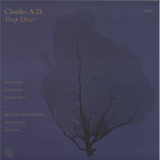
The sea has long been central to Japanese culture, symbolizing both sustenance and spiritual depth. Charles A.D.'s Deep Diver draws inspiration from this, channeling the ancient traditions of diving and fishing into his music. Historically, the sea has influenced everything from Shinto rituals to the livelihoods of coastal communities. In Deep Diver, this reverence flows through aquatic soundscapes, where rhythmic waves of 90s house and Detroit techno meet Japanese minimal production techniques, New Age and Pacific Jazz. Like the tides, the album ebbs and flows, creating a serene yet dynamic homage to the timeless connection between Japan and the sea.
The opening track 'Deep Diver' plunges into the depths, its abstract sound design capturing the sensation of deep-sea propulsion. Rhythmic bubbles pulse gently alongside slow-moving chords, creating an otherworldly atmosphere. The textures are lush yet restrained, setting a tranquil stage that pulls the listener into a submerged world. 'Underwater Ruins' builds on this aquatic theme, introducing rhythmic layers and bass-heavy notes reminiscent of mid-90s Japanese ambient techno. The smooth, melodic flow nods to pioneers like Mr.YT and Susumu Yokota, while subtly incorporating the Detroit techno influence through soulful, deep basslines.
The track feels like a fusion of ambient and techno, balancing serene tones with a rolling groove, emblematic of Japanese techno soul. As the album progresses into 'Bubble Ring', it becomes clear that Charles A.D. is a master of minimalism. The production is timeless, leaning
on analog techniques where echo-drenched chords and carefully layered soundscapes take on an addictive, hypnotic quality. The simplicity of the composition is deceptive, as each element carries weight, drawing the listener deeper into the rhythm and space between the notes.
'Merperson' is where organic rhythms truly come into play. Charles A.D. gently evolves the patterns, allowing each percussive hit to flow naturally into the next. Soothing melodies emerge from within the track’s structure, eventually reaching an emotional peak without ever feeling forced. The organic nature of the arrangement creates an effortless progression that feels deeply connected to the natural movement of water.Starting the second half with 'Deep Exploration', the theme of underwater excursions becomes even more pronounced. Light, steady drumming anchors the track, allowing the melodic layers
to develop gradually. It unfolds with a calm, measured pace, before ending softly, almost as if the sounds are drifting off into the oceanic depths. 'Diffuse Reflection' stands out as the most dub house-influenced on the album, with rolling rhythms and hypnotic elements reminiscent of Maurizio's deep, pulsing sound. Yet here, the production feels submerged, with aquatic effects swirling around the rhythmic core, blending dub house with a fluid, oceanic touch. 'Traitors' delves even deeper into dub-inspired territory. Deep, resonant bass hits combine with wooden drums, while static-like sounds evoke the image of a radio tuning through static to find clarity.
Chords shimmer briefly before fading back into the liquid depths, evoking the ebb and flow of the tide. The final track on Deep Diver 'Levitation', is a fitting conclusion, as the rhythms merge and overlap like waves gently lapping the shore. The minimalistic arrangement allows each element to blend effortlessly into the next, creating a sense of unity and closure. The sounds move with the gentle grace of water, ending the album in a way that feels both complete and
open-ended, like the infinite motion of the sea.
Dar Embarks, the hardware-based collaboration of Chicagoans Dan Jugle and Ken Zawacki, share four precious recordings of bouncing, highly-acidic machine funk and industrial ambiance. This is a posthumous release for Dan Jugle, who departed in 2018.
Dan was a multi-instrumentalist and a pillar of Chicago's techno scene who left an indelible mark on it with his distinctive sound. His infatuation with electronic music began in the mid-90s when he found his way to Midwest raves as soon as he was old enough to drive to them. He began working with analog gear to create his own expression of the music he heard there. Jugle, Zawacki, and Mike Broers started experimenting with a thrifted Roland TR-707, figuring out the controls through trial and error. They performed together as Ghost Arcade in the early 2000s.
Years later, Jugle and Zawacki reunited creatively, forming Dar Embarks and building the foundation for their project. Jugle gained a reputation for crafting washed-out, saturated club tracks as Juzer, a project formed with Beau Wanzer. Dar Embarks' debut EP Fleer (released on CLEAR USA) and Juzer's Horseplay (on Anthony Parasole's label The Corner) were both released in 2014, both elevated by Dan Jugle's live-action knob-twisting and button-pushing composition inspired by sci-fi and comic books. Despite his early passing, Jugle's legacy lives on through his work and his passion for Midwest techno that his friends and fans still remember and carry.
Lovingly wrapped up and presented to Acid Camp by Ken, these heaters are finally set free to move asses and minds.
The Best Of Spear Of Destiny is a compilation album featuring the most successful songs of the British 80’s rock band Spear Of Destiny.
The album is originally released in 2008 on CD and is now for the first time avalaible on vinyl. It features songs like “Liberator”, “The Wheel”, “Rainmaker”, “Flying Scotsman”, “Mickey” & many more.
The Best of Spear Of Destiny (20th anniversary edition) is available as a limited edition of 1000 individually numbered copies on crsytal clear and black marbled vinyl and includes a renewed insert.
Demos and unreleased songs from Wand"s salad days, the time of the immortal Ganglion Reef. Available for download since 2017, this album"s at last firmly sunk into vinyl grooves that realize its fullest potential in a listener"s ears. These light, fizzy versions have distinctive gleaming magic energies all of their own and they fly thrillingly through the air. Catch a wave through beautifully-abandoned space on your turntable eternal!
Das epische Power Metal-Highlight des Jahres 2010 in der längst überfälligen Vinyl-Neuauflage! Mit der Hymne "We Are Pirates" gelang der Band um Sänger Seeb Levermann seinerzeit der Durchbruch.
"Easton Hope" kommt nun erstmals als 2-Picture LP (limitiert auf 500 Einheiten), auf der alle Details des aufwendigen Andreas Marschall-Artworks perfekt darstellt sind; sowie als Clear White 2-Vinyl (limitiert auf 500 Einheiten).
Somehow, 15 years has passed since I worked on A Colour For Autumn.
This recording was, in many ways, a critical one for me. In some respects, it rounded out a period of work that was focused on a particular marriage of thematics and harmony. Like For Varying Degrees Of Winter, it dwelled on old world impressions of the seasons, something that, in the southern hemisphere, isn’t intrinsically part of our way of approaching place. I think it was this incongruity with my own lived experience that kick started the interest in making these recordings.
The intention had originally been to take Vivaldi head-on , as the holder of the Four Seasons terrain (I jest of course), but shortly after completing this album, it became resoundingly clear that even in the old world, seasonality was a thing that was known ‘then’, and unknowable ‘now’.
Climate change, as a lived experience and not merely as a ‘possibility’, suddenly came into focus with reports flooding in about the climatic dynamics since the turn of the century and events like the Black Saturday fires here in Australia. It felt like, and continues to feel like, seasonality as some predictable measure of our world is relegated to the ‘before’ times. This record is not about these climatic shifts however, more a recognition of how we have used patterns and predictability to guide us over the centuries and perhaps a realisation that the way forward is not the path we have known historically.
Listening back to the record with fresh ears, a process made completely delightful by Stephan Mathieu who has carefully remastered it, I am struck by how minimal some of the structures were. There are moments that strike me as uncharacteristically patient and even generous, allowing one element to hold without interference. I’m grateful to still feel a deep connection to this edition and to the people and places that helped shape it.
I hope you find some sense of your place here. It’s offered with that intention and invitation.
Emerging from the same circle of musicians that spawned Squirrel Bait and Slint, Rodan formed in 1992 out of a failed high school rap project. Guitarists Jason Noble and Jeff Mueller enlisted Tara Jane O’Neil on bass and a couple drummers before Kevin Coultas came aboard permanently. After a couple 7”s and self-released cassettes, Quarterstick Records released the band’s first and only full-length Rusty in 1994. The band broke up at the end of the year, aiding their growing cult following. Jason went on to form Rachel's, Jeff started June of 44, and Tara began a solo career after recording with Retsin, and The Sonora Pine. Jason and Jeff later reunited in The Shipping News. Rodan was Quarterstick’s indie rock super group that spawned numerous other intriguing projects. “(Thirty years ago) a Louisville band called Rodan released the only record they’d make in their two year tenure. Rusty would become one of those records that launched a thousand very f**king good bands in the 90’s, an historical moment in real need of poets and punks and beautiful freaks who could render some sense and beauty out of the cultural grey water”. Joe Manning // “Whatever scene or geographical associations Rodan dealt with by being from Louisville, KY, in the early '90s, setting those aside and looking at the music straight up reveals one key fact: this was an amazing band, one with clear roots but also one with a sense of its own strong fusion… this is an album to readily get lost in”.
Minimal wave legend Das Ding is back on Electronic Emergencies after 10 years with a stunning selection of archival tracks from retrieved tape recordings. In the early eighties, Danny Bosten got together with his friends after school in his bedroom studio, somewhere in the bleak Dutch countryside. They experimented with cheap analogue gear and made music to kill time. The sound is raunchy and slightly experimental, but already unmistakable Das Ding. New wave, early EBM and proto techno are found this album, pressed on clear vinyl. To preserve the original atmosphere and sound, the tapes received the Ruud Lekx mastering treatment.
Originally hailing from The Isle of Wight but now based in West Norwood, South London, Vertical Cat has been releasing tunes since 2001 on imprints like Smallfish, Vice and his own rather wonderfully named Achingly Responsive, but now finds himself delivering seven varied creations for Chicago's Kimochi Sound to issue via the kind of hand-numbered, limited edition run that's sure to get trainspotters salivating like Pavlov's dogs. From the jazz-inflected phrasing, subtle phasing and jiggly sub-bass of 'Go Willy-nilly' to the Mills-esque thumpfunk of 'Oh You Mucky Bugger!', there's a bit of everything here, but every last moment is delivered with quality and clearly perceptible personality. You've also got to love outro track 'I'm Leaving', which soundtracks an awkward call to HR with some nicely cheeky, perky exotica.
"One of the most significant girl groups ever formed, Spice Girls are nothing short of a British pop
phenomenon. An undeniable addition to National Album Day’s roster of great British groups, Emma
Bunton, Geri Halliwell, Mel B, Melanie C and Victoria Beckham initially made their mark with their self-
titled debut album, 1996’s Spice. Featuring the smash singles ‘Wannabe’, ‘Say You’ll Be There’ and ‘2
Become 1’, it remains not only one of the best-selling albums of all time, but also the best-selling album
by a girl group. This clear-vinyl reissue will spice up any fan’s record collection.
"
"A mere two years on from their formation in London towards the end of 2007, Mumford & Sons released their
debut album, Sigh No More. Introducing the group’s signature blend of folk and rock music with heartfelt lyrics and
soulful melodies, the album was instrumental in propelling the folk-rock resurgence into the mainstream at the
end of the 2000s.
Peaking at No.2 in both the UK and the US, and winning British Album of the Year at the 2011 BRIT Awards, Sigh No
More paved the way for a career that has seen the group release three further acclaimed albums, scooping up a
second BRIT Award, plus two Grammys and an Ivor Novello, along the way. The group’s lasting impact on the music
industry can be traced back to this record – now reissued on ultra-clear vinyl for National Album Day – and its
game-changing singles, among them ‘Little Lion Man’ and ‘The Cave’, which have, respectively, reached nearly 45
million and more than 20 million streams this year alone.
"
"One of the most iconic groups of the late 20th century, Dire Straits established their timeless sound from the
moment they first appeared on the London gig circuit, in 1977. With faultless musicianship and memorable songs
that quickly connected with music lovers, it was clear the group would set their own path, proving that, even amid
the new-wave era, classic songwriting would never go out of fashion.
After three years of relentless hard work, touring, writing and recording their music, the group entered the 1980s
well on their way to becoming the biggest-selling band in the world. That year’s Making Movies album would also
make its presence felt on the silver screen, thanks to the inclusion of the UK No.8 single ‘Romeo And Juliet’ – later
used in films such as Empire Records, Hot Fuzz and I, Tonya – and live favourite ‘Tunnel Of Love’, which featured in
the 1982 Richard Gere film, An Officer and a Gentleman. Dire Straits’ frontman, Mark Knopfler, would later explain
to The Times how satisfying it was to write ‘Tunnel Of Love’: “It’s the moment when you know you’re really on to
something,” he said. “There’s a certain part of the song that I call the breakdown and when I got there I could feel
the drums, the piano, all the things that I wanted all the instruments to do. When you get to that state, there’s a
strange sense of one thing following another, of elements falling into place quite naturally.”
Paying extra attention to those elements, this half-speed master of Making Movies has been overseen by Miles
Showell at Abbey Road Studios, in London, resulting in a cut that has a superior high-frequency response (treble)
and very solid and stable stereo images. Pressed on 180g vinyl, it comes with alternative artwork that swaps the
red and the blue of the original album sleeve, plus a printed inner sleeve, a “Half-Speed Master”-branded obi-strip
and an Abbey Road certificate of authenticity.
"
"The acclaimed 2007 album reissued on 1LP clear vinyl. Taken from the original 2007 masters when Pete Doherty was at the pinnacle of his creative powers, ‘Shotter’s Nation’ followed in the footsteps 'Down In Albion’, the band’s debut album, and Doherty’s first album outside of his first band - the era-defining Libertines. Both were met with commercial and critical acclaim, breaking into the top 10 of the album charts.
‘Shotter’s Nation’ is unmistakably Doherty. Melodic, stark, catchy, raw, brilliantly unique - his music has always created an unflappable loyalty from his many fans, remaining timeless, yet still sending a nostalgic excitement through its listeners. The album also features four songs co-written by Doherty’s then-girlfriend Kate Moss who also regularly performed live with them.
The approach to the recording and release of the album was an escape from Doherty’s previous methods. Stephen Street (The Smiths, Blur, Morrissey, The Cranberries) took over producer duties from The Clash's Mick Jones, and it was and his first album released by a major label, Parlophone."
“A huge thing for this record was to make it feel as close to our live show as possible,” says Tom Sharkett of W.H. Lung’s latest album. “We didn’t want it to sound live but we wanted to capture the excitement of the live performances.”
This is something that has become paramount to the group in recent years as they have undeniably blossomed into one of the most joyous and arresting live bands in the country. “The reason I’m in a band is to play live music,” says singer Joe Evans. “For me, music is live music. That’s what it’s for, to be played with people.”
The five-piece band, also featuring Chris Mulligan, Hannah Peace, and Alex Mercer-Main, decided to try something new on their third album after two incredibly successful collaborations with previous producer Matt Peel. In order to capture the energy, spirit and dynamism of their live shows, they relocated to Sheffield to work with Ross Orton (MIA, Arctic Monkeys, Working Men’s Club) who was able to harness this side of the band to remarkable effect. “Ross is the Sheffield Steve Albini,” says Evans. “He’s the king of not overthinking it and trusting the process of the art of recording songs. He was always there to stop us fucking around with cerebral stuff and get it down.” Sharkett echoes this too: “He was the exact producer we needed without us even realising. His productions and mixes are bombastic, lively and in your face and that’s exactly what we wanted.”
However, while this album is rooted in a sense of capturing a moment and a sparky liveness, that’s not to say it’s a raw or ragged record. It is still a meticulously composed, delicately layered and pristinely produced piece of work that, in true W.H. Lung style, runs the gauntlet from dance to pop to indie while still capturing that distinctly unique quality that is unquestionably their own. “It was a really big thing for me to realise what made us sound like us on this record,” says Sharkett. “I think the album sounds a lot more confident and self assured because of it. Some songs sound just so much like Lung and I’m really proud of that. I’m not sure we’ve done that as consistently across the other records.”
While the band have drilled deeper into finding their own singular identity, it’s not a record resting on its laurels. It’s a significant leap forward, expanding on their solid foundations while also breaking new ground. “The big difference with this record is its directness in every sense,” says Sharkett. “The songwriting is more upfront. Previously we’d focused a lot on vibe and production as opposed to just writing songs. The overall mission here was to revert to a classic songwriting structure and for the production to come afterwards.” And so what you have on this record are deeply considered and well-crafted songs, then recorded with blistering intensity in the moment, and then given a touch of experimentation afterwards. Then throw in Orton’s contributions to the band and it’s proven to be a real winning formula. “He brought a real dose of magic to the songs we’d written,” says Sharkett. “And brought an extra bit of wonk and quirkiness each time.”
The band’s ability to write more traditional and conventional songs is clearly a skill they’ve taken to with ease, at times there’s an almost Springsteen-like quality – but if he'd ever had an ecstasy period – to tracks such as ‘Thinner Wine’ and ‘Bloom and Fade’. While ‘How to Walk’ was constructed with one thing only in mind: that it would absolutely slay on stage. “I can’t wait to play this live,” says Evans. “We wanted a song to represent our live set, a new big one, and this is it.” Once again it leans towards the anthemic, with its driving, propulsive charge complete with incandescent synths and vocal melodies so irresistible you can already hear them being sung in unison by a crowd.
It’s an incredibly difficult feat to pull off a record that is more rooted in traditional songcraft while also capturing the power of a live performance, as well as pushing sonics into experimental new directions while working with a brand new collaborator. But here the band has managed to do just that. And the album’s closing song ‘I Will Set Fire To The House’ is a perfect example of such a thing. It’s a song that feels immaculately constructed but also very much alive and of the moment as its radiating synths engulf from the off, and Evans’ vocal is silky but powerful and in perfect symbiosis with Peace’s. It’s a song that captures the endless joys of music playing long into the night. “It may be a bit of a bloody bombastic way to end an album saying ‘and we’ll dance into the sunrise’,” says Evans. “But fuck it.”
MORE PRESS ON ‘VANITIES’ (MELO131)
"Vanities artily refines an exhilarating brand of up-front electro-dance" MOJO ⅘
'Idiosyncratic yet euphoric electronic pop on triumphant second LP' 9/10 Uncut
''One of the most effective alternative pop albums of the year'' 4/5 Record Collector
'Dance music for the modern age' - The Times (4*)