Voyage Distribution label debut release sets the tone with Roto, a Spanish producer whose sound fuses post-punk attitude, raw EBM energy, and gritty futuristic club music. Across four tracks, he blends live bass, industrial textures, and driving rhythms into a sharp, emotional EP.
Suche:club g
If anyone knows how to roll with the punches, it’s Travis Roberts. At 24, the Texas songwriter has already battled addiction, buried friends, and been so broke he couldn’t put a roof over his head. Hell, he even joined an underground fight club just to pay for studio time.
“Whoever won the fights took home the lion’s share of the money,” he explains, “but even if you lost, you made something. I lost a lot, but I got what I needed out of it.”
It should be no surprise, then, that Roberts comes out swinging on his blistering debut, Rebel Rose. Recorded with Roberts’ longtime live band, The Willing Few, the album fuses earnest country storytelling with rowdy rock and roll energy as it blurs the lines between roots, punk, folk, and power pop. The writing is raw and visceral here, built on gritty portraits of working-class underdogs just trying to get by, and the performances are nothing short of explosive, propelled by a relentless rhythm section, searing guitars, and infectious melodic hooks. The result is an exhilarating album that defies easy categorization, an alternately bruising and triumphant reflection on growing up, getting clean, and giving it your all from an artist who’s taken more than his fair share of hits.
Every fighter knows, it doesn’t matter how many times you get knocked down. All that matters is how many times you get back up
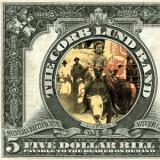
Five Dollar Bill was originally released in 2003, and is now going to be widely available on vinyl for the first time. This record includes songs that are staples in Corb Lund’s live set, such as “(Gonna) Shine Up My Boots” and “Time to Switch to Whiskey.” In addition to these lively jams, Five Dollar Bill features everything from romantic imagery of Corb’s homeland, “Short Native Grasses (Prairies of Alberta),” to songs that give the listener a glimpse into the life of working class folks, such as “Roughest Neck Around” which is an ode to oil riggers and the grit that is required with that lifestyle. “‘Five Dollar Bill’ was a big milestone for me for lots of reasons. It was my first record after my metal band, The Smalls, broke up and it’s when I got really serious about western music. I really dove into my family’s cowboy ancestry and my very rural upbringing in this batch of songs. It was also our first record of many produced by Harry Stinson who is now a very close friend, and our first brush with Nashville, Tennessee, as we recorded half the record down there. It was our last record with Ryan Vikedal on the drums before he flew off into fame and fortune with Nickelback. It was also our last record as a trio. It was my first gold album,” says Lund, “And we are still playing lots of these songs at our shows. It really defined my path forward as a western songwriter and helped lay the foundation for my whole career."
This limited edition release is part of the Corb Lund - Dark Horses Club. New West Records will be releasing unreleased records and material from Corb Lund throughout 2025 and 2026.
- A1: Agadou
- A2: Zabadak
- A3: Big Bamboo
- A4: Se Me Quieres
- B1: Saragossa Band X Madagascar 5 - Agadou (Extended Mix)
- B2: Big Bamboo (Jonny Nevs Remix)
- B3: Kalimba De Luna (Bob Shepherd X Da Clubbmaster Extended Remix)
- B4: Agadou (Jonny Nevs Remix)
- B5: Saragossa Band X Madagascar 5 - Zabadak (Extended Mix)
- B6: Se Me Quieres (Jonny Nevs Remix
Die Stimmungsgaranten sind zurück – auf farbigem Vinyl! Mit der Saragossa Band – Original Hits & Remixes erscheint eine ganz besondere Ausgabe für alle Fans von Kult-Partyhits.
Seite A bietet die beliebtesten Klassiker der legendären Band in ihren Original Versionen:
Agadou
Zabadak
Big Bamboo
Se Me Quieres
Auf Seite B wird es modern: Frische, brandneue Remixe dieser Klassiker bringen den typischen Saragossa-Sound ins Hier und Jetzt – perfekt für heutige Dancefloors, Sommerpartys und gute Laune nonstop!
- You Are
- Pieces Of Never
- Fade Out
- The B-Side
- Over And Over
- Ever After
Resolution Alley is the musical vision of Jason Wilson, a musician and composer hailing from Maryland. The music combines 80's pop and rock melodies with progressive rock concepts, creating a unique but strangely nostalgic sound. Jason performs extensively throughout the Baltimore / Washington, DC area. From the smallest clubs to the Kennedy Center, Jason has shared the stage with some of the biggest names of stage, screen and music. Resolution Alley combines the influence of a career in rock and theater into a distinctive creation. Resolution Alley is getting ready to release their brand-new album Pieces of Never which contains the catchy first single "The B-Side" and follow up "You Are". Jason Wilson has crafted a wonderful release with just the right amount of balance between Rock and Prog which is sure to capture the ears of folks who like something familiar yet new. So if you like your music with big hooks and interesting arrangements and instrumentation then Resolution Alley has cooked up just what you ordered with Pieces of Never.
The discovery of Doris Dennison's score represents a genuine musicological breakthrough—what once would have been "a tree falling in the woods" thirty years ago now holds the potential to render "a thunderous clap in our minds." While researching Anna Halprin's lesser-known collaborators, scholar Tom Welsh uncovered the archives of AA Leath, one of Halprin's principal dancers. Buried within these materials was Dennison's handwritten score for Earth Interval, dated May 1956. Born in Saskatchewan, Canada, in 1908, and raised near Seattle, Dennison (1908-2009) encountered John Cage while teaching Dalcroze eurythmics at the Cornish College of the Arts. She joined Cage's earliest percussion quartet—alongside Margaret Jansen, the composer and his wife Xenia—in the group widely regarded as having performed the first complete concert of percussion music in the United States. This historic December 1938 concert was followed by tours and the landmark May 1941 performance at the California Club, comprising Cage and Lou Harrison's Double Music, the premiere of Cage's Third Construction, and Harrison's 13th Simfony.
As Bradford Bailey observes in his extensive liner notes, Earth Interval demonstrates "an extraordinary balance of elements that imbues the piece with a sense of clarity, directness, and constraint that is both distinct and ahead of its time." The work's most remarkable innovation lies in its approach to extended techniques, particularly Dennison's notation for the central movement: "In 2nd movement, 1st player lowers + raises a gong into a tub of water while beating." This technique, absorbed from Cage's experimental vocabulary, generates what Bailey describes as "fields of acoustic abstraction that bend and warp time through sustained resonances, beat, and space." The temporal sophistication of these manipulations anticipated Karlheinz Stockhausen's Mikrophonie I (1964) and Annea Lockwood's water-based sound investigations by over a decade. After joining Mills College as dance accompanist, Dennison maintained crucial connections to the Bay Area's experimental scene, collaborating with figures like Merce Cunningham and programming Cage's music throughout the 1950s.
Comprising three movements—Land Form, Air Tide, and Earth Play—Earth Interval is scored for recorder, drums, gongs, maracas, muted gongs, and bowl gongs. In total, the piece is just under eight minutes: "a fleeting glimmer of moment in time, a life spent at the cutting edge, and a singular creative vision that packs a powerful punch." When viewed in historical context, placed in contrast to roughly contemporaneous avant-garde percussion works by Cage, Harrison, Louis Thomas Hardin (Moondog), and Harry Partch, or important precursors like Edgard Varèse's Ionisation (1931) and Henry Cowell's Ostinato Pianissimo (1934), it's clear that Dennison was following her own path. Earth Interval is not derivative. It is a precursor to what was yet to come, alluding to developments of avant-garde and experimental music that wouldn't begin to appear on the cultural landscape until the 1970s and '80s, with the emergence of Post-Minimalism and more idiosyncratic artists and ensembles like Midori Takada, Ros Bandt, Peter Giger, Frank Perry, Christopher Tree, Michael Ranta, Gamelan Son of Lion, and Niagara.
This recording by Chicago's Third Coast Percussion, captured in March 2022, represents the first complete documentation of this pioneering work. The ensemble's interpretation reveals the piece's remarkable contemporaneity while maintaining its historical specificity. Where Cage, Harrison, and Partch employed "self-consciously off-kilter polyrhythms," Dennison's rhythmic sensibility anticipates minimalist developments by nearly a decade, yet integrates "forceful rests, as well as sharp shifts in sonic character, tempo, and meter, that break the momentum and breathe a sense of life into the piece's structure." This positions her work closer to Post-Minimalism decades before its emergence. The architectural approach demonstrates Dennison's understanding that "the composer almost entirely disappears" in favor of phenomenological listening experience, creating what might be called an egoless music that places its realities and meaning entirely in the ear of the beholder. The present recording, realized by Chicago's distinguished Third Coast Percussion ensemble, represents a significant achievement in experimental music scholarship and performance practice. As specialists in the Cage tradition and contemporary percussion repertoire, Third Coast Percussion approached Earth Interval with the historical sensitivity and technical precision required to illuminate Dennison's subtle compositional innovations. The March 2022 recording sessions, engineered by Colin Campbell, capture both the work's intimate chamber music qualities and its bold exploration of extended techniques. The ensemble's interpretation reveals the piece's remarkable contemporaneity—its ability to speak directly to current musical concerns while maintaining its historical specificity.
This recording serves multiple scholarly functions: it provides the first complete documentation of Dennison's compositional voice, offers insight into the broader network of experimental music practitioners surrounding Cage and Harrison, and demonstrates the sophisticated level of compositional thinking that was occurring within the Bay Area's dance-music collaborations of the 1950s. The work's emphasis on phenomenological listening—what might be called an "egoless" approach to musical experience—places it within a lineage of American experimental music that prioritizes perceptual process over compositional personality. The work's original obscurity—limited to AA Leath's performances at venues like the 1957 Pacific Coast Arts Festival at Reed College—paradoxically allowed it to remain "entirely on its own terms," free from the constraints of historical categorization. Drawing on Jacques Derrida's Archive Fever, the argument emerges that "the archive can acknowledge, celebrate, and resurrect" overlooked voices, transforming our understanding of experimental music history. The present Blume edition, featuring Third Coast Percussion's authoritative interpretation, includes a lavishly illustrated 16-page booklet designed by Bruno Stucchi / dinamomilano, containing complete scholarly apparatus, historical photographs, and detailed production notes. This recording enables "cross-temporal intersectionality," allowing Dennison to "belong to a newly formed and more dynamic understanding of the present and past," demonstrating how forgotten voices can reshape entire historical narratives when given proper scholarly attention and performance advocacy.
This new "Experimental Chapter" by DJ Narciso comes as no surprise, really. Autonomous in the motorization of his music, pushing for progress within the framework of an undeniable (inescapable?) heritage. Twisting and bending sound every step of the way, Narciso definitely keeps in touch with the dancefloor, offering the always much needed transcendence through distinctive, non-linear melodies and patterns. The artist pursues a direct link with bodies in motion but seldom in the expected, institutionalized way club culture is being largely promoted.
This is challenging dance music, proud statements of difference. Narciso's previous record was named "Diferenciado". Now we get "Dificuldades", a track that simultaneously carries the weight of being somewhat odd and the difficulties of life. Check how the piano is venting, freestyle, communicating a feeling, and then lets itself get stuck in a loop, but that's exactly when the groove really starts flowing. And then another layer. It's like direct speech.
A common assertion of pride is found in the origin of the artists. The ghetto as a place where any transformation projects more power precisely because of... inherent difficulties. As others (including himself) did in more or less obvious ways, Narciso clearly states "I come from the ghetto" ( "Não Sabes" ). Twice the value. At least. Almost every segment of music in this album ends up sounding heavily emotional, reaffirming what may be - perversely - a well-known characteristic of Portuguese music: melancholy.
"Não Quero" begins side B as a march maybe more significant than a thousand words, such is the ominous tone of its texture. Next track is another lunar tarraxo, pulling down the shades. Then, "Dor de Barriga" lets things loose again, steering clearly off road, shouting this way and that until a peaceful resolution comes. In "Livra-me Desta", vocal snippets blend into synth snippets, disembodied voices abandon all traces of humanity and finally mutate into different entities that, towards the end, again sound vaguely human but now we find ourselves doubting. Closer "Bob" is a rather classic percussion track with plenty of echo, reverb and an unconscious nod to dodecaphonic music. Unlikely? No, the structural ADN of this music is made up of elements western and eastern, southern and northern. To say all-over-the-place is usually not flattering but in this case the expression translates as wonder, surprise, The Unexpected, and reveals Narciso perfectly at ease inside the nucleus of creation.
Foehn & Jerome feat. Sonya Zlo - Macho Madness (PFFD003)
Berlin, Summer 2025 - A raw, hypnotic, and deeply conceptual collaboration is about to make waves. Austrian DJ and producer duo Foehn & Jerome, residents of Berlin's iconic Club Der Visionaere and founders of the Perfumed Freedom label, team up with Ukrainian artist and producer Sonya Zlo to present "Macho Madness" - a wild and genre-bending release born from an unfiltered studio jam that spiralled into something bigger. In addition to their experimental project Space Curls, with which the three artists also perform live shows, Sonya, Fabian, and Jerome have been working on their new techno/house project.
In a world where stereotypes wrestle for power, "Macho Madness" challenges everything we thought was normal. Overblown masculinity, the illusion of strength, and staged rituals of dominance – that is what we call the "Macho Madness".
Foehn & Jerome, known for their electrifying DJ sets, have been shaping Berlin's underground scene for over a decade. Sonya Zlo, who moved to Berlin from Kyiv in 2022, stumbled upon their gig by chance - and what started as a conversation about track ID's turned into a full-on collaboration.
"Working with Foehn & Jerome has taught me so much," says Sonya. "I come from a jazz background, so this was completely new territory for me - but bringing my melodic instincts into this heavy, industrial sound was crazy exciting".
Following Perfumed Freedom's recent releases "The Frisbee of No Return" and "Hermanngirl", the new record "Macho Madness" will be released in summer 2025. Play it, stream it, or pick up the limited vinyl - just don't expect anything ordinary.
Hidden Folder returns with its fourth transmission – HDF004 – featuring three original cuts and standout remixes from bullet tooth and K-LONE.
The EP further refines the label’s distinctive blend of UK-rooted club music and stripped-back dancefloor aesthetics.
Opening with ‘Matter of Time’, the title track is a peak-time speed garage weapon – driven by a menacing reese bassline, swing-heavy drums, and deep atmospheric pads.
‘Blurred Line’ follows with a more melodic, emotive touch, already turning heads with early support across the scene.
On the flip, ‘Can’t Get Over’ taps into classic UK Garage sensibilities, pairing housey drum grooves with lush Rhodes chords, chopped vocals, and a warm, rolling low-end.
Remix duties come courtesy of bullet tooth and Wisdom Teeth’s own K-LONE.
bullet tooth flips ‘Can’t Get Over’ into a modern house banger – punchy drums, a snarling peak-time bassline, and undeniable floor energy.
K-LONE takes a more minimalistic route, layering intricate percussion, loopy vocal cuts, and Rhodes stabs with his signature swing and subby finesse.
A forward-facing entry in the Hidden Folder archive – continuing the imprint’s streak of genre-fluid, system-ready club gear.
Limited Edition 12” of the Remix Contest Winners!
In November 2024, 2 Flying Stones organized a remix contest. Four of the winners are featured on this 12” record.
The Funkhauser remix is already making waves in the jumpstyle scene. It is regularly played on harddance radio shows and festival main stages.
The Andy Cley remix is more downbeat and a great addition to the club circuit. Another winner, young talent Junotheoriginal, his remix takes a more artistic approach and could resonate well within the Gen Z scene.
Rounding out the release is a credible, club-oriented version by Antwerp-based producer Groove 81.
These four different versions, each growing within their own scenes, make for an impactful 12” release!
After its first ever test press on Crack Records in 1999, already both sides was produced by Dj inc aka Alien5ive in the end of 1997 for the UK Based Record Label "No Smoking Records". In December 2024, Dj inc has made some effective arrangements on the original Tracks and the Repress is now scheduled for July 2025.
This Release is one of the very rare "No Smoking Records" Sounds those were high covieted in the Drum and Bass scene back in the days. The EP smashed the Dancefloor. Now you can preorder the official Repress of the Darkside E.P. fresh and straight outta the Studio. Both sides represent the fresh Club Sound from the mid to the late ninties Drum and Bass Jump Up era
The fourth installment of Secretsundaze’s 9FINITY imprint releases the tectonic ‘get now EP’ from Irish, via Berlin dancefloor expert eoin dj. Their eclectic sets draw from all hues of the dance music spectrum, from psychedelic techno, indulgent hard house, pumping tech cuts and beyond.
eoin’s latest record pulls all of these influences into a tight, rolling house-centric EP that brings everything from the raucous to the utterly sexy. Thundering 909 Toms and gliding synths across A1’s ‘spin flip contrast a more percussive, hedonistic voyage through A2’s ‘skin on skin’.
Banging through the B-side with ‘faux baddy’, a mean dancefloor cut that draws the crowds forward for a slice of tribal hard-house. B2’s ‘get now’ is a certified club moment, with eoin’s punky vocals and sludgy reese bass line sliding throughout the uplifting drums and synth chords. A final moment emerges with the digital bonus track ‘the rapture channel’, a progressive groove blending buoyant percussion and large synth licks – an indispensable tool for any time of the night.
Seguim Records, a Barcelona-based label rooted in retro-futuristic electronic music, continues its pursuit with the release of its third EP: “The Rabbit Hole V.A.”. This marks their inaugural venture into the realm of original productions, following their first two acclaimed edit releases.
As their first EP distributed via Subwax, it solidifies their commitment to maintaining an underground stance while delivering authentic, unfiltered sounds. The tracks weave a diverse tapestry of house, techno, breaks, and trance, all meticulously crafted to energize the club scene and keep the momentum alive.
On the A side, the EP features three compelling tracks from Vince Void and Alex Garcia, highlighting their eclectic influences and forward-thinking approach.
The B side offers a taste from Eyes of Goa and Santacreu, further showcasing the label’s dedication to blending vintage sounds with modern sensibilities.
JOE T. VANNELLI, one of the world's leading exponents of house music, creates
two new remixes featuring two House DIVAS, two powerful and iconic voices:
LOLEATTA HOLLOWAY and EARTHA KITT! Loleatta Holloway's track "Sensation,"
in Club and Melodic House versions, makes the dancefloor vibrate thanks to
Vannelli's touch, offering two high-impact versions aligned with current global
trends. On the B-side, EARTHA KITT and her scratchy voice are remixed in the 2025
version of "Where is My Man" with electronic and funky sounds in the first track,
and in the iconic version that became famous in the Milanese nights of New York
Bar (1999) in the second.
- A1: Design - Premonition
- A2: Vision - Lucifer’s Friend
- A3: Richard Bone - Alien Girl
- A4: John Howard - I Tune Into You
- A5: Ian North - We’re Not Lonely
- A6: Selwin Image - The Unknown
- B1: Harry Kakoulli - I’m On A Rocket
- B2: Rich Wilde - The Lady Wants To Be Alone
- B3: Billy London - Woman
- B4: Alan Burnham - Science Fiction
- B5: The Microbes - Computer
- B6: The Goo-Q - I’m A Computer
- C1: Gerry & The Holograms - Gerry & The Holograms
- C2: The Warlord - The Ultimate Warlord
- C3: Die Marinas - Fred From Jupiter
- C4: Dee Jay Bert & Eagle - I Am Your Master
- C5: Peta Lily & Michael Process - I Am A Time Bomb
- C6: Sole Sister - It’s Not What You Are But How
- D1: Alasdair Riddell - Do You Read Me?
- D2: Karel Fialka - Armband (The Mystery Song)
- D3: John Springate - My Life
- D4: Idncandescent Luminaire - Famous Names
- D5: Disco Volante - No Motion
- D6: Dream Unit - A Drop In The Ocean
Compiled by Philip King
“And then came the rise of synth pop : blokes with dodgy haircuts hunched over keyboard-operated
machines stuffed with wires and do-it-yourself tone oscillators making sounds like a brood of geese
passing gas in a wind tunnel. Whoopee! This is the way the ‘70s ended : not with a blood-curdling bang
bang but with a cheap, synthesized, emasculating whimper.”
NICK KENT, NME.
All The Young Droids: Junkshop Synth Pop 1978-1985 is a new compilation that charts the
underbelly of the epoch-defining sound of the synthesiser in 80s popular music. Compiled by Philip
King (previously seen compiling All The Young Droogs, Glitterbest and Boobs - The Junkshop
Glam Discotheque), the music here connects the dots between DIY synth enthusiasts grappling with
new, cheap synthesisers at the tail-end of punk and wannabe, jobbing songwriters enthral to the new
music pioneered by Gary Numan, Depeche Mode and Daniel Miller’s Mute Records. Featuring rare
tracks of auto-didactic progressive pop music, proto-techno punk, shoot-for-the-stars-land-in-the-gutter
chart flops and heralded, underground synth classics, School Daze paints a picture of beautiful failure.
Complete with extensive sleeve notes written by King and never before seen imagery, all 24 tracks
were remastered by RPM in-house engineer Simon Murphy, many from vinyl copies due to lost master
tapes. The story told on All The Young Droids is one of the dawning opportunity presented by both the
emergence to the market of cheaper analog synthesisers and the distribution networks plus indie labels
that exploded with the advent of punk music in 1976. While the music that sprouted out all over the
globe in the wake of these factors was decried as fake, plastic, a refutation of punk’s guitar-led
revolution, it’s telling that much of the music on All The Young Droids.. was created in bedrooms,
ramshackle studios and home-made set ups with often borrowed equipment. In the era of record labels
jumping to capitalise on the success of The Sex Pistols, The Clash (both on major labels, of course)
these artists struggled to stand out from a new gold-rush with next to no budget or PR team. With radio
and labels desperate for the new Yazoo, what resulted was a testament to necessity being the mother
of invention.
At the time, the synthesiser was the music of the future, a shiny new machine that could paint like an
orchestra with a single finger and a 4-track. In the hands of Manchester avant-pranksters Gerry & The
Holograms it’s a pulsing, sardonic weapon.. the only instrument on the Messthetics classic lampooning
of New Wave fashion. In Hamburg, a 16 year old Andreas Dorau used it to write and record (with his
female classmates on vocals) a global smash in Fred Vom Jupiter (later licensed to Mute Records).
The hard-to-find English version (Fred From Jupiter, natch) is included here. Many artists with alreadystoried careers caught the bug and recorded synthesiser-fuelled peons to space, computers, the future
and, of course, love-interests. Harry Kakoulli, late of Squeeze, recorded a solo album in 1979 that
included the incredible power-synth-pop smash-that-never-smashed I’m On A Rocket. Similarly, Ian
North of Neo and American Power Pop stalwarts Milk ’n’ Cookies bought a Korg MS20 and used a
tape machine to record We’re Not Lonely, an absolute lost-classic of minimal synth pop. We’re Not
Lonely also features on the Junkshop Synth Pop sampler 7” twinned with John Howard unreleased
track You Will See, released April 12th 2025.
There are plenty of compilation debuts in evidence. Sole Sister were a mysterious trio who were
featured on the Scaling Triangles compilation of female-fronted, queer-adjacent post-punk /
underground music that also featured The Petticoats. Selwin Image were from San Francisco and
featured members of the recently defunct power pop/punk group The Pushups. Their stupidly catchy
The Unknown fizzes with New Wave energy - think XTC to Sparks but remains unreleased until now.
Dream Unit’s A Drop In The Ocean is an early synth wave cut, positively teaming with Joy Division
instrumentation, previously only released on a long-forgotten and super rare, self-released EP.
Incandescent Luminaire’s Famous Names belies an archetypal struggle of a small-town trying to
make it in a cruel industry but is a thrilling New Romantic-Synth Wave cross over with a OMD
gloominess that’s a joy to hear. Feminist Minimal Wave track I Am A Time Bomb by performance artist
Peta Lilly and Michael Chance is a revelation destined for new found cult status. It was released on 7”
and lost until now.
The flipside to the subterranean, never-made-it synth pop mentioned above are the ambitious, even
fruity attempts at success that have a perennial elegance to their confidence. New Jersey-ite Billy
London (real name Ed Barth) tried to cash in on the synth boom with Woman, released by a major
label, a lurching new wave track built on the Louie Louie rhythm and a wonderfully camp Lou Reedstyle sleazy vocal before exploding in the synthesised chorus. The song bombed but with a chorus like
this, you have to wonder why? Ex-Glitter Band member John Springate’s My Life is truly epic, with
doomed chord progressions and massive sounding drums turning into at least 3 different songs in the
course of the track. Before you wonder what’s going on the song resolves with a glorious return to the
main refrain.
The dry-ice-dressed dance floor is well catered for too. Design’s Premonition and Vision’s Lucifer’s
Friend are stone-cold minimal synth bangers, well loved but given a new lease of life here. The
Warlord’s The Ultimate Warlord was released in 1978, a homespun proto Hi NRG banger that was
later re-recorded by The Immortals in Canada who had a club hit with it. One-man- band Disco
Volante’s No Motion was re-issued by Synth wave label Medical in 2012 but makes its first vinyl
compilation appearance here. Close your eyes and you can imagine what Lawrence of Felt would have
sounded like with some cheap Korgs a little earlier in his career. Gibraltar-based trio The Microbes
imagined a computer programming people to dance - how prescient - and ended up with a propulsive,
robo-funk track with splendid rubbery bass playing over a tectonic drum machine. Previously picked up
by Belgian label Stroom TV, Dee Jay Bert & Eagle’s heavily Euro-accented I Am Your Master
demands the listener to “come to paradise!” In a frankly terrifying manner.
All The Young Droids is the first compilation to peel away from the narrative that dour, Minimal Synth
and Cold Wave were the only musical children of the first rush of synth pop. Philip King and School
Daze Records describe a much more complicated world: along with the austere, Brutalist children of
Daniel Miller (who produced Alan Burnham’s Bowie-Low-influenced Science Fiction here) was a
plethora of desperate cash-ins, accidental mainstream hits, ambitious pop dramas and major label
punts that went nowhere. Crucially, the compilation blurs the line between junk and treasure. What if the
two things are interchangeable. What if it’s all science fiction?
One of the most outstanding Bossa Disco Jazz productions from West Germany at the beginning of the 80s! This masterpiece captivate with their stylistic perfection and journey from brazilian Bossa Nova to Jazz with a boogieesque Disco influence. Its still on of the most DJ spinned Bossa Jazz dancefloor tunes from W.-Germany in the last 30 years!
The two highly talented, creative and sensitive artists Judy (Jude Enxuto) and Ximo (Ximo Gregorio) had lived in Germany since 1980 and performing in several clubs, small art stages and festivals.
In 1982 they recorded their Debut album "Via Brasil" in Frankfurt am Main. It was released in the same year by the small private record label called Rillenschlange. In the meantime coveted by music lovers, collected by vinyl connoisseurs and and happy to play in DJ sets, the great composition of the Brazilian Izio Gross will be an absolute Evergreen and catchy tune remain. This music production is one of the most essential productions of this genres from West Germany and has more than earned its place on the Sound Essence label. An absolute groovy Bossa Jazz Trip and Tip!
Friss is a turntablist at heart. Inspired by legends like C2C, The X-Ecutioners, Cut Chemist, A-Trak, D-Styles and many more, he always dreamed of creating music in that same spirit. For years, he searched for his own unique sound. The search is over, it’s been found.
GENERATION CMD+Z is a tribute to the art of turntablism, filled with battle record references. Soulful, jazzy hiphop beats accompanied with scratches by friss., DJ Robert Smith and Kypski. The warm, distinctive touch of Amsterdam-based keys wizard Soul Supreme shines through on "Beep Aaah Fresh" and "Use Head. After years of rocking clubs and touring with side projects, Friss is taking it back to the roots: beats and scratches, turntables and a mixer, a computer and CMD+Z. At the end of the record there is a "hidden" scratch sentence containing all scratch samples used on the record to complete the turntablism feel.
Following his journey into the 45 scene with Deejay Irie as It Takes Two since 2020, this marks Friss’s first-ever solo release — a personal and powerful debut.
Limited to just 200 copies.
- A1: Hong Kong
- A2: London
- A3: Zurich
- B1: Field Recordings (Cassette Only)
Massi NPL’s EP debut on House on the Strand’s label 'Herah' is a wonderful cluster of ambient club adjacent works
Producer and sound artist Massi NPL has spent close to a decade honing his craft as a producer with an impressive growing list of accolades that have seen him try his hand at everything from scoring award winning video games and theatre productions at the Zurich theater to DJ at events and radio stations around the globe.
While the producer’s output may be slim it is considered and precise. His new Fragments EP is a deeply personal project that is the product of years of work.
These select 3 pieces are crafted from a series of field recordings spanning 3 cities that have shaped much of the producers life. These ambient club adjacent works are equally promising at decibel sound system shaking volumes as they are within tucked away headphone and home listening environments. They exude expansive soundscapes, featuring a rich array of washed out synth backdrops and percussions.
As featured on Alex Ruder’s Pacific Notions on KEXP
Mastered by artist engineer Adam Badí Donova (ulla, mu-tate, dj lostboi, Torus)
- A1: Design - Premonition
- A2: Vision - Lucifer’s Friend
- A3: Richard Bone - Alien Girl
- A4: John Howard - I Tune Into You
- A5: Ian North - We’re Not Lonely
- A6: Selwin | Image - The Unknown
- B1: Harry Kakoulli - I’m On A Rocket
- B2: Rich Wilde - The Lady Wants To Be Alone
- B3: Billy London - Woman
- B4: Alan Burnham - Science Fiction
- B5: The Microbes - Computer
- B6: The Goo-Q - I’m A Computer
- C1: Gerry & The Holograms - Gerry & The Holograms
- C2: The Warlord - The Ultimate Warlord
- C3: Die Marinas - Fred From Jupiter
- C4: Dee Jay Bert & Eagle - I Am Your Master
- C5: Peta Lily & Michael Process - I Am A Time Bomb
- C6: Sole Sister - It’s Not What You Are But How
- D1: Alasdair Riddell - Do You Read Me?
- D2: Karel Fialka - Armband (The Mystery Song)
- D3: John Springate - My Life
- D4: Incandescent Luminaire - Famous Names
- D5: Disco Volante - No Motion
- D6: Dream Unit - A Drop In The Ocean
Compiled by Philip King
“And then came the rise of synth pop : blokes with dodgy haircuts hunched over keyboard-operated
machines stuffed with wires and do-it-yourself tone oscillators making sounds like a brood of geese
passing gas in a wind tunnel. Whoopee! This is the way the ‘70s ended : not with a blood-curdling bang
bang but with a cheap, synthesized, emasculating whimper.”
NICK KENT, NME.
All The Young Droids: Junkshop Synth Pop 1978-1985 is a new compilation that charts the
underbelly of the epoch-defining sound of the synthesiser in 80s popular music. Compiled by Philip
King (previously seen compiling All The Young Droogs, Glitterbest and Boobs - The Junkshop
Glam Discotheque), the music here connects the dots between DIY synth enthusiasts grappling with
new, cheap synthesisers at the tail-end of punk and wannabe, jobbing songwriters enthral to the new
music pioneered by Gary Numan, Depeche Mode and Daniel Miller’s Mute Records. Featuring rare
tracks of auto-didactic progressive pop music, proto-techno punk, shoot-for-the-stars-land-in-the-gutter
chart flops and heralded, underground synth classics, School Daze paints a picture of beautiful failure.
Complete with extensive sleeve notes written by King and never before seen imagery, all 24 tracks
were remastered by RPM in-house engineer Simon Murphy, many from vinyl copies due to lost master
tapes. The story told on All The Young Droids is one of the dawning opportunity presented by both the
emergence to the market of cheaper analog synthesisers and the distribution networks plus indie labels
that exploded with the advent of punk music in 1976. While the music that sprouted out all over the
globe in the wake of these factors was decried as fake, plastic, a refutation of punk’s guitar-led
revolution, it’s telling that much of the music on All The Young Droids.. was created in bedrooms,
ramshackle studios and home-made set ups with often borrowed equipment. In the era of record labels
jumping to capitalise on the success of The Sex Pistols, The Clash (both on major labels, of course)
these artists struggled to stand out from a new gold-rush with next to no budget or PR team. With radio
and labels desperate for the new Yazoo, what resulted was a testament to necessity being the mother
of invention.
At the time, the synthesiser was the music of the future, a shiny new machine that could paint like an
orchestra with a single finger and a 4-track. In the hands of Manchester avant-pranksters Gerry & The
Holograms it’s a pulsing, sardonic weapon.. the only instrument on the Messthetics classic lampooning
of New Wave fashion. In Hamburg, a 16 year old Andreas Dorau used it to write and record (with his
female classmates on vocals) a global smash in Fred Vom Jupiter (later licensed to Mute Records).
The hard-to-find English version (Fred From Jupiter, natch) is included here. Many artists with alreadystoried careers caught the bug and recorded synthesiser-fuelled peons to space, computers, the future
and, of course, love-interests. Harry Kakoulli, late of Squeeze, recorded a solo album in 1979 that
included the incredible power-synth-pop smash-that-never-smashed I’m On A Rocket. Similarly, Ian
North of Neo and American Power Pop stalwarts Milk ’n’ Cookies bought a Korg MS20 and used a
tape machine to record We’re Not Lonely, an absolute lost-classic of minimal synth pop. We’re Not
Lonely also features on the Junkshop Synth Pop sampler 7” twinned with John Howard unreleased
track You Will See, released April 12th 2025.
There are plenty of compilation debuts in evidence. Sole Sister were a mysterious trio who were
featured on the Scaling Triangles compilation of female-fronted, queer-adjacent post-punk /
underground music that also featured The Petticoats. Selwin Image were from San Francisco and
featured members of the recently defunct power pop/punk group The Pushups. Their stupidly catchy
The Unknown fizzes with New Wave energy - think XTC to Sparks but remains unreleased until now.
Dream Unit’s A Drop In The Ocean is an early synth wave cut, positively teaming with Joy Division
instrumentation, previously only released on a long-forgotten and super rare, self-released EP.
Incandescent Luminaire’s Famous Names belies an archetypal struggle of a small-town trying to
make it in a cruel industry but is a thrilling New Romantic-Synth Wave cross over with a OMD
gloominess that’s a joy to hear. Feminist Minimal Wave track I Am A Time Bomb by performance artist
Peta Lilly and Michael Chance is a revelation destined for new found cult status. It was released on 7”
and lost until now.
The flipside to the subterranean, never-made-it synth pop mentioned above are the ambitious, even
fruity attempts at success that have a perennial elegance to their confidence. New Jersey-ite Billy
London (real name Ed Barth) tried to cash in on the synth boom with Woman, released by a major
label, a lurching new wave track built on the Louie Louie rhythm and a wonderfully camp Lou Reedstyle sleazy vocal before exploding in the synthesised chorus. The song bombed but with a chorus like
this, you have to wonder why? Ex-Glitter Band member John Springate’s My Life is truly epic, with
doomed chord progressions and massive sounding drums turning into at least 3 different songs in the
course of the track. Before you wonder what’s going on the song resolves with a glorious return to the
main refrain.
The dry-ice-dressed dance floor is well catered for too. Design’s Premonition and Vision’s Lucifer’s
Friend are stone-cold minimal synth bangers, well loved but given a new lease of life here. The
Warlord’s The Ultimate Warlord was released in 1978, a homespun proto Hi NRG banger that was
later re-recorded by The Immortals in Canada who had a club hit with it. One-man- band Disco
Volante’s No Motion was re-issued by Synth wave label Medical in 2012 but makes its first vinyl
compilation appearance here. Close your eyes and you can imagine what Lawrence of Felt would have
sounded like with some cheap Korgs a little earlier in his career. Gibraltar-based trio The Microbes
imagined a computer programming people to dance - how prescient - and ended up with a propulsive,
robo-funk track with splendid rubbery bass playing over a tectonic drum machine. Previously picked up
by Belgian label Stroom TV, Dee Jay Bert & Eagle’s heavily Euro-accented I Am Your Master
demands the listener to “come to paradise!” In a frankly terrifying manner.
All The Young Droids is the first compilation to peel away from the narrative that dour, Minimal Synth
and Cold Wave were the only musical children of the first rush of synth pop. Philip King and School
Daze Records describe a much more complicated world: along with the austere, Brutalist children of
Daniel Miller (who produced Alan Burnham’s Bowie-Low-influenced Science Fiction here) was a
plethora of desperate cash-ins, accidental mainstream hits, ambitious pop dramas and major label
punts that went nowhere. Crucially, the compilation blurs the line between junk and treasure. What if the
two things are interchangeable. What if it’s all science fiction?