- A1: The Thin Red Line
- A2: Fighting With The 7Th Fusiliers
- A3: The Huguenots
- A4: The Contempibles
- A5: All The Blue Bonnets Are Over The Border
- A6: The Queen’s Salute
- A7: Miss Kirkwood
- A8: Medley (Scipio)
- B1: Glendaural Highlanders
- B2: The New Colonial March
- B3: Medley (The British Grenadiers)
- B4: Farewell To The Greens
quête:colonia
Maxi Lp[10,04 €]
2021 repress on black vinyl, first released in only 50 copies in the legendary Bunker Mantra Box, but now for a short time available to the general public. Dark and manic house from the Acid Coloniae of Cologne, by Andreas Gehm (aka The Minister), whos profile has been raised recently with a ton of hyped releases and remixes for o.a. Snuff Traxx & Robert Ownes. First part of a two parter.
2021 REPRESS, first released in only 50 copies in the legendary Bunker Mantra Box, but now for a short time available to the general public. Dark and manic house from the Acid Coloniae of Cologne, by Andreas Gehm (aka The Minister), whos profile has been raised recently with a ton of hyped releases and remixes for o.a. Snuff Traxx & Robert Ownes. Second part of a two parter.
- A1: The Mebusas Good Bye Friends
- A2: Georges Happi Hello Friends
- A3: Black Reggae Darling I'm So Proud Of You
- A4: Christy Essien I'll Be Your Man
- A5: The Lijadu Sisters Bobby
- B1: Tala Andre Marie Hop Sy Trong
- B2: Essama Bikoula I'll Cry
- B3: Carlos And Miki All This Nonsense
- B4: Pasteur Lappe Babette D'o (Rastawoman)
On 18th April, 1980, after decades of anti colonial struggle, the Zimbabweian flag was finally raised at midnight at the Rufaro Stadium in Harare. Not long after, the words "Ladies and Gentlemen, Bob Marley and The Wailers!" rang out, and Zimbabwe's independent future began.
In the years that followed, Africa was to produce it's own reggae superstars, as the likes of Alpha Blondy, Majek Fashek and Lucky Dube swept across the continent and beyond, and there's no doubting Bob Marley's explosive impact on this particular narrative.
Marley's unswerving commitment to liberation and unity ranged from the sweeping spiritual sentiments of iconic hits such One Love and Redemption Song to the galvanising, focused tone of 1979's 'Zimbabwe', and his status as global superstar ensured that his (self funded) part in the countries' epochal celebrations meant that the history of reggae in Africa would always be viewed through the prism of his influence ( Wiki/African Reggae : "In 1980, world-famous Jamaican reggae musician Bob Marley performed in Harare, Zimbabwe, and that concert is often credited as marking the beginning of reggae in Africa")
But in fact, the recorded history of reggae produced in Africa stretches back over a decade before Marley's arrival on the continent, and showcases broad pan - diasporic interflows between the Carribean and Africa, with the UK and the US communities playing influential supporting roles, all helping shape the evolution and development of the genre in Africa from late 60's inception to Marley's arrival in 1980, and then well beyond.
Reggae Africa : Roots and Culture, 1972 - 1981 tries to capture a sense of that evolution, starting in 1972 as Mebussa's ultra rare 'Good Bye Friends' effortlessly captures triangular, transatlantic cultural interflows, with the short lived Nigerian group's bitter sweet chords echoing classic US soul, but laid over a gritty, skanking Jimmy Cliff - esque proto reggae rhythm.
Trying to work out the precise provenance of Black Reggae's 'Darling I'm So Proud of You' (1975) isn't easy, but involves Paris based / African focused label Fiesta, some proper OG co-branding exercise with Bols Brandy ( "Bols Brandy presents Black Reggae") - and deeply infectious, lilting Rocksteady.
By 1976, glorious Nigerian sister duo Lijadu Sisters are echoing the chunky roots of a Dennis Brown or U Roy on 'Bobby', and in 1977, bespoke Nigerian drummer Georges Happi is introing 'Hello Friends' with the soon to be universal signature reggae tom roll intro, before veering leftfield with snatches of spoken Afro - English vocal in between the hooky choruses.
Nigerian giant Chrissy Essien's 'I'll Be You Man' (1979) combines floaty Lovers vibes with catchy ska shuffle, and in the same year, Cameroonian afro-funk/disco heavyweight Pasteur Lappe' drifts seamlessly into skanking, Lovers infected reggae on 'Babbette D.O. ( Rastawoman )' (before a sprawling electric guitar solo reminds us how unselfconsiously eclectic so much African music of the era was.)
And finally bookending the compilation, in chronological terms, fellow Cameroonian Tala AM also swaps his funk and soul for the rootsy and infectious 'Hop Sy Trong' (1981), again highlighting the diverse and eclectic approach to this timeless Carribean musical genre taken by African musicians in the years before that Bob Marley year zero event in Zimbabwe.
Greetings Earth-o-nauts.
The worm has (re) turned! And this time the Regal Worm (Jarrod Gosling of I Monster, Cobalt Chapel) is tackling The Hideous Goblink.
An album painstakingly created by one solitary man ensconced in his darkened, tiny sky parlour of awe, wonder, and heaps of dusty old gear.
Regal Worm’s mission is putting a ‘ggressive’ back into progressive. Getting grubby with the ghosts of the old gods.
The Hideous Goblink reveals a distinct sense of urgency, expressing abstract musings on the shadow cast by our colonial history, nationalism,
terrifying overlords, and what the future might hold for the ever shrinking third tone from the sun.
The fourth Regal Worm offering draws on a number of fresh musical influences; be it space rock, cosmic funk, sludge, fusion, choirs, electronics or pop.
Ephat Mujuru exemplifies a unique generation of traditional musicians in Zimbabwe. Born under an oppressive colonial regime in Southern Rhodesia, his generation witnessed the brutality of the 1970s liberation struggle, and then the dawn of independent Zimbabwe, a time in which African music culture - long stigmatized by Rhodesian educators and religious authorities - experienced a thrilling renaissance. Under the tutelage of his grandfather, who was a respected spirit mediumand mbira master, Ephat showed an early talent for the rigors of mbiratraining, playing his first possession ceremony when he was just ten years old. By then, guerilla war was engulfing the country and his grandfather Muchatera tragically became a victim of the violence, a devastating blow to the young musician. In the midst of the liberation struggle, mbira music became political. Eventually, the Rhodesians were defeated, but rather than return to the past, the nation of Zimbabwe was born and a new future unfolded. Ephat threw himself into the spirit of independence, singing of brotherhood, healing, and unity: crucial themes during a time when the nation's two dominant ethnic groups, the Shona and the Ndebele, were struggling to reconcile differences. Ephat's band would eventually follow the popular trend and add electric instruments. But before that, he and Spirit of the People released two all-acoustic albums, and they may well be the most exciting and beautiful recordings he made in his career. Mbavaira, the second of these albums, was released in 1983. As the independence years moved on, there would be fewer and fewer commercial mbira releases. But for the moment, Ephat had the required stature and reputation. Also, with the energy and drive we hear in these recordings, the album could easily rival the pop music of its day. Within a few years after the release of Mbavaira, it and albums like it became harder to find in Zimbabwean record stores. Ephat adapted to the times and formed an electric band. They recorded more albums over the years but none of them have the particularly delicious energy of Spirit of the People in the first years of Zimbabwe's independence.
- A1: Africa Is My Root - Osayomore Joseph And The Creative Seven
- A2: Ta Gha Hunsimwen - Akaba Man The Nigie Rokets
- A3: Popular Side - Akaba Man And The African Pride
- B1: Iranm Iran - Victor Uwaifo And His Titibitis
- B2: Sakpaide No 2 - Victor Uwaifo And His Titibitis
- B3: Ta Ghi Rare - Akaba Man The Nigie Rokets
- C1: My Name Is Money - Osayomore Joseph
- C2: Ogbov Omwan - Akaba Man The Nigie Rokets
- C3: Aibalegbe - Victor Uwaifo And His Titibitis
- D1: Who Know Man - Osayomore Joseph And The Ulele Power Sound
- D2: Obviemama - Victor Uwaifo And His Titibitis
- D3: Ororo No De Fade - Osayomore Joseph And The Ulele Power Sound
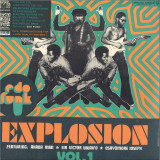
Analog Africa Presents Edo Funk Explosion Vol. 1, available on
2xLP/Gatefold LP with 20-page booklet / CD with 36-page booklet. It was
in Benin City, in the heart of Nigeria, that a new hybrid of intoxicating
highlife music known as Edo Funk was born.
It first emerged in the late 1970s when a group of musicians began to experiment with different ways of integrating elements from their native Edo culture
and fusing them with new sound effects coming from West Africa s night-clubs.
Unlike the rather polished 1980 s Nigerian disco productions coming out of the
international metropolis of Lagos Edo Funk was raw and reduced to its bare
minimum.
Someone was needed to channel this energy into a distinctive sound and Sir
Victor Uwaifo appeared like a mad professor with his Joromi studio. Uwaifo
took the skeletal structure of Edo music and relentless began fusing them with
synthesizers, electric guitars and 80 s effect racks which resulted in some of the
most outstanding Edo recordings ever made. An explosive spiced up brew with
an odd psychedelic note known as Edo Funk.
That’s the sound you’ll be discovering in the first volume of the Edo Funk Explosion series which focusses on the genre’s greatest originators; Osayomore
Joseph, Akaba Man, and Sir Victor Uwaifo: Osayomore Joseph was one of the
first musicians to bring the sound of the flute into the horn-dominated world
of highlife, and his skills as a performer made him a fixture on the Lagos scene.
When he returned to settle in Benin City in the mid 1970s - at the invitation of
the royal family - he devoted himself to the modernisation and electrification
of Edo music, using funk and Afro-beat as the building blocks for songs that
weren’t afraid to call out government corruption or confront the dark legacy of
Nigeria’s colonial past.
Akaba Man was the philosopher king of Edo funk. Less overtly political than Osayomore Joseph and less psychedelic than Victor Uwaifo, he found the perfect
medium for his message in the trance-like grooves of Edo funk. With pulsating
rhythms awash in cosmic synth-fields and lyrics that express a deep personal
vision, he found great success at the dawn of the 1980s as one of Benin City’s
most persuasive ambassadors of funky highlife.
Victor Uwaifo was already a star in Nigeria when he built the legendary Joromi
studios in his hometown of Benin City in 1978. Using his unique guitar style as
the mediating force between West-African highlife and the traditional rhythms
and melodies of Edo music, he had scored several hits in the early seventies,
but once he had his own sixteen-track facility he was able to pursue his obsession with the synesthetic possibilities of pure sound, adding squelchy synths,
swirling organs and studio effects to hypnotic basslines and raw grooves. Between his own records and his production for other musicians, he quickly established himself as the godfather of Edo funk.
What unites these diverse musicians is their ability to strip funk down to its
primal essence and use it as the foundation for their own excursions inward to
the heart of Edo culture and outward to the furthest limits of sonic alchemy.
The twelve tracks on Edo Funk Explosion Volume 1 pulse with raw inspiration,
mixing highlife horns, driving rhythms, day-glo keyboards and tripped-out guitars into a funk experience unlike any other.
- A1: All Ausländer Go To Heaven (Reprise) 05 42
- A2: Deutsche Pässe 02 01
- A3: Professional People 01 53
- A4: The Price Of Teilhabe 03 02
- A5: Automobile Love 02 27
- B1: Bürogebäude In Und Um Frankfurt 04 57
- B2: Dark Boys 01 52
- B3: Freizeit ´20 03 15
- B4: The Good Policeman 03 01
- B5: Proposal For A Worker`s Anthem At Dmu2 Daglfing 02 44
- C1: Doggerland 03 43
- C2: All We'll Ever Need 03 18
- C3: In Every City, In Every Aldi The Blood Of My Brothers And Sisters Taints Your Spargel 03 11
- C4: The Crowd 02 12
- C5: Home 02 59
- D1: Soziokultur 02 10
- D2: Transatlantic Ideology 02 58
- D3: Mjunikcentral Is A Dangerous Place, We Need More Guns To Keep You Safe 3 45
- D4: Wohlfahrt 03 45
In view of the immense Black Lives Matter mobilisation in reaction to the murder of George Floyd and the comparatively meagre societal reaction to the attack in Hanau, the question arises: How come our society does not show the same empathy and solidarity towards its own fellow citizens with Kurdish, Turkish, Bulgarian, Bosnian, Afghan migrant backgrounds or members of the Roma and Sinti?
How limited is our postcolonial discourse if we are unable to address the racist exploitation of those who repair our cars, deliver our parcels or harvest our asparagus?
It’s all a sham. Shake it off like a biometric photograph. Shake off that false consciousness. The Black Diaspora is a transatlantic lie invented by music curators and journalists. Embrace this nuanced return to structures and superstructures, to articulations and historical constellations as analytical tools.
Allow me to dampen your expectations. This is not the sound of decolonisation. This is no compilation of BLM protest songs. This is no celebration of Black emancipatory struggles. You will not be able to play this at your hip post-pandemic house party. This will not go down well with your woke friends. This is music for the square in the room. For that reluctant BAME/Person of Color repelled by your fetishisation of the African-American experience.
This is music for gated communities. This is Fehler Kuti singing of class relations, not of identities and positionalities. This is Fehler Kuti resisting.
Listen to these songs of infrastructure and appraisal of the welfare state. Join me in mourning the broken promises of prosperity for all. Send that “Ausländer“ of your mind to heaven. Colonialism fucked you up. Platform Capitalism is keeping you in chains. Are we to unionise all human and non-human workers at Amazon? Will modernity always have that "forever nigger“? What about those dispossessed field hands harvesting your asparagus?
All is lost. The system is rigged. Because all histories, gestures and identities have been absorbed into this late capitalist apparatus we call diversity. It can integrate anything and anyone. It made me. It is the price of the ticket. And it is unable to challenge its own premise of an atomised society. As if you and I had so little in common.
They will try and help you. They will build a museum for your history and a scholarship program for your future. I warn you. Don‘t let them give you a name. Resist appellation. Don’t get that German passport. Don‘t eat asparagus.
Fehler Kuti, Spring 2021
All songs by Julian Warner. Produced by Markus Acher and Tobias Siegert.
Markus Acher – drums, percussion, backing vocals Micha Acher – sousaphone, trumpet Cico Beck – synthesizer Jenny Bohn – backing vocals Pacifico Boy – vocals Katja Kobolt – spoken word Theresa Loibl – bass clarinet, backing vocals Sascha Schwegeler – steeldrum, kalimba, percussion, backing vocals Tobias Siegert – bass, synthesizers, percussion, backing vocals Julian Warner – piano, memotron, vocals
recorded and mixed by Tobias Siegert at Minga Records, july – december 2020 mastered by Moritz Illner at Duophonic
Cover art and photography by Andreas Neumeister. Layout by Sascha Schwegeler.
Fehler Kuti “Professional People” is part of the same multiverse as “The History of the Federal Republic of Germany as told by Fehler Kuti und die Polizei”. A production by Julian Warner. In cooperation with Münchner Kammerspiele. Funded by the Department of Arts and Culture of the City of Munich. Released by Alien Transistor.
Debut solo album by the Red River Dialect songwriter. Recorded at the Hotel2Tango, Montreal, by Howard Bilerman. Featuring Thor Harris (Swans, Thor & Friends, Shearwater) on drums and Thierry Amar (GYBE!, ASMZ) on bass, with guest appearances from Tom Relleen (RIP) (Tomaga, Melos Kalpa), Catrin Vincent (Another Sky) and Coral Rose (The Silver Field, Red River Dialect).
David has written five critically acclaimed collections of songs under the Red River Dialect name. The last two albums (released by Paradise of Bachelors) achieved a glowing Pitchfork review and a Folk Album of the Month award from the Guardian. Selected press below.
“Folk Album of the Month. Alert, anti-colonialist folk. Songwriter David Morris brings alternate seduction and disquiet on this worldly album steeped in the British landscape... a wide-eyed, curious creature, willingly alert to the world.” – 4/5 The Guardian
“Animated with a new intensity, the Cornwall band’s fifth album may be its most ingenious and immersive mix of folk and rock yet. It’s also Morris’ most compelling set of songs. He invests small sensations with outsize power, finding joy in sensory pleasures as well as in the mystical inquests that music allows. Even as the record is steeped in the long history of British folk music, that balance of the tactile and the spiritual anchors these songs in the present moment.” – Pitchfork
“The most underrated folk-rock band in Britain. The idea of them as a Cornish-born, Buddhist-inclined Waterboys is more potent than ever. Their fifth album of elementally-battered, rueful and rousing folk-rock ... is as stirringly anthemic as they've managed thus far.” – MOJO
“A beguilingly atmospheric record… imagine Steve Gunn transplanted to Kernow.” – Clash
“Gorgeous and moving, anchored by the heft of the physical but reaching for more. The epic spareness, the way it manages to be both still and an enveloping swirl, reminds me most of Talk Talk. There’s a prayerful intensity to the quiet bits, a listening, wondering awe, that makes the rock payoffs more powerful. The album works as a restless, searching, gorgeous whole. Morris and his band have never been better.” – Dusted
“It’s not often that a band comes along and over the course of nine songs both plays to the tradition and stands it on its ear. RRD has taken the challenge of playing with reckless abandon to heart, generating an album that stands on the shoulder of giants showing no fear.” Folk Radio
Monastic Love Songs continues the tradition that David has established over the course of five albums with Red River Dialect: using a song cycle to articulate a relationship with inner and outer landscapes, inspired by the Taoist approach of observing the movement of the heavens in order to understand the cosmos within, and vice versa. The joyful closing track Inner Smile was initially written as a poem of thanks to his Tai Chi teacher Hollis and takes its name from a Taoist practice.
The songs were written during the final weeks of a nine-month retreat at Gampo Abbey, a Buddhist monastery in Nova Scotia where David took ordination as Buddhist monk. The album title is sincere, with a little tongue-in-cheek. The songs mostly explore human relationships within the community, with outliers: Gone Beyond shimmers with cosmic devotion, in Rhododendron a reverie grows from the shadow of a flower. Steadfast concerns the love to be found beyond the urge to like and be liked, when you can’t avoid that difficult person. Leonard Cohen, on his six years living in a monastery:
“You know, there’s a Zen saying: ‘Like pebbles in a bag, the monks polish one another.’
David considers this album to be a follow up to 2015’s Tender Gold and Gentle Blue. The cover of that lp featured an image of him on top of Skellig Michael, in the years before the island was made famous as the home of the Jedi. He considers the visit to that abandoned Celtic monastic site to be one of the influences that stirred up his motivation. Skeleton Key speaks of what was given up to go, and what he was giving up to leave, referencing the Tibetan concept of the ‘bardo of becoming’.
The album came about through a series of fortunate encounters. David’s friend Tom Relleen visited him at the Abbey in May 2019, mentioning a postponed plan to visit the Hotel2Tango. A spark was sown: this studio had long figured in David’s imagination. Many of the releases on Constellation Records, which he had become a die-hard fan of in his teens, were recorded there. Tom contributed some Buchla synthesizer to the opener New Safe, which concerns healing in emptiness and light.
In May David was given permission by the senior monastics to acquire a guitar, which was swiftly baptised as “Malibu Barbie”. Having let the identity of being a songwriter loosen up, not playing an instrument in six months, he was unsure what would happen. In the single hour he was permitted to practice each day, songs began to cascade. The first, Purple Gold, concerns a reacquaintance with first love. David wrote to the Hotel2Tango asking if they had any days available in mid-July?
Engineer and studio co-owner Howard Bilerman replied that they did, and a date was set. Did Howard know any local drummers or bass players who might do a session? He did, too many to choose from, what kind of style? David decided to ask for his ideal: did Thierry from Godspeed ever do sessions? Howard sent him the demos. Thierry was up for it. On the day he went deep into the cover of traditional song Rosemary Lane, his double bass singing on this and on Circus Wagon.
David asked if there were any local drummers he would recommend? Thierry said “many, what style?” David tried his luck again, “two of my favourite drummers are Thor Harris and Jim White.” Thierry said let’s invite them. Thor, having met David a decade earlier, flew from Austin to Montreal for that July day in the studio. Nine months of watching thoughts come and go in meditation helped David recognise this as an opportunity to practice enjoying the day without expectations.
He is, however, grateful that this album came out the way it did, channelling some of what it was like to live those nine months in a monastery overlooking the Gulf of St Lawrence, frozen and flowing.
Mixed by Jimmy Robertson at SNAFU, London, mastered by DenisBlackham.
“John Andrews is picking flowers from each corner of his life and
presenting you with an unusual bouquet. His imaginary band ‘The
Yawns’ are back! Third time’s a charm. In hockey terms, they call it a
‘hat trick’ and you know who’s always wearing a ratty old hat? John
Andrews. Three years in the making and we have Cookbook, the third,
and most colorful record from your favorite New Hampshire based
craftsman.
“Unknowing folks usually assume he lives in New York City or
Los Angeles but confer with John for five minutes and if he’s in the
right mood he’ll talk your ear off about the granite state and the old,
seedy colonial barn where he’s tracked his records with his weird and
wonderful friends.
“Take a listen to his previous effort, 2017’s Bad Posture. It was the
grassroot slacker’s pie in the sky. His head was stuck in the past. He
probably excessively listened to ‘Cripple Creek Ferry’ and he most
likely wasn’t keeping up with household chores. Time moves on,
but just look at him now! All grown up yet likely still feeling those
growing pains. After a few more years of traveling we now have
Cookbook, fresh out the oven…phew! About nine or ten new tracks,
but who’s really counting?
“The lyrics are simple and endearing, inspired by mid-century love
songs. His inspirations are all across the board. If his subconscious
was a bootleg taper, life would be the show.
“At any rate, it doesn’t sound like a record made in New
Hampshire, but make no mistake, this is a dyed-in-the-wool Yawns
record, refreshingly straightforward yet full of character. It’s less of a
crowded honky tonk, and more of an empty, poignant speakeasy. You
can finally relax indoors after a weary day out in the cold. Have you
ever seen that painting of dogs playing poker? It might as well be what
they were listening to as the bulldog pushed his chips forward.”
- 1: The Ballad Of Crowfoot
- 1: 2 Peruvian Dream (Part )
- 1: 3 Charlie
- 1: 4 Broker
- 1: 5I Pity The Country
- 1: 6C Razy Horse
- 1: 7L Ouis Riel
- 1: 8 S Hool Days
- 1: 9 Te Carver
- 1: 0O Canada!
- 1: Down By The Stream (Starlight Maiden)
- 1: 2 Rattling Along The Freight Train (To The Spirit Land)
- 1: 3 Pontiac
- 1: 4 The Pacific
- 1: 5 Nova Scotia
- 1: 6 The Dreamer
- 1: 7 Sonnet 33 And 55 / Friendship Dance
- 1: 8 Wounded Lake
- 1: 9 Métis Red River Song
- 1: 20 Son Of The Sun
- 1: 2 The Lovenant Chain
- 1: 22 Bear And Fish
- The definitive overview of one of Canada's unsung musical heroes - Rare/previously unreleased recordings, photos, and interviews - Lyrics, discography, and filmography - Audio re-mastered by John Baldwin Mastering - Artwork by Christi Belcourt and Alanna Edwards - Liner notes by Kevin Howes (Voluntary In Nature) - Contributions from the Dunn family, Bob Robb, and Alanis Obomsawin (OC) // How did you first experience the poetry, music, and film of Willie Dunn? In a Montreal coffeehouse during the mid-1960s? On a CBC Indian Magazine broadcast with host Johnny Yesno? At a Toronto record store or Native Friendship Centre at the turn of the 1970s? Waiting outside of the Mohawk Nation Longhouse? Maybe in your parent's record collection on the Rez? A White Roots of Peace gathering? Pow wow? The Mariposa Folk Festival? Or was it that Save James Bay Benefit back in '73? On a good friend's stereo? Sitting around a crackling campfire? How about an old NFB film reel or VHS tape in high school? Or while attending Manitou College? A German concert hall in the 1980s? Maybe a direct action protest on the colonial streets of Canada? Busking in Ottawa during the 1990s? College radio? At Willie's celebration of life service in 2013 alongside Alanis Obomsawin and Willy Mitchell? LITA's Grammy-nominated Native North America (Vol. 1) compilation or the very anthology you hold in your hands? There should be no judgment for coming to things when you do. All that's important is remaining open to life-changing messages such as these_ Willie Dunn shared truth through song and celluloid. His original composition, "I Pity the Country," is an unparalleled statement on the greed and hate created by humankind, recorded in 1971 and still unfortunately needed today. "It's like the reason you're supposed to make music," said Kurt Vile about the song to MOJO Magazine in 2015. With "Charlie," Willie was the first to deliver the devastating story of Chanie Wenjack and the Canadian residential school system to the music community, nearly 50 years before the much-celebrated Secret Path, yet ignored outside of Indian Country and the folk festival circuit. Dunn's film technique, featured in 1968's The Ballad of Crowfoot (NFB), predates the "Ken Burns effect" to great effect. Are you catching the drift? Willie Dunn was not only a trailblazing leader in his time, but well ahead of the curve, simply without the PR push and big money backing of major label players. "He was our Leonard Cohen," said singer-songwriter Eric Landry about his musical hero. The only difference is that Willie refused to play the Hollywood showbiz game. In talent, he is Cohen, Dylan, and Cash rolled into one and along with Buffy Sainte-Marie, Floyd Red Crow Westerman, and A. Paul Ortega, brought a new set of perspectives and realities to the folk music tradition. Willie spoke directly to his people and Mother Earth through his creations, not only from experience but by examining his roots and connecting with the world in which he lived. We are humbled to help honor Willie Dunn. May he never be forgotten_ PEACE
Multidimensional duo Divide and Dissolve release their third full length studio album ‘Gas Lit’ on Invada Records, produced by Ruban Neilson of Unknown Mortal Orchestra.
Divide and Dissolve members Takiaya Reed (saxophone, guitar, live effects) and Sylvie Nehill (drums, live effects) create instrumental music that is both heavy and beautiful, classically influenced yet thrillingly contemporary and powerfully expressive and communicative. Their music has the ability to speak without words and utilises frequencies to interact with the naturally occurring resonance.
The CD is presented as a digipack.
The vinyl is pressed on 180g Transparent Red vinyl and comes housed in a heavyweight spined sleeve with printed insert and digital download card.
‘We Are Really Worried About You’ presents a formidable saxophone sound giving way to a surge of crushing percussion and heavy guitar riffs. ‘Denial’ is a potent blend of Takiaya’s ominous and unsettling sax that blows wide open into riff city for almost eight glorious minutes. Both tracks encapsulate the message behind the music: to undermine and destroy the white supremacist colonial frameworks and to fight for indigenous sovereignty, black and indigenous liberation, water, earth and indigenous land given back.
For fans of James Baldwin, Osa Atoe, Adrienne Davies, the ocean and freshwater, breath/breathing, Toni Morrison, Octavia Butler, Afro futurism, indigenous futurism, indigenous sovereignty, slavery abolition, resistance, the forest, bodies of water, being submerged, the railroad and Ai Ogawa.
500 only LP. One of the first full-length recordings of Hauka ritual music. Praise songs and sacred incantations to the spirits to inhabit the body. Call and response chants, the pluck of a monochord lute and relentless pounding percussion combine in a dizzying nonstop session. The Hauka movement started nearly a century ago and has persisted on the fringes of Nigerien society. Documented in the 1955 Jean Rouch film Les maitres fous, the Hauka are a pantheon on spirits mirrored on colonial and military figures. Central to the religion is the "Holley Hori" possession ceremony, a ritual driven by militaristic percussive music, wherein spirits come into the body in powerful and violent manifestations. Lingo Seini has played ritual music for almost 60 years, learning from his father. He is joined by his son Youssouf on the calabass and Issaka Moulla, playing his homemade kuntigi. The group regularly accompanies Hauka priests in ceremonies. Recorded with a single microphone in the outskirts of Niamey.
On their Night Dreamer debut, Sarathy Korwar and his allstar “UPAJ Collective” gain brand new ground in their mission to rebalance spiritual jazz with authentic Indian classical music. “UPAJ” means “to improvise” inHindi, and recording direct-to-disc at Artone Studios with almost no preconceived directions, they truly capture the “spirit of spontaneous improvisation”, as Sarathy puts it, like never before.
Sarathy Korwar 2020
"Recording in one take, direct-to-disc is a unique scenario to be in. I feel very blessed to be presented this opportunity. I decided very early on that in order to make the best use of this scenario, the music had to be completely improvised and spontaneous. That is the only true way to record within the limitations of one take. No regrets, no mistakes, no fear and no judgement. These were the ideals. In a way, this was about creating a utopian vision of a world I would like to live in. A microcosm of the ideals that I would like to live by, in the recording studio. The vision of going into the studio with this in mind, was more important than the resulting music we created. Process over product.
Before the session we did some collective breathing exercises that I have learnt from my mother (who is a pranayama practitioner/teacher) and Wim Hof. I believe this helps centre the focus of the group and balances the mind, making it most receptive to new sounds and inspiration.
The song So said Said is a tribute to Edward Said. Intimate Enemy, a tip of the hat to the book of the same name by Ashis Nandy (Intimate Enemy: Loss and recovery of self under colonialism). A cover of Flight IC408 by State Of Bengal is on Side B, as I am a massive fan of the band. Elephant Hangover is the imagery that the tune conjures for me personally on listening to it. A beautiful remix by the brilliant Osunlade of So said Said is on side D.
Thank you to the gifted musicians - Al, Tamar, Achuthan and Giuliano for trusting and letting go. I am lucky to spend time with you."
Album composed, recorded and mixed by Elko Blijweert. Mastered & cut by Frédéric Altstadt. Original cover artwork painted by Joe Brockerhoff. Album pressed on 180g vinyl, in an edition of 500 copies.
Here we add a new classic chapter to tradition. A tradition known as the many exotic sounds of Maestro Elko B. The multi instrumentalist member of bands like ‘The Horse Head Bed’, ‘The Groovecats Deluxe’, ‘Dino And The Chicks’ and many more has once again composed a new solo album for Ekster. This fine and tasty selection of musical pieces vibrate colourful echoes ranging from blossoming fountains over casino-esque gambling. Space-cowboys play hide and seek with childlike innocence in an adult world. Many of the songs on “Realm of Rides & Romance”
have found its origin in Blijweert’s work as a composer of soundtracks for theatre, dance performance and artistic installations. Cinematic reflections providing EXO “Paradise Moods” by this multitrack one man band.
Recorded from 2017 to 2020, Elko has expressed finding inspiration in chance, the Sphinx, the casino, the Decap organ, colonialism, bats and frogs.
The band that modernised Zimbabwean music, and by doing so revolutionised the music industry in their country. Available for the first time on vinyl (180 gramms) with gatefold cover, and now all tracks fully remastered !
In 1972, the country of Rhodesia – as Zimbabwe was then known – was in the middle of a long-simmering struggle for independence from British colonial rule.
In the hotels and nightclubs of the capital, bands could make a living playing a mix of Afro-Rock, Cha-Cha-Cha and Congolese Rumba. But as the desire for independence grew stronger, a number of Zimbabwean musicians began to look to their own culture for inspiration. They began to emulate the staccato sound and looping melodies of the mbira (thumb piano) on their electric guitars, and to replicate the insistent shaker rhythms on the hi-hat; they also started to sing in the Shona language and to add overtly political messages to their lyrics (safe in the knowledge that the predominantly white minority government wouldn’t understand them).
From this collision of electric instruments and indigenous traditions, a new style of Zimbabwean popular music – later known as Chimurenga, from the Shona word for ‘struggle’ – was born.
And there were few bands more essential to the development of this music than the Hallelujah Chicken Run Band. The band came into being when a young trumpet player named Daram Karanga offered to assemble a group to entertain the workers at a copper mine in the town of Mhangura.
The original line-up – which included legendary singer Thomas Mapfumo, who would bring the sounds of Chimurenga to the world in the early 1980s with his band the Blacks Unlimited, and Joshua Hlomayi, one of the pioneers of mbira- style guitar – started out playing the Rumba and Afro-Rock styles popular in the capital. Although this was a hit with the white owners of the mine, the workers greeted it with indifference. But when they started adding electric arrangements of traditional Shona music to their repertoire, the audience went wild.
With the addition of “Zim” sounds to their arsenal, the HCR Band became unstoppable. Their reputation spread quickly and, in 1974, they were invited to the capital to compete in a national music contest organised by the South-African Teal label. Not only did they win the competition, but they also attracted the attention of famed producer Crispen Matema, who quickly organised their first recording sessions.
On their first day at Jameson House studios, they recorded half a dozen songs, including “Ngoma Yarira” and “Murembo”, two singles that would alter the course of Zimbabwean popular music.
During the next five years, the band would relocate from their small mining town to the capital city, go through numerous line-up changes and pay a few more visits to the recording studio, without ever losing the raucous urgency that had transformed them from popular entertainers into titans of Zimbabwean culture.
- A1: Negus Introduction
- A2: Creole Brothers
- A3: Feel That Today
- A4: Patterns Of The Maroons
- A5: We Keep It Up
- B1: This Kind Of Music
- B2: Sega Move
- B3: Mama Ode (Interlude)
- B4: That S Game
- B5: My Brother (Ti-Ton Lament) (Ti-Ton Lament)
- B6: My Brother
- C1: Don't Preach
- C2: All Of That
- C3: Going Right
- C4: Typik Morisien
- D1: Wadada Lasts
- D2: Creole Soul Clap
- D3: Descendants (Interlude)
- D4: Mele Mele Colonial
- D5: Tales Of The Maroons
Brothers Reginald Omas Mamode IV and Jeen Bassa come together as Mama Odé on full length album 'Tales And Patterns Of The Maroons'. At its core this is a classic "hip hop" format LP - but have you ever heard Creole Sega Rap Roots music before? Of Creole descent from a group of African islands that transiently have hosted many settlers, west African slaves, colonialists and the potentially indigenous East African-Malagache Maroons; the brothers have an inherent spirit of diversity that runs through their recordings. Musical influences consist of jazz, funk, blues and reggae to un-placeable but definite Afro-drum patterns, through to their Golden-Era-Rap vocal flows, which have a sure nod to ATCQ and Slum Village. The album's deep grooves overwhelmingly seed optimism, subscribing to a positive future drawn from historically multi-ethnic ancestral lines. The brothers' natural vocals carry messages of unity, love and well being as well as a conscious questioning of humanity's ill practices and ideas.
Chra is the artist moniker for Austrian Christina Nemec (Bray, Shampoo Boy). SEAMONS is the latest missive in her ongoing exploration of suffocating abstract audio. At once designed and falling apart SEAMONS is rough and crude, a stumbling and staggering electronic expedition where nothing presents itself explicit in intent. It’s a tense obscure record that teases you into it’s peculiar vortex from it’s suggestive nature of exploring the enigma beyond it’s haunted facade.
VICIOUS WATER REGIMES stutters along as an ‘ugly’ mass of grey electronica. CAST(O)RO shines from light from the depths with it’s occasional foray into glistening tones. COLONIA MARINA SERENELLA is a dank squelching backdrop for a dark age. CAST twists tension with flickering electronics chaotic in their perpetual design of order confronting inevitable collapse. LET SHARKS SLEEP is not only a great title but a mind tickling adventure of descending/rising digital dance that builds in intensity with it's relentless repetition. WIDOW WALKS gallops and creaks along a path veiled in whispers. ENGE lunges through time with an air of deep uncertainty. SEAMONS hovers on the outskirts, crawling out of the speakers with endless surprising turns, few of them comfortable.
SEAMONS is progressive ambient, not the kind that makes you escape, but rather one you can't escape from. SEAMONS crawls into the very guts of sound to uncover and unravel the uneasy and unsettling underbelly within.
The Kenyan music scene is one of the most diverse and vibrant in Africa. However, ask any Kenyan which pop music style truly represents Kenya as a nation and there is only one possible answer: benga.
Benga is a pop style with its roots in traditional rhythms, instruments, and melodies. Luo musicians from western Kenya brought the style to prominence in the late 60s but other cultural/linguistic groups in other parts of Kenya quickly developed their own localized variants. With its pulsing beat, interlocking guitars, extended solos, and rapid-fire bass, benga music has dominated the Kenyan music scene over most of the post-colonial period.
Kakai Kilonzo is one of only a handful of benga artists to attract a broad following across Kenya. He opened up his music to others outside his Kamba language and background by singing in Swahili, which is widely understood throughout Kenya. At the same time, with catchy melodies and engaging lyrics, Kakai sang about subjects that all Kenyans can relate to: songs on all aspects of love and marriage, on social responsibility, societal ills (like drinking and witchcraft), moral guidelines, national unity, economic development, and more.
The songs on this compilation are taken from across Kakai's recording career, spanning from the mid-1970s to the mid-1980s, shortly before his illness and untimely death in early 1987, aged only 33. No Wahala Sounds are proud to present this selection of hard-to-find 45s from Les Kilimambogo Brothers, which are being released on vinyl here, for the first time outside Kenya.
The vinyl version includes a free CD copy of the album.
Due for release on 31 July 2020. Interest for airplay from Tom Ravenscroft and Gideon Coe from BBC 6 Music, DJ Ritu from Resonance FM/SOAS Radio, Roger Hill from BBC Merseyside and Steve Barker from BBC Lancashire.