
pas en stock
Commandez maintenant et nous commanderons l'article pour vous chez notre fournisseur.
Last In: 21 months ago
10,29 €
Commandez maintenant et nous commanderons l'article pour vous chez notre fournisseur.

Commandez maintenant et nous commanderons l'article pour vous chez notre fournisseur.

Black Box Records is back.
The label's seventh release is a five-track vinyl VA, a real coup de theatre. They've called upon a strong selection of artists behind the EP's artistic direction, including Alessio Collina , V.I.C.A.R.I. , Nicola Brusegan & Carlo Di Roma, Shacklo and the label's founder, Vito Fattore.
Black Box Records has proven once again that they are a company that produces classy, mature and dancefloor-ready house tracks, with many more to come this year.
Disponible en stock et prêt pour l'expédition

Raw deep house pressure from Sascha Dive, four cuts blending soul, groove, and late-night mood, with Roland Clark blessing the mic. Limited green vinyl for those who still move to the real sound.
DJ Feedbacks :
Laurent Garnier : Cool tracks
Josh Wink (Ovum) : Liking 'Im Inspired' the best here.
C-Rock : Those Nights for me, nice NYC dub House touch!
Radio Slave (Rekids) : I've always been such a big fan of Sasha's productions and "There Is No Tomorrow" hits the spot.
Fleur Shore (Undergrowth / Cuttin' Headz) : im inspired, beautiful track
Reboot (Cecille / Cadenza) : schöne tracks ️
Satoshi Tomiie (Abstract Architecture) : Solid release!
Alinka (Twirl, Classic, Crosstown Rebels, Batty Bass) : Nice one
PBR Streetgang : Invocation and Im Inspired are great
D'Julz (Bass Culture) : those night is the one for me here
Damian Lazarus (Crosstown Rebels) : Thanks for sending. Xx
Ben Sims : Now downloading... will check asap!
Archie Hamilton (Microhertz / FUSE) : Nice thanks
Eddie Fowlkes (Detroit Wax, Rekids, Classic Music Company) : thanks
Tim Sweeney (Beats In Space) : Lovely
Doc Martin (Sublevel) : Sascha on a good one,with the voice of house music Roland Clark no less!!!
Terry Farley : THOSE NIGHTS WORKS FOR ME
Chloe Caillet (Smile Records) : love this!
Oliver $ (Classic Music Company / Play It Down) : Sooo gooood!
Ame (Innervisions) : thanks
Danny Tenaglia : Downloading for Danny Tenaglia, thanks!
Robert Owens (Trax / Musical Directions) : Cool tracks
Kai Alce (Real Soon) : Nice deep tracks from Sascha
Mark Farina : dig them.
Lea Lisa (Phonica Records / Folklor Club) : Really good definition of House
Alexkid (Rawax / FUSE / NG Trax) : Phonogramme (and Sascha Dive) on fire at the moment...
Harri (Sub Club) : lovely stuff, will play and support
il devrait être publié sur 30.09.2026

Nacho Marco drops Colors in Dub Vol.1—deep house soaked in warm analog dub. From the hypnotic “Midnight Blue” and its Satoshi Tomiie remix to the raw pulse of “Bumblebee Yellow” and “Electric Green,” this wax rides late-night frequencies straight from Valencia to Paris.
DJ Feedbacks :
Francois Kevorkian (Wave) : Love the Satoshi mix
Eddie Fowlkes (Detroit Wax, Rekids, Classic Music Company) : thanks
Travis Kirschbaum (Warehouse Preservation Society) : Loving this. Especially Midnight Blue!
Sascha Dive : Midnight Blue for me!!
Brothers' Vibe (Luv4Wax) : Super ep, great works!!
Radio Slave (Rekids) : Another superb ep from Phonogramme and Satoshi's mix is great.
Giles Smith : "midnight blue" is nice
Alexkid (Rawax / FUSE / NG Trax) : Totally my vibe. <3
Aleqs Notal : Yes !!
Italojohnson (Italojohnson) : Track 1 for me!
Ben Sims : Now downloading... will check asap!
Okain (Talman / Infuse / Pleasure Zone) : Electric Green is dope!
Satoshi Tomiie (Abstract Architecture) : Receiving great feedback from the dance floor!
Steffi (Dolly) : lovely release!!
Laurent Garnier : Cool tracks
DJ Bone (FURTHER) : Electric Green and Satoshi Tomiie remix work for me.
Harri (Sub Club) : lovely stuff, will play and support
Rob Pearson (Evasive Records / Sine 102.6fm) : lovely - right up my street, cheers ;-)
Felix Dickinson (Futureboogie, Rush Hour, Cynic) : Solid E.P. current fave Electric Green
Jorkes (Freeride Millenium) : lovely, thanks so much. xo
Kassian (Phonica White / Heist Recordings) : wicked
Jaye Ward (Dalston Super Store / Netil Radio) : massive quality as ever!! super deep and pulsing gear, electric green is ace! thx
Tim Sweeney (Beats In Space) : Sounds great
Chloe Caillet (Smile Records) : love this!
Stevie Cox (Sub Club) : really lush, thank you !
Raresh (ar:pi:ar) : thanks
Ame (Innervisions) : thanks
Geir Aspenes (G-Ha (Sunkissed)) : Thank u
Saoirse (Body Movements) : Super nice dubby vibes
Amotik : Very nice :)
Kai Alce (Real Soon) : Satoshi remix is hot!
Domenic Cappello (Subclub) : nice dubby house
Cee ElAssaad (ENSOULED) : Just the way I like it! dubby and groovy.
Mike Shannon (Cynosure) : Excellent work here from Valencia's finest!
il devrait être publié sur 30.09.2026
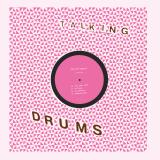
Phwoar! TD go four for the floor on Volume 9, letting loose with a set of sure-shot hits from all corners of their sonic spectrum.
A tag team match up, this action spectacular trades peak-time pump, Balearic cool, Italo thrust and dance-punk theatrics on its way to snatch the championship.
Obviously TD ooze subtlety and taste, so as we sat sipping Schnapps from our Stanley cups, we couldn't help but take a little inspo from our kitchen decor. 'Live Love Pump' - what a mantra. In musical form, this philosophy takes the shape of a capital D-isco delight, equal Pats Cowley & Adams, EQ-freaked and filtered into something dafter than a pair of chrome clad millionaires. Big room mirrorball magic if ever we've heard it.
The A2 sees the drunk AOR funk of 'Sure Line' take a leisurely stroll down the coast, a Gauloises in the gob and tattered Baldwin in the back pocket, flipping and flopping along the prom to buoyant bass, melting brass and more than a little melancholy.
Booting off the B-side, 'Un America' is a massive mid-tempo chugger replete with laser fire, synth scree and nipple high guitar. Powering along on a serious bass sequence armed with hooks-a-plenty, mostly incomprehensible lyrics and a groove which won't quit, this has all the ingredients required for an Italo all-timer.
The finale finds us in the company of some punk pioneers at their absolute silliest, bringing the kind of whacky vocal vibe, surf-centric style and off kilter groove the B-52s made a career of. Add in animal chatter and scratchy guitars and you've got the sort of secret weapon the Idjuts unleash waaaay post peak.
Limited Press - Numbered Insert - Drum Fun Guaranteed
il devrait être publié sur 30.09.2026

Previously unreleased jazz funk from Suriname, recorded in 1981 by keyboardist Sonny Khoeblal and his band Thalamus.
The music of Thalamus is a time capsule and the best kept secret of post-independent Suriname. During this turbulent time, the band used the language of jazz to express their desire for unity and freedom.
The generation of Thalamus envisioned a future beyond the ethnic divide their parents knew as social barriers. After independence, young people met at work or in universities and shared principles of unity and international solidarity. Jazz played an important role in translating tensions and experimenting with a sound of the future.
The band members of Thalamus shared interests in jazz-fusion from Weather Report, Chick Corea, Bob James and Carlos Santana. Compared to contemporaries with more pop appeal, their sound remained obscure in Suriname. Still, people listened to them bending conventional rules of jazz, pop, latin, rock and funk. This fusion reflected the band, its diverse members and their country: Suriname is a multi-ethnic country by colonial force. If diamonds are formed under pressure, love and solidarity emerge under oppression.
Thalamus is a unique recording of this revolutionary period, with new people finding each other based on a universal language: jazz-fusion. It culminated in six songs, two of which are 'Summer of Love and Music' and 'Lady Amazone'. This 7" vinyl brings you their story, their experimentation with jazz-fusion and tells the parallel history of Suriname.
il devrait être publié sur 30.09.2026
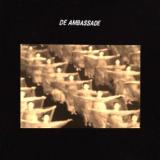
Reissued on Pascal Pinkert's new label 'Phantom Sounds'. Originally release 2019, now remastered with bonus track included! TIP!
Excerpt from the original release text
"On the album, you’ll find a touch of the old and a great deal of new material. ‘Geen Genade’, ‘Wat Voel Je Nou’ and ‘Verloren’ still stand strong in pride of place, reminding us why we love De Ambassade so much in the first place. The opener and title track, ‘Duistre Kamers’ has a dark industrial vibe that is a perfect introduction of what is to come. Somehow ‘Zo Hoog Als De Bogen’ feels warm and cold simultaneously, it maintains an almost spooky tone; ‘Malefica’ in comparison sounds raw, uncut and almost upbeat. ‘Niet Van Mij’ is one of the reasons the album is so special. Its unexpected wavering synths create another contrast of the melancholic and the joyful in one, and the heavy percussion and echoing vocals tie it in with the rest. ‘Laatste Uur’ kicks you in the face, again with this industrial, moody feel and beautifully handled synths. The closing track ‘Wapengekletter’ is elegant, and a new favourite here. The dark vocals, haunting melody and cleverly tempoed percussion conclude the album wonderfully. Overall, De Ambassade has hit the nail on the head and produced this autumn’s must have Amsterdam album."
il devrait être publié sur 30.09.2026
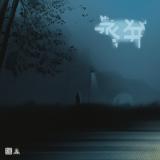
Each year, countless people slip quietly out of their own lives, leaving no trace behind. The Japanese have a word – 蒸発 “joha’tsu” – the ones who “evaporate.”
Some flee mundane and heavy lives or simply the shadow of themselves. A few turn to the – 夜逃げーや “yonige-ya” or “night‑movers” – companies that specialize in helping someone vanish and begin again in some distant place.
il devrait être publié sur 30.09.2026
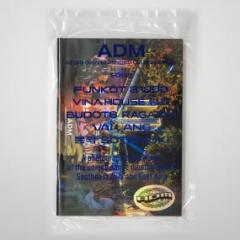
228 page photobook, printed on high quality Japanese paper.
Paperback
Size: 257 x 182 x 7mm
Enclosed in a printed clear plastic bag
Soi48 proudly presents this book, a photographic document of the unique dance music clubs
and culture of Southeast Asia and East Asia. The photos, from the years 2017 through 2025,
were taken in nightclubs, discos, festivals, raves, sound system parties, private parties and
migrant worker clubs — the places where Asia’s unique dance music genres are born and
thrive. ADM, with its exclusive on-the-spot snapshots, provides an extraordinary visual
archive of Asian contemporary dance music. Journeying through Thailand, Vietnam, Laos,
Malaysia, Indonesia, Philippines, Myanmar, Taiwan, Korea and Japan, Soi48 captures
glimpses of how people create their nights, visually comparing the differences between
countries in fashion, dance style, lighting, club interiors, flyers and more, showcasing the
distinctive entertainment culture that each country has created. The 167 photos also feature
the pioneering DJs and track makers who built unique music genres in each country, such
as Budots (Philippines), Vina House (Vietnam) and Saiyo (Thailand). Also of note: the book
provides a valuable record of nightlife during the COVID-19 pandemic; captures the energy
that migrant workers release in clubs on weekends; and in general showcases the ingenuity,
wit and passion of music lovers throughout the region.
Soi48:
A duo, comprising Tokyo natives Keiichi Utsuki and Shinsuke Takagi, that promotes the
magic of Asia and Asian music through DJ-ing, writing, design, and party activities. Their
interests range from traditional music to cutting-edge dance music, released on physical
media as well as on the internet. In addition to supervising the film Bangkok Nights (Kuzoku)
and the EM Records Thai music series, they introduce the joys of Asian music and travel
through talk events, TV, radio appearances, etc. Their books include TRIP TO ISAN: A
Traveling Thai Isan Music Disc Guide (DU BOOKS), OMK#001 (OMK), and ADM: Asia's own
unhinged club culture. As ever, they enthusiastically continue to research dance music and
sound system culture in Asian countries.
il devrait être publié sur 30.09.2026

Split#5 marks the fifth and final installment of the Split series on the Various Artists catalogue of Pi Electronics, pairing Spanish producer Hurtado and Greek producer Nikitas Grs. Despite their distinct approaches, Hurtado's industrial-leaning broken beat funk and Nikitas Grs' psychedelia-infused noise techno converge through a shared aesthetic of textured sound design, raw energy and dark atmospheres. On the A-side, Hurtado showcases his trademark production style through the driving cuts "Show of Force" and "Bad Company", while "The End", featuring vocals by Genevieve GV, reveals a more experimental side of his production. The B-side welcomes Nikitas Grs with two compositions that blur the boundaries between techno, trance and industrial music. The live version of "Susano" unfolds as a rolling, hypnotic dancefloor trip, while "Anoriotos" balances heavy rhythmic impact with an underlying sense of ambient nostalgia. The digital bonus track, "Pollinator 5000", reveals yet another facet of Nikitas Grs' sound palette: a relentless piece of noise-techno that rounds off the release with uncompromising intensity.
Disponible en stock et prêt pour l'expédition

DJ DIE SOON is the apocalyptic alter-ego Daisuke Imamura, whose performances of masked malice have been a fixture in the Berlin underground for the past decade. His latest record My Brothel The Wind takes inspiration from Sun Ra at his most grotesque, conjuring a distorted phantasmagoria with an eclectic crew of compatriots like Rully Shabara, Sara Persico, and longtime collaborator Kiki Hitomi. Film director Hiroo Tanaka’s visual contributions in the album art, poster, and music video complete the album’s narrative, telling a story not of villainy but of phantom caprice in a dying world.
My Brothel The Wind shows DJ DIE SOON as an alchemist of distortion, transmuting the club-forward beats of his 2020 debut Kappa Slap and the seething horrorscapes of DIEMAJIN, his 2022 collaboration with Tokyo vocalist MA. Imamura’s obsession with noise stems from his upbringing in Tokyo, where he grew up hearing the deafening roar of trains every day. “The buildings were really tall, so the sounds reflected so much and it was so loud that you couldn’t even have a conversation on the phone. Hearing this noise every minute when living in this flat, it became a normal thing,” he says. While most would content themselves with avoiding loudness, DJ DIE SOON seeks to unpack its visceral potential.
DJ DIE SOON’s subterranean productions form a monstrous gestalt with the eclectic contributions of his network of co-conspirators. “Unfinished” and “Directions” are pulsating chimeras that highlight animalistic vocalizations from Hitomi and Shabara; Italian MC Franco Franco’s verses snake underneath the noisy onslaught. The tectonic textures of “Dandelion Crackers” are courtesy of multi-instrumentalist Laure Boer’s handmade stone synth. Sara Persico’s mangled vocables hang as fleshy reminders of human fragility on “SAQ4IME”; in the Hiroo Tanaka-directed music video, the track’s sonic uncanniness is made cinematic, with an ambient dread that references Hiroshi Teshigahara’s 1964 psychological thriller Woman in the Dunes.
While Sun Ra’s intergalactic Moog reached for the stars, DJ DIE SOON plunges into the depths of hell. “Everybody, Shake Your Body, We Chill At Party” feels like the sonic equivalent of a wax museum burning to the ground, rigid smiles melting into the fire. Rather than a vision of the future, My Brothel The Wind is a laugh-cry of despair in the face of a Hadean present. DJ DIE SOON confronts the world with a new hand-made mask, reborn in the ashes.
L'article est déjà en route pour nous et devrait être expédié de 01.10.2026.
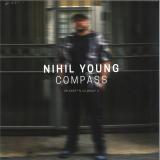
When everything just aligns… then it feels like it is meant to be. I think we have all experienced that feeling; a feeling of completeness and that ‘full circle’ moment. Nihil Young lands his debut album packed full or memories stemming from the day he met his wife, to more recent times and the birth of his first child.
‘Compass’ takes you on a real journey of melodic music expertly written and crafted by Nihil from instruments all through to lyrics and songwriting – he has used all of his skills on this body of work – and he does not disappoint! AT ALL!
The album features collaborations alongside Rowland Giles, Leo Wood, Lasada, Jordan Arts, FRDRK, Adriana Stone, TYGR TYGR and more… Each track sounding as special as the last. THIS IS COMPASS….
This is Nihil Young … This is REALPROG
L'article est déjà en route pour nous et devrait être expédié de 02.10.2026.
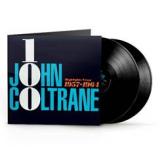
Drawing from the larger career spanning 6LP box, comes a shorter/sweeter collection featuring just the highlights! These are the quintessential compositions and timeless classics that shaped Coltrane's career and influence. Essential listening in compact 2LP.
a Side 1: 23:47
c 1.STRAIGHT STREET - John Coltrane [6:21]
[e] 2.TRINKLE, TINKLE - Thelonious Monk with John Coltrane [6:41]
[g] 3.BLUE TRAIN - John Coltrane [10:43]
[i] Side 2: [19:45]
[k] 1.MILESTONES - Miles Davis [5:49]
[m] 2.SO WHAT - Miles Davis [9:08]
[o] 3.GIANT STEPS - John Coltrane [4:48]
[q] Side 3: [18:11]
[s] 1.NAIMA - John Coltrane [4:25]
[u] 2.MY FAVORITE THINGS - John Coltrane [13:46]
[w] Side 4: [16:22]
[y] 1.EQUINOX - John Coltrane [8:39]
[xa] 2.A LOVE SUPREME, PT. 1 - ACKNOWLEDGEMENT - John Coltrane [7:47]
[a] A1.STRAIGHT STREET - John Coltrane [6:21]
[b] A2.TRINKLE, TINKLE - Thelonious Monk with John Coltrane [6:41]
[c] A3.BLUE TRAIN - John Coltrane [10:43]
[d] B1.MILESTONES - Miles Davis [5:49]
[e] B2.SO WHAT - Miles Davis [9:08]
[f] B3.GIANT STEPS - John Coltrane [4:48]
[g] C1.NAIMA - John Coltrane [4:25]
[h] C2.MY FAVORITE THINGS - John Coltrane [13:46]
[i] D1.EQUINOX - John Coltrane [8:39]
[j] D2.A LOVE SUPREME, PT. 1 - ACKNOWLEDGEMENT - John Coltrane [7:47]
[a] A1.STRAIGHT STREET - John Coltrane [6:21]
[b] A2.TRINKLE, TINKLE - Thelonious Monk with John Coltrane [6:41]
[c] A3.BLUE TRAIN - John Coltrane [10:43]
[d] B1.MILESTONES - Miles Davis [5:49]
[e] B2.SO WHAT - Miles Davis [9:08]
[f] B3.GIANT STEPS - John Coltrane [4:48]
[g] C1.NAIMA - John Coltrane [4:25]
[h] C2.MY FAVORITE THINGS - John Coltrane [13:46]
[i] D1.EQUINOX - John Coltrane [8:39]
[j] D2.A LOVE SUPREME, PT. 1 - ACKNOWLEDGEMENT - John Coltrane [7:47]
[a] A1.STRAIGHT STREET - John Coltrane [6:21]
[b] A2.TRINKLE, TINKLE - Thelonious Monk with John Coltrane [6:41]
[c] A3.BLUE TRAIN - John Coltrane [10:43]
[d] B1.MILESTONES - Miles Davis [5:49]
[e] B2.SO WHAT - Miles Davis [9:08]
[f] B3.GIANT STEPS - John Coltrane [4:48]
[g] C1.NAIMA - John Coltrane [4:25]
[h] C2.MY FAVORITE THINGS - John Coltrane [13:46]
[i] D1.EQUINOX - John Coltrane [8:39]
[j] D2.A LOVE SUPREME, PT. 1 - ACKNOWLEDGEMENT - John Coltrane [7:47]
il devrait être publié sur 02.10.2026

Stone Age Is Now: Poems from Lithic is the new album by musician and poet Caleb Nichols - both a companion piece to his book Lithic: A Hyperballad (Harbor Editions 2026) and a follow-up to his album Stone Age Is Back (Royal Oakie 2025). Across twelve tracks Nichols interpolates poems from Lithic: A Hyperballad with tracks from Stone Age Is Back, bringing new depth to his indie-rock and alt-folk compositions. A meditation on grief, but not in the ways you’d expect, the album explores what it means to be living and dying right now, in this moment of extraordinary change.
Inspired by the raw immediacy of Neil Young, early REM, and Califone, Nichols adhered to a first-take best-take rule and tracked the album in just five days. Produced by Nichols, the album was engineered by Jay Pellicci (Deerhoof, Om, Sleater-Kinney) at Brother’s (Chinese) Recording in Oakland, CA, with Nichols later recording the spoken word overdubs after hours at an empty bar in San Luis Obispo, CA. Pellicci later mixed the tracks and David Glasebrook (Patti Smith, Peter Case, Sugar Candy Mountain) mastered the album at The Garden Shed in Oakland, CA.
Featuring even more experimentation than Stone Age Is Back, the album is peppered with field recordings captured by Nichols from many locations, including Kew Gardens, London; Llan Tysilio, Yns Mon; Treborth, Gwynedd; a secret beach in Bangor; Kelvingrove Park, Glasgow; and Broad Street in San Luis Obispo, CA. In addition to contributions from band members John Metz and Aaron Kroeger, the album features saxophone by Lorenzo Coretese , and Rhys Trimble provides the Welsh translation and performance you hear on “Orme Dream At The Car Park”. Additionally, Nichols took some liberties adapting the poems from the book to the recordings. “You’ll notice that there are differences between the printed poems and the poems recorded here. That is because a poem is never finished and can exist in multiple instances at the same time, like in quantum mechanics. The cat in Schrodinger’s box is both alive and dead; at the bottom of the cliff, our eyes are both: closed and open” says Nichols.
il devrait être publié sur 02.10.2026
Kukangendai are the innovative three-piece Kyoto based experimental rock band formed in 2006 with Junya Noguchi on guitar and vocals, Keisuke Koyano on bass, and Hideaki Yamada on drums. Since 2016 the band have set up shop in their studio and venue space, Soto, which houses an incredibly well tuned and powerful sound system that has become a well known destination for touring musicians. In March of 2025, Marionette was celebrating a belated 10 years of activity with label showcases across Japan in collaboration with Dotei Records, and Soto was inevitably one of the stops as many label alumni have set foot in the venue over the years. This is where I got to experience Kukangendai perform for the very first time and knew right then we were destined to work together.
Kukangendai embody an undeniable sense of timing and precision through collage-like repetition of minimalist phrases that manifest as a single unified rhythm. Their latest offering for Marionette, titled Baquet Wheel, is a purely acoustic endeavor, remarkably recorded live using Taku Unami's special binaural microphone. The trio seamlessly twist polyrhythms and melodies rooted in jazz, krautrock, blues, and Tuareg producing a timeless sound that preserves the primitive and memory evoking narratives buried deep within the music. Over the course of five tracks, the visceral nature of Kukangendai’s dynamic evolves from playful riffs that are seemingly familiar yet strikingly original, making it impossible to discern exactly when this material was conceived.
Kukangendai have maintained a prolific yet relatively low profile for the last two decades, with a handful of self-released editions on their own labels (Soto and Leftbrain) as well as a collaborative album with pioneering electronic music composer Ryuichi Sakamoto in 2018, then venturing outside Japan in 2019 to release their first widely distributed album on Ideologic Organ, a label curated by Sunn O)))’s Stephen O'Malley. Other collaborative projects to date include an album produced with rap group Moe and ghosts, live performances with Keiji Haino and with poet Gozo Yoshimasu, productions with the Chiten theater company, and most recently a remix album of their works featuring Carl Stone and Madteo.
il devrait être publié sur 02.10.2026
Veerus & Mattia Saviolo bring their A-game for the brilliant ‘Move Your Body’. The Italian compatriots aren’t new faces to Drumcode. Veerus has earned his stripes via five fantastic EP over an eight-year period, highlighted by ‘Hypnosis’, ‘System’ and ‘Cycle’. Meanwhile Mattia Saviolo is a recent debutant dropping the excellent ‘Parallel Dimension’ on A-Sides Vol.10. When Veerus suggested a collaboration to Mattia, he didn’t mince his words. “Yes, but it has to be a bomb!” Over two days the pair locked in to build an outstanding peak-time production from the ground up. “We started completely from scratch, with no ideas prepared in advance and no project exchanges before meeting. In just two days the track was finished and everything happened very naturally. We both brought our own vision into the process without stepping on each other’s toes, which made the collaboration feel effortless from start to finish,” Veerus shares. ‘Move Your Body’ has a distinct charismatic appeal not commonly found in techno tracks, highlighted by a stomping riff throughout and tension-filled break, before it turns into a pumping cut in the final stanza. A straight-up belter! Accompanying it is a captivating solo track from Mattia, ‘Mindframe’. An absolute gem, file under futuristic techno that sounds like no other.
L'article est déjà en route pour nous et devrait être expédié de 02.10.2026.

Living Weapon returns with Death In The Family, a full-length that confronts mortality, meaninglessness, and the aftermath of existence. The release broken down over 23 minutes toward an unresolved end — life examined at its start and its finish, with the universe indifferent to either. Recorded, produced, and engineered by Jeremy Martin over fall 2025 into spring 2026 — the band's first time tracking a full album internally. Mixing handled by Taylor Young of The Pit Recording Studio and Mastering by Nick Townsend. The album is introduced with "The Leaving Process” laying out the album's core idea: life as connection, not permanence — matter created and destroyed, briefly aware of itself in between.
il devrait être publié sur 02.10.2026
The final installment of the GIANT SKY trilogy, Giant Sky III, will be released on October 2nd, 2026, preceded by the single "Fleeting Glimpse", which offers the first taste of the new album. A companion postlude album, The Further We Go The Deeper It Gets, will follow on October 16th, 2026. Together, the two records complete an ambitious body of work that has seen Viken explore a broader and more introspective musical landscape than ever before. "Fleeting Glimpse" provides an evocative introduction to the final chapter of the GIANT SKY trilogy. While Viken"s band Soup has become renowned for its emotionally charged, crescendo-driven soundscapes, GIANT SKY allows him to embrace an even wider palette of influences. Drawing from alternative art rock, post-rock, electronica, ambient music, indie, folk, and progressive rock, the project balances immersive atmospheres with memorable melodies. In an era increasingly dominated by algorithms, artificial intelligence and digital perfection, Viken has consciously taken the opposite path. GIANT SKY is built around the human element of music-making, embracing imperfections and authenticity as artistic strengths. "This album has been with me for a long time. Some of the ideas on Giant Sky III go back many years, and in a way it feels like a cross section of the last 25 years of my life as a composer. We live in a time where music is increasingly shaped by algorithms, AI and endless digital possibilities. I suppose this record is my way of walking upstream a little bit - taking the slower route, trusting the human imperfections, and letting the music find its own shape. It wasn"t a quick album to make, but I"m proud of what it became: ambitious where it needed to be, modest where it should be, and above all, honest." - Erlend Viken
il devrait être publié sur 02.10.2026
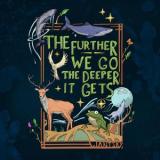
The final installment of the GIANT SKY trilogy, Giant Sky III, will be released on October 2nd, 2026, preceded by the single "Fleeting Glimpse", which offers the first taste of the new album. A companion postlude album, The Further We Go The Deeper It Gets, will follow on October 16th, 2026. Together, the two records complete an ambitious body of work that has seen Viken explore a broader and more introspective musical landscape than ever before. "Fleeting Glimpse" provides an evocative introduction to the final chapter of the GIANT SKY trilogy. While Viken"s band Soup has become renowned for its emotionally charged, crescendo-driven soundscapes, GIANT SKY allows him to embrace an even wider palette of influences. Drawing from alternative art rock, post-rock, electronica, ambient music, indie, folk, and progressive rock, the project balances immersive atmospheres with memorable melodies. In an era increasingly dominated by algorithms, artificial intelligence and digital perfection, Viken has consciously taken the opposite path. GIANT SKY is built around the human element of music-making, embracing imperfections and authenticity as artistic strengths. "This album has been with me for a long time. Some of the ideas on Giant Sky III go back many years, and in a way it feels like a cross section of the last 25 years of my life as a composer. We live in a time where music is increasingly shaped by algorithms, AI and endless digital possibilities. I suppose this record is my way of walking upstream a little bit - taking the slower route, trusting the human imperfections, and letting the music find its own shape. It wasn"t a quick album to make, but I"m proud of what it became: ambitious where it needed to be, modest where it should be, and above all, honest." - Erlend Viken
il devrait être publié sur 02.10.2026
Confessions of a Lonely Heart follows the journey of a heart searching for connection. Across nine tracks, including “Miss Me More,” “Someday” and “Psycho,” Eric Nam shares deeply personal confessions of heartbreak, yearning, obsession and self-discovery. While the stories are his own, the emotions behind them are universal: the desire to love, be loved and feel understood. “Loneliness can make us feel as though we’re the only person experiencing it, when in reality, it’s one of the most universal parts of being human,” Eric shares. “This album gave me a place to be honest about emotions that can be difficult to admit and confess things we often keep to ourselves. My hope is that people can hear pieces of their own stories in these songs and feel understood by them. When we’re willing to share what’s in our hearts, we remind one another that none of us is truly alone, and together, we can all be a little less lonely.”
il devrait être publié sur 02.10.2026

New super-groovy one-off pressing purple double-vinyl very limited edition of Miami Sound 2 housed in gatefold sleeve, complete with two full-colour inner sleeves containing extensive text and exclusive photography from TK Records in-house photographer Larry Warmoth. Soul Jazz Records’ Miami Sound 2 is a superlative collection of 70s soul, funk, disco and boogie featuring tracks from legendary artists such as Betty Wright, Timmy Thomas, Gwen McRae, Milton Wright, T-Connection and many more, all released on the mighty TK Records musical empire based in Miami, Florida.
Throughout the 1970s founder Henry Stone’s TK Records rose up to be one of the most important forces in black music, successfully pioneering the evolution in musical fashions from the early gritty funk and soul at the start of the decade to the arrival of disco in the mid-70s. This album is a rollercoaster journey across soul, funk, disco and boogie, a party-rocking dancefloor-filling collection of monster tracks that includes million-selling hits such as Betty Wright’s classic ‘Clean Up Woman’, Timmy Thomas’s ‘Why Can’t We Live Together’, T-Connection’s ‘Do What You Wanna Do’, anthemic rare groove club hits including Gwen McCrae’s massive ‘All This Love I’m Giving’ and Milton Wright’s ‘Keep It Up’, plus a host of hard-to-find gems and rarities from the likes of Raw Soul Express, Chocolate Clay, Beginning of the End, Robert Moore, Clarence Reid, Little Beaver, Paulette Reeves and many more. TK Records functioned more like a close-knit family than a typical record company. Based in the industrial Hialeah district of Miami, music man Henry Stone surrounded himself with a host of creative artists, musicians, songwriters and producers who created an immediately identifiable TK sound as well as making musical stars out of many of its artists
il devrait être publié sur 02.10.2026
Tsuyushi Hamada, a.k.a. Dayzero, has been producing and DJing for well over a decade, dropping deep heaters on labels including Livity Sound, ZamZam, and many more. We’re very happy to welcome him to the Tectonic family with this epic six-tracker, which sees Dayzero explore the deeper outer reaches of dubstep, techno - and the spaces he gravitates to in between.
‘Ego’ opens the EP at 134 BPM with a primal calling, conjuring spirits from the fire around a delicate but deliberate pitter-patter of interlocking drums and finely tuned delays. Moving up to 140 BPM for the rest of the EP, we’re skirting through the city lights with the techno-compatible energy of ‘Midnight Train’ and taking in old-school grime echoes with ‘Furious Dogs’.
Flip the vinyl here (if you have one!), and ‘Blur’ generates a light disorientation with its polyrhythmic melody. ‘Kingdom’ soundtracks a brooding sense of dread on a late-night drive, before we close with the title track, ‘Soaring’—a conga workout with a thousand-mile stare on it!
Disponible en stock et prêt pour l'expédition

180g Heavy double vinyl LP with liner notes by Tyran Grillo. Limited Japanese Obi for the first pressing. Original artwork by Russell Mills and photography by Jean-Baptiste Mondino.
The third Time Capsule is a body of dub reinterpretations by celebrated producer Bill Laswell of Ethiopian singer Gigi. Curated by Tokyo record collector, music researcher and seasoned reissue supervisor Ken Hidaka, it is the first time Illuminated Audio is pressed to vinyl after its CD release in 2003.
Ejigayehu Shibabaw was born in 1974 in Chagni, northwestern Ethiopia and by pursuing a career as a singer, went against her father’s strict, traditional gender roles. As Gigi, she embraced the same musical freedom she had strived for in her personal life, incorporating the Ethiopian church, funk, hip-hop, West and South African music into her work. She first settled in Nairobi, then Addis Ababa, where she quickly established herself as one of the city’s leading singers. A move to San Francisco in 1998 led to a long and fruitful creative partnership with bassist and producer Bill Laswell.
Around the same time, Chris Blackwell had stepped away from Island Records to start the art house film company and label Palm Pictures. He took an interest in Gigi and together with Laswell, pulled together an all-star cast of musicians for her self-titled US debut album, including Herbie Hancock, Pharoah Sanders and Wayne Shorter. It won international critical acclaim, not just for its musicianship but for making Gigi a “defining voice for the Ethiopian expatriate community”, as journalist Tyran Grillo praises in his Time Capsule liner notes. From the nation-defining 1896 victory over Italian invaders to the quiet revolutionaries who wear simple shemma garments, Grillo believes the themes in Gigi make it “a shower of sunlight on her homeland for those ignorant of its struggles.”
After its success, Blackwell encouraged them to go back into the studio to rethink the album and Illuminated Audio was born. “Anyone can make a voice sound worldly”, Grillo remarks, “but rare are those who can make one sound inner-worldly.” Gigi was clear with Laswell to give her vocals a minor role “because it’s already been done.” Instead her Amharic verse is fleeting, exhaling through the textures like ghostly fragments; soaring yet muted. Yet the album is still titled under her name, an assertion by Laswell of her central role in the album’s creation. Not only was it a fully endorsed project by Gigi, but she would be present throughout its development, giving feedback on half-finished ideas as Laswell played them back in the studio. “It works perfectly”, she reflected after the album’s release. “We wanted to capture the whole spirit of each track, and Bill’s remixes create a different music language that really puts you in a pleasant place”.
This new vocabulary takes its lead from a technical approach that Laswell had been perfecting during a furtive creative period at the turn of the millennium. Much like his ambient interpretations of Miles Davis (Panthalassa, 1998), Bob Marley (Dreams of Freedom, 1997), and Carlos Santana (Divine Light, 2001), Laswell approached Illuminated Audio by returning to the original multitrack masters. Gigi wasn’t just reworked, but recomposed into an expansive lattice of instruments, submerged in a watery ambience of dub and trance undercurrents.
Sonically, this new language that Gigi refers to, is manifested by the original album’s more understated parts being pushed to the fore. Explaining his contrasting methods, Laswell saw Gigi as being “put together in a way that fits”. Contrastingly, in Illuminated Audio, “a lot of things that I featured in the remix weren’t as audible in the original.” Instrumentation laying near-dormant, deep in the mix, are brought to the fore: the acid rock guitar and Wayne Shorter’s saxophone on ‘Tew Ante Sew’, Graham Haynes’ flugelhorn on ‘Nafekeñ’, Laswell’s bass on ‘Kahn’, the melodica in Mengedegna or the floating synths and talking drums in ‘Gud Fella’.
Brought to his attention by mentor DJ Nori, Hidaka describes Illuminated Audio as a “masterful sonic exploration into ethereal ambience and dub” and made sure this reissue also contained a full remaster to give its “deep musicality” much better dynamics and density in the overall sound. Hidaka admits that Laswell's music “is sometimes so out-there, it is often misunderstood” and, indeed, to dub album non-believers this might seem like a prolific producer imposing himself on another artist’s work; eternally developing rearrangements that never quite get to its destination. But that’s missing its true power and triumph. This is more than the reissue of a remix, but “a wholly unique musical entity”, as Hidaka describes. Illuminated Audio refers to the illuminated manuscripts that comprise the major part of Ethiopian art and its new compositions stand in proud solitude as a rare body of reworks that both informs and enhances their originals.
il devrait être publié sur 05.10.2026

Deluxe LP edition, remastered using transfers from the original
tapes lifted from the Phillips vault by mastering legend Kevin Gray.
Pressed at Pallas on 180g heavyweight vinyl and housed in a thick
reverse-board sleeve with additional insert featuring photographs
and words by bassist on the session Bill Crow.
This session, recorded at New York’s Nola Penthouse Studios in
1963, is a little-known masterwork from the incredible Gerry
Mulligan catalogue.
Baritone saxophonist Gerry Mulligan was a true icon of jazz, being
one of the prominent figures in the West Coast scene through the
1950s until his death in 1996. Voted Number One musician in his
instrument by Downbeat Magazine for 42 years in a row, Mulligan
was one of the key players of his time and a figurehead who
helped shape the sound of jazz to come.
From periods in the ‘Birth Of The Cool’-era Miles Davis line up, as
well as forming a piano-less quartet with Chet Baker, Gerry was
always on the frontline of what was hip and happening in
America’s one true art form.
With its striking Oliver Hardimon designed cover, ‘Night Lights’ is
the very definition of refined cool jazz. Shimmering with a latenight beauty that perfectly evokes a sophisticated New York City in
the early 1960s, Gerry and his Sextet fuse slow burning jazz noir
alongside emerging contemporary Brazilian rhythms, with the
interplay between Mulligan and guitarist Jim Hall a particular
standout throughout.
Title track ‘Night Lights’ is a wonderfully smooth, low light tune,
while the Latin-tinged ‘Morning Of The Carnival’ really finds the
band in their finest and most swinging form. A cover of jazz
standard ‘In The Wee Small Hours Of The Morning’, followed by
Chopin’s ‘Prelude In E Minor’ continues the delightful groove
before we finish out with Mulligan originals ‘Festival Minor’ and
‘Tell Me When’.
For this version of the release, New Land have also included the
1965 version of ‘Night Lights’, which gives an interesting
comparison, performed by his later day Quintet featuring the
Wrecking Crew’s legendary Hal Blaine on drums, amongst others.
il devrait être publié sur 05.10.2026
Ralf Hildenbeutel is an award-winning producer and film composer. His style is shaped by his eclectic background as of his classical education in piano and composition and his obsession for electronic music since the late '80s.
In the 1990s he collaborated with Sven Väth on Väth's major albums, released a countless number of club classics and founded his electronic live-project Earth Nation. He has been touring across Europe and playing at the Montreux Jazz Festival, London's Brixton Academy, Tribal Gathering Universe and others.
In that time he also produced various remixes for artists such as Anne Clark, Robert Palmer, Enigma and Yello and was awarded with the "Viva Comet" as Best Producer from Germany's music TV channel VIVA. His film music for the movie "Hommage á Noir" received the golden medal at the New York Festivals in 1996.
At the end of the '90s and first years of the 2000s it was the time for new directions and Hildenbeutel started focusing on artist-related productions and songwriting. He founded the production company Schallbau with Stevie B-Zet and A.C. Boutsen. They produced and co-wrote for artists such as Laith Al-Deen, Andreas Bourani, Yvonne Catterfeld, and Simon Collins (son of Phil Collins). That time they archived several top-ten entries and gold or platinum records.
In 2010 Hildenbeutel moved away from pop productions and focused on film music. He worked on feature movies such as "Vincent will meer" ("Deutscher Filmpreis", 2012 – German Film Academy Award) and international productions such as the Italian mini-series "Maltese".
His film music for the short movie "Momentum" (by Boris Seewald) received various awards such as "Cinedans" and a nomination for best music at the Newport International Filmfestival in the UK in 2014. In 2017 he won the "Goldene Reiter" at the esteemed Filmfest Dresden for his score for the movie "Eine Villa mit Pinien".
Hildenbeutel currently works on several international and German productions. He also collaborated with Chris Liebing on Liebing's latest solo album "Burn Slow", which has been released worldwide on Mute Records.
il devrait être publié sur 05.10.2026
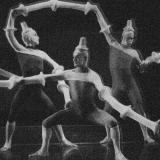
2x12"[30,21 €]
Often credited as the father of multi-media theatre, Alwin Nikolais (1910-1993) took complete creative control over his productions - including cutting-edge approaches to lighting and costume that transformed human bodies into shifting sculptural shapes, while also composing wildly innovative electro-acoustic and synth-based audio as accompaniment.
After initially experimenting with musique concrète and tape manipulation (as demonstrated on the 1959 LP Choreosonic Music of the New Dance Theatre of Alwin Nikolais) Nikolais became the first owner of Robert Moog's synthesizer at the Audio Engineering Society convention in New York in late 1964. Relying heavily on the Moog and later the Synclavier synth/sampler, these 21 tracks document Nikolais' highly-prescient compositions across the mid 1960s through to the late 1980s - existing not only as extensions of his other-worldly choreographic productions, but standalone pieces of foundational mid-century American electronic and experimental music.
"Born in Southington, Connecticut in 1910, Nikolais’s early years and early career were in acting, music and puppetry. It was not until the late 1930s that he began his work as dancer/choreographer in Hartford, Connecticut, where he was commissioned by the Avery Memorial Theatre, a part of the Wadsworth Atheneum, to create an evening-length work to the music of Ernst Krenek. Previously his work and study as a pianist-organist found him accompanying silent films. This sort of accompaniment required from the musician not only a playing skill but also a versatility in improvisation, matching movement to sound, and evoking mood to situation.
Nik was drawn initially to dance by his involvement with the percussion scores used by the illustrious early twentieth century German dancer Mary Wigman. In trying to learn more about percussion, he was lured into dance class and thus his career began. His development of music and dance occurred simultaneously. His introduction to the twelve-tone technique opened his mind to the expanding areas of atonal music, and his dealing with music as sound per se. In 1948, after being appointed director of the Henry Street Playhouse in New York, Nikolais formed the Playhouse Dance Company, later known as the Nikolais Dance Theater, and began his aesthetic orientation toward dance as a study of motion. By the 1950s, he had ceased creating literal dances and began his explorations and eventual milieu as an abstractionist.
Sound became an important part of his abstract theatre. For his first dances, which involved his new thinking of dance as both a visual and kinetic art, he used live percussion scores in which he directed his dancers to play instruments of all nature. There was a combination of children’s toy instruments as well as harsh and resonant automobile brake drums, and other pitched auto parts which he also used to accompany classes. Once he installed his own tape recording machines, he quickly used the limited range these instruments provided in a new way, slowing and increasing speed and reversing sound. He also made the sounds adhere to the choreographic structure (not the other way around), thereby giving the dance its independence from the musical phrasing. But the real need remained: the search for new sound. Nik made a sound library, recording noises and percussion and vocal sounds, which the French aptly called musique concrète. Needless to say, he became a master at splicing bits and pieces.
From 1956 to 1962 Nikolais composed eleven major scores for his theatre pieces using such techniques. In 1963, James Seawright, who at the time was assisting Nik in his productions and also working at the Columbia-Princeton Center for Electronic Music, recorded a sound bank for the production Imago (1963). With this material, Nikolais created his first synthesizer score. Imago won the Paris Grand Prix in 1968 and launched the Nikolais Dance Theatre towards its national and primarily international acclaim.
During the same period, Seawright came to Nik and told him of a young man who had invented and constructed a simplified synthesizer and insisted that Nik visit the electronic fair currently being held in New York. Nik did so and met Robert Moog. He was completely taken by the new machine and after making some suggestions to Moog, (which Moog made), Nik bought the inventor’s first machine with the aid of a Guggenheim Fellowship. Moog himself was astonished by what his machine could produce for Nik. This machine was later acquired by the Museum of Musical Instruments at the University of Michigan at Ann Arbor as the first Moog synthesizer. The Synclavier was Nik’s next source of sound and since the mid-1970s remained the major instrument in the Nikolais soundroom.
Alwin Nikolais has been honored and awarded throughout the world. He has received the French Legion of Honor, the Kennedy Center Honors, National Medal of the Arts, two Guggenheim Fellowships, as well as Mellon, Ford, and Rockefeller grants. He has been a recipient of NEA grants since 1966, been awarded five honorary doctorates, all for his remarkable achievements in Dance Theater. His genius has influenced several generations of artists."
—Murray Louis
il devrait être publié sur 05.10.2026

The latest release from the Gladio Operations label showcases a new collaboration between two heavyweights of the European electro scene. This seventeenth release brings us a collaboration between Jauzas The Shining, a regular on the label, and the eagerly awaited debut of Swedish producer Obergman.
This EP, entitled “Continuum Analysis”, opens with “Analysis Of My Ego” and “Untitled”, two powerful tracks by Jauzas The Shining, featuring the classic, forceful and dark basslines, beautifully accompanied by deep vocals, very much to the French producer’s taste. The final track is by the Swedish artist, who treats us to “Kap Flora”, a journey to be savoured amidst consistent basslines and arpeggios, which draws us into a soundscape that flirts with trance sounds.
Side B opens with two tracks by Obergman: the first, “Continuum Bender”, with its intriguing and mysterious passages, gives way to “Closed Surface”, a track that slows the tempo down compared to the previous ones, and in which we hear a gentle line of more synthetic and relaxed sounds. The EP closes with the track “Con Gusto” by the French artist, a rhythmic journey with a fast-paced development, enhanced by cinematic vocals.
il devrait être publié sur 05.10.2026
c A3 Hogin' Machine - Drums
[c] A3 Hogin' Machine - [Drums]
[c] A3 | Hogin' Machine - [Drums]
Disponible en stock et prêt pour l'expédition
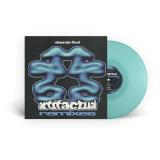
Following his acclaimed ARTIFACTUAL RHYTHM album, Alexander Flood returns to ARCo. with an outstanding remix package, assembling a cast of renowned producers whose names will be instantly familiar to discerning listeners. Each remixer brings their own unmistakable touch, resulting in a rich and diverse body of work that honours the original music while showcasing the individuality of every artist involved.
Contributing to this superb release are Alexander Flood himself, ARCo.'s very own Peacey, the unmistakable sounds of Close Counters, Atjazz, and Fred Everything. Also joining the remix roster are Oliver Knight, Crowd Control & Karl Swisher, and the ever-inventive jazz scientist Kaidi Tatham, each offering a distinctive interpretation that makes this an essential companion to the original album.
Disponible en stock et prêt pour l'expédition
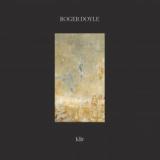
We welcome back one of Ireland’s most important electronic music pioneers, Roger Doyle for his third solo release on our Allchival label. For those who don’t know, Doyle is a composer, producer, founding member of the influential music-theatre company Operating Theatre, and friend to the label. Doyle has been exploring the possibilities of electronic sound since the 1970s which we have been mining.
Idir brings together new fixed electronic works, software piano improvisations and voice, alongside a new recording of music from Operating Theatre’s 1986 production of Sebastian Barry’s The Pentagonal Dream, performed by Olwen Fouéré. Also included is a response to the dreamlike language of James Joyce’s Finnegans Wake.
Meaning “between” in Irish, Idir feels like a fitting title for an album that moves between eras, technologies, theatre and electronic composition: connecting Doyle’s pioneering past with his continuing practice. Returning back to an electronic foundation, the majority of tracks were composed between 2023 and 2025.
il devrait être publié sur 08.10.2026

For any collaborative project to succeed, the artists involved need a creative unifier – a meeting point, if you will, of their disparate interests and experiences. In the case of Mondo Love & Betrayal, the joint project of Nottingham musical mainstays Neil ‘Nail’ Tolliday and Henry Claude Scott, there were two creative unifiers: a mutual love of classic 1980s synth-pop, as well as shared admiration for each other’s work.
Even so, such shared interests and respect for prior mutual endeavours is no guarantee of success. Yet as their eponymous debut album emphatically proves, the duo’s disparate experiences, characteristics and musical strengths have not only dovetailed beautifully, but also resulted in serious sonic gold. Put simply, Mondo Love & Betrayal is a stunning debut album rich in emotive songs, colourful melodies, atmospheric chord progressions and infectious grooves. Throw in the sun-splashed warmth and saucer-eyed, loved-up tactility of late 80s dance beats, and you have a breakthrough album whose timelessness is evident from start to finish.
The project’s roots lie in Tolliday’s desire to work with Scott, a virtuoso guitarist, talented producer and secret songwriter best-known for his work alongside Huw Costin as Torn Sail, and John ‘Ming’ Thompson as Brown Fang – both projects known for prioritising organic instrumentation and sunset-ready soundscapes over dancefloor-rooted beats.
Tolliday, of course, is one of British electronic music’s true polymaths – a long-serving house producer best-known for his long-running Bent project alongside fellow Nottingham resident Simon Mills. He initially approached Scott with the idea of providing vocals on a house track he was working on, but quickly suggested something else: an exploration of a classic synth-pop sound inspired by his love of Pet Shop Boys, New Order, Depeche Mode and the producers who worked with them – the likes of Martin Hannett, Arthur Baker, Stephen Hague and John Robie.
Scott accepted the invitation, seeing it as an opportunity to explore a different side of his musical personality. Their first recording session resulted in the ear-catching and memorable brilliance of ‘Correspondence’ – a tongue-in-cheek breakup song inspired by the death of landlines and the rise of mobile communications – and soon they were working on their debut album.
The resultant 10-track set is simply sublime, with Scott’s expressive delivery of his own lyrics on life, love, heartache and rejection working in perfect union with Tolliday’s kaleidoscopic and pleasingly authentic backing tracks – gorgeous and beautifully rendered instrumentals rich in memorable melodies, bittersweet chords, and subtle nods to ‘80s and early ‘90s dance-pop culture, from Shep Pettibone style remixes and Bernard Sumner guitar licks, to Beloved-esque piano parts and Chris Lowe chord progressions. Some listeners may also draw favourable comparisons with 21st century synth-pop practitioners, particularly Parcels, Private Agenda and the deeply emotive songs showcased by Junior Boys.
For proof, wrap your ears around such album highlights as opener ‘Boo Boo’, where Scott warns that “love and betrayal will haunt you” atop sparkling synths and Vince Clarke style grooves, the Behaviour-era PSB melancholy of recent single ‘Your Latest’, the mid-tempo dreaminess of ‘Beyond The Rainy City’, the early Depeche Mode chug of ‘Whatever Happened To Me’ and the tactile warmth of ‘Across The Plane’.
We could go on. In truth, the whole album is – in Scott’s words – “magical musical alchemy”. Wherever they choose to go next, Mondo Love & Betrayal is a seriously good sonic statement of intent.
Disponible en stock et prêt pour l'expédition
Grammy Award Nominated 'Solace' LP pressed on 180gram vinyl with a gatefold jacket.
It is through this seamless transcendence of styles that their own sonic realm has unfolded; a landscape painted with the club culture of yesteryear and a poignant yet infectious ability to be ever in the moment.
The Age newspaper called Solace "a triumphant record", writing that "Electronic music is often thought of as harsh and unlistenable, but Solace is delicate and incredibly sophisticated in its production. The lyrics hinge on one central theme of yearning, whether that be for change, company or space."
Disponible en stock et prêt pour l'expédition

Special poster on 250gram paper. Postcard with photo taken by Sandrien. Hand-numbered sticker. Shrinwrap
After more than a decade without releasing new music, Amsterdam DJ and producer Sandrien returns with her debut album Compass, released on her own new label, inspi. Created during a stay in Spain, where she finally found the space to create freely again, the album marks a new chapter: no genres, no expectations, just music made purely on feeling. Compass is an album about finding your own path, personally and musically, a cycle of searching and finding, letting go and beginning again. Lead single 'Life' laid the foundation for it all. The visual world of the album is just as personal: photographs Sandrien took around her house formed the basis for its artwork and imagery. With 27 years of experience behind her, Compass proves that mastery doesn't lead to routine, but to exploration. This double LP includes a beautiful double-sided poster featuring two original artworks of ‘Compass’ by Dutch artist Pieter Jan Boterkoek. Releases October 9, 2026 Written and produced by Sandrien Mixed by Julien Chaptal Mastered by Giuseppe Tillieci at Enisslab Artwork by Studio Pieter Jan Boterhoek This album is made with love in Spain, Volkshotel Amsterdam and Groenekan.
il devrait être publié sur 09.10.2026
One year after the release of his debut album Harap-Alb, Articulat returns with Harap-Alb: The Reworks – a companion record that continues the story rather than simply revisiting it.
Based on the original album Harap-Alb by Articulat. Reimagined by friends and fellow travelers.
Just as Harap-Alb leaves home, travels through unfamiliar lands, and meets companions who each shape his story, the music has now found new fellow travelers. Eight artists, each with their own signature, reinterpret one track from the original album, transforming it into something entirely their own while preserving the album’s essence.
The result is a richly varied collection that moves between dreamy synth landscapes, nostalgic strings, hypnotic excursions, broken rhythms, and straight-up dancefloor bangers. Every remix reflects the personality of its creator, turning the album into a conversation between artists connected by a shared appreciation for the original work.
If the first Harap-Alb was a personal retelling of a timeless story, The Reworks is proof that stories continue to evolve once they are shared.
il devrait être publié sur 09.10.2026
MARBLE CREAM COLORED VInyl[25,63 €]
Edge Conditions is a fresh look at the beat-forward electronic music of Jeremiah Chiu. In Electric Time, his 2023 first-thought-best-thought album recorded at theVintage Synth Museum in LA, offered a glimpse a solo process and sound, fast becoming a fan favorite. In many ways this new work is a total reset. Following two ambient-leaning duo albums with Marta Sofia Honer and a pair of improvisatory trance-jazz LPs with LA quintet SML, Edge Conditions settles Chiu into a world of layered, alternately dance-able or chillout-able, rhythm excursions a la classic Four Tet or Aphex Twin.
il devrait être publié sur 09.10.2026

Edge Conditions is a fresh look at the beat-forward electronic music of Jeremiah Chiu. In Electric Time, his 2023 first-thought-best-thought album recorded at theVintage Synth Museum in LA, offered a glimpse a solo process and sound, fast becoming a fan favorite. In many ways this new work is a total reset. Following two ambient-leaning duo albums with Marta Sofia Honer and a pair of improvisatory trance-jazz LPs with LA quintet SML, Edge Conditions settles Chiu into a world of layered, alternately dance-able or chillout-able, rhythm excursions a la classic Four Tet or Aphex Twin.
il devrait être publié sur 09.10.2026
South Asian super-producers Lapgan and Baalti – the former a Madlib-disciple spinning hip-hop grooves out of dusty desi samples, the latter duo purveyors of intricately tapestried dance music – holed up in the California desert in early 2024 for a songwriting session to blend their complimentary styles. They ended up with several albums worth of club material built upon decades of Indian music history – floor fillers that move like early Four Tet meets The Avalanches. They’ve been teasing this material around the world during live sets – from Paris Fashion Week to Glastonbury, London Clubs to BK Warehouse parties, sessions at Lot Radio and Karachi Community Radio, and anywhere else they find an aux. The result has been endless ID requests for unreleased gems like “Ipa Ma” and “Lime Tikka”, calls which should finally be answered with the release of Threads.
Lapgan Bio
Chicago-based archivist and producer Lapgan has become renowned for his signature style: unearthing rare and forgotten Indian & Pakistani sounds and recontextualizing them into hip-hop and dance beats that evoke J Dilla and Madlib. He has cultivated a reputation for quietly revolutionary sample-work across his beloved solo projects History and Duniya Kya Hai, as well as LAFANDAR, his critically acclaimed team up with Heems (of Das Racist / Swet Shop Boys). He has worked with a range of artists from both the West (Your Old Droog, Saul Williams, Cool Calm Pete, Kool Keith, Open Mike Eagle, Blue, Quelle Chris) and the East (EXCISE DEPT, Baalti, Sid Sriram, Sid Vashi, Dynoman), and has been featured in global media including Pitchfork, FADER, Stereogum, Passion of the Weiss, Mixmag, Homegrown, and Vinyl Me, Please. Over the past year he has headlined clubs and performed at festivals across the world from Chicago and New York to London and India, and was personally invited to soundtrack back to back Paris Fashion Week shows for the similarly norm-shifting designer Kartik Research. In 2026 he will soundtrack his third Kartik Research runway show, as well as reissue Duniya Kya Hai for its five-year anniversary alongside a companion EP featuring remixes from peers and supporters Arushi Jain, Loris, Mera Bhai, Malkfunktion, and Maral.
Baalti Bio
Baalti makes electronic music built around rhythm, pressure, and collective release – weaving through leftfield bass, dusty hip hop, tripped out dub and raw house all while maintaining a throughline rooted in South Asian culture seen through the lens of a sweaty dancefloor. In the last year they have experienced a whirlwind rise and growing global recognition: from their EP Mela vividly evoking West Bengal’s sound system culture to their Tamil-cinema-infused filter-house project with Anish Kumar Stunt Doubles, in addition to wide-ranging collabs and remixes alongside DJ ADHD, Naya Beat, and A.R. RahmanThey have also built a reputation for their frenetic live show, with appearances at international festivals like Glastonbury and MELT, headlining shows across Australia and Europe and supporting influences turned peers like Four Tet and Disclosure across North America. Their explosive, percussion-heavy sets have been platformed by Rinse FM, NTS, The Lot Radio, Beats In Space, and Refuge Worldwide, and their music has been renowned by publications including Pitchfork, Bandcamp Daily, RA, and MixMag. Their forward momentum continues into 2026 with slated headline tours in India, Australia, and Asia along with appearances at Coachella, Party in the Paddock, Fvded in the Park, and We Out Here festivals.
il devrait être publié sur 09.10.2026
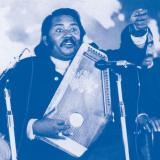
Black Truffle is thrilled to announce a second volume of unheard concert performances from legendary Pakistani kyhal singer Salamat Ali Khan, recorded at Berlin’s Neue Nationalgalerie as part of the MetaMusik festival in 1974. Like the first volume, the immaculate recording by Michael Hönig (of krautrock legends Agitation Free) captures Khan performing a single extended raag in the company of Shaukat Hussein Khan on tabla and Hussein Bux Khan on harmonium. In addition to his stunningly inventive and moving vocal performance, Khan is heard accompanying himself on a specially tuned alpine zither (in place of the traditional swarmandal, an Indian style of zither). The lack of an underlying tanpura drone gives the music its characteristic floating quality, with the three instruments and voice masterfully dancing around one another as they sketch the outlines of this grand, 40-minute Raag Chandrakauns.
If anything, this epic performance of the late-night Raag Chandrakauns is even more seductively spacious and psychedelic than the music heard on the first volume. Obeying the traditional shape of Hindustani classical vocal music performance, a gradual rise in both pitch and rhythmic activity, the music hovers for twenty minutes in a reflective calm, the pulse only gently stated by the tabla while harmonium ornamentation and zither strums float by. In this meditative space, Khan gradually orients us to the contours of the raag, beginning with long notes at the bottom of his register. His improvisation at once builds with a stunningly firm sense of internal logic and seems liberated to explore every melodic and ornamental byway that comes up along the way. By the time we turn to the record’s second side, the music has grown into something far more frenetic, with virtuoso tabla passages at times occupying centre stage between Khan’s increasingly rhythmic melodic variations. Concluding with a sequence of unison tabla and voice passages of breathtaking complexity, the performance is met with rapturous applause. Arriving in a blue-toned variant of the first volume’s sleeve, with acclaimed musicologist Peter Pannke’s liner notes in the original German, Metamusik Festival Berlin ’74 Volume II is not to be missed. Essential listening not just for Hidustanti classic aficionados, but for anyone who needs reminding of the magic of collective music making in the moment.
il devrait être publié sur 09.10.2026
In August 2022, Australia-based, French born fourth-world music legend Ariel Kalma was invited to participate in BBC Radio 3"s Late Junction series of special collaborations. The program pairs artists that have not previously collaborated to create new music together. Kalma was quick to suggest working together with two musicians whom he has never met - the International Anthem recording artists Jeremiah Chiu & Marta Sofia Honer, whose critically-acclaimed duo debut Recordings from the Âland Islands had been released just a few months earlier. Kalma sent an invitation to Chiu and Honer, which was received with great enthusiasm. Chiu had been a fan of Kalma"s work for a long time, even citing him as a major influence on his approach to electronic music composition. After meeting their goal of 20 minutes worth of music for the program (which was four pieces total), the three musicians were satisfied in what they would present, and sent along their work to the producers of Late Junction; but simultaneously they felt like there was much more to be said, more work to be done. There were several pieces that they had nearly completed that weren"t sent for inclusion in the radio program, and there were many ideas for refining those that had. The three musicians collectively agreed that they would continue work together and try to push the music further. The Closest Thing to Silence is the result of their efforts to take the collaboration further.
Disponible en stock et prêt pour l'expédition
