Поиск:component x ep

Стили
Все
Jadu Heart - Wanderflower / Ezra's Garden LP

Jadu Heart’s Wanderflower and Ezra’s Garden reissued together on vinyl for the first time.

Since their 2016 debut EP, Wanderflower, Jadu Heart has been slowly building a catalog of electro-pop, R&B, and psychedelic bops. The UK-based duo, consisting of Alex Headford and Diva Jeffery, now has roughly 30 songs that are a collective myriad of immersive soundscapes.

Jadu Heart's Wanderflower was a project released as part of a school project at The British and Irish Modern Music Institute in 2016. Diva described the project as a "story of two characters - Dina and Faro - who get cursed in a temple and every song in Wanderflower corresponds to a different chapter in their story." Their tutor sent the EP to Mura Masa who immediately took a liking to the duo and made them an opening act for his album release show. They were subsequently signed to his label and given the same manager.

The couple's sophomore EP, Ezra's Garden, is a continuation of Jadu Heart's now-signature DIY, psych-funk sound inspired by Jai Paul. The tracks are accompanied by a visual component on Youtube, as Spotify hadn't quite explored the necessity of visualizers yet. After the fantastical characters were introduced in Jadu Heart's first EP, the second EP explores the relationship between Dina and Faro when they are whisked out of the cursed temple and stumble upon a friend who takes them to a machine that shoots them through the galaxy.

нет на складе

Закажите сейчас, и мы закажем товар для вас у нашего поставщика.

25,42

Последний логин: 4 мес. назад
Various - Various Artists 002

Federsen’s Alt/Dub imprint returns with its second instalment of its Artist Series featuring Forward Memory, Thomas + James, Gradient and Beppu.

Federsen, known for his deep Dub Techno sound, launched his label Alt Dub in 2024. The imprint focuses on warm and spacious dub aesthetics, carrying the torch for Dub Techno’s origins. Since its debut release in early 2024, Alt Dub has expanded with collaborations and artist series featuring names like cv313 and Fletcher, establishing itself as a forward- thinking force in modern Dub Techno.

Forward Memory’s ‘Scholz’s Star’ leads the release, laying down organic percussion and twitchy, oscillating synth grooves alongside, subtly evolving textural components and evolving bottom end swells.

Glaswegian duo Thomas + James follow next with ‘Chosen Colour’, a deep immersive journey fuelled by billowing ethereal pads, bumpy bass stabs and a raw, reduced rhythm section.

Respected Dub Techno artist Gradient follows next on the flip side with ‘Vibes Realm’, delivering his signature floaty style via shimmering dub stabs, crisp drums and a swaying bottom end drive.

Beppu’s ‘Conversions’ then concludes the EP, shifting gears once again as spiralling dub echoes, hissy atmospherics and wide bass intertwines with delayed, broken rhythms.

нет на складе

Закажите сейчас, и мы закажем товар для вас у нашего поставщика.

17,86

Последний логин: 89 дн. назад
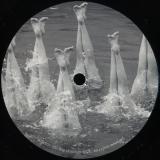
Ibrahim Alfa Jnr - Synchonised Swimming EP

Lempuyang is a label you will know and respect for its high quality stream of immersive dub techno. Now the man behind it, Alastair Kelly, debuts a new label with none other than revered UK techno mainstay Ibrahim Alfa Jnr. He opens up with 'Component A' which is a moody melange of slow, broken dub beats and fizzing synths. There is further experimentation on 'Untitled B2 1' which pairs a churning dub rhythm with naive and innocent melodies and lots of li-fi static. 'Entangled' ups the ante with the suggestion of a fast paced rhythm through a skeletal groove and the flip brings broken beat dub weight, meaning and percussive bass with a 2-step swagger then deep introspection on the closer. A classy EP that suggests this label will be well worth watching.

нет на складе

Закажите сейчас, и мы закажем товар для вас у нашего поставщика.

20,38

Последний логин: 9 мес. назад
Third Ear Band - Third Ear Band

For many bands, having all their gear stolen would be catastrophic. For Third Ear Band, this unfortunate 1968 incident opened a portal to beneficial change. Leader/percussionist Glen Sweeney viewed the heist as a sign to alter Third Ear Band's approach, and they switched to exclusively using acoustic instruments. With electrified psychedelia in full bloom, Sweeney, Paul Minns (oboe, recorder, whistles, flutes) and Richard Coff (violin, viola) struck out on an individualistic path, blending Indian raga with chamber music – without plugging in.

Third Ear Band's 1969 debut album, Alchemy, established them as a solemn, powerful force in the global underground. On Alchemy, Sweeney laid down a steady pulse on hand drums, while Minns and Coff wove in melismatic patterns on oboe, recorder, violin and viola. This approach carried over to Third Ear Band's self-titled sophomore album, often called Elements due to its track titles being named after the four basic components of medieval European alchemists' doctrines.

On this 1970 LP, Third Ear Band sounded at once ancient and contemporary, yet they turned on the hippies with their epic, trance-inducing jams that suggested secret knowledge of infinity. Although Third Ear Band flourished during the West's countercultural zenith, they were peculiarly estranged from it on a sonic level. Even outré contemporaries such as Comus and Jan Dukes De Grey sounded like pop groups compared to TEB. Having no traditional front person or electric instruments, Third Ear Band forged a singular path that flowered most vividly on Elements.

The long songs here stream forth from their skilled hands, evoking a communal transcendence in sound – a hypnotic swirl that doesn't swing, but rather wafts and undulates with cloistered beauty. TEB's music exists in an eternal now, a perpetual wow. It is an ouroboros of organic textures, seemingly magicked into the air spontaneously, yet possessing a rigor that suggests long hours in the lab. Without electricity, it somehow burrowed deeper into your consciousness.

– Dave Segal (excerpt from the liner notes)

Сделать предзаказ22.08.2025

он должен быть опубликован на 22.08.2025

26,47
Various - SPANDAU20 010 2x12"

Various

SPANDAU20 010 2x12"

2x12inchSPND20010
SPANDAU20
11.04.2025

Spandau20, an imprint named after the Western Berlin district and focused on artists from the area, delivers techno in all diverse forms - from warehouse and electronic peak time beats to breaks and IDM, balancing the old and new school sounds flawlessly. With a focus on vinyl releases, for the collectors, Spandau20 has lately also focused on its label nights, with showcases at Fabric, Bassiani and many others. The label's 10th release features 10 tracks that epitomise the musical diversity of Spandau20 and the progressive musical mindset of its roster, calling on the label favourites and Spandau natives to deliver brand new and exciting music. This special release even features one track that all artists have worked on together: 'Come Closer', a swarming, slithering beginning featured as the VA's opener. Its barely coherent female vocal echoing amidst a cacophony of demon-like effects. The chilling ambience captured at the offset transcends into the first full length track by Elli Acula, 'Floating Eyes', a cur characterised by an authoritative, pounding bass featuring calculated percussive rolls and metallic overtones to make for a face-scrunching opener to this devilish collection of works. FJAAK follow for the first of twin cameo appearances, partnering up with fellow live supremo and hardware aficionado KiNK. On 'Overbridge' the trio deliver a cavernous, rolling number driven by a deep thrumming bass in addition to a razor-edged lead synth, and pulsating technopattern. Dajusch is known for incorporating his years of classical study in with his immersive musical style - and with his VA effort the Berlin native neatly showcases this. Easing the energy slightly, 'Move' escalates from its warm, melodic intro into rumbling goliath of a beat comprising a looping, slew of gassy harmonics. The momentum of the release shifts considerably with the introduction of acutely versatile producer, DJ and sound artist Claus. The artist from Spandau leans his track 'Bloomscroll' towards sparse, dubby sonics in which he intricately ties together to form churning, burgeoning soundscape. FJAAK jolt proceedings back into the techno groove with their signature blend of arresting sub-bass and reverberating rhythms, which come thick, fast and heavy on 'Jackfruit'. The abstract wonder of Anna Z's broken-beat like stylings is fully explored on 'Icy Liq'. It's outlandish and amorphous in its execution, causing a clattering percussive chaos that's choicely pieced together by the modular-extraordinaire. Nikk stealthy moves into breaks territory with his track 'Down In The Shadows', packing a trap-like snare with an acid-flecked melody and dawn-breaking, dream-like textures. The penultimate track on the VA is 'Tufted'. J.Manuel expertly employs a chorus of robot-like sonics that course through a short-circuiting low-end to produce a pacy, inescapable journey via a whirling, merciless beat. He is joined by the legendary producer Tobi Neumann for their menacingly ambient number titled 'Fennec.' In parts a nod to UK dubstep, the duo concocts a fierce admixture of styles bolstering tribal-like components with industrialised overtones and methodically crafted drum-fills.

нет на складе

Закажите сейчас, и мы закажем товар для вас у нашего поставщика.

22,27

Последний логин: 9 мес. назад
Various - ECHOES OF ITALY – THE BIRDS OF PARADISE – EARLY 90S HOUSE VIBES VOL.2 (2x12")

Googling “paradise house”, the first results to pop up are an endless list of European b&b’s with whitewashed lime façades, all of them promising “…an unmatched travel experience a few steps from the sea”. Next, a little further down, are the institutional websites of a few select semi-luxury retirement homes (no photos shown, but lots of stock images of smiling nurses with reassuring looks). To find the “paradise house” we’re after, we have to scroll even further down. Much further down.

It feels like yesterday, and at the same time it seems like a million years ago. The Eighties had just ended, and it was still unclear what to expect from the Nineties. Mobile phones that were not the size of a briefcase and did not cost as much as a car? A frightening economic crisis? The guitar-rock revival?! Certainly, the best place to observe that moment of transition was the dancefloor. Truly epochal transformations were happening there. From America, within a short distance one from the other, two revolutionary new musical styles had arrived: the first one sounded a bit like an “on a budget” version of the best Seventies disco-music – Philly sound made with a set of piano-bar keyboards! – the other was even more sparse, futuristic and extraterrestrial. It was a music with a quite distinct “physical” component, which at the same time, to be fully grasped, seemed to call for the knotty theories of certain French post-modern philosophers: Gilles Deleuze, Félix Guattari, Paul Virilio... Both those genres – we would learn shortly after – were born in the black communities of Chicago and Detroit, although listening to those vinyl 12” (often wrapped in generic white covers, and with little indication in the label) you could not easily guess whether behind them there was a black boy from somewhere in the Usa, or a girl from Berlin, or a pale kid from a Cornish coastal town.

Quickly, similar sounds began to show up from all corners of Europe. A thousand variations of the same intuition: leaner, less lean, happier, slightly less intoxicated, more broken, slower, faster, much faster... Boom! From the dancefloors – the London ones at least, whose chronicles we eagerly read every month in the pages of The Face and i-D – came tales of a new generation of clubbers who had completely stopped “dressing up” to go dancing; of hot tempered hooligans bursting into tears and hugging everyone under the strobe lights as the notes of Strings of Life rose up through the fumes of dry ice (certain “smiling” pills were also involved, sure). At this point, however, we must move on to Switzerland.

In Switzerland, in the quiet and diligent town of Lugano, between the 1980s and 1990s there was a club called “Morandi”. Its hot night was on Wednesdays, when the audience also came from Milan, Como, Varese and Zurich. Legend goes that, one night, none less than Prince and Sheila E were spotted hiding among the sofas, on a day-off of the Italian dates of the Nude Tour… The Wednesday resident and superstar was an Italian dj with an exotic name: Don Carlos. The soundtrack he devised was a mixture of Chicago, Detroit, the most progressive R&B and certain forgotten classics of old disco music: practically, what the Paradise Garage in New York might have sounded like had it not closed in 1987. In between, Don Carlos also managed to squeeze in some tracks he had worked on in his studio on Lago Maggiore. One in particular: a track that was rather slow compared to the BPM in fashion at the time, but which was a perfect bridge between house and R&B. The title was Alone: Don Carlos would explain years later that it had to be intended both in the English meaning of “by itself” and like the Italian word meaning “halo”. That wasn’t the only double entendre about the song, anyway. Its own very deep nature was, indeed, double. On the one hand, Alone was built around an angelic keyboard pattern and a romantic piano riff that took you straight to heaven; on the other, it showcased enough electronic squelches (plus a sax part that sounded like it had been dissolved by acid rain) to pigeonhole the tune into the “junk modernity” section, aka the hallmark of all the most innovative sounds of the time: music that sounded like it was hand-crafted from the scraps of glittering overground pop.

No one knows who was the first to call it “paradise house”, nor when it happened. Alternative definitions on the same topic one happened to hear included “ambient house”, “dream house”, “Mediterranean progressive”… but of course none were as good (and alluring) as “paradise house”. What is certain is that such inclination for sounds that were in equal measure angelic and neurotic, romantic and unaffective, quickly became the trademark of the second generation of Italian house. Music that seemed shyly equidistant from all the rhythmic and electronic revolutions that had happened up to that moment (“Music perfectly adept at going nowhere slowly” as noted by English journalist Craig McLean in a legendary field report for Blah Blah Blah magazine). Music that to a inattentive ear might have sounded as anonymous as a snapshot of a random group of passers-by at 10AM in the centre of any major city, but perfectly described the (slow) awakening in the real world after the universal love binge of the so-called Second Summer of Love.

For a brief but unforgettable season, in Italy “paradise house” was the official soundtrack of interminable weekends spent inside the car, darting from one club to another, cutting the peninsula from North to centre, from East to West coast in pursuit of the latest after-hours disco, trading kilometres per hour with beats per minute: practically, a new New Year’s Eve every Friday and Saturday night. This too was no small transformation, as well as a shock for an adult Italy that was encountering for the first time – thanks to its sons and daughters – the wild side of industrial modernity. The clubbers of the so-called “fuoriorario” scene were the balls gone mad in the pinball machine most feared by newspapers, magazines and TV pundits. What they did each and every weekend, apart from going crazy to the sound of the current white labels, was linking distant geographical points and non-places (thank you Marc Augé!) – old dance halls, farmhouses and business centres – transformed for one night into house music heaven. As Marco D’Eramo wrote in his 1995 essay on Chicago, Il maiale e il grattacielo: “Four-wheeled capitalism distorts our age-old image of the city, it allows the suburbs to be connected to each other, whereas before they were connected only by the centre (…) It makes possible a metropolitan area without a metropolis, without a city centre, without downtown. The periphery is no longer a periphery of any centre, but is self-centred”.

“Paradise house” perfectly understood all of this and turned it into a sort of cyber-blues that didn’t even need words, and unexpectedly brought back a drop of melancholic (post?)-humanity within a world that by then – as we would wholly realise in the decades to come – was fully inhuman and heartless. A world where we were all alone, and surrounded by a sinister yellowish halo, like a neon at the end of its life cycle. But, for one night at least, happy."

нет на складе

Закажите сейчас, и мы закажем товар для вас у нашего поставщика.

28,99

Последний логин: 35 дн. назад
Will You - Is It 2 Late?

Will You

Is It 2 Late?

12inchSTÒ022
STÓLAR
28.02.2025

Will You joins the roster of Philipp Priebe’s Stólar this February with his ‘Is It 2 Late?’ EP accompanied by remixes from Lb Honne and Orion. Producer, DJ and Oleeva Records label boss Will You has been slowly unveiling his take on contemporary deep house and dub-tinged techno over the past few years via solo material and remixes on his own imprint and most recently a remix of Philipp Priebe’s ‘Movements In An Empty Department Store’ on Stólar. Here we see Will You returning to the latter aforementioned imprint with his latest EP.

Leading the release is ‘Santé’, a six and a half minute excursion through snaking sub bass tones, a crisp, shu®ed rhythm section, dreamy synth chimes, squelchy 303 licks and spoken word vocal lines. Title-cut ‘Is It 2 Late’ follows next and deviates into more dubbed out territory via expansive, unfurling echoes, cinematic atmospherics and robust, intricate percussion. Opening the ¬ip-side is Zurich’s Lb Honne’s interpretation of ‘Is It 2 Late’, the Project Indigo artist extracts the essence of the original and reshapes it into a subtly nuanced, loop-led and hypnotic workout. Italian duo Orion then conclude the package with their take on ‘Santé’, reshaping the original with their signature deep techno style, fuelled by grainy textural components and bumpy saturated drums.

нет на складе

Закажите сейчас, и мы закажем товар для вас у нашего поставщика.

16,77

Последний логин: 11 дн. назад
CONCEPTUAL - No More Excuses EP

Conceptual

No More Excuses EP

12inchPOLEGROUP076
PoleGroup
21.02.2025

Berlin based producer CONCEPTUAL is back home after his Not an easy one Ep, again providing his own vision on techno, full of sonic landscapes, detail and intelligence.

Release starts with Approach slowly a brief atmospheric intro that sets the pace for what comes next in Il silenzio degli innocenti introducing the rhythmic pulse from the first bar with almost all elements into he equation, this is a minimalistic tool where percussive elements evolve in a subtle manner all over the arrangement.

No more excuses continues in the mood, adding more spice to the formula with reverberated details, growing mental sequences and the usual complex groove. Intense and mental all in one.

Sand fury follows, with atmospheres colliding with rugged components, evolving all together in a progressive arrangement, a superb tool to enhance your mixes properly.

Miles per hour introduces you into another sonic realm, using elastic synth lines, a wise reverb work and a sensation of infinite space combined with floor intensity. Again a proper intelligent missile for the adequate dancefloors out there.

Simone Scardino is one of those few creators that always pushes his sound one step further and we are super proud to have him onboard again.

нет на складе

Закажите сейчас, и мы закажем товар для вас у нашего поставщика.

12,56

Последний логин: 7 мес. назад
Various - ECHOES OF ITALY - ARTISTS IN WONDERLAND – EARLY 90S HOUSE VIBES VOL.1 LP 2x12"

Volume 1 of this expertly curated project of 90s Italian House - put together by Don Carlos.

If Paradise was half as nice… by Fabio De Luca.

Googling “paradise house”, the first results to pop up are an endless list of European b&b’s with whitewashed lime façades, all of them promising “…an unmatched travel experience a few steps from the sea”. Next, a little further down, are the institutional websites of a few select semi-luxury retirement homes (no photos shown, but lots of stock images of smiling nurses with reassuring looks). To find the “paradise house” we’re after, we have to scroll even further down. Much further down.

It feels like yesterday, and at the same time it seems like a million years ago. The Eighties had just ended, and it was still unclear what to expect from the Nineties. Mobile phones that were not the size of a briefcase and did not cost as much as a car? A frightening economic crisis? The guitar-rock revival?! Certainly, the best place to observe that moment of transition was the dancefloor. Truly epochal transformations were happening there. From America, within a short distance one from the other, two revolutionary new musical styles had arrived: the first one sounded a bit like an “on a budget” version of the best Seventies disco-music – Philly sound made with a set of piano-bar keyboards! – the other was even more sparse, futuristic and extraterrestrial. It was a music with a quite distinct “physical” component, which at the same time, to be fully grasped, seemed to call for the knotty theories of certain French post-modern philosophers: Gilles Deleuze, Félix Guattari, Paul Virilio... Both those genres – we would learn shortly after – were born in the black communities of Chicago and Detroit, although listening to those vinyl 12” (often wrapped in generic white covers, and with little indication in the label) you could not easily guess whether behind them there was a black boy from somewhere in the Usa, or a girl from Berlin, or a pale kid from a Cornish coastal town.

Quickly, similar sounds began to show up from all corners of Europe. A thousand variations of the same intuition: leaner, less lean, happier, slightly less intoxicated, more broken, slower, faster, much faster... Boom! From the dancefloors – the London ones at least, whose chronicles we eagerly read every month in the pages of The Face and i-D – came tales of a new generation of clubbers who had completely stopped “dressing up” to go dancing; of hot tempered hooligans bursting into tears and hugging everyone under the strobe lights as the notes of Strings of Life rose up through the fumes of dry ice (certain “smiling” pills were also involved, sure). At this point, however, we must move on to Switzerland.

In Switzerland, in the quiet and diligent town of Lugano, between the 1980s and 1990s there was a club called “Morandi”. Its hot night was on Wednesdays, when the audience also came from Milan, Como, Varese and Zurich. Legend goes that, one night, none less than Prince and Sheila E were spotted hiding among the sofas, on a day-off of the Italian dates of the Nude Tour… The Wednesday resident and superstar was an Italian dj with an exotic name: Don Carlos. The soundtrack he devised was a mixture of Chicago, Detroit, the most progressive R&B and certain forgotten classics of old disco music: practically, what the Paradise Garage in New York might have sounded like had it not closed in 1987. In between, Don Carlos also managed to squeeze in some tracks he had worked on in his studio on Lago Maggiore. One in particular: a track that was rather slow compared to the BPM in fashion at the time, but which was a perfect bridge between house and R&B. The title was Alone: Don Carlos would explain years later that it had to be intended both in the English meaning of “by itself” and like the Italian word meaning “halo”. That wasn’t the only double entendre about the song, anyway. Its own very deep nature was, indeed, double. On the one hand, Alone was built around an angelic keyboard pattern and a romantic piano riff that took you straight to heaven; on the other, it showcased enough electronic squelches (plus a sax part that sounded like it had been dissolved by acid rain) to pigeonhole the tune into the “junk modernity” section, aka the hallmark of all the most innovative sounds of the time: music that sounded like it was hand-crafted from the scraps of glittering overground pop.

No one knows who was the first to call it “paradise house”, nor when it happened. Alternative definitions on the same topic one happened to hear included “ambient house”, “dream house”, “Mediterranean progressive”… but of course none were as good (and alluring) as “paradise house”. What is certain is that such inclination for sounds that were in equal measure angelic and neurotic, romantic and unaffective, quickly became the trademark of the second generation of Italian house. Music that seemed shyly equidistant from all the rhythmic and electronic revolutions that had happened up to that moment (“Music perfectly adept at going nowhere slowly” as noted by English journalist Craig McLean in a legendary field report for Blah Blah Blah magazine). Music that to a inattentive ear might have sounded as anonymous as a snapshot of a random group of passers-by at 10AM in the centre of any major city, but perfectly described the (slow) awakening in the real world after the universal love binge of the so-called Second Summer of Love.

For a brief but unforgettable season, in Italy “paradise house” was the official soundtrack of interminable weekends spent inside the car, darting from one club to another, cutting the peninsula from North to centre, from East to West coast in pursuit of the latest after-hours disco, trading kilometres per hour with beats per minute: practically, a new New Year’s Eve every Friday and Saturday night. This too was no small transformation, as well as a shock for an adult Italy that was encountering for the first time – thanks to its sons and daughters – the wild side of industrial modernity. The clubbers of the so-called “fuoriorario” scene were the balls gone mad in the pinball machine most feared by newspapers, magazines and TV pundits. What they did each and every weekend, apart from going crazy to the sound of the current white labels, was linking distant geographical points and non-places (thank you Marc Augé!) – old dance halls, farmhouses and business centres – transformed for one night into house music heaven. As Marco D’Eramo wrote in his 1995 essay on Chicago, Il maiale e il grattacielo: “Four-wheeled capitalism distorts our age-old image of the city, it allows the suburbs to be connected to each other, whereas before they were connected only by the centre (…) It makes possible a metropolitan area without a metropolis, without a city centre, without downtown. The periphery is no longer a periphery of any centre, but is self-centred”.

“Paradise house” perfectly understood all of this and turned it into a sort of cyber-blues that didn’t even need words, and unexpectedly brought back a drop of melancholic (post?)-humanity within a world that by then – as we would wholly realise in the decades to come – was fully inhuman and heartless. A world where we were all alone, and surrounded by a sinister yellowish halo, like a neon at the end of its life cycle. But, for one night at least, happy.

нет на складе

Закажите сейчас, и мы закажем товар для вас у нашего поставщика.

28,99

Последний логин: 35 дн. назад
Kronert - DRIVIN DRIVIN DRIVIN

A Sonic Journey Through Time. Kronert, a name synonymous with high production standards and innovative sound aesthetics in the electronic music scene, lends his distinctive sonic signature to this 4-Tracker. He weaves together fast-paced rhythms with nostalgic soundscapes, creating a symbiosis of past and future. This EP not only invites you to dance but also to reflect on the temporal nature of music. Characterized by deep basslines and complex rhythmic structures, this tracks proves to be an essential component of any sophisticated DJ session. Embark on a musical journey that challenges the boundaries of time and space, offering a forward-looking perspective on the house and techno genre.

нет на складе

Закажите сейчас, и мы закажем товар для вас у нашего поставщика.

11,72

Последний логин: 5 мес. назад
The Van Pelt - Stealing From Our Favorite Thieves LP

ON SAND COLOUR VINYL FOR FIRST TIME

Post-Punk? Indie-Rock? Post-Hardcore? The Van Pelt walked between all these worlds. Spoken/sung vocals, anthemic pop hooks, fiery guitars and a tightly wound rhythm section made them stand outs of the DIY basement scene they emerged from.
RELATED TO: The Lapse, Native Nod, St Vincent, Blonde Redhead, Enon, Jets to Brazil, Vague Angels.

ABOUT “STEALING FROM OUR FAVORITE THIEVES”:
90s NYC indie heroes The Van Pelt have had a lasting power far greater than so many of the other once bigger bands of that era have had. The sort of interest that has neither waxed nor waned over the decades since they disbanded, yet just mysteriously continues on despite their discography being out of print since the end of the last millennium. So what is it that sets them apart? Too soft to have ran with the AmRep or Touch and Go crowds, not hip enough to have made sense on Matador or Merge, ernest yet not histrionic enough to make it onto the “best emo bands” lists, not weird enough to be on bills with Arto Lindsay and Thurston Moore, etc. In a sense, their outsider status comes not from the wings, but from the dead center eye of the storm. The 90s were happening all around them, they were witnesses thereof, yet they emerged transcendent of it all. You Follow? Maybe it’s worth having a listen to see what I mean.
Barcelona’s La Castanya records is treating us with the first ever rerelease of the two Van Pelt albums to mark the 20th anniversary of Sultans of Sentiment, their benchmark album. They teased us in 2014 that this might be on the docket with the release of Imaginary Third, a collection of singles and unreleased Van Pelt tracks which were originally intended to have been the components of their third album, including the alt-famous “Speeding Train”. Now we’ll finally have access to their entire discography. The first album, Stealing From Our Favorite Thieves is an explosion of anthems belted out as if the war was already lost yet they were hoisting that tattered banner anyhow until there wasn’t a shred to salvage. The momentum coming out of that album had every major label in the States salivating at the possibility of turning them into the next Nirvana. Instead, The Van Pelt followed it up by pulling the van into the garage, leaving the engine running, funneling the exhaust into their lungs, and blissfully deciding to bow out of the race with the epic Sultans of Sentiment. Of course as the story goes, their intended financial flop was the exact opus that jettisoned them into the history books. Buy both albums. You’ll need them both.

нет на складе

Закажите сейчас, и мы закажем товар для вас у нашего поставщика.

21,81

Последний логин: 18 мес. назад
The Van Pelt - Sultans of Sentiment

BRAND NEW VINYL PRESSING ON GREEN VINYL FOR FIRST TIME

Recorded in 1996, the second album from this NYC quartet featured a new line up & sound. Clean, warm, spacious guitars paired with repetitive, hypnotic songs showcased the band reaching a new peak. Beloved by those initiated, it continues to find new devotees.
RELATED TO: The Lapse, Native Nod, Blonde Redhead, Enon, Jets to Brazil, Vague Angels

90s NYC indie heroes The Van Pelt have had a lasting power far greater than so many of the other once bigger bands of that era have had. The sort of interest that has neither waxed nor waned over the decades since they disbanded, yet just mysteriously continues on despite their discography being out of print since the end of the last millennium. So what is it that sets them apart?
Too soft to have ran with the AmRep or Touch and Go crowds, not hip enough to have made sense on Matador or Merge, ernest yet not histrionic enough to make it onto the “best emo bands” lists, not weird enough to be on bills with Arto Lindsay and Thurston Moore, etc. In a sense, their outsider status comes not from the wings, but from the dead center eye of the storm. The 90s were happening all around them, they were witnesses thereof, yet they emerged transcendent of it all. You Follow? Maybe it’s worth having a listen to see what I mean.
Barcelona’s La Castanya records is treating us with the first ever rerelease of the two Van Pelt albums to mark the 20th anniversary of Sultans of Sentiment, their benchmark album. They teased us in 2014 that this might be on the docket with the release of Imaginary Third, a collection of singles and unreleased Van Pelt tracks which were originally intended to have been the components of their third album, including the alt-famous “Speeding Train”. Now we’ll finally have access to their entire discography. The first album, Stealing From Our Favorite Thieves is an explosion of anthems belted out as if the war was already lost yet they were hoisting that tattered banner anyhow until there wasn’t a shred to salvage. The momentum coming out of that album had every major label in the States salivating at the possibility of turning them into the next Nirvana. Instead, The Van Pelt followed it up by pulling the van into the garage, leaving the engine running, funneling the exhaust into their lungs, and blissfully deciding to bow out of the race with the epic Sultans of Sentiment. Of course as the story goes, their intended financial flop was the exact opus that jettisoned them into the history books. Buy both albums. You’ll need them both.

нет на складе

Закажите сейчас, и мы закажем товар для вас у нашего поставщика.

21,47

Последний логин: 18 мес. назад
SIEGES EVEN - A Sense Of Change LP

Sieges Even

A Sense Of Change LP

12inchGCR20230-1
GCR Zyx
20.09.2024

-the groundbreaking third album from 1991

-first remastered re-release & also on vinyl for the first time

-Booklet/inlay with liner notes by guitarist Markus Steffen

-produced by Charlie Bauerfeind at AHA Studio, Munich

When four young musicians from Munich founded the thrash
band Sodom in the early eighties, nobody could have guessed
that they would deliver a milestone for European progressive
metal with their debut album „Life Cycle“ in 1988. Changes
could already be heard on „Steps“ (1990) and on „A Sense
Of Change“ in 1991 they managed to get fans of prog and art
rock on board for the first time. With the much more melodic
singer Jogi Kaiser, who is still active in musicals today, and a
reduced metal component, this balancing act was achieved
in an impressive way. It was the first Sieges Even album
that was no longer released as an LP by the label at the time
(Steamhammer/SPV), but only on CD. „A Sense Of Change“
was very successful in certain circles, but the band parted
ways with guitarist Markus Steffen. The following two albums
deviated from the previous style, but the reunion took place
in 2005, producing „The Art Of Navigating By The Stars“ and
„Paramount“. The chapter was closed in 2007 with the live
album „Playgrounds“. Markus Steffen and singer Arno Menses
founded Subsignal, who are still successfully active today.
„A Sense Of Change“ is finally being re-released in 2024,
with the argument „for the first time on vinyl“ standing out in
particular. The material was first remastered, then mastered
separately for CD and LP. The booklet and LP insert contain
images from the original release as well as liner notes by
guitarist Markus Steffen. The album was produced by Charlie
Bauerfeind in 1991.

-das wegweisende dritte Album von 1991
-erste remasterte Wiederveröffentlichung & erstmals auch auf
Vinyl
-Booklet/Inlay mit Liner Notes von Gitarrist Markus Steffen
-produziert von Charlie Bauerfeind im AHA-Studio, München

Als vier junge Musiker aus München Anfang der Achtziger
die Thrash-Band Sodom gründeten konnte niemand ahnen,
dass sie 1988 mit ihrem Debütalbum „Life Cycle“ bereits
einen Meilenstein für den Europäischen Progressive
Metal ablieferten. Schon auf „Steps“ (1990) konnte man
Veränderungen hören und auf „A Sense Of Change“ schaffte
man es 1991 erstmals, auch Fans des Prog- und Artrock
ins Boot zu holen. Mit dem wesentlich melodischeren
Sänger Jogi Kaiser, der heute noch in Musicals aktiv ist,
und einem reduzierten Metal-Anteil gelang dieser Spagat
auf beeindruckende Weise. Es war das erste Sieges Even
Album, welches vom damaligen Label (Steamhammer/SPV)
nicht mehr als LP, sondern nur noch auf CD veröffentlicht
wurde. „A Sense Of Change“ war in bestimmten Kreisen sehr
erfolgreich, dennoch trennte man sich von Gitarrist Markus
Steffen. Die folgenden zwei Alben wichen vom bisherigen
Stil ab, doch 2005 erfolgte die Reunion, die „The Art Of
Navigating By The Stars“ und „Paramount“ hervorbrachte.
Mit der Livescheibe „Playgrounds“ wurde das Kapitel 2007
geschlossen. Markus Steffen und Sänger Arno Menses
gründeten Subsignal, die bis heute erfolgreich aktiv sind.
„A Sense Of Change“ erfährt 2024 endlich die überfällige
Wiederveröffentlichung, wobei das Argument „erstmals auch
auf Vinyl“ besonders hervorsticht. Das Material wurde erst
remastert, dann für CD und LP separat gemastert. Das Booklet
und der LP-Einleger enthält neben Abbildungen vom OriginalRelease auch Liner Notes von Gitarrist Markus Steffen. Das
Album wurde 1991 von Charlie Bauerfeind produziert.

Сделать предзаказ20.09.2024

он должен быть опубликован на 20.09.2024

16,77
PYJÆN - Feast

Pyjæn

Feast

12inchDM009
DeepMatter
31.08.2024

PYJÆN are delighted to announce the release of their second album 'Feast', planned for September 2021 on DeepMatter Records. The five-piece outfit reaches inside the deep, multidimensional well of what is broadly called Jazz, bringing together all its diverse components in a singular, emotional sound. After setting a blueprint for their multifaceted artistry, combining cross-genre sensibilities with ferocious talent on their first two releases, PYJÆN have been busy writing and recording music for their second album, their most accomplished offering yet. ‘Feast’ was recorded at Peter Gabriel's legendary Real World Studios in Bath over a full week in November 2020. This proved to be an unforgettable experience, which elevated the music and created an unrivalled connection between the 5 band members and the albums featured artists Nix Northwest, Elisa Imperilee, Hilts and Corto Alto.
With the recording of this new record, each member of the group brought their own specific flavour to the table.

They explain: “We want the album to showcase our growing abilities and confidence as a group of 5 individuals, each with strong personalities and varied sets of influences, while still leaving room for featured artists, an exercise we thoroughly enjoyed on our 'Sage Secrets' EP with Blue Lab Beats and Odette Peters.” The EP reached over 1M streams on Spotify within only a few months, testimony that the band has become a major force in the UK "Jazz and beyond" scene. Their new album will fearlessly navigate the world of funk, jazz, hip-hop and punk. With their trademark raw energy, their objective is to bring people together in their love for music. 

Adventurous songwriting, meticulous timing, incredibly tight horn arrangements and an obvious joy to play together are the PYJÆN trademarks. These are brought to the table in ‘Feast’ through vibrant melodies and rich cadences. The band presents a full course musical experience with four singles: in ‘Beetle Juice’ the band joins forces with rapper Nix Northwest to offer a delicious tune characterized by an easy-going yet alluring atmosphere. ‘The Nightbus’ sees a vivacious journey narrated by enticing piano, guitar and trumpet motifs. ‘Moonlight’ sets a sultry tone with Elisa Imperilee’s ethereal vocals accompanied by delightful and intricate beat sequences. ‘By Your Side’ is the final instalment before the great ‘Feast’ showcasing an enchanting vocal exchange between Byulah and Renato Paris. With its mouth-watering combinations of jazz, ‘Feast’ is a witness to the band’s exponential growth, taking listeners on a vivid sensory experience

Formed in 2016, PYJÆN is composed of Dani Diodato (guitar), Dylan Jones (trumpet), Ben Vize (sax), Benjamin Crane (bass) and Charlie Hutchinson (drums). Releasing their debut self-titled album to wide critical and public acclaim, they have gathered support from the likes of Gilles Peterson, Huey Morgan, Jazz FM, and Clash Magazine to name a few. Live, as seen at A Love Supreme, Ronnie Scott's, Jazz Cafe or Brainchild Festival, the atmosphere is sizzling and the sense of enjoyment communicated from the stage is infectious.

нет на складе

Закажите сейчас, и мы закажем товар для вас у нашего поставщика.

21,43

Последний логин: 4 г. назад
David Rosenboom - Future Travel LP 2x12"

Black Truffle is thrilled to present the first vinyl reissue of David Rosenboom’s unique Future Travel, originally released on the short-lived Detroit label Street Records in 1981 and here presented in an expanded edition with an additional LP of wild, previously unheard live and studio material from the same period.

Future Travel emerged from the confluence of two important streams in Rosenboom’s work at this time. First, his exploration of ‘propositional music’, defined as ‘complete cognitive models of music’ that start from the radical question, ‘What is music?’ In this case, the music belongs to the universe of Rosenboom’s In the Beginning (1978-1981), in which proportional relationships determine the material available to the composer in all musical parameters (harmonic relationships, melodic shapes, rhythmic subdivisions, dynamics, and so on). Second, the work documents a key moment in Rosenboom’s long collaboration with synthesizer pioneer Don Buchla. Having played a role in developing concepts for some of the modules of the Buchla 300 Series Electric Music Box (an innovative analogue modular system controlled by micro-processors), Rosenboom went on to write the software for Buchla’s hybrid analogue-digital keyboard synthesiser, the Touché, the instrument heard most prominently here.

In a way that no purely analogue synthesizer could, the 300 Series and Touché allowed Rosenboom to work with the In the Beginning algorithms in real time, the synthesizers becoming ‘intelligent instruments’ that actively collaborate with the performer. Developing the open structures of the electronic pieces from In the Beginning, Future Travel explored the possibilities of simply ‘playing the system’, recording live at Francis Ford Coppola’s Zoetrope studio in San Francisco. Working from loose sketches, Rosenboom added acoustic instruments to the electronic sounds and, on some pieces, the processed voice of Jacqueline Humbert. Like Rosenboom’s collaboration with Humbert on the abstracted synth-chanson of Daytime Viewing, this music set out deliberately to challenge the ‘stratified and illusorily coagulated identities in the musical culture of the time,’ refusing distinctions between ‘serious’ and popular music. But where Daytime Viewing achieves this in part through genre references, Future Travel is bracingly sui generis, existing in a unique universe where radical formalisation à la Xenakis spontaneously gives rise to expressive jazz harmonies and old-timey folk melodies.

The crystalline quality of many of the Touché sounds gives Future Travel a sparkling, immediately enticing surface, its layers of shifting ostinato patterns pulsating outside conventional meter, rippling like waves on the surface of water. On opener ‘Station Oaxaca’, ping-ponging synth arpeggios and hand percussion accompany a sentimental violin melody, abruptly overtaken by layered keyboard runs, before the entry of tinkling marimba-like sounds reframe the scene as sci-fi Martin Denny exotica. ‘Time Arroyo’ begins as an austere study in staccato synth sounds in multiple overlapping tempi, reminiscent of Ligeti’s famous ‘clock’ rhythmic effects. Before long, it opens up into a melodic passage with the gentle heroism of classic Roedelius, which proves to be only a brief interlude before the layers of rhythmically distinct synthesiser patterns begin to build and accelerate into an increasingly dense cacophony. The wildest twists and turns are saved for the epic closer ‘Nova Wind’, where the arrangement focuses on Rosenboom’s virtuoso piano playing, perfectly embodying the project’s radical disregard of stylistic orthodoxies as he moves from hyperactive pointillistic flurries to a kind of space-age gospel.

At several points throughout the record, the distinctive voice of Jacqueline Humbert is heard reading passages from the text component of In the Beginning, a dialogue between The Double (an embodiment of humanity’s timeless desire to replicate itself in spiritual and technological copies) and two Spirit Characters. Fittingly, as all are conceived as embodiments of a future form of techno-human collective consciousness, distinctions between the three characters are not immediately evident in Humbert’s delivery, just as the music blurs the boundaries between intelligent computing and human spontaneity. Adorned with a striking retro-futurist cover (and here accompanied by extensive new liner notes and archival images), Future Travel is a time capsule of radical imaginings at the birth of our digital age, reminding us of utopian possibilities of which our own present seems so often to fall short.

нет на складе

Закажите сейчас, и мы закажем товар для вас у нашего поставщика.

33,57

Последний логин: 23 мес. назад
shallov - Coexist, Refrain

The Slovak band Shallov releases their new track "Refrain" on the experimental label Weltschmerzen just one year after the release of "Coexist". Two tracks that both span more than 10 minutes in length, work together as one coherent audiovisual art piece and are out as an EP on 10" vinyl. Music videos do not only visually supplement both tracks but they are equally autonomous art pieces.

The visual feature of the music pieces is highlighted by the vinyl's cover painted by Slovak artist Michal Fízik. The previous back cover carries a photograph which served as an inspiration for the painting while the current back has been created via AI reinterpretation.

The musical component of Refrain is based on a repetition building into a hypnotic trance, gradually disintegrating so it eventually ends in a monumental climax. It contrasts the band's previous work as well as the track Coexist which uses rather neverending rhythmic variations, and a changeable vibe and atmosphere.

The concept of the visuals in Coexist is a result of a collective fusion between the theatre director Adam Dragun, Viktor Ori and dozens of other participating non-actors. The video depicts individualistic egoist actions shaping a contradicting and incomprehensible totality of the world which ultimately seems to be alienated to everybody.

Refrain is an introspective journey leading to the dissolution of the individualistic experience of human existence. The video's concept, direction and production was conducted by the visual artist and performer Jak Užovič who also tends to inter-media art and object installations.

As Shallov and Jak Užovič explain the track's conceptual background: "The idea of owning one's own body and mind is an unnatural way of looking at ourselves imposed by the dominant paradigm. It's a blind ideology - the view of a body as a machine or a commodity is incomplete and represents a materialistic utopia which is being systematically internalized. We're not a community that acts right or wrong, our intentions are determined by an ideology which pretends not to exist - our relations are relations of masters and slaves, of domination and exploitation. We are a society bound by these features and even though we refuse to admit it, the world presented to us is only a legend we're striving to keep alive at all costs, while believing that there is no alternative. Our quality doesn't stem magically from the inside, on the contrary, it's determined by the conditions within which we interpret it through collectively shared fictions. We don't get to know our consciousness through ourselves, but we recognize it through others as they create and form us."

Сделать предзаказ31.05.2024

он должен быть опубликован на 31.05.2024

23,32
MAIKE DEPAS - The Age Of Chaos

“Depas strikes a fine balance between raw energy and subtle melodic hooks.” (DMY) “Throughout the pounding track Midnight Ride, the Italian beat smith expertly blends lush synths with intricate rhythmic components and gritty bass.” (EDM com)

“Depas' approach to techno is a veritable melting pot of influences, blending sounds from the 80s and 90s with contemporary symphonic and cinematic elements.” (Magnetic Mag)

Following his recent ‘Rave The Planet’ EP at the end of February, Milanese hard techno producer Maike Depas is back with a brand-new release on well-renowned label The Innovation Studio. His newest EP is named ‘The Age Of Chaos’ and features a five-track banger arsenal – including a special remix by Italo-American producer Matasism, which was also included in his recent BPtich Control mixtape.

“This EP is the result my own experience throughout an inner dystopic reality, where energy-ridden sounds and epics all collide into a very personal version of the hard techno legacy I’m devoted to.”

‘No Redemption’ is a proper big-room belter, with explosive drop divided by a big break and a statuesque vocal that feels like a claim: “Techno is my only drug”. Same goes for ‘Tesseract’ and it’s rave-like atmosphere and hypnotic hook. ‘Dystopia’ is pure groove and makes the listener dive into a distorted and futuristic metaverse, while ‘Cyber Attack’ and its remix include synthetic vocals tha aim to symbolize an artificial imposition: man against machine, fiction against reality.

‘The Age Of Chaos’ will be available from April 19th via The Innovation Studio.

нет на складе

Закажите сейчас, и мы закажем товар для вас у нашего поставщика.

10,88

Последний логин: 22 мес. назад
Oscar Mulero - Gradual Blending EP

2024 Repress
Clear Vinyl

This is the second installment of the Warm Up Bandcamp Vinyl series and comes again signed by label boss Oscar Mulero. Limited edition vinyl EP with three cuts of merciless techno designed to shake minds and feet.

"Gradual Blending" starts with the core elements up, distorted kicks, shuffled hats, resonant percussive components, super reverberated claps, density and obscurity aligned in an hypnotic structure.

"Evolutionary Decay" is elastic and physical, a solid subbass / kick / hat groove, phased synthetic layers, atmospheres and liquidness: Intelligent tool.

"Natural Resources" relies again on distorted drums, asymmetrical sinoidal sequences and Fm synths all designed in a wise arrangement.

Timeless, hard and mental for the real players out there.

нет на складе

Закажите сейчас, и мы закажем товар для вас у нашего поставщика.

13,03

Последний логин: 7 мес. назад
MOUTH - VORTEX (REDUX)

400 copies purple wax! Fold Out Poster, remastered & remixed by Eroc Welcome to the definitive Vortex. The LP you're holding has been on a journey, and no, not just shipping. Mouth's second after 2009's Rhizome, Vortex was mostly recorded in 2011 and 2012 over five sessions in a small space where the band rehearsed. Material was pieced together intermittently over a period of 11 months with Chris Koller handling guitar, keys and bass and Nick Mavridis on drums. That's where it started. Two construction projects: the studio and a recording that would help define the course of the band in classic and melodic progressive rock, happening almost simultaneously in a creative meta-narrative that could easily stand as analog for the depth of pieces like "Into the Light" or the sprawling "Vortex" itself, which opens the record (new and old editions) in an encompassing display of impulse and fluidity Through experiments in atmosphere like "March of the Cyclopes" and toward the finish of "Epilogue," Mouth married sounds that in other contexts would come up disparate, like finding a hidden magnetism between two north poles. Most of the Vortex songs were created on the spot in the studio.There would be no way to know it at the time, but this process would result in a collection of songs with a broad range, within as well as between the component tracks. "Parade" taps Sly Stone on the shoulder and asks if he wants to party (he does), while the penultimate "Soon After_" resonates with its smoky, mellow-jazz vibe. "Vortex" itself happens over six movements and was put together across different sessions, while "Epilogue" happened in a day. Dissatisfaction with the original mix - and when an album has as much put into its arrangements as Vortex, that balance matters - would lead Mouth to offer Out of the Vortex in 2020 as a collection of alternate versions of pieces like "Mountain" and "Parade," as well as the unreleased "Ready" and "Homagotago's Paddle Boat Trip," the latter an apparent successor to a cut from Floating. But sometimes a thing nestles itself into the back of your head and just won't leave, and Mouth's pursuit of a finished Vortex would lead them into the studio again. Koller handled the remix himself in Oct. 2023, and in addition to helming the new master, krautrock legend Eroc (who drummed in Grobschnitt) brought a gong to mark the beginning of "March of the Cyclopes." Like a lot of the finer touches on this Vortex, be it a hashed-out stretch in the title-track built on a drum/bass jam or just pulling the vocals and Hammond down a bit in "Epilogue," the result is a stylistic flourishing that was there all along throughout the journey and now can finally shine as the band intended. - JJ Koczan / Dec. 2023

Сделать предзаказ22.03.2024

он должен быть опубликован на 22.03.2024

19,96
ANASTASIA ZEMS - ATLANTIKA EP

Anastasia Zems lands on Alzaya with a new EP resulting from a self-reflective journey marked by hypnotic electronic rhythms that echo the passage of time and the change of life.

ALZC03 – Atlantika EP is a rolling cycle of inspiration, mirroring new experiences and sonic explorations that oscillate from warm memories to dark atmospheres aligned to current events. The EP ends by inviting us to slow down, reinterpreted in a separate track by Eklektique, who uplifts its essence and message.

Pastel de Nata is a track resonating with trance-tech rhythms to evoke warm and welcoming memories in a new home that smells of the Atlantic Ocean.

With Bairro Alto, the piece evolves, wandering and experimenting with old-school trance soundscapes across borders—a memento of the past days spent in local record stores searching for new rhythms.

Casa Amarela tunes into a dark, oppressive atmosphere pronounced by classic acid and arp-bass sounds. A symbol of sorrow and pain tuned to the current times.

The hypnotic, acid, mid-tempo sound in Push The Tempo Down stands high in the sky to remind and invite us to slow down before rising again.

Push The Tempo Down Remix is a unique reinterpretation by Eklektique, injecting hypnotic and acidic components crossed with a groovy bass line to reinforce the track’s essence and message.

нет на складе

Закажите сейчас, и мы закажем товар для вас у нашего поставщика.

13,24

Последний логин: 21 мес. назад
Продуктов на странице:
N/ABPM
Vinyl