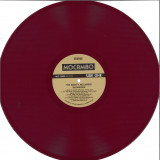
'Visions in Black and White' is a collection of rare jazz and improvised themes by one of the greatest Russian film composers Mikael Tariverdiev (1931-1996). Transferred from the original tapes and beautifully remastered, these recordings manage to retain their original ambience and capture a master at work. Originally composed for cinema and TV movies of the 1960s and 1970s, it centres on Mikael playing at the piano and keyboard. Many of the compositions can be described as jazz, a genre whose troubled story in the Soviet Union meant they probably would not have existed outside the context of a film score. But, as Vera Tariverdieva, Mikael's wife, tells, it is probably more in accordance with his vision to hear them in the context of his life-long love of improvisation. "Astoundingly, he said more than once that he wasn't fond of jazz. This perplexed me, as he'd always been great at improvisation. Imagine my amazement then when I rummaged through one of our old closets and found a crumbling old tape. It was the score for the 1964 film 'Until Tomorrow'. I played it. And the realisation came: not only had Mikael had been fond of jazz - no, he'd been an amazing jazz musician." Vera Tariverdieva The pieces here are an introduction to Mikael's musical world. The tonality of individual tracks varies - they were transferred from original tapes of different eras and conditions that are kept in the Tariverdiev apartment in Moscow where Vera still lives and works.
quête:composer
- A1: Linus & Lucy
- A2: Sally's Blues
- A3: Blue Charlie Brown (Version #2)
- A4: Peppermint Patty
- A5: Charlie's Blues (Variation)
- A6: Joe Cool
- B1: Frieda (With The Naturally Curly Hair) (With The Naturally Curly Hair)
- B2: Schroeder (Alternate)
- B3: Little Birdie (Vocal Vince Guaraldi)
- B4: The Masked Marvel
- B5: Linus & Lucy
On LP for the very first time, the vivid musical cues that American jazz
pianist and composer Vince Guaraldi wrote for the cast of Peanuts characters, adding new dimensions to beloved regulars like Peppermint Patty, Schroeder, Sally, and, of course, Charlie Brown.
In addition to nine songs performed by Guaraldi, the album also includes two classic Peanuts tunes recorded by pianist George Winston. Eight of the selections on Peanuts Portraits (including Winston renditions of “Linus And Lucy” and “Masked Marvel”) make their vinyl debut.
Hungarian “minimalist” instrumentalist/composer Tibor Szemző is considered a genius by many, although his accomplishments as an artist are sometimes overshadowed by the likes of superstars, Steve Reich and Philip Glass. Snapshot From The Island was originally released by Leo Records in 1987 and now 33 years later the album gets the proper reissue on his own label.
Snapshot From The Island is a wonderful excursion into ambient-electronic-acoustic dreamscapes which could also be considered an offshoot of what many call the “minimalist movement” The title track, “Snapshot From The Island” is a 24-minute tone poem featuring Szemző performing on computer drums and flutes of various pitch. Here, Szemző provides a soft rhythmic undercurrent to balance the somewhat ethereal and delightfully hypnotic motif as he also electronically emulates bird and animal sounds which magnifies the mood or imagery of a far away “Island” paradise.
Szemző is a true artist, a painter with a fertile imagination, as he invites the listener into his introspective world of thoughts and dreams. Szemző’s lush, yet subtle flute work evokes a surreal landscape on ”Water-Wonder”. On this piece, Szemző pursues circular passages while also intelligently utilizing a dash of echo to enhance the aura of a magical or mystical place, which for all intents and purposes seems timeless or otherworldly. “Let’s Go Out And Dance” is a dream-laden piece, featuring Szemző’s “cosmic” flute performances atop a soft pulse and László Hortobágyi’s synthesizer backwashes which conveys a sense of fulfillment or perhaps a scenario of – peaceful celebration. Again, Szemző offers up more visions of paradisen, which could very well have been a subtitle to this beautiful recording. The overall organic nature of Tibor Szemző’s music makes it all seem so real or something that our imaginations can easily grasp. There are no hidden clues or underlying mysteries behind all of this as Szemző’s artistry speaks for itself. A museum piece for the ears.
Tibor Szemző - flutes, voice, drum computer, sound installation
László Hortobágyi - synth. on "Let's go out and dance”
Mixed by László Hortobágyi and Tibor Szemző
Remastered by István Szelényi 2020
- A1: Is He Trying To Tell Us Something? (Instrumental)
- A2: Rhapsody In Green
- A3: Baroque No 2
- A4: This Is My Beloved
- A5: Music For Advertising #1
- A6: Music For Advertising #2
- A7: Music For Advertising #3
- A8: Killers Of The Wild
- A9: Realizations Of An Aeropolis
- A10: Music For Advertising #4
- A11: Music For Advertising #5
- A12: Z Theme From "Music For Sensuous Lovers" (Part 1 - Instrumental)
- A13: The Blobs Son Of Blob Theme
- B1: Cathedral Of Pleasure
- B2: Ode To An African Violet
- B3: The Time Zone Space Walker
- B4: Dragonfly
- B5: The Lords Of Percussion Geisha Girl
- B6: The Electric Blues Society Our Day Will Come
BLACK VINYL[21,97 €]
Mort Garson’s road to cool cultural caché and the sublimity of Plantasia meant a decades’ long journey through an underworld of sophisticated, international, string-laced dreck (i.e., your great-grandparents’ record collection) to arrive at Music from Patch Cord Productions, this set of queasy-listening you now hold.
Music from Patch Cord Productions shows that Garson’s knack was to exist in both worlds, super-commercial and waaay out. He cut delirious minute-long blasts for commercials (as to whether or not they were actually ever aired remains unknown) and spacecraft-hovering études. Were there really account managers out there in the early ’70s that gave the greenlight to these commercial compositions which seemed to anticipate everyone from John Carpenter to Suicide? What were these campaigns actually for, Soylent Green? Regardless, Mort’s jingle work laid the groundwork for the future. As Robert Moog himself noted: “The jingles were important because they domesticated the sound.” Via Garson’s wizardry, the synthesizer transcended novelty to ubiquity and dominance.
Other curios and questions abound. How did Garson’s arrangement work for Arthur Prysock’s satiny body worship album This Is My Beloved transmogrify into the body-snatcher pulses of “This is My Beloved”? Are the two pieces even related? What is the IATA code for the airport of “Realizations of an Aeropolis”? What denomination is the “Cathedral of Pleasure”? If “Son of Blob” sounds like a hallucinatory melted ice cream truck theme, what on earth does Blob’s father sound like? Every sound wrangled out of that Moog by Garson pushes things further and further out.
Of course, these are all questions that may never get answers, as Garson wasn’t the most organized modern day composer, busy as he was conjuring strange new realms with his circuit boards and synths. He worked and wrote right up until his death in 2008, his daughter and Sacred Bones still going through all of the material left behind. He wouldn’t live to see it, but his renaissance was just around the corner, the seeds that had been scattered in record bins around the world suddenly coming to bear fruit. Take a bite!
Amsterdam-based keyboardist, composer and owner of the Flowriders studio Vincent Helbers released his debut album ‘Hear To See’ as Seravince in 2013. A blend of broken beat, future soul and multiple adjective-jazz styles, compiled in a masterfully mixed 45-minute album. Now, 7 years later, the album is released on vinyl for the first time in a limited quantity of 150 copies.
Seravince’s 'Hear To See' sees Vincent cultivating his extensive experience inside the studio. The album is deeply rooted in broken beat drum grooves, provided by longtime collaborator and UK drummer extraordinaire Richard Spaven. These are accompanied by the jazz-inspired harmonies and solos from Seravince himself. All musical elements are one takes, recorded on analogue tape. “I want the sound to maintain the rawness and organic vibe”, Seravince explains. The sensual vocals on the album are courtesy of RH Factor singer Renee Neufville (US) and Sharlene Hector (UK), who’s worked together with Reel People and Basement Jaxx.
- A1: Road To Earth (Feat Peter Thomas)
- A2: It's The Music (Feat Afrika Bambaataa, Charlie Funk, Hektek & Deejay Snoop)
- A3: In The Dark (Feat Nichola Richards)
- A4: The Spell Of Ra-Orkon
- A5: Political Power (Feat Afrika Bambaataa, Charlie Funk & Donald D)
- A6: Drifting Stars
- B1: Not Get Caught (Feat Derobert)
- B2: Locked And Loaded
- B3: Catfight
- B4: Hot Stuff (Feat Afrika Bambaataa, Charlie Funk & Deejay Snoop)
- B5: The Showdown
BLACK VINYL[14,66 €]
Limited edition ruby red colour vinyl reissue of the smashing album from Germany's finest funk ensemble to celebrate its 5th anniversary. 11 cinematic deep funk instrumentals, celebrated b-boy breaks and vocal dancefloor killers with special guests Afrika Bambaataa, Charlie Funk, Deejay Snoop, DJ Hektek, Donald D., DeRobert, Nichola Richards, Peter Thomas, Guillaume Metenier & Shawn Lee.
Original note from 2015 release:
"The Mighty Mocambos' new album "Showdown" sets another cornerstone in their prolific career as a globally active instrumental funk outfit. While maintaining their organic approach of recording real musicians live on tape, the group has refined their trademark sound with a dramatic edge, a hard hitting production and ventures into less obvious musical territories. While highly enjoying themselves as the tight unit they are, The Mighty Mocambos invited an exciting list of guests to contribute to their musical "Showdown": German film composer icon Peter Thomas, hiphop godfather Afrika Bambaataa, rap legends Charlie Funk aka Afrika Islam (member of the original Rocksteady Crew) and Donald D (of Ice-T's Rhyme Syndicate), plus Nichola Richards, Shawn Lee, DeRobert from peer label GED Soul in Nashville, Zulu Nation MCs Deejay Snoop & DJ Hektek and organ genius Guillaume Metenier all joined the group for their new musical adventure."
- A1: Didn't You Hear?
- A2: No Smoking
- A3: Dream Sequence I
- A4: Dream Sequence Ii
- A5: Kevin's Theme
- A6: Sail! Sail!
- A7: Kevin & Paige
- B1: Bamboo City
- B2: Walk To Grange Hall
- B3: Virgil's Theme
- B4: Walk To The Other Side Of The Island
- B5: Death Talk & Jeep Approach
- B6: Jeep Ride
- B7: Dead Tree
- B8: Didn't You Hear? (End Title)
Six years before the release of his landmark Mother Earth’s Plantasia LP, composer and arranger Mort Garson met experimental film director Skip Sherwood, who was interested in an electronic score for his new movie, Didn’t You Hear?
While not much is known now about the exact nature of their collaboration, Here's Garson’s magnificent score as a record of those heady, early days after his life-changing discovery of the Moog synthesizer. Notable for being one of the earliest screen appearances by a young Gary Busey, Didn’t You Hear? also boasts one of the first-ever all-electronic movie scores. Though the score was first released in 1970, it sounds as adventurous and futuristic today as it must have then.
The Futurists rejected tradition and introduced experimental sounds and this fact, that influenced a lot of composers during the 20th century, helped them to build a concept that started the career of Barcelona based duo Iro Aka. The evolution of their music started with this EP, fluctuating through psychedelic and esoteric influences, taking as its main references the continuous technological evolution and those new techniques to make electronic music. “Futur” is an extract of the first ideas of Iro Aka. They started the project at the beginning of the 2017 and this EP was produced then, showing the abstraction that they felt at that moment, a path drawn by different sounds that came from different people and different places.
Tapan leaves their mark on Zukunft with reimagining the original as a slowly building, tribal inspired and almost sitting in an alternative timeline. Clever use of percussive elements does not take away from the track being playable in the club.
The slightly psychedelic dance floor experience is delivered by Anatolian Weapons. Pulsating rhythms intertwine with classic drum sounds and paint a mood almost contradicting the vocals of the track. Perfect secret track for any dance-floor.
Das ultimative Sammel-Vinyl-Album für alle Hans Zimmer Fans! Die vier 180 gram LPs dieser audiophilen Pressung enthalten erstmals alle 29 Tracks des legendären Soundtracks "Interstellar" - der ursprünglich nur als gekürzte Version mit 16 Tracks veröffentlicht wurde. Zusätzlich ist mit "Day One Dark" eine alternative, extrem düstere Version des Soundtrack-Themas enthalten, das nicht im Film verwendet wurde. Das Gatefold enthält einen Einleger mit Liner Notes von Hans Zimmer und Regisseur Christopher Nolan. Sein erhebender, atmosphärischer Soundtrack zu Christopher Nolans Sci-Fi Abenteuer "Interstellar" brachte Hans Zimmer im Jahr 2014 eine Oscar- und Golden Globe-Nominierung ein. Zur Einordnung der Bedeutung des zum modernen Klassiker gewordenen Klangerlebnisses von "Interstellar" reicht der Blick auf Hans Zimmers eigene musikalische Biographie nicht aus. Weit mehr als eine Weiterentwicklung des Hans Zimmer Signature-Sounds, stellt die Klangverbindung einer Orgel mit elektronischen und orchestralen Elementen eine Zäsur in der Geschichte der modernen Filmmusik dar und markiert eine viel kopierte und nie erreichte nachhaltige Sound-Innovation. Soundtracknet urteilt: "Hans Zimmer has created a close to perfect musical canvas for those extremely dedicated to the audio experience" und The Telegraph ergänzt "the vast sounds of a composer set loose on his grandest ever assignment."Herausragend ist auch die Entstehungsgeschichte der Musik: Hans Zimmer komponierte die ursprüngliche Musik ohne eine Szene von dem Film gesehen zu haben einzig auf Basis eines persönlichen Textes von Nolan.
Long sought after by collectors, DJs and lovers of hard salsa and boogaloo alike, 'Yo Traigo Boogaloo' is now lovingly reissued in replica form with the original cover art, remastered from the studio tapes, reproducing that magical MAG studio sound for today's aficionados to enjoy like it was 1969 all over again. Alfredo Linares is a globetrotting pianist, composer, bandleader and producer from Peru with a long, prolific career in latin music. His long sought after by DJs and collectors of hard salsa and boogaloo alike, 'Yo Traigo Boogaloo' is now lovingly reissued in replica form with the original cover art, remastered from the studio tapes, reproducing that magical MAG studio sound for today's aficionados to enjoy like it was 1969 all over again. Details: Alfredito "Sabor" Linares is a globetrotting pianist, composer, bandleader and producer from Lima, Peru with a long, prolific career in hot Latin music spanning more than half a century. Though Linares has come to recent international fame through his work with William "Quantic" Holland, he was already quite popular and famous in his adopted countries of Colombia and Venezuela in the 1970s and 80s during the salsa boom. However, his career began in Lima, backing timbalero Ñico Estrada at age 17 in 1961, and Alfredito's first notable recording as a sideman was a few years later on the now legendary 'El Combo de Pepe' album for IEMPSA/Odeon. Subsequently Linares would advance his career by recording two fabulous records under his own capable leadership as Alfredo Linares Y Su Sonora at the end of the decade for the MAG label. These releases capitalized on recent developments in New York Latin music, namely Latin jazz, boogaloo, descarga (jam session) and what would later be marketed as "salsa" with roots in the Cuban guaguancó and guaracha genres. One can hear direct inspiration coming from Joe Cuba, Ricardo Ray, and Eddie Palmieri, especially on the first album, 'El Pito', and yet by the second record, there are plenty of original tunes as well. More importantly there is a 'swing' and assertiveness to the playing (and arrangements) that prove every bit as authentic, tough and danceable as their New York inspirations. As Linares himself recounts, "In that era, we fought against a generation that was half-blind, because the people who understood what we were doing were few. We had to fight hard for our space in Perú, that's where the swing comes from." That special 'swing' also emanated from Linares' ace backing band, which happened to be a talented stable of MAG studio musicians who all understood Cuban and jazz music: percussionists Mario Allison and Coco Lagos, bassist Joey di Roma, Kiko Fuentes and Carlos Muñoz on lead vocals and Melcochita on coro (vocal chorus). According to Linares, the studio band was "open-ended, some musicians came some days, others on other days_Nilo Espinoza on saxophone, Betico Salas and Tito Chicoma on trumpets. Otto de Rojas played piano, and so did Charlie Palomares, who played vibraphone. Another good musician was guitarist Carlos Hayre." Though the recordings were cut "live in the studio" and many were basically composed on the spot, the intrinsic strength and maturity of the performances on 'Yo Traigo Boogaloo' stand the test of time as one of Peru's most important contributions to tropical music across the decades, establishing Alfredito Linares as a master of the idiom and serving as a harbinger for great things to come for him in Colombia and Venezuela. Long sought after by collectors, DJs and lovers of hard salsa and boogaloo alike, 'Yo Traigo Boogaloo' is now lovingly reissued in replica form with the original cover art, remastered from the studio tapes, reproducing that magical MAG studio sound for today's aficionados to enjoy like it was 1969 all over again. Pablo E Yglesias DJ Bongohead of Peace & Rhythm
- A1: Infinite Stress/Stress Infinito (From 'Spasmo')
- A2: First Nebula/Nebulosa Prima (From 'The Seecret/Il Segreto')
- A3: 1970 (From 'The Cat O' Nine Tails/Il Gatto A Nove Code')
- B1: Disgust/Raccapriccio (From 'What Have You Done To Solange?/Cosa Avete Fatto A Solange?')
- B2: Followed/Seguita (From 'Cold Eyes Of Fear/Gli Occhi Freddi Della Paura')
- B3: Lemon Obstinacy/Ostinazione Al Limone (From 'What Have You Done To Solange?/Cosa Avete Fatto A Solange?')
- B4: Glass Dolls/Bambole Di Vetro (From 'Short Night Of Glass Dolls/La Corta Notte Delle Bambole Di Vetro')
- B5: Foolish Suspension/Sospensione Folle (From 'Without Apparent Motive/Senza Movente')
- C1: The Serpent/Il Serpente (From 'Night Flight From Moscow/Il Serpente')
- C2: Infinite Stress/Stress Infinito (#4 - From 'Spasmo')
- C3: Solange's End/Fine Di Solange (From 'What Have You Done To Solange?/Cosa Avete Fatto A Solange?')
- C4: Evanescent/Evanescente (From 'Cold Eyes Of Fear/Gli Occhi Freddi Della Paura')
- C5: Emmetrentatre (From 'Short Night Of Glass Dolls/La Corta Notte Delle Bambole Di Vetro')
- D1: Night Walk/Passeggiata Notturna (From 'The Cat O' Nine Tails/Il Gatto A Nove Code')
- D2: In The Middle Of The Chest/In Pieno Petto (From 'Without Apparent Motive/Senza Movente')
- D3: In The Void/Nel Vuoto (From 'Forbidden Photos Of A Lady Above Suspicion/Le Foto Proibite Di Una Signora Per Bene')
Giallo is the fourth in a series of five double vinyl releases that bring together some of Ennio Morricone’s greatest soundtrack music. Each collection centres on a different movie genre, together they allow the listener to rediscover the unmatched genius of the greatest movie composer of all time. The Maestro. This collection was announced before Ennio Morricone passed away on July 6, 2020. We’ll continue to release the series to honour this great composer.
When we think of 1960’s Italian pulp cinema, the spaghetti western is the genre that comes to mind. However, Italy was responsible for another classic cinematic exploitation movement around the same time, one that is equally as compelling, but less widely recognised. Giallo…
Giallo, meaning ‘yellow’, is the Italian term for crime fiction, it was named after the bright yellow colours of early pulp fiction paperbacks. Film audiences adopted it as the name for a peculiarly Italian sub-genre of thriller cinema that had its heyday in the 1970’s - just as the Spaghetti Western movement was waning. The Giallo can be difficult to define, but essentially it is an Italian crime film that draws from a pool of common themes: stylized murders, amateur sleuths, sleazy glamour, psychological crimes, enigmatic titles and all these themes are underpinned by creepily atmospheric Ennio Morricone music scores. Starting 70 years ago as an arranger for the piece Mamma Bianca, Ennio Morricone is the emperor of scores and soundtracks. Morricone has always been a huge influence for the likes of Hans Zimmer, Danger Mouse, Muse, Metallica and many more musicians. He was one of the most successful composers of all-time, selling over 70 million records and winning dozens of awards.
Giallo is available as a limited edition of 3000 individually numbered copies on “giallo and black marbled” (clear, yellow and black mixed) vinyl. The package includes a 4-page insert with liner notes written by Claudio Fuiano. The gatefold sleeve contains a silver foil spot varnish on the outside and images of iconic movie posters on the inside.
Suzanne Ciani is a true electronic music pioneer. The five Grammy nominated Italian-American neoclassical composer is unquestionably one of the greatest minds that contemporary music has ever witnessed. After an incredible career spanning forty years, Ciani’s accomplishments have become a benchmark when discussing the origins of musical synthesis. For more than four decades she developed a body of work that transcends the music industry, composing for film, video games and famous advertising campaigns that have impacted popular culture. On December 14, 2019, after six years of sound experimentation, Lapsus Festival bid farewell to Barcelona’s Centre for Contemporary Culture. Its final event was entitled 'A Sonic Womb' and was dedicated to the musical roots of the synthesizer, with Suzanne Ciani headlining on the night. Ciani performed an exclusive show accompanied by her modular Buchla 200e synthesizer and enveloped in a specially designed multi-channel sound environment by Intorno Labs. It was a sonic voyage to the very heart of her beloved machine and a tribute to improvisation through an instrument that is said to possess its own soul. Suzanne described the night as ”an improvisation that I began using in the ’70s and continue to use now as raw material. Each performance based on this material has its own expression and one could liken it to jazz." Lapsus Records is therefore extremely honoured to present 'A Sonic Womb: Live Buchla Performance at Lapsus', a unique live recording of this extra special concert.
We are excited to welcome young composer Noémi Büchi to the Light of Other Days roster.
Her debut Ep «Matière» is the result of an extensive study with a modular synthesizer as her instrument of choice mixed with field recordings of sounds and noises surrounding her every day life . Apart from being a student of Electroacoustic Composition and listening to tons of music, Noémi finds most of her inspiration in long nature walks through nearby forests and foggy hills situated close to her bedroom studio.
With her music she leads the listener safely through deep paths of complex rhythms and otherworldly sounds. Her awareness of timbre, nuance and harmonic diversity are constantly matched with her ability to produce fresh and revealing arrangements.
«Matière» is an exciting excerpt from the works and life of a very talented young artist with a bright future ahead.
The pioneering electronic composer Mort Garson (Mother Earth’s Plantasia) • takes on supernatural phenomena with lush synth grooves on The Unexplained, his only release under the name Ataraxia. Subtitled Electronic Musical Impressions of the Occult, the album explores tarot, astral projection, seances, and more with Garson’s signature Moog synthesizer serving as the listener’s tour guide to the paranormal. The exploratory, whimsical spirit of its creator is evident throughout the release, but it also takes its subject matter seriously, making it essential for anyone interested in musical conjurations of the occult. This remastered edition marks the first official reissue of the album since its initial 1975 release, and it includes all the original liner notes.
ABOUT MORT GARSON: Morton S. “Mort” Garson was a Canadian-born composer, arranger, songwriter, and pioneer of electronic music. He is best known for his albums in the 1960s and 1970s that were among the first to feature Moog synthesizers. His bestknown album is Mother Earth’s Plantasia, a 1976 Moog album designed to be played “for plants and the people who love them.”
Sacred Bones Records has undertaken the project of giving official, licensed reissues to key releases from Mort Garson’s catalog, with the intention of bringing these bold masterpieces to a 21st century audience.
- A1: Les Cailloux
- A2: Une Vie Moins Ordinaire
- A3: Danny Wilde
- A4: Le Cygne
- B1: Raide Raide Raide
- B2: Dentelle
- B3: Des Jours Adverses
- B4: Colore
- B5: Un Monde Parfait
- C1: Fous À Lier
- C2: Un Homme Extraordinaire
- C3: L'autre Finistère
- C4: Mon Dernier Soldat
- C5: Je Vais À Bang Bang
- D1: Saint-Sylvestre
- D2: 100 Mètres Au Paradis
- D3: Et Le Temps N'attend Pas
- D4: Jodie
Pour la 1ère fois disponible en Vinyle : "Meilleurs Souvenirs", le Best Of des Innocents ,couvrant les 4 premiers albums du groupe (1989-1999) jusqu'à qu'ils se séparent en 2000. En 2013, les 2 compositeurs JP Nataf & Jean-Christophe Urbain reformèrent le groupe et sortirent 2 autres albums (en 2015 & 2019). Toujours très actifs, Les Innocents continueront à tourner dès que possible.
Cette édition Double Vinyle Noir 140 grammes comporte 18 titres. Inclus tous les classiques dont "Jodie", "L'autre finistère", " Un homme extraordinaire" & "Colore" .
First time ever on Vinyl : "meilleurs souvenirs", the Best Of Les Innocents , covering the first four albums , before the band splits in 2000. Later from 2013 , the 2 main composers JP Nataf & Jean-Christophe Urbain reformed the band & released 2 other albums (in 2015 & 2019). The band still is very active and will resume touring as soon as possible. This Double Black 140 G Vinyl edition features 18 songs and includes all the hits such as "Jodie", "L'autre finistère", " Un homme extraordinaire" & "Colore".
- A1: Is He Trying To Tell Us Something? (Instrumental)
- A2: Rhapsody In Green
- A3: Baroque No 2
- A4: This Is My Beloved
- A5: Music For Advertising #1
- A6: Music For Advertising #2
- A7: Music For Advertising #3
- A8: Killers Of The Wild
- A9: Realizations Of An Aeropolis
- A10: Music For Advertising #4
- A11: Music For Advertising #5
- A12: Z Theme From "Music For Sensuous Lovers" (Part 1 - Instrumental)
- A13: The Blobs Son Of Blob Theme
- B1: Cathedral Of Pleasure
- B2: Ode To An African Violet
- B3: The Time Zone Space Walker
- B4: Dragonfly
- B5: The Lords Of Percussion Geisha Girl
- B6: The Electric Blues Society Our Day Will Come
PURPLE VINYL[23,66 €]
Mort Garson’s road to cool cultural caché and the sublimity of Plantasia meant a decades’ long journey through an underworld of sophisticated, international, string-laced dreck (i.e., your great-grandparents’ record collection) to arrive at Music from Patch Cord Productions, this set of queasy-listening you now hold.
Music from Patch Cord Productions shows that Garson’s knack was to exist in both worlds, super-commercial and waaay out. He cut delirious minute-long blasts for commercials (as to whether or not they were actually ever aired remains unknown) and spacecraft-hovering études. Were there really account managers out there in the early ’70s that gave the greenlight to these commercial compositions which seemed to anticipate everyone from John Carpenter to Suicide? What were these campaigns actually for, Soylent Green? Regardless, Mort’s jingle work laid the groundwork for the future. As Robert Moog himself noted: “The jingles were important because they domesticated the sound.” Via Garson’s wizardry, the synthesizer transcended novelty to ubiquity and dominance.
Other curios and questions abound. How did Garson’s arrangement work for Arthur Prysock’s satiny body worship album This Is My Beloved transmogrify into the body-snatcher pulses of “This is My Beloved”? Are the two pieces even related? What is the IATA code for the airport of “Realizations of an Aeropolis”? What denomination is the “Cathedral of Pleasure”? If “Son of Blob” sounds like a hallucinatory melted ice cream truck theme, what on earth does Blob’s father sound like? Every sound wrangled out of that Moog by Garson pushes things further and further out.
Of course, these are all questions that may never get answers, as Garson wasn’t the most organized modern day composer, busy as he was conjuring strange new realms with his circuit boards and synths. He worked and wrote right up until his death in 2008, his daughter and Sacred Bones still going through all of the material left behind. He wouldn’t live to see it, but his renaissance was just around the corner, the seeds that had been scattered in record bins around the world suddenly coming to bear fruit. Take a bite!
Repress
Carthago: Rare Tunisian Disco Including Unreleased Instrumentals And Eight Page Booklet When we first decided to start Habibi Funk, a label dedicated to re-releasing "funky" Arabic music from the 1960s to 1980s, a band called Dalton was the first release we worked on. Dalton was a band from the Tunisian capital of Tunis and they played a unique mix of soul & funk with an Arabic DNA. We licensed the release from the band's composer Fawzi Chekili, and when we spoke to him on the phone in preparation of the release he mentioned another band he was part of, called Carthago. Our work with Habibi Funk is like a big treasure hunt. There are too many great bands that fully vanished into obscurity and didn't leave any traces in the digital sphere yet. We are so used to the internet providing all informations we might be looking for, but Carthago was one of those bands where the internet largely failed to provide any infos despite the fact that Carthago created some incredible music in the form of an highly infectious Tunisian take on disco music. Luckily most of the members of the 1970s musical scene of Tunis are still around to tell their story.
Carthago was founded in the late 1970s as a fusion of Dalton and a second band called Marhaba Band. Both bands frequently played at hotels and night clubs in Tunis and Sousse. They had similar musical influences and despite the fact that they were competition for the most part, they came up with the idea to join forces for a new band. Musically Carthago kept on walking on the musical path of Dalton and Marhaba but incorporated disco music, a new style that was making its way to North Africa from Europe and North America. The band had quite some success on local radio and played a number of big shows with thousands of people showing up. The band's concerts were a mixture of their own compositions as well as cover versions of the hits of the time from Stevie Wonder to Chicago. At the end of the 70s they went to Paris to record their only, self titled album. For our reissue we picked out two of our favorite tracks: "Hanen" and the outstanding disco version of the Dalton track "Alech" which has proved to work on every dance floor we played over the last two years.
When I came to Tunis for the first time after the Dalton reissue I met Fawzi in person. He still lives in Tunis and still works as a full time musician though his focus has shifted more towards Jazz over the years. Luckily he did not only keep a spotless copy of the Carthago album but he also kept the master tape of the instrumental versions of the album which to this day were unreleased. Being able to add exclusive content to a reissue is something that is rare and we feel highly privileged to be able to do so. Futher more we are so happy that we will be able to add something new to the bands legacy not only musically but also visually: One day I realized that most of the releases from Tunisia I liked, be it from Dalton, Carthago or Marhaba Band had the same photographer credit.Hassen Turki started taking photos at a young age and when he was 18 he started going to the gigs of the bands of the time that were playing in the Marhaba Hotel which was managed by his father at the time. He became friends with the bands and ended up being the person to be asked when it came to shooting the photos for the covers of the records. After some research I managed to get in touch with Hassen and met him in his hometown Sousse. Luckily he kept most of the negatives of the photos he took so we're more than happy to be able to share these unseen photos with whoever is interested.
- A1: Prelude - The Gate Of Breathing
- A2: Jungle Book
- A3: Bow Shaped Moon
- A4: The Magical Stones & The Double Mirrors + The Wave Of Breathing
- A5: Windscape
- A6: Bone Knife
- B1: Relation Between Bisons, Bananas And Rods - The Previous Night
- B2: Warriors
- B3: The Earring Of The Dancers
- B4: Respite Of The Bows & Arrows
- B5: Finale - Calendar
Peaceful, percussive and idyllic new age from Japanese composer and student of gamelan music, Yas-Kaz. This seminal album is a cornerstone to understand the Japanese ambient and environmental movement. He rose to musical prominence composing for the dance troupe led by one of the founders of Butoh, Tatsumi Hijikata. The album features a wide range of entirely acoustic instruments and field recordings and was made for stage performance by Sankai Juku Butoh Group at Theatre de la Ville, Paris.
Yas-Kaz has influenced quite a few important artist (Ryuichi Sakamoto, Midori Takada, Geino Yamashiro-Gumi) over 4 decades. However, he remains somewhat "unsung": Glossy Mistakes unveils his art throughout this special edition. His composition/music is not focused on any specific genre/style of music either. Especially in his work for dance theatre he often delivers bare abstract sound/resonance which might not be recognized as "musical" from the Western perspective. He lived in Bali, Indonesia in the 70s introducing the gamelan Balinese sounds and culture to Ryuichi Sakamoto (collaborated in the album "Esperanto), Midori Takada, Shoji Yamashiro (leader of Geino Yamashiro-gumi who later created the soundtrack for "Akira”) among others.
A unique and unseen masterpiece unveiled again throughout a remastered edition.
"...The most beautiful thing about my burrow is the stillness. Of course, that is deceptive. At any moment it may be shattered and then all will be over. For the time being, however, the silence is with me." - Franz Kafka
In early 2019, at the Sonic Pieces 10 year anniversary in Berlin, label head Monique Recknagel hand-picked three duos from the imprint to perform live together for the first time. One of the collaborations was between Deaf Center's Erik K Skodvin and electronic composer Jasmine Guffond. The performance went so well that Monique commissioned the duo to record a full-length together.
Six months later, Guffond and Skodvin headed to Berlin's VOX-TON studio and recorded for two days, joined by Finnish musician Merja Kokkonen (Islaja), who improvised wordless vocals. With Guffond on laptop and a cymbal and Skodvin using piano, feedback, farfisa organ and percussion, the two composed an album of deep, enveloping sound that slithers through genre, absorbing Kokkonen's unique voice into five intricate and evolving pieces.
"The Burrow" takes its name from Franz Kafka's unfinished short story that was written only six months before his death. The tale, published posthumously in 1931, centres around a small creature who builds a burrow that's anxiously fortified in an attempt to protect against perceived attacks. This sense of fear of the outside world feels even more focused in 2020. Each track is named after animals that are either extinct or almost extinct, adding a sense of loss that hangs in the air, punctuated by screams and deep reverberating piano hits. As the world we thought we knew quickly retreats from view and the idea of safety shifts rapidly, Skodvin and Guffond explore the impulse to protect what we know with an emotionally charged sound that provides a foil with cautious, haunting spaces in between.
Multi Natural is a new example of Christina’s organic chamber music. We enter nine composed chambers. Nine rooms to inhabit, constructed out of elements that are slowly fusing. The album is a string of semi constant metamorphosis. A gesture appears, is elaborated upon—or is halted and replaced by a new gesture. Multi Natural has multi focal points, quite dissimilar to Christina’s other works that tend to have a more linear path.
Within this album lives a composer who is not afraid to let the content take over. In this, obviously composed work, there is still a large space for all those sounds to act freely. It is almost like Christina is waiting for the music to compose itself. This technique speaks of respect and trust for the listener, since it gives thelistener freedom to personally connect the lines.
When you put the needle on this record, everything turns to stone. The music flows and nurtures. Sounds that come from various realities—molded into a mutual understanding. With each spin, new events catch the ears. Like looking at alandscape, perceiving new details close and far with every gaze.
When Christina warps both time and space for you, it comes to you as a gift.