- The Premiere Vinyl Release of the Soundtrack - 180 Gram Black and White Swirled Colored Vinyl - Old Style Tip-On Gatefold Jackets with Satin Coating - Artwork by Phantom City Creative - 12"x12" Booklet - Scoring Session Photography - Liner Notes // Waxwork Records is proud to announce THE BRIDE OF FRANKENSTEIN Original Motion Picture Soundtrack with music by Franz Waxman. In celebration of the film's 85th Anniversary, we are thrilled to present the premiere vinyl release of the film's music as a deluxe album featuring re-mastered audio, new artwork, and likeness approvals from famed actress Elsa Lanchester's estate. THE BRIDE OF FRANKENSTEIN is a 1935 horror movie directed by James Whale and starring Boris Karloff & Elsa Lanchester. It is the first sequel to the 1931 film FRANKENSTEIN and widely regarded as one of the greatest sequels in cinematic history. The film has been praised as Whale's masterpiece. In 1998, it was selected by the Library of Congress for preservation in the United States National Film Registry, having been deemed "culturally, historically or aesthetically significant". Sourced from the original master acetates housed in the composer's archives at Syracuse University and original masters from Universal, the album has been meticulously restored and re-mastered. Working closely with Universal Pictures, this historic release marks the very first time the original film music has been made available on vinyl. The album features new artwork by Phantom City Creative, a 12"x12" booklet including artwork and original scoring session photography, and liner notes by album producer and restoration engineer Mike Matessino.
Buscar:congress
- The Premiere Vinyl Release of the Soundtrack - 180 Gram Black and White Swirled Colored Vinyl - Old Style Tip-On Gatefold Jackets with Satin Coating - Artwork by Phantom City Creative - 12"x12" Booklet - Scoring Session Photography - Liner Notes // Waxwork Records is proud to announce THE BRIDE OF FRANKENSTEIN Original Motion Picture Soundtrack with music by Franz Waxman. In celebration of the film's 85th Anniversary, we are thrilled to present the premiere vinyl release of the film's music as a deluxe album featuring re-mastered audio, new artwork, and likeness approvals from famed actress Elsa Lanchester's estate. THE BRIDE OF FRANKENSTEIN is a 1935 horror movie directed by James Whale and starring Boris Karloff & Elsa Lanchester. It is the first sequel to the 1931 film FRANKENSTEIN and widely regarded as one of the greatest sequels in cinematic history. The film has been praised as Whale's masterpiece. In 1998, it was selected by the Library of Congress for preservation in the United States National Film Registry, having been deemed "culturally, historically or aesthetically significant". Sourced from the original master acetates housed in the composer's archives at Syracuse University and original masters from Universal, the album has been meticulously restored and re-mastered. Working closely with Universal Pictures, this historic release marks the very first time the original film music has been made available on vinyl. The album features new artwork by Phantom City Creative, a 12"x12" booklet including artwork and original scoring session photography, and liner notes by album producer and restoration engineer Mike Matessino.
- Opening Drive
- Walking To The Grave
- Attacked
- Flight From The Cemetery
- Refuge
- Trophy Room
- The Clothesline
- Dead Connection / Corpse On The Stairs / Ben Arrives
- Panic
- Blood From The Landing
- Smashing The Headlight
- Tire Iron Attack
- Don't Look At It!
- Back Porch Bonfire
- Searching The House
- The Music Box
- Boarding Up The House
- Knocked Out
- Fireplace And Torch
- Lounge Chair Bonfire
- The Cellar Door
- Finding The Rifle
- Ben Comforts Barbra
- Cleaning Upstairs
- Grasping Hands
- Ghouls Approach The House
- Down To The Cellar
- Up From The Cellar
- Escape Plan
- Tom And Judy
- Unboarding
- Molotov Cocktails
- Escape From The House
- Truck Escape
- Truck On Fire
- Feeding Frenzy
- Lights Out
- Final Siege
- Breakthrough
- Helen's Death
- Ghouls Overrun
- Cellar Nightmare
- The Posse
- Bonfire
- End Credits
- Bonus Night Of The Living Dead 1968 Radio Spot
- New Arrivals
- Attack At The Window
B&W[48,95 €]
"Waxwork Records is honored to present the release of the Original Motion Picture Soundtrack to George A. Romero’s horror classic, NIGHT OF THE LIVING DEAD. Written, filmed, and released in 1968 by a rag tag group of Pittsburgh based misfits, NIGHT OF THE LIVING DEAD is an American independent horror film that follows the story of seven people trapped in a rural farmhouse that is besieged by a large and growing group of living dead ghouls. The film is regarded as a cult classic by critics, film scholars, and fans and has garnered critical acclaim. The film has been selected by the Library Of Congress for preservation in the National Film Registry and is deemed “culturally, historically, and aesthetically significant”.
Filmed and released on a shoestring budget, NIGHT OF THE LIVING DEAD became a smashing success earning over 250 times its budget. The film is a first of its kind and ushered in a new way of writing, directing, and filming horror films. The overused script of romantic, fantastical tales of otherworldly monsters and creatures was completely flipped and tossed aside by visionary George A. Romero. As the film’s writer and director, Romero created a new, obvious threat, and one that is universally recognizable - Our very own neighbors. Due to an unseen force beyond man’s control, the recently deceased arise from the dead in seek of living human victims. These ghouls kill and feast upon the flesh of their victims, and the only way of stopping them is by destroying their brains.
From 2015 to 2018, Waxwork Records worked closely with the remaining members of the independent production company that made NIGHT OF THE LIVING DEAD, Image Ten, to produce a definitive soundtrack album featuring all music from the film. Much of the film’s music was thought to be lost or destroyed but was located in its entirety and faithfully restored and re-mastered for vinyl. This special release of NIGHT OF THE LIVING DEAD features the complete soundtrack, double LP “Black & White Hand Poured” colored vinyl, all new artwork by Robert Sammelin, a booklet featuring never before seen production photos, liner notes by Daniel Kraus (co-author of THE SHAPE OF WATER with Guillermo Del Toro), liner notes by Night Of The Living Dead’s dialogue recorder and sound engineer, Gary Streiner, and deluxe packaging."
This album is about influence, inspiration, perception & reality. Every song was written in an outside environment, so that I could observe the subjects that would become my subject matter. All too often in Hip Hop, reality is limited to that of the artists own, actual experiences. People Hear What They See is my attempt to liberate the MC from those constraints & allow reality to be penned other than my own. Listening to congressmen & lawyers converse on the steps of the supreme court inspired 'American Greed', Watching a couple argue over the phone in a bar inspired 'Maybes'. By having a visual representation of my subject matter, my hopes are that the listener will see them through the words & melodies of my songs.
- Opening Drive
- Walking To The Grave
- Attacked
- Flight From The Cemetery
- Refuge
- Trophy Room
- The Clothesline
- Dead Connection / Corpse On The Stairs / Ben Arrives
- Panic
- Blood From The Landing
- Smashing The Headlight
- Tire Iron Attack
- Don't Look At It!
- Back Porch Bonfire
- Searching The House
- The Music Box
- Boarding Up The House
- Knocked Out
- Fireplace And Torch
- Lounge Chair Bonfire
- The Cellar Door
- Finding The Rifle
- Ben Comforts Barbra
- Cleaning Upstairs
- Grasping Hands
- Ghouls Approach The House
- Down To The Cellar
- Up From The Cellar
- Escape Plan
- Tom And Judy
- Unboarding
- Molotov Cocktails
- Escape From The House
- Truck Escape
- Truck On Fire
- Feeding Frenzy
- Lights Out
- Final Siege
- Breakthrough
- Helen's Death
- Ghouls Overrun
- Cellar Nightmare
- The Posse
- Bonfire
- End Credits
- Bonus Night Of The Living Dead 1968 Radio Spot
- New Arrivals
- Attack At The Window
B&W[50,38 €]
"Waxwork Records is honored to present the release of the Original Motion Picture Soundtrack to George A. Romero’s horror classic, NIGHT OF THE LIVING DEAD. Written, filmed, and released in 1968 by a rag tag group of Pittsburgh based misfits, NIGHT OF THE LIVING DEAD is an American independent horror film that follows the story of seven people trapped in a rural farmhouse that is besieged by a large and growing group of living dead ghouls. The film is regarded as a cult classic by critics, film scholars, and fans and has garnered critical acclaim. The film has been selected by the Library Of Congress for preservation in the National Film Registry and is deemed “culturally, historically, and aesthetically significant”.
Filmed and released on a shoestring budget, NIGHT OF THE LIVING DEAD became a smashing success earning over 250 times its budget. The film is a first of its kind and ushered in a new way of writing, directing, and filming horror films. The overused script of romantic, fantastical tales of otherworldly monsters and creatures was completely flipped and tossed aside by visionary George A. Romero. As the film’s writer and director, Romero created a new, obvious threat, and one that is universally recognizable - Our very own neighbors. Due to an unseen force beyond man’s control, the recently deceased arise from the dead in seek of living human victims. These ghouls kill and feast upon the flesh of their victims, and the only way of stopping them is by destroying their brains.
From 2015 to 2018, Waxwork Records worked closely with the remaining members of the independent production company that made NIGHT OF THE LIVING DEAD, Image Ten, to produce a definitive soundtrack album featuring all music from the film. Much of the film’s music was thought to be lost or destroyed but was located in its entirety and faithfully restored and re-mastered for vinyl. This special release of NIGHT OF THE LIVING DEAD features the complete soundtrack, double LP “Black & White Hand Poured” colored vinyl, all new artwork by Robert Sammelin, a booklet featuring never before seen production photos, liner notes by Daniel Kraus (co-author of THE SHAPE OF WATER with Guillermo Del Toro), liner notes by Night Of The Living Dead’s dialogue recorder and sound engineer, Gary Streiner, and deluxe packaging."
- A1: I'm Forrest... Forrest Gump
- A2: You're No Different
- A3: You Can't Sit Here
- A4: Run Forrest Run
- A5: Pray With Me
- A6: Crimson Gump
- A7: They're Sending Me To Vietnam
- A8: I Ran And Ran
- A9: I Had A Destiny
- A10: Washington Reunion
- A11: Jesus On The Main Line
- A12: That's My Boat
- B1: I Never Thanked You
- B2: Jenny Returns
- B3: Crusade
- B4: Forrest Meets Forrest
- B5: Wedding Guest
- B6: Where Heaven Ends
- B7: Jenny's Grave
- B8: I'll Be Right Here
- B9: Suite From Forrest Gump
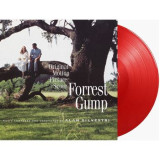
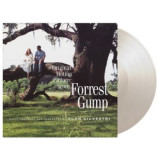
Forrest Gump was the surprise hit of the 1994 summer movie season. The film traces the life of a half-wit through the major historical events of the 1950s, '60s, and '70s. It features Tom Hanks as the loveable Forrest Gump and Robin Wright (Claire Underwood in House Of Cards) as Forrest's insecure girlfriend Jenny.
Forrest Gump won six Academy Awards for Best Picture, Best Actor in a Leading Role, Best Director, Best Visual Effects, Best Adapted Screenplay, and Best Film Editing.
The film garnered for seven Golden Globe Award nominations, winning three of them, including Best Actor - Motion Picture Drama, Best Director - Motion Picture, and Best Motion Picture - Drama. The film was also nominated for six Saturn Awards and won two for Best Fantasy Film and Best Supporting Actor (Film. The film also won the Outstanding Achievement in Special Effects award at the 1995 BAFTA Film Awards.
Forrest Gump received numerous other awards such as one win from the Screen Actors Guild Awards in its first year for Tom Hanks in a total of four nominations.
The film was selected for preservation by the Library of Congress in the United States National Film Registry in 2011, being deemed culturally, historically, or aesthetically significant'. The movie has made multiple American Film Institute lists including the quote Mama always said life was like a box of chocolates. You never know what you're gonna get.' ranking 40th on 100 Years...100 Movie Quotes. The film ranked 240 on Empire's list of the 500 Greatest Movies Of All Time. The chain of restaurants, Bubba Gump Shrimp Company opened based on the film, and has opened many locations since its founding.
The score was composed and conducted by Alan Silvestri and was nominated for Best Original Score in the 67th Academy Awards.
The legendary Score is now finally available on vinyl for the first time. The first pressing of 1.500 copies are pressed on 'Chocolate' coloured vinyl. You never know what you'rei
gonna get...
- A1: I'm Forrest... Forrest Gump
- A2: You're No Different
- A3: You Can't Sit Here
- A4: Run Forrest Run
- A5: Pray With Me
- A6: Crimson Gump
- A7: They're Sending Me To Vietnam
- A8: I Ran And Ran
- A9: I Had A Destiny
- A10: Washington Reunion
- A11: Jesus On The Main Line
- A12: That's My Boat
- B1: I Never Thanked You
- B2: Jenny Returns
- B3: Crusade
- B4: Forrest Meets Forrest
- B5: Wedding Guest
- B6: Where Heaven Ends
- B7: Jenny's Grave
- B8: I'll Be Right Here
- B9: Suite From Forrest Gump
Forrest Gump was the surprise hit of the 1994 summer movie season. The film traces the life of a half-wit through the major historical events of the 1950s, '60s, and '70s. It features Tom Hanks as the loveable Forrest Gump and Robin Wright (Claire Underwood in House Of Cards) as Forrest's insecure girlfriend Jenny.
Forrest Gump won six Academy Awards for Best Picture, Best Actor in a Leading Role, Best Director, Best Visual Effects, Best Adapted Screenplay, and Best Film Editing.
The film garnered for seven Golden Globe Award nominations, winning three of them, including Best Actor - Motion Picture Drama, Best Director - Motion Picture, and Best Motion Picture - Drama. The film was also nominated for six Saturn Awards and won two for Best Fantasy Film and Best Supporting Actor (Film. The film also won the Outstanding Achievement in Special Effects award at the 1995 BAFTA Film Awards.
Forrest Gump received numerous other awards such as one win from the Screen Actors Guild Awards in its first year for Tom Hanks in a total of four nominations.
The film was selected for preservation by the Library of Congress in the United States National Film Registry in 2011, being deemed culturally, historically, or aesthetically significant'. The movie has made multiple American Film Institute lists including the quote Mama always said life was like a box of chocolates. You never know what you're gonna get.' ranking 40th on 100 Years...100 Movie Quotes. The film ranked 240 on Empire's list of the 500 Greatest Movies Of All Time. The chain of restaurants, Bubba Gump Shrimp Company opened based on the film, and has opened many locations since its founding.
The score was composed and conducted by Alan Silvestri and was nominated for Best Original Score in the 67th Academy Awards.
The legendary Score is now finally available on vinyl for the first time. The first pressing of 1.500 copies are pressed on 'Chocolate' coloured vinyl. You never know what you'rei
gonna get...
- A1: I'm Forrest... Forrest Gump
- A2: You're No Different
- A3: You Can't Sit Here
- A4: Run Forrest Run
- A5: Pray With Me
- A6: Crimson Gump
- A7: They're Sending Me To Vietnam
- A8: I Ran And Ran
- A9: I Had A Destiny
- A10: Washington Reunion
- A11: Jesus On The Main Line
- A12: That's My Boat
- B1: I Never Thanked You
- B2: Jenny Returns
- B3: Crusade
- B4: Forrest Meets Forrest
- B5: Wedding Guest
- B6: Where Heaven Ends
- B7: Jenny's Grave
- B8: I'll Be Right Here
- B9: Suite From Forrest Gump
Forrest Gump was the surprise hit of the 1994 summer movie season. The film traces the life of a half-wit through the major historical events of the 1950s, '60s, and '70s. It features Tom Hanks as the loveable Forrest Gump and Robin Wright (Claire Underwood in House Of Cards) as Forrest's insecure girlfriend Jenny.
Forrest Gump won six Academy Awards for Best Picture, Best Actor in a Leading Role, Best Director, Best Visual Effects, Best Adapted Screenplay, and Best Film Editing.
The film garnered for seven Golden Globe Award nominations, winning three of them, including Best Actor - Motion Picture Drama, Best Director - Motion Picture, and Best Motion Picture - Drama. The film was also nominated for six Saturn Awards and won two for Best Fantasy Film and Best Supporting Actor (Film. The film also won the Outstanding Achievement in Special Effects award at the 1995 BAFTA Film Awards.
Forrest Gump received numerous other awards such as one win from the Screen Actors Guild Awards in its first year for Tom Hanks in a total of four nominations.
The film was selected for preservation by the Library of Congress in the United States National Film Registry in 2011, being deemed culturally, historically, or aesthetically significant'. The movie has made multiple American Film Institute lists including the quote Mama always said life was like a box of chocolates. You never know what you're gonna get.' ranking 40th on 100 Years...100 Movie Quotes. The film ranked 240 on Empire's list of the 500 Greatest Movies Of All Time. The chain of restaurants, Bubba Gump Shrimp Company opened based on the film, and has opened many locations since its founding.
The score was composed and conducted by Alan Silvestri and was nominated for Best Original Score in the 67th Academy Awards.
The legendary Score is now finally available on vinyl for the first time. The first pressing of 1.500 copies are pressed on 'Chocolate' coloured vinyl. You never know what you'rei
gonna get...
“I personally feel this is a great record and recommend it to everyone. It’s positive and hot and simply
excellent.” – Gary Burton, in the liner notes.
Pat Metheny hatte sein Debüt bei ECM als Mitglied von Gary Burtons Band auf dem Album Ring im
Jahr 1974 gegeben, aber Bright Size Life, seine erste Studioaufnahme als Leader überhaupt, war das
Album, das ihn schlussendlich als neue kreative Kraft mit einem frischen Ansatz im Kontext des zeitgenössischen Jazz profilierte. Das im Dezember 1975 in Ludwigsburg aufgenommene und von Manfred Eicher
produzierte Album wurde von Methenys damaliger Stammband mit Bob Moses am Schlagzeug und dem
virtuosen, aber damals weitgehend unbekannten Jaco Pastorius am Bass eingespielt.
”Ich könnte die gesamte Musik von Bright Size Life auch jetzt noch spielen”, sagte Pat Metheny in
einem Interview für die Library of Congress im Jahr 2021. ”Es fühlt sich immer noch relevant an; die
Argumente darin erscheinen mir immer noch gültig und sie sind es wert, darüber zu reflektieren.... Damals
hatte ich das Gefühl, dass ich eine Platte machen wollte, die vielleicht die einzige sein würde, die ich je
machen würde. Ich hoffte, ein Statement zu Dingen abzugeben, die mir in Bezug auf Melodie, Harmonie,
Triospiel und sogar das Leben im Allgemeinen wichtig waren.”
Diese Luminessence Vinyl Edition des Albums erscheint in einem Tip-on Klappcover und enthält Fotos
aus dem Archiv.
- A1: Psycho Killer
- A2: Heaven
- A3: Thank You For Sending Me An Angel
- A4: Found A Job
- A5: Slippery People
- A6: Cities
- B1: Burning Down The House
- B2: Life During Wartime
- B3: Making Flippy Floppy
- B4: Swamp
- C1: What A Day That Was
- C2: This Must Be The Place (Naive Melody) (Naive Melody)
- C3: Once In A Lifetime
- C4: Big Business/I Zimbra
- D1: Genius Of Love
- D2: Girlfriend Is Better
- D3: Take Me To The River
- D4: Crosseyed & Painless
LOS ANGELES—To celebrate the 40th anniversary of the celebrated Talking Heads and Jonathan Demme’s concert film Stop Making Sense, the set will be re-released as a 2LP and 2CD/Blu-ray set this summer.
Released last year, the sold-out Deluxe Edition of the soundtrack will return as a 2-LP black vinyl on Rhino and 2-LP crystal clear vinyl at retail. Both variants feature a 12-page booklet with liner notes from all four band members –Tina Weymouth, David Byrne, Chris Frantz, and Jerry Harrison—and band photos. The 2CD/Blu-ray version includes the entire 28-page booklet from last year’s Deluxe Edition and a Dolby Atmos mix of the complete concert, mixed by Jerry Harrison and E.T. Thorngren, who also mixed the original release. Both will be available on July 26. Pre-order now.
The band appeared together for a sold-out screening and Q&A last night at the Pantages Theater, the same theater at which Stop Making Sense was recorded. They were joined by Blondshell, who performed “Thank You For Sending Me an Angel.” Another special screening with the band will occur in Brooklyn at the King’s Theater on June 13, with the Q&A hosted by Questlove and The Linda Linda’s performing “Found a Job.” The two events cap off a banner year of celebrations for what many consider to be the best concert film of all time.
The inspiration for Stop Making Sense came when director Jonathan Demme saw Talking Heads perform during the band’s 1983 tour for Speaking in Tongues. Afterward, he approached them with the idea of making the show into a concert film. They agreed and worked together over the next few months to finalize the details. Ultimately, Demme filmed three shows at Hollywood’s Pantages Theater in December 1983 to create Stop Making Sense.
The concert film presents a retrospective of the band up to that point, with a performance that weaves together songs from all six of its studio albums. The show progresses methodically, opening with Byrne onstage performing “Psycho Killer” alone with a drum machine. After each song, he’s joined by a new band member until Weymouth, Frantz, and Harrison are all on stage with him. The group continues to grow throughout the concert as members of the stellar touring band are added: keyboardist Bernie Worrell, percussionist Steve Scales, guitarist Alex Weir, and backup singers Lynn Mabry and Ednah Holt.
The band performs 18 songs in Stop Making Sense, including its recent single at the time, “Burning Down The House.” That summer, the song was in heavy rotation on radio and MTV, helping the song become the band’s first top 10 hit in America. It was, however, a different song from Speaking in Tongues that was destined to deliver one of the film’s signature moments. Talking Heads would perform “Girlfriend Is Better” wearing the now iconic, oversized suit inspired by costumes worn in traditional Japanese theater. For good measure, a picture of David Byrne in the suit also graces the album cover.
Stop Making Sense focuses mainly on music by Talking Heads but does include a few songs recorded outside the band: “Genius Of Love” by Tom Tom Club, “What A Day That Was” and “Big Business” from Byrne’s 1981 album, The Catherine Wheel. Limited edition vinyl versions of both of these albums, along with Harrison’s The Red And The Black, were released for this year’s Record Store Day.
When it arrived in September 1984, Stop Making Sense was an artistic and commercial triumph. The film had people dancing in theatre aisles, and the soundtrack sold over two million copies. Just last year, the Library of Congress added Stop Making Sense to the National Film Registry in recognition of its cultural, historical, and aesthetic significance.
Weymouth praises Demme as a collaborator: “…Jonathan was a very enthusiastic, highly adaptive, and imaginative guy who was just as good a listener as he was a talker and collaborator. From the get-go you just got the impression he was as flexible as he was disciplined. Being team players, that boded well for a great relationship and a great film!”
Harrison says the film still holds up today: “To me, Stop Making Sense has remained relevant because the staging and lighting techniques could have been created in a much earlier time period. For example, Vari-Lights, lights with motors to re-aim them, had just come into vogue. Had we used them, there would have been a timestamp on the film, and it eventually would have felt dated...The absence of interviews, combined with the elegant and timeless lighting, created a film that can be watched over and over.”
Byrne says it’s interesting that this album was – for many people – an introduction to Talking Heads. “We had done a live album before this, but coupled with the film, and with the improved mixes and sound quality, this record reached a whole new audience. As often happens, the songs got an added energy when we performed them live and were inspired by having an audience. In many ways, these versions are more exciting than the studio recordings, so maybe that’s why a lot of folks discovered us via this record.”
Frantz recalls the sheer joy surrounding the entire Stop Making Sense experience. “I’m talking about real, conscious, transcendent joy… I’m talking about what the Southern gospel people call ‘getting happy,’ which means ‘to be filled with the Spirit.’ That is what happened to us onstage every night, and from my seat behind the drums, I recognized that this was happening to the audience too. Joy was visible in front of me and all around me every night.”
- A1: Psycho Killer
- A2: Heaven
- A3: Thank You For Sending Me An Angel
- A4: Found A Job
- A5: Slippery People
- A6: Cities
- B1: Burning Down The House
- B2: Life During Wartime
- B3: Making Flippy Floppy
- B4: Swamp
- C1: What A Day That Was
- C2: This Must Be The Place (Naive Melody) (Naive Melody)
- C3: Once In A Lifetime
- C4: Big Business/I Zimbra
- D1: Genius Of Love
- D2: Girlfriend Is Better
- D3: Take Me To The River
- D4: Crosseyed & Painless
LOS ANGELES—To celebrate the 40th anniversary of the celebrated Talking Heads and Jonathan Demme’s concert film Stop Making Sense, the set will be re-released as a 2LP and 2CD/Blu-ray set this summer.
Released last year, the sold-out Deluxe Edition of the soundtrack will return as a 2-LP black vinyl on Rhino and 2-LP crystal clear vinyl at retail. Both variants feature a 12-page booklet with liner notes from all four band members –Tina Weymouth, David Byrne, Chris Frantz, and Jerry Harrison—and band photos. The 2CD/Blu-ray version includes the entire 28-page booklet from last year’s Deluxe Edition and a Dolby Atmos mix of the complete concert, mixed by Jerry Harrison and E.T. Thorngren, who also mixed the original release. Both will be available on July 26. Pre-order now.
The band appeared together for a sold-out screening and Q&A last night at the Pantages Theater, the same theater at which Stop Making Sense was recorded. They were joined by Blondshell, who performed “Thank You For Sending Me an Angel.” Another special screening with the band will occur in Brooklyn at the King’s Theater on June 13, with the Q&A hosted by Questlove and The Linda Linda’s performing “Found a Job.” The two events cap off a banner year of celebrations for what many consider to be the best concert film of all time.
The inspiration for Stop Making Sense came when director Jonathan Demme saw Talking Heads perform during the band’s 1983 tour for Speaking in Tongues. Afterward, he approached them with the idea of making the show into a concert film. They agreed and worked together over the next few months to finalize the details. Ultimately, Demme filmed three shows at Hollywood’s Pantages Theater in December 1983 to create Stop Making Sense.
The concert film presents a retrospective of the band up to that point, with a performance that weaves together songs from all six of its studio albums. The show progresses methodically, opening with Byrne onstage performing “Psycho Killer” alone with a drum machine. After each song, he’s joined by a new band member until Weymouth, Frantz, and Harrison are all on stage with him. The group continues to grow throughout the concert as members of the stellar touring band are added: keyboardist Bernie Worrell, percussionist Steve Scales, guitarist Alex Weir, and backup singers Lynn Mabry and Ednah Holt.
The band performs 18 songs in Stop Making Sense, including its recent single at the time, “Burning Down The House.” That summer, the song was in heavy rotation on radio and MTV, helping the song become the band’s first top 10 hit in America. It was, however, a different song from Speaking in Tongues that was destined to deliver one of the film’s signature moments. Talking Heads would perform “Girlfriend Is Better” wearing the now iconic, oversized suit inspired by costumes worn in traditional Japanese theater. For good measure, a picture of David Byrne in the suit also graces the album cover.
Stop Making Sense focuses mainly on music by Talking Heads but does include a few songs recorded outside the band: “Genius Of Love” by Tom Tom Club, “What A Day That Was” and “Big Business” from Byrne’s 1981 album, The Catherine Wheel. Limited edition vinyl versions of both of these albums, along with Harrison’s The Red And The Black, were released for this year’s Record Store Day.
When it arrived in September 1984, Stop Making Sense was an artistic and commercial triumph. The film had people dancing in theatre aisles, and the soundtrack sold over two million copies. Just last year, the Library of Congress added Stop Making Sense to the National Film Registry in recognition of its cultural, historical, and aesthetic significance.
Weymouth praises Demme as a collaborator: “…Jonathan was a very enthusiastic, highly adaptive, and imaginative guy who was just as good a listener as he was a talker and collaborator. From the get-go you just got the impression he was as flexible as he was disciplined. Being team players, that boded well for a great relationship and a great film!”
Harrison says the film still holds up today: “To me, Stop Making Sense has remained relevant because the staging and lighting techniques could have been created in a much earlier time period. For example, Vari-Lights, lights with motors to re-aim them, had just come into vogue. Had we used them, there would have been a timestamp on the film, and it eventually would have felt dated...The absence of interviews, combined with the elegant and timeless lighting, created a film that can be watched over and over.”
Byrne says it’s interesting that this album was – for many people – an introduction to Talking Heads. “We had done a live album before this, but coupled with the film, and with the improved mixes and sound quality, this record reached a whole new audience. As often happens, the songs got an added energy when we performed them live and were inspired by having an audience. In many ways, these versions are more exciting than the studio recordings, so maybe that’s why a lot of folks discovered us via this record.”
Frantz recalls the sheer joy surrounding the entire Stop Making Sense experience. “I’m talking about real, conscious, transcendent joy… I’m talking about what the Southern gospel people call ‘getting happy,’ which means ‘to be filled with the Spirit.’ That is what happened to us onstage every night, and from my seat behind the drums, I recognized that this was happening to the audience too. Joy was visible in front of me and all around me every night.”
Blue[26,47 €]
Second in a series of reissues from Pierre Jaubert’s Parisound studio archive on Strut Record IS Lafayette Afro Rock Band's elusive funk/Afro original album, 'Soul Makossa' originally released in 1973. Transparent blue colored LP
In 1971, an undocumented seven-member Afro-American ensemble known as the Bobby Boyd Congress made a transformative journey from the United States to France. Bandleader Frank Abel recollects, "We sensed that the soul and funk market was saturated back home, and our original plan was a brief 6-month stint in Paris. Surprisingly, we ended up staying for a decade." Upon lead singer Bobby Boyd's return to the U.S., the group rebranded as Ice and crossed paths with independent producer Pierre Jaubert, a seasoned studio professional with credits on groundbreaking recordings alongside Charles Mingus, John Lee Hooker, and Archie Shepp, among others.
Drawing inspiration from Motown's work ethic, Jaubert initiated regular rehearsals with Ice. He recalled, "I didn't want to mimic Berry, but with seven talented musicians collaborating daily, something unique emerged." The band, residing in Paris and immersed in the African-dominated Barbesse district, began infusing African elements into their music frequently performing with Paris-dwelling Camaroonian and legendary composer Manu Dibango.
Rechristening themselves Lafayette Afro Rock Band, the group's musical direction shifted towards predominantly instrumental compositions, characterized by a weightier, more intricate Afro-funk sound. Their debut recording under this new moniker, 'Soul Makossa,' made a powerful impact with a dynamic rendition of Dibango's classic, coupled with the intense break of 'Hihache' and the contagious 'Nicky.' Initially released by Musidisc in France and later in the U.S. via Editions Makossa, the album omitted the title track due to publishing clearance issues.
Despite modest sales upon its initial release, the album's enduring influence became evident as hip-hop culture surged in the '80s, establishing it as a primary source for samples and riffs. The iconic 'Hihache' break found fame in Biz Markie's 'Nobody Beats The Biz,' and tracks from the album were lifted by LL Cool J, The Beatnuts, Kruder & Dorfmeister, and numerous others.
Blue[26,85 €]
First in a series of reissues from Pierre Jaubert’s Parisound studio archive on Strut Record IS Lafayette Afro Rock Band's elusive funk/Afro original album, 'Malik,' originally released in 1974. Transparent blue colored LP
In 1971, an undocumented seven-member Afro-American ensemble known as the Bobby Boyd Congress made a transformative journey from the United States to France. Bandleader Frank Abel recollects, "We sensed that the soul and funk market was saturated back home, and our original plan was a brief 6-month stint in Paris. Surprisingly, we ended up staying for a decade." Upon lead singer Bobby Boyd's return to the U.S., the group rebranded as Ice and crossed paths with independent producer Pierre Jaubert, a seasoned studio professional with credits on groundbreaking recordings alongside Charles Mingus, John Lee Hooker, and Archie Shepp, among others.
Drawing inspiration from Motown's work ethic, Jaubert initiated regular rehearsals with Ice. He recalled, "I didn't want to mimic Berry, but with seven talented musicians collaborating daily, something unique emerged." The band, residing in Paris and immersed in the African-dominated Barbesse district, began infusing African elements into their music frequently performing with Paris-dwelling Camaroonian and legendary composer Manu Dibango.
Under the new moniker Lafayette Afro Rock Band, the group's music transitioned to predominantly instrumental compositions, featuring a denser Afro-funk sound. Their inaugural recording with the new name, 'Soul Makossa,' included a compelling rendition of Dibango's classic and the impactful break in 'Hihache.' The subsequent release a year later, 'Malik,' refined their sound with the percussive Afro party jam 'Conga,' the atmospheric vocoder and piano-led piece 'Djungi,' and the robust funk of 'Darkest Light.' Despite a limited impact upon its initial release, 'Malik' found appreciation as hip-hop culture flourished in the '80s, establishing itself as a rich source of samples and riffs. 'Conga' was featured in the 'Ultimate Breaks And Beats' series, while the opening horn line from 'Darkest Light' became a pivotal hip-hop motif, employed by Jay-Z, Public Enemy, Wreckx 'N' Effect, and many others
- A1: Intro
- B1: The Magic Number
- C1: Change In Speak
- C2: Cool Breeze On The Rocks (The Melted Version)
- D1: Can You Keep A Secret
- E1: Jenifa Taught Me (Derwin’s Revenge)
- F1: Ghetto Thang
- G1: Transmitting Live From Mars
- G2: Eye Know Feat Otis Redding
- H1: Take It Off
- H2: A Little Bit Of Soap
- I1: Tread Water
- J1: Potholes In My Lawn
- J2: Say No Go
- K1: Do As De La Does
- L1: Plug Tunin' (Last Chance To Comprehend)
- M1: De La Orgee
- N1: Buddy (With Jungle Brothers And Q-Tip From A Tribe Called Quest)
- O1: Description
- P1: Me Myself And I
- Q1: This Is A Recording 4 Living In A Fulltime Era (L I.f.e.)
- Q2: I Can Do Anything (Delacratic)
- R1: D A.i.s.y. Age
- S1: What’s More (From The Movie Soundtrack Hell On 1St Avenue)
- V1: Buddy (Native Tongue Decision Part 2)
- T1: Jenifa (Taught Me) (12” Mix)
- U1: Buddy (Native Tongue Decision Part 1)
3 Feet High and Rising is the debut studio album by hip-hop trio De La Soul, and was released on March 3, 1989. It marked the first of three full-length collaborations with producer Prince Paul, which would become the critical and commercial peak of both parties. It contains the singles, “Me Myself and I”, “The Magic Number,” “Buddy,” and “Eye Know”. The album title came from the Johnny Cash song “Five Feet High and Rising”. It is listed on both Rolling Stone’s 200 Essential Rock Records and The Source’s 100 Best Rap Albums. When Village Voice held its annual Pazz & Jop Critics Poll for 1989, 3 Feet High and Rising was ranked #1. It was also listed on Rolling Stone’s The 500 Greatest Albums of All Time.
Released amid the 1989 boom in gangsta rap, which gravitated towards hardcore, confrontational, violent lyrics, De La Soul's uniquely positive style made them an oddity beginning with the first single, “Me, Myself and I.” Their positivity meant many observers labeled them a “hippie” group, based on their declaration of the “D.A.I.S.Y. Age” (Da. Inner. Soul. Yall). Sampling artists as diverse as Hall & Oates, Steely Dan and The Turtles, 3 Feet High and Rising is often viewed as the stylistic beginning of 1990s alternative hip hop (and especially jazz rap). 3 Feet High & Rising was chosen by the Library of Congress to be added to the National Recording Registry for its cultural significance and general excellence.
This special boxset release of De La Soul’s 3 Feet High and Rising includes twelve 7” custom singles pressed on splatter vinyl and housed in custom sleeves, housed in a box that includes a 7” pinup and a double-sided 7” slipmat, and is available first at record stores as part of RSD Black Friday. "
With $10 Cowboy, Charley Crockett didn’t set out to make a themed record. He had released a concept album in 2022, the critically acclaimed Man From Waco, propelling Crockett to new heights and establishing him as one of the leaders of a sparkling revival of traditional country and folk music. For the follow up album, Crockett wrote freely, over a two-month period, as he wound his way across the United States on the back of a tour bus. The resulting songs—raw, personal, vivid portraits of a country in transition—ended up being connected after all. “This material is written at truck stops, it’s written at casinos, it’s written in the alleys behind the venues, it’s written in my truck parked up on South Congress in Austin,” explains Crockett. “A ramblin’ man like me, a genuine transient, is in a pretty damn good position to have something to say about America.” As the album unfolds, you begin to understand that a $10 Cowboy is anyone who has hustled to get by, who didn’t fit in, who has slept on other people’s couches, or the street, who has fallen down, gotten up, and ventured from home chasing a paying gig, or a new start. “Being out on the road gives you a first-hand experience of how different kinds of Americans see themselves as going through some kind of great struggle,” Crockett says. “The roughneck working the oil and natural gas fields in West Texas. The single mother raising kids by herself. The young man working a street corner because he thinks it's his only option. I would be dishonest if I said I couldn’t see the thread. Each of ‘em feel invisible. I am struck by the battles they are fighting internally, and the ways they have been entrapped by what America says they are.” The album was recorded at Arlyn Studios in Austin, produced by Crockett and his long-time collaborator Billy Horton. It was recorded live to tape, with anywhere from 6-12 musicians and backup singers on each track, giving the songs the feel of a live performance. It’s a sound Crockett has been after for years. “Reason I cut it on tape is because when you got the right people in the room, and the great players rise to the occasion when that red light is on and the tape is rolling, you get the magic of a great performance.” It's exactly what he achieved with $10 Cowboy. Regular bandmates Fox, Nathan Fleming, and Mayo Valdez are joined by some of the genre’s most talented players—Rich Brotherton, Kevin Smith, Dave LeRoy Biller, T. Jarrod Bonta and others, including a string quartet. Lauren Cervantes and Angela Miller sing on the album. While the musicianship and accompaniment are exquisite, they are also subtle, placed joyously, yet judiciously across the album. No, Crockett didn’t set out to write a themed record. Or, through his studied eye, to find America. But with $10 Cowboy, he might have done both.
"This album is about influence, inspiration, perception & reality. Every song was written in an outside environment, so that I could observe the subjects that would become my subject matter. All too often in Hip Hop, reality is limited to that of the artists own, actual experiences. People Hear What They See is my attempt to liberate the MC from those constraints & allow reality to be penned other than my own. Listening to congressmen & lawyers converse on the steps of the supreme court inspired 'American Greed', Watching a couple argue over the phone in a bar inspired 'Maybes'. By having a visual representation of my subject matter, my hopes are that the listener will see them through the worlds & melodies of my songs."
Black[22,27 €]
Second in a series of reissues from Pierre Jaubert’s Parisound studio archive on Strut Record IS Lafayette Afro Rock Band's elusive funk/Afro original album, 'Soul Makossa' originally released in 1973. Transparent blue colored LP
In 1971, an undocumented seven-member Afro-American ensemble known as the Bobby Boyd Congress made a transformative journey from the United States to France. Bandleader Frank Abel recollects, "We sensed that the soul and funk market was saturated back home, and our original plan was a brief 6-month stint in Paris. Surprisingly, we ended up staying for a decade." Upon lead singer Bobby Boyd's return to the U.S., the group rebranded as Ice and crossed paths with independent producer Pierre Jaubert, a seasoned studio professional with credits on groundbreaking recordings alongside Charles Mingus, John Lee Hooker, and Archie Shepp, among others.
Drawing inspiration from Motown's work ethic, Jaubert initiated regular rehearsals with Ice. He recalled, "I didn't want to mimic Berry, but with seven talented musicians collaborating daily, something unique emerged." The band, residing in Paris and immersed in the African-dominated Barbesse district, began infusing African elements into their music frequently performing with Paris-dwelling Camaroonian and legendary composer Manu Dibango.
Rechristening themselves Lafayette Afro Rock Band, the group's musical direction shifted towards predominantly instrumental compositions, characterized by a weightier, more intricate Afro-funk sound. Their debut recording under this new moniker, 'Soul Makossa,' made a powerful impact with a dynamic rendition of Dibango's classic, coupled with the intense break of 'Hihache' and the contagious 'Nicky.' Initially released by Musidisc in France and later in the U.S. via Editions Makossa, the album omitted the title track due to publishing clearance issues.
Despite modest sales upon its initial release, the album's enduring influence became evident as hip-hop culture surged in the '80s, establishing it as a primary source for samples and riffs. The iconic 'Hihache' break found fame in Biz Markie's 'Nobody Beats The Biz,' and tracks from the album were lifted by LL Cool J, The Beatnuts, Kruder & Dorfmeister, and numerous others.
Black vinyl[22,27 €]
First in a series of reissues from Pierre Jaubert’s Parisound studio archive on Strut Record IS Lafayette Afro Rock Band's elusive funk/Afro original album, 'Malik,' originally released in 1974. Transparent blue colored LP
In 1971, an undocumented seven-member Afro-American ensemble known as the Bobby Boyd Congress made a transformative journey from the United States to France. Bandleader Frank Abel recollects, "We sensed that the soul and funk market was saturated back home, and our original plan was a brief 6-month stint in Paris. Surprisingly, we ended up staying for a decade." Upon lead singer Bobby Boyd's return to the U.S., the group rebranded as Ice and crossed paths with independent producer Pierre Jaubert, a seasoned studio professional with credits on groundbreaking recordings alongside Charles Mingus, John Lee Hooker, and Archie Shepp, among others.
Drawing inspiration from Motown's work ethic, Jaubert initiated regular rehearsals with Ice. He recalled, "I didn't want to mimic Berry, but with seven talented musicians collaborating daily, something unique emerged." The band, residing in Paris and immersed in the African-dominated Barbesse district, began infusing African elements into their music frequently performing with Paris-dwelling Camaroonian and legendary composer Manu Dibango.
Under the new moniker Lafayette Afro Rock Band, the group's music transitioned to predominantly instrumental compositions, featuring a denser Afro-funk sound. Their inaugural recording with the new name, 'Soul Makossa,' included a compelling rendition of Dibango's classic and the impactful break in 'Hihache.' The subsequent release a year later, 'Malik,' refined their sound with the percussive Afro party jam 'Conga,' the atmospheric vocoder and piano-led piece 'Djungi,' and the robust funk of 'Darkest Light.' Despite a limited impact upon its initial release, 'Malik' found appreciation as hip-hop culture flourished in the '80s, establishing itself as a rich source of samples and riffs. 'Conga' was featured in the 'Ultimate Breaks And Beats' series, while the opening horn line from 'Darkest Light' became a pivotal hip-hop motif, employed by Jay-Z, Public Enemy, Wreckx 'N' Effect, and many others
Amazing floaty modern soul / disco goodness out of late 70s Queens, NY. 'Love Is The Same' two brilliant and different versions, both dancefloor fire…
Mark Beiner met Ben Iverson in 1976 when I was 17 years old, at the time he was a junior at Newtown High School in Elmhurst, Queens. Mark had taken a part time job as a Produce Clerk at Walbaum's Supermarket on Northern Boulevard in Jackson Heights, Queens, where I met Ben Iverson, the "Frozen Food Manager."
Back then Mark remembers, 'I was going to work early just to talk to him about his musical background and his time spent in the 50's and 60's with the Ohio Doo Wop Group, "The Hornets", or better known as, "Ben Iverson and The Hornets."'
In 1978 after Ben and I discussed getting together and composing music, I started writing poetry and expressing in writing my break-up with my college girlfriend, Paula. Ben and Mark went on to writing two albums worth of material, which in turn gave us a lot of time and presence on stage at our live gigs.
The regular Coast to Coast Band members consisted of Ben Iverson on Lead Vocals, Rhythm Guitarist and Co-Executive Producer, Joe Crowley, who is known today as "New York Congressman Joe Crowley." Carl (Woody Wood) Morton on Bass Guitar, Jimmy Johnson on Keyboards. Lead Guitarist, Lou Jimenez, currently owns his own recording studio, Music Labs in Elmont, Long Island. On Drums, Eddie Byam, on Alto Sax, Jay Cohen, who in the 70's used to record for "Gary U.S. Bonds." Gary Pevols on Trumpet. On Bone, Scott Burrows, Trumpet player, Steve Becker, along side Neil Levine, Stan Stockley, Tom Russo.
Legendary recordings by Toiling Midgets, first time on vinyl. The Toiling Midgets spawned from congress between the Sleepers and Negative Trend, two of the Bay Area’s most avowedly confrontational hardcore bands. Congruous to Flipper (two of whose founders played in Negative Trend), the new quintet boiled its songs down to their most primary elements, reassembling them if the mood struck but often allowing guitar solos to writhe somewhere in the middle distance as a disconnected rhythm cut in and out.