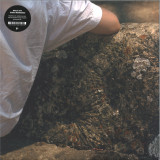
Frozen reeds presents the only recorded duo playing of two legendary musical figures. Derek Bailey and Paul Motian – two longstanding pioneers of distinct strains of improvised music – came together for a brief period of collaboration in the early 1990s. Tapes of their two known live performances (one at Groningen’s JazzMarathon festival in the Netherlands, the other a year later at New Music Cafe, NYC) were recently unearthed in the Incus archives, and their contents will surprise and delight fans of both supremely idiosyncratic musicians.
The Groningen concert (1990) is released on vinyl, while the New York date (1991) is included with the digital download, free of charge for all purchasers. A conversation between Bill Frisell and Henry Kaiser on Bailey, Motian, their intertwined backgrounds, and the significance of these recordings is included as sleeve-note insert.
“This is one of those moments that we’re always hoping for, and it's so rare. And it's so hard to talk about, because it's so beautiful. It's like you're seeing some new species of plant that you never knew existed or something.” – Bill Frisell
Each player bringing decades of crucial experience to their encounters – with histories taking in vast swathes of the development of jazz and free improvisation – these fleeting shared moments provide some of the most riveting playing in the career of either.
There is precious little recorded evidence of Motian as a free improviser, but his mastery is beyond any doubt in these recordings. From knife-edge precision to textural haze, Motian’s palette is astounding, but perhaps even more impressive is his confidence in the non-idiomatic conversation itself. Pushing far beyond the established vocabulary of free percussion, his playing allows a measured degree of repetition to take form, giving rise to almost song-like structures. The covert influence of the drummer’s work on the post-rock genre (just taking its first nascent steps in the early 1990s) is made overt here.
In turn, Bailey allows some of his most unashamedly melodic passages to unfold without a mote of his trademark contrariness or antagonism. Patterns that would be acerbically disrupted elsewhere are allowed to settle, with variations of note and timbre introduced more gradually than is typical of his playing. When forceful changes in dynamics or tone do arrive, they do so in such close tandem with Motian’s rhythmic and textural transitions as to beggar belief. The guitarist’s duos with percussionists (Jamie Muir, Han Bennink, John Stevens…) arguably provide some of the highlights of his discography. ‘Duo in Concert’ represents a strong addition to the list.
An elegant sense of construction pervades the sets, as the duo ably fulfil the promise of free improvisation: carving out hugely compelling, expertly balanced, and thrillingly paced music as if from thin air.
Suche:construction
First time on Vinyl, presented in Gatefold Sleeve on Double LP. Originally released in 2015 and carefully forged between 2011 and 2014, "De Aeris In Sublunaria Influxu" showcases a magically crafted alchemical wedding between these two titans of drone ambient. The 2LP features an exclusive bonus track. Troum navigates through cavernous, subterranean spaces where cyclical sounds reverberate towards impressive crescendos of icy noise, luminous drones and dramatic, guitar-driven ghostly melodies. Their truly unique soundscapes shine in a perfect symbiotic movement with the Swedish dark ambient maestro Peter Andersson. Engulfed in a hauntingly beautiful kaleidoscope of grey-ish melancholia, raison d’être comfortably walks deeply into Troum’s vast territory, delivering his very own trademark of eerie tones, ominous sacral ambience and crystal clear constructions. Airy lush enigmatic atmospheres live together with dark breathing, reverberant transformative drones. Rich and gorgeously layered.
All sounds assembled and recorded by raison d'être (Peter Andersson) and Troum (Stefan Knappe, Martin Gitschel) between 2011-2014. All sounds processed, manipulated and structured by Peter Andersson 2011-2014. K-14 level mastering by Peter Andersson 2014. Artwork by Ritxi Ostáriz.
2LP Vinyl Edition of 300 copies, Gatefold Sleeve, Matt Lamination, Black Paper Innersleeves. 8 Tracks. Running Time 76:28
In the early 1990s, a team of linguists, engineers, anthropologists, and archaeologists were tasked with constructing a type of communication that could transcend time. How might we converse with future civilizations when language may evolve or dissolve entirely? The result yielded the design of spike fields; a strange construction of granite thorns bursting from the earth to alert its viewers to the deadly uninhabitability of nuclear waste disposal sites. For Maria BC (they/them), this state of temporal focus molds the wanderings on their second full length album Spike Field. How do we connect with the weathered shadow of our experience, while envisioning the self a few steps ahead of us? While their debut album Hyaline (2022, Father/Daughter) explored grief and anxiety through a series of character-led accounts, Spike Field recognizes that the past will continue to lurk below the surface until we decide to break through the soil. Spike Field was recorded in the home of a family friend. The home featured an out-of-tune baby Steinway piano, complete with squeaky hammers and strange, sporadic sounds. The piano is sprinkled throughout the album, and features extensively on opener "Amber," showcasing Maria BC's looser, more extensive arrangements. The song flickers with electronic wonder, like a wave seeking out its station, before crashing into the angelic choral introduction of "Watcher". Strings, plucked guitar and buzzing swells accompany their classically-trained mezzo-soprano voice on "Return to Sender," a song that focuses on the frustrations and turmoil of being unable to reach a loved one--both physically and emotionally. Spike Field reminds us that despite our best efforts to bury certain aspects of ourselves, they will always lurk beneath the surface. Instead of ignoring the seeds striving to break through, we can point to these places with a curious grace, concocting a language that transcends words to converse with our previous selves. Maria BC pieces together juxtaposing sonic landscapes and oscillating vocals to represent the thread of miscommunication, or the failure of words, that weaves throughout the album, transforming it into a distinct and ever-evolving sonic tongue. If we listen, we might find something new within ourselves.
- Thème Principal 00:51
- Gilbert 01:55
- La Chambre De Raph 01:28
- Vers Le Futur 01:06
- La Centrale 03:34
- Gilbert À L’hôpital 00:56
- Gilbert Va À La Réunion 00:44
- Bataille Dans Le Terrier 00:34
- Changement Interne 01:44
- La Sentence De Constace 00:37
- To Basile 02:23
- Le Terrier 01:35
- A Little Break 02:17
- Un Agent A Changé 00:35
- Retour Dans Le Présent 02:39
- Le Trou 00:56
- Louise Combat Constance 00:43
- Reboot Temporel 02:45
- The Call Of The Sun 03:26
- Pourquoi Les Zombies 01:05
- Castafolte Explose 01:05
- Gilbert Signe 02:15
- Elle S’appelle Alice 00:52
- Explosion Du Laboratoire Castafole 01:23
- Sauvetages Dans La Ruelle 02:00
- Le Visiteur Se Bat Et Le Nuage Arrive 02:58
- Louise Libère Les Prisonniers 01:43
- Raph Et Victor 00:45
- Le Dernier Bar Après La Fin Du Monde 03:29
In 2555, in a devastated future, the apocalypse threatens the Earth. The last hope lies with a man capable of time travel. His mission: to return to the past and change the course of events. His target: Gilbert Alibert, a Member of Parliament about to approve the construction of a nuclear power station with the Chinese company Axomako. This event in the present will cause a huge catastrophe in the future, with a radioactive cloud killing half the world's population every 70 years.
Jimmy Tellier and Florent Dorin composed and arranged the film's original music.
Repress on green vinyl of GGGOLDDD's fourth album, Why Aren't You Laughing'. The Dutch ensemble marry hypnotic gothic vibes with soulful heavy rock, overlaid with atmospheric, often dream-like vocals. The multi-faceted album is complex in its construction, but by enlisting producer Jaime Gomez Arellano (Paradise Lost), each element is given ample room to breathe and indeed shine. GOLD's fourth album, Why Aren't You Laughing?, produced by Jaime Gomez Arellano (Paradise Lost, Grave Pleasures). The Dutch ensemble marry hypnotic gothic vibes with soulful heavy rock, overlaid with atmospheric, often dream-like vocals. Available on CD & LP. Recalling the experimentalism of Godspeed You! Black Emperor, the dark and sweet beauty of Kristin Hersh and Throwing Muses, but firmly rooted in a powerful, yet artsy rock vibe, GOLD have tapped into something truly unique.
- At Peacehaven
- Media Res
- Côte D'adur
- A Submersible
- A Whole House
- Service Stationed
- Construction Site/Summer_22
- Trauma Mosaic
- Riddley Scott Walker
- The Common Cold
color LP[15,55 €]
Mit einer #1 in den UK-Vinyl-Single-Charts und der Ankündigung ihres vierten Albums festigen JOHN 2023 ihren Ruf als kompromisslose Post-Hardcore-Kraft. Mit Barry Adamson (The Bad Seeds, Magazine) und dem preisgekrönten Schauspieler Simon Pegg als Gäste vereint 'A Life Diagrammatic' Schlagkraft und Intensität ihrer atemberaubenden Live-Shows mit den zunehmend strukturellen, cineastischen und expressiven Sensibilitäten der Band. Für die Abmischung wurde Seth Manchester (Big Brave, Battles, METZ) engagiert, während Frank Arkwright (Mogwai, Arab Strap, Squarepusher, Autechre) das Mastering in den legendären Abbey Road Studios übernahm. Das Ergebnis ist ein reichhaltiges und eindrucksvolles Hörerlebnis einer fesselnden und genreübergreifenden Band.
Chicago"s Axis: Sova hit the beaches of southern California with Ty Segall to make a total hi-fi classic. Often feral and consistently catchy, Blinded By Oblivion is lit up with interlocking drum kit + drum machine, adventuresome guitar, bass, and harmonic vocals on every song. Icy lyrical perspectives, rendered in a sunshiny natural paradise, transmit the fun and fraud of human polarities with urgency and an occasional eye roll. Making for an undeniably good/bad time, streamlined and more reflexibly physical than previously known, Blinded By Oblivion begs the universe to bring back rock and roll radio. All the elements are there: compassion for our collective fallibility, rebuke on the tip of the tongue, all rolled tight with hook-laden, high-energy construction. "Bout halfway through Blinded By Oblivion, we hear Sova say, "I think my heart is made of metal." Yuuuup. But we"d argue there"s at least a ventricle or two made of post punk! And with vena cavae split between psych and southern boogie. And cardiac veins of glam, power pop, and punk Sometimes the heart is simply filled with sweet melody - so man, the beats of this metallic muscle are insane!
Glasser, the elevated electronic project from Cameron
Mesirow, releases her anticipated third album, ‘crux’, via
One Little Independent Records.
‘crux’ takes Glasser’s entrancing blend of dreamy
experimental pop and layered electronics to explore
themes of personal identity, emotional vulnerability, and
the human experience. The album maps journeys of selfdiscovery as she unpacks intimate experiences with a
maturity and cathartic outlook. Specifically, the tracks on
‘crux’ discuss the death of an old friend, her meditations
on the fragility of life and the delicacy of relationships in
times of uncertainty.
More than anything it’s about the importance of creativity
and writing while healing, and on an individual level,
looking inward and the examination of one’s grief, anxiety,
and insecurities. Musically it searches outward, it includes
the use of traditional folk, Celtic to communicate her
Scottish roots, and Eastern-European styles, all introduced
to her lush, atmospheric production, intricate vocal
harmonies, and complex rhythms.
“Soaring vocals with free-flowing, rhythm-obsessed
eclecticism that make for a notably welcoming collection of
atmospheric, electronics-brushed pop” - Pitchfork
“It’s Glasser’s sonic constructions which holds our interest
first and foremost; a bolder and more up-front sound” -
The Line of Best Fit
“Potent, sexually charged and teeming with life. Make no
mistake, this isn’t sex as male-gaze-pandering titillation,
packaged in clichéd, chart-friendly couplets, but sex from a
singular female perspective: intimate, all-encompassing,
ecstatic. This is pop for consenting adults: music for awake
minds” - Dazed
Black Truffle is pleased to announce Tender Membranes, the label’s first release from Swedish-Finnish sound artist and electro-acoustic composer Marja Ahti. Active for a decade in the Finnish underground music scene, in recent years Ahti has developed a distinctive approach to patiently unfolding electro-acoustic constructions, documented on a string of solo releases and collaborative projects with Judith Hamann and her husband Niko-Matti Ahti. Working with concrete and instrumental sounds, field recordings, and electronics, Ahti favours neither disjunctive collage nor monolithic consistency; rather, her work is composed of organically unfolding sequences of details and textures, which, as she says, ‘can stretch out or cut fast as long as they have a sense of inner stillness’, a sense that she connects to moments of heightened attention in everyday life. Tender Membranes consists of four lengthy pieces, partly inspired by the image of the senses and mind as membranes allowing for the passage between inner and outer spaces, sensation and its causes, creating a world. Ahti’s unhurried pacing encourages this sense of listening as an opening or surrender to sound, which can often create the impression that the listener is moving through a space zooming in on details. The opening Shrine (Aether) exemplifies this aspect of Ahti’s approach: a bell clears the air with a single long tone, followed by the ambience of outdoor spaces, crackling electronics, an archival recording of a horsefly on a windowpane. Dozens of these moments, varying in length, density, and intensity, move past the listener’s attention, momentarily brought into focus then slipping away. Like those of the masters of the French musique concrète tradition, Ahti’s sounds are not often recognisable, though they might suggest proximity or distance, open environments or closed spaces, the urban or rural, day or night. In Ahti’s work, we do not encounter spectacular metamorphoses à la Parmegiani but rather a state of ambiguity where the listener is often unsure what is organic and what is inorganic, where the careful productions of the synthesizer might end and sounds discovered in the environment begin. What Ahti calls her ‘poetic way of experiencing and organising the familiar and the unfamiliar’ is sustained throughout Tender Membranes, but each piece has its own character. On Dust / Light, human presence is more overt, as what appear to be whispers, singing, and distant speech thread between high frequencies, untraceable drips and pops, and metallic shimmers. In all this there is a melody that you can sing and to which you may dance makes more prominent use of musical instruments, gaining a sombre beauty from half-buried piano chords and organ tones. On the closing Oh Fragrant Witness, a delicate cloud of subtly bending pitches is repeatedly disrupted by a resounding, almost ominous mass of low tones, at once a strange detour from much of what has gone before and an almost classical finale. Arriving in a sleeve reproducing contemporary Finnish photographer Sini Pelkki’s fragmented visions of the everyday, Tender Membranes is a balm to reawaken tired ears.
Mit einer #1 in den UK-Vinyl-Single-Charts und der Ankündigung ihres vierten Albums festigen JOHN 2023 ihren Ruf als kompromisslose Post-Hardcore-Kraft. Mit Barry Adamson (The Bad Seeds, Magazine) und dem preisgekrönten Schauspieler Simon Pegg als Gäste vereint 'A Life Diagrammatic' Schlagkraft und Intensität ihrer atemberaubenden Live-Shows mit den zunehmend strukturellen, cineastischen und expressiven Sensibilitäten der Band. Für die Abmischung wurde Seth Manchester (Big Brave, Battles, METZ) engagiert, während Frank Arkwright (Mogwai, Arab Strap, Squarepusher, Autechre) das Mastering in den legendären Abbey Road Studios übernahm. Das Ergebnis ist ein reichhaltiges und eindrucksvolles Hörerlebnis einer fesselnden und genreübergreifenden Band.
When South Korean balearic prodigy Mogwaa came to MM Discos with an idea for his rst full-length album, we were a bit surprised.
He said, ‘I want to do an album of bossa tracks with synths, a drum machine and my guitar’. We obviously had to take him up
on that deal.
Fresh from the recent Bandcamp feature on his own brand of danceoor-ready modern boogie, Seungyoung Lee (aka Mogwaa)
arrives back on MM Discos with his - and our - rst full length exercise. With six tracks per side of 80s inuenced synth and bossa
badness, ‘Hazy Dreams’ is an exercise in simplicity, and more proof of the ever-expanding musical horizons of one of the scene’s
most virtuosic instrumentalists.
Pairing a sensitivity to the construction of ambient, funk, bossa and cassette-tape 80s experiments with his own cinematic subtlety,
‘Hazy Dreams’ takes a gentle, minimalistic approach, crafting its own escapist world that oers a welcome diversion from the
steady ow of busy balearica and downtempo.
Opening track ‘Full Bloom’ paints a picture of midsummer at dawn, some clear-skied island where lush vegetation climbs through
hibiscus gardens. ‘Nacimiento’ is an AOR/bossa crossover evoking West Coast yachting in full afternoon, and A3, ‘Soothing’, adds
a touch of wistfulness with reverb-doused guitars over meandering bass motifs.
The easy kick-and-snare combo of ‘Levitation’ sets the scene for a drum machine love aair, unrequited love on the rocks, and
‘Flashback’ plays with short delay trails and o-kilter melodic sequences, where you feel the soft presence of the nebula approaching
at the break of day. Closing out the A-side, ‘Dispatching’ reaches out even further into the imagined cosmos of Mogwaa’s
picture-perfect world, portraying an ambience at dusk, observing, calmy, as pued-up pink clouds melt into the evening canvas.
On the other side, Mogwaa explores quiet corners with ‘Illusions’, a slow meditation on the nature of simple presence, and ‘Echoes
of You’, a stream of subdued brush strokes that crescendo into higher frequencies on gently undulating pads. B3, ‘Moondance’,
ups the tempo and recalls classic Mogwaa with its sideways shue and starry melodic refrain, pivoting through folk-dance
moods and surprising chord changes.
Nearing the end of the album, ‘Footprints’ wades through tall grass in search of altered states, innite and hypnotic, changing
course only to crouch down and study the landscape, and B5, ‘It always comes and goes’, pictures the to-and-fro of jetstreams and
comets in the blinding midday sky. Finally we have the closing credits of ‘Swingin’ that looks o into the horizon, jaunty and exalted,
a guitar-led tribute to an easy-going world, and ultimately mindful of the power of dreams.
We’re humbled to have such a special record for our rst full-length release on the label.
Adrian Borland and Graham Bailey might be better known as members of legendary post-punk group The Sound, but the two were childhood friends and had been playing together even earlier in The Outsiders, and continued their deep musical rapport as a duo, creating these intense and engaging songs as Second Layer at the same time as their higher profile band output. Following our release of Courts Or Wars, combining their early material, we are proud to reissue their only full length album, World Of Rubber.
Fueled by experimentation in both song construction and recording techniques, the duo leave you enveloped in what The Quietus described as, “a monochrome worldview morbidly obsessed with the dehumanizing effect of war, nuclear weapon annihilation, and the fracturing and negation of the self within an increasingly distorted and technologically mediated society.” Indeed, the goal had been to make each album a concept album, with this to be titled: Second Layer’s World Of Rubber. Alas, this was to be the first and last of those efforts. New detailed liner notes from Graham Bailey shed considerable light on the creation of this cold classic and its immediate aftermath.
Bailey’s inventive construction and deconstruction of various electronics, effects boxes and tape loops form the propulsive base for these songs. Borland’s guitar playing is jagged and unleashed. Above it all is an undeniable sense of melody and Adrian’s distinctive vocals. Soon, they would wonder where Second Layer ended and The Sound began, but World Of Rubber would stand as a document of this fertile period. It would also be a lasting testament to their desire to push the boundaries of their creativity. Dark and brooding the result is what Bandcamp described as “brutally bleak, blank-eyed post-punk that remains chillingly compelling.”
"Perfect Saviors ist unser völlig unironischer, aufrichtiger Versuch, das größte und beste Rockalbum des 21. Jahrhunderts zu schaffen." The Armed - das in Detroit gegründete Alternative Metal-Post-Hardcore - Kollektiv - meldet sich mit neuen Album Perfect Saviors zurück, dem nächsten Schritt seit ihrem Durchbruch ULTRAPOP aus dem Jahr 2021. Perfect Saviors wurde von Tony Wolski zusammen mit Ben Chisholm und Troy Van Leeuwen produziert, mit Beiträgen von Julien Baker, Sarah Tudzin, Mark Guiliana, Justin Meldal-Johnsen, Eric Avery, Stephen Perkins, Josh Klinghoffer und vielen anderen. Das Album wurde von zudem von Alan Moulder (u.a. NIN, Iggy Pop, Jesus & Mary Chain, Wet Leg, Foo Fighters...) gemischt. Sänger Tony Wolski äußerte sich wie folgt zu dem Album: "Zu viele Informationen haben uns dumm und verwirrt gemacht. Zu viele Möglichkeiten, sich zu vernetzen, haben versehentlich zur Isolation geführt. Und zu viele Erwartungen haben jeden gezwungen, eine Berühmtheit zu werden. Vorhersehbare ursprüngliche Gefahren sind neueren sozialen Gefahren gewichen. Das Ergebnis ist eine Welt, die verwirrend und beängstigend, aber letztlich auch schön ist. Wir hoffen, dass diese Platte genau das alles auch ist. Perfect Saviors ist der Abschluss einer Trilogie von Alben, die untersucht und seziert, was "Popkultur" in einer Welt der grenzenlosen Information und des Zugangs ausmacht. Jedes Album nutzt "Popmusik" als lockeres Format, um diese Ideen auszudrücken, und nutzt Komposition und Präsentation als eine Möglichkeit, diese Fragen weiter zu hinterfragen. Perfect Saviors ist das ultimative Produkt dieser Entwicklung. Mit Hilfe eines der weltweit bekanntesten Mixing Engineers haben The Armed ein wunderschönes Album geschaffen, das die Sprache und die Welt des Pop durch eine einzigartige, extreme und perverse Linse betrachtet und so ihre Kunst vermittelt. Perfect Saviors folgt auf das von der Kritik gefeierte Album ULTRAPOP von 2021, das auf zahlreichen Best of 2021-Listen landete, darunter Pitchfork, New York Times, Stereogum, Revolver und vielen mehr. Vinyl im Klappcover mit zwei 12seitigen Booklets, Insert + DLC!
Deena Abdelwahed's first album is shifting the epicenter of contemporary electronic music south: 'Khonnar' will be released on November 16, 2018 by InFiné. Pronounced 'Ronnar' (an essential detail so as to avoid facile misinterpretation by French-speakers) it is a term that makes the most of Tunisia's cultural and linguistic spectrum. It evokes the dark, shameful and disturbing side of things, the one we usually seek to hide, but which Deena instead sticks our noses in with her debut. It is a testament to Deena's coming into her own as a world citizen, and as an artist. A self-construction made of frustrations and constraints, borne of retrograde mindsets, which are not the prerogative of either the East or the West, and which she tirelessly strives to expose and break. Throughout the 45 minutes of 'Khonnar", Deena breaks down the codes of bass, techno and experimental music, and writes the manifesto for a generation that does not seek to please or to conform, taking back control of its identity - with all the attendant losses and chaos. A new creative world order is taking shape, a new tilting point between north and south, the response of a connected and liberated youth who takes the control of the new decolonization. About Deena Abdelwahed A Tunisian producer and DJ, Deena Abdelwahed arrived in France at the age of 26 after earning her stripes on the Tunis scene and as part of the Arabstazy collective.
Das französische Label Infiné ist dafür bekannt, elektronische Musik jenseits ausgetretener Pfade zu veröffentlichen - hier wird Techno und House neu definiert. So passt es ganz gut, dass die aufstrebende tunesische DJ und Underground-Produzentin Deena Abdelwahed bei dem Lyoner Imprint eine Veröffentlichungsplattform gefunden hat. Abdelwahed performte in den letzten Jahren zwischen Boiler Room und Berghain in allen namhaften Clubs und hinterließ bei der globalen Dance-Gemeinde mehr als staunende Münder. Nach der im Frühjahr 2017 veröffentlichten EP "Klabb" präsentiert die Tunesierin mit "Khonnar" jetzt ihr sehnlichst erwartetes Debütalbum.
Was beide Tonträger vereint: sie verbinden nordafrikanische Klangelemente mit elektronischen Sounds, haben jedoch mit Weltmusik nichts am Hut.
Carl Finlow keeps on keepin' on. Not only is Finlow one of the most respected names in electro, a producer who boasts a sprawling catalogue that takes in a wide variety of aliases, but he's also spent recent years establishing himself as a mainstay for Sheffield's Central Processing Unit label. Soft Robotics, the new EP from Finlow's Silicon Scally project, is the fifth Silicon Scally release in five years to boast one of CPU's instantly-recognisable black-and-white covers.
The reason that Silicon Scally and CPU keep linking up is simple; they're a perfect fit for one another. Central Processing Unit has established itself as a haven for post-Drexciya producers since launching in 2012, and there are few artists better than Finlow at building on the Detroit group's sound. The union bears fruit once more on Soft Robotics, an EP of lithe machine-funk jams that will both do damage in the dance and also reward more concentrated home listening.
Things begin at a steadier speed than one might expect. Rather than barrelling off with the kind of sinewy roller one associates with the CPU name, Soft Robotics' title-track takes things at mid-pace. The groove reveals itself without hurry, Silicon Scally adding or subtracting elements - twitchy modular loops, pensive pads, the occasional blurt of low-end - atop the chugging bass/drums groove. It's a track which wins you over with guile rather than force.
As the name of subsequent cut 'Jitters' intimates, this one picks things up a little after 'Soft Robotics'. The tempo is higher here, the central beat more nervy. At their cores, though, 'Jitters' and 'Soft Robotics' are kindred spirits. Here, another slyly insistent bit of drum programming comes swirled up with all sorts of extraterrestrial tones, from little nuggets of melody supplied by the keys to electrifying synth stabs and percussive squelches.
Things limber up further still on first B-side 'Spin Ratio'. The track's 808 kicks are punchier than those of the A-side jams, and there's a dizziness to the bass tone which gives 'Spin Ratio' an intriguingly off-kilter feel. Atop the booming beat we find ourselves hypnotised by cells of melody and harmony interlocking or moving apart - particularly the staccato module at the track's heart. Sure enough, 'Spin Ratio' is the Soft Robotics joint which cleaves closest to Drexciya, invoking other Detroit disciples like Jensen Interceptor in the process.
After Soft Robotics picks up speed in the middle, closer 'Super Fluid Tones' brings us back to where we started. This track returns to the more measured delivery of the record's opener - there's a steady pulse to the drums, and once again Silicon Scally packs the mix with so many intriguing whizzes, bangs, blips and blurts that it's impossible not be won over by this tune's construction. 'Soft Robotics' and 'Super Fluid Tones' bookend Soft Robotics very nicely, and Silicon Scally's smart pacing gives the EP a lovely ebb and flow.
The ever-excellent Carl Finlow drops a Silicon Scally release via Central Processing Unit for the fifth year running. Like its predecessors, Soft Robotics is an excellent and deftly-crafted collection of modern machine-funk.
RIYL: Drexciya, Jensen Interceptor, Fleck E.S.C., The Advent
Colloboh (a portmanteau of Collins Oboh) is a Nigerian-born, Los Angeles-based experimental producer and composer who has spent the past several years cultivating genre-spanning modular wizardry. A self-taught synthesist, Colloboh’s DIY recording diaries (still archived on Instagram) quickly amassed a dedicated online following, eventually catching the eye of Leaving Records founder, MatthewDavid, who wasted no time tapping the then-twenty-six-year-old to perform at the monthly Leaving showcase, Listen to Music Outside In The Daylight Under a Tree. In 2021, Colloboh permanently relocated to Los Angeles from Baltimore, dedicating himself to music full-time, and quickly becoming a fixture of the city’s vibrant experimental scene. Whereas Colloboh’s debut EP Entity Relation (released that same year) dove headlong into club beats, Saana Sahel, out May 5th 2023 on Leaving Records, showcases the breadth of the fledgeling composer’s ambitions. The EP’s title, Saana Sahel, refers to a land of Colloboh’s pure imagining—an untouched utopia spanning lush coastlines and sweeping deserts. Beginning with the stately “Acid Sunrise” (like a Phillip Glass rave comedown), the EP functions as an atlas of sorts, mapping the region’s varied environments and moods. And varied indeed—across these six tracks there lie ecstatic jazz freakouts, samba shuffles, guest vocals from (seemingly) the very Seraphim, and interpolations of Debussy and Gabriel Faure. The breadth of sounds conjured here is a testament not only to Colloboh’s eclectic roster of influences, but also the period of deep and challenging personal growth that immediately preceded the EP’s composition. The construction of Saana Sahel (both the imagined locale and the release) served as a spiritual lode star, a place to which Colloboh could retreat for energetic restoration. Ever-generous, Colloboh has charted these expeditions for us in song, and now we may all draw sustenance and inspiration from the wellsprings of this rich land.
This new album compiles several songs made in the years following Black To Comm's classic "Alphabet 1968" album. Originally released on the seminal Type label in 2009 (and to be reissued on Cellule 75 this year) "Alphabet 1968" combined the sound of vintage shellac and vinyl loops with broken electronics and field recordings, the press release mentioning disparate influences "ranging from Moondog to Basic Channel by way of Bernard Herrmann". In a beautiful one-page review in The Wire magazine (later reprinted in his book Ghosts Of My Life) Mark Fisher compared Richter's music to JF Sebastian’s miniature automata in Blade Runner ("with their bizarre mixture of the clockwork and the computerised, the antique and the ultramodern, the playful and the sinister"), ETA Hoffmann's inventor-magicians and Auguste Villiers de l'Isle-Adam's 1886 tale of Thomas Edison's (fictitious) construction of an artificial human.
Now titled "Coh Bâle" (inspired by a strange dream) these recordings were supposed to become a follow-up to said album but for reasons unknown it never materialized and the album seemed forever lost. At the time Richter started to dive deeper into several strains of (so-called) world music aka the folk music of Southeast Asia and Eastern Europe as well as liturgical and medieval music, the Kraut-Electronica of Harmonia and several certain Mediterranean experimentalists from the 1980's who started to merge their mostly electronic and field recording based compositions with traditional musics from all over the world by way of new sampling technology.
Many of the songs for the album were recorded while travelling and at various residencies around Europe: a detuned piano in a Thessaloniki basement (Richter played at a children's birthday party there), vintage synthesizers in the GRM studios in Paris, decaying acoustic instruments found in an old Black Forest mansion, childrens' voices at a workshop in Karlsruhe's ZKM Institute; then mixed on headphones in the ICE trains running between these places and his hometown Hamburg.
"Coh Bâle" is taking inspirations from old Nonesuch Explorer and Ocora LP's, Crammed Records, 80s Mediterranean Ambient (Nuno Canavarro, Roberto Musci) combined with the DIY spirit of Deux Filles and Flaming Tunes and the playfulness of Asa Chang & Junray. The songs are both mysterious and transparent, intricate and frugal, vibrant and patient. One of the album's unexpected climaxes is a gorgeous (artificial) berimbau version of the Welsh traditional "Iechyd o Gylch".
No two songs feature the same instrumentation and many acoustic sources (pianos, flutes, wood percussion, viola, tablas, autoharp) were disassembled and later coalesced into new configurations or used as virtual instruments; later combined with samples, field recordings, electronics and (on a few tracks) autotuned vocals reminding of recent works by the likes of Claire Rousay or More Eaze.
We had to wait for a worldwide pandemic for Richter to dig deep into the vaults and finally bring these recordings to light. This is the 2nd release from his archives after the "Diode, Triode" LP which presented Musique Concrète/Acousmatic recordings made at INA/GRM and ZKM. Another massive Double-CD (MM∞XX Vol. 1 & 2) was released last year featuring collaborations with 33 artists such as Andrew Pekler, Richard Youngs, Eric Chenaux, Maja Ratkje, Radwan Ghazi Moumneh of Jerusalem In my Heart, GRM boss François Bonnet (Kassel Jaeger), Felix Kubin, Timo van Luijk (In Camera, Af Ursin), Luke Fowler and many others, showing Richter's versatility and his willingness to reinvent himself for every new release.
Marc Richter is widely known under his Black To Comm moniker, having released (at least) 12 albums under this alias in the last 20 years. He is currently signed to the Thrill Jockey label. Richter composes soundtracks for film and has worked with visual artists such as Mike Kelley and Ho Tzu Nyen. He also records as Jemh Circs and Mouchoir Étanche for his own Cellule 75 label (named in tribute to the late Luc Ferrari).
In addition to his day job transforming pop music with his own records, as well as those of Gastr del Sol, Loose Fur and Sonic Youth over the past few decades, Jim O"Rourke has been contracted for several dozen film scores over the years as well. It makes sense - his abilities as an improviser, composer and producer allow him to interpret cinematic moments with a unique understanding for their construction and how they work. It doesn"t hurt that Jim"s a well-versed cineaste, a complete and total fan of watching films, which has given him a preternatural understanding of the role of music in movies. What doesn"t make sense is how Hands That Bind is the first film soundtrack of Jim"s to ever receive worldwide release! He"s worked with filmmakers of international repute, like Olivier Assayas, Allison Anders, Werner Herzog and Kôji Wakamatsu! He served as music consultant on Richard Linklater"s 2003 laff-fest, School of Rock! He"s played in ensembles of award-winning documentaries and films alike! Throw the guy an internationally-promoted soundtrack LP every more often, why doncha? It was left to the "suits" of Drag City Records to innovate, once again, by taking a leap on an O"Rourke work. Made for an indie film that"s been seen by festival audiences and not enough others, the soundtrack for Hands That Bind is a moody, atmospheric delight. Jim"s roots in composition via tape-editing have evolved into a sophisticated assembly of found-and-processed sounds that achieve highly musical, near-orchestral majesty as they hang in the very air of the drama that unfolds in Kyle Armstrong"s Hands That Bind. Described as a "slow-burn prairie gothic drama" set in the farmland of Canada"s Alberta province, and starring Paul Sparks, Susan Kent, Landon Liboiron, Nicholas Campbell, Will Oldham, and Bruce Dern, Hands That Bind is a spellbinding trip to the existential bone of rural working life in North America. As conflict rises over the hard-worked patches of land that provide a mere and mean existence, a desperate air settles in, as a series of mysterious, often supernatural occurrences rock the small community. O"Rourke"s vaporous, serpentine musical backdrops and atmospheres reflect the obsessions and distractions of the film"s principles; moods of all sorts seen or otherwise implied. Additionally, the music highlights cinematographer Mike McLaughlin"s closely observed accounting of the farmers" environment, as well as the striking widescreen images of the big sky country with unnerving flair. For fans of Jim"s ongoing steamroom series as well as collectors of soundtracks, Hands That Bind will provide hours of engrossing listening. And if you get a chance, see the movie projected in a movie house, please - farmers aren"t the only ones struggling these days!
A1 - Burst Transmission
ASC returns with another stellar solo EP and Burst Transmission dives straight in head first to kick things off, pulsing crafted breakbeats and computer FX intertwine and stack with smooth synths, keys and trademark vocal hits. A powerful undertone bassline perfect for the dancefloor keeps the momentum going with blissful speckles of detail in the composition, including expertly tuned bongo drums scattered throughout.
A2 - Whispers
Sci-fi vibes take center stage as ASC channels that classic 720 energy with Whispers, a track which utilises sharp stabbing snares in distinct, forceful drum patterns which develop and adapt over halcyon synthwork. Respite comes in the middle of the track as the breaks change and settle the vibe briefly, before we are thrust forward again with those epic breaks commanding our attention once more.
AA1 - Psionic bond
ASC continues the retro sci-fi vibes with Psionic Bond, entering with zapping laser FX and a haunting vocal sample echoing before thunderous breaks thrash their way into the track, epic kicks and sharp thrusting snares dominate proceedings while through the wooshing layers of synthwork a distinctive bassy melody elevates the composition. This one is going to send the lucky discerning dancefloor into extra-sensory fever.
AA2 - Future Music
Ending the EP with something a little different, Future Music gives us a true taste of the old school brand new. A building intro lashes you with jabbing bass and effects, classic hi-hats rattle and slowly the 90's jungle breakbeat edits are released in waves as the piece progresses. The construction of the breaks is staggered sparingly, weaved with an influx of effects and samples creating a truly unique experience.
Whitelands follow their acclaimed single ‘Setting Sun’ – which saw the London-based band added to the BBC Radio 6 Music playlist – with their first ever vinyl release, an EP of reworkings, which is released as a limited edition orange vinyl 10” on June 23.Simply titled Remixes, the EP features two reworkings of ‘Setting Sun’ by dreampop legends A.R. Kane – the short Initiation Dub and the epic Hero Remix, which comes in three parts, titled Departure, Initiation and Return and takes the song to some unexpected and exciting new places.“Whitelands came up in conversation three times in a week,” explains A.R. Kane’s Rudy Tambala of how he got to know the band and came to remix them. “Two times is coincidence, three times is a conspiracy, so I reached out to them on social media, and we started chatting. They’re cool, like baby Kanes. ‘Setting Sun’ was close to my heart, reminding me of ‘Fools Gold’ meets Slowdive versus Frank Ocean. Anyway, I heard several approaches in my head, so I thought, ‘Fuck it, let’s do ’em all’. “I knew I wanted to take a prog approach: Marvin Gaye’s What’s Going On, Pink Floyd’s The Dark Side Of The Moon, Sasha’s Involver2, Coltrane’s A Love Supreme, Frank Ocean’s Blond, etc. Even my own sixty nine. It’s that seamless drift from one part into the next, stretching the idea until it ruptures, creating space for a new way of perceiving; this has the first inklings of hive mind, telepathy, in a musical form; you dissolve into it as it dissolves into you. A fundamental dreampop construction and aim, whereby subject and object become one. Ahem. “As the extended mix took shape it suggested to me the three components of The Hero’s Journey, hence the titles. The three-minute pop song was determined by the technical limitations of the 7” vinyl single. Digital has obliterated that. The perfect dreampop song has no time limit. ‘Setting Sun’ A.R. Kane Hero Remix is timely.” Alongside Rudy’s reworkings is an equally dazzling drum’n’bass take on last year’s single ‘How It Feels’ by the band’s guitarist Michael in his howdogirlssleep guise.
"As long as you come to my garden", the sixth release in the cherished Die Schachtel’s series “Decay Music” as well as the debut of the duo Damāvand (Gianluca Ceccarini and Alessandro CIccarelli) on the prestigious Italian label, is a tribute to the Armenian troubadour Sayat Nova, through his lyrics and freely inspired by the cult movie about his life The Color of the Pomegranates (Nřan guynə, 1968, USSR) directed by Sergei Parajanov. The feature film tells the life of the poet, who lived in the 17th Century, from childhood in the royal court, to retirement until his death in the monastery of Haghpat, through a series of episodes, static like paintings that do not tell but show, evoke, they suggest through metaphors, analogies, surrealist flair, dreamlike landscapes, liturgical pauses.
The six tracks are inspired by the dreamlike imagery contained in the movie, weaving sound textures ranging from ambient to noise, to references to the musical tradition of the Middle East.
Gianluca Ceccarini and Alessandro Ciccarelli alternate, without fixed roles, with analog synths, drones, amplified common objects, generative music, audio samples from the film and acoustic instruments such as the tar - a stringed instrument of Persian origin, the trombone and the cornet. In addition, two of the songs on the album contain Sayat Nova’s poems recited in Persian by Nahid Rezashateri.
The sound materials are revealed gradually like episodes, evoking the visual suggestions staged by Parajanov in the movie. As long as you come to my garden is intended as an imaginative journey to distant spaces and indefinite archaic times.
DAMĀVAND is a musical project by Gianluca Ceccarini (electronics, electroacoustic objects, tar) and Alessandro Ciccarelli (electronics, electroacoustic objects, trombone, cornet)
Gianluca Ceccarini, guitarist, electroacoustic experimenter, luthier specialized in the restoration and construction of plucked musical instruments for early music. In 2021 his first album Starving Night was released for the netlabel Laverna and in 2022 the Sarab Label published a CD version. He also works in photographic research, video-art, graphics and independent publishing with the Sarab collective.
Alessandro Ciccarelli is an author who ranges between different languages: photography, video, sound. He is involved in several collective research projects in the musical and theatrical fields. His solo records are released under the nom de plume Elnath Project. The latest work, after six years of silence, from Italian berlin-based composer, performer and publisher (Black Letter Press) Claudio Rocchetti, and a welcomed return on the Die Schachtel imprint after the brilliant Another Piece of teenage wildlife (2008), Labirinto verticale (Vertical Maze) takes its origin from the four years long collaboration of Rocchetti with the Parma-based Fondazione Lenz, a contemporary theatre research collective/organization.
Jimmy LaValle’s The Album Leaf has spun from solo outlet to full band and back in its nearly 25 years. His acclaimed catalog spans releases for labels such as Sub Pop, City Slang, Relapse, and others. He also composes music for film and television, scoring over 20 projects (narrative features, documentaries, and TV series) since 2009. The cinematic sensibilities of The Album Leaf were present from the beginning. His 1999 debut introduced the start of a signature sound: melodic and meditative electro-organic soundscapes constructed with guitar, percussion, Rhodes, and field recordings.
His seventh full-length LP, and first since 2016, arrives in 2023 via Vancouver’s Nettwerk Records. FUTURE FALLING finds LaValle working with an array of musicians, shaping slightly darker, more spacious, and synth-driven songs with contributions from Bat For Lashes, Kimbra, and many others.
The music registers a shade darker and more synth-driven than most moments in his acclaimed catalog, a bridge between shadowy, cerebral terrain and dreamy precision pop, where softly percussive frameworks meet shimmering sound design and emotive instrumentation.
LaValle sees the construction of FUTURE FALLING as less conventional than past work. Contributions were done remotely with a “throw everything at it” mindset, making LaValle the arranger of layers from all over: drums, synths, horns, violins, voice, and more. LaValle created a pastiche of these layers and elements; in some cases even moving vocal takes to new tracks entirely. Without the in-the-room dynamics, he had more time to experiment, adding and subtracting ad infinitum.
The album opens on “PROLOGUE,” an evocative, slow-building instrumental that rides a pattern into a symphonic sea of static. Keys and horns glide atop the rhythmic pulse of “DUST COLLECTS,” setting the contemplative scene for “AFTERGLOW,” the record’s most pop-minded performance. Here Kimbra, the Grammy-winning New Zealand singer-songwriter, renders a striking recollection of past love as percussive elements shimmer and swirl.
A plaintive piano line moves throughout “Cycles 19.9” encircled by light ambient washes, both a valley between two peaks and a powerful composition in its own right. “Future Falling” follows; with origins tracing back to 2015, the track embodies the full sonic journey LaValle has taken. All the hallmarks of The Album Leaf — melodic builds, vivid sprawl, tonal shape-shifting — assemble to a blissful finish.
For the next stretch, “Cycles” begins with a uneasy Rhodes loop that builds and erupts into a wall of texture paving its way into “Give In,” where LaValle models a movement that begins subtle and measured before curving up with skyward, percussive bursts (“Stride”) and settling back down to the album’s back-half centerpiece, “Near” featuring the acclaimed English artist Natasha Khan aka Bat For Lashes. “Do you feel me near?” she sings into a mist of widescreen synths and soothing, distant drum beats as if searching through the dark.
Rave Or Die's sixteenth release signs a 100% frenchies masterpiece that will leave you breathless! As an absolute must-have for anyone who loves old-school music, this collectible double 10" features tracks from techno pioneers The Hacker, David Carretta, Terence Fixmer, and Umwelt.
Characterized by a fierce atmosphere over a classic Rave construction, The Hacker's highenergy "Reactor" on A side signs a nod to Circuit Breaker style. No doubt it will get your blood pumping!
David Carretta on the flip injects some New Beat and electro touches on his 4/4 flying gem, adding a unique flavor to the LP. Gold "Invasive Machinery" sounds like the perfect example of how the old and new can come together to create something beautiful. Terence Fixmer's "Detune My Brain" coming next is a milestone of a banger, with modulated vocals fusing into a sonic assault of mental acid sororities propelled by pounding beats. Ace!
Lastly, ROD mastermind Umwelt signs with analog "Mind War Acid," a vibrant tribute to Chaos A.D.'s "Mind War Electro" on Rephlex. This absolute tour de force driven by an insane 303 will make you want to dance until the end of world thanks to its gloomy and apocalyptic melodies.
Each track on this compilation is unique for sure, but they all come together to create an unforgettable listening experience covering every shade of the techno spectrum. Don't sleep on this one!
DEAD SEA APES are back with a passion to deliver their most essential and cohesive album to date. Formed in 2009, DEAD SEA APES have become a fixture of the psych scene, sharing stages with the likes of Part Chimp, The Heads, Acid Mother Temple and Mugstar while producing a distinctive body of work, ranging from psychedelic punk to experimental dub, from freeform jams to constructions of loops and drones. Following a slew of collaborations and split releases, REWILDING sees them return to a power trio of Brett Savage (guitar), Jack Toker (bass) and Chris Hardman (drums). From the chaotic blast of opener ‘Denialist’, beaming out like a maniacal emergency broadcast, through to the monolithic pounding of the title track, REWILDING is unrelenting, taking in blown-out guitar wails and jet black psych noise while the irrepressible rhythm section moves from claustrophobic motorik beats to a thunderous rolling juggernaut. These blackened pearls have been recast and refined over the course of the past three years, strung out deeper than the night and now embodying our present uncanny, disorienting times, as we emerge into an altered world to find Mother Nature reasserting herself while the human madness intensifies, locally and globally. Savage and uncompromising, this is DEAD SEA APES at their most direct and visceral. REWILDING is released by Cardinal Fuzz (UK/Europe) and Feeding Tube Records (USA) as an edition of 750 on black vinyl.
BAG X COLLAPSING DRUMS is a collaboration between experimental producer Collapsing Drums (Charlie Behrens) and spoken word/electronic duo BAG (Jody DeSchutter and Dan Allison). Modular synth, spoken word, field recording, experimental play and abstract guitar are a few of the practices visited by the project.
Momentary Lapses was born of an improvisational outburst sewn into a back and forth process, the three diverse perspectives nurturing creation and dissection along the way. This album maps multiple landscapes and conditions as drawn by the trio in an exploratory document, providing a journey through textures and atmospheres, beats and spaces, construction and reassembly. During the 18 months of the album’s creation, a series of bereavements disrupted and informed BXCD’s journey.
DeSchutter’s dada-esque verse moves purposely forward, fragmented through synaesthetic habitats. Her words, woven into the electronic compositions of Behrens and Allison, touch on themes of re-interpretation, incongruity, and longing. Momentary Lapses celebrates all that is unknown, pluralistic, and paradoxical as proposed antidotes to a binary mode of knowing. Sonically bridging the gaps between postpunk, IDM and experimental, BAG X COLLAPSING DRUMS promises a fresh take on the possibilities of sonic abstraction.
Sophomore album from Tenerife based trio, LAGOSS (Gonçalo F. Cardoso, Mladen Kurajica and Daniel García).
Moving away from their megamix vignette based first volume, the trio now experiments with a more song based approach whilst still keeping their trademark jam infused tropicalia and electronic freak outs with an offering to their 1970’s sci-fi masters – enter the lift to the stars.
First proposed by Russian rocket scientist Konstantin Tsiolkovsky and taken to mystical literary heights by Arthur C. Clark in his 1979 book Fountains of Paradise, the concept of a space lift takes a spiritual turn here, with LAGOSS chronicling its construction, right here and there on a near future version of their Island of Tenerife, in the Canary Archipelago.
The album moves freely through ideas and moods akin to the world imagined by Arthur C. Clarke. It conveys a new story by sonically imagining future civilizations in a faux ethnographical exercise whilst exploring current ideas of technology, religion and alternative history by creating its own particular insular sound world.
The album counts with the participation of dear friends such as a synth solo by Spencer Clark (Monopoly Child Star Searchers et all.) and a punchy, full blown remix by Muqata’a. Altogether creating a unique collection of eerie musical moments made of sub tropical moods and cyber exotica jams from a band that keeps growing and evolving into their very own personal sound.
Enter Tenerife in the late 21st Century, meet the Aquachachos and Guayechi, and ascend!
An onslaught of determined rhythms interlace in a glorious cacophony for the dance floor on Kim Dürbeck's latest. The Norwegian/Vietnamese artist unleashes a formidable din of percussion across six new pieces for Lek records.
A club record that takes furtive glances at the experimental, Lek003 is hardly an exercise in restraint as it carves its way through jungle and drum n bass to find its place on today's impetuous DJ booth where a new youthful energy has seen tempos reach heady heights.
As ever Dürbeck's Vietnamese heritage is strong as he weaves esoteric textures through the tapestry of monstrous kick drums and snares. The record eschews the conformity of a four to the floor, for something more assertive. From the familiar Amen constructions of a track like "Phu Yen Flow" to the more extreme outer edges of IDM with a track like "Wipeout", each track utilises the break beat in different adaptations throughout.
At the other end of the spectrum, Patås tames of "Nuoc Mam is my holy water" for a more tempered version and lets our head up for air, before Dürbeck brings the ruckus with his army of irreverent drum machines. There is no quarter given with perfunctory designs on the dance floor and the club context.
marbled vinyl in 3 different colours
Four years on from the release of Astral Projection, ASC's last LP for Horo, a re-listen reveals a body of work that still sounds prescient and current, mapping out a simmering landscape that stood proudly on it's own in the crowded world of electronica.
Hiding in Plain Sight takes the musical baton left by Astral Projection and expands the environment. The two opening tracks (No Mask, A Whisper In Your Ghost) are sumptuous palette cleansers that paint the walls with bliss. As we continue on, mesmerising waves of melancholy wash over Grey Area themed constructions, sometimes jagged (No Mask, Dying Star, Centrifuge, Galaxies), other times propulsive (Dreadnought, Surface Encounters). Pensive, frozen constructions that come off as soundtracks to movies only James has seen pepper the LP (Overscan, Dying Star, Mirrored Sequence) while the centrepiece of the LP soars unbound over stuttered, sculpted breaks (Orbiting Neptune).
ASC's great gift is his ability to create worlds of music that are densely layered and complex and yet project a sense of perfect effortlessness while they assimilate into your psyche.
Hiding In Plain Sight is not so much a journey, as a destination. A rich, full bodied alien planet intricately designed to envelop your senses.
- A1: Electroplasm 10:12
- A2: No Turn Un-Stoned 8:02
- B1: Shpongolese Spoken Here 6:38
- B2: Ineffable Mysteries From Shpongleland 10:26
- C1: Nothing Is Something Worth Doing 6:24
- C2: I Am You 11:36
- D1: Invisible Man In A Fluorescent Suit 8:54
- D2: Walking Backwards Through The Cosmic Mirror 8:13
- E1: Ineffable Mysteries From Shpongleland (Live At Red Rocks 2014) 9:54
- E2: Nothing Is Something Worth Doing (Live At Red Rocks 2014) 6:42
- F1: I Am You (Live In London 2013) 11:29
2023 Repress
* After three groundbreaking albums over the course of a decade, the internationally acclaimed electronica project Shpongle have returned from what fans feared was the end of the project when 'Nothing Lasts but Nothing is Lost', their third album, was released. Not prepared to leave us hanging, electronic music pioneers Simon Posford and Raja Ram have continued to push the envelope and break boundaries to create yet another sonic masterpiece: the much-awaited fourth Shpongle album, 'Ineffable Mysteries from Shpongleland'.
* There are languages here that Shpongle fans will know and love as much as their previous work, and yet there are some massive leaps forward in terms of production techniques, sonic trickery, structure, and direction compared to all of the previous outings to date. With influences drawn from anywhere from Steve Reich and Mike Oldfield to the Batman movies and beyond, this really is another 'over the top' record in terms of production skills, tonal textures, and original ideas from Shpongle. It is rich in detail and emotion, in worldly and otherworldly samples and inspiration, and in
harmonic and melodic construction.
* Shpongle continues to evolve and inspire and with two sell-out back to back shows at the Roundhouse in London (30th and 31st October) to celebrate the launch, Shpongle prove to be as popular as ever and this album is already in huge demand.
Orange Vinyl
Kero & Steph’s landmark collaboration Syndrome now sees a sumptuous release on vinyl and evocative music video, spinning data into densely layered visual treats.
Steph’s coolly ethereal voice and poignant writing drift in harmonies atop the sliced-up, glitched, hard-hitting precision of Kero’s productions. The unforgettable directness of her compositional sense is here, as her long resume of scores and placements would suggest. It finds an urban-technological counterpart in Kero’s frenetic sounds. The DU label boss is in full force straight from the chilling post-pop of the opening titular cut. “Walk in the park” is a production masterwork, punchy organic percussion against grinding bass. “Who am I to complain” is at once arresting and vulnerable with vocals, but still packs an emotional gut-punch in the accompanying instrumental. “Count down from 7” is more stripped down and urgent, melodic hooks propelled by lo-fi rhythmic mechanism’s menace.
For the remixes, Oberman Knocks unleashes utter digital destruction - computer memory banks dropped through a wormhole. That thoroughly deconstructs Mtch into composite textures -- and opens “Walk in the Park” to near-unrecognizable, yet somehow danceable mayhem.
The new physical and motion elements find a visual language for these sonic strata of imagination and digital construction. From designer Christoph Grünberger, known for his tome The Age of Data: Embracing Algorithms in Art & Design, we get the packed outer sleeve and 2D design. These enshroud a calm-looking Steph in a Shibuya Crossing-style trip inside Defasten’s geometries, opposite a catalog of branching visualizations and glyphs.
Defasten, known for his live AV work fusing virtual reality and performance, here explodes faceted 3D cubes, in the cover and further in the music video. These pulsing crystalline hyper-geometries delve into data as expressive medium, shifting and vibrating with the glowing tones and crisp percussive hits of Kero and Steph’s composition. It’s a rare music video that matches the music in intricacy and form - a world that can only exist in virtual space, but that feels as immersively dreamy as the sound score.
“Sugar coated fabric … in braided covers” and “silver linings” were never so tempting.
Third Pressing of Gilroy Mere's Adlestrop on blue vinyl with a blue cover.
Adlestrop is inspired by the remains of the rural railway stations, that were closed in the wake of the 1963 Beeching Report.
“This record started with Edward Thomas’s poem Adlestrop and a chance visit to the village that it takes its title from. I wanted to see the station, but found it was no longer there, all that remains is the old platform sign Adlestrop, now part of a local bus shelter. However as I walked around the village I was struck that; “all the birds of Oxfordshire and Gloucestershire” were still singing away - like ghosts from Thomas’ verse.
Visiting Adlestrop spurred me to get hold of a copy of the Beeching Report which, in Appendix 2, lists all the services and stations recommended for closure in the 1960s. The names read like an epic British poem, from halts to branch-line stops and stations and singular terminals for public schools, mines, ferries and even an asylum. There’s Ravenscar where a resort was planned but got no further in its construction than the station, and a hotel - the grid marked out for the roads never laid. Bethesda, a short branch line from Bangor up towards Snowdonia, was used for slate and passengers and is now just a quiet green valley, Christ’s Hospital on the old Cranleigh Line, opened with seven platforms to cope with the daily flood of pupils attending the famous school nearby which never came as it was a boarding school. Many of the stations have vanished, with just fields and car parks left in their place, some are repurposed as houses, or shops, or abandoned as artefacts of a lone-gone industrial past.
Armed with a digital recorder, and with a copy of Beechings Report as my guidebook I made notes and recordings on my travels around the country, and used them as the starting point for a set of pieces that try to capture the fading layers of history, in the areas where the stations had once stood making sure each track retains something of the real place within them. Back in my studio I reacted, improvised, and crafted musical responses to each station, trying to capture the ghosts and former lives of the stations and their imprint on the present.”
Gilroy Mere is Oliver Cherer who trading as Dollboy, Rhododendron, and Australian Testing Labs as well as his own name has meandered his way through the backwaters of left of centre English folk, ambient and electronic music, issuing numerous albums of original music to much critical acclaim via highly regarded boutique labels such as Static Caravan, Second Language, Deep Distance, Polytechnic Youth, and Awkward Formats.
You reach a point in life where the question of how to stay at the top of your game looms; the only real solution being, you change the game. Our Love, the new album from Caribou, is the sound of Dan Snaith doing just that. Our Love is due October 6th on City Slang and is the sixth studio album from Caribou. The album features collaborations with Jessy Lanza and Owen Pallett. It was mixed by David Wrench and features artwork by Jason Evans/ Matthew Cooper.
Our Love is formed around a mixture of digital pop production, hip hop inspired beats, muted house basslines and a love of shuffling garage that can be traced all the way back to the time of Start Breaking My Heart which are, of course, all filtered through Dan's own unique perspective. The warm analogue sounds of classic soul should not be overlooked either, for they weave themselves most intensely into the records DNA. In fact, Our Love is probably Caribou's most soulful record to date, chock-full of heartfelt lyrics and organic nature which cuts through bubbling synths and blissful euphoria of their synthetic constructions. It's not all downbeat of course, whilst some thoughts linger on mortality, loss and letting go, there is always an element of celebration.
Having followed up his Polaris Prize winning 2007 record Andorra with the universally adored Swim in 2010 (selling nearly 175, 000 copies worldwide and being named 'Album of the Year' by Rough Trade, Mixmag and Resident Advisor whilst also hitting The Guardian, Pitchfork, Spin and Mojo's Top 20), Dan has spent the intervening four years not only touring the world, bringing not only the sounds of Caribou to the stage but proving his immeasurable worth as a DJ with epic 7.5 hour long sets. In 2012 Caribou were personally invited to join Radiohead on the road whilst Dan released his first album under the guise of his dance floor loving pseudonym, Daphni, to widespread critical acclaim. Following the shape shifting sounds of JIAOLONG and the brightly textured, fluid constructions of Swim - both inward looking records in their own way - Dan withdrew to the basement once more to work on Caribou's next opus. Only he didn't: Our Love isn't the sound of isolated creation but the sound of Dan at his most connected - with love for his listeners, his collaborators and those closest to him.
"Dans cent ans" is not a record: it’s a talisman.
Flavien Berger doesn’t make music, he makes time machines.
In 2015, he released his first album, Leviathan, which he’d imagined like a moment suspended into the bowels of present time.
In 2018, Contre-Temps, his critically acclaimed second album, was narrated like a flashback.
Dans Cent Ans (“In 100 Years”) ends this trilogy and launches into the future with the grace of a poisonous serpent.
Flavien had just finished producing Pomme’s last album and was simultaneously scoring Céline Devaux’s feature film Tout le monde aime Jeanne, when he recorded this album, during six months of isolation.
In the garret of a Belgian house in construction, these 12 tracks were born, close to the sky, both direct and mysterious.
Because Flavien Berger knows how to make machines sound sensual (a key example is the pop song “D’ici là”) and dares to interweave electronics, chanson and art music, organic instruments and synthetic choirs, without ever falling into parodic territory.
Because his voice, more precise, unreverbed, and close-mic’d than ever, sings to our ears – using multisyllabic rhymes (“Trop ivres pour te plaire / Tropiques du cancer”) and surrealist imagery (“la neige restera rose” – “the snow will remain pink”) – stories that feel unknown yet obvious.
And like both previous albums ended with a long eponymous track like a breath of air, “Leviathan” and “Contre-temps”, so does “Dans Cent Ans”, a 15-minute long saga where vocals, wind instruments and machines converse, as if Debussy, Etienne Daho and a Sufi Dervish met in a dream.
After listening to this album, the vertigo of love and the collision of times are one and the same.
In one hundred years, music will survive us all, and its dangerous beauty will awaken other lives. In the meantime, Flavien Berger keeps stunning ours.
"Dans cent ans" is not a record: it’s a talisman.
Flavien Berger doesn’t make music, he makes time machines.
In 2015, he released his first album, Leviathan, which he’d imagined like a moment suspended into the bowels of present time.
In 2018, Contre-Temps, his critically acclaimed second album, was narrated like a flashback.
Dans Cent Ans (“In 100 Years”) ends this trilogy and launches into the future with the grace of a poisonous serpent.
Flavien had just finished producing Pomme’s last album and was simultaneously scoring Céline Devaux’s feature film Tout le monde aime Jeanne, when he recorded this album, during six months of isolation.
In the garret of a Belgian house in construction, these 12 tracks were born, close to the sky, both direct and mysterious.
Because Flavien Berger knows how to make machines sound sensual (a key example is the pop song “D’ici là”) and dares to interweave electronics, chanson and art music, organic instruments and synthetic choirs, without ever falling into parodic territory.
Because his voice, more precise, unreverbed, and close-mic’d than ever, sings to our ears – using multisyllabic rhymes (“Trop ivres pour te plaire / Tropiques du cancer”) and surrealist imagery (“la neige restera rose” – “the snow will remain pink”) – stories that feel unknown yet obvious.
And like both previous albums ended with a long eponymous track like a breath of air, “Leviathan” and “Contre-temps”, so does “Dans Cent Ans”, a 15-minute long saga where vocals, wind instruments and machines converse, as if Debussy, Etienne Daho and a Sufi Dervish met in a dream.
After listening to this album, the vertigo of love and the collision of times are one and the same.
In one hundred years, music will survive us all, and its dangerous beauty will awaken other lives. In the meantime, Flavien Berger keeps stunning ours.
- A1: Ringa Ringa (The Old Pandemic Folk Song) (Feat. The Mediaeval Baebes)
- A2: Day One (Feat. Dina Ipavic)
- A3: Are You Alive? (Feat. Penelope Isles)
- B1: You Are The Frequency (Feat. The Little Pest)
- B2: The New Abnormal
- C1: Home (Feat. Anna B Savage)
- C2: Dirty Rat
- C3: Requiem For The Pre-Apocalypse
- D1: What A Surprise (Feat. The Little Pest)
- D2: Moon Princess (Feat. Coppe)
White Vinyl[33,24 €]
DOUBLE BLACK LP : 2 x 140 G Black Vinyl , Sleeve & 2 x Heavy Weight Printed Inner with UV Gloss Finish
Legendary electronic music duo Orbital return Early 2023 with new album “Optical Delusion”, the Hartnoll brothers first studio album since 2018’s Monster’s Exist. Recorded in Orbital’s Brighton studio, “Optical Delusion” includes contributions from Sleaford Mods, Penelope Isles, Anna B Savage, The Little Pest, Dina Ipavic, Coppe, and perhaps most surprisingly, The Medieval Baebes.
Earlier this year, Orbital celebrated their storied history with “30 Something” which, unlike other Best Of’s, contains reworks, remakes, remixes and re-imaginings of landmark Orbital tracks including “Chime”, “Belfast”, “Halcyon”, “Satan”, and “The Box”
SHORT BIOG:
“A human being experiences himself, his thoughts and feelings as something separate from the rest of humanity – a kind of optical delusion of his consciousness. This delusion is a kind of prison for us, restricting us to our personal desires and to affection for a few persons nearest to us. Our task must be to free ourselves from this prison…”
You many have seen this quote attributed to Albert Einstein on social media, the archetypal Smartest Guy Ever apparently having an out-of-character religious epiphany. It certainly leapt out at Paul Hartnoll of Orbital who spotted it in Michael Pollan’s 2018 book How to Change Your Mind: What the New Science of Psychedelics Teaches Us About Consciousness, Dying, Addiction, Depression and Transcendence.
“As soon as I saw ‘optical delusion’ I thought Oh hey, that’s the album title,” says Paul. “It just seemed to say so much about how people construct their own realities, how we see patterns that aren’t there, how we see what we want to see.
“But it’s actually a misquote. He never quite said that. In the German original what he’s really saying is that human experience is as relative as physics. Wouldn’t it be good if we could accept that, and find a kind of universal theory of everything for the human race? Then you look at everything from history to art to your Twitter feed and you think yeah, that’s what we’re all trying to do all of the time…”
Hence ‘Optical Delusion’, the tenth original Orbital album and the latest in a burst of renewed post-pandemic creativity for two brothers who’ve stayed at the top of their game longer than anyone from the post-1988 Class of Acid House.
Now with ‘Optical Delusion’ the Hartnolls dig deeper into the unquiet psyche of our increasingly surreal and disordered world. Sketched out partly during lockdown but fully recorded in the uncertain After Times, the album summons up conflicting emotions and sometimes beguiling images from years when the science fiction doomsdays that the Hartnolls watched on TV as kids finally came true. There are mesmeric tracks with names like ‘The New Abnormal’ and ‘Requiem For The Pre-Apocalypse’ and ‘Day One’. But there are also straight-up bangers and ethereal cosmic dreams, abstract sound wars and deeply human songs of separation and loss.
And it all starts with a bang. Lead single ‘Dirty Rat’, an outright Fall-meets-Front-242 class rant with vocals by Sleaford Mods mob orator Jason Williamson, harks right back to the Hartnolls’ days of politicised anarcho-squatpunk. It began as a remix swap (Orbital did the Sleafords’ ‘I Don’t Rate You’) and morphed into a comic, brutal, bass-driven harangue not so much against our rulers but at the petty, mean-spirited, frightened, Mail-reading voters who put them there: the people who are “blaming everyone in hospital/blaming everyone at the bottom of the English Channel/blaming everyone who doesn’t look like a fried animal.”
Also key to the album is opening track ‘Ringa Ringa (The Old Pandemic Folk Song)’ which returns to an Orbital truism, that time always becomes a loop. This chugging, cyclical Orbital groove gives way to an unnerving past-meets-present timeslip fit for ‘Sapphire And Steel’ as goth maenads The Mediaeval Baebes materialise to sing ‘Ring O’Roses’ – the innocent nursery rhyme whose roots are in the Black Death.
“I’ve always liked folk music and mediaeval sounds,” says Paul, himself an occasional Morris dancer. “I had the basis of that track and I wanted to spin it off somehow.” Trawling his archives he stumbled on The Mediaeval Baebes’ version of ‘Ring O’Roses’ “and my hackles just went up. I was like, my God, this is the original pandemic folk song.”
?his being Orbital, there are collaborations galore on the album, the roles once played by Alison Goldfrapp, Lady Leshurr or David Gray now filled by new talents. London singer-songwriter Anna B Savage contributes a compellingly fragile, Anohni-like vocal to ‘Home’, in which nature reclaims the scorched and vacant mega-cities. ‘Day One’ is a pulsing techno track featuring the singer Dina Ipavic. Paul got in touch with her after working on a score for a sculpture show of giant robotic installations by his friend Giles Walker during the pandemic. First Paul cut up his own score and Ipavic’s vocals on the track The Crane, which appears on the deluxe version of the album. Then he thought, Why not work with her for real? The result is school of ‘Belfast’, a bassy dreamscape with vocalised clouds billowing above.
The pensive ‘Are You ?live?’ adds to the Orbital product range of existential questions (‘Are We Here?’, ‘Where Is It Going?’) in collaboration Bella Union signings Penelope Isles, AKA brother and sister act Lily and Jack Wolter. “They’re our studio mates, they work upstairs!” says Paul happily. “And they’ve both got amazing voices.”
But Orbital are Orbital and never far from the dancefloor. “Eventually the more abrasive bits came back into the fold…” ‘You Are The Frequency’, first of two tracks to feature mysterious vocalist The Little Pest, surrounds the listener with warped voices ordering you to the dancefloor (Phil: “we wanted the idea that the music is kind of absorbing you”). And the second, the sinister ‘What A Surprise’, traps you in a paranoid electronic hall of mirrors.
In another nod to Orbital’s resurgent past the cover artwork once again comes from fine art painter John Greenwood, creator of fantastical grotesques for the covers of ‘Snivilisation’, ‘In Sides’ and Orbital’s most recent album, 2018’s ‘Monsters Exist’. Orbital had just had a slick Mark Farrow cover for ‘30 Something’ – this is a return to the overripe and bulbous techno-organic constructions that somehow express Orbital’s own uncontrollably fertile sound.
There are gaps in the future that Orbital are desperate to fill too; there will be tours and festivals and rooms and fields full of people. Those long paralysed months when we had little to look forward to but a Zoom DJ set made Paul and Phil appreciate the things that make life worth living.
- A1: Ringa Ringa (The Old Pandemic Folk Song) (Feat. The Mediaeval Baebes)
- A2: Day One (Feat. Dina Ipavic)
- A3: Are You Alive? (Feat. Penelope Isles)
- B1: You Are The Frequency (Feat. The Little Pest)
- B2: The New Abnormal
- C1: Home (Feat. Anna B Savage)
- C2: Dirty Rat
- C3: Requiem For The Pre-Apocalypse
- D1: What A Surprise (Feat. The Little Pest)
- D2: Moon Princess (Feat. Coppe)
Black Vinyl[31,05 €]
2 x Solid White LP, 5mm spine Sleeve UV Gloss Finish, 2x Heavy Weight Printed Inner Sleeve UV Gloss finish, marketing sticker.
Legendary electronic music duo Orbital return Early 2023 with new album “Optical Delusion”, the Hartnoll brothers first studio album since 2018’s Monster’s Exist. Recorded in Orbital’s Brighton studio, “Optical Delusion” includes contributions from Sleaford Mods, Penelope Isles, Anna B Savage, The Little Pest, Dina Ipavic, Coppe, and perhaps most surprisingly, The Medieval Baebes.
Earlier this year, Orbital celebrated their storied history with “30 Something” which, unlike other Best Of’s, contains reworks, remakes, remixes and re-imaginings of landmark Orbital tracks including “Chime”, “Belfast”, “Halcyon”, “Satan”, and “The Box”
SHORT BIOG:
“A human being experiences himself, his thoughts and feelings as something separate from the rest of humanity – a kind of optical delusion of his consciousness. This delusion is a kind of prison for us, restricting us to our personal desires and to affection for a few persons nearest to us. Our task must be to free ourselves from this prison…”
You many have seen this quote attributed to Albert Einstein on social media, the archetypal Smartest Guy Ever apparently having an out-of-character religious epiphany. It certainly leapt out at Paul Hartnoll of Orbital who spotted it in Michael Pollan’s 2018 book How to Change Your Mind: What the New Science of Psychedelics Teaches Us About Consciousness, Dying, Addiction, Depression and Transcendence.
“As soon as I saw ‘optical delusion’ I thought Oh hey, that’s the album title,” says Paul. “It just seemed to say so much about how people construct their own realities, how we see patterns that aren’t there, how we see what we want to see.
“But it’s actually a misquote. He never quite said that. In the German original what he’s really saying is that human experience is as relative as physics. Wouldn’t it be good if we could accept that, and find a kind of universal theory of everything for the human race? Then you look at everything from history to art to your Twitter feed and you think yeah, that’s what we’re all trying to do all of the time…”
Hence ‘Optical Delusion’, the tenth original Orbital album and the latest in a burst of renewed post-pandemic creativity for two brothers who’ve stayed at the top of their game longer than anyone from the post-1988 Class of Acid House.
Now with ‘Optical Delusion’ the Hartnolls dig deeper into the unquiet psyche of our increasingly surreal and disordered world. Sketched out partly during lockdown but fully recorded in the uncertain After Times, the album summons up conflicting emotions and sometimes beguiling images from years when the science fiction doomsdays that the Hartnolls watched on TV as kids finally came true. There are mesmeric tracks with names like ‘The New Abnormal’ and ‘Requiem For The Pre-Apocalypse’ and ‘Day One’. But there are also straight-up bangers and ethereal cosmic dreams, abstract sound wars and deeply human songs of separation and loss.
And it all starts with a bang. Lead single ‘Dirty Rat’, an outright Fall-meets-Front-242 class rant with vocals by Sleaford Mods mob orator Jason Williamson, harks right back to the Hartnolls’ days of politicised anarcho-squatpunk. It began as a remix swap (Orbital did the Sleafords’ ‘I Don’t Rate You’) and morphed into a comic, brutal, bass-driven harangue not so much against our rulers but at the petty, mean-spirited, frightened, Mail-reading voters who put them there: the people who are “blaming everyone in hospital/blaming everyone at the bottom of the English Channel/blaming everyone who doesn’t look like a fried animal.”
Also key to the album is opening track ‘Ringa Ringa (The Old Pandemic Folk Song)’ which returns to an Orbital truism, that time always becomes a loop. This chugging, cyclical Orbital groove gives way to an unnerving past-meets-present timeslip fit for ‘Sapphire And Steel’ as goth maenads The Mediaeval Baebes materialise to sing ‘Ring O’Roses’ – the innocent nursery rhyme whose roots are in the Black Death.
“I’ve always liked folk music and mediaeval sounds,” says Paul, himself an occasional Morris dancer. “I had the basis of that track and I wanted to spin it off somehow.” Trawling his archives he stumbled on The Mediaeval Baebes’ version of ‘Ring O’Roses’ “and my hackles just went up. I was like, my God, this is the original pandemic folk song.”
?his being Orbital, there are collaborations galore on the album, the roles once played by Alison Goldfrapp, Lady Leshurr or David Gray now filled by new talents. London singer-songwriter Anna B Savage contributes a compellingly fragile, Anohni-like vocal to ‘Home’, in which nature reclaims the scorched and vacant mega-cities. ‘Day One’ is a pulsing techno track featuring the singer Dina Ipavic. Paul got in touch with her after working on a score for a sculpture show of giant robotic installations by his friend Giles Walker during the pandemic. First Paul cut up his own score and Ipavic’s vocals on the track The Crane, which appears on the deluxe version of the album. Then he thought, Why not work with her for real? The result is school of ‘Belfast’, a bassy dreamscape with vocalised clouds billowing above.
The pensive ‘Are You ?live?’ adds to the Orbital product range of existential questions (‘Are We Here?’, ‘Where Is It Going?’) in collaboration Bella Union signings Penelope Isles, AKA brother and sister act Lily and Jack Wolter. “They’re our studio mates, they work upstairs!” says Paul happily. “And they’ve both got amazing voices.”
But Orbital are Orbital and never far from the dancefloor. “Eventually the more abrasive bits came back into the fold…” ‘You Are The Frequency’, first of two tracks to feature mysterious vocalist The Little Pest, surrounds the listener with warped voices ordering you to the dancefloor (Phil: “we wanted the idea that the music is kind of absorbing you”). And the second, the sinister ‘What A Surprise’, traps you in a paranoid electronic hall of mirrors.
In another nod to Orbital’s resurgent past the cover artwork once again comes from fine art painter John Greenwood, creator of fantastical grotesques for the covers of ‘Snivilisation’, ‘In Sides’ and Orbital’s most recent album, 2018’s ‘Monsters Exist’. Orbital had just had a slick Mark Farrow cover for ‘30 Something’ – this is a return to the overripe and bulbous techno-organic constructions that somehow express Orbital’s own uncontrollably fertile sound.
There are gaps in the future that Orbital are desperate to fill too; there will be tours and festivals and rooms and fields full of people. Those long paralysed months when we had little to look forward to but a Zoom DJ set made Paul and Phil appreciate the things that make life worth living.