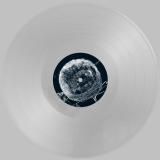
It took 2 years to finally release these reworks for the debut album by Philogresz. Taped wall of sound kinda drift from The Cyclist aka Buz Ludzha complemented by ZK Bucket's straight on moody jam gives the EP a strained contrast. Not to mention peak time euphoric Philogresz remake of his own Asakusa that is dedicated to the Japanese eels in that neighborhood. Gazing cutsz!
quête:contras
- A1: I Was There
- A2: Muhammad Ali 2.0 (High Contrast Remix)
- A3: Miss U Less, See U More 2.0 (Purple Disco Machine Remix)
- B1: Bombs 2.0 (Claptone Remix) Faithless Feat. Harry Collier
- B2: Tarantula 2.0 (Booka Shade Remix)
- B3: Drifting Away 2.0 (Autograf Remix)
- C1: Insomnia (Monster Mix)
- C2: God Is A Dj
- C3: We Come 1 (Radio Edit)
- D1: Salva Mea
- D2: Mass Destruction (Single Version)
- D3: Don't Leave
Somewhere close to Manchester’s ever changing city centre, as the sun fades and peeks through the newest glass facade, you’ll find Shaking Hand. One part in shadow, the other basking in prisms of light as they sketch out their own sonic landscapes in the dusty redbrick mill they call home. One that is just about clinging on from the encroaching developments that surround them.
Against this back-drop where buildings are constantly torn down & built back again, the three piece craft away. Pulling from early post-rock, and 90s US alternative rock, crafting their own brand of Northwest-emo. Assembling something new, yet nostalgic. Looking ahead towards the transforming horizon. Shaking Hand’s music is built on tension and release – quiets that stretch, louds that overwhelm. Repetition that feels both hypnotic and destabilising.
The band’s musical DNA runs through experimental guitar outfits like Women, Slint, Sonic Youth, Pavement, and Ulrika Spacek, balanced with the melodic sensibility of Big Thief and the dynamic intimacy of Yo La Tengo. Their compositions push against structure: sudden jolts of tempo, polyrhythms that almost fall apart, and riffs that unravel into something fragile or ecstatic. Yet, as Ellis notes, there’s an underlying warmth too: “Like walking through an empty city late at night but catching flickers of life in the buildings you pass.”
Early ideas like ‘Night Owl’ and ‘Sundance’ grew out of George’s lockdown “bedroom years,” where new tunings (open E, drop D, and stranger Pavement-inspired set-ups) opened up uncharted textures. Later, in grim rehearsal rooms, the murky epic ‘Cable Ties’ and the hypnotic ‘Mantras’ absorbed the gloom and grit of the band’s surroundings.
The album was recorded with producer David Pye (Wild Beasts, Teenage Fanclub) at Nave Studios in Leeds, housed in a converted church. “The live room was huge and perfect for capturing our sound,” says George. Determined to bottle their onstage energy, the band tracked the foundations live, layering vocals and guitars later. Soviet-era microphones, odd mic placements, and even phone-recorded demos fed into the mix. “You’ve got to watch out for David though,” Freddie laughs. “He made me play four tambourines in one hand, really hurt, man.”
Lyrically, the record drifts between abstraction and lived moments. George’s words often spill out instinctively, words falling into place before their meaning becomes clear. “A lot of the lyrics look like they’re buried in abstraction,” he says, “but when I look back I can see what they were about — whether that’s an emotional response at the time or just an observation of what was happening around me”. There’s contrast at the heart of it all – optimism vs. doubt, the lightness of youth vs. the monotony of work, a city in constant redevelopment vs. the people drifting through it.
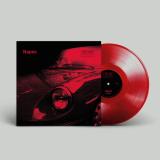
The album artwork is taken from unused plans for the 1970s redevelopment of Los Angeles by architect Ray Kappe, entitled ‘People Movers’. Hypothetical buildings for real people, it feels a complement to the band’s own constructions. One thing’s for sure, Shaking Hand’s debut is built to last.
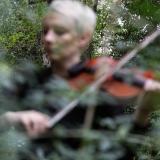
Night is about to fall, the day slowly fades away, and it is this twilight time that Magda Drozd’s latest album inhabits. Divided by Dusk carries the promise of a crepuscular otherworldliness. Inspired by Drozd’s stays in Japan, its rich tradition in ambient and experimental music and a collaboration with Japanese flutist Rai Tateishi, as well as a renewed engagement with her roots in Poland and its folk and ancient history, her work is a form of sonic excavation. Layers of dark-ambient tones intertwine with field recordings, textured violin, and luminous folk motifs, invoking long-gone, unspecified rituals.
The album freely interprets traditional folklore, unleashing those ghosts of past cultures we inherit through music that has been passed down to us. Paired with experimental ambient sonic textures, the album carries a magnificent, wandering, melancholic air. The compositions take on an incantatory dimension, welcoming us into a liminal world—one filled with buried treasures.
p:m is delighted to welcome Kumarachi to the fold - a Nottingham-based artist with a deep catalogue steadily built over the past 11+ years. For the label’s first 10” vinyl cut, Kumarachi teams up with his old friend, the wonderful Liam Bailey, for some rudeboy pressure on the a side, while flying solo for the b.
Tracklist:
A. On Sight: snappy snares, snarling bass, and shifting percussion meet the dulcet tones of Liam Bailey, who turns in a different kind of original dancehall style vocal that gets people skanking and swaying.
B. Cast No Shadow: a heavy-hitting track of pummelling breaks and beats, heavy bass, dub fx, and synth stabs, reminiscent of Star Wars’ X-wings in space.
In Kumarachi’s own words: “On Sight was just a loop when I sent it to Liam, then arranged and built around his vocals. I played it to a couple of people for feedback and to test out, it luckily found its way to DJ Flight via Sweetpea, so a big thanks to her too. Both myself and Liam felt play:musik is the perfect label for On Sight, with what Flight stands for musically and culturally, there’s a definite alignment within the lyrical content aswell. It’s a perfect fit. Cast No Shadow was written later and specifically for this release to contrast and complement the flip. It actually came together quite quickly - referencing classic combinations, whilst hopefully sounding fresh for 2026.”
"After being praised as one of the best releases of 2025 by multiple platforms, the highly praised debut album from Obeka lands on vinyl via YUKU.
The rhythmic dynamics and emotive attitudes of A World No More captures the density of soundsystem culture in Obeka's ancestral roots. YUKU presents the Bermudians debut album capturing a Neo-Colonial dystopia, protest and Afro-Futurism hyperextended through decaying sonic structures of a dark past and its grievances which very much exist today.
Growing into adulthood within the walls of British and European Colonial systems meant the disconnection and lostness in a new country hid me from the world at a young age. Unlike London's vast and culturally engaging migrant communities, the industrial milling town of Stockport introduced a coldness towards people from other countries I experienced in my first year after relocating from Bermuda. I couldn't understand why. Whether cold words thrown towards me or actions upon other people who look like me, it has shown to be a dooming societal virus with no cure. The most comfort was found through what was familiar - drums and rhythmic spirituality of my homeland. It was a safe-haven, a place to empty the anger and confusion. It's been 15 years since relocating and as my sound evolved, it seems classism, racism, oppression and civil control of ethnic peoples has become worse - even now more legalised and normalised. Ogun (a powerful Yoruba deity associated with anger, justice and war) acts as the opening sequence of the record and its symbolism. Using distorted bass frequencies and dissected Regga-Dub immersed in live-sampled ghostly voices of the lost ones. This sonic exercising is also applied in Drillaman - a stampede of industrial framework and metallic instruments wielded over moody Dancehall MC'ing, magnifying two parallel worlds in cocooned evolution. The resurrection of Transatlantic African cultures and identity have never been silenced, rather carried elsewhere through trade routes of enslavement, which was pivotal when composing and completing the album upon returning home to the Caribbean for the first time ever. After reconnecting with my heritage my blurred vision of what's wrong in the world became so clear. Guidance in empty plains seek truth throughout the pain - A statement of finding oneself expressed on the poetic closing track A World No More.
On Fawohodie (A West African Adinkra symbol that represents independence, freedom, and emancipation stamped on the album cover) the motive and atmosphere begins to change. Afro-Caribbean idealism which refers to the philosophical concept that emphasizes the interconnectedness of individuals and the importance of community, often contrasting with Western individualism, begins to take shape in a new universe. We can co-exist. The track framework uses machine-led software forming frequencies we have no control over, then manipulated through decomposing soundscapes, scattered hand-drums and human-made weapons of control - exposing the hidden disparity that's been carried over generations whilst balancing hopeful and musical foundations towards equality and peace. On Pressure and Kuduro! the writing direction attempts to wake people up. Not settling for a composed approach like in past projects, quite the opposite. A call for native sonic awareness, dismantled vocals of protests, eroded percussion using chains, gears and motorised harmonies sculpted in challenging abstract behaviors far outside my comfort zone. A direct abrasiveness and weight I want people to feel, whilst finding hope and solace through enchanting choirs and hypnotic basslines in complete synchrony.
"Purity in sound manifests when you least expect it. The smallest memory or feeling grows from a seed into a sonic language that you, and only you can interpret and release back into the world." "
SUNANDBASS Recordings proudly presents its next release, welcoming rising artist Napes with a brand new single: Hit The Corner / Clamber. This release marks the exciting introduction of a new artist joining the SUNANDBASS Recordings roster, signalling a bright future for both the label and its evolving sound. With previous releases on Shall Not Fade and Alix Perez’s 1985 Music, Napes is a promising name within the modern jungle scene. This release is a clear statement of his pushing boundaries combining grime influences and old school jungle, giving us his fresh sounds and melody-led drum and bass music, reaching new horizons while staying rooted in foundations. On the A-side, Hit The Corner showcases acid-tinged synths that meet a UK grime edge, driven by energetic beats and rolling breaks. In 6:20, Napes lets us travel through all the facets of a SUNANDBASS Recordings journey, with his ever-changing arrangement that evolves from heavy, club-focused energy into a euphoric jungle-inspired middle section, before concluding with driving arpeggiated synths. On the B-side, Clamber offers a deep, darker contrast. Between the atmospheric strings set intro which is dropping into a heavy, bass-driven groove, easily imagined shaking the dancefloor during an Ambra Night indoor session. The track reveals a more introspective side of Napes, blending refined sound selection with classic, weighty basslines built for the dancefloor. We’re honoured to welcome Napes to the SUNANDBASS Recordings family, an artist whose sound reflects our love for all corners of the genre while paying homage to the music that brings us together in Sardinia year after year. SUNANDBASS Recordings continues to push the boundaries of drum & bass, fostering connection through music that transcends borders, unites listeners, and celebrates rhythm, movement, and culture.
- A1: Un Futuro Migliore
- A2: Teneri Affetti
- A3: Disgelo
- A4: Eterni Valori
- A5: Il Progresso
- A6: Progetto Di Vita
- B1: Appello
- B2: Il Generale Inverno
- B3: Anni Drammatici
- B4: Anni Drammatici (Finale)
- B5: Intolleranza
- B6: Ceti Emergenti
- B7: Anni Bui
- B8: Opposizione
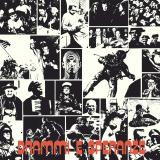
Long overlooked outside specialist circles, Drammi e Speranze is presented for the first time ever on vinyl reissue, newly remastered to highlight the depth and tonal richness of Umiliani’s arrangements.
Originally released in 1976 on Piero Umiliani’s own Sound Work Shop imprint, Drammi e Speranze—issued under the pseudonym Rovi—stands as a refined example of his late-period library work.
Performed by a compact string ensemble and subtly augmented by piano, Hammond organ, Eminent organ, and Rhodes, the album unfolds through a series of classically-informed compositions where melody takes center stage. Each piece is concise, evocative, and purpose-built—reflecting the functional yet highly expressive nature of Italian library music at its peak.
Conceptually, the record is structured in two contrasting halves: the first side explores themes of optimism and resolution, while the second delves into darker, more introspective territories, mirroring the emotional duality suggested by its title (Tragedies and Hopes).
This release celebrates 100 years since the birth of Piero Umiliani, honoring the enduring legacy of a composer whose work continues to resonate across cinematic, library, and contemporary sample-driven music.
©℗ 1976, Liuto Edizioni Musicali / Licensed to Holy Basil Records by Liuto Edizioni Musicali
Rosita is a cheerful, well-liked woman with a fiery desire to have children. Those around her find it irresponsible because she can barely take care of herself. When Rosita does manage to become pregnant, she chooses to keep her pregnancy a secret.
David Martijn, guitarist and synth player in the electro-rock band GOOSE, wrote the music for the full-length album 'Holy Rosita'. His experience as a composer for projects such as 'De Dag', 'War of the Worlds', 'De Twaalf', and '1985' contributed to Martijn's desire to challenge himself again to come up with a fresh, distinctive sound, as he does with every project.
"My initial feeling was that I would have to step far out of my comfort zone to let the music tell this delicate story. I soon felt that the music needed to be light and open, in contrast to the uncertain and complex reality in which Rosita finds herself. Therefore, it seemed like a good plan to keep the score very close to Rosita and much less focused on her surroundings or reality. The music had to be, as it were, a reflection of the thoughts and feelings playing out in Rosita's mind. That is often hopeful, determined, lively, sometimes a bit naive, and at other times very lonely, sad, and uncertain." - David Martijn
San Francisco style driving techno tinged with dark dubs and disco from two of the town’s most explosive producers.
Brick & Zero Idea represent the same city, blazing their own paths in San Francisco’s heady techno scene. Both manage their own labels / parties, Brick with Perfect Dark and Vitamin1000 a la Zero Idea respectively, but are no strangers in the studio together.
First up, two full-bodied techno timebombs from the duo: a mega sub’n’dubchord special alert on A1’s “West End” paired with a more refined, smoother, slippier companion on the A2 “No Room For Error”. Combined-strengths banger collabs for different moments and moods of a night.
Sticking with the theme, we see contrasting solo tracks on the flip side as well. Brick’s “Sigil” spotlights the producer’s laser focus for darker, hypnotic, full force synths in impeccable arrangement, while “Xhale” ends this release on an upliftingly funky bassline disco tip showcasing Zero Idea’s ease at blending techno sensibilities with French House techniques.
Deaf Center travel through quiet pathways and grand boulevards in their fourth studio album “Through Time”.
Since their last full-length LP, “Low Distance” (2019), the duo has gradually shifted towards a more long-form electroacoustic sound which perhaps makes for their most immersive listening experience so far. Otto A Totland’s piano travels in less frequent rhythms than before, yet is felt even more as a relief in the quieter moments that contrast with Erik K Skodvin’s deep atmospheric worlds. There’s a searching quality within the record which feels like slow movements on the way towards something meaningful, capturing a sense of both peace and awe.
The latter part of the album takes a different turn: fluctuating electronic rhythms over deep strings create an ecstatic yet haunting duality. It is the first time a guest musician appears on a Deaf Center record: British composer and musician Simon Goff joins with violin and viola in the finale, “Further”, a hypnotising piece submerged in layers of strings and drones.
The subject of time is an ambitious one, yet Deaf Center manage to balance the humble with the grand in great warmth as seconds become minutes, hours become days and time seemingly freezes as a still-life moment.
Deaf Center travel through quiet pathways and grand boulevards in their fourth studio album “Through Time”.
Since their last full-length LP, “Low Distance” (2019), the duo has gradually shifted towards a more long-form electroacoustic sound which perhaps makes for their most immersive listening experience so far. Otto A Totland’s piano travels in less frequent rhythms than before, yet is felt even more as a relief in the quieter moments that contrast with Erik K Skodvin’s deep atmospheric worlds. There’s a searching quality within the record which feels like slow movements on the way towards something meaningful, capturing a sense of both peace and awe.
The latter part of the album takes a different turn: fluctuating electronic rhythms over deep strings create an ecstatic yet haunting duality. It is the first time a guest musician appears on a Deaf Center record: British composer and musician Simon Goff joins with violin and viola in the finale, “Further”, a hypnotising piece submerged in layers of strings and drones.
The subject of time is an ambitious one, yet Deaf Center manage to balance the humble with the grand in great warmth as seconds become minutes, hours become days and time seemingly freezes as a still-life moment.
Michael Forzza unveils Obscure, a two-track EP navigating the darker edges of atmospheric techno with precision and intent.
A) Obscure is a peak-time weapon built on powerful percussive drive and a commanding groove. The rhythm pushes forward with controlled intensity, locking the dancefloor into motion. As the track evolves, the rhythmic pressure gradually recedes, allowing a shadowed melodic atmosphere to emerge in the final moments, adding depth and contrast without losing its dark identity.
B) Torture ventures into a more industrial realm. Dense textures, mechanical tension and hypnotic repetition shape its core, creating a sustained rhythmic strain. Then, when the pulse finally withdraws, the structure opens into a striking melodic finale, transforming the track into a suspended, almost cinematic closing atmosphere.
With OBSCURE, Michael Forzza explores the fragile line between impact and introspection, pressure and release. A release crafted for intense peak-time moments and the shadows that follow.
Français
Michael Forzza dévoile Obscure, un EP deux titres qui explore les territoires les plus sombres de la techno atmosphérique avec précision et intensité.
A) Obscure est un véritable track peak time, porté par une puissance percussive affirmée et un groove implacable. La tension rythmique s’installe et maintient le dancefloor sous pression, avant de s’effacer progressivement en fin de morceau pour laisser émerger une atmosphère sombre et mélodique, apportant profondeur et contraste.
B) Torture s’aventure dans une dimension plus industrielle. Textures denses, tension mécanique et répétition hypnotique construisent une montée intense. Puis, lorsque la pression rythmique disparaît, le titre bascule vers une finale mélodique surprenante, transformant l’énergie brute en une atmosphère finale plus immersive.
Avec OBSCURE, Michael Forzza joue sur l’équilibre entre impact et relâchement, puissance et émotion. Un EP taillé pour les heures sombres et les dancefloors exigeants.
Cloud Management return to Altin Village & Mine for a unique collaboration with New York writer and creative polymath Vivien Goldman.
A pairing spanning generations and geography, but with a musical overlap that is quite fitting in both process and result. Cloud Management’s jammy, improvisational approach to their dubby electronics blends well with Goldman’s idiosyncratic vocal style, which has its origins in the early days of post–punk and UK dub experimentalism. Cloud Management blend many historical aspects of German electronic music into something distinctly their own, while retaining a view well beyond those borders or any particular era. This approach fits well with Goldman’s deep multidisciplinary career, not easily defined because of its eclectic abundance across disciplines, yet always orbiting around music as its foundation.
When it comes down to it, these are great tracks created in the same way they sound: loose but refined, circling and turning inwards and outwards, back onto themselves. A dub of a dub of a dub, but never falling too far from the source — the minimalism necessary to deliver a direct, steady resolve and a gripping listen.
The B–Side of the record features three remixes by artists from across the globe, all with strong connections to the front line of dancehall, dub, and electronic music experimentalism. Longtime Equiknoxx member Time Cow from Kingston (Jamaica), delivers a version of »Quick Cover Up« that represents a major overhaul of the original. This remix strips away much of the looseness of the source material and leans into a lush yet slightly darker atmosphere, created by layered synths and a masterful use of underlying percussion and melodic stabs.
Up next are Twin Cities, Minnesota–based Feel Free Hi Fi, who take on »Judge Judge.« The duo tighten things up, overlaying weighty vintage string synths and digi–flute melodies. This version feels designed for smoky, late–night dub sound system sessions, harkening back to dub’s foundations.
Last but not least is London’s Pat Orburn. Stripped way down, the remix rides an interplay between alternating minimalism and a more lo-fi but lush exuberance, somewhat reminiscent of a bossa nova–esque minimal synth sound. This version’s lo–fi pop sensibility provides a fitting contrast and completes an eclectic yet copacetic trio of remixes for the record.
With Coalescence, The Third Room brings together artists from distinct yet interconnected techno lineages, united by a shared understanding of the music as both physical and introspective. Rather than staging contrasts, the EP focuses on convergence, where propulsion, atmosphere and restraint fold into a coherent whole. Rene Wise & Ignez open the release with Anjos, pairing Wise's tactile, percussive pressure with Ignez's expansive, oceanic pads. The result sits at the intersection of functional drive and elevated, almost devotional space, reflecting a new generation's approach to techno as both tool and inner landscape. Norbak's remix draws the track further inward, deepening its hypnotic pull and extending its energy into a more meditative, slow-burning form. On the B-side, Claudio PRC & Luigi Tozzi present Onirica, a deeply restrained and immersive composition rooted in atmosphere, spatial detail and subtle psychedelia. Unfolding with patience, it rewards attentive listening and long-form dancefloor contexts. Markus Suckut closes the EP by reducing Onirica to its bare essentials, applying his signature economy and precision to heighten tension and focus. Coalescence reflects The Third Room's vision of techno as a shared terrain, where different voices and generations meet, align and quietly reinforce one another.
- A1: Coppelia's Coffin / Ali Project
- A2: Les Soldats
- A3: Snow
- A4: Canta Per Me
- A5: Corsican Corridor
- A6: Ode To Power
- A7: Mélodie
- B1: Solitude By The Window
- B2: Romance
- B3: Lullaby
- B4: Chloe
- B5: Whispering Hills
- B6: Salva Nos
- C1: Kirei Na Kanjô / Akino Arai
- C2: Le Grand Retour
- C3: Secret Game
- C4: Fake Garden
- C5: In Memory Of You
- D1: Colosseum
- D2: Maze
- D3: At Dusk
- D4: Killing
- D5: A Farewell Song
- D6: Indio
Join Kirika and Mireille on their dangerous adventures!
Noir is an anime series created by Ryôe Tsukimura, produced by Victor Entertainment and Bee Train and directed by Kôichi Mashimo. First broadcast in 2001, it enjoyed worldwide success and is now considered a classic of Japanese animation.
It was with this original soundtrack that composer Yuki Kajiura truly defined her signature style, creating a fascinating contrast between the violence of the plot and music imbued with melancholy and sacredness. The music for the series was unanimously acclaimed, particularly for its unforgettable songs Canta per me and Salva nos, performed by Yuriko Kaida.
The Noir original soundtrack is available for the very first time, remastered on vinyl in this double LP collector's edition!
Saxophonist, producer and composer Brian Allen Simon explores darker hues, transposing waking and altered states under his studio veil Anenon. On the deeply evocative new album 'Dream Temperature', he shifts electronic processing to the foreground, introducing digitized wind instruments and unworldly atmospherics, not heard since his innovating mid-late 2010s output.
A longtime Los Angeles resident, born and raised, Brian Allen Simon has expressively operated under the moniker Anenon, releasing the highly revered 'Petrol' (2016), 'Tongue' (2018) and the viscerally beautiful 'Moons Melt Milk Light' (2023), in a line of unwavering musical dialogues. While the penultimate album was a deliberate, reductive, entirely acoustic detour that was born out of a want to unplug, 'Dream Temperature' sees Brian primed with a newly discovered wind synthesizer as his central compositional tool, alongside acoustic piano and tenor saxophone. The entirety of the album's electronics are triggered by Brian's lungs, generating otherworldly synths modulated by expressive breath control, channelled through the laptop as the core processing chamber for added textural components and field recordings.
A free floating and heavy emotional resonance marks 'Dream Temperature' from beginning to end, invoking the feeling of waking up, still heavy from a night of half-remembered dreams, and continuing one's day in this state. Simon maps out the album's spatial voice early on the statement title track, a deep, yet compact cut, generated from digital saxophone rasps that whistle by in close proximity, along with haze filled textures and sub bass. There is a sonic oscillation of urban grit and pastoral drift throughout as tracks pass by like introspective thoughts, fueling both a tense and ethereal quality that underpins the album. Interluding solo and part-solo piano improvisations 'Last Sun 1' and '2' are positioned adjacent to the buffering digital soundscapes. Their softer, still processed timbres pierce the melancholic exterior, offering a contrasting tenderness that could echo the grace of Ry?ichi Sakamoto, the spiritualist rigor of ECM's Keith Jarrett and a touch akin to Aphex Twin's piano miniatures. 'Nulle Part 1+2' signals the first appearance of an acoustic wind instrument, as tenor saxophone flourishes are juxtaposed against noisy drones, all shouting at the void, with notes resurfacing like lost digital data.
The album was recorded at home during either sunset or nocturnal hours between September of 2024 and October of 2025, a period in which Brian found himself craving more lengthy and intimate studio time as he searched for more pronounced textural qualities amidst his new sonic ambitions. 'When The Light Appears, Boy' shows further evidence of this deeper universe, revealing a grittier edge as the album's essential blueprint is sonically inked. A sprawling expanse of wind synths rhythmically encircle the listener before a dreamy, ghostly ambience blankets 'Toyama'. The sound is evocative of the productions of post dubstep era luminaries such as Burial or the productions of HTRK's Nigel Yang. More isolating and enveloping than the previous all acoustic record, this is music both disorienting and yet warmly inviting all at once. A sonic diarist at heart, personal field recordings were also taken from Sardinia, Japan, Big Sur and LA which intersect at unexpected moments throughout the album's 31-minute play time.
'Dream Temperature' is a vital coalescence of both Simon's electronic and acoustic practices with repositioned electronics akin to earlier works, both haunting and elegant, yet still profoundly personal. Simon continuously resonates as an experimental outlier treading an enthralling, non-linear musical path. This music resolutely glows with an unknowing aura, like an untapped energy source waiting to be discharged.
After their recent LP Mirages (Kraak Records, 2025) with French turntablist Guilhem’All, the group continues to explore collaborations with artists and instruments from diverse musical traditions. Building on decades of uncompromising acoustic exploration, Razen delves deeper into their practice with five improvisational pieces that unfold slowly in time and space. The duo’s radical core - Brecht Ameel and Kim Delcour - finds in Van der Harst a longtime kindred spirit, united by the impact of sound, intonation, and the sheer joy of playing.
To be released on April 24 via VIERNULVIER Records, the artwork for Stained Glass Starling was created by American visual artist Robert Beatty (Oneohtrix Point Never, Christina Vantzou, The Weeknd, Tame Impala). The physical release comes with a 16-page booklet including artwork and an interview.
A long-standing artistic kinship lies at the heart of this project, with first encounters dating back to the early 2000s in Belgian musical improv theatre. Van der Harst’s lifelong experience in improvised music and music theatre, spanning back to the 1980s, combined with a vast arsenal of rare and historical instruments, opens new tonal territories within the Razen universe.
These explorations are not incidental: his family roots in the former Dutch East Indies — through his great-grandfather — provide a quiet backdrop to his enduring affinity for Asian musical traditions. Instruments such as erhu, Javanese kacapi, and others introduce timbres
that bring the music its most pronounced Asian inflections to date.
Yet despite this shift in colour, the underlying ethos remains unmistakably Razen. Working from sound rather than form, the ensemble approaches music as painters approach a canvas: adding layers, contrasts and shades with care. There is no soloist’s ego here; all voices are equal, echoing principles found in gamelan traditions.
Over the decades, Razen and Dick Van der Harst have crossed paths repeatedly, notably through cult theatre productions by Belgian theatre maker Eric De Volder, including Zwarte vogels in de bomen (2002) and Huis der Verborgen Muziekjes I–II (2000–2006). Recording an albumtogether had long been a shared aspiration — a wish that crystallised after a 2024 concert at Concertzaal Miry in Ghent, part of the Ruiskamer series by VIERNULVIER Art Centre.
- Blow Mix
- Fluxstrata
- Phract Lament
- Hark Mix
- First Reflex
- Mu
- Drift Lens
- Tangent Bile
- Allegria
- Dull Echo
- Crabwalk
Late Bush presents “Hoarses” on the label Vlek Records, an original repertoire in which he blends electronic music - power ambient, IDM, avant-pop - and early music, which share the same affective intensity, a taste for ornamentation and a form of sonic excess.
At the heart of this material, AI-cloned voices, both human and spectral, extend the idea that any baroque interpretation is a reconstruction of the unknown. They contrast with organic strings recorded with Echo Collective, in a temporal and radical hybridization, creating a fluid and unstable material, between memory and simulation.
One of the conceptual starting points is essential: we have no sonic trace of baroque music as it was played. Only scores remain, and sometimes contradictory indications, a sensitive archaeology, even an imaginary projection.
Everything that is played today is therefore, in fact, a reconstruction, an interpretation of a vanished material. According to this logic and to pursue this reflection, the cloned voices, transformed by AI, are not a rupture but propose a natural continuation of this chain of reinvention, of this relationship to the invisible, to the indefinite. They do not aim to replace a human voice, but rather to embody the fact that any baroque restitution is already a fiction.
The project does not seek to imitate the real, but to play with the thresholds of the plausible, of the spectral. The music then becomes a fluid material, manipulable, alterable, and the performers, musicians or machines, are its vehicles.
The strings, carried by the sensitive and expressive interpretation of Echo Collective, breathe into the project a vibrant authenticity. Their presence brings an organic and tactile dimension that contrasts with the fluid and intangible aspect of the voices and the electronics.