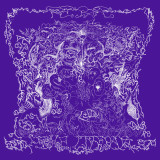
WWM012 is Brenko's long-awaited release, a mini album that takes you on a musical journey through various emotions and soundscapes.
The project maintains a consistent feel, making it a cohesive work of art.
Brenko showcases a great talent for blending electronic and ambient elements, creating an album that’s both innovative and deeply engaging.
The album opens with "Alpha Wave," pulling you into a hypnotic electronic vibe with its pulsing rhythm and layered sound waves, creating a calming, introspective sonic landscape. This sets the tone for the whole release, offering a deep, meditative listening experience.
The next track, "Lisolia's Voice" introduces a more structured and dynamic melody. Here, Brenko plays with complex rhythms and diverse sound textures, striking a balance between energy and melody. The smooth transitions and use of synthesizers evoke a sense of journey and discovery.
"The Sky Vanished" takes the album to a darker, more intense place. The aggressive beats and distorted sounds create a stark contrast with the earlier tracks, exploring themes of tension and release while maintaining a constant energy that keeps you hooked.
With " Subconscious Activity" the album shifts back to a reflective tone. This track features a slower rhythm and ambient sounds that float freely in space. The skillful use of sound effects and pauses creates a sense of depth and mystery, inviting full immersion in the music.
" Beginner's Luck" changes the pace significantly with its mix of precise percussion and enveloping melodies, making it more dancefloor-friendly while still fitting the album's overall vibe.
"Sirius" experiments with organic sounds and vocal samples, adding a human dimension to the album by blending elements of concrete music with electronics.
The album concludes with "I Stayed Motionless In Air" a track that captures the project's essence perfectly. The ambient sounds and ethereal melodies create a peaceful and conclusive atmosphere, inviting reflection on the journey you've just experienced.
quête:contrast
Cause times is changed and life is strange.” Ghostface Killah shines a light on the contrast between simpler, but tough days gone by and the complicated reality of trying to achieve a lavish lifestyle free of those hardships. This 3.75” scale articulated Ghostface Killah ReAction figure is inspired by his appearance in the music video for “Can It Be All So Simple” featuring his jacket, backward cap, and shorts as well as included gold chain and microphone accessories.
UNSURPASSED SPACIOUSNESS, IMAGING, AND TRANSPARENCY: MASTERED FROM THE ORIGINAL TAPES, MUSIC EMERGES WITH NEW DETAILS AND TONES
1/2" / 30 IPS analogue master - Plangent Processed - to DXD to analogue console to lathe
Love Over Gold is all about contrast, tension, and crafty composition. Dire Straits' fourth album finds the band continuing to evolve by welcoming increasingly bold arrangements and exploring moody variations. Parts edgy and sharp, and part seductive and relaxed, the five lengthy songs on Love Over Gold sprawl out like a long, winding road cutting through a pastoral landscape. The addition of a new rhythm guitarist, Hal Lindes, encourages deeper atmospheric interplay while the presence of engineer Neil Dorfsman – his first appearance in what would be a long string of collaborations with Mark Knopfler – ensures stunning sonic properties that now come to life like never before.
Mastered from the original master tapes and pressed at RTI, Mobile Fidelity's 180g 45RPM 2LP version of Love Over Gold teems with superb balances, front-to-back soundstages, and crystalline purity. The dead-quiet surfaces and extra-wide grooves bring forward previously obscured details, extra information, and mastering-studio-quality transients. The distinctive textures of a host of instruments – marimbas, acoustic and electric guitars, vibes, synthesizers – further enhance the ambitiousness of the 1982 album.
On this audiophile pressing, everything Knopfler does seemingly turn to gold. Gearheads will hear the unique characteristics afforded by his use of a Mesa Boogie Mark II guitar amplifier (soon again employed on Brothers in Arms) and carefully chosen selection of Schecter Stratocasters, 1937 National steel guitar, and Ovation six- and twelve-string models. Reference-level separation and lifelike imaging place Knopfler and company in your room, while tube-like warmth, spaciousness, and airiness causes the music to breathe anew. This LP will be in your rotation for months.
It doesn't take long to realize Love Over Gold is like no other Dire Straits album – and a staunch proclamation of independence from a band that continued to take longer creative strides with each successive project. Fearlessly extending over metaphoric hills, valleys, and plains for nearly 14-and-a-half minutes, the opening "Telegraph Road" is a guitar hero's dream and exhilarating showcase for Lindes' give-and-take capabilities. In tandem with keyboardist Alan Clark, Lindes provides the ideal foil for not only Knopfler but the long-time rhythm section of bassist John Illsley and drummer Pick Withers.
Taking its time to arrive at destinations, the quintet paints evocative musical and lyrical portraits steeped in patience, drama, and, often times, sadness. Desolate emotions colour the sweeping "Telegraph Road" and barren "Private Investigations," which finds Knopfler in the role of a tired private eye contemplating the emptiness and scars of his profession. Vocally, the Dire Straits leader remains in top form throughout, his whiskey-coated rasp conveying romantic ache, ongoing frustration, and what Rolling Stone beautifully deemed "wracking schizophrenia between the heart and the heartless, the loving and the pain."
Called Dire Straits' prog-rock statement, Love Over Gold is a classic that defies labelling and avoids ageing.
Adam Beyer and Green Velvet’s behemoth co-production ’Simulator’ gets a trio of fresh remixes.
Something special happens with Beyer collaborates with Curtis Jones aka Green Velvet, with last year’s ‘Simulator’ a timely reminder of their musical synergy, following the 2019 classic ‘Space Date’ with Layton Giordani.
A year on from its release, Drumcode treats us to three contrasting interpretations that epitomise the sonic breadth of the label in 2024.
Mha Iri is first up having established herself as one of Drumcode’s most vital go-to producers in recent times. The Scottish artist turns in a blazing masterclass, taking the nasty bass stabs of the original and utilising them as thunderous motifs throughout her remix, as she brings intensity in spades with plenty of thrilling builds and drops along the way.
Emerging Australian artist Odd Mobb is next, whose music has been championed by the likes of Fred Everything and Skrillex. He brings the energy throughout the four-minute rework, amplifying all the low-end elements, while adding fresh bursts of colour. It’s a dynamic reinterpretation that will keep listeners on their feet.
Chris Avantgarde, whose contributions to Drumcode have so far comprised an outstanding collab with Kevin de Vries ‘Mind Control’ and an A-Sides contribution ‘The Last Time’, returns with the goods and lives up to his boundary-pushing pseudonym. This has more sides than a rubix cube and shows the German’s sound design class, encompassing elements of breaks, bass, electronica and techno, yet still manages not to sound like anything else out there.
Pressed on Limited Edition Neon Green Ripple Effect vinyl in the DC House bag.
There are ghosts all across AVANTI, the debut album from Malice K. At points it's howling and unhinged, a grungy layer atop a lush foundation of melodic capital-s Songwriting, but in other moments it dissolves into a gentle, wistful haunting. Malice K's songs are blunt, uncomplicated and unflinching as he probes the interiority of memories, of mistakes - saturated with an innate intensity that sucks you into his gnarled and visceral world, so barbed it could draw blood. Malice K is helmed by visual artist and songwriter Alex Konschuh, New York-based but born and raised in Olympia, Washington. Following a stint living in Los Angeles, where he became a member of the artist collective Death Proof Inc., a trip to New York resulted in him simply never leaving the city. A period of chaos ensued, Malice K exhausted and unmoored and ultimately, unwell. The record is unpredictable across its 11 songs. The album opens with a jarring scream on "Halloween," Malice K's breathless vocals buried beneath a grungy, roving Nineties riff. The track emanates a manic energy, enveloping. It's a fitting entrypoint for the record, and for the vividness of Malice K. The snarling and obsessive "You're My Girl" has a swaggering paranoia: "I got so high I thought my hand touching my hand was your hand." But AVANTI exists in quieter moments too; "Radio," with its fluttering morose cello, moves at an almost glacial pace comparatively. The aching wistfulness of "The Old House" is an album stand-out, anchored in an acoustic guitar, an uneasy lullaby that never quite settles into itself: "I think to myself I got the things that I wanted, but I can't help think there's something else that I forgot to do." A recent press interview called Malice K a shapeshifter, but he's not amorphous in that way. He's decisive and intense, more concerned with carving his own path, and building his own world. Every part of Malice K is distinctly himself: from his sweaty high-octane shows to the high-flash high-contrast photos; from his gnarled and unsettling illustrations to the studio recordings that vacillate between grief and tenderness, there's an exceptional ferocity across everything Malice K touches. AVANTI feels lived in, like peering into an abandoned house through a window smeared with grimy fingerprints, relics of a life well-lived scattered inside - despite being a debut, there's the sense that Malice K arrived fully-realized, imperfections and all.
"Vanatühi" by Kiwanoid is a technopagan concept album. Track titles refer to the word "nothing" in various languages.
The sonic landscape is crafted using deprecated tools: a first-generation 4-bit laptop, the DOS operating system, and a tracker program. Inspired by glitch aesthetics, the sound palette includes clicks, error noises, and low-bitrate techno sounds. Initially, the structures of the pieces may appear complex and chaotic. This electronic thicket might seem abstract, cold, and inaccessible, yet upon closer examination, it reveals a plethora of diverse species, coming across as somewhat nostalgic and warm, evoking surreal associations. From beneath towering sequoias peek pixelated ferns, LED eyes are blinking from below the undergrowth, and against the backdrop of a crackling campfire and cave paintings, a lively stomping of microchips unfolds.
Sudden contrasts, sharp cutting edges, a tachycardic bass drum engine, and irregular polyrhythms make themselves physically felt. Elsewhere, haunting lo-fi textures, hidden ambient drones, mysterious hums, and obscurely garbled samples offer introspective breathers. The dynamic range of the music is favourably extensive, and the raw imperfections of the sound are unmasked by reverb effects or other generic tools. Interwoven throughout are outsider rhythm loops, which could find a home at an alien rave party or a hobgoblin honky-tonk. Various human voice samples build a bridge to the listener, allowing them to embody a cyborg-like experience.
While each twist and turn remains unpredictable, these diverse approaches align in complementary patterns and stochastic regularities, making the whole surprisingly coherent, despite its chaos. The album doesn't bore the audience with intentionally irritating compositions or pseudocomplexity - it demands attention, but doesn't try to outrun its listeners.
- A1: Bloom (Feat. Esther Durin & Elsie)
- A2: Warning (Feat. Cimone)
- A3: Changes (Feat. Askel & Elere And Javeon)
- B1: Take Me Under
- B2: Crunchy Nutter
- B3: Music To Smash Your Head Against The Wall To
- C1: Dusty 45
- C2: Dubbin Out (Feat. Sweetie Irie)
- C3: Stacatto
- D1: Minimalizm
- D2: Summer Breezin' (Feat. Paige Eliza)
- D3: Little Giggler (Feat. Elsie)
Prepare for take-off as your favourite multidimensional sound supplier, Unglued, unveils his long-awaited second album, "What on Earth". Set to launch you into the stratosphere with 14 fresh meteoric cuts, the Brighton-based producer continues to prove himself as one of the most innovative in the game. Expect a killer line-up of collaborations alongside Pola & Bryson, Lens, SOLAH, Urbandawn, Sweetie Irie, Waeys, Duskee, Paige Eliza and heaps more.Get ready to embark on an auditory adventure like no other - "What on Earth" by Unglued is set to be his biggest release to date, and it's guaranteed to be out of this world.
Since his unforgettable entrance onto the drum & bass circuit with his infamous remix of High Contrast's "If We Ever", Unglued has quickly become known for having one of the most distinct and versatile production styles in modern dance music. His debut album "Interplanetary Radio" was home to anthems such as "South By West", "Total XTC" and "Way Back When (feat. Esther Durin)", and since then Unglued has unleashed a slew of radioactive rumblers such as "If You Like That" with Whiney, Lens & Doktor, "Show Me The Light (feat. Kathy Brown)", and "Warning" alongside Pola & Bryson. Championed by leading industry tastemakers such as Gilles Peterson, Charlie Tee, Sherelle, Annie Mac, and more, Unglued's flawless musical output has led to him lighting up stages at some of the biggest shows and festivals across the globe, including Glastonbury, Boomtown, Hospitality On The Beach, Rampage, and Let It Roll to name a few. Not to mention sell-out tours across USA, Australia and New Zealand! "What On Earth" will be available in digital and vinyl formats from your nearest planet on 26th July
After the success of the New Frames debut EP on Green Fetish, 'Fatal Strategies'.
We had to circle back and have a remix EP carried out.
After getting some of our favorite and uncompromising producers on board. We are proud to present a spectrum of techno variety for you.
Opening up the A Side is a Hard hitting re-interpretation from Valerie Ace. Which then leads into a heavy driving remix from our boy EAS.
The B Side continues with contrast with a glitchy, driving Mickey Nox Remix and then closing out with a groove chapter from none other than VILLA.
This remix EP was able to be such a banging release thanks to the original detail and crafty sound design from the Heavy Hitters 'New Frames'.
Out now everywhere and on Marble Green Wax.
Hardwood Vinyl. Narrow Head's highly anticipated new LP 12th House Rock arrives August 28th on Run For Cover Records. The Houston-based band's latest entry is the distillation of the greatest moments in 90's alternative and hard rock with a fresh set of ears, thirteen tracks of their signature brand of bludgeoning lullabies bursting at the seams with creative ideas, new directions and yes, massive, monolithic riffs. In between the sparkle and smash, open-hearted and emotionally naked songwriting showcases a core piece of the band's identity- showcasing 12th House Rock as one of the best releases of 2020.Delving into deep-seated themes of self loathing, desolation, self-medication, the loss of loved ones and hopeful redemption,12th House Rock is, as the title suggests, a rock-focused LP themed on transition- exploring the vast abyss of darkness just before the sun cracks upon the horizon. Using distorted guitars as their primary vehicle, Narrow Head's wall of riffs add stark contrast to their best quality- deceptively sweet pop melodies that channel the lessons of My Bloody Valentine, Cocteau Twins, Helmet, Deftones and Guided by Voices all at once.
Fera’s trajectory sticks out like a sore thumb, you need to invest time, carefully divided between body & mind, to truly take a deep dive into his audacious output. After the acclaimed ‘Stupidamutaforma’ and ‘Corpo Senza Carne’, Fera is back with ‘Psiche Liberata’, an oblique, imperfect and broken record, in other words, exactly the type of magical voyage you want to be on. The mind, finally liberated.
Fera is Andrea De Franco, electronic composer from Southern Italy now residing in Bologna, also known for his work as visual artist/designer and member of the Undicesimacasa collective. His musical cosmos is profound and imaginative, intergalactic atmospheres that condense fragmented IDM, scintillating textures, distorted synthscapes, crunchy technoid rhythms and swirling abstractions that weave gently, sometimes moody and stark, more often celestial and awe-inspiring.
Mixed in Berlin by Steve Scanu ‘Psiche Liberata’ encapsulates Fera’s dense and intricate thought process in contrast with his simple and direct approach to writing and recording that finds its more natural output in his rapturous live sets where a mono signal runs through a few analog pedals transforming instantly into menacing alien grooves and fluid ecstasis.
Like ‘Psiche Liberata’s artwork, hand-drawn by Fera, every detailed miniature leads to a single cell of sound, tracks collide against each other in a psychotic kaleidoscope where every safe space is confronted with subsequent noise, alterations or interruptions. The black terror of ‘Celestial Anacusma’ is followed by the space-jazz banquet of ‘Milk Tears In The Hug Chamber’ doped up cyber Sun Ra extravaganza featuring Laura Agnusdei and Luigi Monteanni (Artetetra) on saxophones and flutes; ‘Silenzio Solare’ sprinkles Mille Plateaux era minimalism all over hallucinations, while ‘Diluvia’ crosses industrial acid with perpetual motion; title track ‘Psiche Liberata’ murmurs mechanically, a downtempo drifter for the wide-eyed 7AM comedown: ‘Simulacrima’ melts Boards Of Canada’s mellow pastoralism with dystopian meta-level dreamland and ‘Riposa’ showcases an overwhelming melancholy executed with elegance in a slo-mo world where the ineffable transcends notions of ambient and becomes a warm embrace.
Created on a Monotribe, MS20 & Volca Sample/fm, ‘Psiche Liberata’s velvet heaviness was achieved by re-amping many of the instruments through a Leslie Rotary Speaker and a reel-to-reel Telefunken. Fera’s sonic tapestry is in constant flux, underlying themes of love longing and affection run through the record but in a turbulent, volcanic, unleashed fashion, almost on the brink of utter noise or complete silence, reminding us that this is an artist like no other amidst the ever changing electronic scene. These are transmissions from the gutter, where the inevitable meets the unattainable and collapses.
"Fera’s tarnished materials are destined for ruin; “Stupida,” full of longing and regret, sounds like an elegy for a fallen world." Pitchfork
"A cut of dark magic that fits like a glove to overcast days, wild winds and lashing rains. Insistent, the treacle-thick bassline oozes out, soaking the space between the melancholic synth lines." Inverted Audio
"The songs on Stupidamutaforma feel hypnotizing...it establishes De Franco as a composer who uses space and time to create a set of rich, immersive works." Bandcamp 'Album Of The Day'
sentiment is a meditation of the poignant emotional terrains of loneliness, nostalgia, sentimentality, guilt, and sex. The album"s narrative arc is guided by delicate musical gestures and artistic vulnerability, audaciously synthesizing disparate and unexpected influences. claire rousay is a singular artist, known for challenging conventions in experimental and ambient music forms. rousay masterfully incorporates textural found sounds, sumptuous drones and candid field recordings into music that celebrates the beauty in life"s banalities. Her music is curatorial and granular in detail, deftly shaped into emotionally affecting pieces. rousay"s vocals and guitar take center stage on sentiment. Her intimate, diaristic lyrics contrast with her mechanical-inflected vocal effects, emphasizing a powerful desire for connection, a deep yearning and a lingering sense of separation. The spare guitar playing and laconic tempo both drive the songs and exude a sense of resignation. Her delicate mastery of nuance draws on her explorative musical past that she, with sincerity and admiration, seamlessly interweaves into her adventurous textures and distinctive compositions. "I want to belong to the worlds and communities I look up to. Same as someone using a Fender guitar or dressing like Kurt Cobain. Emulate your heroes," says rousay. The album balances the poetic soul of her influences with a documentarian heart, rousay capturing moments of her life while living alone in houses across the country, learning to play guitar, and reconnecting with pop music. Her innate ability to conjure pure feeling from sound derives from her delightful embrace of pop forms, the vulnerability found in field recordings, minimalistic arrangements and innovative sound choices. sentiment is blissfully, achingly melancholic, and an undeniably sensual listening experience.
Repress.
The re-release series of original Ethiopian classic vinyl continues -- the finest Ethio jazz by Mahmoud Ahmed and his band from 1975 plus two tracks from 1978.The liner notes: 'Melancholy blues, piercingly minimalist country airs, brassy, danceable urban jazz, heart-wrenching, off-key crooners: a rich and stirring patchwork of sounds, crossing Afro-beat, Latino-swing moves and Eastern arabesques (Ana�s Prosa�c).' Such were the first -- informed and enthusiastic -- opinions of the music press when the first strains of modern Ethiopian music sounded on our shores. This was in 1984-1985. Such a positive note, struck about such a country at such a time, created plenty of reverb. The country had been so thoroughly trashed by the media's feeding-frenzy, which spewed out a mix of horror and pious pity, bitter denunciation and humanitarian appeals, wallet-tickling clich�s and refusal of identity. In one brutal swoop, TV-reality transformed Ethiopia into a cursed nation, forsaken by God and by man. In contrast to these tragedies, but in the same hackneyed tones, Mahmoud Ahmed's life resembles an edifying fairy-tale where destiny, talent and achievement combine to triumph over poverty, fate and the evil eye. Biography, history and legend, with the help of God, infallibly weave the lesson of merit rewarded. But who can argue, in spite of the mockery that celebrities invariably draw, when faced with one of the greatest voices in all of Africa? Once upon a time, there was a street urchin in Addis Ababa, who started off as a shoe-shine boy and went on to become one of his country's biggest stars, opening the door to Ethiopian music to Western audiences. --Francis Falceto
Comes with insert and download coupon.
Imagine a Latin remake of Back to the Future. The mad scientist is Arsenio Rodriguez (the godfather of salsa) and the young student who travels through time with him is Eblis Alvarez (Meridian Brothers). This album can only be described as the perfect soundtrack for that movie that never was.
After the massive buzz generated by his first solo album, Mentallogenic, Alex Figueira got back in the studio to work in a more collective fashion this time, carefully assembling the second album of his largest project to date, Conjunto Papa Upa; a team of 6 musicians, spanning 3 generations of some of the best talent in the Latin and avant-garde scenes.
In an era where tropical music is dominated by purely electronic and rhythmically uniform sounds, the ten songs encompassed in “Fruta Madura” (“Ripe Fruit”) wander through the most diverse tempos, rhythms, and motifs effortlessly. A real breath of fresh air that gracefully incorporates soul, funk, jazz, psychedelia, and electronics into a solid tropical, irresistibly polyrhythmic foundation, without ever succumbing to the many genre clichés.
The distinctive production and catchy songwriting of Figueira shine in a very distinctive light on this second full-length. Living up to his reputation (Miles Cleret, founder of Soundway Records, called him “one of the scene's truly authentic and eccentric producers”), he takes the opportunity to show he’s not afraid to keep walking his own path.
Taking the band for a wild ride through the traditions of Africa, America, and the Caribbean; contrasting them with a ridiculously wide plethora of vintage, contemporary, and futuristic sounds, and pivoting on the exuberant musicality displayed by his musicians; the result leaves no doubt: this album is destined to be considered a future classic of the exciting tropical psychedelic music of the 21st century.
Addressing the most diverse themes in this new collection of songs, things take on a much more mature tone, as the title clearly suggests.
The opening track “El segundo es más sabroso” (“The second one is tastier”) sets the tone in the most assertive way imaginable, with the band boldly declaring, through multiple metaphorical references (laid upon a crazy mix of Dominican merengue, Detroit techno, classic and free jazz, dub, and electro), that the bar will be set higher with this second album.
The remaining compositions touch upon the most diverse subjects, with a fair dose of humor, sarcasm, and postmodern “magic realism”. “El Algoritmo” (The Algorithm) is a parranda-cumbia hybrid (for lack of a specific term) about the omnipresence of technology in our lives. The sophisticated Latin soul of the titling track “Fruta Madura” makes a case for the beauty of the maturity process. Some key philosophical teachings of Marcus Aurelius (the role of causality, the impositions of “the logos” and the importance of self-control) get a twisted cumbia treatment on “Reos del Deseo” (Prisoners of Desire). “No le pongas Coca-Cola” (“Don’t put Coca Cola in it”) shows us the most satirical side of the band, accusing those who mix Coca Cola with Rum of committing "sacrilege", on a powerful base of Dem Bow (the grandfather of Reggaeton), intertwined with touches of soul, salsa, and Cuban comparsa.
"Háblame Claro" (“Talk to me clearly”) is a story of heartbreak that evokes in its first part the spirit of the erotic salsa of the 80s (a subgenre deeply despised by purists), and after an unexpected samba interlude, leads to the hardest salsa of the 70s (a subgenre adored by purists), to end up in the surprising form of pure Afro-Cuban ceremonial music.
“Tu mamá tenía razón” ("Your Mom Was Right") is an attempt to exalt the spirit of the Latin American soap opera in the key of “acid bachata”, to recount a real-life case, witnessed by the band on countless occasions: the partying woman who arrives at the show accompanied by her bitter husband, who obviously does not like to dance. A very cheeky song to talk about the very serious and pertinent topic of female empowerment.
“La misma vaina” (“The same thing”) with its indescribable blend of bantú, candomblé, and Mozambique rhythms with abstract synthesizers, is an ode to adventure in favor of the aversion to taking risks and seeking predictability.
“Amigas picadas” (“Salty friends”) is another humorous song recounting another real-life case witnessed by the band on countless occasions: a love encounter sabotaged by the girlfriend's friends, who all happen to fancy the same guy. A jazzy take on the ancient Dominican rhythm of pambiche (grandfather of merengue), with generous psychedelic touches, resembling the classy late 60s releases of Guadeloupe's legendary producer / label owner Henri Debs.
“Vinimos a hablar” (“We came to talk”) takes sarcasm to the highest level, to ridicule the absurdity (also experienced by the band firsthand) seen in live music venues where people pay a ticket to go and have conversations that could be carried out much better on any bar, where no band is playing. The music alternates between a delicate melody with loose, sparse percussion and a full-on, pumping Angolan semba, with a techno kick drum included; bringing things to an apotheotic grooving finale, where the peculiar swing of Venezuelan calypso from the Callao region is thrown on top of all the precedent elements; closing the album in the most uplifting, “end of the carnival parade” feel.
The artwork is a delicate and impactful oil painting by Colombian artist Kevin Simón Mancera, who has collaborated many times with the label before (“Maracas, tambourines and other hellish things” tape and the Lola’s Dice LP).
What the experts are saying:
“Alex (Figueira) dove into this work with a brutal cohesion between lyrics and synths. Timbre poetry, sound poetry (you name it). And that, superimposed on his always impeccable percussive base, confirms the title of “avant-garde visionary of our beautiful Latin music”".
EBLIS ALVAREZ (MERIDIAN BROTHERS)
“Papa Upa's infectious quirkiness is a balm against boredom. A mature album, but without an expiration date”.
GLADYS PALMERA
“Here there is a lot of strength, drum, cadence and psychedelia, lost dance rhythms, united in an intercontinental Latin/African/and Caribbean journey, a unique winning combination that we could consider the new “Ritmo Figueira”.
DISCODELIC
Conjunto Papa Upa are:
Alex Figueira - Timbales, percussion, vocals.
Gerardo Rosales - Congas, percussion, vocals.
Ramón Mendeville - Bongos, percussion, vocals.
Randy Winterdal - Bass.
Andrew Moreno - Guitar.
Nico Chientarolli - Organ, piano, synths.
All songs written by Alex Figueira.
Arranged and performed by Conjunto Papa Upa.
Recorded, produced, mixed and mastered by Alex Figueira at Heat Too Hot, Amsterdam.
Highly wanted amongst collectors for its unique sound, this Italian psychedelic percussion heavy disco single was originally only released on 7" format sometime in the late 70s on the Idea label. Quite experimental for its time, it stands out not only for the reckless use of percussion but also the use of early synthesiser sounds in very rhythmic conscientious manners, some moments almost sounding as if a pioneering example of Acid House years before its time. While it seems like all possible percussion instrument sounds are chaotically employed into the drum salad that unfolds, the clavinet and vibraphone offer a contrasting dreamy nuance via a simple and slowly moving melody. Besides the original “Parte 02a” version this release comes with a new remix “Drum Implosion (Parte 10a)” further propelling the chaos commenced in the original release with the aid of flangers and delays, already striking the fancy of DJs like Marcell Dettmann. Severely remastered at Manmade mastering, now featured in 12” format with full cover artwork.
2024 Reissue
Released on the famed tax scam label Tiger Lily in 1976, Sounds Of
The City Experience's self-titled debut album is a rare groove treat with original pressings often reaching astronomical figures on the second-hand market. Its quality carries over into the sound with its richness of character pushing beyond what must have been a very limited recording budget. The members, whose anonymity today stands in stark contrast to the instant fame they generate on the record, go from strength to strength across these ten tracks, and craft some of the most catchy and enticing soul and funk of the 70s. P-VINE is excited to be reissuing the album for a limited edition LP package with an iconic Japanese obi strip attached.
First time reissue of “Quiero…” by Peruvian-Cuban singer and composer Króffer Jiménez, leader of Poppy y sus Pirañas, one of the key figures in Peruvian tropical music.Recorded in 1969 but not released until 1972, this album comprises guarachas and cumbias that were ahead of their time, mostly original compositions. Unfortunately the album went almost unnoticed back in the day, becoming a sought-after collector’s item in recent times. Quintets such as Compay Quinto, Pedro Miguel y sus Maracaibos and Los Totos were the stars of the Peruvian tropical scene at that time, winning over listeners with their powerful rhythm section and fast-paced melodies. In contrast, the dozen guarachas and cumbias on "Quiero..." are slower and more relaxed, where the elegant intonation displays Króffer’s Cuban roots, with the Pirañas contributing during the more festive moments. The cumbia 'Mala mujer' and the guarachas 'Amar en el mar' and 'El sortilegio' were ahead of their time, as the singing style adopted would only become fashionable from 1971 onwards. 180g vinyl.
D. Carbone steps up for the next entry on UFO Inc. with four exhilarating energy boosts. Raised in the Vesuvian area but a longtime resident of Berlin, Davide Carbone has spent years honing in on a bold, industrial-leaning sound that targets the body and mind in equal transcendence. His aesthetics are seemingly on the harsher side, but underneath each phrase lies a carefully arranged sonic mapping that weaves together the raw, the delirious, and the euphoric. As a producer and DJ who works across multiple aliases, Davide's commitment to the culture has been firmly planted over many years of exploring the weirder corners of techno, working with a wide range of beloved labels and performing across the globe. For his debut on UFO Inc, he focuses on a clear sonic paradigm, considering the fusion of uplifting, trance-y breaks and contrasting hard rhythmic frameworks in order to craft a unique space between two extremes.
2024 White Vinyl Repress
Next up for Time Is Now's white label series is Prozak - a Dublin-based producer who has garnered a growing following over the past year. Prozak, aka Zac Curtis, follows up an EP of remixes for Kiwi Rekords with Make Me Feel. The EP is 100% club gear dabbling in classic rave sounds and jungle before masterfully returning to his garage roots.
The title track "Make Me Feel" is equal parts euphoric rave vocalisations and growling bassy ruffage, with stuttering stop-and-start breaks thrown in for good measure that tear through the track - an instant classic that knocks you breathless.
"Missing You" builds from a gentle ebb into wobbling bass-heavy garage, Curtis chopping and changing the vocal samples into unrecognisable snatches with expert production. He then dishes up a glitching speed garage
tool with "Negative", still seasoned with a ravey edge that makes the record as a whole feel festival ready.
On the B-side, "Sunshine" is sweet buoyant UKG constructed from neatly cut up vocals that clamour against each other and a skipping irresistible rhythm.
Equally upbeat, "Falling" stands out as the most playful track, with mass appeal and large drops that shakes off some of the dark bassiness of the A-side.
The record closes with "Leave You", contrasting frenetic junglist breaks with blissed out vocals.
It's a dynamic offering from the up-and-comer that shows signs of great things to come.
The album "Black Forest" is a captivating sensory experience that embraces the listener's soul and transports them into a world of contrasting emotions. Its fusion of intricate and hypnotic sounds offers a journey through evocative and haunting soundscapes.
The tracks of "Black Forest" unfold like intricate paths winding through the mysterious and magnetic atmosphere of the black forest, with rich and engaging harmonies opening up like spaces of light among the trees, offering moments of reflection and contemplation.
With its combination of pulsating rhythms and evocative melodies, this album offers a unique experience that enchants and fascinates the listener, transporting them on an unforgettable journey through the darkness and beauty of the human mind.