quête:country boy

Genres
Tout
Various - Dolores: Salsa & Guaracha From 70's French West Indies

In Guadeloupe, many people think that jazz and ka music are like a ring and a finger. To some extent, the same could be said about so called Latin music and the music played in the French West Indies.

Both aesthetics were born in the Caribbean and bear so many connections that they can easily be considered cousins. In constant dialogue, there are lots of examples of their fruitful alliance and have been for a while. The English country dance that used to be practiced in European lounges came to be called kadrille in Martinique and contradanza in Cuba. They both featured additional percussion instruments inherited from the transatlantic deportation. Drawing from shared feelings about the same traumatized identity – later to be creolized – it would be hard not to assume that they were meant to inspire each other. The golden age of the orchestras that graced the Pigalle nights during the interwar period further proves the point. As soon as the 1930s, Havana-born Don Barreto naturally mixed danzón and biguine music in a combo based at Melody's Bar. In the following decade, Félix Valvert, a conductor who was born and raised in Basse-Terre in Guadelupe, also worked wonders in Montparnasse with La Coupole, which was an orchestra made up of eclectic musicians. Afro- Caribbean performers of various origins were often hired on rhythm and brass sections in jazz bands, which used to enliven the typical French balls of the capital. In the 1930s and onwards, Rico’s Creole Band was one of them.


Martinican violinist-clarinettist Ernest Léardée, who would become the king of biguine music as well as the main figure of French Uncle Ben's TV commercials (a dark stigma of post-colonial stereotypes), had musicians from the whole Caribbean sphere play at his Bal Blomet – and they all enchanted "ces Zazous-là" (according the words of Léardée's biguine-calypso piece). In les Antilles (French for French West Indies), music history started to speed up in the 1950s, when trade expanded and radio stations grew bigger. The Guadelupean and Martiniquais youth tuned in their old galena radio sets to South American and Caribbean music. As for the women traders, les pacotilleuses, they bought and sold goods across different islands (the "passing of items through various hands" was thought to be most pleasurable) and brought back countless sounds in their luggage. Such was the case of Madame Balthazar, who once returned from Puerto Rico with the first 45rpm and 33rpm to ever enter Martinique.

Out of this adventure was created the famous Martinican label La Maison des Merengues, a music business she opened and undertook with her husband and which proved to be a major landmark. At the end of the 1950s, in Puerto Rico, Marius Cultier competed in the Piano International Contest playing a version of Monk's Round 'Midnight. He won the first prize and this distinction foreshadowed everything that was to come. Cultier, the heretic Monk of jazz, was quickly praised for writing superb melodies, always tinged with a twist that conferred a unique sound to his music. It didn't take long for the gifted self-taught musician to get to play with Los Cubanos, making a name for himself thanks to his impressive maestria on merengues.

The rest is history. Besides, in the late 1950s, Frantz Charles-Denis, born into the upper middle class in Saint-Pierre and better known by his first name Francisco, went back home after working at La Cabane Cubaine – a club located rue Fontaine where he had caught the Latin fever. Francisco's music was therefore heavily marked by his Cuban cousins' influence, which gave the combos he led a specific style and also led to renewal. Things were swinging hard in La Savane, located in the main square in Fort-de-France. He set up the Shango club close by and tested out the biguine lélé there, a new music formula spiced up with Latin rhythms. Soon afterwards, fate had him fly to Puerto Rico and Venezuela.

As for percussionist Henri Guédon (percussions were only a part of his many talents), he was born in Fort-de-France in May 22nd 1944, the day marking the celebration of the abolition of slavery. As an old man, he could remember that in " his father's Teppaz, a lot of hectic 6/8 music was constantly playing...". In the opening lines of his Lettre à Dizzy, a small illustrated collection of writings published by Del Arco, he highlighted the huge impact that cubop had on him as a teenage boy, around 1960. He eventually turned out to be the lider maximo in La Contesta, a big band steeped in Latin jazz. He was also the one who originated the word zouk to describe music which brought the sound of the New York barrio to Paris. It was the culmination of a journey that started in Sainte-Marie: "a mythical place for bélé, the equivalent of Cuban guaguancó". In the early 1960s, the tertiary economy developed to the detriment of agriculture. Yet rural life was where roots music emerged in Martinique and in Guadeloupe.

Record companies played a major part in the process of Latin versions sweeping across the islands – before reaching everywhere else. Producer Célini, boss of the great Aux Ondes label, and Marcel Mavounzy, both the head of Émeraude records - a firm which was founded in 1953 - as well as the brother of famous saxophonist Robert Mavounzy, were big names to bear in mind. Although there were many of them - all of whom are featured on this record - Henri Debs was definitely the major figure in the recording adventure. He proved to be so influential that he even got compared to Berry Gordy. In the mid 1950s, when he acquired his first Teppaz, he worked on his first compositions: a bolero and a chachacha. Then, he became the one man who made people discover Caribbean music, from calypso to merengue. He was among the first ones to rush out to San Juan, Puerto Rico, to buy records and distribute them through a store run by one of his brothers in Fort-de-France. He had members of the Fania All Star come and perform there, which he was madly proud about. He was also the first one to pay attention to Haitian music, such as compas direct and various other rhythms which would soon flood the market. As a result, many of the combos hitting his legendary studio would end up boosted by widespread "Afro-Latin" rhythms. However, he never denied his identity: gwo ka drums were given a major role, although they were instruments which had long been banned from the "official" music spheres. The present selection bears witness to such a creative swarming. Here are fourteen tracks of untimely yet unprecedented cross-fertilization: all types of music rooted in the Creole archipelago have found their way, whatsoever, to the tracklisting. Whether originating from the city or being more rural, they all go back to what Edouard Glissant, in an interview about the place of West Indian music in the Afro-American scope, called "the trace of singing, the one which got erased by slavery." "It is so in jazz, but also in reggae, calypso, biguine, salsa... This trace also manifests through the drums, whether Guadelupean, Dominican, Jamaican or Cuban... None of them being quite the same. They all point to the idea of a trace, seeking it out and connecting to each other through it. This is the hallmark of the African diaspora: its ability to create something new, in relation to itself, out of a trace. It may be the memory of a rhythm, the crafting of a drum, a means of expression which doesn't resort to an old language but to the modalities of it." The opening track features one of the emblematic orchestras of this aesthetic identity, criscrossing many music types from the archipelago. The 1974 Ray Barretto guajira – Ray Barretto was a major New York drummer influenced by Charlie Parker and Chano Pozzo – is magnificently performed by Malavoi, a legendary Fayolais group (i.e from Fort-de-France). Additionally, the compilation ends on a piece by Los Martiniqueños de Francisco. It symbolically closes the circle as it is a genuine potomitan of Martinique culture which also functions as a tireless campaigner for Afro-Caribbean music. Practicing the danmyé rounds (a kind of capoeiria) to the rhythm of the bèlè drum, it delivers a terrific Caterete, a kind of champeta of Afro- Colombian obedience which was originally composed by Colombian Fabián Ramón Veloz Fernández for the group Wgenda Kenya. The icing on the cake is Brazilian Marku Ribas, who found refuge in Martinique in the early 1970s, bringing his singing to the last trance-inducing track. These two "versions" convey the whole tone of a selection composed of rarities and classics of the tropicalized genre, swarming with tonic accents and convoluted rhythms. It is the sort of cocktail that the West Indians never failed to spice up with their own ingredients. For instance, the Los Caraïbes cover of Dónde, a famous Cuban theme composed by producer Ernesto Duarte Brito, has a typical violin and features renowned Martinique singer Joby Valente and his piquant voice.


The track used to be – or so we think – their only existing 45rpm. The meaningful Amor en chachachá by L'Ensemble Tropicana, a band which included Haitian musicians among whom was composer and leader Michel Desgrotte, also recalls how Latin music was pervasive in the tropics in the mid-1960s. They were the ones keeping people dancing at Le Cocoteraie in Guadelupe and La Bananeraie in Martinique. Around the same time, another "foreign" band, Congolese Freddy Mars N'Kounkou's Ryco Jazz, achieved some success on both islands by covering Latin jazz classics – such as their adaptation of Wachi Wara, a "soul sauce" by Dizzy Gillespie and Chano Pozo whose interweaving of strings and percussions can have anyone hit the dancefloor. How can you resist Dap Pinian indeed, a powerful guaguancó by Eugene Balthazar, performed by the Tropicana Orchestra and published by the Martinique-founded La Maison des Merengues? It also acts as a symbol of the maelstrom at work. Going by the name Paco et L'orchestre Cachunga, Roger Jaffory used to play guaguancó too: his Fania-inspired Oye mi consejo is one example of his style. Baila!!!!! Dancing was also one of the Kings' focus points. Oriza is a Puerto Rican bomba and a "classic" originally composed by Nuevayorquino trumpeter Ernie Agosto, which reserves major space for brasses, giving it a special sheen.

Emerging from the New York barrios crucible was also La Perfecta, a Martinique group originating from Trinidad, whose name directly references the totemic Eddie Palmieri figure as well as his own band, also called La Perfecta. Here they borrow Toumbadora from Colombian producer and composer Efraín Lancheros and interpret it by emphasizing percussions, which set fire to the track even more than the wind instruments. The same goes for Martinique's Super Jaguars, who use Tatalibaba – a composition by Cuban guitarist Florencio "Picolo" Santana which was made famous by Celia Cruz & La Sonora Matencera – as a pretext for sending their cadences into a frenzy. In a more typically salsa vein, the Super Combo, a famous Guadelupean orchestra from Pointe-Noire that was formed around the Desplan family and had Roger Plonquitte and Elie Bianay on board, adapt Serana, a theme by Roberto Angleró Pepín, a Puerto Rican composer, singer and musician also known for his song Soy Boricua. Here again, their vision comes close to surpassing the original. In the 1970s, L'Ensemble Abricot provided a handful of tracks of different syles, hence reaching the pinnacle of the art of achieving variety and giving pleasure. They played boleros, biguines, compas direct, guaguancó and even a good old boogaloo - the type they wanted to keep close to their hearts for ever, "pour toujours", as they sang along together in one of their songs. Léon Bertide's Martinican ensemble excelled at the boogaloo which had been composed by Puerto Rican saxophonist Hector Santos for the legendary El Gran Combo.


Three years later, in 1972, Henri Guédon, with the help of Paul Rosine on the vibraphone, tackled the Bilongo made famous by Eddie Palmieri. Such a classic!!!!! And so were the Aiglons, the band from Guadelupe: choosing to execute Pensando en tí, a composition by Dominican Aniceto Batista, on a cooler tempo than the original, they noticeably used a wonderfully (un)tuned keyboard in place of the accordion. On the high-value collectible single – the first one released by Les Aiglons under the Duli Disc label – there is a sticker classifying the track under the generic name "Afro". Now that is what we call a symbol. Jacques Denis

pas en stock

Commandez maintenant et nous commanderons l'article pour vous chez notre fournisseur.

21,43

Derniere entrée: 30 jours
JOHNNY CASH - WITH HIS HOT AND BLUE GUITAR
  • Rock Island Line
  • (I Heard That) Lonesome Whistle
  • Country Boy
  • If The Good Lord's Willing
  • Cry! Cry! Cry!
  • Remember Me (I'm The One Who Loves You)
  • So Doggone Lonesome
  • I Was There When It Happened
  • I Walk The Line
  • The Wreck Of The Old 7
  • Folsom Prison Blues
  • Doin' My Time

Johnny Cash "With His Hot and Blue Guitar" is the debut album from the Man in Black, featuring hits like "I Walk The Line" and "Folsom Prison Blues". Released in 1957, it was the first LP ever issued on Sam Phillips' Sun Records label. Pressed on black vinyl.

pré-commande05.09.2025

il devrait être publié sur 05.09.2025

26,01
CRYSTALS - THE VERY BEST OF

CRYSTALS

THE VERY BEST OF

12inchCATLP284
Not Now Music
11.07.2025
  • A1: Da Doo Ron Ron (Alt. Ver.)
  • A2: Uptown
  • A3: He's A Rebel
  • A4: There's No Other (Like My Baby)
  • A5: He's Sure The Boy I Love
  • A6: Please Hurt Me
  • A7: Another Country, Another Town
  • A8: Oh, Yeah, Maybe, Baby
  • A9: Gee Whiz Look At His Eyes (Twist)
  • B1: Then He Kissed Me (Alt. Ver.)
  • B2: He Hit Me (It Felt Like A Kiss)
  • B3: Walkin' Along
  • B4: I Love You Eddie
  • B5: Frankenstein Twist
  • B6: What A Nice Way To Turn Seventeen
  • B7: No One Ever Tells You
  • B8: On Broadway

Girl groups have come and gone over the years, but the Crystals’ name, along with the Ronettes, has become synonymous with the groundbreaking early-Sixties wave promoted by producer Phil Spector. As well as including some of their early recordings, the songs featured here on this 180g Vinyl set retain their period charm thanks to what one critic called the Crystals’ ‘sweet-butstreetwise vocal magic.’ File the music under Brill Building, GirlGroup Pop or whatever you choose, it wears its half a century of history lightly

pré-commande11.07.2025

il devrait être publié sur 11.07.2025

15,08
Various - Battle of the Year Poland 2025
  • A1: Mc Trix – Big Greetings!
  • A2: Oer Beatz- Boty 2025
  • A3: Dj Plash- Shobo
  • A4: Markowy - Organ'izm
  • A5: Dj Spike / Breakdafunk Orchestra - Brown Funk
  • A6: Dj Pablo - Momentum
  • B1: @600V - Flute Groove
  • B2: Dj Spike / Breakdafunk Orchestra- Make My Day
  • B3: Decó - Rock On
  • B4: Merrenda – Mystic
  • B5: Dj Feel-X - Let Me Get Down

The Battle of the Year Poland 2025 Official Soundtrack is a powerful compilation created especially for b-boys and b-girls, capturing the energy and raw essence of the Polish breaking scene. Curated to accompany the prestigious Battle of the Year Poland event, this release features exclusive tracks from some of the most respected and influential producers in the country.

The tracklist showcases an all-Polish lineup, including talents such as Oer Beatz (IBE Beat Battle Winner), DJ Plash (Official DJ – Olympic Games 2024 Paris), the legendary DJ 600V, DJ Pablo, and many more. Each beat is crafted to elevate the dancefloor and pay tribute to the roots and future of hip-hop culture in Poland.

This soundtrack is not just a musical release—it's a celebration of movement, rhythm, and community, reflecting the strength of the Polish breaking scene on the global stage.

pré-commande28.06.2025

il devrait être publié sur 28.06.2025

51,37
Chat Pile - This Dungeon Earth / Remove Your Skin Please
  • A1: Face
  • A2: Rainbow Meat
  • A3: Rat Boy
  • A4: Crawlspace
  • B1: Dallas Beltway
  • B2: Mask
  • B3: Davis
  • B4: Garbage Man
également disponible

Sea Blue[30,21 €]

Black[30,21 €]


In the spring of 2019, a new rock band consisting of four otherwise ordinary Okies would arise out of seemingly nowhere, swiftly turning heads with a grotesque new take on noise rock fuelled by the existential anguish that has defined the 21st Century. Taking its name from the towering mounds of toxic waste that stand as monuments to capitalism’s cruel hubris across its home state, Oklahoma City’s Chat Pile made an immediate impression, soon culminating in the release of its landmark 2022 debut album, God’s Country and 2024’s expansive follow up Cool World
While the massive success of God’s Country would propel the quartet from the status of underground favorites to an international sensation, Chat Pile’s mission to take rock music to new zeniths of intensity was part of the plan from the very start. In fact, during its first handful of months as an active project, Chat Pile began writing and recording some of the heaviest, hellish, and harrowing music of its entire catalogue, laying the foundation of the themes and traits that would eventually manifest in the band’s debut LP. The result of these sessions would be a pair of EPs, This Dungeon Earth and Remove Your Skin Please, released in the summer and winter of 2019, respectively.
Initially put out by Reptilian Records in 2020, The Flenser is proud to present a special reissue of Chat Pile’s pivotal first two EPs, each compiled onto a single disc. This dual EP compilation chronicles the earliest moments of the Oklahoma City quartet’s discography, a snapshot of the band’s pre-Flenser days and of the eight tracks of noxious, nihilistic noise rock that would propel the Midwest band to a globe-spanning, underground heavyweights.

pré-commande27.06.2025

il devrait être publié sur 27.06.2025

30,21
Chat Pile - This Dungeon Earth / Remove Your Skin Please

In the spring of 2019, a new rock band consisting of four otherwise ordinary Okies would arise out of seemingly nowhere, swiftly turning heads with a grotesque new take on noise rock fuelled by the existential anguish that has defined the 21st Century. Taking its name from the towering mounds of toxic waste that stand as monuments to capitalism’s cruel hubris across its home state, Oklahoma City’s Chat Pile made an immediate impression, soon culminating in the release of its landmark 2022 debut album, God’s Country and 2024’s expansive follow up Cool World
While the massive success of God’s Country would propel the quartet from the status of underground favorites to an international sensation, Chat Pile’s mission to take rock music to new zeniths of intensity was part of the plan from the very start. In fact, during its first handful of months as an active project, Chat Pile began writing and recording some of the heaviest, hellish, and harrowing music of its entire catalogue, laying the foundation of the themes and traits that would eventually manifest in the band’s debut LP. The result of these sessions would be a pair of EPs, This Dungeon Earth and Remove Your Skin Please, released in the summer and winter of 2019, respectively.
Initially put out by Reptilian Records in 2020, The Flenser is proud to present a special reissue of Chat Pile’s pivotal first two EPs, each compiled onto a single disc. This dual EP compilation chronicles the earliest moments of the Oklahoma City quartet’s discography, a snapshot of the band’s pre-Flenser days and of the eight tracks of noxious, nihilistic noise rock that would propel the Midwest band to a globe-spanning, underground heavyweights.

pré-commande27.06.2025

il devrait être publié sur 27.06.2025

30,21
Chat Pile - This Dungeon Earth / Remove Your Skin Please

In the spring of 2019, a new rock band consisting of four otherwise ordinary Okies would arise out of seemingly nowhere, swiftly turning heads with a grotesque new take on noise rock fuelled by the existential anguish that has defined the 21st Century. Taking its name from the towering mounds of toxic waste that stand as monuments to capitalism’s cruel hubris across its home state, Oklahoma City’s Chat Pile made an immediate impression, soon culminating in the release of its landmark 2022 debut album, God’s Country and 2024’s expansive follow up Cool World
While the massive success of God’s Country would propel the quartet from the status of underground favorites to an international sensation, Chat Pile’s mission to take rock music to new zeniths of intensity was part of the plan from the very start. In fact, during its first handful of months as an active project, Chat Pile began writing and recording some of the heaviest, hellish, and harrowing music of its entire catalogue, laying the foundation of the themes and traits that would eventually manifest in the band’s debut LP. The result of these sessions would be a pair of EPs, This Dungeon Earth and Remove Your Skin Please, released in the summer and winter of 2019, respectively.
Initially put out by Reptilian Records in 2020, The Flenser is proud to present a special reissue of Chat Pile’s pivotal first two EPs, each compiled onto a single disc. This dual EP compilation chronicles the earliest moments of the Oklahoma City quartet’s discography, a snapshot of the band’s pre-Flenser days and of the eight tracks of noxious, nihilistic noise rock that would propel the Midwest band to a globe-spanning, underground heavyweights.

pré-commande27.06.2025

il devrait être publié sur 27.06.2025

30,21
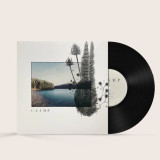
Caamp - Boys LP

Caamp

Boys LP

12inchCAAMP002
CAAMP, LLC
13.06.2025
  • A1: Hey Joe 3:30
  • A2: Going To The Country 4:21
  • A3: Full Moon Song 1:27
  • A4: So Cool 2:59
  • B1 26: 3:55
  • B2: Autumn Leaves/No Esta Aqui 7:03
  • B3: Common Man 2:13
  • B4: Just Wonderin 3:18
  • C1: Song For A Friend 3:18
  • C2: Books 3:56
  • C3: Strawberries 3:39
  • C4: Send The Fisherman 3:48

This is a repressing of their EP from 2018.

"Boys" is the second release from Caamp, the American folk band from Upper
Arlington, Ohio (who actually met at summer camp!)

pré-commande13.06.2025

il devrait être publié sur 13.06.2025

27,69
Caamp - Caamp LP

Caamp

Caamp LP

12inchCAAMP001
CAAMP, LLC
13.06.2025

This is a repressing of their EP from 2018.

"Boys" is the second release from Caamp, the American folk band from Upper
Arlington, Ohio (who actually met at summer camp!)

pré-commande13.06.2025

il devrait être publié sur 13.06.2025

25,84
SPLIT DOGS - Here To Destroy

Split Dogs

Here To Destroy

12inchVENNLP072C2
Venn Records
13.06.2025
  • 1: Stay Tuned
  • 2: Monster Truck
  • 3: Animal
  • 4: Be A Sport
  • 5: Meg
  • 6: Lafayette
  • 7: And What?
  • 8: Precious Stones
  • 9: All In
également disponible

Red Vinyl[26,68 €]


Rock’n’roll revivalists Split Dogs are not here to make 15 second viral videos, they’re not here to sell you a lifestyle, they’re here to destroy. Born from the frustration of seeing music become commodified and soulless, vocalist Harry Atkins and guitarist Mil Martinez had the idea to form a band as far back as 2015, with the name ‘Split Dogs’ pulled from the classic zombie film ‘Return of the Living Dead’.
In South London, a young Martinez would hear Status Quo, Bachman Turner Overdrive and Dire Straits on the car radio while his father drove him to school. At home he would invade his older brothers’ record collection which leaned towards the harder sounds of punk and heavy metal. Meanwhile in the Black Country, Harry’s mother instilled a love of Northern Soul, Slade and rock’n’roll, with stories of nights out at Club Lafayette and family singalongs at home. According to Martinez, “Our sound is a culmination of all those early influences and, to be honest, it really shows.”
It wasn’t until 2022 that Split Dogs officially arrived on the scene with bass player Suez Boyle joining the band in 2023. Already a prominent figure in the queer punk scene, Suez played the first ever Rebellion Festival at the tender age of 16 with her band The Walking Abortions. Up until that point, drummer Chris Hugall, an old friend of Martinez and former member of ska punks Mouthwash (signed to Rancid’s label Hellcat back in the day), was only on hand to help design artwork. It wasn’t until 2024 Hugall joined the band full time, cementing the current line-up.
The raucous live shows and infectious lyrics saw the four-piece make a name for themselves among the punks of Bristol, a scene that has always welcomed LGBTQ+ and marginalised people. As word spread, so did the gigging, and soon enough Split Dogs were playing to sold out rooms in mainland Europe, eventually grabbing the attention of UK label Venn Records (Gallows, Bob Vylan, High Vis). ‘Here to Destroy’ was recorded over three days at Middle Farm Studios by producer Peter Miles. All tracks were laid straight to a 16 track reel-to-reel tape machine, no autotune, no effects pedals, no computers. To add to the music’s authenticity, the album was recorded live, with Harry singing along in a vocal booth. No cutting and pasting, just nailing takes. According to Martinez, “It was a blast! We fully immersed ourselves, sleeping in a small apartment below the studio, cooking meals and listening to Pete’s extensive record collection”. While the final result is a step away from Split Dogs early punk sound, the attitude is still there in droves. “We wanted the album to have a raw bones feel,” Martinez tells us, “real 1970s rock’n’roll!”. Harry channels the spirit of Motörhead’s Lemmy Kilmister as they tear through hook after hook, singing about the Northern Soul clubs their mother once frequented (‘Lafayette’), the Orwellian nightmare we’re heading for (“Stay Tuned”) and a touching homage to British working class culture (“And What?”). As the album title makes clear, Split Dogs are here to destroy, but they’re also here to rebuild and remind us of music’s essence. “We’re not beholden to the digital age, we don’t want to get famous on social media, we just want to show the world that rock’n’roll is alive and well”.

pré-commande13.06.2025

il devrait être publié sur 13.06.2025

23,49
L.S. Diezel & Launch DAT - Dubplate #5: For The Love Of

Mysticisms is delighted to present the music from one of the inspirations for the whole Dubplate series, the lesser known, but admired Digi Dub label. Hailing from the late 80s / early 90s South-East London squat scene, the music of label head Lee Berwick and cohorts was unlike any other at the time. Not simply a retake on digital dub emanating from Jamaica, Digi Dub mixed the heritage of reggae with the alternative-culture of Britain to forge a unique version.

Inspired by punk and the early electronics of the likes of A Certain Ratio, Cabaret Voltaire and Throbbing Gristle, Berwick came to music production later, after first quitting a career as a computer programmer to travel through Asia, returning after several years just as electronic “computer music” was gaining a fundamental new lease in 1988. A regular at Jah Shaka gigs over the burgeoning rave scene of the time, he steadily built a studio centered around the Akai Sampler.

Based, at the time, in South-East London, it’s lack of underground “Tube” lines and challenging transport links, helped create its own social and music eco-system. Squatted houses, shops, clubs and parties all thrived around the triangle of Bermondsey, New Cross and Camberwell. After meeting Kenny Diezel and the Mutoid Waste Company, he started to formulate his “dubby electronic sound” by literally play live to thousands of wide-eyed Ravers at Mutoid Waste parties.

Recording as Launch DAT, the first tracks with Kenny formed, soon joined by Harry and Nick, the trio progressed from building a sound system to L.S. Diezel being created. Friends since their teens Harry and Nik progressed from playing in bands, jamming Sly and Robbie dubs to moving from the countryside of the Home Counties to urban Peckham and into the orbit of Mutoid Waste and the squat and party scene.

Progressing to include Atari S1000HD, Akai S3200XL, Alesis Sequencer and Roland 303, the sound expanded but the raw spirit remained. The early recordings with Berwick, in the beautiful “Lovers style” that is For The Love Of and its stripped-back instrumental “Stepper” dub accompaniment in Bad Boys, as well as an early take on take on the merging of digital dub and hip hop in Skunk Funk, all capture the essence of that London period.

However, the inclusion of the seminal Suicidal Dub, that appeared as the title to their debut album and was recorded on a bus a few years later after Mutoid had relocated to Rimini, Italy, offers a glimpse to the future. Heralded as a proto-dubstep classic it has long been sought after and its inclusion makes for the essential.

Mutate The Mystery.

pas en stock

Commandez maintenant et nous commanderons l'article pour vous chez notre fournisseur.

17,86

Last In: 16 months ago
Cliff Richard & The Shadows - The Best of The Rock 'n' Roll LP 2x12"
  • Move It
  • Living Doll
  • Fall In Love With You
  • A Voice In The Wilderness
  • High Class Baby
  • Theme For A Dream
  • I Love You
  • A Girl Like You
  • Nine Times Out Of Ten
  • The Next Time
  • Gee Whiz Its You
  • Don’t Talk To Him
  • Travellin’ Light
  • Bachelor Boy
  • It'll Be Me
  • Lucky Lips
  • Do You Wanna Dance
  • Summer Holiday
  • Please Don’t Tease
  • The Young Ones
  • I Could Easily Fall
  • I’m The Lonely One
  • On The Beach
  • In The Country
  • Time Drags By
  • She's Gone
  • Unchained Melody
  • What'd I Say
  • You Don’t Know
  • D In Love
  • All Shook Up (Live)
  • The Day I Met Marie (Live)

65 years ago, on October 17th, 1959, Cliff Richard and The Shadows hit the No. 1 spot in the UK with ‘Travellin’ Light’. This was the first single credited to Cliff Richard and The Shadows – re-named from their original title - The Drifters.
This notable anniversary will be marked with a brand-new collection which focuses, for the first time, solely on Cliff’s output with The Shadows (or The Drifters for pre-October ’59 releases). All their classic hits are included going right the way up to their 2009 reunion; making it the most comprehensive Cliff Richard & Shadows collection to date.

pré-commande06.06.2025

il devrait être publié sur 06.06.2025

21,43
VARIOUS - CULT SOUNDS VOL. 2
  • Love's Death
  • Cathy Don't Go
  • Madman
  • Preamble: Great Divine Rector's Call
  • Particle Harmonies
  • Jodler
  • James Alley Blues
  • Susume
  • C.e.d
  • His Outer Feelings Expressed Musically
  • Song Of The Victory
  • Segment

Volume 2 of the absolutely infamous (and highly sought after) Cult Sounds compilation, comprised of music done by fringe religious cults around the world. Oh, boy! Volume 2 of Cult Sounds is here, so it's time for another bad trip through the music produced by weird, extreme cults all over the world. From hypnotic Manson Family recordings to the catchy 80s pop manufactured by The Family, to jazz, psych jams, country music or plain out there musical experimentation, this second volume gets as weird, dark and mesmerizing as its predecessor, amazing.

pré-commande30.05.2025

il devrait être publié sur 30.05.2025

22,27
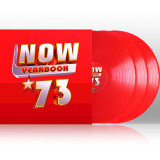
Various - NOW Yearbook 1973 (3x12")
 
47
pas en stock

Commandez maintenant et nous commanderons l'article pour vous chez notre fournisseur.

37,77

Last In: 10 months ago
LOS  DARLINGS DE HUANUCO - SINGLES FROM 1970 - 1980

In the Andes of Peru, in a valley formed by the Huallaga River, lies the city of Huanuco. There, a little over fifty years ago, the emblematic cumbia band Los Darlings de Huánuco was born, and since then their compositions have gone around the world, bringing their homeland to the ears of music lovers and collectors. Adversities kept them away from music for two decades, but in spite of this, they marked a parallel path and created their own history in the maximum splendor of Peruvian cumbia. In a valley formed by the Huallaga River lies a temperate land located on the eastern slopes of the central Andes of Peru: Huánuco. A little more than seventy years ago, in that land of mountains and starry skies at almost 2,000 meters above sea level, Juan Nájera was born. A multifaceted musician by profession, he did not always have the privilege of being able to dedicate his life to music. For almost ten years he ran a family hardware store in Huánuco and then a mechanic shop on La Marina Avenue in Lima. He was also a truck driver. A decade of military dictatorships in Latin America made the artist's path very hard in the region, and Peru was no exception. Nájera was only nineteen when his first son was born. He had to make a living and the possibilities for entrepreneurship were slim. But if we go back in history, Juan Nájera was, first and foremost, a boy who dreamed of becoming a musician. Later, he was a boy who made it. Los Darlings de Huánuco managed to cross borders, not only in the capital of Peru, but also abroad. There are many collectors and music lovers around the world who seek and appreciate their songs, musical gems that have toured different latitudes and have managed to position this band from the Peruvian countryside in the most remote places on the planet. In a country characterized by its centralism, where opportunities in the countryside are much scarcer than in the capital, where the foreigner is greeted with more warmth than the local, and where getting ahead, especially in the musical field, implies an extraordinary effort, Los Darlings de Huánuco managed to take their sound to where they never thought it would be possible. From the Andes to the skyscrapers, from the heart of Huánuco to the immensity of other continents.

pas en stock

Commandez maintenant et nous commanderons l'article pour vous chez notre fournisseur.

16,60

Last In: 10 months ago
WITCHCRAFT - BLACK METAL
  • Elegantly Expressed Depression
  • A Boy And A Girl
  • Sad People
  • Grow
  • Free Country
  • Sad Dog
  • Take Him Away
également disponible

GOLD VINYL[23,11 €]


REPRESS of the highly acclaimed album. Black Metal is one hell of an album. It's a downbeat, dark folk album, that manages to capture the vibe of the band's earlier work quite well. Pelander has managed to make a "doom album" without actually making one in the traditional sense. Black Metal manages to capture the world weary, woeful, attitude and vibe of doom better than a ton of albums that crank up the Sabbath worship to ridiculous levels. It's a work of darkness and despair and therefore it is another captivating chapter of this band's discography. (New Noise Magazine)

pré-commande18.05.2025

il devrait être publié sur 18.05.2025

21,81
WITCHCRAFT - BLACK METAL

Witchcraft

BLACK METAL

12inchHPSLTD355
HEAVY PSYCH SOUNDS
18.05.2025

Gold nugget vinyl, limited to 200 copies. Black Metal is one hell of an album. It's a downbeat, dark folk album, that manages to capture the vibe of the band's earlier work quite well. Pelander has managed to make a "doom album" without actually making one in the traditional sense. Black Metal manages to capture the world weary, woeful, attitude and vibe of doom better than a ton of albums that crank up the Sabbath worship to ridiculous levels. It's a work of darkness and despair and therefore it is another captivating chapter of this band's discography. (New Noise Magazine)

pré-commande18.05.2025

il devrait être publié sur 18.05.2025

23,11
Zulu Guitar Blues - Cowboys, Troubadours and Jilted Lovers (1950-1965) LP 2x12"
 
25

"Amazing! Like stumbling on a treasure-trove of unheard Charlie Patton and Blind Willie McTell 78s, but imbued with the spirit of Mahlathini and Ladysmith." Joe Boyd

'But for this compilation of rescued songs masterfully restored from rare 78 rpm shellacs, few could imagine the diversely beautiful roots of Zulu Guitar Music emerging during the period 1950 – 1965. Story-tellers and master musicians appropriate outlaw personae, re-purpose country and western, Hawaiian and other styles, to stretch and challenge our notion of “the Zulu guitar”.

Twenty-five songs (18 on vinyl) plunge us into the depths of the migrant experience. Translations in the liner notes offer us glimpses of pugnacity, melancholy and heartache, all coloured by the paternalism that circumscribed the singers’ apartheid-dominated lives.

The early *mbaqanga* undertow in many of the songs subverts the wanderlust of Country and Western music into a fugitivity burdened by nostalgia. Something irretrievable has been lost, prompting a blending of ideas and cultures to make sense through thankless acts of musical divination. Inadvertently they have been thrust into the role of the antihero, where outwitting competition for lovers is as important as evading the Black Jacks (apartheid’s municipal cops) and their informants.

Considering the politically repressive period that this music emerges from, we can surmise that the specificity in the storytelling went a long way towards evading censure. But even when words are absent, there is a narrative arc suggested by the musical expression.

With most of the master tapes wilfully destroyed or lost, modern transcription and restoration techniques from the original shellac discs present the original sound most likely more clearly than ever heard before.'

Produced for reissue by Chris Albertyn and Matt Temple at Matsuli Music and Siemon Allen at Flatinternational.
Artwork design by Siemon Allen.
Liner note and translations by Kwanele Sosibo.
Audio restoration and lacquers by Frank Merritt at The Carvery and pressed at Pallas, Germany.
Original 78rpm recordings sourced from the collections of Chris Albertyn at Matsuli Music, and Siemon Allen at the Flatinternational Archive.

pré-commande16.05.2025

il devrait être publié sur 16.05.2025

30,21
CHARLIE MEGIRA & THE BET SHE' AN VALLEY HILLBILLIES - BOOM CHAKA BOOM BOOM
  • Turn Around
  • Oops!
  • Haven't The Poor People Suffered Enough Bring Me The Head Of The Deckhand Boy
  • A Whole Lot Of Nothing But The Blues
  • Dunkel Party
  • Smile Now, Cry Later
  • The Death Dance Of The Busty Hot Lifeguard Vvinstructor Babe
  • At The Rasco
  • Schmücke Dih O Liebe Seele

Charlie Megira's self-reflexive final album found him far from his Beth She'an Valley home and surrounded by a new cast of Hillbillies. After spending 15 years toying with goth, sound collage, grunge, and dark wave, Boom Chaka Boom Boom is a sprawling mix of plunking country blues, Black Lodge terror, ambient montages, 17th century Lutheran hymns, and noodling spaghetti western kitsch. Deck his soul with gladness.

pré-commande09.05.2025

il devrait être publié sur 09.05.2025

24,79
Fleetwood Mac - Mirage LP 2x12"
  • Love In Store
  • Can’t Go Back
  • That’s Alright
  • Book Of Love
  • Gypsy
  • Only Over You
  • Empire State
  • Straight Back
  • Hold Me
  • Oh Diane
  • Eyes Of The World
  • Wish You Were Here

If every significant artist has an underrated gem in its catalog, then Mirage is that album for Fleetwood Mac. An obvious return to relative simplicity after the dramatic tension of Rumours and experimental ambitions of Tusk, the 1982 album finds the band re-grouping after a brief hiatus and again climbing to the top of the charts. Extremely well-crafted, well-produced, and well-performed, the double-platinum effort distills the group’s hallmark strengths into a filler-free set that never runs short of addictive pop hooks or daft accents.

Sourced from the original analog master tapes, pressed at Fidelity Record Pressing in California, and housed in a Stoughton jacket, Mobile Fidelity’s numbered-edition 180g 45RPM 2LP set presents Mirage in reference sound for the first time. The efforts co-producers/engineers Ken Caillat and Richard Dashut went to capture the splintered albeit formidable band can be heard with stunning accuracy, range, depth, and detail.

Though Rumours understandably gets a permanent spot in the audiophile hall of fame, the smooth, clear, and dynamic sonics on Mirage confirm that the record that stood as Fleetwood Mac’s last effort for five years deserves a place in the same vaunted arena. The presence and imaging of Mick Fleetwood’s percussion alone on this reissue might have you wondering how this slice of soft-rock bliss has gone under-noticed for decades. Other prized aural aspects — separation, definition, impact, tonal balance — are also here in spades.

Like much surrounding Fleetwood Mac in the 1980s, arriving at Mirage was not easy. Caillat searched for studios located outside of Los Angeles on a mission to change up the vibe of the band’s prior recording sessions. Everyone settled on Le Chateau in France, where relations between some members remained icy — and cooperation with the producers strained. Battles with exhaustion, bitterness, and addiction further informed the proceedings at the 18th century complex in the French countryside, where even communal meals were allegedly eaten in silence.

Inevitably, the feelings that co-producer Lindsey Buckingham, Stevie Nicks, Christine McVie, and company harbored — as well as the situations in which they found themselves — drifted into the songwriting. In its rapid ascent to rock-star royalty status, Fleetwood Mac drifted apart, embarked on solo pursuits, and found it was lonely at the top. Emptiness, the illusion of dreams, the longing for love, the want to escape to bygone times of innocence and happiness: Such themes inform a majority of the narratives. Even if the lyrics regularly take a back seat to easygoing arrangements that allow Mirage to come on like a refreshing breeze on a sunny summer afternoon.

Home to three Top 25 singles in the U.S. and having occupied the pole position of the Top 200 album charts for five weeks, Mirage rightfully resonated with the mainstream and attracted listeners on both sides of the pond. And how, via a smart blend of sugary melodies, warm harmonies, interlaced notes, nimble rhythms, taut structures, and passionate vocals. Not to mention the presence of what arguably remains Nicks’ signature song, the biographical “Gypsy,” a meditation on the loss of her close friend Robin Anderson that teems with majesty, mystery, and mysticism — and which gets an assist from Buckingham’s shaded tack piano and richly strummed guitar chords.

Its ranking as an all-time classic aside, that No. 12 hit has plenty of company when it comes to brilliant pop turns on Mirage. On the subject of Nicks, the raspy singer gets a little bit country on “That’s Alright.” Its clip-clopping pace and two-stepping progression complement subtle vocal swells that emerge during the final verse of a tune that is ostensibly about leaving but still conveys forgiveness and grace. And what would a Fleetwood Mac record be without Nicks drawing on the tools of the supernatural — cards, dreams, wolves, and the like — on the twirling “Straight Back.”

Despite the potency of Nicks’ primary contributions, Mirage seemingly unfolds as a tight competition between Buckingham and McVie — and one that ultimately ends in a draw. Buckingham’s salvos include the contagious “Can’t Go Back,” a yearning to time-travel back to the past that’s complete with hall-of-mirrors backing vocals; “Oh Diane,” out-of- left-field ear candy sweetened with hiccupped vocals and salt-and-pepper-shaken grooves; the chiming “Eyes of the World”; and “Empire State,” a delightfully fluttering track whose high-range vocals, lap harp notes, and ringing xylophones hint at the galaxies of sound that would erupt on Tango in the Night.

Then there’s McVie. As elegant, understated, and coolheaded as she’s ever been on record, she pours her heart out on cuts that revolve around her inevitable split with Beach Boy Dennis Wilson. In the process, she punctuates Mirage with a characteristic not always associated with catchy pop music: emotional weight, and the sense of dreaded acceptance in the face of dreams deferred.

“I wish you were here/Holding me tight,” McVie sings over a delicate melody on the album-closing piano ballad “Wish You Were Here.” Though they hoped otherwise, for the members Fleetwood Mac, distance and separation were always close at hand. Believing otherwise, inviting nostalgia, and pretending everything was fine only amounts to a mirage.

pré-commande31.03.2025

il devrait être publié sur 31.03.2025

88,19
Articles par page:
N/ABPM
Vinyl