Brass Against are back with their 2nd longplayer. Finally. Brass Against covers classics of Rage Against the Maschine along with other protest songs from the whole musical spectre. There are songs from bands like Tool, Black Sabbath, Audioslave and Led Zeppelin. Their videos are guaranteed viral hits. On the microphone you will find singer extraordinary, Sophia Urista. The band says: ,In this politically challenging era, it's time to stand up against the machine. We want the music we perform to sound inspiring and resonate with people's emotions, encouraging them to act. We combine rock and edgy hip-hop to play music that's powerful and empowering. Brass Against is exceptional music with a political edge. We are angry, we are inspired, we are ready for change_and we hope our music amplifies this energy in everyone who listens." The band got quite a name through several viral hits on Youtube. Brass Against`s version of ,Wake up" got more than 19 million views in the meantime.
Cerca:cover
Eight Miles High was originally released in 1969 by the Dutch rock band The Golden Earring. It was the first album they released under their slightly shorter name, formerly being The Golden Earrings. The album is titled after their cover of The Byrds’ “Eight Miles High”, of which the full 19-minute version is included. It is the longest track The Golden Earring ever recorded. They recorded the full album at the Olympic Sound Studios in only 5 days time
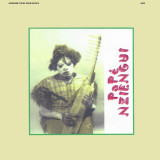
Kadi Yombo, published in 1989, is the most successful album in the quest for a fusion between tradition and modernity in Bwiti harp music of the Tsogho people of Gabon. Combining beating rattles with a layer of synthesizers, Papé Nziengui blends in a contrapuntal dialogue characteristic of harp playing: male song in appeal and female choir in response, male voice of the musical arc and rhythms of female worship. But above all it’s Tsogho ritual music and modern studio orchestration. The result is an initiatory itinerary of 10 musical pieces which are all milestones likely to be simultaneously listened to, danced, meditated on, and soon acclaimed. In the years since, Nziengui has traveled he world from Lagos to Paris, from Tokyo to Cordoba, from Brussels to Mexico City to become a true icon, the emblem of Gabonese music.
Like Bob Dylan, "electrifying" folk and Bob Marley mixing rock with reggae, some purists have criticized Nziengui for having distorted the music of harp by imposing a cross with modern instruments. They even went so far as to claim that Nziengui was just an average harpist covering his shortcomings with stunts that were only good for impressing neophytes; like playing a harp placed upside down behind his back or playing two or three harps simultaneously. Sincere convictions or venomous defamations, in any case, Nziengui never gave in to such attacks, imposing himself on the contrary to pay homage to the elders (Yves Mouenga, Jean Honoré Miabé, Vickoss Ekondo) while instructing the maximum of young people. He is thus the promoter of many young talents, the most prominent of which is certainly his nephew Jean Pierre Mingongué. In a conservative society where the sacred is confused with secrecy, exposing the mysteries of Bwiti in broad daylight can be punished by exclusion or even execution.
Papé Nziengui has always claimed that he faces such risks because he never felt enslaved to a community that governs his life, that regulates his conduct, that has a right of censorship over his activities. Like Ravi Shankar, the famous sitarist, Papé Nziengui is a man of rupture but also of openness, a transmitter of culture. As proof, he has established himself in Libreville, Gabo’s capital, as the main harpist for sessions and concerts, accompanying the greatest national artists (Akendengué, Rompavè, Annie-Flore Batchiellilys, Les Champs sur la Lowé, etc.) as well as foreign artists (Papa Wemba, Manu Dibango, Kassav', Toups Bebey, etc.). In 1988, he was the first harpist to release an album in the form of a cassette produced by the French Cultural Center (Papé Nziengui, Chants et Musiques Tsogho). At the same time, he created his own group (Bovenga), combining traditional music instruments (musical bow, drums, various percussion instruments, etc.) in the framework of a true national orchestra, which gave the first concert and the first tours of a traditional music that was both modern and dynamic, thus "democratizing" the harp, to the dismay of certain purists.
On the other hand, in modern music, dominated by the logic of profit or even commercialism, artistic creation must often be adjusted for a specific audience based on reason rather than heart. But instead of allowing himself to be distorted, Papé Nziengui has always tried to produce music that is not a caricature, worthy in its expression as in its content, of the sacredness and transcendence of the music of the Origins. This is what makes Nziengui not only the musician, but the man someone whose age hasn’t altered any of his freshness or authenticity
Kadi Yombo, published in 1989, is the most successful album in the quest for a fusion between tradition and modernity in Bwiti harp music of the Tsogho people of Gabon. Combining beating rattles with a layer of synthesizers, Papé Nziengui blends in a contrapuntal dialogue characteristic of harp playing: male song in appeal and female choir in response, male voice of the musical arc and rhythms of female worship. But above all it’s Tsogho ritual music and modern studio orchestration. The result is an initiatory itinerary of 10 musical pieces which are all milestones likely to be simultaneously listened to, danced, meditated on, and soon acclaimed. In the years since, Nziengui has traveled he world from Lagos to Paris, from Tokyo to Cordoba, from Brussels to Mexico City to become a true icon, the emblem of Gabonese music.
Like Bob Dylan, "electrifying" folk and Bob Marley mixing rock with reggae, some purists have criticized Nziengui for having distorted the music of harp by imposing a cross with modern instruments. They even went so far as to claim that Nziengui was just an average harpist covering his shortcomings with stunts that were only good for impressing neophytes; like playing a harp placed upside down behind his back or playing two or three harps simultaneously. Sincere convictions or venomous defamations, in any case, Nziengui never gave in to such attacks, imposing himself on the contrary to pay homage to the elders (Yves Mouenga, Jean Honoré Miabé, Vickoss Ekondo) while instructing the maximum of young people. He is thus the promoter of many young talents, the most prominent of which is certainly his nephew Jean Pierre Mingongué. In a conservative society where the sacred is confused with secrecy, exposing the mysteries of Bwiti in broad daylight can be punished by exclusion or even execution.
Papé Nziengui has always claimed that he faces such risks because he never felt enslaved to a community that governs his life, that regulates his conduct, that has a right of censorship over his activities. Like Ravi Shankar, the famous sitarist, Papé Nziengui is a man of rupture but also of openness, a transmitter of culture. As proof, he has established himself in Libreville, Gabo’s capital, as the main harpist for sessions and concerts, accompanying the greatest national artists (Akendengué, Rompavè, Annie-Flore Batchiellilys, Les Champs sur la Lowé, etc.) as well as foreign artists (Papa Wemba, Manu Dibango, Kassav', Toups Bebey, etc.). In 1988, he was the first harpist to release an album in the form of a cassette produced by the French Cultural Center (Papé Nziengui, Chants et Musiques Tsogho). At the same time, he created his own group (Bovenga), combining traditional music instruments (musical bow, drums, various percussion instruments, etc.) in the framework of a true national orchestra, which gave the first concert and the first tours of a traditional music that was both modern and dynamic, thus "democratizing" the harp, to the dismay of certain purists.
On the other hand, in modern music, dominated by the logic of profit or even commercialism, artistic creation must often be adjusted for a specific audience based on reason rather than heart. But instead of allowing himself to be distorted, Papé Nziengui has always tried to produce music that is not a caricature, worthy in its expression as in its content, of the sacredness and transcendence of the music of the Origins. This is what makes Nziengui not only the musician, but the man someone whose age hasn’t altered any of his freshness or authenticity
DESTRUCTION liefern brutalsten Thrash Metal seit über 40 Jahren!
Die deutschen Thrash Metal Urgesteine DESTRUCTION feiern ihr 40-jähriges Bestehen und liefern eine neue, knallharte Ansage in Form ihres neuen Albums Diabolical.
Mitihrem kompromisslosen, eigenständigen und eingängigen Thrash Metal zählen DESTRUCTION zu der illustren Runde der GERMAN BIG 4 - gemeinsam mit Kreator, Sodom und Tankard, den Legenden des
Deutschen Thrash. Auch auf ihrem fünfzehnten Album Diabolical fahren DESTRUCTION schwere Geschütze voll ehrlichem
und kompromisslosen Thrash Metal auf, welcher sich unnachgiebig den Weg in die Hörkanäle der Hörerbahnt und mit asiermesserscharfem Sound ein Massaker anrichtet, welches sich niemand entgehen lassen sollte!
"Gregory Porter’s GRAMMY-nominated debut studio album Water was released in 2010, and is now re-issued on Blue Note.
The album was recorded in the summer of 2009. The tracks include love stories, such as Illusion and Pretty, or protest for African-American civil rights, such as 1960 What? which recounts the 1967 Detroit riots. Gregory Porter also covers saxophonist Wayne Shorter's Black Nile with added lyrics. He also did an a cappella rendition of Feeling Good, made famous by Nina Simone in particular. Water was hailed by fans and critics alike, elevating Gregory Porter to the status of the next great male jazz star and marking the beginning of his successful career:
“Porter aptly refers to Water as “an album of love and protest,” though love is the clear victor. From the starkly beautiful “Illusion”, a hushed ode to a lost paramour; and rapturous “Pretty”, reminiscent of “A Taste of Honey”; to the percolated joy of “Magic Cup”, Porter knows how to get to the heart of the matter."" - Christopher Loudon, JazzTimes."
The start of the new "Live At Fabrik Hamburg" series on Jazzline in
cooperation with the legendary venue and NDR Kultur - is this previously
unreleased concert from jazz greats Freddie Hubbard and McCoy Tyner
from 1986
It will be released as a double CD in a three-part digipak and as a triple LP in a
triple gatefold cover that includes detailed Liner notes by Michael Laages. In the
Altonaer Fabrik in 1986, the master trumpeter Freddie Hubbard was a guest in the
trio of one of the most important pianists of contemporary jazz: McCoy Tyner,
whose extremely powerful attack always added percussive power of the most
energetic kind to his virtuoso playing.
McCoy Tyner died in March 2020, the recording from 1986 (he was 58 years old
at the time) show him at the height of the unmistakable jazz expression that
defined him. His piano and the enormous radiance of the Hubbard trumpet (born
in the same year as Tyner in 1938, but died in 2008) are the outstanding
protagonists. But the recording also features bassist Avery Sharpe, born in 1954
and with excellent acoustic and electrical credentials, as well as Louis Hayes, still
today the most indestructible of all modern drummers at well over 80 years of
age. Together they refine the nine titles of this two- hour concert on this truly
remarkable evening of music!
Second release of the new "Live At Fabrik Hamburg" series on Jazzline in
cooperation with the legendary venue and NDR Kultur - is this previously
unreleased concert from jazz great Gil Evans with a 16-strong all-star
cast from 1986
It will be released as a double CD in a three-piece digipak and as a triple LP in a
triple gatefold cover that includes detailed liner notes by Michael Laages. By the
1980s, the Gil Evans Orchestra's repertoire had developed into a distinctive blend
of Jimi Hendrix melodies, the band members' own compositions and occasional
references to Gil's older recordings. This concert in Hamburg contained four
songs by Hendrix, with only one ("Up From The Skies") being part of an original
studio album. The regular performances in Europe meant that the audience of the
band was getting younger and was also well acquainted with rock music.
A year and a half after this performance, Gil Evans passed away. He will rightly be
remembered forever for the brilliant albums he recorded with Miles Davis and
under his own name. In reality, however, he lived three quite contrasting musical
lives. As was the case with his Monday evening concerts in New York's Sweet
Basil, this Hamburg performance is a reminder of the lively late phase of Gil
Evans. Here a great all- star ensemble played an outstanding concert of eight
pieces in over two hours.
Reissue of the Count Basie Orchestra's 1970 album 'High Voltage',
arranged by Chico O'Farrill and featuring Eddie "Lockjaw" Davis, Cecil
Payne, Joe Newman, Freddie Green and Harold Jones among others
When in January, 1970 Count Basie entered the studio with his 17-piece big band
to record 'High Voltage', he ushered in the last full decade as bandleader of his
Orchestra. The Orchestra had left its imprint on the sixties by recording with the
likes of Frank Sinatra and Ella Fitzgerald. There would be more great albums with
star vocalists in the seventies, but the band's purely instrumental works, which
had begun in 1965, would also continue. Back then Basie had engaged acclaimed
Cuban composer/arranger Chico O'Farrill to arrange the music for such concept
albums as "Basie Meets Bond" and "Basie's Beatle Bag", transforming them into
crossover gems.
On 'High Voltage' O'Farrill demonstrates his affinity to Basie's big band sound, this
time with a repertoire of standards. For this album, Basie specifically chose
pieces the band had never recorded in their more than 30-year existence. This is
saying something, since the band covers such an impressive span of jazz history,
from the beginning of the swing era to the bop-influenced bands of the 50's on
through to the present album.
The Count's new drummer Harold Jones propels Fred Fisher's "Chicago" with a
tremendous drive. The Rogers and Hart classic "Have You Met Miss Jones"
features beguilingly dense deep- register horn lines and an almost languorous
piano, and Eric Dixon's tasty flute solo spices up "The Lady Is A Tramp". With its
smoky sophistication, Eddie Lockjaw Davis' Tenor dominates "Bewitched",
whereas guest trumpeter Joe Newman's muted tongue-in-cheek solo highlights
"Day In Day Out". Of course, Basie himself also steps forward: for instance, on the
Fats Waller-like intro to "I'm Getting Sentimental Over You", and with the playful
grace notes on "If I Were A Bell"." Reminiscent of the Las Vegas shows the band
performed with Frank Sinatra, "Get Me To The Church On Time" is also a
masterful dialogue between the horn sections.
ENVY OF NONE IS THE NEW BAND & DEBUT ALBUM FROM ALEX
LIFESON (RUSH), ANDY CURRAN (CONEY HATCH), ALFIO ANNIBALINI &
SINGER MAIAH WYNNE
The ambient, cinematic darkness that the collective creates evokes a
powerful atmosphere that will excite superfans & new audiences alike
Lifeson & Curran's long-time friendship was the catalyst for the band's inception -
but Envy Of None is not defined by its members resumes - they aren't Rush or
Coney Hatch & far more than the sum of its collective parts.
Above the beautiful cacophony of guitars, synths, bass & drums sits the fragile
melodies of 24- year old vocalist Maiah Wynne - the newest name in Envy Of
None's impressive personnel. Hearing Mariah's voice intertwined with the music
will bring back memories of when you heard Shirley Manson of Garbage or Amy
Lee of Evanescence for the first time. Wynne brings charm & beauty to these
recordings in spades - with floating hooks & emotive lyrics transcending the
oftentimes textural aesthetic.
The Storm Thorgerson- esque visuals that grace the cover may remind fans of
Lifeson's earlier work - Andy Curran explains: "the Hypnosis style artwork of
albums like Pink Floyd & Led Zeppelin & others were so eye catching, surreal &
attention grabbing & we wanted to scratch that itch. We were instantly drawn to
Lebanese photographer Eli Rezkallah at Plastik's photography & design work. We
fell in love with a bunch of his work - we had a hard time choosing something
because he had so many great images". However, the 70s prog/ Rush
comparisons may end with the artwork - the music that this ensemble creates
treads new ground with each track throughout their 42- minute debut, from
industrial/electronic influences to post-progressive soundscapes. Envy Of None
create a sound that will haunt, comfort & ignite.
"If you can picture maybe Massive Attack with a little bit of some electronic stuff
with Nine Inch Nails influences, with this beautiful, fragile, sweet voice & some
very, very dark heavy sounds" - Andy Curran (Envy Of None)
Dengue Fever on Vinyl! This Deluxe Reissue contains 5 bonus tracks not
availble on the original release / w download
Fronted by amazing vocalist Chhom Nimol, Dengue Fever has surprisingly
universal appeal - Chhom herself is already quite accustomed to seizing the
hearts of listeners (including the King and Queen of Cambodia), as she comes
from a family best considered as a Cambodia pop music dynasty– not unlike a
Cambodian version of the Jacksons. The rest of the band is no flake-fest either,
consisting of Zac Holtzman (Dieselhed) and his brother Ethan on Farfisa organ,
Senon Williams (Radar Brothers), David Ralicke (Beck) and seasoned drummer/
engineer Paul Smith. Their covers stay remarkably true to the crazy party music
spirit of the '60s- and '70s-era originals. But there are also original songs, some of
which veer off into the darkened corridors of lost love and ghostly noir
romanticism, dissolving sometimes into spaces of genuine bleakness and
tragedy — all in the Khmer tongue. Far from mere novelty or cheap Orientophile
thrill, Dengue Fever keeps listeners on their toes, dancing to their way-out tones.
The Deluxe Reissue contains 5 bonus tracks not availble on the original release.
Kadi Yombo, published in 1989, is the most successful album in the quest for a fusion between tradition and modernity in Bwiti harp music of the Tsogho people of Gabon. Combining beating rattles with a layer of synthesizers, Papé Nziengui blends in a contrapuntal dialogue characteristic of harp playing: male song in appeal and female choir in response, male voice of the musical arc and rhythms of female worship. But above all it’s Tsogho ritual music and modern studio orchestration. The result is an initiatory itinerary of 10 musical pieces which are all milestones likely to be simultaneously listened to, danced, meditated on, and soon acclaimed. In the years since, Nziengui has traveled he world from Lagos to Paris, from Tokyo to Cordoba, from Brussels to Mexico City to become a true icon, the emblem of Gabonese music.
Like Bob Dylan, "electrifying" folk and Bob Marley mixing rock with reggae, some purists have criticized Nziengui for having distorted the music of harp by imposing a cross with modern instruments. They even went so far as to claim that Nziengui was just an average harpist covering his shortcomings with stunts that were only good for impressing neophytes; like playing a harp placed upside down behind his back or playing two or three harps simultaneously. Sincere convictions or venomous defamations, in any case, Nziengui never gave in to such attacks, imposing himself on the contrary to pay homage to the elders (Yves Mouenga, Jean Honoré Miabé, Vickoss Ekondo) while instructing the maximum of young people. He is thus the promoter of many young talents, the most prominent of which is certainly his nephew Jean Pierre Mingongué. In a conservative society where the sacred is confused with secrecy, exposing the mysteries of Bwiti in broad daylight can be punished by exclusion or even execution.
Papé Nziengui has always claimed that he faces such risks because he never felt enslaved to a community that governs his life, that regulates his conduct, that has a right of censorship over his activities. Like Ravi Shankar, the famous sitarist, Papé Nziengui is a man of rupture but also of openness, a transmitter of culture. As proof, he has established himself in Libreville, Gabo’s capital, as the main harpist for sessions and concerts, accompanying the greatest national artists (Akendengué, Rompavè, Annie-Flore Batchiellilys, Les Champs sur la Lowé, etc.) as well as foreign artists (Papa Wemba, Manu Dibango, Kassav', Toups Bebey, etc.). In 1988, he was the first harpist to release an album in the form of a cassette produced by the French Cultural Center (Papé Nziengui, Chants et Musiques Tsogho). At the same time, he created his own group (Bovenga), combining traditional music instruments (musical bow, drums, various percussion instruments, etc.) in the framework of a true national orchestra, which gave the first concert and the first tours of a traditional music that was both modern and dynamic, thus "democratizing" the harp, to the dismay of certain purists.
On the other hand, in modern music, dominated by the logic of profit or even commercialism, artistic creation must often be adjusted for a specific audience based on reason rather than heart. But instead of allowing himself to be distorted, Papé Nziengui has always tried to produce music that is not a caricature, worthy in its expression as in its content, of the sacredness and transcendence of the music of the Origins. This is what makes Nziengui not only the musician, but the man someone whose age hasn’t altered any of his freshness or authenticity
Bacao Rhythm & Steel Band Follow Up their 2021 “Expansions” album with another solid 7” offering. The A side, “Represent,” is one of the stand out tracks from Expansions. BRSB cover the DJ Premier produced Nas classic taking the original and expanding the arrangement with guitar and brass riffs. Tuba chugs along the drum break while the steel pans hammer out the infamously infectious melody of the original sample making this an easy winner in Hip Hop circles and beyond. The B side is a non-album cut available on this 45 for the rst time ever. Bacao covers the Mtume classic “Juicy Fruit” made popular again when The Notorious B.I.G. sampled it for his smash hit “Juicy.” This is a sure head turner when people realize they are dancing along to a new version of the classic melody
‘Hive Mind Records are here to help you through the winter months with this generous helping of Wet Tuna with their signature deeply fried rural psychedelia.
Matt Valentine (MV) and Pat Gubler (PG Six) have been jamming together since the mid '90s, floating around in the US psych-folk scene, playing together in Tower Recordings and separately with influential underground crews Woods, The Golden Road, Garcia Peoples and The Weeping Bong Band. Both MV and PG Six have been prolific with their solo work and over the years they've recorded for labels such as Ecstatic Peace, Drag City, Woodsist, 3 Lobed, and Crash Symbols and we are very happy to be joining such esteemed company.
On these recordings, made during the first months of the COVID lockdowns in the forests of the Vermont wilderness, MV and PG Six handle the guitars and synths but they're joined by fellow forest freaks S. Freyer Esq, Jim Bliss, Coot Moon and Carson 'Smokehound' Arnold on bass and drums. Brought to you in their patented mind-expanding SPECTRASOUND, Eau'd To A Fake Bookie Volumes 1 & 2 delivers an irresistible gumbo of deep, cosmic psychedelia, primitive drum-machine grooves and woozy country-funk jams. These 6 songs are cover versions of artists as diverse as The Blackbyrds, Michael Hurley and Jimmy Cliff, but stretched out over 4 sides, the album is entirely Wet Tuna - loose, free-flowing and lots of fun!’
Joe Tatton, keyboard player with UK/US funk/soul jazz kings The New Mastersounds, releases this new 7 inch single in March 2022 and this time there is a lovely double A-side 7" physical vinyl option. Two tracks that showcase Joe's skills as a pianist and vocalist and confirm his talent for writing quality original compositions.
"Timeline" is Joe's spotlight on today's social media obsessed society delivered in the style of his musical hero Mose Allison. The latter was the legendary Mississippi born/New York based jazz/blues musician and singer whose wry and intelligent lyrics married to amazing original music shone a light on society and the world from the mid-1950s until his death in 2015. Mose was a huge influence on musicians like Georgie Fame, Van Morrison and Ben Sidran and was and still is one of Joe Tatton's favourite musicians of all time. This song is the title track for Joe's debut solo album due for release later this year on Rodina Music.
"Stomp" is a slow bluesy instrumental funk burner that has a New Orleans swagger about it and features Joe's grand piano solo followed by JTQ band member Gareth Lockrane cutting loose on the flute. If you like music by Allen Toussaint, Ramsay Lewis and Herbie Mann, you'll be feeling this one.
Joe Tatton has been a member of The New Mastersounds now for 16 years now and has recorded over a dozen albums and many singles with them playing organ, piano and keyboard. Annually, he tours 8-9 months a year with the band, mainly in the USA but also across Europe and Japan too. Prior to joining The New Mastersounds, Joe held down the keyboard role with UK jazz-funk kings The Haggis Horns appearing on their first two albums "Hot Damn!" and "Keep On Movin". He's also featured on piano/keyboards on the worldwide hit single "Put Your Records On" by Corinne Bailey Rae.
Over the years he has played live sets with Maceo Parker and Fred Wesley as well as Art Neville, George Porter Jr and Zigaboo Modeliste of The Meters. He's always maintained his own trio under his own name as a side project, releasing singles and EPs via ATA Records (UK) and Color Red Music (USA).
A few years ago, he needed to find the time and place to record them. So in 2020, between New Mastersounds gigs, he managed to book a few days at a studio near Nashville USA, "The Rockhouse", run by Grammy winning engineer Kevin Mckendree. He hooked up with a couple of Nashville session musicians, Steve Mackie (double bass - longtime Dolly Parton bassist) and Kenneth Blevins (drums), and put down all his original songs and also a cover of Mose Allison's "Ever since the world ended", the first single released last year
Now comes the second double A-side single and a further taste of what's in store from Joe and the band later this year when the "Timeline" album drops later in the year. However this time, there's a lovely little black vinyl offering for all the record lovers out there. Just a small first pressing which will no doubt sell out very quickly so people need to jump on it super fast. Once they're gone, they're gone.
"Time line / Stomp" double A-Side single by the Joe Tatton Trio. Released worldwide on Rodina Music - March 31st March 31st 2022.
Ten years into his role as poster boy for pop soul and peak-hour R&B, Syl Johnson did an unlikely about-face and cut the most inspiring and powerful song he'd ever touch. Issued on 45 in September of 1969, "Is It Because I'm Black" struck an immediate chord within the black community, forcing the song up the charts by sheer volume of call-in requests. It would be Syl's biggest hit for Twinight, climbing as high as #11 on the Billboard R&B chart during its 14-week stay, marking the defining moment of what had become more than just an occupation. Syl had his hands on a career and worked tirelessly rehearsing his next opus, an album of songs reflective of the changing times. With "Is It Because I'm Black" still bolding the pages of Billboard, the coming LP's title appeared to Syl plain as day _ or, in this case, black as night. Issued in April 1970 _ a full 13 months before Marvin Gaye's What's Going On _ Is It Because I'm Black can rightly be called the first black concept album, a distinction few give it credit for. But that factoid, whatever its meaning then or now, failed to inspire music buyers: Johnson's record never got a whiff of the two million copies Gaye's did in its first year of availability. Syl lays the blame squarely on the record's lack of marketability to a white audience. The album's cover didn't exactly move units either. Photographer Jerry Griffith dragged Syl to a burned-out building on 43rd Street to shoot the back cover image, and he finger-painted the iconic title over a stock photo of an eroding brick wall. The title track, coupled with the politically charged "I'm Talking About Freedom" and ghetto conscious "Concrete Reservation" sealed the album's cool reception as the work of an "angry black man." Which is unfortunate, as "Together Forever," "Come Together," and "Black Balloons" are positively uplifting, forming their own pot of gold at the end of a grayscale rainbow. The album's closer burns the brightest. "Right On" devolves into a full-on party track, ending with Syl riffing on the line "I'm gonna keep on doing my thing," as if to answer his critics before their needles reached the run-out groove.
Repress
Bump 'n Grind Wax's newest relief channels a collective sigh of relief, one that promises to remind the world that joy and love can triumph through togetherness.
Bristol's sonic luminary, Rob Smith (aka RSD), has offered his support in this dynamic cover of Al Green's "Let's Stay Together." With a hint of lover's rock and a dash of neo-soul, RSD invites Denise Morgan to voice this timeless tune. On the A-side, prominent piano runs, synth stabs, and RSD's iconic drum section frame Morgan's deliciously-soulful approach to this classic. RSD brings the magic for the B-side version, "Let's Dub Together." With a blown-out bassline, Denise's tricked out vocal samples, and a thoughtful caressing of the track's timing, reverb, and echo, RSD adds his undeniable signature to the latest BnG Wax tribute.
A formidable architect behind the now-beloved "Bristol Sound," Rob has been an irreplaceable thread in the development of bass-heavy dance music since the 1980s. From raves to basements, lounges to sound system dances, Rob has pushed the limits of music technology to forge a vital link between the past and future. He is a pioneer who has explored the intersections of nearly every genre through dubbed-out breaks, drops, and quintessential remixes. BnG Wax is honored to have his fingerprints on one of our releases.
”Gateway” The opening track leads you through a universe of cosmic melodies and imagination into a new atmosphere. Deep kicks ride along bubbled bass lines, rave-y stabs, and sinister Detroit strings.*
"LIGHT SPAN" * Huge drum work and clever percussion take us further into the void covered with gorgeous arps & snappy snares. Definitely a sound of the time as well as the future, taking the listeners back to the 90's rave era with its massive bass stabs. Enjoyable journey music.
* "NEBULA 7" *A fine taste of Detroit techno string work and arrangement, the EP's ending track pushes the ear to the final elements of the journey. Haunting voices, funky space bass and futuristic cool. Well chilled and served perfectly as a completion of the EP, this track rounds out the 'Trilogy Wave' series concept of the group in this 1995 popular recording reissue.
- A1: A Military Alphabet (Five Eyes All Blind) (4521.0Khz 6730.0Khz 4109.09Khz)/Job's Lament/First Of The Last Glaciers/Where We Break How We Shine (Rockets For Mary) (Five Eyes All Blind)
- B1: Fire At Static Valley
- C1: Government Came (9980.0Khz 3617.1Khz 4521.0 Khz)/Cliffs Gaze/Cliffs' Gaze At Empty Waters' Rise/Ashes To Sea Or Nearer To Thee
- D1: Our Side Has To Win (For Dh) (For Dh)
180g LP + 10" im Gatefold mit Thermographie, bedruckten Innenhüllen und Download Coupon. GY!BE kehrt mit einem weiteren Soundtrack für unsere Zeit zurück, wie ihn nur dieses unnachahmliche und ehrwürdige Ensemble schmieden kann. Das neue Album besteht aus zwei fesselnden, 20-minütigen, LP-Seiten füllenden Epen aus lärmgetränktem Breitwand-Post-Rock, während die beiden begleitenden 6-minütigen Stücke der 10" die Band aus Kanada in ihrer verheerendsten, eindringlichsten und elegischsten Form zeigen. Unerbittliches Tuckern blüht auf, während einige der hochfliegenden, brennenden Melodien der Band inmitten von Geigen- und Basskontrapunkt abprallen und zusammenlaufen. Field Recordings und aufgewühlte, halb-improvisierte Passagen umrahmen diese inbrünstigen Epen. Ergreifende Atmosphären, geräuschhafte Orchestrierung, Drone, hypnotische Swingtime-Crescendos, unaufhaltsam geschichtete Türme aus verzerrtem Klargesang: STATE'S END verkörpert jede geliebte Facette der Band. Fünfundzwanzig Jahre später ist dieses neue Album so vital, mitreißend, zeitgemäß und unerbittlich wie jedes andere in der geschichtsträchtigen Diskographie von Godspeed You! Black Emperor. So wie STATE'S END die ganze Bandbreite der klanglichen Trademarks von Godspeed vereint, so umspannt auch das Album-Artwork die gesamte visuelle Geschichte der Band: die körnige, monochromatische Fotografie der letzten Veröffentlichungen findet ihren Weg auf die Innenhüllen, während das Klappcover auf die ikonischen Grafiken früherer Klassiker wie Slow Riot For New Zero Kanada und Lift Your Skinny Fists Like Antennas To Heaven zurückgreift. STATE'S END ist mit Illustrationen von William Schmiechen versehen, wobei die Taijitu-Blumen auf der Vorderseite und die Tränengaskanister auf der Rückseite des Covers in erhabener, thermografischer, schwarzer Tinte auf dem Doppelvinyl-Albumcover abgebildet sind. Das leuchtende Kreuz von Godspeeds Debütalbum F#A#INFINITY taucht auch auf der Innenseite des Klappdeckels wieder auf, als wiederkehrende Hommage an das elektrifizierte Hügelkreuz in der Heimatstadt der Band in Montreal. STATE'S END wurde im Oktober 2020 in Montreal im Homebase-Studio der Gruppe, Thee Mighty Hotel2Tango, von Jace Lasek aufgenommen und abgemischt, dem altgedienten und preisgekrönten Indie-Produzenten (und Mitbegründer von The Besnard Lakes), der mit Godspeed bei dieser Aufnahme zum ersten Mal zusammenarbeitet. Danke fürs Zuhören. UNSERE SEITE MUSS GEWINNEN. (R.I.P. D.H.) ENG audiophile 180gLP + 10" in gatefold jacket with thermography, colour flood interior, artworked inners, DL card. GYBE returns with another soundtrack for our times, like only this inimitable and venerable ensemble can forge. As the heretical impudence of the anarcho-punk title implies, Godspeed harnesses some particularly raw power, spittle and grit across two riveting 20-minute side-length trajectories of noise-drenched widescreen post-rock: inexorable chug blossoms into blown-out twang, as some of the band's most soaring, searing melodies ricochet and converge amidst violin and bassline counterpoint. Field recordings and roiling semi-improvised passages frame these fervent epics, and two shorter self-contained 6-minute pieces find the band at its most devastatingly beautiful, haunting and elegiac. Poignant atmospherics, noisedrenched orchestration, drone, hypnotic swingtime crescendos, inexorably-layered towers of distorted clarion sound: STATE'S END encapsulates every beloved facet of the band. Twenty-five years on, this new album is as vital, stirring, timely and implacable as any in Godspeed You! Black Emperor's storied discography. Just as STATE'S END summons the gamut of Godspeed's constituent sonic trademarks, so the album artwork spans the entirety of the band's visual history: the grainy monochromatic photography of recent releases finds its way onto the inner sleeves, while the gatefold cover art harkens back to the iconic graphics of earlier classic records like Slow Riot For New Zero Kanada and Lift Your Skinny Fists Like Antennas To Heaven. STATE'S END features illustrations by William Schmiechen, with the front cover taijitu flowers and back cover tear gas canisters rendered in raised thermographic black ink on the double-vinyl album jacket. The illuminated cross from Godspeed's debut F#A#8 also makes a reappearance on the inside gatefold drawing, in recurrent homage to the electrified hilltop landmark crucifix of the band's Montreal hometown. STATE'S END was recorded and mixed in Montreal in October 2020 at the group's homebase studio Thee Mighty Hotel2Tango by Jace Lasek, the veteran awardwinning indie producer (and co-founder of The Besnard Lakes) who works with Godspeed for the first time on this recording. Thanks for listening. OUR SIDE HAS TO WIN. (R.I.P. D.H.)