Suche:crack jack

Styles
Alle
Lee Tracy & Isaac Manning - Is it What You Want

As the sun sets on a quaint East Nashville house, a young man bares a piece of his soul. Facing the camera, sporting a silky suit jacket/shirt/slacks/fingerless gloves ensemble that announces "singer" before he's even opened his mouth, Lee Tracy Johnson settles onto his stage, the front yard. He sways to the dirge-like drum machine pulse of a synth-soaked slow jam, extends his arms as if gaining his balance, and croons in affecting, fragile earnest, "I need your love… oh baby…"

Dogs in the yard next door begin barking. A mysterious cardboard robot figure, beamed in from galaxies unknown and affixed to a tree, is less vocal. Lee doesn't acknowledge either's presence. He's busy feeling it, arms and hands gesticulating. His voice rises in falsetto over the now-quiet dogs, over the ambient noise from the street that seeps into the handheld camcorder's microphone, over the recording of his own voice played back from a boombox off-camera. After six minutes the single, continuous shot ends. In this intimate creative universe there are no re-takes. There are many more music videos to shoot, and as Lee later puts it, "The first time you do it is actually the best. Because you can never get that again. You expressing yourself from within."

"I Need Your Love" dates from a lost heyday. From some time in the '80s or early '90s, when Lee Tracy (as he was known in performance) and his music partner/producer/manager Isaac Manning committed hours upon hours of their sonic and visual ideas to tape. Embracing drum machines and synthesizers – electronics that made their personal futurism palpable – they recorded exclusively at home, live in a room into a simple cassette deck. Soul, funk, electro and new wave informed their songs, yet Lee and Isaac eschewed the confinement of conventional categories and genres, preferring to let experimentation guide them.

"Anytime somebody put out a new record they had the same instruments or the same sound," explains Isaac. "So I basically wanted to find something that's really gonna stand out away from all of the rest of 'em." Their ethos meant that every idea they came up with was at least worth trying: echoed out half-rapped exhortations over frantic techno-style beats, gospel synth soul, modal electro-funk, oddball pop reinterpretations, emo AOR balladry, nods to Prince and the Fat Boys, or arrangements that might collapse mid-song into a mess of arcade game-ish blips before rallying to reach the finish line. All of it conjoined by consistent tape hiss, and most vitally, Lee's chameleonic voice, which managed to wildly shape shift and still evoke something sincere – whether toggling between falsetto and tenor exalting Jesus's return, or punctuating a melismatic romantic adlib with a succinct, "We all know how it feels to be alone."

"People think we went to a studio," says Isaac derisively. "We never went to no studio. We didn't have the money to go to no studio! We did this stuff at home. I shot videos in my front yard with whatever we could to get things together." Sometimes Isaac would just put on an instrumental record, be it "Planet Rock" or "Don't Cry For Me Argentina" (from Evita), press "record," and let Lee improvise over it, yielding peculiar love songs, would-be patriotic anthems, or Elvis Presley or Marilyn Monroe tributes. Technical limitations and a lack of professional polish never dissuaded them. They believed they were onto something.

"That struggle," Isaac says, "made that sound sound good to me."

In the parlance of modern music criticism Lee and Isaac's dizzying DIY efforts would inevitably be described as "outsider." But "outsider" carries the burden of untold additional layers of meaning if you're Black and from the South, creating on a budget, and trying to get someone, anyone within the country music capital of the world to take your vision seriously. "What category should we put it in?" Isaac asks rhetorically. "I don't know. All I know is feeling. I ain't gonna name it nothing. It's music. If it grabs your soul and touch your heart that's what it basically is supposed to do."

=

Born in 1963, the baby boy of nine siblings, Lee Tracy spent his earliest years living amidst the shotgun houses on Nashville's south side. "We was poor, man!" he says, recalling the outhouse his family used for a bathroom and the blocks of ice they kept in the kitchen to chill perishables. "But I actually don't think I really realized I was in poverty until I got grown and started thinking about it." Lee's mom worked at the Holiday Inn; his dad did whatever he had to do, from selling fruit from a horse drawn cart to bootlegging. "We didn't have much," Lee continues, "but my mother and my father got us the things we needed, the clothes on our back." By the end of the decade with the city's urban renewal programs razing entire neighborhoods to accommodate construction of the Interstate, the family moved to Edgehill Projects. Lee remembers music and art as a constant source of inspiration for he and his brothers and sisters – especially after seeing the Jackson 5 perform on Ed Sullivan. "As a small child I just knew that was what I wanted to do."

His older brother Don began musically mentoring him, introducing Lee to a variety of instruments and sounds. "He would never play one particular type of music, like R&B," says Lee. "I was surrounded by jazz, hard rock and roll, easy listening, gospel, reggae, country music; I mean I was a sponge absorbing all of that." Lee taught himself to play drums by beating on cardboard boxes, gaining a rep around the way for his timekeeping, and his singing voice. Emulating his favorites, Earth Wind & Fire and Cameo, he formed groups with other kids with era-evocative band names like Concept and TNT Connection, and emerged as the leader of disciplined rehearsals. "I made them practice," says Lee. "We practiced and practiced and practiced. Because I wanted that perfection." By high school the most accomplished of these bands would take top prize in a prominent local talent show. It was a big moment for Lee, and he felt ready to take things to the next level. But his band-mates had other ideas.

"I don't know what happened," he says, still miffed at the memory. "It must have blew they mind after we won and people started showing notice, because it's like everybody quit! I was like, where the hell did everybody go?" Lee had always made a point of interrogating prospective musicians about their intentions before joining his groups: were they really serious or just looking for a way to pick up girls? Now he understood even more the importance of finding a collaborator just as committed to the music as he was.

=

Isaac Manning had spent much of his life immersed in music and the arts – singing in the church choir with his family on Nashville's north side, writing, painting, dancing, and working various gigs within the entertainment industry. After serving in the armed forces, in the early '70s he ran The Teenage Place, a music and performance venue that catered to the local youth. But he was forced out of town when word of one of his recreational routines created a stir beyond the safe haven of his bohemian circles.

"I was growing marijuana," Isaac explains. "It wasn't no business, I was smoking it myself… I would put marijuana in scrambled eggs, cornbread and stuff." His weed use originated as a form of self-medication to combat severe tooth pain. But when he began sharing it with some of the other young people he hung out with, some of who just so happened to be the kids of Nashville politicians, the cops came calling. "When I got busted," he remembers, "they were talking about how they were gonna get rid of me because they didn't want me saying nothing about they children because of the politics and stuff. So I got my family, took two raggedy cars, and left Nashville and went to Vegas."

Out in the desert, Isaac happened to meet Chubby Checker of "The Twist" fame while the singer was gigging at The Flamingo. Impressed by Isaac's zeal, Checker invited him to go on the road with him as his tour manager/roadie/valet. The experience gave Isaac a window into a part of the entertainment world he'd never encountered – a glimpse of what a true pop act's audience looked like. "Chubby Checker, none of his shows were played for Black folks," he remembers. "All his gigs were done at high-class white people areas." Returning home after a few years with Chubby, Isaac was properly motivated to make it in Music City. He began writing songs and scouting around Nashville for local talent anywhere he could find it with an expressed goal: "Find someone who can deliver your songs the way you want 'em delivered and make people feel what you want them to feel."

One day while walking through Edgehill Projects Isaac heard someone playing the drums in a way that made him stop and take notice. "The music was so tight, just the drums made me feel like, oh I'm-a find this person," he recalls. "So I circled through the projects until I found who it was.

"That's how I met him – Lee Tracy. When I found him and he started singing and stuff, I said, ohhh, this is somebody different."

=

Theirs was a true complementary partnership: young Lee possessed the raw talent, the older Isaac the belief. "He's really the only one besides my brother and my family that really seen the potential in me," says Lee. "He made me see that I could do it."

Isaac long being a night owl, his house also made for a fertile collaborative environment – a space where there always seemed to be a new piece of his visual art on display: paintings, illustrations, and dolls and figures (including an enigmatic cardboard robot). Lee and Issac would hang out together and talk, listen to music, conjure ideas, and smoke the herb Isaac had resumed growing in his yard. "It got to where I could trust him, he could trust me," Isaac says of their bond. They also worked together for hours on drawings, spreading larges rolls of paper on the walls and sketching faces with abstract patterns and imagery: alien-like beings, tri-horned horse heads, inverted Janus-like characters where one visage blurred into the other.

Soon it became apparent that they didn't need other collaborators; self-sufficiency was the natural way forward. At Isaac's behest Lee, already fed up with dealing with band musicians, began playing around with a poly-sonic Yamaha keyboard at the local music store. "It had everything on it – trumpet, bass, drums, organ," remembers Lee. "And that's when I started recording my own stuff."

The technology afforded Lee the flexibility and independence he craved, setting him on a path other bedroom musicians and producers around the world were simultaneously following through the '80s into the early '90s. Saving up money from day jobs, he eventually supplemented the Yamaha Isaac had gotten him with Roland and Casio drum machines and a Moog. Lee was living in an apartment in Hillside at that point caring for his dad, who'd been partially paralyzed since early in life. In the evenings up in his second floor room, the music put him in a zone where he could tune out everything and lose himself in his ideas.

"Oh I loved it," he recalls. "I would really experiment with the instruments and use a lot of different sound effects. I was looking for something nobody else had. I wanted something totally different. And once I found the sound I was looking for, I would just smoke me a good joint and just let it go, hit the record button." More potent a creative stimulant than even Isaac's weed was the holistic flow and spontaneity of recording. Between sessions at Isaac's place and Lee's apartment, their volume of output quickly ballooned.

"We was always recording," says Lee. "That's why we have so much music. Even when I went to Isaac's and we start creating, I get home, my mind is racing, I gotta start creating, creating, creating. I remember there were times when I took a 90-minute tape from front to back and just filled it up."

"We never practiced," says Isaac. "See, that was just so odd about the whole thing. I could relate to him, and tell him about the songs I had ideas for and everything and stuff. And then he would bring it back or whatever, and we'd get together and put it down." Once the taskmaster hell bent on rehearsing, Lee had flipped a full 180. Perfection was no longer an aspiration, but the enemy of inspiration.

"I seen where practicing and practicing got me," says Lee. "A lot of musicians you get to playing and they gotta stop, they have to analyze the music. But while you analyzing you losing a lot of the greatness of what you creating. Stop analyzing what you play, just play! And it'll all take shape."

=

"I hope you understood the beginning of the record because this was invented from a dream I had today… (You tell me, I'll tell you, we'll figure it out together)" – Lee Tracy and Isaac Manning, "Hope You Understand"

Lee lets loose a maniacal cackle when he acknowledges that the material that he and Isaac recorded was by anyone's estimation pretty out there. It's the same laugh that commences "Hope You Understand" – a chaotic transmission that encapsulates the duality at the heart of their music: a stated desire to reach people and a compulsion to go as leftfield as they saw fit.

"We just did it," says Lee. "We cut the music on and cut loose. I don't sit around and write. I do it by listening, get a feeling, play the music, and the lyrics and stuff just come out of me."

The approach proved adaptable to interpreting other artists' material. While recording a cover of Whitney Houston's pop ballad "Saving All My Love For You," Lee played Whitney's version in his headphones as he laid down his own vocals – partially following the lyrics, partially using them as a departure point. The end result is barely recognizable compared with the original, Lee and Isaac having switched up the time signature and reinvented the melody along the way towards morphing a slick mainstream radio standard into something that sounds solely their own.

"I really used that song to get me started," says Lee. "Then I said, well I need something else, something is missing. Something just came over me. That's when I came up with 'Is It What You Want.'"

The song would become the centerpiece of Lee and Isaac's repertoire. Pushed along by a percolating metronomic Rhythm King style beat somewhere between a military march and a samba, "Is It What You Want" finds Lee pleading the sincerity of his commitment to a potential love interest embellished by vocal tics and hiccups subtlely reminiscent of his childhood hero MJ. Absent chord changes, only synth riffs gliding in and out like apparitions, the song achieves a lingering lo-fi power that leaves you feeling like it's still playing, somewhere, even after the fade out.

"I don't know, it's like a real spiritual song," Lee reflects. "But it's not just spiritual. To me the more I listen to it it's like about everything that you do in your everyday life, period. Is it what you want? Do you want a car or you don't want a car? Do you want Jesus or do you want the Devil? It's basically asking you the question. Can't nobody answer the question but you yourself."

In 1989 Lee won a lawsuit stemming from injuries sustained from a fight he'd gotten into. He took part of the settlement money and with Isaac pressed up "Saving All My Love For You" b/w "Is It What You Want" as a 45 single. Isaac christened the label One Chance Records. "Because that's all we wanted," he says with a laugh, "one chance."

Isaac sent the record out to radio stations and major labels, hoping for it to make enough noise to get picked up nationally. But the response he and Lee were hoping for never materialized. According to Isaac the closest the single got to getting played on the radio is when a disk jock from a local station made a highly unusual announcement on air: "The dude said on the radio, 107.5 – 'We are not gonna play 'Is It What You Want.' We cracked up! Wow, that's deep.

"It was a whole racist thing that was going on," he reflects. "So we just looked over and kept on going. That was it. That was about the way it goes… If you were Black and you were living in Nashville and stuff, that's the way you got treated." Isaac already knew as much from all the times he'd brought he and Lee's tapes (even their cache of country music tunes) over to Music Row to try to drum up interest to no avail.

"Isaac, he really worked his ass off," says Lee. "He probably been to every record place down on Music Row." Nashville's famed recording and music business corridor wasn't but a few blocks from where Lee grew up. Close enough, he remembers, for him to ride his bike along its back alleys and stumble upon the occasional random treasure, like a discarded box of harmonicas. Getting in through the front door, however, still felt a world away.

"I just don't think at the time our music fell into a category for them," he concedes. "It was before its time."

=

Lee stopped making music some time in the latter part of the '90s, around the time his mom passed away and life became increasingly tough to manage. "When my mother died I had a nervous breakdown," he says, "So I shut down for a long time. I was in such a sadness frame of mind. That's why nobody seen me. I had just disappeared off the map." He fell out of touch with Isaac, and in an indication of just how bad things had gotten for him, lost track of all the recordings they'd made together. Music became a distant memory.

Fortunately, Isaac kept the faith. In a self-published collection of his poetry – paeans to some of his favorite entertainment and public figures entitled Friends and Dick Clark – he'd written that he believed "music has a life of its own." But his prescience and presence of mind were truly manifested in the fact that he kept an archive of he and Lee's work. As perfectly imperfect as "Is It What You Want" now sounds in a post-Personal Space world, Lee and Isaac's lone official release was in fact just a taste. The bulk of the Is It What You Want album is culled from the pair's essentially unheard home recordings – complete songs, half-realized experiments, Isaac's blue monologues and pronouncements et al – compiled, mixed and programmed in the loose and impulsive creative spirit of their regular get-togethers from decades ago. The rest of us, it seems, may have finally caught up to them.

On the prospect of at long last reaching a wider audience, Isaac says simply, "I been trying for a long time, it feels good." Ever the survivor, he adds, "The only way I know how to make it to the top is to keep climbing. If one leg break on the ladder, hey, you gotta fix it and keep on going… That's where I be at. I'll kill death to make it out there."

For Lee it all feels akin to a personal resurrection: "It's like I was in a tomb and the tomb was opened and I'm back… Man, it feels so great. I feel like I'm gonna jump out of my skin." Success at this stage of his life, he realizes, probably means something different than what it did back when he was singing and dancing in Isaac's front yard. "What I really mean by 'making it,'" he explains isn't just the music being heard but, "the story being told."

Occasionally Lee will pull up "Is It What You Want" on YouTube on his phone, put on his headphones, and listen. He remembers the first time he heard his recorded voice. How surreal it was, how he thought to himself, "Is that really me?" What would he say to that younger version of himself now?

"I would probably tell myself, hang in there, don't give up. Keep striving for the goal. And everything will work out."

Despite what's printed on the record label, sometimes you do get more than one chance.

nicht am Lager

Bestelle jetzt und wir bestellen den Artikel für dich beim Lieferanten.

11,72

Last In: vor 3 Jahren
Kenny Neal - Stright From The Heart

The Southern state’s musical giants have always had their own distinct recipe for
American roots: spiced with jazz, steeped in swamp-blues and cooked up a little
differently by every artist who performs it. As a second- generation child of the
Bayou State, Kenny Neal has taken his own inimitable guitar, gale-force harp and
roadworn voice all over the globe. But in 2022, the Grammy- nominated blues
master’s latest album, Straight From The Heart, finds him drawn by the siren call
of his hometown and musical ground zero, Baton Rouge.“This is the first album
I’ve ever recorded on my own turf, and it truly came straight from the heart,” says
Neal, who both led and produced a crack team of local musicians at his own
Brookstown Recording Studios. “All the tributaries of the blues converge here,
flowing into one rich tradition.”You’ll hear all of Neal’s travels in Straight From The
Heart, but this latest album brings it all back home in every sense. Lining up in the
studio alongside his Baton Rouge compadrés, the respect that Neal commands
on the scene also drew some special guests, including hot- tip blues sensation
Christone ‘Kingfish’ Ingram (who co-writes and plays stinger guitar on Mount Up
On The Wings Of The King), pop royalty Tito Jackson (on Two Timing) and two
songs with Rockin’ Dopsie Junior & The Zydeco Twisters. You’ll even hear Neal’s
supremely talented daughter Syreeta drive the vocal outro of Two Timing.“It was
like a family reunion,” says Neal of the good-natured sessions. “It was excellent
because I had all the musicians that grew up under me here in Baton Rouge. And
just being in my own studio, not worrying about the clock.”Straight From The
Heart is a fitting title for a record that salutes the many loves of Neal’s life.
There’s the brass-driven opener Blues Keep Chasing Me, which tips a hat to his
recently departed friend, Lucky Peterson. There’s the touching piano-led Someone
Somewhere, which salutes his beloved father, harp master Raful Neal, who put
him on this path. Elsewhere, Neal’s deep love for every side of his home state is
underlined by the zydeco chop of Bon Temps Rouler and New Orleans, whose
lyrics reference everything from “sippin’ on Hurricane” to “sittin’ on the Bayou
catching catfish”. Faced with such an open-hearted record, it’s impossible not to
reciprocate. And as the world opens up and Kenny Neal embraces his natural
habitat of the road, this Louisiana icon will bring a little bit of that Baton Rouge
spirit onto every stage he treads. “It don't cost nothing to share a little love and a
little respect,” he says. “And we can all rise above…”

vorbestellen14.10.2022

erscheint voraussichtlich am 14.10.2022

43,28
Ralph White - Something About Dreaming

Here’s artist Max Kuhn on hearing the new Ralph White recordings for the first time: “I was driving a familiar round trip across the high desert when I first put it on. It immediately spoke to me. In the lyrics there's a familiar geography for me, a familiar emotional landscape for all of us. And maybe it was driving an almost 40 year old truck on sun baked & cracked asphalt in July, but it's like you can hear his songs coming apart- the cadence, the rhymes stumbling & defying expectations, consistency but they just keep moving. You have no choice but to go with it. Probably a good lesson for how to live in this era we're in, cracking up but keeping it all running somehow, trying to make something pretty with the time.” Recorded in Austin, Texas in March of 2020, just days before the city and the rest of the world shut down, Ralph White spent two days with producer, Jerry David DeCicca (Will Beeley, Ed Askew) and recording engineer, Don Cento, capturing a raw and wild set of performances. Ralph, having recently converted his van into a mobile living and touring quarters equipped with a wood-burning stove, left Austin, the city where he was born 70 years ago, and retreated to an Arizona commune where he began building a new house in the desert hills to escape the virus and insanity of daily living. Ralph takes us on a journey through his myriad of travels: from Dock Boggs to Syd Barrett to William Faulkner to Stella Chiweshe to Blind Uncle Gaspard…scratching banjo, rasping train whistle hollers, rolling kalimba, rousing accordion, taut shimmers of guitar, caustic fiddle and lyrics - that could have been hidden amongst the dusty inner groove of a lost Harry Smith 78 - weaving in and out of streams of consciousness, time and place. In addition to his solo work, White has recorded or performed with a diverse group of folk and avant-garde musicians: Thurston Moore of Sonic Youth, Jandek, Jack Rose, Eugene Chadbourne, Michelle Shocked, Sir Richard Bishop, and Michael Hurley. “This is what Ralph White really sounds like. It’s what time passing really sounds like. It’s what a look really feels like. This record is someone touching you all over!” --Bill Callahan “Striking, electrifying acoustic music from an underappreciated legend of the American Southwest. Here, tight song structures meet open, unadorned instrumentation: guitar, banjo, kalimba, accordion, fiddle, and White's elastic voice, unspooling pitches and syllables. White draws listeners in on his terms. Lyrics wind and twist and pull back: "Motel 6, Motel 6, Altoona, Altoona; missing you, missing you so, great big hole in my--..." Brave, beautiful, a high point in White's long career. And this is just Volume 1!” - Eli Winter. "What Ralph White puts on albums and onstage is so mind-boggling and vast, it forces those of us in the description business down a treacherous path." --Darcie Stevens, Austin Chronicle. “White was a member of well-loved punk bluegrass outfit Bad Livers, but his solo work is possessed of a much more lonesome spark, exaggerating the implied drone at the heart of the music of Dock Boggs and The Stanley Brothers…White plays wooden six-string banjo, violin, button accordion and kalimba and his voice has a high, eerie quality to it…extremely psychedelic.” --David Keenan, The Wire Tracklisting: 1. Gun Barrel Polka 2. Misinformation Shuffle 3. El Golfo 4. Something About Dreaming 5. Rye Straw 6. The Stovepipe Blues 7. No Stranger 8. Morning Sickness 9. Lord Franklin

vorbestellen29.09.2022

erscheint voraussichtlich am 29.09.2022

23,95
Lee Tracy & Isaac Manning - Is it What You Want LP

As the sun sets on a quaint East Nashville house, a young man bares a piece of his soul. Facing the camera, sporting a silky suit jacket/shirt/slacks/fingerless gloves ensemble that announces "singer" before he's even opened his mouth, Lee Tracy Johnson settles onto his stage, the front yard. He sways to the dirge-like drum machine pulse of a synth-soaked slow jam, extends his arms as if gaining his balance, and croons in affecting, fragile earnest, "I need your love… oh baby…"

Dogs in the yard next door begin barking. A mysterious cardboard robot figure, beamed in from galaxies unknown and affixed to a tree, is less vocal. Lee doesn't acknowledge either's presence. He's busy feeling it, arms and hands gesticulating. His voice rises in falsetto over the now-quiet dogs, over the ambient noise from the street that seeps into the handheld camcorder's microphone, over the recording of his own voice played back from a boombox off-camera. After six minutes the single, continuous shot ends. In this intimate creative universe there are no re-takes. There are many more music videos to shoot, and as Lee later puts it, "The first time you do it is actually the best. Because you can never get that again. You expressing yourself from within."

"I Need Your Love" dates from a lost heyday. From some time in the '80s or early '90s, when Lee Tracy (as he was known in performance) and his music partner/producer/manager Isaac Manning committed hours upon hours of their sonic and visual ideas to tape. Embracing drum machines and synthesizers – electronics that made their personal futurism palpable – they recorded exclusively at home, live in a room into a simple cassette deck. Soul, funk, electro and new wave informed their songs, yet Lee and Isaac eschewed the confinement of conventional categories and genres, preferring to let experimentation guide them.

"Anytime somebody put out a new record they had the same instruments or the same sound," explains Isaac. "So I basically wanted to find something that's really gonna stand out away from all of the rest of 'em." Their ethos meant that every idea they came up with was at least worth trying: echoed out half-rapped exhortations over frantic techno-style beats, gospel synth soul, modal electro-funk, oddball pop reinterpretations, emo AOR balladry, nods to Prince and the Fat Boys, or arrangements that might collapse mid-song into a mess of arcade game-ish blips before rallying to reach the finish line. All of it conjoined by consistent tape hiss, and most vitally, Lee's chameleonic voice, which managed to wildly shape shift and still evoke something sincere – whether toggling between falsetto and tenor exalting Jesus's return, or punctuating a melismatic romantic adlib with a succinct, "We all know how it feels to be alone."

"People think we went to a studio," says Isaac derisively. "We never went to no studio. We didn't have the money to go to no studio! We did this stuff at home. I shot videos in my front yard with whatever we could to get things together." Sometimes Isaac would just put on an instrumental record, be it "Planet Rock" or "Don't Cry For Me Argentina" (from Evita), press "record," and let Lee improvise over it, yielding peculiar love songs, would-be patriotic anthems, or Elvis Presley or Marilyn Monroe tributes. Technical limitations and a lack of professional polish never dissuaded them. They believed they were onto something.

"That struggle," Isaac says, "made that sound sound good to me."

In the parlance of modern music criticism Lee and Isaac's dizzying DIY efforts would inevitably be described as "outsider." But "outsider" carries the burden of untold additional layers of meaning if you're Black and from the South, creating on a budget, and trying to get someone, anyone within the country music capital of the world to take your vision seriously. "What category should we put it in?" Isaac asks rhetorically. "I don't know. All I know is feeling. I ain't gonna name it nothing. It's music. If it grabs your soul and touch your heart that's what it basically is supposed to do."

=

Born in 1963, the baby boy of nine siblings, Lee Tracy spent his earliest years living amidst the shotgun houses on Nashville's south side. "We was poor, man!" he says, recalling the outhouse his family used for a bathroom and the blocks of ice they kept in the kitchen to chill perishables. "But I actually don't think I really realized I was in poverty until I got grown and started thinking about it." Lee's mom worked at the Holiday Inn; his dad did whatever he had to do, from selling fruit from a horse drawn cart to bootlegging. "We didn't have much," Lee continues, "but my mother and my father got us the things we needed, the clothes on our back." By the end of the decade with the city's urban renewal programs razing entire neighborhoods to accommodate construction of the Interstate, the family moved to Edgehill Projects. Lee remembers music and art as a constant source of inspiration for he and his brothers and sisters – especially after seeing the Jackson 5 perform on Ed Sullivan. "As a small child I just knew that was what I wanted to do."

His older brother Don began musically mentoring him, introducing Lee to a variety of instruments and sounds. "He would never play one particular type of music, like R&B," says Lee. "I was surrounded by jazz, hard rock and roll, easy listening, gospel, reggae, country music; I mean I was a sponge absorbing all of that." Lee taught himself to play drums by beating on cardboard boxes, gaining a rep around the way for his timekeeping, and his singing voice. Emulating his favorites, Earth Wind & Fire and Cameo, he formed groups with other kids with era-evocative band names like Concept and TNT Connection, and emerged as the leader of disciplined rehearsals. "I made them practice," says Lee. "We practiced and practiced and practiced. Because I wanted that perfection." By high school the most accomplished of these bands would take top prize in a prominent local talent show. It was a big moment for Lee, and he felt ready to take things to the next level. But his band-mates had other ideas.

"I don't know what happened," he says, still miffed at the memory. "It must have blew they mind after we won and people started showing notice, because it's like everybody quit! I was like, where the hell did everybody go?" Lee had always made a point of interrogating prospective musicians about their intentions before joining his groups: were they really serious or just looking for a way to pick up girls? Now he understood even more the importance of finding a collaborator just as committed to the music as he was.

=

Isaac Manning had spent much of his life immersed in music and the arts – singing in the church choir with his family on Nashville's north side, writing, painting, dancing, and working various gigs within the entertainment industry. After serving in the armed forces, in the early '70s he ran The Teenage Place, a music and performance venue that catered to the local youth. But he was forced out of town when word of one of his recreational routines created a stir beyond the safe haven of his bohemian circles.

"I was growing marijuana," Isaac explains. "It wasn't no business, I was smoking it myself… I would put marijuana in scrambled eggs, cornbread and stuff." His weed use originated as a form of self-medication to combat severe tooth pain. But when he began sharing it with some of the other young people he hung out with, some of who just so happened to be the kids of Nashville politicians, the cops came calling. "When I got busted," he remembers, "they were talking about how they were gonna get rid of me because they didn't want me saying nothing about they children because of the politics and stuff. So I got my family, took two raggedy cars, and left Nashville and went to Vegas."

Out in the desert, Isaac happened to meet Chubby Checker of "The Twist" fame while the singer was gigging at The Flamingo. Impressed by Isaac's zeal, Checker invited him to go on the road with him as his tour manager/roadie/valet. The experience gave Isaac a window into a part of the entertainment world he'd never encountered – a glimpse of what a true pop act's audience looked like. "Chubby Checker, none of his shows were played for Black folks," he remembers. "All his gigs were done at high-class white people areas." Returning home after a few years with Chubby, Isaac was properly motivated to make it in Music City. He began writing songs and scouting around Nashville for local talent anywhere he could find it with an expressed goal: "Find someone who can deliver your songs the way you want 'em delivered and make people feel what you want them to feel."

One day while walking through Edgehill Projects Isaac heard someone playing the drums in a way that made him stop and take notice. "The music was so tight, just the drums made me feel like, oh I'm-a find this person," he recalls. "So I circled through the projects until I found who it was.

"That's how I met him – Lee Tracy. When I found him and he started singing and stuff, I said, ohhh, this is somebody different."

=

Theirs was a true complementary partnership: young Lee possessed the raw talent, the older Isaac the belief. "He's really the only one besides my brother and my family that really seen the potential in me," says Lee. "He made me see that I could do it."

Isaac long being a night owl, his house also made for a fertile collaborative environment – a space where there always seemed to be a new piece of his visual art on display: paintings, illustrations, and dolls and figures (including an enigmatic cardboard robot). Lee and Issac would hang out together and talk, listen to music, conjure ideas, and smoke the herb Isaac had resumed growing in his yard. "It got to where I could trust him, he could trust me," Isaac says of their bond. They also worked together for hours on drawings, spreading larges rolls of paper on the walls and sketching faces with abstract patterns and imagery: alien-like beings, tri-horned horse heads, inverted Janus-like characters where one visage blurred into the other.

Soon it became apparent that they didn't need other collaborators; self-sufficiency was the natural way forward. At Isaac's behest Lee, already fed up with dealing with band musicians, began playing around with a poly-sonic Yamaha keyboard at the local music store. "It had everything on it – trumpet, bass, drums, organ," remembers Lee. "And that's when I started recording my own stuff."

The technology afforded Lee the flexibility and independence he craved, setting him on a path other bedroom musicians and producers around the world were simultaneously following through the '80s into the early '90s. Saving up money from day jobs, he eventually supplemented the Yamaha Isaac had gotten him with Roland and Casio drum machines and a Moog. Lee was living in an apartment in Hillside at that point caring for his dad, who'd been partially paralyzed since early in life. In the evenings up in his second floor room, the music put him in a zone where he could tune out everything and lose himself in his ideas.

"Oh I loved it," he recalls. "I would really experiment with the instruments and use a lot of different sound effects. I was looking for something nobody else had. I wanted something totally different. And once I found the sound I was looking for, I would just smoke me a good joint and just let it go, hit the record button." More potent a creative stimulant than even Isaac's weed was the holistic flow and spontaneity of recording. Between sessions at Isaac's place and Lee's apartment, their volume of output quickly ballooned.

"We was always recording," says Lee. "That's why we have so much music. Even when I went to Isaac's and we start creating, I get home, my mind is racing, I gotta start creating, creating, creating. I remember there were times when I took a 90-minute tape from front to back and just filled it up."

"We never practiced," says Isaac. "See, that was just so odd about the whole thing. I could relate to him, and tell him about the songs I had ideas for and everything and stuff. And then he would bring it back or whatever, and we'd get together and put it down." Once the taskmaster hell bent on rehearsing, Lee had flipped a full 180. Perfection was no longer an aspiration, but the enemy of inspiration.

"I seen where practicing and practicing got me," says Lee. "A lot of musicians you get to playing and they gotta stop, they have to analyze the music. But while you analyzing you losing a lot of the greatness of what you creating. Stop analyzing what you play, just play! And it'll all take shape."

=

"I hope you understood the beginning of the record because this was invented from a dream I had today… (You tell me, I'll tell you, we'll figure it out together)" – Lee Tracy and Isaac Manning, "Hope You Understand"

Lee lets loose a maniacal cackle when he acknowledges that the material that he and Isaac recorded was by anyone's estimation pretty out there. It's the same laugh that commences "Hope You Understand" – a chaotic transmission that encapsulates the duality at the heart of their music: a stated desire to reach people and a compulsion to go as leftfield as they saw fit.

"We just did it," says Lee. "We cut the music on and cut loose. I don't sit around and write. I do it by listening, get a feeling, play the music, and the lyrics and stuff just come out of me."

The approach proved adaptable to interpreting other artists' material. While recording a cover of Whitney Houston's pop ballad "Saving All My Love For You," Lee played Whitney's version in his headphones as he laid down his own vocals – partially following the lyrics, partially using them as a departure point. The end result is barely recognizable compared with the original, Lee and Isaac having switched up the time signature and reinvented the melody along the way towards morphing a slick mainstream radio standard into something that sounds solely their own.

"I really used that song to get me started," says Lee. "Then I said, well I need something else, something is missing. Something just came over me. That's when I came up with 'Is It What You Want.'"

The song would become the centerpiece of Lee and Isaac's repertoire. Pushed along by a percolating metronomic Rhythm King style beat somewhere between a military march and a samba, "Is It What You Want" finds Lee pleading the sincerity of his commitment to a potential love interest embellished by vocal tics and hiccups subtlely reminiscent of his childhood hero MJ. Absent chord changes, only synth riffs gliding in and out like apparitions, the song achieves a lingering lo-fi power that leaves you feeling like it's still playing, somewhere, even after the fade out.

"I don't know, it's like a real spiritual song," Lee reflects. "But it's not just spiritual. To me the more I listen to it it's like about everything that you do in your everyday life, period. Is it what you want? Do you want a car or you don't want a car? Do you want Jesus or do you want the Devil? It's basically asking you the question. Can't nobody answer the question but you yourself."

In 1989 Lee won a lawsuit stemming from injuries sustained from a fight he'd gotten into. He took part of the settlement money and with Isaac pressed up "Saving All My Love For You" b/w "Is It What You Want" as a 45 single. Isaac christened the label One Chance Records. "Because that's all we wanted," he says with a laugh, "one chance."

Isaac sent the record out to radio stations and major labels, hoping for it to make enough noise to get picked up nationally. But the response he and Lee were hoping for never materialized. According to Isaac the closest the single got to getting played on the radio is when a disk jock from a local station made a highly unusual announcement on air: "The dude said on the radio, 107.5 – 'We are not gonna play 'Is It What You Want.' We cracked up! Wow, that's deep.

"It was a whole racist thing that was going on," he reflects. "So we just looked over and kept on going. That was it. That was about the way it goes… If you were Black and you were living in Nashville and stuff, that's the way you got treated." Isaac already knew as much from all the times he'd brought he and Lee's tapes (even their cache of country music tunes) over to Music Row to try to drum up interest to no avail.

"Isaac, he really worked his ass off," says Lee. "He probably been to every record place down on Music Row." Nashville's famed recording and music business corridor wasn't but a few blocks from where Lee grew up. Close enough, he remembers, for him to ride his bike along its back alleys and stumble upon the occasional random treasure, like a discarded box of harmonicas. Getting in through the front door, however, still felt a world away.

"I just don't think at the time our music fell into a category for them," he concedes. "It was before its time."

=

Lee stopped making music some time in the latter part of the '90s, around the time his mom passed away and life became increasingly tough to manage. "When my mother died I had a nervous breakdown," he says, "So I shut down for a long time. I was in such a sadness frame of mind. That's why nobody seen me. I had just disappeared off the map." He fell out of touch with Isaac, and in an indication of just how bad things had gotten for him, lost track of all the recordings they'd made together. Music became a distant memory.

Fortunately, Isaac kept the faith. In a self-published collection of his poetry – paeans to some of his favorite entertainment and public figures entitled Friends and Dick Clark – he'd written that he believed "music has a life of its own." But his prescience and presence of mind were truly manifested in the fact that he kept an archive of he and Lee's work. As perfectly imperfect as "Is It What You Want" now sounds in a post-Personal Space world, Lee and Isaac's lone official release was in fact just a taste. The bulk of the Is It What You Want album is culled from the pair's essentially unheard home recordings – complete songs, half-realized experiments, Isaac's blue monologues and pronouncements et al – compiled, mixed and programmed in the loose and impulsive creative spirit of their regular get-togethers from decades ago. The rest of us, it seems, may have finally caught up to them.

On the prospect of at long last reaching a wider audience, Isaac says simply, "I been trying for a long time, it feels good." Ever the survivor, he adds, "The only way I know how to make it to the top is to keep climbing. If one leg break on the ladder, hey, you gotta fix it and keep on going… That's where I be at. I'll kill death to make it out there."

For Lee it all feels akin to a personal resurrection: "It's like I was in a tomb and the tomb was opened and I'm back… Man, it feels so great. I feel like I'm gonna jump out of my skin." Success at this stage of his life, he realizes, probably means something different than what it did back when he was singing and dancing in Isaac's front yard. "What I really mean by 'making it,'" he explains isn't just the music being heard but, "the story being told."

Occasionally Lee will pull up "Is It What You Want" on YouTube on his phone, put on his headphones, and listen. He remembers the first time he heard his recorded voice. How surreal it was, how he thought to himself, "Is that really me?" What would he say to that younger version of himself now?

"I would probably tell myself, hang in there, don't give up. Keep striving for the goal. And everything will work out."

Despite what's printed on the record label, sometimes you do get more than one chance.

nicht am Lager

Bestelle jetzt und wir bestellen den Artikel für dich beim Lieferanten.

23,49

Last In: vor 3 Jahren
VARIOUS - STUDIO ONE MUSIC LAB LP (2x12")

This new Studio collection on Soul Jazz Records delves deep into a melting pot world of reggae and funk and dub created at the music laboratory of 13 Brentford Road, Kingston in the 1970s - an intense collaboration of crack musicians, singers, DJs and engineers under the guidance of producer Clement 'Coxsone' Dodd. Here you will find some of the deepest and rawest cuts to emanate out the Studio One factory - truly hypnotic rhythms, powerful funk guitar and bass, soaring horns and more interspersed with occasional vocals and toasting as musicians reach for the highest heights and deepest roots of reggae music.

nicht am Lager

Bestelle jetzt und wir bestellen den Artikel für dich beim Lieferanten.

30,21

Last In: vor 3 Jahren
Various - Creme From The Crypt 10x12" + Book

Various

Creme From The Crypt 10x12" + Book

8x12"-VinylCRBUNDLE1
Creme
03.08.2022
 
45

10x12inch bundle + book

What is going on here then? Well, digging through the ever shrinking tunnels in the cave system that is our warehouse we come across many forgotten ore and metal deposits that silently beg to be unearthed. Since we are not the beroerdste, we reckon it's about time to put some of these on offer to you, the unsuspecting consumer. And we have hit the jackpot in this case! For a limited time only (and as long as stock lasts) we offer 10 (yes TEN) records from the vast Creme Organization back catalogue + a copy of the glorious Godspill Artwork Book for just 50 (yes FIFTY) Smackeroonies! Which titles you will get will be a surprise, so take a chance take a chance boys & girls and all shades inbetween, cause here's a breath of fresh air in these times of inflation and global uncertainty! Love, the management.

nicht am Lager

Bestelle jetzt und wir bestellen den Artikel für dich beim Lieferanten.

62,98

Last In: vor 3 Jahren
Coconuts - 2

Coconuts

2

12inchNOQ081LP
No Quarter
10.06.2022

12 years after their self-title debut this is the "lost" second album from Coconuts (the NYC duo of Tim Evans and Jordan Redaelli). "Coconuts, as I have known them, cracking bunk PAs in NYC hovels, is simply inertia; steam-propelled on the hot guts of rock's past. They mainline into a legacy of pop obfuscation, in which sheer sonics and the sensuality of the guitar-as-tractor-beam blinds any sort of lyrical message or rock narrative. The sound is dire and low and vaguely menacing, like the pulse of an opiated Ritchie Valens slow dancing with the Dead C or the saucer-eyed paens of Japanese mopers The Jacks. And though the 'Nuts are lauded for their no-mind electric antic, their craft reveals a collective instinct honed over countless late nights of bleary deep listenings." - Daniel Lopatin / Oneohtrix Point Never // Also Available From Coconuts:

vorbestellen10.06.2022

erscheint voraussichtlich am 10.06.2022

34,66
Eric Clapton - Unplugged LP 2x12"

Eric Clapton

Unplugged LP 2x12"

2x12inch821797202022
Sony Music
10.06.2022

Strictly limited to 10,000 numbered copies, pressed on MoFi SuperVinyl at RTI, and mastered from the original master tapes, Mobile Fidelity's ultra-hi-fi UltraDisc One-Step 180g 45RPM 2LP collector's edition enhances the blockbuster work for today – and the ages to come. Surpassing the sonics of any prior version, it peels away any remaining limitations to provide a transparent, lively, ultra-nuanced presentation of a record that won six Grammy Awards – including prizes for Album of the Year, Best Male Rock Vocal Performance, and Best Rock Song. The expanse and depth of the soundstage, fullness of tones, natural snap and extension of the guitar strings, realistic rise and decay of individual notes, and roll of Clapton's vocals all attain demonstration-grade levels.

Housed in a deluxe box, the UD1S Unplugged pressing features special foil-stamped jackets and faithful-to-the-original graphics that illuminate the splendor of the recording and the reissue's premium quality. No expense has been spared. Aurally and visually, this UD1S reissue exists as a curatorial artifact meant to be preserved, touched, and examined. It is made for discerning listeners that prize sound quality and production, and who desire to fully immerse themselves in the art – and everything involved with the album, from the images to the finishes.

Truly, everything about Unplugged matters. Having sold more than 10 million copies in the U.S. and more than 26 million copies worldwide, the 1992 work resonates with listeners of all generations and speaks a universal language. Recorded for MTV before a very small audience on January 16, 1992, the 14-track set became the signpost for future acoustic-based endeavours that witnessed artists of all stripes re-examining their catalogues and, in many instances, as Clapton does here, placing familiar originals in fresh contexts and unveiling spirited versions of cover material. Needless to say, Clapton's session turned MTV's series into can't-miss programming for which the likes of Rod Stewart, Tony Bennett, Nirvana, Pearl Jam, and more would soon participate.

Kicking off his performance with a spirited instrumental to establish the mood, Clapton immediately wades into the style that originally caught his attention as a British teenager in the early 1960s: American blues. Backed by a superb band that includes guitarist Andy Fairweather Low, pianist Chuck Leavell, bassist Nathan East, and drummer Steve Ferrone, Slowhand delivers a rhythmic, toe-tapping rendition of Bo Diddley's "Before You Accuse Me" that announces he's come to reconnect with his muse. What follows over the course of nearly the next hour stirs the heart, shakes the soul, moves the mind, and invigorates the senses.

Of course, there's no talking about Unplugged without keying in on "Tears in Heaven," the striking ballad Clapton penned about the death of his four-year-old son. More emotional, direct, spare, and healing than the studio version released a year prior, it crackles with an intimacy, maturity, poignancy, honesty, sweetness, and integrity that inform the entire concert. Indeed, how Clapton frames other favorites here – transforming "Layla" into a relaxed, comfortable stroll and ruminating on the seasoned ripples flowing throughout "Old Love," for example – indicate both a creative rebirth and gleeful acceptance of the next phase of his career.

And that very direction (two of Clapton's next three albums would be all-blues projects) is what really makes Unplugged so indispensable. Equivalent in mastery if not in volume to the output that earned him his "God" nickname, interpretations of Jesse Fuller's "San Francisco Bay Blues" (complete with kazoo!), Big Bill Broonzy's "Hey Hey," Robert Johnson's "Walkin' Blues" and "Malted Milk," and Muddy Waters' "Rollin' & Tumblin'" showcase a learned professor in his element and all the wheels turning.

In every regard, Clapton's Unplugged session was appointment listening when it came out in August 1992. With the arrival of MoFi's UD1S pressing, that sensation is more urgent than before.

More About Mobile Fidelity UltraDisc One-Step and Why It Is Superior

Instead of utilizing the industry-standard three-step lacquer process, Mobile Fidelity Sound Lab's new UltraDisc One-Step (UD1S) uses only one step, bypassing two processes of generational loss. While three-step processing is designed for optimum yield and efficiency, UD1S is created for the ultimate in sound quality. Just as Mobile Fidelity pioneered the UHQR (Ultra High-Quality Record) with JVC in the 1980s, UD1S again represents another state-of-the-art advance in the record-manufacturing process. MFSL engineers begin with the original master tapes and meticulously cut a set of lacquers. These lacquers are used to create a very fragile, pristine UD1S stamper called a "convert." Delicate "converts" are then formed into the actual record stampers, producing a final product that literally and figuratively brings you closer to the music. By skipping the additional steps of pulling another positive and an additional negative, as done in the three-step process used in standard pressings, UD1S produces a final LP with the lowest noise floor possible today. The removal of the additional two steps of generational loss in the plating process reveals tremendous amounts of extra musical detail and dynamics, which are otherwise lost due to the standard copying process. The exclusive nature of these very limited pressings guarantees that every UD1S pressing serves as an immaculate replica of the lacquer sourced directly from the original master tape. Every conceivable aspect of vinyl production is optimized to produce the most perfect record album available today.

MoFi SuperVinyl

Developed by NEOTECH and RTI, MoFi SuperVinyl is the most exacting-to-specification vinyl compound ever devised. Analog lovers have never seen (or heard) anything like it. Extraordinarily expensive and extremely painstaking to produce, the special proprietary compound addresses two specific areas of improvement: noise floor reduction and enhanced groove definition. The vinyl composition features a new carbonless dye (hold the disc up to the light and see) and produces the world's quietest surfaces. This high-definition formula also allows for the creation of cleaner grooves that are indistinguishable from the original lacquer. MoFi SuperVinyl provides the closest approximation of what the label's engineers hear in the mastering lab.


SACD


Mastered from the original master tapes, Mobile Fidelity's numbered hybrid SACD enhances the blockbuster work for today – and the ages to come. Peeling away remaining sonic limitations to provide a transparent, lively, ultra-nuanced presentation of a record that won six Grammy Awards (including prizes for Album of the Year, Best Male Rock Vocal Performance, and Best Rock Song), it places Clapton and company in your room. The expanse and depth of the soundstage, fullness of tones, natural snap and extension of the guitar strings, realistic rise and decay of individual notes, and roll of Clapton's vocals all attain demonstration-grade levels. A perennial audiophile favourite, Unplugged now tosses its hat into the ring as a demonstration disc.

vorbestellen10.06.2022

erscheint voraussichtlich am 10.06.2022

192,40
Tahiti 80 - Here With You LP

In March 2020, Tahiti 80 had a plan to start recording their new album in the studio. That plan, of course, along with everything else in the world, got derailed. But the five-piece group was resilient and resourceful. They quickly shifted to a socially distanced plan B that included file swapping and virtual sessions, all refereed by producer Julien Vignon. The result, due for release in March 2022, is the buoyant Here With You, a collection of eleven upbeat songs that unfold like a prescription for a post-pandemic panacea.

“When lockdown in France happened, we said, 'We're not going to stay at home not doing anything,'” says singer-guitarist Xavier Boyer. “And our new plan became a hopeful thing, waking up every morning and seeing what the other guys had worked on. It wasn't always easy, but this new method allowed a freer approach where we could really go all the way with an idea without being influenced by each other’s suggestions. It must've been overwhelming for Julien, who ended up selecting all our arrangements. But he stayed positive all the way through.”

To help stay inspired and focused during their time in isolation, the band created a mood board, with the centerpiece a photo of an early '90s rave in the UK.

Boyer says, “Whenever you see pictures from this era, people seem very innocent. There are no cell phones and everybody is in to what they are experiencing. We kept that picture in mind as a kind of mantra that would help everyone feel connected to this idea of people celebrating, gathering and just having fun. We were missing the connection with people, and thought it would be great if we could create music that would inspire that kind of emotion.”

Indeed, the songs on Here With You are brimming the feeling of communion that we've all been missing over the past two years. It's there in the catchy opener Lost in the Sound, which walks the walk with Chic guitar flicks, urban nightfall sparkles and an inviting chorus (“Your heart grooves like a thousand 808s on the right time”). It's there in the Jackson 5-style syncopated bounce of “Vintage Creem,” the lush, dreamy “Breakfast in L.A.” and the panoramic sweep of “UFO.” And it's there in the first single “Hot,” which matches an irresistible groove with a neon-lit, percolating arrangement that evokes the disco clubs of 1979.

What's remarkable is that though Tahiti 80 displays a clear affection for sounds of the past, from bubble gum to '70s soul, they never trade in mere pastiche. Their take is more a slightly warped and playful carnival mirror mash-up of classic pop styles, given depth through Boyer's hang-gliding, coolly emotive vocals and lyrics that often rub against the euphoric grain of the music.

“I like to think of songs as a three-minute drama,” says Boyer. “This concept of drama definitely adds different levels to our music. There's the melody, the lyrics, then the production that can maybe emphasize or counterbalance the interaction between the yin and yang in a song.

“There's a difference between the very upbeat, sunshine-y soft rock and the lyrics, even on our past albums,” he continues. “Not dark, but a little more melancholy, and also looking for some kind of motivation, talking to yourself. Like with a lot of Motown songs, you get that feeling where you body’s dancing while your mind’s reflecting, reminiscing.”

That alluring blend of happy-sad has been a signature part of the Tahiti 80 sound from the time Boyer and bassist Pedro Resende formed the group in 1993, as students at the University of Rouen. Taking their name from a souvenir t-shirt given to Boyer's father in 1980, the duo recruited guitarist Mederic Gontier in 1994, and with the addition of drummer Sylvain Marchand a year later, the lineup was complete. The foursome released a self-produced and self-financed EP, 20 Minutes, in 1996, which resulted a record deal with French label Atmospheriques in 1998. Their full-length debut Puzzle, produced with Ivy's Andy Chase and mixed by Tore Johansson, went gold and featured the international hit “Heartbeat” that established the band throughout Europe and Asia.

In the years since, Tahiti 80 – with the additions of Raphaël Léger on drums and Hadrien Grange on keys - has released eight acclaimed albums. The band has fused what MOJO called a “glorious entente of old and new technology” (including singles like “Yellow Butterfly,” “1000 Times,” “Sound Museum,” “Crush!” and “Big Day,” which was featured on a FIFA video game soundtrack), while collaborating with such producers and arrangers as Richard Swift, Tony Lash and Richard Anthony Hewson, who famously arranged The Beatles' “Long and Winding Road.” Boyer has also put out two solo albums, the first under the anagram Axe Riverboy and the second under his name. In 2019, the band released Fear of an Acoustic Planet, a stripped-down reimagining of some of their best-loved tracks from the previous twenty years. It served not only as a look back but a reminder of their formidable songwriting skills.

Boyer is definitely a student of the timeless three-minute pop song format pioneered by '60s artists like The Beatles and The Beach Boys. He says, “I see it as kind of a frame for a painting. Most of the songs on this album, I wrote a verse, pre-chorus and chorus. There aren't many middle eights. I wanted it to be very concise. I feel like people have less attention. There's so much music. It's too easy to switch off or skip to another track, so I want to hook the listener. The three-minute song is kind of an easy code to crack, but at the same time you have to figure out a new way to tell the stories that we've heard before.”

And the stories on Here With You are very much about the longing for connection. Of the album title, Boyer says, “In the world right now, that can mean a lot of different things. Like missing our fans, missing going to concerts. In a way, it can be a statement of what happened last year, and a wish of 'I want to be here with you again.' It's our ninth album. We've had some had some very open, conceptual titles like Puzzle, Activity Center. Sometimes they were more specific like Fosbury orWallpaper for the Soul. Here with You, seems more personal, more engaging in terms of relationships. When I suggested that title, everyone in the band said, 'Yeah, that's it.'”

Until Tahiti 80 can resume a full tour schedule, Boyer says he hopes the new record will make that personal connection. “If I see from the point of view as a music fan, sometimes I see albums I like as companions throughout my life. So if we can be a part of people's existence, even if it's a song that reminds them of the time they were driving with the windows open and it was sunny. Or a sad song that resonates with them after a breakup. That's what we're all looking for when we're making music. You do this very personal thing and you want it to touch as many people as possible.”

vorbestellen08.04.2022

erscheint voraussichtlich am 08.04.2022

18,70
Ståle Storløkken - The Haze of Sleeplessness LP

Retro-futurist cinematic synth-fest from Supersilent keyboardist and composer. Just as radio drama is said to provide the best pictures, so some music can make for a perfect film soundtrack without the need for a film to exist at all. ’The Haze of Sleeplessness’ is a case in point: as the album starts to play, the listener’s imagination kicks in and does the rest, supplying the necessary plot, character and setting until a full-scale narrative unspools behind one’s eyes. A suite of seven movements whose common musical material is continuously recycled into new shapes and sounds, while recurring leitmotifs create a connecting thread of continuity, ’The Haze of Sleeplessness’ operates on several levels simultaneously. Most obviously, perhaps, it’s an unapologetic synth-fest; a love poem to old-school electronica and analogue sound whose squelches, bleeps and blurts can’t help but recall the heroic era of Wendy Carlos, Vangelis and Tangerine Dream. It’s also a remarkably original and successful attempt at using by now antique instruments to form a true orchestral palette, building a symphony of sound through combining monophonic sources and their new digital variants into a densely populated audio landscape that is captured with astonishing sonic fidelity. The super-saturated surface of the music fairly crackles with raw electricity, as if the over-amped distortion was about to short-circuit itself, with a wobbly jack plug connection flickering dangerously before finally cutting out. That many of these sounds and their treatment can’t help but suggest the retro-futurist setting of a dystopian sci-fi thriller might make the cinematic analogy inevitable, but it doesn’t lessen the music’s power or cheapen its effect.

vorbestellen11.02.2022

erscheint voraussichtlich am 11.02.2022

25,17
Willie Nelson - Spirit
  • A1: Matador
  • A2: She Is Gone
  • A3: Your Memory Won't Die In My Grave
  • A4: I'm Not Trying To Forget You Anymore
  • A5: Too Sick To Pray
  • A6: Mariachi
  • A7: I'm Waiting Forever
  • B1: We Don't Run
  • B2: I Guess I've Come To Live Here In Your Eyes
  • B3: It's A Dream Come True
  • B4: I Thought About You, Lord
  • B5: Spirit Of E9
  • B6: Matador
auch erhältlich

Black[26,01 €]


Newly remastered audio.
LP pressed on black vinyl & housed in a gatefold jacket.

Willie Nelson’s 1996 album Spirit is an emotional concept album illustrating the forlorn tale of a man abandoned by the great love of his life. We follow him down the path of loss as he confronts grief, gets back on his feet, and eventually finds solace in acceptance. While producing Spirit, Nelson assuredly knew the commercial risks behind releasing an album this melancholic. After all, in 1973 he himself wrote: “sad songs and waltzes ain’t selling this year.” Beloved by those familiar with Nelson’s deep catalog, Spirit largely slipped through the cracks in the mainstream, but remains highly revered amongst critics and fans alike.
Backed by legendary country fiddler Johnny Gimble (of Bob Wills and His Texas Playboys), sister Bobbie Nelson on piano, and his longtime touring guitarist Jody Payne, the song-cycle is anchored by lilting Spanish-inspired instrumentals that absorb a lonesome gravity when placed next to ballads that tug at even the most unwavering heartstrings. Likened to Bob Dylan’s Time Out Of Mind or Waylon Jennings’ Right For the Time, Spirit sees Nelson maturing most gracefully: he trades rousing sing-alongs and saloon tunes for gut-wrenching lyrics and instrumentation of greater precision and skill, proving this release as deep and as challenging as his career-defining albums released twenty years before.
Originally released by Island Records in 1996, Spirit is newly remastered and housed in a gatefold jacket. This is a chance to own this unique album in its most beautifully presented form.

vorbestellen21.01.2022

erscheint voraussichtlich am 21.01.2022

30,21
Memory Pearl - Music For 7 Paintings

For Memory Pearl’s »Music for 7 Paintings« Moshe Fisher–Rozenberg traveled to art galleries throughout North America searching for paintings which would enrapture him.

Like the experience of being drawn into the worlds of those paintings, these seven tracks — each one directly referencing a single work by Joan Mitchell, Robert Ryman, Lee Krasner, Helen Frankenthaler, Franz Kline, or Jackson Pollock — are love letters to the sympathetic vibration of one creative mind encountering another. They trace the way art inspires and generates art. Each resonates with the reconstructive energy that comes from translating the visual to the auditory.

One might expect a jagged, alienating angularity, given the modernist and postmodern source material. Instead there is warmth and depth of sentiment, accented by the analogue and digital synth pitch–shifts and cascades. The pieces crackle with the energy of translation: something new is created as the medium changes, mediated across the boundaries of genre. There are associations, asides, tangents as each work is »read« into its new format. There is no alienation, no cold distance: only engagement and warmth. The album’s lead track, Natural Answer, 1976 opens with sounds that feel like the gaze being caught and drawn into an intimate emotional connection with a work. Cupola, 1958–1960 begins with a thickly layered wash of sound as nostalgic as a train ride through the outskirts of a city at night, then expands into a cavernous memory–scene of personal association.

Fisher–Rozenberg brings a vast experience to bear on the paintings that inspire »Music for 7 Paintings«. While this may be his debut full length as a solo artist, he is a consummate collaborator (Alvvays, Fucked Up, U.S. Girls, Youth Lagoon, Man Forever) best known as the drummer and synthesist in Absolutely Free. Also clear is his visual sensibility — his instinct for how to translate the emotive context of visual art into sound, honed in collaborative work on kinetic sculptures, immersive installations and film scores. But what most comes to the fore is perhaps his recent graduate work in music therapy, and the sensitivity learned through his leading of music therapy sessions at Toronto's Centre for Addiction and Mental Health. This direct encounter with music’s power to heal lends the tracks a sacred, therapeutic quality. They are suffused with curative frequencies that connect the isolated individual to a world of contemplative beauty.

»Music For 7 Paintings« catalogues the energy in the gaze of a seasoned musician, translating brushstroke to sound.

vorbestellen17.12.2021

erscheint voraussichtlich am 17.12.2021

18,78
TSHA - OnlyL

Tsha

OnlyL

12inchZEN12579
Ninja Tune
26.08.2021

Von Annie Mac, Bonobo und Gorillaz bis hin zum Billboard, NME, Crack, Mixmag oder DJ Mag wird TSHA als eines der aufregendsten Talente aus Großbritannien gehandelt. Ihre kommende EP, „OnlyL“, die am 27. August 2021 auf Ninja Tune erscheint, zeigt eine selbstbewusste Kreative, die ihr eigenes Gefühl und ihren Sound ständig weiterentwickelt und verfeinert.

Die Veröffentlichung folgt auf einen fulminanten Lauf der jungen Künstlerin, zu dem auch der Start ihrer neuen, zweimonatlich erscheinenden „Jackfruit Radio“-Show auf Apple Music gehört, die Ausstrahlung ihres ersten BBC Essential Mix’ sowie die Ernennung zum „Future Artist“ von BBC Radio 1 im Januar 2021 und zum „Star of 2020“ durch BBC Introducing. Ihre letzte EP, „Flowers“, vom letzten Jahr, schaffte es auf mehrere Jahresendlisten und wurde von Billboard, NME, NPR, Resident Advisor, Mixmag, DJ Mag und vielen mehr gelobt.
Auf dem Titeltrack der EP, „OnlyL“, zeigt sich TSHAs angeborenes Talent, genreübergreifenden, stilvollen elektronischen Pop zu produzieren. Die Vocals von NIMMO alias Sarah Nimmo und Reva Gauntlett sind ein sofortiger Ohrwurm, wobei TSHA die düsteren Lyrics einem Upbeat-Instrumental des Tracks gegenüberstellt. „Power“ spielt mit einer weiteren Liebe von TSHA: Clubmusik. „I Know“ zeigt eine weitere Facette von TSHAs außergewöhnlichen Produktionsfähigkeiten. Die hier vollzogene perfekte Verbindung von Live-Musik und Elektronik ist ein wunderschön strukturiertes und melancholisches Werk, das um ein wunderschönes Hang-Trommel-Motiv herum aufgebaut ist.

- Lilafarbenes Standardvinyl im Disco Sleeve. Artwork von Felicity Marshall.

nicht am Lager

Bestelle jetzt und wir bestellen den Artikel für dich beim Lieferanten.

14,24

Last In: vor 2 Jahren
Heavy Water - Red Brick City

Silver Lining Music to release the first project by Saxon's Biff Byford and son Seb Byford of Naked Six. On July 23rd 2021, there’s going to be a new rock ‘n’ roll sheriff in town, and as their name suggests, Heavy Water aren’t for the light-hearted. Soaked in gritty, riff-baked blues, yet rich with the sound and metre of classic hard rock, Red Brick City’s ten songs refuses to let you go. From the taut, elastic swing of the ‘Solution’ riff to the rich, layered balladic strains of ‘Tree in the Wind’, Red Brick City moves with the class and cadence of a cracking journey uniting vintage rock ‘n’ roll sensibilities with the crackle and excitement of a fresh, youthful perspective.

With Seb on guitar and Biff on bass duties and both providing their vocal talents the foundations for Heavy Water’s sound are set in both that incredible father/son chemistry and a lifetime of know-how and experiences. Take the title track -and first single- ‘Red Brick City’, all steam and smoulder wrapped around a riff Soundgarden would’ve been proud of, and then there’s the sun-soaked smile of ‘Follow This Moment’ with harmonies evoking the Beach Boys relayed through Led Zeppelin, a gorgeous ‘70’s trip right down to the fade out. Produced by Seb Byford and Biff Byford, with Jacky Lehmann mastering, Red Brick City is a rich, lustrous ride through profoundly rewarding rock waters.

vorbestellen23.07.2021

erscheint voraussichtlich am 23.07.2021

28,53
Montener The Menace - Anyone Home?
 
14

Certain Sound Records are pleased to announce the release of the brand-new album from Montener The Menace – Anyone Home?

Anyone Home is the hotly anticipated follow-up to “I Have a Hidden Hobby” and is comprised of 14 superb tracks featuring an ensemble of legendary figures from both the US and UK Hip Hop scenes with appearances by Masta Ace, Rah Digga, Craig G, Keith Murray, Edo.G, Micall Parknsun, Cracker John, AG & Guilty Simpson to name just a few.

Production is handled by such heavyweights as Domingo, Roccwell, Keynotez and all cuts are provided by the legendary JabbaThaKut.

The album campaign was launched with the release of 3 excellent singles – High Noon, The Struggle and Take it Back all of which were met with extremely positive reviews from blogs and magazines alike, in addition to this acclaim the tracks have received airplay on a global scale via stations such as Shade45 and Itch FM.

Montener showcases his massive progression as an artist since his previous release with great confidence while still maintaining his trademark sense of humour that fans have come to love and adore. He demonstrates great diversity throughout by being able to touch on some difficult subjects such as suicide and mental health and parenthood as well as his more traditional upbeat content.

“Its gonna make a great impact on the scene, just what we need, when we need it most.” – Skinnyman

vorbestellen23.07.2021

erscheint voraussichtlich am 23.07.2021

18,45
Tape Crackers - An Oral History Of Jungle Pirate Radio

Tape Crackers: An Oral History Of Jungle Pirate Radio. Rollo Jackson is a London-based filmmaker who grew up immersed in the city's dance music culture of the mid-90's. His films, whether for the likes of Hot Chip, Man Like Me, or Warp Records bare the traits of someone whose formative years were spent clad in the brash hues of a Versace print shirt and the bright white of a fresh pair of Reeboks. Whatever his subject, the spirit of too many late nights spent doing homework to the crackling sounds of pirate radio, or of weekends spent in booming, sweaty warehouses on the outskirts of London is always threaded throughout. Rollo presents a documentary DVD entitled Tape Crackers, an oral history of Jungle music and an affectionate, touching, and, at times, incredibly funny, tale of bedroom obsessiveness. Told through Michael Finch's tape collection which he recorded while growing up in Islington, North London, it's also an untold (or more accurately unheard) history of UK underground music of the last 10 years - Jungle, Garage and Grime are all knitted into the story through the MCs and DJs who manned the decks and mics. Movers of the underground today such as Riko Dan and B Live are on some of the tapes played in the film. The D90s might be dusty but this music still sounds ultra-crisp. Warning, may contain: late days of Dream FM, middle days of Kool FM/MC Ruff and DJ Uproar on Dream FM/MC Fize and DJ Swiftly/Riko Dan on Pressure FM/Evil B on Rude FM/DJ Target and Maxwell D on Rinse FM/DJ Brockie, MC Five-O and MC Moose on Kool FM in 1993/DJ SL with Strings, Koji and Flinty Badman (Ragga Twins) + Demon Rockers.

nicht am Lager

Bestelle jetzt und wir bestellen den Artikel für dich beim Lieferanten.

11,72

Last In: vor 4 Jahren
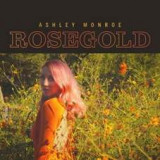
Ashley Monroe - Rosegold

A reliable traditionalist with a penchant for bittersweet songs of heartbreak and loss, Ashley Monroe pulled a complete 180 for her spectacular new album, Rosegold, riding the joyful emotional wave that followed the birth of her son to create her most ecstatic, blissed-out collection yet. Written and recorded over the past two years, the record finds the GRAMMY-nominated Nashville star pushing her sound in bold new directions, drawing on everything from Kanye West and Kid Cudi to Beck and The Beach Boys as she layers lush vocal harmonies atop dreamy, synthesized soundscapes and sensual, intoxicating beats. Monroe worked with a variety of producers on the album, letting the tracks dictate her direction rather than any arbitrary adherence to genre or tradition, and the result is a record as daring as it is rewarding, an ecstatic, revelatory meditation on happiness and gratitude that tosses expectation to the wind as it celebrates our endless capacity to love, and to be loved, even in the midst of chaos and tragedy.Born in Knoxville, TN, Monroe first began turning heads in Nashville as a teenager, when she arrived in town with a notebook full of mature, emotionally sophisticated songs that belied her young age. A jack-of-all-trades, she picked up work behind the scenes at first, singing on sessions at Jack White’s Third Man Studios and penning tunes that would appear on albums by the likes of Guy Clark, Carrie Underwood, Jason Aldean, and Miranda Lambert. Monroe and Lambert forged a close personal bond through their collaborations, and in 2011, they teamed up with fellow Nashville journey woman Angaleena Presley to launch the critically acclaimed trio Pistol Annies, which would go on to top the Country Album charts, crack the Top 5 on the Billboard 200, and earn a GRAMMY nomination for Best Country Album. Monroe’s solo output was equally lauded, with NPRhailing her work as “subtle and breathtaking” and Rolling Stone praising her writing as “riveting and sharp-witted.” Over the course of three studio albums, Monroe would land her own GRAMMY nomination for Best Country Album, share bills with the likes of Vince Gill and John Prine, and perform everywhere from The Tonight Show and Conan to Late Night and The View.

vorbestellen30.04.2021

erscheint voraussichtlich am 30.04.2021

20,13
VARIOUS - LA NOIRE 10 - GROOVE CITY
nicht am Lager

Bestelle jetzt und wir bestellen den Artikel für dich beim Lieferanten.

19,20

Last In: vor 5 Jahren
DJ Di'jital - ElectroHop II

Dj Di'jital

ElectroHop II

12inchTRUST039
Trust Records
25.02.2021

Detroit electro legend DJ Di'jital returns to TRUST with a second volume of raw and banging techno bass jackers. Injected with Juke, breakbeats, and a hefty dose of UR-style electric sweat music, 'ElectroHop II' is an essential weapon in the assault DJ's arsenal.

nicht am Lager

Bestelle jetzt und wir bestellen den Artikel für dich beim Lieferanten.

9,71

Last In: vor 2 Jahren
Various - Brunswick Northern Soul

• From the mod 60s the legendary Brunswick label had the cream of Chicago soul, with the hits by Jackie Wilson and The Chi-Lites to go with it. But beyond that, in the cracks and crevices they has some of the greatest and most influential rare soul, and this compilation brings you the best of that.
• So we have the classics which defined the genre by the likes of the Adam's Apples with their Don't Take It Out On This World, Marvin Smith with the Have More Time, Leroy Taylor with Oh Linda and of course Jackie Wilson's opener The Who Who Song.
• We have more recent discoveries such as Tony Drake's spectacular Suddenly, The Sweetest Thing by Channel 3 Billy Butler's pounding George Clinton written 'I'll Bet You', and Jackie again with the swaying Because Of You.
• In between we have rare and collectible records by The Artistics, Gene Chandler, Jackie Ross and more. Together original copies of the records contained on this LP would cost you thousands, all gathered here for the price of a round of drinks.
• Pressed on 140g black vinyl with new artwork and printed inner sleeve

vorbestellen29.01.2021

erscheint voraussichtlich am 29.01.2021

18,45
Artikel pro Seite:
N/ABPM
Vinyl