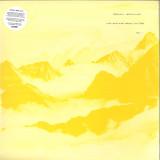
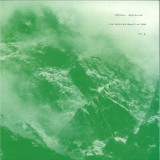
Lucid Express is five young dreamers who create a stunning airy blend of shoegaze and indie pop amongst the skyscrapers, mountains, and packed alleyways of Hong Kong. The name itself a modest mission statement of the band's intent: lucid in the poetic sense of something bright and radiant. The group formed as teens in the winter of 2014 in the turbulent weeks just prior to the Umbrella Movement. Vocalist/synth player Kim says "at that time it felt like we have a need to hold on to something more beautiful than before. Like close friendships, the band, our creation." Listening to their blissful, dreamy compositions, it may come as no surprise that these songs carry the mood of their times of inception. With all members of the band working late-night shifts, this led to a rehearsal and recording schedule that found the band playing between midnight and 4am and then crashing together on the studio floor before returning to work early in the AM. Debut album Lucid Express was given an extra sparkle thanks to the creative mixing of Max Bloom (Yuck), operates as the service to take the listener on a journey through the band's color-soaked sounds.
Cerca:creative sens
With the release of their new single ‘R&B’, the ever-exciting
English Teacher prove they could be your new favourite band.
As far as Northern cities go, Leeds probably isn’t the first place
you’d think of as a burgeoning hotbed of fiercely independent
and DIY bands. Often overshadowed by its neighbours further
along the M62, it’s precisely because of this that Leeds’ music
scene is as vehemently independent and self-sufficient as it is.
The latest band to emerge from the city are four-piece English
Teacher. Keeping Leeds’ longstanding tradition of
uncompromising post-punk alive, the quartet’s latest single
‘R&B’ is three minutes of clattering bass and crisp percussion,
sporadic guitar occasionally punctuating the tension as
frontwoman Lily Fontaine explores ideas of imposter syndrome
and lethargy throughout the creative process.
Lethargic is one thing ‘R&B’ isn’t, however. Fraught and frantic
perhaps. Imbued with a dry wit and self-awareness certainly,
but no one’s about to level any accusations of indifference at
English Teacher. The band explain, “the song is about the
cyclical, productivity-diminishing paradox of low self-esteem and
imposter syndrome-induced writer’s block that then fuels low
self-esteem and imposter syndrome. It’s also about racial
identity and putting the love that you have to offer a potential
romantic partner back into yourself.”
Harbouring a cloying sense of paranoia that only increases as
the track progresses, there are elements of bands such as Slint
and Sonic Youth at play. Rather than feel like a ‘90s throwback,
however, ‘R&B’ succeeds feeling not just contemporary but vital.
Providing both a short, sharp gut punch and insight into Leeds’
ever-growing indie scene.
Recently supported Sports Team on tour.
Dan Carey is set to produce a forthcoming album and also
plans to release a single on Speedy Wundergound.
Since their debut, Whitehorse has traveled from magnetic folk duo to full-blown rock band and beyond. In truth Whitehorse is never fully either one or the other, but an ever-evolving creative partnership that challenges both artists, Melissa McClelland and Luke Doucet, to explore new instrumental and lyrical terrain with each record. Steamy, swampy and squalling in equal measure, Whitehorse’s signature sound is guitar-heavy, harmony-abundant and lyrically deft. Now, the JUNO Award winners return with Strike Me Down, a collection of disco-twirling, hard riffing tales from the brink. Strike Me Down showcases Whitehorse’s masterful, fantastical storytelling and melodic pop sensibilities, with plenty of space made for guitar shredding, epic basslines and spaced-out vocal layering. High-impact production and prismatic visuals contribute to Strike Me Down’s high-stakes, epic vibe.
Kalipo prepares to launch his new album Happy Little Accidents, which counts with twelve electro-focused tracks as well as the participation of feature artists Rampue, Ira Atari, Oberst & Buchner and subkutan. Iconic 80s painter and TV host, Bob Ross is celebrated for his thirty-minute landscapes, recognizably soothing voice as well as the 'happy little quotes' he imprinted on pop culture. One of Ross' most memorable turns of phrase, "We don't make mistakes; we just have happy accidents," went on to encourage thousands worldwide. And not just painters. "For me, this album was about letting the songs develop very quickly and not evaluating them too much, or trying to avoid mistakes," says German electronic music producer, Kalipo (Jakob Häglsperger) who named his latest release Happy Little Accidents after Ross' signature phrase. "Bob Ross really impressed me as a child, he was always so accessible to everyone and demonstrated how easy it was for anyone to work creatively," says Kalipo, who translated Ross' fast and instinctive wet-on-wet painting technique to music-making on Happy Little Accidents. The 12 tracks that make up PART I and PART II of the album are a celebration of the method - sometimes it's a floaty journey with tinkering sounds, at other times dark fast beats create the core of the music, but there's always a sense of intuition and heart driving Kalipo's productions.
- A1: Ennio Morricone - Mio Caro Assassino (From Mio Caro Assassino/My Dear Killer (1971)
- A2: Bruno Nicolai - La Notte Che Evelyn Uscì Dalla Tomba (Feat Edda Dell'orso - Long Version - From La Notte Che Evelyn Uscì Dalla Tomba/The Night Evelyn Came Out Of The Grave (1971)
- A3: Bruno Nicolai - La Dama Rossa Uccide Sette Volte (Edit - From La Dama Rossa Uccide Sette Volte/The Red Queen Kills Seven Times (1972)
- A4: Stelvio Cipriani - Tribal Shake (From Reazione A Catena/A Bay Of Blood (1971)
- A5: Stelvio Cipriani - Il Sesso Del Diavolo (Finale) (Finale)
- A6: Stelvio Cipriani - Deviation-M1 (From Deviation (1971)
- B1: Riz Ortolani - L'etrusco Uccide Ancora (Titoli) (Titoli)
- B2: Daniele Patucchi - Giallo In Tensione (From Frankenstein '80 (1972)
- B3: Ennio Morricone - Ansimando (Feat Edda Dell'orso - From Macchie Solari/Autopsy (1975)
- B4: Manuel De Sica - Black Dream (From Mystery Tour (1985)
- B5: Paolo Gatti & Alfonso Zenga - Cerro Torre (From Cesare Maestri Il Ragno Delle Dolomiti (1980)
- B6: Berto Pisano - Greta (From La Morte Ha Sorriso All'assassino/Death Smiles On A Murderer (1973)
- B7: Sante Maria Romitelli - Bambola Sensuale (From La Rossa Dalla Pelle Che Scotta/The Sensuous Doll (1972)
- C1: Adolfo Waitzman - Languidamente (From Pensione Paura/Hotel Fear (1978)
- C2: Nico Fidenco - Il Demonio In Convento (From Immagini Di Un Convento/Images In A Convent (1979)
- C3: Ettore De Carolis - Flavour Of Death (From Il Cavaliere, La Morte E Il Diavolo (1983)
- C4: Marcello Giombini - Un Gioco Per Eveline-M11 (From Un Gioco Per Eveline (1971)
- C5: Carlo Maria Cordio - Absurd (From Rosso Sangue/Absurd (1981)
- C6: Stelvio Cipriani - Devil Dance (Performed By Goblin - From Un'ombra Nell'ombra/Ring Of Darkness (1979)
- C7: Daniele Patucchi - E Tanta Paura-M2 (From E Tanta Paura/Plot Of Fear (1976)
- C8: Marcello Giombini - Orinoco Prigioniere Del Sesso-M19 (From Orinoco: Prigioniere Del Sesso (1980)
- D1: Franco Micalizzi - Bargain With The Devil #3 (From Chi Sei?/Beyond The Door (1974)
- D2: Stefano Liberati - The Prophecy (Version A - From I Pensieri Dell'occhio (1978)
- D3: Luigi Ceccarelli - Walking Through The Shadows (From Difendimi Dalla Notte (1981)
- D4: Daniele Patucchi - Minaccia Sulla Citta (From Belve Feroci/Wild Beasts (1984)
Red vinyl[63,49 €]
PAURA explores the horror repertoire from the precious CAM Sugar archives taking us on a hypnotic journey into the labyrinths of fear, through the different variations that Italian horror took on from the esoteric and supernatural to the slasher films of the early 1970s; to reinterpretations of Romantic literature and gothic fiction to the splatter films of the ‘80s; and from witchcraft to metropolitan horror. This is not a real “best of” but an eclectic menu full of mysterious voices, childlike lullabies, sweet melodies, obsessive music boxes, obstinate harpsichords, crazy distortions and threatening synthesizers, conceived as a succession of sequences, as if a film edit. The new collection includes some of the most creative music ever written and strives to do justice not only to some of the best known composers in this genre, but also to many great unsung composers: From celebrated composers like Ennio Morricone, Riz Ortolani & Stelvio Cipriani to long-forgotten personalities who fed the industrial backbone of Italian cinema such as Daniele Patucchi, Marcelo Giombini & Berto Pisano. The collection includes 6 previously unreleased tracks plus 3 tracks released on vinyl for the first time and 5 tracks available commercially for the first time (originally released only as a limited promo item).
Lo! Soul’ is the fifth solo album from Roddy Woomble, following on from
his acclaimed debut, ‘My Secret Is My Silence’ (2006), ‘The Impossible Song
& Other Songs’ (2011), ‘Listen To Keep’ (2013) and ‘The Deluder’ (2017).
The record sees Woomble continue his unique and restless trajectory, gently
stepping away from his previous acoustic/folk intentions in favour of a more
explorative light, prevalent on 2020’s ‘Everyday Sun’ EP, which featured largely
spoken word pieces over an ambient, mediative soundtrack.
Produced and mixed by collaborator and Idlewild bandmate Andrew Mitchell (aka Andrew Wasylyk), ‘Lo! Soul’ was recorded remotely between Roddy’s
home in the Hebrides and Andrew’s studio in Dundee throughout 2020 while
Scotland was locked-down.
Roddy explains: “Andrew describes moments of the album as ‘Dystopian-pop’
which I think is as good a description as any. Lockdown gave me the sense of
a collective melancholy, a shared remoteness and isolation - that has been a
guiding influence throughout all the songs. It is the most unusual record I have
made, and made in the most unusual way.”
Across his twenty-five year career, ‘Lo! Soul’ may well be Woomble’s most inventive, creative album to date. From undulating synths and ambient soundscapes in the abstract narratives of ‘Atlantic Photography’ and ‘Secret Show’,
the sun-tinged horns of ‘Architecture in LA’, a mellifluous Mellotron or perhaps
a piano chime. Here, the path is embedded with Roddy’s words delicately unearthing the known and never known.
‘The record is inspired by the idea of humanity’s ever-increasing entanglement with technology and artificial intelligence, balancing fears and moral concerns with the possibilities of evolution’s next phase’
A new Soccer96 album is a chance for Danalogue (Dan Leavers) and Betamax (Maxwell Hallett) to return to something of a spiritual creative home. Between them, the keyboardist and drummer have become synonymous with the thriving London jazz scene and, in their mind-bending incarnation as the astral synths-and-drums pairing, they’ve traversed stylistic worlds. Over nearly a decade, the duo have metamorphosed from a DIY outfit whose rough-edged recordings hit with a punk spirit, to cosmic dreamers that use sound to travel the reaches of the mind.
First single Dopamine features Nuha Ruby Ra on vocals who sings from the perspective of human and machine throughout the track. This concept overlaps with the music seamlessly, forming a meeting point between technological and human exploration.
Dialogues between the band and Nuha crystallised a shared vision of a future where humans and artificial intelligence are entangled in a codependent relationship based on the giving and receiving of pleasure hormones, the robots only source of dopamine is to receive it from humans, and the humans’ ability to unleash the monsters of the worst of human emotion.
Danalogue and Nuha sing together ‘It’s a Long Way down’ .. the feeling of jumping from the cliff of our current state as humans and ‘free-falling’ into the unknown of robot-human intertwining. By the outro they are pleading with each other over their dopamine co-dependency, in terms of both giving and receiving the hit. "Dependency leads to free-falling integration, a moment of freefall into robotic consciousness. Humans and machines are locked in a dance of addiction." explains Betamax.
Soccer96 has always been a vessel for Danalogue and Betamax to find clear water from their multitude of other collaborations, their most notable being as two-thirds of The Comet Is Coming alongside Shabaka Hutchings. Danalogue’s other recent production credits include Snapped Ankles and Calabashed, whilst Betamax has been making music with Champagne Dub and Coma World.
“Through collaborating with various artists and developing our own sonic language, it feels like we have created a sound of our own,” says Danalogue. “Now we think less literally and take more liberties to not necessarily sound like a duo. It’s more like a production team that can be augmented or stripped back depending on what the music calls for.”
Dopamine, though, sees the pair back together once again, incubating their findings of the past two years and moving Soccer96 into new territories. The record is maybe darker in some senses than what they’ve put out before; it’s inspired by the idea of transhumanism and humanity’s ever-increasing entanglement with technology and artificial intelligence It balances fears and moral concerns with the possibilities of evolution’s next phase. “The LP title Dopamine refers to the type of neurotransmitter associated with pleasure, that enables technology to hack into our minds and control us, creating addiction, dependency,” Betamax explains.
Dopamine began life as a sonic reaction to the graphic novels of ‘Moebius’ Jean Giraud. The duo then started swapping reel-to-reel tape ideas through each other’s letterboxes in lockdown, before eventually convening in the studio and displaying one of the revered French artist’s images in the middle of the studio for inspiration.
“All musical decisions would centre around this image,” Betamax says. “It was a depiction of a cosmic traveller gazing across a desert at a sort of crystal city. If the music was resonating with the image then we knew we were on the right path. We are both glad there is a lot of emotional warmth underpinning the whole thing. We are trying to connect with the human essence at all times.”
Odd, Ordinary & Otherwise,’ the third full-length record from New Orleans
country-folk songsmith Chris Acker, is a collection of songs brimming with
true tales, eloquent songwriting, and fearless honesty.
During his decade-long songwriting career, Chris has explored musical terrain
tread by contemporary folk music’s greatest champions: Prine, Dylan, Guthrie,
etc. With ‘Odd, Ordinary & Otherwise,’ Acker has forged an unmistakable lyrical
style that’s truly his own, containing more reverence than reference to those
who came before him.
The songs of O-O-O are equally as influenced by months of isolation during
COVID quarantine as they are by Chris’ place in the New Orleans dancehall and
busking communities in years previous.
The album’s thirteen tracks flow gracefully from introspective, quiet tunes worthy of the modern Folk Music cannon, to downright barn burners ready for
the dancehall and all the space in between. Acker’s creative response to the
heartbreak and anxiety that defined the year 2020 is primarily one full of life.
The vividly painted scenes and stories that define the record are his and no one
else’s. Paired with his signature pop sensibility, playful and sometimes humorous language, and a professional sonic presentation, ‘Odd, Ordinary & Otherwise’ is a compelling record that merits close investigation.
Through his dedication to the Los Angeles grassroots projects that gave so much stability and focus to many younger musicians, artists and the community, Horace Tapscott became a neighbourhood hero at a time when the world wanted his presence. He stayed in Los Angeles and focused instead on building a community, rarely giving interviews and instead focusing on passing on the message from his mentors. He shaped a unique sound with his arkestra and community minded musicians. It was a close-knit family that emanated a sound that was deep and unique, flowing with a creative spirit that definitely comes through on this album.
In 1961 he founded the Pan-African Peoples Arkestra, which aimed to preserve, develop and publicise African-American music through the ever-growing family that emanated within many of the deprived areas of Los Angeles. Through his subsequent collaboration with Bruce Albach, a producer and founder of Nimbus West Records, they sought to document the importance of this music alongside many artists who were energetically linked to the ethos and understanding which came from the collective dialogue.
Here the composer leads four extensive arrangements through his 16 piece orchestra, featuring many of the Nimbus West artists including Adele Sebastian, Jesse Sharps and Linda Hill. The music weaves the sound of afro-futuristic music through changing tempos and a relentless dynamic expressive sound that is complex and beguiling with a deep spiritual sound throughout all four tracks.
The ceremonial ‘Peyete Song no. III’ is a great swirling evocative piece from the large collective, with amazing solos from especially Horace Tapscott who seems to find a sound from the piano that is from another dimension. The arrangement airs an important message of a people and their rituals.
Horace Tapscott gives Cal Massey’s composition ‘Nakatini Suite’ a splendid futuristic big band interpretation. The composition had been earlier illuminated by both Lee Morgan on his ‘Lee-Way’ album and John Coltrane on his ‘Believer’ album titled ‘Nakatini Serenade’. Through the more expansive soundscape, the interpretation allows for some great interplay between saxophonist Jesse Sharps and drummer Everett Brown Jr. with the whole orchestra led by Horace Tapscott capturing the essence of Cal Massey’s message.
Vocalist Adele Sebastian opens up the free probing arrangement ‘Quagmire Manor at 5am’ composition with a similar delivery as with her ‘Day Dream’ from the classic ‘Desert Fairy Princess’ album before the music takes off onto the mothership adding a sense of what time and space within the manner was about amongst many great musicians and artists. Their journey and moments encapsulated within the music.
There are certain albums you hear something new every time you revisit the music and this is one of those albums. An important part of Afro-American history; the politics and art which surrounded the album. If you get a chance check out the film ‘Horace Tapscott, Musical Griot’, by filmmaker Barbara McCullough, or buy the book ‘Songs Of The Unsung’: The Musical & Social Journey of Horace Tapscott’. Mark Jones/UK Vibe
Crepuscule presents a brand new collaborative project by Julie Campbell (aka LoneLady), Stephen Mallinder (Wrangler, Cabaret Voltaire) and Benge (Wrangler, John Foxx). Titled Clinker, the first 800 copies of the 6 track mini album have been pressed in turquoise vinyl.
‘The project began a couple of years ago,’ explains Julie. ‘Benge had these great sketches that were beats and synth patterns, so those were the starting point. I really went to town adding lots of guitar layers and experimenting with different sounds. On some tracks the guitar is deft and rhythmic, as if mimicking sequencer patterns. On others it’s a deconstructed noise-based approach - scratching strings, making fitful, heavy chunks, howls and scrapings of noise and texture.’
Due to competing solo commitments for all 3 members the tracks disappeared into hard drive exile for a couple of years. Julie continues: ‘Last year we revisited the mixes and Stephen added his trademark mysterious and menacing vocals. Now we find ourselves with a finished piece of work. I thought of the name Clinker as I love its meaning: 'stony residue from burnt coal'. This seemed liked an apt description of both industrial and creative processes, and a nice nod to the industrial North of England.’
Stand-out tracks include Camouflage and Condition Collapsing. ‘I’d forgotten how liberating it is to play bass guitar on something,’ enthuses Mal. ‘It compliments Julie’s beautifully angular guitar, and Benge and me ripping up live percussion onto the sound of machines… As a collection of tracks these benefited from a lengthy gestation, as they follow no particular trend and were allowed to twist and turn to develop a life of their own. After successive cycles we suddenly drew it all together so the tracks have a sense of completion and identity.’
‘The real fun for me was during the mixing process when Mal and I looked at each other as the rawness of the tracks hit us on the big studio monitors,’ adds Benge. ‘We knew we had something untameable, and wanted to preserve that feeling of edgy rawness in the mixes.’
The cover image is by Julie Campbell, with overall design by Twilight. The vinyl edition comes with a digital copy (MP3).
After retracing the path of Lou Reed, with her tribute show
and album ‘Run Run Run’, Emily Loizeau returns in full
force, influenced by growing concerns for the challenges
of climate change and migration, and everything we’ve
been through these past years.
Writing in the thick of lockdown and recording during
quarantine in England with John Parish (producer and
musician for PJ Harvey), Loizeau had dreamt of
collaborating and creating an album in the land of her
roots long before it came to pass.
Both guitarist Csaba Palotaï, by Loizeau’s side these last
ten years, and pianist / bassist Boris Boublil, a new
addition to the team, had worked with Parish before on a
variety of musical projects. Sacha Toorop, on the drums,
also had experience recording with Parish for Dominique
A’s ‘Auguri’ album.
“Our work on the demos with Boris, Csaba and Sacha; the
songwriting for this album; the sound I was trying to
render: everything seemed to point to a return to the
United Kingdom and to Parish’s creative force, which is
raw, sensitive and powerful all at once," Loizeau says.
"The time was right!"
The album is a diary - personal fieldnotes from a
lockdown, with an eye turned towards the outer world. A
call, a deep and powerful desire to seek out the core of our
fears and anger and find there what binds each soul to the
other.
‘Icare’ is the story of the infinite within us, our desires and
our shortcomings, how we reach for beauty, for harmony,
our creative frustrations and the Promethean madness
that may precipitate our fall.
one hand on the steering wheel the other sewing a garden is the name of the second album by Canadian songwriter Alexandra Levy, publicly known by the moniker Ada Lea. On one hand, it’s a collection of walking-paced, cathartic pop/folk songs, on the other it’s a
book of heart-twisting, rear-view stories of city life. Ada Lea has followed up the creative, indie-rock songcraft of her debut what we say in private with surprising arrangements and new perspectives. The album is set in Montreal and each song exists as a dot on a personal history map of the city where Levy grew up. Due on September 24th from Saddle Creek and Next Door Records in Canada, the physical record will be released alongside a map of song locations and a songbook with chords and lyrics, inspired by Levy’s love of real book standards.
Levy penned and demoed this batch of songs in an artist residency in Banff, Alberta. After sorting and editing she made her way to Los Angeles to record with producer/engineer Marshall Vore (Phoebe Bridgers) who had previously worked on 2020’s woman, here E.P. After a long walk to the studio each morning, Levy spent her session days diving into the arrangements, playfully letting everything fall in place with complete trust for her collaborators. She notes “Marshall’s expertise and experience with drumming and songwriting was the perfect blend for what the songs needed. He was able to support me in a harmonic, lyrical, and rhythmic sense.” Other contributors that left a notable fingerprint on the soundscape include drummer Tasy Hudson, guitarist Harrison Whitford (of Phoebe Bridgers band), and mixing engineer Burke Reid (Courtney Barnett). Many songs came together with a blend of studio tracks and elements from the pre-recorded demos.
The resulting sounds range from classic, soft-rock beauty to intimate finger-picked folk passages and night-drive art-pop. And the textures are frequently surprising due to the collage of lo-fi and hi-fi sounds that tastefully decorate the album without ever clouding the heart-center of the song. Tracks like “damn” and “oranges” feel timeless with their AM gold groove and 70’s studio sheen, while songs like “my love 4 u is real '', “salt spring” and “can’t stop me from dying” sound completely modern in their use of electronics, sound effects, and pitched vocals. In their subtle, sonic variety, all of the album’s songs flow together with ease into one big, romantic dream for Levy’s silken vocals to float above.
Inspired by personal experience, daydreams, and Elena Ferrante’s Neapolitan novels, the lyrics of one hand... center storytelling on a bigger scale. The experience and emotions of a year are communicated through Levy’s vignettes of city life. Her prose is centered in its setting of the St Denis area of Montreal as it draws up memories from local haunts like Fameux, La Rockette, and Quai des Brumes in rearview reverie. Levy creates a balance through the album’s year by splitting her songs evenly into four seasons. Opening track “damn”, as a song of winter, kicks off the narrative with the events of a cursed New Year’s Eve party. Immediately this timeline becomes jumbled into a Proustian haziness. The listener is then led through the heat-stricken, brain fog of Summer song, “can’t stop me from dying” and then into the autumnal romanticism of “oranges” before returning back to New Year’s on “partner,” which Levy describes as “a woozy late-night taxi blues reflection on moments when timing can be so right, yet so wrong…”. These collected stories as a whole chart the unavoidable growth that comes with experience. “All is forgiven in time. All is forgotten in time. And when the music stopped, I heard an answer” (from “my love 4 u is real”).
Whether to consider these songs fiction or memoir remains unknown. On one hand, Levy says “Why would I try to write a story that’s not my own? What good would that do?” but on the other hand, she is quick to note the ways that language fails to describe reality, and how difficult this makes it to tell an actually true story. The poetic misuse of the word “sewing” in the album’s title serves as a nod to the limitations words provide. What does it mean to sew the garden? And how can we appreciate its carefully knit blooms when the rearview mirror is so full of car exhaust?
one hand on the steering wheel the other sewing a garden is the name of the second album by Canadian songwriter Alexandra Levy, publicly known by the moniker Ada Lea. On one hand, it’s a collection of walking-paced, cathartic pop/folk songs, on the other it’s a
book of heart-twisting, rear-view stories of city life. Ada Lea has followed up the creative, indie-rock songcraft of her debut what we say in private with surprising arrangements and new perspectives. The album is set in Montreal and each song exists as a dot on a personal history map of the city where Levy grew up. Due on September 24th from Saddle Creek and Next Door Records in Canada, the physical record will be released alongside a map of song locations and a songbook with chords and lyrics, inspired by Levy’s love of real book standards.
Levy penned and demoed this batch of songs in an artist residency in Banff, Alberta. After sorting and editing she made her way to Los Angeles to record with producer/engineer Marshall Vore (Phoebe Bridgers) who had previously worked on 2020’s woman, here E.P. After a long walk to the studio each morning, Levy spent her session days diving into the arrangements, playfully letting everything fall in place with complete trust for her collaborators. She notes “Marshall’s expertise and experience with drumming and songwriting was the perfect blend for what the songs needed. He was able to support me in a harmonic, lyrical, and rhythmic sense.” Other contributors that left a notable fingerprint on the soundscape include drummer Tasy Hudson, guitarist Harrison Whitford (of Phoebe Bridgers band), and mixing engineer Burke Reid (Courtney Barnett). Many songs came together with a blend of studio tracks and elements from the pre-recorded demos.
The resulting sounds range from classic, soft-rock beauty to intimate finger-picked folk passages and night-drive art-pop. And the textures are frequently surprising due to the collage of lo-fi and hi-fi sounds that tastefully decorate the album without ever clouding the heart-center of the song. Tracks like “damn” and “oranges” feel timeless with their AM gold groove and 70’s studio sheen, while songs like “my love 4 u is real '', “salt spring” and “can’t stop me from dying” sound completely modern in their use of electronics, sound effects, and pitched vocals. In their subtle, sonic variety, all of the album’s songs flow together with ease into one big, romantic dream for Levy’s silken vocals to float above.
Inspired by personal experience, daydreams, and Elena Ferrante’s Neapolitan novels, the lyrics of one hand... center storytelling on a bigger scale. The experience and emotions of a year are communicated through Levy’s vignettes of city life. Her prose is centered in its setting of the St Denis area of Montreal as it draws up memories from local haunts like Fameux, La Rockette, and Quai des Brumes in rearview reverie. Levy creates a balance through the album’s year by splitting her songs evenly into four seasons. Opening track “damn”, as a song of winter, kicks off the narrative with the events of a cursed New Year’s Eve party. Immediately this timeline becomes jumbled into a Proustian haziness. The listener is then led through the heat-stricken, brain fog of Summer song, “can’t stop me from dying” and then into the autumnal romanticism of “oranges” before returning back to New Year’s on “partner,” which Levy describes as “a woozy late-night taxi blues reflection on moments when timing can be so right, yet so wrong…”. These collected stories as a whole chart the unavoidable growth that comes with experience. “All is forgiven in time. All is forgotten in time. And when the music stopped, I heard an answer” (from “my love 4 u is real”).
Whether to consider these songs fiction or memoir remains unknown. On one hand, Levy says “Why would I try to write a story that’s not my own? What good would that do?” but on the other hand, she is quick to note the ways that language fails to describe reality, and how difficult this makes it to tell an actually true story. The poetic misuse of the word “sewing” in the album’s title serves as a nod to the limitations words provide. What does it mean to sew the garden? And how can we appreciate its carefully knit blooms when the rearview mirror is so full of car exhaust?
- 1: Favorite Flavor
- 2: Sunshine
- 3: Much Better
- 4: Dance With The Devil (Feat Kt Tunstall)
- 5: Love Yourself
- 6: 85 Trips
- 7: Start Again (Feat Frank Turner)
- 8: Times Are Changing
- 9: Hotel Deville
- 10: Love Bites
- 11: Bad Things (Feat Sleeper)
- 12: Overthink Everything
- 13: Something To Leave The House For
- 14: See You Later
Keeping the faith and facing the future, Times Are Changing puts a full stop on pandemic talk for unstoppable indie-pop four-piece Lottery Winners, as the four-piece release the fizzing anthem into a newly optimistic world. The first single from their newly
announced, upcoming, second studio album, Something To Leave The House For, the band has penned the soundtrack to hugging old friends, the rebirth of live music and those summer festivals just around the around the corner.
For front man and songwriter, Thom Rylance, working through the darkness of Covid meant surviving Covid, tying the threads of an unravelling mental state into a new body of work now emerging as bright, arms-aloft bursts of positivity. His famed ‘note to self’, the emotive An Open Letter To Creatives and the band’s sensational, viral collaboration with Nickelback with the Rock Star Sea Shanty were just two moments of levity in a time dominated by the dark clouds forming overhead. Now he and the band are moving on and moving up.
“If something so bleak and harrowing can hit us all, totally out of the blue, and change our lives, then by definition that must mean that something beautiful can too.” says bassist and vocalist, Katie Lloyd (bass and vocals) as Lottery Winners start the next leg of their adventure with Times Are Changing, reflective, ready to party and no less ambitious than before.
Their mammoth, 14-track new album, Something To Leave The House For, follows their 2020, self-titled UK Album Chart Top 30 debut with a Fri 24 September 2021 release via Modern Sky UK, promises to document the tumultuous times and the path back from despair. In true Lottery Winners style, every truth and life lesson is dressed in glass-half-full, wildly optimistic, radio-friendly pop, hip-swinging beats and bittersweet tenderness.
Light Blue Vinyl
**Tracks 'Sixth Sequence' and 'Tenth Sequence' are bonus tracks & exclusive to the vinyl release only.** limited transparent green vinyl LP
Past Inside The Present is pleased to announce 'Wave Variations' which is a new mini-album by veteran ambient producer Dennis Huddleston AKA 36.
36 has often enjoyed exploring self-imposed restrictions, as it forces him to be creative, while allowing an inherently coherent sound between the different compositions. All the arrangements on Wave Variations use a limited pallete of mostly synth-based sounds, with particular focus on keys and melodies. Each track directly influenced the next one.
Dennis has kept almost every track around three minutes in length. He states, 'I feel like a lot of ambient music (including my own) is often unnecessarily long and these small vignettes work as a nice counter to that. Don't expect long build-ups or over-extended crescendos; These are short tracks that take you straight to Elysium and then dissolve into the ether.'
He further explains the output of Wave Variations, 'Ocean tides inspired the album. I think we've all felt that sense of longing and wonder while standing at the beach, staring at the waves and gazing into the endless horizon. I think it's something that transcends all generations of people. Like the waves, these tracks leave as quickly as they arrive. I feel it's one of the most minimal records I have made, with far fewer individual sound sources at my disposal. It keeps me on my toes and forces me to deeply explore the instruments I have available to me.'
This stripped-back sound gives the album a hypnotic quality to it. Like much of Dennis' work, there is a delicate balance between melancholic melodies and rich textures, resulting in an understated yet deeply exhilarating sound. Fans of emotional, melodic ambient music should find plenty to enjoy.
Exceptional recordings by this New age maestro. Only recently re-discovered by his friend JD emmanuel & the band Sun Araw. Originally released on cassette in 1983 and now for the first time vailable on 180g Vinyl. For fans of Joanna Brouk, JD Emmanuel and Pauline-Anna Strom.
Randall McClellan was a founding member of the electronic music studio at the Eastman School of Music in 1967 where he later received a Ph.D. in Composition, Theory and Musicology. A growing interest in North Indian music and vocal technique prompted him to develop his personal compositional practice into an active platform for inducing altered states of mind. He constructed his concerts to be spaces for harmonization of mind and body through a musical practice informed by his esoteric studies of ancient mystery schools and sacred geometry, believing these to be primarily teachings on intentional resonance.
These performances were given between 1977 and 1983 in semi-darkened spaces that allowed listeners to relax on carpeting while being enveloped by sound. Each improvisation lasts from twenty-five to forty-five minutes. An entire performance is up to three hours and is designed to provide an environment of meditative sound. They gained in popularity and were soon attended by larger audiences. His final live performance took place at New York City's Alternative Museum in October, 1983.
The “Music of Rana” Enviromental Series uses synthesizers, drone box, tamboura, voice and tape delay to create an environment of continuously evolving multi-layered melody. Described as subtle, graceful and of other worlds. The name RANA, meaning “Sunbreath”, has its origin in ancient philosophical concepts that recognized vibration as the fundamental creative force and central principle of the many esoteric mystery schools of the ancient world. It is now evident that the use of music for its ability to alter mind states and for its effectiveness as a therapeutic aid was music’s original purpose and an important concept of these mystery schools. In the broadest sense, the practice of music for its healing ability may well stand as our oldest continuous musical tradition.
This album is the first volume in the series, previously issued as a cassette in 1983, and part of the cassette box set published by Sun Ark in 2013. This music is based on principles outlined in Randall’s book, The Healing Forces of Music: History, Theory and Practice. These compositions are selected for their meditational and healing abilities. EQ settings of treble and bass levels determine the music's effect upon you. Please explore until the most comfortable settings are found.
FACT MAG: "These deeply meditative pieces are an expert take on how subtleties and concentrated listening go hand-in-hand. There is inherent beauty here, but it’s the deeper aspects that make the biggest impact."
Exceptional recordings by this New age maestro. Only recently re-discovered by his friend JD emmanuel & the band Sun Araw. Originally released on cassette in 1983 and now for the first time vailable on 180g Vinyl. For fans of Joanna Brouk, JD Emmanuel and Pauline-Anna Strom.
Randall McClellan was a founding member of the electronic music studio at the Eastman School of Music in 1967 where he later received a Ph.D. in Composition, Theory and Musicology. A growing interest in North Indian music and vocal technique prompted him to develop his personal compositional practice into an active platform for inducing altered states of mind. He constructed his concerts to be spaces for harmonization of mind and body through a musical practice informed by his esoteric studies of ancient mystery schools and sacred geometry, believing these to be primarily teachings on intentional resonance.
These performances were given between 1977 and 1983 in semi-darkened spaces that allowed listeners to relax on carpeting while being enveloped by sound. Each improvisation lasts from twenty-five to forty-five minutes. An entire performance is up to three hours and is designed to provide an environment of meditative sound. They gained in popularity and were soon attended by larger audiences. His final live performance took place at New York City's Alternative Museum in October, 1983.
The “Music of Rana” Enviromental Series uses synthesizers, drone box, tamboura, voice and tape delay to create an environment of continuously evolving multi-layered melody. Described as subtle, graceful and of other worlds. The name RANA, meaning “Sunbreath”, has its origin in ancient philosophical concepts that recognized vibration as the fundamental creative force and central principle of the many esoteric mystery schools of the ancient world. It is now evident that the use of music for its ability to alter mind states and for its effectiveness as a therapeutic aid was music’s original purpose and an important concept of these mystery schools. In the broadest sense, the practice of music for its healing ability may well stand as our oldest continuous musical tradition.
This album is the first volume in the series, previously issued as a cassette in 1983, and part of the cassette box set published by Sun Ark in 2013. This music is based on principles outlined in Randall’s book, The Healing Forces of Music: History, Theory and Practice. These compositions are selected for their meditational and healing abilities. EQ settings of treble and bass levels determine the music's effect upon you. Please explore until the most comfortable settings are found.
FACT MAG: "These deeply meditative pieces are an expert take on how subtleties and concentrated listening go hand-in-hand. There is inherent beauty here, but it’s the deeper aspects that make the biggest impact."
- A1: Velhas Maos Novos Tapas
- A2: Ai Meu Deus
- A3: Passarinho
- A4: Cama Do Estoque
- A5: Movimento
- A6: Burkina
- A7: Lucca
- A8: Novo Velho
- A9: Atraso Granular
- A10: Tender Strings
- B1: Marvin Jorge
- B2: Quebra Coco
- B3: Doutor Contrafacc¸a~O
- B4: Jazzlofi Da Morte
- B5: Batebate
- B6: Geraldo
- B7: Brazileiro Com Z
- B8: Amigão
- B9: Decepcionado
- B10: Samora
Residing in Rio de Janeiro, Vasconcelos Sentimento is a self-taught composer, producer and multi-instrumentalist. A mosaic of lo-fi breaks, cosmic ambient jazz and wonky chromatic funk, the eccentric Brazilian DIY wizard’s debut album Furto beautifully pieces together a huge range of seemingly disparate sonic elements. Calling himself an “amateur euphoric sound researcher”, he has no formal training in either music theory or production, and it’s simply by following his ear that has led him to creating his debut album for Far Out Recordings.
It was his fascination with his fellow countryman, the enigmatic, psychedelic 70s folk artist Jose Mauro, that led the young Vasconcelos Sentimento (real name Guilherme Esteves) to first make contact with Far Out. Coincidentally living in the same region as Mauro, Sentimento managed to track him down and put label boss Joe Davis in touch, after Davis had spent years of what felt like hopeless searching for the man many assumed dead.
When Joe and the Far Out team heard Guilhermes’ own music, there was a sense of shock. “It was unlike anything we’d heard before, but it also sounded curiously at home on Far Out. Like it had taken little pieces of different releases from the catalogue, and all the music from the ‘60s onwards that influences everything we do, and recreated all that magic in such an exciting new way”.
Indeed, Sentimento is not afraid to admit what he himself sees as acts of theft. (Furto=Theft in Portuguese). But while the debate surrounding the ethics of sampling is a never ending one, Sentimento’s music - while it does contain the odd sample, including an interview with Joe Davis himself, “One For The Masta Digga”) - steals in an entirely different way. His creative process involves an intensive period, in which he’ll listen to just one artist or song over and over, for days and weeks on end. Then he’ll head to his rudimentary bedroom studio, which, as he puts it, is “built for speed”, hit record and “blurt” whatever comes out. “I never spend more than a day working on any one song idea”...
Picasso once said “lesser artists borrow; great artists steal”. And it’s through this process of ‘Furto’ that Vasconcelos Sentimento has somewhat ironically cultivated a sound that is unmistakably his own.
Furto is due for vinyl, CD and digital release on 30th July 2021, via Far Out Recordings.
With COVID restrictions now easing, and fresh off the back of their ongoing in-lockdown Quarantine Series, as well as EP + album releases from Calder Valley upstarts The Lounge Society and cult singer-songwriter Stephen Fretwell respectively – the studio is now re-open and Speedy are back to doing what they do best: releasing one-off 7”/digital singles.
The latest band to be welcomed into label boss Dan Carey’s Streatham HQ is the 5-piece London based alt-pop band moa moa comprised of James Ratcliffe (guitars, keys, vox), Connor James (keys, guitar), Sophie Parkes (sax, vocals), Dan Byrne (bass) and Matt Taylor (drums).
Having sent the label a collection of demos during lockdown – of mainly finished songs – the one which caught Carey’s ear was actually a 20-second snippet of just an idea really – which the band had included in what they had sent over. ‘I know it sounds mad’ says the producer – ‘but I just knew there was something in it.’ Meaning in true Speedy style the band and producer alongside engineer Alexis Smith had to build the song around the single motif from scratch on the day – having previously never met before, in what turned out to be a mammoth 13-hour recording session.
‘It was scary and exciting in equal measures going into it’ says the band, ‘but Dan and Lex create such a safe, encouraging creative space, and from that, we somehow came out with a moa track we're all happy with.’
The resulting track ‘Coltan Candy’ is 4 + minutes of hook-laden sunshine alt-pop that layers and builds, perfectly reinforcing the band’s manifesto of marrying ‘unconventional songwriting with pop-leaning sensibilities’, channelling (amongst others) Unknown Moral Orchestra, XTC and MGMT with contemporary R & B influences into something seamless and new. And it’s catchy as hell.
‘Lyrically, the tune is darker and more direct than our other stuff’ says James (Ratcliffe), ‘even if it’s offset by everything else going on in the music. The main hook of the song is the lyric "Coltan Candy" which refers to a mineral that has been mined unethically for decades in Africa for the production of electronic circuits in the West. I’m making some pretty OTT comments about corruption, technology, and the failures of institutions in the West, but also asking some questions about our own involvement and inability to do anything about it.’
Regardless of the seriousness of the content the band just feel relieved to have finished the track. ‘Even up to the night before the session we had 20 seconds of music that we were jamming into what sounded like an awful country track…so, it’s fair to say that the whole process really helped us to focus and make decisions!’
Coltan Candy. The sweet sound of the summer.
Pokey LaFargeʼs 7th studio solo album, ‘In The
Blossom Of Their Shade’, showcases the positivity
of coming out of the darkness and into the light.
When the 2020 global pandemic hit, LaFargeʼs
rigorous work ethic powered him through the
potentially challenging creative period. As days
became a couple of months, songs blossomed
from embryonic ideas into fully-formed ones and
he was ready to move on, which typified his
mindset as a working artist.
With this record, LaFarge captures the thematic
notion of being the perfect summer afternoon
soundtrack... the type of music you want to listen
to while having a cocktail with your significant
other.
It makes sense musically as well - LaFarge
intentionally crafted songs that created space and
have melodies that can glide throughout a
composition thatʼs a far cry from the swing and
blues-infused songs of his earlier work.
LaFarge is an artist who refuses to rest on his
laurels and compromise. He's always motivated
and ready to create. ‘In The Blossom Of Their
Shade’ is one of LaFargeʼs strongest and most
mature efforts to date.
LP in gatefold sleeve.