Beautiful 1 LP Edition with 350g cardboard old Stoughton tip-on sleeve, Sticker - MKWAJU ensembleâs highly sought-after album reissued on vinyl for the first time since 1981. Also available on CD. - 33 rpm LP mastercut by Emil Berliner from original tapes! WRWTFWW Records is over the moon to announce the official reissue of legendary album KI-Motion by Japanese percussionist Midori Takadaâs MKWAJU ensemble, sourced from the original masters and available in two versions: a vinyl LP cut at Emil Berliner Studios and housed in 350g old Stoughton tip-on sleeve, and a digipak CD. A highly creative and transcendental fusion of marimba, vibraphone, bamboo percussion and synthesizers, KI-Motion was recorded in 1981 and captures the birth of Midori Takadaâs exploration of minimalism, African rhythmic tradition, and ambient music. The album takes its conceptual inspiration from the tamarind ( âmkwajuâ in Swahili), a drought resistant tree notably used to craft some of the first mallets and marimbas but also known for its culinary and medical uses, an essential symbol of life and identity for the Central African grasslands. Drawing from the regionâs culture and music as well as the crucial notion that rhythms represent the very fabric of life, Midori Takada leads her ensemble into environmental heaven to create one of the highlights of her recording career and an absolute must-have from the golden age of Japanese ambientâ¦the ideal companion to her majestic Through The Looking Glass opus!
Поиск:creative use
Все
Jimi Tenor's mind will travel where his body can't go. Living in isolation in east-Helsinki suburb he picks mushrooms and has exotic musical fantasiesin the calmness of the endless. He has made a quantum connection in Berlin with rhythm geniouses Ekow Alabi Savage and Max Weissenfeldt to create his latest tour de force "Order of Nothingness".
Mind travel is easy and music is a perfect way to illustate the possibilities. Using historical failed experimental keyboard Extravoice from Hammond organ company has opened the floodgates of Jimi's creative passages. Philophon studios in Berlin has a plethora of exotic instruments and they have been extensively used in making this album. JIMI likes to switch between wind instruments and keyboards to get a creative edge.
Is there any meaning in Mysteria Did Salvador Dali design the Chupa Chups logo Was Finland part of the Soviet Union Order of Nothingness might not aswer these question, but instead will confuse you a little bit more.
Building On Over A Decade Of Work, Drums & Drones Ii Follows Master Drummer And Composer Brian Chase (yeah Yeah Yeahs) Into Unchartered Sonic Realms. All Of The Pieces Are Based On The Acoustic Resonance Of A Single Drum With Each Track Designed To Emphasize A Different Method Of Sonic Investigation.
The Project Draws Inspiration From Brian's Time Working At La Monte Young And Marian Zazeela's Dream House In Tribeca, Nyc. As He Spent More Time Immersed Within The Installation, Its Complexity And Beauty Started To Reveal Itself In Its Magnitude. On The Technical Side, This Was Partly Due To The Distinct Tuning System - Just Intonation - That Was Used To Create The Sound And The Way It 'plays With' The Listening Process. Brian Grew Intent On Finding Ways To Adapt This Approach To His Primary Instruments Of Drums And Percussion.
The Album Was Recorded Over A Four Week Period As Artist-in-residence At Headlands Center For The Arts In Northern California. Spending Day And Night In A Secluded Barn At The Top Of A Hill, The Residency Provided The Opportunity To Live And Work Immersed In The Creative Process. This Focus Very Much Relates To The Way In Which The Music Functions: As The Listener Tunes Into The Sonic Characteristics And Pace Of Each Track, Its Meditative Properties Are Gradually Revealed.
One of the most unique albums on the Strata East label - and that's saying a heck of a lot, given the creative energies flowing through that legendary jazz outlet! Descendents Of Mike & Phoebe is a righteous little project put together by Spike Lee's father, Bill Lee, and his brothers and sisters (Cliff Lee, Grace Lee Mims, and Consuela Lee Moorhead) - working here in a group named after their slave ancestors, who are paid tribute in a beautifully flowing batch of tunes! Lee's round, warm bass tones are firmly at the head of the group on most numbers - recorded at a similar level to his excellent work with Clifford Jordan on Strata East during the same time - and other instrumentation includes piano from Consuela, flugelhorn from Cliff, and percussion from Sonny Brown and Billy Higgins - all used in a wonderfully evocative style that's even better than some of Lee's later soundtrack work. A few numbers feature vocals from Grace - singing wordlessly and with a really heavenly sort of quality - and together, the whole group have an undeniable sense of power and majesty, yet also one that's touched by a really personal sense of poetry too. Titles include a great version of Lee's "Coltrane", which was more famously recorded with Clifford Jordan.
By Drago Museveni
3x12"
Listening back to Roman Poncet's first releases on Figure just a couple years ago, they already hinted at the producer's keen technical abilities and a knack for rich texturing, resulting in tracks that were
both carried by force and form. What he delivers now is an impressively mature debut album, ripe with personal creative realization.
On Gypsophila the French producer uses the extended format to slowly shape up a scenery of epic proportions where surprise and constant change lurk around every corner. A certain sense of
progression and evolution runs throughout Poncet's music; it invariably keeps one locked in, no matter for the opening drones of Do Not or the patiently growing Thick Vegetation, which fuses tribal
percussion and choral chants to showcase another of this LP's key features: its dense soundscape, which at once feels inherently electronic yet deeply organic, translating the abstract futuristic themes
of techno into something jam-packed and heady albeit steadily grounded - a listening experience that is as dreamy as it remains tangible.
This holds true for the highly atmospheric synth-lead pieces, such as the cinematic intro Hello You, the elevating arp-ride Epreuve or the suspended celestial groove of Atlas. But equally goes for the floorfocused
rhythms, like relentless steam engine-workout Piege or mid-album mind-trip In Aeternam. Adding even more variety and depth to the mix, the tidal title track is given its own side to explore the
sheer endless expanses of dub...
Bundling the complete range of his influences, Gypsophila marks the pinnacle of Roman Poncet's work to date. Covering a spectrum this broad in his very own way, the album proves as relevant for the
current club scene as it will be for repeated return visits.
Strut presents the brand new album from cosmic jazz travellers The Pyramids, led by saxophonist Idris Ackamoor, 'An Angel Fell'. I wanted to use folklore, fantasy and drama as a warning bell,' explains Ackamoor. The songs explore global themes that are important to me and to us all: the rise of catastrophic climate change and our lack of concern for our planet, loss of innocence and separation... but positive themes too, the healing power of music, collective action and the simple beauty of nature.' Produced by Malcolm Catto of The Heliocentrics, the album was recorded during an intense week at Quatermass studios in London and is one of the deepest, richest works yet from a band reaching their highest creative peak since the early '70s. Some of the many highlights include the poignant title track depicting a fallen angel in purgatory, outrage and grief on the powerful, hard hitting 'Soliloquy For Michael Brown' and the lilting, beautiful album closer, 'Sunset'.
The Pyramids originally came together in 1972 at Antioch College, Yellow Springs, Ohio where teachers included renowned pianist, Cecil Taylor. After forming in Paris and embarking on a cultural odyssey' across Africa, the group recorded three independent albums, 'Lalibela' (1973), 'King Of Kings' (1974) and 'Birth / Speed / Merging' (1976) and became renowned for their striking live shows, mixing percussive, spiritual and space-age jazz with performance theatre and dance. After migrating to San Francisco, they disbanded in 1977. 35 years later, the band reunited in 2012 following growing demand for their music from vinyl collectors. German label Disko B released the freeform album 'Otherwordly' and in 2016, they released their first album for Strut, the acclaimed 'We Be All Africans'.
'An Angel Fell' is released on Strut on 11th May 2018 and features full hand-painted artwork by Lewis Heriz.
New concept album by leading cosmic jazz collective exploring global apocalypse, climate change and the healing power of music
Produced by Malcolm Catto of The Heliocentrics - Superb cover painting by Lewis Heriz
Full priority worldwide PR campaign and marketing
Release supported by major European tour dates in May and key Summer festivals
The Works of John B. McLemore, the star of one of last years biggest podcasts, S-Town, which is coming out on Dais. The story behind this release is truly fascinating.. the music itself is ambient remixes of Tor Lundvall's best works, but with John's idiosyncratic slant on them, with some having been woven together using the horde of clocks he use to keep in his basement. This story is really worth a read if you get a chance."In September 2012, I received an e-mail from someone named John B. who said he had assembled a lengthy remix of my music, which also incorporated some of his own material. John asked if I'd mind if he posted this recording on YouTube, to which I agreed. He also mentioned that there was a second part to his mix that was "roughed out", but never completed. I was curious to hear both parts, so shortly afterwards, John mailed me two CDrs which I enjoyed very much. The recordings were hypnotic and haunting, evoking images of vast fields at twilight. I was especially fond of the second disc which had a darker atmosphere and featured more of John's original material, beginning with ghostly clock chimes and ending with a mysterious piece using dried seed pods and other cryptic sounds that slowly built-up into an intense, almost claustrophobic environment.
My correspondence with John lasted about two months. In one of his final e-mails, John said "I have to observe that your paintings seem to have a great deal of loneliness involved in them... even multiple characters seem to be together alone, so to speak... I really appreciate looking at your paintings as well as your music, I think I have connected with the spirit of them both as much as anyone can." He went on to discuss his struggles with depression, caring for his aging mom and his concerns about the future. I tried to encourage his music as a possible outlet, perhaps as a means to help transform his feelings of loneliness into a more content solitude. Always easy to say, but as I well know, not always easy to do.
In his last e-mail in late October 2012, John sent me a beautiful slideshow of his Fall flower beds and his dogs. I was touched and I told him how much watching his video had brightened my day. That was the last time I heard from him.
Last year, I visited John's YouTube channel to see if Part One of his mix was still posted, which it was, and still remains. I was shocked and saddened to read in the comments section that he had passed away. The comments also suggested that John had received some sort of national attention recently. This quickly led me to the S-Town podcast. Although I had mixed reactions after listening, I was thankful that S-Town shed more light on John and his remarkable life... but somehow, I just couldn't place the person in the podcast with the person I had corresponded with. Had I not listened to S-Town, I would have remembered John as a very private, somewhat dark and lonely person. He may have been these things, but there was obviously far more to him than that.
After finishing the final episode, I decided to play the second, unreleased CDr of John's recordings for the first time in years. Listening to his clock chimes ringing in the dark was an eerie and chilling moment. I was reminded of a line from my song "29" which says "I live with dreams and a lonely mind, my clock is set to a different time". I wondered what those lyrics might have meant to him.
John had mentioned that he wasn't satisfied with his final mix, but I felt his work was too special not to be heard. I hope that these recordings offer another glimpse into the creative mind of a unique, complex and gifted individual who tragically left this world all too early."
Tor Lundvall
January 17th, 2018
JOHN B.'s NOTES:
This is what was intended to be the second part of my Tor Lundvall Remix series. Unfortunately I am dissatisfied with it due to a few defects, and it is highly unlikely that I will ever be able to complete it. Still it serves as a testament to my interest in the work of Tor Lundvall that I made it this far. Defects are as follows: The first movement is too 'fussy', and the first section of the fifth movement seems a bit long and may bore the listener, but since it consisted of so many slow moving textures, I don't know how I could redo it and still achieve what I was wanting to accomplish. Additionally, this recording was done just days before my Father died, and there are many feelings of guilt associated with the time spent on it. If you are receiving this recording, either you are one of my better friends, or you are a great admirer of Tor Lundvall, and requested that I send it to you.
1st Part: Basically a track of me fiddling around with old clock bells, and air turbulence mixed with Tor Lundvall and Field Recordings of rain, birds, cicadas, frogs and such.
2nd Part: My interpretation of Lundvall's Dark Spring. This track was inspired by the music of Carl Michael von Hausswolff.
3rd Part: Very ambient Field Recordings inspired by the work of Francisco Lopez.
4th Part: A Very Quiet passage consisting of delicate Field Recordings.
5th Part: Music performed entirely by me inspired by the Darker paintings of Tor Lundvall. Most of the instruments on this piece consisted of dried seed pods from the plant; Showy Rattlebox (Crotolaria Spectabilis), that I had collected and dried the previous Fall. There are other sounds from my own environment as well.
This mix was assembled in the Late Fall of 2003. There are some very Quiet passages in this piece, so it requires a nearly Isolated listening environment... It should be heard After Midnight, in the Late Fall of the year, and, not surprisingly, a Very Long Attention span is a Prerequisite.
John B. McLemore
September 10, 2012
A new duo launches by the name of Ghost Vision. Joining forces with an introspective, uplifting debut slice on Kompakt, the pair are two well-known figures Thomas Gandey aka Cagedbaby, member of Matom alongside Matt Edwards, and Daniel McLewin, half of UK-based production duo Psychemagik. Fruit of these blissful moments when no imaginary wall obstructs the vision and the stream of consciousness gives up to the entrancing magic of the creative flow, 'Saturnus' is an upright mano a mano between two musicians and their gear, unchained from all preconceptions and biases; real (machine) talk as the hip-hop heads would say.
Straight soul oration poured off the cosmic scapes generated by a good old Moog Voyager, '70s string machines', Oberheim OBXA, 303, Space Echo and the too little-known and equally little-used Korg Lambda, Ghost Vision's debut EP traverses remote kosmische-indebted expanses but hits close to the core with its deft mix of slow-burning spectral funk, textured outerspace pads and further stirring heart-searching harmonics. Subtly arranged yet leaving maximum room to the lively force of its original layout, it is a lovingly crafted piece of emotive and psychedelic magnitude that's seamlessly given birth to. Enter the greater deep and important world of Ghost Vision.
Limited Edition Clear Vinyl
Includes 12' Vinyl and Deluxe CD album, 30 page hard back book
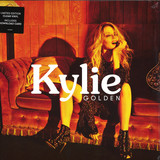
Now that I've been to Nashville,' Kylie Minogue says with audible affection, I understand. It's like some sort of musical ley-line...'
Golden, Kylie's fourteenth studio album, is the result of an intensive working trip to the home of Country music, a city whose influence lingered on long after the pop legend and her team returned to London to finish the record: We definitely brought a bit of Nashville back with us,' she states. The album is a vibrant hybrid, blending Kylie's familiar pop-dance sound with an unmistakeable Tennessee twang. It was Jamie Nelson, Kylie's long-serving A&R man, who first came up with the concept of incorporating a Country element' into Kylie's tried-and-trusted style. That idea sat there for a little while, with Minogue and her team initially unsure about how to bring it to life. Then, when Grammy-winning songwriter Amy Wadge's publisher suggested Kylie should come over to collaborate in Nashville, a city Kylie had previously never visited, something clicked. You know when you're so excited about something,' she recalls, that you repeat it an octave higher and double the decibels I was like that. 'Nashville! Yes! Of course I would!'. I hoped it would help the album to reveal itself. I thought 'If I don't get it in Nashville, I'm not going to get it anywhere.''
Kylie's Nashville trip involved working alongside two key writers, both with homes in the city. One was British-born songwriter Steve McEwan (whose credits include huge Country hits for Keith Urban, Kenny Chesney and Carrie Underwood), and the other was the aforementioned Amy Wadge, another Brit (best known for her mega-selling work with Ed Sheeran). It was then a truly international project: Golden was mainly created with African-German producer Sky Adams and a list of contributors including Jesse Frasure, Eg White, Jon Green, Biff Stannard, Samuel Dixon, Danny Shah and Lindsay Rimes, and there's a duet with English singer Jack Savoretti.
However, the album's agenda-setting lead single Dancing was, significantly, first demoed with Nathan Chapman, the man who guided Taylor Swift's transition from Country starlet to Pop megastar. If anyone knows how to mix those two genres, Chapman does. Nathan was the only actual Nashvillean I worked with. He's got a huge studio in his house, which is probably due to his success with Taylor... there's plenty of platinum discs of her, and others on his walls.' There's something of the spirit of Peggy Lee's Is That All There Is, of Dylan Thomas' Do Not Go Gentle Into That Good Night, even of Liza Minnelli's Cabaret about Dancing, a song which not only opens the album but sets out its stall, providing a microcosm of what is to come. You've got the lyrical edge, that Country feel, mixed with some sampling of the voice and electronic elements, so it does what it says on the label. And I love that it's called 'Dancing', it's immediately accessible and seemingly so obvious, but there's depth within the song.'
The experience of simply being in Nashville was an overwhelming one, before Kylie had even arrived. Once I knew I was going to Nashville, people talked about the place with such enthusiasm. They said without doubt I would love it and, I would come back with songs. They were sending lists of restaurants, coffee shops and bars. It really was a beautiful and genuine response and it felt like I was about to have a life changing experience and in a way, I did.' The reality came as something of a surprise, when she found a far more modern metropolis than the vintage one she'd envisaged. I thought it would be like New Orleans: little houses and bars, with music spilling out onto the street. It reminded me more of Melbourne: apartment blocks going up everywhere! The main strip, Broadway, where the honky tonk bars are, that's where the street was filled with music and it was just amazing.' Mainly, Minogue remembers the heat and humidity. It was 100 degrees. It was like it was raining with no rain.' She also relished the chance to wander around unrecognised, visit a few venerable music bars and soak in the atmosphere. I didn't get to the Grand Ole Opry or the music museums but I managed to go to a couple of the institutions there like The Bluebird Cafe and The Listening Room, and just by being there, through some kind of osmosis, you get this rejuvenated respect for The Song, and the writing of The Song. There's no hoo-hah around it. There's a singer-songwriter there, talking about the song and singing the song, to an audience who are there to listen. Although, I have to confess I was guilty of starting to clap too soon during a long pause at the end of one of the songs. The guy made a bit of a joke out of it and got a laugh from it, but I thought 'Of all people in the audience, no...''
It's probably no coincidence, therefore, that every track on Golden is a Kylie co-write, making it arguably her most personal album to date. The end of 2016 was not a good time for me,' she says, referring to well-documented personal upheavals, so when I started working on the album in 2017, it was, in many ways, a great escape. Making this album was a kind of saviour. I'd been through some turmoil and was quite fragile when I started work on it, but being able to express myself in the studio made quick work of regaining my sense of self. Writing about various aspects of my life, the highs and lows, with a real sense of knowing and of truth. And irony. And joy!'
The songwriting process allowed Kylie to get a few things out of her system. Initially, she admits, it was cathartic, but it also wasn't very good. I think I was writing too literally. But I reached a point where I was writing about the bigger-picture, and that was a breakthrough. It made way for songs like Stop Me From Falling and One Last Kiss. It also meant I had enough distance to write an autobiographical song, like A Lifetime To Repair, with a certain amount of humour. The countdown in that song: 'Six-five-four-three, too many times...'. I don't know if that will be a single, but I can just imagine a girl with framed pictures of past boyfriends, and kind of going 'Oh god, when am I going to get this right'' When she listens back to Golden, Kylie can vividly hear the Nashville in it. It is, she'll agree, probably the first time that a Kylie album has sounded like the place it was made. You wouldn't normally relate my songs to the cities. Can't Get You Out Of My Head sounds more like Outer Space than London. But Shelby '68, for example, was written in London but it was done with Nashville in mind. It's about my Dad's car, and my brother recorded Dad driving it! I don't think I'd have written a number of the songs, including Shelby '68 and Radio On without having had that Nashville experience.'
The latter, she says, is about music being the one to save you.' Throwing herself into the making of the record, she says, crystallised that idea. If there's one love that will always be there for you, it's music. Well, it is for me, anyway.' That song, in particular, carries nostalgic echoes of the golden age of Country, as heard through Medium Wave transistors and tinny home stereos in the distant past. Like any child of the Seventies, Kylie had a basic grounding in Country music, mainly absorbed from older family members. My Step-Grandfather was born in Kentucky and though he lived most of his adult life in Australia, he never stopped listening to his beloved Country artists.' If there's any classic Country singer whose imprint can be heard on Golden, it's Dolly Parton.
Kylie saw Dolly live for the first time at the end of 2016, at the Hollywood Bowl. It was like seeing the light,' she beams. It was incredible. Everyone, whether they know it or not, is a Dolly Parton fan. When I was in Nashville, I did pick up a T-shirt that said 'What Would Dolly Do' Maybe that should be my mantra.' And, whether consciously or otherwise, there's a timbre and trill to Kylie's vocals on Radio On that is distinctly Parton-esque. My delivery is quite different on this album,' she says. A lot of things are 'sung' less. The first time I did that was with Where The Wild Roses Grow. On the day I met Nick Cave, when I recorded my vocals, he said 'Just sing it less. Talk it through, tell the story.' This album wasn't quite to that extreme, but a lot of the songs were done in fewer takes, to just capture the moment and keep imperfections that add to the song. I remember on my last album, a lot of producers were trying to take out literally every vibrato they heard. And that's not natural to my voice. I mean, I can make myself sound like a robot, but it's nice to sound like a human!' Working within the Country genre also gave Kylie permission to write in the Nashville vernacular. Because we were going there, I wasn't afraid to have lines like 'When he's fallen off the wagon we'd still dance to our favourite slow song', 'Ten sheets to the wind, I was all confused', 'I'll take the ride if it's your rodeo'. The challenge of bringing a Country element to the album made the process feel very fresh to me, kind of like starting over. I started to look at writing a different way, singing a different way.'
If ever Kylie lost confidence in the Country-Pop concept, and found herself pondering This is great, but back in the real world - my real world - how will this work', Jamie Nelson was there to badger her into sticking to the path. We found a way to make it a hybrid with what we'll call my 'usual' sound. It had to stay 'pop' enough to stay authentic to me, but country enough to be a new sound for this album. The closer we zoomed in, and the more we honed it, I knew Jamie was right. We sacrificed good songs that weren't right for this album, because we wanted it to be as cohesive as possible. The songs that were hitting the mark were these ones, so we decided to be strong, and that's how we wrapped up the album. What he said, that stuck with me, was that 'I'd hate to get to the end of this and really wish we'd gone for it.'' Having worked with Kylie for so long, Nelson was able to put this latest shift of direction into perspective. He said 'You've traditionally done it throughout your career. You had your PWL time, then you did a complete turn when you went to deConstruction, then another complete turn with Spinning Around, and R&B dance-pop, and then another turn with Can't Get You Out Of My Head, icy synth-pop, and this is another one.' He was right. It felt like the right time to have a change sonically. New label, new stories to tell, and a new decade almost upon me.'
Kylie Minogue will, it's scarcely believable, turn 50 this year. This looming milestone is partly behind the album's title, and title track. I had this line that I wanted to use: 'We're not young, we're not old, we're golden' because I'm asked so often about being my age in this industry. This year, I'll be 50. And I get it, I get the interest, but I don't know how to answer it. And that line, for my personal satisfaction, says it as succinctly as possible. We can't be anyone else, we can't be younger or older than we are, we can only be ourselves. We're golden. And the album title, Golden, reflects all of this. I liked the idea of everyone being golden, shining in their own way. The sun shines in daylight, the moon shines in darkness. Wherever we are in life, we are still golden.' One of the album's shiniest moments is Raining Glitter, an exuberant banger which ventures closest to Kylie's traditional dance-pop comfort zone. Eg White, who is one of the producers and writers and a great character, was talking about disco one day. I said 'I love disco, but you know the brief.' We needed to be going down the Country lane, so to speak. But we managed to bring them both together. When I wrote it, I was thinking about the Jacksons video for Can You Feel It where they're sprinkling glitter over everyone. And I think there's a Donna Summer record that's got that feel to it. I think that's my job: I basically leave a trail of glitter after every show I do anyway.'
Kylie is looking forward to the challenge of incorporating the Golden material into her live shows. Mixing these songs in with my existing catalogue is going to be fun. And it could be fun to do some of those songs with just a guitar. It'll make my acoustic set interesting...'Her incredibly loyal fans - to whom one Golden song, Sincerely Yours, is intended as a love letter' - will, she believes, have no problem with her latest stylistic shift. My audience have been with me on the journey, so I shouldn't be afraid that they won't come with me on this part. I've had fun with it, and I'm sure they will too.'
The time spent making Golden has, Kylie says, been a time of creative and personal renewal. I've met some amazing people, truly inspiring writers and musicians. My passion for music has never gone away, but it's got bigger and stronger.' And if there's an overriding theme to the record, it is one of acceptance. We're all human and it's OK to make mistakes, get it wrong, to want to run, to want to belong, to love, to dream. To be ourselves.'
I was able to both lose and find myself whilst making this album.'
- A1: Power Failure (Feat. Kero)
- A2: So Many Places (Feat. Daren Dobski, Kero)
- A3: Glostic (Feat. Graig Gloster)
- A4: Eniko Moon (Feat. Kero)
- A5: Other Side Of A Dream (Feat. Craig Gloster, Fjord Rowboat)
- B1: Cubic
- B2: Don't Say My Name
- B3: Apport (Feat. Charlie Mckrittch Drums)
- B4: Coulee
- B5: Not Afraid (Feat. Daren Dobski)
Fayze came of age in Windsor, Ontario, a diverse, gritty Canadian city in the immediate shadow of Detroit. During the 1980s, this fortunate geography placed the local scene in the inner orbit of the emergent Detroit techno scene. From that starting point, Fayze fell deeply in love with experimental, original sounds. Today, his innovative, genre-defying soundscapes flirt occasionally with global schools like avant-pop and krautrock, but his sound is all his own. Fayze 's new music uses vintage analog synthesizers, which he's been collecting since the early 1990s, to build organic, textural compositions. An idiosyncratic collection of ambient, dreamy soundscapes, the album features inspired collaborations with Detroit, Windsor, and Toronto artists. Its myriad influences include Aphex Twin , Stereolab , Led Zeppelin , and Boards of Canada . A well-travelled creative professional by day, Fayze previously made music with Marc Houle and Marshall Sfalcin of King Kool Flipped . This is his first major solo project.
Nat Birchall charts new paths toward spiritual communion, connecting jazz with classical Indian influences guided by the wistful flow of the harmonium.
Cosmic Language sees the UK-based saxophonist, composer and arranger return to Jazzman Records with a cross-cultural approach: an exploration of the parallel musical paths of jazz and Indian ragas. Here he takes influence from spiritual jazz forebears such as Alice Coltrane and Yusef Lateef and introduces the Indian harmonium to his band, where it takes the place of the piano. Making new connections to realise his transcendental ambitions, it's a logical next step in making music as spiritual cleanser.
The idea for the album was spawned from a one-off performance at a meditation centre, the Maharishi Golden Dome in West Lancashire. Seeking to bring a band set-up that was fitting to the quiet-minded setting, Birchall brought the harmonium with him. A small pump organ, it's an instrument he'd been in possession of for many years but hadn't previously used in his music. Building on the spiritual context of that show, and the associations of that instrument, it led naturally to the musical approach undertaken on the album.
Both the album and the show which preceded it were recorded with the same tight-knit group of players which have featured on Birchall's previous albums. All members of the group are part of the same like minded circle of Manchester-oriented jazz musicians, sharing stages and acquaintances with the likes of Matthew Halsall (a longtime collaborator with Birchall) and GoGo Penguin.
Birchall has always channeled wide-ranging ideas into music that's simple to understand, and this album is no exception. Album opener 'Man From Varanasi' is an ode to Bismillah Khan, one of Birchall's heroes of Indian music who hailed from the northern Indian city named in the title. It also sees him taking cues from the Indian raga tradition which, as with most other traditional Indian music, is a foundation which underpinned Khan's music.
Crucially, the ragas tap into the idea of of music as a means of spiritual release. As Birchall explains, "The whole act of making music is a spiritual experience. It's during performance and when playing music that I look for a kind of truth. It's with music where I find myself feel closest to attaining that 'enlightened' kind of feeling." "On rare occasions I've actually felt as though I was listening to the music being played rather than being involved in making it, almost like an out-of-body experience."
This natural feeling comes from Birchall's attitude toward jazz music. He sees it as an essential part of day-to-day life: instead of brightly-lit, occasional entertainment in lugubrious concert halls, he considers it an everyday, vital source of inspiration. At a moment where jazz-influenced music is undergoing creative renewal and wider appreciation, it's an important perspective that's found resonance elsewhere. His experiences and the world around him are filtered through his music, and he looks to have his music - be it live or on record - absorbed in the same quotidian way. "To me, it's an integral part of society, an everyday thing," he says. "You should hear the music every day."
- A1: Tactics Is Hench
- A2: Activator, The Actualizer
- A3: We Lack The Clout The Decision Isn't Ours To Make, There Was No Crusade After All
- A4: The Story Of Our Salvation
- B1: Magnitude Of Oblivion, Refrain Of Pacific Calm
- B2: Aerosol Tropics
- B3: Perfect Lung Polymer Earth
- B4: We Were Big They Were Small, We Used To Be Crucial
The third and final release from Halocline Trance for the calendar year is Perfect Lung, a collaborative album from Istanbul-based composer Ipek Gorgun and Ceramic TL aka David Psutka (Egyptrixx, Anamai, Limit). A decadent yet durable offering of material sound, recorded remotely during 2016 + 2017 in Toronto, Ankara and Istanbul. Seven songs of original, accidental music that span colour and feeling; the petroleum psychedelia of Ceramic TL framed by Gorgun's precise and emotional landscapes. Inhaling/exhaling full register slabs hint at the multi-dimensionality of optimism and voicelessness...multiple things in multiple ways. Chill melodies plod then dissolve entirely like a casual toil. Whatever you like. All creative output is eco-political in nature but this record avoids directive and cliche. Moments of clarity glint through piles of junk; total quantity mimics eruptions of precious material - an unrealistic examination of the concept of material value as defined by its relative scarcity...this album is a lot. A fixation with excess contrasts the corporeal impermanence of humans with the material half-life of their consumer existence. Our legacy is trash - stray objects inside the perfect lung.
Under the alias of Zanov we find the works of French electronic pioneer Pierre Salkazanov, who had started playing guitar in the 1960s in a Shadows styled band, Les Ambassadors. Instrumental rock was not enough for Salkazanov, he was always looking for evolution, so when a meeting with French synth player Serge Ramses (of "Secret" fame) got him into the world of synthesizers he just dived deep into the bourgeoning world of electronic music. He got himself an EMS VCS3 and started producing works into a 4-track Teac tape machine. French music was at its best, it was the time of Jean Michel Jarre, Didier Bocquet, Richard Pinhas and Heldon, Alain Meunier... Even Gong's Tim Blake was living in France at that time. By the time of his second LP, Moebius 256 301, issued also on Polydor in 1977, Zanov had already gathered a small collection of gear, including an ARP 2600 and an ARP sequencer, his old VCS3, an RMI Harmonic and a PS 3300. Again under the influence of both first and second generation of Berlin school musicians the LP will appeal to fans of Klaus Schulze or Tangerine Dream, but they will also find a big deal of Zanov's own personal sound on it, since as the musician himself reckons he had little contact with other peers of his generation, so besides a general love for the electronic gear used and the sounds you could make out of them the creative ideas behind his works were all his own. On his second album a richer sound is found, not only due to the use of the new gear, since some of its tracks where recorded using only his old EMS, but also due to his won experience after having taken his works to the life stages in the Golf Drouot boite, the Lase Olympia venue (on the basement of the famous Olympia), the Paris Planetarium or those for planned one month tour (of which in the end only four dates were accomplished).
Zanov's three albums met with unanimous critical acclaim for the sound quality as well as for the originality of this very personal universe.
Air Lows is the debut solo album by Silvia Kastel. The Italian artist has been a fixture of the underground since her precocious teens, clocking up many miles in Control Unit with Ninni Morgia ('It's like Catherine Deneuve dumped two cases of post-Repulsion psychiatric notes over Pere Ubu's Dub Housing, lit the fuse and, ahem, stood well back" - Julian Cope), including collaborations with the likes of Smegma, Factrix, Gary Smith, Aki Onda and Gate (Michael Morley of The Dead C). Both solo and in her work with others, Kastel has explored the outer limits and inner workings of no wave, industrial, dub, extreme electronics, free rock and improvisation. Air Lows is both her fullest and most refined offering to date, a work of vivid, isolationist electronics which draws deeply on her past experience but assuredly breaks new ground. Prompted by a late-flowering interest in techno and club music, Kastel sought to create something which combines a steady rhythmic pulse with the otherworldly sonorities of musique concrete, and avant-garde synth sounds inspired by Japanese minimalism and techno-pop (Haruomi Hosono's Philharmony being a particular favourite). The formal artifice of muzak / elevator music, the intros and outros of generic popular songs, the extreme light-heavy contrasts of jungle, the creative sampling of hardcore, and the very 'human' synths in the jazz of Herbie Hancock's Sextant and Sun Ra: all were touchstones for Air Lows' conception and composition, and all strains of music addressing - or complicating - the relationship between the human and the technological. By extension, visual inspirations also proved important: anime, and the avant-garde fashion of Rei Kawakubo. What does that shirt or dress sound like Though used sparingly, Kastel's voice remains her key instrument, whether subject to dissociative digital manipulations as on 'Bruell', delivering matter-of-fact spoken monologues, or providing splashes of pure tonal colour. Recorded between her expansive Italy studio and a more compact, ersatz set-up in Berlin, Air Lows gradually takes on some of the character of the German capital: you can hear the wide streets and uninhabited spaces, the seepage of never-ending nightlife, the loneliness. Air Lows is The Wizard of Oz in reverse: the glorious technicolour J-pop deconstructions of its first half leading inexorably to the icy noir of 'Spiderwebs' and 'Concrete Void'. These later tracks are reminiscent of 2015's magnificent 39 12', Kastel in the role of numbed, nihilistic chanteuse stalking dank, murky tunnels of reverb and sub-bass. But in fact there is contradiction and emotional ambiguity to Air Lows from the outset, and throughout - a sense of both infinite space and acute claustrophobia; energy and inertia; fluency and restraint.
OMEN Recordings is off running to the industrial techno races againand this third release has already been gaining traction around the globe with high anticipation and support from many respected producers and DJs alike. The Puppetskin EP written and produced by German and French artists RENDERED with remixes by American producers BLACK ASTEROID and AXKAN is off to a great start. RENDERED starts off strong with the title track Puppetskin" (A1), with strong breakbeat kicks, thrashing snares and rich synth lines that are melodic and spacey. The dancefloor will surely love the Charles Manson samples. Nightmoves' (A2) also heads the pack with shuffling kicks while rich, minor-tuned pads take you on a persistent journey. About half way through, you will be moved by a 4/4 pattern that sneaks in and will be a favorite for the dancers. BLACK ASTEROID's remix of Puppetskin' (B2) does not disappoint as signature Black Asteroid textures and rhythms come alive in this rendition. Although it has rounded, full soundscapes that sound perfect for a large venue, its pumping, hypnotizing bass lines and screeching sirens keep you pulled into the darkness. AXKAN stays in the pack with his earthshattering remix of Puppetskin' (B1) by starting slow with a profound intro to then push the audio boundaries with his powerful kick and bassline, to gain more and more strength with vocal samples, distorted drums and FX. AXKAN uses every stem of the original in such a creative way to help win the race. This EP, soon to be available on vinyl and digital formats, exceeds the expectations of sound design and techno together. No matter what time of night it is, these tracks can be played in a versatile way. While still employing darker textures, a breath of light creeps its way in. Listening to this EP start to finish is definitely worthwhile.
Finnish visual artist and filmmaker Hannu Karjalainen's music draws inspiration from ambient, drone, modern classical and dream pop. His first album Worms In My Piano was released in 2007 on Osaka Records and the second album, Hintergarten in 2009 on Simon Scott's Kesh Recordings. A Handful Of Dust Is A Desert, his third album - and the first under his full given name - arrives after a prolonged break.
Hannu Karjalainen's association with Karaoke Kalk started with his remix of Dakota Suite's The End Of Trying Part III on The Night Just Keeps Coming In in 2009 which also featured remixes by the likes of Hauschka, Deaf Center, Loscil and many more. Now, luckily for all concerned, Hannu is releasing a full length album on the label in the form of the exquisite record A Handful Of Dust Is A Desert.
The album opens with the track Angel which is a truly heavenly composition reminiscent of Boards of Canada's finest work. The Emigrant makes effective use of sinister synth-lines and delicate glockenspiel patterns to invoke a kind of science-fiction soundtrack atmosphere. Throughout the record, our ears are graced with truly sublime sound-scapes and transcendent textures.
The title track is actually the shortest tune on the album, but in no way less evocative. It's looped piano melodies are comparable with Susumo Yokota's later recordings in their minimalism and poise. A Year In a Day continues to walk the fine line between ambient and electronica - which is one of the albums great virtues: it shows how lively and eventful ambient music can be. Certainly ambient music benefits from having a strong pulse as Karjalainen demonstrates in various tracks on the album. The song Love Is A Black Lion features a sample from the afore mentioned Dakota Suite tune The End Of Trying Part III, and therefore somehow closes a circle.
This powerfully contemplative album comes to a controlled landing with the majestic Breaks My Heart She Aria, another in a long line of mesmerizing drifts, with a floating choral voice delicately enveloped in strings and pitched percussion.
A Handful of Dust Is A Desert is instantly captivating and for lovers of ambient music, dream listening. As an artist who trained in photography and is mostly active in the world of visual art, Hannu Karjalainen clearly enjoys a great deal of creative freedom in his music. This is the kind of desert you won't mind getting lost in and even take pleasure in roaming through the expansive sonic landscapes and horizons it embodies.
Somne debuts on Just This.
The Italian producer, whose real name is Federico Maccherone, presents his first release of 2017 - a solo EP marrying the same ethereal, wide-angle synthesis and intricate drum programming that appears on standout work for Boddika's Nonplus imprint and the Afterlife label. More than ever, Maccherone shows his range - rolling, meditative recordings sit comfortably alongside some more overtly dance floor material, with both approaches bound by the same high-end production values listeners and DJ's alike have come to expect from the Somne project.
In various ways, the EP offers a certain degree of insight into Maccherone's dual identity as a producer of both clinical, dance-floor fare as well as a cerebral, leftfield work - and in turn, how the artist draws together these two strands of creative endeavour to craft unique and profoundly emotive electronic music. Nods to classic IDM and Ambient sit at the periphery of the recordings, although the main focus is on the propulsive, contemporary Techno derivatives - from warping, half-time opener Divided Love, with its crisp, white noise washes and clinical use of distortion - through to Endgame's exacting, peak-time drive. And whilst the form shifts across the EP from half-time, polyrhythmic work to more direct 4x4 compositions - everything remains bound by the same exquisite, otherworldly atmosphere that touches on the grandiose whilst maintaining a gloriously introspective bent.
Balance comes across as a principle theme on the record, both in terms of production aesthetic and track sequencing, but there is a wonderful contrast between the elements - with the sounds ringing strong and true. The two versions of lead Metropolis that perhaps appear to illustrate in the best way the powerful dichotomy within Maccherone's work, with the A side version conjuring up a distinctly brooding sentiment - a quintessential example of rolling, contemporary Electronica, whilst the Alternate Mix of the B side offers a more direct, cathartic interpretation - expertly executed for maximum dance-floor effectiveness.
Mature and accomplished, Metropolis is a fine addition to the growing Somne discography. The record paints a picture of a producer in full control of his art, definitely working to create a powerful three-dimensional space of his own within the genre.
Following well received EPs from Myriadd and Q-Chip, Gnosis are ecstatic to have prolific UK producer Nigel Rogers (aka Ellis De Havilland, Operator Tracey, Orpheus, Pagan Ritual, Sir Leon Greg etc.) on board for their third release.
'Drowning In Your Eyes' is a four track EP recorded under his Perseus Traxx handle. A name he's used for a mass of relentlessly creative output on Bunker, Chiwax, I Love Acid, M>O>S Recordings, Solar One Music, Barba Records and Hardmoon London to name but a few.
- A1: Intro
- A2: Soufflé
- A3: Cobra Water
- A4: Mungo's Groove
- A5: The Rubaiyat Of Leisure
- A6: Obsidian Eyes
- A7: Stanis
- A8: Relish Interlude
- A9: Cha Cha Dum Dum
- A10: Ottoman Bounce
- A11: Can You Dig That
- A12: Tartu Moonshine
- A13: Dem Bones
- B1: Mr. Sweet Potato Pie
- B2: Yesterday For Tomorrow
- B3: Proper Weirdo
- B4: Plot Thinner
- B5: Soul Control Trio
- B6: Capricorns
- B7: Jubilee Arts
- B8: Nougat
- B9: Morning Dub
- B10: Thing's Tip Beat
- B11: Tell Me
- B12: Outro
This is a journey into sound. A series of journeys across the globe, in-fact. This time with Don Leisure from Darkhouse Family. Let us tell you a story. Firstly, we first need to answer a question. Who is Shaboo
It began in Africa. Nasser Barwani was the son of Shabudin. At the age of 15, Nasser (Don's Uncle) left Kenya and hitch-hiked his way to London. Nasser entered the movie business, occasionally finding himself in front of the camera, acting in Bollywood films. It was then that Nasser changed his surname to adopt a screen name - Shaboo.
According to Don, "Shaboo was the most colourful character in my family. I have fond memories of him playing tabla at family parties. When I was about 17, I was on a journey with my Uncle. Whilst Shaboo drove me around, he was playing the steering wheel as if it were a tabla. It was then I nervously asked "do you think, one day, I'd be able to make music too...". Shaboo was so furious he nearly crashed the car, slamming his hand hard against the wheel. He screamed "OF COURSE YOU WILL!! IT IS IN YOUR BLOOOOOD!!!"...
A week later, inspired by the creative energy of my Uncle, I acquired some music software, and began an all new journey. A journey through the beats..."
Long family car journeys were a constant in Don Leisure's life growing up. "We'd take frequent trips from Wales to London to visit family in the late 80s / early 90s. There I'd mainline into my cousin's record collections, and make full use of the signal radiance to the M4, searching the airwaves for pirate radio stations. However, I wasn't the only one to make use of this. Every trip, my parents would routinely tune their dial into Sunrise Radio - the only Asian radio station around back then.
The soundtrack of these road trips were somewhat unique. Whilst I tried to learn the lyrics to 90s hip hop songs taped off my cousins, my Mum would constantly interrupt, interspersing my boom bap with bonkers Indian radio ads. And here we have the premise of this album. An attempt to recreate this sonic mix, with sounds pulled in from dusty crates and breaks dug from all over the globe."
25 instrumental Hip Hop tracks, linked together in a truly unique style and fashion, this is much more than a beat tape. This is a journey into sound. For real.
Dedicated to Nasser 'Shaboo' Bharwani.
Panorama Bar resident Nick Ho¨ppner gets to Work on his second solo album on Ostgut Ton, connecting the territories of House music with the ease of Alt-Pop.
Work as in labor. An axiom that fuels the capitalist system just as the Techno/House scene economy says that one needs to keep oneself busy to make a living. As a musician, things are complicated of course. It's a long way from the romantic idea of creating music simply for the sake of art to becoming a full time musician. Those who have accomplished this feat often find themselves in a professional loop of writing the music, producing it, promoting it (with an info text like this), releasing it and then hopefully selling it. After leaving his full time job as Ostgut Ton's label manager in 2012, Nick Ho¨ppner went fully freelance, focusing on his musically diverse, deep and dynamic DJing in and outside Berghain's Panorama Bar, but more importantly spending more time in the studio. The result was his critically acclaimed debut album Folk (Ostgut Ton, 2015), various 12' releases and remixes, and now his sophomore LP, Work, which, more than ever, lays out his refined production skills and his talent to work the machines until they reveal their inner ghosts: nine new songs that now dodge the dance floor, then fully embrace it.
Work as in body of work. A record is more than the sum of clocked up hours at the studio, but the result of an artistic-creative process. On Work, Ho¨ppner shows his everlasting lust for musical detail, his increasing technical skills and compositional finesse. Work is a very personal, soulful and deep record that breaks through the usual club/dancefloor narrative by documenting Nick's interest for hybrid sounds and combining elements from varying musical genres. Work's lead single 'All By Themselves (My Belle)' is a very atmospheric, intimate and steadily unfurling IDM piece with ethereal synth and vocal pads; on the album it's contrasted by 'Clean Living' with Tram 78, a modern Ho¨ppner club classic: powerful, kick-heavy, muscular, cheerful and uplifting. It's a very personal track resulting from a recent reencounter with an old friend. Having spent countless hours together in Berlin's clubs in ever changing states of mind a decade ago or longer, things have since changed for both towards a more - clean living'. Connecting to this musical vibe 'In My Mind' follows with a slightly darker tone putting emphasis on bassline, percussion and squeaky sound detailing. 'Hole Head' pays tongue-in-cheek homage to Nick's love for UK club music, when a dashing melody of synths and vibraphone is matched with clattering breaks and syncopation. The dubby, mesmerizing 'The Dark Segment' not only impresses with its hypnotic synth figurines, but also by morphing to a shuffling Jazz rhythm towards it's middle part; 'Forced Resonance' uses Oberheim synth brass stabs to dramatic effect; the percussion- and clap-laden 'Fly Your Colours' comes with an irresistible piano melody atop an energetic kick; and finally the album-closing, shuffling but rhythmic, noisy yet bluesy 'Three Is A Charm' featuring the duo Randweg on clarinet, cajo´n and acoustic guitar is a coherent departure heading towards Indie Pop territory. It sees Nick collaborating with acoustic instrumentalists for the first time in his ten-year- spanning Ostgut Ton release catalogue.
Work as in artwork. Staying in line with the Folk album, the visual companion for this record comes from German collage artist Frank Bubenzer. As with the artwork at hand, Bankentsunami, and his other works, Bubenzer cuts up print magazine advertisements and recontextualizes them into new motifs, removing all human depiction from the source material, here as a commentary on the world of business, big money and the banking crisis.
Work as in work it. As a slogan 'work' has always been one of the genre's most utilized paroles, coined and put on wax by pioneers like LNR, Blake Baxter or Steve Poindexter, to name a few. Not only calling for the crowds to get moving on the floor but also to fully express themselves and their unique individuality inside an all embracing environment. A mindset rooted in House Music that has been an integral part of Nick Ho¨ppner's identity as a DJ and producer from the beginning and all through his decade-spanning residency at Panorama Bar. Work it!