It's easy to eye collaborative records between two established artists with either a weary sigh or a degree of cynicism. In an age where a track or record seems to perform better directly in relation to how many artist names are on the digital byline, it can often feel like engineered circumstance or a desire to exponentially boost appeal comes before any natural create endeavour. In the case of 'On Reflection' however - the new record by Derwin Dicker AKA Gold Panda and Jas Shaw, one half of Simian Mobile Disco, the venture, under the moniker Selling is rooted in a long-standing friendship and prior creative history.
Suche:creative
You might know Peter Matson as the founder, frontman, and guitarist of NYC-based breakout band Underground System, who recently released a debut album of otherworldly global-dance anthems (on Soul Clap's self titled imprint) and have been touring their live show at venues around the US. Matson's roots, while nestled in worldly live sounds, also firmly grip deeper dance music styles, though they manage to still pack a refreshingly eclectic energy.
His debut EP 'Short Trips' for Brooklyn's Bastard Jazz connects the dots between his time moving bodies in the club as a DJ, as well as in his group as a guitarist and producer, though this record is better suited for a woozy club floor. "Roma Norte" kicks off the wax with its soulful cocktail of latin-house styles and hypnotic basslines that would elevate the opening hours of any club night. Deep house legend and Freerange Records boss Jimpster provides an ethereal, creative remix that delves into afro-house territory. "3AM to Sete" is a warm and bubbly deep house tune that sounds like something you might hear late-night in a South London nightclub—it's all warm bass vibrations and subtle synth explorations. Matson's seasoned instrumental skills shine on "126," another breezy synth jam with just enough punch to make you move, eyes closed, of course. 'Short Trips' sounds like the work of someone not interested in where one scene ends and the other begins, but instead, where they connect.
SRSQ (pronounced seer-skew) is the solo project of Kennedy Ashlyn (vocalist/keyboardist of Them Are Us Too). Creative voids aren't filled, but rather holes left that push the edges of the present into new realms of consciousness.
Ambient synthesizers that approach harshness, relentless arpeggiations act together with Kennedy's vocals as a lush weapon, weaving cloudlike fables over orchestration that's familiar and foreign. Trance-like at times, yet always rooted in cadence and structure, the synesthesia of sound and feeling takes cues from the delicate miasma of Cocteau Twins, My Bloody Valentine, or Dead Can Dance, using their example as the ground floor for building a new temple of frequency.
Miss Information is Miho Hatori (Cibo Matto, Smokey & Miho, Gorillaz, too many all-star Lower East Side collaborations to name).
Miho Hatori created Miss Information while in residence at Brooklyns contemporary arts gallery/creative hothouse, Pioneer Works. Miho began with a simple concept, What if information was a woman She had been
contemplating information not as dominating with ofthidden data-points, but something akin to the moon, a mysterious natural energy that, in her words, brings change to the planet.
Process Blue was formed in the fall of 1981, at Antioch College near Dayton, Ohio. The group essentially consists of Chel White (tapes, keyboards, percussion) and Dan Gediman (keyboards, vocals, bass). Additional members contributed at various points to both recorded works and live performance. Process Blue's original interest was in electronic music and the interfacing of electronic sounds with acoustic instruments, non-musical instruments, and tape-manipulated sounds. The group's primary objective has been to strive for creative experimentation within the format of contemporary pop music.
We are proud to release a 12-song LP featuring music recorded between 1981 and 1982. 7 of the tracks were originally self released on a cassette album in 1982. The only song in this batch to ever appear on vinyl is 'Control Panel' released on a French LP compilation called 'Folie Distinguee Alternative Funk.' The songs range from experimental dance music to quieter, more melodically-oriented pieces. They used an array of synthesizers used were Moog Sonic-Six, Casiotone MT-30, Korg MS10, Roland SH 101, Casio VL Tone. Analog instruments included electric guitar and bass, and drums. Guest musicians included Gil Belton (melodic rototoms percussion and synthesizer bird sounds) on Industrial Park, Eric Zimmerman (Korg synthesizer) on Up to $100 and Subterrania, Patricia Yarborough (vocals) on Pink Razor and Air, Mike Pummel (engineer) on Control Panel, and John Flansburgh (of They Might Be Giants) engineer on Up to $100. All songs have been remastered by George Horn at Fantasy Studios. Each LP is housed in a jacket designed by Maycec featuring original drawings by Chel White and include a double-sided insert with photos and lyrics.
This raw, intimate recording, which took place at the start of Prince's career right before he achieved international stardom, is similar in format to the Piano & A Microphone Tour that he ended his career with in 2016. The nine track, 35-minute album features a previously unreleased home studio cassette recording of Prince at his piano captured in 1983.
The private rehearsal provides a rare, intimate glimpse into Prince's creative process as he worked through songs which include "17 Days" and "Purple Rain" (neither of which would be released until 1984), a cover of Joni Mitchell's "A Case Of You", "Strange Relationship" (not released until 1987 on his critically acclaimed Sign O' The Times album), and "International Lover".
The album also includes a rare recording of the 19th Century spiritual "Mary Don't You Weep" which will be featured during the end credits of Spike Lee's BlacKkKlansman in theatres August 2018.
For fans of Prince's spontaneous live medleys, tracks 1-7 of the album are presented in that same format as they were originally recorded.
Following the success of 'Stellar Tunes', Italian maestro A Credible Eye Witness and his partner in crime Ghost Ride have returned into the studios to bring you this very special phenomenon. Top notch 'Random Research' introduces four tracks of pure electro madness, starting off with well named 'Synthesis', a fusion of both producers creative talent into one of a kind track that celebrates their immoderate taste for mind blowing electro modulations! Pounding 'Magnetic Force' offers a powerful electro monster based upon hammering beats and hypnotic vocals. A pure Dj tool, perfect to drop in the middle of set exactly when you want to lead your crowd into harder areas. Textured 'Metis' on the flipside continues where 'Magnetic Force' stopped to offer more psychedelic and urban melodies. Combined to a groovy bass line, the track appears to be a real winner while 'Leda' slows down the rhythm for more relaxing and no-nonsense electro tinted with acidic loops. The 'Random Research' EP sees two uncompromised artists explore uncharted territories, unusual dancefloor paths to take the listener to a higher level of electro. A must have 12'' ahead of its time, even better than 'Stellar Tunes'. Are you prepared enough for that
Lost Futures is a new label that explores experimental and often radical approaches to dance music from the past. In a musical landscape that increasingly claims to seek and reward new forms and ideas, Lost Futures delves into the recent past to revisit forward-thinking, optimistic projects that, owing to the social, musical or outright political climate, perhaps struggled to find an audience. Allowing only time to re-contextualise these leftfield, sometimes misunderstood and ultimately human bodies of work, Lost Futures taps into the inherent idealism of rave.
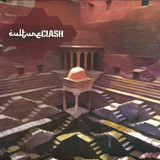
LF001 trips back until the early nineties to revisit the alternative scene emerging from the Dutch city of Utrecht. Here, three young men - DJ Zero One (Sander Friedeman), TJ Tape TV (Arno Peeters) and DJ White Delight (Richard van der Giessen) - joined forces to form 'The Awax Foundation'. Inspired by the transcendent and revolutionary electronic music arriving on their shores imported from Chicago and Detroit, combining their knowledge, gear and ever-expanding vinyl collection allowed additional freedom in paying sincere tribute to these intoxicating sounds, while also developing their tastes in a more personal, eclectic direction.
The musical flavours of Awax initially leaned toward acid house and the roots of techno. However, with three different mindsets in the mix, their tastes were rarely fixed. One thing each shared in common was a devotion to collecting rare sounds, specifically more adventurous and international samples than those emanating from the increasingly-hard, masculine dance music emerging from the Netherlands during the period. Inspired by the cross-over global sound of bands like Suns of Arqa, or 'World Music', as it was perhaps patronisingly termed at the time, the trio became interested in the idea of making techno with 'ethnic instruments'.
Of course, this being 1992, none of The Awax Foundation had access to such instruments, instead, they had a vast, collective library of samples from all over the world. There were no collaborations and no clear plan. Instead, they set to work using a Yamaha TX16W sampler, the legendary Atari 1040ST computer, a cheap mixing desk and a couple of low-end synths and FX machines. When Richard mentioned the project to his friend, Akin Fernandez, the London DJ and owner of cult label Irdial Discs, Fernandez was intrigued enough to invite the trio to record a one-hour show for his 'Monster Music Radio' series on London's then-burgeoning Kiss FM.
Forced to come up with a name, 'CultureClash' seemed like the obvious choice, even if the members of Awax were only creatively sparring among themselves. Along with the term 'ethno-techno', slightly dubious to a hopefully more conscious Western audience in 2017, these were the only guiding principles to the quietly ambitious project that soon combined cutting-edge machine rhythms with samples sourced from everywhere from Bolivia to Togo, and inspired by everything from Ravi Shankar's epic soundtrack to the Oscar-winning movie Ghandi, to the technical limits of their own setup requiring a dazzling degree of cut-and-paste work. Some tracks even emerged out of academic studies within the ethnomusicology department at The University of Amsterdam.
The show aired on October 2nd, 1992, recorded in one blistering take and without any rehearsals, traversing a huge variety of tempos and styles. If the performance wasn't seamless, it was undeniably thrilling, fresh and ambitious. As such, several labels, including Fernandez's aforementioned Irdial Discs expressed an interesting in commercially releasing CultureClash, while another imprint proposed a series of twelve-inches and an album. But the sheer complexity of the project meant that it never saw the light of day, while the trio embarked on different journeys ahead, both creative and personal.
Twenty five years later, and the original CultureClash lineup and founding members of The Awax Foundation provide the sound of the first release from Lost Futures. An otherworldly, ambitious and optimistic compilation, accompanied by extensive sleeve notes from the trio, CultureClash is a timeless ode to experimentation in dance music's ever-overlapping culture.
- A1: Chapter D (Dark Main)
- A2: Chapter M (Driving)
- A3: Chapter M (Karenina)
- A4: Chapter D (Swing)
- A5: Chapter M (Light)
- A6: Chapter M (Mellow)
- A7: Chapter D (Sparkling)
- A8: Chapter M (Charming)
- B1: Chapter M (Karenina 2)
- B2: Chapter D (Main)
- B3: Chapter M (Cosmic)
- B4: Chapter D (Strumm)
- B5: Chapter M (Reduction)
- B6: Chapter D (Dark)
- B7: Chapter M (Cosmic 2)
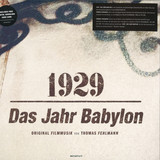
'1929 - Das Jahr Babylon" marks Thomas Fehlmann's third full length release of 2018 and presents what appears to be a creative peak in his career that spans beyond his solo career to his early days in Palais Schaumburg, collaborating with Moritz von Oswald as 3MB to his long time work with The Orb. Having left The Orb in late 2017 has set free unforeseen energies in Fehlmann's studio.
A departure from his recent dance floor-friendly album "Los Lagos" (KOM388, KOMCD148) released in September on Kompakt, Thomas Fehlmann's '1929 - Das Jahr Babylon" is a film soundtrack from the documentary that aired on ARD network on September 30, 2018 and is now available as a podcast series.
To compliment the internationally lauded TV series "Berlin Babylon", German director Volker Heise has created a documentary about 1929, the fateful year during Germany's "Weimarer Republik" in which "Berlin Babylon" is settled. Heise's stirring documentary portrays Germany's sizzling capital that is faced with radical changes by the dark forces whom are about to toss the world into the abyss we know as World War II.
This marks the second time that Fehlmann is partnering up with Volker Heise after 2010's marathon documentary "24 Stunden Berlin" which was released as "Gute Luft" (KOM211, KOMCD81) in the same year. Fehlmann's composition for "1929" consists of sample material taken from the era and thwarts the exaggerated lust for life with threatening undertones that anticipate the dawn of mankind's darkest chapter so far. Although all the sounds breathe yesterday's atmosphere this soundtrack bursts with modernity. Fehlmann accomplished the daring feat to musically render the unsettling resemblance between the political situation 90 years ago and our current time.
We at KOMPAKT feel that Fehlmann's score has turned out spectacular enough to give it proper release on limited vinyl and CD as well as on all digital platforms.
Mit '1929 - Das Jahr Babylon" legt Thomas Fehlmann schon seinen zweiter Longplayer innerhalb eines halben Jahres vor und dokumentiert damit eine kreative Hochphase seiner überaus stattlichen Musikerkarriere. Die Trennung von The Orb scheint bei ihm ungeahnte Energien freizusetzen.
Anders als auf dem cluborientierten "Los Lagos" tritt Thomas Fehlmann auf "1929" musikalisch einen Schritt zur Seite. Und das aus gutem Grund: Analog zur international gefeierten Fernsehserie "Babylon Berlin" entstand unter der Regie von Volker Heise der Dokumentarfilm "1929 - Das Jahr Babylon" - ein ergreifendes Sittengemäde Berlins während des Schicksalsjahrs der Weimarer Republik. Wie schon zu Volker Heises vorangegangener Berlin-Doku "24 Stunden Berlin" (2010 erschienen als das Album "Gute Luft" auf KOMPAKT) hat Thomas Fehlmann auch diesmal den kongenialen Soundtrack beigesteuert. Basierend auf Klangmaterial des Jahres 1929 hat Fehlmann eine beeindruckende Musik geschaffen, in der manchmal die übertriebene Lebensfreude und Dekandenz jener Zeit aufflackert. Eine Musik, deren Stimmung jedoch unterwandert ist von den bedrohlichen Strömungen, die Deutschland kurz darauf in seine dunkelste Epoche stossen werden.
Thomas Fehlmann ist damit ein wahres Kunststück gelungen. So sehr die Produktion den Geist einer vergangenen Zeit atmet, so modern mutet sie an. "1929 - Original Filmmusik" klingt somit wie die zu Musik geronnene Erkenntnis, dass sich Gestern und Heute auf erschreckende Weise ähneln.
Wir bei Kompakt sind der Ansicht, dass Thomas Fehlmanns Filmmusik zu "1929 - Das Jahr Babylon' so spektakulär geraten ist, dass wir sie nun als limitierte CD und Vinyl-Auflage, sowie auf allen digitalen Plattformen verfügbar machen.
Sunda Arc are brothers Nick Smart and Jordan Smart. Best known as key members of Norwich based alternate-jazz trio Mammal Hands, Sunda Arc channels the duos love of electronic and dance music, without losing any of their deep musicality. Drawing on techno, electronica, neo-classical and post-rock influences, Sunda Arc compose and perform using both electronic and acoustic instruments, including analogue synthesisers, home-made software patches, piano, saxophones and bass clarinet - all finessed and channelled through their own unique creative strategies. Integrating electronic elements and experimentation with the expressiveness and energy of acoustic instruments and live performance, Sunda Arcs music is expansive, compelling and fun in equal parts.
- A1: Konzert Für Sig-Pressluftwerkzeuge (1971, Mix February 2018) 3:36
- A2: Rollin' (1973, Master February 2018) 2:42
- A3: Waves Of Montreux (1977, Master February 2018) (Pm Music) 9:17
- A4: Baustellenmusik (1979) 10:29
- A5: Swisspack (1979) (Pm Music) 2:28
- B1: Rhythm'n Bees (1980) 3:02
- B2: Birds Of Cochin (1998) 4:00
- B3: Coalburner's Delight (1998) 4:32
- B4: Printit (1998) 5:04
- B5: Paradise Garden (1998) 4:35
- B6: Stony Broke Night (1998) 5:52
11 never-heard tracks from Synthzerland pioneer Bruno Spoerri, released for the first time on vinyl, with liner notes by the artist. WRWTFWW Records is very delighted to announce the release of Rare & Unreleased 1971-1998, a collection of never-heard and hard-to-find works by Swiss music pioneer and synth super wizard Bruno Spoerri. The album is sourced from original masters and available on a vinyl LP cut at Emil Berliner Studios (formerly the in-house recording department of Deutsche Grammophon), housed in a 350g sleeve with a superb artwork by Nicolas Eigenheer, and packed with track-by-track liner notes by Mr. Spoerri. Rare & Unreleased 1971-1998 gives a fascinating glimpse into Bruno Spoerri's incredibly inventive repertoire, collecting tracks from projects as diverse as commissioned music for trade fairs, the Swiss railroads, or the union of Swiss cheese makers(!), soundtracks for TV shows about ecology, live synth improvisations at Montreux Jazz Festival, and sound installations for art exhibitions. Always the adventurer, Spoerri records a pneumatic drill for the irresistible electronic bossa of 'Konzert für SIG-Pressluftwerkzeuge", mixes train sounds and the EMS Synthi-100 for the joyful lo-fi funk of 'Rollin'", lets overheating synthesizers take a life of their own to create the sci-fi ambient of 'Waves of Montreux", and works with bees, pigs and various birds for the environmental music bliss of 'Rhythm'n bees' and 'Birds of Cochin". Synthzerland rejoice, it's time for another captivating journey of sound exploration on Planet Spoerri! Bruno Spoerri celebrated his 83th birthday in August this year. He is still experimenting, recording, customizing audio gear, improvising on stage and in the studio, collaborating (Julian Sartorius, Franz Treichler of Young Gods, Marco Repetto of Grauzone, Roger Girod...), inventing new sounds and finding new creative outlets.
German electronic originator Gudrun Gut's latest solo collection distills a lifetime of persuasions and obsessions into a compelling 14-track statement: "Moment." Stark, somber, sultry, and clever, the sides slide between ballad and lament, synth-pop and spoken word, anthemic and abstract.
Gut's background as a key figure in Berlin's first-wave industrial uprising still casts an aura in the music's mechanized rhythms and frozen emotional palette but decades of improvisation and collaboration have deepened her sense of composition and melody beyond any easy genre categorization.
If anything "Moment" finds Gut's muse at its most enigmatic, threading shades of motorik hypnosis, technoid laboratory, coldwave pop, glitchy gauze, and even a gender-bent Bowie cover ('Boys Keep Swinging') into its eclectic web. It also showcases the depth and detail of her voice, reserved but suggestive, intoning blunt truths and opaque poetry in both German and English.
This is music of history and heartache, modernity and desire, alienation and expression, by a singular creative committed to the complexities of sound. - Britt Brown
Gudrun Gut's story spans many years, scenes, and sounds, from the 'ingenious dilettantes' subculture of early 1980's Berlin as part of Mania D, Einstürzende Neubauten, and Malaria! to her twilit industrial pop trio Matador into an expansive solo catalog of later work scoring films, videos, and radio plays. Her talents extend beyond musician, however, to include founding record labels (the influential imprints Moabit Musik and Monika Enterprise), club nights (progressive electronic pop collective Oceanclub), and experimental feminist collaborations (Monika Werkstatt).
Gut also works extensively in the technical sector of the recording industry, as a producer. Recent projects have included collaborations with Antye Greie (AGF) and Hans-Joachim Irmler of Faust, participating on the advisory committee for Musicboard Berlin, and performing at The Royal Albert Hall with Âme as part of an Innervisions label night.
- A1: Head In The Stars
- A2: Never More (Feat. Youthstar)
- A3: Bury Me (Feat. Kendra Morris)
- B1: Rema
- B2: Shamans (Feat. Asm)
- B3: Nile (Feat. Priestess & Asm)
- C1: The Unwilling Passenger (El Mundo, Pt 1) (Feat. Stogie T)
- C2: The Worst Part (El Mundo Pt. 2)
- C3: Show No Face (Feat. Foreign Beggars)
- D1: Not Going Down (Feat. Alo Wala)
- D2: Squamata
- D3: Cheers (Feat. Ceza, Onjuicy)
Matteo (aka Zé Mateo), Musician, Script-writer, Director And One Of The Founding Member Of The Band Chinese Man, Will Release His First Solo Album In 2018. This Album Is Called Scaglia (« Scale » In Italian).
For Several Years, While Matteo Was Making Music, Touring With The Band Chinese Man, Through Life Crisis, Places He Crossed And People He Met, He Has Been Producing Music. On Summer 2017, Gathering All These Tracks Created From Those Different Places And Emotions He Experienced, Matteo Has Been Able To Create Various But Coherent Pieces Of Music That Can Match These Multiple Environments.
The Symbol Of Chameleon Seemed Like The Obvious Choice, As Adaptation Is Its Strength. The Creative Process Is Hybrid And Progressive, Sometimes Very Personal, Sometimes Collaborative, Fully Arranged Or Inspired By A Sample. We Might Add An Instrumental Piece Later With Maybe A Mc Or A Singer.
Matteo Usually Works With Musicians Who Bring Their Own Style Or Capture Themes He Worked On And Offered Them. For The Whole Creative Process,
Matteo Also Gathered Artistic Advices From His Friends From Chinese Man And People Of Talent Who Are Part Or Collaborate With The Record Label Chinese Man Records.
Black Vinyl[27,69 €]
When the new Halloween movie hits theaters in October 2018, it will have the distinction of being the first film in the series with creator John Carpenter's direct involvement since 1982's Halloween III: Season of the Witch. Carpenter serves on the new David Gordon Green-directed installment as an executive producer, a creative consultant, and, thrillingly, as a soundtrack composer, alongside his collaborators from his three recent solo albums, Cody Carpenter and Daniel Davies.
The new soundtrack pays homage to the classic Halloween score that Carpenter composed and recorded in 1978, when he forever changed the course of horror cinema and synthesizer music with his low-budget masterpiece. Several new versions of the iconic main theme serve as the pulse of Green's film, its familiar 5/4 refrain stabbing through the soundtrack like the Shape's knife. The rest of the soundtrack is just as enthralling, incorporating everything from atmospheric synth whooshes to eerie piano-driven pieces to skittering electronic percussion. While the new score was made with a few more resources than Carpenter's famously shoestring original, its musical spirit was preserved.
For the last 20 years London-based author and party organiser Tim Lawrence has dedicated himself to excavating the history of New York City party culture and bringing some of the most powerful aspects of that culture to London's dance scene, from where it has ricocheted around the world. Having conducted the first set of major interviews with David Mancuso, Lawrence started to put on Loft-style Lucky Cloud Sound System parties with David and friends in London in June 2003. In early 2004 he published Love Saves the Day: A History of American Dance Music Culture, 1970-79, which tracked the influence of the Loft on the wider New York DJ, dance and disco scene. In 2009 his biography of the iconic musician Arthur Russell became the first book to map the wider downtown music scene. These beautifully written and politically insightful histories have educated, inspired and celebrated the previously overlooked foundations of contemporary dance music.
Lawrence's most recent publication, Life & Death On The New York Dancefloor, 1980 - 1983, published in late 2016, shines a light on 'one of the most dynamic and creative periods in the history of New York City'. Falling between the more regularly celebrated sounds of disco, house and techno, the period produced a uniquely hybrid series of sounds that never acquired a settled name. This led them to be largely ignored by historians and even DJs, yet the power of the period's music and the scenes it birthed, Lawrence argues, remains undeniable. Met with a rapturous response, Life and Death On The New York Dance Floor saw Lawrence on the road for most of the next year as he spread the word about the characters, the records, the clubs and the bands that shaped the post-Disco, post-Punk, and burgeoning Hip Hop landscapes of New York City during the early 1980s—a period when freedom still ruled.
This, the first of a 2-part sonic tribute to the 1980 - 1983 era as well as a musical companion piece to Life & Death On The New York Dance Floor sees recognised musicians (David Byrne of Talking Heads) nestle up alongside the belatedly recognised (Arthur Russell's Dinosaur L and Loose Joints, and Suicide's Alan Vega) and the downright obscure (Gray, 2 Teens Kill 4 and Tuxedomoon). An indication of what's to follow, Dinosaur L's original album version of 'Go Bang' has been dramatically overshadowed by the definitive François Kevorkian remix yet received regular play by David Mancuso and remains an enthralling experimental Arthur Russell jam.
Lovingly curated across 2 slabs of vinyl, the album introduces listeners to a stunning array of sounds, styles, vibes and feelings that encapsulate this most fertile and forward-thinking era, when music, fashion, sound system innovations, leaps in music technology, a DIY attitude and a freedom from corporate politics combined with extraordinary expressivity. All music contained within this album has been hand-picked and programmed by Tim Lawrence. It represents a selective yet rich introduction to one of the most extraordinary periods in New York City's epic musical history.
This is the first release on Reappearing Records, a label led by Tim Lawrence and distributed worldwide by Above Board distribution. Licensing courtesy of Tracksuit Music. Mastering by Optimum Mastering, Bristol UK. Artwork & design courtesy of Atelier Superplus. 2018.
- 1: Lamb With A Wolf Mask
- 2: Museum Of The Two Of Us
- 3: Nari Yuko Jin
- 4: Nobody`s Gold
- 5: My Black Jacket
- 6: Friendly Enemies
- 7: The End Of Metaphor
- 8: Dirty Dirtiness
- 9: The Place Where Designers Go To Die
- 10: Bean Tale
- 11: The Night Before The Typhoon
- 12: Gangsters, Seoul
- 13: Day Drinking At A Seaside Town
- 14: Bats We Are
The demons of night are out again: Seoul's one-stop shop creative collective Byul.org returns this fall with its third international album, entitled Nobody's Gold, out via Alien Transistor (worldwide) and the group's own Club Bidanbaem imprint (South Korea). Comprising 14 new songs, it's a dizzying, haunting affair that channels the group's manifold influences and references points (from post-punk to Stockhausen and back via club culture) and yet sounds intriguingly coherent.
Moving in and out of the shadows, Nobody's Gold breaks forth as pure sonic landscape - a universe of its own, folding and unfolding into both more experimental patterns, yet also with occasional hooks and dark catchy structures, gracious build-ups flickering among the hazy roar and thunder. After the screak and squeal of 'Lamb with a Wolf Mask,' the foreboding sounds of 'The Museum of The Two of Us' segue into a synthesized party tune about a missing friend being chased by police ('Nari Yuko Yin'), one of several vocal tracks with a sinister edge. Taking things up another notch, 'Friendly Enemies' is probably the closest this group will ever get to creating a stadium-ready anthem. On the other end of the spectrum, 'The Place Where Designers Go To Die' is a magnificent void with an immense and irresistible undertow...
Never too jolly (not even while 'Day Drinking at a Seaside Town' or during takeoff via epic pop tune 'Bats We Are'), Nobody's Gold compiles soundscapes with a very tangible, corporeal presence - iridescent sonic sculptures placed in unlikely settings (e.g. outer space, see: 'Dirty Dirtiness'), born at the fringes where night blends into day and vice versa.
Inspired by everyday life, half-remembered drug/club experiences, Pascal Quignard's disturbing La haine de la musique, Stockhausen and Bill Evans, the new LP sees the collective remain true to its DIY foundations while repeatedly questioning our listening habits and 'the exaggerated love for the concept of love,' as they put it.
Founded around the dawn of the millennium as a group of poetry-loving friends who'd occasionally meet for drinks, Byul.org has long become an extremely prolific and versatile collective within Seoul's scene: Main song-writer TaeSang Cho and his mates Yu Hur, Jowall, YunYi Yi, SuhnJoo YI, HyunJung Suh, and SoYoon Hwang went from publishing to recording, from releasing tunes to design, art direction and more. Although their list of clients includes Atelier Herme`s and the Venice Biennale (they did the Korean Pavilion twice), the group still remains a drinking circle of close friends at its core: Pals who simply like to create and carouse and dream and live and perform and play tunes together.
Keysound Recordings are proud to announce the unearthing and release of a collection of lost deep tech dubs from Hugo Massien. After releases on labels such as XL Recordings, E-Beamz, Tectonic and Audio Rehab comes a 12' of tracks that date from 2014 -2016. Dark, percussive yet catchy, the productions originate from the peak years of London's underground deep tech scene, at a time where the movement bubbled with an abundance of energy and creative possibilities. Massien was one
The journey continues... deeper into the unknown universe, stretching the seams of time and space.
The maiden voyage for this new label out of Birmingham was a success. The second release is a collaborative effort from Nicky B (Simple Elements/HOG) and fellow Brummie, Anthony Ellis - working together as Koheziv Mindz.
The tracks are the result of years of tuning in to the sounds seeping out of the speakers in choice local clubs and buying the latest imports on vinyl from Europe, Chicago and Detroit.
The day-to-day living in Birmingham has certainly etched into their creative consciousness, the hustle, bustle and alien like chorus of a vibrant environment resonates through their work, from a city that never sleeps.
Emotive, incredibly lush and shot through with the kind of romanticism displayed in the work of second generation Detroit pioneers Kenny Larkin and Carl Craig. This is a glimpse through a keyhole, a snapshot of two producers taking steps into a bigger world, a whole galaxy.
There are two remixers on board, hand picked to see how the artists would interpret the originals - Darren Nye (Firescope/polarity) and Mihail P (Verdant Recordings/Distant Worlds)- both artists add weight to their already impressive back catalogue of work and display why they are hot and tipped for the top.
Submerge your mind into the rich celestial tapestry of sound, safe in the knowledge you're among good company.
- A1: Wildstyle Crew - Intro (Edit)
- A2: Bryozone - Juicy Quiddity
- A3: Ratti Nielsen Nikolaienko - M2
- A4: Mark Templeton - Soft Education
- A5: Andrew Pekler - Underwater Nocturne
- B1: Native Instrument - Thud
- B2: Nisantashi Primary School - Flaneur
- B3: Aem Rhythm Cascade - Biruza
- B4: Ol - Nutmeg
- B5: Vakula - Afromadness
Ukrainian label Muscut celebrates its anniversary - Muscut X (10) Test Pressign II - is the tenth record in a row. The first release was published in 2012 on 7 inches and was called simply Test Pressing. Like six years ago, the current vinyl is a compilation of Muscut's 'residents', as well as new friends of the label. Test Pressing II is 12 inches on which there are exactly ten tracks. Both sides are significantly different in color of mood. Party A starts with dub-drone sketches of key figures of the Odessa underground - Wildstyle Crew and Bryozone. Then we hear the mantra-like M2 - the work of the creative union of Nicola Ratti, Mads Emil Nielsen together with Nikolaenko. The Canadian sound-artist Mark Templeton continues the line of rhythmic textures crowned with unhurried percussion - it is in all senses of Soft Education at number four. The first part is completed by an exquisite curtsy from the Andrew Pekler label frequenter called Underwater Nocturne as a soundtrack for the perfect tea ceremony.
The second side confidently sets a completely different compilation rhythm from the very start - the tribal tribal dance from the Berlin project Native Instrument instantly introduces into a trance. It is followed by a warm, enveloping minimal synth track from the Ukrainian trio Nisantashi Primary School. The middle of the second side is decorated with the pensive house-ballad of St. Petersburg producer Fadeev known as AEM Rhythm Cascade. Another Russian settled next to him - Muscovite Oleg Buyanov, aka OL, with a massive broken dub Nutmeg. The final composition consists of burning afrosint motifs from luminary Odessan Vakula.
Music Producer, Dj, Label Owner Of Volt Music And Creative Director Of Analog Room.
From Tehran To Dubai And Berlin To London Siamak Amidi A.k.a Skin Has Played It All With One Thing In Heart: Commitment To The Underground Scene And Music. It Was Exacttly This Very Commitment That Led Him To Creating Volt Music: A Vinyl Only Limited Record Label.
His Love Of All Things Underground Teamed Him Up With Like-minded People In Dubai Setting Up A Weekly Party Called Analog Room, A Night Like No Other In Dubai. As Creative Director And Booker For Analog Room Siamak Makes Sure The Party Is All About The Music And Allowing People To Let Their Hair Down And Have A Truly Underground Experience.
Siamak Has An Open Mind When It Comes To Music And Looks Out For New And Upcoming Talent All Over While Staying On Top Of The Game By Playing Venues All Over The World