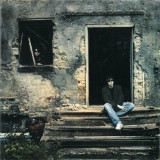
On August 27th 2021 The Third Sound released their fifth album ‘First Light’ on Fuzz Club Records and it is now being given a second pressing after selling out upon release the first time aorund. Dealing in a hypnotic blend of neo-psychedelia, post-punk and new wave, The Third Sound is a Berlin-based band led by the Icelandic musician Hákon Aðalsteinsson, who is the guitarist in Brian Jonestown Massacre and formerly played in the cult rock’n’roll outfit Singapore Sling. A mainstay of the European psych underground in his own right, not just through his collaborations with the likes of Anton Newcombe and Tess Parks, The Third Sound has been Hakon’s primary solo endeavor since the release of his self-titled debut on Newcombe’s A Recordings a decade ago. Arriving following 2018’s ‘All Tomorrow’s Shadows’ LP, ‘First Light’ marks an evolution into a brighter and at times uplifting sound. Marrying moments of light and dark, the result is The Third Sound’s most dynamic full-length to date. Talking about the album, Hakon said: “This album is definitely less gloomy than the previous one, although some ghosts from the past are lurking in the background. We always try to make something new on each album and never make the same album over again, but this feels like an even bigger change than usual, especially regarding the mood. Something new is beginning although the past is not forgotten. I think the title, First Light, describes the overall feel of the record pretty well.” ‘First Light’ is the fifth full-length from The Third Sound and arrives off the back of 2018’s ‘All Tomorrow’s Shadows’, 2016’s ‘Gospels of Degeneration’, 2013’s ‘The Third Sound of Destruction and Creation’ and their 2011 self-titled debut. With Hakon Aðalsteinsson leading the group on vocals and guitar, the rest of the band is currently comprised of Robin Hughes (Guitar / Organ), Fred Sunesen (Drums) and Andreas Miranda (Bass). With a number of European tours in tow, the band have previously shared the stage with the likes of the Brian Jonestown Massacre, The Warlocks, Singapore Sling, Crocodiles, Clinic, Tess Parks and more.
Buscar:crocodiles
Triumph breeds confidence, and with confidence comes an expansion of ambition, a focus of ability, an emboldening of audacity. De-Loused In The Comatorium had risked everything Omar and Cedric possessed on the wildest of gambits, the most impossible of dreams: making sense of the riot of influences ricocheting about Omar’s head, and memorialising their departed friend Julio Venegas through Cedric’s magical realist roman-a-clef. It Clouds Hill shouldn’t have worked. But it did, and with that fiendish tightrope act successfully accomplished, the duo stretched the wire even further and higher, over a figurative fiery pit peopled with lions, crocodiles, piranha and other sharp-toothed beasts not yet known to man. Because how do you make great art without taking great risks? Frances The Mute was no De-Loused Part Two. For one thing, the band’s configuration had changed, in the most painful way. Shortly before the release of De- Loused, sound manipulator and founder member Jeremy Michael Ward passed away, a wound Omar says the group never recovered from. But even though his inspired fucking- with-the-sonic-parameters is absent from Frances The Mute, his spirit and influence can still be determined, the album’s concept derived from a diary Ward had encountered in his day-job in repossession. “Jeremy picked up lots of interesting stuff when he was a repo man,” remembers Cedric. “Weird things, including this diary, He let us read it a bunch of times. It was by a guy who’d been adopted and was searching to find his real parents. It was very surreal, it didn’t make much sense – the guy might’ve been schizophrenic – but it was very inspiring. It felt like how certain music helps you escape your boring every-day life. The names and scenes in the diary directly inspired these songs.” Some of the tracks pre-dated De-Loused, having their origins in early demos Omar recorded at the duo’s Long Beach home Anikulapo, songs such as The Widow and Miranda The Ghost Just Isn’t Holy Anymore. Cedric had heard these jams in their embryonic state and began working in his mind on what he could bring to them. “I was attracted to The Widow like you would be to a lover, right?” Cedric remembers. “I sang over it with Omar while we were touring De-Loused in Australia on the Big Day Out, like, ‘Okay, I’ve got something for this.’” A potent ballad, laden with emotional crescendos and evoking the epic drama of Ennio Morricone – an effect aided by an elegiac trumpet part performed by Flea – The Widow would become The Mars Volta’s first song to chart on the Billboard Top 100, capturing the album’s potent sorrow and widescreen sprawl in miniature. Indeed, the lush sound of the album, the depth of detail and breadth of instrumentation, belies its grungy roots. Having tasted the luxury of Rick Rubin’s mansion, Omar veered in the opposite direction when recording Frances, cutting the album in what he describes as “a shithole... Basically a warehouse with one little air conditioner on its last legs, awful wiring and a console you couldn’t rely on. We were there night and day – I would literally lock engineer Jon DeBaun in there. He slept on a mattress in the vocal booth.” A considerably more complex and ambitious album than its predecessor – four of its five tracks lasted over ten minutes in length, with its closing epic Cassandra Gemini spanning over half an hour – Frances The Mute wasn’t recorded “live” by an ensemble, but with the individual musicians coming into the “shithole” and recording the parts Omar had scripted for them separately. “They had to have absolute trust in me,” Omar remembers, “Like actors trust their director.” In addition to the core band – now fleshed out with incoming bassist Juan Alderete, and Omar’s brother Marcel on keyboards and percussion – the album featured guitar solos from John Frusciante, saxophone and flute by future member Adrian Terrazas-Gonzales, a full string section, and piano played by Omar’s hero, salsa legend Larry Harlow. “It was a childhood dream come true,” Omar says. “We recorded with him in my hometown in Puerto Rico, and my father flew in to watch the session. Larry was a perfect gentleman, and a very lively spirit.” The album’s fevered intensity infected even the staid string section, Cedric remembers. “When they performed the part on Cassandra Gemini, ’25 wives in the lake tonight’, one of the guys in the orchestra played so hard he broke his bow, this real old, antique bow. And you could see his ‘classical’ side come out – like, ‘I broke this playing a fuckin’ rock song??’ He was pissed off. But I was like, ‘Fuck yeah, man, that’s on the record! You’ve got to realise things like that are cool.’” The album also features field recordings of “the coqui of Puerto Rico” during the opening minutes of Miranda That Ghost Just Isn’t Holy Anymore. “We took a page out of the Grateful Dead’s book there,” laughs Cedric. “They recorded air. We recorded fuckin’ frogs in Puerto Rico.”
- 1: Innere Sicherheit | Internal Security
- 2: In Stillen Teichen Lauern Krokodile | In Still Waters Crocodiles Lurk
- 3: Im Kreise Drehen Intro | Turning In Circles Intro
- 4: Im Kreise Drehen | Turning In Circles
- 5: Im Schiffbruch Nicht Schwimmen Können | Foundering, And You Can’t Swim
- 6: Beweis Zu Nichts | Proof Of Nothing
- 7: Tropenkoller | Tropical Frenzy
- 8: Wer Leidet Der Schneidet | He, Who Suffers, Cuts
- 9: Verzettelungen
20 YEARS OF MUSIC FOR MARCEL ODENBACH
Richard Ojijo’s music for the films of german video artist Marcel Odenbach not only underscores and accentuates the imagery and motion, but also serves to propel the narrative too. The compositions are auditory distillations of the visual and create a synergy between music and image that draws the observer ever deeper.
With Odenbach’s and Ojijo’s collaboration now entering its 3rd decade, Ojijo was recently inspired to revisit and remix some of the themes contained within the extensive body of work.
— Matt Karmil, Aug 2021
Die Musik von Richard Ojijo für die Videoarbeiten des Künstlers Marcel Odenbach sind eindrucksvolle Beispiele dafür, wie Klänge Filmbilder nicht nur untermalen oder deren Wirkung atmosphärisch verdichten können, sondern neben dem Visuellen ein gleichberechtigtes Eigenleben entwickeln, das auf das Gesamterlebnis des Films zurückwirkt: plötzlich auftauchende innere Bilder oder Assoziationen, die das Gesehene mit noch größerer Komplexität und Mehrdeutigkeit versorgen.
Wenn sich etwa in „Innerer Sicherheit“ oder „In stillen Teichen lauern Krokodile“ sphärische Flächen und Soundeffekte ausbreiten, erinnert dies zuweilen an elektronische Stimmungen der späten 90er Jahre, obwohl die Thematiken der Filme in gänzlich andere Richtungen weisen. Dabei wird nie der Spannungsbogen der filmischen Dramaturgie vernachlässigt. Vielmehr kommt es zum Wechselspiel von dienender und freier Funktion, in dem die Musik nicht nur ihre schöne, sondern – den Themen der Filme angemessene – beunruhigende Wirkung ausbreiten kann. So tauchen wie aus dem Nichts Stimmen auf oder Geräusche, etwa von Stiefeln in „Beweis zu nichts“, die parallele Narrationen auf die Audiospur legen, um die zum Teil bedrohliche Wirkung der Bilder zu verstärken und womöglich Bereiche des Unterbewussten zu berühren.
Die Zusammenarbeit von Ojijo und Odenbach dauert mittlerweile über 20 Jahre an. Ojijo hat nun seine Arbeiten für die Filme Odenbachs neu zusammengestellt und neu gemischt. Die Platte erscheint im Herbst 2021 aus Anlass der großen Odenbach-Retrospektive im Düsseldorfer K21-Museum. Dort werden auch sieben Videoarbeiten zu sehen sein, von denen fünf in Zusammenarbeit mit Richard Ojijo entstanden sind.
— Michael Kerkmann, Aug 2021
Echo & The Bunnymen first released the single The Back Of Love in 1982, nearly nine months before the album’s release in 1983. It became the band’s first UK top 20 single as well as charting in Ireland. It led to the release of Porcupine in 1983, with Ian Broudie, who would later form The Lightning Seeds, returning to production duties having co-produced their debut album Crocodiles.
Initially rejected by the band’s label, the album was re-recorded with Indian violinist, singer and composer Lakshminarayana Shankar, who added strings to the tracks. The result was their greatest chart performance, with The Cutter reaching #8 in the singles charts and Porcupine finishing #2 in the album charts and went on to be certified Gold. Porcupine featured on many end of year critics’ lists, with their single The Cutter still remaining highly popular to this day.
Following the release of their debut album Crocodiles and the subsequent EP Shine So Hard, Echo & The Bunnymen returned with their second studio album Heaven Up Here. The album spawned the single A Promise as well as Over The Wall in Australia. The album artwork was shot by frequent collaborator Brian Griffin, on a beach in the South Wales town of Porthcawl and won the Best Dressed LP at the 1981 NME Awards.
Seen as a darker album to their debut Crocodiles, the album was well-received by fans and press alike, cementing their cult status in the UK. Heaven Up Here went on to peak at #10 in the UK album charts, being certified Gold in the process, as well as being the band’s first album to chart in the USA. It won the 1981 NME Best Album award and ranks amongst Rolling Stone’s 500 greatest albums of all time.
Exactly one year after "A Mysterious Land Of Happiness." (out on Beast in November 2020) here comes ". And Disasters". Broken Waltz is still martial, stormy and pagan, but darker. The drum'n bass duo rides on the tracks of Nick Cave, Tom Waits and even The Cramps!
Recorded in 2005 as the follow up to ‘Flowers’, ‘Siberia’ is the tenth studio album by Liverpudlian post-punk
legends Echo and the Bunnymen.
• ‘Siberia’ was produced by Hugh Jones (who had previously produced the band’s 1981 classic ‘Heaven Up Here’)
and was written by founding Bunnymen members Ian McCulloch and Will Sergeant. 25 years on from their debut
album ‘Crocodiles’, ‘Siberia’ still retains the classic Bunnymen sound whilst breaking new ground. Highlights
include stand-out guitar playing by Sergeant on tracks such as ‘Parthenon Drive’ and "Of a Life’ and the timeless
vocal charms of McCulloch on ‘Stormy Weather’ and ‘What If We Are?’.
• Long out of print, Demon Records is proud to present the first vinyl reissue of ‘Siberia’, pressed on two 180g
translucent vinyl and house in a gatefold sleeve.
Porcupine is Echo & The Bunnymen’s most profound and personal album from their early period. Weathering band turmoil, rejections from their record company and spans of songwriting drought, the group emerged with a passionate and compelling set of songs described by vocalist Ian McCulloch as “coming to terms with the opposites in me.” Following their fourth Peel session in early 1982, the band chose Ian Broudie, leader of The Lightning Seeds and co-producer of Echo’s 1980 album Crocodiles, to produce Porcupine. While the album includes both “The Back of Love” and “The Cutter” (two of their most upbeat and successful singles), most of the material was fairly introverted and autobiographical.
Unfortunately suffering negative reviews upon release (including a misguided hate-piece in the NME), Porcupine has since become a gold standard for both the band and British underground rock from the ’80s. It’s also simultaneously their most retro album and their most forward-looking. The production is full of guitar effects that must have set the mind of Kevin Shields onto the path to My Bloody Valentine’s own masterpiece, Loveless.
In addition to the “The Cutter” and “The Back of Love”, Porcupine includes songs such as “My White Devil,” “Heads Will Roll,” and “Porcupine” that transcend and enlighten to this day. It’s an essential album from one of the most influential bands of the post-punk movement.
Never Give Up is Partner’s second full-length album, following 2017’s In Search of Lost Time.
In the years since their first release, the band has developed their “post classic rock” sound, trading their 90s rock influences, for deep power grooves, bona fide guitar heroics, and big-hearted vocals from singers Jos e Caron and Lucy Niles.
Partner deliver a more anthemic, kinder, queerer boogie, for all who love the perfect riff, the perfect drum fill, for all whom Rock is their rock.
Like many Canadians, Joseph Shabason and Ben Gunning like to untangle themselves from urbanity and disappear up north a few times a year. Unlike other cottage-goers, Ben and Joseph don’t while away the ur-time on jet-skis and lounge on docks reading pulpy mysteries. Instead, they bring a car full of synths, drum machines, saxophones, guitars, samplers, effects, and recording equipment to jam the days away in a cabin-fever inducing haze of wood smoke, cedar musk, hot wires and jazz sweat.
Muldrew, recorded on the northern Ontario lake by that name, is the culmination of several years of this collaborative tradition. Resisting their penchant for composition and arrangement, the duo embarked on this project with only an open framework that encouraged restraint. The result is a sparse and improvisational album, hung on enough structure for each song to evoke a distinct, albeit ambiguous mood. Space is paramount and even the most digital elements breathe with the resonance of the room and mingle with creaking floors. The resulting album is steeped in the placid stillness and northern ambience of a lake at dawn, and the emotive expanse of a forest at dusk. Imagine an ECM cottage-series, or Jon Hassell and John Martyn scoring a Bela Tarr film set in rural Canada. This is the future-proof music of metropolitan polyglot minds invigorated by nature’s mute refusal to follow a click-track.
DMM Pressing. Limited Edition of 500.
This very special record is a collaboration between Amsterdam based stalwart, and frequent contributor to Young Marco’s Safe-Trip label, Darling, and his extremely talented daughter, Lexi. Here the producer, Darling, crayon proofs his studio and lets his 4r yr old daughter, Lexi run riot on the synths. The resulting submerged grooves, outer worldly melodies & psychedelic nursery rhymes are made up entirely of seqeunces recorded in by the outstandingly creative youngster with Dad making the edits and laying in the beats . This record was powered by Haribo.
BIG TIP!
Comes with insert.
Eliot Sumner präsentiert ihr erstes Solo-Album "Information"! Nach vier Jahren des Schreibens, Tourens und Erwachsenwerdens meldet sich die ehemalige I Blame Coco-Frontfrau jetzt als
Solokünstlerin unter ihrem bürgerlichen Namen Eliot Sumner zurück. - Ich bin stolz auf die Musik, die ich mache, und jetzt ist es an der Zeit, auch mit meinem echten Namen dafür zu stehen so Eliot. Die Tochter von Sting hat sich für ihr erstes Solo-Album - Information" genug Zeit gelassen um erwachsen
zu werden, zu experimentieren und ihren eigenen Sound zu finden. Fündig wurde Eliot im Lake District, dorthin zog sie sich für fünf Monate zurück und arbeitete in totaler Isolation an ihrem neuen Album - Information . Die neuen Songs sind viel organischer, frisch und voller Energie. Beeinflussen
ließ sich die Sängerin u.a. auch von ihrer Lieblings-Band aus Teenagerzeiten den Bad Seeds. Die erste Single - Information ist ein Song mit Synthesizern und Strings der von Duncan Mills (The
Vaccines, Spector, Crocodiles) produziert und in den Strongroom-Studios in London aufgenommen wurde. Zusammen mit ihrer Band I Blame Coco veröffentlichte sie 2010 ihr Debütalbum - The Constant . Das Album verkaufte sich in Deutschland rund 40.000 Mal.