"Cuban-born, drum genius Francisco Mela is releasing the third chapter of the iconic tribute to his legendary mentor and bandleader McCoy Tyner. Featuring William Parker on Bass and Leo Genovese on Piano."
Recorded November 13, 2020 by Jeremy Loucas at Douglass Recording, Brooklyn, New York.
Assistant engineer: Juanma Trujillo.
Mixed and mastered by Jeremy Loucas at Sear Sound, New York City.
Search:cuba 2
"Cuban-born, drum genius Francisco Mela is releasing the third chapter of the iconic tribute to his legendary mentor and bandleader McCoy Tyner. Featuring William Parker on Bass and Leo Genovese on Piano."
Recorded November 13, 2020 by Jeremy Loucas at Douglass Recording, Brooklyn, New York.
Assistant engineer: Juanma Trujillo.
Mixed and mastered by Jeremy Loucas at Sear Sound, New York City.
"Cuban-born, drum genius Francisco Mela is releasing the third chapter of the iconic tribute to his legendary mentor and bandleader McCoy Tyner. Featuring William Parker on Bass and Leo Genovese on Piano."
Recorded November 13, 2020 by Jeremy Loucas at Douglass Recording, Brooklyn, New York.
Assistant engineer: Juanma Trujillo.
Mixed and mastered by Jeremy Loucas at Sear Sound, New York City.
The Orquesta Broadway played a significant role in the evolution of Cuban music, and the album ‘Pasaporte’ stands as a testament to its creativity and lasting impact on the music scene. Released in 1976 on the Coco Records label, the album is often praised for its influence in merging different musical styles, including salsa and Afro-Cuban jazz. It features dynamic compositions and sophisticated arrangements that further solidified Orquesta Broadway’s reputation in the world of Latin music. Unavailable for many years, it is now released in a limited edition on TRANSPARENT RED vinyl.
In 2024, the singer and songwriter Oum is celebrating her fifteen-year career, with a live album, recorded in Marrakech, which plunges back into the magic of her three flagship records, here revisited in a different light. This seventh album, named Dakchi, which means "those things", is the opportunity for this daring off-roader to allow herself a suspended moment for a temporary assessment, a return to her roots. Dakchi is the first best-of live album, in which Oum brings together around ten titles from her repertoire woven throughout three albums with identities as singular as they are filled with a common sap: Soul of Morocco (2013), Zarabi (2015) and Daba (2019). It is the expression of typically Moroccan hybridizations - African, Berber and Andalusian - which irrigate the crossbreeding of Oum. It is also joyful and natural fireworks display of polyrhythms which galvanize her music : the Marrakech signature, playful, sunny, festive. Oum slips three unpublished pieces, including the sublime Arabic cover of the legendary bolero "Lagrimas Negras", "Toda la Gente", an introduction to "Mansit", signed by cuban musician Damian Nueva or the delicate "Intidhar", composed by Yacir Rami.
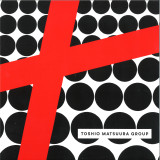
Brownswood Recordings are proud to present the reissue of Toshio Matsuura’s 2017 cult classic LOVEPLAYDANCE, issued for the first time as a complete album on limited edition red and white double vinyl.
The project focuses on covers, presenting classics & influential tracks in a new context. This new edition includes a cover of the Rotary Connection’s classic "Black Gold of the Sun'' featuring Afro-Cuban singer Daymé Arocena and her prodigious Havana-based players, as well as the high energy re-lick of Byron Morris and Unity’s ‘Kitty Bey’, a classic from Gilles Peterson’s seminal afternoon session at Dingwalls in the 1990s; neither included on the original vinyl LP.
On ‘LOVEPLAYDANCE’, legendary Tokyo DJ and producer Toshio Matsuura charted a new direction by casting musical cornerstones in a fresh light. The TOSHIO MATSUURA GROUP features Tom Skinner (drummer for Smile, Sons of Kemet, amongst others) as its musical director, as well as some of the UK’s most exciting jazz-influenced musicians. Drawing on years of surveying and curating different corners of music, Matsuura deftly combined this talented pool of players into one singular, wide-ranging album. A co-founder of Japan’s United Future Organisation (aka U.F.O.), this record sees Matsuura reconnect with longstanding friend and collaborator Gilles Peterson. Releasing the album via Brownswood Recordings in the UK, it’s a continuation of a relationship which started as a bridge between London’s then-blossoming jazz scene and Tokyo’s new musical vanguard of the early ‘90s. This album continues that two-way dialogue between Japan and the UK.
The scope of the music reflects the breadth of Matsuura’s interests; It ranges from Bugges Wesseltoft’s Detroit-influenced, dancefloor-minded jazz, stretched out into a more meditative contemplation, to Flying Lotus’ LA-rooted, Brainfeeder beatmaking, translated from laptop-to-live, given a new, equally idiosyncratic lease of life. Elsewhere, Carl Craig’s iconic ‘At Les’ is taken in a looser direction, the overtones of euphoria cast in a different hue.
They’re touchpoints which hint at interests in the different, diffuse corners of electronic music, and how they connect to jazz and improvisation. Featuring an all star line up of some of the best players London has to offer, line up includes Nubya Garcia, Yazz Ahmed, Yussef Dayes and more.
In 2024, the singer and songwriter Oum is celebrating her fifteen-year career, with a live album, recorded in Marrakech, which plunges back into the magic of her three flagship records, here revisited in a different light. This seventh album, named Dakchi, which means "those things", is the opportunity for this daringoff-roader to allowherself a suspended moment for a temporaryassessment, a return to her roots. Dakchi is the first best-of live album, in which Oum brings together around ten titles from her repertoire woven throughout three albums with identities as singular as they are filled with a common sap: Soul of Morocco (2013), Zarabi (2015) and Daba (2019). It is the expression of typically Moroccan hybridizations - African, Berber and Andalusian - which irrigatethe crossbreeding of Oum.It is also joyful and natural fireworks display of polyrhythms which galvanize her music : the Marrakech signature, playful, sunny,festive. Oum slips three unpublished pieces, including the sublime Arabic cover of the legendary bolero "Lagrimas Negras", "Toda a Gente", an introduction to "Mansit", signed by cuban musician Damian Nueva or the delicate "Intidhar", composed by Yacir Rami.
Back In Stock!
Ajo Se Po is the third album by alto-saxophonist and percussionist Kevin Haynes, released with his band Grupo Elegua. The album integrates musical elements with references to his deepening spiritual understanding. Haynes has created a modal harmonic language incorporating Afro-Cuban melodies and classical kora playing - his alto-sax, infusing the album with a personal 'voice'.
Yoruba spirituality is at the heart of Haynes' musical thinking which also includes both Nigerian and Cuban dimensions. This is especially reflected by the use of recitation and Cuban bata drumming being employed on all tracks, with each piece growing out of a particular bata rhythm. Each such rhythm is dedicated to a particular Orisha, or divinity.
As well as influences from Afro-Cuban, Native Nigerian and folkloric Bata, Haynes' music is a fusion of contemporary jazz incorporating Mandinga folk and praise songs and hard bop.
Kevin Haynes and Grupo Elegua have performed at renowned jazz festivals including Havana Jazz Festival, Cuba and Salamanca Jazz Festival, Spain. Haynes has also featured on Moses Boyd's hit album Displaced Diaspora.
Previously available on digital only, Ajo Se Po is now released on vinyl.
Holiday for Skins Vol. 1” by Art Blakey is a fascinating blend of percussion and jazz. Recorded in 1958, the album brings together talents like Ray Barretto, Sabu Martinez, and the Jazz Messengers. These exotic rhythms explore Afro-Cuban and Brazilian styles, delivering a vibrant musical experience. The versatility of percussion and mastery of jazz make this album a true rhythmic celebration, highlighting Art Blakey’s lasting impact in the world of jazz.
"Holiday For Skins Vol. 1" by Art Blakey includes the following tracks: "Lamento Africano" and more.
"Holiday for Skins Vol. 2" is a percussion-driven jazz album led by Art Blakey, recorded in 1958. Featuring master percussionists like Ray Barretto and Sabu Martinez, the album dives into Afro-Cuban and Brazilian rhythms, interwoven with the Jazz Messengers' expertise. This captivating collection highlights Blakey's innovative exploration of diverse beats, creating a rhythmic feast that showcases his profound influence on the fusion of percussion and jazz.
"Holiday For Skins Vol. 2" by Art Blakey includes the following tracks: "Dinga" and more.
With "Onaida", Natascha Rogers shares a liberating folk spell that draws inspirations from Yoruba spirits, Afro-Latin rhythms and her Native American ancestry. Born in the Netherlands to a Dutch mother and a father with Amerindian origins, Natascha Rogers dares to be intimate and unveils a highly spiritual chiaroscuro record, raising purity, care and reconciliation to the level of the art, through folk enchantments. Sensitive to the ancestral call of the drums, she travelled the Black Atlantic for several years and received the teachings of the greatest Mandingo and Afro-Cuban master percussionists. As a distinguished percussionist and vocalist, she has graced the stage and has accompanied artists around the world, but for Onaida she set out on her own, retreating to a studio to escape the noise, rush and fast information cycles of our modern world. This album marks a rebirth for Natascha Rogers, as it symbolizes her return to the piano, her first instrument. Channelling these inspirations for Onaida, Natascha Rogers, has created a space of her own, where themes of humanity, spirituality, nature and womanhood are centre stage while also paying tribute to her ancestors. Sung in English, Spanish, or Yoruba, the album is a tapestry of intimate ballads and universal prayers, drawing inspiration from dreams, Amerindian poetry (Joy Harjo), and Cuban santería with ritualistic batá drum pulsations. On the powerful folk-tinged song "The West", she invited gifted singer-songwriter Piers Faccini. Onaida is a true initiatory experience, a second birth for Natascha Rogers who finds balance and accuracy with this singular opus. Natascha Rogers headed to the quiet commune of Pommerit-le-Vicomte, to write this new release, accompanied by sound engineer Joachim Olaya and published on acclaimed French imprint No Format!
For the second instalment in our Cuban Classics series, we proudly present this sought-after slice of sublime Afro-Cuban jazz from 1976. It comes courtesy of one of Cuba’s most influential acts, Grupo Irakere. Founded in 1973 by Chucho Valdés (son of the Cuban pianist and bandleader Bebo Valdés) the group was home to many of Cuba’s finest musicians over the years. With an electrifying style and sound, they mixed traditional Cuban music with jazz, funk, and rock.
This self-titled album includes the much-loved, dancefloor heavy-hitter 'Chequeré-Son’, a Latin-jazz funk masterpiece with Cubanized bebop-flavoured horn lines, lush keys, and ‘70s hip swagger. Though 'Chequeré-Son’ is the keystone of the record, the album is laced with brilliance at every turn, from the Carlos Santana-esque channelling ‘Iya’ with its percussive Latin power, to the sultry, slick and passionate '38 1/2’. Elsewhere, the absorbing, ever-building energy of 'Juana 1600’ and steamy vocal dancer ‘Xiomara’ are also highlights of this incredible album.
Pressed on Cuba’s state led Areito Records, the album was well received internationally, garnering distribution in Finland on Love Records, in Italy on Phase 6 Super Stereo, and also in the Dominican Republic, Mexico and Venezuela.
A cherished Afro-Cuban triumph, this album has been crying out for a reissue and we’re delighted to make that happen.
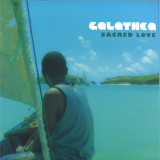
Two years after the release of his first self-titled album, DJ producer Massimo Napoli aka Galathea presents the new 'Sacred Love', in which he once again avails himself of the collaboration of his friend producer and bass player Salvo Dub, as well as a combo of respected musicians: singer Kadi Koulibaly - originally from Burkina Faso - already featured on the first album, Giulia La Rosa, author of the lyrics and performer of the title track, pianist Mario Pappalardo, percussionist Sergio Spitaleri and drummer Luciano Cantone.
'Sacred Love' is definitely a more mature, intense and profound journey than the previous album of the same name, which enhances the magical dreamlike and spiritual atmospheres of a certain African culture.
The album guides the listener along a path of multi-ethnic contaminations: "Divinité", "Ouaga" and "Koloko", well interpreted by Kadi, touch on the sacredness and mysticism of the African continent and blend well with the Spiritual Jazz sounds that have evolved in the West.
"Divinité", through the spoken word of French poet Diego Hernandez, tackles the themes of faith, life and the relationship with one's 'self', with references to French chanson productions, in which Kadi's spiritual song, at times 'Saharan', intersects and expands into cosmic space.
The title track, the first single from the album, also released on 7" (45rpm) in two versions, is an Afro-American gospel with a typically afrobeat rhythm, vaguely reminiscent of Nina Simone's 'See-Line Woman'.
North Africa is represented by "Equator", while we climb further north into the middle of the Mediterranean Sea with "Medican Blues", to land in Stromboli with the Deep Jazz of "Ginostra", whose title recalls the village of the marvellous island in the Aeolian archipelago.
Then we have the Cuban track "Caminito", a sort of Cha-Cha with a romantic piano melody (à la Chucho Valdez) well performed by maestro Mario Pappalardo; and then again "Eos", strongly Balearic with a Brazilian mood; "Impression", a dreamy journey of impact; "Sirens", already present on the first album and here reworked in a new Spiritual-Ambient version produced by Agosta.
"Sacred Love" is thus an original and musically borderless album, which expands a certain African sacred culture and naturally blends Afrobeat, Jazz and Blues atmospheres with the Balearic sounds of Mediterranean culture.
Enjoy listening!
Early Life Forms is a new quartet fronted by Belgian guitarist and sound wizard Vitja Pauwels, and on the 26th January, they are set to release their self-titled debut album via W.E.R.F. Records; a stunning, one-off live show recorded with American guitarist Marc Ribot (Robert Plant, Tom Waits, Wilson Pickett, Marianne Faithfull, The Black Keys, John Zorn).
Having already earned his spurs as a sideman with artists including Naïma Joris, Bombataz and Lara Rosseel, rising Belgian star Pauwels released his debut album 'Day at Half Speed' in 2019, which explored the possibilities of acoustic guitar and live electronics. This experiment became a new artistic path for Pauwels and showcased his musical versatility, with second album 'Drift By, Sink In', released to critical acclaim in 2022.
The same year, Pauwels was invited as special guest by the BRAND! Festival, Mechelen, to showcase new material and he came up with the idea of putting together his 'dream' live band which included his hero Marc Ribot, one of world's most accomplished and acclaimed guitar players. Reaching out to him via videos and early demos for this new recording project, Ribot liked what he heard and agreed to perform with Pauwels and his new project Early Life Forms in what would be the band's first ever live show.
Joined by Frederik Leroux (baritone guitar), Laurens Dierickx (Hammond organ) and Casper Van De Velde (drums), during the lead up to the festival, Pauwels wrote a number of songs he felt would work for the live show, with the only agreement being that there would be no rehearsals ahead of the performance, only a brief soundcheck beforehand with Ribot. The music was stripped down to its essentials - compelling melodies, themes, and clear forms but with the possibility to change direction at any given moment. "The music was played and heard for the first time, and it felt like a birth of something that needed to be alive. We felt connected in the right state of mind - relaxed and focused - and it all happened in a rush of shared energy. No ego's or fear, only connection and the music", states Pauwels.
Drawing on latin, jazz, cuban, and rock with a touch of exoticism and cinematic explorations, 'Early Life Forms' cites Ry Cooder, Henry Mancini, Los Lobos, Ennio Morricone and of course Ribot, as heavy influences. There is something existential, primary, something epic and at the same time youthfully uncomplicated, which is strongly associated with the music. From the mischievous and imaginative 'My Little Renaissance' to the adventurous and hypnotic 'Latin Dancer', 'Early Life Forms' is overflowing with sharp twists and turns, with Ribot's heavily rhythmic, distorted guitar amplifying the cinematic feel to the sound. The on-stage relationship between each member of the band and Ribot is childishly uncomplicated, something primary but always epic. The music is left to the moment and the magic of their first encounter with their hero Ribot. "Marc's commitment in the music was better than I could have hoped for. What he played was with 200% intention, putting the rest of us in a state of hyperfocus. Given the fact that it was a one-time thing and a recording, we took risks without 'overplaying' or overthinking it. Right before the gig, we felt an urge to play, Marc said, "Let's rock!!" and we hit the stage", says Pauwels.
Always traveling, El Gato Negro, the moniker of "nomadic" singer/songwriter and multi-instrumentalist, stopped this time in Dakar, Senegal to record his new album “Tigre qui pleure” (“Crying Tiger”). In a combination of West African and Cuban musicians, under El Gato's Colombian flute, Jazz blends with Hip-Hop, traditional with digital, French with Wolof and Spanish. In this third album, produced by GUTS, El Gato Negro invited his musical family (Florian Pellissier, Kumar, Orchestra Baobab, Cucurucho Valdés, Pat Kalla, Cyril Atef, iZem, Djeuhdjoah & Lieutenant Nicholson...) and dropped his festive mask to let Axel, the melancholic, express himself.
Mista Sinista officially started DJing in 1986 and joined the X-Men in 1992. They later became the X-ecutioners and released two albums. Mista Sinista toured the world several times with the X-ecutioners and was a tour DJ for Common, Beatnuts, Joe Fatal and Lauryn Hill just to name a few. Some of his album credits include The Beatnuts Street Level LP and Common’s Resurrection LP. His work was also highlighted on Fat Joe’s sophomore release, Jealous One’s Envy. He continues to perform worldwide and is featured on The Rewind with DJ Safire which airs weekly on Beatminerz Radio. Mista Sinista’s debut LP is a mix of well-produced tracks along with live turntablism. The project features emcees Mr. VooDoo, Ill Bill, Vinnie Paz, The One Chadio, U.G. & The former MC Jean Grae to name a few. This album also features Rugged One, Q-Bert, The Cut Lieutenant, Ace & Rob Swift. Production credits on the project include Mista Sinista, Steve Dee, Nick Wiz, Statick, Eitan Noyze, Cee da Cuban & DJ Safire
- A1: The Creation (Intro)
- A2: Watch Those
- A3: Off Wit His Head (Feat. Prospect)
- B1: It's So Hard (Feat. Donell Jones)
- B2: We Don't Care (Feat Cuban Link)
- B3: New York Giants (Feat. M.o.p.)
- B4: My Dick (Feat. Tony Sunshine)
- C1: Leather Face
- C2: Air Pun (Skit)
- C3 10: 0% (Feat Tony Sunshine)
- C4: Wrong Ones (Feat Sunkiss)
- C5: Laughing At You (Feat Tony Sunshine)
- D1: Nigga Shit
- D2: Ms. Martin (Feat Remy Martin)
- D3: My Turn
- D4: You Was Wrong (Feat Dran On, Fat Joe, & Remy Martin)
This past year marked the 25th Anniversary of Big Pun's debut Capital Punishment. Big Pun was truly larger than life and sadly passed away at the age of 28, only two months before the release of his sophomore studio album Yeeeah Baby. Yeeeah Baby was released on April 4, 2000, excecutive produced by Fat Joe and a roster of producers including Just Blaze, L.E.S., Buckwild, Younglord, and Sean C among others. The album which would be Big Pun's final release was certifed Gold after three months off the strength of the first two singles "It's So Hard" and "100%" and eventually certified Platinum. Get On Down is proud to present and honor the legacy of Big Pun with a limited edition vinyl reissue pressed on double A-Side/B-Side colored vinyl and stamped numbered OBI limited to 2000 copies.
The first in a four-volume retrospective of Kuduro and tarraxinha pioneer DJ ZNOBIA. Incoming unto the world for a very long time from the musseke of Rangel, home of Casa da Mé&e Ju, in the Angolan capital o Ldanda, one if not the pivotal visionary of his country’s music electronic and digital modernism DJ Znobia, o/fum/an inventor. Usually considered the first purveyor of the fluency regarding tarraxinha (drinking in its foundational slow shuffle from the city of Benguela), as well as a main player in free thinking, spontaneous, funny, depressive, silly, melancholic, hilarious all encompassing beats within kuduro, batida, techno and beyond, his influence as a producer, DJ, MC and public fiuce has had a great imprint in Angolan culture for the better part of the last three ecades. This venture went through over 700 tracks of his archive (more than double are lost in the meantime between his and the NNT library) in order to collaboratively select a fiercely representative albeit balanced affair from his production, between instrumentals for sung kuduro, instrumental kuduro/batida, sung and instrumental tarraxinha, and other creative styling from the late 90’s to the mid 2000’s. Forms now heard around the world which started here, with Znobia a decisively influential contributor, along with several of his peers and collaborators, which will be also in evidence in this four volume retrospective. His story is way too far flung for this endeavor to try and make a simple narrative out of it. You have to be him, you have to be within this territory, and we ask of the people who will approach to ask him what has happened with the history of this music and what is the current reality at ground zero Luanda, as he is a mirror and visionary of its streets, in a country with such complicated dynamics and brutal treatment of its citizens. To try to put in a clean slate for this conversation, let’s talk to a genius of street music. Your question. First, here's the opening collection of what we have to share with you.
An autumnal treasure, East Village’s Drop Out has spent the past thirty years finding new ears to bewitch and new hearts to melt. The only album from this British four-piece, recorded and released in the early nineties, it’s long been considered one of the hidden jewels of its time, and is talked of with hushed reverence by people who know. Bob Stanley of Saint Etienne once called it “an elegy for a particular brand of eighties guitar music, sweet minor chords and Dylanesque lyrics”, which captures what makes it so special; in summarising its era, though, it also effortlessly transcends it.
Like all great guitar gangs, East Village fell together as a four-piece; having relocated from High Wycombe to London in mid ‘80s, brothers Martin and Paul Kelly on bass and guitar, set on forming a group together, were joined by John Wood (guitar) and Spencer Smith (drums). Wood and the Kellys shared writing and vocal duties; it was an ideal combination, and one of the many charms of East Village is their various song writing voices, a tip of the hat, seemingly, to the 60s folk-rock groups who influenced them.
Originally influenced by garage-rock and freakbeat, the band eventually came through via the same scene as groups like Felt, The Go-Betweens, The Weather Prophets, and Primal Scream. They’d formed as Episode Four, releasing an EP, Strike Up Matches, in 1986, which has gone on to become one of most sought after releases of the C86 era. Their first two singles as East Village, ‘Cubans In The Bluefields’ (1987) and ‘Back Between Places’ (1988), were released on Jeff Barrett’s Sub Aqua label.
When it came time to record Drop Out, East Village found a supporter in Bob Stanley, who bankrolled the album sessions until Barrett re-signed the band to his new imprint Heavenly Recordings in 1990. The album that took shape is dusky, heartfelt, lamplit, full of chiming minor chords, close harmonies, rattling organs, all buoyed by a rhythm section that moves as one, steady and elegant. There’s melancholy here, certainly, on songs like ‘What Kind Of Friend Is This’, but also pleasure and freedom, on ‘When I Wake Tomorrow’ and ‘Silver Train’. The group were obsessed with Dylan’s Eat The Document at the time, and the album’s rich with references to the film; Drop Out’s character is also somehow close to the thin wild mercury sound of Blonde On Blonde, and the lambent light of the Byrds’ Notorious Byrd Brothers.
In one of life’s gentler surprises, ‘Silver Train’ became an unexpected radio hit in Australia when released there as a single in 1993. The story of East Village seems marked by such unexpected turns and surprising events. None was more surprising for their fans at the time, though, than their onstage split in 1991, leaving an unreleased album in the can. Encouraged by Jeff Barrett the band revisited the tapes two years on and while mixing the album for its posthumous release in 1993 invited Debsey Wykes (Dolly Mixture, Coming Up Roses, Saint Etienne, Birdie) to sing the quietly devastating album closer, “Everybody Knows”, a perfect, sad-eyed sign-off.
Listening now to Drop Out, its timelessness is clear. It could have been recorded by young folk-pop hopefuls in the late sixties, taking their shot at the big time; but it could just as easily have been recorded yesterday, by a group that’s both reverent to music’s past, but forward looking in spirit and temperament. It’s that kind of album. Drop Out’s pop poetry is fully formed, with a singular charm that takes in wistfulness, romance, and good times, and a clutch of deeply moving songs that are overflowing with melody and gracefulness. It’s pretty much everything you’d want from a guitar pop record.
It's also an album that’s slowly accrued its own legend. From its stunning cover art, photographed by Juergen Teller originally for a Katherine Hammett campaign, to the ten perfectly formed songs within, Drop Out’s significance in the scheme of things is such that, a decade ago, it was given a rare 10/10 rating in Uncut magazine, who called the album “the lost classic of its era”. Drop Out comes round every decade or so, each edition introducing new fans to its understated beauty, and this latest reissue is its most elegant and deluxe yet.
The 30th anniversary edition of Drop Out lands in two formats: an LP with tip-on style jacket and four-page insert, designed to partner with the 2019 vinyl reissue of their singles and rarities compilation, Hot Rod Hotel; and a double CD, featuring an extra disc compiling the group’s early singles and alternative versions. This CD edition previously has only been available in Japan, though it now features a new, superior mix of their second single, ‘Back Between Places’. Both feature new, typically eloquent liner notes from writer Jon Savage.
The members of East Village have all gone on to do inspired things: Martin Kelly joined Jeff Barrett at Heavenly and has managed label mainstays Saint Etienne since 1993; Paul Kelly formed Birdie with Debsey Wykes, and is now a renowned film director and graphic designer; both Paul and Spencer Smith played in Saint Etienne’s live band; John Wood moved to China to teach, and released a lovely, understated folk album, Quiet Storm, in Japan in 2006. But with the hazy perfection of Drop Out, they’ve all already etched their names in the firmament.
Music For Dreams are proud to announce the release of Jacob Gurevitsch’ new album El Terreno. It is the fourth LP from the Danish guitarist with the Spanish guitar, whose world of misty, Mediterranean romance is charming listeners all over the world.
El Terreno is named after the neighborhood in Palma, Mallorca, in which Gurevitsch wrote it over the past couple of years. The tranquility and beauty of this setting is reflected in the music: eight songs of Gurevitsch’ Spanish guitar meandering through the cobblestone streets, idling on town squares frozen in the afternoon sun, drifting on the perfumed evening air.
Two special guests feature on the album. On ‘For Your Love’ the legendary Cuban jazz trumpetist Arturo Sandoval is invited to play along. And on ‘Santa Teresa’ the esteemed Danish rock singer Annisette lends her characteristic smoky phrases to the drama. Throughout the album, Gurevitsch’ Spanish guitar is accompanied by a band of drums, percussion, bass and keyboards.