Suche:cubana

Styles
Alle
  • 1
Star Band de Dakar - Psicodelia Afro-Cubana de Senegal

Led by some of Senegal's most famous singers, like Youssou N'Dour and Laba Sosseh, Star Band achieved the perfect gumbo of Cuban and Senegalese sounds. Changüí, Guajira, Salsa, and Son mingled with cosmic Mbalax guitars, Sabar rhythms, Afro-Latin horns, and Spanish vocals spiced with a Senegalese twang.

With just two microphones and a four-track Revox tape recorder, Ibrahim Kassé, Star Band's founder and owner of Le Miami nightclub, recorded their entire catalog in his venue. Each album contained one stand-out Afro-Cuban tune, often covers of Cuban classics or original compositions using the deep, layered sound that had evolved over centuries from the roundtrip journey across the Atlantic. Six of Star Band's most psychedelic Afro-Cuban tracks, an ode to their finest hour, are selected here.

Remastered in the original mono, and accompanied by 12-page booklet containing an essay on Cubanismo in Senegal, a rare interview with Star Band guitarist Yakhya Fall and vintage photos from his personal collection, this album is the soundtrack to a time when Cuban music was the future for 1970's Senegal and commemorates the anniversary when another way — the Cuban way — was possible.

nicht am Lager

Bestelle jetzt und wir bestellen den Artikel für dich beim Lieferanten.

18,03

Last In: vor 6 Jahren
Various - (music That Inspired) Buena Vista Social Club
nicht am Lager

Bestelle jetzt und wir bestellen den Artikel für dich beim Lieferanten.

19,71

Last In: vor 7 Jahren
LFU - Meganika Breaks EP

LFU

Meganika Breaks EP

12inchCASAM004
Casa Meganika
28.11.2025

A collection of earlier and newer works by LFU
combined in one EP.
On November 14, 2025 !K7 Records released DJ-Kicks by Eris Drew. She chose 'Oh Echt' by LFU as the opening track of her mix.
The style of 'Oh Echt' is not easy to categorize. Electronic breakbeats with Detroit hi-hat patterns and a typically pushy four-to-the-floor kick. The funky, staccato bassline and mysterious strings take you back to the eighties and the added funky organs and stabs complete the story. The "Oh Echt" Main Mix is the instrumental mix of the 'Vogel Mix' in which the 'Oh Echtapella' is incorporated.
The first design of 'Boom Boom Tracking' was in 2011 for a DJ/DRUM performance that LFU did. He picked it up again in 2014, but did not finish it until 2024. This big beat floor filler contains chemical beats accompanied by electrostabs and a deep, dark bassline. If you listen intently to this song on a regular audio device, you might notice a thump on every 1 of the 4 beats, but when it's played on a good, big sound system, you can't miss this tension in your stomach. 'Boom Boom Tracking' it is!
Downtempo percussive track 'Tjeetje' is the first track LFU has made in North Coast Studio in 2001. 'Slow Forward' was the third song he completed there in 2003, the same place where he met Ben Baan of Fruitcake, who played the piano part.
Initially, 'Queen Cubana' did not make it as a remix of Eddy Zoey's 'No Soy Cubano' in 2017. In this new version, LFU removed his vocals, except for "Step". LFU took inspiration from Katy Perry's 'Bon Appetit' and turned it into a rhythmic slow jam with carefully programmed beats, resulting in a spectacular funky joint.

Auf Lager

Bei uns am Lager und sofort versandfertig

11,98
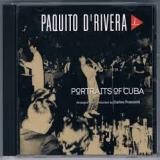
Paquito D'Rivera - Portraits of Cuba LP
  • 1: La Bella Cubana
  • 2: The Peanut Vendor
  • 3: Tu
  • 4: Tu Mi Delirio
  • 5: Drume Negrita
  • 6: Portraits Of Cuba
  • 7: Excerpt From "Aires Tropicales
  • 8: Como Arrullo De Palmas
  • 9: Echale Salsita
  • 10: Theme From "I Love Lucy
vorbestellen19.12.2025

erscheint voraussichtlich am 19.12.2025

38,24
African Fiesta - Roger Izeidi Presents Vita Matata with African Fiesta LP 2x12"
 
24

'The creation of the band African Fiesta, founded in 1963 by three well-known musicians, Nicolas Kasanda, Tabu Ley Rochereau and Roger Izeidi, and the contributions of the VITA label, established by Roger Izeidi, occupy an exciting chapter in the history of Congolese popular music. During the mid-1960s, African Fiesta consistently reached the top of the hit parade. The band, which back in the day positioned itself as a competitor to a current called ‘Fiesta Cubana’, breathed new life into Congolese Rumba, continuing the tradition of the African Jazz school started by Joseph Kabasele.
'The VITA label, with African Fiesta as their sole provider, besides four songs of Eduardo De Veracruz Vinagre et Son Orchestre, ran between May 1963 and early 1966. It created a spectacular legacy and back catalog full of tasteful sentiments and sensual melodies, deeply rooted in the Afro-Latin sound.
'This new compilation offers a few of the classic African Fiesta songs and complements them with an eclectic and original selection, divided into four thematic sides: Showcase, Rumba Lingala, Cha Cha Cha & Bolero. This double LP album comes with a 16-page booklet featuring the history of VITA and African Fiesta, song commentary by Congolese journalist Herman Bangi Bayo, and a written catalog of the VITA label. The heirs of Roger Izeidi kindly gave permission in Kinshasa to release this album of African Fiesta on Planet Ilunga.'

nicht am Lager

Bestelle jetzt und wir bestellen den Artikel für dich beim Lieferanten.

37,40

Last In: vor 4 Monaten
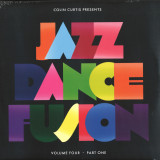
Colin Curtis - Jazz Dance Fusion Volume 4 (2x12") Part 1

Colin Curtis is back! with another finely curated selection of the best Jazz Dance Fusion records he could find. Volume 4 reflects a combination of new music unreleased music and tracks that have never been on vinyl before or not attained the recognition they deserve. Packed with great Jazz Dance music from the UK and all around the world. The whole purpose of these compilations is to introduce you to fantastic talent and allow you to then go and explore all their works and keep this movement moving!

With brand new & exclusive releases, extremely rare tracks and many only available on Vinyl for the first time from Brazil, Cuba, Japan, Italy, USA, UK and beyond. Showcasing another insight into Colin Curtis's world of Jazz Dance Fusion and highlighting the sheer diversity & talent on offer from Vocal Jazz, Salsa, Latin Spoken Word to Sambas & Fusion, It’s all Here!

nicht am Lager

Bestelle jetzt und wir bestellen den Artikel für dich beim Lieferanten.

23,32

Last In: vor 19 Monaten
Hyldon - Sabor de Amor

Hyldon

Sabor de Amor

12inchJB2
Jazzybelle
28.03.2025
  • 01: Vadiagem
  • 02: Sabor De Amor
  • 03: A Última Balada
  • 04: Leva-La-Ei (Like A Bird Flying)
  • 05: Renascimento
  • 06: Siga O Teu Caminho
  • 07: Cubana
  • 08: São Conrado
  • 09: Amor, Riso E Lágrimas
  • 10: Amor Na Terra Do Berimbau
  • 11: Vem Dançar O Samba
  • 12: Viveiro De Pássaros
vorbestellen28.03.2025

erscheint voraussichtlich am 28.03.2025

28,53
VARIOUS - MAGNIFICO BOOGALOO LP 2x12"
 
22

These two vinyl records showcase the legacy left by the boogaloo movement in Peru between 1966 and 1975. They comprise twenty-two songs by seventeen artists who recorded on the remarkable local label MAG more than five decades ago and now invite today’s new generations to dance body and soul to these re-releases. You will find outstanding tracks by the likes of Tito Chicoma, Melcochita, Los Kintos, Otto Rojas, Coco Lagos among many others. MAG was one of the most important and prolific labels in Peru and, though it also was involved in releasing a lot of other types of music, its specialty was the tropical variety, which coincidentally, DJs and collectors seem to crave most. Peru developed a major boogaloo scene in the mid-60s, far from the genre’s place of origin, New York, where iconic songs like 'Bang Bang' and 'El Pito', fused soul and funk with Latin sounds, conquering dance halls and winning extensive radio airplay. The music trend soon spread to Caribbean countries and from there made the geographical leap to the city of Lima. 'El Pito', the collective creation of the Joe Cuba Sextet, was particularly popular. Shorn of overelaborate arrangements, the improvisation and spontaneity of the song resonated with the young generation who were avid for new music after the U.S. placed an embargo on the distribution of Cuban music. In July 1966, Rebeca Llave´s label, Disperú, released the 45 RPM of 'El Pito' (and Joe Cuba's LP), promoting the single in the most prestigious newspaper in the country: El Comercio. The press information stated that the record had sold seventy thousand copies in New York and fifty thousand in Los Angeles. That same year local dance versions by the bands of Alfredo Linares (MAG) and Lucho Macedo (El Virrey) were released, followed by another by the band of the Argentinean musician Enrique Lynch who was based in Peru (Sono Radio). These records were a hit with a new generation that embraced Lucho Macedo's band and the garage rock of Los York's with equal enthusiasm. Although Joe Bataan claimed that boogaloo was killed off at the end of the sixties by the labels and their veteran musicians (who conspired against the new generation of singers), Pete Rodriguez, Richie Ray and the Lebrón Brothers continued to release boogaloo records in Peru, but salsa music soon took over.

nicht am Lager

Bestelle jetzt und wir bestellen den Artikel für dich beim Lieferanten.

31,72

Last In: vor 13 Monaten
CACHAO & SU COMBO - Descargas Cubanas
  • A1: Descarga Cubana
  • A2: Goza Mi Trompeta
  • A3: Cogele El Golpe
  • A4: Trombon Criollo
  • A5: Malanga Amarilla
  • A6: Pamparana
  • B1: Oye Mi Tres Montuno
  • B2: Controversia De Metales
  • B3: A Gozar Timbero
  • B4: Sorpresa De Flauta
  • B5: Estudio En Trompeta
  • B6: Guajeo De Saxos

Israel "Cachao" Lopez is a legendary, influential figure in Cuban music history.

vorbestellen17.01.2025

erscheint voraussichtlich am 17.01.2025

20,38
Natural Information Society - Since Time Is Gravity LP 2x12"

The next chapter of the Natural Information Society is here. Since Time Is Gravity, credited to Natural Information Society Community Ensemble with Ari Brown, presents a newly expanded manifestation of acclaimed composer & multi-instrumentalist Joshua Abrams nearly 15 year, 7 albums &-counting flagship ensemble. Joining the core NIS of Abrams (guimbri & bass), Lisa Alvarado (harmonium) Mikel Patrick Avery (drums) & Jason Stein (bass clarinet) are Hamid Drake (percussion), Josh Berman & Ben Lamar Gay (cornets), Nick Mazzarella & Mai Sugimoto (alto saxophones & flute), Kara Bershad (harp) & Chicago living legend of the tenor saxophone Ari Brown. Recorded live to tape at Electrical Audio & The Graham Foundation, cover painting Vibratory Cartography: Nepantla, by Lisa Alvarado. 2xLP on Eremite USA, 2xLP & CD on Aguirre/Eremite Europe. Out 14-04.

Since first developing Natural Information Society in 2010, Joshua Abrams has been gradually expanding the group’s conceptual underpinnings, its musical references & the sheer number of the group’s members. Its music is, in a sense, an expansive form of minimalism, based in repeated & overlaid rhythmic patterns, ostinatos & modality. Its roots, its scale & its meaning become clearer in time. If time is gravity, it also allows us to carry more. Having begun as fundamentally a rhythm section with Abrams’ guimbri at its core, the version here can stretch to a tentet, including six horns.

Abrams has been expanding his minimalism gradually, but he has long understood a key to minimalism’s potential: the breadth of its roots in the late 1950s & early 1960s, ranging from the dissatisfaction of young European-stream composers with the limitations of serialism to the simultaneous dissatisfaction of jazz musicians with the dense harmonic vocabulary of bop & hard bop. The former began exploring rhythmic complexity & narrow tonal palates in place of harmonic abstraction (Steve Reich’s Drumming, Philip Glass’ Music with Changing Parts; perhaps above all Terry Riley’s In C & his late ‘60s all-night organ & loop concerts); the later reduced dense chord changes to scales (signally with Miles Davis' Kind of Blue, but rapidly expanding with John Coltrane’s vast project). In the 1950s the LP record opened the world with documentation of Asian & African musics, key influences on both minimalists & jazz musicians. If John Coltrane’s soprano saxophone suggested the keening shehnai of Bismillah Khan, the instrument was rapidly taken up by two key minimalists, LaMonte Young & Riley, similarly appreciative of its flexible intonation, the same thing that kept it out of big bands.

If the guimbri, the North African hide-covered lute that Abrams plays with NIS, involves a rich tradition of hypnotic healing music associated with the Gnawa people, Abrams’ music also touches on other musics as well — other depths, memories & healings, different drones, rhythms & modes. As the group expands on Since Time Is Gravity, he has made certain jazz traditions in the same stream more explicit as well. If there is a mystical & elastic quality involved in the experience of time, both in direction & duration, you will catch it here. The parts for the choir of winds expand on the roles of Abrams’ guimbri, Mikel Patrick Avery & Hamid Drake’s percussion & Lisa Alvarado’s harmonium: at times, the winds are almost looping in the tentet version, each hitting a repeating note in turn, at once drone & distinct inflection on temporal sequence. The brilliance of the work resides in Abrams’ compositions, the NIS’ intuitive execution & in Ari Brown’s singular embodiment of the great tenor saxophone tradition, including the oracular genius of Eddie “Lockjaw” Davis, & Yusef Lateef. The three pieces by the expanded NIS featuring Brown —the opening “Moontide Chorus” & “Is” & the ultimate “Gravity”— have an immediate impact, & togther might be considered a kind of concerto for tenor saxophone. Here Brown presses almost indistinguishably from composed melody to improvised speech, getting so close to language that he might have a text. Everything here is a sign. Note the tap of the Rhythm Ace that links “Moontide Chorus” to “Is”, the attentive heart always present, even when signed by a machine. There’s a link here to the methodologies & meanings of dub music & the linear & vertical collage of beats, textures & tongues: treated with reverence, a sample of a beat-box can be as soulful, as hypnotic, as a mbira or a tamboura. If those pieces with Brown are heard as a suspended concerto, the three embrace & enfold the other works, like the sepals of a flower. That placement will also touch on the mysteries of our perception of time.

Particularly in “Is”, but elsewhere as well, a phenomenon of transcendence arises in which time appears to be tripartite, at once moving backwards & forwards & standing still. This is an act of technical brilliance certainly, but also an illumination of music’s ability to represent temporal consciousness through polymetrics. This particular listener has only heard it before in a few places, including the horn shouts & bowed basses of Coltrane’s Africa, in moments of Charles Mingus’ The Black Saint & the Sinner Lady, in certain pieces where tapes were literally running backwards, & earlier still in Dizzy Gillespie’s Cubana Be, Cubana Bop, in which the composer George Russell & conguero Chano Pozo found a music that spoke at once in the voices of Stravinsky’s Rite of Spring & the vestigial rites, rhythms & songs of the Yoruba language & Santeria religion of inland Cuba.

In Joshua Abrams’ compositions & the realization of them by the NIS, in the time of one’s close listening & memory thereof, distinctions between the “natural” & the “social”, the “quotidian” & the “transcendent” are erased, suspended or perhaps irrelevant. Consider two of the ensemble pieces, one named for nature, the other social science. In “Murmuration” the repeated wind figures of flute & alto saxophone combine with the interlocking patterns of harp, guimbri & frame drum (tar) to create a perfect moving stillness, not an imitation but a witness to the miracle of the starlings’ astonishing collective art, a surfeit of beauty that might be the ultimate defense tactic.

“Stigmergy” takes its name & concept from the Occupy movement’s Heather Marsh, who proposes a social system based on a cooperative rather than competitive models, one in which ideas are freely contributed & developed as ideas rather than an individual’s property. In its form, Abrams’ “Stigmergy” is the closes thing to traditional jazz, a series of accompanied solos by each of the wind players. However, the composed accompaniment is a radically collectivist notion: a repeated rhythmic figure, call it ostinato or riff, in which the different winds each play only a note or two of the figure, a concept both more collectivist & individualistic in its conception than any typical unison figure. It suggests another of the underlying recognitions that propel the Natural Information Society, the group as social organism, the teleology of hypnotic anarchy, all parts in place, functioning systematically, evolving & expressing itself, its nature & society, as a transformative organism.

George Lewis has described music as “a space for reflection on the human condition”. This suggests that, rather than a “distraction”, at least some music might serve as a distraction from distraction. It’s a focus, a clarity, a awareness, an external invitation to interiority, as if music itself is a model for form & contemplation, an organism contemplating for us or as us. If that is a possibility, & I am sure I have heard such musics, than this music is among them. How many of our rhythms, melodies & harmonies (cultural, historical, biological, psychic) might such music carry, translate & transform in the particulate ecstasy of our own murmuration? (Stuart Broomer, April 2022)

nicht am Lager

Bestelle jetzt und wir bestellen den Artikel für dich beim Lieferanten.

33,15

Last In: vor 2 Jahren
Orquesta Mayombe - Con Ritmo Del Tambo LP

The second in Jazz Room's occasional Pure Latin releases this Underground Masterpiece first emerged in 1980 and is an outstanding example of the Classic Era Nu Yorican El Barrio Underground Sound! If you dig the Tata Vasquez LP on Jazz Room then this is for you.

Featuring the Afro-Cubano Salsaero Jazz Heavyweights of the day including Chocolate Armenteros, Jose Mangual, Mauricio Smith and Orestes Vilato and a huge seven man Percussion Section it really blasts out the Afro-Latin message.

A part history of the Afro-Cuban Music Journey from the Hinterlands of Cuba via Havana and eventually arriving in Jazz Age New York it is a welcome addition to the Jazz Room Catalogue (as well as being Jazz Room Head Honcho's favourite albums).

Floor filler cuts for Latin Lovers with "Esa Brujeria" always turning up the heat.

nicht am Lager

Bestelle jetzt und wir bestellen den Artikel für dich beim Lieferanten.

19,29

Last In: vor 2 Jahren
Mambo Man - Original Sound Track to the film Mambo Man

Re-mastering by: Ray Staff at Air Mastering, Lyndhurst Hall, London

With the Buena Vista Stars, including Candido Fabre. Based on a true story and filmed in the exotic countryside outside Havana, this remarkable and engaging film will move both your spirit and your feet with its unforgettable passion and intoxicating music. The soundtrack and live performances in the film include some of the legendary Cuban artists who appeared in the box office smash, Buena Vista Social Club.

MAMBO MAN is packed with musical contributions from Cuban legends including; Candido Fabre, Maria Ochoa, Alma Latina, David Alvarez, Arturo Jorge, Omara Portuondo, Eliades Ochoa, Juan De Marcos Gonzalez and the Afro-Cuban All Stars.

REVIEWS Rome Prisma Independent Film Awards

“There is rather the mature and conscious gaze of two authors who want to represent Cuba, and the story of the protagonist, with truth and love. With this awareness, each shot conveys a charm superior to that of a good staging. This film, made with passion, penetrates the audience to the rhythm of music and tells us about a whole, small, precious universe, absorbing its beauty and misery. “Mambo Man” is a bit like Cuba: beautiful, kind and melancholic.”

J.B. Spins, Joe Bendel

“It’s a dynamic, colourful film, with bustling markets, lively clubs, friendly outdoor cafes, and—best of all—a remarkable soundtrack of classic Cuban music, which is a focal point of the film.”

vorbestellen30.07.2021

erscheint voraussichtlich am 30.07.2021

45,17
Amara Toure - Amara Toure 2x12"

The enigmatic Amara Touré from Guinée Conakry finally getting a well deserved compilation showcasing all of the 10 songs ever released between 1973 and 1980. Cuban influenced music of a different kind featuring amazing spaced-out guitar works!! Analog Africa compiles a complete collection of Amara Touré's Afro-Cuban compositions, originally released between 1973 and 1980."Lamento Cubana and Temedy are the two finest Afro-Cuban compositions ever recorded. As if they were played in a smokey, poorly lit ballroom where dark rum was sipped ever so slowly" - Vikram Sohonie - Ostinato Records
Analog Africa to release a compilation by Amara Toure, the enigmatic Afro-Cuban musician from Guinea-Conakry, showcasing all of the 10 songs he ever released between 1973 and 1980.
"Latin music, is it really foreign to us Africans I don't think so. Listen to the drums, to the rhythm. It all seems very close to us - it feels like it's our own culture," declared enigmatic singer Amara Toure. It is the late 50s, and Senegal is going crazy to the groove of Son Montuno and Patchanga. Brought to West Africa by Cuban sailors in the early 40s, these styles were immediately adopted by a flourishing music scene that did not hesitate to embrace the Caribbean sound, mixed it with their own Folklore, and, in the process, created something new. Through the unique cultural fusion of West African and Caribbean influences, Latin music took on a new and unique sound - the format was reinvented. Producer Ibra Kasseì and his Miami nightclub acted as the spearheads of this movement. They brought a breath of fresh air into Dakar's nightlife, further energising one of West Africa's most exciting cities. The demand for ballroom parties and live acts exploded, attracting numerous musicians from surrounding countries. One of the musicians who answered this call was percussionist and singer Amara Toureì, from Guinea-Conakry. Spotted by Kasseì while performing with Dexter Johnson, Toureì was asked if he would like to be part of a new project. Little did he know that this project would become a phenomenon.Immensely important for the development of Senegalese modern music, Le Star Band de Dakar, led by Mady Konate, became a sort of musical incubator and workshop, where many musicians learned and practiced their trade before moving on to become stars in their own right. Toureì's talent on percussion was undeniable, but it was his powerful and raw voice that captivated the producer. The fascinating way Toure interpreted Cuban music was unparalleled, and it was this feature that encouraged Kasse to recruit the unknown artist.
Although already brimming with incredible talent, Amara Toure's joining of Le Star Band de Dakar in 1958 began the band's meteoric rise to the top. The band quickly became Dakar's number one orchestra, and it cemented the reputation of the Miami nightclub as the hottest spot in the country. The place was packed nightly, and Dakar was boiling.
Amara Toure's Senegalese adventure lasted for ten years when he received an irrefutable offer and in 1968, joined by a few talented Senegalese musicians, headed to Cameroon and immediately formed the Black and White ensemble. Many live gigs later and it was time for the first songs to be recorded. A total of three singles were produced between 1973 and 1976. These singles, representing the first six songs on this compilation, fully epitomise and distill the essence of what Toureì had learned during his career. His Mandingue roots fused with the Senegalese sound that he had mastered - the perfect foundation for the Toureì's Cuban interpretations.
If Toure's intention was to create the most sensual music ever recorded in Africa, he might very well have reached this goal. The musicians on the recording sound like they are playing in a smokey, poorly lit juke joint, where dark rum was sipped ever so slowly, and the pulse of the music took up a life of its own. How many couples have danced, swayed, and melted together to the distinct sound of Amara Toure Nobody can say for sure ...
Amara Toureì's success poured across the borders of Cameroon, and in 1980 he went to Libreville, Gabon, to team up with the powerful Orchestre Massako. Toureì recorded an LP at that time which is hailed by many music aficionados as one of the very best African albums. The songs from that LP are the last four on this compilation. It took only ten songs for Amara Toureì to become a legend. These ten treasures, representing Toure ìs complete discography, have been carefully re-mastered from original session tapes and vinyl records, and will be released by Analog Africa on 22 June 2015. After the release of his LP in 1980, Toureì seems to have disappeared. Apparently he was last seen in Cameroon but it is unknown if he is still alive today. His music though is definitely alive.

nicht am Lager

Bestelle jetzt und wir bestellen den Artikel für dich beim Lieferanten.

27,31

Last In: vor 3 Jahren
  • 1
Artikel pro Seite:
N/ABPM
Vinyl