First ever reissue of one of the most sought after titles in the catalogue of Peruvian's label MAG, in high demand not only among Latin music collectors but also among those interested in the most exotic and experimental psychedelic sounds around. - It includes 'Astronautas a Mercurio', a cosmic descarga full of electronic effects, filtered voices and fierce guitars with wah wah and raw distortion, as well as guarachas, cumbias and descargas. - Details: Hugo Macedo was a member of the first sonora in Peru, directed by his brother: the Sonora de Lucho Macedo. His brothers were the singers of the band while he performed as a timbalero. After nine years he founded the Sonora Casino of Hugo Macedo in 1964, later incorporating his wife, Lucía "Pochita" Rivera as a vocalist. "Trompeteros" was released on the Peruvian record label MAG in 1972. Previously, the Sonora Casino had already recorded several albums for Philips since the mid-60s. At the time their repertoire was fed by rhythms such as cha cha cha, bolero, guaracha... Their MAG period would start in 1970 with the album "Pochita y la Sonora Casino de Hugo Macedo" in which Hugo Macedo's wife was granted with an important visual presence on the front cover, with a similar follow-up on "Trompeteros", creating some confusion since vocalist Pachito Nalmy was the actual main singer on the record. The vocalist, who hails from Callao, demonstrates here a great vocal versatility as captured on songs like 'Guajira del amor', with a heavy rhythm that will surely delight boogaloo lovers, or the bolero number 'Pasa, pasa', being both songs own compositions of the multitalented Nalmy. Guarachas, descargas and cumbias complete the offering of this fantastic album, one of the strongest tropical LPs in the MAG catalogue. But the real banger here is the almost magical 'Astronauts to Mercury', a cosmic descarga full of electronic effects, filtered voices and fierce guitars with wah wah and raw distortion, closer to the sound of any psychedelic recording than the classic tropical sound of La Sonora Casino, and right next to those elements, an impressive brass section that boosts the intensity of the song to the highest levels. It is not surprising that "Trompeteros" has become in recent years a highly sought-after album not only by Latin music collectors but also by those after the most exotic and experimental psychedelic sounds around... Pablo Iglesias aka DJ Bongohead
quête:cumbia
Having embraced the wide wired world of modular synthesis, Prince of Queens aka Felipe Quiroz has already proved fit and formidable in dialing in the necessary sonic component of his current stargazing outfit Combo Chimbita. His first two solo records on NYCT have only added to an already wide-ranging electronic fluency, yet have also brought a flare and understanding of dance music foundation that in combination is rarely matched.
For his next release, Prince of Queens teams up with the voice of El Julius, his Colombian countryman and New York neighbor. As a seasoned member of Names You Can Trust alumni, Bulla En El Barrio, El Julius helps to bridge the classic with the contemporary. "Rompe Cadenas" is a traditional arrangement with poignant lyrics, but it's still funneled through the unpredictability of POQ's machinery. It's a modern day reinterpretation of sound system cumbia at its heart, and just a further example of the breadth of POQ's production possibilities. Much of that potential is realized on the second track of this double-sided release, "Acidosa." Like his earlier releases, POQ's quintessential future leanings are on display here with all of his remarkable synthesis. It's worth the trip alone. Just imagine a wild and hypnotic meeting of cumbia and pitched-down acid and off we go.
Calexico's Joey Burns and John Convertino return in 2022 with their luminous 10th studio album, El Mirador; a hopeful, kaleidoscopic beacon of rock, bluesy ruminations and Latin American sounds, to be released on April 8.
Convening at longtime bandmate Sergio Mendoza's home studio in Tucson, Arizona, the ensemble recorded throughout the summer of 2021, crafting one of their most riveting and whimsical productions to date. Convertino, who now resides in El Paso, and Burns, who relocated to Boise in 2020, channeled cherished memories of Southwestern landscapes and joyful barrio melting pots into an evocative love letter to the desert borderlands that nourished them for over 20 years.
- A1: Sampuesana - Los Dinners
- A2: La Borrachita - Junior Y Su Equipo
- A3: Paga La Cuenta Sinverguenza - Manzanita
- A4: Infinito - Hugo Blanco Y Su Arpa Viajera
- B1: El Jardinero - Manzanita Y Su Conjunto
- B2: Feito Parrandero - Los Feos
- B3: Bien Bailadido - Junior Y Su Equipo
- B4: Saturno 2000 - Los Santos
- C1: La Danza Del Mono - Lucho Gavilanes
- C2: Capricho Egipcio - Conjunto Tiupico Contreras
- C3: El Chacarero - Los Gatos Blancos
- C4: Pa Oriente Me Voy - Los Atomos De Paramonga
- D1: Alegrate - Junior Y Su Equipo
- D2: Todo Lo Tengo De Ti Menos Tu Amor - Grupo Celeste
- D3: La Fuga Del Bandido - Los Ecos
Analog Africa delves deep into the scene of the Mexican's sonideros (sound-system operators) to present the "Rebajada" movement they've created using locally made pitch controls, speakers and sound effects.
"In 2010, I had asked Eamon Ore-Giron - aka DJ Lengua - if he would be interested in compiling a Latin project for Analog Africa, and if so, if he had a theme in mind. He replied, “Have you ever heard of rebajada?“ The question mark above my head, together with the wall of China, must have been the only other object visible from out of space because Eamon, probably noticing I got paralysed, continued, “Rebajada in Spanish means “to reduce, to lower”. It’s basically Mexican sonideros (soundsystem operators) slowing down the beat of a Cumbia to create a much more tangible music to dance to. I’ll send you a mix I made last year and let me know what you think.“ And so he did.
That mix was called Rebajada Mota Mix and I began listening to it on a loop. Although I was not immediately hooked it was intriguing from the get-go, and so I kept listening until magic began unfolding. Slowed down music allows you enough time to hear right through it, revealing itself in ways I had rarely experienced before. Everything became more transparent and I was noticing sounds normally only perceptible by bats. A near psychedelic experience. That mysterious mix included a few Ecuadorian songs by Junior y su Equipo - aka Polibio Mayorga (a cult figure in the sonidero scene), a couple of Mexican tunes, one Colombian, and various Peruvian songs, undoubtedly the driving force behind this project.
The sonidero who brought Peruvian and Ecuadorian music to Mexico was the legendary Pablo Perea from Sonido Arco-Iris, and although his fingerprints are all over the compilation Saturno 2000, this selection of songs in rebajada is exclusive to DJ Lengua. With the exception of a few classics from Polibio Mayorga and La Sampuesana – the queen of all rebajadas – most of these songs were probably never performed as such before, let alone released.
So how did rebajada come to be? In a nutshell; Rebajada started with two families of brothers – the Pereas and the Ortegas – who travelled all over Latin America and returned to Mexico with heavy loads of records which they would sell to the various sonideros always on the lookout for new tunes. Colombian beats especially seemed to fit almost perfectly with the Mexican dance steps – but they were just a bit too fast. As a result some sonideros began experimenting with equipment, and Marco Antonio Cedillo of Sonido Imperial created a revolutionary pitching system that could slow records down to an extent other players could only dream about. And so rebajada was born . . . or so we thought.
At the same time in north of the country, in Monterrey, sonidero Gabriel Dueñez almost got electrocuted by a short circuit that nearly set his record player on fire. As a result the platter started spinning in slow motion for the rest of the party, turning Cumbia into a different affair altogether. The youngsters went crazy for it and started harassing the sonidero with requests to record cassettes for them. Reluctant at first, Dueñez finally began recording a series of pirated cassettes called “Rebajada” which included mainly Colombian cumbia and porro in slow-mo exclusively. Those tapes took the city by storm and turned rebajada into a celebrated and defiant movement of the youth.
Of course it would not be a Mexican urban legend if it didn’t include dramaturgical elements, and so for nearly 30 years, until this day and probably for ever, both cities have been arguing and claiming ownership the creation of rebajada for themselves. But sonidera Joyce Musicolor, who never has time for such trivial arguments, got straight to the point: “Rebajada, and the equipment to perform it, is from here Mexico City but it was Monterrey that popularised it.“
- A1: El Mirador
- A2: Harness The Wind
- A3: Cumbia Peninsula
- A4: Then You Might See
- A5: Cumbia Del Polvo
- A6: El Paso
- B1: The El Burro Song
- B2: Liberada
- B3: Turquoise
- B4: Constellation
- B5: Rancho Azul
- B6: Caldera
Red Vinyl[23,24 €]
Calexico's Joey Burns and John Convertino return in 2022 with their luminous 10th studio album, El Mirador; a hopeful, kaleidoscopic beacon of rock, bluesy ruminations and Latin American sounds, to be released on April 8.
Convening at longtime bandmate Sergio Mendoza's home studio in Tucson, Arizona, the ensemble recorded throughout the summer of 2021, crafting one of their most riveting and whimsical productions to date. Convertino, who now resides in El Paso, and Burns, who relocated to Boise in 2020, channeled cherished memories of Southwestern landscapes and joyful barrio melting pots into an evocative love letter to the desert borderlands that nourished them for over 20 years.
Voltaje Raizal is the first album of the tropical futurist music project Rizomagic, an electronic music duo, that consists of Diego Manrique, director of the avant-garde cumbia orchestra Niño Pueblo, and Edgar Marun, director of the ethno-afrobeat ensemble Dorado Kandua; Two outstanding projects from Bogota's new thriving alternative psychedelic scene.
The sounds of the album are rooted in the Afro-Caribbean musical tradition, in the mixed ancestry that defines Colombian culture, and IDM. The melodic construction of the album takes inspiration from variouscultures, including Indigenous chants from Colombia’s Embera people, the traditional scales from Mali’s Bambara ethnic group, and the Ghanian palm wine guitar interpreted by a Caribbean millo flute. The mix and mastering carried out by Eblis Alvarez (Meridian Brothers, Pirañas, Chupame el Dedo) and Camilo Manchego offered the final touches that make Voltaje Raizal a fresh proposal to Colombia’s futurist tropical scene. "Rizomagic set out to recontextualize their sources. It’s no coincidence that their name comes from rhizomatic, the botanically derived term for a subterranean, horizontal network of roots".
If Cannibale's members brought their breakfast back up when talking about 'Not Easy To Cook', their listeners would be surprised. There's a world of difference between the beginning of Cannibale's success story and this second album. The most surprising thing about 'Not Easy To Cook' is the sultriness that emerges. It's hard to sum it up other than by comparing these 10 songs with some pressure cooker in which bits of dancehall, London ska and Hawaiian dub would have cooked together. Here's the small miracle achieved by this LP recorded by the band in its remote French village: sounding French, but Polynesian French. A very psychedelic mixture of cumbia, African rhythms and garage music. Or, if you will, a kind of missing link between Fela Kuti, The Doors and The Seeds!
São Paulo-based carnival collective and brass band combine retro horns with cumbia, baile funk, jazz, Michael Jackson & more
A Espetacular Charanga do França started as a political act, part of a recent movement which has seen the people of São Paulo reclaim their streets, turning their city into a revelation of Brazilian carnival. The group takes equal inspiration from the powerful charanga horn and percussion bands that stir the crowds at Brazilian football matches, and the expertly-arranged sounds of 60s
samba, finding that sweet spot between musicianship and music that makes you lose your shit. And they do it with humour, clear as day in their covers of Michael Jackson and pagode pop hits, and the baile funk and Balkan rhythms that sneak their way in to the tunes.
Since forming in 2013 the group have become an iconic staple of São Paulo’s revived carnival, generating crowds 15,000 strong. Though COVID-19 put a stop to them hitting the streets this year, in 2020 they made their way to carnival with over 60 brass players and 30 percussionists, declaring their bloco an anti-fascist zone, their reply to a political climate in Brazil that is suffocating human rights, culture and any hope for equality.
“I like to think that Charanga is an oasis in the middle of all the shit that we live, where you don't have to be worried about who you are, what are your preferences, whether you can be comfortable. If you want to parade with us wearing a tea towel you can, you won't be harassed. And it's also about music, it's about listening to music. We do this thing the whole year, we rehearse all year, we do too much so that people can just get crazy and not care about the music.” Thiago França
The group is the brainchild of saxophonist Thiago França, best known as a founding member of Afro-punk explorers Metá-Metá, and one of São Paulo’s most in-demand horn men, with credits on influential albums by Criolo, Elza Soares, Céu and Lucas Santtana. A
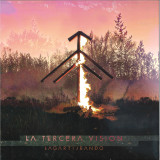
Arriving two years after his last full-length effort ("Jallalla"), Lagartijeando (aka Mati Zundel) once again returns to Wonderwheel with an expansive new album, "La Tercera Vision." A maturation of the Lagartijeando sound, "La Tercera Vision" ("the third vision") sees the Argentinian wade into uncharted, if sonically familiar waters, bridging his Andean inspired electronic-folk with psychedelic ambience, West African instrumentation, and even a few moments of pop melodies. The beauty of Lagartijeando's work is its ability to marry seemingly unrelated styles and sounds to something seamless and wholly original.
"Isla de Sol," the opening track, introduces the album with a taste of Mati's classic sound: Andean pan flute, the familiar chugging rhythm of a cumbia beat, luscious string arrangements, and a sampled vocal. Moving on, "Mano de Fatima" (the project's second single) sees a fusion of traditional Moroccan Gnawa instrumentation with digital cumbia rhythms, featuring the work of Khalil Mounji on vocals and guembri (aka sintir, the three-stringed, skin-covered lute used in Gnawa music). Eva de Marce - a singer-songwriter-producer based in Madrid - takes centre-stage on "Tierra Natal," with her vocals coming through in a rich whisper, singing a melody reminiscent of a lullaby.
At the album's halfway mark, Lagartijeando introduces a new direction for his sound with "Onda," a collaboration with the Brazilian artist Tagua Tagua. An earworm of a melody is sung over a joyous beat that nods to pop sensibilities while being satisfyingly infused with Zundel's sonic DNA. It's a gem of a tune that suggests an exciting new sound for the Argentinian. A few more collaborations close out the album, two with Mexican singer-songwriter Madeleine Bachan Kaur ("Crepúsculo" & "La Montaña Sagrada"), "Magaleña" with Javier Arce, and the album closer "Ware" featuring Sajra. Also included in the album is "Sideral Cumbia," the first single released earlier this Summer, which has seen extensive press and radio support from the likes of Vice / Noisey, Electronic Groove, Sounds And Colours, KCRW ("Today's Top Tune" & "Morning Becomes Eclectic"), and KEXP, as well as landing a spot on Spotify's "Fresh Dance" playlist.
Lagartijeando is the name of producer, musician and DJ Mati Zundel. Strongly influenced by his travels throughout Latin America, Mati's signature psychedelic dance tracks latch onto everything from traditional folk sounds from the Bolivian altiplano to the jungle beats of Brazil. Mati hypnotically fuses his traditional influences (with an emphasis on shaman chant and charango loops) with contemporary electronic beats, creating a sound that once left NPR speechless.
"La Tercera Vision" is due out on Brooklyn's Wonderwheel Recordings October 29th.
- A1: The Link Is About To Die
- A2: I Enjoy It
- A3: Pista (Fresh Start)
- A4: Ffs
- A5: Tropico
- B1: Las Panteras
- B2: Good To Go!
- B3: Change Of Heart
- B4: Tripping At A Party
- B5: Try The Circle!
- B6: Lindsay Goes To Mykonos
Panthers prowling through a desert. Cowgirls swaggering into a saloon and kicking up dust. Riding shotgun with a Tarantino heroine. Having the fiesta of your lives under a giant piñata with all your friends. Los Bitchos’ hallucinatory surf-exotica is as evocative as it is playful: the London-based pan-continental group could well be your new favourite party band with their instrumental voyages that are the soundtrack to setting alight to a row of flaming sambucas and losing yourself to the night. They’ve got a bun-tight knack for a groove – and they’ve got the best fringes in rock’n’roll too.
Serra Petale (guitar), Agustina Ruiz (keytar), Josefine Jonsson (bass) and Nic Crawshaw (drums) hail from different parts of the world but met via all-night house parties, or through friends, in London. Their unique sound binds them together, though, taking in a
retrofuturistic blend of Peruvian chicha, Argentine cumbia, Turkish psych and surf guitars. They are London’s answer to Khruangbin, if Khruangbin spent all weekend getting slammed on cheap tequila in
a Dalston dive bar.
- A1: Chacalo´n Y La Nueva Crema - Poco A Poco
- A2: Pintura Roja - La Ciega
- A3: Los Shapis - Borrachito Borracho´n
- A4: La Mermela´da - Solitario De Amor
- A5: Grupo Halley - Quisiera
- A6: Los Ovnis - Corazo´n Herido
- B1: Los Shapis - Mi Tallercito
- B2: Grupo Maravilla - Arrepentida
- B3: Pintura Roja - Llorara´s
- B4: Chacalón Y La Nueva Crema - Por Ella, La Botella
- B5: Los Orientales De Paramonga - Que Soledad
- B6: Pepito Y Su Grupo Mazamorra - La Contestacio´n A Gaviota
- C1: Pintura Roja - Yo Soy La Cumbia
- C2: Los Shapis - El Serranito
- C3: Los Destellos - Palomita De Barro
- C4: Grupo Alegri´a - Clase Social
- C5: Chacalo´n Y La Nueva Crema - Soy Provinciano
- C6: Los Ovnis - Gregorio
- D1: Grupo Maravilla - Recordando A Natacha
- D2: Pintura Roja - Navidad Sin Mama
- D3: La Mermela´da - Mambo De Machahuay
- D4: Los Orientales De Paramonga - Pobre Cada Dia Ma´s Pobre
- D5: Los Ecos - Cholo Men
- D6: Grupo Celeste - Hombre Del Ri´o
(Deluxe Gatefold Vinyl 2LP, 12-page booklet with liner notes, lyrics in Spanish / English, rare photographs from that era + DL code). This compilation brings together 24 iconic songs from that era, with a focus on the theme of love songs (A + B side) as well as social political songs (C + D side), highlighting the emotions that this music brought to the popular working classes of Lima, nationwide and the diaspora.
Combo Chimbita unleash a primal roar of catharsis on their latest album,
IRE, channeling a burning spiritual awakening blazing through the world
and in their hearts
Rapturous cumbia, ancestral drumming, free jazz, electronic distortion and
wordless chants abound throughout IRÉ; a testament to the ever expanding
scope of Combo Chimbita's sonic palette and acts of resistance in realms both
spiritual and terrestrial.
The New York City- based quartet are tracing their roots back to Colombia and
even further to the precolonial continent of Abya Yala. Often described as tropical
futurists for their ambitious melange of ancestral musical traditions and cutting
edge experimentation, the creative unity of Carolina Oliveros (vocals,
guacharaca), Niño Lento es Fuego (guitar), Prince of Queens (bass, synthesizers)
and Dilemastronauta (drums) transcends common concepts of time and
nationality. By identifying as Abya-yalistas, the ensemble takes yet another step
towards unshackling their essence from the cruelty of conquest and the stifing
oppression of land borders.
From a fascinating yet relatively undiscovered era of experimental music in Peru's capital city Lima, this never before released split single features two of the foremost musical minds of modern day tropical, electronic and ambient roots music. One song each was plucked from the archives of mutual friends Los Palteados (Tomas Tello) & La Sonora Roza (Efraín Rozas / La Mecánica Popular), offering a rare glimpse into the musicians' respective productions and group projects at the onset of the 21st century. The pair of selected recordings each have their own hypnotic sensibility, yet both remain blissfully approachable experimentations in the beloved styles of cumbia & descarga.
Limited Transparent Magenta Vinyl. Enigmatic pop outsider Tony Gallardo makes music that's perpetually perched on the outskirts of Mexico's fertile electronic underground. Since 2008, he has been releasing music that inhabits its own artistic universe, a cross between Frank Zappa, Daniel Johnston, The Knife, OutKast and Rosa Pistola. He co-founded the Cocobass label, pioneered the fusion of L.A. noise and cumbia known as ruidos6n and has released music under a plethora of monikers: dark techno as Boi Patrol, ramshackle electronic pop as Maria y Jose, experimental surf rock as El Capricho and experimental dembow as La Fiebre X. "Selected Works" assembles some of Gallardo's most crucial material from a run of EPs released between 2008 and 2013. These tracks show the breadth of his output, running through sleazy, neon electro ('Bruja', 'Mi Presa'), neck-snapping tropical dance music ('Kibose', 'La Conquista'), and eerie Mexican trap ('Plata 0 Plomo', 'Ultra'). It's introspective, haunted music from one of Mexico's most original and most under-appreciated artists that paints a picture of a psychedelic musical landscape that's hard to resist. One listen to the album's closer 'Club Negro', originally released in 2013, should tell you all you need to know. This track is the perfect introduction to the world of Tony Gallardo, with screwed 'n chopped Spanish vocals, 7 doomy syncopated beatbox rhythms and wobbly houseparty electronics.
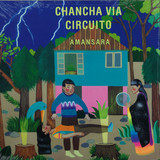
Argentine producer Pedro Canale returns from a three-year sojourn with his long awaited third album. Originally coming out of Buenos Aires's famed digital cumbia scene, Chancha has notoriously broken way outside those boundaries to forge unprecedented mergers between Brazilian rhythms, Paraguayan harp, Andean mysticism and the solitude of Argentinian folklore - all processed through his own futuristic style of postdubstep.
Chancha's sound is without question truly unique and instantly recognizable to the point he has become a key reference point for an entire crop of artists that have begun to carry his genes.
Hailed by the Washington Post, the New York Times, Pitchfork, NPR and countless others, Chancha Via Circuito defies even the shrewdest of marketing geniuses. On one hand, he is something of a cult artist within micro-circles of electronic music, having been invited to perform at Montreal's MUTEK as well as the Roskilde and Vive Latino Festivals. At the same time, Chancha's music has found broad appeal outside of the avant-garde, most notably his magnificent remix of Jose Larralde's "Quimey Neuquen" which was heavily featured in 2013 as part of the final season of the critically acclaimed television series Breaking Bad. Fans of the show undoubtedly remember Walter White burying his millions in the desert, soundtracked by the wide and gentle grooves of Chancha Via Circuito.
Amansara is a natural progressing of Chancha's special strain of electronic South America. Lead single "Coplita" features the haunting vocals of previous collaborator Miram Garcia, while "Sueno En Paraguay" merges Andean folklore sounds with bleeps and blips and pounding drums in a way that sounds completely natural and ordained. "Jardines" features the driving vocals of Lido Pimienta merging with heavy synths, percussion and bells into an unforgettable track, while both "Tarocchi" and "Guajaca" ramp things up into deep, electronic dancefloor inna rainforest territory.
Art for Amansara comes from Argentinian psychedelic folklore painter Paula Duro who has crafted the look of all of Chancha's previous releases.
What do you get when you blend a reverential take on the diverse canon of popular Caribbean music with an all-star cast of seasoned studio musicians from the heart of Brooklyn? The answer lies in Combo Lulo's much anticipated debut studio long-player, Neotropic Dream. The group takes its influence from the deep musical heritage of New York's cultural pedigree, especially the heyday of the city's Caribbean record distribution industry — a culture of music that still bubbles today in the crevices of the city's independent neighborhoods and record communities.
Despite the general scope of the muse, it's hard to precisely pin down this fantastic re-imagining. In some ways, that's why the title for the band's debut album is Neotropic Dream, a nod to the biogeographic region that encompasses the countries along the Afro-Caribbean diaspora, a region intensely diverse in its climate, fauna and flora. This theme manifests musically as you journey through Combo Lulo's original compositions and cleverly chosen covers. More than anything, it's a dreamy storm of styles and musical moments born anew. And just as weather swiftly travels and transforms the Caribbean, so the varied musical styles carry the listener from the album's start to finish. Not just a talented band's showcase of styles, but rather a sumptuous feast of savory and sweet ingredients on display, together. A musical curry roux, if you will, that fits together so harmoniously, it's no wonder the band engenders automatic appreciation both in their studio recordings and in their uproarious live shows.
Whether it's cumbia gone rock steady, or reggae gone chicha, or vocal vs. version, there's a little something for everybody on here, depending on where you drop the needle. With splendid original compositions and horn arrangements from band leader Mike Sarason and saxophonist Anant Pradhan, respectively, Combo Lulo is quickly proving themselves to be a powerhouse of the highest caliber.
Driven by support from the likes of Gilles Peterson, Quantic, Nightmares On Wax, The Nextmen, Lauren Laverne, Danny Krivit and most prominently Craig Charles, Sam Redmore has built a name for himself over the last few years for crafting soul-drenched remixes and reworks of both solidified classics and lesser-known material.
Having spent so much time re-working the classics it is no surprise that production values are high when it comes to his own original music.
At the start of 2021 Sam signed to Jalapeno Records, giving everyone involved cause for celebration after a difficult year and his debut album is slated for May 22.
Many of the album tracks were purpose-built for inclusion in his DJ sets - which can range from cumbia, afrobeat, samba, funk and reggae through to house, broken beat, disco and everything in between…
On The One will be the first single to drop from the album and features the inimitable vocals of poet and rapper Mr. Auden Allen as well as the soul drenched horns of Renegade Brass Band. Debuted on BBC 6 Music when Sam performed a guest mix in April this year, it seemed the perfect track to debut from Sam's new record.
Paz en La Tierra is a result of a search by the Meridian Brothers & Conjunto Media Luna of the heart of something that can be called a 'power format' of Colombian Caribbean music; Accordion , Guacharaca, Caja, Congas, Electric bass, and vocals.
Departing from this idea, and casually working with the music of a documentary on the famous singer Diomedes Diaz, Iván Medellín (accordionist of Conjunto media luna), and Eblis Álvarez from the Meridian Brothers, embarked on a new work building a sound exclusively on the traditional format, searching for several spaces between the lines in the universe of accordion in Colombian music.
The duo departed from the basic: the line of vallenato, the most famous in the country but not the only one, the line of sabanero music more of the lands of Sucre and Córdoba inclined towards cumbia, bullerengue, son vallenato among other airs fed the group's ideas. The Barranquilla center deserves a separate mention, due to its cosmopolitan approach, using all kinds of influences, from the Caribbean islands to ancient rhythms or even modern rock and funk, also used as an inspiration for this record.
In the process, new ways of melody appeared and new ways of expression emerged. Although the rhythms used in the record are rooted in the traditional, the duo glitched those rhythms turning them into new directions in the style, using exclusively the past references to transmute the sound into something that looks inside a parallel future.
Using several theatrical situations, alterations in musical structures, and slight deformations of the traditional harmony (a tonal center and its dominant) the result of "Paz en la Tierra" is enigmatic and charming, and at the same time directed towards the dance floor keeping the past alive and flourishing the essence of the tradition.