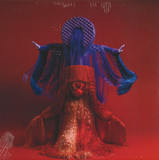
Nkumba System, new project led by guitarist Guillo Cros (Romperayo) provides a vibrant fusion of catchy percussions, Afro-Colombian songs and Cameroonian guitar picking style linking Central Africa to the Caribbean! Nkumba System is about to fill the dancefloors with debut album ¡Bailalo Duro!, recorded between Bogotá and Paris.
On the imaginary highway of Guillo Cros, makossa crosses paths with cumbia, Zairean rumba combines with that of Cuba and last but not least, currulao melts into Malian desert blues. Cros' journeys led him to meet the Cameroonian singer Mama Ohandja, alongside whom he trained for several years. Thereafter, he resided in Bogotá from 2014 to 2019, collaborated with Pedro Ojeda in the band Romperayo and “Los Propios Bateros” (7” NYCT). His current project Nkumba System was born in 2018, inside Colombia's effervescent tropical music scene. The original line-up includes bassist Jhon Socha (Romperayo, la Makina del Karibe), singerpercussionist Leonel Merchan (La Phónoclórica) and Kike Narvaez on drums. Several singles were
released on local labels Tambora Records and Palenque Records, preceeding the arrival of Cameroonian guitarist Simba Daniel Evousa in the band. The drummer Pedro Ojeda, travelling companion in Romperayo, is invited on the track “Mujer hermana”, as well as the Malian singer Mamani Keita on “Paisano”. The album is mixed in
Amsterdam by sprawling musician Alex Figueira (Fumaça Preta, Conjunto Papa Upa, Music With Soul), in his studio Barracão Sound, and comes as a Limited Pressing.
Suche:cumbia
It's back-to-backhits with the new Names You Can Trust split single series, the first of which features two up-and-coming acts in the blossoming Latin music scene of the Pacific Northwest. From Seattle via Argentina and Miami is Terror/Cactus, a futuristic electronic cumbia project from musician Martín Selasco. Selasco's machine-forward audio/visual performances combine a mixture of bugged out digital folklore, live percussion and the omnipresent sounds inspired by the canon of South American chicha concoctions. That balance is on display in the group's debut vinyl release "Churro vs Crow." A field recording of a Mexico City street scene playfully intermingles with the track's heavy production, an innocuous battle between a crow and a churro vendor breathes a little outdoor analog into an avant digital landscape.
On the other side of the spectrum, down south in neighboring Oregon, lies Portland's Orquestra Pacifico Tropical, an 11-piece ensemble formed by a crew of talented musicians from the lush local offerings of the Willamette Valley. The band's big sound is an explosive expression of their own roots, representing the heyday of tropical music that graced stages for decades in Central and South America. Clarinet, brass, electric guitars and that familiar percussive pulse are all alive on their NYCT debut "Regreso." Imagine a return to the cross-pollinated sounds of the psychedelic '70s, an echo from the Andes, the Amazon, through the central isthmus and back to the present, only this time landing in the City of Roses.
Gitkin's music exists somewhere between primal, rootsy memory and distant exotic yearning — A dusty bordertown where the familiar blends imperceptibly into the enchantingly foreign.
After a long and fruitful run as a bandleader with relentlessly touring party-rockers Pimps Of Joytime and a Grammy-nominated country blues collaboration with Cedric Burnside, multi-instrumentalist Brian J set out to "explore tonalities I'd never messed with," as he puts it. It was a release from "having to write lyrics or involve my voice," he notes, and so the (mostly) instrumental sound of Gitkin came into being.
Reviews of Gitkin's first LP grappled with descriptors, tagging it vaguely as "cinematic" and comparing it favorably with Khruangbin. True, the music is largely wordless, emotionally evocative, and guitar driven. But it possesses an alluring alchemy all its own.
Gitkin's first release, 2018's well-received Five Star Motel, amply demonstrated his ease with earthy funk and comfortably-cut rhythm. On his new full-length release Safe Passage, the itinerant guitar slinger broadens his already rich palette with melodies informed by Greek and Middle Eastern modalities, Peruvian Chicha and Tuareg Saharan guitar styles. No gimmick, this juxtaposition of gut-bucket blues and funk low-end with unexpectedly twisting lead phrases highlights the intense flavors found in each savory ingredient.
Recorded at his home studio in New Orleans, Safe Passage showcases a new batch of immediately engaging, repeatedly satisfying cuts, ranging from surf exotica ("Cat Nip") to raunchy roadhouse stompers ("Fools Gold" and "The Drive") to dreamy vocal cuts "Foot Steps" and "Hold On" to the floating finale of "Safe Passage."
Gitkin's production radiates character and warmth, leaning on soft-focus vintage mics, dubby spring reverbs and the quirks of a tape console. Further enhancing the intimate vibe are guests like veteran Chauncey Yearwood (congas) and New Orleans local "Spug" Smith, who provides a sousaphone low-end on the cumbia-not-cumbia "Spug Life." Carol C lends her striking voice to three tracks, including the strutting single "De La."
Safe Passage will be released by Wonderwheel on September 18th, 2020 and will be available on vinyl, CD and digitally.
For years, Frente Cumbiero has served as the torchbearer of a new wave of experimental exploration in the diverse modern-day cumbia canvas. Led by Mario Galeano Toro, a Colombian native and accomplished veteran of Bogotá's rich music scene, the group first connected with listeners outside of South America via their head-exploding 2010 debut on Names You Can Trust. "Pitchito" would become a cult favourite, a catalyst for the Brooklyn-based label, and soon after a bonafide rarity. Those beginnings of Frente Cumbiero focused on an honorary recognition of the massive musical impact that the many formations of cumbia have had over the decades within Colombia. Subgenres such as gaita, porro, vallenato, and caracolito, to name just a handful, have all played their part within the evolution of the country's tropical music lineage. That deep-digging determination coupled with a truly unique and talented musicianship has informed Frente's music, some of the most forward-thinking and reverential examples of the current tropical scene. It has led to some incredible opportunities and collaborations in Europe, Asia and the States, including genre-defying recordings with London's Mad Professor and Japan's Minyo Crusaders.
Still, Galeano Toro's assemblies with Frente Cumbiero have been scarce amongst his other exploits, splitting time as player and producer in other ground breaking projects like Ondatropica and Los Pirañas over the recent years. After three 45 single releases together with NYCT, the time away has left everybody wanting for more. Now, reassembled and seasoned with years of touring and gigging in a multitude of projects, the group's current quartet of Galeano Toro (keys and synths), Pedro Ojeda (timbales and percussion), Marco Fajardo (tenor sax) and Sebastián Rozo (bombardino) is a stripped down powerhouse of unadulterated psico-tropi swing, a beautiful Colombian musical stew, incorporating a host of flavors from the melting pots of the Pacific, Caribbean and Atlantic pathways. The final result is of course quite unclassifiable, simply a new breed of good music and a dancefloor delight.
HIGHLIGHTS First ever reissue of "Kabwlú", a very hard-to-find album released by Discos Fuentes in 1965. The mysterious Los Picapiedra (which translates as The Flintstones, inspired by the 1960s American cartoon show), was a short-lived studio group with one albumto their name, "Kabwlú", mixing 'folkloric' and 'modern' elements with calculated 'caveman' humor. It is very musically diverse; not only are there the requisite genres that could be found on similar Colombian teenage-oriented groups' records of the time, such as cumbia, gaita, rock, twist and pachanga, but there is also a smattering of surf, doo-wop, Latin jazz, guajira, ska, and calypso. But what makes the whole thing so special is the odd, off-kilter arrangements, spooky tunings, rudimentary clanging percussion, invented 'cave' language, prominent twanging electric guitar and many zany sound effects. Several of Los Picapiedra's songs became very popular in Colombia as well as Venezuela and especially in the 'rebajada' (slowed down) version as played by the 'sonidero' sound system DJs in Mexico, such as "La Hossa". Presented in its original artwork and pressed on 180g vinyl. Part of Vampisoul's reissue series of classic Fuentes LPs. DESCRIPTION While Discos Fuentes was known for recording all sorts of interesting sounds from traditional folkloric Colombian music to the latest popular international styles, every once and a while they would put out a "novelty" record, perhaps to exploit a passing fad, and at times the label would green-light something strange or even outlandish. Many of those left-field releases have their merits and have subsequently become collectors' items over the years. One such case is the mysterious Los Picapiedra (which translates as The Flintstones, no doubt inspired by the 1960s American sitcom cartoon show), a short-lived studio group with one album to their name, "Kabwlú" (an unpronounceable, invented "caveman" term that is also untranslatable, but seems to have been the 'traditional rhythm' of Los Picapiedra's 'homeland'). What is interesting about the record is that it is very musically diverse; not only are there the requisite genres that could be found on similar Colombian teenage-oriented groups' records of the time, such as cumbia, gaita, rock, twist and pachanga, but there is also a smattering of surf, doo-wop, Latin jazz, guajira, ska, and calypso. But what makes the whole thing so special is the odd, off-kilter arrangements, spooky tunings, rudimentary clanging percussion, invented 'cave' language, prominent twanging electric guitar and many zany sound effects. Much like its namesake American cartoon The Flintstones, "Kabwlú" trades in creative anachronism, mixing 'folkloric' and 'modern' elements with calculated 'caveman' humor that works on many different levels. For instance the title tune seems to have been inspired by the pachanga craze and recalls the vibe of Ray Barretto's massive 1962 hit, 'El Watusi', but it has a certain joyful simplicity and rock-solid underpinning that elevates it beyond mere novelty or exploitation - and argues for its timely reissue for today's audience. The band was a studio invention that had no major significance in Medellin's live music activity. However, several of Los Picapiedra's songs were very popular in Colombia as well as Venezuela and especially in the 'rebajada' (slowed down) version as played by the 'sonidero' sound system DJs in Mexico, such as "La Hossa". Pablo E Yglesias (aka DJ Bongohead, Peace & Rhythm) Additional research by Luis Daniel Vega
- A1: Pace
- A2: The Message Continues
- B1: Source (Feat Ms Maurice, Cassie Kinoshi, Richie Seivwright)
- C1: Together Is A Beautiful Place To Be
- C2: Stand With Each Other (Feat Ms Maurice, Cassie Kinoshi, Richie Seivwright)
- C3: Inner Game
- D1: La Cumbia Me Esta Llamando (Feat La Perla)
- D2: Before Us In Demerara & Caura (Feat Ms Maurice)
- D3: Boundless Beings (Feat Akenya)
Multi award-winning saxophonist and composer Nubya Garcia is back with her much anticipated debut album, SOURCE. Her first release on Concord Records, under the iconic Concord Jazz imprint. The album follows her 2018 self-released EP, WHEN WE ARE, the title track of which was described as “effervescent” by The New York Times and named one of NPR’s Best Songs of 2018. Her debut EP, NUBYA’s 5IVE, released in 2017, was hailed as “exceptional” by The Vinyl Factory and sold out on vinyl within 24 hours. In 2018, Garcia also featured on five of the nine tracks on WE OUT HERE, the Brownswood compilation project celebrating London’s young and exciting jazz scene. She won the Jazz FM Breakthrough Act of the Year Award and the Sky Arts Breakthrough Act of the Year Award in 2018, and the Jazz FM UK Jazz Act of the Year Award in 2019.
A collection of sonic mantras to live by, SOURCE is a deeply personal offering in which Garcia maps cartographies around the coordinate points of her identity, her family histories, grief, afro-diasporic connections and collectivism. SOURCE is fundamentally about getting grounded within yourself, so that you can be present with others. It's about a realization of personal and collective power: the evolution of the saxophonist’s values as she re-connects with herself, her roots and her community. Garcia digs deep to present an album with a global outlook: from London to Bogota, Caura to Georgetown, it's a record drawing inspiration from the many places Garcia calls home.
Brussels-based trio schroothoop (Dutch for ‘junk yard’) is formed by Rik Staelens (wind & string instruments), Timo Vantyghem (bass & clarinet) and Margo Maex (percussion). Their tribal oriented debut mini-album features homemade instruments built from lost and found objects like wood, scrap metal or anything that would end up in a landfill. The band’s music is infused with sounds from around the world orchestrated by PVC flute melodies, jerry can beats and washtub bass lines. The trio effortlessly incorporates jazz with North African chaabi, cumbia, reggaeton, Eastern oriental melodies and Afro-Cuban rhythms, resulting in a danceable and hypnotic trip in 7 compositions through the Brussels melting pot. The musical members are part of groups such as La Clinik du Dr Poembak, Raksinaksi, Sea (Peoples), Borokov and Sea Shark Minor.
Names You Can Trust is proud to present a special collaboration with Barbès Records and the legendary godfathers of cumbia amazónica, Los Wembler's de Iquitos. Featuring two songs mixed expressly for 7-inch directly from the reels of their 2019 album, VISIÓN DEL AYAHUASCA, it's the latest entry in the group's historic canon of a particular brand of bonafide psychedelia, a worthy addition to a catalog of recordings that have made their way around the world to fans, DJs and sound systems since the group's beginnings in the late '60s.
The band's 50 year-old origin story begins when electric instruments started showing up at the port city of Iquitos, Peru. This seminal moment of international trade at the gateway to the Amazon inspired a shoemaker named Solomon Sanchez to start a band with his five sons. Los Wembler's were the first band in the capital of the Peruvian Amazon to play popular local rhythms with electric guitars. Their revolutionary sound, fuzzy lysergic guitar helixes wrapped around melancholic melodies, would go on to have an enormous impact on the whole of South American popular music, echoing throughout the continent and further, into the States and eventually across the world.
The past few years have seen a new wave of interest in the band's music. Los Wembler's, the sons, now fathers and grandfathers themselves, have brought their trademark sound on recent tours to Mexico, Europe and North America, where it has been embraced by a new generation of musicians and listeners.
As Los Wembler's prepared for a lengthy tour in 2020 to coincide with this new 7-inch issue, the world abruptly changed course. The COVID-19 outbreak has had particularly devastating consequences in the Peruvian Amazon. With an urban density of around a million people, Iquitos is the largest isolated city in the world, reachable only by boat or plane and surrounded by the vastness of the rainforest. A buzzing multicultural city, Iquitos was catapulted into modernity during the late 19th century's rubber fever. It is home to not only the members of Los Wembler's, but several legendary and influential musicians who helped lay the groundwork for the roots of chicha, the distinctively Peruvian brand of cumbia.
Amsterdam might be susceptible to grey skies and rain as any other, but cup your ear to the music flowing out of the Dutch capital, and another story emerges. The Mauskovic Dance Band are a prime example of an act who have been dialing up the sunshine over the river Amstel in recent years.On Shadance Hall, their first release of 2020, they concoct a tantalising brew of no-wave, psych rock, cumbia, power dub and numerous other colourful shades of global grooves.
No stranger to Dekmantel as one of half of electro-grouping Bruxas, Nicola Mauskovic leads his percussive troupe through a heavy, trippy, disco fiesta with this, their first debut on Dekmantel Records.
The Mauskovic Dance Band’s epic sonic journey on Shadance Hall began deep in the Welsh valleys. Partnering dusty drum machines alongside phat layers of congas, assorted bric-a-brac of percussive tools, and distortion-soaked guitars, Mauskovic’s ensemble suspend the tempo and turn up the grooves. on this soundsystem-inspired, post-punk odyssey. The resulting soundsystem-inspired concoctions are a mixture of 130bpmbeats (‘Ventura Phase’), Jah Wobble-influenced bass rhythms (‘Squeeze Dogs’) and Carnival-ready soca-jams (‘Theorie Amerikaan’).
Taken back to Amsterdam’s famed Electric Monkey Studio (a favourite for Ghanian great Ebo Taylor and Dutch youngbloods Jungle By Night alike, Mauskovic teamed up with engineer Kasper Frenkel to mix down the record. Here the two acted as Mad Professors, experimenting with the recordings and making multiple versions of each track by creating tape loops, bouncing the audio back and forth and layering the resulting recordings in waves of reverb and echo. In classic dub style, the band ended up with dub edits, rich in space echo, reverb, crush, and dub-goodness, completing the second half of Shadance Hall like a funky palindrome. It rounds off an expressive EP steeped in musical history, bursting with inventiveness, projected at the listener as a maze of influences to get lost within.
Music With Soul returns with another genre-defying instant classic, expanding the limits of the Tropical Dance music universe.
Staying true to the label's essence, founder Alex Figueira places a high bet with this new release, introducing a brand new breed of traditional “Hindoestan” (Indian diaspora in Surinam) music and Cumbia. Taking the music of underground Surinam musician and empresario A. Bechan for an explorative excursion into the depths of the Colombian caribbean coast, this explosive combination raises the bar unquestionably. Equally weird, groovy and trippy, this 45 will turn any party upside down, regardless of any factors. The only problem you will encounter is what to play after. The solution is right on the other side. Just flip the record and give them the Instrumental version, featuring electric guitar, an alternative percussion set up and the beloved classic Juno-60 synthesizer in the leading role for another 4 minutes of dancefloor catharsis.
- A1: Paleta (With Quetzal Guerrero)
- A2: Head Above Water (With Sean Rogers)
- A3: Head Above Water (With Amparo Sanchez)
- A4: Are We Better Now? (With Brian Lopez & Charlie Moss)
- A5: El Curandero (With Depedro)
- A6: Early In The Morning
- A7: Eres Oficial (With Quetzal Guerrero)
- B1: Me Dejo Llevar (With Raul Marques & Esther Valverde)
- B2: El Chumina (With Quetzal Guerrero & Mexican Institute Of Sound)
- B3: No Te Esperaba (With Chetes & Joey Burns)
- B4: Little Space (With Nick Urata)
- B5: Why You Looking That Way (With Quetzal Guerrero)
- B6: Bora Bora
- B7: Hoodoo Voodoo Queen (With Gaby Moreno & Carrie Rodriguez & Moira Smiley)
Sergio Mendoza (a longtime member of Calexico) grew up on both sides of the US/Mexican frontier. On the band’s 3rd album, “Curandero,” His musical melding of that experience explodes from the speakers. Boogaloo, cumbia, ranchera & rock’n’roll.
LTD editon - Orange vinyl and high quality download codes
Homemade synthesizers, banjo, guitar, recycled toys and broken electronic beats .. there’s more to Solo Moderna than just an unconditional love for analog tweaking. From his native town of Tilburg, Netherlands, Multi-instrumental virtuoso Bas Voorn is peaking in on all corners of the world, infusing Mento, ska, cumbia, Balkan, dancehall, dembow or afrohouse, into his minimal, joyful, 8-bit, approach towards electronica, to create strangely syncopated, ridiculously infectious grooves. It’s as if Kraftwerk and Señor Coconut went on a trip to Africa, the Balkans, the Caribbean and South America, and "Republica Moderna" emerged from these adventures. From the Balkan-Dembow of “Escúchame Como Soy” and the cumbia of the Washington-based Empresarios in “La Bandolera”, to the sun- kissed, afrohouse vibe of “Sonido SID Africano” and the west African “Republica de chonta”, Solo Moderna gleefully shifts from the acoustic to the synthesized to create a surprisingly coherent work. For Solo Moderna, life is not something to be taken so seriously. Instruments are toys, and Earth and it’s cultural diversity a playground. It is this unique lightheartedness and flippancy, moving you to smile, dance and enjoy life as it is, that makes Solo Moderna one of the few artists you can recognize immediately after an 8- bar snippet of a song heard in any club around the corner. Republica Moderna, his 3rd album to date, is a vibrant, delightfully upbeat, timeless homage to the world’s musical diversity.
This is GCLP157
It's an Orange LP and brings download Codes
(LP gatefold deluxe + DL) Brussels based Peruvian band Nikanor deliver their debut album 'Bajo El Sol' on Rebel Up Records. A sunny mix of psychedelic 'chicha' cumbia, cumbia amazonica, rock and andean folk with songs about injustice, fatherhood, natural power, mythical legends and solidarity.
VCS have been translated from their natural, organic Latin grooves into acid line, Cumbia rhythm remixes in the latest Lovedancing plate.
Razor-N-Tape honcho, JKriv, joins Whiskey Disco boss, Sleazy McQueen, for three hot hot hot remixes taken from the latest Vagabundo Club Social EP, Pambele.
Sotomayor is the electronic music project with afro latin influence by siblings Raul (music production) and Paulina (vocals). It is a dance music project that fuses rhythms like cumbia, afro beat, dancehall, Peruvian "chicha" and merengue with futuristic electronic beats.
The band debuted in 2015 with "Salvaje," an album that allowed them to perform in several festivals around the globe in countries like England, US, Mexico and Colombia.
The album received excellent reviews from foreign media in countries like Japan, Australia, United Kingdom, Chile, United States and Colombia. They also appeared in more than 25 lists of the best of the year from medias from all around the world. 2020 will see the release of "Orígenes" their 3rd studio album trough the NY based label Wonderwheel Recordings.
This album was recorded between Mexico and Puerto Rico, and was produced by the 28 times Grammy Winner Eduardo Cabra aka "Visitante" from the legendary band "Calle 13." In this production Sotomayor explores a new Afro Caribbean vision in the music, much more dance floor focused, and highly influenced by percussion
From the cosmic creative musical mind of Swiss/Catalan studio whizz, Zeleste Nightclub engineer, video nasty film composer, occasional Jaume Sisa (Muìsica Dispersa) collaborator and future electronic music therapy pioneer J. M. Pagaìn comes the synth-ridden, vocoder-loaded 1984 sci-funk soundtrack to Barcelona’s daytime TV response to the universal E.T. phenomena. Get ready to meet your new alieniìgena amic and the unidentified flying object of thousands of Catalonian kids’ affections through the 1980's as Finders Keepers present Pagaìn’s lost lunar modular synth score to ‘Kiu I Els Seus Amics’ (Kiu And Friends aka Kiu Is Your Friend).
From the same intergalactic phenomenon that brought such delights as Turkey’s exploito cash-in ‘Badi’ or South Africa’s lo-rent homage ‘Nukie’ to our unregulated small screens and the same craze which filled international airwaves with the likes of Extra T’S electro smash single ‘E.T. Boogie’ or the million selling Columbian ‘Cumbia De E.T. El Extraterrestre’ smash hit... not to mention a wide range of unofficial theme-tune cover versions from Holland, Austria, France and Germany (lest we forget an inspired late period Lee Scratch Perry Album).
In 1982 the diaspora from Steven Spielberg’s small fictional mid-American neighbourhood that played host to everyone’s favourite torch fingered, three toed, Skittle-scoffing space goblin touched virtually every family home in every major city resulting in one of the biggest cinematic merchandise phenomenas of the 21 st Century, resulting in an unexpected high-demand / short-supply play-off in which bootleggers, copyists and counterfeiters rose to the challenge like never before.
When Spielberg regrettably told interviewers that he had no intention of making a sequel to ‘E.T. The Extra Terrestria’ it instantly became open-season for the imitators... but way before somebody squeezed-out ‘Mac & Me’, ‘ALF’ and ‘The Purple People Eater’, a team of kid’s TV executives in Catalunya were ready to fill the widening gap in the market without haste. Created in 1983 by Luna Films and Televisioì de Catalunya (TV3) and screened exclusively in Catalunya, ‘Kiu I Els Seus Amics’ was one of the first E.T. ‘tributes’ to make it out of the gate and with a crew of five individual directors and writers to ensure that the five episode, one-off series hit the wave of phone-home-fever, Kiu has since remained a short but sweet micro- memory in the hearts of an entire generation of Catalonian cosmonauts.
This special Finders Keepers edition comes complete with all of Pagaìn’s cosmic synthesiser soundscapes fully intact (barring striking comparisons with the likes of Tangerine Dream, John Carpenter, Vangelis and the soundtrack music of Suzanne Ciani), as well as some rare, unreleased, incidental TV edits. The bulk of this LP is made up of tracks taken from the rare full-length album, which was released after the TV programme had already been aired and coincided with sales of jigsaws and rubberised play figures in an attempt to catch-up with the unexpected mega-success of the show, needless to say, with a short promotional window, the LP (and cassette edition) did not benefit a re-press and with most copies sold to children, few vinyl pressings have escaped repeat needle scratches and decorated sleeves.
Dick Verdult, a.k.a Dick el Demasiado is the Philip K. Dick of multi-disciplinary art, the Moby Dick of “cumbia lunática”, and the Charles Dickens of literature and experimental cinema. He first fell in love with cumbia when he heard his nursemaid singing the classic “La pollera colorá”. From this moment on, he adopted the genre and reinvented it, in a perpetual degeneration called Cumbia Lunática, twisting up the elements of traditional cumbia, the “cumbia of the mucamas”, to create an anarchotropical vertebral rhythm, one which supports every moving part.
Celulitis Illuminati is the powerful debut of the anarchotropical gentleman knight of the abstract, Dick el Demasiado, eight dangerous tracks recorded for the first time on vinyl, songs that, upon listening, will liposuck all that grotesque accumulation of adipose tissue out of buttocks and brain. They interweave an amalgam of South American folklore and the cables of electronic music, the plugged-in Ranqueles indians, as in “Asi Que Los Que Sí” (“So That Those Who Yes”) on Side A, surrealist and lugubrious beats, poetry made song and “the dead man’s drool is good for painting watercolors”, as he sings in “Búho Sin Un Ratón” (“Owl With No Mouse”).Euphony that will abduct you away to a viscous street party with “Son Cosas De Hoy” (“They’re Things For Today”) and to an eclectic and excessive dimension with “pero bien bweno” (“but very proper”).
Side B is pure dynamite: “Mecha flan” (“Pudding Fuse”), “Sábado cultural” (“Cultural Saturday”) and “En la jeta” (“In the face”) represent the perfect blend of Lucho Argain (La Sonora Dinamita) and Muslimgauze (Bryn Jones). On top of this, the album includes an as-yet unheard gem, “Llama Mi Abogado” (“Call My Lawyer”), produced by Dick himself and Manuel Schaller, the telepathic mage of the Theremin. When the Dutchman stepped off the boat and onto the block, as well as offering us the TV set, the sculpture of a deranged English woman who devours islands like they were sandwiches, the synthesizer, the sound effect, the African drum, the maraca, the indigenous whistle, he obtained for us the song and the stanza, he provided us with the language and the poetry, the truthful, the epic of the ugly. Cellulite for mortals, cumbia lunática for the enlightened ones! Alfredo Padilla (Trans. Komurki)
One of the original catalysts of Latinx music in New York City, MAKU Soundsystem has been the connective tissue for several creative projects, bands and community roots for over a decade. As a group with a rotating membership, they've recorded multiple albums both DIY and for worldwide labels. Throughout their various iterations, the heart and mission of the ensemble has consistently built bridges, rather than tearing them down, remaining a remarkable beacon of positivity in a consistently competitive environment. The inspiring atmosphere has nurtured several notable musicians and acts over the years, including members of Combo Chimbita, Dilemastronauta, Bulla en el Barrio, Leon Brothers and Prince of Queens. Now down to a core group of three musicians, alongside percussionist Moris Cañate, MAKU and Names You Can Trust have finally teamed up for a vinyl edition after many years of collaborative shows and connections.
Perhaps their rawest and darkest recordings to date, this stripped down quartet is an ode to the creative source of their core members, lead singer & bassist Juan Ospina, drummer Andres Jimenez and guitarist Camilo Rodriguez. The A-side, "Culebra Coral" is a snakebitten taste ofla cumbia, played with an experience and restraint that only enhances the end result. It's a free driven approach born from familiar experimentation, rather than modern day trends — a singular jam, refined from years of playing together. Part psych, part cumbia, total MAKU. The B-side, "Contra Tambor," is emblematic of the group's roots in the traditional sounds of thetambora, a drum-forward percussive arrangement that follows Jimenez and Cañate on a free-driven approach to the ritualistic movements of the drums, this time drowned with an antidote of analog FX, synthesized glitches and atmospheric coros.
Sonido Gallo Negro has been a mainstay of the current revival of tropical and psychedelic music throughout Central and South America since the first of their three albums was released in 2011. Hailing from Mexico City, a hub of cumbia, chicha, surf and garage music for over five decades, it's no wonder that SGN has such a wonderful and integrated blend of traditional styles that have travelled from the Caribbean, up the Andes, through the Amazon, around the shores of coastal Peru and back through Central America. SGN is part of a long line of artists in Mexico to make these cosmic connections found in the music's terrestrial path, yet are completely unique in their own mystical approach, both visually and sonically. As a hefty 9-piece orchestra, the band is quite capable of summoning a rich tapestry of sounds from an array of instruments of the psychedelic persuasion: farfisa, electric guitar, flute, theremin and, in the case of B-side Niño Perdido, accordion from master Colombian artist and NYCT alumnus, Carmelo Torres. It's the making of a swirling kaleidoscope of sounds and squiggles, all of which ride effortlessly over the fluid percussion and pace of those beloved Afro-Latin rhythms. In anticipation of their next full length release,Unknown Future, Names You Can Trust presents the first 7-inch 45 single to ever be released from SGN, a double-sided dose ofsonido psicodélico, spectacularly swirled into a perfect concoction of old meets new.
Soundway Records presents the eponymous debut LP from in-demand Amsterdam five piece The Mauskovic Dance Band – fusing no-wave dance punk, Afro-Caribbean rhythms and space disco in a “controlled explosion” (The Quietus).
Entirely self-produced, the band has reiterated their favourite elements of the 70s and 80s legacy of the Afro-Latin psychedelic music of Colombia and Peru, interpreting it through the context of modern day Amsterdam. The output is a lo-fi No Wave groove all its own - rooted in a deep love of champeta, Palenque, psychedelic cumbia, chichi, classic afrobeat and picó soundsystem culture.
Since the release of their “Down In The Basement” EP on Soundway Records in early 2018, the band have found themselves on a hectic European touring schedule – not to mention being involved in other side projects. Following stints with Turkish psychedelic folk rock group Altin Gün, and touring with the re-formed 70s Zamrock outfit W.I.T.C.H., Nic Mauskovic also teamed up with Dutch neo-psychedelic artist Jacco Gardner to form the “cinematic Balearic disco” duo of Bruxas (released by Dutch institution Dekmantel) – and together, they mixed The Mauskovic Dance Band debut album in Lisbon.
Lead single Space Drum Machine encapsulates the band’s prototypical brand of busy rhythmic patterns interwoven with insistent synth stabs and vibrant disco toms, layered with an elastic guitar riff drawing inspiration from Kenyan kikuyu and benga styles. High-pitched vocals describe being on a flight together and inciting each other to press a button of unknown consequence with “push it, push it” - and push it they do, at breakneck pace. And of course, the undeniable influence of Amsterdam’s hotbed of underground dance producers shines through as it does on all tracks - with the vintage psychedelic swirl of synthesiser, lo-fi drum machines and tape recording.
Fiestas is an ultra catchy foxtrot by the Colombian clarinet player and ar-ranger Ricaurte Arias. This American-style swing spiced up with a layer of Colombian sauce is an irresistible ear worm that takes the concept of smoothness to another level. Definitely the foxiest of all foxes.
The legendary composer and band leader Pacho Galan’s take on Estambul is another example of how American swing and Colombian music can blend into a unique musical melting pot. The song starts with hard tambor breaks and maracas kicking in badly. The playful horns driven by the cumbia rhythm make it impossible not to dance on this tune.
- A1: Tomás Tello - Valle Interandino (Peru)
- A2: Wellman – Cumbianchina (Argentina)
- A3: Joa Joys – Nadando (Argentina)
- A4: Horacio – Chacbril (Argentina)
- A5: Simón Vs Saimon - Amor10 (Peru)
- A6: M3Y – Aguas (Argentina)
- B1: Manrico Montero - Canto Interandino (Mexico)
- B2: Gil Sanson - Interludio Con Mbira (Venezuela)
- B3: Pandelindio - La Fuerza Domesticadora De Lo Pequeño (Argentina)
- B4: Gustavo Obligado - Gaoh El Gigante (Argentina)
- B5: Ciudad Satélite - Los Muertos De Siempre (Bolivia)
- B6: José Soberanes – Sus (Mexico)
La Danza del Agua" (The Dance of Water) is an eclectic musical journey through Latin American experimentalism - a sort of unofficial companion to the Anthologies of Atypical Portuguese Music volumes but focussing on South American music themes instead.
Originally released as two volumes on digital and tape versions on Papaki Records (2017, Argentina), this new concise edition presents 12 of the original 38 artists. Not to be seen as exhaustive document representing the wide styles of the even wider continent, it hopes to showcase some of its more marginal music with artists from a variety of countries such as Argentina, Mexico, Peru, Bolivia & Venezuela.
As such, this compilation shines a wider light on new and exciting sounds from the vast continent with a wide range of styles such as digital cumbias, sound experimentation, freak folk, noise, exotica, danceable beats and much more, mixed together to give life to the continuing strange world of contemporary South American experimental music.
A logical continuation of our New Weird South American explorations after releasing works from Meridian Brothers, Romperayo, Chupame El Dedo and a tape batch on Sucata sister label featuring Panchasila, Los Siquicos Litoraleños, Bardo Todol, Tomás Tello and more.
Back in 2014 when we first released the self-titled Chupame El Dedo we weren't sure if people could hold their mojitos while banging to their music. In 2019 we seriously advise to keep your hands free while listening to their second album. Formed by psych cumbia master Eblis Alvarez (Meridian Brothers) and Pedro Ojeda (Romperayo), the man that found the perfect cocktail mix for acid + folk + tropical beats, Chupame El Dedo are ready to mess around with Satan. 'No Te Metas Con Satan' it's a humorous title for music that expels cartoonish metal-vibes mixed with tropical rhythms. It's a pitch perfect title for a record that's never at the right pitch. The humour makes way for the funny stories that Eblis and Pedro explore in their lyrics. Souk's fourth release is a daring adventure in global beats. Frequently it comes to mind the universe of Quasimoto, Madlib's abstract hip hop that sounded delicious in the early 2000s. Chupame El Dedo lives in the same kind of power trip, fuelled by intense salsa rhythms dressed with heavy metal images.
That's where Satan comes into place. The Devil wears many clothes, but none are as multi-coloured and trendy as the ones we see in 'No Te Metas Con Satan'. We are advised of that during the first side of the LP. Each song dares the listener, with a multitude of ideas, sometimes dissonant ones, that find their way to make sense. An example The first song 'No Te Metas Con Satan' sounds like a perverted version of 'Da Ya Think I'm Sexy' and when you think it's over, it starts again, repeating ideas and leaving you extremely confused. What the fuck just happened Chupame El Dedo happened.
And it goes on. Flip to the other side and 'Alexandra Candelaria' says hi. A 7:43 minute long sinful & hilarious soup opera. No-one is ready for this. Laughter mixes with intense head banging, while we listen to what would happen if Jodorowsky made a Cartoon Network show. A damn good one. Maybe it's a good idea to not mess around with Satan, but you'll be in serious trouble if you don't listen to this. Seriously.
Here you go. We started a compilation series combining the different powers of our fam members. A-Team Series 1 is presenting the opening team. Our first ATeam curates this power as their little (un)tropical journey. It comes with a booming cover art by our talented Johan Kleinjan inspired by the opening episode of the A-Team TV series.
Genre: Global Bass, Tropical, Electronic Cumbia, Electronics, Juke, Bounce
YANGA brings a new dimension to the rapidly growing scene of Afro-Latin independent music taking shape in Los Angeles and concentrated in the fertile enclave known as the Inland Empire. Intertwined with other intrepid musical explorers who call the IE home, YANGA has sprouted their own distinct branch on the tree of Caribbean music and culture.
Much like their cousins and Names You Can Trust label mates of the same Southern California region (QUITAPENAS, EL SANTO GOLPE and BUYEPONGO), YANGA creates new recipes based on a traditionalbouillabaisseof Afro-Carib rhythm, sharing a few ingredients and musicians to develop a deeper chemistry and cohesiveness but cohering into their own piquant flavor.
YANGA's singular focus and strength is their inspiration from and adherence to the beloved rhythms found throughout the Caribbean coast of Colombia — rhythms like cumbia,garabato, tambora and zambapalo. These rhythms form a touchstone and a proud statement of purpose for their debut on Names You Can Trust.
Led by John D'Alessandro's accordion and the fiery female voice of Eddika Organista (El Haru Kuroi), this new recording is an intense ode to the band's fundamental influences, conceptually crystallized in the studio of Chicano Batman bassist Eduardo Arenas with veteran Marcos Garcia (Antibalas, Chico Mann, Here Lies Man) crafting the mix. It's a realized and impeccably executed scene of dark, gritty and saturated drums and bass, the entire sonic landscape dosed with subtle psychedelia and studio wizardry that never overshadows the band's natural performance or their reverence for the classic sounds of the tropical '70s. The finished product is a perfect juxtaposition between vintage and modern. This special edition, double-issue single packed with deep dancefloor grooves are a sure-shot entry into the timeless canon of Afro-Caribbean recordings.
YANGA brings a new dimension to the rapidly growing scene of Afro-Latin independent music taking shape in Los Angeles and concentrated in the fertile enclave known as the Inland Empire. Intertwined with other intrepid musical explorers who call the IE home, YANGA has sprouted their own distinct branch on the tree of Caribbean music and culture.
Much like their cousins and Names You Can Trust label mates of the same Southern California region (QUITAPENAS, EL SANTO GOLPE and BUYEPONGO), YANGA creates new recipes based on a traditionalbouillabaisseof Afro-Carib rhythm, sharing a few ingredients and musicians to develop a deeper chemistry and cohesiveness but cohering into their own piquant flavor.
YANGA's singular focus and strength is their inspiration from and adherence to the beloved rhythms found throughout the Caribbean coast of Colombia — rhythms like cumbia,garabato, tambora and zambapalo. These rhythms form a touchstone and a proud statement of purpose for their debut on Names You Can Trust.
Led by John D'Alessandro's accordion and the fiery female voice of Eddika Organista (El Haru Kuroi), this new recording is an intense ode to the band's fundamental influences, conceptually crystallized in the studio of Chicano Batman bassist Eduardo Arenas with veteran Marcos Garcia (Antibalas, Chico Mann, Here Lies Man) crafting the mix. It's a realized and impeccably executed scene of dark, gritty and saturated drums and bass, the entire sonic landscape dosed with subtle psychedelia and studio wizardry that never overshadows the band's natural performance or their reverence for the classic sounds of the tropical '70s. The finished product is a perfect juxtaposition between vintage and modern. This special edition, double-issue single packed with deep dancefloor grooves are a sure-shot entry into the timeless canon of Afro-Caribbean recordings.
Since 2010, Buyepongo has led a steadily growing Los Angeles underground movement that combines the vast influence of traditional tropical sounds with the streetwise edges of the Latin American diaspora. Much like their name implies (translation: to cause a ruckus), their hybrid style is focused on the celebration, an infectious, energetic vibe that is universally and rhythmically connected. It'll get your feet moving, and much like many of the records from the golden age of cumbia, these two offerings demonstrate an updated and adapted reverence for the roots that is truly distinct to their own unique place and time.
For the group's latest single, that place, the sprawling Latinx scene east of Los Angeles, met head on with the east coast hot pot of Brooklyn. Recorded and produced in collaboration with Names You Can Trust during the band's serendipitous 2017 trip to NYC, this new release takes two of Buyepongo's most fan-favored and party-tested original songs, two that had yet to be recorded, and combines them with the NYCT forty-five ethos: a stripped-down, warm analog recording that perfectly captures Buye's live, bring-the-ruckus style in the room as it happened. "Por La Vida" romps over the A-side, a modern-day classic in the making whose lyrics (how beautiful is life, always full of surprises...) compliment a sunny, easy-going house party vibe, while "Miri" on the flip evolves from a loping, almost reggae groove into a transcendent journey through Caribbean feel-good sounds.
Goatherder is the seventh album from underground London producer Kristian Craig Robinson, AKA Capitol K. This ace manipulator of audio and punk warlord of groove has crossed a tapestry of styles and approaches with his own secret compass since 1998.
Along with everything from Chinese pop to the marching band music of the United Arab Emirates in his early musical vocabulary, the influence of rave, new wave, grunge, and noise-core would collide to create a bold new sound. His early studio experiments gave birth to his debut, Sounds of the Empire (Planet Mu, 1999) built upon a heady balance of samples and live sources that placed Capitol K at the forefront of the UK's electronic scene. The follow-up, 2002's Island Row, was released via XL Records, with lead single Pillow becoming a daytime Radio 1 crossover. Nomad Junk (2005) combined Asian field recordings into a vibrant psychedelic collage, while Notes From: Life On The Wire With A Wrecking Ball (2008) paid homage to London's squats and free anarchistic artistic spaces of which K was a part for many years. Andean Dub (2012) was an exploratory South American-influenced album of heavy synth laden cumbia sound system tracks.
The last seven years have seen Capitol K's stature as a producer elevated with his establishment of the renowned Total Refreshment Studio and recording work with musicians such as the Mercury Music prize nominated The Comet Is Coming, global dance act Ibibio Sound Machine (Merge), the pan-Arabic Flamingods (Moshi Moshi), Serafina Steer and her BAS JAN project, and contemporary folk artist Rozi Plain, among many more.
This latest work was developed and recorded in his native Malta, where he built a studio in a cave (a former goat stable). K gathered bamboo instruments collected around the world, including an ancient Quecha reeded pipe (his new-found lead instrument), and various resonating vessels and percussive objects including dry fennel storks collected from Punic troglodyte sites, and atonal flutes built from fresh cut farmland reed. Ritualistic improvisations took place over a series of seasonal visits, awakening genetic memory and plant communication.
Back in London the tracks were interfaced and expanded with post-industrial machine beat and bass guitar lock down. Homage is paid to New Age synthscapes, while a Spirit Jazz overtone arrives from K's recent years as the sonic muscle behind a plethora of luminous albums born in his Total Refreshment Studio. Goatherder follows on from the 2016 collaborative incarnation LOOSE MEAT and sonically abridges 2012's Capitol K album Andean Dub.
Outside of studio production and his solo repertoire as Capitol K, Kristian has toured as guest musician with multiple bands over the last 15 years, including Brazil's Cibelle (Crammed Discs), Archie Bronson Outfit (Domino) (whom he also co-produced), and recently Du Blonde (Mute Records).
His last project, Loose Meat, was a collaborative album of poetic dance music received lots of radio play in the UK and toured across the country for a year, performing a number of festivals.
He established the Faith and Industry record label which handled his subsequent releases and through which now he releases a number of other artists that he develops and produces.
- A1: Te Digo Wayno (4:36)
- A2: E-Chango (3:12)
- A3: Algo (Feat La Yegros) (3:13)
- A4: Como Saber (1:24)
- A5: Pachama (Feat Iara Nardi) (4:05)
- B1: Pa Que Yo Te Cure (Feat Balvina Ramos Y Queen Cholas) (4:11)
- B2: Tierra De King Coya (Feat La Walichera) (4:59)
- B3: Dorremi (3:18)
- B4: Icaro Llama Planta (Feat Isabel Pinedo Rengifo) (5:16)
King Coya ist das digitale Alter Ego des argentinischen Musikers, Produzenten und Komponisten Gaby Kerpel. In den Neunzigern entwickelte Kerpel die furiose Theater-Performance "De la Guarda" mit, später setzte er seine Kreativität für das preisgekrönte Showprojekt "Fuerza Bruta" ein. Abgesehen davon ist er bekannt für die innovative Verbindung lateinamerikanischer Folklore mit moderner elektronischer Musik. Seit seinem 2009 veröffentlichten Solodebüt "Cumbias de Villa Donde" fertigte der König Remixe für Acts wie Amadou & Mariam, Brazilian Girls, Julieta Venegas, Luzmila Carpio, Chancha Via Circuito, Tom Tom Club, Petrona Martinez und Magin Díaz an. Weiterhin beteiligte er sich als Mitglied der Band Terraplén an den Aufnahmen zu "Tira Torito" (2010). Mit "Tierra de King Coya" setzt Kerpel den eingeschlagenen Pfad weiter fort. Zur Geltung kommen neben kolumbianischer Cumbia und argentinischem Folk insbesondere traditionell in den Anden gebräuchliche Instrumente wie das Zupfinstrument Ronroco oder die Schnabelflöte Tarka. Natürlich werden alle Sounds vom King so lange am Computer aufbereitet, verfremdet und geschichtet, bis sich explosiv-tanzbare Songs ergeben. Neun Stück sind es auf "Tierra de King Coya" geworden. Bei diesen wird er von La Yegros, Iara Nardi, Isabel Pinedo Rengifo, La Walichera, Balvina Ramos und Queen Colas am Mikrofon begleitet.
- A1: Los Pastores
- A2: Ilaló (Feat. Mateo Kingman)
- A3: Barú
- A4: Nadie Lo Riega (Feat. Miriam García)
- A5: Sierra Nevada

- A6: Niño Hermoso (Feat. Gianluz)
- B1: El Señor Del Flautín (Interludio)
- B2: La Victoria (Feat. Lido Pimienta & Manu Ranks)
- B3: Kawa Kawa (Feat. Kaleema)
- B4: Alegría
- B5: Indios Tilcara
- B6: Gira Gira
For the last decade, Argentina has become the epicenter of a musical explosion that characteristically blends folk music from the surrounding Andes and electronic beats. The artist arguably responsible for its emergence on a global platform is one named Chancha Via Circuito- a Buenos Aires native named Pedro Canale whose first album Rodante (2008) opened the floodgates by pushing the borders of Cumbia listeners weren't even aware existed. He's gone on to release other highly acclaimed albums such as Rio Arriba (2010), which Resident Advisor described as 'aural magical realism', and Amansara (2014), which catapulted him onto acclaimed international stages and received praises from Pitchfork to the New York Times.
Four years later, in the midst of some very notable global turbulence, Chancha Via Circuito brings us his highly anticipated new album Bienaventuranza- a word that essentially means bliss. Replete with his signature touches of Andean instruments (think lots of flute and charango), the folkloric elements on this album blend fluidly with danceable and digestible electronic beats. He's been cooking this record slowly, with unprecedented amounts of care and in a much more collaborative manner than his past albums.
Appearing on the album are heavy hitters in the digital cumbia scene, including Mateo Kingman, Kaleema, and Lido Pimienta, all of whom contribute their highly distinguishable sounds to the natural flow of the album. Most of these collaborations came about almost effortlessly. La Victoria is a track that blends cumbia, dancehall, and a bit of mysticism- carried by Lido Pimienta's luminous voice, Colombian Dancehall wizard Manu Ranks happened to be in town and slipped into the song naturally. Kawa Kawa came from an improv jam during rehearsal one day with Kaleema (Heidi Lewandowski) and Federico Estevez (percussionist in Chancha Via Circuito). Niño Hermoso, which is lyrically a fable, sounds the way it does because Pedro saw a video of Gianluz (Gianluca Zonzini), who he knows from dance classes, singing a Pocahontas song on Youtube.
As dancefloor-friendly as it is mystical, Bienaventuranza is as Chancha as it gets- with elements from Cumbia to Dancehall to Andean Folk to Global house, crystal clear production, and collaborations that are evidently natural and genuine, the record holds true to the sound that Canale has played such a huge part in creating. Since the release of his last album, the digital folk scene has also grown exponentially. From a new generation of producers to more listeners in unassuming parts of the globe, Pedro has been humbled to see the sound develop- and proves with this album that he's grown swiftly alongside it.
A native of the Caribbean coast of Colombia, Abelardo Carbono achieved legendary status in his country's storied ranks of musical icons by combining the homegrown sounds of cumbia with the chiming guitars of West African soukous, enormously popular with the local tropical sound systems, and drenching the whole thing in his off-kilter, surreal and slightly psychedelic sensibility.
With the exception of a well-received compilation of songs from his 1980s heyday, Carbono has been rarely heard from outside the sweaty dancehalls he still commands in his hometown of Barranquilla. Now, Names You Can Trust has welcomed the reclusive guitarist and singer back to the vinyl format with a simmering Afro-Carib beast of a cut, recorded with the assistance of Will "Quantic" Holland on rhythm guitar and Mario Galeano (Frente Cumbiero, Ondatropica) on keys and in conjunction with Lucas SIlva of Palenque Records & Polen Records. It's a true cross-generational and international collaboration that is uniquely possible via Colombia. The first release of this expansive & power packed studio session is a cover of vallenato pioneer Guillermo Buitrago's La Piña Madura. This updated take veers heavily towards Africa on a rock solid foundation of bass and drums, with Abelardo's trademark guitar and quirky vocals leading the way.
Acid vibes and cathartic rhythms are the weapons on this second release of Musica Altra. Produced by those crazy Indianizers, the psychedelic italian cumbia band who is rocking dancefloors and stages all around the Europe. Here is a preview of their upcoming album including a remix by Don't Dj and a dub version by Passenger (Light Touches Records). Close your eyes and let your journey begin.
- A1: Boogie Man Skank
- A2: Don´t Stop Jammin
- A3: Full Time
- A4: Natural Resource
- A5: Snap Back
- B1: Zip Bag
- B2: Good Morning Midnight
- B3: Dewey Like This
- B4: Holiday Hold Up
- B5: Wild World
- C1: Gutta Love
- C2: Confession
- C3: Mi Nah Easy
- C4: Cheese Cake
- C5: Big City Dweller
- D1: Buck A Shot
- D2: Kingston Chronic
- D3: Bad To The Bone
- D4: Bubble Like Perrier
- D5: This Wall Will Fall
"Good Morning Midnight" is the second studio album of French MC Biga*Ranx. Driven by the unstoppable flow of the artist, this album drags us into his special universe navigating between Reggae Digital, Hip Hop and Bass Music. As he says so well, Biga*Ranx wanted to "invent his own music". This album has 20 surprising songs from the artistic melting pot of Biga*Ranx. The proof is with the title Cumbia "Buck A Shot" which transports us directly to Colombia, or "Bad To The Bone" with Reggae-Trap influences. However the Reggae soul is still present on the entire record, as evidenced by "Boogie Man Skank" or "Confession". For the composition he used different talented beat-makers like the English of Vibronics or the Danish producers of Maffi. The French scene is also well represented by Manudigital, Tom Fire, Atili Bandalero or Barbés.D. Biga*Ranx loves to sing life simply, always in a personal approach. He approaches the themes of his generation by adding a touch of positivism and fighting spirit, approaching the original message of reggae.
Lagartijeando is the name of producer, musician and DJ Mati Zundel. Born, raised and currently living in a small town on the outskirts of Buenos Aires called Dolores. From a very early age, he was musically curious- experimenting with percussion, charango, guitar, bass, voice, and beyond.
Strongly influenced by his travels through Latin America, Mati's signature psychedelic dance tracks latch onto everything from traditional folk sounds from the Bolivian altiplano to the jungle beats of Brazil. Mati hypnotically fuses his traditional influences (with an emphasis on shaman chant and charango loops) with contemporary electronic beats, creating a sound that once left NPR speechless.
Lagartigeando was signed to the infamous ZZK Records in 2009 (Chancha Via Circuito, Nicola Cruz, etc.) on which he released his first EP Neobailongo- a mix of cumbias with electro and dubstep elements. After releasing the EP, Mati soon took to the road and dove deeper into the music of the Andes, studying charango and various traditional folk styles. In 2012, under the name Mati Zundel, he released his first full length album Amazonico Gravitante, via ZZK as well as Waxploitation (Gnarls Barkley, Danger Mouse) in the U.S.
Some more miles later, Mati released his second LP Cardos Redondo also on Waxploitation, which featured 8 songs recorded across Latin America- an album he calls an 'imaginary sound map of Latin America,'
Freshly into 2017, Mati brings us El Gran Poder via Wonderwheel (Novalima, Alsarah & The Nubatones)- named after an important Aymara festival that takes place in Bolivia and Peru, purely to celebrate family. At these festivals, the community also celebrates their culture and the importance of the collective identity. Like these festivals, the album is a celebratory one, and will tempt any listener out of their seat. The album was recorded in Mati's town, Dolores, outside of Buenos Aires. Once again taking a huge variety of sounds- this time influenced by Brazilian house,afro-brazilian rhythms, and folkloric Andean music. All songs are written and produced by Mati, apart from Lunita, a danceable track written in collaboration with Barrio Lindo.
The next volume of Wonderwheel's long running Turntables on the Hudson series, curated by Nickodemus, heads down to the Caribbean encompassing diverse music made for the dancefloor. TOTC touches on the culturally rich shores of Cuba, Puerto Rico, Haiti, Jamaica, Belize, Mexico, Colombia and the USA and beyond with Island inspired vibes.
This double 7" taken with our favorite cuts from the compilation features tracks from DJ Jigoe, Captain Planet feat Chico Mann, Corrado Bucci, and Poirier. On the A side, Afro Cuban artist and recent US & UK Press Darling DJ Jigue gives us the stripped down, Cuban house stomper that is "RIVE", while on the B side Italian producer Corrado Bucci teams up with the classic Columbian group Los Corraleros de Majaguel for a brand new modern take on their Cumbia classic "La Cuidad De Eterna Primavera". On the C side, Captain Planet & Chico Mann's tropical AfroLatin dancefloor smash "Aguacero" finally sees vinyl release, while on the D side, Montreal producer Poirier delivers a jumping Haitian/Creole tune "Pale Mal" with Fwonte on vocals to round out the compilation.
The next volume of Wonderwheel's long running Turntables on the Hudson series, curated by Nickodemus, heads down to the Caribbean encompassing diverse music made for the dancefloor. TOTC touches on the culturally rich shores of Cuba, Puerto Rico, Haiti, Jamaica, Belize, Mexico, Colombia and the USA and beyond with Island inspired vibes.
This double 7" taken with our favorite cuts from the compilation features tracks from DJ Jigoe, Captain Planet feat Chico Mann, Corrado Bucci, and Poirier. On the A side, Afro Cuban artist and recent US & UK Press Darling DJ Jigue gives us the stripped down, Cuban house stomper that is "RIVE", while on the B side Italian producer Corrado Bucci teams up with the classic Columbian group Los Corraleros de Majaguel for a brand new modern take on their Cumbia classic "La Cuidad De Eterna Primavera". On the C side, Captain Planet & Chico Mann's tropical AfroLatin dancefloor smash "Aguacero" finally sees vinyl release, while on the D side, Montreal producer Poirier delivers a jumping Haitian/Creole tune "Pale Mal" with Fwonte on vocals to round out the compilation.