A new player has entered the game. The Austrian born Borghese delivers the next 12” in the Squid Recordings series, a deliciously curated palette of club music programmed for the Euro-mind and beyond.
The five tracks, all bubbling though various stages of analog circuitry, are a sonic sampler in the young producers archives. From Aside opener “Cruel Carbo’s” twisted techy drumwork, to the freaked out breaks sprinkled throughout “Are You Ready?”, SR003 is as serious as it gets. No filler all killer.
Поиск:cur l
Все
On their seventh long player The Breaks - their second for Joyful Noise Recordings - SUUNS are lost in limbo. For some artists, being caught in flux may result in songs that are either naive, out of touch or both, simply as a consequence of being cut off from human civilization. But for SUUNS, a band who have grown more than comfortable in the oblique and the intermediate, it actually had the opposite effect. The Breaks marks the Montreal experimental rock outfit's most emotionally resonant and tonally rich collection of music to date. The trio of Ben Shemie, Joseph Yarmush and Liam O' Neill leans more zealously than ever into their pop instincts. Yet remarkably enough, with that same dauntless abandon, SUUNS have mined a more extreme sonic palette this time around, one that stretches far beyond their core fundamentals as a band. The Breaks finds Shemie, O'Neill and Yarmush gleefully experimenting with loops, synths, samples and MIDI-instruments like a post-millennial Tangerine Dream messing with downtempo triphop beats. O' Neill took point in the producer's chair for The Breaks, arranging, structuring and editing many of Shemie and Yarmush's ideas from sporadic rehearsal sessions into Pro Tools, reimagining the songs over and over during a two-year time frame. Forged between countless plane rides, road trips, van tours and text threads, The Breaks became a product of endurance and a lot of trial-and-error. It's a record forged in tight fissions of freedom, where spells of whispered intimacy - like on the stunning ballad "Doreen" - are allowed to branch out into the vast glacial dreamscapes of the album's majestic title track. It captures SUUNS at their most panoramic, curious and exuberant: a constant relay of being adrift and enlightened anew, geared up to eleven. And guess what: the wheels keep on spinning.
Belarusian post-punk / synth pop group Molchat Doma have always exuded the kind of brutalist aesthetic of the architecture that adorns their album art. It's cold, gray, imposing, industrial and yet there are human hearts beating within those foundations. In the wake of their breakthrough success in 2020, the trio endured a polarity of experiences, from the nadir of an uprooted life and forced relocation away from their native Minsk to the apex of headlining massive shows across the world. It was in this headspace that the band settled into their new home of Los Angeles to finish writing their fourth album Belaya Polosa, a testament to change in difficult times, a love letter to the digital pulse of the `90s, and a technicolor reinvention of the band's somber dancefloor anthems. From the opening synth swell and drum machine throb of "Ty Zhe Ne Znaesh' Kto Ya," to the goth / post-punk austerity of "Son", to the swirling electronic textures mixed with reverb-drenched guitar flourishes, expansive space, and yearning vocals of title track "Belaya Polosa" - that suggests Depeche Mode at their most reflective or The Cure at their most downtrodden - to the sultry and seductive "Chernye Cvety"_ a track reminiscent of Duran Duran's early `90s output in its fusion of dreamy guitars and authoritative mechanized beats _ and the interwoven layers of instrumentation, soaring chorus, and melodic sophistication of "Ya Tak Ustal", it's clear that Molchat Doma are operating on another level. Molchat Doma gained following with earlier albums that sound like third-generation bootlegs of banned recordings from the Eastern Bloc made after a few key entries in the Factory Records catalog were smuggled in from the West. Belaya Polosa propels them into a new direction while retaining their cold minimalist delivery they're known for. The basement grime and dirty tape-head sound of their previous work are now making space for digital luster and shimmering production values. And while Molchat Doma's broadened aural spectrum adds a synesthetic power to Belaya Polosa, the mood remains rooted in stark and unflinching self-reflection. Molchat Doma retain the duality of being both cold and feverish in their delivery while pushing their music into expanded territories through an armory of new textures. The trio continue to harness the sound of harrowing beauty thriving under harsh realities.
A new album by Medway's premier alt-folk outfit The Singing Loins! Yes indeed. We caught up with Rob Shepherd to find out more about their brilliant new LP Twelve_ Q: "The new album is called Twelve. Could you settle an office debate - is it your 12th album or have you called it that because it has twelve songs on it? (We thought Here On Earth was your 12th but not according to Discogs. Also, our ability to count accurately has diminished over the years!)" A: "A bit of both. Course, there's the 12 songs, but then, depending on how you count, it's also our 12th album (from 91-98, there's the 1st 4 LPs that Damaged Goods collected together on The Complete & Utter - that's a comp though, so we can't count that eh - then there's At The Bridge with Billy, so that's 5_..we can skip Alive In Dunkerque as well cos it's a live album....then there was 2004-13 where we made four more with you, then in 2019 we got back together and made 13 Moon Songs From Merry Hell, released on the Vacilando 68 label...so that's 10_and then we did another record with Billy, The Fighting Temeraire_ so yeah, that makes this one number 12)." Q: "The album has features newly recorded versions of several Loins classics. Was it a difficult decision deciding which back catalogue songs to record?" A: "No, pretty easy - it's basically the 12 songs we enjoy playing the most with the current lineup. Saying that, it's been a bit of a meandering road getting to this point. Since Brod passed away, Arf & me have done few nights of Loins songs - and it's felt good - celebrating the songs we all wrote together - so that started the selection process. Oli, Arf's lad, joined us on percussion and then Rich, who Billy had introduced to us, joined on violin - then Chris came along to play the drums, so Oli switched to guitar - and through all that we were refining the set of songs, and we got a point where we felt that, yeah, we've sort of worked out how to do this (you know, respecting and celebrating our past, without coming on like a tribute band to ourselves), so it made sense to make the album - just to reflect where we'd arrived at....so we went into Jim's Ranscombe Studios and bashed them all out live in a couple of hours....no overdubs, no fussing over mistakes....just sing and play the songs as if it was a gig." Q: "It's been 33 years since the debut Loins' LP - How does it feel to be the elder statemen of Kent's alt-folk scene?" A: "Ha ha, are we? We don't know any other folk bands, alt or not, so it doesn't feel as though we're qualified to be the statesmen of anything! Elder, certainly, but statesmen? Nope." Q: "There's been plenty of gigs recently with more to come around the album's release, including some European dates. For people who've not seen you before what can they expect from a Loins gig?" A: "Yeah, as I said, now that we've worked out how to do this, and as we're having so much fun with it, we thought we'd get out & about. We're off to Serbia immediately after the album's release, so that'll be an adventure - Serbia was always special for us (Aleks, the promotor, took us out there to play seven or eight times in all) and we've stayed in touch over the years, so it'll be lovely to see everyone out there again. As for what can anyone expect when they see us? "Riotous fun filled joy" I've just been told, but best let everyone else be the judge of that!" Q: "The Singing Loins wouldn't have existed of course if it wasn't for Chris Broderick. Chris sadly passed in 2022. What would he have thought about the fact you're carrying on with the band and recording new music?" A: "Yeah_ he'd be happy. In the week before he passed away, he asked Arf & me over, basically to say goodbye and tie up any loose ends. And he told Arf that we should carry the Loins on. So yeah, I think he'd be pleased and proud that we're keeping the songs, and his words, alive."
Isik Kural returns with Moon in Gemini, a luminous scrapbook of slow-flowing narratives couched in intuitive and symbolic storytelling. Bending a playful take on environmental music to the folk song form, Isik's vocals coo atop pastoral field notes, airy chamber instrumentation and archival recordings culled from a curious musical life. A tender pastiche coalesces across the suite of Moon in Gemini's fourteen pieces, and Isik invites the listener to daydream as-deep-as-possible. "The songs on Moon in Gemini don't mind being slower or taking their time to reach the listener," says Isik, who wanted the title to speak to the album's dreamy, liminal nature. "I enjoyed how the phrase could be used to describe an object, a time or a place simultaneously," he explains. Similarly and subsequently, these songs contain a multiplicity of sonic artifacts, moments and spaces that span Isik's rich musical career to date. With the bulk of the album realized between Amasya, Turkey and Isik's current home in Glasgow, in both domestic and studio recording environments, additional tracks unearthed from his personal recording archive lend their lush patina. The record emerged as a fertile space to reimagine a handful of previously unreleased songs and unfinished ideas spanning the past fifteen years of his life and work, including streetside sounds documented while growing up in Turkey and recordings made while studying music engineering in Miami, Helsinki and Glasgow. Looking to the more recent past, Isik found himself wanting to build upon some of the methodologies and textures explored on his 2022 album in february, seeking a newly intimate, vocal-forward sound. He points to the track "film festival" from that album as a door through which to enter Moon in Gemini, where sample-based arrangements are presented in the context of asymmetrical "build ups and progressions" and ambience and vocals intertwine. Inspired in part by listening to iconic, if not sometimes misunderstood, singers such as Nina Simone, Aldous Harding and Ed Droste of Grizzly Bear, Isik aimed to carve out a new space for his voice on Moon in Gemini, experimenting with novel recording and mixing techniques. Captured at his aunt's farmhouse in Amasya during an extended three week recording session, we find Isik's vocal high in the mix, front-and-center and on newly expressive terms. As a songwriter, Isik is an intuitive and playful lyricist who allows his deep love of literature to flow through his off-kilter texts. Here, echoes of Silvina Ocampo's poem "Dialogues of the Silence" reverberate from the margins of "Most Beautiful Imaginary Dialogues". Likewise, Elliott Smith and Virgina Astley shapeshift through "Behind the Flowerpots," some lines of which were based on misheard lyrics from Smith's "Stickman" and Astley's "Some Small Hope." Attuned to the magic of happy coincidences, other unexpected "themes and connections between tracks flourished" during the recording process, resulting in some songs being more "thematically and lyrically connected to each other compared to previous records." The duos "Prelude" and "Interlude" as well as "Grown One Iota" and "After a Rain" explore connected stories, while "Almost a Ghost" and "Behind the Flowerpots" serendipitously emerged out of a conversation with Stephanie "Spefy" Roxanne Ward, whose balmy vocals heard highlighting in february return and call out to Isik's in sweet dialogue. Plumbing these new potentials of structure and songwriting, Isik also developed a taste for an expanded sonic palette, one enriched by the lulling undertones of live woodwinds and strings. The resulting collaborations with flutist Tenzin Stephen, harpist Kirstin McCarlie and clarinet player Giulia Tamborino envelop the record in an altogether "dreamier sound," swaying pastel and awash in lunar light. Moon in Gemini, brimming with natural imagery and lullaby-inflected tones, tunes into states of being where the wonder filled sound of everyday is heard and felt, perfectly imperfect in its poetry; where the invisible steps forward; where dauntless ghosts wait around every corner and play enriches the soul; where bird song fills sun-soaked afternoons and carries us on its wings into each enchanted evening. Isik Kural's Moon in Gemini will be released on vinyl, Japanese import CD, and digital editions on September 6, 2024. On behalf of Isik and RVNG, a portion of the proceeds from this release will benefit Mor Çaty Women's Shelter Foundation, whose social work at their solidarity centers and shelters supports women building lives unhindered by gender-based discrimination and male violence under free and equal conditions.
Lukas de Clerck brings us the ancient greek instrument, the aulos, of which his new interpretation of long form expression is coaxed forth on this tremendous recording. Lukas de Clerck explores a niche of archaeological research in music; the aulos is a historical Greek instrument that Lukas analyzed and reinterpreted by a luthier in modern times_navigating this impression as an artwork or living sculptural object, as there is an absence of historical partitions or written information about how to recreate technique on the instrument. Lukas de Clerck has interpreted information from the rare archaeological resources and visual art of the classical Greek period to recreate both playing technique and possible sound timbres with the instrument. With his contemporary approach to drone, post-minimalist music, and contemporary folk, we find a deeply satisfying and compelling, even playful set of songs, timbral exercises and compositions. An important document of new music meets contemporary archaemusicological research via Stephen O'Malley of SUNN O)))'s label Ideologic Organ. _ The telescopic aulos is speculative: might it have existed? It takes on features from the historical aulos, a double-reed instrument of which we know how it looked but little about what music was played on it or how it would have really sounded. It's an instrument without the limitations of canon or manual, providing creative freedom and awakening curiosity. The new instrument featured on this album is ancient and futuristic at once. The aulos has no tone holes; instead, each of the two tubes consists of three parts that can slide into each other. In this sense, the metal pipes bear a certain resemblance to the principle of a trombone. However, since both hands are already in use to hold both tubes, the sliding has to be done by way of gravity and the help of a «phorbeia», a leather mask which helps keep the reeds in place. The aulos's material is metal (instead of wood), which gives it a certain electronic allure and intensity, as well as a variety of sonic possibilities and textures. It produces overtones efficiently and allows them to play with their microtonality. The aulos Lukas plays on this recording was developed at Brasserie Atlas, a temporary occupation of a former brewery in the heart of Brussels where Lukas lives. It is quite a poetic coincidence that the birthplace of the instrument is named after the Greek titan condemned to carry the sky, while this instrument needs to be turned skywards to lower its pitch with the help of gravity. At Brasserie Atlas, Lukas has found collaborators who have shared in the process of building this new instrument: the collective Noir Métal has constructed the tubes, in this way becoming instrument builders; the phorbeia has been manufactured by Jot Fau; a former water reservoir in the vast cellar of the building carried the instruments' resonance for its first sounds. The place has left an imprint on this new instrument. With all of the telescopic aulos' layers, its sonic, musical and extra-musical components are still unfolding their potential as a medium for discovery and research, next to being an instrument of great musical potential. The music on The Telescopic Aulos of Atlas reflects this spirit. In several miniature pieces, it presents an encyclopaedia of musical possibilities that the instrument offers while keeping an intense and corporeal sonic specificity. The short pieces are studies that reflect on the sonic possibilities of this instrument that are yet to be explored. It meanders, searches and interacts with itself and the space. It needs to answer common expectations of old instruments being harmonious or pleasing. It transports a kind of experimental archaeology that, by formulating hypotheses in the present, allows us to reflect on what might have been in the past and simultaneously questions concepts of beauty, harmony or virtuosity. However, in the end, this instrument might have never existed before. -Julia Eckhardt
Repress of Still House Plants’ second LP FAST EDIT on frosted clear vinyl with microtene inners. Cultivated over the course of 2019, the album switches the combativeness of previous releases for bare intimacy. FAST EDIT is a palette of qualities and curdled headspaces. Now living far apart and coming together only for intense periods of shows and touring, the band have come to rely on an archive of mp3s (quick recall overtakes stable long-term memory). Written on mobile phones, dictaphones, and laptops, FAST EDIT cuts rehearsals and schemas with tight, raucous tracks. This is most tenderly at play on ‘Shy Song’ – a cut'n’chase piece, in which all sounds are ghosts of another. ‘PredikateD’ is a phone on the ground: the voice is air, the guitar and drums meld with the plywood and sand-bag structure, the seams exposed.
- Prologue/The Tale Of Master Seth
- Hitler And Witchcraft/ Witchcraft In History
- Women As Witches/ Witch Burning
- Witch Tortures
- Witch Tortures (Cont.)/The World Of Spirits And Demons
- Preparation For Magic/ Instruments Of Magic
- How To Invoke Spirits, Demons, Unseen Forces/ The Magic Bloodstone
- The Witches Cauldron/How To Communicate With The Spirits
- How To Communicate With The Spirits (Cont.)/Gerald Yorke And Necromancy
- How To Make A Pact With The Devil/How To Become A Witch
- Curses, Spells, Charms
- Curses, Spells, Charms (Cont.)/Potions
- The Hand Of Glory/The Witches Sabbat
- Witchcraft Today/Epilogue
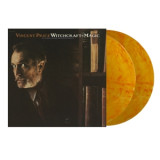
This is going to be the scariest spoken word record you’ve ever heard. We’re not joking…and neither is Vincent Price. The star of such horror classics as House of Wax, The Abominable Dr. Phibes, and Theatre of Blood (and, of course, narrator of Michael Jackson’s Thriller video) can barely hide his delight while he takes his audience through a graphic and occasionally grisly history lesson in witchcraft from the Bible through the Middle Ages, the Spanish Inquisition, and Nazi Germany. Then, accompanied by occasional eerie, abstract electronic music, Price’s sinister satisfaction only mounts as he provides instruction in the dark arts, with such tracks as “How to Make a Pact with the Devil” and “Curses, Spells, Charms.” It’s all in good fun, of course…or is it? The mysterious writer of the script, one Terry d’Oberoff, has only one other credit to his name: as the “mascot” of an early ‘70s band called…wait for it…Black Magic. This 1969 double-LP release has long been coveted by collectors of the curious and macabre, and for its first reissue in over 50 years, we are giving it the Real Gone treatment, reproducing the gatefold jacket and the full-size, 8-page booklet that accompanied some copies. It’s a combination history textbook and how-to manual in witchcraft, with a title page depicting a particularly unsettling spell called “The Hand of Glory” involving the severed, salted, and dried hand of a convicted felon. We are releasing this one-of-a-kind album on clear with orange “pumpkin” swirl vinyl…Happy Halloween.
- Prologue
- Main Title
- Dead Vampires
- Survival
- The States
- Dead Vampires (Taken Away)
- Pit Smoke
- Goes For Supplies
- Killing Vampires
- Wife Gone
- To The Cemetery
- Face From The Grave
- Sunrise
- New Discovery
- Vampires Iron Stakes
- Dog Is Hurt
- Buries The Dog6
- Girl's Existence
- Injection Needle
- Girl Infected
- Transfusion
- Vampire Bop
- To The Chapel
- Beside Casket
- Watching Home Movie
- Retrospect
- Baby's Room
- Smoke
- Taking The Dead
- Still Troubled
- The Deserted Lab
- Death Of Baby
- Raging Inferno
- Transfusion A Success
- Iron Lancers Attack
- After The Last Man
- Last Man Shot (93X)
- Last Man Shot
- End Title
- Besides Casket #2
- Fights Off Vampires #2
- Finds Vampires At House #2
- Face From The Grave #2
- End Title #2
- Fights Off Vampires
- Finds Vampires At House
Rob Zombie and Waxwork Records have partnered to release an exclusive, curated line of classic Horror movie soundtracks! “Rob Zombie Presents” features several never-before-released film soundtracks that were personally selected by the singer, songwriter, and filmmaker.
“I have always been a huge fan of movie soundtracks. So I jumped at the opportunity to work with Waxwork on this project.” Says Zombie, “I can’t wait to release these albums. So many of these films are greatly under appreciated and, they all contain such great music. So, to be able to release these deluxe packages is a dream come true.“ - Rob Zombie
Rob Zombie and Waxwork Records are thrilled to announce the debut vinyl release of THE LAST MAN ON EARTH Original Motion Picture Score by Paul Sawtell & Bert Shefter. The Last Man On Earth is a 1964 post-apocalyptic science fiction horror film based on the 1954 novel I Am Legend by Richard Matheson. Starring Vincent Price, the plot follows Dr. Robert Morgan (Price) who lives in a world where the human population is infected by a plague that has turned them into undead, vampiric creatures that cannot stand sunlight, fear mirrors, and are repelled by garlic. Every day, Morgan follows a routine where he marks days off the calendaqr and sets out to hunt the vampires, killing as many as he can and then burning the bodies.
After working together on the successful release of the official soundtracks to Zombie’s films House of 1000 Corpses, The Devils Rejects, 3 From Hell, The Lords of Salem, Halloween 1 & 2, and The Munsters, Zombie explored other ways to collaborate with Waxwork in an effort to unearth, re-master, and release classic, left-of-center Horror soundtracks from films that he is a life-long fan of. The line of soundtracks features deluxe packaging, heavyweight colored vinyl, new artwork by prominent Horror illustrator Graham Humphreys, liner notes and interviews conducted by Rob Zombie with filmmakers and actors. Titles include premiere releases of Spider Baby, Carnival Of Souls, The Last Man On Earth, The House On Haunted Hill, The Legend of the Seven Golden Vampires, and many selections from the HAMMER film library.
Between December 2022 and January 2024, the collective De Niemanders (producer Rick Wiegerinck joined the team) visited asylum seekers' centers in the Netherlands with a mobile studio, searching for singers, musicians, and their music and stories. The music sessions were mostly filled with pure joy, while the conversations were heavy, hopeless, hopeful, cheerful, and everything in between. The collective connected with creative individuals from all over the world, who in turn introduced them to even more artists, writers, and storytellers. Rocco, Wout, and Rick quickly realized that they needed to offer more than ‘just’ the music album as a platform, so a completely unique Niemanders newspaper was born, and journalist Christianne Alvarado joined for a six-part podcast series.
Following their instincts, they created a new Niemanders album that became a genuine collaboration between the people they met and themselves. A significant difference from the prisons was that this time, the singers and musicians could be recorded in a mobile studio. As a result, the album is a mix of many singers and languages, telling the stories of their journeys, dreams, families, past lives ‘back home,’ and their current situation as refugees. There are songs inspired by the stories that residents of asylum seekers' centers told or wrote down, sung by Rocco, while other tracks emerged from writing sessions with singers Isma IP, Guy-El Mabiala, Q-Mars, and Hamid Reza Behzadian, and are also sung by them. The song material is a creative melting pot of colorful music that ranges from swinging afrobeat, highlife, desert rock, and rootsy psychedelia, but the alternative rock for which Ostermann and Kemkens are known also seeps through. You could say that, with few exceptions, each song is a film soundtrack for the text.
Unfortunately, the harsh reality of asylum procedures also intruded into some of the blossoming musical friendships. Due to a negative decision by the Immigration and Naturalization Service (IND), one of the great singers was forced to leave the Netherlands. This is just one example of the lack of control over—and the nerve-wracking wait for—an IND decision, which unfortunately seems to be something every person in an asylum procedure must endure. The asylum process can bring years and years of uncertainty and waiting, or sudden deportation.
- Ocean Motion Mildew Mind
- Yes Sir Ree
- I Can’t Stand It
- Country Time
- If I Were A Poet
- Torero Piece
- Peachy Keen-O
Carving an unlikely and elaborate niche in the stoney academic landscape
which she once shared with the likes of Phill Niblock, John Cage and Sorel
Hayes, the excitable proto-punk poèmes sonores of the linguistic loose
cannon known as Beth Anderson first rolled through New York in the mid-
1970s (from Kentucky via San Francisco) like a jumbled tumbleweed of lost
Letterism, face paint and threadbare drummy funk to astonish gallery floors,
lecture theatres and loft apartment stages.
One thousand leagues under the radar of the commercial music industry,
with a sense of humour that elevated way above her highbrow peer group,
the music of Beth Anderson has successfully evaded the pressing plant for
most of her creative career, and not unlike fellow New York gallery actionist
Suzanne Ciani, it has taken decades to successfully collect and contextualise
these early recordings - expanding her elusive discography beyond the rare
and mysterious solo single entry in the process.
When uttered amongst the type of vinyl vampires that haplessly gravitate
between both art school vintage vanity pressings and family funded plunder
funk, there’s an outside chance that the name Beth Anderson might muster
some vague recognition on account of her one and only solo wax sojourn
into the expansive DIY market. In 1980 the 45rpm single, ‘I Can’t Stand It’,
combusted into the consciousness of adventurous participants with its deep
rhythmic backbeat (courtesy of future Sonic Youth / Dinosaur Jr producer
Wharton Tiers, member of the new wave band Theoretical Girls), climaxing
with two colourful and commanding linguistic tantrums before disappearing in
a puff of smoke leaving would-be fans dumbstruck without so much as a
label name or distribution contact to explain what they had just heard.
For those who have spent the subsequent years on the edge of that same
seat, it might come as some comfort knowing that somewhere out there,
there is also a contrasting world of gallery patrons and experimental sound
poetry enthusiasts that similarly didn’t know that their regular performance
poet Beth Anderson even made the ambitious pop record. For the uninitiated,
the enigmatic Beth Anderson has straddled both sides of the art / rock fence
placed between two equally niche pastures.
Hopefully this first ever vinyl compendium will succeed in joining the dots,
loops, yelps, squeaks, beats and repeats. Let us follow Beth’s lineage, along
her magnetic tape highways crossing multiple boundaries in a hope to bridge
unlikely anti-genres like ‘yoga punk’, ‘ramble rap’, ‘combustion pop’ and
‘formroom funk’… all of which were officially neatly bracketed under the
curious Text-Sound movement where Beth garnered utmost respect as a key
practitioner.
This is the first reissue of the “Piece Of The Action” LP since 1973, and the CD has bonus tracks with everything Bobby Hutton recorded between 1969 and 1974. Everything taken from the original master stapes and restored.
Bobby Hutton is from Detroit, Michigan and began his career after winning a talent show at the 20 Grand nightclub. In 1971 he performed on the very first nationally aired Soul Train TV programme. He cites Jackie Wilson as his biggest influence. He began writing under his real name Harold Hutton, then Billy Davis at Chess Records persuaded the change to Bobby Hutton. He had decided not to pursue a career at Motown, and after one single for Checker, then another at Blue Rock (a subsidiary of Mercury) he moved to the Philips label for the huge Northern Soul favourite, “Come See What's Left Of Me" which was first played at the Stafford All-Nighters back in1985, covered up as Casanova Brown. Talents that produced and arranged for Bobby during those Blue Rock/Philips sessions include Donny Hathaway and Joshie Jo Armstead, and in fact it was with Jo that Bobby co-wrote that Northern Soul classic.
The Philips tracks are all on the CD as bonus tracks to the Piece Of The Action” album for ABC Records in 1973.
Produced by Dee Ervin, there are several fine tracks to enjoy but surely none better than the Gary Wright-penned “Lend A Hand” which became one of the biggest 'modern' Northern Soul tracks of all-time after spins at venues like the Highland Room at the Blackpool Mecca and Wigan Casino. The track was first championed by DJ Colin Curtis in 1974.
The album is beautifully produced with vocal accompaniments from artists including Patti Hamilton of The Lovelites, Jean Plum, Mikki Farrow and Frankie Karl. It received great reviews at the time and that persuaded ABC to release a non-album follow-up 45 produced by the brilliant McKinley Jackson and Reginald Dozier credited “Loving You, Wanting You, Needing You, Wanting You”/'Watch Where You’re Going” which is an elusive, highly sought-after single by soul collectors worldwide (now an Expansion 7” reissue).
In 2007, Bobby was honoured as he was voted the best singer in Chicago, quite an achievement and something that Bobby is quite rightly very proud of
- A1: Kotms Ii (Feat Kingpin Skinny Pimp - Intro)
- A2: Ultra Shxt (Feat Key Nyata)
- A3: Set It (Feat Maxo Kream)
- A4: Hot One (Feat Tiacorine & Asap Ferg)
- A5: Black Flag Freestyle (Feat That Mexican Ot)
- A6: Headcrack (Feat Kingpin Skinny Pimp - Interlude)
- A7: G'z Up (Feat 2 Chainz & Mike Dimes)
- A8: Lunatic (Interlude)
- B1: Sked (Feat Kenny Mason & Project Pat)
- B2: Choose Wisely (Feat Kingpin Skinny Pimp - Interlude)
- B3: Cole Pimp (Feat Ty Dolla Sign & Juicy J)
- B4: Wishlist (Feat Armani White)
- B5: Hit The Floor (Feat Ski Mask The Slump God)
- B6: Hoodlumz (A$Ap Rocky & Playthatboizay)
- B7: Kotms Ii (Feat Kingpin Skinny Pimp - Outro)
Black Vinyl[32,98 €]
Denzel Curry's forthcoming King Of The Mischievous South Volume 2 finds him presenting a sequel to the project, and bringing back the sound, that helped launch his career. While the first installment of King Of The Mischievous South was performed from the perspective of his Raven Miyagi persona, a name bestowed upon him by Raider Klan founder SpaceGhostPurrp, Volume 2 finds Curry operating under his Big Ultra persona -- an elevated version of Raven Miyagi that is bragadocious and revels in the success that Curry has seen over the last decade of his career. Creating King Of The Mischievous South Volume 2 has been a goal of Curry's for some time, though his earliest attempts to do so ultimately morphed into other projects, namely his 2016 album Imperial and 2020's 13LOOD 1N + 13LOOD OUT. It wasn't until he stopped overly attempting to create Volume 2 that its songs started to emerge naturally.
Given the project's sound, which pays homage to the great musical heritages of the South -- from Memphis to Houston and Curry's own South Florida -- its features include the region's greats, both old and new, as well as others whose style is indebted to the South's musical legacy. Features include fellow former Raider Klan member Key Nyata, Memphis stalwarts Juicy J and Project Pat, Texas' Maxo Kream, That Mexican OT and Mike Dimes, North Carolina’s TiaCorine, Atlanta's 2 Chainz and Kenny Mason and South Florida's Ski Mask The Slump God and PlayThatBoiZay, as well as ASAP Ferg and ASAP Rocky, among others. The project more broadly and the intentional inclusion of Rocky and Ferg is Curry's attempt to show what could have been had relationships not soured with SpaceGhostPurrp, fulfilling the promise that existed at the rise of their respective careers in the early 2010s.
With all of the otherworldly adventures Denzel has taken listeners on over the course of his last few conceptually-driven albums, this project serves as a showcase for the fun, spontaneity and technical mastery that has made him one of rap's most in-demand talents over the course of the last decade.
Typically, a band's big indie label debut doesn't come 15 albums into its career, but with Constant Smiles' Paragons, here we are. Primary songwriter and sole "constant" member Ben Jones_who considers Constant Smiles a collective_sees its impressive output as a way to document the group's evolution. Since its live debut as a noise duo on Ben's home of Martha's Vineyard in 2009, Constant Smiles has grown to include contributions from 50 other members, all of whom have personal connections to the group's extended family. And while the collective has indulged an array of musical whims along the way - including Ben's penchant for penning a new set's worth of material for each live performance - Constant Smiles' sound has tightened up considerably over their past couple of albums, in large part as a result of Ben's working relationship with Mike Mackey, who has become his main creative partner. This increased focus manifests on Paragons in the band's most cohesive batch of songs to date, ranging from shimmering psych-pop excursions to bittersweet, piano and string-accented strummers, and an execution that feels like a massive step forward for the band. Through its recent forays into dream pop and shoegaze (Control) and synth-pop (John Waters), Constant Smiles has learned how to incorporate its experimental inclinations more fluidly into the mix. Artists like Yo La Tengo, and the more recent Rat Columns, are good touchstones for Constant Smiles' musical approach - tethering to an indie-pop core while perennially mining genres, always finding new ways to intrigue listeners and pursue a unique vision. Paragons was produced and engineered by Ben Greenberg in the last two weeks of December 2020 at Gary's Electric, with additional recording done by Ben Jones at his home studio, The Void, and his Aunt Leanne's house. The album was mixed at Circular Ruin Studio and mastered by Josh Bonati. The band on Paragons consists of Jai Berger (who performed "Introduction"), Spike Currier (bass and synth), Matthew Addison (drums), Emma Conley (violin), Nicky Wetherell (cello), Adam Lipsky (piano), and Ben Greenberg (guitar and Mellotron).
The impact, influence, and importance of Run-D.M.C.'s self-titled debut – the album that invented hardcore hip-hop and bridged rap, rock, and funk in then-unparalleled ways – cannot be measured. The first full-length record released by Profile Records, the 1984 set permanently changed the sound of music, broadcast streetwise wisdom to every corner of the country, and made the notion of a one-man band a distinct reality. Bolstered by an incendiary blend of staccato deliveries, stark beats, aggressive exchanges, evocative hooks, and socially conscious messages, Run-D.M.C. still hits listeners in the jaw with the same intensity it did nearly 40 years ago when it could be heard booming from ghetto blasters carried around city blocks nationwide.
Sourced from the original master tapes, pressed on MoFi SuperVinyl, and strictly limited to 3,000 numbered copies, Mobile Fidelity's 180g SuperVinyl 33RPM LP is the definitive-sounding version of the groundbreaking work cited by Rolling Stone as the 378th Greatest Album of All Time. This reissue also represents the first time this gold-certified effort has been presented in audiophile quality. Benefitting from the ultra-low noise floor, superb groove definition, and dead-quiet surfaces of SuperVinyl, Run-D.M.C. now plays with a clarity, immediacy, punchiness, and directness worthy of the artistry, urgency, and intellect of the trio's material.
The brilliance of Russell Simmons and Larry Smith's production comes into view as if the music is being broadcast on a giant system in a small club — only more focused, lively, and unlimited. Free of dynamic constraints and fatiguing harshness, this LP invites you to turn up the volume and experience the raw, rough, invigorating songs that changed the look, sound, and feel of hip-hop overnight. Think the trio’s sparse framework of drum machines, tag-team rhymes, keyboard accents, and turntable scratches is stuck in the mid-80s? Spin MoFi’s SuperVinyl LP and gain new appreciation for the music, messages, and production on display on Run-D.M.C.
Recorded in the wake of two successful and pioneering singles, both included on the album, Run-D.M.C. effectively took a sheet of coarse-grit sandpaper to the polish, sheen, and linear presentation of all the hip-hop that preceded it. Stripped to bare-bones foundations, the songs grab your attention and shake you by the collar with a combination of industrial-leaning rhythms, staggered deliveries, dance drama, and hard, minimalist percussion. Then there are the lyrics.
The LP broadcasts a smart mix of boots-on-the-ground reports, uplifting advice, and then-nascent b-boy culture. In one fell swoop, its narratives and music rendered the scene’s proclivity toward glamor and softness passé. Run-D.M.C.’s tough, cool-minded fashion sense showed the trio walked its talk and gave fans — particularly those living in long-ignored urban areas — heroes which with they could identify. Kangol hats, black jeans, leather jackets, Adidas sneaks, and gold chains were the new currency.
In every regard, Run-D.M.C. signifies the birth of modern hip-hop. Never more obviously than on the groundbreaking “Rock Box,” where rap and rock were first fused. As the first hip-hop video to receive regular rotation on MTV, the track eviscerated racial and social boundaries, awakened musicians and listeners to new possibilities, and redefined both popular music and, ultimately, popular culture. As the Roots’ Questlove has stated, it “ knocked down many obstacles, enabling hip-hop to become the new gospel."
Such teaching includes the real-world scripture of “Hard Times,” utopian hopefulness of “Wake Up,” and observational truths of “It’s Like That.” Released as the group’s debut single well before its eponymous album, the latter tune established themes and outlooks Run-D.M.C. would embrace during its career. Namely, the keen awareness of various prejudices, economic ills, and disruptive violence as well as the knowledge that education, self-motivation, and hard work were the ways to escape disadvantages and disillusionment.
Inspired and inspirational, the song reflects the spirit and shrewdness that courses throughout Run-D.M.C. That includes a detailed account of the trio’s not-so secret weapon (“Jam-Master Jay”), purpose statement (“Hollis Crew (Krush-Groove 2)”), and a revolutionary hybrid autobiographical narrative-dis track (“Sucker M.C.’s (Krush-Groove 1)”) widely regarded as one of the best hip-hop songs ever created. The same can be said for every moment on Run-D.M.C.
MoFi SuperVinyl
Developed by NEOTECH and RTI, MoFi SuperVinyl is the most exacting-to-specification vinyl compound ever devised. Analog lovers have never seen (or heard) anything like it. Extraordinarily expensive and extremely painstaking to produce, the special proprietary compound addresses two specific areas of improvement: noise floor reduction and enhanced groove definition. The vinyl composition features a new carbonless dye (hold the disc up to the light and see) and produces the world's quietest surfaces. This high-definition formula also allows for the creation of cleaner grooves that are virtually indistinguishable from the original lacquer. MoFi SuperVinyl provides the closest approximation of what the label's engineers hear in the mastering lab.
Kwench Records is synonymous with homage-driven house and techno. Cassy's guilefully-curated selection of releasing DJs and producers is to be admired yet again with the arrival of heritage artists Jesper Dahlbäck and Alexi Delano under their respective aliases The Persuader and AD. Together they collaborate on a deftly-cut four-tracker with artist and writer Bella Hardcover adding her touch in spoken word.