Liturgy transcends the traditional parameters of what constitutes a rock band. Founded by Ravenna Hunt-Hendrix, Liturgy is a part of a shared discipline of composition, art, and philosophy that thrives on exploring the spaces between. Liturgy"s signature use of rhythmic complexity and repetition are exponentially amplified to maximalist proportions on 93696. Along with guitarist Mario Miron, bassist Tia Vincent-Clark, and drummer Leo Didkovsky, Hunt-Hendrix utilizes Liturgy"s past ruminations on burst beats and circuitous phrases as colors to paint rich murals that overwhelm and invigorate the senses. 93696 is the purest synthesis of the diversity of Liturgy, a sprawling and monumental double album exploring religion, cosmic love, the feminine, and metamorphosis while manifesting the ecstatic with breathtaking grandeur. Liturgy is the project of Ravenna Hunt-Hendrix, whose yearning, energetic "transcendental black metal" exists in the space between metal, art music and sacred ritual. Its current lineup features Mario Miron (guitar), Tia Vincent-Clark (bass) and Leo Didkovsky (drums).
Suche:cur l
Liturgy transcends the traditional parameters of what constitutes a rock band. Founded by Ravenna Hunt-Hendrix, Liturgy is a part of a shared discipline of composition, art, and philosophy that thrives on exploring the spaces between. Liturgy"s signature use of rhythmic complexity and repetition are exponentially amplified to maximalist proportions on 93696. Along with guitarist Mario Miron, bassist Tia Vincent-Clark, and drummer Leo Didkovsky, Hunt-Hendrix utilizes Liturgy"s past ruminations on burst beats and circuitous phrases as colors to paint rich murals that overwhelm and invigorate the senses. 93696 is the purest synthesis of the diversity of Liturgy, a sprawling and monumental double album exploring religion, cosmic love, the feminine, and metamorphosis while manifesting the ecstatic with breathtaking grandeur. Liturgy is the project of Ravenna Hunt-Hendrix, whose yearning, energetic "transcendental black metal" exists in the space between metal, art music and sacred ritual. Its current lineup features Mario Miron (guitar), Tia Vincent-Clark (bass) and Leo Didkovsky (drums).
- A1: Island Theory 02 04 Min
- A2: These Were The Times 03 01 Min
- A3: April 5Th 03 53 Min
- A4: In The Forest 03 01 Min
- A5: Insecure 03 32 Min
- A6: When Everything Dissolves 03 44 Min
- B1: When Trees Cry 03 35 Min
- B2: Always Humming 03 12 Min
- B3: Monte Clerigo 04 44 Min
- B4: When We Imitate Our Friends 03 39 Min
- B5: Curfews 03 33 Min
- B6: Last 02 56 Min
On his debut LP 'Impromptu', Julian Klaas presents a stunning work of sonic ambivalence inspired by the beauty and potential of the Wurlitzer piano. "I didn't attempt to pursue grand feelings like ultimate happiness or deep sadness, I'm much more fascinated in the in-between: the moments you might not otherwise write down, and that you might have forgotten if you hadn't recorded them." With 'Impromptu' Klaas has found a way to honour these moments, revealing the depth and richness that underpins the present.
- 180 GRAM AUDIOPHILE VINYL
- INCLUDES INSERT
- 30TH ANNIVERSARY OF THE LEGENDARY ALBUM
- REMASTERED AUDIO
Fishbone was one of the most distinctive and eclectic alternative rock bands of the late '80s. With their hyperactive, self-conscious diversity, goofy sense of humor, and sharp social commentary, the group gained a sizable cult following during the late '80s.
Truth and Soul is their second album, originally released in 1988. The album features a wide array of genres including punk, ska, reggae, soul, funk, elements of hard rock and blues. Truth and Soul contains a cover version of Curtis Mayfield's Freddie's Dead', originally from the soundtrack of the film Super Fly and it is the first single of the album.
Three other tracks were released as singles Ma and Pa', with a video directed by Mike Lipscombe, Change' and One Day'.
The album was awarded four-out-of-five stars in 2004's The New Rolling Stone Album Guide. Music critic Tom Moon called the album one of his 1000 Recordings to Hear Before You Die' and Robert Dimery listed it as one of his 1001 Albums You Must Hear Before You Die'.
This year we are celebrating the 30th birthday of Truth and Soul. The album is finally available again on vinyl and includes the original insert with lyrics and liner notes.
“These things happen,” says K. Leimer of LUYU. Listen Until You Understand is a test drive through an obstacle course designed for new instruments, arrangements, juxtapositions, and real-time experiments dedicated to leaving the original impulses untouched and unadorned. Joined at times by digital percussionist Dolphie Stein, the music throws itself against itself without loyalty to genre or form, mashing granular particles into a tremulous spectrum of soundwalls, transitions, noise, distortions, and the occasional clearing. As close to live improvisation as one can get in a multitrack studio setting, LUYU takes generative techniques and drops them into short-form events by building its soundstage in thickets of shifting elements, collapsing phrases, broken signatures, and implied patterns. An outlier in Leimer’s catalog of general stillness and subtle detail, LUYU revels in the bare sound of things usually hidden in the mix.
Kerry Leimer founded Palace Of Lights in 1979. Leimer’s work has also been issued by Abstrakce, Autumn, First Terrace, Les Giants, Invisible Inc., Origin Peoples and RVNG. His work is included in the Cherry Red Noise Floor compilation series and his early cassette work is featured in the critically acclaimed VOD box set American Cassette Culture. Leimer has been actively producing music since the mid 1970s—his current catalog includes twenty solo albums plus collaborative albums with Savant, Marc Barreca, and Three Point Circle. Recent soundtracks include work for video artists Cristiane Bouger and Fred Birchman, HBO’s How To With John Wilson and the Netflix documentary John Was Trying to Contact Aliens. His work is included in the collection of The British Library.
- 1: Rocking Machine
- 2: Part-Time Apocalypse
- 3: The Check In
- 4: Convenient Life
- 5: Garbagedump #1
- 6: A Fairly Normal Guy
- 7: Dinner For Two
- 8: The Masterwork
- 9: Self Reflection (Deep)
- 10: Big Money
- 11: Haunted Hotel
- 12: Checking Back
- 13: How Do You Spell Success?
- 14: Doubt
- 15: Failure
- 16: Hell
- 17: Twilight At The Shareholders' Meeting
- 18: Tears Of Love
Limited first pressing on clear vinyl. Dick Stusso's third album is a document of slow mental unraveling with a world in perpetual decay as its backdrop. With S.P., California-based singer and songwriter Nic Russo has created his most out-there and toothsome record to date, plunging his listeners into a strange and thrilling new world at every opportunity. S.P. is the first Dick Stusso record in four years, following his stellar Hardly Art debut In Heaven from 2018-but this latest missive is more of an indirect sequel to the buzz-building 2015 release Nashville Dreams / Sings the Blues, diving deeper into the fictional character Dick Stusso's crumbling psyche and dystopian surroundings. If our introduction to Dick was someone trying to pursue their dreams and turning into a failure as a result, S.P. reflects the moment where, in Russo's words, "The character is becoming unlikable. He's succumbing to what is taking place around him."Nearly half of its 18 songs-spanning countrified rock duets, Guided by Voices-recalling anthems, and outro noise-burst sound experiments-were completed before the pandemic, when Russo decided to take a beat and allow the music to sprout new, weird buds in his rehearsal space. With mixer Andrew Oswald accentuating the record's unique feel, S.P. bridges the gap between the ultra lo-fi confines of his 2015 debut Nashville Dreams / Sings the Blues and the lush echoes of In Heaven, with a few helping hands to fully flesh out Russo's vision. Grace Cooper (The Sandwitches, Grace Sings Sludge) contributes vocals to "Dinner for Two" and "Self Reflection (Deep)," while his father Marc Russo-a Grammy-winning saxophonist who's currently touring with the Doobie Brothers-lays down expert horn arrangements on "Garbagedump #1." The myriad of twists and turns on S.P. further establish Russo as a fascinating craftsman who's never bound to do the same thing twice.
Up next, Marginal Returns is happy to finally unveil Gwenan’s debut EP. Already familiar to many via her DJ sets at various notable events over the past years - from festival main-stage techno to backroom boutique ambient - 2023 finally raises the curtain on Gwenan’s studio output.
Activation Energy presents an elegant, particular and personable take on rhythmic electronic music, taking in A1’s downtempo, dub shrouded ‘Rhythm Delay’, the sneakily effective plucked lilt of A2 ‘Foundation’, the contemplative, emotive glide of B1 ‘Control Change’ and B2 ‘Attention Movement’s brooding syncopation.
DEBUT RELEASE FROM SEB JAY. A TRIBUTE TO ADELAIDE’S RICH CLUB HERITAGE. THE LABEL IS A PRODUCT OF THE CITY’S RAW DO-IT-YOURSELF ENERGY.
THIS IS OUR LITTLE CONTRIBUTION TO THE ADELAIDE HOUSE SOUND WITH CLUB-READY DANCEFLOOR MUSIC FOR THE WORLD. PROUD OF OUR CITY’S HERITAGE, GRATEFUL FOR OUR CURRENT OPPORTUNITY TO SHARE MUSIC & EXCITED ABOUT THE FUTURE WHILE BEING ONE PART OF SOMETHING MUCH BIGGER.
Bang on trend grooves from the Vivid camp, exploring the current fascination for all things that intersect both the garage and breaks genres. Lead track 'Wicked & Wild' is the one that leans furthest into UKG territory, its bumpy bassline and MC-style vocal giving it heaps of energy and attitude. Flip side instrumentals 'Push Past It' and 'Ronin' meanwhile, evoke the early 2000s spirit of breaksteppers such as Horsepower Productions, the latter especially maintaining the bassline pressure and adding it to the more hardcore vibe of rawer, sampled percussion. Maximum respect!
Following the release of their 2021's critically acclaimed album The Black Stone Affair, instrumental cinematic-soul outfit Whatitdo Archive Group unleashes two startling new singles: "Forbidden Cove" and "The Cashmere Chamber", out on limited edition 7'' on March 24th via Record Kicks. The 45 is limited to 500 copies worldwide and it is just an appetizer of the upcoming new album Palace Of A Thousand Sounds, scheduled for release on May 5th, 2023. Whatitdo Archive Group previous 45s went sold out in weeks and are currently very in-demand from collectors and djs.
On side A, we find the first single "Forbidden Cove". We are immediately greeted with top-notch production that feels like we stumbled upon yet another lost rarity, but this time from the heyday of American "exotica" music from the mid-century movement of the early '60s (think Martin Denny and Les Baxter). The twist here is that the underlying tone is dark, heavy and cinematic. WAG flexes their compositional chops and maturity with clever arrangements, a tight rhythm section and dreamy vibraphone that lead us to dense Arthur Verocai-esque orchestral arrangements and hypnotizing eastern flavors.
From the first notes of the Javanese metallophone, Whatitdo Archive Group welcomes you into "The Cashmere Chamber", on side B of the 7''. Less a room and more an auditory experience, "Chamber" skillfully guides you deeper into its world complete with menacing drums and bass, sinister vibraphone melodies and a haunting choir. But this driving force of the rhythm section isn't enough for WAG; we see the song quickly blossom into an adrenaline pumping guitar feature layered expertly with a Turkish baglama saz and percussion. This track is a sample-worthy heater for any DJ.
The new album Palace Of A Thousand Sounds will be available May 5th, 2023 on limited edition LP, CD and digital platforms. Palace Of A Thousand Sounds finds Whatitdo Archive Group entrenched deeper in the worlds of mid-century exotica and library music—from the Tropicalia-steeped Amazon to the minor key tonalities of the far-out Near East.
Steeped in obscurity, a cult following of crate-diggers and musical oddity collectors has been brewing over the mysterious releases of the Whatitdo Archive Group. Surfacing in 2009 from the high deserts of Reno, NV USA, this three-piece recording collective (Alexander Korostinsky, Mark Sexton and Aaron Chiazza) focuses solely on curating, performing and preserving esoteric soundtrack, library and deep-groove collections. As an onlooker, it's hard to tell whether the music they are procuring is actually archival, music of their own creation, or both. Their debut LP The Black Stone Affair, the formerly lost soundtrack music of a once-shelved Italian cinematic masterpiece, was released in 2021 and received praise from the likes of Wall Street Journal, Mojo Magazine, Uncut, Shindig and Blues & Soul Magazine, BBC 6 (UK), FIP (FR), KCRW (US), JazzFM (UK) and more. Two years later, the Whatitdo Archive Group is back. Get ready for an exotic adventure with their sophomore full-length effort: Palace of a Thousand Sounds.
Right Diagonal' kicks off with the title track which presents a potent wall of sound that undulates across a pensive current. Distant vocals, frazzled signals and stuttering drum patterns work together to build a fantastically unheimlich vibe. The Crosser version then projects sound into a spacious, chilly warehouse as reverberated flashes of sound depict futuristic machines at work.
'Conjugated In Boring Crimes' then follows up with a dense, shuddering recording. Growls and whispers swell beneath more dystopian sonics before 'Safe Resist' rolls out as a jagged Techno experiment. A steady kick propels a rich, metallic sound palette before 'One Man Clearing' renders another scene of murky futurism.
'Farewell Seesaw' then follows up with a subtle Electro track peppered with hypnotic vocals and a distant, snappy snare. The 'Clubmix' version then delivers what it promises as urgent drums whip up a menacing, heady dance floor vibe.
'Night Voodoo' then brings things to a close as cinematic sweeps suffuse a sawtooth sequence and thick, bubbling bass tones. Frazzled hats bleed through in giving the track a certain live feeling which brings the record to a close.
A fun, fresh and ~ freaky ~ record that will NOT leave your record bag... Originally hailing from Japan but currently living Berlin, SJT is known far and wide for his Teknobuskers project, a hardware DIY dance party hosted with friends and held regularly in 'Max-Koch-Passage’, Berlin. The energy from these dance parties can be felt and lived through his latest ep, ‘GG Allien’. SJT’s skilful use of mind melting background tape textures and moody pads provide the encapsulating canvas for otherworldly acid lines, driving hardware percussion and enlightening melodies. An ep primed to transcend the listener to a place of communal acidic dance appreciation.
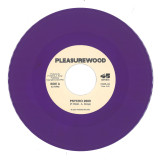
Psycho 2000 - A dark but funky theme that begins with an occulting Italian echo-oscillator drone that is soon followed by pulsating bass and breakbeat drums, leads to tremolo guitars, an ostinato on electric mandolas, strings climbing eloquent ladders, otherworldly electronics, and a cinematic finale.
An evocation of a parade of wooden nutcracker soldiers elaborately dressed in gold-trimmed black uniforms down a wide avenue decorated with mardi gras beads and animal skulls upon golden cobblestones toward a tornado spiralling out purple-hued glissandos and curlicues of elephant smoke.
White Spiritual - Head nod action, the twinkling of a late 60’s Vox Continental II with sickly transistors, the noodling matrix of an intergalactic telephone exchange carried on a bed of bouncy bass with a firm backbeat.
The Johnny Guitar Watson-esque bite and sting of a ‘67 Teisco guitar preludes slabs of unison dark brown moog and organ giving way to the dance of fingers over the black naturals and white sharps of the Continental II.
- 1: Intro
- 1: 2 Become The Warm Jets
- 1: 3 Desire
- 1: 4 My Spotless Mind
- 1: 5 Don't Hurt Anyone (Interlude)
- 1: 6 Blondie
- 1: 7 The Breakfast Club (I'm Feeling Wild With You)
- 1: 8 Neon Hell
- 1: 9 Symphonia Ix
- 1: 0 The Unbearable Lightness Of Being
- 2: 1 Broke A String On That One (Interlude)
- 2: New Flesh
- 2: 3 One Minute (Interlude)
- 2: 4 Kids
- 2: 5 My Legs (Interlude)
- 2: 6 In A Year Of 13 Moons
- 2: 7 My Motorcycle
- 2: 8 A Different Age
- 2: 9 One More Song (Interlude)
- 2: 10 Altered States
Back in print for the first time since its initial release during lockdown in 2020!
The music of Current Joys has captured the imagination of millions through headphones and laptop speakers across the world. Rattigan's deeply emotive and commanding songwriting feels built for solitary walks or contemplative nights in one's bedroom, and that is why a Current Joys live performance is a whole different experience altogether. On Live At Kilby Court, the band rips through a stacked setlist of fan-favorites transforming these bedroom ballads into adrenaline-pumping anthems, creating an overwhelming feeling of togetherness.
We are thrilled to announce the release of the first ISARN record P0X by the label head PARALLX. This highly anticipated release marks PARALLX's start of his label, and we couldn't be more excited to share his unique blend of genres and his vision of the label.
With this record, PARALLX draws inspiration from early 2000 techno mixed with bits of EBM, infusing his tracks with a powerful, nostalgicially futuristisc sound that is both familiar and fresh. The production is impeccable, with a level of detail and nuance that is a testament to PARALLX's experience and expertise.
a A1 Die Schattenlaufer Im Strom Der Zeit
b A2 Methane 1/11 [Curse Of Coal]
[c] B1 10000°C [Fever Dream]
[Anthrazit]
Death and Vanilla return with 'Flicker', presenting their unique pop music that defies categorisation. Housed in a beautifully austere post-ironic de-constructed sleeve; 'Flicker' is a modern reflection on these difficult times. World crises notwithstanding, they return reborn, re-arranged and revitalised after assimilating dub reggae, the motorik spirals of Can, the modal meander of Philip Glass and The Cure's dreamier pop sounds; plus the twice removed symphonic ambience of Spiritualized and Talking Heads under heavy manners from Brian Eno. By osmosis their period of transition since 2019's much darker 'Are You A Dreamer?' has hatched new eclectic electronica anthems riddled with melody lines, and layered for lush love. - Forming in Malmö, Sweden, Death And Vanilla gravitated towards vintage musical equipment; from vibraphone, organ and mellotron, to tremolo guitar and Moog synthesisers. Soaking up soundtracks from the 60s and 70s, listening to library music, kosmiche, French Ye-ye pop and 60s psych, Marleen Nilsson, Anders Hansson and Magnus Bodin were fashioned by the city's austere industrial past and flat pack present, and all in the shadow of the Orsesund Bridge that links their dreamworld to mainland Europe and a darker reality. Death And Vanilla at once sound like everything is possible; but nothing else at all. There is a flicker of hope for everyone. - "Deploying vintage instruments in their quest for melancholic utopia." Electronic Sound * "Baroque pop through a dreampop filter." The Guardian Ltd Indie Retail Only Yellow Vinyl LP including DLC!
Sacramento, CA duo Blank Gloss’s third album, Cornered, is an exquisite statement of pop ambient starkness, an album that oscillates between lush beauty and spare melancholy. It follows from their 2021 debut for Kompakt, Melt, an album that saw Morgan Fox (piano, synths) and Patrick Hills (guitar) aligned, loosely, with the cosmic pastorale of the ‘ambient Americana’ movement. Cornered feels like a significant step forward, though – by peeling back the layers of their music, they’ve revealed both its restful core and its solemn gravitas. It is unendingly lovely, but with something disquieting at its centre.
Cornered was recorded quickly, over two days in December 2020. There’s nothing rushed or haphazard about the album, though; everything has its place, with each sonic element contributing profoundly to these nine miniature dioramas. It signals change, quietly but perceptibly, through the way the duo sculpts their material, building out of loose improvisations that morphed into songs. While there was no plan in mind when Blank Gloss settled into the studio, Fox recalls that “right away we realised that things were sounding and feeling a bit different than any of the sessions we had previously.”
That difference can be heard in the increased amount of space Blank Gloss gift to their sound sources. Some of the most moving moments on Cornered come when Fox and Hills strip everything back – see, for example, “Crossing”, which sets pensive piano across a shyly humming drone and quiet arcs of guitar, recalling the driftworks of Roger Eno. Curiously, the album’s distinctive shape and mood develops, at least in part, from a change in instrumentation, with Hills using a MIDI pick-up on his guitar. “This resulted in making things happen a lot quicker,” Fox says. “It also helped create what I think is a bit more sombre, dark feeling to some of the songs.”
Elsewhere, on songs like “Salt”, the piano tussles with flecks of guitar, single tones sent out to mingle with the stars, like Morricone at 16 RPM, while Cornered’s centrepiece, the eleven-minute “No Appetite”, lets long arcs of electronic texture breathe and sigh, tangling together in a cat’s cradle of bliss. Throughout, it feels as though the music is blossoming as you hear it, like watching time-lapse footage of flora in bloom. But perhaps the most seductive thing about Cornered is the sense you get, listening, that the music was something unexpected, a visitation. “It almost felt like we weren’t dictating where the music went and how it sounded,” Fox agrees. “We were just there in a room together in December and these sounds were happening, and we were lucky enough to be recording the process.”
Cornered, das dritte Album des kalifornischen Duos Blank Gloss aus Sacramento, ist ein exquisites Statement von pop ambienter Krassheit, ein Album, das zwischen üppiger Schönheit und sparsamer Melancholie oszilliert. Es folgt ihrem 2021er Debüt für Kompakt, Melt, einem Album, auf dem sich Morgan Fox (Klavier, Synthesizer) und Patrick Hills (Gitarre) locker an der kosmischen Pastorale der „Ambient Americana“-Bewegung ausrichteten. Cornered fühlt sich jedoch wie ein bedeutender Schritt nach vorne an – indem sie die Schichten ihrer Musik abschälen, haben sie sowohl ihren ruhigen Kern als auch ihre feierliche Schwere offenbart. Es ist unendlich schön, aber mit etwas Beunruhigendem in seiner Mitte.
Cornered wurde relativ schnell aufgenommen, über zwei Tage im Dezember 2020. Es klingt jedoch nichts überstürzt oder willkürlich an diesem Album; alles hat seinen Platz, wobei jedes Klangelement einen wesentlichen Beitrag zu diesen neun Miniaturdioramen leistet. Es signalisiert Veränderung, leise, aber wahrnehmbar, durch die Art und Weise, wie das Duo sein Material formt und aus losen Improvisationen aufbaut, die sich in Songs verwandeln. Als Blank Gloss sich im Studio niederließen, gab es zwar keinen Plan, aber Fox erinnert sich: „Uns war sofort klar, dass sich die Dinge etwas anders anhörten und anfühlten als bei allen vorherigen Sessions.“
Dieser Unterschied ist in der größeren Menge an Raum zu hören, die Blank Gloss ihren Klangquellen bietet. Einige der bewegendsten Momente auf Cornered kommen, wenn Fox und Hills alles zurücknehmen – siehe zum Beispiel „Crossing“, wo ein nachdenkliches Klavier über einen schüchtern summenden Drone und leise Gitarrenloops setzt und an die Driftworks von Roger Eno erinnert. Seltsamerweise entwickelt sich die unverwechselbare Form und Stimmung des Albums zumindest teilweise aus einer Änderung der Instrumentierung, bei der Hills einen MIDI-Tonabnehmer an seiner Gitarre verwendet. „Dies führte dazu, dass die Dinge viel schneller abliefen“, sagt Fox. „Es hat auch dazu beigetragen, einigen der Songs ein etwas düstereres, dunkleres Gefühl zu verleihen.“ An anderer Stelle, bei Songs wie „Salt“, spielt das Klavier mit Gitarrenfetzen, einzelne Töne werden ausgesandt, um sich mit den Sternen zu vermischen, wie Morricone bei 16 U/min, während Cornereds Herzstück, das elfminütige „No Appetite“, lange Bögen schlägt, elektronische Texturen atmet und seufzt, um sich in einem Katzenkörbchen der Glückseligkeit zu verheddern. Während des Hörens fühlt es sich an, als ob die Musik blüht, als würde man sich Zeitrafferaufnahmen von blühenden Pflanzen ansehen. Aber das Verführerischste an Cornered ist vielleicht das Gefühl, das man beim Zuhören bekommt, dass die Musik etwas Unerwartetes war, eine Heimsuchung. „Es fühlte sich fast so an, als hätten WIR nicht diktiert, wohin die Musik geht und wie sie klingt“, stimmt Fox zu. „Wir waren just im Dezember zusammen in einem Raum, als diese Geräusche passierten, und wir hatten das Glück, dass die Aufnahme mitlief.”
Creating an introverted version of restrained electronic music Berlin-based artist Constantijn Lange releases his second album 'Liquide' on Heimlich Musik. The album is based on sketches created in isolation during the second pandemic year. The compositions are characterized by self-reflection and an attempt to translate the abstract experience of listening to oneself into a concrete form. The sound of personal isolation, the necessary withdrawal from the world and the restriction of all social contacts is, therefore, less club oriented and focused on functionality than an expressive concept of ideas, rather oriented on Trip Hop, Breakbeat, Ambient and Jazz. The collective rediscovery of shared experience results in arrangements of melancholic but optimistic melodies recorded with vintage synthesizers, supported by complex drum patterns and diverse percussions that create a signature sound as a new liquid amalgam.
Constantijn Lange is an electronic music composer originally from Ostfriesland now based in Berlin. Besides several releases on Laut & Luise since the early days, his productions appear on labels like Get Physical, Traum Schallplatten, Sinnbus, Platon Records, Egoplanet
and many more.
His passion for thick layered synth melodies, jazzy and kraut – like vibes, atmosphere recordings, deep basslines and selfmade percussion designs give his music a recognizable vibe which can be heard on nearly every production he was involved in so far. He spends a lot of time in his studio in Berlin, working on new music, remixing other artists and also engineering for other sound projects in the art scene. On top of that, he performs as a liveact in clubs and on festivals all over the planet where his music can be described as very emotional and personal. Repeatedly this amazed people in countries like Germany, Russia, Poland, Switzerland, South Africa, Austria, Belgium, Mexico and
many more.
Constantijn’s ambition as an artist is to constantly evolve his productions and create music
which carries emotions and energies into the clubs, to festivals and living rooms alike.
Strawberries ripen in the spring. Or so they used to, in a more reliable world, one that seems to be rapidly receding in our collective rearview mirror. Presently, “spring” is a troubled concept — fraught with anxiety. Our seasons, if they are seasons at all, are paradoxical. Crops fail, or they ripen prematurely, all at once, and into a burst of rot. Impossibly, somehow, the supermarket shelves stay stocked (mostly, for now at least), and there are buckets of strawberries on every corner. But, of course, their nature is suspect. And they don’t taste like they used to. Or maybe that’s just ruinous nostalgia. But somewhere along the way we certainly lost something. Everybody knows.
Strawberry Season (Leaving Records, November 9 2022) responds tenderly to this sorry state of affairs, not with false comfort — nor escapism. Rather, the album conveys, often wordlessly, that there remains an abundance of sweetness amidst our increasing unease. While much of twentieth century American popular and folk music may have dwelt on the beauty and plenitude of the prairie, More Eaze applies a similar Romantic focus to the small bursts of fecundity that now hide in plain sight. Blending found sound, generative music, a knack for elegant, classically-informed melodic arrangement, and a sort of Liz-Fraser-by-way-of-hyperpop approach to vocals, Strawberry Season offers unique solace — providing an occasion for the kind of deep listening that our overstimulated and undernourished spirits require if there is to be any hope at all (and of course there must be hope).
More Eaze (serving as composer, songwriter, multi-instrumentalist, producer, and sound artist) guides us incrementally to this locus of attentiveness. Strawberry Season begins with the softly sweeping gentle pets. Early intimations of Velvet Underground give way, indeed, to a string arrangement that John Cale might have saved for Paris 1919. The second track, Suped, features a kaleidoscopic swirl of grocery checkout scanners that eventually coalesce and release with the subtle strumming of a harp. On known, in the midst of a nearly elegiac outflow of feeling, a shower starts to run. Someone steps inside, pulling the curtain back, sending the plastic rings clattering. Moments later, the unmistakable sound of the showerer blowing their nose — an inclusion that is at once light-hearted and jarringly, movingly intimate.
Strawberry Season’s second to last song, low resolution at santikos, serves as a sustained meditation on all that has come before it. Building slowly throughout its nine minutes, teetering, at times, on the edge of danceability, it dissipates suddenly, and Strawberry Season concludes with the rustling of clothes, snippets of distant conversation, creaking floorboards, an exhale and a sniff. There is a feeling of having arrived, of temporary reprieve in the face of uncertainty. A hint of a season yet to come, or one that is perhaps only now accessible in dreams.
Veils Of Transformation 1972 - 1980 is a collection of the earliest works of Gregory Kramer, one of the 20th century masters of textural electronic music. This collection is available on CD and cassette with liner notes from Gregory Kramer and Kaitlyn Aurelia Smith, who first brought this fascinating work to the attention of Important Records.
“Greg is one of the pioneers of electronic music and these pieces are unique opportunities to discover how intricate and dynamic early synthesizers are.” Kaitlyn Aurelia Smith
Kramer developed a musical language focused on continuous transformation of timbre, yielding a continuity of attention. This musical language, formed of timbral change, is a compelling aesthetic in its own right and a source of meditative experience. The four works on this album share a deep sense of order derived not from organizing pitches or rhythms, but from the evolution of timbre itself.
Gregory Kramer (b. 1952) is a pioneering electronic composer, inventor, researcher, teacher and author. In 1975 he co-founded Electronic Musicmobile, a synthesizer ensemble later renamed Electronic Musicmobile, a series of synthesizer concerts in New York from which he formed the Electronic Art Ensemble, a highly regarded all electronic quartet. His work extended to developing synthesizers and related equipment. Kramer also co-founded the not-for-profit arts organization Harvestworks in New York City. He is recognized as the founding figure of the intensely cross-disciplinary field of data sonification. Since 1980, Kramer teaches Buddhist meditation.
The four compositions collected here each represent Kramer’s unique approaches:
The structure of Meditations on 32 Parts of the Body (1978) is derived from the means of its production. Recording 5 people chanting an ancient meditation text, then layering to gradually achieve more than one million voices. The layering was all done using analogue tape recorders. The decomposition of the sound reflects the anomalies of tape machines out of sync, and the build up of artifacts from the audio tape itself, such as uneven response curves and tape hiss, are all engaged as musical materials.
Role (1972) was generated using one complex patch on a large hybrid Buchla 200/100 system. Emerging from a zeitgeist that valued pure synthesis as a combined artistic and technological research. At the time this piece was realized its as exceedingly difficult to produce electronic sounds that were internally complex.
Blue Wave (1980) is built on Kramer’s timbral development technique Veils Of Transformation which allows for disparate timbres to be woven into a continuously developing sound.
Monologue (1977) is a virtuosic performance of a massive patch on a Buchla/Electron Farm hybrid electronic instrument. Built into the patch is a pathway for continuous transformation of voice and voltage-controlled synthesizer. The blunt, raw and sometimes harsh sounds of this piece reflect an attitude prominent among composers that music can, or even should, be difficult, contrary to what’s already been done and, by all means, new.