DJ Support: Andy Votel, Nemone (BBC Radio 6), Andy Bell, The Quietus and more
The sweet hum from the vampire wood returns as Five Green Moons make another orbit. Ritual incantations and Dubwise vibrations are fused with angular guitars and skittering basement electronics to form a new entity. Moon 2.
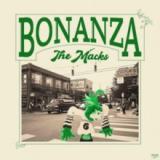
Justin Robertson's second outing as Five Green Moons is a fusion of influences. The presence of occult mystery can be felt in the chants and vocal motifs, there lurks a manifestation of elastic post punk in the zigzag echo further enhanced by the appearance of Brix Smith, former high priestess of the Fall on two tracks. One could draw comparisons with P.I.L, Holy Tongue, the hauntological sound of Current 93, the trippy off kilter hypnotism of Brown Rice era Don Cherry, and of course the solid foundations of Dub. The bass is heavy, the sound spacious. This is a new form of pastoral dub!
Pressed on Limited Green Vinyl.
Suche:cy k
- Garbage Dream House
- Bugland
- Bits
- Save The Lobsters
- My Crud Princess
- Bather In The Bloodcells
- I Hate That I Forget What You Look
- Jelly Meadow Bright (Feat. Fire-Toolz)
Since first arriving on the scene in 2009 with blistering inversions of shoegaze, Montreal's No Joy has always found formidable ways to reinvent itself. Now solely composed of musician Jasamine White-Gluz, No Joy has evolved over four studio albums and five EPs, defying expectation and genre, and cementing itself as something rare: a band without a category. Clearly sympatico at the time of collaborating, Fire-Toolz and No Joy (Jasamine White-Gluz) had both resituated to secluded woodsy milieus prior to the "Bugland seshies", as I now name the historic pairing. Together, they created an aural equivalent of a late 1980 I-d magazine front and back cover, with a non-problematic National Geographic hiding within. Fire-Toolz sums it up: "The collaboration really felt limitless. I didn't have to adhere to a certain vision in a way that made me feel like I couldn't be Fire-Toolz. I could easily relate to this album because Jasamine and I liked a lot of the same music, and I was able to be creative in ways that were freeing as if I was making my own album. " Both spent days driving through on empty rural highways listening to the mixes, and it reflects in the final product. With an open ear, many "influence eggs" can be detected by the listener. Garbage Dream House is Zooropian without any of U2's ego baggage. Seven-minute closing track Jelly Meadow Bright even manages to meld Stooges' Fun House out of control saxophone with the chill buoyancy of a high-end spa. Touching on respected, familiar genres and sounds while attempting to advance one's own isn't easy but Bugland manages to. What genre is it anyway? Is it even shoegaze when it could live happily on a shelf next to Boards of Canada and Autechre? The right answer is `yes'. What a lovely shelf `twould be as well. A marble shelf, with cyberpunk elements. Bugland`s a testament to White-Gluz's evolution and her ability to channel a wide variety of tastes into something cohesive that can descend into fine-tuned chaos, then out of that chaos with ease.
- A1: Miles Away (Live In Brussels)
- A2: Brave (Live In Brussels)
- A3: Liar (Live In Brussels)
- A4: Justice De Julia Ii (Live In Brussels)
- B1: Storm (Live In Brussels)
- B2: War (Live In Brussels)
- B3: Victoria (Live In Brussels)
- B4: What Have We Done (Live In Brussels)
- C1: Chainlife (Live In Brussels)
- C2: Space (Live In Brussels)
- C3: Fire (Live In Brussels)
- C4: Dust (Live In Brussels)
- D1: Paradise (Live In Brussels)
- D2: Desert Rain (Live In Brussels)
- D3: All Along (Live In Brussels)
- E1: Sugar Dragon (Live In Brussels)
Red vinyl, limited to 1200 copies worldwide. In late November 2024 Brutus performed three sold-out shows at the legendary Ancienne Belgique venue is Brussels. A year later sees the band celebrate these shows with the release of a complete live concert movie and album from the third of these shows; sixteen songs, ninety-two minutes, this is Brutus 'Live in Brussels'. That run of three shows in Brussels marked the end of the band's touring cycle for latest studio album, 2022's Unison Life: "'Live in Brussels' is what we want to leave behind after three years of touring 'Unison Life' across more than 20 countries and almost 200 shows. We made it together with our close live crew, the same people who were with us on every step of the tour. For us those three nights in Brussels were intense but beautiful. We're proud we managed to capture it like this; a live document where picture and sound work together to put you inside that night".
- A1: Cruel Park
- A2: Colorful City
- A3: You And Me
- A4: Are You There?
- A5: I Will
- A6: Wonderful Life
- B1: The House Of The Linden Tree
- B2: Cynthia
- B3: Aie
- B4: Nostalgia
- B5: Gardenia Hill
- B6: The Girl Who Leapt Through Time
Tomoyo Harada's crystalline masterpiece, "music & me," finally reissued on vinyl.
JUDGMENT! RECORDS Vinyl Odyssey: Part II
In 2007, Tomoyo Harada's album "music & me," produced by Goro Ito, was released to commemorate her 25th anniversary since her debut.
This album, which combines an acoustic vibe with a soft, limpid vocals, continues to garner overwhelming support from fans even 18 years after its release.
Her self-covers, "Cynthia" and "The Girl Who Leapt Through Time," are masterful bossa nova arrangements that resonate with her roots and maturity,
making them truly exceptional works to be enjoyed on vinyl. To maximize their appeal, the new label "JUDGMENT! RECORDS," headed by acclaimed record
designer Koki Hanawa, has released the album on vinyl with his unique aesthetic and craftsmanship.
The meticulous binding, featuring an A-type semi-double cover, recreates the album's worldview both aurally and visually.
■ Participating Artists: Keiichi Suzuki, Yukihiro Takahashi, Masakatsu Takagi, Taeko Onuki, Kiseru, Yuji Oniki, etc
- 1: Tear Your Heart Out
- 2: Boogie Bogeyman
- 3: Private Property
- 4: Pitbull Girl
- 5: Shadows Tall
- 6: Let’s Get Naked (And Monkey Around)
- 7: Riding Out The Storm
- 8: Prairie Girl
- 9: On The Wheel
- 10: End Of Transmission
- 11: Small Change
- 12: Arrows
God Given Ass is a five piece punk rock band from Helsinki, Finland, formed in 2008. The band members’ former outfits include 90’s Finnish rock band Tehosekoitin (a.k.a. The Screamin’ Stukas), legendary drunk punks Maho Neitsyt and horror-garage-punksters The Patsy Walkers. As connoisseurs will have noticed, the band name derives from a line in a certain David Bowie song, and true to that, their influences range wide – from classic punk rock sneer to 60’s-influenced melodies to glitter stomp and back. Despite God Given Ass having been around for some time, this eponymous record is their debut album. Having released four 7-inchers early in their career (and two cassettes to boot), they went on a hiatus a couple of years back, only returning to the touring cycle in 2024. Despite the near glacial release pace, the album itself is not slow: it’s a 28 minute and 12 track ride through the at times fun & at others dreary landscapes of eastern downtown Helsinki by night.
For his last solo record ‘Through a Room’, Bill Nace shifted his usual saturated guitar sound and added tapes, hurdy gurdy, doughnut pipe, bird calls and the mysterious Japanese taishōgoto. Setting up for the final night of his three day residency at OTO with only the taishōgoto soundchecked, Nace hoped that Parker would arrive with his small soprano as its opposite. “I’ve been interested in state change, you know, playing until there’s a shift in time.” Known for his development of multiphonics to produce a constantly shifting pattern, Evan Parker has evolved an instantly recognizable sound - his work the soprano most distinct. Happily, it was the soprano Evan brought with him and as soon as the two start to play they entwine - taking off in a double helix of keys and reed primed for endless reconfiguration. Space warps under the velocity of playing, the pitch rising unrelentingly. It felt like unending lift off in the room, sheer energy until the last note makes remember your feet have been on the floor the whole time. Total time bending shredding.
–
"They had never played together before. They had never even met each other before this springtime 2024 concert at London’s Café Oto.
Evan Parker, circular breathing maestro of the saxophone, a legend in the universe that is Free Improvisation since the late 1960s and Bill Nace, one of the most intriguing experimental “noise” guitarists of the 1990s/2000s underground scene.
For those of us who have been enamored by the live and documented work of both these gents, this Café Oto duo was a must-hear event. It could have gone anywhere musically and that would have been totally fine. Particularly with Evan having a history of being thrown into a variety of challenging collaborations throughout his career, employing the learned elegance of trust in his own sensitivity to listening, responding, leading, following, sparring, intertwining, dialoguing, creating in the instant and, essentially, dignifying the non-hierarchical grace of chance.
The aesthetics of socialist consideration in Evan Parker’s playing, in his community of expanded and personal technique, for a younger player such as Bill Nace, strikes an exemplary model. This notion of respect would be entirely the reason Nace, when offered a residency at the most critical “new music” room in England, would request to play in duo with Parker.
Bill Nace came to prominence mostly during the apex of experimental music activity in and around Western Massachusetts in the early days of the aughts, with a focus on visual art and free improvisation guitar action. He could be found in the daytime hours, his head hanging down over a notepad, penning fine-tuned illustrations and abstract line drawings, while in the evenings he’d be attending any number of basement noise gigs, many of which he’d be participating in. His guitar style came across as being informed as much as by the physicality of his writing utensils in friction to the page as it was to his hearing and redefining of radical recordings ranging anywhere from the Black Unity Group to Black Flag.
Utilizing various metal files and other small cylindrical objects Bill would allow his guitar and amplifier to be in tandem with the improvisatory movements of his body as the instrument balanced, intentionally and, at times, precariously, upon his lap. The performances came across thrilling and daring and they would be mostly in the context of venues nothing more than a low-ceilinged damp and dank New England basement, a clutch of people hanging onto rusty pipes or sitting up on dilapidated washer/dryer machines, the shards of Bill’s “file guitar” sounds ringing out like the most alive music on Earth.
By the time Bill reached Café Oto in early 2024 he had relocated to Philadelphia all the while releasing a succession of collaborative LPs on his Open Mouth label to present his developing progression of solo and collaborative work. He also would find himself considerably engaged with playing the electric taishōgoto, a keyboard-activated string instrument from Japan which can exist as a one, two, four, five, or six string oblong sound object. Bill’s approach to the taishōgoto would not be too unlike his approach to the traditional electric guitar, though no outboard implements such as files, sticks, and rocks are utilized. The similarity would lie wholly with Bill’s full immersion of high velocity action-playing where, with the taishōgoto, an electric drone beauty occurs. The flurry of sonics and resultant harmonics emanating from the amplifier (which Bill opts to dial into with borderline loud-as fuck volume settings) furthers the meta-mantra properties of the instrument in an astounding display of drone dynamism.
This sound world of Bill’s two-stringed taishōgoto on this Café Oto night worked beautifully with Evan Parker’s improvisatory saxophone conceptions. The duology achieved instant lift off at ground zero only to find it’s eventual finale as if it were organically ordained. Time seemingly morphed from its ancient human construct of control, rendered inconsequential to the torrential transcendence of the room wildly activated by the magic resonance of the multi-directional pan-spatial sonance of the music as if it were some beatific blessing. It was one of those nights where art as a liberating force of spirit gifted the listeners with an offering of exaltation and joy. It was entirely mystical and mind blowing. A night of Total Music."
Thurston Moore, London, 2025
- A1: Off Stage—Med Dark Fade Out (Exit) (Starts Edit)
- A2: On Stage—Strike (Falls) (A) (Vinyl Edit)
- A3: Off Stage—Walk (A) (Vinyl Edit)
- A4: On Stage—Crystal
- B1: Off Stage—Pile & Surfaces (B)
- B2: Off Stage—Leaf K2
- B3: Off Stage—K2 Line (Vinyl Edit)
- B4: Strike Ftx (B) (Vinyl Edit)
- C1: On Stage—Strike Ftx (C)
- C2: Off Stage—Stick & Clap (D1)
- C3: Off Stage—Tree Transition (A)
- C4: Off Stage—Stick Walk (Crystal Approach)
- C5: On Stage—Crystal (Rush)
- D1: Reiy C & Swing Mic (B) (Vinyl Edit)
- D2: Off Stage—Surfaces (All) (Vinyl Edit)
- D3: Off Stage—Leaf K2X
- D4: Alt Stage—Drom (A) (Billy Fulcrum)
- D5: On Stage—Everybody Cycles (Vinyl Edit)
- D6: On Stage—Strike Snx (Vinyl Edit)
- D7: Med Dark Fade Out (Vinyl Edit)
Slip is Paul Abbott’s response to his 3 day residency at OTO in 2023. It’s a continued exploration of the acoustic-digital hybrid drum setup Abbott has been developing for some time, which involves drum kit and synthetic sounds combined closely—through an entanglement of limbs and cables—in an intimate but strange relationship with each other.
Paul Abbott hasn’t had any formal musical training, but has a long history of making music, having collaborated for years with Seymour Wright, Pat Thomas, Michael Speers, Cara Tolmie, Anne Gillis and many others. Eventually, led by a profound suspicion of what is fixed or limited, Abbott began finding other ways to organise sound - or what he calls ‘material’:
“I wanted a way to 'persuade' or guide the possibility of something happening - my activity or the events of an algorithmic composition - for example, but without certainty or formalism. It felt to me, during playing, that certain ideas had a particular sort of shape, but more than the form of a line. I began to write alongside (before/after) playing the drums, and ‘characters’ began to enter the scene as a more wobbly, and therefore appropriate option to notation. Working with these characters allowed me to simultaneously approach body, imagination, language and music: without dividing things up or separating these aspects from each other. It allowed me to leave things messy and entangled, whilst trying to deal with form and specificity: wanting to have some things feel or respond differently to other things at other times.”
In approaching his residency, Abbott developed a fixed cast of characters - crystal, lleaf, reiy.F, reiy.C, strike, nee, qosel, sphu and aahn. They each communicate using different kinds of movement and drum kit/s, and Abbott choreographed them as ‘dances’ based on different feelings, or outlines of behaviours suggestive of ways of moving (body, drums, sounds). He then arranged these characters into ‘compositions’: one for each performance day, with each composition featuring multi-layered activity - options for behaviours, ways to move around the rooms, play drums, develop synthetic sounds, change the lights or re-distribute the sound in the space.
After the performances, Abbott took home 9 hours of recordings split into up to 28 multitrack channels for each day, and re-organised his cast once more into a performance for 2LP, CD and digital. It’s an enormous amount of work - but Abbott is activated by the process. For him, the pleasure of unstable edges, possibilities, slippages, is the vital attraction. Like all living organisms, Abbott’s characters have malleability and responsivity. They stimulate a bundle of possible behaviours, a tendency to act a certain way, a temperament, a boundary of respective limits or affordances.
It’s an affective way of working, inclusive of Roscoe Mitchell, Sun Ra, Nathaniel Mackey and Milford Graves. In ‘Pulseology’(2022), Milford Graves reminds us, ‘Breath varies, so cardiac rhythm never has that (metronomic) tempo. It’s always changing. All the alignments of the heart are determined based on the needs of the cells, specifically tissues and organs. The heart knows if it needs to speed up.’ In Slip, to slip, in a heartbeat, is to descend not into the grid of the even metre accorded to the heartbeat, but into a play of mutability and modality. To change is the condition of the heart.
Or Kantor returns with his sophomore album Snake Island, a vivid and cinematic journey through imagined landscapes and lost love, for fans of Eden Ahbez and other seekers of sound and spirit.
Following the critical success of his 2024 debut Sarda Sarda, praised by BBC Radio 6 Music, FIP Radio, RRR Australia, WYEP, KCRW, and Songlines Magazine, Kantor continues to refine his distinctive sonic identity, grounded in instrumental storytelling.
With Snake Island, Kantor ventures deeper into what he calls Subterranean Music, an atmospheric fusion of Mediterranean ballads, desert blues, spiritual jazz, and psychedelic textures. Drawing inspiration from artists such as Gábor Szabó, Omar Khorshid, The Budos Band, Dorothy Ashby, and Tommy Guerrero, he crafts instrumentals that feel both timeless and cinematic.
"Snake Island was written as a soundtrack to a fictional film that disappeared from the world, one that most likely no one has ever seen," says Kantor. "It began as a tragic love story, imagined during my time on a remote island in the Cyclades. Every landscape felt like a scene waiting for music. Eventually, the story gave way to sound."
A respected tattoo artist and founder of the Love Light Studio, Kantor's musical path began after a chance encounter with Johnny Sharoni (Garden City Movement, A&R at Anova Records). During a tattoo session, Sharoni heard Kantor's demos and was immediately struck by their raw beauty.
Kantor now steps confidently into the next chapter of his creative journey. Snake Island is more than an album. It is a mythic, imagined soundtrack to a film that only exists in memory, rendered in tones that shimmer like heat on stone.
Part 1[32,73 €]
Wicked: For Good – The Soundtrack enthält alle Songs der Stars aus dem emotionalen und mitreißenden
Finale von Universal Pictures’ weltweitem Kinoerfolg Wicked: For Good und entführt die Zuhörenden in die
magische Welt von Oz. Mit Musik und Texten des legendären Grammy- und Oscar®-Preisträgers Stephen
Schwartz enthält der Soundtrack zwei neue Originalsongs aus dem Film: „No Place Like Home“, gesungen
von der Oscar®-Nominierten Cynthia Erivo als Elphaba, und „The Girl In The Bubble“, gesungen von der
Oscar®-Nominierten Ariana Grande als Glinda. Darüber hinaus ist „The Wicked Witch of the East“ auf
dem Soundtrack zu hören, das zuvor nicht in den Broadway Cast Recordings enthalten war. Der Soundtrack
enthält auch die bei den Fans beliebten Songs „Thank Goodness“, „As Long As You’re Mine“, „No Good
Deed“ und den Titelsong „For Good“.
”Wicked: For Good“ - The Soundtrack ist ab dem 21.11.25 erhältlich
Ambre Ciel is a composer, violinist, pianist and singer who hails from Montreal, Canada and is a purveyor of dreamy, expansive, spacious pop music that draws influence from the contemporary classical influenced artists such as Agnes Obel, Patrick Watson, Sufjan Stevens and Thom Yorke. As well as the impressionist world of Debussy and American minimalists such as Phillip Glass and Steve Reich and in addition mentions "music that breathes" from such artists as Gyoa Valtysdottir, JFDR, or the collaborative work of Jónsi and Alex Somers.
Mit Communication veröffentlicht Karl Bartos sein visionäres Soloalbum aus dem Jahr 2003 erneut - und trifft damit den Nerv der Zeit. Als prägendes Mitglied von Kraftwerk war Bartos maßgeblich an Klassikern wie "The Model", "The Robots" und "Numbers" beteiligt. Nach seinem Ausstieg 1990 setzte er mit Communication seine musikalische Reise fort - nun mit einem kritischen Blick auf die digitale Medienwelt. Das Album ist eine klanglich präzise und inhaltlich scharfsinnige Auseinandersetzung mit Themen wie Bildüberflutung, Identitätskonstruktion und der Fragmentierung von Realität. Was damals wie ein Blick in die Zukunft wirkte, ist heute aktueller denn je: Smartphones, soziale Medien und algorithmische Manipulation bestimmen unseren Alltag. Bartos gelingt es, elektronische Popmusik mit gesellschaftlicher Reflexion zu verbinden - ein seltenes Zusammenspiel von Klangfreude und Medienkritik. Die Neuauflage auf Bureau B ist keine nostalgische Rückschau, sondern ein Statement zur Gegenwart. "Wir leben in einer Zeit massiver Verhaltensmanipulation", sagt Bartos. "Kybernetik, künstliche Intelligenz - das ist eine große Herausforderung für die Menschheit."
- A1: Cyrus
- A2: Things I Had To Do (Capitalism)
- A3: Election Year In The Trap
- A4: Delay. Deny. Defend
- A5: City To City (Feat. Logic & Coach Nym)
- A6: Tsdw Mantra
- B1: There’s More Of Us Than Them (Feat. Galeano)
- B2: Palestine (Additional Vocals Galeano)
- B3: No Rap
- B4 6: Million
- B5: Carhartt Bomber
- B6: N.i.g.g.a. Power
- B7 3: Am In Little Haiti (Outro)
Ne$$ and Baby J’s 3rd album comes after a long collaborative working relationship from previous group A-Alikes. Ne$$ has recently done a series of UK shows in London, Leicester and Birmingham as well as an upcoming feature on 05.21 YouTube channel and interviews on Itch FM. The tracks have also been supported on Soho radio and by Shotry Blitz. The album represents an original voice in hip-hop, addressing working-class proletariat stories of street life, and the effects of capitalism on black and poor people. Ne$$ has been a successful part of the US hip-hop seen over the past two decades, working with the likes of Mos Def, Dead Prez and Bilal. Baby J is an established UK, hip-hop producer whose production credits include Amy Winehouse, Skinnyman, Dead Prez, Plan B and Mark Ronson. The album is sonically broken and dark with a raw purist Hip Hop sound.
Oblique returns with a highly personal project: 3 tracks from (or with) friends who all helped create/inspire/influence the sound of the label.
Ivano Tetelepta, Roger Gerressen and Ben Buitendijk already had loads of jam sessions when suddenly "Dilated Pupils" happened. It launched a project that consists of spontaneous studio jams in various formats (involving a dozen of befriended artists on multiple EP's, remixes and even an label). Six years later the original track, after which the project was named, will finally see the light of day!
Bas Amro's "Languor" shows that he, besides having an ear for reimagining classics, can also do his own ,)
Cyspe's "Reminisce" more than deserves the full B-side to close the EP off. A stunning 14 minute trip through the depths of what this incredibly talented producer has to offer!