Following up their initial 1969 release Crow Music, Crow turns up the heat
with Crow By Crow! Recalling bands like Eden's Children and Crabby
Appleton, Crow By Crow was released in May of 1970
Though the album only charted at #181, it spawned two minor hits- the Larry
Williams cover Slow Down, and an original, Cottage Cheese. Performed live,
Cottage Cheese was a crowd favorite. It's raunchy blues boogie and skin-beating
drum break, compliments of ex-Castaways drummer Denny Craswell, was sure to
get fans movin' and shakin'!
Despite their success on the airwaves, Crow had declining commercial sales.
Their records were rarely kept in stock, if they were in a record store at all, which
dampened their sensational live shows. If their record couldn't be found, no
matter how great it was, Crow would be forgotten.
Thankfully, Crow By Crow can be found in the bins once again! It's dynamic, gutsy
blues rock will be sure to have you on the dance floor in no time! Pressed on
Green Color vinyl.
Search:d a v e the drumm
- A1: Louna's Intro
- A2: Whatup
- A3: Smile
- A4: Bowling (Feat Thundercat)
- A5: Not Tight
- A6: Two Shrimps (Feat Mac Demarco)
- A7: U Don't Have To Rob Me
- A8: Moon (Feat Herbie Hancock)
- B1: Duke
- B2: Take A Chance (Feat Anderson Paak)
- B3: Space Mountain
- B4: Pilot (Feat Snoop Dogg, Busta Rhymes, Anderson Paak)
- B5: Whoa (Feat Kurt Rosenwinkel)
- B6: Sniff
- B7: Thank U
French keyboardist DOMi & American drummer JD BECK release their highly anticipated debut album NOT TiGHT on Anderson .Paak's new label, APESHIT INC in partnership with Blue Note Records. Featuring special guests .Paak, Snoop Dogg, Busta Rhymes, Herbie Hancock, Thundercat, Mac DeMarco, and Kurt Rosenwinkel, the album exemplifies their trailblazing take on jazz. The New York Times hailed them as simultaneously "freakishly complex and virtuosic" and "relentlessly melodic."
Für Fans von: Absu, Melechesh, Moonspell, Rotting Christ, Nile.
Unheiliger Black Metal aus dem Heiligen Land, durchtränkt von nahöstlichen Klängen und Mystik! Eine Beschwörung der Jahrtausende alten
Finsternis!
Die fünfköpfige Black/Death-Metal-Band Arallu stammt aus der israelischen Siedlung Ma'ale Adummim in Israel und ist seit fünfundzwanzig
Jahren im Metal-Underground unterwegs.
Der Name Arallu stammt aus der mesopotamischen Mythologie und bezeichnet das Reich der Unterwelt, das von der Göttin Ereshkigal und dem
Gott Nergal regiert wird und in dem die Toten gerichtet werden. Die Musik von Arallu dreht sich um die traditionellen, altorientalischen Melodien
der Landsleute Melechesh, die Hochgeschwindigkeits-Wildheit von Bands wie Angelcorpse und Absu, und dem atmosphärischen Gefühl legendärer Acts wie den zuvor erwähnten Melechesh und Absu.
Im Jahr 2019 hat die Band das Album "En Olam" veröffentlicht, und dieses Werk hat Arralus bereits bekanntes Talent in der Underground-Extrem-Metal-Gemeinde gefestigt. "Death Covenant" ist das siebte Full-Length-Studioalbum der Band und bietet dem Hörer eine atemberaubende
Mischung aus okkultem Black Metal und alten sumerischen und nahöstlichen Klängen. Die Riffs, die hier zu finden sind, werden die Hörer mit
ihrer Raserei von melodischen Tremolo-Riffs, die mit einigen unheimlichen Folk-Instrumenten verwoben sind, zufriedenstellen. Die Elemente in
der Gitarrenabteilung, die mit einigen Folkinstrumenten wie einer Saz und einer Darbuka vermischt sind, zeigen, wie die Band den Metal erfolgreich auf seinen Kern reduziert und das verleiht dem Gesamtergebnis von Arallus Musik einen zusätzlichen Punch und eine gewisse Schwere im
unteren Bereich. Er liegt im Grunde genommen gleichmäßig unter den Gitarren und unterstützt sie mit einigen dicken Linien, die den Streichern
ein tieferes Gefühl verleihen und den Tracks eine bedrohliche Atmosphäre verleihen. Auch die Schlagzeugsektion fesselt die Aufmerksamkeit des
Publikums mit einer Vielzahl von zerstörerisch stampfenden Kontrabässen bis hin zu orientalischem Tribal-Drumming, das viel dazu beiträgt, dass
die Atmosphäre intakt zu halten. Die Platte ist voll von hohen, durchdringenden Schreien und Kreischen, die eine dunkle und raue Klanglandschaft schaffen. Diese bösartigen Schreie werden manchmal mit unheimlichen Backing Vocals, die die Brutalität extremer Death- und Black-Metal-Musik mit den alten nahöstlichen Skalen des Materials verbinden. "Death Covenant" zeigt auch die bisher stärkste Produktion der Band in den
fünfundzwanzig Jahren ihres Bestehens.
Mit "Death Covenant" haben Arallu ein bedrohliches und atmosphärisches Biest in diesem Metal-Stil geschaffen. Die Israelis haben ein grausames
Album vorgelegt, das kaum mit seinen Vorgängern vergleichbar ist.
- 1: Return Of The Mozabites (From The Album "Revenge Of The Mozabites)
- 2: Acid Tabla (From The Album "Revenge Of The Mozabites")
- 3: Pablo's Lament - Youth Dub Mix (From "Hindu Pict")
- 4: Ark Of The Arqans (From "Ark Of The Arqans")
- 5: Sanskrit Hymn (From "Ark Of The Arqans
- 6: El Horto Part 2 (From "Universe City)
- 7: Brujo Magic (From "Wadada Magic
- 8: Sostenuto Ft. Professor Stanley (From "Tributey")
- 9: Paradisum In Dub (From "Seven")
- 10: Hear The Call (From "Shabda")
Suns of Arqa is a sonic mission created by luminary Michael Wadada, who began in 1979 after receiving higher guidance in Jamaica while working with roots reggae chanter Prince Far-I. It is a prolific traveling music collective that has seen over 200 collaborators, meant to connect people from all cultures and walks of life through a "deeply spiritual vibration that merges cultures, faiths and musical genres". Wadada combines ancient Hindustani raga systems with Piobaireachd and Nyabinghi roots drumming, creating ritualistic world music infused with dub and reggae. The lyrics combine both mystical and sensory elements, often including prayer and referencing a higher power but finding root in experiences common to all people- memory, sight, and physical sensation. Their first album, Revenge of the Mozabites, was a collaboration between Wadada and On-U Sound creator Adrian Sherwood. Following its 1980 release, Peter Gabriel invited them to perform at the first WOMAD festival. Today, the record is regarded by some as a cult classic.
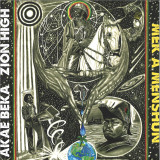
Akae Beka's inimitable style of rich, deep, multi-layered songwriting, uncompromising devotion to RasTafari and soulful healing melodies developed over decades performing with St. Croix based band Midnite and countless recordings. At the point of his untimely passing in 2019, he had released over 70LP's. He is without a doubt one of the most prolific reggae artists ever known.
The stellar production trinity that is Zion I Kings have been involved collectively and individually in creating some of the most highly regarded contributions to the vast Akae Beka catalogue. The timeless songs of 'Mek A Menshun' amply reward the listener who can penetrate into the mystical musical realms of Rastafari. Longtime fans of Midnite and Akae Beka will note that Vaughn Benjamin's singing on 'Mek a Menshun' reached new heights of melodic delivery and emotional intensity. Coupled with his always poetic and insightful lyrics, these 10 original songs rank among his best recordings to date. The title track 'Mek A Menshun' includes vocals by Protoje Grammy (R)-nominated artist.
Mek A Menshun features the stellar musicianship of the ZIK distinguished in typical fashion by the rock-solid drumming of Lloyd "Junior" Richards. On this album, his playing is complemented by Aston Barrett Jr. ("By Day", "Only Now") and Kirk Bennett ( "Kagm Mystory", "Mek A Menshun"). The signature stylings of the other core ZIK musicians are augmented by horns (Andrew "Drew Keys" Stoch -trombone, Donald "Jahbless" Toney -saxophone), flute- Sheldon "Attiba" Bernard, kette- Andrew "Bassie" Campbell, and the guitar of Chet Samuel. ZIK guitarist Andrew "Moon" Bain contributes a string arrangement on "Only Now". Throughout the album, Laurent "Tippy I" Alfred's spot-on organ shuffle bubbles the rhythm forward. Many of the 'Mek A Menshun' tracks were among the last recordings done by the veteran engineer Gary Woung.
Originally released digitally and on CD, this LP is now being released for the first time on as a 12" vinyl LP courtesy of Before Zero Records.
Mondays at The Enfield Tennis Academy, x2 LPs of long-form, lyrical, groove-based free improv by acclaimed guitarist & composer Jeff Parker's ETA IVtet. Recorded live at ETA (referencing David Foster Wallace), a bar in LA’s Highland Park neighborhood with just enough space in the back for Parker, drummer Jay Bellerose, bassist Anna Butterss, & alto saxophonist Josh Johnson to convene in extraordinarily depth-full & exploratory music making. Gleaned for the stoniest side-length cuts from 10+ hours of vivid two-track recordings made between 2019 & 2021 by Bryce Gonzales, Mondays at The Enfield Tennis Academy is a darkly glowing séance of an album, brimming over with the hypnotic, the melodic, & patience & grace in its own beautiful strangeness. Room-tone, electric fields, environment, ceiling echo, live recording, Mondays, Los Angeles. Jeff Parker's first double album & first live album, Mondays at The Enfield Tennis Academy belongs in the lineage of such canonical live double albums recorded on the West Coast as Lee Morgan’s Live at the Lighthouse, Miles Davis' In Person Friday & Saturday Night at the Blackhawk, San Francisco & Black Beauty, & John Coltrane's Live in Seattle.
While the IVtet sometimes plays standards &, including on this recording, original compositions, it is as previously stated largely a free improv group —just not in the genre meaning of the term. The music is more free composition than free improvisation, more blending than discordant. It’s tensile, yet spacious & relaxed. Clearly all four musicians have spent significant time in the planetary system known as jazz, but relationships to other musics, across many scenes & eras —dub & Dilla, primary source psychedelia, ambient & drone— suffuse the proceedings. Listening to playbacks Parker remarked, humorously & not, “we sound like the Byrds” (to certain ears, the Clarence White-era Byrds, who really stretched it).
A fundamental of all great ensembles, whether basketball teams or bands, is the ability of each member to move fluidly & fluently in & out of lead & supportive roles. Building on the communicative pathways they’ve established in Parker’s -The New Breed- project, Parker & Johnson maintain a constant dialogue of lead & support. Their sampled & looped phrases move continuously thru the music, layered & alive, adding depth & texture & pattern, evoking birds in formation, sea creatures drifting below the photic zone. Or, the two musicians simulate those processes by entwining their terse, clear-lined playing in real-time. The stop/start flow of Bellerose, too, simulates the sampler, recalling drum parts in Parker’s beat-driven projects. Mostly Bellerose's animated phraseologies deliver the inimitable instantaneous feel of live creative drumming. The range of tonal colors he conjures from his extremely vintage battery of drums & shakers —as distinctive a sonic signature as we have in contemporary acoustic drumming— bring almost folkloric qualities to the aesthetic currency of the IVtet's language. A wonderful revelation in this band is the playing of Anna Butterss. The strength, judiciousness & humility with which she navigates the bass position both ground & lift upward the egalitarian group sound. As the IVtet's grooves flow & clip, loop & repeat, the ensemble elements reconfigure, a terrarium of musical cultivation growing under controlled variables, a tight experiment of harmony & intuition, deep focus & freedom.
For all its varied sonic personality, Mondays at The Enfield Tennis Academy scans immediately & unmistakably as music coming from Jeff Parker‘s unique sound world. Generous in spirit, trenchant & disciplined in execution, Parker’s music has an earned respect for itself & for its place in history that transmutes through the musical event into the listener. Many moods & shapes of heart & mind will find utility & hope in a music that combines the autonomy & the community we collectively long to see take hold in our world, in substance & in staying power.
On the personal tip, this was always my favorite gig to hit, a lifeline of the eremite records Santa Barbara years. Mondays southbound on the 101, driving away from tasks & screens & illness, an hour later ordering a double tequila neat at the bar with the band three feet away, knowing i was in good hands, knowing it would be back around on another Monday. To encounter life at scales beyond the human body is the collective dance of music & the beholding of its beauty, together. – Michael Ehlers & Zac Brenner
Repress expected. Date TBA
By 1980 when this was originally released Pharoah Sanders was solidly entrenched with his own voice on tenor. The passing of John Coltrane and Sanders's fruitful years of playing with the prolific saxophone genius resulted with an unmistakable influence on his sound and explorations of the instrument. Beginning with "Greetings to Idris" the structure of the music is one that follows tradition yet opens up for the musicians to improvise within the arrangements. "Greetings to Idris" is in reference to the featured drummer Idris Muhammad who also played with Coltrane during his late period. Naturally Sanders is featured as the main instrument and his horn can be bold and demanding of your full attention. Always interested in other instruments from other cultures, much like Trane, he incorporates the Japanese instrument the koto, a beautifully harmonic stringed instrument to counter his soft rich blowing on tenor with only wind chimes and a harmonium for a delicious peaceful bit of music on "Kazuko"(Peace Child) that has the qualities of a meditative offering. Most of the music, eight tracks, is composed and arranged by Sanders and demonstrates his leadership. There is one John Coltrane composition entitled "After The Rain" that gets the Tranesque treatment by Sanders that makes it hard for even the most discerning listener to distinguish between the original version and Sanders impression. It is a bluesy duet featuring only sax and piano and leaves you wanting to hear it over and over again because of it's simple and haunting melodies. Another song that Coltrane recorded entitled "Easy To Remember" has a gentle swing to it built around a classic quartet (drums, bass, piano, sax) like that employed by Coltrane that results in a superb standard. Sanders incorporates the use of another "foreign" instrument to jazz by working in a tabla and sitar on "Soledad " that takes center stage before Sanders joins in on the music. The result is a thing of genius as the East and West merge and interface for composition that is peaceful. Sanders music on this LP fluctuates between the tranquil sounds of his mellow horn to the outer limits where he left off with the explorations of Trane's late period. What separates this LP from others is that it is a group playing under his leadership where he gives all others close to equal billing. The uptempo, "You've Got To Have freedom" is one such song where Sanders gets out there on some of his solos but works within the group structure as the other musicians, most notably Eddie Henderson on flugelhorn, bring the music back home. There is a chorus sung much of the time throughout where the the proclamation "Ya gotta have peace and love, ya gotta have freedom" is presented in Manhattan Transfer style but with much more soul. The use of vocalists is done again on the track entitled "Think About The One." The chorus features vocalese specialist Bobby McFerrin. This LP shows the different sides of Pharoah Sanders, a man always willing to explore the music, explore his soul and share it with you. The closing track "Bedria" is a mellow exploration of the various ranges of the tenor. It is a ten minute song that displays all the grace of his being, a gentle giant who can manipulate the horn to do extraordinary things, reverberating out and back in undulating waves of harmonic bliss. Sanders on this LP is next to perfect. One of his best recording from his post Impulse career. It belongs in your jazz collection right next to John Coltrane.
- A1: Fantastic
- A2: Keep It On (This Beat)
- A3: I Don't Know
- A4: How We Bullshit
- A5: Fat Cat Song
- A6: The Look Of Love
- B1: Estimate
- B2: Hoc N Pucky
- B3: Beej N Dem
- B4: Pregnant (T3)
- B5: Forth & Back (Rock Music)
- B6: Fantastic 2
- B7: Fantastic 3
- C1: Keep It On
- C2: 5 Ela Remix
- C3: Give This Nigga
- C4: Players
- C5: Look Of Love (Remix)
- C6: Pregrent (Baatin)
- D1: Things U Do (Remix)
- D2: Fat Cat (Remix)
- D3: Fantastic 4
- D4: What's Love Gotta Do With It (Look Of Love Remix)
- D5: 2 You 4 You
Available again. Note price increase. The contributions of the late Detroit producer James DeWitt Yancey –better known to the world as J Dilla to the world of hip-hop can't be overstated, and nowhere is his legacy more apparent than his work as a member of Slum Village. A founding member of the trio, (Alongside rappers T3 and Baatin) Dilla provided the group's distinctly esoteric, free-wheeling sound, built around winding basslines, quirky drumbeats, subtle low-end frequencies, and classic jazz & soul samples. Against the backdrop of Dilla's rich production, T3 and Baatin's free-flowing style of rhyming would also earn wide critical praise, leading to comparisons as the successors to A Tribe Called Quest. (A label they themselves have rejected.) It's on Slum Village's 1997 studio debut, Fan-Tas-Tic Vol. 1, that all these elements come together in the most proficient manner. An instant hit among Detroit's underground hip-hop scene, the album seemed to combine all the best elements of the reigning alternative and gangsta styles of hip-hop into one cohesive style that was a hit among critics. Fan-Tas-Tic's influence extended far beyond Detroit, as its sound heavily influenced the sounds of D'Angelo, Erykah Badu, and The Roots just to name a few. (Roots drummer ?uestlove has even declared that: "Hands down this album birthed the neo-soul movement.") Ne'Astra Media Group now presents the album reissued on vinyl, for the first time in several years. Every wobbling bass note of J Dilla's production has been preserved and every freestyle line of T3 and Baatin has been re-created, to maintain the legacy of a late-90s rap classic, and the legend of one of hip-hop's greatest beatsmiths.
Deron Miller gives his life to the riff. Unrestrained by industry expectations and genre limitations, the boundlessly prolific guitarist and voice behind multiple beloved projects is best known as the founder, frontman, and songwriter in CKY. His authentic and effortlessly hooky heavy rock obsession returns with 96 BITTER BEINGS. Reinvigorated and ready to rumble all over again, Miller roars back with the same reverence for riffage that made underground hits out of CKY anthems like “Flesh Into Gear,” “Escape from Hellview,” and “Disengage the Simulator” from 1998 till 2011.
The familiar warmth, feel, groove, and unapologetic honesty which drove the song “96 Quite Bitter Beings” to 54 million streams (on Spotify alone) permeates the pair of albums unleashed by 96BB.
A successful crowdfunding campaign saw Miller, guitarist Kenneth Hunter, bassist Shaun Luera and Shaun’s brother, drummer Tim, conjure up 2018’s Camp Pain in limited release. North American and European touring followed, wrapping up shortly before the COVID-19 shutdowns.
“After CKY and a short break, I decided to continue, without changing the sound,” Miller explains. “Because that’s what I do. It’s what I love to do and what people say I do well. All of the guys who got in the band with me are great musicians. And each of them is hungry. They have priorities and ambitions about being in a rock band, no matter the grim state of pop music out there. If we can bring rock and metal back to the mainstream, in some way, that’s the dream.”
In 2022, 96 BITTER BEINGS unleash the long-awaited Synergy Restored, 11 songs of relentless power and vibe. Four-on-the-floor, fuzzy and visceral, proper rock n’ roll made by an actual band, rather than a bunch of overprocessed samples and otherwise stale shenanigans. Songs like “Vaudeville’s Revenge,” “90 Car Pile-Up,” and “Wish Me Dead” offer vivid reminders of the truth-telling prowess of guitars, bass, and drums. Miller is on fire, weaponizing the same knack for memorable musical epiphanies behind projects like Foreign Objects, World Under Blood, and CKY.
Miller co-founded Foreign Objects and later Camp Kill Yourself (a name born of his love of VHS slasher classics) in West Chester, Pennsylvania, in the ‘90s. Written by Miller, 1999’s Volume 1 appealed to metalheads, skaters, stoners, and punks. The album led to a stint on Warped Tour and a deal with Island Def Jam Music Group, which issued Infiltrate•Destroy•Rebuild• in 2002. Axl Rose chose CKY to support the ill-fated Chinese Democracy tour, and they also played with Metallica.
An Answer Can Be Found followed in 2005, producing the Billboard Mainstream Rock Top 40 single “Familiar Realm.” Extensive touring with Avenged Sevenfold and the like-minded Clutch followed. Carver City, in 2009, would prove to be Miller’s last album with the group he created and led. Across the four albums, Miller indulged his love of everything from ‘80s thrash metal to doom, as CKY blended high-octane ruckus with occasional bursts of Moog synths and cinematic storytelling.
Miller never stopped creating, with a handful of full albums written and released, a foray into horror movies, and parenting three children with his wife, scream queen actress Felissa Rose. Like Galactic Prey, the most recent Foreign Objects album, the 96BB records were recorded and produced by Miller and Hunter at Manifest Productions. Camp Pain was explicitly made for diehard fans who supported the creation of both albums through 96BB’s Indiegogo campaign. Synergy Restored was always intended for wider release, which it sees now via Nuclear Blast.
“I want my work taken seriously. I thank God every day that I was never overexposed, or even exposed enough commercially, to where I’m resigned to a specific moment,” Miller says. “I would rather have my self-respect, the respect of the audience, and a dedicated cult following.”
“Every time I go out, I see Nirvana, Metallica, and Misfits t-shirts. These kids may not know the music, but at least they are displaying a visual interest,” he adds. “Corporations spend millions of dollars promoting certain styles of music, but history proves that true rock will always sneak in.”
Welcome to the world of Edward Blankman, a retired dentist who wrote elegant, minimalist jazz in obscurity circa 1970. At least that's the story. In truth, Edward Blankman's Cape Cod Cottage is the 2021 concept album from Echo Park composer Brendan Eder. A tender, wistful follow up to 2020's To Mix With Time, the Cape Cod Cottage sound evokes the spirit of Erik Satie, Miles Davis with Gil Evans, and Stevie Wonder, balanced with the accessibility of 1960s lounge-exotica. Eder created Blankman's story to channel his own grief, with bittersweet tenderness. Read the liner notes (or watch the mini-doc), and you'll be transported to the quiet shores of Cape Cod in the early 70s, where a lonely retiree mourns his late wife, Natalie, with walks in nature and evenings at his Wurlitzer. The story is brought to life with a meticulously crafted package sporting classic liner notes, faux 1970s photographs documenting Edward with the musicians (taken during the actual session), a make-believe jazz label, and a commissioned oil painting of Edward's cottage. Eder brought together a dream line up with a ton of chemistry for the project; drummer Christian Euman (Jacob Collier), saxophonist Josh Johnson (Jeff Parker, Leon Bridges), and bassist Alex Boneham (Billy Childs), who all studied together at the Hancock Institute of Jazz. Rounding out the group is flutist Sarah Robinson, a recurring player in Eder's ensemble, and Edward Blankman (Brendan) on the Wurlitzer. The cast was booked for a single date with coveted engineer Michael Harris (Kamasi Washington, Angel Olsen) at famed Electro-Vox Recording Studios. To create realism for Edward's story, the charts were purposefully withheld from the musicians until they arrived at the studio. The result is an authentic and natural performance delivered by players at the top of their game, captured on lauded vintage equipment including the legendary Neve-8028 console. This was, hands down, one of the very best records of last year so don't miss out on this extremely limited pressing for UK and Europe. Under license from Jazz Dad Records.
After a year of releases exploring recent musics from the USA, Europe and the southern hemisphere the Horn of Plenty presents a survey of archival private, demo, and live tapes from local avant-anarcho-punks The Apostles. The tapes were (poorly) recorded in Islington & Hackney squats between 1981-1983 and they capture the fledgling band exploring various line-up’s, styles & techniques with limited means and ability. In 1983 The Apostles released their first vinyl EP and switched mainly to a more straight-ahead anarcho-punk style. They gained a strong following then called it a day in 1989. Their vinyl output is still regarded highly by fans and collectors and their ‘official’ demo tapes have become highly sought-after, particularly since being namechecked by Ty Segall in a 2014 interview. In a 2009 article charting the band’s history (frontman) Andy Martin gives these early tapes a mere footnote and states that, in his opinion, they are ‘Best Forgotten’. With respect Andy, I beg to differ. Best Forgotten shows the band grappling with the political, racial and cultural tensions of the time whilst exploring radical politics and issues around homosexuality and mental health. Their sympathies with The Angry Brigade’s ‘direct action’ ethos extended to their involvement with the squatted Centro Iberico and The Wapping Autonomy Centre where they worked closely with Crass, Poison Girls, Flux of Pink Indians and The Mob among others. Viewed retrospectively, it’s easy to draw comparisons with early Fall records, The Door and The Window etc… but also at their melodic best they echo 60’s beat groups and even 70’s blues-rock. A keen interest in tape collage (supplied here by Ian Rawes who later became established with his London Sound Survey project) and the avant garde also inform the mix. Highlights include a bleak reworking of Lemon Kittens’ Chalet D’Amour and a live version of Simon & Garfunkel's I Am A Rock segueing into their take on Alternative TV’s Splitting In Two recorded at The Recession Club in Ponsford Street, Hackney. The short-lived Recession Club, which The Apostles co-ran and where Andy Martin worked the door, also hosted the first ever Coil concert. On that night he refused entry to Death In June on account of their ‘inappropriate attire’. Best Forgotten comes in a hand stamped, stickered and assembled edition of 500 copies and includes an A3 poster and 32 page A4 zine collecting archival photos and images from The Apostles tapes & zines along with liner notes and reflections on the tracks written by Steve Underwood (Harbinger Sound), Chris Low (former Apostles drummer) and The Apostles frontman Andy Martin, who thought this whole thing was daft.
Aggressive Blackened Death Metal with hooks and technical finesse that invokes the Ancient Gods! Aurora Borealis has been around for years (going back to as far as 1994! and it has mostly self-released their albums. Underground fanatics might remember the band reaching out to promote its music on forums back in the day and tracking its progress, each album was a large improvement over the earlier ones. And through time Aurora Borealis had great drummers ranked in its line-ups: Tony Laureano, Derek Roddy and Tim Yeung, which indicates the quality and level we talk about here. Aurora Borealis plays Black/Death Metal, remaining gritty not unlike Angelcorpse, but being more dynamic comparatively. It has got unique themes and the album artworks represent that. As the band name suggests, they are indicative of the Aurora Borealis phenomenon although the band has progressed to involve sci-fi imagery not far removed from Nocturnus, where artworks are concerned. Musically, the band remains true to its original Black/Death sound but it’s doing it with far more potential and competency than the others. The band’s definitely got a solid US death metal sense, it is not flirting too much with the European style of melody-infused death metal as it may appear. One will be surprised to find it so hard-hitting and gravelly and yet be rife with some of the most driven and enthusiastic activity. It is not solely focused on being technical (which in a way it is) but it is varied and it is catchy. Floridian Death Metal bands have much in common with the way Aurora Borealis structures its songs and there is the ever-present Morbid Angel influence, infected with some early Malevolent Creation rabidity. This is what makes death metal so good, few could contest with that. It’s got Death Metal in its genes, but Aurora Borealis takes the vitriol from Black Metal especially in the vocal department and gives the music an edge that is hard to miss. Here there is that special spice, that sizzling quality that comes from the rasps, adding a certain Thrashiness to it as well. The hooks make this album special, because writing good songs can be safely left in the hands of founding member Ron Vento.
On August 26th Gwilym Gold releases his third album, Blue Garden, on SA Recordings. Alongside the record we are pitching the beautiful Blue Garden. Gwilym began playing improvised music as a pianist and may be fondly remembered as the singer and keyboardist in psychedelic pop trio Golden Silvers but has since worked widely as a soloist. 2012 saw the release of his high-concept solo piece Tender Metal which was composed and released using Bronze; a new music technology which Gold created with producer Lexxx alongside Mick Grierson. Using Bronze, a song is enabled to rebuild itself on each playback from the musical seeds and ground sown by the writer. Music composed with Bronze is not restricted to just one playback possibility, it is a dynamic, ever-transforming representation of itself where the artist builds a new model as part of each song’s writing process. Gwilym has since collaborated with artists such as Arca, Jai Paul, Philippe Parreno and Nicolas Becker, introducing them to this new technology. One of the hopes for Bronze is that it brings some of the characteristics of performance back into previously inert musical documents, and alongside his work with Bronze, Gwilym has maintained a wide performance practice. Performing recently alongside musicians such as Dave Okumu, Tom Skinner and Lucinda Chua and collaborating with artists Eddie Peake and Holly Blakey. His two recent collections of songs, A Paradise and Sky Blue Room, stem from this, the second being recorded almost entirely live in three days alongside Okumu and drummer Dan See. Blue Garden is Gwilym’s first collection written and recorded entirely in solitude and he hoped to unburden the process of anything beyond the most primary elements. Setting up a sort of hybrid harp in a small isolated room, the aim was to let the songs flow out unadorned and record them as they were. The only addition to the album is the accompanying sound of rivers and birdsong by sound recordist and founding member of Cabaret Voltaire, Chris Watson. Gwilym started to play the new album alongside Watson’s recording ‘The Drinking Boy’ which led him to reach out to Watson. Gwilym explains “I played it to a friend once I had recorded it with Chris’ field recordings, they said it almost sounded like the quarantine birds, there was a feeling of it being a little sanctuary”. The songs on Blue Garden were written during a bittersweet time, where Gold was experiencing moments of love, loss and rebirth. The album is a loose and abstract exploration of love in all its forms, how familial, platonic and romantic love are all intertwined.
The Blues Don’t Lie is the amazing new album from Buddy Guy, and is the legend’s 34th studio album, and the follow up to 2018’s Grammy winning album The Blues Is Alive and Well. Produced by songwriter / drummer Tom Hambridge, The Blues Don’t Lie features guests including Mavis Staples, Elvis Costello, James Taylor, Jason Isbell, and more.
The album is released exactly 65 years to the day that Buddy Guy arrived in Chicago on a train from Baton Rouge, Louisiana in September of 1957, with just the clothes on his back and his guitar. His life would never be the same, and he was born again in the blues. The Blues Don’t Lie tells the story of his lifelong journey.
Reflecting on this body of work, Buddy says “I promised them all: B.B., Muddy, Sonny Boy as long as I’m alive I’m going to keep the blues alive.” He has indeed proven that again, and proclaims, “I can’t wait for the world to hear my new album cause The Blues Don’t Lie.”
This extraordinary NYC trio combines free jazz and post-punk with pointed commentary about issues of race, gender, the pandemic, and political autonomy.
Rose Tang, a Mongol from Sichuan, sings/recites and plays guitar, piano, and percussion. Tenor saxophonist Ayumi Ishito, from Japan, plays in a plethora of bands along the jazz/rock spectrum. Drummer, composer, and educator Wen-Ting Wu, from Taiwan, combines jazz drive and classical rigor.
The group came together to play one song at an event. ESP-Disk’, already familiar with the separate work on the NYC scene of all three members, immediately invited them to make an album. After intensive rehearsals, the members recorded the album in a one-day session, then reunited during the pandemic to add words about its effect to an existing instrumental on “8 Steps/7 O’Clock.” This album is simultaneously part of ESP-Disk's Drive To Revive Weird Rock and an extension of the label's famed free-jazz legacy.
Rising from the rubble of Planet Battagon"s cosmic collision of shimmering improvisation and bass- weight electronics, producer, multi/instrumentalist and veteran drummer, Nathan "Tugg" Curran returns with London-based ensemble, Edrix Puzzle"s latest celestial disturbance, "Coming Of The Moon Dogs", forthcoming on On the Corner.
This extraordinary NYC trio combines free jazz and post-punk with pointed commentary about issues of race, gender, the pandemic, and political autonomy. Rose Tang, a Mongol from Sichuan, sings/recites and plays guitar, piano, and percussion. Tenor saxophonist Ayumi Ishito, from Japan, plays in a plethora of bands along the jazz/rock spectrum. Drummer, composer, and educator Wen-Ting Wu, from Taiwan, combines jazz drive and classical rigor.
Reggie B returns with his much awaited NBN release "Tinky's Jam.” This is his first full length album since “Soulofunkaquarian” released with INnatesounds. The album was most definitely worth the wait. It takes the listener through a personal and musical journey inspired by the birth of his son, who he affectionately calls “Tinky,” and the connection they share. Tinky was a major part of this album, oftentimes found in the studio during the conceptions of many of the songs. This album is unlike any other record released by the Kansas born producer, multi instrumentalist, singer and arranger. After the birth of his son, he was inspired and encouraged to get back into the musical game by the head of NBN, Onra. "Tinky's Jam" is something of a family affair with friends and old collaborators playing their part.
Born into a musical family to parents who were two sides of the same coin, a father who was one of the most renowned drummers in Topeka, Kansas funk and jazz fusion scenes and a mother who was one of the most prominent gospel singers in the city. The apple didn't fall far from the tree and Reggie has spent his life performing and playing with a healthy slew of releases.
This album is the result of countless days in the studio which yielded scores of a dozen slabs of head nodding funk.
Mostly instrumental and showcasing Reggie's many styles from the heavy bounce of "Futuristic Slow", to the George Clinton nod on "P For Life", and the crafted soul of "Gone Fishing" with Dominique Sanders to the cool street jazz feel of "Realize" with Donald Hates's sax adding flare as well as the beat of "Nose Dive" providing the nod factor for the heads.
Closing out the LP ``Tinky's Dance" - a raw soulful jam that lies somewhere between Prince and Larry Heard - for Reggie "the whole project felt like a gift to me and my baby boy Tinky! I wanted to let him know he’s always in my heart and soul and I love my Tinky man infinitely! It’s a children's album for the elevated child like Tinky!”
Library Music: Volume One is a sixteen track double LP collecting the North London drone pop band’s 7” singles, one-offs and compilation tracks spanning the first 14 years of the group’s existence. It includes synth pop, indie fuzz and moody motorik workouts, alongside pastoral folk sketches, dubby electronics and the occasional drone experiment. More immediate than their stretched out and slow-burning recent album tracks, the music here is taken from limited vinyl releases, album bonus tracks and music for compilations on labels as diverse as Bezirk Tapes, Second Language, Modern Aviation, and Concrete Tapes as well as the band’s current home, Where It’s At Is Where You Are. The compilation is a happily cohesive document of an inventive band that rarely stand still for long. The band says, “We wanted to gather all our early, scattered work before we move on to our next album, to remind ourselves (and others) of some of the poppier and less characteristic things we’ve done. We’ve always felt a lot more relaxed and freer making one off things for people – it’s a chance to try things that might otherwise be daunting on a full record”. Always a prolific group this is by no means an exhaustive collection, the title giving a clue to how much more they have left to share. “We have been introduced to loads of bands that we love initially through non-album compilations – Broadcast, The Chills, Stereolab, Piano Magic, Flying Saucer Attack amongst others – we wanted to add our own to that (admittedly slightly daunting) lineage.” The Leaf Library are formed around the core group of singer Kate Gibson, former Saloon and Singing Adams guitarist Matt Ashton, guitarist SJ Nelson, drummer Lewis Young and bass player Gareth Jones. They have released three studio albums (Daylight Versions, About Minerals and The World Is A Bell) as well a number of electronic and experimental albums and EPs, remix compilations and long form tracks. They have also released five Monument CDRs; an on-going series of experimental solo and side projects on their Objects Forever imprint. The band have collaborated with musicians as diverse as Alasdair MacLean of The Clientele, singer Ed Dowie, noise group Far Rainbow and string collective Iskra Strings, and have provided music for a number of exhibitions, films and performances. A collaborative album with Japanese artist Teruyuki Kurihara is due in late 2022 on the Mille Plateaux label. Tracklisting: 01 Agnes In The Square 02 Goodbye Four Walls 03 City In Reverse 04 Walking Backwards 05 Soundings 06 Diagram Loop 07 The Greater Good 08 Losing Places (ISAN Remix) 09 A Stone In Water 10 Architect Of The Moon 11 Tired Ghost 12 The Still Point 13 Wave Of Translation 14 Badminton House 15 Tranquility Bass 16 A Gap In The Trees
Hitting play on SEAMOSS2, the latest missive from Portland noisetinkerers Sea Moss, is like punching the big red button on a cartoon
bomb before it explodes into a multicolored mushroom cloud
From the second Nap Time revs up, vocalist Noa Ver and drummer Zach
D'Agostino absolutely clobber the listener with a distorted hodgepodge of sounds
as raw and violent as they are winkingly playful, as if Black Dice and Melt-Banana
were caught in the middle of some kind of psychotic square dance together.The
duo's setup "which involves a primitive assemblage of hacked feedback
oscillators, colorful Rococo tin boxes, and a contact mic plugged directly onto
Ver's neck to capture her barking intonations " harkens back to an era of DIY
where live performance meant everything. Blurring the line between reckless
improvisation and tightly- knit compositions, the band achieves a disorientingly
complex interplay. Though Sea Moss's music may initially seem to be an act of
pure blunt force, the duo's true prowess lies in the intricacy of their rhythmic
interplay. As freeform as it all might seem, SEAMOSS2 contains the band's most
potent, precise compositions yet, refining the distinct style they forged on
disorienting releases like Bread Bored and Bidet Dreaming into a thrilling act of
controlled chaos.
In an era where the communal spirit of DIY feels more difficult to achieve than
ever, Sea Moss embody the classic ethos of weirdo punk music in all its absurdity
and wonder. It's this same sense of scrappiness that's earned them attention
from legends like Lightning Bolt and Machine Girl, and SEAMOSS2 illustrates why
they're every bit as deserving of their own trophy in the noise-rock hall of fame
one adorned in broken contact mics and scuffed-up scratches from one too many
bloody basement shows.