Tuk Smith is the kind of rock'n'roll ambassador you didn't think existed anymore. Punk maverick from rural Georgia, Biters frontman, producer and solo artist, he's seen the best and worst of a music industry in constant flux. By turns it's left him critically acclaimed, poised for stadiums, dropped, burned out, back in the game and beloved by those for whom rock is still everything. Now based in Nashville, and with his own label Gypsy Rose Records, he creates from a more real place than most. The result is Rogue To Redemption, Tuk's second album with solo project The Restless Hearts. The sonic lovechild of Thin Lizzy, 90s power pop and melody-driven punk, it shows an artistic peak born from adversity. The sound of a man bottling a lifetime of experiences, stories and characters from working class America. Produced by Tuk and mixed by Chris Dugan (Green Day, Iggy Pop, U2), Rogue To Redemption was written over the last three years but recorded down to the wire - right up to the summer of 2024. Joined by long-term Restless Hearts compadres, drummer Nigel Dupree and bassist Matthew 'Ponyboy' Curtis, he cut the bulk of it at home. So if any of this resonates with you - if you crave rock'n'roll with substance, an edge, 21st century eyes and an old soul's heart - you've come to the right place.
quête:d a v e the drumm
Saxophonist and composer Wayne Escoffery reflects on love, loss, and solitude on his stunning new album, an atmospheric and haunting mood piece, Alone, featuring a remarkable all-star quartet with pianist Gerald Clayton, bassist Ron Carter, and drummer Carl Allen. In the summer of 2023, saxophonist and composer Wayne Escoffery found himself alone in a way that he’d never quite experienced before. He was away from home, on sabbatical in Europe with a month to himself between tours. A long-term relationship had just ended, and he was confronted with the loss of friendships that he’d once valued. Worst of all, he’d suffered a broken finger that left him unable to play the saxophone for the first time since he’d picked up the horn in high school. “Normally, my coping mechanism would be the saxophone,” Escoffery laments. “But even that wasn't available to me for about nine weeks, so I just had to be alone in my thoughts.” He made good use of this alone time, conceptualizing the music that makes up his striking and singular new album. What emerged from that solitude was an extended mood piece, a workunique in Escoffery’s typically wide-ranging catalog for its sustained atmosphere of stark melancholy and searching introspection. Alone was conceived during a time of isolation, heartbreak, regret, and reflection, but the experience of the album is far richer even than that. In the end, “I was forced to reflect on life and what was most important to me,” Escoffery concludes. “The concept of this album grew out of that reflection.”
Due to popular demand "Live In London," the highly anticipated release from legendary British Reggae group Aswad is now in physical form! This album marks a new era for the band, their first feature release in over a decade, making it a poignant moment in their storied career. With the passing of the late great Angus "Drummie Zeb" Gaye, this album stands as a powerful tribute to his memory, indomitable spirit and will for the work to continue. Passionately produced by principal members Tony Gad and Soloman, recorded in the heart of London at the iconic Jazz Cafe, this electrifying album captures the essence of the British-born reggae movement at its finest. Mixed by Christian Cowlin of The Wailers and mastered by Mark Gittins at Sensound Studios, each track from "Babylon" to "Just A Little Herb" shines a beacon on the band's unparalleled musicianship and electrifying stage presence. Don't miss your chance to be part of reggae history and experience the power of Aswad like never before! Exclusively from SMC Records, a division of The Spaine Music Company.
Olatuja is a band, a project, an album full of the uplifting, joyful music of the African diaspora, and a beacon of healing in a divided world. With an A-list supporting cast including drummers Obed Calvaire and Joshua Keitt, guitarists Femi Temowo and David Rosenthal, percussionist Magatte Sow and star pianist Christian Sands, Michael and Alicia set about creating Olatuja - an album that is at once cinematic in scope and intimate and personal in its message of trust, joy and the power of honest communication. "Olatuja" draws on the rich heritage of Michael"s Yoruba culture, the evolving popular music of West Africa, the gospel and jazz traditions that inform Alicia"s musicality, and the strong links that tie all these threads together.
Die Geschichte von Canned Heat ist auch gleichzeitig die Geschichte von Exzessen, Drogenmissbrauch, psychischen Erkrankungen und Tablettensucht, verbunden mit der Affinität für bandinternen Begräbnisse. So sagte erst vor kurzem Drummer Adolfo "Fito" de la Parra in einem Interview: "Ich bin nach über 55 Jahren noch immer bei Canned Heat. Überhaupt noch am Leben zu sein, ist hier schon ein Triumph". Schließlich war Fito seit dem zweiten offiziellen Album der Band "Boogie With Canned Heat" mit dabei, das 1968 auf dem US-Label Liberty veröffentlicht wurde. 1970 erschien "Future Blues", das erste Album mit dem neuen Gitarristen Harvey Mandel. Mit "So Sad (The World"s in a Tangle)" enthält das Album den ersten Umweltschutz-Song der Band. Es handelt vom ständigen Smog über Los Angeles. "Let"s Work Together", eine Coverversion von Wilbert Harrisons "Let"s Stick Together" aus dem Jahre 1962, wurde für Canned Heat weltweit zu einem Top Ten Hit. Im gleichen Jahr folgte der Konzertmitschnitt ""70 Concert: Recorded Live In Europe". Aufgenommen an verschiedenen Orten während der Tournee durch Europa (u. a. der Londoner Royal Albert Hall), ist dies das erste offizielle Live-Album der Band und gleichzeitig das letzte Tondokument von Canned Heat mit Alan "Blind Owl" Wilson, der im September 1970 an einer Überdosis Tabletten starb. Mit "Final Vinyl" veröffentlichten Canned Heat vor kurzem ihr letztes Album; "Future Blues" und ""70 Concert: Recorded Live In Europe" gehören zu ihren essentiellen Alben, als die Band in ihrer Keybesetzung mit Al Wilson, Bob Hite, Fito de la Parra, Harvey Mandel und Larry Taylor Ende der 1960er / Anfang der 1970er Jahre den Zenit ihres Schaffens erreicht hatten. Wilsons Tod hinterließ eine Lücke, die nicht mehr zu schließen war, zumal auch Larry Taylor und Harvey Mandel kurz zuvor Canned Heat verlassen hatten, um sich John Mayalls "USA-Union"-Band anzuschließen.
- A1: Thats How It All Is (Feat Kevin Mark Trail)
- A2: Dumplings For Dinner (Feat Omar)
- A3: Long Road
- B1: No Crime To Try
- B2: Work It Out (Feat Ange Williams)
- C1: Clearer Skies (Feat Kevin Mark Trail)
- C2: Sherwood Ave (Kitchen Party)
- C3: Everything I Have To Give
- D1: That Love (Feat Louis Baker)
- D2: Some Kind Of Blockage
Color Vinyl[35,71 €]
The records is released in two options. Both hvae 180g vinyl records. The first version has two black vinyls and the second limited edition (numbered 100 pieces) has one turquoise vinyl and the other red.
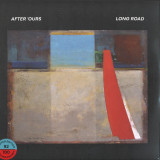
Over the last three decades, Auckland, New Zealand, has given birth to several generations of musicians, DJs, and producers who operated within the interzone between jazz, blues, soul, funk, Latin music, hip-hop, house, boogie, and broken beat. Across two slow-cooked albums that sit at the intersection of machine funk and vivid live instrumentation, Odyssey (2016) and their forthcoming sophomore release Long Road (2024), After 'Ours - the group project of pianist and composer Michal Martyniuk and drummer, guitarist and producer Nick Williams - have comfortably located themselves within this antipodean tradition.
Born and raised in Auckland, Nick Williams grew up surrounded by music from a young age. At home, his mother, Mary Anne, a record collector and DJ with deep, diverse vinyl crates, kept his ear sharp. By the time he was eight years old, he was regularly joining his musician father on stages across Australia in his blues rock band Slippery Sam. In his early twenties, Nick began leading the eleven-piece Auckland Latin-dub-funk fusion big band Tangent, who performed regularly until the late 2000s.
Michal Martyniuk, on the other hand, grew up on the opposite side of the world in Szczecin, Poland. After playing classical music for twelve years and attending jazz school, he relocated to New Zealand with his family in his teens. While studying at Auckland University Jazz school, Michal came into the orbit of the legendary New Zealand saxophonist, composer, producer, and band leader Nathan Haines, who brought him into the same world as future collaborators like Tama Waipara, Batacada Sound Machine, Sola Rosa and Nick.
Inspired by the rich stories of jazz, neo-soul, electronica, and dance music from both sides of the Atlantic Ocean and the open-eared Auckland scene they emerged from, After 'Ours formed in 2011. Born out of a friendship cultivated through playing together at bars and nightclubs around town and home studio sessions. "Nick had family and work, so I had to wait all day," Michal says. "We'd come to the studio at 10 PM and go till 3 AM. That's how we came up with the name.
Session by session, After 'Ours revealed itself to be a creatively fertile meeting of minds. "We both have our angles, but it works well in the end," Nick reflects. "It takes the music to a place we can't get to by ourselves."
Between 2011 and 2016, they wrote and recorded Odyssey with a cast of musical collaborators that included KP, Sharlene Hector & Kevin Mark Trail (UK), Matt Nanai, Nathan Haines, Jakub Skowronski, Nick's partner Ange Williams (nee Saunders) and British producer Mike Patto from the lauded UK future jazz group Reel People. Influenced by the smooth yacht rock of Steely Dan and Donald Fagan, the warm midtempo bounce of A Tribe Called Quest and J Dilla, and the complex jazz/RnB bop of Robert Glasper, Odyssey was a labour of love that emphasised community, warm-hearted hospitality, and care.
Seven years on, they're finally ready to return with Long Road, an album that contains some of their best work yet. As well as reconnecting with past collaborators Kevin Mark Trail and Ange Williams, Long Road sees After 'Ours calling on assistance from Louis Baker, Jakarta-based saxophone player Kuba Skowroński, bassist Dan Antunovich, Los Angeles-based drummer Chris Bailey and the journeyman British soul artist Omar Lyefook.
Across ten songs that plot a stargazed course through their antipodean spin on UK broken beat, jazz, modern soul, and blues rock, Nick and Michal build on everything they learned while writing and recording Odyssey. In the process, they take their joyful musical visions to sublime new heights.
Søren Skov Orbit's debut album, "Adrift," is at once subtle and profound. The saxophonist and his collaborators have created something quite special and consistently deep. This record may not easily be classifiable, but the most interesting music creeps between the lines
Danish tenor and soprano saxophonist Søren Skov (Debre Damo Dining Orchestra) and keyboardist Peder Vind co-founded the trippy quintet Søren Skov Orbit in 2016 to explore “more jazzy ideas,” as the saxophonist puts it. Joined by a rhythm section steeped in contemporary improvisation and psychedelia, bassist Casper Nyvang Rask, drummer Rune Lohse and percussionist Ayi Solomon of the legendary 80's Ghanaian roots/highlife band Classique Vibes, the Orbit belts out a richly focused helping of broadly African-inspired modern jazz with a hazy sheen.
On the opening “Notifications of Nothingness,” Skov digs in his heels, a steely but languid unspooling of burnished tenor lines atop condensed, quavering piano and the thick footfalls of bass and percussion. As a tenor player, Skov has done his homework and has a kinship with Albert Ayler, Archie Shepp, J.R. Monterose, and the Dutchman Hans Dulfer, but he clearly has got his own robust phraseology and expressiveness. He also cites multi-reedists John Gilmore, Yusef Lateef, and Bilal Abdurahman as, “some of the players I’ve been listening to the most for the last 10-15 years.”
A healthy dose of reverb is present throughout the album, echoing Alton Abraham’s studio wizardry with the Sun Ra Arkestra or the trance-inducing and compressed fidelity of certain Ethio-jazz and Mystic Revelations of Rastafari sessions. Skov notes that, “everything is recorded live at the same time in the same room. I wanted to do it that way in order to catch the dynamics and authenticity of the music.” There is, in fact, a complex teeter- totter between crisp and hazy execution, achieved by a delicately balanced mix that keeps the group’s sound simultaneously advancing and receding. Vind’s phrasing is terse and introspective, a vibrating echo that nudges and reflects on Skov’s brusque tenor in a dance of sonic displacement.
“Orbiting” pits a chunky backbeat and the teetering, taut hand-rhythms of Solomon against an infectious, almost microtonal piano riff, while Skov’s arpeggios are clean and florid as he patiently rises up from under a carpet of funky loops. Following the freer “Reflections of Rif,” “Naration” lilts with a wink at “Footprints” and tugs between up-tempo polyrhythmic drive, clanging keyboard accents, and the innately steadfast keenness of the bandleader. The coupling of Solomon and Lohse is a big part of the group’s detailed energy; as the leader puts it, “Ayi knows everything about regional differences in drum patterns. He is always listening and super responsive, and his and Rune’s dynamics are amazing.” The music both presents a “vibe” and keeps the door open for engaging well under the surface as repeated listens will be extremely rewarding.
- Fillmore East, June 17, 1970
- A1: Introduction
- A2: Directions
- A3: The Mask
- Fillmore East, June 17, 1970
- B1: It’s About That Time
- B2: Bitches Brew
- B3: The Theme
- Fillmore West, April 11, 1970
- C1: Paraphernalia (Bonus Track)
- C2: Footprints (Bonus Track)
- Fillmore East, June 18, 1970
- D1: Directions (Bonus Track)
- D2: The Mask (Bonus Track)
- Fillmore East, June 18, 1970
- E1: It’s About That Time
- E2: Bitches Brew
- Fillmore East, June 18, 1970
- F1: The Theme
- F2: Spanish Key (Encore)
- F3: The Theme
- Fillmore East, June 19, 1970
- G1: Directions
- G2: The Mask
- H2: I Fall In Love Too Easily
- H3: Sanctuary
- Fillmore East, June 19, 1970
- I1: Bitches Brew
- I2: The Theme
- Fillmore West, April 11, 1970
- I3: Miles Runs The Voodoo Down (Bonus Track)
- Fillmore East, June 20, 1970
- J1: Directions
- J2: The Mask
- Fillmore East, June 20, 1970
- K1: It’s About That Time
- K2: I Fall In Love Too Easily
- K3: Sanctuary
- Fillmore East, June 20, 1970
- L1: Bitches Brew
- L2: Willie Nelson
- L3: The Theme
- Fillmore East, June 19, 1970
- H1: It’s About That Time
Miles At The Fillmore - The Bootleg Series Vol. 3 features four historic perfor- mances from the Fillmore East and West in 1970, at a time when Miles Davis was single-handedly bringing jazz into the commercial rock era.
The visionary Bill Graham had booked Miles on a bill with The Grateful Dead at the Fillmore West and with fellow Columbia artist Laura Nyro in June 1970. The latter recordings are the earliest documented live performances of Miles’s band when he hired the keyboardists Chick Corea and Keith Jarrett, along with saxophonist Steve Grossman who had replaced Wayne Shorter. The rest of the rhythm section - bassist Dave Holland, drummer Jack De- Johnette and percussionist Airto Moreira - were the backbone of his band throughout this explosive period.
Curated by Carlos Santana, this set features fascinating firsthand accounts and profound insight into a seismic shift in American society, music, and culture. In a rare, in-depth interview, Miles was “so excited about the music that he wanted every set, every note made available to the public...” The searing heat of these concerts, originally issued in severely edited form, are now made whole. This set includes several bonus tracks like Wayne Shorter’s “Paraphernalia” and “Footprints”, an early version of “Miles Runs The Voodoo Down” plus a rare encore performance of “Spanish Key” from the Bitches Brew album.
The Bootleg Series Vol. 3: Miles At The Fillmore is available as a deluxe 6-LP boxset, housed in a lift-off box. This 6LP-set includes printed inner sleeves and a 12-page booklet with extensive liner notes and rare photos.
- Introduction
- Directions
- The Mask
- It’s About That Time
- Bitches Brew
- The Theme
- Paraphernalia
- Footprints
- Directions
- The Mask
- It’s About That Time
- Bitches Brew
- The Theme
- Spanish Key (Encore)
- The Theme
- Directions
- The Mask
- It’s About That Time
- I Fall In Love Too Easily
- Sanctuary
- Bitches Brew
- The Theme
- Fillmore West, April 11, 1970
- Miles Runs The Voodoo Down
- Directions
- The Mask
- It’s About That Time
- I Fall In Love Too Easily
- Sanctuary
- Bitches Brew
- Willie Nelson
- The Theme
These are four historic performances from the Fillmore East and West in 1970, at a time when Miles Davis was single-handedly bringing Jazz into the commercial Rock era. In their unedited form, all selections are previously unissued. The searing white heat of these concerts, originally issued in severely edited form, are now made whole. This set includes several bonus tracks like Wayne Shorter's “Paraphernalia” and “Footprints”, an early version of “Miles Runs The Voodoo Down” plus a rare encore performance of Bitches Brew’s “Spanish Key”.
The visionary Bill Graham had booked Miles on a bill with The Grateful Dead at the Fillmore West and with fellow Columbia artist Laura Nyro in June 1970. The latter recordings are the earliest documented live performances of Miles’s band when he hired two keyboardists--Chick Corea and Keith Jarrett, along with saxophonist Steve Grossman who had replaced Wayne Shorter. The rest of the rhythm section--keyboardist Corea, bassist Dave Holland, drummer Jack DeJohnette and percussionist Airto Moreira--were in the backbone of this band throughout this explosive period.
Curated by Carlos Santana, this set features fascinating firsthand accounts and profound insight into a seismic shift in American society, music, and culture. In a rare, in-depth interview, Miles--while listening to the concert playback--was “so excited about the music that he wanted every set, every note made available to the public...”
The year 2020 sure wasn't the most ideal time to form a band, especially for a group of musicians who never played together before. But for New York rock quintet GIFT, this strangest of periods was the auspicious backdrop for a bold new sound - a dizzying blend of early shoegaze, classic `90s alternative rock and even modern pop. Indeed, that GIFT emerged somewhat fully formed on their 2022 debut album Momentary Presence was a testament to the creative possibilities laying deep within. Now, Illuminator, their Aug. 23 debut album for revered New York independent label Captured Tracks, is the long-awaited payoff of GIFT's ever-growing musical and human chemistry. And while nods are apparent to label forerunners such as Beach Fossils, DIIV and Wild Nothing, GIFT are shepherding those elements into wondrous new vessels for the present moment - sleek, often danceable and frequently mesmerizing. GIFT - vocalist/guitarist TJ Freda, multi-instrumentalists Jessica Gurewitz and Justin Hrabovsky, drummer Gabe Camarano and bassist Kallan Campbell - are firmly enmeshed in the New York scene as talent buyers, photographers, DJs, audio engineers, art directors and, in the case of Campbell, an owner of the beloved Brooklyn DIY venue Alphaville. GIFT introduced Illuminator with "Wish Me Away," their first new song in the 18 months since the debut. With its earworm guitar lines, propulsive rhythms, riveting vocals and mind-expanding aural flourishes, "Wish Me Away" is the perfect sonic springboard from Momentary Presence to where GIFT are going next. It's also a potent reminder that you can still preserve that twinkle in your eye even when you feel like everything's slipping away. On songs such as "Light Runner", "Going In Circles" and "Destination Illumination," Freda demonstrates a newfound confidence and versatility, embracing pop music as a vehicle. The relentless, often painful dance of love has never sounded as exhilarating as on "Going in Circles," while the strident tone poem "Water in My Lungs" conjures the unreal feeling of watching a romantic partner both figuratively and literally fade from view. "This album has a lot of themes of going fast, time passing and things changing," Freda says. Throughout, Freda and company thankfully do much of the hard work for us: falling in love, heartbreak. Watching events and moments go by like cars on the highway. People you once knew coming in and out. Grieving the loss of different phases. Watching everything happen simultaneously. For these and many other reasons, Illuminator, friends, will be the soundtrack to the throughline of your life.
Last Summer, Daniel Foggin, guitarist, writer and chief architect of Smote, uprooted himself from his usual home in Newcastle to live and work in a farmhouse in Kelso, near the Scottish border. “Through the summer when I was working up there, myself and Rob (Smote drummer) would finish work and go sit by a small river and have a couple of beers in the sun, and it was the best thing ever” he relates “So I guess the philosophy is that to some people it looks like any other stream, but to us it was supreme happiness.” Hence came the title of the fourth Smote album proper, one largely recorded in this same farmhouse – A Grand Stream. It’s an album that’s the truest incarnation thus far of his vision for this band – a full-scale psychic voyage into the ether and a drone-and-repetition-fuelled series of incantations that takes simple, primal ingredients and utilises them for the purposes of aural sorcery, summoning spectres and revelations aplenty in its wake. Whilst the folk-tinged, ceremonial ambience that Smote have made their trademark is present and correct here, utilising Swedish classic psych heaviness and Swans textures as fuel for the ominous rhythms of ‘Coming Out Of A Hedge Backwards’ and the uplifting cadences of opener ‘Sitting Stone Part 1’, Foggin and his cohorts also waste little time exploring new more eerie and ethereal textures and dimensions. The meditative ‘Chantry’ in particular sees them gravitate towards a headspace akin to the drone-based epiphanies of Kali Malone’s ‘Does Spring Hide Its Joy’ filtered through the transcendent amplifier worship of ‘Earth 2’. A Grand Steam takes this band – one who’ve always eschewed the cliches and stumbling blocks of all contemporary psych rock in favour of their own unique and wyrd vision – into a realm in which they transcend through willpower and skill alike into something preternaturally thrilling, mapping out their own crepuscular new territory Question is; dare you step over the threshold?
After two very intimate solos albums, pianist and singer Gregory Privat returns with PHOENIX, a luminous album celebrating the cycle of life and the constant rebirth from the ashes. A metaphor for the firebird, it's a continuation of the album SOLEY released in 2020. With double bassist Chris Jennings and drummer Tilo Bertholo, this unique trio blends spiritual jazz with urban pop, Creole songs, and electronic music.
Born in Martinique in December 1984, Gre\u0301gory Privat is the son of pianist Jose\u0301 Privat, known for his participation in the internationally recognized Caribbean group, Malavoi. Attracted by the piano at an incredibly young age, he took private lessons from the age of six and devoted himself for 10 years to a classical apprenticeship before turning to improvisation techniques and jazz.
Performers on this recording:
Gregory Privat - piano; Chris Jennings- double bass; Tilo Bertholo - drums
Presenting 3+5, the long-awaited eighth album from Tokyo-based noise-rockers Melt-Banana on their own A-Zap label! The album showcases the duo’s visionary musical approach and extraordinary abilities as performers: Yasuko Onuki’s giddy, hyperactive vocalizing and Ichiro Agata’s glitchy, cyberpunk guitar, delivered at dizzying speed, bathed in aggressive electronic sounds. Their aesthetic approach is exultantly experimental, fusing diverse genres imbued with chaotic energy. As on their previous works, the music on 3+5 is unpredictable, always filled with surprises and excitement. 3+5 synthesizes elements of a variety of extreme music, hyper-pop, classic punk, vintage metal, and noise. It partakes of Japanese culture overall, especially the subcultures of gaming, anime and underground music. Melt-Banana seek to offer possibilities to musicians who won’t start a band if they can’t find a drummer, young women afraid to express themselves in their own unfiltered and unique voices, bedroom musicians and egg punks seeking to blend electronic noise with live instrumentation. 3+5 provides a fresh experience and perhaps inspiration for all. While Melt-Banana hasn’t explicitly explained the meaning behind the album’s title, 3+5, prime numbers symbolize mathematical integrity and independence, which could represent the band’s uniqueness and freedom. Why “3+5” and not “1 + 7”? One is left to ponder.
A late period hard-rock, proto-punk entry in Zambian guitarist and bandleader Paul Ngozi’s extensive catalog. Featuring drummer Chrissy Zebby Tembo. LP includes oversized 8 page booklet detailing Ngozi’s arc, rare photographs, discography and annotations. Released under license from the Estate of Paul Nyirongo. “Zambia's Zamrock movement that exploded in the 1970s ... provided young musicians access to European and American music, and created a unique sound. At its root, Zamrock melded fuzz-toned psychedelia, chugging garage rock and roiling funk with a broad mix of African cadences and beats.... enlivening a scene that included bands like Musi O Tunya, Amanaz and the Ngozi Family.” - The New York Times Zamrock was a bona-fide rock scene, with albums released through independent labels based in Zambia. This music scene was complete, encompassing the genres of rock, acid folk, fusion, Afro-beat, South African jazz and traditional Zambian melodies. It quickly became a uniquely Zambian movement, befitting of its name. WITCH, Paul Ngozi and Amanaz sound nothing like other rock music from the African continent or elsewhere.
Darren Hayman New Starts are a spikey, fresh sounding band recalling the poppier ends of new wave and angular guitar rock. Their influences include The Cars, Breeders, Bay City Rollers, The Velvet Underground and ZZ Top. Lead singer Darren Hayman has his own long career running from the late 90s with John Peel faves Hefner to his more recent thematic and historical albums dealing with the English Civil War, William Morris and forgotten rural idylls. “I wanted a band again,” says Hayman, “and not a band that just backed me up and played my old songs. When we form our first bands in our teens we just find some friends and work through the musical differences. I usually look for players who play in a way I’m used to. This time I looked for variance and was led by people’s personality.” Guitarist Joely Smith of South London’s noise-pop adults and recently DIY-punks Fresh was recommended by a mutual friend who said, ‘She makes everything better’. Hayman and Smith shared a coffee and agreed on the correct number of guitar pedals and decided to proceed without an audition. “There is a tendency for me to make my chords too pretty. Joely cuts against that and plays in the opposite direction.” Hayman is a fan of rules and constraints and employed a new, oblique strategy on this record. “Even though I wrote all the songs, I wanted the songs to belong to everyone during arrangement. I decided that I would say ‘yes’ to every suggestion from the band, regardless of my instinct.” This made the songs warp and bend into new shapes and ensured that the record was the product of four individuals. Bassist Giles Barrett and drummer Will Connor come from funky afro beat influenced band Tigercats. “Pretty much the only rhythm I use, left to my own devices, is the ‘road runner’ rhythm. Will takes to care to find where the drum beat can be and we always end up somewhere I didn’t expect.” More Break Up Songs is a collection of 12 Break Up songs because Darren broke up with someone. Again. “I suck’, he says, “But it’s never anyone’s fault. It makes me very sad but I do have to work through these things in song and there’s always something to learn. I try to make songs about breakups that could be understood by both parties. I’m not interested in nasty songs.” Opening song ‘Little Stone in my Heart’ blisters along with Joely’s wildest guitars. The protagonist will do anything to make things right, but nothing ever is. ‘Under the Striplights’ has driving, choppy, incessant riffs, and is about the need to be anywhere but somewhere other than here. We could be under the moon or under the strip lights as long as we have each other. Another barely kept rule that Darren instigated on this album was that each song would be a tonal equivalent to one from The Velvet Underground’s third album. To that end ‘Don’t Need Persuading’ is this record’s ‘Pale Blue Eyes’ with the narrator being unable to break free of a vortex, knowing they will stay the night against all better judgment. ‘I’ve had a long standing distrust of the guitar,’ says Darren, ‘despite it being my primary instrument for twenty years. I thought it was time I made a record with two guitars and drums and bass. I wanted it to be bright, immediate and young sounding, despite the fact I’m old. We recorded it in four days and I think this might be the record a lot of my audience has wanted me to make for a long time.’ “bold and unique" The Sunday Times. // “Hayman has hit a creative purple patch… a treat” Mojo // “uniquely intimate and very satisfying”
After the first casual meeting at Lessinia Psych Fest 2014 (Maxigross festival in the Lessini Mountains) Miles managed to come back in Italy during spring 2015 to work with the band. In march 2015 they went together in the studio house of the band in the small mountain village of Vaggimal (Verona) to improvise and record one month straight, interrupting the sessions only for a few shows between Verona and Roma. They put few microphones around a big room in the house to catch the general sound in a Daniel Lanois’s style, and they played in the dark of the night without any light to forget the individual sound of each member, focusing only on the main sound of the Music. Miles brought from LA some recordings he made with drummer Joe Westerlund (Megafaun, Califone…) and, starting from that material, they begin to play on that. After these magical musical encounter they became close friends, sharing an house in Verona (Casa Tega), many albums, shows and life experiences, forgetting about these Vaggimal Sessions, that bring inside of itself the magic and the purity of any first meeting. These naked recordings are the only witness of this session.
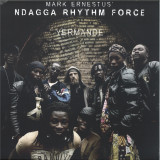
Five years into the project, Yermande announced a thrilling new phase for this Dakar-Berlin collaboration; a giant step forward.
The group of players is boiled down to twelve for recordings, eight for shows; sessions in Dakar become steeply more focused. ‘This time around I was better able to specify what I wanted right from the initial recording sessions in Dakar,’ says Ernestus; ‘and further in the production process I took more freedom in reducing and editing audio tracks, changing MIDI data, replacing synth sounds and introducing electronic drum samples.’
Right away you hear music-making which has come startlingly into its own. Rather than submitting to the routine, discrete gradations of recording, producing and mixing, the music is tangibly permeated with deadly intent from the off. Lethally it plays a coiled, clipped, percussive venom and thumping bass against the soaring, open-throated spirituality of Mbene Seck’s singing. Plainly expert, drilled and rooted, the drumming is unpredictable, exclamatory, zinging with life. Likewise the production: intuitive and fresh but utterly attentive; limber but hefty; vividly sculpted against a backdrop of cavernous silence.
Six chunks of stunning, next-level mbalax, then, funky as anything.
Horse Jumper of Love thrive on patient and pummeling songs. Since 2013, the Boston trio of singer-guitarist Dimitri Giannopoulos, bassist John Margaris, and drummer James Doran have slowly stretched the fringes of indie rock across five full-length LPs. Their music unwinds with gutting emotional intensity thanks to Giannopoulos' impressionistic lyrics and how the arrangements violently lurch from delicate to bludgeoning. Disaster Trick, the band's new album out August 16 via Run For Cover, is their most direct and uncompromising LP yet. Its 11 songs tackle self-destructiveness and healing with jolting lucidity. Where the band's last LP 2023's Heartbreak Rules excelled with quiet, bare-bones songwriting, Disaster Trick cranks up the volume and boasts some of the most expansive arrangements of the band's catalog. Recorded at Asheville, North Carolina's Drop of Sun Studios with producer Alex Farrar, the recordings soar with searing guitars and a thunderous rhythm section. "I tried the quiet thing on the last album and I realized there's definitely two parts of me: I like really heavy music, and I like really gentle music," says Giannopoulos. "The two albums I was listening to the most, while we were in the studio were the Leonard Cohen's Songs From a Room and Hum's Downward is Heavenward." Disaster Trick is a dark record but it's never dour. There's a glimmer of hope and humor throughout these 11 songs, written with the grace that only time and growing up can bring. As he sings on "Death Spiral," "I know it sounds dramatic / But I must describe / The way that it felt." There's catharsis when it's needed most. "This album is a reflection on destructive behavior from a lens of more clarity," says Giannopoulos. "A lot of the songs came out of this point where things in my life were going well but I couldn't accept it. I was being a brat. Disaster Trick is me cleaning up my act a bit and reflecting on it."