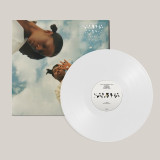
- A1: Aretha Franklin - Try A Little Tenderness
- A2: Otis Redding - These Arms Of Mind
- A3: Peggy Lee - Fever
- A4: Aaron Neville - How Could I Help But Love You?
- A5: Stevie Wonder - Contract On Love
- A6: Gene Chandler - Duke Of Earl
- A7: Booker T. & The Mg's - Green Onions
- A8: Ben E. King - Stand By Me
- B1: James Brown & The Famous Flames - Think
- B2: Etta James - I Just Want To Make Love To You
- B3: Ray Charles - Unchain My Heart
- B4: Marvin Gaye & The Vandellas - Stubborn Kind Of Fellow
- B5: Dionne Warwick - Don't Make Me Over
- B6: The Supremes With Diana Ross - Your Heart Belongs To Me
- B7: Dinah Washington - Mad About The Boy
- B8: Sam Cooke - (What A) Wonderful World
Cerca:d c washington
It's been a little over ten years since Hailu Mergia reemerged on the international music scene. Following the first in a series of his classic recordings reissued in collaboration with Awesome Tapes From Africa, Mergia assembled a band and began performing live again after many years driving a cab in Washington, DC. His first show back appeared on the front page of the New York Times along with a stellar review and he took off from there performing his flavor of Ethiopian jazz all over the world in the years since, including Radio City Music Hall and Montreal Jazz Festival. Finally, we have a recorded document of the keyboard player's powerful DC-based trio _ which practices each weekend in his basement _ featuring Kenneth Joseph on drums and Alemseged Kebede on bass. Beautifully captured at one of their fiery live shows at the venerable Brooklyn non-profit cultural center Pioneer Works on July 1, 2016, the concert was recorded by PW staff and mixed by Ted Young with mastering by ATFA's expert audio extraction collaborator Jessica Thompson. The performance clarifies what many people across the globe already know: in his fifth decade of music-making Hailu Mergia continues to push the boundaries of his remarkable abilities. Mergia and his veteran band energetically and playfully unpeel layer after layer of harmonic and rhythmic interest out of a spectrum of Ethiopian repertoire. Modern jazz demands constant reinvention and improvisation, night after night creating new works out of known modes and classic standards. This band is unstoppable when it comes to turning age-old melodies (like "Tizita" or "Anchihoye Lene") upside down and inside out until they emerge as molten new works, often spontaneously. Mergia's original compositions (like "Yegle Nesh") shine brighter than ever here as well. Moving from keyboard to organ to accordion to melodica, he deftly switches instruments _ often during the same song. Mergia at 77 years old seems to be working harder than musicians half his age. "Pioneer Works Swing (Live)" brings into focus the kind of onstage group improvisation and deadly solo passages that reach for places Mergia and the band have never gone, on festival and club stages across four continents. Now that Mergia has released two new recordings along with four classic reissues, he is eager to let everyone hear what he's been doing on the road since he re-took the global stage for his victory laps. So much more than an old act from yesteryear, Mergia balances his legendary Ethiopian recordings with good old fashioned sweat-soaked live concert triumphs such as the one we have here.
Clear Vinyl[34,83 €]
All vinyl comes w/ printed inner sleeve + download card. Genre: Metal. Limited edition Transparent vinyl available exclusively to indie stores. Legendary Tacoma, Washington mathcore/hardcore/metal band Botch’s final EP An Anthology of Dead Ends was originally recorded in 2002, serving as a swan song sending off one of heavy music’s most inventive groups.
Now, the band’s final EP is set to be re-issued on Sargent House over 20 years after its original release. Their monstrous concoction of metal, noise, indie rock guitar trickery, and depth is on full display.
This is a last will and testament to the group's drive and intent, cementing their legacy as one of the untouchable greats, already having influenced many a group. Bassist Brian Cook, guitarist David Knudson, drummer Tim Latona, and vocalist Dave Verellen formed Botch in 1993, eventually becoming one of the most significant bands of their time.
Their final show was June 15, 2002, the same day as the original release of An Anthology of Dead Ends. The members would go on to play in These Arms Are Snakes, Minus the Bear, and Russian Circles, among others, with acclaim for the band coming mostly post-breakup.
Over 20 years since they played their final show, Botch are reuniting for select dates across the US throughout the end of 2023. Botch continue their first live performances in over 20 years throughout the end of 2023.
Black Vinyl[32,98 €]
All vinyl comes w/ printed inner sleeve + download card. Genre: Metal. Limited edition Transparent vinyl available exclusively to indie stores. Legendary Tacoma, Washington mathcore/hardcore/metal band Botch’s final EP An Anthology of Dead Ends was originally recorded in 2002, serving as a swan song sending off one of heavy music’s most inventive groups.
Now, the band’s final EP is set to be re-issued on Sargent House over 20 years after its original release. Their monstrous concoction of metal, noise, indie rock guitar trickery, and depth is on full display.
This is a last will and testament to the group's drive and intent, cementing their legacy as one of the untouchable greats, already having influenced many a group. Bassist Brian Cook, guitarist David Knudson, drummer Tim Latona, and vocalist Dave Verellen formed Botch in 1993, eventually becoming one of the most significant bands of their time.
Their final show was June 15, 2002, the same day as the original release of An Anthology of Dead Ends. The members would go on to play in These Arms Are Snakes, Minus the Bear, and Russian Circles, among others, with acclaim for the band coming mostly post-breakup.
Over 20 years since they played their final show, Botch are reuniting for select dates across the US throughout the end of 2023. Botch continue their first live performances in over 20 years throughout the end of 2023.
It’s been a little over ten years since Hailu Mergia re- emerged on the international music scene. Following the first in a series of his classic recordings reissued in collaboration with Awesome Tapes From Africa, Mergia assembled a band and began performing live again after many years driving a cab in Washington, DC. His first show back appeared on the front page of the
New York Times along with a stellar review and he took off from there performing his flavor of Ethiopian jazz all over the world in the years since, including Radio City Music Hall and Montreal Jazz Festival.
Finally, we have a recorded document of the keyboard player’s powerful DC-based trio—which practices each weekend in his basement—featuring Kenneth Joseph on drums and Alemseged Kebede on bass. Beautifully captured at one of their fiery live shows at the venerable Brooklyn non-profit cultural center Pioneer Works on July 1, 2016, the concert was recorded by PW staff and mixed by Ted Young with mastering by ATFA’s expert audio extraction collaborator Jessica Thompson. The performance clarifies what many people across the globe already know: in his fifth decade of music-making Hailu Mergia continues to push the boundaries of his remarkable abilities.
Mergia and his veteran band energetically and playfully unpeel layer after layer of harmonic and rhythmic interest out of a spectrum of Ethiopian repertoire. Modern jazz demands constant reinvention and improvisation, night after night creating new works out of known modes and classic standards. This band is unstoppable when it comes to turning age-old melodies (like “Tizita” or “Anchihoye Lene”) upside down and inside out until they emerge as molten new works, often spontaneously. Mergia’s original compositions (like “Yegle Nesh”) shine brighter than ever here as well. Moving from keyboard to organ to accordion to melodica, he deftly switches instruments—often during the same song. Mergia at 77 years old seems to be working harder than musicians half his age.
Pioneer Works Swing (Live) brings into focus the kind of onstage group improvisation and deadly solo passages that reach for places Mergia and the band have never gone, on festival and club stages across four continents.
Now that Mergia has released two new recordings along with four classic reissues, he is eager to let everyone hear what he’s been doing on the road since he re-took the global stage for his victory laps. So much more than an old act from yesteryear, Mergia balances his legendary Ethiopian recordings with good old fashioned sweat-soaked live concert triumphs such as the one we have here.
- Sky
- Shortwave Radio
- Uninhibited
- Bailer
- Now And Then
- Failure
- Reconstructing Barriers
- Controller Controller
- Driver
- Satellite Screens
- Security
- Drifting
- In Motion
- 10: 22/94
- Curve
- Drown
- Two Left Standing
- Table
- The Game
- Archaeologist
- Blocks And Channels
- Untitled
- Spark Lights The Friction
- Rope And Pulley
- Add And Subtract
- Fine Day
- One Two
- In Betweens
- Nick's Question
- I Say
- Newest Sound System
- Believe In
Shotmaker was formed in 1993 by three friends from the small towns of Tweed and Belleville in Ontario, Canada: Matt Deline (drums, vocals), Tim McKeough (guitar, vocals), and Nick Pye (bass, vocals). The band relocated to Ottawa in 1994 before ending its run in 1996. They are widely recognized for influencing the direction of emo and post-hardcore music. During their relatively short time together Shotmaker harnessed the collective creativity of the Canadian DIY community to make something special happen. They wrote and recorded two 7”s, two LPs, a split LP (with Washington, D.C., based Maximillian Colby) and numerous songs for compilations and other split records.
The band thrived on playing live shows and completed three coast-to-coast North American tours in addition to many smaller tours. They regularly shared the stage with bands like Policy of 3, Los
Crudos, Unwound, Rorschach, Cap’n Jazz, Indian Summer, Rye Coalition, Modest Mouse, Propagandhi, Hoover, Clikatat Ikatowi, Blonde Redhead and Fugazi. "A Moment in Time: 1993-1996"
is a band-curated, 3xLP box set on colored vinyl. Also included is a 12 page booklet with never before seen images from Canadian photographer Shawn Scallen who chronicled much of the band's history.
All the music has been mastered for vinyl by Brad Boatright at Audiosiege in Portland, OR.
Sampha kündigt mit "LAHAI" sein mit Spannung erwartetes zweites Album an, das am 20. Oktober auf Young erscheint. Nach dem Namen seines Großvaters väterlicherseits benannt, der gleichzeitig auch Samphas zweiter Vorname ist, fließt die Musik auf "LAHAI" zwischen der Ehrfurcht vor dem Leben und der Magie der weltlichen Existenz und beschreibt das Chaos, das man erlebt, wenn man sich dem Kreislauf des Lebens und dem Jenseits stellt. Auf den 14 Tracks hat Sampha enge Freunde und Kollegen zusammengerufen - darunter fantastische Künstler wie Yaeji, Léa Sen, Sheila Maurice Grey (Kokoroko), Ibeyi, Morgan Simpson (Black Midi), Yussef Dayes, Laura Groves und Kwake Bass. Im Gegensatz zum Vorgänger "Process" ist "LAHAI" ein eher kollaboratives Album. Die neueste Single "Only", die von einem Musikvideo von Dexter Navy in Zusammenarbeit mit Sampha begleitet wird und auf dem Vorab Track "Spirit 2.0" folgt, zeigt einen extrem lebendigen Sampha, der melodisch über einen fragmentierten Hip-Hop-Beat mit Co-Produktion von spanischen Musiker El Guincho singt. Im Juni kehrte Sampha zum ersten Mal seit fünf Jahren für seine Satellite Business Residencies in London und New York auf die Bühne zurück. Das einzigartige Setup, bei dem Sampha und seine Band in der Mitte des Raums auftraten, ermöglichte den Fans einen intimen Zugang zu der improvisierten Performance neuer, unveröffentlichter Musik und alternativer Arrangements von Samphas Katalog, die das Publikum "wie gebannt" (Pitchfork) zurückließ. In diesem Herbst wird Sampha eine größere Version der Satellite Business Live-Show auf Tournee mitnehmen. Den Anfang machen mehrere Abende in London in der St. Johns at Hackney Church im Oktober, bevor er nach Nordamerika zurückkehrt, um in großen Städten aufzutreten: Los Angeles, Toronto, New York City, Chicago, San Francisco, Washington D.C., Philadelphia und Atlanta. Anfang Dezember kehrt er nach Europa zurück und spielt in Berlin, Amsterdam und Paris. Wie sein Schöpfer lässt sich auch "LAHAI" nicht in eine Schublade stecken. Das neue Album ist eine Mischung aus Jazz, Soul, Rap, Dance, Jungle und westafrikanischer Musik, mit der Sampha seine produktionstechnischen und stimmlichen Ambitionen auf ein neues Niveau hebt. Als begnadeter Sänger , Songwriter und Produzent ist es kein Wunder, dass Künstler wie Kendrick Lamar, Stormzy, Travis Scott und früher auch Drake, Solange, Frank Ocean, Beyoncé, Lil Wayne und Alicia Keys ihn für seine unnachahmliche Stimme sowie seine Beiträge zum Songwriting und zur Produktion ihrer Musik um Unterstützung baten. Zu seinen früheren kreativen Partnerschaften gehören die Modedesignerin Grace Wales Bonner, das Shy Light Zine mit Durimel (der auch das LAHAI-Artwork gedreht hat), sein Process-Film mit dem Regisseur Kahlil Joseph und kürzlich die Zusammenarbeit mit Jonny Lu, mit dem Sampha das Artwork für sein LAHAI-Album und sein neues Logo entwickelt hat. Wenn "Process", Samphas 2017 mit dem Mercury-Preis ausgezeichnetes Debütalbum, einen Künstler zeigte, der seinen eigenen Platz in der Welt suchte und schließlich auch fand, ist "LAHAI" eine Übung in der radikalen Akzeptanz und Freude am Leben und der Schönheit der Reise bis hierhin. Willkommen zu Samphas nächstem musikalischen Kapitel: LAHAI.
The first two minutes of Sun June’s third album, Bad Dream Jag-uar, is a reverie - Laura Colwell’s voice floats above a slow-burn,sparse synth, conjuring a tipsy loneliness, a hazy recollection, a disco ball spinning at the end of the night for an empty dancefloor. Sun June’s music often feels like a shared memory – the details so close to the edge of a song that you can touch them. And as an Austin-based project, their music has also always feltstrangely and specifically Texan – unhurried, long drives acrossan impossible expanse of openness, refractions shimmering off the pavement in the heat.
But on Bad Dream Jaguar, Sun June is unmoored. The back drop of Texas is replaced by longing, by distance, by transience, and aquiet fear. The only sense of certainty comes from the murky past.It’s a dispatch from aging, when you’re in the strange in-betweenof yourself: there’s a clear image of the person you once wereand the places you inhabited, generational curses and our fami-lies, but the future feels vast, unclear – and the present can’t helpbut slip through your fingers.
Enigmatic Society is the next offering from the multi-faceted, Grammy-nominated supergroup Dinner Party. Full of opulently intricate instrumentation and a range of sleek R&B to smooth neo-soul vocals, Enigmatic Society is mesmerizing in its entirety. The album features brilliant performances from the debut Dinner Party crew: Terrace Martin, Robert Glasper, Kamasi Washington and 9th Wonder, with additional help vocalists Phoelix, Arin Ray, Ant Clemons, Tank and producers Sounwave, Hi-Tek and Trevor Lawrence Jr. Enigmatic Society serves as a follow up to the group’s 2020 debut self-titled album and continues as a celebration of Black joy, life, art, and culture, as it pays tribute to the duality that manifests in both the beauty and adversity in Black America. This deep sense of community and family flows throughout the project with the album’s artwork designed by Kamasi Washington’s sister, artist Amani Washington.
If the name of this collection of traxxx offends you, move on — there’s no hope for you here. If, on the other hand, Toribio’s salacious fun-pun cracked your cool exterior, here’s an introduction to a set of bangers that helps exemplify New York’s increasingly exuberant dancefloor, and what producer/DJ Cesar Toribio brings to it. His is a ribald, rhythmic take on dance music, neither for the weak of musical character (purists need not apply) nor for the weak of ass (-shaking). In fact, the proof is right there, in Toribio’s label’s and monthly party’s name: Bring Dat Ass. This command is not optional, but *the* key ingredient for a good time.
The five songs Toribio has created for “Tongue In Cheeks,” BDA’s first release, comprise a horny melting pot of tribal house and Linn-drum plug-ins, minimalist synth textures and basslines, hi-hats reminiscent of electro and freestyle classics, some of which are infused with New York’s Latin club history and futures. The lead-off track, “No Pare,” is based on the producer’s 808-driven reinvention of the call-and-response hook from Proyecto Uno’s 1993 merengue-house smash “El Tiburón,” marking the first time the group has ever cleared a sample of this Nuyodominican classic. We predict that “No Pare” will be a Fall 2023 monster.
Guest vocal appearances by The Illustrious Blacks and Maluca, cornerstones of different dance-floor scenes in a city currently hitting peak-energy levels, show the breadth of Toribio’s regard for community: There is a lot of crossover to how the punky Dominicana MC from Washington Heights chooses to slang-tastically “Werk It Out,” and how the Neo-Afro-Futuristic-Psychedelic-Surrealistic-Hippys Monstah Black and Manchildblack infuse a dollop of booty into “Work Dat Shit.” And the two different metallic beats point at seemingly separate parts of Toribio’s musical heritage uniting. There’s no formula, but if there was, it would be: Make it sexy. Make it (consensually) grindy. Make it funny to the point of ridiculous but so funky that the laughter becomes more fuel to the joyous momentum propelling the movement. Then make it home — or try to.
Cesar Toribio’s home is, originally Tampa — and the DR, where he’d spend summers with family. He was a drum-corps prodigy who went to Berklee to become a jazz drummer and be like Gil Evans. He idolized Miles’ orchestral arranger’s work as much as Dilla’s beats, but then discovered house music, so it was a wrap. The 2021 band album Toribio made under the name Conclave — which included his sister Sharin and musicians from such great projects as Standing On the Corner, No Regular Play and Irreversible Entanglements — unearthed the work of a singer-songwriter-arranger-producer of immeasurably nuanced, soulful jazz-house music. But when Toribio started DJing more and more, he decided to listen to the devil on his shoulder who told him to Bring Dat Ass. As Cesar damn-well knows, it’s the devil who has the better jokes and holds the better parties, so his ears perked up. “Tongue in Cheeks” is the music Toribio says he made to play at these parties, because he can’t find it anywhere else. It’s hard to disagree.
So begins the legendary Don Letts' liner notes for this young band's new album,
'Ladders', their first on Easy Star Records. The band hails from Washington, DC,
and features lead singer Kelly Di Filippo, who has been heard on tracks by Jon
Quan and others. Letts continues: "I don't know how this Washington, DC-based
dub reggae outfit was brought up, but for the most part, like me, they seem to
have been raised with sixties pop hitting them in one ear and seventies reggae
hitting them in the other." That just about nails it for this unique act that sounds
pretty unlike any of their contemporaries in the US and world reggae scene.
Animal Collective veröffentlichen ihr neues Studioalbum "Isn't It Now?". Das Quartett, bestehend aus Avey Tare, Panda Bear, Deakin und Geologist, nahm das Album mit dem Grammy-Preisträger und Produzenten Russell Elevado (D'Angelo, The Roots, Kamasi Washington) auf, der es auch mitproduzierte und abmischte.
Die Struktur von Animal Collective ist seit langem eine Spielwiese, ein offener Raum, um neue Ideen und Einflüsse auszuprobieren und auszuleben. Und warum auch nicht? Es kann bedeuten, dass man Panda Bear erlaubt, sich mehr auf sein Schlagzeugspiel zu konzentrieren, oder dass man Deakin ermutigt, tiefer in sein Klavierspiel einzutauchen. Oder man lässt dem aufkeimenden Interesse von Avey Tare und Geologist an der Musik der Renaissance - dem Flötenspiel, der Drehleier, der vergoldeten Polyphonie - Raum zur Entfaltung. Diese Impulse sind der Kern von "Isn't It Now?", dem zweiten Animal Collective-Album in ebenso vielen Jahren und ein markanter Meilenstein auf ihrer fröhlichen Rundreise. Mit 64 Minuten ist Isn't It Now? das längste Animal-Collective-Album aller Zeiten, wobei fast ein Drittel der Laufzeit auf die hinreißende und eruptive 22-minütige Ode an die hoffnungsvolle Beharrlichkeit, "Defeat", entfällt. Sie haben es in nur 12 Tagen fertiggestellt und dabei höchstens 24 Kanäle verwendet, was nicht nur davon zeugt, dass sie diese Songs auf der Time Skiffs-Tour aufgenommen haben, sondern auch davon motiviert, dass sie wieder in einem Raum zusammen waren.
Animal Collective veröffentlichen ihr neues Studioalbum "Isn't It Now?". Das Quartett, bestehend aus Avey Tare, Panda Bear, Deakin und Geologist, nahm das Album mit dem Grammy-Preisträger und Produzenten Russell Elevado (D'Angelo, The Roots, Kamasi Washington) auf, der es auch mitproduzierte und abmischte.
Die Struktur von Animal Collective ist seit langem eine Spielwiese, ein offener Raum, um neue Ideen und Einflüsse auszuprobieren und auszuleben. Und warum auch nicht? Es kann bedeuten, dass man Panda Bear erlaubt, sich mehr auf sein Schlagzeugspiel zu konzentrieren, oder dass man Deakin ermutigt, tiefer in sein Klavierspiel einzutauchen. Oder man lässt dem aufkeimenden Interesse von Avey Tare und Geologist an der Musik der Renaissance - dem Flötenspiel, der Drehleier, der vergoldeten Polyphonie - Raum zur Entfaltung. Diese Impulse sind der Kern von "Isn't It Now?", dem zweiten Animal Collective-Album in ebenso vielen Jahren und ein markanter Meilenstein auf ihrer fröhlichen Rundreise. Mit 64 Minuten ist Isn't It Now? das längste Animal-Collective-Album aller Zeiten, wobei fast ein Drittel der Laufzeit auf die hinreißende und eruptive 22-minütige Ode an die hoffnungsvolle Beharrlichkeit, "Defeat", entfällt. Sie haben es in nur 12 Tagen fertiggestellt und dabei höchstens 24 Kanäle verwendet, was nicht nur davon zeugt, dass sie diese Songs auf der Time Skiffs-Tour aufgenommen haben, sondern auch davon motiviert, dass sie wieder in einem Raum zusammen waren.
Lost in time yet always in season, here’s a blast of that old perennial, the punk rock, representative of the swiftly changing times around Bailey’s Crossroads, just outside Washington DC, in the early 80s. Skam recorded this stuff in 1982-1983, then broke up, leaving these songs to be released… maybe never? Or more preferably, now, to race into the bloodstream of jaded, faded today with all the vigour and rigour of Skam’s eternal youth.
Though they didn’t release any records during their three years of existence, it’d be wrong to call Skam ‘never-was’ - in addition to these recordings, there’s a trail of flyers for shows with Scream, No Trend, United Mutations and Media Disease, as well as the memories of the student alumni from Bishop O’Connell High, class of ‘83 or so.
The conglomeration of scenes around the greater DC area at that time produced a variety of bands, but the prevailing recollection of the era is of the incendiary hardcore punk and subsequent straight edge values of the Dischord bands. The band that became Skam was a world apart; they were posited for the first time by 8th graders Vince Forcier and Jack Anderson at a Jackson Browne concert, and their initial rehearsals in their parents’ basement were highlighted by covers of Beatles, Stones, Who and Led Zeppelin songs. Bad covers.
It wasn’t until they’d been playing a bit that they discovered The Ramones, and it was then that the die was cast and pedal pressed to the metal for another frantic couple of years.
The Skam recordings from 1982 have an undeniably Clash-like countenance that sets them definitively apart from the ‘First Four’ of Dischord - in some ways, prefiguring the pop-punk sound of Green Day at the dawn of the 1990s instead - but subsequent recordings found them quickly evolving - or devolving - into a personal mastery of savage riffs and tempos, as well as post-punk conceptions.
But even as they were verging into this new territory, their three years together had frayed their alliance and they soon broke up. Jack joined No Trend, Vince played in Racer X and then Second Wind. And life went on. However, the rediscovered Skam tapes make for an incredible addendum to the more well-known music of that incredible time and place
Rare reggae collection originally released in 1975. Featuring guest musicians Ken Boothe, Delroy Washington, Bob Davis, Gene Rondo and former members of the Cimarons. Some of the tracks have been recorded at the Black Arc Studio with engineer Lee ‘Scratch’ Perry. All tracks produced by Clem Bushay.
The story of the invention of the term, 'deepfunk' is probably only known among fans and practitioners of this niche-genre. In short, it all started in the 1990s when DJs like Keb Darge, Mark 'Snowboy' Cotgrove and others began spinning obscure and feral Funk 45 RPM singles from local American bands, ostensibly generating another sub-category branch off of the mighty Northern Soul tree. The dance-club phenomenon inevitably spilled over to contemporary groups on the funk scene which immediately tried to record their music the way their idols did. The 'rare groove' and 'acid jazz' movements had run their course and there was a concerted effort to reinstate primitive idiomatic styles and techniques into the music, most notably by 90s funk collective The Poets of Rhythm. As more years passed by the number of bands steadily increased (although in tiny numbers, compared to the mainstream market). Almost every country had a representative with the majority of them coming from the United Kingdom. The deepfunk sound was still a niche, however a very few bands made it onto the mainstream charts, most notably Sharon Jones & the Dap Kings.
At the height of the retro-soul movement a questionable development took place. As more bands arrived on the scene, the production became more and more polished and pop-ish. Some of that squeaky-clean tidiness began to creep into the recordings, encouraged in part by the signature sounds of the digital recording technology available at that time. Some bands even tried to jump onto the possibility of promoting their music as 'deepfunk' although they were actually playing slick, funky pop music. This way some people who thought they were listening to raw, energetic funk actually felt quite ambushed when hit with real deepfunk. In fact, a certain percentage of funk music produced within the past 20 years does not deserve to be described as 'deepfunk' at all. Fortunately there were (and are) some pleasant exceptions which did not just imitate but actually rendered amazing funk music just like some of the finest funk combos of the 1960s and 70s.
One of those creative minds is without a doubt Joel Ricci aka Lucky Brown. Originally from Seattle, Washington, USA, he has enriched the deepfunk community since the mid-2000s with his stellar abilities. He is not only an amazing musician playing multiple instruments, but also a brilliant composer, arranger, and producer too. But for us here at Tramp he is much more, a close friend and remarkable human being. Whenever we were struggling, whether with the label or in private life, Joel and his musical work helped us to overcome everything and to keep going our path.
So here we are in 2023. The songs you are listening to right now are the complete Space Dream collection, split into two parts, representing the two living-room recording sessions from which his 2011 Tramp Records debut was compiled. Each fully remastered album contains unreleased material and comes with brand new, beautifully reimagined artwork by Ricci himself, housed in an authentic 1960s tip-on cover. A first class product from a first class musician for the discerning funk enthusiast.
The story of the invention of the term, 'deepfunk' is probably only known among fans and practitioners of this niche-genre. In short, it all started in the 1990s when DJs like Keb Darge, Mark 'Snowboy' Cotgrove and others began spinning obscure and feral Funk 45 RPM singles from local American bands, ostensibly generating another sub-category branch off of the mighty Northern Soul tree. The dance-club phenomenon inevitably spilled over to contemporary groups on the funk scene which immediately tried to record their music the way their idols did. The 'rare groove' and 'acid jazz' movements had run their course and there was a concerted effort to reinstate primitive idiomatic styles and techniques into the music, most notably by 90s funk collective The Poets of Rhythm. As more years passed by the number of bands steadily increased (although in tiny numbers, compared to the mainstream market). Almost every country had a representative with the majority of them coming from the United Kingdom. The deepfunk sound was still a niche, however a very few bands made it onto the mainstream charts, most notably Sharon Jones & the Dap Kings.
At the height of the retro-soul movement a questionable development took place. As more bands arrived on the scene, the production became more and more polished and pop-ish. Some of that squeaky-clean tidiness began to creep into the recordings, encouraged in part by the signature sounds of the digital recording technology available at that time. Some bands even tried to jump onto the possibility of promoting their music as 'deepfunk' although they were actually playing slick, funky pop music. This way some people who thought they were listening to raw, energetic funk actually felt quite ambushed when hit with real deepfunk. In fact, a certain percentage of funk music produced within the past 20 years does not deserve to be described as 'deepfunk' at all. Fortunately there were (and are) some pleasant exceptions which did not just imitate but actually rendered amazing funk music just like some of the finest funk combos of the 1960s and 70s.
One of those creative minds is without a doubt Joel Ricci aka Lucky Brown. Originally from Seattle, Washington, USA, he has enriched the deepfunk community since the mid-2000s with his stellar abilities. He is not only an amazing musician playing multiple instruments, but also a brilliant composer, arranger, and producer too. But for us here at Tramp he is much more, a close friend and remarkable human being. Whenever we were struggling, whether with the label or in private life, Joel and his musical work helped us to overcome everything and to keep going our path.
So here we are in 2023. The songs you are listening to right now are the complete Space Dream collection, split into two parts, representing the two living-room recording sessions from which his 2011 Tramp Records debut was compiled. Each fully remastered album contains unreleased material and comes with brand new, beautifully reimagined artwork by Ricci himself, housed in an authentic 1960s tip-on cover. A first class product from a first class musician for the discerning funk enthusiast.
Hammered Hulls' debut LP, Careening, may very well be the last record to be recorded and mixed at the famed Washington, D.C. area recording studio, Inner Ear. Engineered by studio owner Don Zientara and produced by Ian MacKaye, Careening was started right before the pandemic lockdown and completed in summer/fall of 2021.
A new band of long-time players, Hammered Hulls' music hews close to some of their early influences. Alec MacKaye is the voice, Mark Cisneros is the guitarist, Mary Timony takes a nimble and rarely-heard turn as bassist, and Chris Wilson commands the drums. Each of them bring their individual imprint to the total sound. This concussion of strength upon strength, unified by vulnerable songs, only barely contained, is the signature sound of Hammered Hulls.