Mysticisms is delighted to present the music from one of the inspirations for the whole Dubplate series, the lesser known, but admired Digi Dub label. Hailing from the late 80s / early 90s South-East London squat scene, the music of label head Lee Berwick and cohorts was unlike any other at the time. Not simply a retake on digital dub emanating from Jamaica, Digi Dub mixed the heritage of reggae with the alternative-culture of Britain to forge a unique version.
Inspired by punk and the early electronics of the likes of A Certain Ratio, Cabaret Voltaire and Throbbing Gristle, Berwick came to music production later, after first quitting a career as a computer programmer to travel through Asia, returning after several years just as electronic “computer music” was gaining a fundamental new lease in 1988. A regular at Jah Shaka gigs over the burgeoning rave scene of the time, he steadily built a studio centered around the Akai Sampler.
Based, at the time, in South-East London, it’s lack of underground “Tube” lines and challenging transport links, helped create its own social and music eco-system. Squatted houses, shops, clubs and parties all thrived around the triangle of Bermondsey, New Cross and Camberwell. After meeting Kenny Diezel and the Mutoid Waste Company, he started to formulate his “dubby electronic sound” by literally play live to thousands of wide-eyed Ravers at Mutoid Waste parties.
Recording as Launch DAT, the first tracks with Kenny formed, soon joined by Harry and Nick, the trio progressed from building a sound system to L.S. Diezel being created. Friends since their teens Harry and Nik progressed from playing in bands, jamming Sly and Robbie dubs to moving from the countryside of the Home Counties to urban Peckham and into the orbit of Mutoid Waste and the squat and party scene.
Progressing to include Atari S1000HD, Akai S3200XL, Alesis Sequencer and Roland 303, the sound expanded but the raw spirit remained. The early recordings with Berwick, in the beautiful “Lovers style” that is For The Love Of and its stripped-back instrumental “Stepper” dub accompaniment in Bad Boys, as well as an early take on take on the merging of digital dub and hip hop in Skunk Funk, all capture the essence of that London period.
However, the inclusion of the seminal Suicidal Dub, that appeared as the title to their debut album and was recorded on a bus a few years later after Mutoid had relocated to Rimini, Italy, offers a glimpse to the future. Heralded as a proto-dubstep classic it has long been sought after and its inclusion makes for the essential.
Mutate The Mystery.
Suche:d culture
With their EP triptych "Thee Church Ov Acid House Volume 1–3," Oliver Bradford and Jörn Elling Wuttke created a holy trinity of diverse dancefloor variations, a self-contained circle of rave history.
In itself already a heavyweight statement, which they now crowned with “Bells & Whistles - Thee Remixes”. So to speak the quadrature of the circle And as with their original material, this release also reveals a profound knowledge of dance history in the selection of remixers - combined with the best of the here and now.
A1:
The trip begins with Jamie Hodges' ( Born Under A Rhyming Planet ) version of “Acid House Planet”. Hodge was responsible for a number of legendary EPs on Richie Hawtin's Plus 8 label in the early 90s, which explored the deep poetry of techno music. In this sense his remix is also a delicate affair of rarely heard beauty.
A2:
There's Thee Church Ov Acid House themselves, who stretch the swinging groove of Tyson's “G Phunk”, far too short in the original, to almost six minutes. A groove that won't stop.
B1:
And that brings us to the next two legends, this time from the local area. D-Man and Move-D have had a significant influence on dancefloor culture between Heidelberg and Mannheim since its inception. Their lysergic “Theme” remix, with Terrence McKenna vocals and acid twist in the middle, is an epic open air classic to come.
B2:
Lennard Poschmann's aka O-Wells' version of “Rave Mantra”, on the other hand, is deep, digging bass techno for the darkest moments of the night.
Vinyl EP2 featuring remixes of Man Power, As One ( Kirk Degiorgio ), HRDVSION ( Nathan Jonson ), Cosmic Cars ( Pudel Produkte, Smallville, Bureau B )
The Ottawa composer/performer and head of Black Bough Records plays every instrument on his CST debut: an accessibly avant-garde work of dark/ambient modern chamber music. Mark Molnar has been a linchpin of the Ottawa experimental music scene for over two decades, spanning contemporary classical, electroacoustic, industrial/noise, and improv. As a string player in a wide range of projects, an organizer and curator of innumerable shows, and via his own avantgarde label Black Bough Records, Molnar's unflagging contributions to independent music culture in Canada's capital city have been significant. EXO is his Constellation debut: a remarkable and bracing suite of post-classical composition on which Molnar plays every instrument. Meticulously self-recorded, primarily with strings, harp, and piano, EXO balances thematic melodicism, polytonality, and dissonance across three elegiac pieces of exquisitely expressive dynamism. This is exacting modern chamber music that blends formal and harmonic complexity with a solemn emotive sensibility accessible to a broad audience. Listeners that yearn for some edge and disquietude in a landscape of often all-too-approachable post-classical music should find EXO eminently worth their time and attention. While Molnar is a highly trained string player, and studied music under Aubrey Wolfe, microtonality with James Tenney, and composition with R. Murray Schafer, his trajectory has been entirely and intentionally outside the academy, signalling a socio-artistic commitment to DIY culture, forged from an early passion for the sonic worlds of post-hardcore, post-punk, no-wave, free improv, power electronics, and other independent/underground musics. His classically-informed works have been described as "tense currents of musical modernism invigorated with punk's raw vitality." EXO carries an undercurrent influenced by dark industrial and ambient metal in particular, with microphones purposely placed to pick up the low-end frequencies of the piano body, and of a bass drum positioned as a resonant skin in the acoustic space; an electroacoustic strategy organically meshed to the crisply defined and pristinely recorded pointillisms and polychords of strings, harp, and piano, which feed into this noisefloor of crepuscular sub-bass disquietude and decay. It's a production aesthetic that lends EXO a distinct undertow of tension and feeling, a sort of roiling maximalism where the chamber instrumentation traces arcs and waves of form and flow as if drawn from a dark, impervious ocean below. It also reinforces the profound hermeticism of Molnar's process, as a forbiddingly solitary creative act of immersion and navigation. The album artwork, featuring semiabstract stills of the sea by British photographer Ed Allen, further reifies this metaphor. The album's opening piece 'Sub Luna' (and its shortest at 8 minutes) showcases Molnar's adeptness at naturalistic and flowing complexity: tight cascades of climbing and descending chordal clusters hold their polytonal densities for various durations, yielding to more clarified harmonic suspensions and motifs, as melodic themes led primarily by violins in the higher registers provide a fractured lyricism. Molnar says: "the opening and closing figures of this piece act as opposing shorelines; the shorelines provide a reliable expression of range and key signature, and the tides come in and swallow them up, the motion of a body that addresses the relationship between states of lucidity and melodic figures." On 'Terre Sacer' everything happens in soupier waters, as a slow and doleful theme, anchored by grinding bass notes, circles in a gyre of dark resonances, until glistening strings gradually ascend to enrobe a plaintive and gently harrowing single-voiced ostinato over the composition's final third. Molnar's drone, ambient, minimalist, and goth-industrial influences are on display here. Side Two of EXO features the 18-minute multi-movement 'pallida Mors' (pale death): a waterfall of heterophony introduces dense chordal movements where strings are recorded and mixed to evoke pipe organ, in the album's most overtly dissonant and (anti)liturgical sequence. This gives way to ever more open and fragile spaces, before a resurgence of dark clusters and noise treatments introduces a final repeating piano coda, shrouded in devastated bass resonance, settling into what Molnar calls "a meditative hollow." Constellation is honoured to release this work by Mark Molnar, a longtime fellow-traveler whose selfless and boundlessly generous activities as an independent arts enabler sometimes obscure his own accomplished and uncompromising artistry. We trust EXO can help shed some much deserved light on this fine composer. Thanks for listening.
During a month living with the Wampís in the Amazon Rainforest, Aboutface and the Wampís community collaboratively captured field recordings, music instrumentation and traditional Wampis Nampets – ancient songs sung from the perspective of animals living in their rainforest environment.
These recordings then informed 4 improvised performances to articulate the story of the 4 Nampet songs from within each animal's habitat, to depict nature and culture as inseparable, and to propose that humanity is not exclusive to humans but a multinaturalist characteristic available to all living organisms.
This is the first project of its kind in Wampís history and contains sound recordings of biodiversity that no longer exist due to deforestation.
Indigenous-managed Amazonian rainforests sequester around 340 million tonnes of CO₂ each year—equivalent to the UK’s annual fossil fuel emissions. In stark contrast, non-Indigenous-controlled forests have become sources of carbon emissions, therefore accelerating our global climate crises. Among the vital custodians of these precious ecosystems are the Wampís people, who protect 1.3 m ha of precious rainforest territory currently being decimated by mining for gold. This devastating practice is currently decimating Wampís territory, destroying their river habitats, leaving toxic methylmercury pollution that strips all biodiversity, contaminates the food chain, and causes widespread harm.
100% of all sales revenues from this release will directly go to the Wampís to protect their rainforest territory, to fund Wampís-led eco-initiatives against illegal mining, alongside ways to preserve Wampís cultural heritage– embedded in their songs, art and crafts, central to their conservation of their territory called The Iña Wampisti Nunke: A system of life that encompasses reciprocal relationships between humans, plants, animals, and spirits, central to the harmony of all its multi-dimensional ecology– which they term Tarimat Pujut.
For more project information, a short essay is provided alongside a nonstop-listening version of the album as part of the free Bandcamp download with every LP.
Credits
Nampet songs
Kutir, Wancha and Pinchichi by Elizabeth Huampankit Najamtai.
Manchi by Fernando Ijisam Tsakim.
Acoustic Percussion by Wampís band Guayabita
Fernando Ijisam Tsakim, Edilberto Ijisam Tello, Larry Tello Huampankit, Jose Luis Cahuata Pipa, Tedy Tello Cahuata, Heyner Tello Cahuata, Eli Artista Antonio, Never Tello Huampankit
Violin by Taro.
Peruvian bamboo quena, classical flute, acoustic guitar, electronics, composition and arrangement by Aboutface.
Original portrait painting of Fernando Ijisam Tsakim by Nyran Loomcal.
All other artworks, analogue photography and design by Aboutface.
Rainforest field recordings identified and collected by The Wampís of Guayabal and Aboutface.
- A1: Return To The River Ganges (Distant Green Shore Dub)
- A2: Mediolana (Ambrosirus Dub)
- A3: The Galicians Of Asia Minor
- B1: Indika Keltika (Fiery Pharoah Mix)
- B2: Dhaka Corinthia
- B3: Delfic Tongue (Hercynian Forest Dub)
- C1: Voyage Of The Pytheas (Pagan Dub)
- C2: Benares Eternal City (Eryri Dub)
- C3: Sumerian Odyssey
- D1: King Of The Faeries (Demnoriax ‘King Of The Lower World’ Dub)
- D2: Deer Hunter (Aeduan Druid Odyssey Mix)
- D3: Atmabodha (Ritual Focus Dub)
Black[30,21 €]
OVERVIEW: DUB TREES is one of Youth’s most revered dub projects, it helped define the Liquid Sound Design sound that fans around the world hold dear. This project is the third in a triptych of albums Youth has made with a specific Celtic / Hindu fusion. Starting out with the classic Celtic Cross ‘Hicksville’ 20 years ago, featuring the mythical Simon Posford (Shpongle) through to ‘East of the River Ganges’ (ft Klaus Shultz / Tangerine Dream amongst many others) in 2004 followed by the last piece of this mystical puzzle ‘Celtic Vedic’ ,released on compact disc only in 2016 , which charts the journey of the Celt from Northern India to Snowdonia. The idea stems from Youth’s firm belief that there is a strong correlation between Celtic and Vedic cultures and their Northern Indian roots. Youth has assembled a host of collaborators to weave their labrynthine magic on ‘Celtic Vedic’: Jah Wobble (PiL) on bass, Matt Black/Coldcut (Ninja Tunes) on warped soundscaping duties, Galician Celtic pipe and flute player Daniel Romar, Bollywood contemporary Indian singer Shridevi Keshavan and Elfic Circle. It features many field recordings made by Youth on his various Indian odysseys and is all harnessed together with cutting-edge electronica that the Liquid Sound Design team pioneered 20 years ago. The team today are still pioneering new directions within ‘Downtempo Electronica Music’ and beats that create 3 dimensional landscapes for the helioscopic imagination to explore and psychoactive maps for the inner astronaut in all of us. ‘Celtic Vedic’ promises unchartered bass annihilation and heliotropic soundscapes, pounding basslines overlayed on 3D holographic beats and wrestles with serpentine melodies and psychedelic textures.
The Carter series didn’t just raise the bar—it became the bar. Multi-platinum trailblazer, 5x Grammy winner and the undisputed GOAT Lil Wayne returns June 6 with Tha Carter VI—the highly anticipated next chapter in one of the most influential series in hip-hop history. From reshaping mixtape culture to birthing a generation of rap superstars, Tha Carter legacy is untouchable. Now, Wayne is back to remind the world why he’s the greatest rapper alive.
Music in the soul can be heard by the universe. This record is not considered a product, but rather a time stamp of the underground minimal house music culture of 2025. Thank you, Mother Nature, for providing the materials that allow humans to express their creativity. Mastered by: Rob Small. Graphics: Peter Koblinger
- A1: Introduction
- A2: Singularity
- A3: Regret
- A4: Love Vigilantes
- A5: Ultraviolence
- B1: Disorder
- B2: Crystal
- B3: Academic
- B4: Your Silent Face
- C1: Sub Culture
- C2: Blt
- C3: Vanishing Point
- D1: Waiting For The Sirens’ Call
- D2: Plastic
- D3: Perfect Kiss
- E1: True Faith
- E2: Blue Monday
- E3: Temptation
- F1: Atmosphere
- F2: Decades
- F3: Love Will Tear Us Apart
Limited edition deluxe box featuring the Blu-ray film, 2CD set, 180g 3LP on special crystal-clear vinyl, hardback book and x5 12” art prints. Recorded live on 9th November 2018 (their only UK show of 2018), ‘education entertainment recreation’ is the live album from London’s Alexandra Palace.
This strictly limited and exclusive deluxe box features:
● Blu-ray Film
● 2CDs of the audio
● 180g 3LP Vinyl *
● 48pg Hardback book *
● Five 12” art prints *
* Exclusive to the box
Sonically and visually spectacular, spanning 2 hours 20 minutes, the show joyously mixed New Order classics, their latest acclaimed album ‘Music Complete’ and Joy Division’s finest.
Opening with ‘Singularity’ from ‘Music Complete’, they eased back in time to 1993’s ‘Regret’, to ‘Love Vigilantes’ from 1985’s ‘Low-Life’ to ‘Ultraviolence from 1983's ‘Power, Corruption and Lies’. Later, their power over the dance floor was proven by sublime performances in the manner of the celebrated extended 12-inch remixes they are synonymous with - on ‘True Faith’, ‘Blue Monday’ and ‘Temptation’ before a three song Joy Division mini set to end.
- The Ballad Of Joy Bang
- Careening
- A Hat To Match
- In Pathécolor
- Pointe Shoes
- Art Forger
- Join Our Treasure Hunt
- What Happened To Johnny?
- This Glimmer Is
- Morning Trains Like Mirrors
- 1: Way 2 Go
- M. Mather
Now is a DIY recording & performing pop group from the SF Bay Area with a predilection for 80s UK cassette culture, pulp novels, beat groups, and b movies. "Now Does the Trick" all too well. With balance, harmony, and simplicity, Now slips their hand into the pocketbook of modfathers without being nicked by nostalgia. Harmony on every corner. "Beat Girl" playing on late night TV. The fantasy soundtracks People doing handstands at a party with Syd Barrett. Where the Soft Boys play in the background and no one crosses a picket line. Like a long walk next to the train tracks on Ringo's day out with Sunlight Bathed in the Golden Glow: A little blood in your teeth of an Andy and Edie bubblegum Dream. RIYL (Recommended If You Like): Big Star, Feelies, Felt, Syd Barrett, Robyn Hitchcock, Sharp Pins.
- 1: The Moodists – Gone Dead
- 2: Voigt/465 – Voices A Drama
- 3: The Take – Summer
- 4: Essendon Airport – How Low Can You Go...?
- 5: The Apartments – Help
- 6: Ash Wednesday – Love By Numbers
- 7: Primitive Calculators – Pumping Ugly Muscle
Chapter Music's landmark collection of Australian 70s-80s post- punk, originally released in 2001, gets its first ever vinyl release!
Can’t Stop It! documents a fantastically inventive and dynamic era, when Australian acts stepped out of the shadow of overseas influence and asserted their own musical identity for perhaps the first time.
Featuring tracks by future members of bands such as Nick Cave & The Bad Seeds, Einsturzende Neubauten, Dirty Three and The Go- Betweens, Can’t Stop It! is a vivid survey of the creativity and innovation bubbling away under the surface of Australia’s fairly unadventurous music culture of the time.
All of the bands on Can't Stop It! released their music independently, either themselves or through the handful of visionary labels of the era such as Au-Go-Go, M Squared, Missing Link or Innocent Records.
On its original release in 2001, the compilation got Chapter Music its first major international attention, written up in The Wire magazine, stocked at Other Music in New York and selling out numerous CD pressings.
Remastered with updated liner notes and photos, this deluxe 2LP set expands on the original 20 track CD with six bonus never- before-reissued tracks.
"A bracing corrective to the Northern Hemisphere's stranglehold on post-punk nostalgia" - The Wire
The Understated Debut That Launched a Peerless Career: Bob Dylan Is the Clearest Connection to the Singer-Songwriter's Folk Roots
Pressed on MoFi SuperVinyl for Reference Playback: Mobile Fidelity 33RPM SuperVinyl Mono LP Features the Direct Sound Dylan Intended
1/4" / 15 IPS analogue mono master to DSD 256 to analogue console to lathe
Bob Dylan's self-titled 1962 debut is as understated of an entrance as any significant musician as ever made. Well-versed in American roots music, Dylan simultaneously pays homage to tradition and extends it by putting his own stamp on classic material that metaphorically functions as the soil of contemporary songs and styles. Free of ego, and performed with masterful conviction, Bob Dylan ranks with the initial efforts of giants like Elvis Presley and the Rolling Stones.
Nodding to Woody Guthrie and re-imagining Blind Lemon Jefferson's "See That My Grave Is Kept Clean," Dylan straddles the past and future. He authoritatively displays the ability to handle weighty topics such as death, sorrow, and lamentation with the vaudeville flair, bluesy mannerisms, and poignant command of an artist three times his then-20-year-old age.
Sourced from the original master tapes, housed in a Stoughton jacket, and pressed on MoFi SuperVinyl at Fidelity Record Pressing, Mobile Fidelity's numbered-edition 180g 33RPM mono SuperVinyl LP brings the contents of this seminal release as close as they've ever come to live-in-the-studio quality. Transparent to the source, Dylan's voice, acoustic guitar, and harmonica come across with exceptional realism — the "husk and bark" to which Robert Shelton referred in his legendary New York Times review of a Dylan appearance at Gerde's Folk City — courtesy of the format’s nearly non-existent noise floor, groove definition, and quiet surfaces.
Heard in the original mono configuration, Dylan’s vocals are in the heart of the musical action and as one with the accompaniment. This reissue paints an incredibly accurate portrait of the concrete mass of sound that features no artificial panning and offers a straight-ahead immersion into the music producer John Hammond recorded in just two days in November 1961.
Though much has been made of the commercial indifference that greeted the album upon its low-key release, focusing on sales figures and the reaction of a public not yet hip to Dylan's name miss the forest for the trees. Distinguished from the era's other folk efforts by way of the singer-songwriter’s determination, brazenness, and lived-through-this worldliness, Bob Dylan lays the groundwork for the path he'd soon trailblaze and everyone else would follow.
As Dylan scholar and pop-culture critic Greil Marcus observed in 2010: "Everybody knew Joan Baez and the Kingston Trio; if you knew Bob Dylan, you knew something other people didn't, something that soon enough everybody had to know. Within a year, an album could put an adjective in front of the singer's name as if it were already common coin."
Mono is how almost everyone first heard Dylan’s opening salvo. A career like none other starts here.
MoFi SuperVinyl:
Developed by NEOTECH and RTI, MoFi SuperVinyl is the most exacting-to-specification vinyl compound ever devised. Analog lovers have never seen (or heard) anything like it. Extraordinarily expensive and extremely painstaking to produce, the special proprietary compound addresses two specific areas of improvement: noise floor reduction and enhanced groove definition. The vinyl composition features a new carbonless dye (hold the disc up to the light and see) and produces the world's quietest surfaces. This high-definition formula also allows for the creation of cleaner grooves that are virtually indistinguishable from the original lacquer. MoFi SuperVinyl provides the closest approximation of what the label's engineers hear in the mastering lab.
Born from a desire to explore her background in film composing to create a music film, Hannah Holland’s upcoming album 'Last Exit On Bethnal’ is set for release via PRAH Recordings on 18th July. Together with director Lydia Garnett, the multi-faceted London producer shaped ideas born out of images the pair weren’t finding in film, inspired by queer icon filmmakers like Kenneth Anger and Derek Jarman. “We wanted to craft something unapologetically for dykes: a poetic, surreal exploration of dyke power and sexuality set in a fantasy underworld,” explains Holland. Once the film was shot, she channelled its stunning imagery and the energy of the cast into making the record. Seductive and bass-driven, its nine tracks merge sleazy guitars with 707 machine drums, beautiful evolving arps, and surreal moments of Lynchian dreaminess and Aphex Twin-inspired atmospherics. "It was a really amazing collaborative experience and coming together of a community to make something totally unique….and hot!” she continues. The first single ‘Biker’ features a filthy synth hook atop Hannah’s signature bass-guitar, perfectly capturing the raw and sexy energy of the album and its visual centrepiece. You can listen to it here. The film will be screened at a one-off club night at London’s ICA on 11th April in association with Culture Divided, Somesuch and Bala Project.
Hannah Holland has played a pivotal role in London’s alternative and queer London club scene since the mid-noughties. Rooted deeply in London’s fertile musical community, musical exploration and the transcendent potential of dancefloor have always been her biggest inspiration. Her recent delve into experimental theatre, film and TV scores has proved a future further artistic voyage to explore her creative vision. Holland first arrived on dancefloors sharing electro-tinged techno, with equal inspiration taken from the sounds of DnB and jungle heard at legendary parties such as Metalheadz, which she had frequented in her early teens. Having already been “borrowing” (and perhaps never since returning) Kraftwerk, Grace Jones and Talking Heads records from her parents, the influence of this metropolitan musical soup ensured that Holland emerged on the decks with a unique musical character and diverse taste, hallmarks of her sound that she has not lost since. This has been reinforced with trusted residencies at iconic parties such as Trailer Trash, Adonis, Glastonbury’s NYC Downlow, or undertaking far-reaching marathon sets at Berlin’s Panorama Bar. In 2006 Hannah started Batty Bass with vocalist Mama. Immediately a roadblock party and then a record label with releases from Josh Caffe and The Carry Nation sitting in its discography, Batty Bass explores the disparate strains of electro, acid, techno and house. Hannah also released her own music on the label including the ever-anthemic Paris’ Acid Ball.
A steady stream of releases have followed on Shall Not Fade, Super Rhythm Trax, Crosstown Rebels, Classic, Nervous, as well as remixes for Blessed Madonna ft. Kylie Minogue, Planningtorock, The Knife and Goldfrapp among others. Hannah also finds the time to play bass in several bands including Black Gold Buffalo whose debut album she also co-wrote. Her much-anticipated debut album, Tectonic, came out on PRAH Recordings in 2021, with a second on the way. Hannah’s latest venture into the world of film scores have included queer icon Bruce LaBruce’s ‘The Visitor,’ Channel 4 series Adult Material and award-winning indie feature Electrician.
Hannah Holland continues to push the boundaries of electronic and live music, telling stories and carving her own path in the deeper frequencies.
One year on from the release of the critically acclaimed 'Breathe... Godspeed' for Bristol's Timedance, Verraco - aka JP López - returns to announce Basic Maneuvers, his debut for XL Recordings.
Sonically, the project reflects this physical and emotional shift from the more introspective beauty of Medellín to the vibrant energy of Colombia's capital, Bogotá. Basic Maneuvers reflects movement — between scenes, sounds, and cities — pushing forward Verraco's cross-culture sound; one that collides South American dembow rhythms with maximalist synths, UK soundsystem bass culture, meticulous IDM sound design, with the intensity and precision of techno.
Across the EP, he expands his range with the main single, a powerful 4x4 club-ready edgy banger, a dubbed-out stepper "Total" and "sobe sobe", a grime-infused collaboration with legendary Kenyan-Ugandan rapper affiliated to Nyege Nyege, MC Yallah, that celebrates the deep-rooted connection between the underground dancefloors of Africa and South America. Basic Maneuvers is a bold statement of intent from one of electronic music's most vital and exciting producers.
- A1: Strange Little Consequence Carry The Blame
- B1: Be A Man Like I Loved You
Wenn drei visionäre Köpfe der elektronischen Musik aufeinandertreffen, entsteht ein Sound, der Grenzen sprengt. Demise Of Love ist das Projekt von Daniel Avery, James Greenwoods Ghost Culture und Working Men’s Club – eine Kollaboration, die aus gegenseitiger Wertschätzung und dem Streben nach neuen Klängen entstanden ist. Demise Of Love verbindet rohe Energie mit klanglicher Präzision. Das Ergebnis ist eine Fusion aus industriellen Klanglandschaften, pulsierendem Acid-House und melancholischen Melodien. Ihre Musik fordert heraus, fesselt und bleibt haften. Die EP, abgemischt von Alan Moulder, bringt das Beste der drei Musiker zusammen: Synthesizer, die den Raum aufbrechen, intensive Refrains und eine Soundästhetik, die sich nicht einordnen lässt. „Strange Little Consequence“ wechselt spielerisch zwischen Acid-Groove und monumental anmutendem Rock-Refrain. „Carry The Blame“ fängt die Weite des Detroit-Techno ein, „Be A Man“ verbindet Industrial-Punk mit düsterer Melancholie, und „Like I Loved You“ hebt mit hymnischem Gesang in elektronische Höhen ab. Auch inhaltlich geht die EP tief: Texte über Entfremdung, Kontrollverlust und die Suche nach Verbindung verleihen der Musik zusätzliche Schwere. Zeilen wie „Dead peasants excite you / Rewards of the plight fall / Into your hands“ aus „Strange Little
Consequence“ oder „Your ways are antiquated / And I’m bored now“ aus „Be A Man“ spiegeln das Unbehagen unserer Zeit wider. „Demise Of Love“ ist keine bloße Zusammenarbeit, sondern eine Verschmelzung dreier einzigartiger Klangwelten zu etwas völlig Eigenem. Hier trifft Innovation auf Emotion – kompromisslos, intensiv und von zeitloser Eleganz.
SAISEI founder Junki Inoue continues his vital archival work uncovering the riches of Japan’s distinctive electronic music scene and bringing them to new audiences around the world.
HERO U.D.A. aka Hiroyoshi Udaka is not someone you can easily google, but he’s sure lived a life worth retelling. His story starts back in the late 80s when, inspired by the acid house emanating from the UK — during what was fondly christened the Second Summer of Love — he picked up DJing and made the move from Japan to London. Throughout the 90s he DJed at underground techno institutions like London’s The End, CLUB UK and Silver Fish, as well as at the infamous Tribal Gathering raves, periodically returning to Japan to support techno greats like Colin Dale, Mad Mike, Suburban Knight and D. Wynn on tour.
The tracks on this EP, previously unreleased except for one, were all recorded after Udaka moved back from London to Tokyo, between 2002 and 2005. Yet they sound strikingly modern, drawing on a rich range of sounds that have come back round again two decades later: broken beat, acid jazz, dub and breaks. Deceptively simple grooves are given depth by layers of textures and micro samples, for example the surface noise on ‘On The Way’ that glues together an otherwise sparse skeleton of dubby pads and body popping drums. ‘Mature Missile’, ‘So Good’ and ‘Night Driver’ employ raw broken beat templates with acid accents, whimsical melodies and vocal interjections for a playful mood. ‘Sin City’ takes a darker turn, off-key piano hits and plunging bass adding to the wonkiness. The EP closes with a wiggly vignette, ‘222AM’, reminiscent of early 00s contemporaries like Mouse On Mars. Now these hidden treasures from Udaka’s archive gain a new life on SAISEI.
———
SAISEI is a Japanese word which translates to ‘reproduction’ and ‘to play’ (as in playing records). Japanese culture is widely known for its traditional nature just as much as it is for being forward into the future and this label’s concept does justice to exactly that. Having started digging for records as early as 16 years old, Junki Inoue delved into productions from 1990s Japan to uncover these native gems. SAISEI’s core concept is to recapture and reintroduce unique pieces of Japanese electronic music onto vinyl, to an audience it never reached before as most of this music was only released in Japan.
b A2. So Good Acid Funk
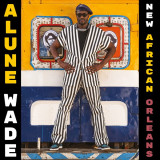
In his sixth and latest album “New African Orleans”, released by ENJA and Yellow Bird, bass guitarist and composer Alune Wade explores the multiple junctions between his native West African rhythms, the Afrobeat and juju rhythms from Lagos and the brass band repertoire immortalized in New Orleans. “I’m exploring a world that goes from my roots to the lost branches on the other side of the Atlantic,” explains the musician from Senegal. He has whittled down around 50 compositions – both original and standards - to a dozen which Alune recorded in Paris, Dakar, Lagos and New Orleans. “The idea first came to me during the Jazz à Gorée festival I organized back in 2014,” he explains. “It had me reflect on the notion of reversing the musical trip most people take from the United States to the African continent. I wanted to set out westward and begin a musical conversation with the best artists, both in Nigeria and the US.”
To achieve this, Wade has invited top artists from both sides of the Atlantic, including the Nigerian talking drummer Olaore Muyiwa Ayandeji, the percussionist Weedie Braimah and the jazz drummer Herlin Riley from New Orleans. The musical inspirations are equally transatlantic, ranging from Dr. John to Manu Dibango and Charlie Parker. But the 45-year-old also pays homage to his father who was a brass band star in his native Senegal back in the Sixties.
BACKGROUND
We only have a partial idea of the birth and remarkable development of the music born of the transatlantic slave trade. From Malinke ballads to Cuban son, from call-and-response patterns to field hollers and hip-hop, Yoruba rhythms to Argentinian tango, from Angolan percussions to the New Orleans brass band sounds… all have roots in Africa and a shackled migration that lasted four centuries. No more so than Congo Square in the Louisiana capital. In 2024, we mark the 300th anniversary of the implementation of the Code Noir which “gave enslaved Africans Sundays off to dance”. A drop in the ocean, but one which shows the importance of culture as a lifebuoy against this barbaric trade. As the Guadeloupian writer Daniel Maximin once claimed: “Our music guided us from the scream to the song, from dragging our chains to dancing.”
Vinyl[22,27 €]
In the vibrant streets of Tembisa, South Africa, amidst the sprawling urbanity connecting Johannesburg and Pretoria, the story of Moskito began. Formed in 2001 by Mahlubi "Shadow" Radebe and the late Zwelakhe "Malemon" Mtshali, the group first emerged as a powerhouse of pantsula dancers. However, their undeniable passion for music soon led them down a new path_ one that would cement their place in kwaito history. Spending countless hours on the street corners of their township, where they were born and raised, Shadow and Malemon danced and sang with an infectious energy that attracted crowds. It wasn't long before the duo decided to channel their talents into a kwaito group, and after adding friends Patrick Lwane and Menzi Dlodlo, Moskito was born. (Pantsula dancing emerged in the 1950s among Black South Africans in townships and continually evolved until it became intertwined with kwaito music culture. The stylized, rapid foot movements and characteristic low-dancing became associated with kwaito as it took over South African urban culture into the early 2000s.) With limited resources, the group displayed immense creativity, recording demos using two cassette decks and instrumental tracks from other artists. They would rap and sing over an instrumental playing on one deck while the second deck records their performance. Their determination paid off when they submitted their demo to Tammy Music Publishers, who were captivated by Moskito's style. "Kwaito was the thing `in' at the time. If you did music you did kwaito. We wanted to fit in and actually it was easy," says Radebe. "We didn't have engineers in the group, so the first time in a real studio was with Percy and Thami to record Idolar." That same year, the group released their debut album, Idolar, under Tammy Music. The album was an undeniable success reaching gold status selling over 25,000 units and earning them a devoted fan base across South Africa and neighboring countries like Botswana, Swaziland, Namibia and Zimbabwe. Moskito collaborated with industry legends such as Chilly Mthiya Tshabalala, who was known for his work with Thiza and Spoke "H." They drew inspiration from Thami Mdluli a.k.a Professor Rhythm, who had dominated the disco scene back in the 80s and 90s. Mdluli helped with musical arrangements and executive produced the album and signed on producer-engineer Percy Mudau, while Shadow and Malemon took pride in composing most of their songs. Like many of the rising kwaito artists of the time, they didn't have music production or engineering backgrounds so they required support from engineers together their ideas down on tape. They were inspired from South African kwaito icons like Trompies, Mdu, Mandoza, and Arthur Mafokate, alongside international heavyweights like Snoop Doggy Dogg, Dr. Dre, 2Pac, and R. Kelly, Moskito created a sound that was uniquely theirs_a perfect blend of local flavor and global influence.
- First It Was A Movie, Then It Was A Book
- Waiting Around To Provide
- Hey Baby
- Sexy
- Truck Flipped Over '19
- Big Something
- Dip Myself In Like An Ice Cream Cone
- Say Your Prayers Rock
- Pretty Eyes Lorraine
- You Don't Know
Cassette[14,08 €]
The promise of a Florry show, a now familiar caravan that has been honed over ambitiously trekked zig zags across America and Europe since the release of Dear Life Records debut The Holey Bible, is the redemptive promise and prodigal joy of rock and roll guitar music. Bred in the crackling warmth of the Philadelphia DIY scene, and forged with the alloys of community action, queer liberation and bedroom poetry, bandleader Francie Medosch and her absolute unit of collaborators have put in the work of sharpening their homespun tools to take up the mantle of the great lip-puckering rock and roll tradition pioneered by the likes of The Band and the Rolling Stones, but with proudly displayed Aimee Mann and Yo La Tengo bumper stickers on the rusty frame of the truck. At any second, the wheels could come off but they are steering just fine. For 'Sounds Like' Florry's sophomore effort as a fully realized band, Medosch and co. decamped to Drop of Sun studios in the nest of the Blue Ridge Mountains to record with Asheville wunderkind Colin Miller, a critical voice behind the records of MJ Lenderman, Wednesday and Merce Lemon and a powerful songwriter in his own right. Three powerhouse days in late 2023 solidified writing work done by the band earlier that summer in the now defunct Haw Creek compound under Miller's guiding suggestion. The result is a portrait of a ripping band cresting towards the height of their powers, uniquely equipped to capture a wildly loving, barn-burning camcorder clip of a turbulent trip with your best friends, without dipping into nostalgia bait. Lyrically, Medosch's utterances are both careful and excessive, the product of sifting through the rubble of classic good-time media, and finding what works for both her and her community to reach the heights of abandon. "The Jackass theme song was actually a really big influence on the new album" The expansive personnel and continent spanning footprint of Florry casts a wide net for this community. Florry the band rolls deep in the heard of North American DIY, featuring Jon Cox (Sadurn, Son of Barb) on pedal steel, John Murray on electric guitar, Collin Dennen on bass, Will Henriksen on fiddle, Katya Malison (Doll Spirit Vessel) on Vox, and Joey Sullivan (Bark Culture) on drums. Medosch's recent move to Burlington Vermont entrenches the Philly born project firmly within the ranks of fellow alt-country upstarts Lily Seabird and Greg Freeman, and gives them a vantage just outside of Pennsylvania at the thresholds of New England and the Midwest. There is a new life breathed into this music that confirms Florry as equally rooted in place work, and at home on the vast roads of America. For listeners who fell in love with Florry's infectious charm on sweeping tours with the likes of Kurt Vile, Real Estate, MJ Lenderman, Greg Freeman and Fust, 'Sounds Like', provides a refreshing memento of the band that surely left them smiling. If the support behind 'The Holey Bible' provided validation for the insistent vision of these young artists, 'Sounds Like' finds them reveling in and honing their vocabulary. Praise from outlets like Pitchfork, Stereogum, Paste, and Brooklyn Vegan touched on the potential of their wild idiosyncrasies, and accurately predicted that their next steps would see them continuing to write their own story, like a 10 car pileup that you can't take your eyes off if you tried. Florry proves that they can let the car spin just out of control whenever they want, and you are welcome to ride shotgun while Medosch does donuts in the WaWa parking lot. The ceiling, it turns out, is truly the roof.