
quête:d lav

Ever since dropping her critically-acclaimed debut LP Online Dating through Central Processing Unit back in 2017, Tryphème (Tiphaine Belin) has marked herself out as one of the more unique voices in contemporary electronica. We mean that literally - Belin's productions are characterised by frequent use of vocals, either processed to provide atmosphere or deployed high in the mix as passages of singing/spoken word. When these are wedded to her typically deft electronic productions the results are lush, atmospheric and moving.
Two years on from Online Dating and Tryphème has returned to CPU with the six-track Aluminia EP. While Online Dating leaned into a range of rave styles, Aluminia is more painterly, with Belin putting greater emphasis on timbre and texture. 'Lava', 'Fey' and 'Cry Silent Cry' are some of the most innovative tracks Belin has produced to date.
While another producer would allow listeners to luxuriate in such warm synth tones, Belin doesn't let you get comfortable, constantly surprising you with innovative structural choices or unexpected sounds. The way in which 'Lava' is agitated by chattering voices and processed singing recalls both the uncanniness of Holly Herndon and the maximalism of A. G. Cook, while the synth line that snakes through 'Cry Silent Cry' nods to Lorenzo Senni's recent trance deconstructions. Beats and bass take precedence in Aluminia's midsection.
This is the portion of the record which most closely recalls Online Dating - 'Eedyu' and 'X-Ray Mantra' are more settled than the other cuts on Aluminia, and it's here that the 90s electronica influences that so often inform CPU's output are most keenly felt. Those who enjoyed Bochum Welt's recent Seafire full-length - itself another CPU drop - will be able to get behind these tunes.
The two sides of Aluminia are combined in penultimate number 'In A Cyber Spiral'. The track's eerie beginning, with its ghostly vocals and nagging drums, is reminiscent of Hype Williams. Soon things morph into a leftfield digi-dub replete with speaker-crushing sub. Halfway through Belin wrong-foots us again, cleverly flipping the drums from half-time to a kind of fluttering breakbeat. It's the most diverse and unique production in a record full of them, drawing on everything from IDM to Eskibeat, and a track which furthers Tryphème's status as an exciting new artist on the European electronics scene.

“We seem to be caught! Trapped, somehow…”
Published for the first time on audio, Demon Records presents a narrated full-cast TV soundtrack, starring William Hartnell as the Doctor in one of his most weird and wonderful adventures!
In this vintage 6-part adventure, first shown on BBC TV in February and March 1965, a strange magnetic force pulls the TARDIS down to the craterous surface of Vortis. The Doctor and his friends learn that the planet has been invaded, and the parasitic Animus is slowly enveloping it in a web-like domain. The giant ant-like Zarbi are under its control, whilst the butterfly-like Menoptra are battling to reclaim their planet.
Presented across 3 x heavyweight 180g pieces of pink vinyl, this narrated TV soundtrack evokes a classic Doctor Who adventure in all its aural magnificence. The alien ambience of Vortis, the insistent chirruping of the Zarbi, and the supernatural voice of the Animus are all accompanied by the eerie sonics of Ron Grainer & Delia Derbyshire’s theme tune.
Written by Bill Strutton, this was the Doctor’s most exotic and lavish adventure yet. Linking narration is provided by Maureen O’Brien (Vicki) and the cast includes William Russell as Ian, Jacqueline Hill as Barbara, Martin Jarvis as Hilio and Roslyn de Winter as Vrestin. Accompanying the pink vinyl LPs are full episode billings, cast and credits, and eight illustrated
panels form a superb artwork montage. This is a first-time audio release for this very special
adventure. Dummedy-dum, Dummedy-dum, Dummedy-dum, Dum-dum…


- A1: Chicks That Are Into Beefheart (& Jandek) (& Jandek)
- A2: Florida Bat Salad
- A3: Nightmare On Drucker Street
- A4: I Took Too Much Acid In 7Th Grade
- A5: Island Of Tragedy
- A6: Follow Me Down On Instagram
- A7: Seafood Special
- B1: My Mom Was A Hebrew School Teacher
- B2: Massachusetts Is A Magical Place
- B3: The Ridgewood Ripper
- B4: I Don't Want To Listen To Your Tape (Cellar Dweller) (Cellar Dweller)
11
All Music Written & Recorded by David Drucker at The Skinny Apartment in Ridgewood, Queens, 2017
Featuring Mike Green (Mezzanine Swimmers) on guitars on "I Took Too Much Acid in 7th Grade," Cop Funeral on
electronics on "Seafood Special," Chris “Mr Transylvania” Shields on background vocals on "Massachusetts Is a Magical
Place," Eva “Nighttime” Goodman on violin & backing vocals on "The Ridgewood Ripper"
Painted Faces is the long (strange/trip) running voyage of weirdo David Drucker, began in Florida in 2009 and decamped
to NYC in 2011. It has sometimes been a loose band in the past with a revolving lineup of outsiders and interlopers
(known as The Freak Band), but is usually a solo endeavor, and the bulk of the recordings have been done as such. PF
has always been a home recording solo project, one-man-band style heavy on psychOdelic/outsider
folk/noise/experimental vibes. He started self releasing CD-Rs in the early days and quickly jumped to tapes on a variety
of labels including Already Dead, Lava Church, J&C, Null Zone, Tall Tapes. A "legendary" CD compilation on Gulcher
Records and an LP from Already Dead and Almost Halloween Time in Italy brings us to the here and now. Tales from the
Skinny Apartment is somewhere around the 20th or so Painted Faces release...he has long lost count.
Drucker runs/curates gigs (and records at) the Skinny Apartment, his dwelling place in Ridgewood Queens,
which some folks have called the "realest DIY zone in NYC." He also rips in Dead River Company, Big Hiatus, Shecky,
Canyon River Blues and countless other unknown subterranean improv zoner outfits. "Ripping" involves keeping it
freaky and weird and ripping sets wherever/whenever, i.e. always being down to perform whether in a kitchen or a
packed ballroom....no diva bullshit, just plugging in (or going sans electricity) and playing...always giving it your
all...Ridgewood Rippers are the crew of artists that populate Ridgewood and the loose "scene" around the Skinny
Apartment...much of it is in jest, a self-inflated mythology of nonsense which is pervasive in all rock and roll "scene"
histories. As a student of rock/pop history, Drucker is fascinated by the loose associations that connect folks from
various zones together...i.e. Miles Davis and The Grateful Dead...it's all the same though, the labels and genre
distinctions are completely arbitrary. We're all in this together, now more than ever...to be a "ripper" is simply to
"rip"...no nonsense!
Painted Faces has toured all over the USA and Canada numerous times, spreading the ripper gospels, and is
gearing up for their second European tour. He is known for falling apart on "stage," with performances heavy on humor,
horror, stoned digressions, and cathartic bouts of therapy, part performance art/part standup comedy, eradicating the
lines between performer, performance, and audience one show at a time

Selenicereus grandiflorus is native to the Greater Antilles, specifically the islands of Jamaica, Cuba, and Haiti. It can also be found growing among trees and rocks in countries across Central and South America, including Mexico, Honduras, and Nicaragua. Colloquially known as the “Queen of the Night”, Selenicereus grandiflorus produces majestic, nocturnally blooming flowers that open once a year before withering. When in annual bloom the flowers reach up to a foot in diameter and emit a fragrant vanilla aroma.
The flowers are supported by a tangled mass of spiny stems that grow thicker and stronger with each annual flowering, and are sometimes harvested for use in homeopathic remedies to improve heart health. Due to the uniquely transient beauty of this cactus, Selenicereus grandiflorus is considered a rewarding addition to any collection. Our botanists strive to source and produce high-quality specimens to enrich your mind as well as your ears. After many months in the field our team has returned with a diverse selection of sonic seedlings. Following a series of meticulous experiments in our research facility each seedling has been deemed safe for general propagation and cleared for release.

- A1: Lotus Eater - Tripholium
- A2: Shifted - K Pop
- B1: Efdemin - Entropie
- B2: L.b. Dub Corp - Look Shiny
- C1: Rrose - The Myth Of Purity
- C2: Lucy - The Goat God
- D1: James Ruskin - From Here On
- D2: Denise Rabe - Paralysed Spheres
- E1: Zeitgeber - Double Down
- E2: Adriana Lopez - It All Adds Up
- F1: Chevel - Va Lavorar
- F2: Alessandro Adriani - Two Journeys
- F3: Serena Butler - Giubia
13
Stroboscopic Artefacts releases ‘X – Ten Years Of Artefacts’, a 13-track album curated by Lucy, the nom de techno of Luca Mortellaro. It celebrates ten years of his label by boldly confirming its raison d’être: a continual redefinition of modern techno.
‘X – Ten Years Of Artefacts’ is a various artists album in which the label’s key artists respond to its tenth anniversary with fresh compositions. Artists with divergent perspectives and MOs are equally at home expressing themselves. These tracks’ timbres, tempos and moods differ greatly yet—somewhat improbably—they seem together, ideologically unified.
The album will be later complemented by a special remixes EP, with four new reworks of pivotal back catalogue material from the label (Donato Dozzy, Caterina Barbieri, Xhin and Klock). And from fall 2019, Lucy and an incredible cast of Stroboscopic Artefacts artists will begin an extended club tour to mark the anniversary.
On ‘X – Ten Years Of Artefacts’, Mortellaro features solo as Lucy, in collaboration with Rrose as Lotus Eater and together with Speedy J as Zeitgeber. (Rrose also appears alone with “The Myth of Purity.”) Shifted, Efdemin, L.B. Dub Corp (Luke Slater), James Ruskin, Denise Rabe, Adriana Lopez, Chevel, Alessandro Adriani and Serena Butler each feature, representing a group of singular artists whose relationships with the label range from years to months—Stroboscopic Artefacts’ past, present and future must exist simultaneously.
Back in September 2009, Lucy released “Why Don’t You Change/Dub Man Walking,” the first record from Stroboscopic Artefacts, which began a discography that, ten years later, is almost unparalleled in its ambition and vision. Put simply, Mortellaro wanted to create something that didn’t exist. Stroboscopic Artefacts would be respectful of, and indebted to, the great techno and electronic music artists of the past but would develop new paths forward for the label and the genre. The label refused to perpetuate the established dichotomies of electronic music — between the dance floor and home listening, between club music and experimental music, between the past and the future. It took risks knowing it wouldn’t always work. But within a year or so of the label’s inception, it was obvious Stroboscopic Artefacts’ approach had captured imaginations far beyond its Berlin base, showing us that the boundaries of techno are often constructs of limited imagination.
The label pursued constantly evolving methods of releasing music. It created concept-driven series like Monad, Stellate and Totem, establishing frameworks that would give freedom in limitation. Standout albums by Lucy, Xhin, Dadub, Zeitgeber, Chevel, Kangding Ray, Lotus Eater and Alessandro Adriani were deeply considered longform presentations.
With this new album, remix EP and tour, now is the moment for Stroboscopic Artefacts to look fondly at its past while drawing breath, reenergised, and hinting at new chapters.

11
Mythology for the posthuman age. From "The New Kind" to "Posthuman Wonderland", Simon Grab's album "Posthuman Species" is a sonic journey through an astonishing land of fragile feedbacks, pulsating drones and opulent outbursts of noise.
Recorded on a no-input-mixing setup consisting of low frequency oscillators, filters, analogue effects and a mixer patched with itself, the album sneaks up on dub and leftfield electronica from the side. Over time, the self-oscillating setup falls in and out of tune with itself, emphasising its transient nature. The album is a work of science fiction, telling the story of a time when "The New Kind" shapes its own wonderland.
Swiss sound artist and musician Simon Grab explores new grounds by negating assumed borders. In his recent work, he focuses on reduction, and the peculiarity of self-referential systems.
The album "Posthuman Species" follows his recent EP "Extinction" on -OUS. His "Diamonds EP" in collaboration with Togolese rapper Yao Bobby and Asian Dub Foundation's Dhangsha releases on Bristol's LavaLava Records in September 2019. Simon Grab's recent works includes "Hirnmusik 1 & 2", in which he dives deep into musical imagery by transferring his sonic ideas directly from his brain to vinyl.
The vinyl LP comes with a printed inner sleeve designed by Hammer and a download card that includes the digital only tracks "Transformation" and "Posthuman Wonderland".

After publishing in labels like Semantica, Hara, Stale or Jealous God, Irazu exposes his vulnerable flank in Hooded Records in a record with great healing power for the nightlife-damaged minds. The precious melodies and soothing titles Lavender Mist, Just Breathe, and the homonym Last Rays, manage to tame the Shimmering Substance(s) and to overflow the broken ravers souls with pure, uncut love, while freeing them from the fears and anxieties usually attached to the comedown of an over-extended, masochistic, polydrug fueled sesh. We could say that the work is seeded in a Burialesque music for after the rave kind of feeling, but its root rather emerges from Berlin’s spacious techno soil and the purest, uncut human emotions. The vinyl comes in a classic 4 tracker EP format and the digital adds on Bandcamp two ambient pieces making the whole thing a sort of lifejacket Mini-album for the sinners.
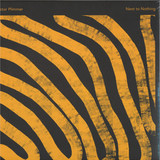
- A1: Next To Nothing Feat Ego Ella May And Emma-Jean Thackray
- A2: Sonnet 17 Feat Ego Ella May
- A3: Still Here
- A4: Somebody Else Feat Andrew Ashong
- A5: Tape Loop
- A6: Stack Feat Pie Eye Collective
- A7: Before The Sun Feat Ego Ella May
- B1: Step
- B2: Joyfulness Feat Alexa Harley
- B3: Circle
- B4 2: Minute Switch
- B5: Wall Street
- B6: Communication Control
13
Born and raised in South London, Hector Plimmer is a multi-faceted producer, composer and DJ whose sound is drenched in tribal rhythms and beautifully crafted bass. Influenced by beat-makers like Flying Lotus and Theo Parrish, but with the subtleties of the classic Metalheadz era drum and bass, his second album 'Next To Nothing' is released on 25th October 2019. The album features guests Ego Ella May, Emma-Jean Thackray, Andrew Ashong, Pie Eye Collective and Alexa Harley.
After featuring on Brownswood Bubblers 11, curated by Gilles Peterson, Hector proved his talent when he was selected as a winner of the PRS Steve Reid InNOVAtion award. At a performance at ‘Sounds Of The Universe’ Record store, Hector caught the attention of Albert's Favourites' label heads Adam Scrimshire & Dave Koor. A conversation was started which led to the transfer of almost a whole album's worth of material and resulted in his debut full length record ‘Sunshine’.
'Sunshine' was met with rapturous acclaim. The record went on to be awarded Gilles Peterson’s album of the week on his BBC 6 Music show and was championed by both Lauren Laverne and Tom Ravenscroft on the station as well as Jamie Cullum on BBC Radio 2. Its success on the airwaves transcended to streaming with the inclusion in the top 50 viral US chart on Spotify.
"This album has been a real labour of love. I spent the most part of a year trying to make music I thought would be fitting to follow my last album, whilst not actually knowing what that might sound like. 'Sunshine' had been received way more positively than I had anticipated and although praise is a lovely thing, it was the cause of much anxiety when the time came to start on this record. I put a lot of pressure on myself to produce music and kept going down routes that felt forced or just didn’t click for me, in hindsight I realise this was me making music not for myself, but for what I imagined other people might want to hear. In a way 'Next to Nothing' is my first real album, 'Sunshine' was more like a collection of four to five years worth of music compiled into the shape of one. This is my first dedicated attempt at creating a cohesive project, something that shows who I am right now and what got me here."
- Hector Plimmer
As a DJ Hector has a monthly slot on NTS radio. He has played alongside the likes of Gilles Peterson, Kutmah, Alexander Nut, MNDSGN, Onra, Dego, Kaidi, Max Graef & Glenn Astro; Hector finds himself in the good company of those talented selectors who play genres across the spectrum of Hip-hop, Beats, Funk, Soul, Disco, Afro-beat, House and Jazz.

10

- A1: Sarah Davachi - Untitled (Live In Portland - Excerpt)
- A2: Carlos Walker - Via Lactea
- A3: The Rationals - Glowin
- A4: William S Fischer - Chains
- B1: Max Roach - Equipoise
- B2: Abu Talib - Blood Of An American
- B3: Sweet & Innocent - Express Your Love
- B4: Robert Vanderbilt & The Foundation Of Souls - A Message Especially From God
- C1: A Message Especially From God - A Message Especially From God
- C2: Alain Bellaiche - Sun Blues
- C3: Alain Bellaiche - Sea Fluorescent
- C4: Kara-Lis Coverdale - Moments In Love (Excerpt)
- D1: Azimuth - The Tunnel
- D2: Kaitlyn Aurelia Smith - Milk (Excerpt)
- D3: Toshimaru Nakamura - Nimb#59
- D4: Floating Points - The Sweet Time Suite (Part 1 - Opening - Exclusive Kenny Wheeler Cover Version)
- D5: Lauren Laverne - Ah! Why, Because The Dazzling Sun (Exclusive Spoken Word Piece)
17
Floating Points' personal collection of global soul, ambient, jazz and folk treasures form the latest in the warmly revered Late Night Tales series.
Sam Shepherd aka Floating Points' music taste is notoriously tricky to define, ranging from ethereal classical at one end to coruscating techno at the other, united only in a firm belief in the transcendental power of music to move hearts, minds and - yes - feet. Similarly, his production career has ranged from early experiments in dance music with breakout records such as the 'Shadows EP' and collaborating with legendary Gnawa master Mahmoud Guinia to his expansive album 'Elaenia', which met with critical acclaim upon its release in 2015.
This Late Night Tales excursion into the depths of the evening reflects his broad tastes. The globally-travelled producer has collected untold treasures on his travels from dusty stores in Brazil to market stalls near his hometown. There's the gorgeous 'Via Làctea', culled from Carlos Walker's debut album, Abu Talib's (Bobby Wright) plaintive 'Blood Of An American' and Robert Vanderbilt's gospel reworking of Manchild's 'Especially For You'. Raw soul and feeling oozing from each song's pores.
At the other end of the music scale are the modernists, such as Québécoise Kara-Lis Coverdale who weighs in with the indelible 'Moments In Love', Kaitlyn Aurelia Smith whose 'Milk' is an exercise in tranquility, while Sarah Davachi's meditative mix-opener offers respite from a weary world.
We have some exclusive tracks for Late Night Tales; alongside Davachi's offerings there is also Toshimaru Nakamura's 'Nimb #59', as well as the now traditional cover version. hepherd delved into his childhood
memory for this one, a track taken from the first album his parents bought him, Kenny Wheeler's 'Music For Large & Small Ensembles': Sam offers up his interpretation of 'Opening Part 1'. Wheeler also contributes horns to Azimuth
track The Tunnel, written and performed by Norma Winstone and John Taylor who, coincidentally, are the parents of Floating Points' drummer Leo Taylor. Closing the album, Lauren Laverne reads the suitably nocturnal poem 'Ah! Why, Because The Dazzling Sun' by Emily Brontë.
'I tried to find music that reflects the stillness of night. And because my musical interests lie all over the place, it's quite difficult to distil that notion down to just a few songs. I was quite keen to have some electronic music in there but I also really wanted to have some soul music mixed in, so I had to try and find a pathway between all of this different music.' - Sam Shepherd (Floating Points) March 2019

- A1: Jacques Thollot - Cécile
- A2: Philippe Besombes - La Plage
- A3: Igor Wakhévitch - Materia-Prima
- A4: Mahjun - Les Enfants Sauvages
- B1: Lard Free - Warinobaril
- B2: Etron Fou Leloublan - Le Désastreux Voyage Du Piteux Python
- B3: Jean Cohen-Solal - Captain Tarthopom
- C1: Z. N. R. - Solo Un Dia
- C2: Red Noise - Sarcelles C’est L’avenir
- D1: Pierre Henry - Générique (Thème De Myriam)
- D2: Horrific Child - Freyeur
- D3: Dashiell Hedayat - Fille De L’ombre
- D4: Jean Guérin - Triptik 2
13
After years of mythology, misinterpretation and procrastination Nurse With Wound’s Steven Stapleton finally chooses Finders Keepers Records as the ideal collaborators to release “the right tracks” from his uber-legendary psych/prog/punk peculiarity shopping list known as The Nurse With Wound List, commencing with a French specific Volume One of this authentically titled Strain Crack Break series. Featuring some Finders Keepers’ regulars amongst galactic Gallic rarities (previously presumed to be imaginary red herrings) this deluxe double vinyl dossier demystifies some of the essential French feee jazz and Parisian prog inclusions from the alphabetical “dedication” inventory as printed the anti-bands 1979 industrial milestone debut.
When Steven Stapleton, Heman Pathak and John Fothergill’s anti-band Nurse With Wound decided to include an alphabetical dedication to all their favourite bands on the back of their inaugural LP the notion of creating a future record dealers’ trophy list couldn’t have been further from their minds. By adding a list of untravelled European mythical musicians and noise makers to their own debut release of unchartered industrial art rock they were merely providing a suggestive support system of existing potential likeminded bands, establishing safety in numbers should anyone require sonic subtitles for Nurse With Wound’s own mutant musical language. Luckily for them, the record landed in record shops in the midst of 1979’s memorable summer of abject apathy and its sound became a hit amongst disillusioned agit-pop pickers and artsy post-punks, thus playing a key role in the bourgeoning “Industrial” genre that ensued. On the most part, however, the list , like most instruction manuals, remained unreadable, syntactic and suspiciously sarcastic... As potential “real musicians” Nurse WIth Wound became an Industrial music fan’s household name, but in contrast many of the names on The Nurse With Wound List were considered to be imaginary musicians, made-up bands or booby traps for hacks and smart-arses. It took a while for the rest of the record collecting community to catch on or finally catch u
Since then, many of the rare, obscure and unpronounceable genre-free records on The Nurse With Wound List have slowly found their own feet and stumbled in to the homes of open-minded outernational vinyl junkies, D’s and sample hungry producers, self-propelled and judged on their own merit, mostly without consultation of the enigmatic NWW map. But, to the inspective competitive collector’s chagrin, one resounding fact recurs, NWW got there first! Via vinyl vacations, on cheap flights and Interrail tickets, buying bargain bin LPs on a shoestring while oblivious to the pending pension worthy price tags after their 40 year vintage, Stapleton and Fothergill, even if you’ve never heard of them, were at the bottom of the pit before “digging” became paydirt. And NOW at huge international record fairs that occur in massive exhibition halls (or within the confines of your one-touch palm pilot) amongst jive talk acronyms such as SS, PP, BIN, DNAP and BCWHES the coded letters NWW have begun to appear on stickers in the corner of original copies of the same premium progressive records accompanied by a customary 50% price hike to titillate/coerce the initiated as dealers extort the taught. Like “psych” “PINA” or “Krautrock” did before, “NWW” has become a buzzword and in the passed decades since its first publication The List has been mythologised, misunderstood and misconstrued. It’s also been overlooked, overestimated and under-appreciated in equal measures, but with a growing interest it has also come to represent a maligned genre in itself, something that all members of the original line-up would have deemed sacrilegious. Bolstered by the subtitle “Categories strain, crack and sometimes break, under their burden,” all bands on the inventory (many chosen on the strength of just one track alone) were chosen for their genre-defying qualities... A check-list for the unchart
Forty years after Nurse With Wound’s first record, Finders Keepers Records, in close collaboration with Steve Stapleton remind fans of THIS kind of “lost” music, that there once existed a feint path which was worn away decades before major label pop property developers built over this psychedelic underground. As long-running fans and liberators of some of the same records, arriving at the same axis from different-but-the-same planets, Finders Keepers and Nurse WIth Wound finally sing from the same hymn sheet resulting in a collaborative attempt to officially, authentically and legally compile the best tracks from the list, succeeding where many overzealous nerds have deferred (or simply, got the wrong end of the stick). Naturally our lavish metallic gatefold double vinyl compendium would only scratch the surface of this DIY dossier of elongated punk-prog peculiarities hence out decision to release volume one in a series which, in accordance with Steve’s wishes, focusses exclusively on individual tracks of French origin, the country that unsurprisingly hosted the highest content of bands on the list. Comprising of musique concrète, free jazz, Rock In Opposition, Zeuhl School space rock, macabre ballet music, lo-fi sci-fi, and classic horror literature inspired prog, this first volume of the series entitled Strain Crack And Break throws us in at the deep end, where the Seine meets the in-sane, introducing the space cadets that found Mars in Marseilles.
Like the Swedish flat-pack record shelves that attempt to house the vast amounts of vintage vinyl that goes into a multi-volume compilation like this, its time to prepare your own musical penchants and preconceived ideas about DIY music and hear them slowly strain, crack and b

14
Can it really be thirty years since The Brand New Heavies first sashayed into the public eye with a romantic’s heart, a hedonist’s spirit and a Superfly sensibility?
A heady cocktail of Chic-style funk-pop, sunshine grooves and scorched soul balladry, the release of TBNH on September 6th sees The Brand New Heavies writing a new chapter in what has been an illustrious journey whilst also marking a return to their spiritual home, Acid Jazz Records.
Today The Brand New Heavies share a breath-taking version of Kendrick Lamar’s These Walls recorded with long-time associate and vocalist N’Dea Davenport and produced by uber-fan Mark Ronson. It was that line-up of the band that had originally brought the funk into his life having caught their show in New York in 1991, later inviting them to play at his 40th birthday party. Insistent once more to reconvene that line-up, successfully reuniting N’Dea and The Heavies for his production of this track for their 30th-anniversary album.
The album’s heart, both musically and physically is a friendship that can be traced back to the mid-Eighties - more specifically the shared experiences growing into adulthood on the western reaches of London for Simon Bartholomew (guitar) and Andrew Levy (bass) and a return to the formula that saw the band score sixteen Top 40 hits and three million album sales.
Refined, reimagined and revisited, TBNH was recorded under the watchful eye of producer Sir Tristan Longworth, as Andrew elaborates; “as fathers of young kids, time was important, and we needed someone to crack the whip.” Adding further with a grin; “he also makes these amazing gin and tonics with chilli’s in. The pair also decided to feature various vocalists on these tracks, not only reuniting with Heavies alumni, N’Dea Davenport and Siedah Garret but collaborating with soul legends Beverley Knight and Angie Stone alongside current singer Angela Ricci and new boy on the block, label mate Laville – to present a gilt-edged collection of songs making arguably the best album of their career. Summed up by its cover artwork- shot in the suitably louche environs of ultra-hip nightspot Annabel’s – Simon explains with a smile; “It’s a bit clubby, a little bit sleazy, with a bit of luxury and a smidgen of street.”

9
Philippe Cam is the Thomas Pynchon of the electronic music world. Little is known about him and only a couple of pictures have been put online since he emerged on this planet to write his first and only album18 years ago. We know he worked as a sailor and that’s it. If you dig deeper you might find out that he worked as a DJ in the beginning of the 90ies in Brussels and began to study electronic music there and also began to write music for theaters and ballets.
The American distributor Forced Exposure once wrote that about him: „Philipe Cam is a star in his own field. He is among the few people who have succeeded to write hypnotic dance music without a conventional beat still conveying a thrilling, dramatic feel. Cam has developed an accurate, intense and complex formula of modulation-techno. Starting with music similar to Pan Sonic in 1996, his music turned towards a more elegant form of minimal music. Abstract soundtracks lead to an organic form of music, which was equally influenced by modern techno as Wolfgang Voigt's Studio 1/Gas or Basic Channel/Maurizio. Cam's music corresponds heavily to the Cologne scene, where his music is appreciated and played throughout the clubs by the likes of Michael Mayer, Tobias Thomas and various other DJs as well as experimental djs from the A-musik corner.“
So what’s new with his music? Basically the art of filtering is still his passion. Maybe he can be less associated with techno and the themes of his new tracks emerge in a more distinctive pattern? Well that’s hard to say, we would comment the energy of his early techno days in Brussels have returned here in a fierce way with some oft he tracks. The rhythmic movements are classy and stick with you. Whereas other tracks look for a distinctive relaxation of some kind.
We are releasing the album as a double clear vinyl with cover art by Yvette Klein who also designed the cover for his Philippe Cam’s album 18 years ago. Graphics for "Rotterdam" come from Cologne designer Daniela Thiel. We also would like to thank the cultural department of Cologne for supporting us to finance the album and to see the artistic value in this piece of minimalism.
The album kicks off with the mellow and soothing "Cocoa Beach". A Gentle beat that moves like bodies swaying in the hot summer sun. The clock moves a step forward and then a step backward as evolution takes a rest.
"Manga" feels like an acceleration to the moon, the contemplative moments come in spurts and hide in the intervals of the chords which are on the loose. Philippe Cam is the most energetic person in the world when it comes to core activity, this is head banging stuff for the ambient lounge.
"Short Summer" is a heavy and violent recognition. As intensive as it is it knows when to stop and disappear. In the ear and brain of the listeners it leaves an indisputable echo which lingers on for minutes. We suggest not to make a pause but jump directly into "Vermillions Sands".
What can be said about into "Vermillions Sands"? Be prepared some Terry Riley might lure around the corner to offer you some oranges on a silver plate, but don’t eat them. This is luring and beautiful at the same time. Maybe the best ambient track ever written and yet who can ever venture to say that without making a fool of himself. "Vermillions Sands" comes in waves and they could be longer we think.
"Rotterdam" the home of Philippe Cam for a long time but not anymore. He moved away. So that changes the perspective. But when was the track written? "Rotterdam" seems mechanical and rusty and spooky and divided. This arrangement is very different to all the other tracks so far and is almost dub in style but way more fractured. A steady stop and go emerges. But the longer it runs the better it gets. At minute 6 the brain resets itself and tries to grasp what has happened so far, reconstruction as a result of its own phantasmic imagination and hardly true at all, wonderful. Applause included!
Here comes "Bis", a short episode of a track and before we can comment on it, it is already over.
"The Game" is a mule of a track. It has a quiet stubborn sequence that bites and kicks you in the back without any change in near sight. We can hear a voice whispering, which sounds like a miniature vocoder featuring the voice of a child calling out - never stopping. This is treadmill to some extend but starts to breathe towards the middle of the track and slowly changes perspective. In fact there are some changes taking place here which go beyond a sound design that works heavily on the stereo image. Stick with it and the experience will be a great one.
"Ultimate Fly For Halloway" somehow orchestrates how you might feel after you climbed a 8000 meter high mountain and reached the top. A rejoicing off a special kind. Lava for the ears. No cheerleader murder plot sorry.
"Last Track" is a perfect example of a true minimalistic pice of music that manages to make contact with other genres and does this with elegance, determination and a lot of soul.
key selling points: The key selling point is the fact that Philippe Cam once was referred to as one of the main protagonists of the minimal music scene along with Wolfgang Voigt's Studio 1/Gas and Basic Channel/Maurizio. A true artist with a vision which is very rare.
Philippe Cam has picked up the sound he was famous for but has developed it further without selling out to any genre and expectation that rules our daily business.
Exactly this is the strength of the album to create a vivid world of impressions by using instruments in a whole different way than all software developers would suggest.
"Rotterdam" is a piece of art that can set off a firework when you listen to it and it owes nothing to anyone.

7
Beacon Sound and Jacktone Records are pleased to announce a limited edition joint vinyl release by Hugo RA Paris titled Threaded Habitat. The new LP from Paris follows two of Jacktone’s most popular releases: Mystique Youth (2015) and Horizons Beneath The Surface (2016), which appeared under his alias, Lavender.
The transition to the Hugo RA Paris moniker with this album marks a more personal shift in approach. Threaded Habitat combines ambient textures and techno rhythms to reflect tension between humanity and nature—particularly the cyclical nature of collapse and renewal. It also marks Jacktone's first collaborative release with the record store and label Beacon Sound, which has put out works from veteran experimental musicians like Terry Riley and Colleen. Beacon Sound is an important node in Portland, where Paris also lives and developed the flagship modular product for leading Eurorack manufacturer 4MS: the SWN.
The album's closing track was entirely composed on a SWN prototype and recorded in one take. In fact, much of his work is done in layers of single takes with minimal processing to preserve its raw emotion and embrace minor imperfections. As an MIT-trained engineer and physicist, working with hardware—from modulars to guitar pedals and tape loops—is essential to his process of not only making but exploring sound.
Threaded Habitat captures moments of claustrophobia and bliss in seven tracks and three accompanying videos directed by New Zealand artist Sam Hamilton. Visual art plays a central role in many of Paris’s projects, which include intricate audio-visual performances and scores for full-length films like The Modern Jungle (La Selva Negra) and its forthcoming follow-up.
The LP will be available to pre-order on July 1st with a limited, exclusive content sample pack. The handmade vinyl package features photography by Sam Hamilton and will be released July 19 through Jacktone and Beacon Sound’s webshops, with worldwide sales beginning August 2nd. A remix release will arrive later in the Fall.

10
‘One of our favourites’ iD Magazine
‘Mesmerizing’ The Guardian
‘Keep an eye on this guy!’ - Gilles Peterson
Catching Flies’ music draws from a wide-ranging palette of influences including jazz, soul, hip-hop, house and electronica and has previously seen him handpicked by Bonobo to provide support on his World Tour. Over the past few years, his music has gathered the support of Gilles Peterson, Annie Mac, Lauren Laverne, Julie Adenuga & Huw Stephens, critical acclaim from the likes of iD Magazine, The Guardian, Dazed & Confused, and Nowness, and a growing fanbase which has seen him perform both Live and DJ sets across the UK, Europe, the USA and Asia. This has culminated in over 60,000,000 streams to date.
Catching Flies is set to release debut album ‘Silver Linings’ on 5th July 2019. Containing shades of house and jazz, to hip-hop and electronica, ‘Silver Linings’ is a melodic mesh of bright electronics and intricate rhythms. It’s a beautiful, moving record, with sounds that unmistakably come straight from the heart.
Producer, multi-instrumentalist and DJ George King began Catching Flies in late 2012, when he recorded and self released his first two EPs. With huge radio and press support around the world - including multiple #1’s on Hype Machine, BBC Radio support from Gilles Peterson, Mary Anne Hobbs, Lauren Laverne, Tom Ravenscroft, Nemone, Annie Mac, Huw Stephens; praise from i-D, Dazed, The Guardian, Complex, Notion, The Line Of Best Fit, Clash, Dummy and more - he’s since attracted millions of listeners.
Against his instincts he signed with a big management agency and got talking to a label: it almost derailed his career. He explains “What I'd found so inspiring originally was the total freedom to make a tune on my own terms and just decide to put it out the next week. There was a hunger that came with that, and a sense of achievement from being the driving force, but as soon as I tampered with that ecosystem, it wasn't as exciting anymore”.
Touring with electronic music giant Bonobo - who also included him on his BBC Radio 1 Essential Mix - allowed him to watch up close someone who had taken a slow and steady path from tiny clubs in Brighton to arenas worldwide, and see it was possible to do without any compromise. After being teased through a succession of warmly received singles this past year, and seven years on from that first EP recorded and released from his bedroom, his debut album ‘Silver Linings’ is now ready to be revealed.
“It's taken me a while because I didn't want to speak until I had something to say. I wanted to make something positive, hopeful and colourful...The world isn't in the best place at the moment, and the last thing it needs is another dark and moody electronic record. I wanted ‘Silver Linings’ to be a scrapbook of the last three years. It’s definitely eclectic, and it’s supposed to be. Over three years a lot changes, your perspectives change, your tastes change; and I wanted to celebrate that by picking tracks that meant the most to me. One of my favourite things about making music is that it takes me right back to where I made it - the keyboard I used, the chair I was sitting on, the room I was in. It kind of teleports you back to a certain point in your life. A bit like a diary entry.”
Recalling those moments brings back a range of memories: ‘Satisfied’ began by being tapped out on a £15 keyboard bought from Kentish Town Cash Converters, ‘Yǔ’ was made in the mountains of China during a few days off from touring, while an evening on Hampstead Heath inspired ‘Kite Hill Theme’. Also featuring on the album is ‘New Gods,’ a collaboration with London’s bright stars Jay Prince and Oscar Jerome and the beautiful and meditative ‘Opals,’ inspired by the likes of Ryuichi Sakamoto and Alva Noto.
Catching Flies is already looking to the future, closing the first chapter in an exciting and inspiring story, ‘Silver Linings’ is only the beginning.
“A few weeks after I finished the album, I moved out of my house I made all the music in, so it feels like the closing of one chapter and the beginning of another. I can’t wait to make the next one now.”

“In October 2018 we took several recordings in and around Eddie Prévost’s home village of Matching Tye in Essex, where he has been living for the past fifty years. The majority of the pieces that made it to this LP took place in All Saints Church, High Laver, the burial site of John Locke. This fact was notable in the choice of title for this set of recordings, and it seemed necessary to put forward Eddie’s own take on Locke that he offered in our correspondences:
“Scholars of Locke’s philosophy will be familiar with the idea of mixing labour with materials as a fore-running notion of possessive individualism and basis for private property. Such ‘mixing’ is a persuasive description of a creative act. But the theory is more worthy of a social dimension.” As for the individual titles for each of the studies on the LP, each takes ideas and elements from music past. For example, MaxPlus makes a nod towards bebop pioneering drummer Max Roach who offered an earlier hit-hat study. Eddie utilises such examples, offering further creative insights which can then be woven back into the common wealth of sound. The final track, returning to the bowed cymbal method of the first, was recorded outdoors on a breezy green, and is pictured on the back cover of the sleeve. It was an attempt to capture the playing in its ‘metamusical’ relationship with the untempered sounds of the external environment.
Eddie has written about Metamusic in his book The First Concert (Copula, 2011): invoking childlike ‘protomusical’ behaviour, or the sense of music that a person might possess before the inevitable influences come to play any role in their productive, and appreciative, musical development.
Ross Lambert provided a few words along side his cover drawing entitled ‘The Metamusician’: “The eyes would symbolise for me things like searching, examining, closeness or friendship I think; engagement with the world. Decisions in making the image were completely intuitive, this is just me looking for the meaning, post-analysing, post rationalising.””
- Daniel Kordik & Edward Lucas, March 2019
