It's time for a new compilation in our house and we have some good music to fill it up. This collection of talent is going to be served in two flavours, the physical one a four cut vinyl EP featuring previously only digital tracks and the second one a ten track selection from our back catalogue featuring some of the best producers in our family.
Asier Morillas ( A4 ) is probably one of the most original sci fi specialists out there and he's been part of our sound since his first steps into production. His track Kynosoura is a perfect example of hi tech jazz.
David Reina is also a science fiction specialist, also featured with a full length work in our catalogue, our pick for this collection is Autoscopy, a mental and complex sonic voyage into the best outer space techno.
From Mod 21 we have selected one of his most played tools, Escalation of Violence, the perfect hypnotic drill to boost your mixes properly.
Vertical Spectrum brings us to hyperspace in BALN006 combining a distorted groove with floating alien bleeps in a sci-fi techno masterpiece.
This four cuts will be pressed on wax, let's talk about the next eight:
From his Idle Ep we have chosen Temudo's Spiritual Song, a merciless floor weapon heavily tested on the best clubs and big stages out there.
Next comes BiiBii by Null Forms approaching a more abstract and sci-fi terrain, maintaining the danceable pulse and well-managed distortion. The result is more mental and synthetic. A kind of controlled chaos.
Axial Rotation from Translate starts with a fast paced groove, heavily bass fuelled with a continuous synth line moving across the basement. All sound elements are constantly mutating and evolving although the mood is linear and loopy.
Eight cut comes from Dutch veteran Dimi Angelis, the third from his
A Journal of Impossible Things EP from 2023. The hypnotic bleep penetrates your mind while the dirty sound of the old drum machine sets the pace for your feet. Special mention to the occasional resonant sweep that appears from time to time creating the required tension.
On the ninth, Ruman's Lizard from Where The Ring Ends LP, mental and hypnotic, perfect for adding tension to a mix, again heavily tested on the best dancefloors extensively.
Closing the release, CONCEPTUAL with Red Sun a magnificent closing anthem, no more words needed here.
With this collection you get a tiny snapshot of the sonic palette of Warm Up Recordings sound. Check our full catalogue to get the proper picture.
Cerca:d mention
- A1: Intro/Uvs
- A2: Demolition Of Human Skull
- A3: What Lies Beyond
- A4: Passage
- A5: Yelling And Breaking Things For No Reason
- A6: Beaten Back To Life
- A7: Brutal Reality
- B1: Dissolution (Of All Things)
- B2: Reduced To Ragu
- B3: Normalization Of Inhumanity
- B4: My Choice, Feat Maurice
- B5: A Light In The Distance
- B6: Lucky Number 13 - Bonus Track
Its no secret that Samiyam is a certified beathead and appreciated hiphop producer - we have been in touch with him since his self released Rap beats volume 1 CD (or actually since his contribution with FlyLo as Flyamsam on the Beat Dimensions compilation), and later took in further releases on Stones Throw, Brainfeeder, Poo-Bah, All City & Hyperdub . What we did not know is Sam got heavily into Death Metal for the past 5 years and is a big horror movie fan. (check the artwork here !)
On Death Metal, Sam mentioned 'I started revisiting some old shit and realized I really love it and there's so many cool bands I didn't even know about.. I started making some shit with drums, drum programming, and ideas inspired by some of the stuff I like and realized I should just make an album out of it."
So here it is - 13 beat takes, Metal style - put together by a man whose output is sparse but never dissapoints !
Limited edition US import
- A1: Design - Premonition
- A2: Vision - Lucifer’s Friend
- A3: Richard Bone - Alien Girl
- A4: John Howard - I Tune Into You
- A5: Ian North - We’re Not Lonely
- A6: Selwin Image - The Unknown
- B1: Harry Kakoulli - I’m On A Rocket
- B2: Rich Wilde - The Lady Wants To Be Alone
- B3: Billy London - Woman
- B4: Alan Burnham - Science Fiction
- B5: The Microbes - Computer
- B6: The Goo-Q - I’m A Computer
- C1: Gerry & The Holograms - Gerry & The Holograms
- C2: The Warlord - The Ultimate Warlord
- C3: Die Marinas - Fred From Jupiter
- C4: Dee Jay Bert & Eagle - I Am Your Master
- C5: Peta Lily & Michael Process - I Am A Time Bomb
- C6: Sole Sister - It’s Not What You Are But How
- D1: Alasdair Riddell - Do You Read Me?
- D2: Karel Fialka - Armband (The Mystery Song)
- D3: John Springate - My Life
- D4: Incandescent Luminaire - Famous Names
- D5: Disco Volante - No Motion
- D6: Dream Unit - A Drop In The Ocean
MB Crystal Vinyl[32,73 €]
LTD Trans Pink Vinyl[32,82 €]
LTD Trans Pink Vinyl[27,69 €]
Compiled by Philip King
“And then came the rise of synth pop : blokes with dodgy haircuts hunched over keyboard-operated
machines stuffed with wires and do-it-yourself tone oscillators making sounds like a brood of geese
passing gas in a wind tunnel. Whoopee! This is the way the ‘70s ended : not with a blood-curdling bang
bang but with a cheap, synthesized, emasculating whimper.”
NICK KENT, NME.
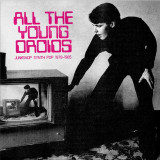
All The Young Droids: Junkshop Synth Pop 1978-1985 is a new compilation that charts the
underbelly of the epoch-defining sound of the synthesiser in 80s popular music. Compiled by Philip
King (previously seen compiling All The Young Droogs, Glitterbest and Boobs - The Junkshop
Glam Discotheque), the music here connects the dots between DIY synth enthusiasts grappling with
new, cheap synthesisers at the tail-end of punk and wannabe, jobbing songwriters enthral to the new
music pioneered by Gary Numan, Depeche Mode and Daniel Miller’s Mute Records. Featuring rare
tracks of auto-didactic progressive pop music, proto-techno punk, shoot-for-the-stars-land-in-the-gutter
chart flops and heralded, underground synth classics, School Daze paints a picture of beautiful failure.
Complete with extensive sleeve notes written by King and never before seen imagery, all 24 tracks
were remastered by RPM in-house engineer Simon Murphy, many from vinyl copies due to lost master
tapes. The story told on All The Young Droids is one of the dawning opportunity presented by both the
emergence to the market of cheaper analog synthesisers and the distribution networks plus indie labels
that exploded with the advent of punk music in 1976. While the music that sprouted out all over the
globe in the wake of these factors was decried as fake, plastic, a refutation of punk’s guitar-led
revolution, it’s telling that much of the music on All The Young Droids.. was created in bedrooms,
ramshackle studios and home-made set ups with often borrowed equipment. In the era of record labels
jumping to capitalise on the success of The Sex Pistols, The Clash (both on major labels, of course)
these artists struggled to stand out from a new gold-rush with next to no budget or PR team. With radio
and labels desperate for the new Yazoo, what resulted was a testament to necessity being the mother
of invention.
At the time, the synthesiser was the music of the future, a shiny new machine that could paint like an
orchestra with a single finger and a 4-track. In the hands of Manchester avant-pranksters Gerry & The
Holograms it’s a pulsing, sardonic weapon.. the only instrument on the Messthetics classic lampooning
of New Wave fashion. In Hamburg, a 16 year old Andreas Dorau used it to write and record (with his
female classmates on vocals) a global smash in Fred Vom Jupiter (later licensed to Mute Records).
The hard-to-find English version (Fred From Jupiter, natch) is included here. Many artists with alreadystoried careers caught the bug and recorded synthesiser-fuelled peons to space, computers, the future
and, of course, love-interests. Harry Kakoulli, late of Squeeze, recorded a solo album in 1979 that
included the incredible power-synth-pop smash-that-never-smashed I’m On A Rocket. Similarly, Ian
North of Neo and American Power Pop stalwarts Milk ’n’ Cookies bought a Korg MS20 and used a
tape machine to record We’re Not Lonely, an absolute lost-classic of minimal synth pop. We’re Not
Lonely also features on the Junkshop Synth Pop sampler 7” twinned with John Howard unreleased
track You Will See, released April 12th 2025.
There are plenty of compilation debuts in evidence. Sole Sister were a mysterious trio who were
featured on the Scaling Triangles compilation of female-fronted, queer-adjacent post-punk /
underground music that also featured The Petticoats. Selwin Image were from San Francisco and
featured members of the recently defunct power pop/punk group The Pushups. Their stupidly catchy
The Unknown fizzes with New Wave energy - think XTC to Sparks but remains unreleased until now.
Dream Unit’s A Drop In The Ocean is an early synth wave cut, positively teaming with Joy Division
instrumentation, previously only released on a long-forgotten and super rare, self-released EP.
Incandescent Luminaire’s Famous Names belies an archetypal struggle of a small-town trying to
make it in a cruel industry but is a thrilling New Romantic-Synth Wave cross over with a OMD
gloominess that’s a joy to hear. Feminist Minimal Wave track I Am A Time Bomb by performance artist
Peta Lilly and Michael Chance is a revelation destined for new found cult status. It was released on 7”
and lost until now.
The flipside to the subterranean, never-made-it synth pop mentioned above are the ambitious, even
fruity attempts at success that have a perennial elegance to their confidence. New Jersey-ite Billy
London (real name Ed Barth) tried to cash in on the synth boom with Woman, released by a major
label, a lurching new wave track built on the Louie Louie rhythm and a wonderfully camp Lou Reedstyle sleazy vocal before exploding in the synthesised chorus. The song bombed but with a chorus like
this, you have to wonder why? Ex-Glitter Band member John Springate’s My Life is truly epic, with
doomed chord progressions and massive sounding drums turning into at least 3 different songs in the
course of the track. Before you wonder what’s going on the song resolves with a glorious return to the
main refrain.
The dry-ice-dressed dance floor is well catered for too. Design’s Premonition and Vision’s Lucifer’s
Friend are stone-cold minimal synth bangers, well loved but given a new lease of life here. The
Warlord’s The Ultimate Warlord was released in 1978, a homespun proto Hi NRG banger that was
later re-recorded by The Immortals in Canada who had a club hit with it. One-man- band Disco
Volante’s No Motion was re-issued by Synth wave label Medical in 2012 but makes its first vinyl
compilation appearance here. Close your eyes and you can imagine what Lawrence of Felt would have
sounded like with some cheap Korgs a little earlier in his career. Gibraltar-based trio The Microbes
imagined a computer programming people to dance - how prescient - and ended up with a propulsive,
robo-funk track with splendid rubbery bass playing over a tectonic drum machine. Previously picked up
by Belgian label Stroom TV, Dee Jay Bert & Eagle’s heavily Euro-accented I Am Your Master
demands the listener to “come to paradise!” In a frankly terrifying manner.
All The Young Droids is the first compilation to peel away from the narrative that dour, Minimal Synth
and Cold Wave were the only musical children of the first rush of synth pop. Philip King and School
Daze Records describe a much more complicated world: along with the austere, Brutalist children of
Daniel Miller (who produced Alan Burnham’s Bowie-Low-influenced Science Fiction here) was a
plethora of desperate cash-ins, accidental mainstream hits, ambitious pop dramas and major label
punts that went nowhere. Crucially, the compilation blurs the line between junk and treasure. What if the
two things are interchangeable. What if it’s all science fiction?
Mr Bongo proudly presents the third album by Melbourne/Naarm multi-instrumentalist, Don Glori, entitled ‘Paper Can’t Wrap Fire’. A kaleidoscopic genre-surfing odyssey that brings together the worlds of jazz, soul and funk. Feeling both contemporary and classic, familiar yet novel, it’s an assured third release that sees an artist in full flight, showcasing their creative prowess and the uniqueness of their musical voice.
Steering in a new direction, Don Glori (aka Gordon Li) has delved headfirst into his songwriting with ‘Paper Can’t Wrap Fire’. Deftly showcasing his talents as a writer and bandleader, he brings with him a whole host of friends from the creative crossroads that is Naarm. It’s an album enriched with more soul, R&B, and funk-oriented songs than his previous jazz-rooted productions, yet there’s still plenty of jazz material for those familiar fans of Don's earlier works.
The album’s title is an old Chinese proverb, roughly translated as 'you can’t deny the truth'. This underlying thread is woven between the songs. “A lot of them are in some way about truth-seeking, observations and the masks you put on to deal with life (hence the cover art)”, Don mentions. Take, for instance, the sensational soul single 'Brown Eyes' featuring silky lead vocals by ML Hall. A dissection of the minority experience, and the power and comfort in building those communities. Elsewhere, 'Disaster' is a satirical take on the structures serving everyone but the artists, and 'Flicker' tackles notations of truth and clarity after introspection.
To marry that meaning with the level of musicianship on these tracks is what really stands out. Don has set out his stall here as an artist who can write songs that hit home in the heart, as much as they do in the head. It’s a journey infused with a glistening jazz finesse, layered with nourishing vocal harmonies and powered by an instantly relatable human soul.
Recorded over two hot summer days in Rolling Stock Studios in Collingwood, Naarm, the lineup of musicians is built up of Don's friends and family. Featuring the backbone team of Tim Cox, Al Kennedy, Joel Trigg, Robyn Cummins and Lachlan Thompson, who were part of Don's touring band before he relocated to London, and a stunning selection of vocalists in the form of ML Hall, Ruby Dargaville, Isadora Lauritz, and Bianca Kyriacou. Also gracing the album are trumpeter extraordinaire Audrey Powne, saxophonist Joshua Moshe, and Alcides Neto who sprinkles some Brazilian magic into the record.
Taking influence from artists including Azymuth, SAULT, Jordan Rakei and Lynda Dawn, as well as from London musical beacons such as NTS and Total Refreshment Centre, Don has run with this, leaned in and come out with a record truly unique to himself and his distinctive core, with no mask necessary.
The new vinyl release from Andrey Loud represents the quintessence of dancefloor minimalism. Prepare for an immersive journey into deep sonic spaces, where meticulous attention to detail meets vibrant dance energy. Special mention goes to the remix of “Humanity” by Ki.Mi., offering a fresh perspective on the original composition. This release is crafted for true minimalism enthusiasts and vinyl collectors. Each track has been carefully selected to come alive on the label’s signature vinyl.
Mastering by Kashatskikh Studio
Design by Kirill Kashatskikh
Vinyl Only
The A-side puts the fun in a funky psychedelic disco stomper complete with sing-along chants and breakbeats. Imagine an overlooked KID CREOLE garage dub cut. The B-side is a fresh take on classic Italo disco with analog percussion, vintage synths and his own guitar and bass.
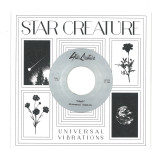
At this point, Southern Italy's Giovanni Damico is basically an honorary Windy City Native. I don't think he's ever been to Chicago
but he certainly has status on all sides of the City. Damico's collaborations with Chicago's Star Creature kicked have spanned the
better part of the last decade with just as many vinyl releases during that time spanning 2 LPs, 2 EPs, a handful of 7's and an appearance on the 2020's Star Creature Vibes label compilation not to mention the over 20+ 12's and a dozen appearances on labels ranging from MCDE, Lumberjacks in Hell to Kalakuta Soul, Bordelllo A Parigi, his own White Rabbit Recordings and more.
That perfect blend of Tracky Italo Early Drum Machine, Bang the Box type of Proto House Electro Soul with adventurous and ambitious beats and melody combos pulled from a range of global influencers, mixing of electronic and acoustic instruments giving some of the most full body unique compositions in dance music, each being accomplished, evolving and truly unique.
Good friends and Record Mission co-captains, Dan Tyler (one half of the Idjut Boys) and Nick The Record, take the reins for the third volume of the Mr Bongo Edits 12" series. With previous editions coming courtesy of Danny Krivit and Luke Una, Dan and Nick set their sights on a hand-picked selection of iconic ‘70s Cuban recordings for this three-track cosmic whirlwind. Across the A side, Dan picks out two Juan Pablo Torres tracks, with Nick taking on Grupo Los Yoyi on the B. Tweaking, extending and reworking the recordings with a dose of extra magic they remould the tracks to fit the sounds and structure of today’s dancefloors.
Having formed the Idjut Boys in the early ‘90s, Dan and Conrad McDonnell have crafted a dubbed-out, disco-tinged style that permeates their countless productions, remixes and DJ sets. Speaking of the two tracks Dan has chosen to rework for this EP he mentions, “Having been caught under an avalanche of good music from Mr Bongo, I took it upon myself to extend and add effects to a couple of the fantastic tracks from the Juan Pablo Torres LPs they recently re-issued. Just for disco jockey and barn dance use.”
First, Dan looks to Cuban maestro Juan Pablo Torres’ 1978 album 'Algo Nuevo', taking one of the standout tracks ‘Cacao’ and giving it more space to breathe. Teasing out the scatting vocal line and percussive climax that nods to George Kranz's ’83 electronic disco anthem 'Din Daa Daa', whilst adding more cosmic tripped-out synths and space echoed dubs, Dan builds the tension to fine effect. This track sounds immense on a big club system and the swirling synths felt like they were lifting the ceiling off when we played it at the amazing La Paloma ballroom in Barcelona.
Dan then turns his attention to Torres’ 1977 'Super Son' album, giving the psych-Latin-funk track 'Pastel En Descarga' a dub makeover. Rich in delay and drama, whilst maintaining and extending the breakers funk intro, he juices it up into a punchy, no-nonsense, cosmic-funk delight.
On the B side, Tangent co-founder, long-standing Life Force resident and seasoned rework master, Nick The Record, revisits an edit that he originally constructed in 2009. Clocking in at over double the length of the original cut, Nick’s edit of Grupo Los Yoyi’s 1977 cut 'Paco La Calle', is made with dancers firmly in mind. This secret weapon builds and simmers, with the drums and percussion pushing and pulling before the psychedelic synth lines return in a sweltering fashion. In this new 2025 version, Dan is drafted in to work some brilliant new synth lines into the mix.
Crush of Souls is the musical endeavour of Charles Rowell (Crocodiles, Flowers of Evil, Issue). One foot in early Industrial and the other in 80’s Synth-Pop, Crush Of Souls hold the whip and demand that you submit your soul.
Returning once again to Catacomb Soul studios where he had recently finished recording “(A)Void Love”, Charles Rowell mapped out the next chapter for Crush of Souls, limitations were set in place while new faces appeared to lend a fresh coat of black magic to the album.
The album is a love letter to Paris; all of its beauty and decay. “Lézire” which is a slang mixture of the French words for Lizard and Desire provides a sinister title to an album full of hard hitting, romantic songs.
Harry Howard (These Immortal Souls) provides his signature snarl and profound lyrics to the haunting ballad “You Rose Up”. Long time sax player Stanislas de Miscault colors the dark corners of the record with his unhinged personality and one half of new look COS, Stevan Dinet bangs both the martial beats and the Fairlight sample pads.
An album cover full of chains and S&M can provide enough of an explanation as to the new direction of Crush of Souls. Cronenberg’s “Crash”, David Lynch’s “Lost Highway”, Psychic TV and Sisters Of Mercy are constantly mentioned.
- A1: Boylan, U.s.f, D.o.k - Prime Directives
- A2: Boylan, Slimzee - Mash Up
- B1: Boylan, Slimzee - Box
- B2: Boylan, Trends - Septic Peg
- B3: Boylan, Trends, Slimzee - Thunder Ridge
- C1: Boylan, Youngsta - How Dare You
- C2: Boylan - Podracer
- D1: Boylan, D.o.k - Depth Charge
- D2: Boylan, Slimzee - Mitzi
- D3: Boylan, D.o.k, Youngsta - Just Breathing
The Shard: A colossal feat in engineering, savagely piercing the London skyline with zero f**ks.
Shard View: An uncompromising moment in Boylan’s bass engineering, piercing the London soundscape with even fewer f**ks.
It’s 2025. We’ve officially moved a second closer to extinction and Boylan’s wasting no time. After years of releasing noxious missives on the most influential likes of FWD>>, Artikal, Deep Dark & Dangerous, Sentry and Mean Streets, he finally launches his own label - Shard View.
A brand new vehicle for the potent strain of ice cold apocalyptic breakbeat he and his closest allies are currently making, Shard View is inspired by the vista he and the likes of Slimzee, Trends, D.O.K, U.S.F and Youngsta see every time they’re cooking up a darkness in his Peckham studio.
Coated in visual armor from Simon Oil Gang, Shard View is London, Detroit and Berlin wrapped up in one. It’s bass, it’s techno, it’s tribal, it’s No U-Turn, it’s Virus, it’s Horsepower, it’s warehouse raves. It’s timeless. And it starts with ‘Tunnel’, an extensive 10 track trip into instrumental, full physical, heavily percussive unapologetic breakbeat music. Boylan is the main consistency throughout but all the above-mentioned names are involved and always will be. Like the great collectives of past bass epochs, the energy here is molten as the friends inspire each other with this fresh take on a classic sound.
Two more EPs should follow later this year. And as the world continues to ramp up the turbulence, so will Shard View. This is not a drill.
Any questions about any of these products feel free to get in touch and we'll help you out!
albert.preston@sequence.cc
Anyone that knows what I like and has been following Future Retro London over the years will know that I'm an avid supporter of Ricky Force's music. Having had him on the label in all the ways possible (a solo tune, a remix & a collab), I think it's fair to say that I'm a huge fan of what he does.
Out of the blue, he sent me a big folder of music and I couldn't narrow it down to a 4 track EP so it ended up becoming an 8 tracker, including a new collab I did with him to go on the release.
Thanks to Ricky Force for his quality work on this release & a very special mention going out to Team Hyper D for their co-operation in clearing the sample of Stevie Hyper D on "Sensi".
repress !
Paranoid London, the electronic band of Gerardo Delgado and Quinn Whalley, has become synonymous with stripping acid house back down to its basics, rescuing the sound from smiley faces, rave, and sugary excess while paying respects to its gay, black, American roots. Performing mainly live with hardware only, often with vocal guests, as well as unique hybrid DJ sets, the duo has established a tongue in cheek, grumpy punk sound and attitude without taking it too seriously.
Following 2019’s latest album PL and a bunch of 12” singles and edits, their new long-player Arseholes, Liars, and Electronic Pioneers refers to the cavalcade of c***s we find ourselves surrounded by. Our only respite being the joy that musical geniuses bring. The cover artwork and gatefold of the vinyl reflect this with a collage-like poster including personalities of all kinds, from politicians and royalty to music legends. When we asked them to highlight key music pioneers from their picks, they mentioned American electro don Aldo Marin, British producer Andrea Parker and Post Punk band WIRE.
Inspired by early ‘90s British prog house on the likes of Sabres Of Paradise Records and Guerilla Records, the album presents a step up on their production while the anarchic attitude remains unaltered, unadulterated and undiluted.
In Quinn’s words: the album has a slightly more Hi-Fi sound than previous efforts, but retains the urgency and punk rock attitude that we're known for. It was tested over the summer, where it lit up festival stages at Glastonbury, Houghton, Love International, and many, many others.
As expected, PL has recruited a bunch of special guests on vocals including Primal Scream’s Bobby Gillespie, US house veteran Monica “DJ Genesis” Lockett, the novo-New Romantic/gothic, Jennifer Touch, and Joe Love, from Fat Dog, Brixton’s current ones-to-watch. As well, previous collaborators Josh Caffe and Mutado Pintado return for new recordings. All bring something unique to the party, while integrating perfectly with PL’s Fuck you! circuitry.
- A1: Cangilón
- A2: Piedras
- A3: Aquí
- A4: Agua Pa Fantasmas
- B1: Rio De Las Tumbas
- B2: Viento
- B3: Mi Viejita
- B4: No Hope
- C1: Radio Chomio (Con Eli Wewentxu)
- C2: Rio Radio Correspondencia Anfibia
- C3: 3Eee
- C4: F Collect
- C5: Even Heaven Is Uneven
- C6: El Azar
- D1: I, You
- D2: Heterodina
- D3: Sin Conexión
- D4: Sss1
- D5: Sss2
- D6: Sss3
he initial seed for this project was planted in 2020 when Nicolás Jaar wrote the song “Piedras” for a concert at the Museum of Memory & Human Rights in Santiago, Chile, which commemorates the victims of human rights violations during the military dictatorship led by Augusto Pinochet between 1973 and 1990. Between 2022-2023 it took on a new form as a radio play entitled 'Archivos de Radio Piedras', which was shared on a dedicated Telegram channel. In 2024, the play was converted into a 24 channel installation at the University Museum of Mexico City (MUAC), where it was exhibited for 5 months.
Piedras 1 and 2 is a collection of the tracks featured within the play, all new music by Jaar, but partly presented within the play as the music of Salinas Hasbún (the name a composite homage to Jaar's grandmothers, Graciela Salinas and Miriam Hasbún).
The play follows two friends mourning the disappearance of Salinas Hasbún, a musician and writer who vanished in the early 2020s. Although they live in a future where technology is advanced, they
resort to DIY radio methods because the anonymous group “Las 0cho” has launched a worldwide attack on undersea internet cables, causing a global internet blackout.
The play's central theme revolves around the idea that truths, memories and identities speak from the cracks (“rasgaduras”), or the "in-between" spaces ("en el entre"). This concept is supported by the
way much of the narration unfolds - in the liminal spaces between radio frequencies. The instability and transitory nature of a constantly shifting radio dial becomes not just a metaphor but the structure of the play itself. It’s in these moments of noise, static and interference that the deeper revelations of the story emerge. This disjointed, ever-changing medium mirrors the way memory and trauma operate within the play - non-linear, slipping through the gaps, found in fragments or ordinary moments, rather than direct transmissions of “official” historical accounts.
This notion reaches its climax at the end of the narrative, when a text is discovered in which Salinas speaks of finding a new number in a small pond in a cave mentioned in the first episodes of the radio play. This pond, inside the “cochlea of the world”, is seen as a way to introduce real-life randomness to computation. Embodied in the salt lakes of northern Chile, home to the world’s oldest bacteria, this randomness disrupts the rigid order of binary code, paving the way for a transformation of digital life.
First solo release by Nicolás Jaar since 2020’s Telas and Cenizas.
- A1: A L’ombra D’una Olivera (U I Dos), Ft. Noelia Llorens “Titana”
- A2: Jota De La Fira De Tots Sants
- A3: Ens Devem A La Faena (Cant De Batre), Ft. Noelia Llorens “Titana”
- A4: Tant Com L’enyor De La Terra (Cant De Batre), Ft. Carles Dénia
- A5: Al-Azraq
- B1: Malaguenya Del Carrer Calvari, Ft. Noelia Llorens “Titana”
- B2: Quan Caiga La Nit
- B3: Esta Casa Sí Que És Casa (Cant De Batre), Ft. Josep Aparicio “Apa”
- B4: Cv-500
‘FAIXA’ is the eponymous debut LP from rural Valencian group FAIXA, emerging from a desire to fuse their curiosity for electronic sounds with experiences of living immersed in the folklore that resonates through the Valencian regions of l’Alcoià and el Comtat.
This atmospheric album speaks to a sound not often heard in the wider Spanish electronic music scene, but reminiscent of other modern revivals of traditional music fused with electronic sounds across Spain right now.
The sound of the album is a constant dialogue between the roots and the future of Valencian generations; traditional vocalists play an essential role in connecting oral traditions such as the “cant de batre” and marches of the “moros i cristians” with leftfield electronic, influenced by sounds typical of dubstep, jungle, or footwork. This historical quality resonates profoundly through songs where vocalists Noelia Llorens “Titana”, Carles Dénia, and Josep Aparicio “Apa” act as channels to a new sonic dimension of traditional music, where the classical and the modern intertwine.
Receiving great feedback across the country in a short period of time, FAIXA’s unique approach to electronic music has gained them mentions and interviews on national and local radio & TV.
The enigmatic Ukrainian label Jerelo presents a 4-track vinyl-only EP by the talented Greek producer Cirkel Square. Each track on the release is like an antique sculpture — exquisite, graceful, and made with attention to every small detail. This comparison is not accidental, as Cirkel Square dedicated each of the four “sinister harmonies” to one of the gods of ancient Greek mythology. The opening track, “Kronos Reckoning”, with its new-age melodies bristling with pathos, carries the spirit of the greatness of the age of Titans, frozen between the dense bricks of a micro-house beat. “Hades Symphony” and "Persephone's Whisper" are inspired by existential reflections, while “Ares Beat” surprises with an inventive pseudo-acid drop.
The Malevolent Harmonies EP features tracks perfect for the dance floor, especially when played on a high-quality PA system. Despite each track's unique style, the EP as a whole is surprisingly cohesive. Just as the mentioned gods in the EP are related to each other, the
tracks share common elements, showcasing the high skill level of the rodub / rominimal producer from Stockholm.
Michael Mayer albums don’t come round too often, which is one of many reasons why his fourth collection, The Floor Is Lava, is a genuine event. It’s been eight years since his last one, the collaborative & released on !K7; its predecessors, Mantasy (2012) and Touch (2004), took their sweet time, too. It’s no real surprise, given the many hats Mayer wears – globetrotting DJ, revered remixer, inveterate collaborator, and boss of both Kompakt and Imara – that his solo productions are relatively sparing. But this also speaks to their quality: Mayer’s name on a record sleeve is a sign of quality, of music that’s both looking to the future and calling back to the past, that balances the imperatives of the dancefloor and the loungeroom, that’s as exploratory as it is functional.
On The Floor Is Lava, Mayer seems to be taking the temperature of both the music that surrounds him (past and present), and the ides of the industry he works within. There’s that iconic album title, for a start. “The album’s mindset,” he says, reflecting on those four words together. For Mayer, it’s partly a critique of the way the industry boxes in both producer and listener, focuses them on genre, on market, on the next new thing: “Being a free minded spirit that transcends genres has become an uphill battle.” A battle worth fighting, though, and with The Floor Is Lava, the result is an album that’s varied, quixotic, idiosyncratic, charming, and deeply, addictively listenable.
Throughout, Mayer finds thrills in exploration and juxtaposition, allowing unexpected things to blossom and giving them their life, their platform, throwing the listener exciting curveballs: “It’s a DJ album by a DJ that’s easily bored.” Either easily bored, or endlessly curious, The Floor Is Lava is rich with ideas. It opens with “The Problem”, which looks back to look forward, embracing the rickety way early house productions threw samples together with gleeful abandon. Mayer mentions Pal Joey, and the scene around Rockers Hi-Fi and their Different Drummer imprint, as reference points, and you can hear that freewheeling spirit throughout.
It’s followed by “Vagus”, a slinky, sensual minimal house number that Mayer describes as his “musical catnip”. The flow of these two opening cuts defines the dynamic of The Floor Is Lava, defining the dialectical drive at its core: thesis and antithesis leads to synthesis, but with a welcome prickliness that means you’re always excited, always engaged. It’s also productive in the way it derives energy from rubbing genres and sounds against each other, in unexpected ways, for maximum musical frisson. There’s psychedelic techno on “Feuerstuhl”, more minimal techno with “Ardor” (Mayer mentions ‘Immer 1’ era 90s minimal as inspiration), slippery, Shepard-tone breakbeat through “Sycophant”, a lovely, lush vocal turn on the poppy “The Solution”.
The album closes with the melancholy “Süßer Schlaf”, where Mayer sets a poem by Goethe to one of his most haunted, moving pieces of music yet, in abstract tribute to a lost friend. It’s one of the most affecting moments on The Floor Is Lava. There’s also an update on 2020’s wild Brainwave Technology EP, with the surrealist glitter-stomp of “Brainwave 2.0” (check out those handclaps!),where Mayer’s thinking about the socio-political precipice of the now: “I’m reading with great interest about this whole complex of how humanity is about to cross so many lines and the implications that the resulting financial and educational inequality will bring.”
That’s The Floor Is Lava: then and now, brainwaves and nerve structures, problems and solutions, genres on fire; the real, the unreal, and the surreal. An album for the easily bored and the endlessly curious. Mayer has the last word, telling us all you need to know about the album’s spirit: “Burning for the cause, being zealous, being addicted to the heat of the night, the exuberant powers of music.”
Michael Mayer veröffentlicht nicht oft Alben, was einer von vielen Gründen ist, warum ‘The Floor Is Lava’ ein echtes Ereignis ist. Es sind acht Jahre vergangen seit seinem letzten Werk, dem Kollaborationsalbum &, das auf !K7 erschien; seine Vorgänger, Mantasy (2012) und Touch (2004), ließen ebenfalls auf sich warten. Es überrascht nicht wirklich, da Mayer viele Rollen gleichzeitig erfüllt – weltreisender DJ, vielbeschäftigter Remixer, unermüdlicher Kollaborateur und Chef von sowohl Kompakt als auch Imara – weshalb seine Solo-Produktionen eher sparsam ausfallen. Doch das spricht auch für deren Qualität: Ein Album mit Mayers Namen auf dem Cover steht für Qualität, für Musik, die sowohl in die Zukunft blickt als auch auf die Vergangenheit verweist, die das Gleichgewicht zwischen den Anforderungen des Dancefloors und des Wohnzimmers hält, die genauso erforschend wie funktional ist.
Auf The Floor Is Lava scheint Mayer sowohl die Musik um ihn herum (vergangen und gegenwärtig) als auch die Strömungen der Branche, in der er arbeitet, zu reflektieren. Da wäre zunächst der ikonische Albumtitel. „Die Grundhaltung des Albums“, sagt er, drückt sich in diesen vier Worte aus. Für Mayer ist es teilweise eine Kritik daran, wie die Industrie sowohl Produzenten als auch Hörer in Schubladen steckt, sie auf Genres, auf den Markt und auf das nächste große Ding fokussiert: „Ein freier Geist zu sein, der Genres überschreitet, ist zu einem steinigen Weg geworden.“ Ein Kampf, der sich jedoch lohnt, und mit The Floor Is Lava ist das Ergebnis ein Album, das vielfältig, eigenwillig, charmant und tiefsinnig, aber auch süchtig machend ist.
Im gesamten Album findet Mayer Freude an der Erforschung und Gegenüberstellung von Stilen, lässt unerwartete Dinge erblühen und gibt ihnen Raum, überrascht den Hörer mit spannenden Wendungen: „Es ist ein DJ-Album von einem DJ, der sich schnell langweilt.“ Entweder langweilt er sich schnell oder er ist unendlich neugierig – The Floor Is Lava ist reich an Ideen. Es beginnt mit „The Problem“, das in die Vergangenheit blickt, um nach vorne zu schauen, und die wilde Art, wie frühe House-Produktionen Samples mit fröhlicher Unbekümmertheit zusammenwarfen, aufgreift. Mayer nennt Pal Joey und die Szene um Rockers Hi-Fi und ihr Label Different Drummer als Referenzpunkte, und dieser freie Geist zieht sich durch das gesamte Album.
Es folgt „Vagus“, eine sinnliche Minimal-House-Nummer, die Mayer als seine „musikalische Katzenminze“ beschreibt. Der Fluss dieser beiden Eröffnungstracks definiert die Dynamik von The Floor Is Lava und den dialektischen Antrieb im Kern: These und Antithese führen zu einer Synthese, jedoch mit einer willkommenen Schärfe, die dafür sorgt, dass man immer aufgeregt und engagiert bleibt. Zudem gewinnt das Album Energie, indem es Genres und Klänge auf unerwartete Weise aneinanderreibt, um maximalen musikalischen Nervenkitzel zu erzeugen. Es gibt psychedelischen Techno in „Feuerstuhl“, mehr Minimal Techno mit „Ardor“ (Mayer erwähnt ‘Immer’ Ära Minimal als Bezugspunkt), gleitenden Shepard-Ton-Breakbeat in „Sycophant“ und einen lieblichen, üppigen Vocal-Auftritt im poppigen „The Solution“.
Das Album schließt mit dem melancholischen „Süßer Schlaf“, in dem Mayer ein Gedicht von Goethe vertont und eine seiner bisher eindringlichsten und bewegendsten musikalischen Kompositionen schafft, als abstrakten Tribut an eine verschiedene Freundin. Es ist einer der ergreifendsten Momente auf The Floor Is Lava. Ebenfalls gibt es ein Update der wilden Brainwave Technology-EP von 2020, mit dem surrealistischen Glitzer-Stampfer „Brainwave 2.0“ (hör dir diese Handclaps an!), in dem Mayer über den sozio-politischen Abgrund der Gegenwart nachdenkt: „Ich lese mit großem Interesse über diesen ganzen Komplex, wie die Menschheit dabei ist, so viele Grenzen zu überschreiten und welche Auswirkungen die daraus resultierende finanzielle und bildungstechnische Ungleichheit haben wird.“
Das ist The Floor Is Lava: Damals und heute, Gehirnwellen und Nervengeflechte, Probleme und Lösungen, brennende Genres; das Reale, das Unreale und das Surreale. Ein Album für die schnell Gelangweilten und die unendlich Neugierigen. Mayer hat das letzte Wort und sagt uns alles, was wir über den Geist des Albums wissen müssen: „Brennen für die Sache, leidenschaftlich sein, süchtig nach der Hitze der Nacht, den überschwänglichen Kräften der Musik.“
Paddan's Sigtryggur Baldursson and Birgir Mogensen are lifelong friends from Kópavogur, Iceland, who started as mates on the local football team, then graduated to making music together as teenagers, and even later as young men doing time in the experimental punk collective KUKL, from 1983 - 1986.
KUKL was populated by survivors of the post-punk scene in Iceland in the early 80s, which is well documented in the film Rock in Reykjavik from 1982. The band was released by the Crass collective in London and featured members, apart from Birgir and Sigtryggur, like Guðlaugur Óttarsson, Einar Melax, Björk and Einar Örn, some of whom would become better known later in outfits like the Sugarcubes and their respective solo work and other collaborations.
Sigtryggur has a long career in music, having worked with among others, Emiliana Torrini, Howie B, Les Negresses Vertes, Tomas R. Einarsson, Petur Ben, KK, Kaktus Einarsson, and many many others. He also produces an award-winning documentary music show for RUV called Hljómskálinn.
Birgir Mogensen is a classically trained classical guitarist and bass player who has worked through the years with artists ranging from KUKL to Killing Joke to Spilafifl and Inferno5.
Birgir and Sigtryggur formed Paddan during the 2010s, and are now preparing to release their EP Fluid Time, which has been inspired by their perception of time and space. Birgir Mogensen says, "As a duo, we trusted our musical intuition and were guided by allowing the first idea to remain unchanged during the recording process"Recorded, produced, and arranged by the pair, Sigtryggur and Birgir play basses and drums along with various other instruments.
All recordings are played on live instruments except a modular synth which is programmed in the background of two tracks The duo is joined by the great harmonica and lap steel player Gaukur Davidsson on "Vaguely" and "Bug," and trumpet player Eirikur Orri Ólafsson on "Splash," not to mention the mixing expertise of Vaccines bassist Arni Hjörvar Árnason on "Bug," "Splash," and "Kokka," and sound-mixer Albert Finnbogason on "Vaguely."
A sense of destiny hangs over Sentir Que No Sabes, Mabe Fratti’s fourth solo-credited album released in a five year span. Her work has always possessed a finely tuned sense of drama capable of expressing a range of emotional states, and across this new album, she conveys the struggle to process various relationships or situations–and the actions that come next. Sentir Que No Sabes is urgent and clear, poppy, generous and approachable, while showcasing a considerable emotional hinterland. It is also, as Fratti is quick to mention, “groovy.”
Written and recorded with her partner, multi-instrumentalist, and co-composer Héctor Tosta (I.La Católica, Titanic), Sentir Que No Sabes is the result of an intense, detail-oriented process. Fueled by a new confidence gained in their collaborative project, Titanic, and its critically acclaimed 2023 LP, Vidrio, the two hunkered down in the familiarity of their studio (aka Tinho Studios) to bash out the initial sonic coordinates of her new record. “We talked and talked, and discussed ways of playing and recording, until things became inevitable,” Fratti explains. “We recorded a bunch of demos at our home studio and that meant we had a lot of time to re-edit and experiment. We really dug in. We were super focused on detail.” Tosta also took up the controls as producer and arranger-in-chief for all additional instruments. The album was later completed at Willem Twee Studios in Den Bosch in the Netherlands, and Pedro y el Lobo Studios and Soy Sauce Studios, in Mexico City.
For the final studio recordings, the pair were joined by drummer Gibran Andrade and trumpetist Jacob Wick to fill out and expand on Tosta’s percussion and brass arrangements. This small group of friends were able to work quickly and openly, and without fear: a testament to the exhaustive groundwork put in at Tinho Studios. This can be heard in three short, intermediary tracks that also manage to be the most aggressive on the record: “Kitana” (a scratch-laden instrumental that acts as a strange prelude for the last track, “Angel nuevo”) and a pair of two-minute instrumental interludes, “Elastica” I and II. None are throwaway mood pieces; rather they act as emotional cue cards, and hint at the way Fratti and Tosta created the overall atmosphere of Sentir Que No Sabes.
A strong sense of rhythm irrigates the sound from the jump, as heard on the glorious opening track, “Kravitz.” Here, the brilliant plucked cello line acts as a bassline and props up the steady thump of the kick drum. The cello’s growl serves as a conduit for a set of slightly paranoid lyrics that tell us “Quizás haya oídos en el techo” (“maybe there are ears in the ceiling”), while the song also introduces another staple of the record: the clever brass stabs, whistles, parps, and other interjections that paint a canvas of traffic in a city. It’s a postmodern, widescreen sound that for some might recall The Blue Nile’s Hats.
Sentir Que No Sabes is a record full to the brim with a modern pop sensibility, invoked by the sort of magpie spirit that ensnares anything it can find, repositioning sounds for the here and now. The keys and melody on the melancholy “Pantalla azul” (“Blue screen error”) transport us back to the glossy mid-1980s. “Oídos” (“Ears”) is a beautiful slice of contemporary, hybrid pop, in which Fratti’s vocal lines delicately spin themselves around the lean structures erected by the brass and drums, and the descending “plink” of a set of piano chords. Then we have a gloriously strong ending with the swell of “Angel nuevo” (“New angel”), another cinematic track full of gentle, instrument-rich swells and eddies that manages to be almost endless in its range–and yet intensely personal, as Fratti’s voice is close, almost whispering in your ear. A much needed lullaby for our fractious times.
The lyrics, for their part, have a stop-start quality to them, and hint at the small, incremental emotional taxes we pay through just living our lives. They circle around the music like birds waiting to swoop. There is something of the spiritual in all of Fratti’s work that expresses itself in a form of yearning: she looks to new horizons while personal dramas find themselves internalized, contextualized, and then dealt with through metaphor. Here, she was keen to mention Tosta’s constant encouragement in her finding a path to best sing or phrase her words to impart their maximum effect. “Hector was super inquisitive about my lyrics and asked me questions about what I meant, which sometimes is something you don't wonder so much about in isolation,” Fratti explains. “Besides, he is a great poet, and you can see that in what he did on the Titanic record. This made me go deeper into my lyric writing and definitely transformed it into something that I feel super happy about now.”
Take “Enfrente” (“In Front”), a track that initially comes across as a languid, glossy number, with plucked cello strings standing in for a bass line and brittle synth parts. Soon we catch on to a brilliant minor chord switch, which mirrors the fear and doubt expressed in the lyrics as someone “trembles up to the podium” in a “search for meaning.” There’s also the startling introduction of a vocoder in “Quieras o no” (“Whether you want it or not”); it comes precisely at the point Fratti sings “Quieras o no es un desastre” (“Whether you want it or not, it's a disaster”). Moments like these leave room for interpretation and, over time, create a strong bond between the listener and the record.
In fact, across Sentir Que No Sabes, each phrase–whether instrumental or vocal–becomes at some level emblematic of acts and moods that impart deep emotional significance. We see this best on “Intento fallido” (“Failed attempt”), which could be the score to feeling trapped in self-doubt, only to suddenly be sprung free by the song’s gloriously upbeat ending. On “Márgen del índice” (“Index margin”), the quicksilver switch between initial disharmony and a beautiful melody is breathtaking, all augmented by evocative arrangements, textured production, and the slightly playful, gnomic lyrics. The track’s emotional ecosystem allows another brilliant ending, which uses the simple repeated phrase, “Cómo lo va a ver?” (“How are you going to see it?”).
So what to make of Sentir Que No Sabes? High gloss Pastoralism? The sound of a city-bound, post-post modern soulscape? No matter the emotions evoked, it's the work of an artist coming into their own, and creating a benchmark record.
Rance Allen churned that rhythm smack between gospel music and soul. Rance brought the fire, his every performance a dedicated reach beyond expectations. It's like he lived in a realm above ours, and his performances were a ladder from our plane to his, an invitation to step up, step out, be good, do right, dance while doing it, jive and smile. And praise the Lord.
Rance sang about Jesus Christ, even when he didn't mention him. His music was an invitation to groove along, but it was also a stepping stone to church. He focused not on the fire and brimstone but on building community, helping those in need, a church of embrace.
His two brothers were his band, along with Stax guests. On "Everybody's Talkin'" you can hear disco coming around the corner and also the influence of Isaac Hayes. "You Need A Friend Like Mine" builds on the Staple Singers' "If You're Ready (Come Go With Me)", and it features some of Rance's finest falsetto, up there with Rev. Claude Jeter and Al Green.
Rance moves your spirit.
Welcome to Aqualaxy, a collaborative project where Warning joins forces with art historian C.C. McKee from Philadelphia and international queer activist dia_shi from Berlin. Accompanying McKee’s book on the debut album by late-90s electronic pop band Aqua, Aqualaxy is a compilation of contemporary queer artists from North America and Europe commissioned to create their own takes on songs from Aqua's debut album. The result is an expansive blossoming variety of music, from sizzling trance pop, to eerie darkwave atmospheres, to cheeky dancefloor weapons.
With Aqualaxy, Warning presents a release that playfully deviates from the label's usual tracks, highlights trans musicians, and offers fresh takes on nostalgic favourites to the community. Embrace Aqualaxy’s endless fluidity, a space where everything becomes possible, where some changes aren’t even a second thought. Did you know that when the kobudai reef fish reaches a certain size she changes her sex from female to male? Did you know that when the largest female in a school of Clownfish dies the male swaps sex to take her place? Protogyny, protandry, it all just seems like fun; not to mention the host of genders and ways of fucking we don’t even have words for as humans! In Aqualaxy, everything is possible under the water. Imagination, life is your creation!