Prince De Takicardie takes the reins at Opia for our 19th release, channeling a heady mix of polished trance and shimmering prog through his deep dancefloor excursions into all things euphoric. Bass lines twist and roll to ground the EP in a strong sense of pace and momentum while hazy pads and arpeggios whirl and hum to gently nod towards a mellower Balearic influence, all the while still maintaining the energy needed to slot neatly into a peak-time record bag.
Suche:d pac
- A1: Dick Morrissey Quartet - Bang!
- A2: Emcee Five - Mike's Dilemma
- A3: Michael Garrick Quintet - Vishnu
- A4: Vic Lewis & His Bossa Nova All Stars - Last Minute Bossa Nova
- A5: Johnny Burch Octet - Early In The Morning
- B1: Pony Poindexter - 4-11-44
- B2: Terrell Prude - Princess
- B3: Johnny Hartsman - Soppin
- B4: Eddie Kochak & Hakki Obadia - Jazz In Port Said
- B5: Charles Kynard With Clifford Scott - Where's It At
- B6: Gene Ammons - Jungle Soul
Compare the best of British jazz circa 1963 with American sounds from labels such as Prestige, Tangerine and World Pacific. This album captures the period when rhythm and blues is emerging as the dominant club sound, forcing Soho jazz clubs to change their music policy in order to survive. On the British side, you’ve got Ronnie Scott’s arrangement of Last Minute Bossa Nova; Bang!, taken from Dick Morrissey Quartet’s first session for the BBC’s World Service, recorded around the time of the release of their first album Have You Heard? The version here is take two. You can hear take one along with the rest of the eleven-track session on R&B18 Jazz For Moderns.
Early In The Morning is a Ginger Baker/Jack Bruce arrangement of the traditional work song realized as a repeated blues riff, and is the first ever recording that is recognizably British Blues. Graham Bond features on alto sax along with Bruce and Baker together as members of the Johnny Burch Octet heard playing live at a BBC staff party from March 1963. Side Two features Jazz Stateside, such as West Coast guitarist Johnny Hartsman, Gene Ammons veering into proto jazz-funk on Jungle Soul, aka Ca' Purange plus a couple of top notch Hammond workouts from Terrell Prude and Charles Kynard.
A new duo and record label based in Madrid lands on the underground techno scene, led by Mike Gómez and José Castillo, the latter known for his aliases Milford and UHF, and also the owner of the electro label Gladio Operations.
Diorama is born with the intention of recovering the soul and essence lost in electronic music, which for some time has become practically homogeneous and predictable. With a timeless, fresh, and warm sound, Diorama produce rhythms close to dub and Detroit techno, mainly influenced by Juan Atkins, UR, and Basic Channel, among others.
This EP, titled Pacific Trak, begins with a nod to the old Scottish school, where they revive a forgotten track by British producer Anthony Scott, adding its imposing main chord to a true sea of melodic textures, bathed in exquisite acid. Spanish techno master Tadeo gives us his vision of Pacific Trak, exploring dub territories that remind us of past pieces released under the incomparable Maurizio label.
The B-side opens with Soul Memories, a manifesto of resistance that vibrates with detuned harmonies and raw bass lines, recalling the origins of Detroit’s primitive sound. The package closes with Polymorphic, a progression of relentless aquatic chords, set among careful and precise minimalist rhythms that oscillate between high-dynamics tech and dub.
- 1: Complicado
- 2: No Quiero Llegar A Viejo
- 3: El Adivino
- 4: Mi Imposible
- 5: Ven Debajo De Mi Bote
- 6: A Través De Las Lgrimas
- 7: Psicosis
- 8: Vino Dulce
- 9: Conexin
- 10: Llmame
- 11: Algo De Ttere
- 12: Toad
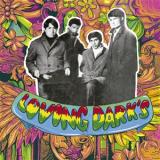
Los Amantes Oscuros" brings together for the first time on vinyl the recordings made between 1968 and 1969 by pioneers of Bolivian garage rock, Loving Darks, originally released on their three EPs. A selection packed with proto-punk covers of hits by the Stones, Cream, Tony Hatch, and more-often surpassing the originals in attitude and power. Their original records are highly sought after and are virtually impossible to find in any condition_ If we had to choose the Latin American country where the rawest and wildest garage and beat records of the '60s were recorded, Bolivia would be one of the clearest contenders. For some strange reason-surely related to the country's extreme conditions, its high altitude, and the influence of huayno-Bolivian recordings are truly unique and fascinating. A multitude of bands sprang up under the influence of groups-mainly British-that dominated the international charts. From the ashes of two of Bolivia's most important seminal bands, Los Black Byrds and The Turtles, two new groups fundamental to the history of Bolivian rock would be born: the mythical Climax and the legendary Loving Darks. "Los Amantes Oscuros" brings together for the first time on vinyl the recordings this band made between 1968 and 1969, originally released across three EPs on the local Lyra label. Their repertoire is packed with covers such as 'El Adivino,' a sped-up reinterpretation of 'Fortune Teller,' or even 'Algo de títere,' a reworking of 'Jumpin' Jack Flash.' They also adapt the classic 'Call Me' by Tony Hatch and 'Toad' by Cream, from whom they borrow the cover of one of their most iconic albums for the artwork of their EP "Complicado." In fact, 'Complicado'-a proto-punk version of the Rolling Stones' 'Complicated' and their signature track-is a perfect example of how a Bolivian band could outdo the British giants in attitude and power. Their importance lies in having paved the way for new sounds, styles, and aesthetics within a still-emerging scene. This compilation is a joint release with the Peruvian label Rey Record and includes an insert with notes on the band's history. First time vinyl reissue.
- 1: Im Jenseits Gibt Es Kein Bier
- 2: Amerikanisches Intro
- 3: Frau Bayersdorf
- 4: Mein Vater War Ein Hurenbock
- 5: So Leb Dein Leben
- 6: Älterer Herr
- 7: Ich Bin Jesus Und Kann Alles
- 8: Außerirdischer, Wo Befindet Sich Dein After?
- 9: Mit 'Nem Zeppelin Durchs Jenseits
- 10: Frauenarzt
- 11: Wenn Das Wasser Der Ruhr
- 12: Deutsche Polizisten
- 13: Ich Töte Meinen Nachbarn Und Verprügel Seine Leiche
- 14: Menschenkatapult
- 15: Überall Blühen Rosen
- 16: Mach Die Titten Frei, Ich Will Wichsen
- 17: Kein Geld Für Bier
- 18: Kommandant Ashtar's Grußworte
- 19: Proletentechno
- 20: Habe Brille
Das dritte Album der Kassierer von 1996 ist wieder auf Vinyl erhältlich, Nachpressung von 500 Stück! "Habe Brille" ist benannt nach einem Stück aus einer Operette von Jacques Offenbach und der Titel deutet schon an, wohin die musikalische Reise geht: Es wird ein weiter Bogen geschlagen von der Klassik (hier brilliert Wölfi mit einem a capella Solo über acht Oktaven), Big Band-Einspielungen bis zu düsteren technoiden Maschinenklängen, wobei das Hauptgewicht selbstverständlich auf solidem Punkrock liegt. Die Kassierer überraschen mit ihren virtuos eingespielten Liedern auch verwöhnte Ohren und strafen all die Lügen, die ihnen musikalische Kompetenz absprechen wollen. Was wie ein Streifzug durch die Musikhistorie wirkt, bringt kurz vor der Jahrtausendwende die Vielfalt und Beliebigkeit aller Stile auf den Punkt und liefert nicht mehr und weniger ein Stück Zeitgeschichte. Dabei bleiben die vielen Ohrwürmer sofort im Gedächtnis und laden zum spontanen mitsingen ein. Das große Plus der Band liegt in ihrer konsequenten Konzentration auf die deutsche Sprache, deren Vielfalt sie tiefer ausschöpfen als jede andere Gruppe der Gegenwart. Die Musik der Kassierer läßt den Hörer niemals kalt, sie packt ihn, entwickelt ihre dämonische Kraft und läßt den Hörer als einen anderen zurück. Hier werden Grenzen der Wirklichkeit verzerrt und verschoben, hier wird die realität neu zusammengezimmert. "Habe Brille" bildet die Größe und die Ungeheuerlichkeit der Welt auf musikalische Weise ab. Die Kassierer sind Visionäre und Propheten des dritten Jahrtausends, sie sind Menschen von übermorgen, die mitten unter uns leben. "Nennt es infantil, nennt es genial, scheißegal, die KASSIERER kümmern sich einen Dreck drum - Hauptsache, es wird reagiert. (...) Musikalisch sind die KASSIERER hier unbestritten in Höchstform: von Swing über Volksmusik bis hin zu ihrem altgewohnten Primitiv-Punk ist alles dabei." - Ox-Fanzine / Ausgabe #24
Belgian minimalist, Dutch-language new wave/synth pop, since 1981! The historic album ‘Jonge Helden’ (1981) brought them instant eternal fame, the single ‘Lekker Westers’ (1983) a Belpop classic & the line-up changed wildly with icons such as Luc Van Acker (Revolting Cocks), Dani Klein (Vaya Con Dios), Willy Willy (The Scabs) or Andrew Chi Claes (Stuff) ...
However, MARCEL VANTHILT (lyrics & music) continues to rock the anarcho-Dadaist-electro-super-tronica scene to this day. Side note: Vanthilt often strayed into TV land (BRT, VPRO, MTV-EUROPE, BBC) and is now a DJ at Radio WILLY with the alternative ‘De M-Show’.
AA! is once again performing frequently in the best clubs (Depot, Casino, Macca) and on major stages (Pukkelpop, Villa Pace, Paulus Oostende). This will also be the case in 2026! This is due to the fresh and spicy new album ‘AA!PKPP’ in collaboration with PARKAPARAPLU.
PARKAPARAPLU: New dark wave duo from Antwerp. With ...
> EMMA ROTSAERT, singer and actress. She plays the lead role in the Ensor-nominated TV drama series ‘How To Kill Your Sister’ (2025). And comes from the same absurd planet as Vanthilt.
> GEERT VANBEVER, veteran of Wizards Of Ooze, Rudy Trouvé Septet, Dead Man Ray, Tuff Guac, among others... worked with Hugh Cornwell (The Stranglers) and Budgie (The Banshees), among others. Together, Emma & Geert also have a Sisters Of Mercy tribute band: Body Electric.
Gems return with another superb signing from the 90’s the mighty Eagles Prey. The release reworks a 1992 underground classic, originally produced by John Kennedy (Apple Records) alongside Lee Grainge (Fat Cat Records) and Paul Coleman (Rocket Science , Rehab/Offshoot , Zoom Records) — a lineage deeply rooted in UK electronic history.
On remix duties, the Circulation Mix delves deep and hypnotic already receiving heavyweight support from Laurent Garnier and John Digweed, underlining its club and tastemaker appeal.
Jim Rivers, a proven serial producer and DJ, adds his signature depth and precision, balancing modern floor functionality with timeless underground sensibility.
Rounding out the package Ranj Kaler continues his standout run, currently omnipresent across production, remixes, and DJ sets, delivering contemporary drive while respecting the original’s DNA.
A release that bridges heritage and forward momentum, built for discerning DJs, specialist radio, and late-night systems.
- A1: Les Masques - Il Faut Tenir (1969)
- A2: Isabelle Aubret - Casa Forte (1971)
- A3: Christianne Legrand - Hlm Et Ciné Roman (1972)
- A4: Jean Constantin - Pas Tant D'chichi Ponpon (1972)
- A5: Billy Nencioli & Baden Powell - Si Rien Ne Va (1969)
- B1-: Marpessa Dawn - Le Petit Cuica (1963)
- B2: Jean-Pierre Sabar - Vai Vai (1974)
- B3: Sophia Loren - De Jour En Jour (1963)
- B4: Isabelle - Jusqu’à La Tombée Du Jour (1969)
- B5: Sylvia Fels - Corto Maltesse (1974)
- C1: Frank Gérard - Comme Une Samba (1972)
- C2: Ann Sorel - La Poupée Des Favellas (1971)
- C3: Charles Level - Un Enfant Café Au Lait (1971)
- C4: Andrea Parisy - Les Mains Qui Font Du Bien (1970)
- C5: Audrey Arno - Quand Jean-Paul Rentrera (1969)
- C6: Aldo Frank - T’as Vu Ce Printemps (1970)
- D1: Christianne Legrand - Cent Mille Poissons Dans Ton Filet (1972)
- D2: Clarinha - Lemenja (1970)
- D3: Hit Parade Des Enfants - Aquarela (1976)
- D4: Jean-Pierre Lang - Tendresse (1965)
- D5: Magalie Noël - Une Énorme Samba (1970)
- D6: Françoise Legrand - La Lune
Ever since the late 1950s bossa-nova revolution, Brazil’s influence on French music has been undeniable. Pierre Barouh, Georges Moustaki and a vast array of lesser known artists, all made the Musica Popular Brasileira (MPB) an axis of promotion at the service of a cool and metaphysical, modern and mixed Brazilian lifestyle. Some were seduced by the poetic languors of the bossa, some were looking for fun, and others just loved the American hybridization of jazz-bossa, jazz-samba.
What is bossa nova? One of its creators, Joao Gilberto said: "Its style, cadence, everything is samba. At the very start, we didn't call it bossa nova, we sang a little samba made up of a single note - Samba de uma nota so .... The discussion around the origins of bossa nova is therefore useless”. It is nevertheless useful to remember that these magnificent Brazilian songs, which the guitarist describes as samba, were shifted and balanced around improbable chords. "I like things that lean, the in-betweens that limp with grace," said Pierre Barrouh, quoting Jean Cocteau.
With emotion, arrangements for violin and supple guitar licks, bossa nova rapidly changed. A transformation that can be heard in the Tchic, tchic, French Bossa Nova 1963-1974 compilation, the result of a cultural reappropriation, which traveled through the United States and supplemented itself in France.
A musical revolution that has remained significant, bossa nova was born in Rio. From 1956 to 1961, Brazil lived through its golden years. In five years, the country had invented its modernist style. Elected president in 1956, Juscelino Kubitschek de Oliveira, an elegant man with a broad forehead, brandished a promising slogan: "Fifty years of progress in five years". He quickly got to work. Not worried about increasing debt, he launched the project for a new federal capital, Brasilia, designed by the communist architect Oscar Niemeyer. Volkswagen opened state-of-the-art factories and created the “fusquinha”, the Beetle. In Rio, the Vespa made its first appearance. The Arpoador Surf Club crew run into the “girl” from Ipanema, Helô Pinheiro - the tanned garota ("chick"), between a flower and mermaid, who at 17 walked by the Veloso bar, where the fiery author and composer, Tom Jobim and Vinicius de Moraes, were getting drunk on whiskey. From then on, bossa symbolized cool.
In 1958, Joao Gilberto recorded Chega de Saudade, which the directors of Philips denied, calling it "music for fagots". The marketing director, who believed in it, secretly pressed 3000 78-inch vinyls and distributed them at schools around Rio, creating a tidal wave.
American jazzmen then took over. In particular, trumpeter Dizzy Gillespie and guitarist Charlie Byrd. In November 1962, the Brazilian Ministry of Foreign Affairs funded a "Bossa-Nova" concert at Carnegie Hall in New York, inviting the genre’s pioneers. Unprepared, the show soon turned to disaster. But the troupe was invited to the White House by Jackie Kennedy. The first lady loved "the new beat" and in particular Maria Ninguem, a song by Carlos Lyra, later covered by Brigitte Bardot.
In Brazil, the 1964 military coup quickly ended this euphoria. The destructive atmosphere that ensued pushed many Brazilian musicians to leave, if not to exile. Thus, Tom Jobim, Sergio Mendes and Joao Gilberto arrived to the United States. In New York, Joao Gilberto met saxophonist Stan Getz. At the time, he was married to the Bahianese Astrud Weinert Gilberto, who had a German father. She had never sung before, but she knew how to speak English. Getz therefore asked her to replace her husband on The Girl From Ipanema. The Getz/Gilberto record with Tom Jobim on piano, was released in March 1964. Phil Ramone, the "pope of pop" was in charge of sound.
Bossa nova arrived in Paris through the classic “guitar-voice” channel (Pierre Barouh, Baden Powell, Moustaki…) But France loved jazz and Paris had already welcomed its American contributors. All these good people were to pass through Saint-Germain-des-Prés. The cabaret l'Escale became the Mecca of Latin American sound where one could find Pierre Barrouh and his friends, such as the Camara Trio, samba-jazz aces, whose only record was published by the Saravah label. With a band strangely called Les Masques (a band that included Nicole Croisille and Pierre Vassiliu, among others), the Camara Trio recorded an interesting Brazilian Sound, including the track Il faut tenir which is present on this tasty compilation of rarities.
Other enlightened musicians can also be found on the compilation, such as Jean-Pierre Sabar (songwriter for Hardy, Auffray, Leforestier ...) and the French pop rock organist Balthazar. In 1975, Sabar recorded Aurinkoinen Musiikkimatka on a Finnish label, which featured the crazy Vai, Vai, included on this record. We are now following the footsteps of Brazilian electronic musicians such as Sergio Mendes, Eumir Deodato or Marcos Valle who created funk and disco sounds on their keyboards and synthesizers. A style that influenced Véronique Sanson when she wrote Jusqu’à la Tombée de la nuit in 1969 for Isabelle de Funès, the niece of Louis and a great friend of Michel Berger - Sanson did end up singing this track on her 1992 Sans Regret record.
The pinnacle of exoticism and travel, Sylvia Fels’ Corto Maltese includes bongos, sea mist and ocean sounds. The title was taken from Jacky Chalard’s concept album written in 1974, Je suis vivant, mais j’ai peur (I am alive, but I am scared), based on Gilbert Deflez’s science fiction novel.
However, bossa nova extended the scope of popularity. "In the 1970s, I was a fan of Sergio Mendes, Getz / Gilberto. I fell in love with this music that I knew because I had been an orchestral singer, " explained Isabelle Aubret, who in 1971 delivered a composite record of covers by the very funky Jorge Ben, Orfeu Negro, Tom Jobim, Vinicius de Morais and Jean Ferrat. "I recorded this album for Meys Records in Paris, far from Brazil, with wonderful musicians, François Raubert, Roland Vincent, Alain Goraguer...". The latter wrote the arrangements for Casa Forte, a very percussive title borrowed from Edu Lobo, one of the initiators of the bossa who spent time in California. "Jazz and bossa came together and produced very rhythmic music. I love singing, it allows me to dream, to have fun, to feel a high on stage, and these songs brought me joy, made me swing, my singing felt like a dance.”
The world tours of French singers and their desire for the tropics, often brought them to Rio with its hills, forests, caipirinhas and tanned bodies. There are surprises though, like this Iemenja (Iemenja is the goddess of the sea in the Afro-Brazilian candomblé religion). Not unlike the composer and musician Jean-Pierre Lang, based in Sao Paulo, Claire Chevalier taught Brazil to Brazil. In 1970, the singer and painter published a 45-inch vinyl, Mon mari et mes amants (My husband and my lovers), under the improbable pseudonym of Clarinha (little Claire). She was then living in Rio, with her husband, Joël Leibovitz, who founded a band called Azimuth, and who owned a record label specialized in "sambas enredos" songs for samba school parades.
For its B side, she asked Pierre Perret to come up with lyrics for a song composed by Carlos Imperial: "Oh goddess of the sea, o goddess Iemenja, I bring a white rose to adorn your long hair ..." . "Perret came to see us, and we had fun, remembers Joël Leibovitz. We wrote Lemenja for fun, we recorded it at the Havaí studio, behind the Central do Brasil the central station. Erlon Chaves, the arranger who worked with Elis Regina, joined us" adding his share of Afro-Brazilian percussions and funky brass to the mix.
There is a common misunderstanding in Franco-Brazilian history: that bossa, admittedly hedonistic, is perceived as funny, even though the poets who wrote the texts are often philosophizing on the human condition. Its French interpreters pull it towards a carnival inspired universe, far removed from its fundamental essence. Thus, Jean Constantin covered the famous Samba da minha terra, an ode to the art of samba written by the classic Bahian composer Dorival Caymmi, renaming it with the enticing title of Pas tant de tchi tchi pompon: "On your pier there is no tchi tchi / when you arch your back, you know everything is alright ”(lyrics by Gérard Calvi). This expedited bossa aims for the absurd, but retains a certain elegance.
Indeed, Jean Constantin was not an idiot, the rather large man had a huge mustache and liked fantasy, (Les pantoufles à papa, Le pacha, inspired by cha-cha-cha-cha, salsa and jazz) but he was also the lyricist of Mon manège à moi interpreted by Edith Piaf, the composer of Mon Truc en plume by Zizi Jeanmaire and the soundtrack of François Truffaut’s 400 Blows. Le Poulpe, published in 1970, from which this bossa is extract, was arranged by Jean-Claude Vannier, an accomplice of Serge Gainsbourg’s Melody Nelson. In short: "There is enough of samba / By looking at the parasol / Because my poor cabeza / Is going to die in the sun".
Even the American actress Marpessa Down, who was at the heart of the bossa nova revolution with her role as Euridyce in Marcel Camus’ film Orfeu Negro, winner of the 1959 Cannes Palme d'or, fed the clichée with Je voudrais parler au petit cuica - "Tell me how you manage to always make people want to dance / It's true, I must admit that I cannot resist your magic" - in consequence, once can hear the cuica, a little drum inherited from the Bantu.
But bossa nova had many angles. Societal, of course, pushing actresses who were symbols of women's liberation like Brigitte Bardot, Jeanne Moreau, or Sophia Loren to engage in the exercise of accelerated bossa. In February of 1963, Sophia Loren made a record in French in Rome, Je ne t'aime plus, featuring the song De jour en jour, a bossa written by two Italians, Armando Trovajoli and Tino Fornai, which was released a little later by Barclay. Bossa accompanied the 1960s, a decade of moral liberation. Ann Sorel, who interpreted La Poupée des favellas, caused a sensation with L’amour à plusieurs, a provocative song written by Frédéric Bottom and Jean-Claude Vannier. As for the actress Andrea Parisy, she displayed her bourgeois cheekiness in Marcel Carné's Les Tricheurs before interpreting Les mains qui font du bien. And Magalie Noël, the friend of Boris Vian, who sung Johnny fais-moi mal, was hired to sing Une énorme Samba, composed by Alain Goraguer (arranger to Gainsbourg, Bobby Lapointe and Jean Ferrat) with lyrics by Frédéric Botton.
But in the end, of what wood is bossa nova made of? The answer is given by Christianne Legrand, daughter of Raymond the conductor, and sister to Michel the composer: "With me, with jà" - jà means "immediately" in Portuguese. In 1972, the singer, an expert in vocal jazz and a member of the Double Six, published Le Brésil de Christianne Legrand. Two songs included on the Tchic Tchic compilation that demonstrate how bossa, jazz, funk, rock, etc. work like a swiss army knife: the music is used to denounce broken systems, or miracles, HLM et ciné roman, Cent mille poissons dans ton filet, two songs from the O Cafona soundtrack, a successful telenovela broadcast, at the time in black and white, on TV Globo. The first was adapted in French by the fighter and friend of the Legrand tribe, Agnès Varda. The second is content with a play on words, jostling them into a summer fun.
Véronique Mortaigne
- 1: Through Darkened Glass
- 2: Very Heavy Greening
- 3: Wet Skull
- 4: The Magus
- 5: Exodus
- 6: Music For Mandrax
- 7: Return To Earth
- 8: The Middle Way
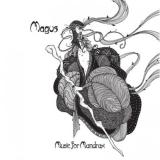
A magus is a wizard…a sorcerer. Magus, the band, is certainly interested in such things (who isn’t), but the name is especially apt due to the band’s approach to alchemy, the blending of rock, gothic, proto metal, and psychedelic styles to create a sound that is, ultimately, unique. Part of that uniqueness comes from the instrumentation. While guitar is often a dominant instrument of the rock oeuvre, the Fender Rhodes generally plays a supportive role. Not so here, where Jessica Weeks’ deft use of the keyboard dovetails with Greg Weeks’ more standard six-string approach. Not standard is the band’s sound. Doomy yet inspirational, dour yet vibrant, the duo’s tunes map sinister realms whose subjects span metaphysical creatures to enigmatic portals. You know, the typical stuff that rubs elbows with a magus.
Formed in late 2024, Magus sprung from a desire by both artists to experiment with darker, heavier sounds. Long enamored of artists like Flower Travelling Band,, Black Sabbath, and Deep Purple, the duo delved deeply into trance like riffs and euphoric solos to create the backbone of what has become their debut album, Music for Mandrax. This thirteenth Language of Stone offering features grounded, metronomic grooves, organic, lugubrious synth lines, and tandem vocals (supplied by both Weekses) that, in total, weave a heavy, trancelike spell sure to entice fans of bands as disparate as Sabbath is to Pink Floyd. Recorded at Weeks’ Hexham Head studio (to analog tape, of course), the band enlisted long-time counterparts Jesse Sparhawk (bass) and Ben McConnell (drums) to round out their sound and lock down the grooves that propel the album.
Mixed by Brian McTear and Amy Morrisey at Miner Street in Philadelphia, the band’s fully realized vision came to fruition, which left only the album art to contemplate. The band, wishing to further the gothic aesthetic of their sound, enlisted fashion designer and artist extraordinaire Hogan McLaughlin (Game of Thrones) to create the starkly beautiful line drawings of the front and back covers. The duo travelled to Salem, MA to complete the package with Courtney Brooke Hall, who shot the moody and evocative photographs that grace the gatefold release’s inner panels.
- A1: El Balajú / Serenata Huasteca
- A2: Mexicana Hermosa
- A3: Veracruz
- B1: Una Vida
- B2: Hasta La Raíz
- B3: Ya No Vivo Por Vivir
- C1: Mi Religión
- C2: Para Qué Sufrir
- C3: Nunca Es Suficiente
- C4: Sembrando Flores
- D1: Lo Que Construimos
- D2: Un Derecho De Nacimiento
- D3: Mi Tierra Veracruzana
VOL. 1 black vinyl[31,51 €]
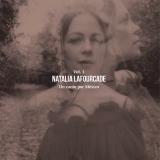
Un Canto por México, Vol. 1 is the eighth studio album by Natalia Lafourcade. The album was part of a project destined for the reconstruction of the Centro de Documentatión del Son Jarocho at Jáltipan de Morelos, a cultural building that was damaged after 2017 Puebla earthquake on 19 September 2017.
The album was a great success and gave Lafourcade three Latin Grammy Awards and the album also won the Best Regional Mexican Music Album at the 63rd Annual Grammy Awards.
Un Canto por México, Vol. 1 is available as a limited edition of 2000 individually numbered copies on yellow vinyl, packaged in a gatefold sleeve, with printed inner sleeves
Un Canto por México, Vol. 2 is Natalia Lafourcade's second album dedicated to the reconstruction of the Centro de Docementación del Son Jarocho, a cultural building that was damaged after the 2017 Puebla earthquake. The album features unique new interpretations of her earlier songs, as well as collaborations with artists such as Caetano Veloso and Silvana Estrada. This album really showcases the enduring strength of her songs, which remain powerful in any form.
The album was very positively received by fans and critics. It even got nominated for multiple Latin Grammy Awards (Album of the Year, Best Engineered Album) and Grammy Awards (Best Regional Mexican Music Album).
Un Canto por México, Vol. 2 is available as a limited edition of 2000 individually numbered copies on smokey marble vinyl, packaged in a gatefold sleeve, with printed inner sleeves.
Coloured vinyl reissue of Jungle Rot's fourth studio album, Fueled By Hate, delivering a solid slab of mid-paced death metal that prioritizes crushing rhythm over fret-shredding histrionics.
- 1: Psycho Killer
- 2: Heaven
- 3: Sugar On My Tounge (Dub)
- 4: Born Under Punches (The Heat Goes On)
- 5: Once In A Lifetime
- 6: I Zimbra
- 7: The Book I Read
- 8: Girlfriend Is Better
- 9: Mind
- 10: Burning Down The House
- 1: Uh-Oh Love Comes To Town
- 2: Seen And Not Seen
- 3: Road To Nowhere
- 4: Born Under (More) Punches (The Heat Goes On)
- 5: Take Me To The River
- 6: And She Was
- 7: This Must Be The Place (Naive Melody)
- 8: Crosseyed And Painless
Vinyl[32,35 €]
Naive Melodies is a bold and visionary tribute to the music of Talking Heads, reinterpreted through the lens of Black musical innovation. Curated by Drew McFadden — the creative mind behind BBE’s acclaimed Modern Love (David Bowie tribute album) — this new collection dives deep into the Afro-diasporic rhythms and experimental soul roots that helped shape Talking Heads’ unmistakable New Wave sound. Inspired by artists like Fela Kuti, Parliament, and Al Green — whose influences loomed large in the band’s rhythmic DNA — Naive Melodies shines a light on the Black music traditions that underpinned their artistry. Far from a conventional tribute, Naive Melodies reframes the band’s catalog through the voices and visions of a new generation of genre-defying artists. These interpretations illuminate the foundational grooves and sonic textures that fueled Talking Heads’ rhythm-forward aesthetic, bringing them full circle with authenticity. “With Naive Melodies, I wanted to spotlight the deep and often overlooked influence of Black music on the sound of Talking Heads, drawing from the rhythmic foundations of Afro-diasporic traditions, soul, gospel, Latin, and spiritual jazz. This project is a chance to reimagine Talking Heads’ legacy through the lens of the very innovations that helped shape it, bringing those influences to the forefront through the voices of today’s most forward-thinking artists.” — Drew McFadden The album features a globally minded lineup, including Liv.e, Bilal, Rogê, Miguel Atwood-Ferguson, Aja Monet, Georgia Anne Muldrow, Theo Croker, Kenny Dope, Rosie Lowe, Pachyman, W.I.T.C.H., and more — spanning Afrobeat, jazz, soul, funk, gospel, dub, electronica, orchestral, and Latin styles. It reflects not only the boundary-pushing ethos of Talking Heads, but also the influence of Black music as a cultural force that helped shape it. This is not just a tribute album — it’s a recontextualization. A cultural conversation. A rhythmic reawakening.
Un Canto por México, Vol. 1 is the eighth studio album by Natalia Lafourcade. The album was part of a project destined for the reconstruction of the Centro de Documentatión del Son Jarocho at Jáltipan de Morelos, a cultural building that was damaged after 2017 Puebla earthquake on 19 September 2017.
The album was a great success and gave Lafourcade three Latin Grammy Awards and the album also won the Best Regional Mexican Music Album at the 63rd Annual Grammy Awards.
Un Canto por México, Vol. 1 is available as a limited edition of 2000 individually numbered copies on yellow vinyl, packaged in a gatefold sleeve, with printed inner sleeves
Returning to Winthorpe after a five-year hiatus, Irish electro producer DeFeKT delivers a heavyweight 12-inch packed with four cuts of his unmistakable electro-techno hybrid sound, reaffirming his status as a true underground craftsman. Opening with the low-slung bass bounce of "It's Down", before sliding into the Detroit-influenced groove of "Your Body Will Learn", from there DeFeKT turns up the tension with the twisted, menacing pulse of Overcome before closing the release in epic fashion with the widescreen synth swagger of "Always"! A confident, statement from an artist firmly back in his element.
Vinyl LP pressing. Bad Brains is the self-titled debut studio album recorded by hardcore punk/reggae band Bad Brains. Recorded in 1981 and released on (then) cassette-only label ROIR on February 5, 1982, many fans refer to it as The Yellow Tape because of it's yellow packaging. Though Bad Brains had recorded the 16 song Black Dots album in 1979 and the 5-song Omega Sessions EP in 1980, the ROIR cassette was the band's first release of anything longer than a single. In coordination with the band, Org Music has overseen the restoration and remastering of the iconic Bad Brains' recordings. The audio was mastered by Dave Gardner at Infrasonic Mastering and pressed at Furnace Record Pressing. This Punk Note edition comes with alternate packaging artwork from designer John Yates (Stealworks). The artwork is a nod to Reid Miles and Francis Wolff, and their amazing work at the Blue Note label
- 1: Gerrymander
- 2: The Rope
- 3: Scapegoat
- 4: Foreign Bodies
- 5: (La Guerra) Inhumane
- 6: Killing For Company
- 7: Icons Of Hypcrisy
- 8: Promise Of Remembrance
- 9: Disciples Anonymous
Pariah’s cult debut re-issued! “The Kindred” brings you pure old school Thrash Metal fury! Satan changed their name to Pariah in 1988-1989. Satan’s evolution for the time being came to an end here with this band, Pariah, in 1988. What Satan were going for with “Suspended Sentence”, could definitely be seen as a hint to the direction they would take as Pariah. That raspy, ill-tempered, aggressive Michael Jackson (indeed) is still here on vocals and these guys really wanted to tear things apart with this album. The main lineup here is entirely the same from Satan and Blind Fury (vocalists aside).
Simply put, one could easily say they took “Suspended Sentence”’s interesting idea of “NWOBHM meets Thrash Metal” and basically focused on being even more aggressive this time. We might be throwing out the obvious here again, but if you are new to Pariah or perhaps Satan, familiarize yourself with the fact that guitarists Russ Tippins and Steve Ramsey are truly an insane duo. For the most part with “The Kindred” their guitar work is pretty thrashy and extremely melodic. Then out of nowhere those classic NWOBHM solo’s, dual harmonies, and majestic melodies come into play all over the place and they manage to make it work incredibly well in between the thrashy antics. The production and mix seems to be an improvement over “Suspended Sentence” and here the guitars tend to have more of a sharper edge, Jackson’s vocals are constantly in the clear and never overpowered by anything else, and overall there is a tougher vibe surrounding this.
Everything here is pretty damn heavy. While Tippins and Ramsey are really out there in a realm of their own, there’s great performances again by Graeme English on bass and Sean Taylor on drums. Overall you’ve got a whole package of virtuous musicians here that really mastered the beauty of balance. All in all “The Kindred” goes all the way with every track being fast and aggressive. Satan and Pariah are all typically made up of the same core members and definitely created some timeless and unique Heavy Metal.
Drei Jahre nach seinem #1-Album „Reparatur“ meldet sich Josh. mit seinem vierten Studioalbum zurück. Auf „Wer singt dann Lieder für dich“ beweist der Wiener Singer-Songwriter und fünffache Amadeus-Preisträger erneut, wie er aus persönlichen Geschichten packende Popmusik schafft – mal leicht, mal melancholisch, immer mit einem Gespür für Timing, Humor und Gefühl. Seit seiner Kindheit spielt Josh. klassische Gitarre und war in Schulbands aktiv. Später studierte er sieben Jahre lang Jazz und Popularmusik, brach das Studium jedoch aus wirtschaftlichen Gründen ab – seine Liebe zur Musik blieb davon unberührt. Heute spiegelt sich diese Erfahrung in einem Sound, der organisch, warm und zugleich überraschend facettenreich ist. Für „Wer singt dann Lieder für dich“ hat Josh. so viele Instrumente wie nie zuvor selbst eingespielt – von Gitarre über Bass bis zur Pedal-Steel – und damit jedem Song eine unmittelbare Nähe verliehen. „Es war das bisher entspannteste und lustigste, gleichzeitig aber auch das arbeitsintensivste Album“, sagt er über die Aufnahmen, die erneut in kongenialer Zusammenarbeit mit Produzent Florian Koch entstanden sind. Seit „Teilzeitromantik“ (2021) ist Koch stetiger kreativer Partner, musikalischer Direktor und Schlagzeuger der Band – eine bewährte Konstellation, die für klare Strukturen und kreative Freiheit sorgt. „Ich glaube, dass es ein Album ist, das wieder die Leichtigkeit des Nonsens gefunden hat“, so Josh., „Momente, in denen man lachen, feiern oder einfach man selbst sein kann, treffen auf nachdenkliche, melancholische Songs.“ Es ist die Momentaufnahme eines 39-Jährigen, der reflektiert – und dabei stets offen für das Absurde und Komische in den kleinen Dingen bleibt.
„Ich habe mir beim Schreiben der Songs keine Grenzen gesetzt“, sagt Josh. „Das spiegelt meine Persönlichkeit ziemlich gut wider: Ich bin jemand, der gern einen Schmäh macht, wie wir hier in Wien sagen – aber gleichzeitig auch immer wieder kämpfen muss und viel über Gefühle, Schmerz und all das nachdenkt.“ Das zeigt sich auf „Wer singt dann Lieder für dich“ in jedem Detail, sei es bei humorvollen Beobachtungen, nostalgischen Rückblicken oder in Songs über das Älterwerden und die kleinen Lebenskrisen („Was hat uns bloß so müde gemacht?“). Nach einem Livejahr 2025, das eine Tour durch Österreich und Deutschland, einen Headliner-Gig auf dem Donauinselfest vor 100.000 Fans sowie eine Support-Show für Robbie Williams umfasste, hat „Austropop-Darling“ (TZ) Josh. in diesem Jahr wieder viel vor: Im April und Mai ist er auf komplett ausverkaufter Solotour in Österreich zu erleben, im Anschluss folgen Konzerte in Deutschland und der Schweiz. Im Sommer geht es gemeinsam mit Rian auf Open-Air-Tour durch Österreich.
- 1: Calm Before The Storm
- 2: Hawkshaw
- 3: The 1
- 4: Gehenna
- 5: The Contract
- 6: Fiend
- 7: Storyline
The re-issue of Truckfighters' album V marks a fresh celebration of this iconic record, It has been sold out for years but finally we're offering fans a chance to revisit the band's signature desert rock sound and collectible packaging. Originally released in 2010, V is praised for its heavy riffs, hypnotic grooves, and raw energy, solidifying Truckfighters' reputation in the stoner rock scene. The re-issue allows both longtime fans and new listeners to experience the album in a renewed format, highlighting its enduring influence and the band's distinctive style.
- 1: Hold It
- 2: Life Slime
- 3: Toxic Spillage
- 4: Battery Pack
- 5: Another Way
- 6: Sorry Eyes
- 7: Infinity Ooze
- 8: Crystal Cave
- 9: Torch Song
- 10: Werewolf Ending
New album from Pictish Trail, AKA Johnny Lynch, known for his wildly inventive electro-acoustic psych-pop. Life Slime is the sixth full-length album by Pictish Trail (AKA Johnny Lynch) - a strange, tender, psychedelic electro-pop record shaped by transformation, exhaustion, hope, guilt, and renewal. Written at home on the Isle of Eigg and recorded at Mike Lindsay's studio down in Margate (Tunng / LUMP), the album follows 2022's critically acclaimed Island Family, further refining Lynch's world of lo-fi electronics, warped pop melodies, baggy psych rhythms and emotionally direct songwriting. It's a record that balances woozy synth-pop, motorik propulsion and intimate acoustic songwriting, all infused with the emotional messiness that gives the album its title. Across the album's singles - the guilt-stained psych-pop ballad 'Hold It', the life-affirming shimmer of 'Infinity Ooze', the late-night confession of 'Torch Song', the expansive eight-minute centrepiece 'Another Way', and the cinematic closer 'Werewolf Ending' - Life Slime charts a journey from emotional fracture to uneasy release. 'Sorry Eyes' brings a punchy electro-pop strut with a sharp emotional edge, 'Crystal Cave' drifts through crystalline guitars and shoegaze haze into transformation, and the title track 'Life Slime' moves with a slow, weary swagger toward bittersweet acceptance. Together, these tracks form a cohesive album statement about surrender, resistance, change and renewal. "Wonderfully weird pop"- Brooklyn Vegan For fans of Hot Chip, The Flaming Lips, Liars, Mercury Rev, Beck, John Grant, Empire of the Sun, Grandaddy. Colour vinyl and digisleeve CD