
Search:d product

B. Chamber (Stratum A), by B. Close, is the first full length solo release by Los Angeles-based multi-disciplinary artist Brian Close. The first of two volumes assembled from some thirteen hours of music produced by Close while residing in Connecticut from 2021-2025, B. Chamber (Stratum A) offers a vivid, fractal afterimage of a prolific, specific time and space in the artist’s oeuvre.
After leaving New York City early in the pandemic to a farmhouse in the countryside with dedicated spaces for multiple sound stations, Close developed an intensive daily practice of melding with the machines. The vast, pastoral backdrop of rural CT provided inspiration and contrast for his ongoing investigations into dynamic, poly-rhythmic electronic music. The sounds on B. Chamber (Stratum A) range from the machine-modeling of acoustic instruments and natural environments to the utterly unhuman, spinning on the axis between crystalline, pointillist precision and shifty blown-cone distortion. Close’s atypical interpretations of rhythm, noise and other undefined musics land in a hybrid zone of their own.
Throughout B. Chamber (Stratum A), Close’s productions are in perpetual motion. Foxtrot’s shifting hi-hats and disembodied voices rise like cicadas propelled by glitching machines and tangled rhythms, Many Drive draws momentum from dubby stabs and twinkling atmospherics. Character Community’s nimble, drifting snares and erratic static are uplifted by swelling synths, and Mpan’s modular mining forgoes drums but is no less propulsive for it. Acre Voices’ seasick pads and deft drum patterns tap an energizing nerve, and closer 5D Bow’s ambush of pummeling machine gun fire spirals into the tryptamine palace and emerges completely rinsed and refreshed.
Equally powerful in the club as in the outdoors, in the headphones eyes closed or on the move, B. Chamber (Stratum A) grants an immersive temporary trip on B. Close’s unique wavelength, with Stratum B to complete the picture in the summer of 2026.
RIYL - Mark Fell, muay thai, Vladislav Delay, gaming, Errorsmith, modular synthesizer.
+++++
Brian Close (b. 1979, NYC) uses the cold logic of mathematics to trigger states of total sensory displacement. Close co-founded multiple AV studios to explore the "hypnotic"—a ritualistic practice of motional-graphism and improvisational sound. His work is a study in synesthesia and the architecture of trance, using geometric precision to dissolve the sense of time. It is a digital-visceral experience built on heavy logic, designed for large-scale immersion and timelessness.
Close is one half of Georgia who have released records on Palto Flats, Firecracker Recordings, Meakusma, Youth, OOH-Sounds and EM Records, and have a long-running residency on NTS.
B. Chamber was written, produced and mixed by Brian Close.
Mastered by Rashad Becker.
Artwork by Brian Close.
8
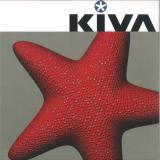
Kiva, the first and only album from Royce Doherty and Paul Mac’s duo project of the same name, is a sparkling gem hiding in plain sight within the Australian musical canon. Originally released in 1997 by id/Mercury, Kiva offers up a collection of timeless queer pop songs draped in dreamy ambient, downbeat and dub sensibilities. The music is the product of a serendipitous meeting of minds between two young music obsessives who crossed paths in Melbourne in mid ‘90s. It’s also a perfect evocation of the futuristic techno-utopian impulses that supercharged the global electronica counterculture during the race towards the 21st century. “I never had these big diva plans or anything like that,” Royce reflects. “It just sort of evolved that way.”
Nearly three decades after the fact, Royce and Paul remember Kiva as a golden moment of creative synergy. “When I listen back to this album now, it’s got such a vibe and feel that’s really its own,” Paul enthused. “There's so much of our version of dub on this record. It’s beautiful hearing Royce's core song ideas stretched out to eight minutes of trippy, acid kind of moments set over slow breakbeats and stuff. It felt so fresh being able to have this elastic sound, pull songs apart and stretch them into space.”
Originally released in 1997, this CD has been gracing select chill-out rooms, and queer afters-sessions ever since. With a loving remaster by Mikey Young, this infrequent discogs pop-up is now yours to own on vinyl for eternity (born). This is a Vinyl Only Release
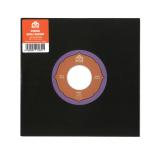
ZHERAV unleashes hypnotic Middle Eastern grooves on NAJA / BAZAAR 45 for Batov’s highly collectable 45 series.
New Zealand-based producer ZHERAV announces his debut release, NAJA / BAZAAR, a double single and 45 on Batov’s Middle Eastern Grooves series. The record fuses psychedelic rock, hypnotic rhythms, and electronic production influences, creating a sound that moves between swung grooves and cinematic, reverb-soaked textures.
ZHERAV draws from his background in house and techno, layering live guitar, bass, and synths over programmed drums. “I had a production template for house music on Ableton” he explains, “and I thought about how to switch to this Middle Eastern sound using the same format”. Most of ZHERAV’s tracks developed through improvisation - starting with programmed drums, then experimenting around scales on instruments until something works. ZHERAV has already received support from independent radio in Australia and New Zealand, and encouragement from international artists like Ko Shin Moon.
Both tracks explore Middle Eastern scales, bringing a distinct flavour to the grooves, while maintaining ZHERAV’s signature hypnotic layered sound. ZHERAV had something in mind related to snakes and their charmers when creating the A-side, NAJA (“Indian Cobra”). An ominous bassline loops repeatedly over snapping drums and percussion, whilst ZHERAV improvises guitar riffs and effects over the top.
13
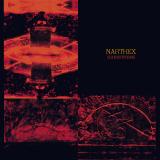
Narthex means railed-off western portico or ante-nave in earty Christian churches for women, penitents and catechumens.
Narthex is also a trio featuring (at the beginning) Daniel Denis (Universe Zero, Art Zoyd), Alain Neffe (Pseudocode, Human Flesh, Bene Gesserit) and Nicolas de Villemarqué (Nuwage Music). They had a very different musical background, mostly electric-electronic rock, and decided to work in the field of acoustic music recorded live (two microphones + portable DAT) in churches of their area. After several recording sessions, Nicolas de Villemarqué decides to leave the group. ln order to complete the trio, Daniel Denis and Alain Neffe ask the participation of some of their friends. Anna Homler, Michel Berckmans and Daniel Malempré have accepted the challenge and succeed to fit into their musical universe.
The instruments Church organ, harmonium, sitar, saxophone, oboe, bassoon, zither, valiha, senzas, tarang, voice, percussions, metal clarinet, classical guitar, mew's harp, ongolok, violin, dulcimer, mouth organ, etc.
The music Often dark, sometimes repetitive or experimental, sometimes rhythmical and exotic, always based on emotion inducted by the sound. One could define it as dark age music (as opposite to new age music), a sort of minimal come back to the roots and purity of acoustic sound without the cultural background linked to the 'academic' use of some instruments (for example African senzas are transformed and tuned to sound like Indonesian instruments, sitar or harmonium are used as rhythmical instruments, vahilla is played with a bow).
The places Churches located in an area of 20 kms in the region where Daniel Denis and Alain Neffe live for years and where they feel at home (and feel the vibrations. Every church, place emotionally loaded, has its own specific resonance and sound structure. Every church gave to the musicians a particular inspiration and fill the sound of the instruments with a natural reverberation/echo. The place but also the moment is important. They had the privilege to be allowed to record in the Ecaussines church at night lightened only by candles. lt was one of their most productive recording sessions.

10
A mutant beat manifesto from Miami luminaries Jonathan Trujillo (Jonny from Space) and Pablo Arrangoiz (El Gusano, DJ Fitness, Baüzer Vep), Crespi Drum Syndicate’s Colada Talk follows the duo’s debut on Sonido Isla with a freshly freaked collection of percussive oddities. Rooted in foundational clave rhythms and avant-garde experimentation, Crespi Drum Syndicate emerges from the amphibious underbelly of Miami’s Latin-infused club scene with their singular electro-acoustic vision.
Extensive live recording sessions, free improvisation, and a ritualistic studio practice
— countless hours spent twisting and rearranging sounds from found objects and Buchla modular systems — coalesce into new rhythmic forms. Atonal saxophone, bass clarinet, and slide whistle further expand upon Trujillo and Arrangoiz’s ever-evolving sonic palette, while NYC’s AceMo lends a hand on the heavily syncopated “Siu,” and closer “Boubow” might be the duo’s most hook-driven production to date with its mangled pop vocal and lewd drum-line bounce.
Landing somewhere between Steve Reich’s polyrhythmic “Six Marimbas,” Moebius & Plank’s industrial Krautrock sessions, and Ricardo Villalobos’ hypnotic techno minimalism, Colada Talk delivers on a world of subtropical rhythmic futurism and experimental body music that’s as heady as it is culo-shaking.

- A1: Busy Girl / Prod. A.g.o
- A2: Dreamin' (Feat. Sumin (韓国),☆Taku Takahashi(M-Flo)) / Prod.☆Taku Takahashi(M-Flo)
- A3: Memories / Prod. 80Kidz
- A4: Old Friends (Feat. Sirup, Shin Sakiura) / Prod. Shin Sakiura
- A5: Moonlight Cruising (Feat. Kirinji) / Prod. Slom (韓国)
- A6: Sweet Vacation / Prod. Sam Is Ohm
- A7: Life Is Beautiful (Feat. Ariwa (Asound)) / Prod. Chaki Zulu
- B1: Life Is Beautiful (Feat. Ariwa) - Remix
- B2: U - Remix
- B3: Moonlight Cruising (Feat. Kirinji) - Grooveman Spot Remix
- B4: Busy Girl - Remix
- B5: Orange (Feat. Peavis) - Remix
- B6: Memories - Osamu Fukuzawa Remix
YonYon's commemorative 1st album ‘Grace’ shines with new brilliance through analog sound-the long-awaited LP release!
This album features 14 tracks in total, including 7 popular songs from the album “Grace”, plus 7 remixes.
Guest artists include KIRINJI, SIRUP, South Korea's leading R&B singer-songwriter/producer SUMIN, PEAVIS, and other artists resonating across generations
and styles. Sound production features top-tier creators active globally, including ☆Taku Takahashi (m-flo), Chaki Zulu, grooveman Spot, and South Korea's
rising producer Slom. The album effortlessly crosses genre and language boundaries, weaving diverse musical elements into a rich soundscape.

- Side A. Gypsy Song
- Side B. Never Land
After traveling through Mexico, Miami, the Bahamas, and New Orleans, Nishioka recorded his fourth album South American Journey in Los Angeles,
released in 1979. From this album, two of his most celebrated tracks—“GYPSY SONG”, a fan favorite with numerous cover versions, and “NEVER LAND”,
featuring the distinctive sound of steel pans and a Japanese reggae vibe are now being pressed on 7-inch vinyl for the first time in a limited edition!
The recording features members of the So What Review band, including Junshi Yamagishi (guitar) and Osamu Ishida (guitar), along with renowned steel pan
player Robert Greenidge, known for collaborations with Van Dyke Parks and Taj Mahal.
(FLATT THE LAIDBACK)
Kyozo Nishioka Profile
(Born May 7, 1948 – Died April 3, 1999)
Singer songwriter from the Shima Peninsula in Mie Prefecture, affectionately nicknamed “Zo-san”.
After enrolling at Kinki University and moving to Osaka, Nishioka became a regular at the folk cafe Dylan in Namba, opened in August 1969 by Masaji Otsuka
and Yoko Ishimura. Dylan was a gathering spot for folk music enthusiasts from all over Japan.
Nishioka formed the folk group The Dylan with Masaji Otsuka and You Nagai, performing at folk camps and the Nakatsugawa Folk Jamboree. In 1971, Nishioka
left the group, and Otsuka and Nagai continued as The Dylan II. Nishioka wrote and composed the song “Puka Puka” under the pen name Zokyozo, which became
one of his signature works. The song was first released in July 1971 as the B-side of The Dylan II’s single “Otoko rashii tte Wakarukai” on URC Records.
Nishioka began his solo career, releasing his debut album “Dylan nite” in July 1972, produced by Kinji Yoshino on Bellwood Records, which included his own
version of “Puka Puka”. In September 1973, he appeared at the farewell concert of Happy End titled CITY – LAST TIME AROUND at Bunkyo Public Hall in Tokyo.
His 1974 album “Machiyuki Murayuki” was produced by Haruomi Hosono, and his 1975 album “Rokka My Baby” featured support from Shigeru Suzuki’s band
HUCKLE BACK. Nishioka recorded three albums under Hosono’s production, deepening their friendship.
Together with his wife and lyricist KURO, Nishioka wrote songs for artists such as Eikichi Yazawa. The couple traveled the world, recording overseas albums such
as “Nanbei Ryoko” (1977), “Yoh-Sollo” (1979), and “New York to Jamaica” (1981), incorporating reggae, calypso, and other global sounds. In the 1980s, he released
works under the duo name KYOZO & BUN with Yoshifumi Okajima, and in the 1990s returned to solo projects with albums like “START” (1993) and “Farewell
Song” (1997).
After KURO’s passing in 1997, Nishioka continued his musical activities until his own death in 1999 at the age of 50. His music transcended the boundaries of folk,
blending jazz and tropical elements to create a unique world view, leaving an indelible mark on Japanese music history.

Green Arrow Sound System is the DUB sound system from Paris, organising underground parties all around the city and the country. Home-made SUB is the rule here.
The label is directly from DUB DIGGLER, the manager of this project.
StayReo, the official Graphist of Green Arrow, is a major StreetArtist from Montreuil/Paris, as well as a great DJ and party provider
This production is a true Underground Project from Paris defending Street & Sound System Cultures !

- Phonè
- Turenas
- Stria
- Sabelithe
Dr. John Chowning (b. 1934) is a pioneering computer musician, composer and professor who, in 1967, discovered the FM synthesis algorithm. This breakthrough in electronic music allowed for simple, yet rich timbres described as sounding "real." With this discovery, Chowning composed singular, dramatic electronic music and changed the timbre of music forever.
Chowning utilized the potential of computers to synthesize sounds according to programmed instructions. The composer's use of his own FM algorithms, digital synthesis with computers and the new compositional concepts offered by a programmable musical structure combine to create some of the most original and unique electronic music ever created.
The compositions on this LP were realized between 1966 and 1981 and the music on this LP, with the exception of Stria, was originally released on CD in Germany (Wergo, 1988). The version of Stria included here contains a section not included on the Wergo CD. Thus, this version of Stria is complete. This is the first time these purely digital recordings have been released on an analog medium. The original dynamics of these groundbreaking compositions have been preserved on this LP. As a result, listeners are advised to increase volume with caution.
In 1975, John Chowning founded the CCRMA - Center For Computer Research In Music and Acoustics at Stanford University. Through Stanford, Chowning licensed his groundbreaking algorithms to Yamaha resulting in numerous new instruments including the iconic DX series of keyboards. In 1972, his composition Tureens which is included on this LP, was the first to create the illusion of continuous 360-degree space using four speakers.
Technical Notes:
All pieces on this LP are originally quadrophonic. The illusion of moving sound sources is thus projected from the surrounding environment given by four loud-speakers on the stereo-basis.
STRIA was composed using Chowning’s own program to compile the musical structure into note-lists and MUSIC 10 (by D. Poole/Tovar) to generate the sounds in software-synthesis. The original quadrophonic version utilized 12 bits, two different sampling rates being used to accommodate the enormous amount of data on the magnetic disc-packs available at that time. The original sound-data was processed by sampling-rate conversion and digital mixes to achieve the stereo version presented on this LP.
SABELITH and TURENAS were synthesized originally using Smiths’ SCORE and MUSIC 10. However, their format was changed from direct sound-samples to a command stream for a special purpose computer, the System Concepts Digital Synthesizer, designed by Peter Samson, one of the first large-scale digital synthesizers for real-time sound processing - one was designed for CCRMA in the late seventies. For this recording the sounds were recorded directly from the synthesizer computing the samples in real-time.
PHONÈ was realized with the System Concepts Digital Synthesizer using again Chowning’s own program to create the note list.
The master tape of this LP was made directly from the computer system at CCRMA which generated and stored the sound data in digital format. No analog recording was involved at any stage of the production and editing process.


- 1: Golden
- 2: Locks
- 3: Medusa
- 4: Roma
- 5: Katyusha
- 6: Runaway
- 7: Saigon
- 8: Brokenworld
- 9: Zoo Story
- 10: Trojan Stalks
- 11: Floods
- 12: Polen
In collaboration with EIoper Music, Impressed is proud to press the 10-Year Anniversary Edition of Szymon's debut album, Tigersapp, on limited edition vinyl.
Szymon was a multi-instrumentalist from Newcastle, Australia, with a deep love for jazz and production, building rich sonic worlds in his bedroom studio. Tigersapp stands as his creative legacy—a beautifully curated and emotionally layered collection that blends influences from folk, ambient, electronic, and indie pop.
These songs were mostly recorded in 2008–2009 in his home studio. After his death, his family and supporters enlisted producers like Rusty Santos (Animal Collective, Grizzly Bear) and Ian Pritchett (Angus & Julia Stone) to complete the mixes.
Tigersapp has earned both public and critical recognition in Australia and beyond. It debuted at #21 on the ARIA Albums Chart, and earned a nomination for the 2015 ARIA Award for Best Adult Contemporary Album.

- 1: Baptized In Gold
- 2: Paralyze
- 3: Love You Want
- 4: Next To You
- 5: All The (Lines)
- 6: Only One I Know
- 7: Perfect World
- 8: It Comes In Waves
- 9: Can't Come Down
- 10: Blind / Enabilizer
Enabilizer is the second full-length album from The Albinos. It’s a focused and emotionally direct record that examines the space between belief and doubt—what it means to hold on to ideals in a world that often doesn’t reflect them. The songs explore themes of connection, disillusionment, and the fragile narratives people use to make sense of things. Sonically, the album moves fluidly between stripped-down garage rock and layered psychedelic arrangements. Built on live, organic instrumentation and a minimal production approach, the sound is raw but intentional—combining driving rhythms, textured guitars, and unpolished vocal performances to create something that feels both grounded and expansive. Formed in Houston, The Albinos have spent the past few years refining their sound, drawing on psych and garage traditions while keeping their songwriting emotionally grounded. Enabilizer marks a step forward for the band—more confident, more cohesive, and more willing to lean into discomfort in search of something honest.

- 1: Tinkerbell
- 2: Lights On, Nobody Home
- 3: Coping
- 4: Astro Boy/Ochanomizu
- 5: Duuude
- 6: Friends Of Fire
- 7: A Chance Of A Lifetime
- 8: Turn Of Luck
also available
Turquoise/Black Smoke Vinyl[24,33 €]
KALEIDOBOLT’s fifth album is pungent to the ears – KARAKUCHI out in March Karakuchi is one record you can judge by its cover. The first time Kaleidobolt’s faces have adorned an LP, they have been fused into a torpedoing biomechanical vehicle. Echoing The Birthday Party’s Junkyard or Motörhead’s Orgasmatron (…on acid?!), the illustration epitomises perfectly Kaleidobolt’s agenda of “hyperkinetic rock”. Their feverish, psych-prog sound is full of motion. It jerks around at different speeds, threatening to spin out of control and crash into flames at any given moment. What’s more, it isn’t taken too seriously. This is heavy and intricate music, yes. But as bassist and co-singer Marco Menestrina puts it, the Kaleidobolt attitude is “an ugly smirk more than an angry face with a fist.” On their fifth album since forming in 2014, the Helsinki-based outfit lean into their strengths as a formidable power trio. With their previous two records, 2019’s Bitter and 2022’s This One Simple Trick, they had thrown everything at their disposal into the recording with no expense spared on overdubs, effects and kitchen sinks. Produced again by Niko Lehdontie (Oranssi Pazuzu), Karakuchi comes from tightly rehearsed, live-in-the-studio takes. Kaleidobolt realise that greater sparsity can be a strength, and they’ve allowed their instruments extra space to breathe. It makes for their earthiest, purest and perhaps most authentic record to date. Karakuchi’s exuberant style emerges from the individual members’ contrasting listening habits. These span classic prog, Japanese city pop, noise rock, post-hardcore and historical podcasts. One record they can all agree is a masterpiece, the centre of the Venn diagram where all three members meet, is King Crimson’s Red. As for their new album’s title, that’s as suitable as the cover art. “Karakuchi” is the slogan of the Japanese beer brand Asahi Super Dry. Translated literally, this means “pungent to the mouth”. As drinkers of that product, Kaleidobolt acknowledge its parallels to their songs. “It’s very intense, right at the front, like at the first bite,” explains Menestrina. “And then it leaves your mouth feeling refreshed. The flavour doesn’t linger in your mouth, basically. It has a quick, hard finish. With a bit of a stretch, we thought that that could also be said of our music.” Karakuchi is Kaleidobolt at their hardest, fastest, tightest and super-driest. Pungent to the ears. -JR Moores, November 2025

- 1: Tinkerbell
- 2: Lights On, Nobody Home
- 3: Coping
- 4: Astro Boy/Ochanomizu
- 5: Duuude
- 6: Friends Of Fire
- 7: A Chance Of A Lifetime
- 8: Turn Of Luck
also available
Black Vinyl[23,49 €]
KALEIDOBOLT’s fifth album is pungent to the ears – KARAKUCHI out in March Karakuchi is one record you can judge by its cover. The first time Kaleidobolt’s faces have adorned an LP, they have been fused into a torpedoing biomechanical vehicle. Echoing The Birthday Party’s Junkyard or Motörhead’s Orgasmatron (…on acid?!), the illustration epitomises perfectly Kaleidobolt’s agenda of “hyperkinetic rock”. Their feverish, psych-prog sound is full of motion. It jerks around at different speeds, threatening to spin out of control and crash into flames at any given moment. What’s more, it isn’t taken too seriously. This is heavy and intricate music, yes. But as bassist and co-singer Marco Menestrina puts it, the Kaleidobolt attitude is “an ugly smirk more than an angry face with a fist.” On their fifth album since forming in 2014, the Helsinki-based outfit lean into their strengths as a formidable power trio. With their previous two records, 2019’s Bitter and 2022’s This One Simple Trick, they had thrown everything at their disposal into the recording with no expense spared on overdubs, effects and kitchen sinks. Produced again by Niko Lehdontie (Oranssi Pazuzu), Karakuchi comes from tightly rehearsed, live-in-the-studio takes. Kaleidobolt realise that greater sparsity can be a strength, and they’ve allowed their instruments extra space to breathe. It makes for their earthiest, purest and perhaps most authentic record to date. Karakuchi’s exuberant style emerges from the individual members’ contrasting listening habits. These span classic prog, Japanese city pop, noise rock, post-hardcore and historical podcasts. One record they can all agree is a masterpiece, the centre of the Venn diagram where all three members meet, is King Crimson’s Red. As for their new album’s title, that’s as suitable as the cover art. “Karakuchi” is the slogan of the Japanese beer brand Asahi Super Dry. Translated literally, this means “pungent to the mouth”. As drinkers of that product, Kaleidobolt acknowledge its parallels to their songs. “It’s very intense, right at the front, like at the first bite,” explains Menestrina. “And then it leaves your mouth feeling refreshed. The flavour doesn’t linger in your mouth, basically. It has a quick, hard finish. With a bit of a stretch, we thought that that could also be said of our music.” Karakuchi is Kaleidobolt at their hardest, fastest, tightest and super-driest. Pungent to the ears. -JR Moores, November 2025

11
The album has been a labour of love spanning nearly a decade with the origins of KAYTRAMINÉ trace back to 2014, when Aminé unveiled "Not At All," an unofficial remix of KAYTRANADA's 2013 track "At All." Impressed by Aminé's rendition, KAYTRANADA extended a hand to collaborate officially, leading to his production contributions on three songs from Aminé's 2015 mixtape, Calling Brio. The upcoming album showcases the pair reigniting their innate chemistry, further solidifying their musical bond.

- 1: I Gotta Slow Down
- 2: I Cherish Every Moment
- 3: I Never Got Real Answers
- 4: I Accidentally Let The Devil In (Terlude)
- 5: I Called Your Phone
- 6: Maniya Wants To Help (Skit)
- 7: I’ve Been Skipping Therapy (Ft. Spottie Dolo)
- 8: I Prolly Got Time
- 9: I Don’t Know Who To Trust (Ft. Shooting Niro)
- 10: I Saw My Dawg Die
- 11: I Fall Back To Sleep (Interlude)
- 12: What Am I Running From?
- 13: I Couldn’t Find The Sun Today (Ft. Scotty Banx)
- 14: I Looked Up And Something Shined
I don't wanna die (Pt. 1 & 2) is John Wells raw portrait of two years caught between a stalled music deal, broken trust, and the fight to stay alive. Set against fog and grit in Baltimore, the EP blends soul-baring lyricism with shifting, dreamlike production — confronting self-doubt, past mistakes, and the stubborn will to survive.

- 01: Architettura Industriale
- 02: Fabbrica - I Versione
- 03: Fabbrica - Ii Versione
- 04: Termomeccanica
- 05: Dinamica
- 06: Raffineria
- 07: Dinamica - Ii Versione
- 08: Meccanizzazione Agraria
- 09: Industria Metallurgica
- 10: Chimica Industriale
First-ever official reissue - 180g black vinyl edition
In the late 1960s, a distinctive musical movement began to flourish in Italy—while also gaining momentum abroad, particularly in France and the United Kingdom. Known as library music (or sonorization), this genre consisted of genuine music libraries created specifically to accompany audiovisual productions such as television programs, commercials, documentaries, and films.
Produced under conditions of complete artistic freedom, these recordings often defy clear categorization, as they are not tied to any single musical genre. This creative independence allowed composers—frequently working in total anonymity—to experiment boldly, crafting avant-garde and forward-thinking sounds that, in many cases, anticipated musical trends that would only become widespread years later.
Oronzo De Filippiis known not only for his contributions to library music, but also for being part of the projectThe Braen's MachinealongsideAlessandro Alessandroni, one of the most significant figures in this field.
Meccanizzazione is a fully instrumental album—as is typical of the genre—literally dominated by the distinctive sound of the harpsichord. The record essentially alternates between two main compositional approaches: on one hand, more accessible and "friendly" tracks with a refined jazz-lounge and bossa nova flavor; on the other, darker and more hypnotic pieces, whose repetitive structures vividly evoke the rhythms and mechanical pulse of the industrial world.

Vintage Pleasure Boutique once again dives deep into the vast catalogue of super-productions by Roberto Zanetti, better known as Robyx and Savage. This time, the journey takes us back to 1984, unearthing a true gem created at the suggestion of Marco Bresciani, Italian DJ and producer, and the same creative force involved with Radiorama. Zanetti delivered flawlessly. He transformed the elegant, high-grade British synth-pop original by OMD into a first-class Italo disco weapon, infused with that unmistakable sweet, melodic touch and fat kick that blended perfectly in clubs alongside genre-defining tracks of the era. “Souvenir” by Saxophone quickly became a classic, a staple of the sound and a cornerstone in countless old-school DJ record bags.
Today, original copies are scarce, highly sought after, and often prohibitively expensive on the secondary market. This reissue is both a tribute to long-time fans of the record and a nod to devotees of Robyx’s unmistakable sound. The vinyl also features a special remix of “Souvenir”, sonically aligned with Savage classics such as “Radio,” “Fugitive,” “Only You,” and “Don’t Cry Tonight.”
A true feast for lovers of this timeless Italo disco aesthetic, equal parts nostalgia, elegance and dancefloor power.

- A1: Watch What Happens
- A2: The Best Is Yet To Come
- A3: It Amazes Me
- A4: Firefly
- A5: The Boulevard Of Broken Dreams
- A6: Because Of You
- B1: It Don't Mean A Thing (If It Ain’t Got That Swing)
- B2: Waltz For Debby
- B3: Young And Foolish
- B4: When In Rome
- B5: (I Left My Heart) In San Francisco
- B6: Shakin’ The Blues Away
John Pizzarelli returns with one of his finest albums yet, Dear Mr. Bennett—a heartfelt tribute to the legendary Tony Bennett, whom he knew personally. The cover even features artwork drawn by Mr. Bennett himself. A celebrated name in jazz, Pizzarelli has collaborated with music’s biggest stars and toured for years with Frank Sinatra. This release follows his acclaimed tributes Dear Mr. Sinatra, Dear Mr. McCartney, and Dear Mr. Cole.
This will be a two-project series based on the music of Tony Bennett. John is a well-known artist in the Jazz space and a staple in the NY scene. His father was a renowned studio musician and go-to person for years. Tony Bennett came to a show of John's and sketched a picture of him performing on a napkin during the show. That picture will serve as the cover of the album.
