
quête:d saw

Back in stock due to popular demand, the 12th release in our signature Brazil 45’s series saw a reissue of two certified classics from Brazil’s rich musical tapestry.
On the A side, Brazilian Samba luminary Elza Soares, covers Jorge Ben’s classic ‘Mas Que Nada’. Originally featured on her brilliant 1970 Sambas & Mais Sambas LP on Odeon, it’s tougher drums, punchy piano and Elza’s stunning vocal tones make this a perfect dancefloor heater. With over 34 albums to her name in a career that spanned 60 years, Elza is a certified legend of Brazilian music.
Little is known about the artist responsible for the B side track, Elizabeth. Nicknamed ‘Gatinha do Mato’ (loosely translated as ‘Jungle Cat’) she was involved in the Jovem Guarda movement that fused rock n roll and youth culture with Brazilian styles in the ‘60s.
‘Vou Falar-Lhe Francamente’ is a majestic, horn-infused number laced with emotion, that we originally found at one of our favourite, now defunct, spots ‘Tony’s Hits’ in Sao Paulo. The record was originally released on 7” on RGE in 1970.


Belgian producer Uit de Hoogte returns to his own label LANK with ‘Polos’ EP, celebrating the mesmerizing art of looping in all its splendor. This release fuses loopy vocal chops, intricate chord progressions, and percussion hits, creating a collection of trance-inducing killers for the dancefloor.
The EP opens with “Pink Polo,” a hard-hitting house anthem that layers wonky chord progressions, super-saw synths, and a vocal acapella from Ye, crafting a high-energy peak time banger.
The second track, "Lazy 8" (stylized as ∞), mellows things out with a hypnotic female vocal loop of the word "octa," repeated into infinity. Driven by a relentless drum machine and a warm, woolly bassline, this track draws dancers into a deep, driving euphoria.
Side B kicks off with "Loops of XTc," a track built entirely from samples salvaged from a 90s sample CD discovered in a local thrift store. With a clever twist on cheap, nostalgic loops, Uit de Hoogte reshapes these elements into a deep, dub-infused house gem that revives the spirit of the 90s club scene.
Closing the EP is “Frida,” a dreamy house piece that brings a sense of droney introspection to the dancefloor. Gradually, the gentle hum of a Yamaha DX7 leads into a meditative Portuguese vocal, lifting the track to ethereal heights.
Made with love & hardware gear only!

Posh End Music celebrates it’s 10th release with an EP of ceiling shakers by musical wizard Ben Pest. Pressed onto pink vinyl.

9
également disponible
Earquake 1991[22,48 €]
Earquake 1992[22,48 €]
Earquake 1993[22,48 €]
Earquake 1994[22,48 €]
Earquake 1995[22,48 €]
Earquake 1996[22,48 €]
Earquake 1998[22,48 €]
Earquake 1999[22,48 €]
This 7th edition of the "best of" 1990s vinyl edition "Earquake 1991-1999" once again documents Wolfgang Voigt's extremely complex musical work of those years. The subjective compilation, at the first impression only held together by the straight bass drum, results in a strange whole after 25 years.
On “Earquake 1997”, in addition to snotty Mike Ink saw techno, there are also some pieces from the experimental concept album “Massstab 1:5” as well as three versions of the hippie-esque sing-along techno hit “Wassermann – Fackeln Im Sturm” that have never been released on vinyl so far...
„Wir lagen träumend im Gras“ (We lay dreaming on the grass)
Die vorliegende 7te Ausgabe der „best of“ 1990er Jahre Vinyl Edition „Earquake 1991-1999“, dokumentiert einmal mehr Wolfgang Voigts extrem vielschichtiges, musikalisches Schaffen jener Jahre. Dabei ergibt die subjektive Zusammenstellung, im ersten Eindruck nur durch die gerade Bassdrum zusammen gehalten, mit 25 Jahren Abstand ein eigentümliches Ganzes.
So finden sich auf „Earquake 1997“, neben rotzigem Mike Ink Sägetechno, ebenso einige Stücke aus dem experimentellen Konzept Album „Massstab 1:5“ wie gleich drei bisher nie auf Vinyl erschiene Versionen, des hippieesken Mitsing-Techno-Schlagers „Wassermann - Fackeln Im Sturm“...
„Wir lagen träumend im Gras“

- A1: Sinus Wave 35 555 Hz
- A2: Sinus Wave 71 111 Hz
- A3: Sinus Wave 142 222 Hz
- A4: Sinus Wave 284 444 Hz
- A5: Sinus Wave 568 888 Hz
- A6: Sinus Wave 137 777 Hz
- A7: Sinus Wave 275 555 Hz
- A8: Sinus Wave 4551 111 Hz
- A9: Sinus Wave 9102 222 Hz
- B1: Sinus Wave 53 333 Hz
- B2: Sinus Wave 106 666 Hz
- B3: Sinus Wave 213 333 Hz
- B4: Sinus Wave 426 666 Hz
- B5: Sinus Wave 853 333 Hz
- B6: Sinus Wave 1706 666 Hz
- B7: Sinus Wave 3413 333 Hz
- B8: Sinus Wave 6826 666 Hz
- B9: Sinus Wave 13653 333 Hz
- C1: Bass Sweep Sinus Wave 142 222 Hz - 17.777 Hz Log
- C2: Bass Sweep Triangle Wave 142 222 Hz - 17.777 Hz Log
- C3: Bass Sweep Saw Wave 142 222 Hz - 17.777 Hz Log
- C4: Bass Sweep Square Wave 142 222 Hz - 17.777 Hz Log
- C5: Bass Sweep Pulse 142 222 Hz - 17.777 Hz Log
- C6: Bass Sweep Smooth Saw Wave 142 222 Hz - 17.777 Hz Log
- C7: Bass Sweep Smooth Square Wave 142 222 Hz - 17.777 Hz Log
- C8: Bass Sweep Smooth Pulse Wave 142 222 Hz - 17.777 Hz Log
- D1: Sweep Grid 1/2
- D2: Sweep Grid 1/3
- D3: Sweep Grid 1/4
- D4: Sweep Grid 1/5
- D5: Sweep Grid 1/6
- D6: Sweep Grid 1/7
- D7: Sweep Grid 1/8
- D8: Sweep Grid 1/16
- E1: Eisler - Run In Groove
- E2: Eisler - Run In Groove
- E3: Eisler - Run In Groove
- E4: Eisler - Run In Groove
- E5: Eisler - Run In Groove
- E6: Eisler - Run In Groove
- E7: Eisler - Run In Groove
- E8: Eisler - Run In Groove
- F1: Eisler Tonal Loop
- F2: Eisler Tonal Loop
- F3: Eisler Tonal Loop
- F4: Eisler Tonal Loop
- F5: Eisler Tonal Loop
- F6: Eisler Tonal Loop
- F7: Eisler Tonal Loop
- F8: Eisler Tonal Loop
- G1: Drum Pattern
- G2: Drum Pattern
- G3: Drum Pattern
- G4: Drum Pattern
- G5: Drum Pattern
- G6: Drum Pattern
- G7: Drum Pattern
- G8: Drum Pattern
- H1: Drum Pattern
- H2: Drum Pattern
- H3: Drum Pattern
- H4: Drum Pattern
- H5: Drum Pattern
- H6: Drum Pattern
- H7: Drum Pattern
- H8: Drum Pattern
- I1: Sonar
- I2: Sonar
- I3: Sonar
- I4: Sonar
- I5: Sonar
- I6: Sonar
- I7: Sonar
- I8: Sonar
- J1: Ping
- J2: Ping
- J3: Ping
- J4: Ping
- J5: Ping
- J6: Ping
- J7: Ping
- J8: Ping
- K1: Hi Surface
- K2: Hi Surface
- K3: Hi Surface
- K4: Hi Surface
- K5: Hi Surface
- K6: Hi Surface
- K7: Hi Surface
- K8: Hi Surface
- L1: Surface Tonal
- L2: Surface Tonal
- L3: Surface Tonal
- L4: Surface Tonal
- L5: Surface Tonal
- L6: Surface Tonal
- L7: Surface Tonal
- L8: Surface Tonal
- M1: Shepard
- M2: Shepard
- M3: Shepard
- M4: Shepard
- M5: Shepard
- M6: Shepard
NOTON and The Vinyl Factory are pleased to announce the release of the new edition of Carsten Nicolai’s ∞ (Endless Loop Color Edition), under his alias Noto.
This new limited edition box set celebrates Carsten Nicolai’s beloved interactive installation, bausatz noto, currently featured at The Vinyl Factory: Reverb exhibition at 180 Studios.
The exhibition features an expanded version of Nicolai’s artwork bausatz noto (1998) – an interactive piece centered around four Technics SL-1210 turntables and a selection of colored vinyl records. Visitors are invited to select and play the records, each of which has been cut with 9 or 8 unique locked grooves on each side. As Nicolai explains, “the different colors indicate different sound material, from the very abstract to the graphic” that users can loop and layer to create infinite permutations and combinations.
Previously released as a sold-out signed edition with a hardback book, this 2024 box set edition brings the installation into your own space. Comprised of twelve 10” colored vinyl records, each featuring 18 or 16 unique locked grooves (9 or 8 per side), the concept remains the same: Nicolai provides the tools to build your own soundscapes.
The records are sleeved in twelve custom-made archive folders, housed in a handmade box with artwork. Limited to 1000 copies worldwide.
Lacquers created by Lupo / Calyx Mastering

- A1: Freedom Blues
- A2: Greenwood, Mississippi
- A3: Two-Time Loser
- A4: Dew Drop Inn
- A5: Somebody Saw You
- A6: Spreadin’ Natta, What’s The Matter?
- B1: The Rill Thing
- B2: Lovesick Blues
- B3: I Saw Her Standing There
Rock and Roll Hall of Fame Member Little Richard is a musical institution. The Architect Of Rock ’n’ Roll’s 1970 return. Pressed on opaque pink vinyl. Mastered by Grammy®-winning engineer Michael Graves. Lacquers cut by Jeff Powell at Take Out Vinyl/Sam Phillips Recording Service in Memphis. Packaging contains liner notes from Bill Dahl. Some successful recording artists are lucky to enjoy a lengthy career and perhaps one successful comeback after their popularity wanes over time. Rock ’n’ roll pioneer and absolute legend, Little Richard, achieved several. In the ’50s he racked up a non-stop string of smashes for Specialty Records with producer Bumps Blackwell like the blistering cuts, “Tutti Frutti,” “Long Tall Sally,” and “Rip It Up.” The Georgia Peach was deemed too uninhibited and unpredictable for TV variety shows to present to the nation, but the records were undeniable hits. He was clearly, an artist far ahead of the culture and times. Little Richard returned in 1970 with The Rill Thing and instead of sticking around his adopted home of Los Angeles, Richard set out for Rick Hall’s FAME Recording Studios in Muscle Shoals, Alabama to record the album for Reprise, joined by Bumps, who was now his manager. The opening track, “Freedom Blues,” was released in April of 1970 and hit #28 on the charts. The second cut, “Greenwood Mississippi,” was also released as a single in August and also made a Billboard appearance. The marathon title track (running a whopping 10 minutes and 20 seconds) was an intense funk jam that was captured in one take. The album also featured covers of tunes by The Beatles and Hank Williams—it was a different sound by far than the savagely rocking attack he’d ridden to fame like a rocket at Specialty close to a decade and- a-half earlier, but it was every bit as effective. The Rill Thing bore the slogan “The Little Richard Sound” on its labels. “He was at his peak with his vocals on there,” says guitarist Travis Wammack admiringly. “He was just singing his booty off!” The Rill Thing is back as a 12" long player, and pressed on opaque pink vinyl with a printed inner sleeve that includes liner notes by Bill Dahl.

12
Will probably ship earlier than the 14th. Up until Raising Hell, the rap juggernaut we know as Run-DMC was still in its building and breaking-down- doors phase. In 1986 that changed, and in a dramatic way. With their third long-player, the group had reached the mountaintop. It was THE record that proved hip-hop wasn't a fad. Raising Hell marked an important and significant new era for the group. Leaving producer Larry Smith for up-and- coming sonic innovator Rick Rubin (still co-produced by Run's brother Russell Simmons), they began to fully transition not only their own sound, but the sound of the entire genre. Less live playing - with some exceptions - and a slicker, tighter sonic attack. Musical aesthetics aside, though, at their core they stayed true to the essence of hip-hop: two turntables and a microphone, or two. It's impossible to talk about the album without its worldwide smash, 'Walk This Way,' which hit #4 on the Billboard pop charts and saw the group digging in the rock crates to summon Aerosmith in the flesh, combining Steven Tyler's and Joe Perry's musicianship with the group's own take on the '70s classic. The song's video cemented Run-DMC as legit MTV idols, and both groups rode its wave to new heights. Beyond 'Walk This Way,' the platter is full to the hilt with undeniable classic singles: 'You Be Illin''; 'It's Tricky'; 'Peter Piper' and the fashion-world shifting 'My Adidas.' Each song was new proof that Run-DMC's sound was indeed new, but still familiar, and full of the energy, charisma and innovation that drew fans to their first two LPs. Aside from the singles, the reason the album stands up so well is the fact that there is virtually no filler. 'Proud To Be Black' remains a pioneering and underrated cut when people talk about 'conscious' hip-hop. And to make sure they never lost the streets that gave them their start, 'Hit It Run,' 'Son Of Byford,' 'Is It Live' and 'Perfection' all bring it back to the group's early days in the park. Besides the triple platinum status the album achieved, it was more than just a pop smash. It signaled a new era for rap music, and it was
the no-turning- back point for the entire genre. This was the beginning of what we now call the Golden Era, and it still sounds as fresh today as it did three decades ago.

Black Country, New Road is a new seven-piece: Charlie (Drums), Georgia (Violin), Isaac (Guitars/Vocals), Lewis (Saxophone), May (Synthesiser), Luke (Guitar) and Tyler (Bass), due to release their debut album on Ninja Tune. The latest stars from the burgeoning and famed Brixton Windmill scene, which also fostered the rise of contemporaries Black Midi, Squid and more.
‘For The First Time’ features six new songs, including reinterpretations of early tracks ‘Sunglasses’ and ‘Athens, France’.
2019 saw multiple sold-out headline dates across the UK (1700 tickets in London) as well as in Europe, with more highlights including supporting Fat White Family on their UK tour and coheadlines with Black Midi, Squid and Goat Girl.
Festival appearances in 2019 included 6 Music Festival at London’s Roundhouse, Latitude, End of the Road and Visions.
For fans of IDLES, Black Midi, Squid, Fontaines DC, Goat Girl, Phoebe Bridgers, Jockstrap, Nick Cave.
CD in cardboard colour printed wallet with 16-page lyric booklet and sticker.
140g vinyl in 350gsm cardboard colour sleeve with matte finish,
16-page lyric booklet, sticker and digital download code.
“One of the UK’s best new live acts” - The Guardian (Ones To Watch)
“The best band in the world right now” - The Quietus

- 1: Sons Of Liberty
- 2: Live Fast Die Old
- 3: Try This At Home
- 4: The Road
- 5: Faithful Son
- 6: Dan's Song
- 7: Richard Divine
- 8: Poetry Of The Deed
- 9: Sunday Nights
- 10: Isabel
- 11: The Fastest Way Back Home
- 12: Our Lady Of The Campfires
Poetry of the Deed is the third studio album by London-based singer-songwriter Frank Turner. Unlike Turner's previous solo albums, Poetry of the Deed was rehearsed, arranged and recorded with his full band. This marked a significant change in the singer songwriters musical output, spawning the singles ‘Poetry Of The Deed’, ‘Try This At Home’ and ‘The Road’. The video for ‘The Road’ saw Frank play 24 shows in 24 hours.. The successes of the third album included further Radio 1 daytime playlists, sessions with Zane Lowe and headlining a sold out show at London’s Shepherd’s Bush Empire and a few months later, The Roundhouse, London, setting him firmly on the course we see him on today, as a headline act the world over. Produced by Grammy nominated Alex Newport.

Following a period of five years establishing himself and blossoming into an innovative and in in-demand creative force on the New York jazz scene, 26 year old Danish pianist/composer Rasmus Sorensen returns to his home country to present his third accomplished piano trio record in two years. Combining musicianship far beyond his years with a distinctive contemporary voice, At The Right Time is set to release on November 15th on April Records. The record follows his 2022 debut Traits " which showcased his capabilities as a modern jazz composer and instrumentalist and 2024" s Balancing Act "", which saw the rising star stretch out on American Songbook classics alongside New York bassist Alexander Claffy and celebrated drummer Kendrick Scott. Now, in 2024, At the Right Time cements Sorensen s position as a trailblazing voice on his instrument whilst providing subtle nods to modern jazz piano greats of the 21st Century: there"s some Fred Hersch counterpoint, Brad Mehldau Mehldau-esque improvisational elasticity, Vijay Iyer influenced rhythmic cycles, a touch of Robert Glasper"s acoustic hiphip-hop inflection, and hints of Craig Taborn s polytonality. Featuring 12 diverse original compositions, the focus of this trio is on togetherness, with which the three formidable players bring the music to life. Jon Henrikssons bass sound holds the trio in an enveloping warmth that seems destined to become well known to European audiences. At the drums, Francesco Ciniglio, most recently heard by those audiences as a member of Wynton Marsali"s quartet, brings out the color, energy and movement sewn into the writing. The trio juxtaposes the feelings of being tightly locked locked-in and suspended in free free-floating time, and spends most of its time in the best of both rhythmic worlds.

On December 6, 2024, Randomer will return with a new EP titled MTY-012: Everything Happens for No Reason, released via Anetha’s label, Mama Told Ya.
After a reflective hiatus, the UK prodigy is highly anticipated and ready to deliver meaningful music. The EP features five emotionally charged tracks—four produced by Randomer and one co-produced by Randomer and Anetha. Presented on a single vinyl, the release conveys a deeper message: life’s unpredictability can be embraced, reminding us that we can find our way even in chaos and randomness.
Torn between the meaningful and the meaningless, Randomer channeled his time into crafting music shaped by his extensive study of melodies, subconsciously
seeking to bring harmony to the world. The result is a cathartic journey across five tracks, each evoking a broad spectrum of emotions and inviting listeners to explore the depth of their feelings. Drawing from the music that deeply influenced him, Randomer traverses various genres and moods, seamlessly blending techno, trance, techstep, and sacred choral music in a perpetual act of personal reinvention.
Let the choir sing I Saw the World Melt (A1) right before my eyes, and let the people chant my melancholic melody. Nervous Breakdown. Lost in the riffs with dis ting from London, DHM Jam (A2) fuels me with adrenaline, I’m flying through memories, urged to move on. Yet, I’m still trapped : the clock shows Home Invasion (A3)—better start running. We will survive. But where’s my harmony? I Can’t Believe (B1) it. Why me? Why us? In this trance state of mind, I have so many questions, but those voices on the other side won’t answer. We’re doomed anyway, so why not plug in like the Two Perfect Machines (B2) we are, until the end.
For this new EP, Australian visual artist Nic Hamilton has been commissioned to create a poignant artwork alongside two melting teasers for MTY-012. As always, the design is expertly crafted by Diplomatie Studio, while the mastering is entrusted to Six Bit Deep, ensuring a polished and immersive listening experience.

- A1: Music Not Numbers (Feat London Contemporary Orchestra & Chris Maddock)
- A2: Balance (Feat London Contemporary Orchestra & James Beckwith)
- A3: I`ll Take My Chances (Feat London Contemporary Orchestra, Ria Moran & Binker Golding)
- A4: Believe (Feat London Contemporary Orchestra)
- B1: Just A Little Bit (Feat London Contemporary Orchestra)
- B2: In Search For Goldilocks (Feat London Contemporary Orchestra & James Beckwith)
- B3: You Know (Feat London Contemporary Orchestra, Zola Marcelle & Nubya Garcia)
7
Jazz re:freshed are proud to present the third studio album by bassist and composer Daniel Casimir.'Balance'encapsulates 'Big Band Energy', with his signature combination of Classical, Jazz and cinematic sounds.
The albumpays homage to the traditions of big band composition and historical significance whilst illustrating contemporary sensibilities.
This ambitious project explores the balance between two large and full sounds of a big band and a string section and is inspired by icon Wayne Shorter's album'Emanon'which made a deep impression on Casimir during the process of creating the album.
An organic development of Casimir's last critically acclaimed album'Boxed In'which featured a jazz quintet alongside a mini chamber Orchestra and was comprised of a woodwind, brass, with a string quartet,'Balance'is a self produced album that takes his musical vision to the next level in his most ambitious body of work to date, leading 26 musicians.
Recorded in November 2022 at Livingston Studios, in a very conscientious recording process which saw piano, bass, and drums recorded together first, followed by trumpet, trombone, saxophone, and the string section and an all star band that consists of figures from the UK Jazz scene, Cassie Kinoshi, Binker, Nubya Garcia, Rosie Turton, Sheila Maurice-Grey and Jay Phelps to name a few alongside a stunning string section performed by the London Contemporary Orchestra.
The final day of recording enlisted the powerful vocal prowess' of Zola Marcelle and Ria Moran to finesse the masterpiece. The track'Music Not Numbers'is an encouraging call to all musicians to not allow streaming culture to affect their creative process and to continue expanding the intrinsic nature of music. Whereas track,'Search for Goldilocks'explores the second meaning behind the album title 'Balance', which is to seek balance within and discover the qualities in life that are "just right".

- Rock'n'roll Your Heart Away
- Vampire
- Don't Need To Make You Mine
- Just For You
- Inside Out
- New Face
- Girl Next Door
- Scream
- Sharlene
- In The Shadows

8
"This is the time that we, who have benefitted from the Last Poets shouldbe able to say, 'it's the Last Poets. It's them we should be honouring, because we did not honour them for so many years_"
KRS One wasn't just addressing the hip hop fraternity when he uttered
those words by way of introducing the video for Invocation - a poem
written thirty years ago, around the time of the Last Poets' last significant comeback. He was speaking to everyone who's been affected by the word, sound and power issuing from the most revolutionary poetry ever witnessed, and that the Last Poets had introduced to the world outside of Harlem at the dawn of the seventies.
In 2018 the two remaining Last Poets, Abiodun Oyewole and Umar Bin
Hassan, embarked on another memorable return with an album -
Understand What Black Is - that earned favourable comparison with theirseminal works of the past, whilst showcasing their undimmed passion andlyrical brilliance in an entirely new setting - that of reggae music. Trackslike Rain Of Terror ("America is a terrorist") and How Many Bullets demonstrated that they'd lost none of their fire or anger, and their essential raison d'etre remained the same.
"The Last Poets' mission was to pull the people out of the rubble o f their lives," wrote their biographer Kim Green. "They knew, deep down that poetry could save the people - that if black people could see and hear themselves and their struggles through the spoken word, they would be moved to change."
Several years later and the follow-up is now with us. The project started when Tony Allen, the Nigerian master drummer whose unique polyrhythms had driven much of Fela Kuti's best work, dropped by Prince Fatty's Brighton studio and laid down a selection of drum patterns to die for. That was back in 2019, but then the pandemic struck. Once it had passed, the label booked a studio in Brooklyn, where the two Poets voiced four tracks apiece and breathed fresh energy, fire and outrage into some of the most enduring landmarks of their career. Abiodun, who was one of the original Last Poets who'd gathered in East Harlem's Mount Morris Park to celebrate Malcolm X's birthday in May 1968, chose four poems that first appeared on the group's 1970 debut album, called simply The Last Poets. He'd written When The Revolution Comes aged twenty, whilst living in Jamaica, Queens. "We were getting ready for a revolution," he told Green. "There wasn't any question about whether there was going to be one or not. The truth was many of us still saw ourselves as "niggers" and slaves. This was a mindset that had to change if there was ever to be Black Power." He and writer Amiri Baraka were deep in conversation one day when Baraka became distracted by a pretty girl walking by. "You're a gash man," Abiodun told him. The poem inspired by that incident, Gash Man, is revisited on the new album, and exposes the heartless nature of sexual acts shorn of intimacy or affection. "Instead of the vagina being the entrance to heaven," he says, "it too often becomes a gash, an injury, a wound_" Two Little Boys meanwhile, was inspired after seeing two young boys aged around 11 or 12 "stuffing chicken and cornbread down their tasteless mouths, trying to revive shrinking lungs and a wasted mind." They'd walked into Sylvia's soul food restaurant in Harlem, ordered big meals, then bolted them down and run out the door. No one chased after them, knowing that they probably hadn't eaten in days. Fifty years later and children are still going hungry in major cities across America and elsewhere. Abiodun's poem hasn't lost any relevance at all, and neither has New York, New York, The Big Apple. "Although this was written in 1968, New York hasn't changed a bit," he admits, except "today, people just mistake her sickness for fashion." Umar is originally from Akron, Ohio, but had arrived in Harlem in early 1969 after seeing Abiodun and the other Last Poets at a Black Arts Festival in Cleveland. That's where he first witnessed what Amiri Baraka once called "the rhythmic animation of word, poem, image as word- music" - a creative force that redefined the concept of performance poetry and stripped it bare until it became a howl of rage, hurt and anger, saved from destruction by mockery and love for humanity. When Umar's father, who was a musician, was jailed for armed robbery he took to the streets from an early age where he shined shoes and raised whatever money he could to help feed his eight brothers and sisters. By the time he saw the Last Poets he'd joined the Black United Front and was ready to join the struggle. Once in Harlem, Abiodun asked him what he'd learnt in the few weeks since he'd got there. "Niggers are scared of revolution," Umar replied. "Write it down" urged Abiodun. That poem still gives off searing heat more than fifty years later. In Umar's own words, "it became a prayer, a call to arms, a spiritual pond to bathe and cleanse in because niggers are not just vile and disgusting and shiftless. Niggers are human beings lost in someone else's system of values and morals." And there you have it. It's not just race or religion that hold us back, but an economic system that keeps millions in poverty and living in fear - a system born from political choice and that's now become so entrenched, so bloated on its own success that it's put mankind in mortal danger. It was many black people's acceptance of the status quo that inspired Just Because, which like Niggers Are Scared Of Revolution, was included on that seminal first album. Along with their revolutionary rhetoric, it was the Last Poets' use of the "n word" that proved so shocking, but it would be wrong to suggest that they reclaimed it, since it never belonged to black people in the first place. There's never any hiding place when it comes to the Last Poets. They use words like weapons, and that force all who listen to decide who they are and where they stand. Umar's two remaining tracks find him revisiting poems first unleashed on the Poets' second album This Is Madness! Abiodun had left for North Carolina by then where he became more deeply enmeshed in revolutionary activities and spent almost four years in jail for armed robbery after attempting to seize funds related to the Klu Klux Klan. Meanwhile, the 21 year old Umar was squatting in Brooklyn and had developed close ties with the Dar-ul Islam Movement. A longing for purity and time-honoured spiritual values underpins Related to What, whilst This Is Madness is a call for freedom "by any means necessary," and that paints a feverish landscape peopled by prominent black leaders but that quickly descends into chaos. "All my dreams have been turned into psychedelic nightmares," he wails, over a groove now powered by Tony Allen's ferocious drumming. Those sessions lasted just two days, and we can only imagine the atmosphere in that room as the hip hop godfathers exchanged the conga drums of Harlem for the explosive sounds of authentic Afrobeat. Once they'd finished, the recordings and momentum returned to Prince Fatty's studio, since relocated from Brighton to SE London. This was stage three of the project, and who better to fill out the rhythm tracks than two key musicians from Seun Anikulapo Kuti's band Egypt 80? Enter guitarist Akinola Adio Oyebola and bassist Kunle Justice, who upon hearing Allen's trademark grooves exclaimed, "oh, the Father_ we are home!" Such joy and enthusiasm resulted in the perfect fusion of Nigerian Afrobeat and revolutionary poetry, but the vision for the album wasn't yet complete. He wanted to create a new kind of soundscape - one that reunited the Poets with the progressive jazz movement they'd once shared with musicians like Sun Ra and Pharoah Sanders. It was at that point they recruited exciting jazz talents based in the UK like Joe Armon Jones from Mercury Prize winners Ezra Collective, also widely acclaimed producer/remixer and keyboard player Kaidi Tatham, who's been likened to Herbie Hancock, and British jazz legend Courtney Pine, whose genius on the saxophone and influence on the UK's now vibrant jazz scene is beyond question. The instrumental tracks on Africanism are in many ways as revelatory and exciting as the Last Poets' own. It's important to remember that the kaleidoscope of styles and influences we're presented with here aren't the result of sampling but were played "live" by musicians responding to sounds made by other musicians. That's where the magic comes from, aided by Prince Fatty's peerless mixing which allows us to hear everything with such clarity. Music fans today have grown accustomed to listening to all kinds of different genres. Their tastes have never been so broad or all- encompassing, and so the music on this new Last Poets' album is as groundbreaking as their lyrics, and perfectly suited to the era that we're now living in. John Masouri

8
Debut collaborative album from Troth, the Nipaluna-based duo of Amelia Besseny and Cooper Bowman, and kindred spirit and legendary Mancunian free-form guitarist Jon Collin. A lavish dreamscape conjuring the dramatic beauty of uncharted mountains and streams, it documents both the crystilisation of ideas first shared during an Australian encounter in early 2023 and years of mutual appreciation.
Troth’s sonic universe, a constellation of drifting atmospherics, bedroom pop impulse and modern classical motifs, is deeply intimate and never rushed. Recent sides Forget The Curse and Idle Easel and live performances supporting the likes of Maxine Funke and Treasury of Puppies have seen Besseny’s soaring, celestial voice take centre stage, delicately adorned with Bowman’s synthesiser flourishes and homespun instrumentation. At their heart lies Bowman’s tireless collaborative instinct: his decade-long involvement in the Australian underground and his countless musical outfits (including contemporary trio Th Blisks, with Besseny and Yuta Matsumura).
Summer 2023 saw the duo host two shows for Collin in their former home of Mulubinba, regional New South Wales. Collin is perhaps best known for his playing, deconstructing and reconfiguring of the guitar and other stringed instruments, realised in solo works on his own Early Music and Winebox Press imprints, and collaborations on a trio of albums with Demdike Stare and live sessions with Sarah Hughes and Bill Nace. His unique style of playing, sometimes delicate, at other times frictional, refutes expectations of traditional instruments and fits perfectly within both Troth’s ethos and their lush sonic mise-en-scène.
The objects of devotion perhaps symbolise the group’s devotion towards each other during their music-making process, and the fruits from which they are borne. “I think, any music I have a hand in, is a dialogue with by the people I'm making it with. It's an ongoing conversation between people and sound”, reflects Bowman. The sacredness and ominousness of remote Tasmania is just as affecting, the interplay of Besseny’s haunting vocal washes, Bowman’s sparse instrumentation and Collin’s ritualistic strum evoking the eeriness that lurks beneath the seemingly limitless Australian landscape. “When I think about it, it sounds like being together at the bottom of the Earth. Watching, listening and playing together with no-one else in sight."

- A1: Charlie Big Potato
- A2: On My Hotel T.v
- A3: We Don't Need Who You Think You Are
- A4: Tracy's Flaw
- A5: The Skank Heads
- A6: Lately
- B1: Secretely
- B2: Good Things Don't Always Come To You
- B3: Cheap Honesty
- B4: You'll Follow Me Down
- B5: And This Is Nothing What I Thought I Had
- B6: I'm Not Afraid
- C1: King Psychotic Size
- C2: Make It All Change
- C3: Sane
- C4: The Pill’s Too Painful
- C5: Feel D1 - Painkillers
- D2: Jack Knife Gina!
- D3: The Decadence Of Your Starvation
- D4 80: ’S Mellow Drone
- D5: Breathing
12
également disponible
Coloured[36,09 €]
Finally, back on vinyl after 20 years! Skunk Anansie’s seminal 3rd studio album Post Orgasmic Chill was released in 1999 when the band were at the height of their powers - the tour around this album saw the band headline Glastonbury. The album includes classics such as Secretly, Charlie Big Potato and You’ll Follow Me Down.
Gatefold sleeve with printed inner bag.
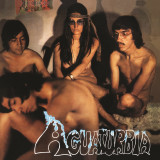
- Baby B.a.b.y. (Carla Thomas)
- Erotica
- Alguien Para Amar Somebody To Love (Jefferson Airplane)
- Ah Ah Ah Ay
- Rollin' And Tumblin' (Muddy Waters)
- Uno De Estos Dias Some Of These Days (Brenda Lee)
- Carmesi Y Trebol Crimson And Clover (Tommy James & The Shondells)
- Eres Tu Baby It's You (The Beatles)
"Aguaturbia" (1970) is an essential album to understand the construction of what we know today as Chilean rock. This very influential album is raw and dynamic, featuring heavy rhythms, distortion, and exceptional phased female vocals reminiscent of Jefferson Airplane. It comprises original compositions and electrifying renditions of songs brought to fame by the likes of Tommy James & The Shondells, The Beatles and, of course, Jefferson Airplane elevating these classics to new heights of intensity and rhythmic allure. We are thrilled to make this outstanding LP available again after many years out of stock. Aguaturbia's debut album was originally released in 1970 and showcases one of South America's most significant psychedelic bands from the late 60s and early 70s. Their influence in their native Chile -and beyond- was groundbreaking. It was played live in 1969 on 3 tracks, and it became an icon of transgression due to its unbridled musical aesthetics and cover art that - for the time of its irruption - meant a clear defiance of the conservative logics lived in Chile, which saw in the nudity of the cover a challenge to morality and good manners. The album is raw and dynamic, featuring heavy rhythms, distortion, and exceptional phased female vocals reminiscent of Jefferson Airplane. Guitarist Carlos Corales shines and when he played solos at the gigs, the effect on the audience was silence and euphoria at the same time, they couldn't believe what they heard. Everything was done with a professional attitude. In fact, Carlos Corales (guitar) and Willy Cavada (drums) were both professional musicians who had made a previous career in rock and roll bands. The LP showcases breathtaking moments, like Willy Cavada's masterful drum solo in 'Ah Ah Ah Ay' captured flawlessly in a single take. Dive into the sensual psychedelic journey of 'Erotica,' where Denise's alluring vocals dance harmoniously with Carlos' electrifying guitar. Plus, don't miss their thrilling renditions of 'Somebody to Love' and 'Crimson and Clover'-each track elevating classics to new heights of intensity and rhythmic allure. This album is more than music; it's an invitation to experience sheer auditory bliss! "Aguaturbia" is an essential album to understand the construction of what we know today as Chilean rock.

Singer Andy Stokes, billed as the 'Northwest King of Soul Music', may have recently worked with such industry luminaries as Snoop Dogg but, way back in the late 70s, he was fronting a hopeful Jazz-Funk group struggling to break into even just the Oregon circuit. Despite boasting members from internationally successful acts like Fantasy Records' own Pleasure, Lights Out never saw their one demo – cut in 1982 for the well-established Solar Records – even get a promo pressing. Two of the tightest and busiest of their dancefloor wreckers from the session now grace their only 7" to date.
First time ever on 7" 45rpm vinyl, dinked centre hole with picture sleeve, 500 numbered copies only.
