Still Wave was born from the deep outer space, in a future past of void
and broken feelings, to play violently post romantic, epically desperate
swansongs for lovers
Sing along. Hold your heart. And smile while you fall.
Line-up:
Daniele Carlo - Drums, Percussion
Luca Fois - Guitar, Keyboards, Backing Vocals
Tomas Aurizzi - Guitar, Keyboards
Manuel Palombi - Bass, Harsh Vocals
Valerio Granieri - Lead Vocals
Buscar:da carlo
2024 Repress
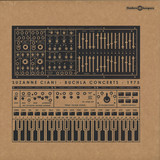
Finders Keepers invite you to witness the incredible first ever Buchla synthesiser concerts/demonstrations providing a distinctive feminine alternative to The Silver Apples Of The Moon if they had ever been presented in phonographic form. This is history in the remaking.
This spring Finders Keepers Records are proud to release an archival project that not only redefines musical history but boasts genuine claim to the overused buzzwords such as pioneering, maverick, experimental, groundbreaking and esoteric, while questioning social politics and the evolution of music technology as we've come to understand it. To describe this records as a game-changer is an understatement. This record represents a musical revolution, a scientific benchmark and a trophy in the cabinet of counter culture creativity. This record is a triumphant yardstick in the synthesiser space race and the untold story of the first woman on the proverbial moon. While pondering the early accolades of this record it's daunting to learn that this record was in fact not a record at all... It was a manifesto and a gateway to a new world, that somehow never quite opened. If the unfamiliar, modernistic, melodic, pulses, tones and harmonics found on this 1975 live presentation/grant application/educational demonstration had been placed in a phonographic context alongside the promoted work of Morton Subotnick, Walter Carlos or Tomita then the name Suzanne Ciani and her influence would have already radically changed the shape, sound and gender of our record collections. Hopefully there is still chance.
In short, Suzanne was a self-imposed twenty-year-old employee of the Buchla modular synthesiser company, San Francisco's neck and neck contender to New York's Moog. Buchla was run by a community of festival freaks and academic acid eaters whose roots in new age lifestyles and the reinvention of art and music replaced the business acumen enjoyed by its likeminded East Coasters. In the eyes of the consumer the creative refusal to adopt rudimentary facets like a piano keyboard controller rendered the Buchla synthesiser the more obscure stubborn sister of the synth marathon, steering these incredible units away from the mainstream into the homes and studios of free music aficionados, art house composers and die-hard revolutionaries. Championed and semi-showcased by composer Morton Subotnick on his albums The Bull and Silver Apples Of The Moon, Buchla's versatility began to open the minds of a new generation, but the high-end design features and no-compromise modus operandi was often confused with incompatibility and, in the pulsating shadow of Moog's marketing, the revolution would not be televised nor patronised. Suzanne Ciani, as one of the very few female composers on the frontline (and also providing the back line) did not lose faith.
These concerts' are the epitome of rare music technology historic documents, performed by a real musician whose skills and academic education in classical composition already outweighed her male synthesiser contemporaries of twice her age. At the very start of her fragile career these recordings are nothing short of sacrificial ode to her mentor and machine, sonic pickets of the revolution and love letters to an absolutely genuine vision of and 'alternative' musical future. In denouncing her own precocious polymathmatic past in a bid to persuade the world to sing from a new hymn sheet, Suzanne Ciani created a bi-product of never before heard music that would render the pigeon holes ambient' and futuristic' utterly inadequate. Providing nothing short of an entirely different feminine take on the experimental records' of Morton Subotnick and proving to a small, judgmental audience and jury the true versatility of one of the most radical and idiosyncratic musical instruments of the 20th century. These recordings have not been heard since then.
The importance of these genuinely lost pieces of electronic musics puzzle almost eclipses the glaring detail of Suzanne's gender as a distinct minority in an almost exclusively male dominated, faceless, coldly scientific landscape. Those familiar with Suzanne's work, a vast vault of previously unpublished non-records', will already know how the creative politics in her art of being' simultaneously reshaped the worlds of synth design, advertising and film composition before anyone had even dropped a stylus in her groove. Needless to say this record, finally commanding the archival format of choice, courtesy of the Ciani and Finders Keepers longstanding unison, was not the last first' with which this hugely important composer would gift society, and the future of a wide range of exciting evolving creative disciplines.
You have found a holy grail of electronic music and a female musical pioneer who was too proactive to take the trophies. With the light of Buchla and Ciani's initial flame Finders Keepers continues to take a torch through the vaults of this lesser-celebrated music legacy shining a beam on these non-records' that evaded the limelight for almost half a century. You can't write history when you are too busy making it. With fresh ink in the bottomless well, let's start at the beginning. Again. You, are invited!
40th anniversary edition of this seminal work by the multi-talented musician and producer Carlos Perón. After the release of “Impersonator” and the score of the film “Die Schwarze Spinne”, “Nothing Is True; Everything Is Permitted” is his third album released in the beginning of 1984. While still being an active member of Yello, it was around the start of the recording of “You Gotta Say Yes To Another Excess” that Carlos met the American musician Chris Lunch in Hamburg. He invited Chris to Zurich and together played with projects such as Romantic Rubber, Heavymetallen and recorded some sessions that become the basis of “Nothing Is True; Everything Is Permitted”. After the release of “You Gotta Say Yes To Another Excess”, Carlos decided to leave Yello and focused to finish the recording and mixing of his new solo album.
“Nothing Is True; Everything Is Permitted” has gone down in music history as a dark soundtrack without a film, influenced many artists and helped to develop diverse genders of electronic experimental and dance music.
Limited edition of 300 copies including all original tracks and new artwork.
180g vinyl + Deluxe hard-cardboard sleeve + OBI + resealable outer sleeve
This isn’t just a seminal album. It is an estuary. All the black rivers that would form Brazilian funk/hip-hop flow through it. Led by Paulista pianist Salvador Silva Filho – Dom Salvador – “Som, Sangue, e Raça” from 1971, one year after the explosion of Tim Maia on the scene, catalyzed the bossa nova and jazz background of its leader with the rhythm and blues of its members like saxophonist Oberdã Magalhães, nephew of samba-enredo master Silas de Oliveira and future leader of Banda Black Rio, who since the group Impacto 8 (which had, among others, Robertinho Silva on drums and Raul de Souza on trombone) had already been trying to reconcile MPB with Stevie Wonder and James Brown. Add to all this a mixture of samba, Nordestino accent, and even the black side of the Jovem Guarda represented by the authorial presence of Getúlio Cortes (older brother of Gerson King Combo, our James Brown “cover”) in ‘Hei! Você’. Alongside these elements and the presence of Rubão Sabino (bass), who still called himself ‘Rubens’, drummer Luis Carlos (another member of Black Rio), the record enlists the trumpet and flugelhorn of symphonic musician Darcy in place of the original Barrosinho (yet one more founder of Black Rio), who was traveling during the recording but would end up being a leading force of the band.
The album ‘Som, Sangue e raça’ paves the way for future generations of musicians and producers of the Carioca scene at the beginning of the 1970s. The lyrics that dealt with the question of race and the explosive fusion of samba, soul, jazz, and funk, elaborated by Dom Salvador and his troupe, Abolição, established the bases for the development of new sounds and tendencies in Brazilian music.
Repress!
Far Out Recordings Proudly Presents The 1975 Self-titled Debut Album From Brazilian Vocalist And Bossa Nova Luminary Emilio Santiago. Nicknamed 'the Nat King Cole Of Brazil', Santiago Was A Master Bossa Balladeer And A Top-class Crooner. But He Is Known Equally For His Brazilian Funk, Soul And Boogie Classics. One Of His Best Know Is Album Opener 'bananeira', A Party-starting Version Of The Song Originally Written By Joao Donato And Gilberto Gil. 'brother' Is A Smooth-grooving Killer With Great Horn Arrangements And A Huge Backing Choir, While 'la Mulata' Is A Soulful, Swinging Salsa Stepper.
Originally Released On The Cid Label, The Album Showcases The Full Range Of Emilio's Talents, While Paying Homage To Some Of Brazil's Greatest Composers, Including Jorge Ben, Marcos And Sergio Valle And Ivan Lins Among Others.
The Credits On The Album Are A 'who's Who' Of Brazil's Greats, With João Donato On Keys, Wilson Das Neves, Ivan 'mamão' Conti And Paulinho On Drums, Durval Ferreira, Carlos Roberto Rocha And Helio Delmiro On Guitar, Ariovaldo, Orlandivo, And Chacal On Percussion, Danilo Caymmi On Flute, A Brass Section Featuring Victor Assis Brasil, Edson Maciel And Jesse Sadoc, And Backing Vocals From Jaime And Nair, Lúcia Lins, Jurema And Marcio Lott.
- A1: Nataniel Melo - Girasoles
- A2: Ginger Bamboo - Stinlo
- A3: Jeannette Azzouz Belles Combo - So Close To Me
- A4: Mython - Arizona
- B1: Homar Jackson - Sea Trip
- B2: Harry Panday - Love Your Mother And Father
- B3: Errol Ince - Sabrosito As
- B4: Mameen 3 - Tropicamellow
- C1: Leoparden - Borster Kapa
- C2: Joe Tempo Caesar - Soca Mosa
- C3: Zouratie Kone The Astral Synth Transmitters Suba
- D1: Jeremy Alonzi - Friture 4000
- D2: Sexo Y Fantasia - Mangoface
- D3: Carlo Alexandre Teixeira - Teko Pora
Les Disques Bongo Joe are proud to be home of the new volume of DJ soFa's well known curation work Elsewhere series with Elsewhere CC! This ninth exploration of our beloved Bruxelles based cratedigger and producer (Mameen 3, Nyati Mayi & The astral Synth Transmitters, ...) is an ode to summer and groove!
The ninth edition in the Elsewhere series is a real digger’s paradise of tropical gems, from Trinidad to Brazil, Poland, Dominica, and beyond. The compilation is an eclecticmix of outernational, tropical-wave, Calypso, multi-rhythmic percussive beats, lo-fi disco jams, and other such styles that lie somewhere in that magical in-between zone. Compiled by Brussels-based DJ, tastemaker and producer soFa, Elsewhere Vol.9 CC is a perfect collection of Balearic, good-vibe, sunshine rarities, to soundtrack a cocktail session on a reclusive, tropical beach, featuring rare tunes and some of the artist’s own unique productions and collaborations.
Modern day selector, 7” detective, international cratedigger, and self-styled musical activist DJ soFa, aka. soFa Elsewhere, is renowned for his borderless approach to curation. Adapting his unconventional and radical approach to DJing to his acclaimed compilation series, soFa’s goal has always been to expand horizons, highlight scenes, and tell stories. And herein lies the beauty behind the latest edition in the Elsewhere series. Behind every great record, is an even bigger story, and Elsewhere CC, has plenty of them...
This isn't just a seminal album. It is an estuary. All the black rivers that would form Brazilian funk/hip-hop flow through it. Led by Paulista pianist Salvador Silva Filho - Dom Salvador - 'Som, Sangue, e Raça' from 1971, one year after the explosion of Tim Maia on the scene, catalyzed the bossa nova and jazz background of its leader with the rhythm and blues of its members like saxophonist Oberdã Magalhães, nephew of samba-enredo master Silas de Oliveira and future leader of Banda Black Rio, who since the group Impacto 8 (which had, among others, Robertinho Silva on drums and Raul de Souza on trombone) had already been trying to reconcile MPB with Stevie Wonder and James Brown. Add to all this a mixture of samba, Nordestino accent, and even the black side of the Jovem Guarda represented by the authorial presence of Getúlio Cortes (older brother of Gerson King Combo, our James Brown 'cover') in 'Hei! Você'. Alongside these elements and the presence of Rubão Sabino (bass), who still called himself 'Rubens', drummer Luis Carlos (another member of Black Rio), the record enlists the trumpet and flugelhorn of symphonic musician Darcy in place of the original Barrosinho (yet one more founder of Black Rio), who was traveling during the recording but would end up being a leading force of the band.
The album 'Som, Sangue e raça' paves the way for future generations of musicians and producers of the Carioca scene at the beginning of the 1970s. The lyrics that dealt with the question of race and the explosive fusion of samba, soul, jazz, and funk, elaborated by Dom Salvador and his troupe, Abolição, established the bases for the development of new sounds and tendencies in Brazilian music.
For The Elektric Band’s sophomore outing, Chick Corea - the venerated 27-time Grammy winner and National Endowment for the Arts Jazz Master - entered the studio with Dave Weckl on drums, John Patitucci on bass, and two new players who would solidify the band’s classic line up, guitarist Frank Gambale and saxophonist Eric Marienthal.
More heavily produced than its predecessor, Light Years contains several sequence-driven tracks, Corea’s attempt at reaching out to a wider audience with a brand of music that was tighter, funkier and eminently more communicative than he had recorded on 1986’s The Chick Corea Elektric Band.
The crisp, irrepressibly catchy title track is a prime example of Corea’s more commercial aspirations for the album, with Patitucci laying down a fat, funky groove with some hearty slap bass lines (a distinct flavor of the time), and Marienthal’s pungent alto sax strutting over the top. Not only did this groove-oriented track catch on with listeners, it also won a Grammy for Best R&B Instrumental Performance at the 31st Annual Grammy Awards.
Originally released on GRP Records in 1987, the album also contains the dreamy contemporary jazz offerings of “Second Sight” and “The Dragon,” the sequence-driven “Time Track”, “Flamingo,” featuring Carlos Rios on guitar and, the electrifying, techno tour de force, highly complex closer, “Kaleidoscope.
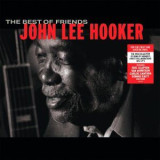
THE BEST OF FRIENDS wurde ursprünglich 1998
veröffentlicht und feiert JOHN LEE HOOKERs späte
Zusammenarbeit mit einem Who's-Who an geschätzten
Gästen, darunter Eric Clapton, Ry Cooder, Carlos
Santana, Van Morrison und Bonnie Raitt. Auch 25 Jahre
später ist es ein lebendiges Porträt von Hookers Vitalität
in dieser Zeit und dem unerschütterlichen Respekt der
Musiker, die er beeinflusste. Das hier erstmals auf
2LP-Vinyl veröffentlichte und auf CD wiederveröffentlichte
Album The Best of Friends ist der perfekte Einstieg für
Hooker-Fans, die sein Schaffen in den 1980er und 90er
Jahren erkunden wollen.
- A1: Deià Dream
- A2: Ọ̀sanyìn (Feat Maikel Alberto Salazar)
- A3: La Mujer Serpiente (Feat Lido Pimienta &Amp; Oliwa)
- A4: Quiero Que Mami (Feat Verito Asprilla)
- A5: Limones (Feat Oliwa, Numu &Amp; Semblanzas Del Rio Guapi)
- B1: Deià Dream Ii
- B2: Selam (Dub)
- B3: Salta La Cuerda (Feat Huaira)
- B4: Song Of The Wind
- B5: Selam (Feat Etsegenet Mekonnen)
- B6: Waves
"We Can Live Together is the first full LP by Earthtones on Wonderwheel. The title is a message, a prayer, and a vision for humanity. It is a reminder that we are in this life together, that love binds us all, and it is only the ideologies and social systems built to prohibit our ability to recognize how close we are that hold us back. We can live, together. The record is based in Folkloric Futurism, a movement that explores the convergence of global folk traditions with technology. Channeling the influence of proto House & Techno pioneers like Mr. Fingers, Kevin Saunderson and Inner City, Earthtones combines analog synthesizers & vintage drum machines with folkloric vocals and instrumentation in a way uniquely his own. It's a celebration of the intersection of past and future, here and there, ancestry and technology. It celebrates themes of spirituality, feminism, love, and most of all, peace. Highlights include "Ọ̀sanyìn", a prayer to the Orisha Ossain, with Maikel Alberto Salazar of rumba super-group Obbatuké on vocals. Recorded in Santiago De Cuba, the track is evocative of Mala's classic "Mala In Cuba" album that broke down barriers between electronic music & traditional music. "La Mujer Serpiente", having seen a sellout 7" last year features Polaris prize winning artist Lido Pimienta-behind the live cumbia rhythms, bass synths, analog keys, 808 drums & guitars, the vision of this track is one of uplifting womxn and femmes everywhere. Ancestral and contemporary Colombian voices are present on the mid-tempo dancefloor track that is the single "Limones" with Semblanzas Del Rio Guapi, Oliwa & the chugging analog rap soundscapes of "Quiero Que Mami" with Verito Asprilla . The album also touches into ambient moments ("Song of the Wind" , Waves") – inspired by friends Carlos Nino, Matthew David, Colloboh and the vibrant West Coast environmental sound movement. credits
g 07: Selam (Dub) [feat. Etsegenet Mekonnen]
- A1: Mother
- A2: You Gotta Have Freedom
- A3: Conversations
- A4: Pure Imagination Tortoise And The Hare
- B1: Opening Acknowledgement
- B2: Our Cry For Peace
- B3: John Coltrane
- B4: Welcome
- C1: What The World Needs Now
- C2: Build An Ark Theme
- C3: Door Of The Cosmos
- D1: Healing Song
- D2: Dawn
- D3: River Run
- D4: When Ancestors Speak
- D5: This Prayer (Yaakov Levy Mix)
- E1: Sunflowers In My Garden
- E2: In The Park
- E3: World Peace Now
- F1: World Music
- F2: Ginger
- F3: Love Sweet Like Sugar Cane
Triple edition, packaged in thick PVC cover with a foldable double sided poster and download card.
Celebrating the 20 year anniversary of highly revered Jazz collective, Build An Ark from Los Angeles, California. Formed in 2003 and releasing albums between 2004 and 2010, the Carlos Niño co-ordinated project included contributions from luminaries such Phil Ranelin, Big Black, Miguel Atwood-Ferguson, Adam Rudolph, Derf Reklaw (R.I.P.), Dexter Story, Dwight Trible, Gaby Hernandez, Mia Doi Todd, Munyungo Jackson, Nate Morgan (R.I.P.) Waberi Jordan, Avotcja & many more.
This set was compiled by band leader Carlos Niño with recordings from 2001 to 2008 that have previously been released on Kindred Spirits.
Gilles Peterson says "It's a beauty!"
1982, Brussels: The former au pair for Rick Wakeman of Yes and two of her teenage friends are at the doorstep of Les Disques Du Crepuscule, ready to cut an album with Gilles Martin. Living on busking wages and next door to Tuxedomoon, their work results in a contemporary bossanova record that would provide a missing link between Antonio Carlos Jobim and Kraftwerk. Camino Del Sol was issued and promptly forgotten, with Isabelle Antena moving toward jazz in Asia and the others returning to France. Twenty years later, it was findable only as a VG+ LP with a sticker price of $4.99. Intrigued by the striking cover's sunlit patio furniture emptiness basking in the south of France, we scooped up Camino Del Sol and grouped the extant Antena recordings from that exceptional period by session. Numero Group's definitive 2LP reissue of the original five-song mini-LP adds the group's first 12" (a cover of Jobim's "Girl From Ipanema," naturally), the Seaside Weekend 12", compilation tracks, and two previously unissued cuts, recasting this short-lived combo's forward-thinking milemarker as a modern-day masterstroke. 2x150g LP in a 2-pocket gatefold tip-on jacket with 2 printed inner sleeves.
First time on vinyl!
Newly remastered. LP housed in a gatefold jacket.
Featuring Herbie Hancock, Martha Reeves, Alphonse Mouzon, Chuck Rainey, Patryce “Choc’let” Banks, Carlos Morales, and members of The Pointer Sisters.
In the 1970s, Betty Davis defied genre and gender by pushing her voice to extremes and embracing the erotic. She articulated a kind of pre-punk, funk-blues fusion that had yet to be normalized in mainstream music – a style that few musicians have come close to replicating. As one of the first Black women to write, arrange, and produce her own albums, Betty was a visionary who disregarded industry boundaries and constraints. Raw, unapologetic and in full control, Betty paved the way for generations of future artists who said “funk you” to the music industry and social norms.
In 1979, when Davis entered an L.A. studio to record her fifth and final album, she was reeling from a series of setbacks. Three years earlier, after recording her fourth album, Is It Love Or Desire, Davis was dropped from her label and the LP was subsequently shelved. In 1978, her beloved band Funk House went their separate ways. Looking for a fresh start, Davis relocated to Hollywood to focus on songwriting. Before long, British manager Simon Lait (Toni Basil), offered to fund her next project.
With renewed vigor, Davis reunited with former Funk House guitarist Carlos Morales and brought together industry veterans like fusion drummer Alphonse Mouzon and session bassist Chuck Rainey. Old friends Anita and Bonnie Pointer (The Pointer Sisters) and Patryce “Choc’let” Banks joined Davis on vocals, as did Motown legend Martha Reeves. The resulting album, Crashin’ From Passion, was her most musically diverse, blending elements of reggae and calypso (“I’ve Danced Before”), jazz (“Hangin’ Out in Hollywood,” “Tell Me a Few Things”), dark synth-pop (“She’s a Woman”), and even disco (“All I Do Is Think of You”). Equally exploratory are Davis’ vocals, as she trades in her signature sass and snarls for more nuanced stylings.
Among the album’s few funk tracks is “Quintessence of Hip,” in which Davis hails musicians like Bob Dylan, Billie Holiday, Stevie Wonder, and John Coltrane, while deftly integrating elements of their work. The song also offers a moment of stark vulnerability, as she sings, “Isn’t rich? Isn’t it queer? Losing my timing so late in my career.” It would prove to be a prophetic line in the months to follow.
The mixing process was mired by artistic differences and then cut short, amid the death of Davis’ beloved father. Bereft and exasperated, Davis returned home for the funeral, setting into motion her retirement from the music industry. Crashin’ From Passion, meanwhile, would be shelved for 15 years and licensed for a CD-only release, without Davis’ consent, in the ‘90s. This 2023 edition of the album, made with Davis’ full approval and cooperation, marks its first official release and first time ever on vinyl. The package was designed by GRAMMY®-winning artist, Masaki Koike, while the album cover features an incredible shot of Betty captured in London in the mid-1970s by renowned photographer Kate Simon.
Crashin’ From Passion was remastered by Dave Cooley at Elysian Masters and pressed on vinyl at Record Technology, Inc. (RTI). The accompanying booklet includes a treasure trove of rare photos from the era, plus lyrics, and new liner notes by writer, ethnomusicologist, and Betty’s close friend, Danielle Maggio, who integrates interviews that she conducted with Davis, marking her last ever interviews.
First time on vinyl!
Newly remastered. LP housed in a gatefold jacket.
Featuring Herbie Hancock, Martha Reeves, Alphonse Mouzon, Chuck Rainey, Patryce “Choc’let” Banks, Carlos Morales, and members of The Pointer Sisters.
In the 1970s, Betty Davis defied genre and gender by pushing her voice to extremes and embracing the erotic. She articulated a kind of pre-punk, funk-blues fusion that had yet to be normalized in mainstream music – a style that few musicians have come close to replicating. As one of the first Black women to write, arrange, and produce her own albums, Betty was a visionary who disregarded industry boundaries and constraints. Raw, unapologetic and in full control, Betty paved the way for generations of future artists who said “funk you” to the music industry and social norms.
In 1979, when Davis entered an L.A. studio to record her fifth and final album, she was reeling from a series of setbacks. Three years earlier, after recording her fourth album, Is It Love Or Desire, Davis was dropped from her label and the LP was subsequently shelved. In 1978, her beloved band Funk House went their separate ways. Looking for a fresh start, Davis relocated to Hollywood to focus on songwriting. Before long, British manager Simon Lait (Toni Basil), offered to fund her next project.
With renewed vigor, Davis reunited with former Funk House guitarist Carlos Morales and brought together industry veterans like fusion drummer Alphonse Mouzon and session bassist Chuck Rainey. Old friends Anita and Bonnie Pointer (The Pointer Sisters) and Patryce “Choc’let” Banks joined Davis on vocals, as did Motown legend Martha Reeves. The resulting album, Crashin’ From Passion, was her most musically diverse, blending elements of reggae and calypso (“I’ve Danced Before”), jazz (“Hangin’ Out in Hollywood,” “Tell Me a Few Things”), dark synth-pop (“She’s a Woman”), and even disco (“All I Do Is Think of You”). Equally exploratory are Davis’ vocals, as she trades in her signature sass and snarls for more nuanced stylings.
Among the album’s few funk tracks is “Quintessence of Hip,” in which Davis hails musicians like Bob Dylan, Billie Holiday, Stevie Wonder, and John Coltrane, while deftly integrating elements of their work. The song also offers a moment of stark vulnerability, as she sings, “Isn’t rich? Isn’t it queer? Losing my timing so late in my career.” It would prove to be a prophetic line in the months to follow.
The mixing process was mired by artistic differences and then cut short, amid the death of Davis’ beloved father. Bereft and exasperated, Davis returned home for the funeral, setting into motion her retirement from the music industry. Crashin’ From Passion, meanwhile, would be shelved for 15 years and licensed for a CD-only release, without Davis’ consent, in the ‘90s. This 2023 edition of the album, made with Davis’ full approval and cooperation, marks its first official release and first time ever on vinyl. The package was designed by GRAMMY®-winning artist, Masaki Koike, while the album cover features an incredible shot of Betty captured in London in the mid-1970s by renowned photographer Kate Simon.
Crashin’ From Passion was remastered by Dave Cooley at Elysian Masters and pressed on vinyl at Record Technology, Inc. (RTI). The accompanying booklet includes a treasure trove of rare photos from the era, plus lyrics, and new liner notes by writer, ethnomusicologist, and Betty’s close friend, Danielle Maggio, who integrates interviews that she conducted with Davis, marking her last ever interviews.
The Intercommunal Free Dance Music Orchestra was created in 1971 by French free jazz pianist legend, François Tusques. Free Jazz, was also the name of the 1965 recording Tusques made along with and other Michel Portal, François Jeanneau, Bernard Vitet, Beb Guérin and Charles Saudrais. Six years later, in 1971 Tusques would go ahead of free jazz.
Wondering if free jazz wasn’t a bit of a dead end together with Barney Wilen (Le Nouveau Jazz) or even solo (Piano Dazibao and Dazibao N°2), Tusques formed the Inter Communal Free Dance Music Orchestra, an association under the banner of which the different communities of the country would come together and compose, quite simply. If at first the structure was made up of professional musicians from the jazz scene it would rapidly seek out talent in the lively world of the MPF (Musique Populaire Française).French Popular Music, ndlt
Compiling extracts from concerts given between 1976 and 1978, L’Inter Communal demonstrate the “social function” which inhabited free jazz and popular music at the time calling upon Spanish singer Carlos Andreu along with Michel Marre, Jo Maka, Adolf Winkler and Jean Méreu. Andreu, claimed Tusques, was a griot “who created of new genre of popular song improvised with our music, based on events going on at the time”.
L’Inter Communal can start the festivities: on “Blues pour Miguel Enriquez”, it is first Thelonious Monk who is invoked in an homage to one of the leading figures of the Chilean revolution, and a victim of Pinochet. The circumstances may be serious, the music, though, is not. The musicians light a bonfire to bring together on the same frequency France and Spain, the Americas and Africa: “L’heure est à la lutte” (the time to fight is here ndlt), is the new song offered by the l’Intercommunal Free Dance Music Orchestra... As if proof were needed that their music is still more than timely!
- A1: Fé De Sábio - Crepúsculo
- A2: Nuno Rebelo - Vê-Se Das Nuvens
- A3: Vítor Rúa - T
- A4: Tó Neto - Daly
- B1: Luis Cilia - Saxofonía
- B2: Spqr - Flow
- B3: Telectu - Untitled
- B4: Pilar - Voz Do Mar
- C1: Carlos María Trindade - Em Campo Aberto
- C2: Balladium - Andrómeda
- C3: Ban - Irreal Social
- D1: Pop Dell'arte - Querelle
- D2: Santa Maria Gasolina Em Teu Ventre - Optical Sunday Without William Burroughs
- D3: Croix Sainte - We Build Cities
- D4: Linha Geral - Hino À Nossa Luta
Unveiling an unheard scene: Glossy Mistakes presents "Atlantic Mavericks: a Decade of Experimental Music in Portugal 1982-1993"
Glossy Mistakes is proud to announce the upcoming release of "Atlantic Mavericks: a Decade of Experimental Music in Portugal 1982-1993," a groundbreaking double LP compilation that offers a unique glimpse into the vibrant landscape of Portuguese experimental music. Set to launch on June 10th, this monumental release showcases the evolution and innovation of the Portuguese music scene during a transformative decade marked by political upheaval and artistic experimentation.
Compiled by Glossy Mario and featuring liner notes by Rui Miguel Abreu, "Atlantic Mavericks" captures the essence of a generation of artists who dared to challenge conventions and push the boundaries of what was possible in music.
The compilation stands as a testament to the eclecticism of the Portuguese music scene during this period, featuring a diverse range of genres and styles. From ambient and new age to electro, rock, and synth-pop, "Atlantic Mavericks" offers something for every listener, inviting them to explore the rich tapestry of sounds that defined the era.
The 1980s in Portugal were a time of profound transformation, marked by the aftermath of a peaceful revolution and a burgeoning desire for artistic expression. As the country emerged from political turbulence, a new generation of musicians began to explore uncharted territories, paving the way for a wave of experimentation and innovation.
From the emergence of artists like Rui Veloso and bands like UHF, who ushered in a new era of Portuguese rock, to the founding of independent record labels like Fundação Atlântica and Ama Romanta, the 1980s saw a surge in creativity and a desire for independence within the music industry.
"Atlantic Mavericks: a Decade of Experimental Music in Portugal 1982-1993" offers a comprehensive overview of this dynamic period, featuring tracks that span the spectrum of experimental music. Each song tells a story of artistic evolution and creative risk-taking, reflecting the diverse influences and eclectic tastes of the Portuguese music scene during this transformative decade.
Spanning from 1982 to 1993, the compilation includes contributions from a wide range of artists, including SPQR, Croix Sainte, Linha Geral, Balladium, Ban, Santa Maria, Gasolina Em Teu Ventre!, Fé de Sábio, and Telectu, among others. With each track carefully curated to showcase the breadth and depth of Portuguese experimental music, "Atlantic Mavericks" promises to be a must-have for music enthusiasts and adventurous listeners alike.
"Atlantic Mavericks: a Decade of Experimental Music in Portugal 1982-1993" will be available on June 10th as a double LP release, offering listeners a chance to immerse themselves in the sonic landscapes of 1980s Portugal. Whether experienced on vinyl or through digital channels, this monumental compilation is sure to leave a lasting impression on all who encounter it.
Pirates Press Records is proud to present the new LP by 45 Adapters, entitled Unstoppable. The long-running New York City "Maximum Oi 'n B" combo are a band that lives by a few credos. "Dress Well, Drink Heavily." "Don't Trust Anyone Who Doesn't Dance." These values are on full display within the grooves of Unstoppable. Singer Pickabar & bassist Carlos are back with three new recruits to the band, and the group sounds revitalized, laying down the album in just two days at Noisy Little Critter studio with Mike Bardzik at the helm. Regarding the sentiments of the title track and lead single, Pickabar elaborates, "'Unstoppable' is about rock 'n roll and how much it shapes our lives. I've been hooked since I was a teenager and I still feel that same electric thrill listening to it, playing it, even talking about it_ There's something deeper that goes back to the root of what it means to be human. And I'm stoked to be even a tiny part of that." After fifteen years and numerous EPs, singles, splits, and collections, 45 Adapters are finally releasing their first proper LP. Longtime listeners and new fans alike are bound to agree that Unstoppable, at long last, is their definitive statement, and the record that fully captures their acclaimed live energy.
- A1: Vertigo Prelude And Rooftop
- A2: Madeleine And Carlotta's Portrait
- A3: The Beach
- A4: Farewell And The Tower
- A5: The Nightmare And Dawn
- B1: Love Music
- B2: The Necklace And The Return And Finale
- B3: Theme From Alfred Hitchcock Presents (Funeral March Of A Ma
- B4: Theme From Dial M For Murder
- B5: Mouvements Perpetuels From Rope
- B6: Theme From The Trouble With Harry
- B7: Juke Box #6 From Rear Window
- B8: Prologue; Duet For Four Feet From Strangers On A Train
ORANGE VINYL[14,50 €]
Vertigo is a 1958 American film noir psychological thriller film directed and produced by Alfred Hitchcock. Vertigo received mixed reviews upon initial release, but is now often cited as a classic Hitchcock film and one of the defining works of his career. On this LP you will find the music of the original soundtrack along with some bonus tracks culled from other Alfred Hitchcock films and even from the television series.
- A1: Garota De Ipanema (The Girl From Ipanema)
- A2: Amor Em Paz (Once I Loved)
- A3: Agua De Beber
- A4: Vivo Sonhando (Dreamer)
- A5: O Morro Nao Tem Vez (Favela)
- A6: Insensatez (How Insensitive)
- A7: Corcovado (Quiet Nights)
- A8: Desafinado
- B1: Corcovado (Quiet Nights)
- B2: Samba De Uma Nota So (One Note Samba)
- B3: Meditacao (Meditation)
- B4: So Danco Samba (Jazz Samba)
- B5: Chega De Saudade
- B6: Desafinado
- B7: Meditacao (Meditation)
- B8: Insensatez (How Insensitive)
- A1: Love To All Doulas! 03 52
- A2: Some Rest For The Midwives
- A3: Real Vital Organs
- A4: Surges, Expansions
- A5: In Appreciation Of Chico Hamilton's Vast Influence On The West Coast Sound
- B1: Birthworkers Magic, And How We Get Hear
- B2: This "I" Was Not
- B3: Placenta, Nourishment, New Home, The Galaxy
- C1: Carla's Beads
- C2: Moonlight Watsu In Dub
- C3: Generous Pelvis
- C4: Bi-Location
- D1: Play Kerri Chandler's Rain
purple 2x12"[29,37 €]
Placenta is the fourth collection of broadly imaginative and highly collaborative Carlos Niño & Friends music released on International Anthem since 2021. But perhaps more notably for the zeitgeist of today, it is the first new music to be released by Carlos Niño & Friends following the November 2023 release of André 3000’s New Blue Sun – an album which Carlos produced alongside André, while co-writing, performing, and co-mixing every song. The announcement of Placenta also comes while Carlos is in the middle of tours with André to support New Blue Sun, where Carlos wields an immense presence as music director, bandleader, and percussionist, and performs alongside many of the same musicians that are present on his recent & Friends albums, including this new one.
Placenta is announced on the 1st solar return of Moss Niño, of whom Carlos and his partner Annelise are Earth parents. Their experience of pregnancy, labor and delivery were all profoundly impactful for Carlos. Becoming a father again (a whole 25 years after the birth of Azul Niño, who has become a regular artistic collaborator for Carlos) he felt total Inspiration for this set of recordings, and hence it is perhaps the most conceptually-grounded Carlos Niño & Friends album we've yet to present–fully connected to the spirit of family, birth, and "how we get here."
In Niño’s words, Placenta is “dedicated to Mothers, Children, Babies, Aunties, Doulas, Midwives, Birthworkers...,” and a short list of track titles includes: "Love to all Doulas!," "Some Rest for the Midwives," "Real Vital Organs," and "Generous Pelvis." The centerpiece of the album, the sprawling "Placenta, Nourishment, New Home, The Galaxy," is an unbelievably vivid immersion in the sonic architecture of Niño's memory-scape...like being present in his energy field...or being present in a birthing room, or maybe even being born yourself. And it just might be the most powerful, unique piece of music Niño has ever created.
Featured artists on Placenta, in order of their entry on the album, include: Nate Mercereau, Jamire Williams, Sam Gendel, Jamael Dean, Dexter Story, Brandon Eugene Owens, Maia, André 3000, Jesse Peterson, Ariel Kalma, Surya Botofasina, Annelise, Haize Hawke, Aaron Shaw, Devin Daniels, Tiffany de Leon, Michael Bolger, Michael Alvidrez, Moss, Iasos, Photay, Deantoni Parks, Adam Rudolph, Andres Renteria, and Cavana Lee.