‘We tend to do the free jazz sessions right at the end of long tours,’ Baldi says, ‘or after making other records, so it’s a nice break from the more
regimented song forms that the other bands have, or from playing the
same songs every night on tour.’
For Baldi & Gerycz, free jazz is a release - something to break apart stretches of familiar songwriting - and because of that, there’s a lot of joy in these recordings - see the raucous album closer ‘The Holy Retrievers (In Transit).’ Admittedly After Commodore Perry Service Plaza is a bittersweet collection, though - compiled from the final session Baldi & Gerycz recorded in person.
As such, it’s a cherished memory - it’s also kindling for creation - those original feelings inspire the duo to find novel ways to collaborate, even perform.
Cerca:da hermit
Seeing himself as a social commentator, Coops continuously draws inspiration from everything around him and is feeling more inspired than ever. Having signed to the label in 2018 he has already released 2 poignant albums and continues to create at rapid speed.
The 8-track project - which was made in just 4 studio sessions - is unlike Coops’ usual 14+ track albums both he and his fans have become used to. Coops turned the album around in record time to ensure his music was released during this unparalleled time in history. The homegrown beats come from his close friend and long term collaborator Talos who has produced almost all his beats to date.
In the opening track, ‘ Boom Biddy Bye’ Coops doesn’t waste a second in putting his fellow rappers through their paces. A block rapper with no one to please but himself, Coops professes that he barely listens to what other rappers release to ensure they don’t infiltrate and influence his own music. Highly appropriate for these times, title track ‘ Crimes Against Creation ’ is the stand out voice of this generation and his message to the world. ‘W arped perception, thwart connections, they force perfection, then claim the antidotes an injection...’ plays out and we begin to appreciate how the current situation is playing heavily on his mind. As the album progresses we get to see all sides of Coops’ personality with ‘Piss Poor’ reminding us of the raw gritty London lifestyle from which he has risen from, whilst ‘Profile’ demonstrates his softer more promiscuous side as well as touching on themes of fatherhood and online relationships.
Coops’ musical entry point begun by making music with his friends, but it wasn’t until he really looked at himself and the world around him when he decided he needed to go it alone, opening his mind and his solo stream of creativity which hasn’t stopped since. A self-proclaimed hermit he embodies the essence of a true artist and only finds comfort in doing what he loves, not what he is told.
new quartet by Samuel Rohrer, Max Loderbauer, Stian Westerhus & Tobias Freund In the present era of media saturation, the artist's dilemma has shifted away from the question whether to fuse disparate stylistic elements, towards the decision of which energies to draw upon: a situation most rewarding for those who listen to musicians navigating this limitless terrain. One such journey, the captivating full-length release from Samuel Rohrer's new Kave quartet coming out this May, is bringing together players who are equally well-versed in the quick-thinking mechanics of free group improvisation and the compositional strategies of contemplative / ‘ambient’ electronic music. With Rohrer acting as creative director and most of the quartet sharing synthesizer duties, there’s a strong sense of unified purpose to this set, and a narrative flow that never causes the listener to focus on one constituent part at the expense of the whole. At the same time, the players know all well that cohesion counts for little without those constituent parts being compelling in their own right. Rohrer and Loderbauer, for example, have previously crafted a unique techno-organic approach with the Ambiq trio, and the lessons learned from that partnership are put to inspired use within this new configuration. Stian Westerhus’ contributions on guitar and vocals, along with Tobias Freund’s electronic reinforcements - Freund also has worked since many years with Max Loderbauer as NSI - all conspire to make something that Rohrer aptly compares as “forest”-like. It’s a descriptor that will have vastly different meanings for each listener. For Rohrer, it refers to music that is confident in the “deep-rootedness” of its foundations and defined by a density and mystery easily confused with darkness, while nevertheless proving its bright vitRight away, on the introductory odyssey 'Cambium' the quartet sets out to make good on this metaphor, creating a hypnotic foundation for what is about to unfold during the next 42 minutes, with brooding, slow, 'searchlight in a fog,' synth washes and percussive stridulation. The twin 'Hibernation' tracks show all the unique elements beginning to coalesce: the emotional tenor is one of vulnerability that melts into the determination of 'staring into the void', a temperamental state challenging to represent authentically in music. The atmosphere of psychic challenge effort lessly gives way to the faintly nostalgic glimmers of 'Giant Peach' - a literary reference to the macabre whimsy of Roald Dahl. The ultimate dissolution of barriers between organicism and synthesis is accomplished on the majestic 'Divided We Fall', a title referring to Westerhus’ smoky vocalization that winds into a double helix formed from electronic surges. Again, the ease with which it all comes together is mesmerizing, and while there’s an aura of risk accompanying this walk through the woods, there’s a much more enduring impression of carefully orchestrated growth and change.
The second one dithers between Kraut Rock and Techno. Spiked with quotes from Psychogeographer Will Self to War photographer Robert Capa the tracks draw a wide array of cultural themes to the listener and onto the dancefloor. Floating highhats meets eerie Sounds . Electric boogie, organic twist. Vital Sales Points: - Symbiosis between Krautrock and techno “Live from Hermit Cave” is the second release of Frankfurt/Main based label KLINIKA provided by THE CHURCH OF I.R.L. It dithers between Kraut Rock and Techno. Spiked with quotes from Psychogeographer Will Self to War photographer Robert Capa the tracks draw a wide array of cultural themes to the listener and onto the dancefloor. Floating highhats meets eerie Sounds . Electric boogie, organic twist.
Six years after his last album on Miasmah, Schattenspieler, it's great to find Marcus Fjellström resurrected after several long years spent composing his audio-visual opera Boris Christ.
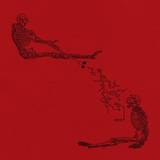
Born out of shattered dreams and an obscured vision of the future, Skelektikon is a delirious yet lucid exploration of the farthest and most conflicted reaches of the heart, teeming with confusion, passion, and ghostly shadows. Being no conventional composer in any way, Marcus stumbles further down his musical domain of detuned orchestral (re-)arrangements and pain-inducing synth passages, arriving at a most unique and personal result. Where Schattenspieler gave way to noir filled alleyways, Skelektikon fills them with paranoia. It's the sound of Limbo, of dancing amoebas, of deviant skeletons, nostalgia and futurism, or quite possibly none of that.
Inhabited by the bizarre and the beautiful, Marcus's music is a blurred yet encouraging representation of how you can never trust your own feelings - or eyes and ears for that matter. And yet, we can't shake the idea that the truth is to be found somewhere within this alien language, as delivered to us through the speakers. Opening our eyes after the final track has dissipated, we wouldn't be surprised to find someone or something there, staring at us, in silent and unsettling knowledge.