"JUJU" drops on May 17th (WERF Records) and is programmed at Gent Jazz Festival (July 11th)
Juju continues the work done on the second album half, with the Terre Sol Four quartet: Willems' voice, drums, percussion objects, keyboards and field recordings accompanied by the saxes of Marc De Maeseneer, Vincent Brijs and John Snauwaert.Juju fits perfectly in Willems' output. Also: in the coherent oeuvre it has become, it is perhaps her most consistent release yet. It's infectious as hell, carefully crafted, packs a punch and more accessible than ever before.
Everything is connected. Not just in the grand scheme of things - politically, culturally, socially,... - but also in the colourful universe of Karen Willems. A lifelong quest for profound experiences through organizing sound led to the crucial Terre Sol-series, four tapes released in 2020. Out of that fertile well, Grichte (2022) was born. A double LP that presented Willems as an original explorer as well as a committed bandleader, it was her boldest statement to date.
While the first (solo) album halfalready received a follow-up in K A A P M I J (2023), another tape release that suggested there's still a lot of ground left to uncover, Juju continues the work done on the second album half, with the Terre Sol Four quartet: Willems' voice, drums, percussion objects, keyboards and field recordings accompanied by the saxes of Marc De Maeseneer, Vincent Brijs and John Snauwaert. It was already something to behold on Grichte, swerving from introspective exploration to expressionist riff rock and semi-Dadaist avant-garde.
On Juju, the four-piece digs even deeper and the results are utterly spellbinding. One of the many attractions of Willems' recent work is that it combines relentless artistic experimentation with a commitment to broader socio-political issues. In essence, the artist tries to set up a discussion with her surroundings, sending out musical invitations to connect and participate, reminding ourselves of responsibilities that are too easily forgotten in these hectic, self-centered times. The refugee crisis is one, ecology awareness another, and it's hard not to consider "Voor De Stranden Verdrinken" ("Before The Beaches Drown") a caustic warning. Things need to change.
As said earlier, the music on Juju remains as adventurous as before, but this time around, the playing feels even more confident, diverse and punchy. If the album opener accentuates its urgency with a throbbing pulse and reed sirens, "Tako Deli" continues with rich vocal arrangements, roaring saxes and sweeping melodies. What follows strikes with vigor and consistency: "Nuuki" is as dense as it is infectious, while "Fuzzy Williams" manages to combine Ellingtonian abundance with Swans-like preaching.
And there's more, much more. Eccentricity and playfulness ("The Woo Woo Room, Dance Back In Style", "In Open Veld") go hand in hand with smoldering exercises in tension and release ("Koortsdromen") and a ridiculously infectious call for connection in antisocial times ("Come Vai"). Guest contributions by Nabou Claerhout, Kapinga Gysel, Esther Lybeert and Filip Wauters enrich the band's sound considerably. By the time you reach album closer "When Daytime Lands", Willems takes you on a short trip through that eerie soundscape-land she previously explored.
In short: Juju fits perfectly in Willems' output. Also: in the coherent oeuvre it has become, it is perhaps her most consistent release yet. It's infectious as hell, carefully crafted, packs a punch and more accessible than ever before. It's the sound of an artist at the peak of her powers, not just expanding her range, but digging deeper with obvious glee. It's not just intriguing; it's inspiring to witness..
quête:dada
- A1: Cáin Chairr
- A2: Fear Liatroime Páirt 1
- A3: Maidin Heinz
- A4: Fear Liatroime Páirt 2
- A5: M'anam Go B'ea
- B1: Teach Tuí Bhearna
- B2: Cé Mo Dhuine Siúl Sa Hi-Vis
- B3: Monty Phádraic Jude
- C1: Ndáiríre Tho, Meastú Cén Fáth Nach Mbíonn Signal Ag An Bhfón Thart Ar Shiopa An Phobail
- C2: Fear Liatroime Páirt 3
- C3: Yung Fella
- C4: Bóthar An Chillín
- D1: Maidin Heinz Athrach
- D2: Cáin Chairr Athrach
- D3: Monty Athrach
'Trá Pháidín are an Irish nine piece collective from Conamara, Galway, a wild coastal region of West Ireland where Gaeilge remains the first language. The group are currently lighting up Ireland's underground with their joyful noise, a unique and unpredictable blend of traditional Irish folk, post-rock, jazz, and Dadaist absurdity. The glorious album An 424 takes us on a psychogeographical journey along the 424 bus route which follows this remote stretch of coastline, introducing us to the landscapes and the characters who depend on the buses. Expect wild improvisational flights filled with brass, woodwinds, harp and fiddles alongside relentless grooves.
Here's what the band themselves have to say about the album:
Psychogeography is a funny aul term......the effect geography and landscape of a certain area has on the psychology, identity and nature of the local people...........I suppose
Notoriously, Conamara is famous place for psychogeoraphy due to the work of the great Tom Robinson. He walked every coastline in every area contemplating the geography, culture, history, Gaelic language, English language and folklore of the area while he was drawing it's best map with great depth and detail.
Right, so I've given context, a few buzzwords and some interesting names, now it's time for the absurd stuff....
"Bóthar Chois Fharraige" (the R336 and whatever anglicized name they call it) is well known by everyone in the South Conamara Gaeltacht (Gaeltacht is an area where Irish/Gaeilge is the dominant language, there aren't many because we were colonized by the British and our government doesn't care about its own language). The people of Conamara travel this road almost every day by car, by bike, on Peadar Óg's buses or of course, through the medium of the 424 (the bus service provided by Bus Éireann, Ireland's public-private bus company). From Bearna to Carna (maybe sometimes a detour in Casla going as far back as an Cheathrú Rua and/or Leitir Mealláin)
Every passenger is well versed of gorgeous views of the landscape that is on offer on this journey. Included are Cuan na Gaillimhe/Galway Bay, An Bhoirinn/the Burren, na hOileáin Árann/the Arann Islands,Aillte an Mhothair/the Cliffs of Moher, Portach Mhaigh Cuilinn/the bogs of Maigh Cuilinn, Bóthar Loch an Iolra/Eagle lake road, Cuan Casla/Casla Harbour, Cuan an Fhir Mhóir/Greatman's Bay, Cnoc Mordáin/Mordáin hill, Sléibhte Mhám Toirc/the Maamturk Mountains and Na Beanna Beola/the twelve pins. Passengers would also be well used the unique character of the bus. Depending on the day, you will get a unique perspective of the "complicated identity" of the Gaels as the bus travels from the Gaeltacht into anglophone Ireland, or maybe going the other way.
This is a topic you could write a PhD about (and maybe someone already has). But, if you are someone who grew up or lives in this region, you have a particular understanding at this stage of how complicated Gaelic psyche is and the kind of spectrum of identity along bóthar Choise Fharraige. With the landscape in mind, this bus journey is a great meditation of the various topics of life.
‘Bhfuil tionchar ag an mbus ar nádúr na ndaoine?
Nó an bhfuil tionchar ag na daoine ar nádúr an bhus?'
'Does the bus effect the nature of the people?
Or do the people affect the nature of the bus?'
Le gach dea-ghuí,
TP.
(translated from Gaeilge by Peadar-Tom Mercier)'
Belgian musician and filmmaker Jef Mertens has been an active force in the experimental music and film scene for nearly two decades. Known for his documentaries on artists like Sonic Youth and Borbetomagus, as well as his work with the now-defunct Dadaist Tapes label, Mertens continues to push the boundaries of sound exploration. His previous solo works include NO MATHEMATICS, released on KRAAK/Feeding Tube Records.
With Orchid Alto, Mertens dedicates himself to the taishogoto, a Japanese stringed instrument that became a new focal point in his sonic explorations. Initially drawn to its unique tonal qualities, he approached the instrument with an open-ended curiosity, using it as a means to reshape his musical language. The transition to taishogoto marked a shift away from guitar-based compositions, offering a fresh perspective on texture and resonance. Through these explorations, Orchid Alto serves as a blueprint for new sonic possibilities.
A bold and immersive sonic journey, Orchid Alto merges traditional resonance with modern experimentalism, further shaping Mertens' artistic voice—one influenced by artists like Michael Flowers, Turner Williams Jr., and Bill Nace.
The debut album from CEM, 'FORMA' was developed as a soundtrack to Mauro Ventura’s series of "action painting performances" and uses various bell sounds (cowbells, doorbells, Shinto bells, singing bowls) to pick out anxious giallo sequences and heaving Dadaist formations.
CEM's best known for pneumatic DJ sets that have propped up Berlin's queer underground for a decade at this point, but don't expect to find any vaped darkroom tek on 'FORMA'. Each of the six compositions were commissioned for Ventura’s performative installation at Volksbühne in 2022, and CEM opted to represent the piece's themes of labor and repetition by sampling an arsenal of bells and metal objects that anchor his varying widescreen vignettes. 'The Calling' is a relatively subtle introduction, establishing the space with double bass drones and ratcheting digitally altered chimes - it's 'Bells Corrupt' that cements CEM's concept more righteously, harking back to Goblin's iconic 'Suspiria' score without pastiching any of its Italo-prog themes. Cycling ritualistic bell loops with squashed, industrial-strength thuds and granulised laptop belches, CEM silhouettes the tension and the vivid color of Argento's film, chrome plating the result.
'An Industrial Satire' is even more convincing; this one takes its cues from legendary German sound artist Limpe Fuchs, and the first part integrates scraped, alien resonances with CEM's loping industrial rhythms and squelchy EBM bassline. The real shift occurs in the second part, when CEM's choppy electroacoustic minimalism falls away to unlock his rolling hand drum performance, that he matches with a ghaita sample lifted from the Master Musicians of Joujouka's 1971 album with Brian Jones. With the future-facing deconstructions a memory, 'Statue Garden' beds reedy organ drones in eerie gallery ambiance, and closer 'The New Sincerity Test' finds Lithuanian performance artist Gertrūda Gilytė skewering the wellness industrial complex over nauseous subsonic oscillations and scratchy noise.
- Collection 001 - 001 A 23:46
- Collection 001 - 001 B 23:48
- Collection 002 - 002 A 18:12
- Collection 002 - 002 B 20:54
- Collection 003 - 003 A 22:14
- Collection 003 - 003 B1 09:33
- Collection 003 - 003 B2 05:25
- Collection 004 - 004 A 16:11
- Collection 004 - 004 B1 07:08
- Collection 004 - 004 B2 09:52
- Collection 005 - 005 A1 08:38
- Collection 005 - 005 A2 08:54
- Collection 005 - 005 B1 07:14
- Collection 005 - 005 B2 03:53
- Collection 005 - 005 B3 03:57
- Collection 005 - 005 B4 04:03
- Collection 006 - 006 A1 17:35
- Collection 006 - 006 A2 05:12
- Collection 006 - 006 B 23:12
- Collection 007 - Merzrock B1 + Dubbing 5 11:21
- Collection 007 - Merzrock A1 + Anemic Pop 1 02:00
- Collection 007 - Merzrock A1 + Anemic Pop 2 08:32
- Collection 007 - E-Study #3-1 + Merzsolo 1 15:49
- Collection 007 - E-Study #3-1 + Merzsolo 2 05:58
- Collection 008 - Concrete Tape Ph#1~ 05:19
- Collection 008 - E8 A1 + 006 A1 06:03
- Collection 008 - Merzsolo 10/6.81 A1 10:36
- Collection 008 - E8 B2/Concrete Tape Ph#1~ 06:28
- Collection 008 - Sans Titre Merz 1 + Tape Loops 04:54
- Collection 008 E6 A3 + Concrete Tape Ph#1~ 06:46
- Collection 008 - Merzsolo 10/6.81 A5 + Violin 03:21
- Collection 009 - N.a.m.4 + E-8 06:11
- Collection 009 - Telecom 1/3 + N.a.m.5 17:32
- Collection 009 - E-3-1-1 11:24
- Collection 009 - E-3-1-2 01:50
- Collection 009 - Tape Loop + Noise 1 (Concrete Tapes) 02:39
- Collection 009 - Tape Loop + Noise 2 (Concrete Tapes) 04:25
- Collection 010 - 007 B1 + Ah Corps 11:47
- Collection 010 - E3 B2 + Ah Corps 11:28
- Collection 010 - N.a.m.6 With Radio & Tapes 22:47
Carrying on their longstanding dedication to the seminal output of Merzbow, Urashima returns with what is unquestionably their most ambitious release to date: “Collection 001-010”, a deluxe, 10 LP vinyl box set limited to 299 copies, gathering together the entirety of the project’s first ten releases, originally released in 1981. Encountering the band in its early incarnation of the duo of Masami Akita and Kiyoshi Mizutani, raw, exposed and bristling with energy, foreshadowing numerous trajectories they would follow over the coming years, these astounding full lengths - the majority of which have never been released on vinyl - come housed in a beautifully produced, deluxe wooden box, with each LP in its own individual sleeve reproducing the original artwork, and a LP-sized 32-page book containing reproductions of artworls and collages by Masami Akita, an interview conducted by Jim O'Rourke, and liner notes penned by Lasse Marhaug, Thurston Moore, and Akita himself, amounting to what is unquestionably one of the most historically significant releases we’re likely to encounter in 2025.
Deluxe Edition of 299 copies, remastered from the original analog tapes by Masami Akita, each LP comes in its individual sleeve reproducing the original artwork, also includes a LP-sized 32-page book. ** Since its founding during the late 2000s, the Italian imprint, Urashima, has become a definitive voice in the landscape of noise. Bringing forth beautiful limited edition releases, they’ve sculpted a singular vision of one of the most vibrant and revolutionary bodies of experimental sound to have graced the globe. Among the many projects that they have supported over the decades, there has been an undeniable dedication to the output of the seminal Japanese noise outfit, Merzbow, making a significant amount of the project’s out of print back catalog available across a range of formats. Now they return with what is arguably their most stunning and ambitious release dedicated to the project to date: “Collection 001-010”, gathering the entirety of Merzbow’s first ten releases, largely privately released by the band on cassette across 1981, in a deluxe, 10 LP vinyl box set. Representing what is effectively ground zero in Japanese noise and collectively amounting to some of the most sought after releases ever produced within that movement, Urashima’s truly beautiful collection comes fully remastered by Masami Akita himself from the original tapes, presenting all but a small number in their first ever vinyl pressings, with each LP housed in its own individual sleeve reproducing the original artwork, alongside a LP-sized 32-page book containing reproductions of artworks and collages by Masami Akita, an interview conducted by Jim O'Rourke, and liner notes penned by Lasse Marhaug, Thurston Moore and Akita himself. Towering with energy and groundbreaking creative vision, within the realms of noise and experimental music, releases don’t get more monumental or historically important than this!
Merzbow came roaring onto the Tokyo scene in 1979, and remains, to this day, one of the most prolific and aggressively forward-thinking projects in experimental music. Eventually becoming the solo vehicle for the efforts of Masami Akita, in its earliest incarnation the project was the duo of Akita and Kiyoshi Mizutani, taking their name from German artist Kurt Schwitters' pre-war architectural assemblage, The Cathedral of Erotic Misery or Merzbau, and quickly set out to challenge entrenched notions of what music could be. Embracing technology and the machine, even in its earliest iterations, Merzbow pushed toward new territories of the extreme, arriving at a space of pure, unadulterated sonic onslaught that has continued, for over 40 years, to set the pace for the entire genre of noise, and has remained one of the movement’s most important, definitive voices, continuously laying the groundwork for countless artists who have followed in its wake.
When dealing with historical gestures, there’s an invertible aura surrounding original line-ups and early statements, and rightfully so. It is often within a band’s debut that we catch the purest glimpse of the raw energy and creative ferment that made them what they are. This is certainly the case when regarding the coveted early releases of Merzbow, capturing the emergence of the project in its form as the duo of Masami Akita and Kiyoshi Mizutani as they helped set the blue print from the then emerging movement of Japanese noise. Over the course of its nearly five decades of activity, Merzbow has always been noted for how prolific and ambitious the project is. This was no less the case in the very beginning. While they were active for roughly two years prior, in 1981 alone they issued ten self-released cassettes numerically titled “Collection 001-010”, albums which have both individually and collectively become holy grails in the realms of noise, with only two - “Collection 007” and “Collection 009” - ever receiving vinyl reissues prior to now.
As Lasse Marhaug deftly articulates in the newly commissioned liner notes for “Collection 001-010”, despite having been recorded in different location across a span of time, the sum total of Merzbow’s first ten releases might be best regarded as a single release to be listened to in the same, durational sitting, with the material standing well apart from what most came to expect from Merzbow, while foreshadowing numerous trajectories the project would take over the coming years. Not only do these recordings feature a vast array of instrumentation - tapes, acoustic and electric guitar, violin, drums, voice, recorder, organ, found sounds, clarinet, homemade and prepared instruments, a vast arsenal of effects and electronics, and piano, to only begin to scratch the surface - the majority of which would disappear from the project’s active sources of sound generation over the subsequent years, but there is a slow pacing and raw sense of openness and exposure that reveals strong connections to the avant-garde improvisations of groups like AMM, Musica Elettronica Viva, and Gruppo di Improvvisazione Nuova Consonanza, the psychedelia of groups like Taj Mahal Travellers and Flower Traveling band (both of whom Akita mentions having seen in youth within his interview with Jim O’Rourke), and rock in general - albeit in fully abstracted forms - unspooling as brittle, pointillistic, textural, raw and abrasive forms, that occasionally flirts with unexpected tonal sensibilities. As Marhaug describes it in his excellent liner notes: «Sonically, “Collection” sounds more sparse and stripped. It’s dry sounding, up-front, no reverb, and there’s less heavy low-end grime and thin on the signature frequency sweeps. Viewed in a 1981 context, musically, it’s more akin to what the LAFMS (Los Angeles Free Music Society) pool of artists were doing at that time than what was happening in industrial music... There’s a strong playfulness throughout, like the sound objects are being explored for the first time, without neither restraint nor hurry. Events are allowed to be fully examined before the music moves on, or simply cuts off. To a large degree, the music on “Collection” feels acoustic in nature, although a Electro-Harmonix ring-modulator features prominently throughout.»
Easily described as a rarely encountered revelation into the original and earlier documented studio sound of Merzbow, “Collection 001-010” collectively amounts to an engrossing sonic journey in its own right, while also allowing for important, often overlooked connections drawn from numerous other creative wellsprings, notably free jazz, underground rock, the output of European and Japanese avant-garde music, as well as Dada, Fluxus, and Mail Art, much of which, beyond the illumination made possible by the sounds, Jim O’Rourke’s fantastic interview with Akita, published in the booklet, further explores, offering great insights into the origins of Merzbow and the thinking behind the project, as well as aspects of the earliest days of Japanese noise.
- 01: Ich Und Ich
- 02: Industriemädchen (Splut)
- 03: Töneflöten
- 04: Liebeslied
- 05: Mittelalterloop
- 06: Wildes Malen
- 07: Blech
- 08: Mondpogo
- 09: Two Minutes In A Room
- 10: Hello Mr
Mit ihren unberechenbaren Live-Auftritten und Songs wie "Zurück zum Beton" und "Industriemädchen" sorgten S.Y.P.H. Ende der 70er für Furore - als eine der Bands, die rund um Düsseldorfs Ratinger Hof begannen, deutschsprachig zu texten. Die Band brach von Beginn an mit genre-konformistischen Erwartungshaltungen und machte Musik, die sich bei Rock, Punk und Kraut genauso bediente wie bei der Zügellosigkeit des Dadaismus und der Realität des Tagesgeschehens. Nach dem ersten Album und mehreren Singles (wiederveröffentlicht bei Tapete Records im Dezember 2024) produzierte die Band zwei weitere Alben - Pst und S.Y.P.H. (Album 4) - gemeinsam mit CANs Holger Czukay. Von 1978 bis 1981 entstanden neben Tapete Records veröffentlicht beide Alben gemeinsam mit einer Sammlung zuvor unveröffentlichter Raritäten - Punkraut 1978-1981. Auf dieser Compilation wurden rare und zuvor unveröffentlichte Aufnahmen aus den ersten drei Jahren der Bandgeschichte zusammengestellt: Die Songs "Blech" und "Mondpogo", 1978 live performt bei S.Y.P.H.s erstem Konzert im Düsseldorfer Carsch-Haus und fünf Aufnahmen, die zwischen 1978 und 1979 in Solingen entstanden. Außerdem gibt es drei Studio-Aufnahmen aus den Hamburger Container-Studios im Dezember 1981 - Aufnahmen aus einer Zeit, in der "sich die Band sowohl endgültig vom Punk als Musikrichtung verabschiedet hatte, als auch vom Einfluss des zwischenzeitlichen Produzenten Holger Czukay und einen völlig eigenen Stil gefunden hatte." (Kurt Dahlke, DAF)
Mit ihren unberechenbaren Live-Auftritten und Songs wie "Zurück zum Beton" und "Industriemädchen" sorgten S.Y.P.H. Ende der 70er für Furore - als eine der Bands, die rund um Düsseldorfs Ratinger Hof begannen, deutschsprachig zu texten. Die Band brach von Beginn an mit genre-konformistischen Erwartungshaltungen und machte Musik, die sich bei Rock, Punk und Kraut genauso bediente wie bei der Zügellosigkeit des Dadaismus und der Realität des Tagesgeschehens. Nach dem ersten Album und mehreren Singles (wiederveröffentlicht bei Tapete Records im Dezember 2024) produzierte die Band zwei weitere Alben - Pst und S.Y.P.H. (Album 4) - gemeinsam mit CANs Holger Czukay. Tapete Records veröffentlicht beide Alben gemeinsam mit einer Sammlung zuvor unveröffentlichter Raritäten - Punkraut 1978-1981.
- Die Deep
- Hänschen Horror
- Lämmerschwanz
- Nachbar (Lange Version)
- Satarasch
- Little Nemo
Mit ihren unberechenbaren Live-Auftritten und Songs wie "Zurück zum Beton" und "Industriemädchen" sorgten S.Y.P.H. Ende der 70er für Furore - als eine der Bands, die rund um Düsseldorfs Ratinger Hof begannen, deutschsprachig zu texten. Die Band brach von Beginn an mit genre-konformistischen Erwartungshaltungen und machte Musik, die sich bei Rock, Punk und Kraut genauso bediente wie bei der Zügellosigkeit des Dadaismus und der Realität des Tagesgeschehens. Nach dem ersten Album und mehreren Singles (wiederveröffentlicht bei Tapete Records im Dezember 2024) produzierte die Band zwei weitere Alben - Pst und S.Y.P.H. (Album 4) - gemeinsam mit CANs Holger Czukay. Tapete Records veröffentlicht beide Alben gemeinsam mit einer Sammlung zuvor unveröffentlichter Raritäten - Punkraut 1978-1981.
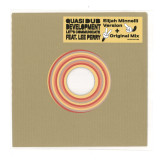
More than a decade ago, dub legend Lee “Scratch” Perry (1936–2021) walked into a Quasi Dub Development recording session in New York. His signature freestyle lyrics — dadaist and quirky as only the Upsetter could deliver — became part of their Little Twister album, released in 2014. Looking back on Pingipung's 22-year history, “Let’s Communicate” is certainly one of the highlights on the label, but it remained under the radar as part of the LP. In 2025, this standout track will receive this special 7’’ re-release, paired with a version by UK dub wizard Elijah Minnelli.
The Quasi Dub Development is an Italian-German-American collective around Luca Fadda and F.S.Blumm. The musicians are mostly renowned for their ambient, neo-classical and experimental music, and they share a passion for dub. They explore the genre using their acoustic instruments, creating a unique, playful, and atmospheric approach to dub, with only sparse use of electronics.
To coincide with the 7’’ single, a revisited version of the Little Twister album from 2014 will also be released on all digital platforms. This new edition includes the instrumentals of the vocal tracks that originally featured contributions not only from Lee Perry but also Lady Ann
After four EPs of skeletal kraut-punk and slimmed down post-motorik alienage Milan’s Tv Dust are back with an entirely different beast, their proper debut ‘Transition’, an incredible collection of no-jazz, breakneck rhythms, mutant-wave, trance-funk, shredded sax jags and furious, yet mysterious assaults.
Tv Dust run a tight ship, they jam econo, with the album strongly based around the incredible interplay of drums (Sergio Tringali), bass (Filippo Aloisi) and sax/synth (newest member Gaetano Pappalardo). Shedding the use of vocals has completely freed the band up into a mutating beast, wild horses racing beside a volcano eruption, improv bursts that perfectly soundtrack the ruins of a city facing the inhuman consequences of wild expansion and dumb economics.
Transition is a no-jazz, no-panic, no-border album, born between a small bar and a basement, reworking some ideas from the first Tv Dust sessions with a new mindset, with improvisation becoming an important tool in the trio's new path that already sees releases on Occult Punk Gang, My Own Private Records, Sentiero Futuro and Maple Death.
Transition like the transformation of the group, you still get the original package of furious hypnotic grooves, shortwave radio alien funk, devo-id convulsions, jittery no-wave and Italo post-punk tradition alongside dada-jazz and freeform freakouts.
- A1: Biomantric L-If-E (Remastered)
- A2: 0093 (Remastered)
- A3: Phil Because Ov, Indeed (Remastered)
- A4: You're Only Sql (Remastered)
- A5: We Are Haunted (Remastered)
- B1: Cctv Nation (Remastered)
- B2: Stempel (Remastered)
- B3: Northern Electronic Soul Pt 1 (Remastered)
- B4: Northern Electronic Soul Pt 2 (Remastered)
- C1: Northern Electronic Soul Pt 3 (Remastered)
- C2: Skin Clock (Remastered)
- C3: Dada Mindstab (Remastered)
- D1: Tunnels Ov Set (Remastered)
- D2: Later Vexations (Remastered)
- D3: Kissing Someone Else's D O.g (Remastered)
As part of maintaining The Black Dog's back catalogue, Dust Science has now re-issued the 2010 album, "Further Vexations". It's a real successor to Radio Scarecrow, moving forward with the dark tone and concepts.
Further Vexations picks up from what was started in Radio Scarecrow, moving beyond the world of open secrets and the bemusing transmissions of number stations, to exploring the dark cynicism of Orwellian practices carried out by our Govern-
ments, institutions and corporations.
Martin Dust from tBd explained, “Our main concern was and still is the amount of personal freedoms being surrendered under the banner of "for your own safety" – CCTV, Biometrics and the World Wide Databases being the latest inventions to save us from ourselves. What is it going to take for people to wake up? How much further can the people that we’ve put into power go before something finally snaps? We've had enough now! We believe that people have become lazy and accepting of "beige" political parties who have realised if they stand for nothing, people will fall for anything.”
10 years on, the references to George Orwell's 1984 appear to be a little naive and wholly inadequate. From billion-dollar corporate entities openly mishandling our data for profit to highly-targeted and manipulative political propaganda campaigns, the misuse of our data and communications is far more sophisticated and devious than originally envisaged.
The stark omens of Further Vexations are now more prophetic than ever.
Jamwax proudly presents the reissue of Laurel Aitken’s iconic 1966 single, showcasing two R&B dancefloor gems: Last Night and the soulful classic Don’t Break Your Promises. Originally released on the Rainbow label in the UK, this 7-inch record captures the essence of Aitken’s versatility and his pivotal role in bridging the Jamaican and British music scenes.
Last Night draws direct inspiration from the sounds of The Mar-Keys (1961) and Georgie Fame (1966), reflecting the influence of R&B rhythms on Aitken’s work. This release marked a milestone in his career as he gained increasing popularity in the UK, particularly among the mod and skinhead subcultures.
As for Don’t Break Your Promises, it is a cover of Milson Luce’s 1956 release on the Argo label. The song was already a hit in Jamaica, having been licensed the same year by Dada Tewari on his Downbeat imprint. Following Aitken’s rendition, the song inspired several Jamaican covers, including versions by Dandy (1972, Trojan), The Chosen Few (1973, Studio One), and John Holt (1973, Bunny Lee).
Nicknamed the "Godfather of Ska," Laurel Aitken was born Lorenzo Aitken on April 22, 1927, in Cuba. He moved to Jamaica at the age of 11 and became a central figure in the development of ska during the 1950s and 1960s. Before shaping the emerging ska sound, he recorded mento and calypso, laying the foundation for his groundbreaking contributions. His prolific recording career in England included numerous singles on legendary labels such as Blue Beat, Pama Records, and Trojan Records. Aitken’s legacy as a pioneer of Jamaican music and his influence on British subcultures firmly establish him as a key figure in the global evolution of ska and reggae.
Originally released in 1966
Licensed courtesy of Cherry Red Records Limited
Merzbild Schwet, the second album opus released in 1980, is considered one of Nurse With Wound's major releases, and is part of the famous "Silver Edition" on Rotorelief Records, with a luxurious chrome-plated cover in double Gatefold sleeves, and sumptuous 200g vinyl discs issued in 300 copies on silver and black vinyl, and 700 copies on black vinyl.
The first track, Futurismo, begins with clanking rhythms, record skip clicks, and horn riffs before veering off into a crazed quilt of women singing, laughing, and talking in French. About halfway through, wild screeches of distortion disrupt the piece, and then more bizarre sounds take over before the piece ends with a collage of over modulated electronic hum and rambling piano. The other cut, Dada X, goes further into weirdness with lots of silences, creepy creaking noises, tones that build up and collapse, and scattered spoken word in French and English from Eve Libertine from the political punk band Crass, and the piece certainly lives up to the Dada of its title.
- Dadadoo
- Task
- Considerations
- Pre Moon Shooter
- Shoot To The Moon
- Or Somthin
- Just For The Night (Part Two)
- Nu-Best
- Arbutus Intermission
- Toothful
- I Do Love
- Less Sensible
- The Key Still
- Grinnin' And Winnin
- Rocky Point Road Interlude
- Do U A Solid
- Pleem
- A Vibe And A Flow
- Hype Sight Interlude
- All This And More
Moka Only is a hip-hop legend with a career spanning nearly three decades. Hailing from Vancouver, he's renowned for his prolific output, introspective lyrics, and unique blend of melodic rap and thoughtful storytelling. His music explores themes of personal growth, societal issues, and introspective reflections, making him a respected voice in the hip-hop landscape.
Moka's highly anticipated new album, "Arbutus Canyon” is a deeply personal tribute to his formative years on Vancouver Island, the album is a sonic exploration of the region's landscapes, culture, and memories. Inspired by the iconic Arbutus tree and the Arbutus Canyon, a real geographic location near Victoria, the album is a rich tapestry of sounds and stories. Moka's signature beats evolve while remaining true to his established style, creating a seamless continuation of his previous work, "In and of Itself."
Throughout "Arbutus Canyon," listeners will encounter coded references to adventures and experiences on Vancouver Island, as well as cryptic elements that invite deeper exploration. The album features a variety of interludes, including the extended "Arbutus Intermission," providing a unique listening experience.
- 1: Arndale Dawn
- 2: Super Shiny Floors
- 3: Roller Shutter Fault
- 4: Bargain Bin Shuffle
- 5: Flamingo Window Display
- 6: Shoplifter Outwits Security
- 7: Arndale Dreams
- 8: A Fancy Electronic Gadget
- 9: What A Pointless Gift!
- 10: Dwell Time
- 11: Incident In The Food Court
- 12: Arndale Hopes (Shattered)
- 13: Closing Time, Please Leave
"Dwell time is defined as the length of time a shopper spends in a shopping center, starting from the moment they enter till the moment they exit."
Experimental artists Xqui & Dogs Versus Shadows join forces in this lively, dadaesque spree through the earthly delights of shopping mall muzak and consumer theory. Xqui is a prolific experimental electronic producer based in Lancashire UK, known for his mind melting-palettes and brooding abstract soundscapes: "carefully constructed, intelligent and mature.. a musician very much in control of his art" - We Are Cult "As good as Basinski, and neck and neck with the degenerative sounds of Eno's best." – TQ Dogs Versus Shadows is a prolific experimental electronic producer based in Nottingham UK, known for his boundless invention and quick-witted powers of reflective observation. Formerly a much-loved broadcaster, Lee 'Pylon' was known for his influential underground radio show Kites & Pylons, before changing tack to delight and intrigue listeners with his DVS project: "A rare example of gamekeeper turned poacher...a welter of impressive electronica"
- A1: Industrie-Mädchen
- A2: Europa
- A3: Moderne Romantik
- A4: Klammheimlich
- A5: Zirpenknirspel
- A6: Stahlregen
- A7: Viel Feind Viel Ehr
- B1: Der Bauer Im Parkdeck
- B2: Falsche Freunde
- B3: Alte Freundin
- B4: Knudelblues Ii
- B5: Traumraum
- B6: Bekenntnisse Eines Knüppelträgers
- B7: Masolinchen
- B8: Herrlich Anonym
- B9: Clean City
- B10: Hugo Hugh
- B11: Mir Ist Das Leben Klar
- B12: Wo Ist Der Ausgang
- B13: Maschine Von Beruf
Mit ihren unberechenbaren Live-Auftritten und Songs wie "Zurück zum Beton" und "Industriemädchen" sorgten S.Y.P.H. Ende der 70er für Furore - als eine der Bands, die rund um Düsseldorfs Ratinger Hof begannen, deutschsprachig zu texten. Die Band brach von Beginn an mit genre-konformistischen Erwartungshaltungen und machte Musik, die sich bei Rock, Punk und Kraut genauso bediente wie bei der Zügellosigkeit des Dadaismus und der Realität des Tagesgeschehens. S.Y.P.H. entstand 1977 in Solingen und begann im nahen Düsseldorf Konzerte zu spielen. Anfangs deutlich am Punk angelehnt, entwickelte sich der Sound der Band schnell weiter und wurde zusehends schwerer einzuordnen. In intensiven Jahren entstanden Produktionen, bei denen immer wieder Gäste aus der Düsseldorfer Szene um den Ratinger Hof mitwirkten, aber auch Holger Czukay von der international bekannten experimentellen Rock-Band CAN, mit dem sie zwei Alben aufnahmen. Zunächst wird die erste Schaffensphase der Jahre 1977 bis 1982 aufbereitet. Die "Pure Freude Singles" inkl bisher unveröffentlichter Songs und das selbstbetitelte Album "SY.P.H". Drei weitere Wiederveröffentlichungen, zwei davon produziert von CANs Holger Czukay, folgen in 2025. Pure Freude Singles Eine Sammlung der frühen Singles: Vier Titel - darunter auch "Industriemädchen" und "Europa" - erschienen ursprünglich 1979 auf der EP "Viel Feind, viel Ehr". Dreizehn weitere Tracks - u.a. "Falsche Freunde" und "Knudelblues II" - wurden in 1982 veröffentlicht als "Der Bauer im Parkdeck". Drei weitere Songs sind bisher unveröffentlicht.
Mit ihren unberechenbaren Live-Auftritten und Songs wie "Zurück zum Beton" und "Industriemädchen" sorgten S.Y.P.H. Ende der 70er für Furore - als eine der Bands, die rund um Düsseldorfs Ratinger Hof begannen, deutschsprachig zu texten. Die Band brach von Beginn an mit genre-konformistischen Erwartungshaltungen und machte Musik, die sich bei Rock, Punk und Kraut genauso bediente wie bei der Zügellosigkeit des Dadaismus und der Realität des Tagesgeschehens. S.Y.P.H. entstand 1977 in Solingen und begann im nahen Düsseldorf Konzerte zu spielen. Anfangs deutlich am Punk angelehnt, entwickelte sich der Sound der Band schnell weiter und wurde zusehends schwerer einzuordnen. In intensiven Jahren entstanden Produktionen, bei denen immer wieder Gäste aus der Düsseldorfer Szene um den Ratinger Hof mitwirkten, aber auch Holger Czukay von der international bekannten experimentellen Rock-Band CAN, mit dem sie zwei Alben aufnahmen. Zunächst wird die erste Schaffensphase der Jahre 1977 bis 1982 aufbereitet. Die "Pure Freude Singles" inkl. bisher unveröffentlichter Songs und das selbstbetitelte Album "S.Y.P.H". Drei weitere Wiederveröffentlichungen, zwei davon produziert von CANs Holger Czukay, folgen in 2025. S.Y.P.H. - S.Y.P.H. Während sich um 1980 Punk und NDW als vermeintlich klare Begrifflichkeiten verfestigen, bezeugte S.Y.P.H.s Musik schon auf der ersten, selbstbetitelten LP die in Wahrheit verschwommeneren Genregrenzen: auf der A-Seite schmettert uns die Band kurze punkige Songs wie "Zurück zum Beton" und "Lachleute und Nettmenschen" entgegen, während die B-Seite mit über zehnminütigen Kraut-inspirierten Stücken überrascht.
- A1: Munich (Feat Alice Silvestrini)
- A2: Polaroid De Une Promenade (Feat Fabrizio Massara)
- A3: Darling (Feat Anita Dada & Fabrizio Massara)
- A4: The Right Words (Feat Fred Ventura)
- A5: Crystal (Feat Alice Silvestrini & Andy)
- A6: You Are So Beautiful (Feat Killme Alice & La Tosa)
- B1: Summer On A Solitary Beach (Feat Johnson Righeira)
- B2: Italopop (Feat Anna Soares & Eugene)
- B3: My Love In Tokyo (Feat Terrienne - French Version)
- B4: Betty Blue (Feat Alice Silvestrini & Margo)
- B5: Everybody Say Oh Oh (Feat Chiara Camillieri)
After the surprising debut with ‘Monochromatic’, Milano 84 - the musical project of Fabio Di Ranno and Fabio Fraschini - returns with a new album that brings the formula into even sharper focus. Synth pop, new wave, Italo disco acquire a contemporary dimension and an international flavour.
‘Ultradisco’ brings together eleven tracks, some in English, others in Italian. They are velvet dancefloor songs, emotional and romantic, elegantly distant from the obvious. Milan 84's fellow travellers include, among others: Johnson Righeira, here in the futurist reinterpretation of a Franco Battiato classic (Summer on a solitary beach); Anita Dadà – a well-known avant-garde artist - is with Fabrizio Massara (Baustelle) in the languid and intense ‘Darling’; Andy (Bluvertigo) and Alice Silvestrini (Laison) illuminate the prismatic ‘Crystal’; Anna Soares - a revolutionary performer - and Eugene - electro songwriter - colour ‘Italopop’, a manifesto made up of décollage quotations; Fred Ventura ignites the engines of the new wave to come with ‘The right words’. And he is also artistic supervisor of this unmissable album for all lovers of the 80s, the decade that never ended.
- A1: Apt A (1) 06 29
- A2: Apt A (2) 05 52
- B1: And All You Can Do Is Laugh (1) 05 35
- B2: And All You Can Do Is Laugh (2) 05 51
- C1: I Promise Never To Get Paint On My Glasses Again (1) 05 46
- C2: I Promise Never To Get Paint On My Glasses Again (2) 06 02
- D1: Jimmybreeze (1) 07 01
- D2: Jimmybreeze (2) 05 33
- E1: (Cloud Dead Number Five) (1) 05 23
- E2: (Cloud Dead Number Five) (2) 06 00
- F1: Bike (1) 07 13
- F2: Bike (2) 06 54
US version[44,33 €]
cLOUDDEAD's debut album, compiling six 10" EPs that appeared between 2000-2001, is aurally dense and obscured. A sprawling mass of miniature beat-suites and Dadaist lyrics, this strange and beautiful 3xLP would influence a myriad of sub-genres (cloud rap, hauntology, lo-fi hip-hop, etc.) in the two decades since its initial release.
Only the three members of cLOUDDEAD – Why?, Doseone and Odd Nosdam – can speak to the group's origins, but in the context of underground hip-hop towards the end of the 20th century, their arrival makes perfect sense. Cincinnati had a vital scene; home to Scribble Jam, an annual confluence of MCs, DJs, B-boys and graffiti artists. While the trio soon relocated to the Bay Area where they co-founded the Anticon collective, their Midwestern roots – in ramshackle basements of off-campus hovels, as the "cerberus of Southern Ohio" – would remain the atomic heart of their early recordings.
As Chris Martins writes in the liner notes, "The only reason we know their names today is because of how loudly and curiously they aired their insularity. They rewrote the entire world as they knew it through their own fucked perspective, and when those mysterious 10-inches started popping up in record shops, it wasn't just a puzzle to investigate: there seemed to be a whole cosmology hidden in those grooves."
Each side of the album represents one of those elusive 10-inches, each embodying a universe unto itself. Opening salvo "Apt. A" and "And All You Can Do Is Laugh" are perhaps most emblematic of the cLOUDDEAD experience. Why? and Dose create a new language through boundless non-sequiturs, sing-song non-choruses and call-and-response hooks, while Nosdam's dexterous production shifts from crackling ambience of Flying Saucer Attack to tight Ohio Players drum breaks and oblique film samples.
Taken all together, cLOUDDEAD is an original interpretation of hip-hop in the surreal Y2K glow – a bizarre meeting point between William Basinski's Disintegration Loops and MF DOOM's Operation: Doomsday. All it took was a Dr. Sample SP-202, Tascam cassette eight-track and cheap RadioShack mic. There's truly nothing like it.
This edition has been faithfully restored by Nosdam. European exclusive version comes on clear vinyl, incl. fold-out poster and liner notes insert.