Buscar:dam sweet

Estilos
Todo
Spincycle - Coin-Op / Cold Sweet Beer

Collecting pre-orders for a limited time only.

Spincycle are back on Coin-Op Records. To celebrate 25 years since writing it, they’re repressing their much sought after first release on Geek Records: Coin-Op/Cold Sweet Beer. Originally released as Geek#001, now repressed for the first time on Coin-Op#003. It’s Coin-Op on Coin-Op!!  

Coin-Op: 
“Alright alright let me take ya to the scene”. The original Coin-Op track inspired the new label name and is a techy dancefloor groover with addictive funky bass.

Cold Sweet Beer: 
“I’d give my god damn soul for just a glass of beer!” CSB hits a bit deeper with repetitive stabs and organs over a relentless groove.  

Reservar24.04.2026

debe ser publicado en 24.04.2026

12,40

Ültimo hace: 3 Meses
Hannah Lew - Hannah Lew LP

“One foot out the door, another in the otherworld…”
So begins Hannah Lew’s debut, self-titled solo record, soaked in imperious, wide-eyed pop songwriting and a girl-group/post punk aesthetic that belies the artist’s history in the U.S. underground. A towering, hook-laden album, it’s infused with an optimism and surrealism that conversely deals with the times we find ourselves in.

Recorded at home in Richmond, CA and in The Best House studio with Maryam Qudus in Oakland CA, with the assistance of a crack team of West Coast musicians, this album sees Hannah Lew stepping out from behind the legacy of her two groups Grass Widow and Cold Beat. While musically bearing similarities with her previous work, “Hannah Lew” is a bold leap into direct pop territory, making ample use of a vocal style that teases out the inherent melancholy in her melodies. Mastered by Sarah Register, each song is a perfectly honed nugget that frequently pulls the heart in two directions at once.

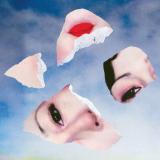
Themes of change, breaking up, shattering old ways of being are shot through the record. For the front cover, a photograph of the artist’s face was printed, ripped up and re-assembled, resembling the creative process embarked upon by Lew for her first “solo” material. The album feels instinctual, almost dream-like in its assemblage of sweeping synths and pulsating, propulsive drum machine beat patterns with Lew’s vocal performances sensitive and caressing over the top. Increasingly relying on the subconscious and dreams to guide her creative process, Hannah Lew frequently abandons literal interpretations or linear narratives, the songs seeming to exist in a swooning, effortless flow-state while remaining emotionally hard hitting.

On an album where every song could be a single, there are kaleidoscopic shades and varying emotional tones in abundance. First single Another Twilight is carried along a pumping, Italo-disco-style 4/4 beat and mono-synth bass line, the low end pulling at the heart and body. Lew’s vocal melody teases the track before swan-diving into a gorgeous chorus as she sings “it’s all over baby and I don’t mind… in decline, I take my time…” The album is suffused with moments like this. On slow builder Damaged Melody, an arpeggiated synth elongates the verse before a cascading synth showers down melodic glitter. The stunning Replica uses dual swirling synth patterns before a driving, synthpop chorus for the ages carries Hannah Lew’s vocal into the stereo field, sailing in on a high register singed with the embers of a break up.

In a departure from previous groups, her solo songs are guided by dreams and free association inspired by Dada and the Surrealist movement and sculpted afterwards. As such, the songs reveal themselves on repeated listens, revealing traces of heartbreak inspired by both personal and global elements - Hannah Lew regards the album “a wartime album.” On Move In Silence, Lew intones “there’s a war outside, just out of view,” revealing the dichotomy at play throughout. With the songs evolving naturally and in a flow state, the pressures and sadnesses of the modern age bleed through, mixed in with Lew’s inherent love, sensitivity and fractured-but-intact optimism. On the swooning, sublime Sunday layers of Numanoid synths open up for the commanding vocal performance pontificating on grief, love, pain as she “feels the ache on Sunday…” As the chorus builds and Lew’s call-and-response vocal adds to the emotional tension, it almost feels like too much to take.

Elsewhere, there are echoes of Hannah Lew’s previous work. On Time Wasted a bass guitar comes in with a heavy, punk attack before the synths and vocal harmonies reminiscent of later Cold Beat elevate everything. The glassy, sweetly resigned closer The Clock sounds like so classic it could be cover, a sweetened Jesus & Mary Chain tune perhaps, before it erupts into volcanic chorus that could only come from Hannah Lew in 2026.

Reservar24.04.2026

debe ser publicado en 24.04.2026

23,32
Various - Chains And Black Exhaust LP
  • A1: Unknown Artist – Prologue
  • A2: Blackrock – Yeah, Yeah
  • A3: Black Merda – Cynthy-Ruth
  • A4: Doug Anderson – Hey Mama, Here Come The Preacher
  • A5: Iron Knowledge – Show-Stopper
  • A6: Jacob's Kelly – Funk-Key
  • A7: L.a. Carnival – Blind Man
  • A8: Preacher – Life Is A Gamble (Pt. I)
  • A9: Sir Stanley – I Believe I Found Myself
  • B1: The Young Senators– Ringing Bells (Sweet Music) Part
  • B2: Jade – Paper Man
  • B3: Gran Am – Get High
  • B4: Curtis Knight Zeus – The Devil Made Me Do It
  • B5: Curly Davis & The Uniques – Black Cobra Part Ii
  • B6: Hot Chocolate – Good For The Gander
  • B7: Stone Coal White – You Know
  • B8: Unknown Artist – ...Epilogue
  • B9: Creations Unlimited– Chrystal Illusion

First ever vinyl release of this massive classic psychedelic black rock funk compilation. Lovingly reproduced for audiophiles on black vinyl and packaged in a fully artworked sleeve and labels and shrinkwrapped. Limited edition vinyl press! “One of the best compilations of formerly released material ever made. A classic” “The whole compilation is pretty damn sweet, but anything dug up by Iron Knowledge is essential listening”!

Reservar15.05.2026

debe ser publicado en 15.05.2026

22,65
Logg - Logg LP

Logg

Logg LP

12inchBEWITH055LP
Be With Records
31.07.2026

2026 Repress

The undisputed Godfather of Boogie, Leroy Burgess’s Logg project is his grand masterpiece.

The self-titled LP, originally released on Salsoul in August 1981, is one of the greatest albums of the post-disco era. It’s one of Be With’s favourite ever LPs and so it’s a complete honour to be giving it our reissue treatment. With all the touchstones of Burgess’s finest work - breezy grooves, undulating synths, funk-drenched bass and life-affirming lyrics - delivered with gospel-derived vocals and harmonies - it’s a record to uplift both body and spirit.

Already a cult soul figure as lead singer of seminal vocal group Black Ivory, Leroy Burgess cut his teeth as arranger, vocalist and songwriter with legendary producer Patrick Adams on essential late-70s projects like Phreek and Dazzle. He went on to define the essence of “boogie”: the vibrant underground dance sound that stood in contrast to commercial disco. With its reduced speed - mid-90 to under 110 BPM - the cool boogie of Burgess has the disco bounce, just more laidback.

All six tracks here could have been stand alone 12" hits. Indeed, some of them were. But together they are also an incredibly cohesive album, where all the compositions are deeply relevant to each other. In short, it’s essential; a thrilling showcase for Burgess’s finest arranging and production work - with his vocals at their euphoric peak alongside the inventive rhythm section of Aaron (Sonny) T. Davenport on drums and James Calloway on bass.

Opener “(You’ve Got) That Something” is a balmy sunshine groover with an insistent chorus whilst the timeless vocal of “Dancing Into The Stars” - married to percolating synth and airtight drums - showcases the chemistry between Burgess and the rhythm section.

The fusion of funk and gospel-influenced harmonies which propels “Something Else” is remarkable - deep, joyous and bouncy. Infamously mixed by Larry Levan, “I Know You Will” is an easy glide, all rollicking electric piano underpinned by a precise and relentlessly upbeat groove. “Lay It On The Line” radiates smooth, understated brilliance, elevated by interstellar keys and finally album-closer “Sweet To Me” is a chilled-out gem of profound soulful elegance.

Logg has long been a hit with the likes of Kenny Dope and Dam-Funk whilst, in the last decade, MCDE and Harvey Sutherland have routinely cited it as a huge influence. Accordingly, finding original copies on vinyl at affordable prices has been a thankless task. This fresh Be With reissue ensures this legendary record now sounds, looks and feels as sensational as it deserves to.

Mastered brilliantly by Simon Francis, cut by Pete Norman and with lovingly reproduced artwork, we think this is a reissue that does justice to this classic LP.

Reservar31.07.2026

debe ser publicado en 31.07.2026

23,49

Ültimo hace: 2 Años
Various - 60s Jukebox Hits Vol. 3

Various

60s Jukebox Hits Vol. 3

12inchZYX54068-1
Zyx Music
21.11.2025
 
18
También disponible

vol 3[12,40 €]

vol 1[13,82 €]

vol 2[14,66 €]

vol 4[17,23 €]

vol 2[14,08 €]


Immerse yourself in the golden age of German pop music! 60s Jukebox Hits Vol. 3 brings together unforgettable classics and catchy tunes that shaped an entire generation. This highquality vinyl edition brings the authentic spirit of the 1960s right into your home – nostalgic, danceable and full of good
vibes.

It features some of the most popular stars of the Schlager era: Ted Herold – the German ‘Elvis’ with rousing rock “n” roll hits Connie Francis – with her charming German-language hits Peter Kraus – the epitome of the teen idol of the 60s Peter Alexander – with his unmistakable charm and humour
A must for collectors, nostalgics and music lovers – perfect for cosy evenings or lively parties.

Disponible

En el almacen y preparando para el envío

22,48
Various - Damn Tough Volume 1
Disponible

En el almacen y preparando para el envío

19,96
UNNATURAL FUNK BAND - STRANGE HAPPENINGS
 
2
También disponible

Color Vinyl[14,08 €]


Black Vinyl. A trio of Kansas City soul sweepers, from the sprawling midwest burg's storied Cavern, Damon, and Forte concerns. Bump and the Soul Stompers' 1970 sweet soul double sider "I Can Remember" was a tail pipe-dragging, low rider classic in the making, had it ever been released. A few years later Jerald "Bump" Scott took his new group to Cavern's subterranean confines to cut the group harmony masterpiece "Living In The Past," but remained unissued prior to Numero's discovery of the Cavern tapes. As disco was cresting at the top of the next decade, Sharon Revoal tracked her James Brown meets James Bond stepper "Reaching For Our Star"_ the last 45 released on Marva Whitney's peerless Forte label.

Disponible

En el almacen y preparando para el envío

14,08
UNNATURAL FUNK BAND - STRANGE HAPPENINGS
 
2
También disponible

Black Vinyl[14,08 €]


Natural Grass Colored Vinyl. A trio of Kansas City soul sweepers, from the sprawling midwest burg's storied Cavern, Damon, and Forte concerns. Bump and the Soul Stompers' 1970 sweet soul double sider "I Can Remember" was a tail pipe-dragging, low rider classic in the making, had it ever been released. A few years later Jerald "Bump" Scott took his new group to Cavern's subterranean confines to cut the group harmony masterpiece "Living In The Past," but remained unissued prior to Numero's discovery of the Cavern tapes. As disco was cresting at the top of the next decade, Sharon Revoal tracked her James Brown meets James Bond stepper "Reaching For Our Star"_ the last 45 released on Marva Whitney's peerless Forte label.

Disponible

En el almacen y preparando para el envío

14,08
Michael Mayer - The Floor Is Lava LP 2x12"

Michael Mayer albums don’t come round too often, which is one of many reasons why his fourth collection, The Floor Is Lava, is a genuine event. It’s been eight years since his last one, the collaborative & released on !K7; its predecessors, Mantasy (2012) and Touch (2004), took their sweet time, too. It’s no real surprise, given the many hats Mayer wears – globetrotting DJ, revered remixer, inveterate collaborator, and boss of both Kompakt and Imara – that his solo productions are relatively sparing. But this also speaks to their quality: Mayer’s name on a record sleeve is a sign of quality, of music that’s both looking to the future and calling back to the past, that balances the imperatives of the dancefloor and the loungeroom, that’s as exploratory as it is functional.

On The Floor Is Lava, Mayer seems to be taking the temperature of both the music that surrounds him (past and present), and the ides of the industry he works within. There’s that iconic album title, for a start. “The album’s mindset,” he says, reflecting on those four words together. For Mayer, it’s partly a critique of the way the industry boxes in both producer and listener, focuses them on genre, on market, on the next new thing: “Being a free minded spirit that transcends genres has become an uphill battle.” A battle worth fighting, though, and with The Floor Is Lava, the result is an album that’s varied, quixotic, idiosyncratic, charming, and deeply, addictively listenable.

Throughout, Mayer finds thrills in exploration and juxtaposition, allowing unexpected things to blossom and giving them their life, their platform, throwing the listener exciting curveballs: “It’s a DJ album by a DJ that’s easily bored.” Either easily bored, or endlessly curious, The Floor Is Lava is rich with ideas. It opens with “The Problem”, which looks back to look forward, embracing the rickety way early house productions threw samples together with gleeful abandon. Mayer mentions Pal Joey, and the scene around Rockers Hi-Fi and their Different Drummer imprint, as reference points, and you can hear that freewheeling spirit throughout.

It’s followed by “Vagus”, a slinky, sensual minimal house number that Mayer describes as his “musical catnip”. The flow of these two opening cuts defines the dynamic of The Floor Is Lava, defining the dialectical drive at its core: thesis and antithesis leads to synthesis, but with a welcome prickliness that means you’re always excited, always engaged. It’s also productive in the way it derives energy from rubbing genres and sounds against each other, in unexpected ways, for maximum musical frisson. There’s psychedelic techno on “Feuerstuhl”, more minimal techno with “Ardor” (Mayer mentions ‘Immer 1’ era 90s minimal as inspiration), slippery, Shepard-tone breakbeat through “Sycophant”, a lovely, lush vocal turn on the poppy “The Solution”.

The album closes with the melancholy “Süßer Schlaf”, where Mayer sets a poem by Goethe to one of his most haunted, moving pieces of music yet, in abstract tribute to a lost friend. It’s one of the most affecting moments on The Floor Is Lava. There’s also an update on 2020’s wild Brainwave Technology EP, with the surrealist glitter-stomp of “Brainwave 2.0” (check out those handclaps!),where Mayer’s thinking about the socio-political precipice of the now: “I’m reading with great interest about this whole complex of how humanity is about to cross so many lines and the implications that the resulting financial and educational inequality will bring.”

That’s The Floor Is Lava: then and now, brainwaves and nerve structures, problems and solutions, genres on fire; the real, the unreal, and the surreal. An album for the easily bored and the endlessly curious. Mayer has the last word, telling us all you need to know about the album’s spirit: “Burning for the cause, being zealous, being addicted to the heat of the night, the exuberant powers of music.”

Michael Mayer veröffentlicht nicht oft Alben, was einer von vielen Gründen ist, warum ‘The Floor Is Lava’ ein echtes Ereignis ist. Es sind acht Jahre vergangen seit seinem letzten Werk, dem Kollaborationsalbum &, das auf !K7 erschien; seine Vorgänger, Mantasy (2012) und Touch (2004), ließen ebenfalls auf sich warten. Es überrascht nicht wirklich, da Mayer viele Rollen gleichzeitig erfüllt – weltreisender DJ, vielbeschäftigter Remixer, unermüdlicher Kollaborateur und Chef von sowohl Kompakt als auch Imara – weshalb seine Solo-Produktionen eher sparsam ausfallen. Doch das spricht auch für deren Qualität: Ein Album mit Mayers Namen auf dem Cover steht für Qualität, für Musik, die sowohl in die Zukunft blickt als auch auf die Vergangenheit verweist, die das Gleichgewicht zwischen den Anforderungen des Dancefloors und des Wohnzimmers hält, die genauso erforschend wie funktional ist.

Auf The Floor Is Lava scheint Mayer sowohl die Musik um ihn herum (vergangen und gegenwärtig) als auch die Strömungen der Branche, in der er arbeitet, zu reflektieren. Da wäre zunächst der ikonische Albumtitel. „Die Grundhaltung des Albums“, sagt er, drückt sich in diesen vier Worte aus. Für Mayer ist es teilweise eine Kritik daran, wie die Industrie sowohl Produzenten als auch Hörer in Schubladen steckt, sie auf Genres, auf den Markt und auf das nächste große Ding fokussiert: „Ein freier Geist zu sein, der Genres überschreitet, ist zu einem steinigen Weg geworden.“ Ein Kampf, der sich jedoch lohnt, und mit The Floor Is Lava ist das Ergebnis ein Album, das vielfältig, eigenwillig, charmant und tiefsinnig, aber auch süchtig machend ist.

Im gesamten Album findet Mayer Freude an der Erforschung und Gegenüberstellung von Stilen, lässt unerwartete Dinge erblühen und gibt ihnen Raum, überrascht den Hörer mit spannenden Wendungen: „Es ist ein DJ-Album von einem DJ, der sich schnell langweilt.“ Entweder langweilt er sich schnell oder er ist unendlich neugierig – The Floor Is Lava ist reich an Ideen. Es beginnt mit „The Problem“, das in die Vergangenheit blickt, um nach vorne zu schauen, und die wilde Art, wie frühe House-Produktionen Samples mit fröhlicher Unbekümmertheit zusammenwarfen, aufgreift. Mayer nennt Pal Joey und die Szene um Rockers Hi-Fi und ihr Label Different Drummer als Referenzpunkte, und dieser freie Geist zieht sich durch das gesamte Album.

Es folgt „Vagus“, eine sinnliche Minimal-House-Nummer, die Mayer als seine „musikalische Katzenminze“ beschreibt. Der Fluss dieser beiden Eröffnungstracks definiert die Dynamik von The Floor Is Lava und den dialektischen Antrieb im Kern: These und Antithese führen zu einer Synthese, jedoch mit einer willkommenen Schärfe, die dafür sorgt, dass man immer aufgeregt und engagiert bleibt. Zudem gewinnt das Album Energie, indem es Genres und Klänge auf unerwartete Weise aneinanderreibt, um maximalen musikalischen Nervenkitzel zu erzeugen. Es gibt psychedelischen Techno in „Feuerstuhl“, mehr Minimal Techno mit „Ardor“ (Mayer erwähnt ‘Immer’ Ära Minimal als Bezugspunkt), gleitenden Shepard-Ton-Breakbeat in „Sycophant“ und einen lieblichen, üppigen Vocal-Auftritt im poppigen „The Solution“.

Das Album schließt mit dem melancholischen „Süßer Schlaf“, in dem Mayer ein Gedicht von Goethe vertont und eine seiner bisher eindringlichsten und bewegendsten musikalischen Kompositionen schafft, als abstrakten Tribut an eine verschiedene Freundin. Es ist einer der ergreifendsten Momente auf The Floor Is Lava. Ebenfalls gibt es ein Update der wilden Brainwave Technology-EP von 2020, mit dem surrealistischen Glitzer-Stampfer „Brainwave 2.0“ (hör dir diese Handclaps an!), in dem Mayer über den sozio-politischen Abgrund der Gegenwart nachdenkt: „Ich lese mit großem Interesse über diesen ganzen Komplex, wie die Menschheit dabei ist, so viele Grenzen zu überschreiten und welche Auswirkungen die daraus resultierende finanzielle und bildungstechnische Ungleichheit haben wird.“

Das ist The Floor Is Lava: Damals und heute, Gehirnwellen und Nervengeflechte, Probleme und Lösungen, brennende Genres; das Reale, das Unreale und das Surreale. Ein Album für die schnell Gelangweilten und die unendlich Neugierigen. Mayer hat das letzte Wort und sagt uns alles, was wir über den Geist des Albums wissen müssen: „Brennen für die Sache, leidenschaftlich sein, süchtig nach der Hitze der Nacht, den überschwänglichen Kräften der Musik.“

Disponible

En el almacen y preparando para el envío

22,65
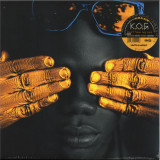
K.O.G - DON'T TAKE MY SOUL LP 2x12"

Multi-talented, Ghana-born, UK-based sonic shaman K.O.G (Kweku of Ghana - the professional name of vocalist, composer and visionary Kweku Sackey) presents his third album on Pura Vida, the imprint of respected French label Heavenly Sweetness spearheaded by much-loved French DJ and producer GUTS.

Born and raised in Ghana, but having spent much of his adult life in the UK, for K.O.G this record can be seen as the culmination of a lifetime spent absorbing, combining and refining the diverse influences that have shaped his music and his character.

Kweku explains: This album is a very personal journey. I speak about three things: the soul of my community, where I found my inspiration. The roots, highlife, soul, going to church, being around traditional ceremonial setups. Taking people to the very origin of my voice, my soul, my impulses, my community, my culture.

And the next phase is cross-culture: living half of my life in UK and half of my life in Ghana. Putting myself at this crossroads to see the effect of the sonic consciousness, how awake I am with the music from Ghana, and also how living here, having children and family here has also influenced my music.

And thirdly, it’s mirroring my personal journey. Starting in Ghana, with my band in Ghana, and my roots, then moving up to UK, Going from Zone 6 all the way to Europe. Highlife - the syncopated fusion of local music and jazz which is at the core of Ghanaian music, and which from the 1930s spread like wildfire across anglophone West Africa - is one of the core building blocks of this album. But don’t be fooled by the catchy melodies and bright sonics. K.O.G is using it to speak about some topics that are anything but bright.

Highlife is absolutely dark. Most of the places you hear real highlife music, it’s funerals! And it’s part of the culture. Death is part of life. Seeds die for life to germinate. Art is just an emotive expression, when you can cause an emotion in somebody, and it’s not always happiness.

This theme of self-expression and vulnerability is a consistent one throughout the record. With special guests Pat Thomas, Dizraeli, Fameye, Ogunskele.

Disponible

En el almacen y preparando para el envío

17,23
Al Hirt - Soul In The Horn LP

Al Hirt

Soul In The Horn LP

12inchBEWITH154LP
Be With Records
31.05.2024

Yes, *that* Al Hirt record. Featuring the godlike "Harlem Hendoo", looped unforgettably by De La Soul for the legendary Buhloone Mind State cut, "Ego Trippin' (Part Two)"!

Al Hirt's infamous Soul In The Horn is inextricably tangled up in crate-digger lore. Originally released in 1967, the album has been in heavy, heavy demand for over 30 years, entirely down to the majestic soul-jazz fire of "Harlem Hendoo". And it's a song so good, so vital, so timeless, that it will always tower above everything else in its proximity. This one track alone is worth the price of admission - even if the cost of entry were $100 or even $1000.

However, it would be an error to dismiss this record as merely a one tracker, loaded as it is with dope samples for adventurous beat makers. Certainly the funkiest Al Hirt record, it definitely lives up to the "soul" in the title. Thanks to composer Paul Griffin and arranger Teacho Wiltshire, Hirt got uncharacteristically free and groovy throughout. It comes on more like an obscure KPM library funk record than the easy listening Al was notorious for.

A Louisiana trumpeter and band leader who made Allen Toussaint’s “Java” famous, Al Hirt was also known for TV themes, Dixieland, Swing and being a minority owner of the New Orleans Saints. Unlike every other Al Hirt record - and despite most "diggers" claiming otherwise - this here gem is genuinely hard to come across "in the wild". Normally, you can't give Al Hirt records away, except this particular one, which raises pulses in the crate digging community to life-threatening levels. For every owner claiming to have found their copy for a dollar, there's scores more claiming to have *never* unearthed one in the field. So, paradoxically, you can consider this the most tricky-to-pull "thrift store record", ever. This is why we're finally making it available for everyone, not just those with endless hours to spend scouring the global goodwills!

Soul In The Horn represented an expressive detour into authentic soul-jazz for Al Hirt. Throughout, we're struck by a fierce, fiery energy that's otherwise absent from his typically easy listening work. Without question, the slinky, magical "Harlem Hendoo" is the standout, here. It's also the reason why the record is so scarce and commands awe among crate diggers, sounding like something from an obscure and deeply revered spiritual jazz record. As is often the case, the true genius of the song is tricky to do justice to; it's like a minor miracle of songwriting and performance that simply swooned down from the heavens on the back of horns, bells and harpsichord. It's one of the sweetest musical compositions ever recorded inside a studio - it's only failing is that it's just too short. Sampled brilliantly by De La Soul, it has also been used by The Roots for "Stay Cool" and Nightmares On Wax for "Damn".

The rest of the record makes for a mighty fine listen. From the opening cover of Booker T. & The MG's "Honey Pot", to the propulsive, ultra-funky "Mess Around", it's nothing but a good time. Given its title, the elegant stepper "Calypsoul" sounds exactly as you'd hope whilst the melancholic, wistful "Long Gone" hurts so good. Truly, this is just dying to be looped up, Al's muted playing capturing a soulful longing only horns can often achieve. The bluesy, slo-mo swing of "Sweetlips" oscillates between cool disaffection and swelling pride whilst the graceful, low-key funky "Girl" closes out the A-Side in the fine style. Ushering in the B-Side, the brief but brilliant strut of "Love Ya' Baby" shines brightly before the skipping funky-jazz of true highlight "Sunday-Goin' To Meetin' Time" demands both your attention and your dancing shoes. The mellifluous piano-funk of bass and horn-drenched "Snap Back" serves as the sumptuous prelude to "Harlem Hendoo"'s main character energy before the irrepressible, upbeat R&B of "Ludwig" closes out this quite remarkable album. An album deserving of a place in every serious record collection.

The audio for Soul In The Horn has been carefully remastered by Be With regular Simon Francis, ensuring it sounds better than ever. Cicely Balston's expert skills have made sure nothing is lost in the cut whilst the records have been pressed to the highest possible standard at Record Industry in Holland. The original sleeve has been restored here at Be With HQ as the finishing touch to this long overdue re-issue. This is after-hours music. Let it speak for itself. Listen. Listen to the soul in Al Hirt's horn.

Disponible

En el almacen y preparando para el envío

23,95
Kwes. - Rye Lane (Original Score) 2x12"

Kwes.

Rye Lane (Original Score) 2x12"

2x12inchWARPLP345
WARP
03.11.2023

Kwesi Sey aka kwes., geschätzter Produzent und Kollaborateur von Solange, Sampha, Tirzah, Damon Albarn, Kelela, Nubya Garcia und Hudson Mohawke, veröffentlicht nach seiner Musik für die Kurzdoku 'Little Miss Sumo' (Netflix) nun seinen ersten Spielfilm-Soundtrack. 'Rya Lane', das Filmdebüt der britischen Regisseurin Raine Allen-Miller feierte mit begeisterten Kritiken seine Premiere auf dem Sundance Festival 2023. kwes.' Score untermalt den sublimen Trip der beiden Protagonisten dieser schrulligen, zeitgenössischen RomCom im impulsiven und fröhlichen Chaos der Londoner Rye Lane perfekt und ist so süß wie der Film selbst.

- 'The Best British Rom Com to hit our screens in more than 20 years.' - The Sunday Times

Disponible

En el almacen y preparando para el envío

21,43
Brian Eno - Top Boy OST LP 2x12"

Brian Eno

Top Boy OST LP 2x12"

2x12inchMOVATM376C
Music On Vinyl
06.10.2023

Top Boy is the British television crime drama series, created and written by Ronan Bennett. The story follows two seasoned drug dealers return to the gritty streets of London, but their pursuit of money and power is threatened by a young and ruthless hustler. It stars Ashley Walters, Kane Robinson, and the

2020 BAFTA Rising Star Award-winning Michael Ward. The first two seasons aired between 2011 and 2013, but following interest from rapper Drake, Netflix announced in 2017 that it would revive the series. Co-produced by the Hotline Bling-rapper, the third and fourth season of Top Boy launched in 2019 and 2022.

In the captivating Netflix series Top Boy, Brian Eno’s transcendent music serves as a vital companion, molding the narrative’s essence with its ethereal power. With a masterful touch, Eno’s atmospheric compositions effortlessly transport us into the gritty world of crime, friendship, and survival in East London. From delicate ambience to pulsating beats, his sonic tapestry envelops every scene, elevating the storytelling and evoking a range of emotions. Eno’s singular ability to capture the struggle, hope, and inner strength of the characters accentuates the raw authenticity of Top Boy, leaving an indelible mark on its viewers. His haunting melodies and intricately crafted soundscapes symbolize the unyielding resilience amidst chaos, making Brian Eno’s music an integral and unforgettable component of this groundbreaking series.

Disponible

En el almacen y preparando para el envío

52,52
Bobby Caldwell - Bobby Caldwell LP

Known principally as a smooth titan of blue-eyed soul, Bobby Caldwell transcended genre tags with consummate ease; he was a musical icon of real class and versatility, cherished the world over. Tragically passing away in March 2023 at the too young age of 71, it still feels as if Bobby's true artistry is profoundly under-appreciated. His double platinum self-titled album from 1978 is a timeless masterpiece of sophisticated jazzy soul brilliance and is strictly canonical. Yes, it's perfect, yet it's been out of press on vinyl for years. We're deeply honoured to present the long-awaited reissue this summer.

Whilst Ned Doheny is known in Japan as "Mr California", native New Yorker Bobby Caldwell has always been "Mr AOR" to his Far-Eastern friends. His distinct charm is an irresistible blend of soul, jazz, and pop influences. He possessed phenomenal songwriting prowess, smooth vocal performances, was both a great soul guitarist and dextrous keyboard player and known for genius chord progressions. It all added up to a multi-layered brilliance entering the studio, and the singular sound he landed on was laced with soulful, sweeping strings and funky horns, touching lightly on disco, while allowing his supple voice to carry the stunning tracks he'd crafted.

String-swept opener "Special To Me" immediately sets the tone with its lush instrumentation, rich harmonies, and Caldwell's velvety-smooth vocals. Next up, a huge one. The infectious, mid-tempo bounce of "My Flame" showcases Caldwell's ability to effortlessly blend catchy pop hooks with soulful arrangements. It's an exquisite, emotive ballad that, at the same time, absolutely SLAPS. Game recognise game, and all that, so, accordingly, Notorious B.I.G. memorably ran with “My Flame” for his 1997 single “Sky’s The Limit”. The rolling, disco-very "Love Won't Wait" is a slick, uptempo track containing heartfelt lyrics intertwined with elegant strings and a horn section to die for. Aching - and achingly cool - single "Can't Say Goodbye" is a real fan favourite, and it's no surprise. It's a laconic, slow-mo jazz-funk stepper, with fantastic, very deliberate playing that closes out the A Side quite exceptionally. "Come To Me" slows proceedings down elegantly to open Side B before the universally agreed-upon masterpiece enters proceedings.

"What You Won't Do for Love," the standout hit that became a classic in its own right, perfectly captured Bobby's ability to infuse a contagious groove with introspective and relatable lyrics. With its instantly recognisable horn riff and Caldwell's soulful delivery, this timeless, chiller anthem continues to captivate audiences and define his musical legacy. He scored huge with the track, taking over the pop and R&B airways with this mellow soul stepper. It has remained a perennial favourite and has been heavily sampled, such is its unique allure; Aaliyah sang over snatches of it on "Age Ain’t Nothing But A Number" and you can hear Caldwell’s vocal sample used for the hook on Tupac’s posthumously released “Do For Love”.

Upon submitting the finished album to his label, they requested more material in hope of a big single. As Bobby remembered to Wax Poetics a few years ago: “Now at this point, I’m mentally exhausted...and bear in mind that I got so close to all the songs I’d written. I gave each song a profound amount of thought, and maybe too much. So, in haste, I went in and cut this song, "What You Won’t Do For Love". Wrote it in a day, cut the rhythm track, overdubbed the horns, I sang the song, and literally turned it in three days after. And lo and behold, the one song I gave the least thought to,” Bobby laughed, “ended up being a national anthem.”

The mysterious, magical "Kalimba Song" is a cosmic, kalimba-driven melodic-funk instrumental - short but oh, so sweet. It's followed by the supreme tear-jerker "Take Me Back To Then", Bobby's otherworldly voice deeply longing for a simpler time, "when life was mellow". I think we can all get behind this sentiment. The final cut is arguably its deepest, its low-key finest moment. For us, it is, anyway. The glorious, driving, effortlessly funky guitar-soul jam "Down For The Third Time" is a huge melancholic Be With favourite and has been played by discerning genre-hopping DJs with significant glee for years. Hypnotic, melodic, beautiful. Like the album it elegantly rounds out.

Bobby sadly passed away on 23rd March 2023, after a long struggle with mitochondrial damage and oxidative stress, due to an adverse effect from a fluoroquinolone antibiotic. The reissue of his wonderful eponymous album will be available on vinyl across the globe, ensuring that fans of his incomparable talent - and soul music enthusiasts worldwide - can radiate in the deep beauty of this seminal album. Meticulously remastered and cut by both Simon Francis and Cicely Balston respectively, it has been pressed to the highest possibly quality at Record Industry in Holland.

Disponible

En el almacen y preparando para el envío

24,79
The Krash Band / Oneness - So, I Can Make This Change / Hard To Know

Two tracks from Numero’s Eccentric Soul compilation which documented Bob Abrahamian’s passion and devotion to celebrating unknown Chicagoland group harmony music. His untimely passing in 2014 left a huge hole for many music devotees. SO, I CAN MAKE THIS CHANGE was THE KRASH BAND’s only record, it came out in 1976 and is a revered 45 amongst serious collectors. With it’s crisp bass, phased harmonies and the crowning accomplishment, the seraphic falsetto by Evelyn Holder!ONENESS previously known as The Audition’s recorded HARD TO KNOW in 1977 for Cincinnati’s AMG label, alas this sweet harmony jewel never got released and was only heard by those who tuned into Bob’s Sitting in the Park radio shows until the compilation put that to rights.

Please note this song was rescued / restored and there is tape damage in parts.

Disponible

En el almacen y preparando para el envío

10,50
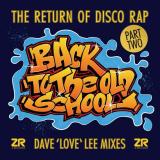
Various - Back To The Old School Pt II

Part Two of our 'Back To The Old School' series has arrived in full effect. Once again, Mr "Love" Lee updates classic disco-rap cuts for today's dancefloors while preserving their original flavour and integrity. Kicking things off is Xanadu & Sweet Lady's Jamaican version of "Rappers Delight," where Dave refreshes the instantly recognisable percussion track into a captivating jazz-funk workout, perfectly complementing Sweet Lady's luscious rapping and somehow making it even more danceable than ever. Up next, Solo Sound "We Are The Crew (Called Solo Sound)" delivers a swampy, lo-down slice of cosmic funk primed to rock any block party. On the flip is an alternate Philly flavoured take on TJ Swann's 1981 jam "Get Fly." This time Dave Lee re-tracks the MFSB backbone, putting his remixing prowess fully on display and landing squarely in the dancefloor sweet spot. As a bonus, any wannabe disco rappers can hone their skills over the B2 Shepherds Delight (No Rapstrumental Mix).

Reservar21.04.2026

debe ser publicado en 21.04.2026

18,07
SCRITTI POLITTI - SONGS TO REMEMBER (REISSUE)
  • Asylums In Jerusalem
  • A Slow Soul
  • Jacques Derrida
  • Lions After Slumber
  • Faithless
  • Sex
  • Rock-A-Boy Blue
  • Gettin' Havin' & Holdin
  • The Sweetest Girl

Das Debütalbum einer der renommiertesten und einflussreichsten Bands Großbritanniens, Songs to Remember, versetzt uns zurück in die Anfänge von Scritti Politti. Die von Green Gartside angeführte Gruppe, die aus der DIY-Szene der Einzimmerwohnungen in Camden Ende der 70er Jahre hervorgegangen war, hatte jedoch eine musikalische Vision, die der von Miles Davis (mit dem sie später zusammenarbeiteten) in nichts nachstand. Mit Songs To Remember, das sowohl die feurige Politik der damaligen Zeit als auch eine aufkeimende Pop-Sensibilität widerspiegelte, etablierte sich die Gruppe als einer der wahren Innovatoren der frühen 80er Jahre. Songs to Remember, das bei seiner Veröffentlichung 1982 vom NME als "witzig und genial" beschrieben wurde, wurde für diese längst überfällige Vinyl-Neuauflage vollständig remastered, was Gartside persönlich überwacht hat. "Mark E Smith, damals Künstler bei Rough Trade, sagte einmal zu mir: 'Scritti hat die beste Rhythmusgruppe in der Rockmusik." Er erwähnte Green Gartside nicht, daher weiß ich nicht, was er von ihm hielt. Ich weiß jedoch, dass wir bei Rough Trade alle von Greens honigsüßer Stimme und seinen brillanten Texten fasziniert waren. Es waren aufregende Zeiten, in denen die Menge an purem Talent, die in das Rough-Trade-Universum strömte, einfach überwältigend war. Niemand mehr als Green, der den intelligenten Angriff auf die Zitadelle der Popmusik-Perfektion verkörperte. Ich erinnere mich, dass ich sehr stolz auf "Songs To Remember" war, zu einer Zeit, als es für uns noch eine relativ neue Erfahrung war, ganze Alben zu veröffentlichen." - Geoff Travis

Reservar10.04.2026

debe ser publicado en 10.04.2026

21,81
Guilty Razors - Complete Recordings 1977 - 1978

UILTY RAZORS, BONA FIDE PUNKS.


Writings on the topic that go off in all directions, mind-numbing lectures given by academics, and testimonies, most of them heavily doctored, from those who “lived through that era”: so many people today fantasize about the early days of punk in our country… This blessed moment when no one had yet thought of flaunting a ridiculous green mohawk, taking Sid Vicious as a hero, or – even worse – making the so-called alternative scene both festive and boorish. There was no such thing in 1976 or 1977, when it wasn’t easy to get hold of the first 45s by the Pistols or the Clash. Few people were aware of what was happening on the fringes of the fringes at the time. Malcolm McLaren was virtually unknown, and having short hair made you seem strange. Who knew then that rock music, which had taken a very bad turn since the early 1970s, would once again become an essential element of liberation? That, thanks to short and fast songs, it would once again rediscover that primitive, social side that was so hated by older generations? Who knew that, besides a few loners who read the music press (it was even better if they read it in English) and frequented the right record stores? Many of these formed bands, because it was impossible to do otherwise. We quickly went from listening to the Velvet Underground to trying to play the Stooges’ intros. It’s a somewhat collective story, even though there weren’t many people to start it.
The Guilty Razors were among those who took part in this initial upheaval in Paris. They were far from being the worst. They had something special and even released a single that was well above the national average. They also had enough songs to fill an album, the one you’re holding. In everyone’s opinion, they were definitely not among the punk impostors that followed in their wake. They were, at least, genuine and credible.

Guilty Razors, Parisian punk band (1975-1978). To understand something about their somewhat linear but very energetic sound, we might need to talk about the context in which it was born and, more broadly, recall the boredom (a theme that would become capital in punk songs) coupled with the desire to blow everything off, which were the basis for the formation of bands playing a rejuvenated rock music ; about the passion for a few records by the Kinks or the early Who, by the Stooges, by the Velvet mostly, which set you apart from the crowd.
And of course, we should remember this new wave, which was promoted by a few articles in the specialized press and some cutting-edge record stores, coming from New York or London, whose small but powerful influence could be felt in Paris and in a handful of isolated places in the provinces, lulled to sleep by so many appalling things, from Tangerine Dream to President Giscard d’Estaing...
In 1975-76, French music was, as almost always, in a sorry state ; it was still dominated by Johnny Hallyday and Sylvie Vartan. Local rock music was also rather bleak, apart from Bijou and Little Bob who tried to revive this small scene with poorly sound-engineered gigs played to almost no one.
In the working class suburbs at the time, it was mainly hard rock music played to 11 that helped people forget about their gruelling shifts at the factory. Here and there, on the outskirts of major cities, you still could find a few rockers with sideburns wearing black armbands since the death of Gene Vincent, but it wasn’t a proper mass movement, just a source of real danger to anyone they came across who wasn't like them. In August 1976, a festival unlike any other took place in Mont-de-Marsan – the First European Punk Festival as the poster said – with almost as many people on stage as in the audience. Yet, on that day, a quasi historical event happened, when, under the blazing afternoon sun, a band of unknowns called The Damned made an unprecedented noise in the arena, reminiscent of the chaotic Stooges in their early adolescence. They were the first genuine punk band to perform in our country: from then on, anything was possible, almost anything seemed permissible.

It makes sense that the four+1 members of Guilty Razors, who initially amplified acoustic guitars with crappy tape recorder microphones, would adopt punk music (pronounced paink in French) naturally and instinctively, since it combines liberating noise with speed of execution and – crucially – a very healthy sense of rebellion (the protesters of May 1968 proclaimed, and it was even a slogan, that they weren’t against old people, but against what had made them grow old. In the mid-1970s, it seemed normal and obvious that old people should now ALSO be targeted!!!).
At the time, the desire to fight back, and break down authority and apathy, was either red or black, often taking the form of leafleting, tumultuous general assemblies in the schoolyard, and massive or shabby demonstrations, most of the time overflowing with an exciting vitality that sometimes turned into fights with the riot police. Indeed, soon after the end of the Vietnam War and following Pinochet’s coup in Chile, all over France, Trotskyist and anarcho-libertarian fervour was firmly entrenched among parts of the educated youth population, who were equally rebellious and troublemakers whenever they had the chance. It should also be noted that when the single "Anarchy in the UK" was first heard, even though not many of us had access to it, both the title and its explosive sound immediately resonated with some of those troublemakers crying out for ANARCHY!!! Meanwhile, the left-wing majority still equated punks with reckless young neo-Nazis. Of course, the widely circulated photos in the mainstream press of Siouxsie Sioux with her swastikas didn’t necessarily help to win over the theorists of the Great Revolution. It took Joe Strummer to introduce The Clash as an anti-racist, anti-fascist and anti-ignorance band for the rejection of old-school revolutionaries to fade a little.

The Lycée Jean-Baptiste Say at Porte d’Auteuil, despite being located in the very posh and very exclusive 16th arrondissement of Paris, didn’t escape these "committed" upheavals, which doubled as the perfect outlet for the less timid members of this generation.
“Back then, politics were fun,” says Tristam Nada, who studied there and went on to become Guilty Razors’ frontman. “Jean-Baptiste was the leftist high-school in the neighbourhood. When the far right guys from the GUD came down there, the Communist League guys from elsewhere helped us fight them off.”
Anything that could challenge authority was fair game and of course, strikes for just about any reason would lead to increasingly frequent truancy (with a definitive farewell to education that would soon follow). Tristam Nada spent his 10th and 11th unfinished grades with José Perez, who had come from Spain, where his father, a janitor, had been sentenced to death by Franco. “José steered my tastes towards solid acts such as The Who. Like most teenagers, I had previously absorbed just about everything that came my way, from Yes to Led Zeppelin to Genesis. I was exploring… And then one day, he told me that he and his brother Carlos wanted to start a rock band.” The Perez brothers already played guitar. “Of course, they were Spanish!”, jokes their singer. “Then, somewhat reluctantly, José took up the bass and we were soon joined by Jano – who called himself Jano Homicid – who took up the rhythm guitar.” Several drummers would later join this core of not easily intimidated young guys who didn’t let adversity get the better of them.

The first rehearsals of the newly named Guilty Razors took place in the bedroom of a Perez aunt. There, the three rookies tried to cover a few standards, songs that often were an integral part of their lives. During a first, short gig, in front of a bewildered audience of tough old-school rockers, they launched into a clunky version of the Velvet Underground's “Heroin”. Challenge or recklessness? A bit of both, probably… And then, step by step, their limited repertoire expanded as they decided to write their own songs, sung in a not always very accurate or academic English, but who cared about proper grammar or the right vocabulary, since what truly mattered was to make the words sound as good as possible while playing very, very fast music? And spitting out those words in a language that left no doubt as to what it conveyed mattered as well.
Trying their hand a the kind of rock music disliked by most of the neighbourhood, making noise, being fiercely provocative: they still belonged to a tiny clique who, at this very moment, had chosen to impose this difference. And there were very few places in France or elsewhere, where one could witness the first stirrings of something that wasn’t a trend yet, let alone a movement.

In the provinces, in late 1976 or early 1977, there couldn’t be more than thirty record stores that were a bit more discerning than average, where you could hear this new kind of short-haired rock music called “punk”. The old clientele, who previously had no problem coming in to buy the latest McCartney or Aerosmith LP, now felt a little less comfortable there…
In Paris, these enlightened places were quite rare and often located nex to what would become the Forum des Halles, a big shopping mall. Between three aging sex workers, a couple of second-hand clothes shops, sellers of hippie paraphernalia and small fashion designers, the good word was loudly spread in two pioneering places – propagators of what was still only a new underground movement. Historically, the first one was the Open Market, a kind of poorly, but tastefully stocked cave. Speakers blasted out the sound of sixties garage bands from the Nuggets compilation (a crucial reference for José Perez) or the badly dressed English kids of Eddie and the Hot Rods. This black-painted den was opened a few years earlier by Marc Zermati, a character who wasn’t always in a sunny disposition, but always quite radical in his (good) choices and his opinions. He founded the independent label Skydog and was one of the promoters of the Mont-de-Marsan punk festivals. Not far from there was Harry Cover, another store more in tune with the new New York scene, which was amply covered in the house fanzine, Rock News (even though it was in it that the photos of the Sex Pistols were first published in France).
It was a favorite hang-out of the Perez brothers and Tristam Nada, as the latter explained. “It’s at Harry Cover’s that we first heard the Pistols and Clash’s 45s, and after that, we decided to start writing our first songs. If they could do it, so could we!”
The sonic shocks that were “Anarchy in the UK”, “White Riot” or the Buzzcocks’s EP, “Spiral Scratch” – which Guilty Razors' sound is reminiscent of – were soon to be amplified by an unparalleled visual shock. In April 1977, right after the release of their first LP, The Clash performed at the Palais des Glaces in Paris, during a punk night organised by Marc Zermati. For many who were there, it was the gig of a lifetime…
Of course, Guilty Razors and Tristam were in the audience: “That concert was fabulous… We Parisian punks were almost all dressed in black and white, with white shirts, skinny leather ties, bikers jackets or light jackets, etc. The Clash, on the other hand, wore colourful clothes. Well, the next day, at the Gibus, you’d spot everyone who had been at this concert, but they weren’t wearing anything black, they were all wearing colours.”

It makes sense to mention the Gibus club, as Guilty Razors often played there (sometimes in front of a hostile audience). It was also the only place in Paris that regularly scheduled new Parisian or Anglo-Saxon acts, such as Generation X, Siouxsie and the Banshees, the Slits, and Johnny Thunders who would become a kind of messed-up mascot for the venue. A little later, in 1978, the Rose Bonbon – formerly the Nashville – also attracted nightly owls in search of electric thrills… In 1977, the iconic but not necessarily excellent Asphalt Jungle often played at the Gibus, sometimes sharing the bill with Metal Urbain, the only band whose aura would later transcend the French borders (“I saw them as the French Sex Pistols,” said Geoff Travis, head of their British label Rough Trade). Already established in this small scene, Metal Urbain helped the young and restless Guilty Razors who had just arrived. Guitarist for Metal Urbain Hermann Schwartz remembers it: “They were younger than us, we were a bit like their mentors even if it’s too strong a word… At least they were credible. We thought they were good, and they had good songs which reminded of the Buzzcocks that I liked a lot. But at some point, they started hanging out with the Hells Angels. That’s when we stopped following them.”

The break-up was mutual, since, Guilty Razors, for their part, were shocked when they saw a fringe element of the audience at Metal Urbain concerts who repeatedly shouted “Sieg Heil” and gave Nazi salutes. These provocations, even still minor (the bulk of the skinhead crowd would later make their presence felt during concerts), weren’t really to the liking of the Perez brothers, whose anti-fascist convictions were firmly rooted. Some things are non-negotiable.
A few months earlier (in July 1978), Guilty Razors had nevertheless opened very successfully for Metal Urbain at the Bus Palladium, a more traditonally old-school rock night-club. But, as was sometimes the case back then, the night turned into a mass brawl when suburban rockers came to “beat up punks”.

Back then, Parisian nights weren’t always sweet and serene.

So, after opening as best as they could for The Jam (their sound having been ruined by the PA system), our local heroes were – once again – met outside by a horde of greasers out to get them. “Thankfully,” says Tristam, “we were with our roadies, motorless bikers who acted as a protective barrier. We were chased in the neighbouring streets and the whole thing ended in front of a bar, with the owner coming out with a rifle…”
Although Tristam and the Perez brothers narrowly escaped various, potentially bloody, incidents, they weren’t completely innocent of wrongdoing either. They still find amusing their mugging of two strangers in the street for example (“We were broke and we simply wanted to buy tickets for the Heartbreakers concert that night,” says Tristam). It so happened that their victims were two key figures in the rock business at the time: radio presenter Alain Manneval and music publisher Philippe Constantin. They filed a complaint and sought monetary compensation, but somehow the band’s manager, the skilful but very controversial Alexis, managed to get the complaint withdrawn and Guilty Razors ended up signing with Constantin with a substantial advance.

They also signed with Polydor and the label released in 1978 their only three-track 45, featuring “I Don't Wanna be A Rich”, “Hurts and Noises” and “Provocate” (songs that exuded perpetual rebellion and an unquenchable desire for “class” confrontation). It was a very good record, but due to a lack of promotion (radio stations didn’t play French artists singing in English), it didn’t sell very well. Only 800 copies were allegedly sold and the rest of the stock was pulped… Initially, the three tracks were to be included on a LP that never came to be, since they were dropped by Polydor (“Let’s say we sometimes caused a ruckus in their offices!” laughs Tristam.) In order to perfect the long-awaited LP, the band recorded demos of other tracks. There was a cover of Pink Floyd's “Lucifer Sam” from the Syd Barrett era – proof of an enduring love for the sixties’ greats –, “Wake Up” a hangover tale and “Bad Heart” about the Baader-Meinhof gang, whose actions had a profound impact on the era and on a generation seeking extreme dissent... On the album you’re now discovering, you can also hear five previously unreleased tracks recorded a bit later during an extended and freezing stay in Madrid, in a makeshift studio with the invaluable help of a drummer also acting as sound engineer. He was both an enthusiastic old hippie and a proper whizz at sound engineering. Here too, certain influences from the fifties and sixties (Link Wray, the Troggs) are more than obvious in the band’s music.

Shortly after a final stormy and rather barbaric (on the audience’s side) “Punk night” at the Olympia in June 1978, Tristam left the band ; his bandmates continued without him for a short while.

But like most pioneering punk bands of the era, Guilty Razors eventually split up for good after three years (besides once in Spain, they’d only played in Paris). The reason for ceasing business activities were more or less the same for everyone: there were no venues outside one’s small circuit to play this kind of rock music, which was still frightening, unknown, or of little interest to most people. The chances of recording an LP were virtually null, since major labels were only signing unoriginal but reassuring sub-Téléphone clones, and the smaller ones were only interested in progressive rock or French chanson for youth clubs. And what about self-production? No one in our small safety-pinned world had thought about it yet. There wasn’t enough money to embark on that sort of venture anyway.

So yes, the early days of punk in France were truly No Future!

No en stock

Haga su pedido ahora y le encargaremos el artículo en nuestro proveedor.

21,43

Ültimo hace: 11 Días
Johannes Klingebiel - Dolce

Berlin Based DJ & Producer Johannes Klingebiel returns to Claptrap with “Dolce” a four-track EP served sweet, rich, and ready for peak-time indulgence.

Three original cuts and a heavyweight remix combine for a release that’s equal parts playful and potent. Consider this your sugar rush warning.

The title track, “Dolce,” is a warm and irresistible disco-house groover. Creamy acoustic drums lay the foundation while spicy xylophones and syrupy flute lines weave through the mix, striking a perfect balance between sophistication and pure dancefloor pleasure. It’s smooth, infectious, and built to move bodies.

Next up, “Follow The Line” blends shuffled house rhythms with 303 basslines and grainy vocal stabs. On paper, it’s an unlikely combination, on the floor, it locks tight. The result is hypnotic, driving, and effortlessly smooth.

On the flip, “Pink Forest” ventures into more mysterious territory. Built around an elusive, shifting time signature (one that even jazz-trained drummer Johannes struggles to explain), the track somehow feels both unpredictable and deeply groovy. It bends perception without losing momentum, a heady but danceable excursion into the unknown.

Closing the EP, Sun Damage delivers a remix of “Follow The Line” that both sharpens and distorts the original’s trajectory. Chunkier, weightier, and slightly off-kilter, this rework injects a tougher edge while maintaining the track’s hypnotic core, primed for late-night floors and heavy systems.

“Dolce” is indulgent yet refined, a release that balances musicality with movement, sweetness with punch.
Consume responsibly.

Disponible a partir del28.04.2026

14,08

Ültimo hace: 5 Días
Artículos por página
N/ABPM
Vinyl