Cerca:damned things

Generi
Tutto
  • 1
Damned Things - Ironiclast
  • Handbook For The Recently Deceased
  • Bad Blood
  • Friday Night (Going Down In Flames)
  • We've Got A Situation Here
  • Black Heart
  • A Great Reckoning
  • Little Darling
  • Ironiclast
  • Graverobber
  • The Blues Havin' Blues

"Enjoy The Ride Records in conjunction with Universal Music Group proudly present The Damned Things - Ironiclast. Available on vinyl for the first time, The Damned Things is a supergroup featuring Keith Buckley (Every Time I Die, Many Eyes), Scott Ian (Anthrax, S.O.D., Mr. Bungle), Rob Caggiano (Anthrax, Boiler Room, Volbeat), Andy Hurley (Fall Out Boy), & Joe Trohman (Fall Out Boy).

Pressed on 140-gram limited edition color vinyl, Ironiclast includes a double-sided insert with lyrics and an exclusive retrospective essay by Keith Buckley."

pre-ordina ora15.11.2024

dovrebbe essere pubblicato su 15.11.2024

38,24

Last In: 2026 years ago
Guilty Razors - Complete Recordings 1977 - 1978
  • A1: Hurts And Noises
  • A2: Wake Up
  • A3: I Don't Wanna Be A Rich
  • A4: Terrorist Bad Heart
  • A5: Provocate
  • A6: Lucifer Sam (Pink Floyd)
  • B1: Happy!?
  • B2: So Lazy
  • B3: I Feel Down
  • B4: Stupido
  • B5: Guilty
  • B6: Caroline Says (Loo Reed)

UILTY RAZORS, BONA FIDE PUNKS.


Writings on the topic that go off in all directions, mind-numbing lectures given by academics, and testimonies, most of them heavily doctored, from those who “lived through that era”: so many people today fantasize about the early days of punk in our country… This blessed moment when no one had yet thought of flaunting a ridiculous green mohawk, taking Sid Vicious as a hero, or – even worse – making the so-called alternative scene both festive and boorish. There was no such thing in 1976 or 1977, when it wasn’t easy to get hold of the first 45s by the Pistols or the Clash. Few people were aware of what was happening on the fringes of the fringes at the time. Malcolm McLaren was virtually unknown, and having short hair made you seem strange. Who knew then that rock music, which had taken a very bad turn since the early 1970s, would once again become an essential element of liberation? That, thanks to short and fast songs, it would once again rediscover that primitive, social side that was so hated by older generations? Who knew that, besides a few loners who read the music press (it was even better if they read it in English) and frequented the right record stores? Many of these formed bands, because it was impossible to do otherwise. We quickly went from listening to the Velvet Underground to trying to play the Stooges’ intros. It’s a somewhat collective story, even though there weren’t many people to start it.
The Guilty Razors were among those who took part in this initial upheaval in Paris. They were far from being the worst. They had something special and even released a single that was well above the national average. They also had enough songs to fill an album, the one you’re holding. In everyone’s opinion, they were definitely not among the punk impostors that followed in their wake. They were, at least, genuine and credible.

Guilty Razors, Parisian punk band (1975-1978). To understand something about their somewhat linear but very energetic sound, we might need to talk about the context in which it was born and, more broadly, recall the boredom (a theme that would become capital in punk songs) coupled with the desire to blow everything off, which were the basis for the formation of bands playing a rejuvenated rock music ; about the passion for a few records by the Kinks or the early Who, by the Stooges, by the Velvet mostly, which set you apart from the crowd.
And of course, we should remember this new wave, which was promoted by a few articles in the specialized press and some cutting-edge record stores, coming from New York or London, whose small but powerful influence could be felt in Paris and in a handful of isolated places in the provinces, lulled to sleep by so many appalling things, from Tangerine Dream to President Giscard d’Estaing...
In 1975-76, French music was, as almost always, in a sorry state ; it was still dominated by Johnny Hallyday and Sylvie Vartan. Local rock music was also rather bleak, apart from Bijou and Little Bob who tried to revive this small scene with poorly sound-engineered gigs played to almost no one.
In the working class suburbs at the time, it was mainly hard rock music played to 11 that helped people forget about their gruelling shifts at the factory. Here and there, on the outskirts of major cities, you still could find a few rockers with sideburns wearing black armbands since the death of Gene Vincent, but it wasn’t a proper mass movement, just a source of real danger to anyone they came across who wasn't like them. In August 1976, a festival unlike any other took place in Mont-de-Marsan – the First European Punk Festival as the poster said – with almost as many people on stage as in the audience. Yet, on that day, a quasi historical event happened, when, under the blazing afternoon sun, a band of unknowns called The Damned made an unprecedented noise in the arena, reminiscent of the chaotic Stooges in their early adolescence. They were the first genuine punk band to perform in our country: from then on, anything was possible, almost anything seemed permissible.

It makes sense that the four+1 members of Guilty Razors, who initially amplified acoustic guitars with crappy tape recorder microphones, would adopt punk music (pronounced paink in French) naturally and instinctively, since it combines liberating noise with speed of execution and – crucially – a very healthy sense of rebellion (the protesters of May 1968 proclaimed, and it was even a slogan, that they weren’t against old people, but against what had made them grow old. In the mid-1970s, it seemed normal and obvious that old people should now ALSO be targeted!!!).
At the time, the desire to fight back, and break down authority and apathy, was either red or black, often taking the form of leafleting, tumultuous general assemblies in the schoolyard, and massive or shabby demonstrations, most of the time overflowing with an exciting vitality that sometimes turned into fights with the riot police. Indeed, soon after the end of the Vietnam War and following Pinochet’s coup in Chile, all over France, Trotskyist and anarcho-libertarian fervour was firmly entrenched among parts of the educated youth population, who were equally rebellious and troublemakers whenever they had the chance. It should also be noted that when the single "Anarchy in the UK" was first heard, even though not many of us had access to it, both the title and its explosive sound immediately resonated with some of those troublemakers crying out for ANARCHY!!! Meanwhile, the left-wing majority still equated punks with reckless young neo-Nazis. Of course, the widely circulated photos in the mainstream press of Siouxsie Sioux with her swastikas didn’t necessarily help to win over the theorists of the Great Revolution. It took Joe Strummer to introduce The Clash as an anti-racist, anti-fascist and anti-ignorance band for the rejection of old-school revolutionaries to fade a little.

The Lycée Jean-Baptiste Say at Porte d’Auteuil, despite being located in the very posh and very exclusive 16th arrondissement of Paris, didn’t escape these "committed" upheavals, which doubled as the perfect outlet for the less timid members of this generation.
“Back then, politics were fun,” says Tristam Nada, who studied there and went on to become Guilty Razors’ frontman. “Jean-Baptiste was the leftist high-school in the neighbourhood. When the far right guys from the GUD came down there, the Communist League guys from elsewhere helped us fight them off.”
Anything that could challenge authority was fair game and of course, strikes for just about any reason would lead to increasingly frequent truancy (with a definitive farewell to education that would soon follow). Tristam Nada spent his 10th and 11th unfinished grades with José Perez, who had come from Spain, where his father, a janitor, had been sentenced to death by Franco. “José steered my tastes towards solid acts such as The Who. Like most teenagers, I had previously absorbed just about everything that came my way, from Yes to Led Zeppelin to Genesis. I was exploring… And then one day, he told me that he and his brother Carlos wanted to start a rock band.” The Perez brothers already played guitar. “Of course, they were Spanish!”, jokes their singer. “Then, somewhat reluctantly, José took up the bass and we were soon joined by Jano – who called himself Jano Homicid – who took up the rhythm guitar.” Several drummers would later join this core of not easily intimidated young guys who didn’t let adversity get the better of them.

The first rehearsals of the newly named Guilty Razors took place in the bedroom of a Perez aunt. There, the three rookies tried to cover a few standards, songs that often were an integral part of their lives. During a first, short gig, in front of a bewildered audience of tough old-school rockers, they launched into a clunky version of the Velvet Underground's “Heroin”. Challenge or recklessness? A bit of both, probably… And then, step by step, their limited repertoire expanded as they decided to write their own songs, sung in a not always very accurate or academic English, but who cared about proper grammar or the right vocabulary, since what truly mattered was to make the words sound as good as possible while playing very, very fast music? And spitting out those words in a language that left no doubt as to what it conveyed mattered as well.
Trying their hand a the kind of rock music disliked by most of the neighbourhood, making noise, being fiercely provocative: they still belonged to a tiny clique who, at this very moment, had chosen to impose this difference. And there were very few places in France or elsewhere, where one could witness the first stirrings of something that wasn’t a trend yet, let alone a movement.

In the provinces, in late 1976 or early 1977, there couldn’t be more than thirty record stores that were a bit more discerning than average, where you could hear this new kind of short-haired rock music called “punk”. The old clientele, who previously had no problem coming in to buy the latest McCartney or Aerosmith LP, now felt a little less comfortable there…
In Paris, these enlightened places were quite rare and often located nex to what would become the Forum des Halles, a big shopping mall. Between three aging sex workers, a couple of second-hand clothes shops, sellers of hippie paraphernalia and small fashion designers, the good word was loudly spread in two pioneering places – propagators of what was still only a new underground movement. Historically, the first one was the Open Market, a kind of poorly, but tastefully stocked cave. Speakers blasted out the sound of sixties garage bands from the Nuggets compilation (a crucial reference for José Perez) or the badly dressed English kids of Eddie and the Hot Rods. This black-painted den was opened a few years earlier by Marc Zermati, a character who wasn’t always in a sunny disposition, but always quite radical in his (good) choices and his opinions. He founded the independent label Skydog and was one of the promoters of the Mont-de-Marsan punk festivals. Not far from there was Harry Cover, another store more in tune with the new New York scene, which was amply covered in the house fanzine, Rock News (even though it was in it that the photos of the Sex Pistols were first published in France).
It was a favorite hang-out of the Perez brothers and Tristam Nada, as the latter explained. “It’s at Harry Cover’s that we first heard the Pistols and Clash’s 45s, and after that, we decided to start writing our first songs. If they could do it, so could we!”
The sonic shocks that were “Anarchy in the UK”, “White Riot” or the Buzzcocks’s EP, “Spiral Scratch” – which Guilty Razors' sound is reminiscent of – were soon to be amplified by an unparalleled visual shock. In April 1977, right after the release of their first LP, The Clash performed at the Palais des Glaces in Paris, during a punk night organised by Marc Zermati. For many who were there, it was the gig of a lifetime…
Of course, Guilty Razors and Tristam were in the audience: “That concert was fabulous… We Parisian punks were almost all dressed in black and white, with white shirts, skinny leather ties, bikers jackets or light jackets, etc. The Clash, on the other hand, wore colourful clothes. Well, the next day, at the Gibus, you’d spot everyone who had been at this concert, but they weren’t wearing anything black, they were all wearing colours.”

It makes sense to mention the Gibus club, as Guilty Razors often played there (sometimes in front of a hostile audience). It was also the only place in Paris that regularly scheduled new Parisian or Anglo-Saxon acts, such as Generation X, Siouxsie and the Banshees, the Slits, and Johnny Thunders who would become a kind of messed-up mascot for the venue. A little later, in 1978, the Rose Bonbon – formerly the Nashville – also attracted nightly owls in search of electric thrills… In 1977, the iconic but not necessarily excellent Asphalt Jungle often played at the Gibus, sometimes sharing the bill with Metal Urbain, the only band whose aura would later transcend the French borders (“I saw them as the French Sex Pistols,” said Geoff Travis, head of their British label Rough Trade). Already established in this small scene, Metal Urbain helped the young and restless Guilty Razors who had just arrived. Guitarist for Metal Urbain Hermann Schwartz remembers it: “They were younger than us, we were a bit like their mentors even if it’s too strong a word… At least they were credible. We thought they were good, and they had good songs which reminded of the Buzzcocks that I liked a lot. But at some point, they started hanging out with the Hells Angels. That’s when we stopped following them.”

The break-up was mutual, since, Guilty Razors, for their part, were shocked when they saw a fringe element of the audience at Metal Urbain concerts who repeatedly shouted “Sieg Heil” and gave Nazi salutes. These provocations, even still minor (the bulk of the skinhead crowd would later make their presence felt during concerts), weren’t really to the liking of the Perez brothers, whose anti-fascist convictions were firmly rooted. Some things are non-negotiable.
A few months earlier (in July 1978), Guilty Razors had nevertheless opened very successfully for Metal Urbain at the Bus Palladium, a more traditonally old-school rock night-club. But, as was sometimes the case back then, the night turned into a mass brawl when suburban rockers came to “beat up punks”.

Back then, Parisian nights weren’t always sweet and serene.

So, after opening as best as they could for The Jam (their sound having been ruined by the PA system), our local heroes were – once again – met outside by a horde of greasers out to get them. “Thankfully,” says Tristam, “we were with our roadies, motorless bikers who acted as a protective barrier. We were chased in the neighbouring streets and the whole thing ended in front of a bar, with the owner coming out with a rifle…”
Although Tristam and the Perez brothers narrowly escaped various, potentially bloody, incidents, they weren’t completely innocent of wrongdoing either. They still find amusing their mugging of two strangers in the street for example (“We were broke and we simply wanted to buy tickets for the Heartbreakers concert that night,” says Tristam). It so happened that their victims were two key figures in the rock business at the time: radio presenter Alain Manneval and music publisher Philippe Constantin. They filed a complaint and sought monetary compensation, but somehow the band’s manager, the skilful but very controversial Alexis, managed to get the complaint withdrawn and Guilty Razors ended up signing with Constantin with a substantial advance.

They also signed with Polydor and the label released in 1978 their only three-track 45, featuring “I Don't Wanna be A Rich”, “Hurts and Noises” and “Provocate” (songs that exuded perpetual rebellion and an unquenchable desire for “class” confrontation). It was a very good record, but due to a lack of promotion (radio stations didn’t play French artists singing in English), it didn’t sell very well. Only 800 copies were allegedly sold and the rest of the stock was pulped… Initially, the three tracks were to be included on a LP that never came to be, since they were dropped by Polydor (“Let’s say we sometimes caused a ruckus in their offices!” laughs Tristam.) In order to perfect the long-awaited LP, the band recorded demos of other tracks. There was a cover of Pink Floyd's “Lucifer Sam” from the Syd Barrett era – proof of an enduring love for the sixties’ greats –, “Wake Up” a hangover tale and “Bad Heart” about the Baader-Meinhof gang, whose actions had a profound impact on the era and on a generation seeking extreme dissent... On the album you’re now discovering, you can also hear five previously unreleased tracks recorded a bit later during an extended and freezing stay in Madrid, in a makeshift studio with the invaluable help of a drummer also acting as sound engineer. He was both an enthusiastic old hippie and a proper whizz at sound engineering. Here too, certain influences from the fifties and sixties (Link Wray, the Troggs) are more than obvious in the band’s music.

Shortly after a final stormy and rather barbaric (on the audience’s side) “Punk night” at the Olympia in June 1978, Tristam left the band ; his bandmates continued without him for a short while.

But like most pioneering punk bands of the era, Guilty Razors eventually split up for good after three years (besides once in Spain, they’d only played in Paris). The reason for ceasing business activities were more or less the same for everyone: there were no venues outside one’s small circuit to play this kind of rock music, which was still frightening, unknown, or of little interest to most people. The chances of recording an LP were virtually null, since major labels were only signing unoriginal but reassuring sub-Téléphone clones, and the smaller ones were only interested in progressive rock or French chanson for youth clubs. And what about self-production? No one in our small safety-pinned world had thought about it yet. There wasn’t enough money to embark on that sort of venture anyway.

So yes, the early days of punk in France were truly No Future!

pre-ordina ora22.05.2026

dovrebbe essere pubblicato su 22.05.2026

21,43

Last In: 2026 years ago
Health & Safety - Health & Safety

Health & Safety

Health & Safety

12inchLEFT001
LEFT
04.03.2026

FELT enter 2026 with a newly established sub label for reissues, retrospectives and oddball adjacent non-FELT material under the anagram catch-all LEFT. First on the agenda is a vinyl issue of a modern classical tape by Danish post-hardcore/late 2000s rock guitarist Johan Surrballe Wieth, founding member of the band Iceage (Escho/Dais/Mexican Summer/Matador).

Initially released on a limited cassette edition and plucked from the vast catalogue of the Copenhagen label Posh Isolation, the solo project Health & Safety can be read as composers meditation on anxiety, depression, insomnia and all the damned things they entangle. Wieth moves across the spectrum with dour, deliberate keys, mangled drone fx, barely-there violin scrapes, erratic chimes and whistles and with a knowing pace that feels akin to a guiding hand. We’re unsure if the form of each piece is meant to directly correlate to the drug so referenced but the quiet fever dream atmosphere of the 25 minutes also blurs each piece into a whole.

This quote from Wieth certainly rings true for the highly introspective nature of Health & Safety - “You should be very careful listening to too much music when you're writing an album. It has a tendency to become a little too explicit”

In stock dal26.03.2026

17,02

Last In: 22 days ago
DEAD PIONEERS - DEAD PIONEERS

Dead Pioneers

DEAD PIONEERS

12inchHOFFLPE460
Hassle Records
26.09.2025
  • Tired
  • We Were Punk First
  • Moving Day
  • The Punchline
  • Bad Indian
  • The Art Of Savagery
  • Rage
  • Dreamcatcher
  • World Up My Ass
  • This Is Not A Political Song
  • Doom Indian
  • No One Owns Anything And Death Is Real

Crystal Clear Vinyl, limited to 1000 copies. Who were the first punks? Do The Damned have more of a shout than The Sex Pistols? The Stooges or Ramones? Gregg Deal, the acclaimed visual and performance artist behind his new project Dead Pioneers, is making a claim that Indigenous Americans were the first real punks. Deal suggests that the overarching theme of the album is "an introduction to the band itself". Created with a DIY disposition and the "love of a scene that saves lives", they reel off a roll call of marginalised groups and protected characteristics: "Indigenous rights, Black rights, Brown rights, Asian rights, Gay rights, Trans rights, Workers rights and beyond_". This is central to their identity and focus, saying that "with a North American Indigenous person as the vocalist, being unapologetically upfront on the social, political and cultural side of things doesn't seem necessary, but paramount to the overall tone of the band." This self-titled debut, coming in at a lithe 22 minutes with only one of the twelve tracks exceeding three minutes, is almost over before it begins, but covers a huge amount of ground in that time. Blistering opener 'Tired' sets out their stall; as with the whole album, it is passionate, but never preaching. Capitalised 'Political Music' can be hard to land without coming across as hectoring or earnest, but Deal's literary, humorous lyrics effortlessly cut through complex issues of marginalisation and colonialism.

pre-ordina ora26.09.2025

dovrebbe essere pubblicato su 26.09.2025

26,01

Last In: 2026 years ago
DEAD PIONEERS - DEAD PIONEERS LP

Neon pink vinyl, limited to 500 copies. Who were the first punks? Do The Damned have more of a shout than The Sex Pistols? The Stooges or Ramones? Gregg Deal, the acclaimed visual and performance artist behind his new project Dead Pioneers, is making a claim that Indigenous Americans were the first real punks. Deal suggests that the overarching theme of the album is "an introduction to the band itself". Created with a DIY disposition and the "love of a scene that saves lives", they reel off a roll call of marginalised groups and protected characteristics: "Indigenous rights, Black rights, Brown rights, Asian rights, Gay rights, Trans rights, Workers rights and beyond_". This is central to their identity and focus, saying that "with a North American Indigenous person as the vocalist, being unapologetically upfront on the social, political and cultural side of things doesn't seem necessary, but paramount to the overall tone of the band." This self-titled debut, coming in at a lithe 22 minutes with only one of the twelve tracks exceeding three minutes, is almost over before it begins, but covers a huge amount of ground in that time. Blistering opener 'Tired' sets out their stall; as with the whole album, it is passionate, but never preaching. Capitalised 'Political Music' can be hard to land without coming across as hectoring or earnest, but Deal's literary, humorous lyrics effortlessly cut through complex issues of marginalisation and colonialism.

pre-ordina ora21.03.2025

dovrebbe essere pubblicato su 21.03.2025

26,01

Last In: 2026 years ago
Ray	LaMontagne - Long Way Home

Ray LaMontagne - der gefeierte, mit einem Grammy ausgezeichnete Singer-Songwriter - hat mit seinem neuen Studioalbum Long Way Home das nächste Kapitel seiner Karriere aufgeschlagen.

Long Way Home wurde von Ray LaMontagne in seinem Heimstudio aufgenommen und produziert und ist der Nachfolger des von der Kritik hochgelobten Albums Monovision aus dem Jahr 2020.

LaMontagne hat die letzten zwei Jahrzehnte damit verbracht, sich einen einzigartigen Platz in der modernen Musik zu schaffen. In einer Karriere, die von der Kritik mit überschwänglichem Beifall bedacht wurde, hat er sich aus dem Rampenlicht und der damit verbundenen Berühmtheit in die abgelegenen Hügel von West-Massachusetts zurückgezogen. Die New York Times schreibt: "Ein Besuch bei Ray LaMontagne ist wie eine Reise in ein anderes Jahrhundert". Seine unverwechselbare Stimme, die der Rolling Stone als " makellos verwitterte Tenorstimme" beschrieb, dient nach wie vor als Quelle für Melodien und Songwriting, die die Ära bestimmen. Auf seinen acht Studioalben hat LaMontagne seine Songs und seine Geschichte für
sich selbst sprechen lassen und damit eine tiefe Saite im amerikanischen Unterbewusstsein zum Klingen gebracht. Wie in seiner umfangreichen und preisgekrönten Diskografie nicht anders zu erwarten, liefert LaMontagne auch auf seinem neunten Album wieder eine beeindruckende Leistung ab.

pre-ordina ora16.08.2024

dovrebbe essere pubblicato su 16.08.2024

24,16

Last In: 2026 years ago
DEAD PIONEERS - DEAD PIONEERS LP

Coke Bottle Green vinyl. Who were the first punks? Do The Damned have more of a shout than The Sex Pistols? The Stooges or Ramones? Gregg Deal, the acclaimed visual and performance artist behind his new project Dead Pioneers, is making a claim that Indigenous Americans were the first real punks. Deal suggests that the overarching theme of the album is "an introduction to the band itself". Created with a DIY disposition and the "love of a scene that saves lives", they reel off a roll call of marginalised groups and protected characteristics: "Indigenous rights, Black rights, Brown rights, Asian rights, Gay rights, Trans rights, Workers rights and beyond_". This is central to their identity and focus, saying that "with a North American Indigenous person as the vocalist, being unapologetically upfront on the social, political and cultural side of things doesn't seem necessary, but paramount to the overall tone of the band." This self-titled debut, coming in at a lithe 22 minutes with only one of the twelve tracks exceeding three minutes, is almost over before it begins, but covers a huge amount of ground in that time. Blistering opener 'Tired' sets out their stall; as with the whole album, it is passionate, but never preaching. Capitalised 'Political Music' can be hard to land without coming across as hectoring or earnest, but Deal's literary, humorous lyrics effortlessly cut through complex issues of marginalisation and colonialism.

pre-ordina ora16.08.2024

dovrebbe essere pubblicato su 16.08.2024

28,53

Last In: 2026 years ago
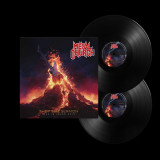
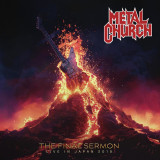
Metal Church - The Final Sermon (Live in Japan 2019) LP 2x12"

Alles endet. Selbst in den legendären Gefilden des Heavy Metal, wo Mythen und Legenden tagtäglich in die
alltägliche Realität eindringen. Mitglieder und Fans der amerikanischen Metal-Giganten Metal Church wurden
sich dessen schmerzlich bewusst, als sie im Juli 2021 ihren legendären Sänger und Frontmann Mike Howe
verloren. Von 1988 bis 1994 und noch einmal ab 2015 war Howe der Frontmann einer der meistgeliebten und
geschätzten Metal-Institutionen Amerikas und nahm bahnbrechende und essentielle Werke wie "Blessing in
Disguise" und "The Human Factor" auf.
Mike Howe war ein herausragender Sänger, ein charismatischer Frontmann und für viele die Stimme des
amerikanischen Heavy Metal. Am 26. Juli 2021 starb Howe im Alter von 55 Jahren in seinem Haus in Eureka,
Kalifornien. Die Welt hat an diesem Tag eine einzigartige Stimme und ein einzigartiges Talent verloren. Sein
Vermächtnis wird natürlich weiterleben, in seinen vielen Freunden, Anhängern und Fans, in seinen klassischen
Alben und in den Erinnerungen seiner Bandkollegen. Zum dritten Jahrestag seines tragischen Todes wird
Reaper Entertainment seinen eigenen Beitrag zum Gedenkaltar einer wahren Ikone leisten: ein Live-Album mit
dem Titel "The Final Sermon", aufgenommen bei seinen letzten Auftritten - am 24. und 25. August 2019 im Club
Citta in Kawasaki, Japan. "The Final Sermon" zeigt nicht nur Howe auf seinem stimmlichen Höhepunkt, der
singt, schreit und schmettert, als gäbe es buchstäblich kein Morgen, sondern auch eine Band in bestechender
Form. Thrash-Gitarren-Pionier und -Gründer Kurdt Vanderhoof, Gitarrist Rick Van Zandt, Bassist Steve Unger,
Schlagzeuger Stet Howland und Live-Bassist Bobby Ferkovich waren in diesen zwei langen Nächten in Japan in
Hochform, eine eingespielte Metal-Maschine, die zu allem bereit war. 14 Songs unterstreichen ihren Status als
Quintessenz amerikanischer Metal-Overlords, eine Band, die musikalisch alle Register zieht und gleichzeitig eine
politische, sozial bewusste, philosophische Denkweise verkörpert. Aktuelle Knaller wie das furiose
"Damned if you do", Klassiker wie die bedrohliche Riffwand von "Fake Healer" und frühe Klassiker wie "Beyond
the Black" zeigen eine Band, die sich ihrer Vergangenheit bewusst und stolz darauf ist, sich aber in der
Gegenwart wohl fühlt. Dies ist keine Veteranengruppe, die mit vergangenem Ruhm prahlt, sondern eine Band,
die auch vier Jahrzehnte nach ihrer Karriere noch ein hungriges und gefährliches Wolfsrudel ist.
Das ist das Schöne an Metal Church. Die Band wurde 1980 in der aufkeimenden Metalszene der Bay Area
gegründet und ließ sogar Lars Ulrich für den Posten des Schlagzeugers vorspielen, bevor er die Band verließ, um
eine andere Bay Area-Band zu gründen. Ihr Debütalbum "Metal Church" (1984) ist einer der großen Klassiker
des amerikanischen Heavy Metal und begründete eine internationale Karriere. Die Band spielte mit allen
großen Vier des Thrash (Metallica, Slayer, Megadeth, Anthrax), trat bei MTVs "Headbanger's Ball" auf und
prägte die amerikanische Metal-Landschaft wie keine andere. Die Band ist auch heute noch quicklebendig, aber
die legendäre Ära der achtziger und frühen neunziger Jahre wird durch die Spuren, die Sänger Mike Howe in
der Band hinterlassen hat, nie übertroffen werden: "The Final Sermon" ist der lebende Beweis dafür, dass, auch
wenn alle Idole irgendwann fallen, ihr Vermächtnis weiterlebt. Durch uns alle.

pre-ordina ora26.07.2024

dovrebbe essere pubblicato su 26.07.2024

30,88

Last In: 2026 years ago
Metal Church - The Final Sermon (Live in Japan 2019) LP 2x12"

Alles endet. Selbst in den legendären Gefilden des Heavy Metal, wo Mythen und Legenden tagtäglich in die
alltägliche Realität eindringen. Mitglieder und Fans der amerikanischen Metal-Giganten Metal Church wurden
sich dessen schmerzlich bewusst, als sie im Juli 2021 ihren legendären Sänger und Frontmann Mike Howe
verloren. Von 1988 bis 1994 und noch einmal ab 2015 war Howe der Frontmann einer der meistgeliebten und
geschätzten Metal-Institutionen Amerikas und nahm bahnbrechende und essentielle Werke wie "Blessing in
Disguise" und "The Human Factor" auf.
Mike Howe war ein herausragender Sänger, ein charismatischer Frontmann und für viele die Stimme des
amerikanischen Heavy Metal. Am 26. Juli 2021 starb Howe im Alter von 55 Jahren in seinem Haus in Eureka,
Kalifornien. Die Welt hat an diesem Tag eine einzigartige Stimme und ein einzigartiges Talent verloren. Sein
Vermächtnis wird natürlich weiterleben, in seinen vielen Freunden, Anhängern und Fans, in seinen klassischen
Alben und in den Erinnerungen seiner Bandkollegen. Zum dritten Jahrestag seines tragischen Todes wird
Reaper Entertainment seinen eigenen Beitrag zum Gedenkaltar einer wahren Ikone leisten: ein Live-Album mit
dem Titel "The Final Sermon", aufgenommen bei seinen letzten Auftritten - am 24. und 25. August 2019 im Club
Citta in Kawasaki, Japan. "The Final Sermon" zeigt nicht nur Howe auf seinem stimmlichen Höhepunkt, der
singt, schreit und schmettert, als gäbe es buchstäblich kein Morgen, sondern auch eine Band in bestechender
Form. Thrash-Gitarren-Pionier und -Gründer Kurdt Vanderhoof, Gitarrist Rick Van Zandt, Bassist Steve Unger,
Schlagzeuger Stet Howland und Live-Bassist Bobby Ferkovich waren in diesen zwei langen Nächten in Japan in
Hochform, eine eingespielte Metal-Maschine, die zu allem bereit war. 14 Songs unterstreichen ihren Status als
Quintessenz amerikanischer Metal-Overlords, eine Band, die musikalisch alle Register zieht und gleichzeitig eine
politische, sozial bewusste, philosophische Denkweise verkörpert. Aktuelle Knaller wie das furiose
"Damned if you do", Klassiker wie die bedrohliche Riffwand von "Fake Healer" und frühe Klassiker wie "Beyond
the Black" zeigen eine Band, die sich ihrer Vergangenheit bewusst und stolz darauf ist, sich aber in der
Gegenwart wohl fühlt. Dies ist keine Veteranengruppe, die mit vergangenem Ruhm prahlt, sondern eine Band,
die auch vier Jahrzehnte nach ihrer Karriere noch ein hungriges und gefährliches Wolfsrudel ist.
Das ist das Schöne an Metal Church. Die Band wurde 1980 in der aufkeimenden Metalszene der Bay Area
gegründet und ließ sogar Lars Ulrich für den Posten des Schlagzeugers vorspielen, bevor er die Band verließ, um
eine andere Bay Area-Band zu gründen. Ihr Debütalbum "Metal Church" (1984) ist einer der großen Klassiker
des amerikanischen Heavy Metal und begründete eine internationale Karriere. Die Band spielte mit allen
großen Vier des Thrash (Metallica, Slayer, Megadeth, Anthrax), trat bei MTVs "Headbanger's Ball" auf und
prägte die amerikanische Metal-Landschaft wie keine andere. Die Band ist auch heute noch quicklebendig, aber
die legendäre Ära der achtziger und frühen neunziger Jahre wird durch die Spuren, die Sänger Mike Howe in
der Band hinterlassen hat, nie übertroffen werden: "The Final Sermon" ist der lebende Beweis dafür, dass, auch
wenn alle Idole irgendwann fallen, ihr Vermächtnis weiterlebt. Durch uns alle.

pre-ordina ora26.07.2024

dovrebbe essere pubblicato su 26.07.2024

33,40

Last In: 2026 years ago
THE SENSIBLE GRAY CELLS - A STUPID XMAS

CHRISTMAS 7" BY THE SENSIBLE GRAY CELLS! Both tracks exclusive to this release! 500 copies on red vinyl / 500 copies on green vinyl, randomly picked. DG released some truly brilliant Christmas records over the years, even if they do say so theirselves! This one is up there with the best of them and is sure to sell out quickly! The Sensible Gray Cells are Captain Sensible (The Damned) on guitar/vocals, Paul Gray (The Damned) on bass/vocals, with Marty Love (Johnny Moped) on drums. Join with them in celebrating all things that are daft and frustrating about the festive season. The band's Xmas ditty 'A Stupid Xmas' captures everything you love to hate about this very special time of year. It also has the catchiest chorus since Slade and Wizzard ruled the charts! AND wait till you see the video! Then when you're bored of eating Quality Street, watching Morecambe and Wise, and can't face another mince pie, flip the record over for the record's "non-Christmas" track 'Keep it to Yourself' which sees the band in full on 'armchair detective' mode, taking a look at the as yet still unresolved Madeleine McCann mystery.

pre-ordina ora01.12.2023

dovrebbe essere pubblicato su 01.12.2023

9,03

Last In: 2026 years ago
THE HIGH RIP - RULE OF FOUR

The High Rip

RULE OF FOUR

12inchNXN005LP
NINE X NINE
05.11.2021

Named after the most notorious street gang of Victorian Liverpool,
'The High Rip' formed in 2017. Early gigs and rehearsal rooms were
located in that gang's old stomping ground and the synchronicity
was unavoidable. United by their shared love of post-punk and new
wave artists, their songs combine the high drama of Joy Division and the pop sensibility of XTC.
“This is Rock & Roll revitalised. It's easy to see this is no throw away pop crusade. Things that are
made into song are cared for, not just sang about. Their music is bigger than the band.”
Scene and Heard
"This is a record that sits perfectly between The Damned and Echo & The Bunnymen, The Adverts
and Gang of Four. This is a record everyone needs to listen to, so please go and check out Rule of
Four."
The Last Stop Sounds

pre-ordina ora05.11.2021

dovrebbe essere pubblicato su 05.11.2021

23,82

Last In: 2026 years ago
Jake Kaufman, Manami Matsumae - Shovel Knight - Plague of Shadows

New Vinyl Repress ! Available on March 2021

"Plague of Shadows" is the first DLC campaign for Shovel Knight. Released in September 2015, the game features boss villain Plague Knight as its playable character with new gameplay twists not found in the original.

Composer Jake Kaufman takes the sound and feel Manami Matsumae established for Plague Knight in her tracks for the main game, but takes things even further, giving Plague Knight a unique, yet cute and charming identity.
Shovel Knight: Plague of Shadows The Definitive Soundtrack features all 14 tracks found in the original digital release, with a brand new cover designed by illustrator Hitoshi Ariga. The booklet includes a comprehensive interview with Jake Kaufman, an essay by Bob Mackey of Retronauts, and original archival artworks.

pre-ordina ora25.06.2021

dovrebbe essere pubblicato su 25.06.2021

25,76

Last In: 2026 years ago
Sect - Blood of the Beasts

Sect

Blood of the Beasts

12inchLORD269LP
Southern Lord
17.09.2019

Vegan straight edge outfit SECT unites vocalist Chris Colohan (Cursed, Burning Love, Left For Dead), guitarists James Chang (Catharsis, Undying) and Scott Crouse (Earth Crisis, The Path Of Resistance), bassist Steve Hart (Day Of Suffering), and drummer Andy Hurley (Racetraitor, The Damned Things). .

The result is a caustic, riotous, belligerent style of vile hardcore fed by a boundless well of socio-political vitriol. Blood of Beasts was recorded with Kurt Ballou at GodCity Studios and mastered by Alan Douches at West West Side Music.
.
"Blood of the Beasts" is ten reflections on the myth of progress, the new old tribalism, the single face of all subjugations, the broken promise of automation, love, loss & obsolescence set against the dying light of a better tomorrow.

non in magazzino

Ordina ora e ordineremo l'articolo per te presso il nostro fornitore.

12,56

Last In: 6 years ago
  • 1
Articoli per pagina:
N/ABPM
Vinyl